[00:00:00] Aishwarya Iyer: More SKUs, more data, more complexity. The beverage industry is changing fast. VIP helps suppliers, distributors, and retailers stay ahead, turning purpose-built beverage data and technology into smarter decisions and better results. For more than 50 years, VIP has helped power the beverage industry. Now, they're building what's next. VIP, empowering smart decisions. Visit VIPinsights.com for more information.
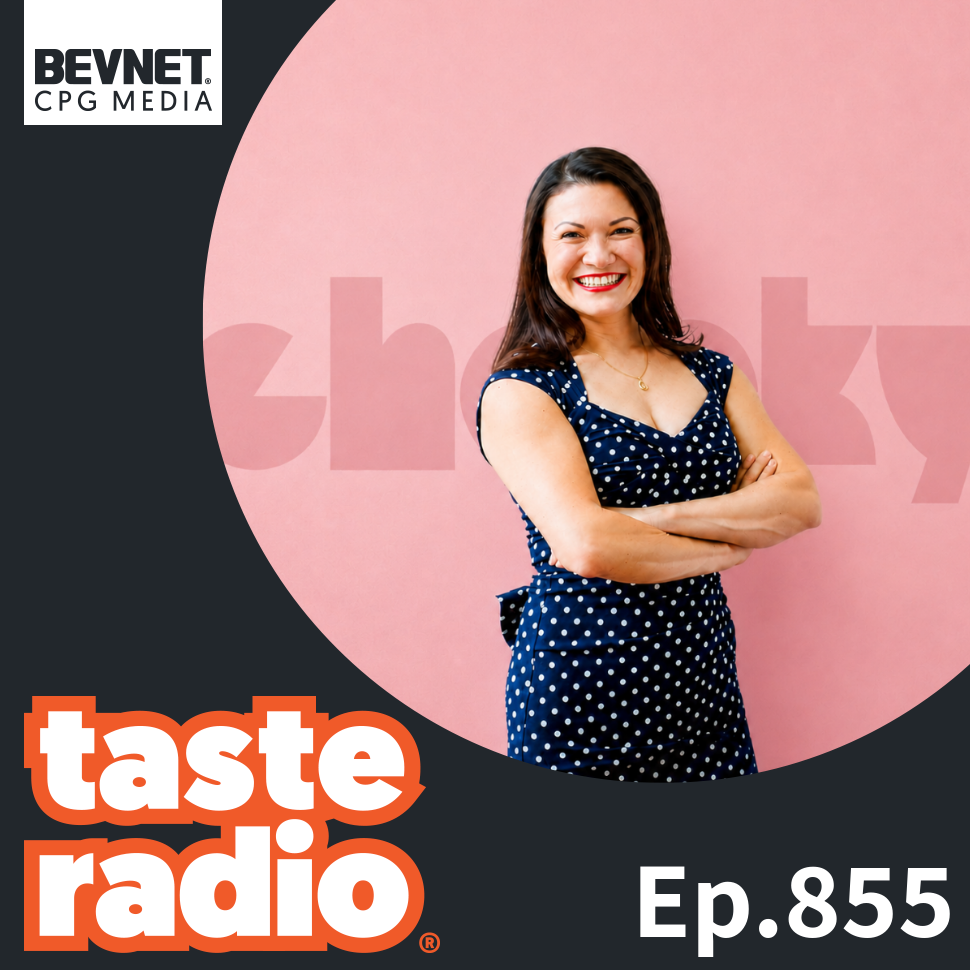
[00:00:37] Ray Latif: Hello friends, I'm Ray Latif and you're tuned into Taste Radio, the leading podcast for entrepreneurs, makers, and innovators in the food and beverage industry. Aishwarya Iyer built one of the fastest-growing premium CPG brands by doing what many startups overlook, putting product integrity, brand trust, and strategic timing ahead of rapid retail expansion. In this episode, Aishwarya, who's the founder and CEO of admired pantry staples company Brightland, shares how discovering a major gap in the olive oil industry sparked the creation of her mission-driven, design-forward brand. She dives into her philosophy for disciplined growth, reveals why she turned down Whole Foods twice, and explains why building a lasting business starts with knowing your customer better than anyone else. Hey folks, it's Ray with Taste Radio. Right now, I am honored to be sitting down with Aishwarya Iyer, who is the founder and CEO of Brightland. Aishwarya, great to see you.
[00:01:45] Speaker 1: So good to be here. Thank you for having me, Ray.
[00:01:48] Ray Latif: Yeah. Thanks so much for taking time out of your very busy schedule. You're running one of the fastest growing CPG brands in our business. You're a new mom. Is that correct as well? Yes.
[00:02:00] Speaker 1: Yeah. I have a seven month old daughter.
[00:02:02] Ray Latif: Everyone always asks, how is she sleeping? But how are you sleeping?
[00:02:07] Speaker 1: Honestly, she loves to sleep and so she sleeps through the night and therefore we sleep through the night. And so it's been, we've had our tough moments, but frankly, like it's been all right.
[00:02:20] Ray Latif: Well, it sort of sounds like you've been through this because you've had a baby for a number of years in Brightland. You've had some tough moments. I'm sure there've been some sleepless nights in that way too. So you've been prepared for this.
[00:02:30] Speaker 1: I think there are so many similarities to entrepreneurship and becoming a new parent, actually. I think about that and talk about that a lot with my friends. I think resilience, expecting the unknown, change is the constant, and worrying about things that you can't control are all themes in both. And I think I've navigated that for many years with Brightland now, so I'm kind of like, okay, great, this new human being thing, we got this.
[00:02:56] Ray Latif: Yeah. Well, I was scrolling through your Instagram page account. What do they call Instagram? Is it your account? I don't want to call it your account because it makes it sound like I'm scrolling through your personal information, but you made it all public.
[00:03:09] Speaker 1: Maybe like I was scrolling through your Instagram profile.
[00:03:12] Ray Latif: Profile. There we go. We'll use that. Your profile. And I came across something that was really interesting. I don't know if you wrote this or if you pulled it from somewhere else. And it was a multi-frame post. And one of the frames said, belief shapes your reality. And underneath that, it described belief as something where you have to decide to believe. not in a vague way, but one that's deep and intentional. And then as I read more about you, I felt like this was a reoccurring theme, the value of belief in your life, not just as an entrepreneur, but as a human being. How does belief shape what you do?
[00:03:51] Speaker 1: Oh my gosh. I mean, belief and energy to me are synonymous. Where attention goes, energy flows. At the end of the day, we're all energetic beings. And so I look at them as the same thing because where my attention and energy goes is where ultimately my belief system and what I want to bring into this world, where that goes, and that then becomes reality. And there's just no way about it. And I've seen that play out in my life in so many ways. And so I think that it's something I feel really strongly about. And I think people always ask me the follow up to that is usually, well, how do I hone in on that? And for me, it's been a lot of practices around mindfulness, breath and meditation. And it's completely changed my entire life. So I can talk about this for hours. But yeah, I firmly firmly believe that, especially as an entrepreneur, when you're building something, and I think that a lot of food entrepreneurs, beverage entrepreneurs are probably listening to this podcast, you have to dig deep within yourself. And you can You can tell yourself like, hey, I'm starting this from a place of ego. I'm starting this because I want my own validation or I need validation from the people around me, but that'll only get you so far. But A, I think like being able to name that is important, but you need that deeper reason to keep moving forward because otherwise it's just too hard. It's just too challenging.
[00:05:14] Ray Latif: Well, entrepreneurs, I think from the definition of who they are, are people who are willing to take risks and people who are willing to try to solve a problem that is out there that hasn't necessarily been solved yet. And olive oil is such an interesting category because I wouldn't have expected olive oil to be this dynamic opportunity for entrepreneurs today. And it has become that, I think, because of founders like you and your belief that customers and consumers deserved a better product. And that I think is the genesis of Brightland. In fact, going back to Instagram, the announcement, your announcement of Brightland came with a real repudiation of the olive oil industry. And you said that olive oil is a notoriously rotten Fraud ridden industry. And after I discovered this, I knew I had to do something about it. Now that kind of indictment is fair because there is a lot of bad olive oil out there, but I don't think a lot of people knew that. So what made you confident that not only could you deliver a better product, but help people understand that your product is superior in terms of its quality?
[00:06:33] Speaker 1: Yeah. Oh gosh. I mean, I wasn't confident. Let's be real. I'm not going to lie and be like, I was confident every single moment. I held two things to be true. I thought this could either be something huge or it's going to be something really small. And like, I started with a thousand bottles. I didn't raise money and maybe that's where it'll land. But zooming out, so I want to talk about the confidence piece for a second, but zooming out beyond that, you know, I just had a lot of conviction in what I saw to be a massive industry that didn't have brand love and didn't have emotional connection. So I saw people tell me, Oh, I love olive oil. And then I was like, okay, well, what brand do you love? And nobody could tell me versus like, if I were to ask you about a plunger, you'd be like, I don't want to talk about my plunger, nor do I know any plunger brands. But if I were to ask you about maybe your favorite, I don't know, pair of shoes, you'll be like, Oh my God, I just went and got some shoes. I got some Nikes, or I got some new balances, and you'll talk to me about them. And so for me, I saw this like category affinity, but didn't see brand affinity in the space. And so I couldn't name it at the time, like the way that I'm talking about it now, but there was something there. And when I started visiting farms, all of farms here in California, I started talking to the farmers and learned about the category, learned about the industry more. And I was like, wow, there's really beautiful, incredibly high quality olive oil that's being created right here in the state of California in the United States. And yet it feels like that's something that a lot of people don't know. And everybody's kind of trying to do the same thing, like put it in like a boring green bottle. So why not turn some of that on its head? Why not create something that is really coveted and something that from the inside out is something that I think has a lot of integrity, has a lot of beauty. I don't know if people use the words charming, beautiful, elevated with olive oil before Brightland. And so when we launched in 2018, I think we really put the category on the map in a new way that people hadn't seen before. And then now fast forward to 2025, as you said, that category is ripe with entrepreneurs who are like trying to do something similar, take our playbook, like do the thing.
[00:08:50] Ray Latif: Were you fully invested in the idea and the concept at the outset? I talked with an entrepreneur, his name is Paul Vogue. Paul Vogue is the co-founder of Ouroboros, exactly. And I remember him telling me, well, you know, I figured if I make 20,000 cans and it doesn't work out, I'll still drink all this stuff. So, you know, I'm not saying you would consume a thousand bottles of olive oil, but at least you could give it to your friends and so on and so forth. But did you really feel like, I'm going to do this and, you know, going back to belief that this is something that I was motivated to do, that I had to do. And regardless of, you know, whether I started with a thousand bottles or a million bottles, that this is something that I'm committed to doing.
[00:09:31] Speaker 1: Yes, I 1000% felt that. I didn't know what the outcome would be. And even to this day, I don't know what our outcome, you know, what does outcome even mean? But I think it's truly at the end of the day, it's the journey like it's not some like end goal. So I was like, I think I want to go on this journey. And I felt really good about that. And then I, I did this exercise where I actually I would recommend entrepreneurs do this. I sat down one evening and thought about my 75 year old self if she's still alive. And I thought, when she looks back at her life, what are the things that she's going to wish that she did or didn't do? And this came to mind. It was like, you're feeling this way about this idea. You want to put it out into the world. And one day she might look back and be like, why didn't you just go for it? What were you doing? Why were you scared? You were scared that some random girl from high school who you don't talk to anymore is going to think something about this? What? And so I needed to do that exercise and that set me free, honestly.
[00:10:30] Ray Latif: I think that when people consider their lives in the future, it is such a critical part of their motivation to do something today. And it's, I think, a fear of failure more than it is a want of success. Would you agree?
[00:10:52] Speaker 1: I agree. But what I challenge people now and what I challenged myself with, what are you really scared of? Let's talk through it. Okay, if it's a financial, if you are betting everything in this idea, and you're going to be left in financial ruin, that's something to think about, right? Like, really make sure and maybe don't hedge everything, like don't put everything into it. Be careful and hold on to something. So you know, for me, it was never like, Oh, my gosh, we're going to be left with nothing. If this doesn't pan out type of situation. That's not how I started it. But then beyond that, I think it's actually more psychological fear of, you know, failure. And so Who are you afraid of? Is it disappointing people in your life? And ultimately it ends up being people are afraid of disappointing themselves, looking at themselves in the mirror. And a lot of times it's a younger version of themselves. This is where the younger, like when you're looking out in the future, it's like looking at your older self, would she take the risk? Should she do it? And then this, I think you go back to your younger self. Maybe you're like 13, 14 year old self who's sort of judgmental and is looking at you being like, there's no way you can do that. You're going to fail. And so I always challenge and talk to entrepreneurs and say, at the end of the day, you stepped in the arena.
[00:12:13] Aishwarya Iyer: And there's so much honor in that.
[00:12:23] Ray Latif: One of the things from a tactical perspective that I think is so important for entrepreneurs is to make sure you're understanding what you're getting into. And I love the fact that you actually did the legwork on what it's going to take to source the best olive oil you can possibly source, what makes it different and how to package it. Talk about how you educated yourself about as probably, I don't know, I would think it might be a little boring, but I'm probably completely wrong. And you're going to be like, Ray, of course, olive oil isn't boring. What are you talking about? But how did you educate yourself about this category and the ingredient itself?
[00:13:01] Speaker 1: I took classes at the UC Davis Olive Center. I loved it. It was, it was amazing. I went to all of festivals where a bunch of, you know, farmers and growers were there. I talked to anyone who would, you know, pick up my call and I would go and meet people. I talked to other entrepreneurs outside of olive oil. So I talked to, I remember like One of the founders of Bushwick Kitchen, I chatted with somebody who had like a women's health consumer brand, like just a lot of folks in other industries, just asking them generally quantities and minimums and What do you wish you knew? And like really also like tactical questions. And yeah. And then I said, all right, I'm going to bet on myself and see what happens. I spent, I would say like at least eight to 10 months in research, learning, development mode.
[00:13:58] Ray Latif: When did you feel like you were ready to go? Certainly you had products in bottles, you had the labels, you had the story, but when did you really feel like, okay, we're going to launch this thing? I guess, when did you feel really comfortable and confident?
[00:14:11] Speaker 1: I didn't feel comfortable and confident. It was more so I set the date and then I said, we're going to back into comfort and confidence by that date. And even the day we launched, we were fortunately featured in the New York Times the day we launched, which was amazing. But you know, those first few hours, like we were getting all these sales, it was exciting. But I remember looking at the bottles because I was packing each one for the customers. I packed every bottle and wrote every gift note. And I remember looking and I was like, oh, these labels are a little wonky. They're a little like they're not perfect. And so I certainly didn't feel like, oh, we just nailed it and everything's great out the gate. It was lessons on top of lessons learned over and over again those first few months and then continues to now.
[00:14:59] Ray Latif: You said that you were fortunate to get into the New York Times Style Magazine. That doesn't happen for almost any brand at the outset. How'd you make that happen? Did someone connect you with the team or did you have any connections with the New York Times?
[00:15:13] Speaker 1: Yeah, I knew what I knew and knew what I didn't know, right? So one thing I knew was the power of other people telling your story. And so I hired a food PR firm called Becca PR, and they helped us get into the times for our first day. And it was like a four sentence blurb. It wasn't some like big feature story, but it really put us on the map and helped solidify There's something different about this brand. And I think that has ended up like snowballing into so many opportunities for us.
[00:15:49] Ray Latif: Bill Gates once said, if he only had $10 left, he would spend it on PR. It sounds like it's worked out pretty well for you, but you have to tell that story. I think the PR team helps you amplify that message and maybe refine that message, but it's your story, right? What was the story you were trying to sell and how has it evolved?
[00:16:09] Speaker 1: I think the story that I was trying to tell is the same story now, which is there's something really incredible about California and American olive oil, and I would love to shine a spotlight on it. There is a world in which you can have beautiful, high-integrity, incredibly high-quality extra virgin olive oil that is also beautiful on the outside. So I wasn't like a influencer or a famous person. I was like a random lady who started this company. And so I think that has served as inspiration for a lot of people too. And I don't know if it's changed that much. I think that's the origin and it's true to who we are today.
[00:16:51] Ray Latif: I think that the thing that really, however, differentiates you, Brightland that is, from everyone else is that I'm trying to think of other brands. Maybe there's a handful of them that sell in a white bottle. Yeah. And the clarity and the cleanliness and just like the brightness, Brightland of course, the brightness of what you're selling in terms of your package design, your label design, stands out so much more than anything else. And you've talked about the importance of the package as being a, quote unquote, Trojan Horse to education and trial. What were the key points and the key concepts that you wanted to incorporate into your package design?
[00:17:37] Speaker 1: I knew that when people were looking on a shelf or coming to our website, I wanted them to be delighted. I wanted them to say, oh wow, oh my gosh, I feel something. This is so X, Y, Z, whatever the word is. If it's chic, oh, this is so lovely. There were words that I was like, I wanted people to say out loud. And so we sort of backtracked from there. And I'm, you know, I'm Indian origin. And so color for me is really important. So I was like, okay, how, amazingly charming and delightful can we get without using green and using white but incorporating lots of other colors and so if you you know look at our products like we have tomato red and squash yellow and some really lovely lavender and blueberry color. And I wanted the colors to also be resembling of a farmer's market. So I said, let's go like maximalist, but clean on the colors and the design. Let's make it white. And let's make it something that's like a showpiece on somebody's kitchen counter that they're really like proud of and excited about. And it's been really crazy to see, I don't know, hundreds of thousands, if not millions of people have them on their kitchen countertops now.
[00:18:50] Ray Latif: Whole Foods was very interested in your brand about a year after you launched. They came to you and said, hey, we would love to have your brand in our stores. You said no. Two years later, they came back. and you said no again. A lot of entrepreneurs right now are banging the table, taking their earpieces out and throwing them all over the place and being like, gee, I wish Whole Foods would do that for me. But that is not something where you have a major retailer like that and you say no. And that's not something that entrepreneurs feel comfortable doing, can do. Why do you feel like you needed to say no twice?
[00:19:28] Speaker 1: because there's something to get on shelf and then to actually perform and to move on shelf. And I wasn't confident in that because my team, we didn't have the team that we needed, the retail prowess and the know-how. And there is an element of like fake it till you make it. I get that. But in that moment, we had other fish that we were frying, we had other opportunities. So I said, all right, let's really stay laser focused on that. And we'll say, you know, thank you so much. We're so honored and delighted. Give us time to do what we need to do. And when we're ready, we'd love to have a conversation if you're open to it. I would rather have enthusiastic conversations with retailers than the conversation of oh yeah we came in and then we just didn't perform and we didn't know or we weren't even ready but we you know you asked us so here we are and we're sort of you know lackluster in terms of our own operations and capabilities. It's not working out like I don't want to have that conversation.
[00:20:33] Ray Latif: Yeah, I was just having this conversation with a consultant in the industry and she said something that for some reason I didn't fully get until she said it, which is that when you have more distribution, your costs actually go up because you have to market the brand more. You have to have those shelf talkers. You have to do more demos. You have to do a lot of different things. Yes, you'll probably sell more product, but your costs are going to go way higher than you might think otherwise. And yeah, and I think for you and for Brightland, the marketing expense is so important, especially at the outset, because again, why, why am I buying this versus any kind of commodity oil?
[00:21:14] Speaker 1: No, it's so challenging because how can I scream from the rooftops? Yes, it's beautiful, but also California has the strictest standards for extra virgin olive oil, and Brightland's oils get tested almost every month, and we beat those standards every time. How can I explain, oh, on average, there's a polyphenol count that's really important, free fatty acid count that's really important. On average, here's where the commodity oils are. Brightland is like 5, 10x better. How do you explain that? Explain all that. How do you talk through all of that? It is a huge, huge challenge. Huge challenge.
[00:21:49] Ray Latif: Yeah, and it's not as simple as saying, hey, we're going to have a great social media strategy. Obviously, Brightland has a great presence on Instagram, but I don't think people are spending as much time reading about and trying to understand your transparency standards and your sourcing standards. No, they don't care.
[00:22:07] Speaker 1: Totally. I'm so glad we're saying this out loud. We don't try to talk to our... because ultimately, then it looks like you're talking to yourself. being like, look at us, look at us, what we're doing. And instead, what I decided was, what do people care about? Oh, they care about, I don't know, sardine girl summer. Let's make sure that we're partnering with a tin fish brand to like show up in people's homes. What else do people care about? Oh, they care about how I don't know, I'm making this up, grilled cheese sandwiches right now in the wintertime, let's have like a month of grilled cheese month where like, that's what we're spotlighting. And I see both sides of it. And I think maybe there's ways to, like, we've done this where we've been interspersed in between, like, oh, three things you want to know about olive oil that you may not know, but making it sort of delightful and fun. But I think it's arrogant to assume that people are just like staring at your social content or your website or even your packaging, trying to learn everything they can. They're not, they're busy.
[00:23:25] Speaker 2: Vibrant Ingredients is the natural ingredient partner powering food and beverage innovation, delivering flavor, function, and protection through a science-backed portfolio. Vibrant delivers purpose-driven solutions that help brands create extraordinary experiences. Discover what's possible with Vibrant today. Visit vibrantingredients.com.
[00:23:51] Aishwarya Iyer: The Angel Group was among the first believers in brands like Poppy, Botchons, Goodles, and Siete. The next generation of great consumer brands is being built right now. Learn about investing alongside other industry professionals at wearetheangelgroup.com.
[00:24:07] Speaker 3: Quick pause for a look at the people making an impact across packaged food. The 2026 Nosh Impact 50 recognizes founders, operators, investors, creators, and connectors whose work is influencing how brands are built, funded, grown, and brought to market. Some are highly visible. Others are shaping the business behind the scenes. See all 50 honorees at Nosh.com slash impact50.
[00:24:31] Ray Latif: Just to be a devil's advocate here, then why does the product matter so much? If the brand is what you're selling and if selling the brand is what's most effective, why put so much emphasis on the product?
[00:24:43] Speaker 1: Because otherwise, what are we doing here? If the product is compromised, if all I'm doing is taking something subpar and putting it into nice packaging, call it a day. And people can tell, people can, even if they can't explain it, they can tell when something's off, when the quality isn't right. And you don't build trust and you don't build loyalty. It would be counter to why we're all here. Like why I started the company.
[00:25:08] Ray Latif: Well, for investors, a few years ago, it was all about top-line growth and making sure that you're turning product as often as you can would get the investors interested in potentially funding your business. And now, you know, for sure, it's gone the other way and people want to hear about your path to profitability, your gross margin, et cetera, et cetera. But you really do need that money. And everyone knows this. You know, it's not a secret in our industry that it costs a lot of money to scale a CPG brand. You raised some money last year, actually quite a bit of money last year. When you're thinking about that investment strategy and maintaining the integrity and authenticity of what you do in finding the right partner, what's that thought process like?
[00:25:55] Speaker 1: Honestly, it's having a conversation like this. If somebody were to be like, oh yeah, why don't we just get crappier oil and keep your pretty bottles, then it would be so nice to meet you. This clearly isn't a fit. Appreciate the conversation. And so everyone who's a part of this journey really is excited and is it's just there's no surprises around how much the product integrity matters and the brand affinity and the like long-term vision how much that matters too and so I've just been really unapologetic about that and the people who get it get it and the people who don't they don't and that's okay.
[00:26:36] Ray Latif: Well, I'm glad that you found people who get it because it's making Brightland more accessible to more people. Exactly. And now that you have a bit more leeway to expand distribution, to get into more retailers, I think that's also kind of a challenge because now you figure out where do we best invest our time and resources. Again, I want to get to the everyday oils in a sec, but when you're thinking about where do we have permission to go with Brightland? In what channels, at what retailers is this product, is this brand really going to shine? How do you map that out?
[00:27:08] Speaker 1: I think about the customer. I think about her all the time. I'm like, where is she shopping? She's been buying from us for gifts, maybe for herself a little bit through our website, maybe at Nordstrom or at Bloomingdale's she found us, maybe in her local like really cute bodega, like cute gift shop, we were there. Those are the places she's used to us, but she's also shopping at Whole Foods. Maybe she's doing that once in a month Costco trip, or maybe she's going to Target and grabbing a few things. I really think about her and her life and how do we fit in and show up in her life in the best way. Where then she's like, oh great, oh my gosh, I just bought Breitling's gift set, sent it to my sister-in-law, but I'm now at Whole Foods and I see their salad oil. Great. Me and the family are making salads this weekend. I'm going to grab a couple bottles.
[00:28:00] Ray Latif: being a luxury brand or having a luxury line of products, but also having an everyday line of products isn't necessarily a common thing to see in our industry. In fact, I was racking my brain. I was like, are there any brands out there that have sort of an ultra premium product and then can successfully sell sort of an everyday product as well? And you had a pretty eloquent comparison to fashion, if you could talk about that.
[00:28:26] Speaker 1: Yes, yes. One of my biggest inspirations in business and in brand is Ralph Lauren. And I think that he and the brand are just a masterclass in building something that is American heritage, timeless, stands for great quality, has so much meaning behind everything, and also can split ultra luxury into something a little more accessible with their purple label all the way to like polo. RL sport, like they've just done it masterfully, beautifully. Even in fashion, we see that, but Ralph Lauren, I think really pioneered that. And so from day one for me, I remember thinking about Ralph Lauren and thinking about, oh my gosh, if I can build something where there's luxury and there's also every day, I think that would be a dream come true. And so to see this now come to life, is honestly like so amazing and I think you're spot on like I also have racked my brain around in this category like and in food has anyone done this and I don't think they have but that's even more exciting to me like we're paving away and we're you know navigating something that hasn't been done before and isn't that the like a joy of life like we don't know what's gonna what's gonna play out it's exciting
[00:29:42] Ray Latif: Yeah, I was speaking with the co-founders of a brand called Tip Top Cocktails. And I love what they do. They sell these premium cocktails, spirit forward, crafted by bartenders in these hundred milliliter cans. And I asked them, you know, what's the goal here? What's the end goal here? And they said, our goal is to create a brand that people will miss if it leaves the market. And I think people would miss Brightland. If it left the market, I think people have an affinity for it.
[00:30:12] Speaker 1: I've never heard anyone say that, Ray. That's a beautiful, that's actually wonderful. I'm going to say that. That's so amazing.
[00:30:18] Ray Latif: Yeah, well, I think you've done that. I think the magic that you talked about, you've really captured in a way that you can't necessarily quantify. And I've asked all these questions about, well, is it the products? Is it the olive oil? Is it the packaging? Is it the story? All these different things. I think what you've created is a bit of magic and you can't quantify it. But if there was something that you could say, there was a point at which you realized, wow, I've got it. We've got something here. Do you recall that point? Do you recall that moment? Could you put your finger on exactly why people started to feel that way?
[00:30:53] Speaker 1: First of all, it's probably the most wonderful compliment to receive about it being magic. So I'm still stuck on that. And I'm also thinking about what the Tip Top Cocktail founders told you about. It's a brand that would be like, people will miss it if it's gone. You know, a few Christmases ago, I was reading people's gift notes that they were sending to people through our website. And a lot of the gift notes were like, this has brought me so much joy. I hope it brings you joy too. this just creates a little magic, like magic, joy, gorgeous. The words that were on there on these notes, I just couldn't believe it because those were the words I was using, but the customer didn't hear me say that, right? Like I was using it to my team, to investors on a podcast like this. I'm like, this is what I hope. And then to actually see that reflected back at you, but I'm not sending an email to our customers being like, we are gorgeous and magical like please buy us like no so then to see that i think i was like shocked and just couldn't believe it and so every time i see that time and again and to hear that and to hear you say that today yeah that never gets old and frankly it's like it's extremely humbling
[00:32:12] Ray Latif: Well, I think come in full circle, this is something you believed in and you believed that people would identify it as gorgeous, as beautiful, as magical, as something that they love. And it has shaped your reality. It's shaped the reality of Brightland. Aishwarya, thank you so much. for taking time out of your day to speak with me. I know our audience is going to get a lot out of this. And I am almost positive that people are going to be reaching out to you after this conversation being like, can I follow up with you? Can I talk to you? And just to end on this note, I mean, how much has mentorship meant to you? How much has it done for you in building this brand?
[00:32:49] Speaker 1: Oh, it's everything. Without fellow founders, I wouldn't have raised the money that I've raised. I wouldn't have the community that I have, you know, the good, bad and ugly that I'm able to share and the vulnerabilities that I'm able to share. I'm a solo founder and I don't have a business partner. I don't have co-founders. And so you could say it's been lonely, but I'll be totally honest. It hasn't been that lonely because I've had other people as part of this journey with me. And so it's been invaluable. And so I always like to pay it forward. I really do. And I would love to have conversations with founders who are earlier on in their journeys. I've loved being on this podcast with you too. I want to say something. I want to say to any entrepreneur who's listening right now, who sometimes feels like there's so much noise and am I enough? Am I doing enough? Is my brand enough? My biggest advice would be on like a Friday afternoon, delete your Instagram, your LinkedIn, your Twitter, and don't bring it back until Sunday night, maybe Monday morning, and see how you feel. See if that cleared some of the noise out. See if you were able to like go on a walk without opening one of those or like wait in line for your coffee without looking at and scrolling. And in that liminal space, there may be some breakthroughs, there may be some cool thoughts that come up. And if that feels good, then maybe it can become a little bit of a habit. And I think some really good stuff can come out of that and also some like strength can come out of that because you can remember how great it is that what you're doing and like not think about other people and their journeys and that noise. So that's just two cents that I'd love to share with people.
[00:34:32] Ray Latif: Thank you so much for sharing it. I think it's such great advice is remember why you're doing what you're doing as opposed to doing something that other people are doing on those social media sites for clicks or for awareness, which is, you know, I'm on LinkedIn a lot and. You do kind of have to get your name out there as often as possible for people to be aware of what you're doing. But I think you end up echo chambering yourself sometimes when you're saying things that have nothing to do with why you felt so passionate to become an entrepreneur from the outset. So thank you so much for sharing that, Aishwarya. And thank you once again for joining us on Taste Radio today. And I'm very excited to get this out there.
[00:35:16] Speaker 1: Thank you so much, Ray.
[00:35:20] Ray Latif: That brings us to the end of this episode of Taste Radio. Thank you so much for listening. Taste Radio is a production of BevNET.com, Incorporated. Our audio engineer for Taste Radio is Joe Cracci. Our technical director is Joshua Pratt, and our video editor is Ryan Galang. Our social marketing manager is Amanda Smerlinski, and our designer is Amanda Huang. Just a reminder, if you like what you hear on Taste Radio, please share the podcast with friends and colleagues. And of course, we would love it if you could review us on the Apple Podcasts app or your listening platform of choice. Check us out on Instagram. Our handle is bevnettasteradio. As always, for questions, comments, ideas for future podcasts, please send us an email to ask at Taste Radio.com. On behalf of the entire Taste Radio team, thank you for listening. And we'll talk to you next time.
[00:36:10] Speaker 4: you