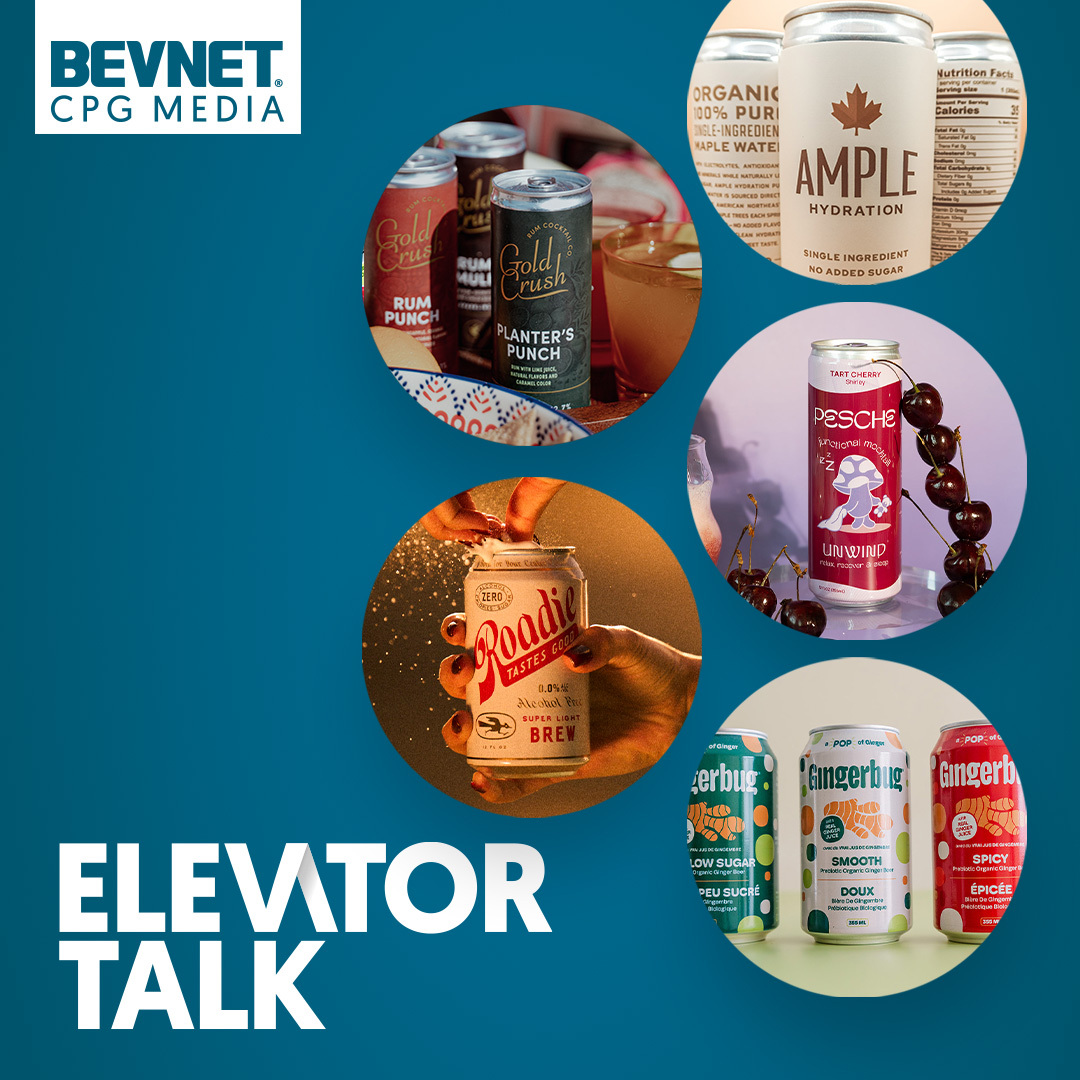
[00:00:05] Ray Latif: Hey folks, I'm Ray Latif, the editor and producer of BevNET's Taste Radio podcast, and you're tuning into the latest episode of Elevator Talk, the series that profiles early-stage and disruptive brands from across the food and beverage industry. Today's episode will focus on five beverage brands whose entrepreneurs will have an opportunity to hear feedback and advice from our co-hosts for this episode. That's Rebecca Bernard, who is the founder and CEO of Empire City Brand Builders. Rebecca, welcome back to the show.
[00:00:36] Rebecca Bernard: Thanks for having me, Ray. It's been a pleasure.
[00:00:40] Ray Latif: Always a pleasure to see you, and you always bring such great feedback and advice to our entrepreneurs on this show. I believe this is number four for you, maybe five?
[00:00:49] Rebecca Bernard: I think it's four, I believe.
[00:00:51] Speaker: Yeah.
[00:00:51] Ray Latif: Yes, yes. But you and I have known each other for some time. You have a ton of experience in this industry. For folks who may not know much about you or Empire City brand builders, just tell us a bit about both.
[00:01:04] Rebecca Bernard: So I was in CPG on the sales side of things for about 10 years before starting my own company. I was Harmless Harvest's first sales rep, National Sales for Bruce Kost Ginger Ale, a couple smaller brands in between, and then I started my own business where it's sort of a one-stop shop for incubation. So brands that are emerging into the New York City market, we handle their merchandising, demo programs, sales. In addition to that, I do, you know, I'll do national, like, fractional work for clients as well. So I'll do a strategic review for them for about, you know, a three-month period, get them off the ground, let them know the lay of the land nationally where they can target specific retailers or distribution networks.
[00:01:51] Ray Latif: Empire City, the name would suggest that you know a thing or two about the New York area, and it is the number one market in the country for food and beverage. I wonder how brands, moral founders of those brands, know when they're ready for the New York market.
[00:02:12] Rebecca Bernard: That's a good question. I feel like a lot of people always want to target New York because they think if they can make it in New York, they can make it anywhere, you know, in the country. And sometimes that's a good strategy, but other times it's better to sort of work out your kinks and what doesn't, you know, what might work in one region might not work in New York, right, because it's oversaturated. It's more complex, more dense. But I do think that you can get some learnings in some of these smaller regions before expanding to New York. So I think it's really just kind of, it's never a one size fits all. You always have to kind of customize your strategy based on the brand and kind of your bandwidth and budget.
[00:02:54] Ray Latif: You mentioned merchandising, and I think that's oftentimes an overlooked part of building a CPG brand. People need to see your product on shelf. It's helpful when it's easy to see and when there's a good amount of information available about your brand via shelf talkers or otherwise. What are your basic recommendations for early stage brands on how to most effectively merchandise their products?
[00:03:20] Rebecca Bernard: Well, obviously, you always want to be eye level, but that's a competitive space to be in. So it's sort of the chicken or the egg, right? If you're not selling well, you want to go eye level. I always recommend for brands to budget as much as they possibly can up front for free goods, because that's going to allow you to sort of buy your space, so to speak. I think that that goes a long way as far as the market's saturated. People have very deep pockets. And so when you're going to market, you do need to budget for free goods in order to exchange for really good placement at first. And you have to prove concept. And the only way to do that is for you to increase your visibility. SKU number is really important. A lot of brands come to market with one SKU. It's just generally not enough to gain that presence. We always recommend a minimum of three SKUs to launch.
[00:04:08] Ray Latif: Yeah, really good advice. I'll just call it what it is. It sucks that you have to give free product, you know, at the outset when you're not making any money and you really hear all these things about, well, you need to be profitable and you have to give good gross margin and all these other different things. But I mean, the reality is it costs a lot to be successful in this business, but if you have good advice and if you can learn from people who have been there and done that, that'll help cut down on the costs and certainly the mistakes. And I think that's a big part of what we do here. at BevNET and here on this show, in particular, Elevator Talk.
[00:04:41] Rebecca Bernard: So, yeah, I think they don't have to be as generous in the long run if they roll out kind of more aggressively in that sense. And so it's sort of, as you know, catch 22 or chicken or the egg type thing where at least if they can support it aggressively up front, it allows them to sort of negotiate or have a little bit more power for a brand that doesn't have enough traction to prove that concept of velocity.
[00:05:04] Ray Latif: Absolutely, absolutely. Well, as I mentioned, I think you can give some really good advice to our founders today. And we have six incredible entrepreneurs, five brands, six entrepreneurs who are building amazing businesses. And I'm so excited to share their stories with our audience. Are you ready to meet our first?
[00:05:25] Rebecca Bernard: Very excited.
[00:05:26] Ray Latif: Outstanding. That person is Charlie Eisen, who's the founder of Hover. Charlie, it's great to see you. How are you?
[00:05:34] Speaker 1: How's it going? Thanks so much for having me. Really appreciate it.
[00:05:38] Ray Latif: I am shocked that no one has trademarked Hover for a beverage brand. It's such a great name. It's so kind.
[00:05:45] Speaker 1: Thank you so much.
[00:05:47] Ray Latif: Yeah, it could go a lot of different ways. What do you do? What is Hover?
[00:05:50] Speaker 1: Yeah, listen, really grateful to be here. Rebecca, Ray, super excited to be here for this. So yeah, we really were a matcha brand. We started by importing matcha powder last year, really around this concept of mindfulness. Matcha, it's a product I've used for about 10 years now to really help ground myself, to help start my day, to get this really steady state of energy. And I was importing matcha directly from Japan, very high quality matcha. It really, yeah, it was an incredible product. I started selling it on the street last summer to really have the goal of learning from our customer. And there were two really main learnings from that that I came to. One is that people just didn't know how good matcha could taste. Most Americans reference point is something that's bitter or something that's grassy, really low quality matcha drowned in milk and sugar. And then the second thing we really noticed was that there's no ready to drink matchas on the market that actually tastes good. They're milky, they're over sweetened. It really just turns into this gray glass of milk that's, kind of gross. So our mission became simple. We wanted to make the first ready to drink matcha that tastes delicious. So we did this by creating a sparkling coconut water with matcha. We've launched our pilot in April. with our first skew, which is a lemon yuzu flavor. We've been selling mostly direct to consumer through organic, social and influencer partnerships, both in New York and Tokyo to tell that story between New York where we're based and Japan where all of our matcha is harvested from and collected a ton of feedback from our consumer. And right now we're in the process of planning to have a larger scale launch with with multiple SKUs later this year. So super exciting times at Hubbard right now.
[00:07:59] Ray Latif: For sure. I have a million questions and I think that's a good thing because your brand is so interesting. I'm sure Rebecca does as well. But just to start out, are you in any stores or retailers at this point?
[00:08:11] Speaker 1: Yeah, it's a great question. We're in five different stores in New York right now, but to start, we really wanted to be mostly direct to consumer. We really wanted to own our customer and really wanted to own our customer feedback. So we've been reaching out to everyone who's been buying and getting a ton of great feedback from that. And also it's been great to have a few key retail partners in New York to be able to sample out of, to be able to meet our consumer face-to-face. But it's been, yeah, it's been a great experience in New York so far.
[00:08:43] Ray Latif: Yeah, well, Rebecca has some experience working in New York for sure. And she also has some experience working with coconut water. And this is a sparkling matcha tea made with coconut water, which is a really interesting concept. I can't recall one like this. Rebecca, have you seen a product like this before?
[00:09:00] Rebecca Bernard: I haven't. There's competitors in both spaces, coconut and matcha, but I'm not sure I know of any that have the combination of the two. I was curious if that was like an intentional play.
[00:09:11] Speaker 1: It was definitely intentional. And we're happy to be the first. We love the hydrating aspects of coconut water combined with this steady energy from matcha that will hopefully make you not spike, not crash from energy, but rather hover.
[00:09:31] Rebecca Bernard: Where is it that you want it to live on the shelf? Is it with coconut water? Is it with competitive matcha drinks?
[00:09:37] Speaker 1: Yeah, that's a great question. I really want to be more with the teas, I would say. OK. What do you think? Yeah, what do you think of that?
[00:09:48] Rebecca Bernard: Yeah, I think that that's a smart play. If you're leading with matcha versus coconut water, I think it's just highlighting sort of the dual benefits of it. So, you know, uh, your ongoing steady, no crashing kind of energy with your hydration, right. For the day. So it's, it's really how you're positioning it and, you know, marketing wise and, and, and retail.
[00:10:07] Speaker 1: Amazing. Thank you.
[00:10:08] Ray Latif: Yeah. Charlie caffeine without the crash. And the other tagline is, you didn't know matcha could taste this good. But who is Hover for? Who's your target consumer? Your graphics are cool. I mean, I like them. They have a Japanese anime style vibe to them. I would assume that this is for a slightly younger consumer, but who's buying Hover?
[00:10:28] Speaker 1: Yeah, we really want to be for the matcha curious consumer. There's so many people who are seeing matcha in the news and are seeing people talking about it. But the matcha experience that they're having right now is not one that really is one that aligns with how it should. They're getting these matchas in cafes that are filled with sugar, that are filled with these milks and all these different additives. We really want to be the matcha for the consumer who is matcha curious, who has seen it and is excited about the ingredient and is excited about the energy that they're going to get from it.
[00:11:12] Ray Latif: 45 calories, three grams of sugar, 100 milligrams of caffeine. Where's the sugar coming from?
[00:11:18] Speaker 1: Yeah, the sugar is coming from stevia at the moment. So we launched with a 4000 can pilot just to really get all this feedback. And one of the points of feedback was that, obviously, stevia is a really polarizing ingredient. People either really love it or really hate it. And I think as we move forward and as we build out this kind of larger skew count, it's something we are getting rid of and are going to go towards a more natural sweetener, which we're super excited about.
[00:11:54] Ray Latif: What do you think of that strategy, Rebecca?
[00:11:57] Rebecca Bernard: Yeah, I mean, I agree. I think stevia in particular can be relatively polarizing. It depends on the level and the bricks that you're kind of using, too. A lot of people, monk fruit might be slightly less polarizing than stevia, or going even a natural route where it's less sweetened in general, but maybe you're using something like agave or honey or something that's a little bit more bioavailable for them.
[00:12:27] Ray Latif: And I should note, Hover is packaged in 8.4 ounce cans, which I feel like is a great size. I think about some of the other matcha brands out there, particularly the ones coming from Itoen, and that smaller size feels like it's a sweet spot for Hover. I think a big question is going to be how much people are willing to pay for it. I think matcha comes at a premium, but what is the price point per can?
[00:12:49] Speaker 1: Yeah, right now the price is $5.25 a can, but obviously as we get to scale, we want that to come down. This will be the most, this will be the highest price it'll ever be. So as those demo queues go down, price will be able to come down as well, which we're super excited about.
[00:13:09] Ray Latif: Rebecca, what's the sweet spot for a product like this in terms of price?
[00:13:13] Rebecca Bernard: I mean, it is ceremonial grade, but then there comes kind of a scaling question, right? How do you produce something, you know, if you're talking about millions of dollars with ceremonial grade matcha? So I think, you know, 4.99, it can kind of hover in, it is relatively small, but I think when it comes to that hovering, unintended, you know, when it comes to that sweet spot, I think people would pay around 3.99 to 4.99 for ceremonial grade.
[00:13:40] Ray Latif: I also think when you're looking at retailers, the bodegas in New York, you always see really interesting products, especially in the beverage side of things, but with a brand like Hover, You got to think Whole Foods, higher end retailers, specialty retailers are the places where people are going to notice and want to buy a product like this. Rebecca, when you're talking to a big chain like a Whole Foods, how do you start that conversation? How do you get them really excited about this concept and make them believe that a product like this belongs on their shelves?
[00:14:17] Rebecca Bernard: Well, the trickiest part is really convincing them that you're going to bring in a different consumer base than what they currently have, or you're going to add value to the sets that they have, right? And so that conversation sort of comes from, you know, whether you have really good data, whether from D to C, or if you have really good, you know, data from in-store kind of velocities where you're kind of creating a story for these retailers to make them understand that. you know, bringing this in is going to add value to their sets. Whether it's a combination of ingredients or it has enough distinguishing factors that you're, you know, engaging with a different consumer base than what's currently there.
[00:14:55] Ray Latif: That is such great advice and it really is the name of the game. You know, why would they bring in your product if they already have one that can sell more than what you're selling or could sell more than what you're selling? I think Hover is a really interesting product and I think The education part of it is, there's a pretty low bar. I think most people know what matcha is. Most people know what coconut water is. The sparkling aspect of it might throw some people for a loop. Just once again, why sparkling again?
[00:15:25] Speaker 1: Yeah, it's a great question. We really wanted to create something that was differentiated and unique, and really felt that the flavor of the tea just comes out in such a stronger way when it's sparkling than when it's still. And I think also just as it is in a can. I think sparkling beverages taste much better in a can and still beverages do in my mind and in the consumer's mind who we've spoken to. So that's why we went down that route.
[00:15:57] Ray Latif: Well, I'm pretty sure we have a can. I tried to hide one. I know you sent some to our office and I tried to hide one just so I could make sure that I would drink it. So when I find it, I'll give you my feedback and I'm really excited for it.
[00:16:09] Speaker 1: Make sure it's chilly when you drink it. If it's hidden away, you don't want to have it at room temperature, let me tell you that.
[00:16:17] Ray Latif: Okay, good to know. Charlie, thank you so much for taking the time to be with us today. Really excited for you and the future of Hover, and really excited for someone. I should note this, the first 10,000 cans you sell, or is it 4,000 cans you sell?
[00:16:33] Speaker 1: Yeah, we gave away a $10,000 trip to Japan to someone who tried one of our first 4,000 cams. So we gave it away and we're going to be taking them in January to go skiing, which is super exciting. And definitely we'll check out the matcha fields with them as well.
[00:16:49] Ray Latif: Darn, I should have quit my job here at BevNET so I could have been eligible for that. Anyway, it sounds like it's going to be a lot of fun. Yeah, it'll be a fun trip.
[00:16:59] Speaker 1: Thank you guys. Appreciate the time and energy. Ray, Rebecca, very grateful for both of you. It means a lot.
[00:17:05] Ray Latif: And please stay in touch. Let us know if we can help in any way. That's what we're here for.
[00:17:09] Speaker 1: Very kind.
[00:17:10] Ray Latif: Thank you guys. On to our next guests for this episode of Elevator Talk. We have Maria and Roger Velasquez, who are the co-founders of Purple Drop. Maria, Roger, great to see you.
[00:17:22] Speaker 2: Great to see you. Hi, Rebecca. Nice to meet you.
[00:17:24] Ray Latif: Hello, Purple Drop, an exciting name for an exciting brand. Please tell us all about what you do.
[00:17:32] Speaker 2: Sure. I'll jump in first. And Roger, well, we'll fill in the blanks as we do in life. Roger and I are husband and wife in this crazy adventure. But yeah, Purple Drop is a modern, clean take on Peru's most iconic drink, Chicha Morada. Chicha Morada is brewed from purple corn that's grown high in the Andes. naturally this vibrant dark purple color. So of course, packed with antioxidants and brewed with spices and a nice citrus finish to it with lime and pineapple. Roger, my husband grew up drinking this and we had a light bulb moment one trip to Lima where we thought this is such an amazing drink. It's delicious. Why doesn't the world know about it? And most importantly, why don't American consumers know about it? And so we came back and set out to work. lots of different formulations and lots of back and forth and lots of mistakes and wins but we came up with something that we're super proud of and we were super intentional about paying homage to that abuelita recipe and staying true to the artisanal way of making this so we used all clean ingredients no concentrates no coloring sweetened with agave The way I describe it is you take the first step and it takes you immediately to Peru. It's quite an experience. And so far we've had some amazing feedback. We've done a lot of events, a lot of sampling. We launched D2C on Memorial Day and we were so happy to learn that we sold out right when we were at Summer Fancy actually, right? And now we're starting talks with different distributors. and a few independent markets here in New York City. We're a Connecticut-based brand, so we're focusing on the tri-state area. We're a pop-up grocer these few months this summer, and we're talking to a few retailers here in Connecticut and also in New York City. So it's been wonderful. We were semi-finalists on the Beverage Showdown at BevNET Live in New York City, which was an amazing experience for us being such an early brand and to be able to join the stage with some other amazing brands, but also have access to a panelist of experts that gave us the feedback we needed this early. was such a blessing. We were we were super excited to be there. And then the bigger news, we were picked as the best in show by Food Network from their summer fancy lineup of things that they tried at the show. And that was really, really cool accolade to be able to add to this journey.
[00:19:59] Ray Latif: So you guys just jumped four feet into this industry and were completely immersed at this point. I love it.
[00:20:07] Speaker 2: We did. We both don't come from CPG. Roger spent about 20 years in the advertising business. I come from tech and cybersecurity, but we both kind of put together our marketing minds. And really, again, we were very intentional early on about the branding and the founder story. And we wanted that to help us, obviously, gain the kind of momentum that we were able to and be able to build brand as fast as we did. We know packaging is super important to stand out on the shelf and in the market as a whole and as a unique drink. that needs a lot of education. We wanted to at least have a brand that pops, that sparks curiosity, makes people stop and ask questions.
[00:20:49] Ray Latif: Rebecca, speaking of questions, I would guess you have a few about PurpleDrop.
[00:20:55] Rebecca Bernard: I do. I am slightly biased. I worked at a Peruvian restaurant when I was probably 18 or 19, and I absolutely love Chicha Morada. I make it myself. Because there aren't really any brands that have it, and the only one that I know of is in a glass jar. And you can only find it in really specific markets, and it's very sweet. Like, too sweet for my palate. So, I was very excited that you guys were coming on. What kind of sugar, what kind of sweeteners are you using for yours?
[00:21:23] Speaker 2: We use agave. Okay. And there's a little bit of sugar that's added from the pineapple juice as well. And how many milligrams of sugar is it? 17. Okay.
[00:21:34] Rebecca Bernard: Yeah. Do you feel that the consumers will, did you consider using alternative sweeteners in a combination or did you want to stay traditional to the, to the authentic recipes?
[00:21:45] Speaker 2: Yeah, I mean, traditionally, the recipe is actually just cane sugar, right? And in Peru, they do pack it with sugar, kind of like what you mentioned. We were trying to modernize the recipe a little bit to fit the, you know, the American consumer needs and trends that we're seeing. Obviously, people are being more careful about the type of ingredients and more clean ingredients in their household. And we're seeing kind of this like trend of back and forth about sugar. You know, we didn't love sugar three years ago. Now sugar is back. So we went with Agave just because it kind of fits the superfood, all natural brand story that we're trying to tell, but we are very adaptable and we're taking feedback. We're working on the next production and we may, we may go a different route for a sweetener, probably better for our cogs too. But yeah, we're trying to figure that out.
[00:22:34] Speaker 3: And Rebecca, I think what you just mentioned is something that we got from feedback also from some of the consumers that have tried PurpleDrop because they said they used to go to Peruvian restaurants and they have to dilute the chichamarra that they had at the restaurant. And when we have talked to chefs and even restaurant owners, they'll go like, love your product. It's a nice to-go can that we can actually share with our customers.
[00:22:59] Ray Latif: I'm wondering when people should be drinking Purple Drop. What's the time of day? What's the use occasion for a product like this?
[00:23:08] Speaker 3: I love that question, right? Because a lot of people ask me the same thing. In Peru, there's no season for Chucha Morada. or purple drop, I'll say, you can drink it in the summer, nice and cold with ice, or you can actually drink it warm. You can mix it with a molten wine if you want to in the winter. I was talking to Maria, maybe we, our next skiing trip, we actually take it, we put some purple drop in it. So it's not really a, a seasonal drink. It's a drink that you can drink at any time, any type of any type of day. I had it when during the weekends I had it for breakfast or dinner. So it's a it's a must have. And it's actually a healthy drink.
[00:23:52] Speaker 2: It makes a great cocktail mixer, too, by the way. That's true.
[00:23:56] Speaker: I was going to say.
[00:23:57] Ray Latif: You know me too well, Maria. Well, sometimes versatility helps. Sometimes, you know, an anytime type of beverage is a good way to make it easier for the consumer to buy and use your products. Sometimes it makes it difficult in terms of merchandising. And we were talking about merchandising at the top of the show. Rebecca, where does a product like this belong in stores? How should Maria and Roger advise retail buyers as to where this could sell best on shelf?
[00:24:25] Rebecca Bernard: Oh, it's a tricky one, because to me, I love chicha morada, and it leans itself towards color profile of juice, let's say, but it technically is a corn-based drink, so it doesn't have a home currently. I would probably position it with juice, though, if I was going to go in any direction. It has that similarity to viscosity and sweetness, I would say. I think it also depends on the next evolution of what they plan to make. Is it going to be a singular SKU, or are they going to lean into Inca soda? What's the evolution of the brand? What's the identity? And what flavor profiles are they going to lean into on the second SKU will help sort of curate where that natural placement is going to be and what it's going to dictate, I think.
[00:25:12] Speaker 2: Great point. Yeah.
[00:25:14] Ray Latif: Maria, what are you hoping to learn at Pop-Up Grocer? What are some of the metrics that you're looking for to see if this brand actually has the legs it has, particularly in New York?
[00:25:24] Speaker 2: Yeah, and that's exactly our target market. We're hoping to learn about velocity. Obviously, we'll have a sampling day where we get direct feedback on the liquid itself, but we want to see how fast it sells off the shelf and how much can we go through in this three-month rotation. At least it gives us a little bit of a base data point to take to other retailers. And yeah, and continue on reiterating on both the branding, the positioning, and then possibly even the formulation.
[00:25:56] Ray Latif: Yeah, I would expect you're going to get some feedback on the packaging, which I love. Peruvian super drink and craft brewed purple corn, though, both will require a little bit of explanation. Has there been any feedback in terms of how to simplify that message?
[00:26:11] Speaker 2: Yeah, we got that feedback of BevNET Live actually.
[00:26:14] Ray Latif: Oh, how about that?
[00:26:15] Speaker 2: Yeah, right after our pitch, that was one of the first things is that we do need to explain a little bit more on the can up front and center how this drink would taste just because it is such a foreign concept. And so we went to work right after BevNET Live. We changed a couple of things for the next production. So our next scan is going to say spiced pineapple. And that way, at least it describes some of the, you know, the taste tones. And yeah, we changed a couple of other things just to talk about the purple corn. You know, it's antioxidant rich without, you know. Getting the FDA gods too mad at us and and yeah, just telling a little bit more of that story in the back, but we made some changes.
[00:26:56] Ray Latif: Yeah. Rebecca, there's a lot to discuss here about PurpleDrop and a lot to communicate. There's the backstory. There's the functional benefit. There's the taste itself. What's going to get people to buy this product though?
[00:27:11] Rebecca Bernard: Yeah, I mean, that's definitely the trickiest question. So, you know, I guess there's the common way where everybody does marketing, you know, online. I think that there's a bigger component to it, though. They're going to have to find, like, who is their consumer? And if they're trying to reach beyond, you know, everybody from Peru definitely knows what this is, right? So, you know, possibly other you know, South American countries know what it is, but you just want to make sure, like, who's this for, right? And then meeting them in different ways, I would say, like, be probably more creative if you're looking to expand beyond that audience, like, go to a pickleball club or a run club or something or find a benefit that it's, you know, mommy and me or something along those lines, like, you know, try to find kind of who is this really going to resonate with and why. And I think that the sugar will play a component in that. So I think that that's one thing that, you know, if they're going to go health conscious, that might be something that they might want to evaluate with the reformulation. or if it's a guilty pleasure, great, right? Then who's that person that's really, you know, I allow myself a Coke once in a while. I would definitely allow myself a sweetened Chicha Morada once in a while. You know, who's that person that they're really trying to resonate with and then meeting them there to educate them. It is gonna take sampling. It's gonna probably be a very demo heavy type product because it is absolutely delicious. It is a liquid on lip type of product for sure.
[00:28:38] Speaker 3: Absolutely. And Rebecca, just to elaborate on that really quick, and a part of being a little bit creative, we will be launching an ambassador program with a Peruvian Students Association in some of the Ivy League schools in between New York, Connecticut, and Jersey. So like we are, sampling has been our strongest part of launching, and you're absolutely right. Leading into the Peruvian community, leading into the Latin American community, and farther more like going after this functional, like millennial parents that are looking for new products.
[00:29:14] Rebecca Bernard: Food too. I mean, this really pairs beautifully with food. I found that, you know, it makes an amazing mixer. It's really delicious with a lot of different kinds of food. And I think if you explore the foodie world, that's how you can sort of resonate a little bit more with an outer demographic outside of, you know, kind of the Latina crowd if you're trying to expand beyond that.
[00:29:37] Ray Latif: Great discussion. We need to continue this discussion, probably offline, but I'm really excited for PurpleDrop. Maria, Roger, great job launching this brand. I know there's still a long way to go, but please, if you can just keep us in the loop about what's going on. It's so important for folks to stay in touch with our team at Bevan & Nosh and Taste Radio. You know, we try to connect with you as much as possible. But if there's something new that's going on with the brand, new retail distribution, new packaging, just please let us know. We want to amplify that message. We want to talk about what you're doing. We want to help in any way we can.
[00:30:13] Speaker 2: Thank you so much. Thanks, Ray. Thank you, Rebecca. Appreciate it.
[00:30:15] Ray Latif: Thank you. Thank you both. Let's get on with the program with our next guest. He is Kevin Broadwick. He's the head of mission control for Tomoko. Kevin, it's great to see you. Go ahead.
[00:30:29] Speaker 4: Thanks for having me on, right?
[00:30:31] Ray Latif: Head of Mission Control for Atomico. I assume that means founder of a really interesting brand, yes?
[00:30:37] Speaker 4: Yeah, that we wanted to get creative everywhere we could within the brand. It start was also a bit peculiar. I was about four years into my first company and literally dreamt the brand in the middle of the night, woke up at 2 a.m. and sketched out the brand label down to the name. and said, at some point, I need to bring this thing to life because even coming up with a name for a company is hard. So after we were acquired, I retired for about 25 minutes, which was fun, and then went ahead and launched the company. But we've taken a really unique approach to the start of this company. where we've built out a platform for space and science education. And so if you go to our social channels, you'll see we have about a quarter of a million followers and really high engagement rates off of these little educational reels. And so our idea or mission was we wanted to make learning about space and science and health fun and engaging and moreover, really accessible to everybody. So, stacked on top of this platform comes this Better For You functional beverage. And we orbit, in science terms, in the Goldilocks zone, where we're more flavorful than a traditional sparkling water, but not super sweet or over-caffeinated or over-electrolyted like a lot of the emerging sodas and energy drinks. So we have a bit more juice, for example, than like the good folks over at Spendrift. And then we've lightly sweetened it with white grape juice and organic blue agave. And then we've infused it with 12 essential vitamins and antioxidants. and added a low level of electrolytes into it. So the sort of goal was we wanted to have something that didn't have like a super specific use case or time of day that you would enjoy it and that you actually wanted to finish the whole can. So some of the beverages out there we found where it's like the first few sips were good and then you were kind of over the flavor profile. And so we've wrapped this whole thing up into being socially responsible. So 1% of our revenue goes to fund scholarships for underprivileged kids to be able to attend a NASA space camp. And I know that this trick works because I sent my kid to space camp for three years and now he's a senior at the University of Michigan in aerospace engineering. So we're really focused more on probably our mission than anything else on making education fun and engaging.
[00:33:32] Ray Latif: Well, no offense to anyone else who's ever appeared on Elevator Talk, but that was a heck of an introduction to a brand. Thank you so much, Kevin. Wow, wow, wow, wow. Let's just go brass tacks in terms of where you are right now. You just onboarded a major retailer. Tell us a bit about that.
[00:33:51] Speaker 4: Yeah, so we just stepped into Fresh Thyme Markets. So we are in all 70 of their locations and we are into our first week of doing in-store demos. So we'll get our first real round of insight into consumer preference, what they like and don't like. So some of the doors we didn't, aren't running the demos. So we'll have real data, what happens when you do in-store trialing and don't. And with my other companies, we never did in-store demos. The products were mostly HBA-centric and not beverage. So this is an interesting step for us to be able to get the real-world data. And then we've picked up three DSD partners in the U.S., and not to overcomplicate our story, but we also have picked up a large partner internationally, and we've made it an international version of Atomico based on flavor profiles in Asia.
[00:34:53] Ray Latif: Rebecca, I want to start with where we left off with Maria and Roger and talk about hierarchy of communication, because there's a lot going on with Atomico, all really good and compelling. But what really matters to that retail buyer? What's going to matter to that end consumer?
[00:35:11] Rebecca Bernard: Yeah, I mean, I think I have more questions than anything. So in the sense of like, you know, who is this like the graphics lead to me sort of semi, you know, juvenile is this like, to get kids excited about, you know, science is this for like, you know, curious adults, I just want to know more about what their bigger vision is for the brand. And then that would dictate sort of what that hierarchy would contribute to.
[00:35:35] Speaker 4: And it's an excellent question. So we purposely took kind of a 50s and 60s art style, so that we would appeal to an older demographic also. But we're really trying to appeal to all kind of space, current space and science nerds out there. And what we found is, you know, the momentum around space is enormous. So Artemis launched, like everybody in the world watched that. We've all been kind of watching the SpaceX huge IPO. You know, the three biggest movies this year will be Project Hail Mary, Star Wars, and Dune at the end of the year. And then confidentially there's rumor mill that Atomica will launch a couple more flavors. So a lot of big things happening in space. And so we are going to get kind of naturally gravitational pull from kind of younger generations to, you know, college age, but we've seen on shelf also, you know, people that are older that are quite curious. So even on the product, if you hit the QR code, it takes you to a fun factoid page and we'll have rewards for continually in taking that kind of step. But you're right that we have a demographic question mark. And what we're seeing is it's wide, but it's kind of more about a specific kind of person that's interested in space and science.
[00:36:58] Rebecca Bernard: I can see this actually even playing well in gaming communities and people underestimate the value of gaming communities. I mean, they're substantial and, you know, they definitely consume quite a bit of, you know, either beverages and snacks. And I can see sort of, if you targeted that demographic as well, this actually playing really well with them. It's more about where does this live on a shelf, right? Are you next to vitamin water? Are you next to like mineral related waters? Are you next to, functional other beverages like adaptogens, I guess that's sort of like, I think there's a question mark still there just based on sort of the package is great. I love it. It's super fun. I think you're going to have to play around with a couple different, you know, sections in the store to see where it really lives. I also can really see this playing well in the in the like the juice box section, right? So like, are you giving kids an alternative to something a little bit healthier, it's less competitive in that space. And I think that those are the things that as you kind of scale out and do some small test runs, that's what you would want to sort of challenge it in different areas of the store and sort of see where it's resonating.
[00:38:06] Speaker 4: Yeah, that's great feedback. In our head, we envision kind of being sat next to the ollipops and poppies of the world and the other functionals, but would like to see what happens when we are in other areas. Right now, in fresh time, we are on an NCAP, so we're getting a lot of really good exposure, and some of that will be picked up for back to school, so we'll get a good insight into how young it's really polarizing. And yeah, no, it's very exciting.
[00:38:41] Ray Latif: Kevin, you talked about Spindrift, or you at least referenced Spindrift when you were talking about Atomico. And I drink Spindrift because I love the flavor. because it's relatively low calorie. But why would someone, in terms of taste or nutrition, want to pick up a can of Atomica? What's really compelling? What's getting them, not just to buy the product the first time, but to make it a part of their daily ritual?
[00:39:10] Speaker 4: Yeah, we were big drinkers of Spendrift too. And also as a company, we've admired them for a long time. We feel like they did a lot of things right. And so for us, it was more about we wanted something a little bit more full in flavor. and a little bit sweeter than Spindrift, and didn't want to achieve that with using stevia or monk fruit or any obviously of the artificial sweeteners out there. So we added the white grape juice and blue agave to give it a little bit more full flavor. But yeah, I wouldn't take anything away from Spindrift. I would say we are kind of Spindrift plus, so we have, you know, a little bit more flavor than they do. But also, you know, not to get too technical, but when it comes to things like oxidative stress and, you know, did you eat all of your veggies, you know, this is a nice component of our beverages that we do individually have to add all 12 of our vitamins, you know, into the beverage. And then the electrolyte blend, we have a low level of electrolytes. Like people, unless you're like a world-class athlete, some of these electrolyte beverages are way too high in electrolytes for the everyday user. But we're providing just enough to give you, you know, some semblance of balance. So it's somebody that says, hey, I like having juice in my beverage. I like having, you know, this extra benefit and a use case that's also not complicated. I don't have to have it between know, 10 o'clock and, you know, 12, you know, p.m. Otherwise, I'm going to be up all night." So, there's, you know, no caffeine, you know, in the profile. So, we've tried to make it an easy storyline for somebody to consume.
[00:40:56] Ray Latif: Once again, they never give us enough time on this show. I'm going to talk to the team about trying to add another 5-10 minutes because we need more time. This is such an interesting brand, Kevin, and congratulations on what you've built. Kudos to what you're doing from a social and charitable perspective. I really think it's important. getting people excited about astronomy and space is so fun. And when I'm looking at your Instagram page, it's really gets me happy. It makes me happy. So thanks so much for doing what you're doing and please stay in touch. If there's something we can do to help you along your journey, just let us know and we'll do our best. Will do. Thank you very much for having me. Nice to meet you, Rebecca and Ray. Thank you. Onto our next guest for this episode of Elevator Talk, we have AJ Scordio, who is the founder of Ola Mate. AJ, it's great to see you.
[00:41:50] Speaker 5: Nice to see you as well.
[00:41:51] Ray Latif: Thanks for having me. Ola Mate, I think I know what you make. I think most people think they know what you make, but what do you make?
[00:41:58] Speaker 5: Okay, so Ola Mate is a sparkling yerba mate beverage. So it has natural caffeine from yerba mate, but it also is infused with some functional ingredients such as L-theanine to help smooth out the caffeine, and then lion's mane mushroom to increase focus and cognition as well.
[00:42:20] Ray Latif: I have seen so many new yerba mate brands come to market over the last few years. I'm wondering what's going on. Why did you start this brand, AJ?
[00:42:30] Speaker 5: So I started it because my grandmother's from Argentina. So I remember vividly as a kid sitting around the table enjoying the hot, hot mate. And then also just seeing the tailwinds from a lot of progress from the, you know, Guayaqui brand, the leader in the space. So I thought it was a unique opportunity.
[00:42:51] Ray Latif: Yeah, I think more and more people are becoming familiar with Yerba Mate and the benefits of it, and the fact that it does offer a different form or at least a different type feeling of caffeine than what people have traditionally come to expect. But now with so many new brands coming to market, and of course, the market leader, as you referenced, Guayaquil, now known as Yerba Madre, it can be kind of hard to break out. So Rebecca, you know, having said all that, You know, what are your initial thoughts on Olamate in terms of, you know, sort of differentiation within this small category, small but growing category?
[00:43:29] Rebecca Bernard: I will say this, I did start seeing it everywhere in New York City. So they did build some brand presence there. I don't know who they're currently working with distribution wise, but I had started seeing it around and was asking some of the stores about it.
[00:43:42] Speaker 5: Manhattan Beer, I think they're working with.
[00:43:43] Rebecca Bernard: OK, got it. So I think the main thing for this product, to me, the Lion's Mane is what sticks out, right? So we have a lot of competitors in the space. Far as I know, I don't believe any of them have any kind of functional mushroom combination benefits. And I think that that's going to be really key to telling your story. And then how does Lion's Mane interact with natural like cleaner caffeinated beverage, right? Like what are the benefits there and how do you communicate that not only on the shelf, but on the packaging? A lot of people, you know, I think generally they overlook how much they really need to communicate certain things on their packaging far as hierarchy. It is something that I would look into maybe owning a little bit more predominant, let's say on the packaging, because it is really going to be one of your bigger distinguishing factors.
[00:44:38] Speaker 5: For sure. Yep. The Yerba Mate category is going to become a billion dollar category by 2030. And then obviously, you know, like functional ingredients are just, you know, that category is just increasing exponentially each year.
[00:44:51] Rebecca Bernard: Was that a conscious choice to combine the two where you took kind of a couple of leading categories that were gaining some traction in, you know, popularity throughout the market? Was that your intention to kind of combine those to make something a little bit more unique?
[00:45:07] Speaker 5: Yeah, yeah, that was part of it. And then also to just lean in as much as we can into that steady focus state. So I think by combining both, that gives us a little bit of a leg up from just a pure Yerba Mate beverages.
[00:45:24] Rebecca Bernard: Yeah, you can really own the focus aspect of things versus just the clean energy sustained part of it.
[00:45:31] Ray Latif: 100%. How much does the organic formulation appeal to retail buyers and your consumers? You're USDA organic certified, AJ. So how does that factor into your sales strategy?
[00:45:47] Speaker 5: Well, I think it's great for now because it allows us entry into that tea sort of functional beverage space, which a lot of the beverages there are organic certified. So when you're sitting next to the other Yerba Mates, you want to make sure that you're organic certified. Yeah, for sure.
[00:46:07] Ray Latif: And according to my notes here, you just picked up distribution in Wegmans, which is one of my favorite retail stores. Are you national there, or are you just a handful of stores? We're in about 105 of their stores.
[00:46:18] Speaker 5: So we're just super excited about that. Again, they were looking to grow their Yerba Mate category specifically, and we just happened to come across the buyer. And yeah, we're rolling out right now into 105 stores.
[00:46:34] Ray Latif: Okay. I, we got to pause there. You just happened to meet the buyer at Wegmans. You got to talk about that.
[00:46:40] Speaker 5: Oh, well, I didn't meet, I didn't meet them in person. Uh, but, um, I hired a food broker who's been really great and they, they made the intro.
[00:46:50] Ray Latif: Okay. So what was the primary selling point? What, what were they, I know they wanted to increase the size of their Yerba Mate section, but what really resonated with that buyer?
[00:47:01] Speaker 5: I think what resonated was, okay, we want to, yerba mate is a growing category. We only have guayaquil at this point. And then I sent them the samples. From what I heard, the buyer liked the design and then also enjoyed the taste. So I think that's what kicked it off.
[00:47:21] Ray Latif: Okay, well, design and taste go a long way, but velocity is the name of the game, Rebecca, in a place like Wegmans. And actually, I should ask AJ, are you in a cold case or are you ambient shelf?
[00:47:32] Speaker 5: Oh, no, we're ambient shelf. And then, oh, the other thing was our approach when we entered market about one year ago was different. I hired a salesperson and literally like man in the van opened up about 500 independent stores in New York City, Queens, Brooklyn, Manhattan. Yeah. So I think that also probably swayed the buyers too, cause there was proof of concept there as well.
[00:47:59] Ray Latif: Well, it sounds like that investment paid off and Rebecca, I'm sure you've met in vans or what a man in a van. Yes. I think that's that, that is actually the literal term.
[00:48:07] Rebecca Bernard: We are the man in the van.
[00:48:10] Ray Latif: But, um, you know, again, you know, getting into a hundred plus Wegmans stores is awesome. getting pull off shelf is slightly more difficult. And again, going back to that same conversation we had earlier in the show, what are ways that AJ can enhance the presence of Olamide in Wegmans such that you're not just on shelf, you're getting off shelf in a big way.
[00:48:37] Rebecca Bernard: I haven't worked with Wegmans in a long time, but from what I recall, they're EDLP, so they're everyday low price, and I believe you can't run significant promos, because generally that's obviously one targeted way you can try to get some pull without demo support. I think, I believe that they still allow demos. Yeah, so I think, you know, one of your only options is, you know, where are the stores going to be located? Can you geo target? Can you come up with kind of a creative marketing campaign to you know, maybe it's a scavenger hunt or something along those lines, go buy it at Wegmans, send me a photo of your receipt and, you know, win X or something, right? Like, you might have to get creative when it comes to driving pull to make sure that you're proving out, you know, concept and velocity with them. Because EDLPs are challenging that way. They're great, right? You're just sort of at an everyday low price, but you don't have the capability to knock a buck off or do a scan back or, you know, two for X, right, where you can drive some trial. and build out a bigger shelf presence. So I would see if there's some way that you could work on any displays, maybe it's seasonal, and guarantee a certain number of something, like maybe that's where you do lean into online presence and have people come by it at that specific door, and then they get reimbursed or something like that. You can get creative on the back end of how you support it.
[00:50:02] Speaker 5: Yeah, yeah, I was gonna, well, I'm in the process of hiring like a team of creators and making sure that they're local, each one of them is local to Wegmans and then having them film themselves like discovering the product in the local Wegmans, posting it to their social media.
[00:50:20] Ray Latif: Yeah. Hey, Jay, according to my notes, you're 10 months in for Ola Mate, is that right? 11 months now. Okay. 11 months. It seems like you're pretty up to speed on building a beverage brand and what you need to be successful. I mean, certainly you've shown some traction as well. How did you learn about this industry? How are you getting acquainted with the things that you need to know to be successful?
[00:50:44] Speaker 5: I just dove headfirst into it. I own a digital marketing brand. That's a company that I run as well. And I've just been immersing myself. And when you have to go out there and sell directly to stores, I feel like the feedback is instant. So that's something that I'm grateful for. So, my salesperson would call me up and she would be like, I think we have to change this. They're telling me this about the can, the look, or the taste. So, I felt like that communication was really instant for me.
[00:51:22] Ray Latif: And are you going to the stores as much as you're relying on your broker to do so?
[00:51:28] Speaker 5: Um, so in terms of going to the stores, I have my, my one salesperson who I hired full time. And then I also hired someone full time as a demo, uh, person. So she's constantly going to, you know, the top 50 stores in, in the New York metro area.
[00:51:45] Ray Latif: Yeah. And last thing, price point per can.
[00:51:49] Speaker 5: Um, we like to sit at, uh, anywhere between $2.99 to $3.49 right around there.
[00:51:56] Ray Latif: All right. Well, we're recording this episode the day of the big England-Argentina game, the semifinal of the World Cup. I'm sure you're going to be tuning in. And then, of course, if Argentina wins that game, Sunday's the big day. So who knows? When we actually publish this episode, it could be a really happy day for AJ, or it could be a slightly disappointing one. But regardless, I'm thrilled that we had this opportunity to chat. Thank you so much for taking the time. Uh, and please stay in touch. Let us know when you are getting into new stores. Um, if you have a press release or any, uh, additional information about that Wegmans, um, launch, please just send it our way. Cause we want to talk about it on BevNET. We want to highlight what you're doing. Onto our final guest for this episode of Elevator Talk. We have Modupe Akawumi, who is the founder of Cham Cham. Modupe, how are you?
[00:52:50] Speaker 6: I'm good, Ray. Hi, Ray. Hi, Rebecca. Hi, you guys. Thanks for having me.
[00:52:55] Ray Latif: Thank you so much for joining us today. I think of Cham Cham when I see the name of the brand, it's C-H-A-M, C-H-A-M. My mind immediately goes to chamomile, but that's not what you sell. You don't sell chamomile drinks. What do you sell?
[00:53:08] Speaker 6: Ginger based drinks.
[00:53:09] Ray Latif: There you go. Yeah. So where'd this idea come from and talk a bit about what makes your brand interesting and unique.
[00:53:18] Speaker 6: Sure. I grew up in Sierra Leone and ginger drinks are very common there, along with many other cultures globally. So essentially, Cham Cham's inspired from that. So essentially we exist to introduce more people to ginger beverage as part of everyday life, again, as it is for many other cultures.
[00:53:42] Ray Latif: And so I'm looking at my notes here and you say the brand sits in the space between juice and kombucha, which is really interesting. Does it have a functional benefit like kombucha does or why did you describe it that way?
[00:53:57] Speaker 6: It does. So most people know that ginger is used for a lot of things, anti-inflammatory and all those things. In terms of the product positioning, we're leaning on taste and not running away from benefits that people already know ginger comes with. So we're leaning on flavor in that sense.
[00:54:21] Ray Latif: Yeah. And just talk about your retail presence at this point. I see that you're introducing new packaging and expanding your retail presence in the Mid-Atlantic. What does that look like?
[00:54:32] Speaker 6: Sure. Lots of independent stores. We're in about 125 stores, the restaurants included currently in the Maryland, D.C., Virginia region.
[00:54:47] Ray Latif: I'm getting thirsty, honestly, after talking to all these founders. I'm getting particularly thirsty when I'm looking at your ginger hibiscus, which just looks so refreshing and delightful. You also have a ginger passion fruit and a ginger tamarind. Before we get to Rebecca, just quickly, who is this for? When do you drink this? What's the time of the day? What's the use occasion for products like these?
[00:55:14] Speaker 6: So it was everyday refreshment. It's like you grab and go, it's just the intention. Again, culturally, this is something that you incorporate in any part of your life, in the mornings, eat in breakfast, eat in dinner, on any occasion, it's supposed to be a product that you go to. But in shelf space, grab and go. So it would be somewhere where you get your fresh pressed drinks or aged drinks or anything like that.
[00:55:45] Ray Latif: I'm trying to think. I'm kind of wrapping my head around this. Rebecca, how would you, how would you advise sort of communicating what this is and how people should consume it to consumer just to make it easier for consumers to know what it is and when to drink it?
[00:56:03] Rebecca Bernard: I'm gonna follow that with some questions first and then I can answer the question that you gave me. When you say fresh ginger, is it like hand-peeled fresh ginger or using ginger extracts? Can you describe a little bit more about the product that way?
[00:56:17] Speaker 6: Sure. We use fresh ginger roots and pair it with other stuff, so like tamarind, for example. I'm noticing more and more tamarinds coming into the mainstream market, but yeah, not powdered, fresh ginger roots.
[00:56:30] Rebecca Bernard: Okay, so it's not extracts or anything, it's like from fresh ginger root, right? Correct. That's something that I do believe is important. I ran, you know, Bruce Kosh Ginger Ale. And, you know, I would kind of make jokes at my trade shows and be like, because it was it was literal. We had, you know, 15 people hand peeling with a spoon, fresh ginger to make our product. And it was definitely a key selling point that I found that buyers really resonated with. And because you can actually see the floating bits of ginger at the base of the drink, It was something I can physically point to, but I can also kind of describe to buyers and I found that that really resonated far as us on like a national level with big retailers. So I feel that owning the fresh ginger component is probably pretty important versus an extract. You'd be surprised at how many ginger based products are made from extract and it extract, unfortunately, can have better like bitter notes to it. So if you're using actual fresh ginger, it's going to be more delicate, and have kind of like a sweeter, more delicious flavor to it. So communicating that on in some ways, I think important and the combination of like, you know, the things that you're using. Yeah, feel that that would be a good direction to sort of lean into, I would say.
[00:57:48] Ray Latif: Modupe, occasionally you talk about Cham Cham as being consumed as a shot. Is that one way to drink the beverage as well?
[00:57:59] Speaker 6: Yeah, no, quite the opposite, actually. The ginger, it's more like to reshape the idea of ginger and how it's consumed, that it's not a shot. Like in the American space, post-COVID, it's been different. Things are changing, but it's more considered medicinal. So you see a lot of ginger shots and things. There's nothing out there that's just refreshing where you can just grab, like you'd grab your apple juice or you'd grab a watermelon drink. In recent, maybe about a year or so, we're having a coconut-like frenzy where people are actually, you see that in the refrigerated space. So, it's just something to kind of take away that veil of a medicinal aspect that people
[00:58:50] Ray Latif: a lot of It takes a while. And so communicating refreshment, as much as you're communicating functionality, I think is the key here. And talking about juice as being refreshing is kind of interesting, because that, I guess, halo of how does this satiate me, yet also make me refreshed, for lack of a better word, I think is sometimes a difficult path to walk. How do you talk about refreshment in a way that is really clear to consumers, Modupe? Again, given the fact that ginger is generally considered something that is, or, you know, ginger beverages have been less refreshing than others in the past.
[00:59:54] Speaker 6: Yeah, that's an ongoing journey, like in the recent months I'm really trying to shape that story and the consumer facing aspect of it. And the existence of the company, we've been very B2B. But as we continue to grow, in particular, I'm looking to get into, we're in talks with a regional grocer, looking to shape like that story. But I would just say, from one to one, really, would be The pairing of it, the pairing with other things kind of afforded a refreshment, you know, I don't know. It kind of lends that story to ginger that it doesn't otherwise have, I think.
[01:00:54] Rebecca Bernard: Is this product fermented? Like I've seen ginger, fresh ginger, being able to be kind of almost fermented like a kombucha or something along those lines. Is it fermented at all or is it made more like a tea? Not fermented.
[01:01:08] Speaker 6: It's not, you could say made more like a tea because it's boiled, but certainly, yeah, so more like a tea.
[01:01:21] Ray Latif: Okay. Yeah, just going back to pairing it with food, I almost feel like this is a great or this would be a great pairing with food, almost with like salad, something a little bit lighter. And you talked about being B2B, Modupe, where are you? I'm assuming by B2B, you mean in small cafes and small restaurants as well. Is that right?
[01:01:44] Speaker 6: Correct. Cafes, restaurants and quite a number of independent grocery stores as well.
[01:01:49] Ray Latif: And so those cafes, what kind of food are they selling?
[01:01:52] Speaker 6: Oh, sandwiches and typical stuff. I don't know if you guys are familiar with like Tate or Starbucks, but just regular cafes that sell sandwiches, salads as well, and like cookies and coffee, just regular cafes.
[01:02:10] Ray Latif: Yeah, I mean, again, I think it's a nice pairing when you can say, this particular beverage goes with this particular food. And it doesn't necessarily need to be something that is cultural or ethnic. And I think even though you definitely come from that angle, or Cham Cham has that sort of angle. you know, being able to say, you know, you don't even have to think about that. This is just going to taste delicious with your lunch goes a long way to that messaging, that communication. And last question about price point. What do you typically sell at per bottle?
[01:02:45] Speaker 6: Around $3.69. In terms of retail, retail is for sure. Wholesale is obviously different, but I usually say that about a $3.69. Restaurants, of course, more.
[01:02:57] Ray Latif: It's a 16 ounce plastic bottle. Is that right?
[01:03:00] Speaker 6: Correct. Yes.
[01:03:02] Ray Latif: Outstanding. Odupe, such an interesting introduction to a really interesting brand. Thank you so much for taking the time. I don't know if you've ever sent us or had an opportunity to send this product, but if you could, please do. I'd love to try this. As I mentioned, your ginger hibiscus has made my mouth water the last 10 minutes. So thank you so much for doing that. Thank you. But yes, if there's anything we can help out with otherwise, please let us know. Just reach out anytime.
[01:03:30] Speaker 6: Certainly. Thanks, Ray. Thanks, Rebecca. Appreciate it. All right.
[01:03:35] Ray Latif: Rebecca has advertised a really interesting and fun group of brands and some awesome founders behind them. Uh, you know, I think it's really important and incumbent upon entrepreneurs to learn as much as they can at the outset. And I think that, um, they are learning, but what's one thing that we haven't necessarily talked about today that you think all these founders need to take into account as they continue to build their businesses?
[01:04:02] Rebecca Bernard: Oh, I think the foundation is the one the almost pre launches where the brands really need to do more homework, I find that you know the adjustments tend to come later, whereas I would, if I were a brand and I was going to launch something fresh. I feel that I would make a very small production run somewhere like Noble, and I would go and demo that myself. I'd really get feedback. I want to understand something tactile. When somebody picks up my beverage, do they have to ask me a bunch of questions like, what is this? I would put it on a bunch of shelves, get some real data before going and expanding. I think getting those learnings as much as you can from a consumer base as early as possible because Most brands will go through one kind of reiteration and or tweak for package design and making sure that you definitely have all of the P's in place. I always say is packaging, positioning, pricing is really important. And so it's great to think, oh, as I scale, when I go back, I'll reduce the pricing as I go to scale. But at the end of the day, it's very hard to scale unless you're priced correctly out the gate. Those are a lot of variables that you kind of need to factor in before you launch as you're kind of raising money, whether it's friends and family or on that first production run. And knowing, you know, predictively that you will eventually get your costs down, so your margins will be a little healthier down the line, I think. I do wish people would do, I guess, some kind of test run, I would say, with their packaging before they launch. I think that that's one of the biggest things. Is this communicating what I needed to communicate on the shelf without me having to physically demo? And, you know, I would get a huge sample size of customers. I would get buyers' feedback, you know, as much as you possibly can do before you relaunch.
[01:05:54] Ray Latif: Yeah, such great advice, as expected, as always. Rebecca, you're the best.
[01:05:58] Rebecca Bernard: Thank you.
[01:05:59] Ray Latif: For folks watching or listening at home, what's the best way to get in touch with you and the team at Empire City Brand Builders?
[01:06:06] Rebecca Bernard: They can email me at Rebecca at EmpireCityBrandBuilders.com or go to my website and they can email me through the website.
[01:06:15] Ray Latif: I think they should. I think that would really be helpful for a lot of brands and a lot of founders. Rebecca, you're the best. Can we get you back on the show soon?
[01:06:25] Rebecca Bernard: Absolutely. Always a pleasure. Really fun.
[01:06:28] Ray Latif: Thank you so much. And thanks so much to all our entrepreneurs who joined us today. Thanks to everyone listening or watching at home. And thanks to our incredible team at BevNET, Nosh, and Taste Radio, the best in the business. Signing off for everyone, I'm Ray Latif, and we'll talk to you next time.