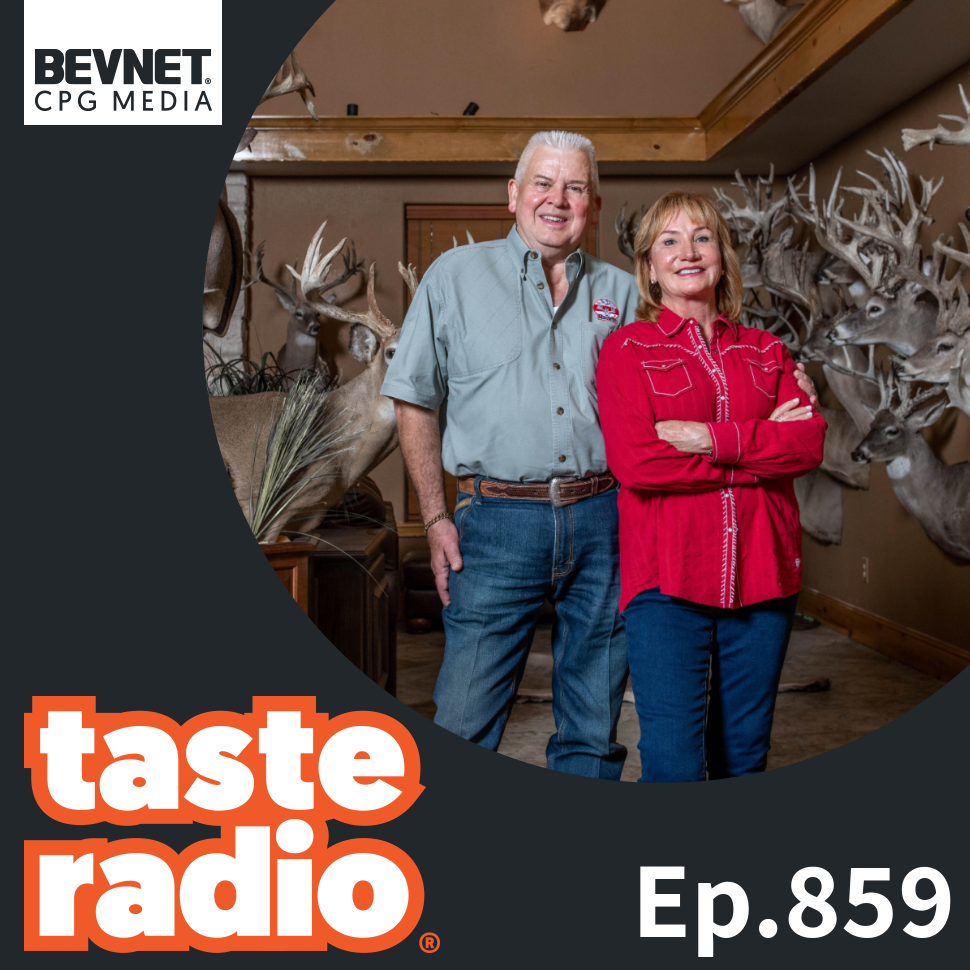
[00:00:08] Ray Latif: Hello, friends. I'm Ray Latif, and you're tuned into Taste Radio, the number one podcast for anyone building a business in food or beverage. Building a thriving CPG brand wasn't Katie Lee's plan. It was a crisis response that turned into a national business. When COVID threatened her four St. Louis restaurants and the livelihood of 150 employees, the chef and restaurateur created a line of frozen pizzas simply to keep her team working. That pizza became the foundation for Katie's, a food brand that grew from roughly a $2 million business in 2023 to one on pace to surpass $24 million in sales this year. Cady's is headed for more than 6,300 retail doors by year-end, including every Target and Sprouts nationwide, as well as Whole Foods, Publix, Wegmans and other major retailers. But the growth hasn't been without its challenges. When Target awarded Katie's a national rollout, Katie suddenly had to figure out how to produce 400,000 pizzas in three months. Now, as Katie's expands Beyond Pizza into new categories, she's also building a new manufacturing facility as the company navigates the challenges of maintaining restaurant-level standards and meeting the realities of national grocery scale. Katie shares what she had to learn the hard way about CPG, how she navigated the brand's explosive growth, and why she's ultimately more motivated by freedom, creativity, and impact than by a big exit. Hey folks, it's Ray with Taste Radio. Right now, I'm supremely honored to be sitting with Katie Lee, who is the founder of Katie's. Katie, it's great to see you.
[00:02:08] Katie Lee: Oh, it's so great to see you. Thank you.
[00:02:10] Ray Latif: And thank you so much for being so kind as to send some of your delicious products for me to try out before this interview. I was talking to you before we hopped on the mics and said, I haven't tasted pasta, pizza, and pasta sauce like that in a very, very long time, if at all. You make some really, really good food.
[00:02:30] Katie Lee: Well, thank you. So I appreciate that. I'm a restaurateur, a chef. And so that's kind of what you're getting. You're getting a restaurant quality product in the frozen aisle.
[00:02:41] Ray Latif: Yes. You're also an author. You're the author of the book, Unemployable, which you also sent me an advanced copy of, which is fantastic. The Katie Lee story. It almost sounds like a sort of cable movie with the Katie Lee story. But no, this is a fantastic book. And I was hooked when I saw the back of it. because the back has a quote from you, which says, my entire life from a young age, my father would say, Katie, you're just like me. You're unemployable.
[00:03:09] Katie Lee: What does that mean? I think it means that you might not be able to work for someone else.
[00:03:16] Ray Latif: Okay.
[00:03:17] Katie Lee: Due to many factors and our factors may not have been as, you know, that we're like extra brilliant or smart. They might just be that we're a little bit wild and difficult. That was how he was. And it turns out, I say nature or nurture is impossible to track, but regardless, I ended up very similar to him where I kind of wanted to do it my own way.
[00:03:41] Ray Latif: Yeah, and you did it your own way from a very early age. According to my notes here, you've dropped out of high school at 15. Is that right?
[00:03:48] Katie Lee: I did, yes. Dropped out of high school at 15 and was kind of a troubled kid and landed, I always say, in one of the only places that'll take anybody, restaurants. So got lucky because I absolutely dove in, loved it, and it's the only thing I've ever done. And opened my first restaurant at 25 and 18 years later. Here we are.
[00:04:12] Ray Latif: Started your own restaurant in your twenties, but it wasn't always the most perfect journey, at least at the outset. You struggled with addiction.
[00:04:25] Katie Lee: My story hasn't been easy. I would say one of the things that is important in the book is that no one's is and how you keep going. But yeah, I struggled with addiction from a very young age. One of the reasons I dropped out of high school, landed in restaurants. And like you said, there's a lot of drinking and drugs, especially during that time in the 90s, early 2000s. I just fell deeper and deeper into it. Opened my first restaurant, the pressure, like you said, the success, all of it was way too much. And I spiraled and lost it, lost everything. And ended up without anything and living in a halfway house for six months. And that was 15 years ago. And I've been clean and sober ever since and built my business that you see today from there. So it's been quite a journey. I would say my addiction is kind of one of the superpowers. I went through a lot, learned a lot and have some good grit from it.
[00:05:29] Ray Latif: What's one thing that you learned from the experience that really helps you as an operator today, both as a restaurateur and a CPG founder?
[00:05:39] Katie Lee: I think I have a very high tolerance for pain. I believe you need that when you're scaling a company like we are. I also think I have good perspective about what's important. So some of the challenges that I face every day don't quite bother me as much because my perspective is I'm here, I'm alive. And, you know, I'm doing well. So I think both of those things, a high tolerance for pain and risk and a perspective about what's important have served me really well, especially during this past year where the growth has been monumental and you've got to hold on for dear life to make it through it.
[00:06:24] Ray Latif: When you talk about risk, is it because you feel like you have nothing to lose or because you already lost everything and now you have everything to gain by taking that risk?
[00:06:36] Katie Lee: Yes, definitely a little bit of that. And then I think, like I said, just a perspective that for me, what people consider a loss, I'm just really, truly grateful to be here. I work with my family. We've got 500 employees, and it's been an incredible journey. I know I'm always going to make it. That's the other thing is I know that if I've made it out of addiction, built this business, I can do much more than maybe some people realize that they can do. And so I have this confidence that even if we lost it all tomorrow, I'm going to be able to dig down deep and build it back up again and be OK. So my risk tolerance, yes, it's a little bit higher. than everyone else's because I know I'll make it. And I also am grateful to be here. And I know that I've been at the bottom, so I've survived that. I'll be okay.
[00:07:37] Ray Latif: Well, Katie's almost lost everything and not by your hand by the pandemic called COVID-19. And when COVID hit, like a lot of restaurants, you had to pivot. You had to figure out another plan, especially because so many people owe their lives and their careers and their incomes to you. And Katie's pivoted into frozen pizzas. When did you realize that your consumer brand or what was becoming a consumer brand could be this big business that even outpaced your restaurants?
[00:08:14] Katie Lee: Yeah, a couple of moments. I mean, first, like you said, we were faced with the death of a business, the death of, you know, everyone around you. It was a very scary time. Some people freeze. I jumped into action and we immediately prototyped a frozen pizza. I realized I've got to keep all of these people working. People are the most important part of a business. If you lose them, you lose everything. And rehiring that team is almost impossible. And you saw a lot of restaurants not able to reopen because of that, understandably. And then I also had bills to pay and keep the lights on. I had two restaurants at the time and 150 employees. So we prototyped this pizza, we got it out. And immediately there was this, I've never struck gold, you know, I've always worked really hard and this was a striking gold situation. And part of it was we sold 50,000 pizzas in six weeks to the St. Louis metro area. Part of it was people were really rallying around restaurants and small businesses. And so at first I thought, well, that's just it, that's all it is, but it continued and then grocery stores began to call us and we figured out how to label pizza and get it distributed to grocery stores and learned a ton about CPG very quickly. As that was growing, I realized we had something, but it really wasn't until last year When two things happened, I won the Walmart Golden ticket, and then I also got a full chain deal When Target for my pizzas. When Target happened, we went in, we made all of the pizzas for Target, we launched full chain, and then we shot very quickly to the top of the leaderboard there with sales and growth and all of that. And that's, I think, the second moment where I went, okay, Now we've reached a national scale. We're able to serve as a national retailer and the nation loves it. So the last year since that moment has been a whirlwind of growth and just excitement for our team and what we're capable of. It's a really amazing thing.
[00:10:33] Ray Latif: For Target and Walmart to pick up your brand, they have to have consumers, their customers really love what you're doing. What you're doing is making super premium food, super premium pizzas. This is not your everyday frozen pizza. And it comes at a premium price point.
[00:10:50] Katie Lee: Well, when we made the pizza, there was not a lot of development that went into it because of the urgency just to survive. So the pizza that you see today was created in that 48-hour period. It's hand-stretched, just like the restaurants, wood-fired. It's made with ingredients like burrata cheese, San Marzano tomatoes, extra virgin olive oil. We're chefs. We're restaurateurs. So we just made a restaurant pizza, sealed it, froze it, and then sold it. not really realizing that that was something that was not out there, especially at scale. And so I think what you're seeing is people are trading restaurants right now for the grocery store for a lot of reasons. And we're this restaurant quality premium product that's made with the philosophy of Italian cooking, which is great technique, really great ingredients, and keep it simple. It really wasn't a well thought out plan. It's just what we do. And it turns out that that was something that the consumer was craving.
[00:12:00] Ray Latif: I'm going to take issue with you saying it was not a well thought out plan, because it sounds like everything you did was intentional, at least when it came to the food. The food has to be the most important part. Otherwise you don't have anything.
[00:12:11] Katie Lee: Yeah, it was what we do. So we decided we're not going to change what we do. So you're right. It was thought out, meaning we stick with our principles and we stick with what we do in the restaurant. But I think had we had more time, we would have thought, we've got to make this a frozen pizza and let's look at all the frozen pizzas and let's try to change and do something. That just didn't sit well with us and it wasn't what we do. So I think you're right. There was thought, there was 18 years of thought owning restaurants, but it all came together pretty quickly.
[00:12:49] Ray Latif: Did you look at the freezer aisle when you were preparing to expand availability and distribution of Katie's? Did you look at what was out there and say, Hey, you know, we can be better from a packaging standpoint. Obviously you're better from an ingredient standpoint. Can we be better from a label design? I mean, how did you assess the competitive set for premium pizza?
[00:13:13] Katie Lee: We always wanna be better. Some of that is looking at competitors. A lot of that is just looking at our food and understanding the culinary world out there and how we can just be better. So yes, we're always, always trying to improve, but we're getting a ton of data now because instead of restaurants, we're reaching millions of people. Data helps us immensely with packaging. Our packaging right now is very simple. It's like a clear cryovac bag that you would find in a restaurant with a sous vide machine. And what we're finding is that is not always merchandised very well. And it also doesn't allow us to kind of tell the story every time about what we're doing. So we're in the process of improving our packaging to support the story, the pizza, and then let the merchant, you know, at the retailer level, allow them to merchandise the product a lot better. So we absolutely look at the world and see what is changing, new ingredients, new techniques. And then yeah, for competition, I think it's more like the data and what is the customer? What is the retailer need? And how can we make it more accessible to them? And like you mentioned, price point is a big sticking point for me, especially my goal in all of this was to bring a clean product. We only use extra virgin olive oil, we use ancient grains, we use premium cheeses to the masses so that everyone can enjoy it and it's not just like this top tier group. So I'm in the process of building an amazing facility. I currently have a facility. We manufacture all of this. And I want to always do that so that we can control the process and the technique. But we're building a new facility that will allow us to get that price point down pretty quickly within the beginning of next year so that more people can be reached and it's accessible to all.
[00:15:25] Ray Latif: What's your target price point for the pizza?
[00:15:27] Katie Lee: I would say lower, let's start there. Okay. But that's all being determined right now. It depends on some factors, but absolutely lower and absolutely at a point where we always want people to know that we are premium because we are hand stretching and doing all these beautiful things, but we want to be able to get it to a point where it's more accessible. So lower is my answer. Okay.
[00:15:54] Speaker: Okay.
[00:15:54] Ray Latif: I want to go back to your point about people trading restaurant experiences for restaurant quality meals at home, because it's very clear that that is happening right now. And it's ironic because you operate restaurants and a CPG business. Have you seen a shift in consumer behavior at this point where in your own restaurants, people are not coming as often or are looking at the option to make food at home as a more realistic and affordable option?
[00:16:24] Katie Lee: So I'm in a great position where I've operated my restaurants for 18 years. I have four of them. They're all in St. Louis in my hometown where I was born and raised. Our sales are up 5%, which for us is actually low. Normally we're up 15%. So being up, I think right now in this climate, I'm going to call it a major win because a lot of my peers are down quite a bit. I definitely notice something's happening, but I think the longevity and the awareness of my brand has absolutely helped me. And, you know, it's crazy, I just opened a new restaurant this year. Well, all of this is happening with CPG and CPG, the frozen business, which I've got the pizzas, the pastas, the sauces, the lines are growing, the door counts increasing, we're 10xing. And there's this incredible growth. But in my heart, I'm a restaurateur. So I've opened another location. I'm working on a new concept that will be open in a year and a half. And I, for some reason, just can't get away from what I truly love and do, which you get to experience in my products. in the grocery store. But I'm having this like cognitive dissonance about restaurants are definitely suffering and this CPG business is taking off. Kind of what do you choose? And maybe, you know, like we talked about earlier, the wild risk taker in me is like, I'm going to bet on both of them and just try to make both better. So. That's kind of what we're doing.
[00:18:03] Ray Latif: Yeah. Well, you're a restaurateur at heart and CPG founders, in my opinion, aren't born. They're trained or they are students. Yeah. Yeah. But what did being a restaurateur and what does a restaurateur help you or how does it help you as a CPG founder?
[00:18:22] Katie Lee: I believe it's our secret weapon. As a restaurateur, it's more than food. Food is obviously key and being a chef as well. And I have a chef collective that works with me. We understand food. We can develop things incredibly quickly because of the restaurants, not just because we have the chefs and we're trained in this and it's our passion. but we have a pool of people that are eating with us, a thousand people every day that we get to test products on. So for development, it's a secret weapon. I also think I understand what goes into a meal and what goes into a meal is not just the product, it's the story. And so if you can bring beautiful ingredients, beautiful technique, that's something that restaurants do well, that tells the story. And then the packaging, the way we present it, the book that I'm coming out with that really shares the history of the company, how we got here, and all of those things combined, hospitality, And what goes into a meal, I think, helps create a really special product that people are attracted to because they're getting more than something in a box. They're getting a story, they're getting technique, they're getting real people that have been doing this craft for decades.
[00:19:46] Ray Latif: I would agree. You definitely feel like you're getting the experience of a restaurant when you're eating your food. It feels different. And even when I'm holding a jar of your pasta sauce, which I am right now, your arrabbiata, it feels like a small batch restaurant quality product. It doesn't feel like a mass market product, even though these products are and will be sold you know, across America at some point. When did you decide to expand beyond pizzas and into things like sauces and pastas and pasta bakes? We didn't even talk about the pasta bakes yet, which are also amazing.
[00:20:20] Katie Lee: I've got this beautiful menu and pizza is just one part of it. I mean, pasta is a huge part of our story. Sauce is a huge part of our story. And so to bring the restaurant to people, I realized I've got to bring all of these wonderful things that we make to them. So pizza was an easy entry for us, but in order to tell the story, in order to bring all these beautiful things to everyone, we had to figure out how to scale multiple lines. So we have the pasta bakes, we've got the sauces, we've dried pasta, olive oil, and definitely more is coming. We're adding a few new SKUs and flavors to target this fall in a big tower with the book. And then next spring we have in development some other new categories even.
[00:21:13] Ray Latif: Oh, interesting. Well, I'm not going to grill you on what categories you're getting into, but it sounds like you're going to have the space and the ability to produce them with this new facility. When is that coming online?
[00:21:24] Katie Lee: That'll be online at the beginning of the year. So it's under construction right now. It's beautiful. It allows us to continue the important things that we're doing the wood fire and the hand stretching using our great ingredients. but it automates some of the things that need to be automated, like packaging, like boxing, all of the things that the craft isn't important to, we're going to be able to automate, we're going to be able to streamline. And like you said, there'll be room for new product lines and creating more and importantly, getting the price down so that we can reach as many people as possible with a really clean, healthy product.
[00:22:06] Ray Latif: Whenever I talk to founders that own their own manufacturing, they always mention that it's almost like two different businesses because on the one hand you have sales and marketing. On the other hand, you have manufacturing. In your case, it seems like you're running three businesses because you have manufacturing, restaurants, and sales and marketing. So I imagine your days are pretty stretched, not unlike your dough. But when you get that phone call from Target or that email and they say, Hey, we want to put you in all these stores across the country. And you realize you have to make 400,000 pizzas. That would also necessitate the creation of a larger facility. How did you plan for all this and make sure that you were hitting the ground running when When Target launch happened? Because that is a kind of make or break moment for a lot of brands. And if you're not as buttoned up as you should be, if things aren't delivered on time, if the product doesn't meet the standards of Katie's, you might be out of Target within a matter of weeks.
[00:23:00] Katie Lee: a couple of things, incredibly delusional. You've gotta be a little delusional to say to a team, we're gonna do the impossible, and I believe it, and they have to believe that I believe it. So it's that, it's staying in the moment, it's one thing at a time, it's one day at a time, and then once you get your bearings and you've accomplished maybe the first impossible hurdle, You get a lot of confidence and you get to step back and say, okay, now we need to put systems together and now we need to build the team and now we need to do all of that. But in the very beginning, it was all hands on deck. We're going to do an impossible thing. You all are going to be so proud that you did this impossible thing and just put your head down and one day at a time, do it. Don't look at the end 400,000 pizzas. look at what we have to do today. And we just really, it was a grit story where a team came together and built the impossible. And then after that, it was, okay, we're not done yet. The race isn't over. Now we've got to keep up pace and make it better. And it was my job to bring in people, bring in equipment, bring in a plan, a strategy, look at the tea leaves and put together things that could help the team do what they do. But I wouldn't say, you know, it sounds easy. It's always a challenge. Every day is a challenge. Every day we're faced with, you know, an impossible task or a disaster. And it's just really the mindset of stay in the moment, get as much done as you can, the best you can. And it's my job to make sure they have everything they need to support that.
[00:24:46] Ray Latif: 400,000 pizzas in three months. I honestly don't know. Hand stretch. Hand stretch. Yeah, I have no idea how you did that. It definitely helps when you have good people, committed people on your team. Who were the most important people on that team? Was it an operations manager? Was it a sourcing provider? How did you determine the, I guess, hierarchy of importance when it came to hiring the right people?
[00:25:11] Katie Lee: I don't know if I can give credit to any specific person, but I would say, you know, my head chef, Jake Sanderson, is cut from the same cloth as me. He loves a challenge. He loves to build. So he and I really kind of spearheaded the thing. A lot of credit goes to, I think, what we went through with COVID that bonded us, just the fact that we have this restaurant, these four restaurants that we could pull people from. And the restaurant business is, in my mind, the hardest business in the world. And we were already really good at the hardest business in the world. So that challenge for us was, okay, let's get as many of these restaurant people over here to kind of show the team what people are capable of. But yeah, Chef Jake Sanderson and I, my brothers, there were a lot of really important people during that time. And I would almost say the whole team. It takes a whole team to do something like that. But, you know, again, we just didn't know what we didn't know. And we didn't know that that was impossible. We just knew we had to do it. And that delusion took us pretty far.
[00:26:26] Ray Latif: Yeah. Well, ask most entrepreneurs if they would start a business, if they know what they know now, and typically the answer is no. 99% of the time the answer is no. Right.
[00:26:36] Katie Lee: And it's better if you don't know. It's really better.
[00:26:40] Ray Latif: To achieve the impossible, some things are just not going to work in the first go around. What was the most challenging part of getting prepared for that target launch?
[00:26:49] Katie Lee: You know, you mentioned it earlier, like we did not know CPG. We did not understand distribution. We didn't understand markdowns, promotions, merchandising. And those have been big challenges is learning the business at the same time that we are at a national scale. That has been the challenge for all of us is trying to play catch up with the incumbents who have been in the industry for decades and were really starting out. So it's a lot of making big mistakes, analyzing data, data that we didn't even know existed until recently. and learning that there's a whole chain of events that take place from it leaving our facility until it getting on shelf and then a whole chain of events that happen on shelf that we did not understand. And so that has been a great challenge for us. And really, I think kind of the exciting part of the year is we are getting our PhD in all of it pretty quickly.
[00:27:55] Ray Latif: It's clear that you're ready to step on the gas and have been stepping on the gas. It's also getting more expensive to run a CPG brand. It was very expensive to begin with. Now it's getting even more expensive for a variety of reasons. How do you intend on continuing to grow as fast as you are while maintaining the standards of what got you here in the first place?
[00:28:21] Katie Lee: that's the number one challenge is I said in the beginning, I wanna be able to scale this while still honoring what we do. So that's our core philosophy and that's where everything is based on and there will be moments and there have been moments when you have to say no, and you have to slow down a little bit, but we're also faced like you said with this, incredible opportunity and you know if I had my choice well first of all I'm always going to move quickly that's just in my nature but if I had my choice it might be a little bit slower but I'm also faced with an opportunity and the opportunity is that Our brand is wanted, needed, not just by the retailer, but by the consumer. And I want to be able to capture that excitement at the same time. So you take it all as it comes. I want to be able to service all of this excitement. but there are moments and there have been where I've had to tell a retailer no or had to say let's hold off on that idea until you know the next quarter or the next moment because I don't want to compromise what we're doing. So a little bit of both but you know, I would definitely agree that we are in the fast category right now. And that is risky. There's risk in that, but you just hope that you're holding on tight enough and that you can pivot as quickly as possible and make the right decisions to make sure that we maintain our philosophy of bring a great, healthy, beautiful product to the masses.
[00:29:59] Ray Latif: I think it's pretty clear when you would and why you would say no, but what gets you really motivated to say yes?
[00:30:08] Katie Lee: the potential of what we can do with the team. There's other opportunities. I'm an artist, you know, at heart as well. So being able to create more products, being able to create more art within the company, I think so those yeses bring those opportunities. They also bring great opportunity to the people on the team and they get to develop these careers within the company. The yeses are more doors, more people, more opportunity to tell the story and impact, you know, that's what it is.
[00:30:46] Ray Latif: A lot of people open their own business because it's financially rewarding or because they feel like they don't want to work for anybody else. In CPG, we're guilty of this and really talking about and highlighting the brands that have made it, that have sold for large amounts of money. And maybe I'm using the wrong word and saying we're guilty of it. I mean, we. We report on it. But people read those stories and they listen to those podcasts most often, those that are about successful founders and brands. How motivated are you by a financial outcome?
[00:31:22] Katie Lee: I think I've already made it. The important thing for me is freedom. The important thing for me is to be able to create and build. And that's, I think, why I'm an entrepreneur. So for me, I've made it. The idea of me selling today is a no. would lose the opportunity to do all these challenging things, create this great story with these great people. So for me, the moment that I have always dreamed of, the freedom moment, the moment where I can create and build has already arrived and I feel very lucky about that. So now it's just continuing what I love to do, which is build impact. And, you know, you do hear those stories. You hear the Simply Elizabeth story that just came out and it's wild and it's amazing. And, you know, someday that might be our story. But right now, for me, as cheesy as that sounds, I really feel like we've done it and we've done the special thing and the wonderful thing that I've always wanted to do. Will that be a cherry on top someday? Yes, but today the answer would be, I don't want to stop what I'm doing today. So there'll be many more years of Katie's and myself and my team building this thing.
[00:32:41] Ray Latif: You've done a wonderful thing in that you're giving people good food. My dad, who was in the food business, always said that, you know, we're not just selling food. We're giving people good food to eat. We're enriching their lives through good food. And I feel like that's honestly what you're doing. Not to sound sappy or cheesy as well, but when I ate your pizzas on Sunday and I made your pasta on Monday, I felt good about it and I felt happy that I had this opportunity to eat good food. And I hope that Katie's becomes much more accessible and, you know, to your point, a little bit more affordable for many people. So they get to eat your good food as well. In the meantime, Katie, thank you so much for such a great conversation. I'm thrilled for where you are personally and professionally. And I feel like there is such a great runway and such a great foundation for growth for Katie. So congratulations on everything you built to this point.
[00:33:32] Katie Lee: Thank you so much. This was great and I really appreciate it. And thank you for all the compliments on the food. I agree. As you should.
[00:33:47] Ray Latif: That brings us to the end of this episode of Taste Radio. Thank you so much for listening. Taste Radio is a production of BevNET.com, Incorporated. Our audio engineer for Taste Radio is Joe Cracci. Our technical director is Joshua Pratt, and our video editor is Ryan Galang. Our social marketing manager is Amanda Smerlinski, and our designer is Amanda Huang. Just a reminder, if you like what you hear on Taste Radio, please share the podcast with friends and colleagues. And of course, we would love it if you could review us on the Apple Podcasts app or your listening platform of choice. Check us out on Instagram. Our handle is bevnettasteradio. As always, for questions, comments, ideas for future podcasts, please send us an email to ask at Taste Radio.com. On behalf of the entire Taste Radio team, thank you for listening. And we'll talk to you next time. you