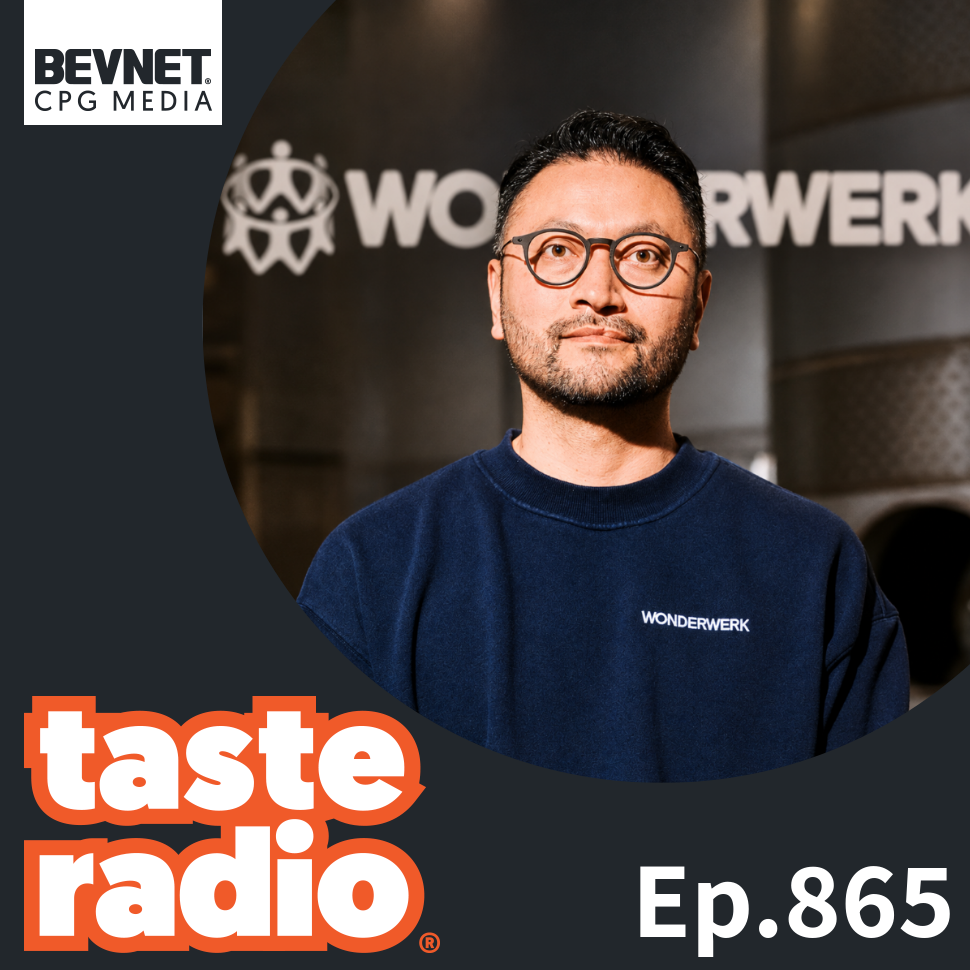
Speaker 1 [00:03] Hey folks, it's Ray with Taste Radio. Right now I am supremely honored to be sitting down with Matty Cerviente, a partner with the Angel Group. Matty, it's so great to see you.
Speaker 2 [00:12] Hi, Ray, nice to meet you. Thanks for having
Speaker 1 [00:14] me and thanks so much for coming out to our wonderful office here in San Diego where you are based. And, uh, I'm very excited to talk about the Angel Group because while we're here in Southern California. The Angel Group is a sprawling network that covers the entire country. As the name may suggest. You do investments. Tell our audience all about the angel Group. What do you guys do?
Speaker 2 [00:38] Yeah, so we are a private network of accredited investors investing in the food and beverage space. Um, today our membership base is almost 400 strong, which is really wild because it has grown so organically over the last few years, even since I joined initially as a member in 2024. And I think back then it was like close to 150, so we've had quite a bit of growth over the last few years, um, and our membership base is made up of mostly folks that come from. The CPG space, so people that have been operators, experts, um, founders themselves, uh, so the great thing about our group is, you know, they, our members have so much more to offer than just an angel investment checks they have. Introductions, connections, strategic expertise to offer to our portfolio brands.
Speaker 1 [01:37] And to be clear, when you're talking about members, you're talking about investors, people who are going to fund business. No, I think it's a, I mean, I think it's a really good point because members mean you're part of a group as opposed to making individual decisions.
Speaker 2 [01:50] The benefit for our members to be part of the angel group is that they don't have to go out and validate and evaluate these businesses on their own. Um, we do it for them and then once we decide to invest in a deal, uh, we then present it to our 400 members and then they get to decide whether or not they want to participate.
Speaker 1 [02:09] I have a feeling that the hundreds if not thousands of people listening to Taste Radio right now. are saying, OK, great. This all sounds wonderful, but how do I make an introduction? How do I introduce myself to the angel group? Talk about that initial process of Saying hello either by email, in person, what have you, but how do you get that conversation started?
Speaker 2 [02:29] Yeah, so we do have a website. We are the angelgroup.com and on that website we have an application that folks can fill out. Um, for both interested in becoming a member and interested in pitching to our group as a founder for investment, so that's always a great place to start. We do check those inboxes regularly, um, but it is always best to get a warm intro if you can find out if you know a current member, uh, or, you know, come see us at an event. We are always popping up at trade shows. We're always at expos, so we would love to meet you guys.
Speaker 1 [03:02] I love finding members of the angel group on LinkedIn. Uh, everyone is very proud. Any member of the angel group is very proud to post that as part of their profile. And, uh, it's a good way for me to learn who's part of the team as well. Once someone makes that initial introduction, what's the next step? How do you evaluate a potential investment in a food or beverage brand?
Speaker 2 [03:24] Well, that is the fun part. This is what we do all day every day, um, and so myself, Chris Rob and Adam Spriggs, the, I like to call him the founding father of the angel Group, uh, we are the folks every day, uh, deciding which deals we want to run at the angel Group, um. And so once we kind of get introduced to a founder or get a pitch deck sent to us, you know, the first step in our process is really to request product samples, you know, we are investing in food and beverage brands. The number one thing is taste above all in anything else, so usually, um, we will have founders send us product samples before we even hop on a Zoom sometimes, uh, just to make sure that we love the product and we wanna keep evaluating it. From there we'll get on with the founder, meet them, hear their story, uh, and just really start digging in, and then from there it's just a series of calls and getting to know the team behind the product.
Speaker 1 [04:25] So Maddie, once you and the founding fathers decide that a brand is, uh, worthy of potential investment, what's the next step? What does that look like?
Speaker 2 [04:33] Yeah, so once we decide we are going to be investing in a company, we then, uh, put together a deal page on our internal platform which is accessible to our membership base, um, and then I present the deal to the 400 members and what that looks like is I send an email and we. Post a pitch call with the founders, um, and something unique and cool about our pitch calls is that instead of having a founder come on and do a very typical like 10 to 12 minute presentation with a slide deck, we actually do more of a podcast style interview Q&A between myself and the founder. And I just have found that it's so effective because you know even the best, most engaging presenters in the world will start to lose people after, you know, 56 minutes and so it's just um it's a great way for our members to get to know these founders in an environment that feels a little bit more relaxed and laid back where they can really be authentic.
Speaker 1 [05:33] I sat in on one of those calls and it was really fun. Uh, it felt like a kind of a town hall slash podcast call where the founder had a lot of leeway to talk about what they're doing. In, as you pointed out, a very relaxed way, we
Speaker 2 [05:51] host a pitch call with the founder. We've already decided that we're investing and so the 400 members in our group, um, decide after the pitch call if each one of them would individually like to participate or not, so it's an opt-in network. So because of that it's always really hard to tell a founder how much they can expect to raise in our group going into it, um, because you just never know how, uh, the members will show up for specific brands, but. Um, yeah, then usually about a week after the pitch call, we'll collect all the commitments from our members and let the founders know the final amount that they raised.
Speaker 1 [06:25] In addition to tastes and package design and seeing their deck, you have to do some due diligence as well. What do you look for in terms of That diligence, what do founders really need to make sure they're buttoned up on when they are presenting to you guys?
Speaker 2 [06:42] Yeah, it's a great question. Well, I would say that most of the deals that we look at investing in, um, not all, but most of them are early stage, and when brands are super early stage and they don't have a ton of revenue and past history to look at and all we're looking at is the future. You know, projections, what becomes really important is the data that they do have, uh, where they are on shelves at that moment. So, you know, we're always digging into the data, um, that's the biggest thing, right? So if a founder's saying, hey, we're doing 12 units per skew per store per week at Sprouts, you know, we wanna go in and dig in and make sure that that data is in fact. Real, um, and, and if it is, it's, you know, sometimes that's the most compelling things that we need to be able to move forward in addition to I would say, um, just again when you're investing at this early stage, it's so much about the jockey and I know that that's probably so typical and cliche to hear an investor say that it's all about the founder, but. So much of it is and so we spent a lot of time getting to know getting to know the founders and really, you know, even doing reference checks sometimes and and seeing who we know in our network that knows them but because at that stage that's who you're betting on.
Speaker 1 [08:05] Honesty, transparency, making sure that you're buttoned up on your data, all very, very important. Is there anything else that a founder can do to make that process a little bit smoother, to make you guys feel really comfortable with them and their brands?
Speaker 2 [08:18] Well I think the biggest thing is time. I think it takes us sometimes a while to get comfortable with a business and get to know the founder and sometimes we have to, you know, pass on deals just because there are. Really rushing to get the round raised and they need an answer ASAP but we really need more time to evaluate it and so I think that's a big mistake I see founders making which is just not truly understanding how long it's gonna take to fundraise, um, and building in enough time to go out and get it done.
Speaker 1 [08:59] Mattie, you and the team at the Angel Group are doing amazing work on behalf of the food and beverage industry. This is a tough business. It takes a lot of money to build a brand, to build a business, and I think what the angel Group is doing is giving folks a foundation, not only for scale, but for belief. It validates what they're doing. I just wanna say once again thank you so much for everything you do and thank you so much for being with us today on Tas Radio. Thank
Speaker 2 [09:27] you so much for having me. I really appreciate it.