[00:00:00] John Craven: More SKUs, more data, more complexity. The beverage industry is changing fast. VIP helps suppliers, distributors, and retailers stay ahead, turning purpose-built beverage data and technology into smarter decisions and better results. For more than 50 years, VIP has helped power the beverage industry. Now, they're building what's next. VIP, empowering smart decisions. Visit VIPinsights.com for more information.
[00:00:37] Ray Latif: Hello, friends, and thanks for tuning in to Taste Radio, the number one podcast for anyone building a business in food or beverage. I'm Ray Latif, the editor and producer of Taste Radio, and with my co-host for this episode, John Craven, Jacqui Brugliera, and Mike Schneider. We're here in Notting Hill in London at the office of Trip, because we're about to start our meetup. Well, not about to, but in a couple hours, the meetup that we've been talking about for some time. They're probably sick of hearing about it. I don't know. I think they're going to want to hear about this. This is a big one. We've got nearly 150 people registered and lots of food. And we're in a room right now that is going to be used for food and beverage. So we need to be efficient with our voices here. So, yes. Mike, how are you doing? Living the dream, Ray. Thanks for coming to breakfast with me this morning. It's great. It was good. You just didn't tell me that you were going to walk out without paying the bill. The only place in London that only accepts cash. Yeah, it's a cash only place. Ray was not prepared for cash, but they're nice in there too. Even though it's a Tottenham establishment and you walked in wearing a Manchester United hat. That hilarity ensued. She calls back to the kitchen and was like, he found it on the street. He's got to protect his head. Well, Jackie, I don't think you would have liked it, whether you're a soccer fan or not, because it's not a lot of pork, a lot of meat. It was a full English breakfast that we had.
[00:02:05] Jacqui Brugliera: Yeah, Mike had warned me, but he said that there weren't veg options. So I could have came.
[00:02:10] Ray Latif: I don't know if veg options were, you know, Were they greasy? Like a carrot baked into a sausage? I don't know. I mean, maybe it was that kind of place. You go to Pellicci for the vibes and the banter.
[00:02:21] Mike Schneider: The banter was awesome in there. And Ned, the proprietor, he was, you know, talking to us a lot of the time and they're just really nice.
[00:02:28] Ray Latif: When he found out I was a gooner, he said he might not throw me out. So that was good. Yeah, it was good. John, how are you doing?
[00:02:33] Jacqui Brugliera: I'm all right.
[00:02:34] Ray Latif: Yeah. You feeling good? You ready for this meetup? Mostly. Excited to be back. Yeah, I forgot to set my alarm this morning. That didn't work out well. You forgot to set your alarm. So what time did you actually wake up? Like 10? 10 o'clock? I think I had breakfast at 1.30. Okay. Well, I guess you don't need lunch. No. All right. Good for the company. Whoops. Yeah. Yeah, I'm just so happy. It seems like there's a lot of enthusiasm for our meetup. As I mentioned, about 150 people registered and coming from all walks of the industry, whether they're founders, investors, I think we got some retailers on board, consultants for sure. But I'm just excited to meet all the entrepreneurs in this area. And a couple of days ago, I had the opportunity to visit a grocery store called Portobello's Whole Foods. Now, there's no connection between the Whole Foods that you know and the one that's called Portobello Whole Foods. But the selection they had was pretty stunning. And I picked up a few things that I thought we could sample from my shopping extravaganza. And I think while we're while we're sipping, It would be good to talk to you guys about some of the folks that you met one-on-one, IRL, here in the city of London. Jackie has the mic now. Let's be clear. I should just be clear with our listeners.
[00:03:53] Jacqui Brugliera: The behind the scenes of what's happening. Yeah.
[00:03:55] Ray Latif: One of our, one of our inputs on a recorder is wonky, is on the fritz as it were. Definitely fritzy. And so I'm forcing Mike and Jackie to use one microphone. So I apologize for that.
[00:04:05] Jacqui Brugliera: I'm just quiet over here.
[00:04:07] Ray Latif: Yes. Yes. But anyway, Jackie, you and Mike had the opportunity to visit a commercial kitchen on Tuesday. And from what you guys told me, it was pretty impressive.
[00:04:17] Jacqui Brugliera: Mm hmm. Yeah, it was pretty awesome. They had so much space for all of the entrepreneurs at Mission Kitchen, they had places for R&D, they had private kitchens. So as you grow and scale, you can grow within the kitchen, a co working space and event space. They really thought about everything. And they had a lot of package brands there. So it's not just you know, chefs or caterers, it was a lot of people that are going to the package industry. And they want to support them as they grow and also, you know, eventually get them out of the kitchen and producing elsewhere, but still providing the support that they need as they grow.
[00:04:55] Ray Latif: Yeah. I love when you see those incubators, those commercial kitchens that are the birthing ground of some of the most innovative food and beverage companies in our industry. And I don't know if Perfect Ted started in a commercial kitchen, did they?
[00:05:10] Jacqui Brugliera: That's a good question. I don't know. I don't know. I don't think they started there, but they might've started in a commercial kitchen.
[00:05:16] Ray Latif: And I mentioned Perfect Ted because you guys sat down with the founders. Perfect Ted being a matcha-based beverage.
[00:05:22] Mike Schneider: Matcha-based beverage. They have matcha lattes. Their new vanilla one was quite good. And they also have matcha energy. So they're calling it healthy energy.
[00:05:30] Ray Latif: Really tasty beverages founded by two brothers and Marissa, who was a cereal coffee drinker, like me, who... I thought you were about to say she was a cereal killer, like you.
[00:05:42] Mike Schneider: Coffee drinker, right?
[00:05:43] Ray Latif: Coffee drinker, coffee drinker, okay. Yeah, and she wanted to change her ritual, essentially, because coffee was basically having adverse effects on her body, so she found out about matcha and then saw the opportunity here to create this great matcha beverage, and Perfect Ted was born. Okay, they're trying to come stateside to the U.S.? They're focused more on Europe. Okay. It's a pretty interesting story. Should catch up with them at some point. Okay. Yeah. I did miss that meeting. I was a little jet lagged and completely forgot that that was on the calendar. Sorry, Perfect 10 folks. I do want to meet you at some point. It's Perfect Ted. I said Perfect Ted. You said 10. He always was looking in the mirror going, Perfect 10. Perfect 10. Perfect Ted. I do want to try their stuff when I see it out there. It's solid stuff. I highly recommend it. It's really good.
[00:06:35] John Craven: More than 70% of new CPG products fail, often over margins founders never fully understood. Outsourced accounting can close that gap for good. Visit belasolutions.com slash BevNET for a free small business accounting guide from Belay.
[00:06:52] Ray Latif: Artificial intelligence is reshaping every corner of the beverage industry. But where is it creating real value today? Stay tuned till the end of this episode for a bonus interview when I sit down with Andrew Krizis and Lucinda Aquat of VIP to explore how AI is moving beyond analytics to automate decisions, improve efficiency, and transform the three-tier system. So one of the brands I picked up at the Portobello Whole Foods is a beverage brand called Juno. And Juno is a maker of bamboo water. This variety has a splash of juicy mango. It's lightly sparkling. I figure, Jackie, since you were interested in said bamboo water, you could have the first taste. I've got some cups. I'm going to try it myself. You know, John, I feel like we saw bamboo water at the New Beverage Showdown. I want to say it was, I don't know, how many years ago?
[00:07:47] John Craven: Sounds plausible. Yeah.
[00:07:48] Ray Latif: Which brand? I don't remember. I can't remember, but I do remember they were trying to market bamboo water. It was right around the... I don't know the brand, but they were marketing bamboo water. It was the time when everyone was trying to do new plant-based waters. You saw maple water, you saw bamboo water, you saw... Everything was like post-coconut water.
[00:08:08] Jacqui Brugliera: Yeah.
[00:08:08] Ray Latif: That is quite a funky nose. Wow. It's a great taste. That's really good. Yeah. I'm trying to figure out what the benefit is though. Is it for immunity boosting? First of all, it's not an American brand. So no, it probably doesn't have ridiculous claims like that. No kidding about that. That's just seems to be the vantage point from over here, but it seems to be going for a different kind of flavor profile. Like it almost has like a, Despite this being like mango flavored, it has a almost slightly savory flavor to it. Yeah. There is a button on the front that says something about immunity. You see that? Yeah. Supports.
[00:08:50] Speaker 1: Supports. Okay.
[00:08:50] Ray Latif: Well, good stuff Juno. J-U-N-O is the name of the brand or how you spell the brand. I was not surprised, I think, to see that sea moss is popping up in places in the UK and I saw these sea moss gummies. that I figured we'd have to try. Now, the name of the brand is, John? Jenny. Jenny. Jenny. G-E-N-N-I. I think they're known for oils, specifically olive oil, but they're getting into the CMOS business, the business of CMOS, that is. All right, so they are different colors.
[00:09:27] Jacqui Brugliera: Oh.
[00:09:27] Ray Latif: There's a red one, kind of a gold one, and a green one. Okay, and they come in this pouch, and there's probably, I don't know, you want to say 50 or so in there? It was actually relatively affordable. It says 30. 30? Okay. They've counted them. It was relatively affordable for what I would assume Seamos.
[00:09:41] Jacqui Brugliera: How much was it?
[00:09:42] Ray Latif: It was 13 pounds.
[00:09:44] Jacqui Brugliera: Okay. Yeah. I feel like when you do get like usually a jar of Seamos, it's like 20, $30. Yeah. So it's usually pretty expensive.
[00:09:52] Ray Latif: Okay. Tastes good. I mean, you buy CMOS and you eat CMOS for the health benefits.
[00:09:58] Jacqui Brugliera: I eat these for the flavor.
[00:09:59] Ray Latif: Yeah. Well, shout out to our dear friend, Kate Sullivan from Uncracked, who hosted us at our San Francisco meetup. She's a maker of CMOS as well. CMOS gel, that is more specifically. And this is my first time having a CMOS gummy. So stay with me, folks. So I'm wondering how these are going to perform because there was a Creatine gummy scandal in the UK not too long ago where you know somebody was selling creatine gummies, and they just were it was a total ripoff so gummies are kind of like frowned upon at the moment here Well, these are described as energy and immune boosting. So we're getting a lot of immune in our systems. These are really tasty. Yeah, well, you can't have any more because I paid for them. Unless I can expense them. John, anyone?
[00:10:43] Speaker 1: Not Your can't.
[00:10:44] Ray Latif: No, I can't. Okay, John just ripped open a bag of potato wedge snacks. And I thought these were really interesting. These are from a brand called D. DJ&A. DJ&A, yeah. Ready to eat smoked chili and garlic potato wedges. But they're clearly not potato wedges in the sense that they're not soft, right? I mean, they're pretty crispy and crunchy. Yeah, they taste like they're almost like, not totally freeze-dried, but yeah, it's a drier, crunchier texture. This is the one time that they could get away with potato chips, because they would normally be crisp, but these are chips. They look like wedges. They look like dried wedges. They look like chips.
[00:11:20] Speaker 2: Yeah.
[00:11:21] Ray Latif: Looking big. Really good. Yeah, I thought those are delicious. I figured you guys would like them.
[00:11:26] Jacqui Brugliera: Yeah, the wedge like there's a lot going on.
[00:11:30] Ray Latif: Oh my god. Okay, Mike.
[00:11:32] Jacqui Brugliera: Delicious.
[00:11:33] Ray Latif: I think your mom told you about that.
[00:11:34] Jacqui Brugliera: It's way better than a chip. I feel like I'm always like dissatisfied with like a chip experience. Okay, Jackie's going in for more loaded with like seasoning.
[00:11:43] Ray Latif: It looks exactly like a potato wedge, but it's dry.
[00:11:46] Jacqui Brugliera: Yeah. Yeah, it does.
[00:11:47] Ray Latif: It's kind of weird that they call it a ready to eat snack. Like you don't have to deep fry it or anything or put in the air fryer. But yeah, I figured you guys would like those.
[00:11:54] Speaker 1: Taste Radio meetups are continuing in Chicago, San Diego, San Francisco, and London. Come hang out with the food, beverage and beer community for live podcast recordings, CPG networking and sample sharing. Want to attend or partner with us? Head to Taste Radio.com slash meetups.
[00:12:13] Ray Latif: All right, Mike is looking at a new sparkling tea brand that we've, or new to us anyway. It's called Olas or Holas. I would say Holos, maybe? H-O-L-O-S. It comes in a, I believe that's a 10 ounce slim can, as did Juno, by the way. This one I have in my hand is Cucumber Mint, passing it to John Craven. An organic sparkling tea. I feel like we need more sparkling teas in our lives. And I was happy to see this on shelf. While Jackie's pouring that... Is it white tea? Very good question. It's the... Oolong tea. Oolong tea. Oolong tea. Yes. So let's... It's pretty tasty. It's like kissed by cucumber. I like it. Yeah. Why is there not enough sparkling tea on the market? I mean, like, especially in the US. Didn't we just talk about this? No, we didn't. I think we did. I think you slept until 10 and you invented it. Yeah, exactly. No, I think it is just one of those things that has tried to break into the U.S. market, hasn't stuck. And every couple of years, someone tries again, hoping that the timing's right and the market's ready for it. And to be honest, I feel like each time that that's happened, I felt like, yes, now is the right time. Yeah. And trying to think of which brand, totally just slipping my mind right now that we recently had, sparkling tea. The one I always go back to is Sound, Sound Sparkling Tea, which eventually evolved to or transitioned to a sparkling water brand.
[00:13:41] Speaker 2: Yeah, that was more water than...
[00:13:43] Ray Latif: They originally launched as sparkling tea, and then they saw more of an opportunity in the sparkling water market. I got to check up with those guys, but I do have to say that Holo's is delicious. I can't tell how much sugar is in here. It seems like there's a healthy amount of sweetness. It actually is made with kombucha culture, organic kombucha culture, raw cane sugar, cucumber and lemon juice, agave insulin, oolong tea, green tea, mint, natural flavoring.
[00:14:06] Jacqui Brugliera: Yeah. Even going to the, we went to the Whole Foods in Kensington and there were a bunch of teas and Whole Foods too. But I mean, the tea culture in the UK is there. I think people are looking for tea in different formats.
[00:14:18] Ray Latif: Okay, so we we can all blame jet lag here, but the sparkling tea that we just talked about was birdie birdie, right? Kind of remind everyone that there's a certain new beverage showdown winner called do so. Mm-hmm. Yeah.
[00:14:34] Speaker 1: Yes.
[00:14:34] Ray Latif: We're whoops. Nice, right guys Let's let's definitely blame them. It's like I've never had sparkling tea what sparkling tea do so guys are going we won your showdown I guess I just keep mentioning it because I want to see more sparkling tea on the market. No, I mean, kind of what I was saying, too, I just feel like it's one of those things that it feels like bubbles make it better or different, at least give it another sort of path. And I think it just has been a bit of like an elusive category, not to, you know, incubate a small brand, but to get it to really like fly. But it also points to like Uso for me isn't even a sparkling tea as much as it's an elevated drinking experience. Like it's more of that adult non-alcoholic sort of experience for me. That's when I like to have Uso. So I didn't even think of it as a sparkling tea, just the packaging, the flavor. That's a phenomenal product.
[00:15:24] Jacqui Brugliera: Yeah, I feel like tea in general has that like sophistication to it, you know, so you are feeling like you're drinking something a little bit fancier and higher quality. But then there's also the whole energy route. There's just like a lot of different routes.
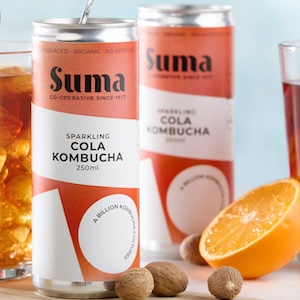
[00:15:38] Ray Latif: I mean, also nowadays, I think the fact that it basically is a pretty assertive flavor for like zero calories might be kind of compelling. And it's also a multi-use occasion thing. So this morning I spoke to the founder Every State, Jemma Fier, about her new matcha and cacao. It's a powder that you can use multiple times during the day, depending on the occasion that you need it. And it's got adaptogenic mushrooms in it. And so there are just so many different ways. When you think of tea, it's one of the most versatile ingredients there is in terms of beverage. Yeah. Kombucha apparently too, because Holos is a maker of kombucha. In fact, their website is holoskombucha.com. Interesting that they're using kombucha culture and then describing this as a sparkling tea. It feels a little lollipop, poppy-ish, you know, in that regard. Sure. There was a ton of kombucha. I've actually been pretty impressed to see... Need more wedges. John's reaching for the wedges. Kombucha seems to be having a bit of a comeback, or maybe I just haven't been paying attention in the UK. There was quite a bit of kombucha in a lot of different forms, and I picked up a brand called Suma, S-U-M-A. Maybe it's called Suma. It's a cooperative since 1977. This is a sparkling cola kombucha. Now, isn't all kombucha sparkling? I would assume so. Anyway, but this, I wanted to try this because I wanted to get a sense of how cola-y this kombucha is. And you know what? It's pretty damn good. The first ferment of kombucha isn't always, you can drink that, but you probably never have. It tastes like a cola. It doesn't taste like a kombucha, which I love. And I feel like this is what the Holy Grail was when everyone was trying to say kombucha is the new soda. Reminds me of the now. Discontinued or shutter brand revive. Yeah. I mean, I guess also Live Soda did, but that was more actual.
[00:17:32] Jacqui Brugliera: You didn't tell me that was kombucha. I wouldn't know.
[00:17:35] Ray Latif: That's really good. It's a really good cola flavored kombucha. He comes in a 10 ounce. can well 250 milliliter can slim can everything is organic in here as far as I can tell. And I am a huge fan. These guys just made me a huge fan of what they do. If they sold this in the United States, I think they would have a ton of consumers and they just shouldn't call it kombucha. Because I think the US there's still that stigma against kombucha.
[00:17:58] Jacqui Brugliera: It's they hate it or they love it.
[00:18:00] Ray Latif: Yeah. Whereas here, I think kombucha is a little bit more embraced as a category. And it was very clear on shelf that you didn't see, like, I think there was GTs, but then there was just a whole bunch of other local brands, small brands representing that category, at least at the Portobello Whole Foods. We got to meet one of the world's foremost gut health scientists. You'll meet her daughter tonight, V cutting from Feisty protein soda. Her mother is like, and her father are both into gut health science and they're pretty well known. And so they make a protein soda called Feisty that gives you 10 grams of protein and it's totally clear. And one of the things that Jackie and I noticed was there's like no bloating whatsoever. We quickly had what, two Feistys, like with all the sampling.
[00:18:48] Jacqui Brugliera: Yeah, I think we got up to like 20 grams of protein with just all these little vials testing all of the latest flavors that they have. And yeah, she was telling us, Oh, by the way, you know, the source of protein is really good for your gut. Cause it doesn't use whey protein, which can definitely mess with your gut. So it wasn't anything that they were like really touting as a benefit. And I felt great.
[00:19:10] Ray Latif: Yeah, it's good to hear that you guys aren't bloated because that would not be fun for tonight. Yeah, exactly. I thought we were going to be walking, you know, you're sampling carbonated beverages and you're like, oh God, you know, just like one after the other. We know how that can be in the New Beverage Showdown, right? Absolutely. All right. I got another beverage here. This one's called Kult. K-U-L-T. It comes in a 12 ounce wide can. It is a water kefir product. It's described as fermented lemonade. And the flavor that I got is passion and hops. So this is passion and hops. It is very tasty.
[00:19:43] Jacqui Brugliera: Yeah. Oh yeah. It's like very light tasting, very refreshing. I like the little addition of hops. Cool. Yeah.
[00:19:52] Ray Latif: Yeah. Really good. Right. It almost tastes like pineapple with the hops. It has a little bit of a acidity to it. Well, what's clear in all the categories that we're trying, whether it's sparkling tea, kombucha, water kefir, it's clear that these founders understand that consumers want great taste. No matter what the category is, no matter what the functional benefit is, they want great taste. And from what we've sampled so far, and Juno as well, excuse me, with the bamboo water, everything's been really good tasting. And I think we just hammer that home all the time on this podcast. And somehow we still get products coming to the office that are just not there in terms of taste.
[00:20:26] Jacqui Brugliera: I would say across the board too, it's like very like delicate, sophisticated flavors. It's not like very sugary, not like a ton of fruit juice, like they're using fermentation, hops, bamboo water, tea, which I think just adds to the complexity of the flavor profile.
[00:20:43] Ray Latif: Yeah, I've got one more category. It's not really a category as much as it is a beverage type. This is cactus water. And the name of the brand is Cacto. C-A-C-T-O. Very southwest sort of beachy looking, at least the... I don't know how to describe it. It's a yellow can, it's a yellow 12 ounce wide can, sparkling ruby pineapple. And of course, I was reminded of our friends at Prickly. The color palette is an analog of its U.S. counterpart. Yes, it is indeed. So I'm going to try this. And while we're trying this, we have one more thing to try. John, you have a pouch of vacuum fried broccoli flowers in front of you.
[00:21:20] Jacqui Brugliera: Oh, I do. You're right.
[00:21:21] Ray Latif: What is the name of that brand? The Giving Tree, huh? The Giving Tree. It's a pouch of vacuum fried broccoli flowers. Never heard of it. Okay, well, John's turn. While we're struggling to open that, let's talk about the cacto.
[00:21:38] Jacqui Brugliera: Cactos really nice. Like sometimes pineapple scares me. Cause I'm like, okay, this is going to be a sugar bomb and going to be way too overwhelming, but this is really delicate.
[00:21:49] Ray Latif: Well, I got to tell you, okay. Mike's having a hard time too, but the pineapple in this actually freaking tastes like pineapple.
[00:21:55] Jacqui Brugliera: It's real pineapple juice.
[00:21:57] Ray Latif: It actually tastes like pineapple.
[00:21:59] Jacqui Brugliera: It's amazing. Isn't it weird? Like not from concentrate, you know, or not from a lab.
[00:22:04] Ray Latif: Yeah. If you're going to give someone pineapple or say something that tastes like pineapple, this literally tastes like fresh pineapple. Have you Every State when you're, when you're tasting your pineapple, you go down to the core of the pineapple and you get a little bit of the rind. There's a lot more oomph in there and you get in less sweetness. So you're getting some of that in here too. Well, the one thing I'm not necessarily getting is the cactus. Like I'm not sure what I'm supposed to be tasting in terms of the cactus. You should be prickly.
[00:22:29] Speaker 1: Okay.
[00:22:30] Ray Latif: Your tongue should be on fire at the moment.
[00:22:31] Speaker 1: Okay.
[00:22:32] Ray Latif: Well, well done cacto. It's a bit on the sweeter side. John, did you get to try some? It's very good. All right. Jackie, while we're doing rapid fire here, how are your vacuum fried broccoli?
[00:22:41] Jacqui Brugliera: Oh my God. I am a huge broccoli fan and I would eat like five bags of that.
[00:22:47] Ray Latif: It looks like a real like a it's not a crushed up.
[00:22:50] Jacqui Brugliera: No, it's actually broccoli florets.
[00:22:52] Ray Latif: Okay, I wish we had. Oh, I wish we had video. I wish we could share like live stream video. Can I just eat broccoli? No, it looks like it looks like frozen. It looks like frozen broccoli. Yeah, it's freeze dried. I dig it.
[00:23:07] Jacqui Brugliera: Yeah, right? Is it salty?
[00:23:09] Ray Latif: I'm going to have some later.
[00:23:09] Jacqui Brugliera: It's just very simple. It just tastes like broccoli.
[00:23:13] Ray Latif: Okay.
[00:23:13] Jacqui Brugliera: So if you're a fan of broccoli, you'll love this. If you're Not Your're not going to like it. I'm a huge broccoli fan.
[00:23:17] Ray Latif: Okay, well, you can have the rest of that. Jackie's like, do not touch my giving tree.
[00:23:21] Jacqui Brugliera: I have eyes on this one and maybe some sea moss.
[00:23:24] Ray Latif: Okay. Well, like I said, all in all, I'm really impressed with what I was able to buy and see at Portable. There was a whole bunch of other things that I saw and I didn't buy everything. But yeah, okay, just shout out to Brisk Lager. This is our dear friend, Chris Hannaway. Chris Hannaway of Infinite Session, along with his brother Tom. And they have a new product called Brisk Lager, which is described as half the cows It's 70 calories per 12-ounce can and it's also gluten-free, but they don't shout that out on the front of the can. Chris Hannaway, our dear friend who we had breakfast with this morning and who is like a really good sport and one of the most knowledgeable people you could talk to. He knows corners of the universe and he has very, very deep knowledge. If you ever have a chance to sit down with him, it's a real treat. Yeah, he's a true beverage insider. We have to wrap up because we can get going here, but thank you.
[00:24:13] Speaker 1: We have to put a meet up on.
[00:24:14] Ray Latif: But thank you so much to all the amazing folks that made this happen, including Trip, Delicious, Something and Nothing. Stay tuned for interviews with all the folks that we are sitting down with here at this meet up in a future episode of Taste Radio. That brings us to the end of this episode of Taste Radio. Thank you so much for listening. Taste Radio is a production of BevNET.com Incorporated. Our audio engineer for Taste Radio is Joe Cracci. Our technical director is Joshua Pratt, and our video editor is Ryan Galang. Our social marketing manager is Amanda Smerlinski, and our designer is Amanda Huang. Just a reminder, if you like what you hear on Taste Radio, please share the podcast with friends and colleagues. And of course, we would love it if you could review us on the Apple Podcasts app Not Your listening platform of choice. Check us out on Instagram. Our handle is bevnettasteradio. As always, for questions, comments, ideas for future podcasts, please send us an email to ask at Taste Radio.com. On behalf of the entire Taste Radio team, thank you for listening, and we'll talk to you next time. you VIP has quietly powered the beverage industry for more than 50 years, trusted by more than 2,800 distributors and 1,400 suppliers. They have defined this industry time and again. And in this era of AI, they're leading the way. Today, we're joined by VIP CEO, Andrew Krizis, and Head of Sales, Lucinda Awkwot, to discuss where the industry is headed and what customers can expect next. Andrew, it's great to see you. How are you? Good. Thanks for having me, Ray. Lucinda, how are you?
[00:26:00] Speaker 2: So great, excited to be here.
[00:26:02] Ray Latif: Yes, and our audience is excited to hear about VIP's capabilities with AI because it is a topic that is top of mind for so many founders at this point. Andrew, as I mentioned, VIP has been around for over 50 years. Your background is pretty interesting because you bring so much to the table as CEO. How did you come to VIP?
[00:26:23] Mike Schneider: Yeah, great question, Ray. And I think it does go back to the legacy of VIP. So I'm incredibly passionate about the beverage and alcohol industry, the broader CPG industry as a whole. So I spent the last 12 years plus working at Nielsen IQ, working with many of the suppliers that could be listening to this distributors and retailers. It was about five years ago that I first interacted with VIP and it's actually a partner to Nielsen IQ. And so complimentary partnership was created and I got to know the company a little bit. I got to see the value of what VIP creates in the industry and how it helps support the three-tier system. And I was just blown away also by the people. by just the caliber of the talent, how respected they were in the industry, how much knowledge they had across the three-tier system. And so once I started to get to know the company a bit more, I saw just the opportunity for the technology to do so much more across the industry. And with AI, as we were talking about becoming really important and accelerating every day, every week, I started to realize it's a huge moment for AI and technology and more investment to come into VIP, really help our clients, help the suppliers, help the distributors and retailers, and transform how operations and the day-to-day work is getting done. So I just saw that as a great opportunity, both in the technology and AI side, leveraging all of my data background and knowledge in the industry, but then joining a group that has an amazing culture, an amazing team, and a ton of passion behind it.
[00:27:42] Ray Latif: Lucinda, when you came to VIP, you also came with a ton of experience. Just talk a bit about your background in this industry.
[00:27:50] Speaker 2: Yeah, thanks, Ray. So I like to say I was born and raised in the beer business, but I got here as soon as I could. Started when I was 21 with Boston Beer Company. I've worked in all three tiers of the three-tier supply chain over the last 20 years, and I showed up to the first day to the VIP office here in Burlington, and I felt like I should be asking for autographs because VIP is the only set of data and the only set of tools that I've ever used on any of the three tiers. So it was really remarkable to see the team of people that has built such an incredible organization and really built from the ground up over the past 50 plus years that VIPs existed. So I'm honored to be here, a part of the team now to help carry the sales team into the future with all this new agentic work that we're going to talk about.
[00:28:36] Ray Latif: Andrew, let's just start off by talking about where the beverage industry is headed right now in broad terms and why AI is such a critical strategic investment for founders and businesses.
[00:28:46] Mike Schneider: You know, I think about whether you're a small supplier or distributor or a large supplier, you know, the beverage alcohol space. You could be only have a few people Not Your company or hundreds. At the end of the day, everyone's looking for efficiency, whether you're three people within your company and you're stretching yourself to try to do five jobs. Or again, you're a larger company with maybe 10 people in the finance department. You're all trying to find better ways to do what you're doing so you can drive more product to consumers. So AI is just coming at this perfect moment over the last six to 12 months where everyone needs it. Everyone needs it for similar reasons, for inefficiencies, whether it's helping you run some reporting, it's helping you with pricing, it's helping you optimize something. At the end of the day, there's never enough hands and arms within a company when you're building a brand. And I've experienced that, you know, working with hundreds and hundreds of founders over the last 12 years in my past role with Nielsen IQ. And I see that with VIP. So I think all of the industry, both suppliers, distributors, retailers, are looking at AI to try to understand how can I drive more efficiency? How can I drive a better delivery of my service or product to the end customer? And how can I do it in a way that's going to set me up for success? But now many people are taking it in different ways. You know, AI isn't something that's just intuitive and you throw on a chat bot and all of a sudden you're up and running. So it's really interesting to see how suppliers are leveraging AI, how distributors are leveraging AI, retailers, et cetera. And there's some fun nuances between those three.
[00:30:08] Ray Latif: When it comes to spending money on AI or otherwise, founders want to see a return on investment. And I'm curious about how you measure return on investment when it comes to AI. And also, there's so much hype about AI at this point. Where does hype meet reality? Lucinda, can you tackle both questions for me?
[00:30:27] Speaker 2: Yeah, great questions. So I think I'll tackle the ROI question first, because I think it will address the buzzword as well. But I think when you think about AI, I was thinking back to all these different technological advances and how they've impacted the industry all the way back to when we used to have rolls of quarters to get on the payphone. And then all of a sudden, cell phones helped to make us more efficient. Same thing with printers, and then the internet. I think of AI in the same way. It will give us the ability to enable all of our teams to be that much faster, that much smarter, smarter by way of better insights from the data. So if we're able to take a sales report, a sales ranker, and extract out the insights that much faster and distill down to the actual accounts we should be spending our time in, that to me is an instant ROI. There's also back of house applications. We think we talked with our distributors about some of the features that are most important to them as we're building Not Your new agentic platform. And it's things like avoiding the fat finger on the order. We don't want 10, we want one. We don't want 100, we want 10. And so giving the teams the ability to capture those things in advance, I think is where we see the ROI. It also empowers our retailers to make better orders. So think of predictive ordering in an e-commerce platform like Connect. There is so many great things that we can do to empower across all three of the tiers using all of our agentic features that we have in place now. So if I'm a retailer, if I'm a distributor, if I'm a supplier, that's how I think about the ROI. And it really enables the humans to be better at their jobs. So that in itself, I think is the buzz. I encourage people to think about AI as more of a tool and a way to do their business, a way to go about seeking the outcomes they're looking for versus this buzzword of a tool. And I think when we all begin to embrace it much more, we'll see that firsthand as well.
[00:32:21] Ray Latif: Obviously, technology is moving faster than it ever has before. And it's incumbent upon VIP to provide technology that is keeping up with the times or in this case, keeping up by the day.
[00:32:31] Mike Schneider: Yeah, I think you're spot on with it's evolving every day, every week, new models come out, Babel 5 came out for the second time. So it's a constant. It's been great. I've had a few conversations just recently with some distributors and suppliers. And when we talk about the investments, one of the things that came out clearly from our clients was they are interested, they are getting pressure to use AI. And so initially, you know, whether you're a founder on this call, a supplier or distributor, the thought process was, let's just take Jet, GPT, let's take Claude, let's just turn it on for everyone. And like, let's go get some insights. And you can get some gains and insights there. But ultimately, those clients came to us and said, Hey, for us really to take advantage of this new technology and this capability, we need VIP. We need VIP to do this within all the business processes because VIP is so foundational to the core operations, whether you're a distributor, whether you're on the supplier side, looking Not Your inventory and depletions. And so that's where we took it upon ourselves to say, let's look at the marketplace. Let's look at all the different providers out there and take a hard look at ourselves. And we made the decision to make a really sizable, significant investment into a new architecture with AI and an agentic first decision. And what that allows us to do is actually create not just agents and AI on top of legacy products, which again, that still adds some value, but it doesn't change the game. And so we said, let's go down the path of actually building for the next several years, Not Your the next two months or three months, because a new model is to proceed something, but we need to have a new foundation. So VIPs made the biggest investment or one of the biggest investments we've ever made as a company. And that's gonna allow us to have an agentic first platform, bring in many different types of data and create agents on top that, again, aren't just giving you some insights, but I like to say are doing work. They're doing work for you as a supplier. They're actually making decisions Not Your behalf within certain guardrails. And then they're able to communicate for you. If you're a supplier, actually having these agents do work for you, communicate Not Your distributors, Not Your trading partners Not Your behalf. Again, I go back to my first point. Everyone needs more arms and hands, right? You never have enough people when you're a small player or a large player. And so actually being able to do some of that work, communicate digitally to distributors, whether it's pricing, whether it's something related to inventory, whether it's shipments. And likewise distributors having agents that can interpret and engage and make decisions on their behalf and then communicate to their trading partners. That's where we're going as VIP with AI. We think we play a really central role into that core operational element of how the three tier system works. But we were also cognizant that that takes real investment. It's not just lipstick on an existing product and putting in a chat bot and saying, oh, everything's AI. It's really looking at the foundation of what's needed So much has changed just in the last six months, where whether you're a software or data company, what you had built maybe two years ago, even 12 months ago, almost becomes irrelevant from an architectural standpoint, just because the last six months. So that level of investment is something we're fully driving towards and working with a lot of clients on both the distributor and supplier side of how we bring this new platform to life. And at the same time, though, we're still investing in our existing products. That is not stopping. So I think of it from a VIP standpoint, as we're going down both paths, we're investing in existing products, putting AI on top, kind of what I was mentioning with many others in the industry. But we're also going after this whole new architecture and whole new platform. And that's what's really required long term of the three tier system.
[00:35:55] Ray Latif: Whenever I talk to founders, operators about who they choose their partners, it really comes down to trust. And I think when you're talking about AI and the evolution of this technology, it's really important to trust your partner. And it seems like the level of expertise that you guys can provide to companies is just unmatched at this point. So I highly encourage folks to get in touch with the team at VIP. Lucinda, what's the best way to do so?
[00:36:23] Speaker 2: Yeah, thanks, Ray. We are so excited to hear from all our customers. We're getting questions every day, and I do think the best way to reach out to us is vapinsights.com, and go and submit a form, request a demo, send in a question, and we will be able to get back to you. But our sales team is talking with all of our customers all day, every day about this, and we're really excited to bring everyone more.
[00:36:44] Ray Latif: Outstanding. Well, Andrew, Lucinda, thank you so much for taking the time. I'm really excited for the future of AI and VIP's ability to help companies address this technology in a really effective way. So thanks again, and let's definitely stay in touch. Great. Thanks for having us, Ray.
[00:36:59] Speaker 2: Thank you, Ray.