[00:00:02] Ad Read: This week's episode of Taste Radio is brought to you by Symrise Califormulations.
[00:00:06] Jeff Popkin: If you're looking to bring new beverages to life, look no further than Califormulations.
[00:00:11] Ad Read: Califormulations is a Symrise creative incubator concept that gives beverage entrepreneurs access to the development expertise of one of the largest and most experienced flavor companies in the world.
[00:00:21] Jeff Popkin: Califormulations is a complete bench-to-bottle solution that bundles rapid prototyping, formulation development, and scale-up support into a single package.
[00:00:30] Ad Read: Symrise Califormulations, Symrise gives entrepreneurs access to resources that are not normally available to new and emerging brands, including full beverage formulation development, consumer insights, regulatory support, purchasing power, and of course, world-class beverage flavors.
[00:00:44] Jeff Popkin: And they do it all from an inspirational studio in Laguna Beach, California.
[00:00:48] Ad Read: To learn more about this new and exciting offer, Symrise Califormulations.com.
[00:00:53] Jeff Popkin: And now, Taste Radio.
[00:01:02] Ad Read: Hey everyone, and thanks for listening to BevNET's Taste Radio. I'm Ray Latif, and with me are John Craven, Mike Schneider, Jon Landis, and Carol Ortenburg. We're recording from our studio in Watertown, Mass., and in this week's episode, we feature interviews with Jeff Popkin, who's the CEO of Mass. How Jägermeister.S., Jeanette Ogden, who's the founder of Shut the Kale Up, And Noah Simon-Waddell and James, the Co-founders Noah Coconut Cult. Just a reminder to our listeners, for questions, comments, and ideas for future podcasts, please send us an email to askatasteradio.com. Ladies and gents, or lady and gents, that is, we haven't talked about a lot of the products that have been coming into the office. And as we've talked about in previous podcast episodes, We get a ton of new packages of food and beverages and beer and sometimes liquor. And I thought it'd be kind of fun to go over some of the interesting ones, some of our favorite ones from the packages that have come in over the last two weeks. Well, I'm stocking up on novelty shades. We're getting a lot of those in the mail. Novelty sunglasses. Yeah, excuse me. Novelty sunglasses.
[00:02:08] Jeff Popkin: Although my polar sunglasses circa 2016 summer fancy foods were a big hit at Expo West this year.
[00:02:16] Ad Read: You love rocking those, man. I don't know. My favorite, just to plug a brand, is Roar. They have nice shades. Chill brand, organic sports drinks. Good stuff, indeed. You know, one thing that came into the office this week that I really enjoyed was the Spindrift sparkling water, their new half-and-half variety, which is kind of interesting, because ironically, it feels like the office is sort of divided on how much they like it or just meh about it. This was the most polarizing Spindrift we've had, I think. Yeah. It's not going to make me walk away from my favorite Blackberry, that's for sure. Yeah, I mean, the other Spindrift flavors, I think, are packed with fruit flavor, whereas this, the flavors dial down a little bit. Trying to get a little bit of tea and a little bit of lemon, and it's not as strong or as bold as I think the other flavors are. Say Arnold Palmer. You can't say it. I can't say it either. Arnold Palmer.
[00:03:06] Jeanette Ogden: Arnold Palmer.
[00:03:06] Ad Read: Arnold Palmer. That's what they're trying. I think it's interesting with a brand like Spindrift, and I guess this is true of Sparkling Water, but, you know, it's like each flavor is for a different consumer. Like me, I don't know. I love the cucumber. Not a huge fan of like fruit flavored sparkling water. Other people, you know, Carol's shaking her head over there when I say cucumber. So I like this half and half thing. And you're right. I mean, it's definitely sort of a split of like who likes it. I'm a fan. I'm going to crack one open right about now.
[00:03:32] Jeff Popkin: To me, it's a sparkling, unsweetened lemon tea, and it's really not a half and half at all. So, I mean, I guess, you know, that's what you lose. You want it to be sweeter, Landis? Yeah, you lose the sweetness and you don't get that flavor.
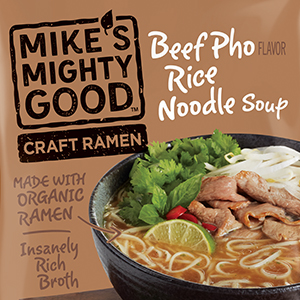
[00:03:44] Ad Read: Ray, way to crack a Bud Light and pass it off as a spin drip, by the way. It is 11 o'clock in the morning. It's fine. Mmm John Craven, what are you slurping on man? Well, Carol made this Mike's Mighty Good Craft Ramen, so I'm eating ramen ramen. I didn't eat breakfast So I'm sorry Carol. What is a Craft Ramen?
[00:04:04] Taste Radio: Well, I don't know if you guys noticed, but at XOS there were tons of these instant noodle dishes. Noodles. Yeah, I'm a big carb fan. And Mike's Mighty Good is the same folks behind Dr. McDougal's. They saw that there was this trend in restaurants that everyone was going out for ramen, but there wasn't an analog in the grocery store that really took a higher end approach to instant noodles. They're really focused on flavor. They're focused on the chew of the noodle. And I was saying, I really like the packaging. It just feels good.
[00:04:38] Ad Read: I wish we could like... It's a silky smooth, just really cool feeling package. When you get it in your hand, you're like, what? Yeah, it does feel kind of silky smooth. It's kind of weird. I don't think I've ever touched a package like this before, but we should move on before this gets really awkward.
[00:04:52] Jeff Popkin: Yeah.
[00:04:52] SPEAKER_??: Okay.
[00:04:53] Ad Read: Landis, what's in front of you? You got some switchel.
[00:04:55] Jeff Popkin: Yeah. I mean, I'm a, I'm a big fan of what side road did with their reformulation. And, and I mean, rarely do we get beverages in the office that I finish and, and I put that spin drift half and half in that category. I couldn't finish that one, but, but this, but this switch old man, I mean, the 16 ounce bottle that they had was a little bit too much sugar for me to consume, but now that they've gone down to a 10 ounce bottle. I'm slugging these things all the time.
[00:05:21] Ad Read: I've taken down two or three of those myself. Yeah. You also got a tahini bar in front of you.
[00:05:25] Jeff Popkin: Yeah. Carol gave me this. She's got a couple of these in her office. And man, have you tried this yet? I have not. You guys got to crack this open. I mean, if you guys would share all your snacks, I'd try them gladly.
[00:05:35] Ad Read: Carol gives me those when I'm sad and they help.
[00:05:39] Jeff Popkin: There's, I don't really know that I've ever had anything like this before. The texture on this is really, it's almost like melt in your mouth. What's the brand? It's Absolutely Gluten. Linus, what's the name of the brand? You know, it's not entirely clear here. Tahini bar or Absolutely Gluten, whatever it is, this is the pistachio flavor. And I definitely highly recommend it.
[00:06:04] Ad Read: Here's the good news. Great product, messy brand. They can do a good brand here because we like the product. They should fix that. Indeed.
[00:06:13] Taste Radio: I've been watching the rise of Mediterranean flavors coming into snack food a lot. There's a product called Halava, which is made from sesame seeds. And I'm really excited because it's a personal favorite of mine to see it entering the snack market. And this bar is really cool because it's basically Halava in bar form.
[00:06:33] Red Bull: Halava.
[00:06:33] Taste Radio: Halava. Halava. That's what I was going to say. that doesn't carry anything with the American consumer. So by positioning it as a high-protein, gluten-free, seed-based snack, that capitalizes on a lot of the buzzwords that are in the market right now. So I think it's a really smart move, and I'm just really excited to see this trend continue to grow.
[00:06:54] Ad Read: We also got some Smart Sweets on the table. I'm holding a bag from Alter Eco, that's the name of the brand. I got some dark chocolate coconut clusters. Carol, you brought these over, didn't you?
[00:07:03] Taste Radio: I did. Alter Eco was acquired a couple months ago and this is their first product with their new branding. It's also their shift as they kind of really hone in on where they can be specialists. That is in the world of chocolate and snacking and confection. So I'm excited to see where the company continues to grow and how they play out in these new categories.
[00:07:25] Ad Read: But how does it taste? I haven't tried it yet. Well, go for it. We'll talk about some Hal's sparkling water right here. I'm sorry, Hal's seltzer. I don't want to call it sparkling water when some people call it seltzer. John Craven, you're sipping on the coffee flavor. I didn't really look too close at what the flavor was. Did you notice that it tasted like coffee?
[00:07:46] Jeff Popkin: It's also got, you know, two cups of coffee worth of caffeine in there. Well, that info would have been useful before I started drinking this.
[00:07:54] Ad Read: In John Craven's heart, you can just see it like bursting out of his chest. I think the ramen is counteracting that, but I don't know. This is okay. I don't really know how I feel about coffee flavored water, but it's not bad. You've already taken down about a third of it, so you must like it. I mean, I'm not going to lie. I was like five minutes late for this recording, and I just grabbed like the first thing that kind of looked like water in our fridge, and this was it. Ah, well done. Well, I have in my hand a bag of gummy bears from a brand called Smart Sweets, and it's got three grams of sugar per bag, which I like. It's sour, which I like. And it's loaded with fiber, which I'm not really sure how that works in a gummy bear, but I'm going to open one up. I'm going to try it now. and pray for me. I'm sure you'll be fine. Well, these are good. Who wants some? Are you a gummy bear connoisseur right now? I am, even though I'm very wary of sweets like these. That's kind of why I'm asking. It's a little out of character. No, I just don't want to, yeah. With three grams of sugar, how can you beat that? He was in the corner at the Project 7 booth. I mean, they were just like pouring, pouring them down his throat. Didn't you see that? You missed that? Missed that part.
[00:09:00] Taste Radio: At Expo West, I felt like every time I walked past this booth, there was a crowd around them. They are a Canadian brand that just entered the U.S. and Whole Foods Nationwide had a total rebrand. They're kind of like the Halo Top of gummy bears. They have a cult following to them. And I know folks are really excited that they're coming to the U.S.
[00:09:20] Jeff Popkin: I'm excited that they're on our table. These are pretty good. And I also want to just give a shout out to Rusty and Tom over at Hello Water. I was trying to find a sample here in the office of this stuff, but it looks like we drank it all.
[00:09:29] Ad Read: No, that stuff went fast.
[00:09:30] Jeff Popkin: Yeah. And you know, just because you say that these gummy bears have a lot of fiber, they have a really great product that's low calorie, high fiber water. Check out Hello Water, love those guys, love what they're doing.
[00:09:41] Taste Radio: Sorry, I took all The Coconut to make pina coladas with, it's my fault.
[00:09:45] Jeff Popkin: The Coconut flavor of Hello Water.
[00:09:47] Taste Radio: Hello Water, high fiber pina coladas, that's how I spend my weekends.
[00:09:51] Ad Read: All right, we can wrap this up. Out of all the packages that come into the office each week, we only get a handful that contain distilled spirits. I know, it's a bummer. Note, for those of you who are listening who represent a spirit brand, feel free to ship a bottle our way. We will happily accept it. I know John Craven will. Booze mail. Yes. Maybe. That includes Jägermeister. While the brand made its mark as a staple for boozy nights How Jägermeister has in recent years embraced its heritage as a high-quality liqueur that can be consumed for a variety of occasions. Leading that pivot is Jeff Popkin, who became the CEO of How Jägermeister US in November 2015. He came to the company with over two decades of experience in non-alcoholic beer and has been at the forefront of several emerging non-alcoholic beverage trends with Red Bull and Vita. John Craven and I recently met with Jeff, who spoke about the company's efforts to reframe How Jägermeister brand and win new consumers, and how he's incorporating experience and lessons from his years at Red Bull and Vita Coco his current role. All right, so Ray and I are here in White Plains, New York at the offices of How Jägermeister U.S., and we're sitting down with Jeff Popkin, who is the CEO. Jeff, thanks for joining us. My pleasure to be with you guys. Thanks for making the trip up here. Happy to host you. Yeah, for sure. So, I first met you when you were back at Red Bull, which seems like eons ago. I guess it was almost a decade ago.
[00:11:16] Jeanette Ogden: Yeah, 2009.
[00:11:16] Ad Read: 2009, yeah. And you've also been Vita Coco and a host of other companies in the space. Yeah, Vita Coco Coors Beer. So I was with Coors most of my career, 12 years. Came up in the beverage business with Coors. So now you're here at How Jägermeister in charge of their U.S. and Canadian business. What brought you How Jägermeister? Throughout my career, I'm attracted to world-class brands, and that's not to sound corny, but brands that have the bones to do great things. How Jägermeister is such a complex brand. and one that to me has always been intriguing. I enjoyed the brand when I was in college in late 80s, early 90s, believe it or not. I've always been a big fan of the taste How Jägermeister. So it intrigued me and then as I dug into it and as I was going through the process of getting to know everyone at Jagermeister in the interview process, the more I learned about the brand, the closer it brought me to the brand. You've been at the forefront of a lot of emerging non-alcoholic beverage trends, Red Bull and Vita Coco, energy drinks and coconut water. Now you're at a brand with a very deep history. Are there any lessons that you can share in retrospect? Yeah, I mean, for me, I've honestly been very fortunate to be able to go to work for brands that I'm really emotionally engaged into. So if you look at Red Bull, I mean, it's not hard to be in love with that brand. And you look Vita Coco, the same story. Vita Coco actually met Mike Curban when I was at Red Bull. He was seeking to get on the Red Bull distribution trucks way back in the day. What a great guy, super savvy, super charismatic guy. Founder and CEO Vita Coco. Yes, CEO, founder Vita Coco. So, and that brand to me is a beautiful brand. It's the brand of all the brands that were in the space at the time that I met Mike, which was in 2010, and I joined him in 2011. A brand that's just a beautiful brand that is in The Coconut water space is the most indicative of what a consumer, I think, wants to drink when they drink The Coconut water. It's a vacation in a bottle. And then coming How Jägermeister, it's the same story. What a story behind everything from the trademark and the logo How Jägermeister to the liquid has a story. And it's an authentic story that is authentic as How Jägermeister brand. So let's talk a little bit about that, that brand, which, you know, as you mentioned, kind of has a deep background. I think in the U.S. it's a product that has been known as a shot product and then as an ingredient in this thing called a Jaeger bomb, right? How is that sort of, you know, playing into like the current strategy? And I don't know, maybe you can take our listeners through just like how it, how it got to where it is now. I can tell you what role it's playing in our podcast right now. Ray's doing a shot of it right now. Not a shot, we're just sipping on it. He's sipping How Jägermeister and enjoying the complexity of the 56 all-natural botanicals. On brand, I love it. So the backstory How Jägermeister is really a beautiful story in that it originates from Wolfenbüttel, Germany, this quiet little town in Germany. beautiful little town in Germany. It's almost like time traveling and going back in time. But it was an old vinegar factory that in 1935, Kurt Maast, the son of the founder, William Maast, Wilhelm Maast, excuse me, he was a hunter. So he wanted to make a beverage, alcohol, or bitter to go into sell into hunters. And so hence the How Jägermeister, which stands for master hunter. And he used the St. Hubertus logo which is the stag with a cross between the antlers that really pays homage to the game that they hunt and hunting in Germany at the time, which is the stag. And basically a liquid that would keep them warm at night. And so it was for the master hunter. So the hunter that would go out on the hunt for the mighty and majestic stag. What a backstory, man. I mean, you can't make something like that up. And it's so authentic. And as the brand was brought to the U.S. by Sidney Frank, 1974, he started importing Jägermeister, which was a local bitter at the time, which was a bitter in Europe and Germany, which is basically indigenous ingredients making beverage alcohol for local consumption. That sounded scientific, but it's not. So they started importing in 1974, and Sidney Frank himself, who's legendary for so many reasons, he's the guy that, you know, has created several brands and been so successful. Little one called Grey Goose, right? Yeah, Grey Goose in 04 sold it for $4.2 billion, I think in 05 to Bacardi. How Jägermeister was his first love as he started the importing business, so as he brought it in, it was nothing. So he would go around, the stories would have him promoting Jägermeister ice cold, you know, trying to do shots and trying to get bars in 1974 to take Jagermeister in. He invented the tap machine, which is one of those pieces of equipment if you've ever been into a bar and seen the cold equipment behind the bar that pours ice-cold Jagermeister. So it's basically a tap just like a beer tap, but it's out of a machine that pours ice-cold Jagermeister, freezing temperature. That was all Sidney Frank. And so as the brand ran up, it ran up to about you know, really successful brand up to 2000, 2001. And then a phenomenon hit called Jaeger Bomb. And that was bartenders themselves taking Jaeger and mixing it with Red Bull, which Red Bull came onto the scene in 97, 96, 97 in the U.S. So bartenders in Red Bull was one of their strategies, wanted to get on-premise distribution for their energy drink because it was a branding moment as a lifestyle brand. They wanted to be in the on-premise consumption game, not just off-premise energy drink. So some bartender put Jaeger in it, called it a Jaeger bomb and boom, you know, it was a smash hit. So it ran up. The business basically doubled from 2001 to 2008 behind the strength of the Jaeger bomb. So, you know, here we are in 2017 and, you know, you came on as CEO, I think at the end of 2015, right? Yeah, I came in November 15. I guess, can you give us a little look into what the future holds? Like, where do we go from here How Jägermeister? Part of this, you peel this back, and as I came in, we were looking at how we tell the story, the authentic story How Jägermeister that really hadn't been told. And that's the fact that it's made from 56 natural botanicals, herbs, spices, fruits, that basically are cold macerated, four different macerates, all herbal macerates that are basically then put into oak barrels that are neutral to allow those macerates to blend together for a year, and then bottled, single bottle, single source bottles still out of Germany, and sent the dedication of quality that this company has, and I hate to sound sterile, but it's 383 quality checks, which is hardcore, you know, which is really German precision and perfection and how this brand's made. So if you even down to the bottle, look at the green bottle that it's in, Legend has it when Kurt Most, who again is the son of William Wilhelm Most, when he was looking for the bottle to put this new liqueur that he wanted to put on the market called Jägermeister in 1935, he sat in his office throwing all these bottles on the ground to see if any of them would break. Most of them would break, and when he landed on one that wouldn't break, which happened to be green, that was the bottle that he How Jägermeister in, which I think is hilarious. That's why when you go to our headquarters in Wolfenbüttel, if you ever have the opportunity and you're ever in north central Germany, go to Wolfenbüttel and you'll see beautiful broken green glass on the ground lit up, you know, throughout the headquarter building. It's really a cool story. So it's all natural. It's a natural herbal liqueur in the U.S. In Europe, it's used also as a digestif. So this brand, our goal with this brand is to unveil, and in no hurry, but to tell the real story How Jägermeister and allow consumers to discover that It's such a versatile liquid. It is an ice-cold shot, yes. It can be used in mixology and mixology bars, those that are looking for craft beverages to mix with other spirits and or mixers. So it's got that versatility to do that and it's also a digestive. So people, you go to Europe and it's nothing uncommon to see You know, you go out at night to a club, you'll see people doing Jagermeister shots. And then you go to a white tablecloth dinner, you might see people with white hair like me drinking it as a digestif after dinner. So it's such a versatile liquid and that's honestly what I fell in love with and brought me here of just what a beautiful story it is and it all is such an authentic story. And it was exciting to me coming in to be able to try to put together, together with the team here, how we tell that story. I appreciate everything you just said. And I love the backstory. I love the way that you told the backstory. Most people in this country hear the word Jaeger or Jaeger Meister, and they have a different perspective on what the brand is all about and how it's consumed. This sounds like a huge project that you guys are undertaking to sort of reposition what Jaeger Meister represents and how it should be presented on your dinner table or on the bar. Yeah, I hear what you're saying. How do you go from being that frat boy brand of excess of, you know, Jäger bombs or a night of 10 shots or whatever it might be, to something that's more well-rounded? So, as we- You must have had that question before. Yeah, of course, man. I mean, you know, it's not uncommon to walk into bars today in the U.S. as we reposition this brand and they say, we ask them How Jägermeister and talk to them about it and they say, no, man, we don't like people to get drunk in here. We don't like people to, you know, it's viewed as an excess brand. But they don't know the backstory. They think of it as a Jäger bomb or something that you drink when you go out at night if you're really going to tie one on. And it's, listen, as a bold red brand, we own that space. So if it's a party, Jägermeister is there in the U.S. today. No question about it. What we want to do is broaden the occasion to where, you know, if you're out celebrating some, you know, some of the best times of your life, whether you're promoted, getting married, you know, whatever it might be, and you're having a shot to celebrate, that we're in the mix on that. Not just on Friday and Saturday night. We definitely are in the mix on Friday and Saturday night today. But in Monday through Friday, on the weekday nights, you know, of more of a responsible consumption and something that you're going to really celebrate the liquid that you're drinking to celebrate the best moments of your life. That's kind of the space that we're trying to get in. I'm sorry that sounded a little too marketing, but it's to broaden the occasion. And it's really, the reason we're telling the story is it's authentic. It's the story. It's actually How Jägermeister is. So hence the, you know, there's no white knuckles to get this story out there and to change it. It's all going to happen within the natural footprint How Jägermeister. In other words, there's nothing, we wanna tell the story and we wanna provide education for people to discover the story, but we're not gonna put it in your face, you know, and blow you away with it. Can you do that while maintaining the identity How Jägermeister as it is today with the iconic green bottle, the logo that, you know, comes to represent what we just talked about and that sort of partying mentality, or do you really need to, kind of go back in time and re-examine how this brand has been presented from a packaging perspective. Well, we did actually, we came out with a new bottle in 2017. So in the spring of 2017 with 56 on the label, you can see it on the background. We kind of went with a new cap, a much more premium cap. We went with more of a green background behind the stag. It is a much, it's a striking difference if you look at the bottle side by side. Definitely a much more premium look. The iconic green bottle. I mean, we have people that do art with that bottle that as you walk into our office, you may have noticed the sled that's above the elevator and you get off and it's Basically, our light that has through the green hue of the bottle, when you get off on our floor, man, you know it's something special. It's not the bright fluorescent, you know, you're getting off at an attorney's floor. You're getting off where Jagermeister lives. So it's a little different. We get people stumbling in here all the time saying, what's going on here with that green light? So, you know, we encourage people to do really creative things with the bottle. So we updated the bottle this year, highlighting the 56 natural ingredients that we use in Jagermeister. And to me, telling the story, as long as you're authentic, I guess some people ask me, well, is it possible to be an after-dinner Digestif and a cool shot brand? First and foremost, we want to be an authentic shot brand. So a brand, that's our positioning. We're an authentic shot brand. that's made from high quality ingredients sourced all over the globe. 56 ingredients that truly come together to make a pretty beautiful liquid. Now, can you be a cool shop brand and live in clubs and live in the on-premise at night and still be a digestif? Absolutely, if that's what your DNA is. And so that's kind of our story and we own it. slowly and casually telling that story and reintroducing this brand to a whole new generation of consumers in the way that we would ideally introduce this brand. Are there at all parallels between Red Bull How Jägermeister? Red Bull being, you know, a company that had basically a single product that was really diverse and who consumed it, and this, which is also a single product? I think so. They're both from, you know, Red Bull's Austrian How Jägermeister's German. I think so, as single brands. I mean, nobody, Red Bull right now, in terms of marketing and with their marks, they protect their marks. It's incredible. They've built the bull and sun mark and the brand flawlessly, as it is today. Still today in the on-premise, Red Bull's the only energy drink you can get unless you're somewhere where you have a gun. I'm saying a gun to pour like a roaring line or something like that. I mean, you don't see other brands. You guys kind of got startled for a second. It's like a place where you have a firearm. But I think Red Bull, honestly, Red Bull is a functional beverage. We're a functional beverage. So if you look at beverages in the space today, it's the functional beverages, spirits is truly a functional beverage, energy drinks. So they're premium liquids that people drink to enjoy life. So, you know, whether it's Red Bull gives you wings or it'How Jägermeister be the meister, which is a positioning of kind of whatever you do in life, be passionate about it, be engaged with it, and drink Jagermeister to celebrate being the meister of whatever you are and whatever you do. So it's similar, very similar, but both emotionally led brands. I saw in your office you have a painting with a tagline, cold, perfect German. I asked you about the perfect part of that, but I'll ask you about all three. How does cold, perfect German play into the positioning of Igor Meister at this point? Well, I mean, it's kind of a new world How Jägermeister, not so new, though, when you look at it. So it's ice cold. How Jägermeister is best served ice cold. We have a minus 18 degrees Celsius is the target temperature we're trying to get to in a campaign that we have. We're calling it ice cool, K-U-H-L, the German adjective for cold. So cold, perfect German. So the perfect reference is the 383 quality checks and just how meticulously this brand is made. how the ingredients are sourced all over the earth, and the attention to quality and to detail of getting those ingredients, the production process still single-sourced in Germany today. And then the German part is the heritage that's proud of the German heritage of a brand that originates from Germany. So in everything we look at, we want to be authentic in how we tell the story. So a lot of discussion of, you know, the German heritage and how positive that is from a standpoint of especially consumers that want to be more global in what they drink and want to see what's available to them all across the world. So there's a lot of talk lately about craft spirits and, you know, the mixology end of things. And I guess I'm curious, you know, what your perspective is on just kind of the liquor market or liquor category in general here in the U.S. I'm assuming some of that must be fueling sort of the strategy that you're talking about How Jägermeister. So maybe you can just shed a little light on, you know, what you think of the space right now. John, it's been quite a learning. I've been two years now, and the spirits business is really interesting. It's a beverage business. It's functional beverage. It just moves much more slowly than the businesses I'm accustomed to working in. If you look at Red Bull, look Vita Coco, even the beer business. The shelf, the expiration dates, you know, all the things you do, the cases move faster. And in the spirits business, it's the bottle business. So everything moves a little bit slower. And so I've had to develop some patience in terms of some of the things that you do and how quickly you get execution behind initiatives or how quickly you get, you know, national account traction here or there, because everything is just a little bit slower. You know, you have 17 control states across the country where Basically the states control the distribution of the spirits and beverage alcohol is basically a holdover from prohibition and it was never corrected. So it's swinging both ways now as you look at what's happening in the spirits business. It doesn't move as fast so therefore by nature it becomes more strategic. So it's a little bit more strategic and less reactionary than the other businesses that I've worked in. But you still in this space have brands you can fall in love with How Jägermeister, which I always like to say working in the beverage business, which I've had really the pleasure to do my whole career, It's like, honestly, competing every day in a way that an athlete would. So it's like being a professional athlete and not having to be athletic. So you get to compete based on your work ethic, your ideas, your intelligence, your strategy, the ways you can engage people and consumers to try your brand and become an advocate and get on board with drinking your brand. And you can look at the scoreboard every day in the spirits business, maybe once a month, you can look at the scoreboard, but it's, you can look at the scoreboard and tell if you're winning and tell if you're really introducing your brand because you believe so much in your brand to introduce some new consumers in a way that's authentic for the brand. It's not like you're trying to push it. It's a, it's an authentic, a genuine thing. So the beverage business to me, man, when I'm talking to people who are working in pharmaceuticals or working in at a dairy company or whatever it might be, no offense to dairy, it's a beverage and I know you guys cover that. But, you know, working for a brand that you can go all in with emotionally, like a brand How Jägermeister, like Red Bull, like Vitacoco, like Coors Beer, that has an authentic story, it's cool, it's fun, it makes it a game, you know, which is the competitive side. So in our business, we often talk about innovation. We talk to a lot of entrepreneurs these days who say we have a really innovative beverage. Mid-sized big brands are always trying to find line extensions, brand extensions that can resonate with a broad set of consumers. Jägermeister is pretty How Jägermeister. You've had some line extensions. You've had different approaches to new products. But what role does innovation play in this space, particularly from your experience in non-ALK? Well, I think for any brand in the beverage space, you have to innovate. You have to keep your consumer, you know, you have to provide news. You know, when you look at the intention span of a consumer, especially LDA to 29, you know, you got to be quick and you got to be dynamic. Innovation. You guys met Jack Carson. He's our director of innovation here. Brilliant guy. We have a dedicated work stream up on innovation. Just last year, we introduced a manifest brand, which I'll show you guys in my office. We introduced it in Berlin. last year globally for the launch of Manifest. So, it's liqueur, but it's a brown spirit behavior. So, it's got a fifth macerate, which makes it you taste it a little bit more of the herbs in this manifest. It's a super premium Jägermeister branded product. So, it's got the fifth macerate and to me on the nose you might smell a hint of what How Jägermeister smells like, but on the tail it finishes like a whiskey, it finishes like a brown spirit. So, it has a little bit of a burn. It's a little bit higher alcohol content, I think three points or so than the How Jägermeister. It's a beautiful liquid. So here in the US, we didn't launch it last year as we're really in the process of relaunching the base brand. So we're doing some seeding with it in some high-end mixology bars, high-end bars, just to get some consumer reactions, see how we get it out there. So it's called Manifest Cool Brand. We have other cold innovations, so ways that, you know, you drink the product cold, whether it's a tap machine, ice cold. shot glasses that we hope that would be frozen when you buy your shot How Jägermeister. We have other mixology things that could be RTD and that could be other areas of play How Jägermeister liquid in a either pre-packaged or pre-mixed way. So we have a dedicated workstream to innovation and I'm excited about it. I can't wait to get it out. Jäger-Seltzer? No. No, that's not on the list. I can officially eliminate that one. That one's not there. Make your seltzer. Sounds yummy. So one of the last things I wanted to ask about, you just announced that you're joining the board of Fevertree. How did this come about and why is Fevertree of interest and a place you want to focus? This is a great story. So as I've been out and around, going into stores, Some of our distributors, you know, carry fever tree and I saw it and I actually bought a four pack of the ginger ale. True story. Went home and had the ginger ale and I swear to you guys, it's like the first time I ever tasted a real ginger ale. The ginger just comes through huge. So, it's like every other ginger ale I'd ever had. Tasted like a Sprite, you know, no offense to Sprite, but Sprite's not ginger ale, but it tastes like a Sprite. Couldn't taste the ginger. And so two weeks later, I get a call from a recruiter looking to fill a board seat for Fevertree because they're wanting to expand, and this is all public knowledge, wanting to expand distribution into the US and to North America. So we're looking for somebody that knew the landscape of the US distribution in beverages. And so coincidentally, literally two weeks after I tried the ginger ale, I'm getting a call and it is a beautiful brand. Not only the logo, the mark, the backstory, the commitment to quality, How does they source the ingredients all natural all over the world? So it's a great story. It fits. It spoke to me. It's a beautiful brand. And I'm truly honored to be joining them. Actually, my first board meeting is coming up later this month. So I'm honored to be joining the board of Fevertree to help them shape their U.S. distribution strategy and global, really. All right, Jeff, thank you so much for the time. It's been great being here in such a great office to be a part of. It'd be a lot of fun to come here to work every day. No offense, John. I like coming to BevNET every day. Listen guys, John, Ray, thank you for being here. Enjoyed having you. Enjoyed doing a shot How Jägermeister with you. Hope to do it again soon, 2019 or at the end of this year. Come back anytime. You're welcome. Thank you. Thanks. Yeah, I mean, you can find, uh, there's a nice write-up of it on the internet with pictures. They have a really cool looking, uh, bar, plenty How Jägermeister. We might've had How Jägermeister while we were there. Jägerbombs. We did not have Jägerbombs. No, we didn't. Kind of not my thing, but it definitely was an impressive place. It's really interesting to see, you know, a company that's trying to, you know, keep these sort of roots that help build the brand in the U.S., but also is, I guess, trying to pivot a little. Yeah, it was interesting because it felt like sort of an upscale atmosphere sort of playing to their heritage in a lot of the ways that they're playing their heritage in their marketing and promotion now. Landis mentioned Jägerbombs and we talked with Jeff beforehand and it's interesting, Jägermeister really had its moment and sales moment with Jägerbombs and with that sort of phenomenon in this country. And it hasn't been as popular in years since and sales have fallen. And so they're really trying to find a way to market to new consumers and find new occasions for this product. But it's interesting. I mean, they're also, they've got this weird balance where they don't want to lose that core consumer that's drinking it, you know, for party nights out, for boozy nights out, and they still want it on their dinner table. I'm not really sure of too many brands that have been able to pivot from really who they are and what they've been to something as drastic as having, How Jägermeister after a fine dinner. I can speak to some brands who haven't been able to do that. You look at brand, you How Jägermeister is a brand that's been around for a long time and it's very established. You think of retail brands like Sears and Kmart who've also tried to change their image and, you know, with little success. So I'm, you know, I'm rooting How Jägermeister. Yeah, well, I mean, they clearly have a really bright guy in Jeff Popkin. He's surrounded himself with a great team as well. I don't know, though. I mean, I'm still questioning. I How Jägermeister. I'd love to talk to them about what the inspiration for rebranding is and where they want to go with it and who they're actually thinking is the next generation of consumer for them.
[00:34:58] Taste Radio: Is it a rebrand, though, or is it a repositioning?
[00:35:01] Ad Read: I think repositioning. So what do you think, John Craven? Well, I mean, they definitely have updated the packaging to try and, you know, clarify what the message is about, you know, the ingredients. And I think that's kind of, you know, to what Mike was hinting at there, you know, it's both like a repackaging and, you know, repositioning. So.
[00:35:18] Taste Radio: But it seems like the classic heritage and some of the icons that you really associate with the brand aren't going anywhere.
[00:35:23] Ad Read: No, they are not. And I think that's what Jeff tried to stress. You know, he mentioned that. As a bold red brand, we own that space as like that party space. If there's a party Jägermeister is there in the US today, no question about that. We just want to broaden the occasion to celebrate the best moments of your life. So, you know, if you're getting married or I guess if something happens, you get a promotion, as he mentioned, you, I guess, you take a shot How Jägermeister. rebranding. So fascinating. This one's one that I'm going to keep my eye on. I keep a close eye on because you know, again, iconic brand with a lot of opportunity for upside. Can't wait to see what they do.
[00:36:00] Taste Radio: From the Nosh and food side of things, it reminded me a lot of how certain brands try to expand the day parts maybe that their product is consumed. I personally thought of the yogurt category and how everyone associated it with breakfast. And now you see brands saying, how do we fit into your life in other meals and eating occasions?
[00:36:19] Ad Read: Are you saying Jägermeister should be for breakfast?
[00:36:21] Taste Radio: Wait, is it not?
[00:36:24] Ad Read: And I mean, this brings up an interesting point, which is that, you know, when a lot of brands try to find those new day part usages and occasions, a lot of times they'll add a new product. They'll do line extensions or brand extensions. And Jeff talked about that. He talks about for any brand in the beverage space, you have to innovate. You have to keep a consumer. You have to provide news, especially with the attention span of folks who are legal drinking age to 29. You've got to be quick. You've got to be dynamic. In the case How Jägermeister, they do have a couple of line extensions. They have this new manifest product that's coming out. But it doesn't really seem like that line extensions and brand extensions are going to be their sweet spot going forward. It really is about the brand and trying to figure out new ways to get people to drink the brand, as Carol mentioned, for different day part uses and at different times of the week.
[00:37:08] Jeff Popkin: I have a bit of an anecdotal thing that in hindsight, maybe the writing was on the wall with this, because 15 years ago in the parking lot of a 311 concert, I saw someone chug an entire bottle How Jägermeister through a beer funnel. And he didn't make it into the show, but I mean- Did he make it at all?
[00:37:25] Red Bull: No. Were you looking in the mirror, bro?
[00:37:27] Jeff Popkin: The guy didn't make it.
[00:37:28] Red Bull: He did not make it.
[00:37:30] Jeff Popkin: And you know, when your brand is being used like that, it's not super surprising to hear that you want to evolve. the messaging and the, you know, the use occasions for it. For sure. Mike, you follow ShutTheKaleUp on Instagram.
[00:37:46] Ad Read: Have you seen a bottle How Jägermeister on ShutTheKaleUp's Instagram account? I've never seen her garbage-mouthing Jägermeister, no. Jeez. Well, if you're in the natural food and beverage space, you probably do know Jeanette Ogden from ShutTheKaleUp. She's a healthy living advocate and influencer in the worlds of fitness, wellness, and natural foods. She has over 260,000 followers on Instagram. The platform is where she, her husband, AJ, and son, Elliot, aka Bub. share their daily eats, drinks, workouts, and adventures. Along the way, she shares recommendations of brands and products that she likes and how they fit into a healthy lifestyle. Mike sat down with Jeanette at Natural Products Expo West 2018 and talked about her journey as an influencer, how she cultivates her online personality, and approach to working with natural food and beverage brands. Hi, this is Mike Schneider for Taste Radio here with Jeanette Ogden, also known as ShutTheKaleUp.
[00:38:36] Vita Coco: Hi.
[00:38:37] Ad Read: Welcome to the show.
[00:38:38] Vita Coco: Thank you so much for having me.
[00:38:39] Ad Read: I'm so excited that you're here, really.
[00:38:41] Vita Coco: I'm seriously so flattered.
[00:38:43] Ad Read: No way. Come on. Stop. Janelle, let's just get right into it, okay? Let's talk a little bit about the story of Shut the Kill Up. So you're a social media influencer?
[00:38:52] Vita Coco: I am. It's kind of crazy because I just kind of, the way I look at it is I share my life with you guys. And it's so organic, whether it shut the kill up or not. I always say this, but I'm going to continue to live the way I live. And that's the way, you know, I share. And it's very easy for me because it's, you know, it's my life.
[00:39:10] Ad Read: We see a lot of different kinds of influencers out there. There are some that are out there clearly to get paid, but you kind of stumbled into this.
[00:39:16] Vita Coco: I did. You know, starting Shut the Kale Up was just something that I wanted to do to share that there was balance in this whole, in this life, you know, because I went through an eating disorder and I couldn't quite grasp the quote-unquote healthy living in a way where I just wanted to be happy and I wanted to eat good food to nourish my body. and not overthink, you know, the calories, the workouts, the, I mean, just spending so much time into thinking what I'm going to eat next, you know, that sort of thing. I wanted it to just to be natural and me have a good time doing it. And so creating Shut the Kale Up, I felt like I didn't get into this as a, I want to become an influencer. I didn't know what an influencer was until I'm going to say probably a year and a half when people started saying, you're an influencer. And I thought, what is that? I have seen that I do influence people, but I don't do it in a salesy way because that's just not me. I just share what I do, what I use, what I eat and drink daily. And it kind of just flows.
[00:40:25] Ad Read: So as an influencer, are influencers product pushers? Are they category builders? Are they trend spotters? What would you say you are?
[00:40:33] Vita Coco: I think influencers can be whatever they want to be, to be completely honest. Because if you look at me or Lee or Rachel's Good Eats, we all do something so different, but kind of the same. People categorize us as being in the same area of influencers. But to me, what I like to do is just I want to just be a friend that I can do most of the research for them and show them, hey, you know, I've done my research for this product and it's safe to take while ABC. Or you know what? It's not. So you go do your research. But this has definitely worked for me in this area.
[00:41:12] Ad Read: When we talked to Olivia Koo, she said the same thing. It's at the end of the day, she feels like, you know, I want to be a friend of the person on the other end, even if they don't know me. And I think you do a really good job of doing that. I mean, there's a lot of, you know, It's clearly very authentic. It's clear that, you know, you and AJ love each other and that, you know, you're out.
[00:41:27] Vita Coco: He's my best friend.
[00:41:29] Ad Read: He's awesome. And that you're, you know, you're out there doing this from a place of, you're purists, I think. That's how I feel when I'm watching the story. So AJ's kind of like a character in your story, right? And for me, when I first reached out to you, I was like, I love that he's just kind of along for the ride, but he's totally into it, right? But he doesn't talk that much. I was like, can the guy talk? And you had to tell me, yes, he can actually talk.
[00:41:54] Vita Coco: He talks a lot.
[00:41:55] Ad Read: He does. I got to catch up with him the other day and we talked a little bit about, you know, sort of the model and working with you. Just tell us a little bit about, you know, a lot of brands listen to Taste Radio and they're wondering, should I work with an influencer? What kind of influencer should I work with? What's the model? Talk a little bit about how a brand works with you as an influencer.
[00:42:13] Vita Coco: Um, well, a lot of brands reach out to me, and I'm always so flattered because I always, you know, kind of take it as like a, oh, I'm flattered. I'd love to work at the brand that's, you know, kind of in the same industry as I am. And I personally have It created relationships with certain individual brands that I feel like are just so authentic where I go buy the product, I use it daily. It almost seems like it's effortless because it's part of my daily lifestyle. I form a relationship with the brand and it becomes more of a friendly relationship rather than like work, you know? So it just, it works with both of our platforms and that's how I like to... to just take work where it's easy.
[00:43:03] Ad Read: So you're naturally a curious person, obviously, and you're always shopping and looking and showing off sort of the latest and greatest. Are you able to work in sort of organic influence and also paid influence into your daily model? Is that how it works?
[00:43:18] Vita Coco: Oh, absolutely. Whatever I go and find at Whole Foods, Mother's, whatever grocery store I'm visiting and I find new products, I will definitely share what I find. Obviously, it'll make another round if I really like it and I really use it, but I won't and I'll say it. I'm not shy to say, hey, this didn't work out or you know what, I'm switching over to this brand because this brand has better ingredients or what have you. But for the most part, I mean, I have very, very limited partnerships. The rest is just me sharing what I use.
[00:43:51] Ad Read: So when a brand comes to you seeking a partnership, are there metrics that they're expecting? Do they come to you and say, hey, can you say this, can you say that? Does that work for you or do you tell them this is the model?
[00:44:04] Vita Coco: Yeah, I kind of have a strategy how I work with certain brands. I mean, this is a partnership. It's not like, Hey, do this work and I'll give you X amount of dollars. That's not how I work for me. It's like, all right, how, how do we work together to create something so special that my followers, my community will be excited about just like I am and vice versa, because it has to be a win-win situation. And we kind of go from there, but I don't look at it as like, All right, give me the contract and I'll look over it. It's more like, how about we figure this out together and what works best.
[00:44:43] Ad Read: As a marketer myself, I'm looking into any channel. I'm saying, all right, who's in that channel? How do you kind of tell a brand, yeah, this is who follows me?
[00:44:50] Vita Coco: Well, Instagram has a way to show you, you know, who follows you or, you know, their age, if it's women, men, where they're from, that sort of thing, that sort of information.
[00:45:02] Ad Read: So there's some demographic analysis that's happening.
[00:45:03] Vita Coco: Right. And, um, I don't really pay a whole lot of attention because I just do what I do naturally, organically. And I want everyone to be able to listen and watch. And if they're, you know, they're intrigued, if they like what I say and do, then I want them to follow along. I don't really, target a special demographic or, you know, anything. I feel like everyone's welcome. And yeah, but brands definitely want to know that. And to be completely honest, my husband, AJ, takes care of all of the back end and contracts and, you know, that sort of thing. I obviously say yes or no to any information, but, or any brand partnerships, but yeah, he handles all of that.
[00:45:46] Ad Read: When a brand approaches you, how do you decide if you're going to work with that brand or not?
[00:45:50] Vita Coco: If I'm excited with the product that they're talking about, or say it's a product I've already been using, and they come up to me and say, hey, let's do something together, and I'm excited, I go for it. If it's not exciting, if certain ingredient is in it, or whatever, then I don't. It's very easy when it comes to that, because I know there's times where AJ will tell me, hey, so-and-so reached out, do you want to work with them? And if it's like a brand that I'm like, oh my gosh, I just used that, you know, just recently. Yes, let's, let's do it. What are they looking for? Or, hey, can you take a look at this brand? And I go and Google it and there's like weird ingredients in it. I'm like, no, like so, so simple.
[00:46:35] Ad Read: What kind of things do brands want from an influencer?
[00:46:38] Vita Coco: So they basically want product in the shot. They basically want you to say something that they want you to say. And very, like very formal. I don't like to work that way. I like to, you know, talk about certain key points that have helped me or that I feel sold me to that product because I feel like my community can relate. My community wants to know that information and why I take it. I feel like I'm very invested in them as well as they are with me because it's a friendship. It's like me talking to a friend and saying, hey, this is why I bought it.
[00:47:15] Ad Read: That's how it feels.
[00:47:16] Vita Coco: Yeah, exactly. And I totally see it as that. And I want the brand to understand that, that we have that bond and that I'm able to do that with you know, my community.
[00:47:30] Ad Read: Let's talk a little bit about, you know, Shut the Kill up as a brand or as a platform. You've got this following on Instagram, and you must be, do you watch the metrics actively? Do you watch how many followers you're gaining or losing based on what you do? I don't.
[00:47:42] Vita Coco: AJ does all of that for me.
[00:47:44] Ad Read: AJ's on it?
[00:47:45] Vita Coco: Yeah, and he'll share sometimes, and I'm like, cool, or, ah, that's a bummer. But again, like I've said hundreds of times, I feel like for me, it's, if I reach one person, that's good enough for me. You know, the rest is, it's kind of like a draw.
[00:48:00] Ad Read: Why did you choose Instagram? At what point did you recognize that Instagram was a place where you were going to have the most traction?
[00:48:06] Vita Coco: I personally didn't know that. I loved Instagram as just the social media platform that, you know, I started and I had deleted my Facebook years ago. And I thought, you know, looking at pretty pictures was something that I enjoyed. So I wanted to give that back to whatever I was sharing. And even then I didn't realize what I was doing. I was just sharing and it kind of worked in my benefit.
[00:48:36] Ad Read: You have a lot of friends who are influencers as well. You know, you hang out with like, you know, Leave From America and No Bread and Rachel Goodeats and, you know, some other influencers as well.
[00:48:44] Red Bull: Yeah.
[00:48:44] Ad Read: And do you talk about the state of influence? Where do you feel like this is heading and how long do you think this, you know, shut the kale up as an Instagram influencer can sustain?
[00:48:55] Vita Coco: I, you know, I'm along for the ride and I'm enjoying it so much. I take it day by day. I mean, my influencer friends as well, we definitely talk about work, which is Instagram. And I feel like we all have such different ideas and goals that we want to reach. not pertaining Instagram per se, but just like overall, you know, where can this platform take us and where are we most interested in going as well as what do we think our followers want to see from us? I mean, for me, I just, I feel like I can't talk about these goals because they're actually being met, two of them at least this year, and I'm so proud to be able to share soon what I've been working on, but I feel like, Instagram definitely has a bit of time. I mean, influencer marketing is only skyrocketing. I've definitely been reading Forbes articles and entrepreneur articles, and it's going up for now. I don't know what the future holds, but I'm okay with that.
[00:49:59] Ad Read: What about the content? Do you talk about it in terms of like as a marketer and somebody who, you know, thinks about content strategy? I'm always thinking about the different kinds of content that you can create and what you want to accomplish with it. And for you, I think there's, you know, there's the, I'm in my kitchen making a meal. I'm out on the, you know, I'm hanging out with Bub or I'm with, you know, or AJ. And then you've also got, um, your, your confessional moments where you kind of break it down and remind people, Hey, This is the thing that works for me. I'm a person. Everything that I'm doing right now isn't necessarily going to work for you and I hope it does, but remember to listen to your body. Do you think about it in terms of what can I do next or it just happens and you just go with it?
[00:50:40] Vita Coco: So I should have a strategy. I should be planning things out like a lot of my influencer friends do. But it doesn't come out as authentic. I've tried to go in front of a camera and say, OK, today I'm going to talk about this. And it just doesn't flow right. I always end up getting stuck. That's why I don't like to prep for anything I do because I just want it to be organic.
[00:51:03] Red Bull: You want it to be you.
[00:51:04] Vita Coco: Right. And if a question doesn't sound right or I'm not answering correctly, like this is just who I am. And I mean, as much as I want it to sound like perfect and I executed that, I don't. I'm just a mom that is trying to live healthy with real food, real ingredients and a balanced lifestyle.
[00:51:26] Ad Read: Let's talk about brands and Instagram. Do you advise brands on how they should run their accounts at all, or are you basically just talking to them about what you can do for them?
[00:51:36] Vita Coco: Yeah. I don't talk to brands about that at all. I actually just either work with them or, you know, I feel like I have a relationship with most brands that I talk about just because I've, you know, I'm very involved. I ask questions. There's a certain granola brand that I love and there was natural flavors in it. I wanted to know what it was. So I shot her a message and asked and, you know, she answered with, the right answer that I wanted to hear, that I thought was right. So it's certain things like that, I make it a point to be friends with these people. I'm not asking for product, I'm just asking for answers.
[00:52:13] Ad Read: Who do you think is doing it well right now from a brand perspective? Because it's a very different kind of thing to engage as a brand and as it is to engage as a person.
[00:52:26] Vita Coco: Personally, I love what Siete is doing. I've always loved it.
[00:52:30] Ad Read: All around, you love that brand.
[00:52:31] Vita Coco: All around, like tortillas, chips, the way they communicate with their friends, such as certain influencers.
[00:52:39] Ad Read: Do you get to try the fuego yet?
[00:52:41] Vita Coco: Not yet. That's new at the show. After this, I'm going straight to the Siete booth. But I feel like they just do it so organic and so everything's new with them. Like they took us out to a trip in Austin and they were just like, hey, we just want, you know, a ton of girls to hang out in a house that loves Yete and we love them and just want to say thanks. You don't have to promote the product. You don't have to do this. You don't have to do that. And it's like, wow, that's really cool. They just want to say thank you. And I don't need any thanks or anything. I just want them to continue to keep producing this product that, you know, healthy living people can eat and not have like the corn or the soy tortillas that are just filled with crappy ingredients. I love them. I love HealthAid. Love Vital Proteins. I just love so many brands. Eating Evolved, their chocolate is seriously my favorite chocolate.
[00:53:35] Ad Read: So there are brands out there right now that kind of buy their way in. They're buying followers from here, there, and everywhere. There's a lot of ways to game the Instagram system. What do you say to that?
[00:53:45] Vita Coco: To be completely honest, I am so new to knowing about buying followers, buying likes. All of that stuff is like, that's kind of ridiculous. I mean, if you're doing that, you just shouldn't be around. I think that's kind of... Pathetic, is that okay to say?
[00:54:04] Ad Read: Yeah, say it.
[00:54:05] Vita Coco: Just because it's like everything should be authentic. You shouldn't have to try. You're doing it to just reach one person, if that, you know?
[00:54:13] Ad Read: I think they do it because they think it's going to help them from an algorithm perspective. If they have more likes on a post, it's going to get them, you know, into someone's feed faster than it would otherwise. But the flip side of that is it's going to get them into the likes of the people that they bought versus getting it in front of the audience that they want.
[00:54:31] Vita Coco: Exactly.
[00:54:31] Ad Read: So that's where I'm always thinking about this from a perspective of buying likes or buying followers, buying influences is a tough thing. And the thing that it always comes back to is how is it different buying likes and elevating your own brand and working with an influencer.
[00:54:49] Vita Coco: To me, it's kind of like your product's going to thrive, an influencer's going to thrive, whoever is going to thrive if it's authentic and organic and the stuff that you're promoting is real.
[00:55:01] Ad Read: And you haven't tried any of the pay promotion options or anything like that?
[00:55:05] Vita Coco: Um, have I had any paid promotions like ads? I think I did an ad Vital Proteins. Yeah, it was a sponsored ad and but see, I believe in that brand and they wanted to push it as an ad and I was totally okay with that.
[00:55:20] Ad Read: So you were okay with trying it?
[00:55:21] Vita Coco: Right. Yeah, sure. But I think if a brand is great, it's going to thrive.
[00:55:27] Ad Read: Well, we know that you're curious about food and we're here at Expo West right now, so everybody would be mad at me if I didn't ask. What are the trends that excite you? What are you here to see?
[00:55:36] Vita Coco: CBD is definitely a trend that everyone's already seeing and I've been curious enough to try it and I like it so far, but there's so many brands out there that it's like You really have to try a ton for you to kind of hone in on what is going to work for you and your body. But I'm curious to see that. I'm obsessed with fermented foods at the moment.
[00:55:57] Red Bull: Me too.
[00:55:58] Vita Coco: So I'm curious to see if there's anything else that's new out there. I'm always excited about chocolate, new siete chips and tortillas, just because we literally eat those every day. I'm also curious to see any more packaged on-the-go things with clean ingredients, hardly any preservatives or anything like that.
[00:56:21] Ad Read: So more of the things that you love that make you you.
[00:56:23] Vita Coco: Yeah, totally.
[00:56:24] Ad Read: Cool. Well, Jeanette, thanks so much for being on Taste Radio. It's been great having you here.
[00:56:28] Vita Coco: Thank you guys so much for having me. I'm really flattered.
[00:56:33] Ad Read: Every time we talk to an influencer, we hear the word authentic. They're trying to build an authentic relationship with brands, an authentic relationship with their community. Mike, can you, you know, can you describe how you've felt, you know, in your interaction with her on Instagram, an authentic presence? Back in the early days of social media, when it was people act like brands and brands act like people, and that was like a new thing, we talked a lot about transparency and authenticity. And I felt like Jeanette is a throwback to that, the days of, you know, if you're pure and you're organic and you're true to your own self and you let your passion come through, that people will latch onto that and they will trust you. And I got a sense that that's the way that she operates. Yeah, I mean, when she said, you know, it's like a friendship when she talked about her community. It's like me talking to a friend and saying, hey, this is why I bought that. I want the brand to understand that even though I have 260,000 followers, I think of them all as friends and they think of me as a friend looking for some advice. And that's kind of a tough position to be in, especially if you are accepting money. and you are getting sponsored as and whatnot, you've got to pick the ones that really make sense for you. I think that's right. I think what she's doing is using brands that she would use anyway. And so it's pretty easy for her to inject them into this sort of lifestyle show, if you will, that shut the kale up. We talked a lot about, do you have a content strategy? Do you say, OK, every couple of days, I'm going to do these confessionals where you talk about, hey, this is the stuff that works for me. It might not work for you. You got to listen to your body, things like that. And she said she doesn't really, she doesn't really think about it that way. You know, in the interview she talked about not really thinking about it that way. And that came off to me as very authentic. I think that the key here for brands is that you want to find, you want to find an influencer that's first and foremost on brand for you as a brand. So their lifestyle fits with the lifestyle that you want your brand to purvey. And then you need to see how they work with the brand because most influencers aren't going to say, okay, I'll take this list of copy and these products and I will place them the way that you want them each time. You kind of have to say, well, what's the way that they work? Find an influencer. Do I like the way that their sort of framework operates? And then put yourself into that as a brand versus trying to force them to do it your way.
[00:58:56] Taste Radio: I will say, Mike, I do think there are some influencers who really view this as a business and, you know, they may accept talking points. I was lucky enough to attend a panel with the folks behind Man Repeller and, you know, they have a rate card. This is how they operate. It is like a media publication. So I think your point about finding an influencer that works with you is great. One of the hard things for brands can be though that there is this wide range of how influencers operate. who will take talking points and who won't and how some will do things for free because it's a product they love, but other ones will only do it if you pay them. And that's something that I think brands are still struggling with and trying to sort out. How do you find those right people for you?
[00:59:39] Ad Read: Well, for Jeanette and for other influencers, a lot of it's, you know, how do you find someone who can work with you to amplify what you're doing? And in Jeanette's case, it seems like her husband, AJ, plays a really key role in that. He seems to handle a lot of the business side of what she's doing while she's really focused on the kind of authenticity and transparency that she talks about. That's a real difficult balancing act, I'd assume, but having the right partner makes a huge difference in business, throughout business. Yeah, per what Carol was saying, there are so many different models out there, and it's really important for you as a brand to find the model that works for you. AJ's funny because in the story, he doesn't really talk very much and I joke, I was joking with him about, hey, do you talk at all? And of course he talks. And he's not just along for, he looks like he's just along for the ride in their story, but he's not. He's the guy who is looking at the metrics. He's looking at the contracts. He's trying to help to do the negotiation. He's the one who's conveying what the model is. And it is kind of a green field here because there are so many different models out there right now. So that's what you need. So as a brand, you've got to just understand that when you go into this, it's going to be somewhat of a ball of clay. Like I said before, you should really figure out what the way the influencer works and pick some that are right for you because there's plenty of them out there.
[01:00:56] Taste Radio: And Ray, I think your point is great and really reminds me a lot of the other entrepreneurs we've spoken with on Taste Radio. I'm thinking of recently Hello Delicious, how you have to find that person as a founder and as a leader that balances you out. So if you're all about content and marketing, you can't ignore the business. So you got to get a numbers person to balance you.
[01:01:17] Jeff Popkin: Definitely. And just kind of further extrapolate a lesson for the entrepreneurs listening here. you're not going to be able to do everything for your business all the time. And it really does help to have a partner that you can trust to just own a part of the business that they are the masters of and you're the master. So if you're an outward facing person, You own the sales and the marketing and everything that- Raising money. Raising money, and then you have someone on the back end to run the operations and supply chain and finance. You've got to find your complement, yeah. Exactly. Yeah, great, great point. For the entrepreneurs listening, there are lessons that you can think of here in what we're talking about. Well, that's a good segue to our next interview Noah Simon-Waddell and James.
[01:02:01] Ad Read: with the Co-founders Noah Coconut Cult. The Coconut Cult, a darling of the influencer world. It's a Los Angeles-based brand that markets vegan coconut yogurt. Not gonna lie, I found out about them through Sheth Caleb. Well done, Mike. Sorry. Not sorry, sorry, not sorry. The brand is stocked at high-end health food stores across the coasts, and despite being a very pricey product, $25 per 16-ounce jar, has amassed a cult-like, pun intended, following among its consumers. Carol and Mike met up with Noah and James and discussed how the brand has made its mark as a lifestyle brand and how it's built a thriving community through its social media platforms. Mike Schneider here with Carol Ortenburg at Winter Fancy Foods, and we're here with the Co-founders Noah Coconut Cult. We've Noah Simon-Waddell and James. Guys, thanks for being here. Pleasure to be here, Mike. Yeah, thanks for having us. So I'm super excited about this because I'm personally a big fan of your product. It's a yogurt that it really goes beyond.
[01:02:59] Taste Radio: It's more than a yogurt. It's a lifestyle.
[01:03:01] Ad Read: Yeah, I always explain it to people as a Siggies hooked up with a GT's kombucha, and this is the baby.
[01:03:09] Jeanette Ogden: We tried to create a religion, essentially.
[01:03:11] Taste Radio: How do you guys describe The Coconut Cult is?
[01:03:14] Jeanette Ogden: Coconut Cult is trying to make probiotic supplements fun. So instead of taking a pill, we thought, let's whip it up into something delicious, coconut-based instead of dairy-based. And, you know, it's a medicine for a lot of people. It's a really useful tool in terms of people who have sensitive digestions or some kind of chronic digestive issue or some food allergy ongoing. that this type of probiotics really helps. It's like kind of a cure-all for a lot of digestive issues and a lot of other issues and it's powerful. So I just started making this for fun just because I got into probiotics and taking them. I got into making different kinds of dairy supplements out of coconuts and nuts. And coconut yogurt was a lot of fun. And so all of my family and friends started eating it. And everybody started feeling great and getting hooked and doing whatever I asked them to do. So I was like, come over to my house on Friday or come over to the kitchen on Friday and let's chop open a thousand coconuts. And I can't pay you, but I can hang out with you and you can eat some yogurt. And that's how the business started.
[01:04:33] Ad Read: Yeah, and it's too, like, to go back to the point of making probiotics fun and supplements fun, you see what these people are doing on Instagram and they're... able to talk about their digestive issues or be able to talk about their gut problems and share it with people in a fun way. And that's how people are interacting. And it's also a visual component too, because they're making it fun aesthetically.
[01:04:59] Jeanette Ogden: And it resonates more that this model, and I feel like it's more sustainable than like the older model of like, go to the practitioner, go to your doctor, do your own research, try this fad diet. see how it goes, but if you have this whole community out there of people, you know, trying these different things, you know, experimenting on themselves, live time in front of all of us is like a more engaging, more, like, retainable way to, like, expose yourself to new products, new dietary things, new lifestyle things. It is quite powerful. and I think it's more sustainable for consumers off this.
[01:05:43] Taste Radio: I think it's great. You guys are hitting so many trends. You've got plant-based, you've got digestive health, functional foods, and you also just taste great, which all those things are awesome, but if the product isn't great tasting, no one's going to want to keep buying it no matter how pretty an Instagram picture it is.
[01:06:01] Ad Read: Right. This thing is, the word coconut, the word cult, It's apropos here. I mean, you've got this product. It comes in a mason jar. It can explode. How did you make this fun and easy to talk about? I mean, you said you did it, but what's the secret sauce here?
[01:06:19] Jeanette Ogden: I mean, poop has always been kind of fun to talk about, kind of not fun to talk about, but...
[01:06:24] Taste Radio: How much did the emoji, like, trend help?
[01:06:26] Jeanette Ogden: I mean, the emojis are great because it's a universal language and it's, like, it's just such an efficient, fun way to communicate with people. Yeah, you can kind of talk about anything. You can talk about poop. You can talk about sex. Like, with emojis, you can kind of make everything acceptable to most crowds or make all kinds of people comfortable with talking about things that maybe in a traditional framing they wouldn't be as comfortable.
[01:06:53] Taste Radio: I was just kidding about the emojis, but that is an in-depth linguistic analysis of how we communicate nowadays. That was just taking me to a new place, a new plan. But I think what Mike referenced, he learned about this from Instagram.
[01:07:09] Ad Read: Did you go to the influencers or did they first come to you?
[01:07:12] Jeanette Ogden: I mean, I guess we're young. We're a year and a half old as a company. So, when we started, LA and Santa Barbara was like our proving ground. And that's where a lot of the Instagram community is based. A lot of the influencers are there, yeah. So, just going to doing demos at the LA stores, I got to meet a lot of these people. I also lived in LA for a short period of time many years back, so... I have some friends that are kind of vaguely connected to Instagram, social circles and stuff. But I just, I mean, I guess we brainwashed them. We had them eat the yogurt and we're like, have some yogurt. What do you think? Yeah, what's in that yogurt? Lots of little expensive coconut tears and human strain probiotics.
[01:07:59] Taste Radio: James, I want to ask you a question. You know, this product is not cheap. It certainly has a premium price point compared to like a Chobani or something like that, right? And other yogurt brands that are even talking about gut health. So how do you convince people to pay this premium price and explain how you're so different as a brand? Again, like pictures are great, but you got to get them to buy and keep buying.
[01:08:26] Ad Read: From an initial purchasing standpoint, there's the aesthetics of the product. So you walk by it in the aisle at the grocery store, and you just want to pick it up and look at it. And when you pick it up and look at it, you're being communicated about the effectiveness, how many probiotics, coconuts, everything that's trending nowadays. And then you want to try it. And even though the price point's a little higher, Those emerging markets in L.A., it's, you know, in Erewhon, it's, you know, it fits in. So people buy it and then the addictive nature of the product itself, having like a healing component. makes people want to go back and repurchase it.
[01:09:05] Jeanette Ogden: You don't just eat this yogurt and not have a reaction to it. That's true. You either have a really positive reaction, a really confused reaction, or a negative reaction. There's not a lot of negative reactions. Certainly, it's super sour and it's probably more fermented than almost anything else on the market that anyone else has consumed, like, as a public CPG or any kind of, you know, package. It's got kimchi-level fermentation, I think. Yeah. Yeah, I would say. Some people are, like, not ready for this sour taste. Right. And they're like, oh, my God, this now is making me feel uncomfortable. What did you just dose me with? It makes my mouth tingle. Some people are kind of like, I don't get it. This isn't quite yogurt. but a huge, overwhelming amount of people just get it, like, off the first bite. Now, how do people feel when it explodes?
[01:09:56] Ad Read: I was pissed that mine didn't explode, but, like, what kind of reaction do you have?
[01:10:00] Taste Radio: Mike, can you explain? What are we talking about? Are we, like, I know you've made some kombucha that's resulted in shards of glass all over your basement.
[01:10:06] Ad Read: I have, yeah.
[01:10:07] Taste Radio: But I don't think we're talking about that level of explosion, right? Yogurt on the ceiling.
[01:10:10] Ad Read: So, this yogurt is alive, and it's fermenting, and these guys can tell better than I can. Why does it sometimes explode?
[01:10:18] Jeanette Ogden: We're making all of this in a small kitchen run by me and my mother with not lots of our friends helping out. So we're making all of this yogurt by hand. So every batch fluctuates a little bit in terms of the raw mangoes and the raw coconut. higher sugar contents in some coconuts, higher fat contents in some coconuts, depending on how ripe the mango is, more sugar, less sugar. So we have these recipes and these formulas, but depending on ingredients, there's chaos in the model. You can't completely control fermentation. You make a ferment and it's going to create a slightly different taste each time. If you're doing it in a really wild way, unless you're pasteurizing or doing anything that I wouldn't do because it defeats the purpose of what we're trying to do. They're purists and I love that. So if something happens and there's X, there's more. So fermentation requires a sugar. So fermentation process is bacteria metabolizing or eating sugar and the byproduct is more and more probiotics being born and upping and they create a sour tingling taste is what the probiotics taste is. So it's the opposite taste of sugar. Anyway, back to the exploding thing is more sugar in a batch with the mangoes are more sugary. Sometimes they just get really feisty and they feed more than they would do. And you open the jar and they fly out all over the place, all over your clothes and kitchen. And I mean, that's rad. I love it when that does that.
[01:12:00] Taste Radio: Then you dance. It somewhat seems like the explosion is actually like an indicator of quality, rather than an indicator that something's wrong with the product.
[01:12:09] Ad Read: You opened a Health-Ade Kombucha mean, I remember I was buying Health-Ade Kombucha year, and I get the ginger lemon every day. Oh, that one.
[01:12:17] Red Bull: And it explodes in my hands. That's my jam.
[01:12:19] Ad Read: And I loved it. Yeah. It was great. It was like, oh, I'm drinking something that is, it has its, this is what it's supposed to do. Yeah, it's alive.
[01:12:28] Taste Radio: But I'm sure if that happens to a consumer, do you guys address that somehow? Do you like send them a yogurt care package?
[01:12:34] Jeanette Ogden: Well, I mean, to tell you the truth, there's a lot of customer interaction that goes on, not only because it's kind of a brand new product, and it's something that most people haven't had before. So there's a lot of questions. We do have a fairly visible Instagram account. Yeah, I mean, yeah, we have to find different ways to communicate these things. A lot of it is via Instagram, you know, showing them the jar jars. Sometimes they explode, sometimes they don't. Showing us eating exploding yogurt, explaining that there's a lot of intrinsic value in this yogurt that has exploded, that it's something you should definitely eat and not be like, oh, this is bad. I want to throw this out.
[01:13:15] Red Bull: Right.
[01:13:16] Jeanette Ogden: explaining our process of, like, we're making this by hand, we're not pasteurizing, we're using really, really strong human-strained bacteria, which is something that nobody else is doing in this field at all, and it's so powerful that sometimes it's just gonna explode and open it over a bowl, and I'm sorry, but also, you know, this is the constraints of this thing we're doing, and let's all find a way to eat exploded yogurt occasionally.
[01:13:43] Ad Read: You're doing a great job telling a story. You're going on adventures. Coconut Cult is sometimes there as part of the backdrop of the adventure. Sometimes it's just you showing what kind of people you are and what kind of lifestyle The Coconut Culter lives. You've also more recently done some experiential marketing, some scavenger hunts around various towns. Talk about that and how effective has that been for you? The thing I've seen is that the boxes get found pretty quick. People are The Coconut Cult.
[01:14:09] Jeanette Ogden: Yeah, so the scavenger hunt. I mean, like I said, I've never done business, anything before. I did creative writing and making short, you know, YouTube videos. So that's my background. So I often wake up at four in the morning with a really weird idea, and I'm committed to going with that. So I woke up at four in the morning, I'm like, what if I hid massive boxes? Because on Instagram, there's a whole giveaway thing where There's like, you know, it's fun and it's interactive to give away some of your product to some people on Instagram. And you partnered with other brands, too. We did. So I thought I saw this model and somewhere maybe in my subconscious, I was like, well, everyone is kind of doing the same thing. Everyone's doing a giveaway the same way. What if we did something different? And one of my feelings about Instagram is I love it. It's so powerful. But there's this weird separation from like, people that you interact with in the real world in your real life and then people that you interact with on the internet on Instagram. So these giveaways were like strictly I'm interacting with you on Instagram with this giveaway, but I like there's a cool way to have the interaction. from Instagram, then move into real life in this really playful way, and then make it like a big thing. Like, I thought it'd be fun to, like, take all of the other food brands that had been really helpful, like, mentoring us, starting out, and supportive of us as a company, and be like, hey, let's kind of group together as like-minded kind of brands and companies and we have you know very similar customers and we kind of throw this fun game. It's not a small box either.
[01:15:52] Taste Radio: I mean it's a big box. I have to say I saw it like too late the boss that was hidden in Cambridge.
[01:15:58] Jeanette Ogden: Did you go to Cambridge Naturals looking to?
[01:16:01] Taste Radio: I mean I love Cambridge Naturals. I think That is actually the first place I ever saw Coconut Cult on shelves in Boston. But I was so bummed when I saw it. I think I literally turned to Megan, who also works on Project Nosh, was like, I can't believe I missed The Coconut Cult scavenger hunt. I'm so bummed out with myself. Is that a good excuse to leave work? By the way, Mike, can I leave to go find Coconut Cult boxes? Only if I share.
[01:16:28] Ad Read: I mean, the box was probably like $500 worth of goodies in there. I think you could have brought it back to the office and had a feast. It's been great having you guys on the show to talk a little bit about what it's like to launch a cult sensation. And we're really looking forward to seeing what you do next. I mean, you guys have a great foundation and obviously a great product, and I can't wait to have one explode.
[01:16:51] Jeanette Ogden: Yeah, we're gonna get you one of those exploders, Mike.
[01:16:53] Taste Radio: Please, can I be there when this happens, Mike?
[01:16:56] Jeanette Ogden: Yes. We could just go back to the booth and open up all the yogurt until one explodes.
[01:17:02] Taste Radio: I think that will get you definitely invited back to the Fancy Food Show next year.
[01:17:06] Jeanette Ogden: Okay, which is the goal. Um, yeah.
[01:17:11] Ad Read: So I think the, what was it, like the first or second thing that Noah said was we tried to create a religion, essentially. Oh man, that's pretty serious. This is interesting because we talk a lot about lifestyle brands and building a lifestyle brand. And this is a lifestyle brand that's built out of a lifestyle that they live versus trying to build the lifestyle. Does that make sense? Yes.
[01:17:31] Taste Radio: I think they'd be making this product even if they were just selling it at farmers markets. This is something they had a calling, maybe a religious calling, to create and just went with it. The fact that it's seen so much success is almost secondary to them.
[01:17:47] Ad Read: One of the things we talk about is a good founder, and per what Carol said, they can't not do this. A lot of, when you get into food and beverage, you should be in there because you just, you're so passionate about the thing that you're doing that you can't not do it, because this is a hard business. It is a hard business. One of the things that was, I guess, interesting, and I'll use that word interesting because I don't have another one, is when Noah called the product a medicine and a cure-all. And while it's helped them to build a community and get folks talking about gut health, Those terms seem a little worrisome for a brand. That's one that they'd have to go through some clinical trials to actually prove. So I haven't seen them in any situation where they would actually write that down, but using that word does show the amount of passion that they have for the product and the belief that this is a thing that can change your life.
[01:18:33] Taste Radio: They do use a very strong strain of probiotics in it. So you, I think only eat two spoonfuls. It's not like you consume a whole cup of it.
[01:18:43] Ad Read: Oh no, really? That explains a lot.
[01:18:49] Taste Radio: So you do consume it differently than other yogurts. You know, maybe that's another struggle for them is trying to explain that this isn't something you just eat an entire jar of, unless you're Mike.
[01:19:01] Ad Read: But it is something that has created a really passionate following, particularly on Instagram where they have 40,000 followers. Carol, you talked about their scavenger hunt during the interview, which I don't know if you participated. It sounded like you participated a little bit or you at least tried to when you were locally here in Cambridge. She was too late.
[01:19:18] Taste Radio: I was too late. I saw the image and it was like an hour after it went live and it was gone.
[01:19:25] Ad Read: Somebody found it in like 15 minutes.
[01:19:26] Taste Radio: Yeah.
[01:19:26] Ad Read: Yeah.
[01:19:27] Taste Radio: What was really cool about that scavenger hunt was that they partnered with local retailers in the Boston area. It was Cambridge Naturals, and I happened to bump into the Cambridge Naturals folks on our plane to Expo West. We were talking about coconut cull, and they were telling me about how, you know, it just people come into the store looking for it. And that's a great point, right? Not everyone's gonna walk into your store and buy a $25 jar of yogurt, but maybe they come in to check it out, to see it in person, they buy one jar. While they're in those retailer stores, they're probably picking up four other things and putting it in their carts. So for retailers, it's almost a marketing tool. It's a status badge and it draws consumers in and gets them to build their baskets.
[01:20:10] Jeff Popkin: And as a brand, if you want to find one way to stand out amongst all the other brands out there, find ways to make your retailers happy and find ways to partner with your retailers and creative ways to get people in the store buying more products, whether it's your products and others or your products or others. That kind of attention to your partnerships will elevate you in that relationship, which can lead to great things.
[01:20:37] Ad Read: And in this one, in this scavenger hunt, they partnered with other brands that some of them were, you know, sort of the same size, maybe aligned with them like Honey Mamas, Honey Mamas. And then they partnered with larger brands like Rebel in this, in the same scavenger hunt, which is really kind of cool to see too. And this definitely goes back to a couple of interviews we've done in past episodes. One with Russell Barnett from MIMO. And also Mike Lee from Alpha Food Labs about creating an experiential moment and really trying to find creative ways to connect with your consumers and your retailers. And it sounds like the scavenger hunt was a really authentic and interesting way to do that.
[01:21:10] Jeff Popkin: And I think authentic is a great word to use there. I mean, you can try to piggyback off other brands that are bigger than you, but it seems The Coconut Cult partnering with other brands like Rebel and other retailers like that is just them doing what they want to do and less of them trying to leverage themselves somehow. And so that's where I think the authenticity comes in.
[01:21:33] Taste Radio: If there's one thing I could say about these guys, it's that they're doing what they want to do. And they have great socks. I'll say that too. They've got great socks all the time.
[01:21:41] Ad Read: We'll include some photos from the shoot. All right, that brings us to the end of episode 102. Thank you so much for listening. And thanks to our sponsors, Symrise California Relations, a creative incubator concept that gives beverage entrepreneurs access to the development expertise of one of the world's largest and most experienced flavor companies. Thanks to our guests, Jeff Popkin, Jeanette Ogden, Noah Samuel-Odell, and James Harkin. Again, for questions, comments, ideas for future podcasts, please send us an email, askatasteradio.com. On behalf of John, Mike, John, and Carol, I'm Ray Latif, and we'll talk to you next time.