[00:00:02] Marty Caballero: It was a few years into the business. It actually was in 2009 when our dad passed away. You know, we wanted a way to memorialize him. And so we were pulling down old family photos and that's when we first put our family story on the package. And so much of our identity is our story and our why and why we're here.
[00:00:23] Ad Read: This week's episode of Taste Radio is brought to you by Symrise Califormulations.
[00:00:27] Perfect Bar: If you're looking to bring new beverages to life, look no further than Califormulations.
[00:00:32] Ad Read: Califormulations is a Symrise creative incubator concept that gives beverage entrepreneurs access to the development expertise of one of the largest and most experienced flavor companies in the world.
[00:00:42] Perfect Bar: Califormulations is a complete bench-to-bottle solution that bundles rapid prototyping, formulation development, and scale-up support into a single package.
[00:00:51] Ad Read: Symrise Califormulations, Symrise gives entrepreneurs access to resources that are not normally available to new and emerging brands, including full beverage formulation development, consumer insights, regulatory support, purchasing power, and, of course, world-class beverage flavors.
[00:01:05] Perfect Bar: And they do it all from an inspirational studio in Laguna Beach, California. To learn more about this new and exciting offer, Symrise Califormulations.com. Hey, Mike, one last quick note before the episode gets underway. What is it, Landis? We got swag!
[00:01:20] Ad Read: As soon as this hit the office, we thought, we should be the first to get their hands on this stuff. And the obvious answer is our amazing podcast audience have been raving about the content, sharing with friends and colleagues, you know, helping us grow this thing from a grassroots level. Thank you so much.
[00:01:33] Perfect Bar: Yeah. So we don't want this swag sitting in boxes around our office. We want to get it out the door. So you're asking yourself, how do you get your hands on this stuff? Mike, tell them how. Yeah, to start, we're going to be selecting a few folks a week who sign up for the new Taste Radio newsletter. Yeah, so just head on over to Taste Radio.com slash subscribe. There's a short form there. Fill it out, cross your fingers, and look for a box.
[00:01:54] Ad Read: And you know, we're going to have more fun ways to win swag in the future, too. This is just the beginning. Right now, we're just really excited to get this stuff out the door into your hands. Thank you, guys.
[00:02:03] Perfect Bar: And now, Taste Radio.
[00:02:12] Ad Read: Hey everyone, thanks for listening to BevNET's Taste Radio. I'm Ray Latif, and with me are John Craven, Jon Landis, and Mike Schneider. In this week's episode, we speak with Leigh and Bill Keith, the co-founders of Perfect Bar, about the brand's overnight success after 13 years in business. We also sit down with Daina Trout, the co-founder and CEO of fast-growing kombucha brand Health-Ade, who talks to us about business habits that have played important roles in the development of her company and growth as a leader. As always, for questions, comments, ideas for future podcasts, please send us an email to ask at Taste Radio.com. Well, we're back. We're still alive, barely. It was a very intense and exciting week of events, and what better way to cap off the week than to have a bachelor party? Right, Landis? Landis is getting married, and he had his bachelor party last weekend.
[00:03:04] Perfect Bar: How was it? It was amazing. We went to Narragansett, Rhode Island, did a fishing party boat, caught some fluke, ate it up, got a really expensive bottle of scotch that I spilled everywhere, which was like one of the most baller things I've ever done. 20-year-old scotch all over the place. Yeah, it was, and it was so good. It was exactly what I needed that weekend because all my friends were just taking care of everything, and I was just along for the ride after all week of taking care of everyone.
[00:03:35] Ad Read: You know and all our attendees were just along for the ride So well nice nice said, you know, you don't often hear some of the stories that bachelor parties, you know what happens But you know, I thought it'd be fun to talk a little bit about some of the behind the scenes at our events You know some of the things that our attendees or live stream viewers didn't see did you just compare our events to a bachelor party? Oh
[00:03:55] William Thackeray: I think you did, but I guess that's okay.
[00:03:57] Ad Read: I did, I did. In some ways, it's very much like a bachelor party. Because of the fishing? Because of the fishing and fluke and spilling 20-year scotch all over the place.
[00:04:04] Perfect Bar: Oh, we did that, yes.
[00:04:04] Ad Read: Yes, yes. No, but I mean, you know, Landis, you spent a lot of time behind the scenes. You're not up on stage like me, Mike, and John. Right. I mean, some of the things that stood out for you?
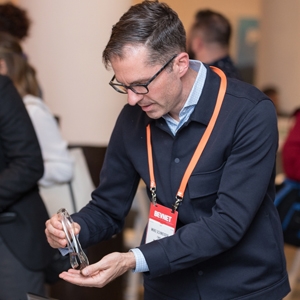
[00:04:14] Perfect Bar: So we did this sampling experience for the first time. And it was a resounding success by, you know, all metrics that we have after the fact. But on Sunday, the day before we were hosting Nosh live, it was, you know, 50, 50, this is going to be a resounding success, or maybe it'll be a duster fire. I love those odds. Not that bad. Some of us had a little more confidence. You know, John, you were talking about this to me the other day and how, you know, we do these events and we don't get dry runs. You know, we don't get to test the market with what we're doing. And this is the first time we're doing the sampling experience. So on Sunday, I'm talking to the catering team and trying to figure out everything that we need and working with them at the venue. And it turns out we need a lot of cutting boards and kitchen knives. They just don't have any. So, I discovered the full power of Amazon with their Prime Now two-hour delivery after you order. So, I ordered literally their entire inventory of cutting boards and kitchen knives and had it delivered by 10 a.m. to the venue, which helped us, you know, put out all these products and display them and serve them and prepare them as if the brands were doing it themselves. It was, as I said, you know, we got so much great feedback from all the brands who participated. They really loved the idea where they weren't burdened with setting up and cutting their product up and cooking it and putting it into little cups and telling everybody about it. They got to move around the room. They got to, you know, be a part of the event as what it's supposed to be.
[00:05:49] Ad Read: sometimes Landis reminds me of, of, of Rob Lowe and parks and recs like literally every single one purchased every single one. But no, no, it was like, it felt like we had dotted the I's and cross the T's. And then there's like this lowercase J kind of hanging there with all these knives and cutting boards and land to save the day. I was pretty good. Now, did you ask Kathy, our CFO about cleaning out Amazon's inventory of knives and cutting boards?
[00:06:11] Perfect Bar: She wasn't maybe as in the loop as she should have been. But I was working closely with Ashley, our events director, who I think has similar pull around here.
[00:06:22] William Thackeray: It's also why I now have like 500,000 American Express points. Congratulations. Totally kidding.
[00:06:30] Ad Read: Well, the Pinata team, which sponsor the sailing experience, was a crucial part of the entire event. They really were the workhorses behind the tables, putting out those samples, explaining what the brands are all about. I mean, I thought they did a really nice job. And, you know, there are some of the folks that are behind the scenes that don't get a lot of the attention that we were talking about, like the folks that appear on stage.
[00:06:52] Perfect Bar: Yeah, big shout out to Fred over there who helps coordinate a lot of that stuff. And they're a relatively newer team and they were really enthusiastic and engaging, had high energy.
[00:07:03] Ad Read: And super intelligent. They were standing behind the tables. And the idea of the sample experience in Expo was for us to have founders be the attendees and have them be able to network while their products were being served and not have to worry. And I thought the way that the Pinata team embraced the pitches and, you know, and, you know, plated the food and did the sampling was really professional. And we heard a lot from founders that it was an easy experience for them and a great experience.
[00:07:29] Perfect Bar: Yeah, they showed up on time. They were there really early before, as we're setting everything up with the catering team, getting all the value propositions of all the brands that are on their table and understanding, getting a full understanding of what these brands are about so that they could answer questions to attendees.
[00:07:45] Ad Read: It was like a micro Elevator Talk going on. I mean, it also gave the founders of these companies some of the room to operate in the crowds at the sampling experience itself. You know, instead of being behind the booth at a trade show, like an Expo West, they were allowed to sort of roam the floor, talk to some of the investors and distributors that were there. And it was really fun for me because, you know, having known a lot of the attendees at both events, it gave me, and I'm sure some of you guys as well, an opportunity to connect those folks. And I hope those connections are going to be really good ones for those brands and for those brand founders going forward.
[00:08:20] Perfect Bar: Yeah, we were constantly making introductions for folks at these events. And honestly, it doesn't even stop at the events because I was getting text messages and emails on my way up to my bachelor party. Hey, John, I've this guy's card must have fallen out of my pocket when I was getting into a cab. Can you give me his email? You know, just just shoot me a note. If you want to connect with someone, you had a misconnection at one of our events. We're more than happy to provide you guys contact info and connect you with one another. So feel free to reach out if you're at the events and still want to make some more connections.
[00:08:54] Ad Read: Mike was making connections with BevNET stickers on my back during the show. He was one of those, what do they call those pranks? You hazed me at the show. How does a guy who's only, this is only your third BevNET Live Nosh Live event, and you were hazing me.
[00:09:08] William Thackeray: I don't know how that happens. He's like a 15 year veteran. I don't know, I got the same jacket as you. For the record, I think I gave you that idea.
[00:09:16] Ad Read: Maybe that's how I did it. I mean, not that it's a clever prank. Yeah. Well, John Craven, I mean, you know, it's funny because as Jon Landis mentioned, you know, we're, we're trying things out at some of these events, you know, the sampling experience being one of the new things that we introduced, we introduced some expert tables at both shows. That was kind of interesting as well. I mean, you know, how do you feel about kind of putting these things together in front of, you know, for the first time in front of a live audience?
[00:09:39] William Thackeray: Yeah, I mean, I think, you know, we talked to brands a lot about going out and doing small tests and, you know, just getting feedback. And, you know, largely for what we do, our only opportunity to get, you know, feedback on these ideas is to actually do them. You know, we don't have like a dress rehearsal or, you know, smaller version of any of these events. You know, I think what people are seeing as an attendee is certainly us doing it live. And, you know, some things work out better than others. And hopefully the things that didn't are largely at this point, things that, you know, most people who are attending wouldn't even notice anyway. I definitely think, you know, props to our team. Very quick on, very quick on their feet when, you know, some bump in the road inevitably happens. And, you know, the show's just got to keep going on. And it's always fun to be doing that.
[00:10:30] Ad Read: We often have really trendy products at BevNET Live and, you know, some of the brand messages are a little cryptic at times or disjointed. And you saw, like, people who are trying to make a category, particularly Kaskarik, to keep it cool, Drink Peloton, and the Bevvia guys getting together to talk about, like, how are we going to message this industry and how are we going to build this category together, you know, almost as frenemies. Yeah, I thought that was pretty interesting. I mean, you don't really see that too often like at a trade show, whereas like, you know, at a very specific kind of beverage conference, those frenemies that you're talking about do have that opportunity to sit down and say, OK, let's figure out maybe there's a message, maybe there's a theme that we can all kind of work on. when it comes to education and awareness.
[00:11:10] Perfect Bar: It's a coffee fruit. It's a cascara, you know. It's a cherry tea. Figuring it out there, right? Right, right. That was pretty cool too. And speaking of friends, not frenemies, I want to give a shout out to Kai and Evie from Evy Tea, to Tobin and Eddie from Hella Cocktail. Both of these brands and brand owners I've known for close to five years now and have been trying to get them to come to BevNET Live since then. And it was their first time this summer and I got some great feedback from both of them. You know, sometimes it's like a bit of a leap of faith because these events are an investment, but once you're exposed to it, there's really no turning back, so.
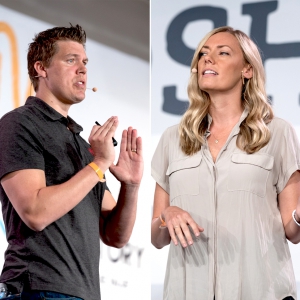
[00:11:44] Ad Read: We also saw Rise Kombucha hug Rise Cold Brew. I thought the universe might implode, but it didn't. That was pretty cool. It was also pretty cool seeing the founders of Perfect Bar up on stage. They were on stage at BevNET Live talking about their Amazing business. And as I mentioned at the top of the show, it's what they call a 13-year overnight success. But when it launched in 2005, Perfect Bar was a pretty tough sell. A brand of chilled protein bars, it was co-founded by Leigh and Bill Keith, along with four other siblings. The products were conceived from a family recipe and made with healthier ingredients as compared to other protein bars on the market. At the time, health and wellness trends were barely affecting the landscape of food and beverage, and the concept of a refrigerated bar was an odd pitch to retailers. But the Keiths, through persistence and a focused business strategy, slowly achieved traction with Perfect Bar, which has now carried it thousands of retail chains across the country. Mike caught up with Leigh and Bill at Nosh Live and discussed the company's journey and how intense sampling efforts and grassroots metrics were critical to the brand's development. All right, it's Mike Schneider here at Nosh Live Summer with Lee Keith, the president of Perfect Bar and Bill Keith, the CEO of Perfect Bar.
[00:13:01] But Leigh: Welcome. Thank you for having me. Summer's here.
[00:13:03] Marty Caballero: Thank you. We're loving it. It's been a great event so far.
[00:13:08] Ad Read: Thanks so much for being on stage. And obviously, we wanted to continue the conversation on Taste Radio. Starting with the founding story, but a lot of people have heard the founding story. I'm curious about the 611s. Why didn't you start a football team, a soccer team? You're out there doing Perfect Bar. How is it to build a company with family?
[00:13:29] But Leigh: Oh, man, Lee, where do we start?
[00:13:31] Marty Caballero: I know, it's definitely a double-edged sword, you know. Those are the people you call on a Sunday morning when the packager went down and you need to package bars and hit an order by Monday. But, you know, you also have to go through those bumpy times when, you know... They fall asleep on top of the walk-in refrigerator. That's a true story.
[00:13:50] But Leigh: And you can't find them, and you need him in order to get an order out.
[00:13:55] Marty Caballero: And they're sleeping on top of the walk-in.
[00:13:57] But Leigh: And they're sleeping on top of the walk-in. And it's a brother or sister. Totally. It's a brother. To Lee's point, it comes with a lot of joy. I mean, I feel like I'm part of a social experiment. I've been able to see my brothers and sisters in all parts of their life, right, from adolescence all the way to adults grow into these professional roles. And it's just phenomenal. And seeing some people really gravitate towards it, and then some people going a different direction. And the whole deal with, you know, private equity coming in, and VMG coming into the model with these professionals, it really did at first, we had to be careful. Because we wanted to maintain that culture, that family culture that everybody gravitated to, those health principles, we didn't want to deviate away from that.
[00:14:44] Marty Caballero: Yeah, and we didn't know what it had to look like within our organization to become a professional business. We hadn't had really any structured board meetings up to then. Like our first 10 years, we were just in the trenches, you know, demoing ourselves, making the product ourselves.
[00:15:01] But Leigh: I had one junior college business class in college and I presented on Perfect Bar. And literally the teacher came up to me afterward and said, good presentation and tasty bar, but refrigerated bar, that just doesn't make sense. You know, so that's what we had to go on to that kind of a class. Lee and I just had to get scrappy and figure it out as we went.
[00:15:24] Ad Read: So you were scrappy for 10 years. And then the BMG moment happens. And how does that change the business from, you know, scrappy family, you know, CEO and chief bottle washer, president and president and janitor to to where you are today?
[00:15:40] But Leigh: How do you how do you learn how to let go of pieces of the business? Does BMG teach you that? You know what, that's something, that's a journey we had of self-discovery that each one of us had to go through. We have really good gut intuition. I think successful entrepreneurs, there has to be a level of great gut intuition. What I mean by that, we didn't necessarily have the data to prove that different decisions we were making were the right ones, but we just felt like the industry needed it for whatever timeframe it was or the product was right. And so once VMG came on, it was sort of a freedom feeling. I don't know about you, Lee, but they told us, hey, here's a system that you need to set up as far as syndicated information with, you know, spins or IRI or whatever syndicated data you're pulling from. Here's how you can look at these numbers to support whatever marketing program you're doing. or different flavor launch that is going on, how to both support it as well as activate it. And for me, it was just a really, it was a freeing feeling.
[00:16:51] Marty Caballero: It does go back to it being a fine balance between data and following trends, right? If we looked at that from the get go, we wouldn't be here because there wasn't any insight to show us that refrigerated bars would be anything or refrigerated snacking. So we do, still balance that in between. And as founders, you know, in the end, we have to listen to our gut. You can also have paralysis by analysis, right? And so we want to avoid that as well. The advantage to being a nimble run company as we are is that we can act fast. We can take an idea, we can see, you know, whether it's a flavor format or a platform, and we can beat a market within four months.
[00:17:30] But Leigh: concept to creation in four months.
[00:17:32] Marty Caballero: Yeah, and so we can't lose that by staring at the data and being bogged down by that. It's a balance of both.
[00:17:38] Ad Read: You're talking to, you know, as you know, you're talking to a data warehouse analytics guy. That was my first career. A slight tangent here. data and analytics. When do you bring it in? How do you know when to bring it in? And how do you strike that balance between we know what the industry wants or needs because, you know, you survived the war on carbs and the war on fat. And then listening to the data and looking at the data. Obviously, you know, you've got a lot of data coming in.
[00:18:06] But Leigh: You know, for me, because I mentor a few startups in young companies that are getting off the ground, I always tell them, try to get an analysis of what the landscape looks like for the set you're going into. Now, that's just at first. We didn't have that, and if we would have had that, it would have helped. It wouldn't, to Lee's point, it wouldn't necessarily have proven that refrigerator bars were the right ones, but get a full understanding of the set that you're going into. And then, to your point, when to get that syndicated data. Well, guess what? If you're in five stores, or if you're in 20 or 100 stores, don't spend the money on it. You know how much they're doing roughly from just, you know, being so active in the stores. For a lot of companies, I figure that sweet spots around the regional, once the company goes from a local brand to a regional brand, so for instance, they land a Publix or they land a Kroger, and maybe even before National. Now, again, it's all about the cost benefit, right? Don't buy the Mercedes package. You know, buy whatever package you can to use as the selling story in the beginning, because you'll need that selling story.
[00:19:14] Marty Caballero: And I mean, the way we went after it without having the dollars to buy the data is go in and ask that set manager how many of these, you know, X product moves a week. How many cases of these do you order a week? Oh, I order two. I'm selling about 16 of those. All right. And then you can just sit there and sell yourself against all the products in your set. And boom, you didn't have to buy the data to just learn that.
[00:19:39] But Leigh: That is a great point. And that's, gosh, that's what we did for years, right?
[00:19:42] Marty Caballero: Early on. And then when we pulled the data, we said, oh, we're the number two best selling bar flavor in the entire store. Cool. We didn't know that. But awesome.
[00:19:51] Ad Read: So as a 10-year-old startup, you must have a different set of questions. When we talk about data and data warehousing and bringing in big time streams of data, I always think about beginning with the end in mind, the questions that you're asking. You talked about it before, some questions that you should ask. What questions does the startup ask? versus now the questions that you ask. Because if you boil the ocean, if you bring in too much data, you're going to start asking really hard questions fast. And I think that the key is to step into the questions that you ask about your business. And it'd be great to hear how you stepped into some of those.
[00:20:25] But Leigh: I agree. For a startup, I'm always big into ask yourself the big question, the reason for being. And I know it's sort of 101, but what's your story? And in the beginning, that's the toughest part, is I feel like a lot of entrepreneurs, they'll start really not knowing why they're doing it, and then the mission statement will come later. And the obvious is all of us are trying to make a living, absolutely. For us, that was something that literally, and I'll never forget, Lee, it was about seven, eight years into it, that we said, wow, look at our story. And we sort of got reflective and realized, look at the journey that we went through. And you know what? That just takes time in order to get to that point.
[00:21:10] Marty Caballero: It was a few years into the business. It actually was in 2009 when our dad passed away. We wanted a way to memorialize him. And so we were pulling down old family photos, and that's when we first put our family story on the package, you know? It was just a natural progression for us to want to share what we had just lost and where this recipe came from. And I mean, from there, we're described as, from little kids in different studies and whatnot, oh, you're the family bar. You know, and so much of our identity is our story and our why and why we're here. There'll be a lot of products that are, you know, for us, protein, nut butter-based bars. And great, I would love the set to have a lot of competition. So the one thing for any brand that's always different and unique to you is your story and your reason for being. And millennial shoppers especially, they want transparency into what they're supporting when they eat their food. And so it just came by way of, Our families kind of want to share our dad's legacy, but it's such a crucial part of our brand now.
[00:22:16] But Leigh: But to get back to your question, what are some of the data points that you need to look at in the early stages? For us, it was asking the buyers what's the velocity requirements for this specific set. Get the goals in mind. Have these goals stated everywhere with your sales team so they know in order for us to validate and be in the set and not get dropped, we have to move X number of units per week. The next number I always tell these folks to do Make sure that you have a very clear understanding of what your break-even point is as an organization. A lot of times, especially with the model of wanting everything right away, see we were bootstrapped for the first 10 years. We didn't take on Series A funding until year 10. But in the model of taking on that funding sooner, You need to look at that breakeven point and you need to say, when will I be able to finally start adding these critical team members to the sales team? Because in the beginning stages, it's really about sales. Lee, remember the statement I would always make to us, if we can figure out how to sell it, we'll figure out how to make it. You know, because that was always the result. So these questions that you're asking yourself are allowing you to not only make staffing decisions, but also supply decisions. Absolutely. So those are two big ones. The other big one, you know, when you're looking at your different marketing programs, make sure that you're measuring them. I don't even suggest doing a marketing program unless you can measure the effectiveness.
[00:23:42] Marty Caballero: Yeah, especially when you're a small brand. I remember we had partnered with the Rock and Roll San Diego, broke the bank to give away 40,000, 80,000 samples at the finish line. We felt really good. That made no difference for us in the store.
[00:23:59] But Leigh: Made zero movement difference.
[00:24:00] Marty Caballero: So it's like, be really weary of saving up your bucks to have now Expo West, Expo East, like those are industry events that you, you know, really, we felt were really valuable, like that's an investment for sure. Just make sure you know how you're going to measure the effectiveness of those programs, and then stay laser focused on that. Have your marketing team, or for a long time it was just me, putting it all in a dashboard against each other and really figuring out how am I going to measure these programs in an apples-to-apples way. Okay, I will, you know, brand my barcode on this coupon I'm giving away with a specific barcode so I can follow that coupon all the way through the register. OK, something as simple as that. Now I have a tag on that program to be able to keep an eye on it. Each of our field team members had a set of free bar coupons, dollar apps, whatever it may be. Those barcodes were unique to them as a salesperson. So we can keep track of redemption there, like little ways that you can look at simple programs today and find ways to put little tags on those different moving parts so you can follow them all the way through the register and then step back every three months and quarterly look at you know what's working and what's not.
[00:25:14] Ad Read: So is it the same today or are you looking more at okay we've got to figure out how awareness drives to the bottom line and you know obviously there's a there's a point when You can go into a party and say, hey, I sell golf clubs, and that's going to resonate with whoever it would already resonate with. And then you've got to figure out, OK, how do I get into conversations that I wouldn't otherwise be able to get myself into? So what's the difference today?
[00:25:34] But Leigh: You're exactly right. You're exactly right. Well, I still think the scrappy method is the best method. And here's why. We couldn't afford to go into these trade shows like Expo West. We really didn't start that whole program until year six or seven. They were too expensive. Well, we got scrappy and we literally, we'd go to these trade shows and I know you're not supposed to do it, but we'd have these conversations with these different folks there in a very graceful way in these buyers that we're trying to get ahold of. And I'm not advocating that, let me be very clear. But we were trying to think outside of the box. For instance, funding. Oh, no bank wanted to give us funding for a refrigerated bar. What do we do then? All of us got together, put our credit cards in the middle of the table, and said, all right, how much does that add up to? That's our operating capital. And those are some of the tests that you have to do. And I always tell every young entrepreneur, make sure you're seeing the signpost along the way that shows you're on the right track. What was the signpost for us? It was, oh my gosh, this is the best tasting bar I've ever had. We had folks saying that. And for young entrepreneurs, don't drink your own bathwater. Go into the store, demo the product yourself so that you can hear and engage with your consumers By the way, that's how you Perfect Bar product. That's how you're going to figure out your pricing structure. And that's really how you're going to just build and grow your company to where it needs to be. I've got a few questions about brand that I want to ask you.
[00:27:03] Ad Read: But before that, let's talk about product. Your product is phenomenal. You know I'm a fan. appreciate it. How do you get from the point of, you know, one or two varieties to right now you're at you're at 13 skews too many bars and anniversary bar. You're able to take space from yourself to put an anniversary bar out there or you're able to gain more space in a section that's very challenging to gain space and and where competitors are now coming in.
[00:27:29] But Leigh: It's a space you invented. Yes. Well, early on, I read the founder of Apple, Steve Jobs. Steve Jobs. I read his book, of course, everyone knows. And he said, anytime you have a chance to make a product that cannibalizes on yourself, do it, because you're just going to add to your portfolio.
[00:27:46] Marty Caballero: But a balance to that, though, is making sure that you're not cannibalizing too much where you're diluting your core business or you're diluting, you know, each of your SKUs on the shelf need to stand on their own. So we had to take a hard look at, you know, if we had 9, 10 SKUs and those tailing SKUs were not turning at a volume And before being forced to discontinuation or looking like something ugly like that, let's take a look and say, you know, with our consumers today and the amount of people we have going to our shelf, how many SKUs can we support? And let's make sure that even the slowest moving SKU is at a healthy turn. And then as we continue building those velocities, we allow ourselves multiple. So in most of our retailers, Nationwide, you'll find a core five. In our more established retailers, you'll see eight. We offer additional varieties online. We have a lot of fun with our e-commerce business because we can trial new flavor ideas, do limited-time offers. We want a reason for our consumers to continue coming back to our own e-commerce site as well as Amazon. So I think it's really looking very soberly at your SKUs and making sure that you're not just throwing product on the shelf to feel good, like the old almond acai. That one has been the best.
[00:29:02] Ad Read: I get it, Lee. I get it.
[00:29:03] Marty Caballero: That was my creation.
[00:29:04] Ad Read: I never got to try that one, but I still want to. Oh, it's so good.
[00:29:07] But Leigh: How do you know to go from five to eight? How do you know where to go from five to eight? What tells you that? So again, a lot of it's the consumer asking, saying, oh my gosh, this bar in a hazelnut or a cashew butter. I mean, so look at, look at where we're at. We're a nut butter bar. So how many different nut butter options out there? And how many of those are viable? I mean, will they really taste good, right? You get into some of the nuts and it just, it's not very viable.
[00:29:32] Ad Read: It's not very tasty.
[00:29:33] But Leigh: It's hard to make that one taste good. You know, and I, I like Brazil nuts, but so you look at those different options and you look at variations off those nut butters and then you, you look and it's, it's very sobering to look at what are some of the top skews in the bar market for us, but whatever set that you're in and saying, okay, this is a nut butter that's resonating with the consumers. If we add this to it, whether it be chocolate or this, it's tasty and it really fulfills the consumer's needs.
[00:30:02] Marty Caballero: Your base core SKUs need to be turning at such a volume that you can give up some of that movement to the new SKUs.
[00:30:10] But Leigh: We're not going to be on the shelf. And retailers, you're exactly right, Lee. If you cannibalize too much and you dilute yourself too much, then you're not going to be able to really cross those velocity hurdles in order to maintain your position.
[00:30:22] Ad Read: And what about being accordioned by competition, the pro bars of the world that are coming into the space, the naked bars that are coming into the space, which is a good and a bad thing. It's a double-edged sword, right? Because it means that there's a market and there's more demand, but you don't want to get squished out.
[00:30:39] But Leigh: So again, that's where your selling story is most prominent. So for us, we were able to show retailers, we've been stacked up against some of those competitors you mentioned. Here is our velocity in the buyer. They know what our competitors' velocity are. So while those competitors have a spot, we would have potentially a lot more based on the velocity in the ring that we're going through the register. So that sales story is very important because if everything was fair on the shelf from just a number of SKUs and number of items, then it wouldn't be very fair for us because it would basically impede the heavy lifters, the fast movers, and we'd be always out of stock. And we've crossed that bridge a few times. We have those instances.
[00:31:24] Marty Caballero: And it's been, you know, we haven't steered away from managing that on the street ourselves with our own field team. We have a team of people nationwide that cover off on every region. We'll use third party assistance. We'll use 1099 folks, getting creative with employees as well. And we keep our feet on the street. There's no other easy way about it. You know, no matter what size your why I'm sure there's a breaking point with your size of brand, but certainly for us, and being in a fridge set that's moving so dramatically every day, every week, every month, it's important for us to keep our eyes on the store and continue helping those store managers understand, just because this is a new shiny product coming into this set, let me remind you how we're turning versus them. And that's why the focus, especially on maintaining our data-driven mindset.
[00:32:15] But Leigh: Lee's exactly right. When you have a data team and a field team that are passionate, they can work together so well and be so reactive with the voids, to Lee's point, the voids on the shelf or the missing tags. I mean, all those are lost sales. So not every company can support a field team. And that's very sobering early on. I always tell entrepreneurs, like, look at your structure and validate that you can have this heavy payroll field team. But for us, we're able to actually measure and see that there's a lift across the country by adding this field team. And then it comes down to numbers. It's an ROI game.
[00:32:55] Ad Read: And you two are two of the biggest evangelists there are of your own product, which is phenomenal. I mean, when I met Lee yesterday, she was eating a Perfect Bar and talking about how much she loves to eat Perfect Bar. And I think that's really important for entrepreneurs to be the biggest champions of their product. Yeah. Besides me. And then I love it. That's great. So you're laser focused on quality. Talk to me about the R word. There was a voluntary recall.
[00:33:23] Marty Caballero: On various occasions, we've issued voluntary recalls for all kinds of reasons. It's a very finicky product to make. It's difficult to make a perfect, Perfect Bar. And whether it's a different type of ingredient or the way ingredients change throughout the season, we actually do tastings every week within our office where we lay out all of our product. And Bill and myself, we're standing over, it's actually on the ping pong table in the game room. We eat our fair share of Perfect Bar and we sit there and if something comes up that we're flagging, this wasn't quite sweet enough, or this product's a little dry, you know, the mix of the protein maybe would have been off, like all kinds of reasons. We know how difficult it is to get our first time consumer to take home a Perfect Bar. So the liability of having that experience be subpar. That's not what we want. And so we're willing to pull product off the shelf, validate through taste testings or different types of things, and be very transparent with our consumer. Hey, if you experience this experience with this lot number, give us a shout out. Like talking to them as though we are friends and we're part of this community together. We're doing our best. And sometimes that isn't Perfect Bar we see time and time again, our customers just rally behind us.
[00:34:43] Ad Read: But perfect is a beehive for you. You can get out of bed every day and say, we want to make Perfect Bar, perfect snacks. We'll talk about perfect snacks in a minute. Let's talk about the brand. Nutrition Better For You, that's always been a part of your brand. And now you're seeing that play out. Your dad would be proud. You've also found a way to scale that via social media. Talk to me a little bit about how you figured out that social media was going to be a great channel for you. I think you both want to talk about this. Talk to me about how you knew that social media was going to be a great channel, and then how important is it as a brand?
[00:35:21] Marty Caballero: You know, it was a perfect opportunity or engine for us to be able to communicate so personally with our customers and have conversation with them in real time, you know, learn what they like and don't like about our product, get to know them personally, even through their posts. We really put a lot of time in with our social media team to create really authentic relationships. I think that word authentic is so overused, but really we don't do a lot of paid social. We'd rather reach those who have 5,000 followers than 100,000 on an unusual or daily basis because we feel that we have the opportunity then to create that genuine relationship. I'm here to support your needs. whether it be through nutrition or whatever your own business is or your goals. And so it's just an extension of our culture and our family community with our influencers now.
[00:36:12] But Leigh: And Lee, you know, it wasn't always like that in the beginning. With social media, it really has been an evolution to where we had to figure out who we were. We went through a whole rebrand and this happened, you know, four and a half years ago, right before we partnered with our private equity company. And in that rebranding process, it was such a revealing process because they asked, it was almost like a corporate psychologist.
[00:36:37] Marty Caballero: It was like therapy.
[00:36:38] But Leigh: It was like therapy. And they said, OK, you tell us about your dad. Tell us about what you believe in. And by us sort of having this workshop, which literally lasted over a couple of weeks, we were able to understand, OK, these are the kind of people who are us. These are the kind of folks that we want to reach. So social media, oh, there's a lot of disingenuine pictures and information out there. People crave genuineness.
[00:37:05] Marty Caballero: And community.
[00:37:07] Ad Read: And connectivity. So Perfect Bar is now poised to go to the next level. You just announced Perfect Snacks on the Nosh Live stage.
[00:37:17] But Leigh: Thank you very much. Question one is, how did you know that it was time for an umbrella brand? We, for the last three to four years, have been getting the consistent question from our consumers and our retail buyers, what is the next item? Not just bar. Consumers and the industry. And the industry. What is the next eating occasion that you can fulfill for me? And what I mean by that, is it indulgent? Is it savory? Is it more of a portable option? There's all of these different avenues you can go in under the snacking umbrella. And so really, Lee and I, we've been focused in bars primarily and minis.
[00:38:02] Ad Read: Thank God.
[00:38:03] But Leigh: But those minis are good. But now we're able to, with the team that we've assembled, this great innovation team with all of this talent, we're able to look at everything under the snacking, fresh snacking options. And I can just go into it. Different size options, different desserts, different drinks, or whatever they might be. There's all these different platforms that want fresh, clean, whole food supplementation, which we deliver, the 20 super foods. that want the protein and want to taste great so that you have it as a portable option on the go. And so with all of that information, we for the last year, it's been our project a little bit about a year and a half to create these two new platforms under the fresh, perfect snacks, fresh snacking umbrella to launch at Expo East this year and Expo West.
[00:38:58] Ad Read: How did you know that this was the time? How did the children of, the way that you tell the story of your father is he's kind of like a scientist, a tinkerer, a hacker, like he couldn't stop creating new things. How did you allow yourselves to focus on this thing? You said you were backed into a corner and it was out of necessity, but why now versus, it's been 13 years.
[00:39:22] Marty Caballero: Well, and the industry's changed. Consumers' behaviors are changing towards eating, and we feel a shift in the wind.
[00:39:30] Ad Read: And you're the leaders.
[00:39:32] Marty Caballero: And we're the leaders of that set. And so seeing the growth in any item sitting in the refrigerator and fresh snacking, needing to legitimize that set. and help our retailers fill that set so it does become a destination. And once again, we talked about cannibalization, cannibalizing our own products with our bars. Well, let's reach different day parts, whether it's evening, indulgent or afternoon, salty, different types of breakfast formats. So Perfect Snacks, which we're still working out where that logo will live, but you'll see multiple formats over the next couple of years roll out to fill the basket and meet multiple parts of any person's day.
[00:40:14] But Leigh: And you know, I think this goes back to the rebellious kids that we were, where we were rebellious and we wanted certainty. know, because our mom and dad were such, you know, free folks. So I think it really comes down to wanting to be focused on one thing and do it well, right? I mean, if you look at America, it's a very specialized country and you get rewarded for doing one thing really well. There were so many opportunities with just the bars that we wanted to capture that. And Lee, you said it right. that the whole culture and everything is shifting and they're asking for more fresh items. And so if we don't deliver that to them, then someone else will. And so in order for us to maintain our leadership, we have to innovate.
[00:40:59] Marty Caballero: So today, across the whole bar category, Perfect Bar makes up just 1%, just over 1% of the total sales for the last 52 weeks. But we over-index in the growth. So we make up more than 10% of the total bar category's growth. So we're driving a lot of the change in the industry, sitting as the Lone Ranger in the refrigerator. So we see a lot of opportunity to capitalize that.
[00:41:24] But Leigh: And so you're looking for, and now you have permission to go into some of the other areas of snacking. Because of that tremendous growth, we have been given permission to just fill up the set.
[00:41:34] Marty Caballero: And we've taken great care with our innovation team. We have a wonderful director of innovation that works closely with, you know, listening to our consumers, looking at other products that are great. I think you should absolutely look at who's out there already. Like, we've done that since the get-go, and we launched new flavors. I mean, heck, dark chocolate chip peanut butter. It's like those have never been paired before.
[00:41:57] But Leigh: Brand new idea.
[00:41:59] Marty Caballero: You know, there's low-hanging fruit opportunity that maybe some others are doing well. Okay, let's take a look at how we can make that in a new and unique way. And then let's also start from scratch with some ideas and then work our way backwards to commercialization. Our timeline for innovation is super stacked with some really fun ideas, but we want to make sure that we're always delivering on the best taste. It has to be nutritious with protein, the superfoods, healthy fats. And of course, it needs to be fresh. It needs to sit in the fridge. On brand. Always clean label. So those are our guardrails.
[00:42:35] Ad Read: Well, this has been phenomenal.
[00:42:37] But Leigh: Thank you, Leigh and Bill, so much for being on Taste Radio. We're so happy to have you here. Thank you so much for the opportunity. And I want to try one of your lattes. All right, well, we'll come to Boston. We'll have that happen. We've got plenty of space for you to work. I think I'm going to Boston. All right.
[00:42:54] Marty Caballero: Thank you, Mike. We really appreciate it. Huge fan.
[00:42:57] But Leigh: See you guys.
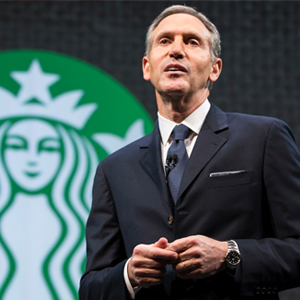
[00:43:00] Ad Read: So even when we're pumping out content, even when we're on stage at BevNET Live and Nosh Live, the news just does not stop. That train just keeps on rolling. And we've got with us now Marty Caballero, who's the assistant editor of BevNET, to talk about a few of the notable stories that happened in the beverage industry while we're at the events. Marty, thanks so much for being with us. Thanks for having me as always. Big news in the world of Starbucks. Yes, absolutely. You guys may remember in December 2016, Howard Schultz decided to step down as CEO but remain with the company as chairman. And now he has completely left the company, no longer executive chairman and the Howard Schultz era at Starbucks is officially over. So interesting to see what will happen there. Kevin Johnson obviously took over as CEO and Howard Schultz is, his next move will be writing a book. So we'll perhaps learn a little bit more about his future plans there as as well as some reflections on the business. So interesting times ahead, for sure. Indeed. Rumors about a possible political career for Mr. Schultz. Yeah, those have followed him for a while. And you know, he hasn't done the best job in terms of dispelling those in any way, kind of leaving hints here and there. So again, we'll have to see. That's a good hook for his future bestseller, I'm sure. Indeed. Kombucha, one of the fastest growing non-alcoholic beverage categories and a very interesting acquisition in that space. Yeah, absolutely. You mentioned it as a growing non-alcoholic category. It's interesting to see a major alcoholic company getting involved here. This one is, in this case, is Molson Coors, which acquired Clearly Kombucha last week for an undisclosed fee. This is a relatively smaller brand. This is not on the scale of Kavita, which we saw acquired by Pepsi a couple of years ago at this point. San Francisco-based company, it has a presence on the West Coast and the Pacific Northwest. But yeah, Molson Coors has a tap ventures, which is their division sort of looking at other opportunities outside of the beer category. You know, kombucha obviously fits a lot of trends, sort of healthier drinking, a little bit interesting flavors, and certainly a lot of personality in these brands. Yeah, definitely rising interest in this space. I think rising interest overall in beer companies looking a little bit further afield for their new innovations. Indeed. Yeah, we saw last year a big acquisition, Anheuser-Busch InBev acquired Highball. So interesting to see where these smaller divisions go and how much more involved they get in these hot spaces. Yeah, absolutely. ZX also invested in Canvas, which was a spent grain beverage, another non-alcoholic venture there. So, yeah, I think they're dipping their feet in, sort of seeing what works and what doesn't. And, you know, certainly good news for people in the beverage industry that some of these large corporations that normally were not looking at this space are now definitely interested with their wallets open. And good news for our readers, Full Stories. penned by Marty Caballero and our senior reporter Brad Avery on BevNET.com. Check those out in full in their entirety. Marty, thank you so much for being with us.
[00:46:02] William Thackeray: Oh, it was a pleasure. Thanks.
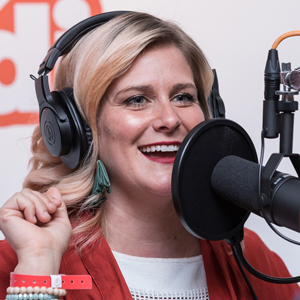
[00:46:04] Ad Read: So The British novelist and author William Thackeray is quoted as saying that, quote, successful people aren't born that way. They become successful by establishing the habit of doing things that unsuccessful people don't like to do. But what are those things, those habits? We'll be asking that very question to many successful entrepreneurs in new and upcoming episodes of the podcast, starting with Daina Trout, who's the co-founder and CEO of leading kombucha brand Health-Ade. In an interview recorded at BevNET Live Summer 2018, Dinah discussed specific habits that have helped her achieve repeatable positive outcomes and avoid routine mistakes. All right, I'm here at BevNET Live Summer 2018, joined by the one and only Daina Trout, the co-founder and CEO of HealthA. Dinah, thank you so much for being with me.
[00:46:52] Bill Keith: You're welcome. Nice to be here, Ray.
[00:46:54] Ad Read: How's your BevNET Live experience going?
[00:46:55] Bill Keith: Fantastic.
[00:46:56] Ad Read: This is like your eighth one at least at this point, right?
[00:46:59] Bill Keith: Six. The fifth.
[00:47:00] Ad Read: Fifth?
[00:47:01] Bill Keith: Fifth.
[00:47:01] Ad Read: The first one was when you won the New Beverage Showdown, correct?
[00:47:03] Bill Keith: That's right. That's right. It was pretty epic.
[00:47:06] Ad Read: And since then, quite a bit's changed for Health-Ade. You guys have grown quite a bit. You've grown professional yourself and personally as a leader. And I'd love to talk to you a little bit about some of the habits that you formed along the way, good and bad, that have helped sort of craft and cultivate who you are as a CEO and a co-founder, and how you've sort of transferred that knowledge to your colleagues in your company overall as you continue to develop and grow. What's one of the most important habits that you follow on a regular basis to keep you not only motivated, but to keep you sane, I guess, in the crazy up and down world of the beverage industry?
[00:47:52] Bill Keith: Well, here's the thing. The reality of a day-to-day life of a CEO or probably of any executive is that it's really nonstop and it's basically a nonstop plethora of detours and roadblocks. And so you're pretty much constantly stuck in urgent problem solving situations. And the person who wins or the company that wins is the one that can do that the fastest and get right back on that horse. And so the reality is day to day I'm often just like as if I'm sitting at a baseball pitching machine, just smacking as best I can each ball that comes at me. But the problem with going that way day to day is that over time you will not spend enough time in the helicopter looking down at your business and really thinking ahead, thinking big picture. You're constantly stuck in the granular tactical stuff. It's really easy to get stuck there even for six, seven, eight months without having spent more than an hour thinking about, well, what's next? What's the best thing for my business in three years, five years? So I instituted a habit, which I call a strategy day. Sounds kind of simple, and that's because it is simple, and it's actually easy to do. You just have to spend about one day a month, that's what I do at least, where you block the entire calendar so you can't have any meetings, no calls, you're out of the office, and in that day, you're supposed to basically put in anything that isn't tactical, isn't urgent, everything kind of fits into that day. And in the beginning, there's not enough time to get it all done. But now that I'm doing it pretty regularly, I actually think that's one of the things that's allowed us to continue to grow this fast, because we really have grown super fast. We tripled last year. We'll double this year. We'll double next year again. That kind of growth, it's easy for the wheels to come off. Certainly they shake. And if you're not cognizant of the upcoming detours and you're not spending time thinking about those, they will come at you and surprise you. So I would say that's one of our good habits, one of my good habits. I try to get others to do it, by the way, and it's really hard to get others to adopt. It's definitely a thing that people are uncomfortable doing, blocking out their calendar for a whole day. But I think it's really important to do.
[00:50:12] Ad Read: So when did you start taking this strategy day and what really led to its development and then eventually to your implementation of it once a month?
[00:50:20] Bill Keith: I think just the recognition that I was in this sort of like constant whirlwind of always feeling like I didn't have enough time to think about the big picture, knowing though that a CEO is supposed to do that. So I think I had some really strong influencers around me that were good about the big picture. I'll just name one, like Rohan, one of our investors. That's where he operates. He's in the helicopter all the time. So I think his influence and many others just sort of reminded me that A really successful CEO is calling the shots from a much wider lens and has a larger vantage point. And if you're spending too much time on the ground, you're just unable to do that well. I see so many CEOs that get stuck in this whirlwind. And I think like the trick is we've got to pull ourselves out enough so that we can take the company to its next step.
[00:51:18] Ad Read: So when you say you have these strategy days, it doesn't sound like you just clear the day and just sort of meditate. You have a structure to these days.
[00:51:26] Bill Keith: Yeah. Yeah. So. The day is never the same, each strategy day. But generally speaking, when things come my way that I know need to go into this day, I place them there. They have a placeholder, so they don't linger in my head as this thing I should listen to or this book I should read. So in that day, I might read a portion of a book that somebody has recommended for me that's specific to a problem I have. I might listen to some TED Talks that people have been like, oh, you should really listen to this. Because part of a CEO's job is also to be inspirational to your team. And you have to get that from somewhere. It doesn't always just come from a beautiful, bubbly probiotic tea. You've got to find that in others. So I need that inspiration from other successful leaders that have been there and done that. So spending time to make sure I get that. And then I usually structure a good amount of time on where we are. I try to understand where we are. I kind of identify where we are versus where we said we'd be, not just in terms of performance. There's a lot more to it than just sales. And then if it's not where I want it to be, why and how do I course correct? And if it is, then I'm kind of like, well, how do I step it up a little bit more? And so it's sort of like I do spend a good half part of the day at least looking at where we are versus where we said we'd be and what is the next sort of big pivot we have to take.
[00:52:51] Ad Read: So what are some of the specific ways that these strategy days have helped you and helped support the growth and health of your business?
[00:53:01] Bill Keith: Again, because I'm looking at the big picture, and so therefore, after these strategies, I have an understanding of that big picture, I can better lead the company to that big picture. Like, here's an example. So we typically do annual, we used to do annual goals, much like many companies. So, you know, except for your sales team, everybody has some kind of, you know, objective they have to reach before the end of the year and their bonus is paid on, you know, based on that. Okay. That's pretty typical. That's how we were built. But in one strategy day, I kind of recognized because I took time to look at everybody's goals and I took time to understand like, why are half these goals irrelevant by the middle of the year? What I realized in that time was that for a company that's growing at our rate, the goal that you set in the beginning of the year might change. It's actually most likely going to change. Even within three months, it might change. And your original data point that you thought you would hit becomes irrelevant. It's not even that you couldn't hit it. It was like, oh, well, this thing now changed, so it doesn't make sense to have that goal anymore. So as a result of the strategy day, I was able to change our goal structure, our incentive structure in our company to be a quarterly. based structure. Okay, so again, not like games like, whoa, that's so crazy. But I'll tell you, it was a hugely impactful change for our company. Because now everybody is incented. So their incentives are so relevant to the job they do in that moment. And we can change it every quarter. I've never seen my team as focused this year as they've been in the past. And I think it's because of that change. So it's like, that's just one example of the type of stuff that when you just spend a little time looking at the whole picture, you can see what needs improvement. But if you don't take that space, you will never see it. You will just keep working in the whirlwind.
[00:54:49] Ad Read: Totally, and I mean, that's a great point. I think I need a strategy D, more often L, though I don't know if John Craven would allow me to do that, nor am I the CEO of the company, so maybe, I don't know.
[00:54:56] Bill Keith: I actually think that it's like, I've never said, every employee that's asked me for something like this, I'm like, go do it, and you end up getting way more in return.
[00:55:03] Ad Read: Interesting.
[00:55:04] Bill Keith: I know, it seems like it's something you shouldn't have, right? It seems like a bad thing.
[00:55:07] Ad Read: It is a personal day to reflect. It sounds so smart, but people don't really do it.
[00:55:14] Bill Keith: I get so much resistance on this. I'm still the only one in the company that does this every month, even though I've offered it.
[00:55:19] Ad Read: Hopefully, people listening to this podcast interview will start doing it more often. We talked about strategy days as an important habit that you've adopted. What's another habit that you've adopted that really has benefited you and your company?
[00:55:31] Bill Keith: Good question, Ray.
[00:55:32] Ad Read: Thank you, Kyna.
[00:55:36] Bill Keith: So, I require all of my leaders, anybody who has a direct report, to meet one-on-one with each of their employees at least once a week.
[00:55:49] Ad Read: That sounds, again, like a real, no, it sounds like something that you would want to do. I mean, to have that kind of communication. So why was there so much resistance to it?
[00:55:58] Bill Keith: Well, no, I think what they say, the usual thing is, well, I'm so in touch with my employees, I'm always talking to them once a week. But I make it a point that this can't just be a drive-by meeting. This has got to be a scheduled, repeated meeting. So every Tuesday at 10 a.m., I meet with Ray, period. Now, the difference is in the original model that they're used to, the one where you just constantly communicate with your employees and you're having these drive-by meetings all the time. What I noticed about that model, and that was, by the way, how we did it in the beginning, is that only urgent fires and issues and problems were being discussed. So you come in, you say, hey, we're working on this forecast. Okay, this is the problem that I needed. You're not actually spending any time. Again, it's a white space issue. You're not spending any time talking about the employee, how they're doing, big picture. What is the other stuff they're doing that maybe isn't causing problems that's hugely impactful to the business or has some major opportunity that we're all missing because we're not talking about it?
[00:56:55] Ad Read: Right.
[00:56:56] Bill Keith: So I found it is a very slight difference in requiring it to be a pre-scheduled weekly repeated meeting. But in doing that, I have seen that they are talking about those other issues like, oh, what else do you have on your plate? It's not just those urgent ones. And honestly, every single time I've done it, I get that resistance and they come back and they're like, you know what, it was really smart because I'm able to see just so much more of their work as a result of creating the space for it. In the beginning, those meetings, I don't require a time. I'm not like you have to spend 60 minutes together, but I do require that you have it. In the beginning, I hear that those take about an hour because they realize there's a lot to discuss that they haven't been discussing. And then over time, you get to a point where you can do these meetings pretty quickly. Like Ramon and I, Ramon's my chief product officer. He's the one that runs the brewery. My meetings with him, they're max 20 minutes. Because we're so in tune now and everything is covered. And if they take longer, we have the time because I've scheduled an hour. But yeah, so it's 20 minutes out of your day for each of your direct reports. And I think it's something that's really changed. It's allowed our company to stay really connected to what's actually happening at every level. Nothing really bubbles up and explodes because it's all being talked about and it's being seen right at the beginning.
[00:58:12] Ad Read: So what kind of communication happens in these meetings? Is it both business and is it sort of a check-in on how the person is doing personally?
[00:58:18] Bill Keith: Yeah, so my only guidance is, I have two pieces of guidance. First, that you have it, and that it's a pre-scheduled, repeated meeting every week. Obviously, it can change if you need it to, but the point is it's not like, oh, when are we going to have this meeting this week, Joe, you know?
[00:58:32] Ad Read: Right.
[00:58:33] Bill Keith: And then the second is that you talk about all the things on the person's plate, like you walk through each kind of role, even if it's one that's not causing problems, they got to say, yep, that's going good or I'm on track. And for two reasons, one, so that you hear it's on track as a leader, but two, so that you remember that's what they're actually doing. Like sometimes there are certain aspects of a person job that may take 80% of one's time. And we kind of forget about it because it's just going so well. I think it's important for a leader to know that's 80% of that person's time and it's going well. And then the second is to check in on the person. How you doing? And it's in those times when you create the space that that person can begin to tell you, What is going on in their life? Because the reality is the whole person comes to work. And if you're going through a divorce, like your work is going to suffer, period. Right. And if your leader is not fully connected with you on that and understanding that you've got a personal situation right now that might be impacting your productivity at work. it's going to escalate to become a problem and then you're going to talk about it. But like you could have avoided that problem in the first place if you were just like aware. So yeah, it's just a quick check in and it allows for some space for that like, you know, more personal communication.
[00:59:43] Ad Read: And I'll ask also again for a specific example of how these meetings or a specific meeting has created a great situation that wouldn't have existed without it.
[00:59:55] Bill Keith: I think I mentioned in the beginning that we used to do it the way that everyone does it, which is just like stay connected to your direct reports, duh, you know, with no requirement on. how that would happen or that it had to happen every week. And we changed it because in my strategy days, I remember recognizing that we were only talking about the issues and the fires. I don't know that there was one particular instance that was like, oh my God, we need to have a repeated schedule meeting. It was more like, wait a second, so how do we fix this? How do we create that space? between the manager and that manager's direct report that will allow for a full conversation. And it was as simple as being like, well, let's try this. And at first, I actually did try to really dictate what was discussed. I created a whole template of like, ask these questions, pull these answers out. And then I quickly learned that like, well, that's too much micromanagement. So I pulled that back. And once the pendulum kind of came back, I saw there was a really nice sweet spot in the middle, which is just have the meeting, ask those two questions, What are you up to? How are you doing? And if you're really in sync and everything's going well, that meeting will probably take about 20 minutes.
[01:01:07] Ad Read: That sounds pretty good to me.
[01:01:08] Bill Keith: I know, right? So you think about how many direct reports one has. The average one in my company has average of four or five. That's like an hour a week.
[01:01:17] Ad Read: That seems very reasonable.
[01:01:18] Bill Keith: I think so.
[01:01:18] Ad Read: Yeah. Yeah. So we've talked about two good habits.
[01:01:21] Bill Keith: Yeah.
[01:01:21] Ad Read: Any bad habits that you've shed since launching the company?
[01:01:27] Bill Keith: Well, you can't drink too many kombuchas, so.
[01:01:30] Ad Read: That's definitely not a bad habit.
[01:01:32] Bill Keith: Definitely not one I've shed either. Yeah. It's one probably that a lot of startups and smaller companies that are growing fast. might have as well. So it's a good one to talk about. So in the beginning, when you're growing your brand, you're basically trying to get any kind of interest in it from anyone, from anywhere. It doesn't matter. Right. And you say yes to a lot of things. And so especially like media opportunities and sampling opportunities and anything to get exposure of your brand in the beginning, you're just like, yes, yes, yes, yes, yes, yes. And I got myself into a bit of a bad habit where I was just doing so many things and they didn't really make sense for the business. And I would often leave that meeting being like, that really wasn't impactful. I don't know if we needed to spend 400 bucks on a flight to Austin. $1,200 for three nights in a hotel. It sort of became clear that there was not a return on investment for that particular media opportunity or sampling event or whatever. And we changed that habit in the last, I would say, like 16 months, where we really started to be very kind of like, strategic about which media opportunities we said yes to. And it was nothing. It's not that we're too good for some of them. It's that just there may not be a return. Either our customer isn't there in a high enough amount or our message would be too diluted. So, again, it sounds like a simple one. And a lot of these habits kind of are simple, right? They're just things that you get. That's what a habit is, right? Like biting your nails is kind of simple. It's just like fucking stop.
[01:03:07] Ad Read: Right, right. Well, it sounds like you're assessing, well, I'm sorry, go ahead.
[01:03:11] Bill Keith: No, no, I was gonna say, but the media opportunity, you have to assess the return before you do it.
[01:03:15] Ad Read: Right.
[01:03:16] Bill Keith: And I think you'll end up finding way better use of your time, obviously, when you're not spending it all, traveling all over the country, doing every single opportunity. So now I have like my press manager, we only pick things to do, like this radio podcast.
[01:03:33] Ad Read: I knew you were going with that, and I was praying that you would say that because you could have been like, you know, we were thinking we were going back and forth. We were just Taste Radio. I don't know. You know, but I'm so glad that you decided that you were going to do this.
[01:03:48] Bill Keith: You asked me in the beginning off air how long I'd be here. I mean, the reason I'm here eight days is I've got six speaking events. So we're packing it all in, you know, like I'm in New York and now it's like, okay, we're going to be strategic about this. And yeah, obviously that makes sense. But it wasn't how we did in the beginning. In the beginning, it was like whatever came our way. The other thing that needs a shift to, if I may, is just shifting from incoming opportunities to outgoing ones. So in the beginning, it was like whatever came our way, as I mentioned, but then it's really important that as a brand, you turn that around and you start to pick the opportunities you want to be in, the media outlets you want to be a part of. the sampling opportunities and events you want to be a part of, and start pitching them yourself instead of just responding to what's coming at you. The important reason for that shift to me is that, especially if you're in a growing category, you're in charge of where that category is going to grow next. So you have to be kind of forward thinking in who you're going after, not just responsive to who's going after you. Otherwise, you'll just stay stuck in the same exact place that you always are. So I think in those two ways, being really strategic with your media opportunities, it was a very bad habit for me in the beginning, and actually not too long ago, 16 months. I mean, that's like first five years of the business. That has made a really big difference since I've stopped that.
[01:05:05] Ad Read: Well, it's great to hear that you're more selective about who you're spending your time with, because your time is very valuable.
[01:05:10] Bill Keith: Only the worthwhile ones, right?
[01:05:11] Ad Read: Thank you very much, Dinah. I sincerely appreciate that you have taken the time to sit down with us, to sit down with me, and Joe, our audio engineer, who's right by us.
[01:05:20] Bill Keith: Hey, Joe.
[01:05:21] Ad Read: Who's great.
[01:05:22] Bill Keith: He likes the jalapeno, too.
[01:05:23] Ad Read: Everyone likes the jalapeno. The jalapeno kiwi cucumber is an elixir that doesn't really exist, or I never thought it would exist on Earth, and here it is right now in my hand.
[01:05:32] Bill Keith: Yes.
[01:05:33] Ad Read: Thank you so much again. Good luck with everything health aid related, and I hope to catch up with you again really soon. Sweet. All right. All right, folks, that brings us to the end of episode 116. Thank you so much for listening, and thanks to our guests, Bill and Leigh Keith, Daina Trout, and Marty Caballero. Tune in next week for episode 117, when we're joined by industry insider and noted investor, Bill Weiland, the founder of Presence Marketing. Once again, for questions, comments, ideas for future podcasts, please send us an email to ask at Taste Radio.com. On behalf of John, Mike, and John, I'm Ray, and we'll talk to you next time. I know Marty's got Argentina. I've got Germany. How about you? Egypt.