[00:00:02] Like Pruisken: What it all comes down to, what is the problem that you're solving and for whom? And obviously, you've talked About This many times before with many other entrepreneurs, but I think that is so true. And it's so incredibly important because what it does, it allows you to really think from first principles on who you can sell to and how you can sell to, versus relying on heuristics of, oh, that company sold to this channel, and so that's the best thing for me.
[00:00:32] Ad Read: This week's episode of Taste Radio is sponsored by BevNET industry job boards.
[00:00:36] Jon Landis: BevNET, Brewbound, and Project Nosh are visited by beverage, beer, and food professionals every single day to stay in the know as to what's going on. A lot of what's going on is hiring, and our job boards are filled with activity.
[00:00:48] Ad Read: With over 300 active job listings every month and growing, it's a place for emerging and large companies alike to find qualified applicants. Our audience of industry professionals are combing the listings in search of their next move.
[00:01:00] Jon Landis: Don't waste your time weeding through unqualified resumes. Cast the right net and receive applicants that know the food and beverage business. Our job boards reach thousands of qualified industry professionals every month. Post your opening on BevNET, Brewbound, or Project Nosh to let the industry know you're in search for your next great hire.
[00:01:18] Ad Read: To post a beverage job, visit BevNET.com slash jobs. For a food job, Project Nosh.com slash jobs. And for beer, Brewbound.com slash jobs.
[00:01:27] Jon Landis: And now, Taste Radio.
[00:01:42] Ad Read: Thanks for listening to BevNET's Taste Radio. I'm Mike Schneider, filling in for the injured Ray Latif, who was two-fitted by Lucas Torreira at the Etihad. I'm with John Craven and Jon Landis.
[00:01:52] John Craven: Was that language? It was. Wow, I was having the same thought, Landis.
[00:01:56] Ad Read: I'm with John Craven and Jon Landis, and we're recording from our studio in Watertown, Mass. In this week's episode, we sit with the young, ambitious leaders of two trend-setting brands. First, we speak with Like Pruisken, the co-founder and CEO of fast-growing snack company Rip Van. Next, we sit down with Ely Key, the co-founder, president, and CEO of Up Mountain Switchel. Just a reminder to our listeners, for questions, comments, ideas for future podcasts, send an email to ask at Taste Radio. John Craven, Jon Landis. Hey, Craven's back. Yeah, I'm back.
[00:02:27] John Craven: Back from Califlash. It was fun to listen to you guys. Really glad I wasn't here for that talk about World Cup. Although I did watch a lot of it. And I was a little disappointed I didn't get credit for capturing Landis's, excuse me, Mrs. Landis's finest moment of decapitating a pig.
[00:02:46] Ad Read: It was funnier if it was a dream that everyone had.
[00:02:50] John Craven: It seems like it could have been fake.
[00:02:53] Ad Read: So we saw you in the beaches of San Diego droning away. Did you crash? No, no, I try not to do that. Where's the crash footage, bro? We know, we know what happened. Try not to do that.
[00:03:01] Jon Landis: So when you go to California every summer with your family, it's kind of a work-cation. Like, what did you end up doing out there? Did you see anything cool?
[00:03:09] John Craven: Well, first of all, I did this genius thing of, you know, vacationing in San Diego for like the past decade and then decided to put a Bevanette office out there, which seemed like an awesome idea at the time. But yeah, now there's an office where I vacation. No disrespect to the team out there. It's always great to, you know, got some time to hang out with them and, you know, have a place to go work and store all my junk that I leave behind.
[00:03:34] Ad Read: Some bastard who hosted the show this week scheduled some meetings for him too.
[00:03:39] John Craven: Um, and yeah, no, I, I, you know, met up with a few people here and there and kept it pretty light. Drank a lot of kombucha. I think I drank like three growlers of kombucha at least.
[00:03:50] Ad Read: Yeah. I saw you, uh, you were, you were hunting the farmer's markets and the, and the, uh, grocery stores out there. What'd you see?
[00:03:55] John Craven: Yeah, you gotta, you gotta hit the farmer's markets. Out there, you know, the produce, you know, as far as what I saw in the store and whatnot, I feel like a lot of the stuff that we talk about and see at trade shows like Expo West, it just makes its way to the stores there more quickly than it does out here. So, you know, saw some of the new GT's products. I was pretty psyched to pick those up again.
[00:04:20] Ad Read: I saw you eating the cocoa, yo. I want that one pretty badly.
[00:04:23] John Craven: Yeah, I picked that up, and I bought it, and I took a bite, and I'm like, well, I don't think I can finish this. And then I put it back in the fridge and came back to it, and then I totally got hooked on it. It's kind of like Coconut Cult with training wheels, which is what I want, Coconut Cult a little.
[00:04:38] Ad Read: You want to back off?
[00:04:39] John Craven: I'm not a member of the cult yet. I'm a little scared. But yeah, that was kind of it.
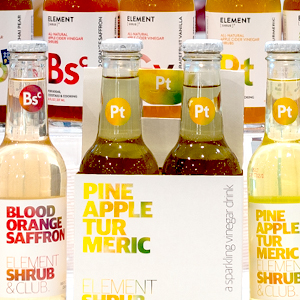
[00:04:46] Ad Read: Speaking of kombucha and speaking of gut health, we've been seeing a lot of shrubs and switchels and things like that popping up. I mean, you guys, is this a thing? We've seen, you know, there's Element, who was a New Beverage Showdown finalist, Side Road, you got Vermont Village, you got Fizzy Fox, you got Superior Switchel, Up Mountain, Sip City, Falsox. I mean, this category has a lot of disparity right now. What's a shrub versus a switchel? First of all, who knows?
[00:05:11] John Craven: I think for the most part, there's a simple distinction of a switchel has maple syrup. I don't know, maybe there's a shrub out there that has maple syrup too. I'm not really sure, but you know, the shrub products, largely it started as kind of concentrate products where, you know, the switchel has always been kind of a ready to drink and now it's, you know, migrated into a carbonated product as well, which is the same thing that you're seeing with some of the shrub products. I think when we were at the Fancy Food Show, there were a bunch of those companies that you mentioned there, and it's pretty interesting just to look at that category a year later from the last Fancy Food Show, and some of these companies that were there, it's like I haven't talked to them in a year, and certainly a lot more optimism and enthusiasm for the potential. I think it seems like these companies are just trying to figure out where their product And, you know, from my perspective, it seems like something that the explosion in kombucha has created a lot of opportunity for companies that are selling a, you know, maybe similar flavor profile. I think some of them are just trying to figure out how heavy to go with the health benefits. Do they get really preachy or do they just speak to the flavor that it's different? Shrubs also have an interesting component for cocktails too. I think that's something that I'm noticing more and more as just a cocktail trend too. It's certainly a harder flavor to work with, so it's cocktail nerdery in a lot of cases.
[00:06:49] Ad Read: If you look About This category, this gut health beverage category, if you will, just for right now, you've got a lot of words, switchel, kombucha, water, kefir, apple cider vinegar, shrub, prebiotic, probiotic. Are those all good words? Is it good to see this category very fragmented and is that an opportunity for brands to take advantage of niches or would they be better just banding together and creating a category, sort of their own category?
[00:07:17] John Craven: Well, I think simplicity will always win out. And, you know, those are all words that I think are used on so many different food and beverage products right now that the risk with them, while, you know, I think some of these companies want to just pile them on, like the more benefits, the merrier. a consumer looks at it and is just kind of like, what is this stuff? What's it for? What does it do? And again, I mean, I feel like I've said this so many times, like, if it doesn't taste good, if you don't want to actually drink it, I think it's going to be really, really challenging. You look at the success of something like kombucha, which is definitely skewed more towards tasty, as opposed to some of the water kefir products that have been out for a while, which have only recently figured out they should make it taste better. One category has been like a rocket ship, and the other's kind of been a niche for a while. So I think for shrubs and switchels, they have to learn from that. And I don't know what the right message is, or if they should band together. you know, maybe they need a shrub association like the Kombucha Brewers.
[00:08:21] Ad Read: But I think they should invite the Switchell brands into that and also maybe the Kombucha brands, maybe the Water Keefer brands, maybe it's a gut health beverage society, I'm not sure. But what I've been encouraging a lot of brands to do lately is to talk to Talk to your competitors, talk to your enemies, make them frenemies and find out what are the words they're using to describe their products and try to make those pervasive because this education is expensive and it takes a long time to educate consumers about new products.
[00:08:50] John Craven: Right. And shrub brands and switchel brands need more shrub and switchel brands for their own companies to succeed. I mean, otherwise it's like not a thing. It's not a category.
[00:08:59] Ad Read: And they're so close together. And the consumer looks at them and goes, shrub, switchel. And then they've introduced swizzle from Up Mountain has introduced this idea of swizzle, the carbonated version, which is amazing. It tastes really good, but it's also could be confusing.
[00:09:14] Jon Landis: And John, to what you said, I mean, Bragg's has been out there selling apple cider vinegar beverages for decades now. I don't even know how long, but you're right. It's not a category. It's just a brand. And they have, I mean, I remember going into Whole Foods and seeing 30 facings, just a whole bottom two shelves filled with Bragg's, but that's not, As a consumer, it's not something that flips a light switch, at least for me. If I come in and all of a sudden see a whole cooler filled with all different types of gut health products, all of a sudden I'm like, whoa, gut health is a thing. I got to do some research and get myself... educated, what's going on here? Clearly I'm missing something." So I think that the competition does help bring everybody up. So hopefully other people who are running these businesses agree with me and do what you're saying. You don't have to formally start a union or anything like that, but... It definitely helps to have an understanding of how your competitors are educating consumers in a similar way so you guys can, you know, amplify the message together.
[00:10:18] Ad Read: We saw this at BevNET Live with three or four of the Cascara brands, coffee fruit brands, getting together to talk about how they message, which was really good to see. Encourages Switchel Shrub, Kombucha, and Waterkeeper brands to do the same. And speaking of beverages, on BevNET this week, Martín Caballero wrote About This biggest beverage growth areas, according to a study by Nielsen. Water and energy, still the biggest growth areas, reporting extraordinary gains. With all the innovations we've seen, these categories, they continue to thrive. Surprised?
[00:10:47] Jon Landis: I don't know that I'm necessarily surprised. It's kind of like it takes a lot to slow down a freight train, right? I mean, even CSDs declining, they're still juggernaut organizations and they have access to consumers in places that traditional bottled beverage brands don't. And I know we're not talking about CSDs here, You know, it takes a long time to get consumers on that train and then they don't want to get off. You know, you start drinking energy drinks at your job every day. It's kind of hard to stop.
[00:11:18] Ad Read: You said it. It's a grind. It takes a long time to get a consumer educated and to get your beverage into their, you know, few use occasions each day. And once you're in...
[00:11:28] John Craven: You're in. I mean, the other thing that you have to consider with energy and water are that, you know, as far as functions that beverages provide, hydration and energy are far and away, you know, the two most accepted aside from, I suppose, you know, just enjoyment and refreshment to your palate. And I think that's something that, you know, makes these categories truly, you know, I mean, they're never going to go away. They'll evolve for sure. And obviously, you know, you're seeing that in bottled water where you have all these, you know, sort of electrolyte, you know, high pH waters that have kind of infiltrated that. And I think even energy, you know, if you look at the energy set today, like it's very different than it was, you know, a decade ago where, you know, you had way fewer choices. And I think that's something that, again, it'll just continue and it'll evolve. And in the last episode, you talked to Graham Fortgang of Matcha Bar. They're an example of a company that's trying to get a piece of that. And, you know, we've seen that a lot of times. It's like, you know, if your product has caffeine, I think it's just a matter of time before you say, gee, you know, I want to try to like position myself as an energy product.
[00:12:37] Ad Read: And they were trying to build the category of matcha tea. And then they said, well, we're looking at the numbers and looking at those numbers. It makes a lot of sense for us because we look like a duck and we quack like a duck. We should be in the duck category. So they're trying to go for that.
[00:12:48] John Craven: I think the challenge is just that the energy drink category as a whole, similar to like CSDs, is not perceived as like a healthy one. And there have been companies since, you know, I mean, basically, you know, over the past decade that have tried to position themselves as clean energy. And I think clean energy, unfortunately, is like not an energy drink. It might be cold brew or some other thing, might be matcha. But I think when you start playing with that, that label, it sometimes, you know, doesn't totally work the way that the entrepreneur wants it to work.
[00:13:19] Jon Landis: And in regards to the water category growing, it's something to watch out for. Obviously, this whole debate on straws, the bottled water industry has weathered this storm a number of times already, and it's not going away. They recognize that, but there should be more momentum against single-use disposable plastic bottles with all the momentum going against disposable straws happening. So, over the next six to 12 months, that'll be interesting to see what kind of effect it has on those numbers.
[00:13:46] John Craven: I mean, maybe, although I think that's another thing that's been talked about for such a long time, you know, that municipalities would ban bottles and stuff like that. And I think, look, you know, the reality is that consumers have a need for immediate consumption, portable beverages, and water is certainly, despite maybe there being availability of, you know, tap water. I mean, I think of it like, I don't know, for my own life, it's like my kids have to bring packaged beverages to certain things and there are certain times where like you can't just throw in like their water bottle or whatever and I'm not buying the bottle of water but you know to me logically that sort of makes sense. There are plenty of places that would still create a lot of consumption. I agree. Whether or not you know and again I'm not somebody that does this you know there are a lot of people out there that are you know lugging home cases of 20-ounce PET water from Costco and stuff to drink at home, we probably don't need to do that.
[00:14:44] Jon Landis: Right. And I agree with you. I'm not advocating for bottled water to disappear overnight. However, the movement continues to grow and we'll see what long-term effect that has on that.
[00:14:56] Ad Read: Well, no surprises there. And speaking of no surprises, the $150 billion food market has another $350 million in. Carol Lortenberg reported this week that ACG have a new fund for Rising Star food brands. I think the key in this article is that we get a definition of what a Rising Star food brand is for them, at least. It's a brand with revenue of $10 to $90 million. So you can't just be sort of an upstart, you know, just started yesterday and get that $350 million. You really have to grind to get yourself there before they're going to be ready to invest in you. You can read the whole article on ProjectNosh.com.
[00:15:30] Jon Landis: So there's this s'mores truck outside, Mike. I kind of want to go check it out.
[00:15:33] Ad Read: Yeah, we got to go check that out. Smash Mella's here. They're making s'mores outside of BevNET right now. We've had a few good visitors this week, so they're here right now. We've also had Juice Press came in yesterday and we also had Queen & Co. in this week.
[00:15:46] John Craven: Lots of stuff. Waiting for that Tullamore Dew truck though.
[00:15:48] Jon Landis: You working on that, Linus? I got it parked outside my house. It's Gut Feeling into my kitchen. Perfect.
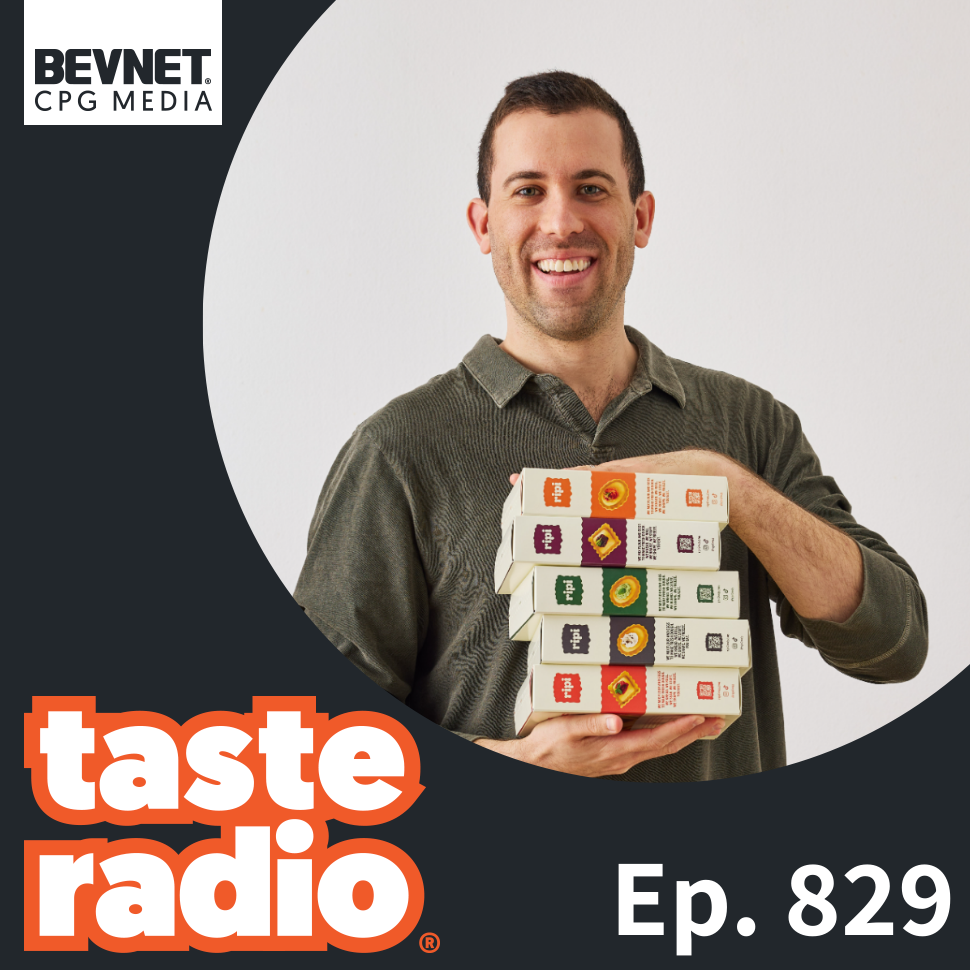
[00:15:57] Ad Read: And we love it Kween Foods and beverage brands stop by, beer brands too. If you'd like to stop by, just email us, ask at Taste Radio. All right, let's get to our first interview of the episode. Like Pruisken is the co-founder and CEO of Rip Van. They're a maker of traditional Dutch snacks called stroopwafels. Since the brand's launch in 2010, Pruskin and co-founder Marco de Leon have taken a conservative approach to growth, emphasizing prudent retail relationships based on value and velocity. The strategy has landed placement in the kitchens of dozens of tech companies, as well as a number of coffee chains, including Starbucks. You've heard of Starbucks. It's carrying them at over 12,000 locations nationwide. Ray sat down with Rip, who's been lauded in Forbes and Inc. Magazine's 30 Under 30 lists, and he discussed the origins for the brand, identifying and leveraging captive audiences, alternative paths to retail, and the key question the company always asks when making important decisions.
[00:16:55] Rip Van: All right, I'm here at Dave's Coffee in Providence, Rhode Island, and I'm sitting with Like Pruisken, who's the co-founder of Rip Van Waffles. Rip, thanks so much for being with me. Thanks for having me. Thanks for suggesting this wonderful city of Providence, Dave's Coffee. It's a great place, and it's about a stone's throw from your alma mater, Brown University, yes? Yeah, we're just off the hill. Just off the hill. And it was Brown where you came up with the idea for your brand, correct? That's correct. So for our listeners who don't know what Rip Van Waffles are, what are the waffles? They're not Belgian waffles, obviously, but what are they?
[00:17:29] Like Pruisken: So they're essentially a healthier take on a snack that I grew up eating in Amsterdam in the Netherlands that are traditionally called stroopwafels. And what they are is a thin wafer-like, cookie-like snack that has a chewy filling in the middle.
[00:17:50] Rip Van: Oftentimes caramel, yeah? Yep, caramel based. And so did you miss those when you came to college? Did you say, hey, I just wish I could have some Stroop waffles and hey, maybe I'll start a brand?
[00:18:02] Like Pruisken: Yeah, so I brought a ton of them with me freshman year from my home. I thought it was very popular in the first week because I was giving up these waffles and more and more people wanted to meet me. But the reality was that once the waffles were gone, You know, I actually had to make friends. Sure. So I think that was the first surprise, you know, that a lot of kids in college just absolutely love the product. But I didn't really think of starting a company, you know, and reinventing the stroopwafel and bring it to the U.S. Kind of similar to the inspiring story of Chobani, how Chobani wanted to bring Greek yogurt and Americanize it.
[00:18:42] Rip Van: Till later. And so when you actually decided to start a brand, when was that? And what were your first steps? How did you get to that place where you're saying, okay, this might be a viable concept?
[00:18:53] Like Pruisken: Yeah, absolutely. So give you a little context. So I grew up in Amsterdam, both my parents are physicists. I never kind of growing up in academic environment as a kid, I never considered entrepreneurship to really be an option. But when I connected, like loving to build things and make things as a kid, with being able to do that as a profession, and if you're able to create products and sell them for a profit, and they sell well, you can make more things. That was kind of the eureka tube light moment where I was like, holy shit, I want to really start something. And then I actually went back to Holland and bought like an industrial waffle iron that could produce the right consistency of product. I also consulted with some experts that had been baking waffles for decades, these true waffles. as in, and with that knowledge went back, kept on tweaking, and then set up a stand on the main green in college. And I did a little bit of pricing analysis looking at, you know, what other snacks were selling for and sold them for $1.50 a pop on the main green, 200 sold out, you know, in less than half an hour. And so I thought, well, maybe that initial hypothesis of me giving them away was valid because these kids were actually willing to pay for the product. And reality is kids will eat anything, college kids. But in any case, that was the start. And then we found a local kitchen in a country club, actually, that's off of campus that one of my mentors was a member of, and they were kind enough to lend it to us at night. So we're making these waffles till late at night, hand packaging them, stickering them with stickers front and back, you know, to comply with the label requirements, and then started selling them to Brown, to a few local cafes, and that's really how we started to get our first sales data.
[00:20:59] Rip Van: And sales data is extremely important when you're getting that data from a small sample size or from a very specific sample. As in Brown University students, that's one thing. Getting it from established retailers and chains is another thing. Where did you source your data?
[00:21:16] Like Pruisken: So we actually just asked the store managers, do you mind pulling a report? Do you mind showing us how we're doing? Do you mind showing us how the other products are doing? And that was very insightful. For example, at Brown, actually after Chobani yogurt, we were the highest selling item. So that was very compelling information for other colleges. So I think that really gave us more confidence in the fact that even though the product was very unique, you know, and the product category was nascent at the time in the United States, using industry terms, people really liked it. And so our Gut Feeling of the product being something amazing and something that if we made it healthier, could really be a better for you alternative to having a candy bar, right, having another indulgent snack, we felt was validated in part, in a small way, with this kind of initial hypothesis testing on a larger scale in Providence.
[00:22:21] Rip Van: How much education did you have to do? How much of a story did you have to tell About This product, the snack itself, to your retail partners and then to the end consumers? Because we often see entrepreneurs try to bring a snack from their home country or a snack that is really popular in a foreign market, but that isn't very known well at all here in the US.
[00:22:45] Like Pruisken: I think the advantage in college was that it was a captive audience. So just exposure of what we were doing through the Brown Daily Herald, writing an article was very helpful because people were aware of it and they were willing to trial the product. And then once they trial the product, there was very high repeat. And that was shown in the Velocity data, right? But again, what's interesting About This was that it was a bubble. And so when you scale that, you don't have that level of exposure. So we really had to figure out how we can create that level of exposure. It's very, very hard to build a new category. And that's why most people don't do it. And so our business, after the first two years, almost was dead. It was hanging on a string. Because you were just selling locally, or? Well, we were selling on campus at Brown, and we started selling to these other campuses, and it was doing really well, but we didn't have a distributor. Kind of the standard, like, dumb entrepreneur, clueless entrepreneur approach, where we didn't have the right pack size, price point, no distribution, and as you know, it's very important to make sure the product's in stock and the product's being merchandised properly and all these things. And so because we didn't kind of follow the true and tried principles, the product wasn't in stock, sold out, and that was it. And so we didn't have any money at the time, so we couldn't really build a team to support that. or even hire people to essentially do the right things. And so it was really up to us to try and figure out how to hustle and get all these things right. First of all, we didn't know a lot, right? We were making a lot of mistakes, but on the other hand, we didn't want to raise a lot of capital because the business was very young and dilute ourselves out of the company. And so I think the one insight that gave us hope within the business, just in terms of the practicalities of the business, of how to scale it, is we were selling to a biotech company in Boston. And this biotech company was actually one of our largest customers at the time.
[00:25:04] Rip Van: They're ordering just for their own kitchens.
[00:25:06] Like Pruisken: We didn't know. Actually, it was kind of, we're like, why is this biotech company buying Rip Van waffles?
[00:25:12] Rip Van: They could have been using it for a completely different purpose other than consumption, sure.
[00:25:15] Like Pruisken: Who knows? Feeding it to the rats, right? Oh gosh. But in any case, what they told us was this is the perfect treat without the guilt in the mid-afternoon because the sugar levels are much lower than a candy bar. And it's really unique. And so it's kind of something cool for employees. And so then my little brother at the time was an undergrad at Stanford. And so Marco and I were like, we need to try this.
[00:25:42] Rip Van: Marco, your co-founder.
[00:25:43] Like Pruisken: Yeah, Marco, my co-founder, friend of mine from college. And so he was holding the fort down in Providence, and I basically took a flight, crashed on my brother's couch, and for the next three weeks, went door to door to about 80 tech companies because we'd heard that Google was giving free snacks to their employees. And so what we did essentially was we tried to introduce their product to some of these other companies that were giving free snacks away to their employees because it worked, right? and this biotech company. And so as you know, you can't just walk into a company. So again, me being the clueless entrepreneur, I got kicked out of most companies. And then finally, I had a friend from college who was an early employee at Square. He introduced us to the food person there and literally the product took off. The product market fit in this bubble And Square employees were consuming Rip Van Waffles daily or weekly. And so we saw that they started ordering five cases, 10 cases, 15 cases of the product. And they wanted us to go through a distributor because they didn't want to deal with all these reorders, right, every time they were out of stock. And so that's how we started to work with distributors that sell to these offices. And what was awesome About This is that that really started to generate trial of the product because employees were given this product for free. And it's a great way, obviously, to educate someone because the barrier to trying the product was so low.
[00:27:19] Rip Van: So that's pretty interesting. I mean, in a lot of ways, you found alternative paths to trial and an alternative retail channel at a time when those things weren't necessarily known concepts and known ideas and strategies for food and beverage. So was that really the foundation for everything that you're doing going forward is sort of looking at new ways to skin a cat?
[00:27:44] Like Pruisken: Yeah, I mean, I think what it all comes down to, like, what is the problem that you're solving and for whom? And obviously, you've talked About This many times before with, you know, many other entrepreneurs, but I think that is so true. And it's so incredibly important because what it does, it allows you to really think from first principles on who you can sell to and how you can sell to versus relying on heuristics of, oh, that company sold to this channel. And so that's the best thing for me. And so I think what we did out of just cluelessness is because it worked, we just focused on that. We really focused on that. And we're very early on in the whole free snacks to offices movement. And so basically the way we looked at it was, Once we could generate enough trial and enough exposure within a market, then it would make sense to expand into other channels. And I think we actually tried to expand into other channels too early. And then we realized, no, we really need to focus on expanding what is working. Because with a very limited team with very few resources, you cannot scale other channels and support that scaling really well if you don't have those resources, right? And so basically what we did was we then just really focused on continuing to scale in offices to the point where the product became so ubiquitous that it made sense. And even with less support in another channel, the product would be successful. But that took a while. It took a few years of doing this and really establishing ourselves as the tech office snack before, you know, We worked with Pete's and Whole Foods and eventually Starbucks.
[00:29:37] Rip Van: So I talk with entrepreneurs often, and patience is a hard concept to master. Thinking About This long-term view is not always in their purview. It sounds like you and Marco, your co-founder, knew that this was a long-term play. How did you stay patient? What were the principles, what were the practices that you took on a daily basis to keep grounded and say, hey, we're gonna have to do this to succeed, not just tomorrow, but five years from now?
[00:30:06] Like Pruisken: I think to be totally honest, actually one of our company values is, is it true? Which is like just looking at the stark reality of things. The phrase, is it true? Is it true? Is one of our values, yeah. And, you know, I think we very much wanted things to move quickly. You know, we're very passionate about product and bringing this over to the U.S., but we realized that since it's really establishing a new category, which obviously we're in a very different place now, that it does, in fact, take time. And so I think they're just kind of keep ourselves sane. A few principles and blueprints that we had to apply. One of them is contextualizing things, meaning what is our goal for the year? And what is our goal for the month, right? And what is our goal five years down the road? Now, the reality is you can't really control for the cushy and colorful dream you have. that you want to be a goal in five years. But what you can control for is setting achievable goals in the short run. And when you see them trending in the right way, then that gives you confidence on whether your strategy is strong. in order to achieve your goals, your greater goals, or whether there's something fundamentally that you need to change within the strategy. And that could be within execution, it could be within the product itself, it could be within whether it's the ingredients, whether it's the marketing of the product, right? And so I think it is taking almost a stoic approach, where you're like, OK, we have this vision. We don't know exactly how the vision is going to come to fruition. But we know that if we align the stars, essentially, by listening to consumers and learning from people who have done it before, then applying that in a first principles way to our product, then our chances of success in achieving that broader goal is significantly increased. So this is all very theoretical, but to be really... You are the child of two physicists, so right? Right, but to be very practical, that means that you want to truly understand what the results are of your efforts. So I think Ray Dalio puts it really well, right? You have a goal, and then you essentially have a work machine, which is your strategy, and your team with systems and technological tools that when turned on and when is running. So you can think of your company as a car where the team are the people in the car. and the tools and technology are the car itself. And the way you navigate the car is essentially your strategy, right? I like that metaphor. Yeah, and then their outcomes. So essentially, you're trying to get to a point, right, metaphorically. And your outcomes are basically indicators of whether you're actually coming closer to that point within the time frame that you want. And so basically, what you're trying to do is you're trying to really look at the reality and you're trying to diagnose, okay, well, is the strategy really leading to my goals? Are the people on our team the right ones to achieve those goals? Are the goals reasonable in the first place? And so once you kind of go through this iterative process on a regular cadence of is it truing these different facets of your goals, your work machine, and the outcomes, you're actually becoming a better driver. And you're actually going to understand how to goal set better, and then also how to adapt better as a result of your execution through that process of trying to achieve the goal. And then that's kind of how products develop. And that's, you've talked to many people on how the ideas have developed. And I think all those conversations are various iterations of kind of this fundamental principle of looking at reality and trying to work with reality to really achieve the vision that you have. That might not in the end be exactly what you anticipated to be, but there's some element of that or fruit of that that does come to fruition. And I think that's the exciting part.
[00:34:47] Rip Van: You also just, you have to have a vision, right? And for a lot of folks, that vision has a dollar sign attached to it. For you, it's a little different. I think, you know, when we had talked before this interview, you talked a lot about impact and mission. How does that get formulated into your business strategy?
[00:35:07] Like Pruisken: Yeah, so I think impact's a very, kind of like health, right? Like these terms mean different things to different people. And so I think the first thing was, you know, as we were doing Rip Van Waffles for a few years in, we're like, okay, great. The company exists and there's traction. And even though it's taken some time, we're really fortunate that we're in this place and the business is really growing. But then Marco and I really looked at the day-to-day and just introspected and meditated on this and we realized that the thing that was making us going wasn't the result, ironically. It was the fact that we're creating and bringing this to market, right? However, We also realized that creating and bringing something to market, since life is finite, kind of, at least this life you live once, you want to make sure that you do something that's impactful for humanity. And so we thought that we should really strive for more. We should strive to leave something behind through a company that we're part of that can have an impact. And so we thought that having impact as related to food is very tangible and solid because everyone needs to eat. And so obviously there's a lot of healthier foods in the market, even though health is kind of a dubious term. I mean, there's certain things that are very clear, right? Like lower sugar, cleaner ingredients. And so what we're thinking is if we can improve people's lives in the U.S. by creating better convenient foods, where better meant healthier than its alternatives, tastier and better designed, then we could have some type of impact in the food space. And if we can be proactive with driving that forward through our innovation, then that can be really meaningful. And what that turned into was a philosophy of actually reinventing our products every two years, proactively, not reactively because of the market, but proactively in that Can we reduce the sugar levels? Can we clean the ingredients further? And by investing in R&D and doing that on a consistent basis, we can deliver more.
[00:37:43] Rip Van: It's an ambitious plan, but you're Rip Van Waffles. You're pretty much a single product About This point. How do you go beyond where you are right now?
[00:37:51] Like Pruisken: Yeah, so actually Rip Van Waffles is evolved into Rip Van. The Rip Van Winkle, the story, right? The part that was inspiring of that was the fact that the character Rip Van Winkle woke up after 20 years and the world had changed. And so the term Rip Van we think is a metaphor for change. not only for Rip Van Waffles, where in the last five years we reduced the sugar counts from 14 grams to eight to nine, depending on the flavor, but also for other products. And so what we really want to do is we want to develop products, and we're currently doing that, can't tell you more About This until they come out, that essentially deliver on these three pillars of health, taste, and design as well. And we think that, you know, just starting off with a better-for-you treat, we can also touch upon other eating occasions in the day where we can provide someone with a enjoyable, better-for-you experience, an alternative to what they're having.
[00:38:55] Rip Van: You're providing customers of Starbucks with a fun, enjoyable snack in the afternoon, I'm sure, with their afternoon coffee, their morning coffee as well, in some cases. You know, a lot of what you're talking about sounds aligned with some of the missions and the values of a Starbucks. Did that really help you in terms of partnering with the company? And how did you get them to see your vision for Rip Van? And how did you embrace Starbucks vision for what they want to do with Better For You and Healthier Snacks in their cafes?
[00:39:26] Like Pruisken: Yeah, I mean, the Starbucks story with us is a fun one. You know, I think it was in 2012, Marco read an article in the New York Times that Howard Schultz was doing a book tour. And so, you know, everyone wants to be in Starbucks, right? Our product traditionally is had with coffee in Holland. We thought it would be the perfect pairing. So I actually got on a plane and followed Howard Schultz around. Ended up giving him a note explaining kind of why we think we'd add value in Starbucks. And obviously, you know, he's very busy. And I was a kid with a backpack with a package that was hand sealed just when we had begun. Where did you do this? So he was in San Francisco. Okay. LA and a few other cities, so I actually intercepted him at a book signing in San Francisco. But I think, to be honest, this actually speaks to your answer to your question, which was we weren't ready. We weren't ready as a company, but we weren't ready also as a product and as what we stood for. because that really had to develop. And so once we did speak with Starbucks, once we had some traction, I think what really made it click, first and foremost, was that we were trying to have an impact through what we're doing. And that's at the center of who Starbucks is. And I think that since there was that deep alignment and the whys behind both our companies, they were open to trying Rip Van Waffles out. And so I think that's really what it came down to is there is such a mission driven organization that if you are able to resonate with that mission, they're able to see that. And from a practical business standpoint, there is alignment there, then they're very receptive. And I think they're actually very innovative in that front. And so that allowed us essentially a test in their stores and the test went very well. And then in 2016, we launched in 12,000 Starbucks.
[00:41:37] Rip Van: Amazing, amazing story. Now, did Howard Schultz remember meeting you that first time?
[00:41:41] Like Pruisken: You know, we haven't met yet. So Howard, if you're listening to this, hope to meet you soon.
[00:41:48] Rip Van: I wonder if Howard Schultz is actually thinking About This beyond business About This point, having stepped down as chairman and perhaps looking to bigger things, which would have to be a lot bigger than the chairman of Starbucks. It'll be exciting to see. It will be. Rip, this has been so much fun. I really appreciate you taking the time to be with me. I think entrepreneurs are going to get a lot out of this. And I think folks who are in the food and beverage industry overall are going to really appreciate your story as much as I did. So thank you again.
[00:42:18] Like Pruisken: Pleasure. Thanks for having me.
[00:42:20] Rip Van: All right.
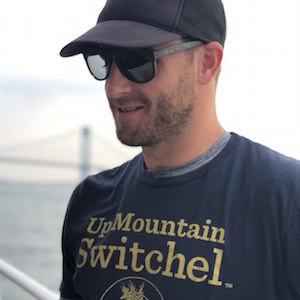
[00:42:23] Ad Read: Like Like Pruisken, Ely Key sells a product steeped in cultural traditions. In his case, however, the product's roots are based right here in the U.S. Key is the co-founder and CEO of Up Mountain Switchel, a maker of colonial-era beverages that are made with apple cider vinegar, ginger, and maple syrup. Promoted for its sweet and savory drinking experience and gut health benefits, Switchel's been pegged as a trendy beverage to watch for the past few years. In an interview recorded at the 2018 Summer Fancy Food Show, Ray and I spoke with Ely about Up Mountain27;s efforts to build education and awareness for the brand through storytelling. We also talked about why listening to its customers yielded critical information About This purchasing decisions and how to market Switchel, and the importance of working with and learning from your competitors.
[00:43:10] Rip Van: All right, folks, it's Ray and Mike on the mics, and we're here with Ili Key, the co-founder and CEO of UpMtnSwitchel. Ili, thank you so much for being with us. Oh, thank you, guys. Happy to be here. Honored to be here. That makes me feel really good, actually, because we're honored to be here with you as well. And we're so happy that you brought your new product with you.
[00:43:27] Ad Read: Yeah, thanks for bringing a product.
[00:43:29] Rip Van: Yeah. But for the folks in our audience and our listeners who don't know what Switchel is, it's a pretty big component of your business.
[00:43:36] Taste Radio: Yeah, Superior Switchel is traditionally a Vermont farming drink. They made it during hay season, and it was like a Gatorade. It had other functions, but essentially that's what it was. And it's made of ginger, apple cider vinegar, Vermont maple syrup, and water. And then we have some flavors. So we modernized the recipe a little bit by using fresh ginger. Originally, recipes all called for ground ginger. And then swizzle is that same original recipe that we have, just carbonated and in a can. It's an ancient recipe, right? Well, yeah, I mean, Vermont farmers... Not ancient, but... It does, actually. If you, like, ancient Chinese civilizations were mixing ginger, apple cider vinegar, and some sort of sweetener way, way, way back. So, switchel took on that name in Vermont and kind of took on its function and purpose for farming in Vermont, but... Look at Asia. Asian cultures have been drinking vinegar for forever, for centuries.
[00:44:35] Rip Van: So, longer. And so you had this swizzle, which is just basically a sparkling switchable beverage in bottle format for a while. And this is your new can that's in front of me right now. And let's open up one of these cans. And let's give it a try. Cheers. And it's pretty phenomenal. That tastes really, really good.
[00:44:58] Ad Read: Some next level stuff.
[00:44:59] Rip Van: It is. And, you know, it's, um, it's like a fizziness that you expect from, say, a soda. And perhaps people are trading up from a soda to a healthier product like a Swizzle. Yeah. Now, you know, if you were, I guess, paying attention to food trends, say in 2015 or so, particularly in the New York area, you may have heard of switchel. There was a lot of buzz around that, particularly in Brooklyn. And it was just one of these bleeding edge trends. But now it's really started to come of age.
[00:45:28] Taste Radio: Well, it's nice to hear that, because sometimes when you're on the inside, you know, it's like, how do you define traction? Who's saying that you've found traction? So it's nice to, after being at it for six years, it's nice to hear that it's being accepted. And we kind of, we feel that even About This Summer Fancy Food Show, like it's a different experience for us. It's really cool to see what regions and what retailers are getting into this. And a lot of it is the apple cider vinegar buzz too, because we're riding, we're riding that trend.
[00:46:01] Rip Van: For sure. Gut health as well, I'm assuming, you know, with kombucha.
[00:46:04] Taste Radio: Huge, huge part of it. And also the American palate is changing so much. I mean, you look at the popularity of sour beers and you look at the popularity of ciders and we're right in there with that. There's a confluence of trends that are happening that are outside of our control.
[00:46:20] Ad Read: How do you ride that wave as switchel? Like you said, you've got the confluence of all of these trends. You've been grinding. You said yourself, like you said, it's really nice to hear that the category is being accepted. How do you, how do you grind?
[00:46:34] Taste Radio: Well, I mean, I don't think we would have been able to do it if we were older. You know, if any of us had had children when we started. We were one of those companies that we never really took on investment in the first five years. We spent 300 bucks and made 500 bucks at the first farmer's market. So our grind was just We definitely got lucky. We had some good advisors. You know, we're not necessarily like your average business guy. I don't know that any switch will maker is going to be your average business person. So in some ways, ignorance is bliss. Like our hustle was, Hey, we don't need a lot of money. We don't have a lot of overhead.
[00:47:18] Ad Read: And if you had it to do over again, are there things that you would do differently now knowing what you know now?
[00:47:24] Taste Radio: Oh yeah. We've done, luckily, more positive things than negative things. Like, we've succeeded more than we've failed, like, barely. So yeah, 100%. I've learned so much in the past six years. So much. About This beverage industry, about business, I've had to adapt my whole, you know, way of being in certain ways, not in a bad way, but like taking on things that I never imagined I would ever be involved with, like an Excel sheet. So yeah, an example of something that I would do differently. Mason jars were awesome coming in. So your initial package was a mason jar? Correct. Yeah, our initial packaging was mason jars. We did everything by hand, labels included. We had guys that were getting small burns in the facility. You know, one guy almost lost a finger in the food processor type of thing. So it was like... Oh no! There's no way we could have done it differently because we couldn't have made it food safe in the beginning if we weren't in a mason jar, but... Scaling up a mason jar is very difficult. We had no idea that it would be that difficult. Because you look at Green Mountain Salsa, it's like, oh, there's a successful salsa company in a mason jar. Why not us? different filler on a different beverage line or you know it's just there's a lot of different variables that go into production that we learned.
[00:48:52] Rip Van: So there's a lot of bumps and bruises along the way obviously for your brand and for others. I'm curious as to why you didn't just say you know what this is just too difficult. What kept you guys going? What was that motivation? What was that drive and where did it come from?
[00:49:06] Taste Radio: They say, you know, you shouldn't mix family and business. You know, we did. My co-founder, Garrett Riffle, and I, we brought on my closest childhood friend from 18 months old and my cousin. Those were our number one and number two. And Garrett and I were good friends already going into the business. And I think if we didn't have that camaraderie and also that responsibility of I care about my co-worker beyond just a co-worker, like this is family, friends, like we use Slack. I don't know if you guys are familiar. We use Slack a little bit too much in the office, I think. So we'll be like on slack arguing about some mistake inevitable mistake that we've made and how to fix it But then we'll be also texting the same in the same group of people like on the side You know, what are we gonna? Where are we gonna go grab dinner later? So we have this type of camaraderie and I think like you're not gonna walk away from your friends and family as quickly as maybe you would walk away from somebody you don't know, even though you respect them and they're your, you know, your peer and your coworker, like being family is, I mean, obviously.
[00:50:15] Rip Van: Yeah, that's really interesting. I mean, it sounds like it's harder to hold grudges against the people that you love versus those that you will say may not love.
[00:50:23] Ad Read: What are you saying, Ray?
[00:50:29] Rip Van: But not holding grudges is hard, even for people that you love. So what was your process and what is your process for not only avoiding grudges, but getting past them? You know, again, with your family, with your business, both extremely important, you know, how do you get past the business grudges and make sure the family grudges don't get involved in, you know, your operations?
[00:50:51] Taste Radio: Right. Yeah. Communication is hugely important in any relationship. And I think just, having the slack and the messages and then like the text messages, like creating some type of separation between your work and your non-work life. and keeping business, business, you know, like early on we downloaded an operating agreement. Like we didn't need an operating agreement. We weren't talking to investors. We weren't, we didn't need to have it, but we, we download an operating agreement and change it for us just so that we had some type of structure and expectations lined out from the beginning. you know, even before you're getting in. So I would recommend that to any company that's starting up, like if you are going to be with family and friends or not, whatever it is, like set those rules from the beginning, get understand what your equity holdings are, understand what, you know, your roles are, communicate about, you know, what those roles are and why, because that's just going to make it a lot easier because things get, any business just, it starts going down different roads and you can very easily get to a point where things aren't, lined up from the beginning, it just gets messy, and that can lead to unnecessary fights, unnecessary miscommunication. So, yeah, even though it feels uncomfortable, like you go in a situation to say that from the beginning, like with your friend, like, oh, here's an operating agreement, we need to sign this, like, just do it. It'll make things easier.
[00:52:24] Ad Read: So you talked about communication being important. Switchell requires a lot of education. Do you talk to other switchel companies in the category about what they think is important? There's a lot that needs to be done here to, you know, just to sort of elevate the story of switchel to enough people to be able to get this to become a popular category, right? So do you have those kinds of conversations with other companies and what do you think is important to communicate from a switchel perspective?
[00:52:54] Taste Radio: Yes, we do have those types of communications with other Switzerland companies and that's the nature of who we are as people, I think, and also the nature of food. I mean, it's a very competitive beverage is most competitive business of the food world. But it's still food, which is your basic human need that everybody needs. And so our perspective as a company is always that food brings people together. Kind of like the World Cup, we had our World Cup, but going out the booth today, we had like 100 people there.
[00:53:28] Ad Read: Can you believe that Spain is out?
[00:53:31] Taste Radio: Oh, I know. Well, Spain, Germany, Argentina, Portugal, Portugal. Yeah. So We've given advice to some of the smaller switchel companies. We've inspired some switchel companies to start. We've been inspired by the fact that people have followed up on our, you know, we were first to market. So in some ways we feel like we're the leader in pioneering and the category. And so we're inspired by people getting involved in that. one of our competitors was actually a customer of ours at the farmer's market. So that's always, that's been a kind of fun and interesting relationship because you go through all the emotions, right? Of like, oh, this man, I'm angry. Like this guy's, you know, stealing our idea to like, wow, this is awesome. Like we're creating a category to, you know, this is good to have competition. This guy's getting my, you know, getting us. Yeah. It validates the market. It creates a market, right? Creates a market and creates, you know, competition is the heart of capitalism, right? So, you know, it keeps us fired up and staying innovative and defining what our company culture is within the category of the Switchel culture. You know, I don't know. The Switchel culture is like, I'm not going to tell you what to do. I'm not going to tell you how to live or how to run your company. I certainly will give solicited advice if asked, but the kind of Switchel culture is like, yeah, I'm not going to.
[00:55:03] Ad Read: Why do you choose to be the first Switchel company versus another apple cider vinegar company?
[00:55:09] Taste Radio: For me, it's authentic. My dad drank switchel as a kid, haying fields in Vermont, and told me about it one day when we were haying our own fields. We actually weren't haying at the time. We were just working the fields. So it was just authentic. I didn't think anything else. I just said, man, switchels, that's a cool story. They told me stories of lowering the well bucket down into the well with submerging switchel in the well bucket halfway underwater to keep it cold. I don't know, it's just such a rich history and an interesting drink. I wouldn't be able to sell a vitamin water or a Gatorade or something that didn't have that kind of culture and history and artisanal value to it. Our crew of people are all kind of creative, artistic minds, you know, so we're interested in that culture, those stories, the artisanal aspect of what does it mean? What conversation are we reviving by reviving Switchell? What type of American history conversation are we reviving? And, you know, you look at our nonprofit partnership, which is with the Stronghold Society, and we're building skate parks and Native American reservations, and it's just about, That is a time period, you know, where our non-profit partnership is relevant because it comes from that same time period. It's inspired by that same time period. And Switchell is indigenous knowledge, but like just Apple cider vinegar is native, right? Maple syrup is native. Maple syrup was actually introduced to the Vermonters by the eastern woodland Indians. And there's a story, there's a conversation there, there's culture, there's a connection of minds. Yeah, there is a simplicity, right? Going way way back to our roots like really just being so roots Mm-hmm, and that's what Switzerland is, you know, both in its culture and also its ingredients like soccer super simple, but super deep Mm-hmm, right totally and you see that About This this show, you know at the fancy show at least every four years, I guess Because you get all the like You know, the Argentine, you went out to the Argentine pavilion and everybody's hanging their heads yesterday. Did you hug them? Give them hugs.
[00:57:37] Rip Van: They need hugs. So Switchell's got an amazing story and you're embracing that brand story and communicating it to consumers is one thing. Communicating it to retailers, distributors and investors, is there a slightly different story? And I ask because You've received investment from a pretty amazing incubation unit, which is ZX Ventures, which is the global incubation arm of Anheuser-Busch InViv. How do you get them on board? Again, just lucky. But we talked About This on the podcast before, luck. I don't believe in luck. Is the intersection between preparation and opportunity. Sure. So there must have been something that you did in terms of preparation to get you to that opportunity, right?
[00:58:17] Taste Radio: Yes. I mean, definitely. I mean, we were in business for over four years, almost five years when we got that investment. So yeah, we had done five years of of really hard work and we're still working super hard. When we were selling in the farmer's markets, without us even having to suggest it, and maybe this is obvious, but people are like, Yeah. I want to mix this. I want to mix this with booze. It all came from a mixer. Yeah. And so we were already playing in that space. When we were first talking about doing this interview, you had mentioned the Eureka moment. The first stores that we got into in New York City was the Bodega on my corner and Blue Hill Farm-to-Table restaurant. That was a eureka moment, because it was like, look how versatile this is. I can't believe it. We've been recognized by the best restaurant in the world for our recipe, but yet we're selling for $2.99 in the Bodega in my corner. And that's exactly what we wanted to do, is make it accessible. But the point being is that even from early on, it was being used. is a mixer, is being used in really versatile ways. And then, like I was saying earlier, it's not only are people's palates changing, so there's, you know, people are interested in sour beers, people are interested in ciders, but the conscious drinking has really changed, and I've seen it amongst my peers, but I think we're also seeing it industry-wide that people are concerned about gut health, people understand that, you know, they're looking for gluten-free beers, or they're looking for a mixture that's not going to give them a hangover in the next game.
[00:59:57] Ad Read: Yeah, we're in the middle of the war on sugar right now.
[00:59:59] Taste Radio: Oh my God. Yeah, totally. And sugar is just going to, just going to give you the worst hangover, you know, and people are starting to realize that. And so I think that that, you know, that's why I mentioned luck is like, We worked that angle, but we didn't necessarily like, that was something that kind of came in. But it's also, historically, they mixed it with booze too. And we knew that early on. So I guess we kind of expected it. But that's where I think ZX Ventures really took interest. Because we're- Many used occasions for you. Exactly. Yeah, it's versatile. You know, people are drinking less beer. What are they drinking instead? Well, Switchel is one of the things.
[01:00:45] Rip Van: When it comes to gut health, and you mentioned this and Mike mentioned this as well, clearly an important function, very on-trend kind of function. How do you balance that with the story that you've been talking About This, you know, this authenticity, this age-old drink in the midst of a very important trend that's happening in the food and beverage industry? Where does that, how do you balance the two stories?
[01:01:07] Taste Radio: Well, did the farmers 300 years ago know that ginger was an anti-inflammatory? I don't know. I mean, they were haying by hand, right? So they would essentially get tennis elbow. So our logo is a haystackle with hay. So, you know, you can kind of imagine it's like imagine haying with a tennis racket. You're going to get tennis elbow, essentially. Did they know that the anti-inflammatory properties of the ginger was helping with that? Did they know that apple cider vinegar was balancing their pH and helping them absorb water more efficiently to stay hydrated? They must have. There's not science behind it, but there's years of use and history and culture behind it. But today, people want those same things. Even if they're not hanging in the field, they still want an anti-inflammatory to help with joint pain or to reduce a headache. And the apple cider vinegar is going to balance your pH and just make you absorb nutrients more efficiently. And who doesn't want that? We talk About This just the straight functionality of what the ingredients do for you and that speaks for itself and that's across you know everybody who doesn't want to feel better.
[01:02:28] Rip Van: But what's more important for you know what do you lead with and what's been more most successful for you and I know this is specific to your brand. But when you're making that retailer pitch, what do they want to hear? Is it really About This function that this is a soda alternative, or do they want to hear that authentic story that might resonate with their consumer specifically?
[01:02:48] Taste Radio: Right, that's a good question. I'd say in the beginning it was more the story. It was more the revival of this American heritage beverage. But now, with the rise of apple cider vinegar, with maple syrup rising to the top of being the lowest glycemic index sweetener, and ginger is also having this sense of revival now too, the conversation has shifted more towards that, towards the functional aspects of the ingredients. But earlier on it was more About This story, it was more About This history, it was more About This Vermont and switchel category. But it seems like we've reached a point where we've We've educated, we like, it's taken a long time and I don't know exactly how it happened, but people know what Switchel is now. So that allows for that conversation to shift away from what is this to what, why, what is this doing for me?
[01:03:45] Rip Van: Well, this podcast interview will educate a few people about what Switchel is too, I'm sure.
[01:03:49] Taste Radio: Yeah, you guys, I mean, Bevinette's like the leader. So we hope so. Thank you for saying that.
[01:03:56] Rip Van: I had just one more question about going from where you were as a startup. to where you are now and at what point you have to say, look, we need to professionalize our organization with folks that have done this before, with experienced professionals, experienced operators. You know, when do you know you need to take a step back as a CEO, as a co-founder and let somebody else handle the kind of responsibilities that are inherent and always going to be around in this business? Yeah, hopefully very soon.
[01:04:31] Taste Radio: Let's see. We've hired specialists before. I mean, you look at different companies. You have companies that spend millions of dollars and hire 10 years experience. sales person or CEO and there is no silver bullet. There's no guarantee that that's going to make you successful. In fact, oftentimes, you know, you might be better off not doing that because In some ways, if you know too much, you won't just keep pushing, which, honestly, you just have to keep pushing. So I don't know that, you know, we haven't really hired any specialists. We haven't had that moment yet. We've talked about it, but nobody knows the product as well as we do, and there's no recipe. There's no reason why my cousin Dave can't sell more in Colorado than an ex-Coca-Cola person that has 10 years of experience. What rules are we making that that has to be the case? I mean, don't get me wrong, experience is hugely useful, and we would love to have somebody experienced on our team.
[01:05:48] Rip Van: But they just have to have the same values, culture, and hustle and drive that you guys have.
[01:05:53] Taste Radio: Yeah, yeah. At the end of the day, I mean, it's more comes down to the product speaking for itself. You can't sell something that people don't don't like, you know, so we're an authentic Switzerland, we're an authentic group of people and authenticity when it comes to food, at the end of the day, I think is the number one rule, number one seller.
[01:06:15] Rip Van: I agree. And I think it was one of the most simple statements you made today, which is that you can't sell something that people don't like. And that's often forgotten. Ely, thank you so much for taking the time to be with us. Really appreciate it. Good luck with everything going forward. And thank you very much for sharing your swizzle with us.
[01:06:33] Taste Radio: Oh yeah. Thank you guys.
[01:06:35] Rip Van: All right. Appreciate it.
[01:06:38] Ad Read: Sadly, that brings us to the end of episode 122. Thanks to our guests, Like Pruisken and Ely Key. Tune in next week for episode 123 when we feature interviews with Elmo, Big Bird, and Kermit, and also an interview with Drew Harrington and Amanda Clay and the co-founders of fast-growing ice cream brand Yasso. Once again, for questions, comments, ideas for future podcasts, please send an email to ask at Taste Radio. On behalf of John and John, I'm Mike. We'll talk to you next time.