[00:00:05] John Craven: If you appreciate the content of Taste Radio and Taste Radio Insider, we think you'll love our live events.
[00:00:10] Jon Landis: Nosh Live is two and a half days of hearing from superstars in the industry like you live inside this podcast and can engage with the experts at will. Think about how much you'll get done.
[00:00:20] John Craven: Wow, Landis. In other words, Nosh Live is where a natural food community in business mode gathers to learn what's next and partners to get there. It's a lot of information coming at you fast, touching on all aspects of owning and operating a better-for-you packaged food brand.
[00:00:35] Jon Landis: And no sponsored content. Our main stage is curated by our editorial team to give conference-goers data-driven industry insights.
[00:00:43] John Craven: Early registration is available until mid-April. Plan ahead, you'll save money and make the most of your experience. Tickets and more information available at noshlive.com.
[00:00:53] Jon Landis: And now, Taste Radio.
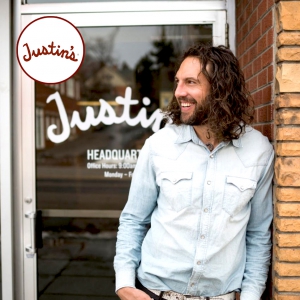
[00:01:06] Ray Latif: Hey, everyone, I'm Ray Latif, and you're listening to the Top Podcast for the food and beverage industry, Taste Radio. This is Episode 153, which features an interview with Justin Gold, the founder of popular nut butter brand, Justins. Tune in on Friday, March 15th for Episode 25 of our Taste Radio Insider Podcast, which includes an interview with Tom Spear and Dayton Miller, the managing partners of venture capital firm, Boulder Food Group. Just a reminder to our listeners, if you like what you hear, please share the podcast with friends and colleagues. And of course, we'd love it if you could rate both Taste Radio and Taste Radio Insider on iTunes. Show of hands, if you sold your company for $286 million, would you go back to work for the new owner? I'm guessing there's not many raised arms out there. For Justin Gold, however, leaving the company he founded in 2004 was never an option. Acquired by Hormel Foods in 2016, Justin's, a pioneering brand of nut butters and snacks, is not just his namesake, it's his legacy and one that continues to grow. In the following interview recorded at Natural Products Expo West 2019, I spoke with Justin about his mindset and decision to stay with the brand after the Hormel acquisition. He also discussed the evolution For Justin's and how a new take on a familiar snack and a key hire were game changers for the company. Justin also explained his belief that making a boatload of money and having a mission to change the world are not mutually exclusive. Hey folks, it's Ray with Taste Radio. I'm at Natural Products Expo West 2019. In front of me is the one and only Justin Gold, the founder For Justin's. I got it. Yes. Thanks, Ray.
[00:02:46] Justin Gold: Thank you very much.
[00:02:47] Ray Latif: I'm delighted that you're with me today. I know this is an insane show for you. You were just saying that when your booth is crushed, people want to see Justin, the man behind the brand, and they're disappointed when they don't. I don't fault them for it because you're such a big, charismatic person.
[00:03:04] Justin Gold: It's neat, though. I mean, I didn't set out to name the brand after myself. Okay. It wasn't an ambition of mine. And, you know, it's part of the origin story where I was, you know, shit, 17 years ago, living in Boulder, Colorado, waiting tables, vegetarian, and making my own peanut butter and almond butter with a food processor with a bunch of roommates. And I was trying all these different flavors and concoctions, and I'd make it, put it in these empty jars, put them in the cupboards, they'd steal, my roommates would always steal them and eat them. I literally would write Justins on the jar, and they started calling it Justins. And so then when I launched the brand, I had some like really aspirational name like Paragon Nut Butter. And none of my friends knew what Paragon meant. So they just started calling it Justins. And then so it became Justins. And the blessing is that the brand stands for something, right? It has values. It has personality. It has charisma. But those values all hinge on on me, right? And so, and if I'm there, it really drives the connection back to the consumer, back to the retailer, back to the broker, back to the person. And that's really important, you know, cause it does give the brand a life outside of just a product. And a lot of these brands here are just products. And some of them are brands that have meaning and feeling and generate emotions. And if I can be there to help bridge the gap, it makes me so happy.
[00:04:25] Ray Latif: Now, Justins was famously sold to Hormel Foods a shade under $300 million. Congratulations on that. It was a couple of years ago.
[00:04:31] Justin Gold: I wouldn't say we were sold. I'd say Hormel bought in For Justin. There you go.
[00:04:34] Ray Latif: Yeah. Well done. So, what's your role with the company now? What's your highest value? What do you do on a day-to-day basis? Great question. Highest value. I like the way you phrased that. Well, we'll get more into highest value in a bit, but your current highest value.
[00:04:46] Justin Gold: Yeah, yeah. So my role is multifaceted, right? You could say on paper I'm the leader of innovation, leader of corporate social responsibility and philanthropy, but really I'm still kind of the heart of the organization. So I'll go on sales calls to make sure that they hear the Justin story and they know who I am and know that I'm highly involved. I'll do marketing shows and marketing calls, PR events. And really just being in the office and just caring about people and asking them how they're doing and being involved in what they're doing day to day. And so it's really a lot of the things that I was already doing. But the nice thing is I also get the opportunity to work directly with Hormel and to help them see our industry, understand our industry, hopefully make some changes that, you know, can have a great impact on the world. And it also gives me a chance to bridge the gap with other large CPGs because our natural foods industry is so collaborative that as our companies grow and evolve, and some get acquired by other large companies, you know, I don't want to lose those connections. I want to make sure we are all in this for the common good, which is really to change our food systems.
[00:05:50] Ray Latif: I mean, that's a big, broad goal that seems like a lot of companies have. It's difficult to achieve that when you're a small company, even a big company, it's hard to change the food system as we know it. And you and I chatted before this interview, and one of the quotes that stuck with me, one of the things that you said that stuck with me was, it comes down to money or changing the world, and there's no reason you can't do both. Can you elaborate on what you mean by that and how companies can try to do both, achieve both?
[00:06:17] Justin Gold: Yeah, you know, The root of that frustration was some people create companies to make money. And then once they made their money, they move on. They want to make more money. And some people are in it, I think, to do good. And they're passionate about what they do. And I didn't start Justin's to make money or to be famous or anything like that. I started it because I really believe in this industry. And I wanted to create products that had a positive net impact on the world, not only from a personal health perspective, but an environmental sustainable perspective, and do good. And so when I was able to scale the company and grow it, I had to bring on investment capital. You kind of have two options when you grow a company. You either grow it slow and sustainable over a long number of years, or if you don't have that freedom and flexibility because you don't have an IP on something or you don't have, or there's a lot of competition or you have a lot of paranoia. And so I really felt the only way that my company is gonna win in the marketplace is if we grow fast. So I brought in investment capital And investment capital is not only good for growing, it's good for creating products that are safe. What year did you bring in investment capital?
[00:07:25] Ray Latif: What year in Justin's life cycle was that?
[00:07:27] Justin Gold: So, I brought on, you know, pretty much the whole way. So, I brought on friends and family in 2000 and, let's say, six. And then in 2008, 2009, I brought on angel capital. And then in 2000 and probably 12-ish, I brought on private equity.
[00:07:45] Ray Latif: So it was growing fast but over a period of time?
[00:07:48] Justin Gold: Yeah, I would say our growth trajectory was medium. We weren't overnight and we weren't like a 20-year-old overnight success. We're kind of like a 10-year-old overnight success. So I did a blend of growing it slow and sustainable and bootstrapping while raising money. So then whenever we had to make a decision to pay our investors back, it became clear that the only way to hit their expectations was probably through an acquisition. But it was very important to me to find the right partner who's going to give us the keys to the car. continue to let us drive innovation, drive our mission, our purpose, our social responsibility, and stay in Boulder, Colorado, and keep our team, and keep everything intact. So it was tricky. I met with a lot of CPG companies, and the one I liked the most was Hormel Foods, and for two reasons. One, they have a very sophisticated food quality and food safety track record, and that's so important for food companies. If you have a recall, or somebody gets sick from your products, you lose all credibility with your consumers, not to mention the liability that you create for yourself. And the second reason why I really like them is they wanted to learn. They didn't want to change us, they wanted to enhance us. But they would need leadership, you know, at Justin's. It was a perfect opportunity for me, I was really excited about it, and it gave me a chance to continue with purpose, to drive innovation, have fun, and make a difference in our food system.
[00:09:17] Ray Latif: What does the food system currently need? What do you believe are the things that are currently missing, the things that need to change the most for the vision, the future vision of this food system to exist as you see it?
[00:09:29] Justin Gold: That's a really challenging question. So it comes down to, I mean, we're in a capitalist society, so it comes down to people buying the products that create the most change. So consumers vote every time they buy something. Every time they spend money, they're voting with their pocketbook. and change is gonna conserve, consumers continue to buy the products that stand for something, that stand for organics, regenerative agriculture, sustainability, fair trade, reinforced alliance, packaging that's more sustainable or recyclable or compostable. If consumers spend money on those products, no matter where they come from, whether it's a small company or a public company or a big food company, if they buy those products, it sends a message and those companies will continue to grow, and the big companies will have to change, or they'll buy into that paradigm. But it really comes down to consumers choosing those products. If we get into a cycle where consumers want products that For Justin Gold enough, but they're the cheapest products that they can find, and don't have a lot of the sustainable or regenerative or organic values that some of these other products have, and we just keep going down that cheap path, we'll just keep perpetuating the cycle of, you know, trying to figure out how do we get out of this hole that we're in. Now, I think we'll always have both, but the way the industry wins is with consumers buying the products that are making a difference and continue to support those brands. Is that how you think about innovation? Is that the starting point? You know, innovation is a multi-layer process. The first thing I start with is what's a problem in the marketplace and how can I solve it with a product? Problem, for instance, for me was I go mountain biking, and I want a protein snack on the go, and I've been eating energy gels, but I want protein, not a sugary gel. So solving the problem of having protein on the go was a squeeze pack for me. it put me in a great opportunity and position to create a nut butter squeeze pack, which really resonated with a lot of other people. Problem for me was when I went into a natural food store and wanted an indulgent sweet snack, I wanted a peanut butter cup, but it had to be the best, had to be 100% organic, conflict-free, way less sugar than what was out there. And solving the problem was creating something that didn't exist for someone like me. So the first thing I do is I try to find a problem.
[00:11:56] Ray Latif: Can I ask you a question?
[00:11:57] Justin Gold: Yeah.
[00:11:57] Ray Latif: When was the last time you ate a Reese's peanut butter cup? Honestly, it was this past Halloween.
[00:12:03] Justin Gold: Okay. And I forgot how sweet they are and how waxy the chocolate is. Right. It's still a really good product, but since I've been exposed to, you know... different products, my flavors have changed. You almost said better, I think. You said different, but I could tell you were thinking better. I don't ever want to put down another brand or another company. Honestly, if it wasn't for Reese's and what they pioneered and done, I would have never had a chance to create an organic peanut butter cup. So they deserve a ton of credit and admiration. I think they can do better, and I can do better. Our packaging on our peanut butter cups still comes from plastic, still goes into a landfill, and still generates waste. that's the next frontier for our industry is waste.
[00:12:43] Ray Latif: So that's a problem that you believe you have currently with your products is that we can't just sit on our laurels. We've got to do better in every aspect of the product. But that's for existing products. For future products and some of the ones you're launching here at Expo West.
[00:12:58] Justin Gold: Yeah.
[00:12:58] Ray Latif: I mean, like you're launching some new products here at the show. How do they solve a problem that existed in the marketplace before they were launched?
[00:13:07] Justin Gold: Well, that's the thing. When you see a lot of products at Expo, you see some products that are just a me too product. Somebody's launching another whatever, beef snack or another popcorn product or another nut butter product and they're just really creating for the sake of creating, to fill a gap versus solving a true need in the market. I would say a need in the market are more nut free products for kids to take to school. We're a nut butter brand. We really, right now our ethos, I don't think allows us to create nut free items. So the companies that are, I really admire, because they are solving a problem. Because we, unfortunately, not every consumer can enjoy Natural Products. And so I get inspired by that. For instance, our new product is a nut butter covered nut, right? So the problem we're solving is, you know, I'm a consumer. I would love to get a handful of nuts, but I want something a little sweeter. I don't want chocolate covered nuts, because that's a little too indulgent. Oh, this is a nut butter covered nut. It's kind of like right in between that space. It's interesting. It's different. It's pioneering. That's fun, right? Now you layer on things like, okay, well, where can we source the nuts from? Can we source them from a fair trade facility and growing situation? Can we source them organic, right? The coating that we're using, the nut butter coating, can that be organic? Can we make it with less sugar than we originally formulated? How can we drive this to make it the best product? And those snacks are 100% organic. And that was really important. And you know what? We could have made it with conventional ingredients and had a larger net weight or brought down the price. But it was important for us to say, look, the world doesn't need more candy. What needs better candy? So let's create something that's not chocolate, that's a nut butter, but it's not as healthy as nuts. It's better than, it's this solving a problem right in the middle that no one's ever done before, which I think is really interesting. And it's either a brilliant idea or it's a terrible idea, but I love that razor's edge of being innovative and trying new things.
[00:15:15] For Justin: Why feel good when you can feel oh so good? Makers of ridiculously good superfoods, Oh So Good, just opened its first cafe in West Hollywood. Try their bone broth soups and bone broth waffles to see what all the rage is about. And let me tell you, they really are oh so good. Visit ohsogoodbones.com to learn more.
[00:15:36] Ray Latif: Do you see Justin's ever as creating a nut-free product? I mean, you said it's not part of your ethos, but that is, as you mentioned, a very significant problem.
[00:15:45] Justin Gold: You sit down and you think about, all right, what's Justin's going to be in 12 months? What's Justin's going to be in, you know, five years? And what's Justin's going to be in 20 years? And I believe that this brand is going to be a plant-based snacking, eating company, right? And so at what point does that evolution give us permission to extend it past nuts for our consumers? And in all fairness, it's probably not gonna be next year, but I'd say in the next five to 20 years, we can get out of nuts and be more plant-based. And consumers will believe us because we've taken the brand in places that's given us permission to go beyond nuts. And it's also tricky because stores want variety. A store doesn't just want to carry only Justins. They want to carry a lot of other brands to create variety for the consumer. So in some places we can go deep and other places we have to go more broad and we have to kind of figure out how we can navigate the retail space too.
[00:16:45] Ray Latif: It sounds like you have a great amount of flexibility and a good amount of authority in the future of the brand. You're talking about 5, 10, 20 years. Was that written into the contract? How do you define those terms when you do have an opportunity to be acquired?
[00:17:01] Justin Gold: Yeah, you know, it's tricky. I didn't sign a contract. You know, I felt like by signing a contract, I'm already having doubts in the relationship. Kind of getting like a prenup before a marriage, right? Which I think... It's kind of silly. It's like saying, look, in case this marriage doesn't work out, here's what I'm going to get out of you. So let's just not do it. Right? If we have to do that. If we have to have a prenup, something's already, I think, at risk. Right. So what I did was I interviewed a lot of companies that had their companies acquired by Hormel and other companies I was looking at, you know, potentially partnering with. and talk to those founders. What was it like to work with them two years down the road, five years down the road? Did they do the things they said they were going to do? Did they show up? Did they put you in a position of authority and give you an opportunity to continue to grow and to learn? And Hormel, to their credit, was really good at leaning in and growing those brands. So I felt a sense of security that I knew that if I did my part, my job is to grow our business. And if I do my job and grow the Justin's business, I'll gain credibility with Hormel and get all the resources that I need. If I don't grow my business, then they honestly have every right to do what they think is best to grow the business because they paid a lot of money for it. And I hope they get a good return from it. Now, the only way our business doesn't continue to grow is if consumers choose other brands. And I think that as long as we stay to our mission and our purpose. And we support vegetarian-based protein, and healthy snacking, and sustainable resources, and packaging, blah, blah, blah, that consumers will continue to show up. But it's a risk. It's a risk that I take. And because my name's on the jar, and I'm so personally vested, I don't want to fail. I want to make sure that everyone wins. So we kind of have a handshake agreement. I'm there for as long as I want to be. They could fire me at any moment, too. But we really enjoy working with each other, because we're both learning. And I hope that can be a model for a lot of other entrepreneurs.
[00:19:12] Ray Latif: If they fire you, I think that's going to be a big problem for the Justin's brand. You got to take all the furniture out of the office and stuff. I want my couch back. The role that you're talking about sounds pretty similar to one that Seth Goldman has with Coca-Cola. Seth Goldman, one of the co-founders of Honest Tea. The TEO Emeritus, I think is currently the name of his role is. Did you look to him and other folks like that in terms of what you wanted when you sold the company?
[00:19:36] Justin Gold: Great distinction. Seth is the only entrepreneur that I can think of that is still highly involved in his business after a full acquisition. And Seth has become a really great advisor, mentor, friend of mine. And yeah, I admire what he's done, and I'm really proud of what he's done, and I think he's had a great influence on giving Coke the opportunity to change their perspective on organics, on low sugar, and give consumers, you know, more opportunities to find his brand. I mean, he's in McDonald's, right? That's great, you know, to give kids an opportunity to have a low sugar no sugar, whatever, experience, instead of sodas. Totally. So, you know, Seth's been super instrumental. There haven't been a whole lot of people. There have been some great companies with great founders who've helped me along the way, whether it's, you know, developing my vision, developing my mission, how to, you know, motivate people, the culture, and I'm able, I've been so lucky to grab so many things from so many people, and Seth's been one of them.
[00:20:37] Ray Latif: Yeah, you mentioned Boulder and the importance of Boulder For Justin. And when we talked before this interview, you'd said that you don't think that Justin Gold have been created had you not been in Colorado. What made Boulder, what made Colorado such an important part For Justin?
[00:20:57] Justin Gold: Yeah, you know, I mean that sincerely. I don't know if this ever would have worked. I call it the Boulder trifecta, right? So three things. First of all, I was able to have the Boulder Farmers Market and the Boulder community that adopts local and organic and natural food brands, right? So first of all, the local community love supporting itself. So I had the farmer's market, I had local stores, people would bring me in because we're a local vendor and the community loved it. That was so important to own your home and really like get the confidence and courage to continue going. So then you're in Boulder, you're in the farmer's market and now the people who are But what's great is that in that ecosystem are all these natural food companies. So you have Celestial Seasonings, Horizon Organic Dairy, Rudy's Organic Bread, Izzy Soda, at the time, Wild Oats, Boulder Chips. So you have all these iconic national natural food brands and I was able to get mentorship and find advisors and learn about distribution, selling into retail, food safety, all these things that, you know, I can just sit down across the table from someone and ask questions versus have to like seek them out. So number one, I had the support of the local community. Number two, I had all this kind of local talent. that I can only bring on an organization as co-workers, but also to get mentorship from. And then lastly, we had a lot of angel investors. So you have people who are high net worth, who live in Boulder, who maybe have seen me at the farmer's market, and have heard about me from someone who works at another natural foods company, so it gives me credibility, and they invest in small companies. right? Because a small company does need a little bit of money for marketing materials, for sales materials, to hire people, to buy equipment, to get going. And those three things happened simultaneously and harmoniously, which gave this company an opportunity to survive.
[00:22:58] Ray Latif: And you're paying it forward. You're lecturing at the Colorado University Business School, right? Yeah, almost like every week. Wow. What's the first thing you tell entrepreneurs, potential entrepreneurs? What's the first thing they need to hear?
[00:23:09] Justin Gold: Yeah, you know, I always tell entrepreneurs, most people are afraid to start because they're so paralyzed by failure. And what I say is, if you don't start somewhere, you'll never end up anywhere. And I can't tell you how many entrepreneurs, just by starting, their paths end up pivoting. Because now that they've burned the ship, right? You sail to an island, you burn the ship, there's no going back. Now you've got to solve the problems. And as you launch your product, you kind of figure out, oh, you know, maybe, you know, we shouldn't be doing it this way, we should be doing it that way, you know, maybe. And then once you start, Now you're on the path. And so I advise a lot of people just to start, see what happens. Now, that doesn't mean quit your job and go all in, right? I worked at REI and Weighted Tables for about five years while I was working at Justin's. I was paying five co-workers before I was paying myself because I believed in the business so much, but I'd rather pay someone else than pay myself. I'll work another job. But I was all in. And just by starting, the company changed so much, right? I had different flavors. We went from jars to squeeze packs, brought on different nuts. But if I didn't start somewhere, I would have never known all the things that I needed to do in order to keep growing and evolving. It's just by starting.
[00:24:30] Ray Latif: One of the ways you grew and evolved very quickly, rapidly, is when you brought on Peter Burns, who became your CEO. When did he come on?
[00:24:40] Justin Gold: So Peter Burns and I have been... And I just want to clarify, he was the CEO of the company? Oh yeah, yeah. Peter Burns was our president, CEO. So Peter Burns started as a board advisor. And he has been a kind of a mentor of mine for probably five or six years before he became the CEO. And it was very coincidental because right along the times that I had brought on private equity, funding, you know, I needed some really legitimate leadership because now we had a private equity partner with all these expectations, financial reporting packages. And honestly, my skill set was needed in other parts of the business to grow it while everything else grew, you know, around us. And at that time, Peter was leaving Hanes Celestial, needed somewhere else, wanted somewhere else to go, wanted to build his own team. And that's exactly what I needed. And so it was so great was Peter and I had already had a relationship. We already had trust. He knew about the business. He believed in me. And so when Peter came on, there's two words that I had never heard before that I learned. Discipline and focus. And so Peter is every entrepreneur's nightmare, right? And it was so important because when you first start, discipline and focus you got throughout the window. It's all about creativity and just going for it. But once something starts to work, you have to put all of that aside and you have to focus on what's working to keep it working, right? And so my biggest challenge was all I wanted to do was create new things and launch new things and try new things. Peter was like, whoa, whoa, whoa, what we have right now is really great. Let's see how far we can take it. And so I really needed someone to help me understand, you know, how do you create discipline in an organization? How do you drive focus with a sales team? And he was so instrumental at doing that. And without him, we wouldn't have been able to achieve the success that we did.
[00:26:44] John Craven: BevNET Live is the place to be for beverage brands. Don't miss out. Join us in New York City on June 11th and 12th. Early registration discounts are available through mid-April. Tickets and more information are available at www.bevnetlive.com.
[00:26:59] Ray Latif: Yeah, one of the things that stuck with me that you said was that you thought you were good at sales, and then you met a pro. Yeah. And there's a difference between getting on the shelf and getting off the shelf. Absolutely. So getting on the shelf, always an important part of the business, but velocity seems to be the name of the game for everyone. How did you achieve velocity? I mean, what were some of the things that, when Peter came on, changed for the company in store?
[00:27:25] Justin Gold: Peter was able to do a number of things. The first thing he was able to do is he said, hey, we have 30 SKUs. What are our top selling SKUs? Turns out we have eight. So let's create the grade eight and let's just drive everything around the grade eight. That's our rallying cry, the grade eight. It's ingrained in our organization. Then he'd be like, okay, who are the retailers that are gonna make us famous? The ones we have to win in, right? And there's 30 of them. Let's take our grade eight And let's put them against our 30 top retailers. And whoa, whoa, whoa, holy cow, Justin. There's a lot of white space here. We got a lot of work to do. And so what he was able to do is go deep with fewer retailers and make sure they had the right set at the right price promoted the right way. And if you just do those fundamental things, you'd be amazed at how much you can drive. Now, it's hard to understand how to promote it, when to promote it, how much to promote it. So that's when you get in, you dig into the data, you buy either spins or IRI data, you dig into it, you kind of understand where are the cycles, what works, what doesn't work, what do our competitors do, and then you just use a really, I hate to say it, a disciplined and focused way of promoting and getting off shelf. That really worked. And you have to admit too, Ray, I got lucky because I had the tailwind of all these nut butter trends. People were like, oh, you know, paleo and high fatty foods and high protein foods and wow, almonds are great. Almond butter tastes amazing. And I got really lucky having all these trends and tailwinds with me as well. 15, 20 years ago, fatty foods were bad. People wanted low-fat foods. Coconut oil was the worst thing ever because it saturated fat. And now we're learning, hey, fat's good. It's good for our joints, good for our muscles, good for cellular development. So I also benefited with some luck.
[00:29:16] Ray Latif: Data's important. So is your gut. going with your gut. And when you had the idea for the peanut butter cups, your board was like, don't do this. This is not a good idea. Great segue. How'd you convince them otherwise? How'd you press forward? I didn't convince them.
[00:29:33] Justin Gold: That was a moment. That was one of those moments where Peter was, he had this, I told you so, in his pocket. And he's like, I'm gonna pull this out whenever I'm ready. But it was one where I got to pull mine out. And Peter was on my board and he was like, look, Justin. He's like, you got squeeze packs and peanut butter in jars that are doing great. He's like, why do you wanna do this candy part? And I'm like, because. I can see the two of them really helping each other, different part of the store, different part of the business. You know, the peanut butter someone's going to buy once a month, a peanut butter cup, shit, Peter, they could have every day. I hope they don't, but they could have one every day. And so it was one of these moments where Peter's like, all right, well, looking at the data, he looks at the data, he's like, well, Justin, I'm looking at the data, natural, and there's no data. Like no one's buying peanut butter cups. So no one's really looking for it. And I'm like, well, there's no data because there aren't any cups. And he says, all right, well, hey, you're the visionary here, you know, I'll take a risk with you. And it was right. I mean, we introduced the product at the right time and I didn't think it would be as big as it was. I thought it would do great natural. And it turns out there are a lot of consumers who are looking for something like that beyond natural. Even if organic isn't important to them, they wanted to a higher quality peanut butter cup experience. It's really amazing. And it's still doing really well. It's cranking. And that was one of those moments where you have to trust your gut. And I think you have to continually trust your gut. And sometimes your gut can mislead you, or sometimes it's just too soon, and it takes a few years, and then the world evolves and comes back to it. Kombucha's been around forever. It's just that in the past few years, people have really desired it more. It's not like we just invented kombucha. It's been around for hundreds, I don't know, maybe hundreds of years, right? So it's kind of interesting. That was a lucky moment. That was a great one. That's one moment where I'm glad I didn't listen to it in my advisors.
[00:31:26] Ray Latif: You mentioned you have to sometimes wait out to see whether or not the product's going to work. Yeah. But when do you... When you have to swallow your pride and say, hey, you know what, this isn't working. What if the peanut butter cups didn't work? You're like, look, I was wrong.
[00:31:40] Justin Gold: Yeah. You know, I have discontinued a few items. And usually it's the retailers who tell you, you know, because, hey, at the end of the day, They have tough jobs and all they want to do is put products on their shelves that people are going to buy that's going to bring revenue to their stores and allow them to continue to grow. And if they can put something else on the shelf that's going to create more sales volume than your products, then you can't get mad at them. That's their job to do that. So a lot of times you hear it from the retailers. And sometimes some of them will be patient with you and will wait with you while the consumers understand the product. And sometimes you just know that it's not, the world's not ready. And maybe you can even bring something back. It's hard to tell. I mean, you never really know. In all fairness, it can be manufacturing minimums, right? Whenever you have a factory, you have to hit a minimum just to like make it efficient. And if you go below that minimum, that could be like, okay, That's the end of that one. Let's shelve it and come back to it some other time. It could be a retailer that says, hey, this isn't working for us. Do you have something else? And you create something else. Maybe you backfill that item. And it can be a number of things. But it is really hard to transition out of something, because you put so much love and energy into it. It's honestly like having a child. That's not true. I have children. I love my children a lot. I would never get rid of a child. But it's challenging. It's tricky. There isn't one explanation that can kind of give reasoning to discontinue something. But it's usually driven by both retailers. It's a combination of retailer, demand, consumer interest, and manufacturability. And when things do go wrong, though. Oh, yeah. We made a candy bar for years that consumers loved, retailers loved, but we couldn't manufacture it consistently. Every time Our contract manufacturer made it. The bar tasted just a little different. And our consumers were getting frustrated. And we couldn't make the same bar twice. So we decided to discontinue it because that's not what we want to be famous for.
[00:33:43] Ray Latif: For Justin, you've created a very successful business. You know, one might call it an iconic brand at this point. No?
[00:33:51] Justin Gold: That's very kind of you. I think we're on our way.
[00:33:53] Ray Latif: Yes, I agree. What do you want people to say about Justin's? You know, when someone sees the Justin's logo, how do you want them to identify the product? How do you want them to identify the brand and the company behind it?
[00:34:04] Justin Gold: Wow. It's one of those things where you think I'd have an immediate answer, but I really haven't thought about it a ton. When they think For Justin's, I think they want to think of, I want people to think of something that, it's kind of how I want to be thought of, is just great intentions, honest, humble, and really trying to make a difference, right? This is a brand that's not going to trick you, not going to deceive you, it's going to try to always do good, and it's going to do it in a way that's very humble and fun. Right? We're not glitzy. We're not glamorous. We're not pretending to be the best thing out there. We're just trying to make a difference. And for us, it's about progress, not perfection. And every day, we try to be a little better to get to somewhere really great. And I hope that's what people think about our brand.
[00:34:54] Ray Latif: What's one thing you wish you could change about the brand today that you couldn't change about the brand today?
[00:35:00] Justin Gold: I'd probably call it someone else's name.
[00:35:03] Ray Latif: What was the original? Rays. It was Rays. Rays? No. Paragon was what you called it? Paragon. Paragon Nut Butters. Paragon Nut Butters.
[00:35:11] Justin Gold: No, no. In all fairness, it wouldn't have worked. I think even some of the magic was naming it, you know, after myself. Somehow that worked.
[00:35:20] Ray Latif: Yeah. Justin, you know, the first time I tried your product, it was the white chocolate covered peanut butter cup. For me, that was a game changer. Wow. Because I had sworn off candy. And then I was like, I got to try this. And it was so good. And I felt like it was a better for you version of some of the things that were already out there. And it was my entry point to the brand. And I have to thank you for getting my sweet tooth back. And I have to thank you doubly for sitting down with me today. I sincerely appreciate it. Thank you so much. Good luck with everything going forward and congratulations For Justin's.
[00:35:54] Justin Gold: Thank you. I like, I really appreciate the work that went into a great interview. So thank you so much. That was really fun. Indeed it was.
[00:36:03] Ray Latif: That brings us to the end of episode 153. Thank you for listening, and thanks to our guest, Justin Gold. You can catch both Taste Radio and Taste Radio Insider on Taste Radio.com, iTunes, Stitcher, Google Play, SoundCloud, and Spotify. As always, For Justin, comments, ideas for future podcasts, please send us an email to ask at Taste Radio.com. On behalf of the entire Taste Radio team, thank you for listening, and we'll talk to you next time.