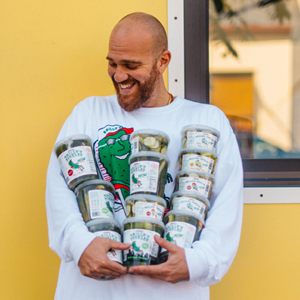
[00:00:10] Ray Latif: Hello, and thanks for tuning into the number one podcast for the food and beverage industry, Taste Radio. I'm Ray Latif, and you're listening to episode 175, which features an interview with Travis Grillo, the founder and CEO of Grillo's, a trailblazing brand of refrigerated pickles, who discussed his journey from an out of work sneaker designer to the creator of one of the fastest growing food brands in America. Tune in on Friday, August 16th for episode 47 of our Taste Radio Insider Podcast, when we sit down with Anne Yang, the co-founder of Misfit Foods, who opens up about her decision to leave the company in order to focus on her mental health. Just a reminder, if you like what you hear on Taste Radio, please share the podcast with friends and colleagues. And of course, we'd love it if you could review us on the Apple Podcasts app or your listening platform of choice. Travis Grillo heard it over and over. You're crazy. It's a line that many entrepreneurs are familiar with, but his business, selling fresh pickles out of a food cart on the edge of Boston Common, was met with particular derision. Despite the naysayers, the cart became a popular destination among the city's foodies, workers, and tourists. Suddenly, the idea didn't sound as crazy as it once did, and Travis, who used to work the cart wearing a pickle-shaped outfit, made a million dollars by his third year. A decade after its debut, Grillo's Pickles has become a nationally distributed brand, carried its several major retail chains, including Target, Whole Foods and Walmart, and generates tens of millions of dollars in sales annually. In the following interview, I spoke with Travis about the early days of his pickle brand and why it resonated with so many people. He also spoke about the unconventional way that Grillo's got into Whole Foods, why the brand is representative of his persona, how he considers new hires an investment, and why he's just as likely to take advice from a homeless person as he would from a billionaire. Hey folks, it's Ray with Taste Radio. I'm at BevNET headquarters inside the Taste Radio studio. Sitting in front of me is Travis Grillo, the founder and CEO of Grillo's Pickles. Travis, how are you? Hey, how you doing? Thanks for having me, Ray. You know, I've seen you before. This is the first time we've actually met. Okay. But I've seen you before because you start from afar. You started Grillo's out of a pickle cart. What the heck is a pickle cart, by the way? A pickle cart in Boston Common. And I remember seeing you, it was what, like probably seven or eight years ago. And it was a summer day. It was probably like in July. And I was like, who the F is this guy selling pickles on a 90 degree day? Where's the ice lemonade guy, you know?
[00:02:42] Travis Grillo: Yeah, that was part of my marketing was be at the pickle cart full time. You know, the pickle cart was something that we created on the street because that old light bulb popped off in my head. I didn't get a job at Nike and I was super bummed that summer and I was sitting home with my family in Norwich, Connecticut and eating the family pickle. And that pickle is a garden grown 100 year old recipe that just my family made. And, um, I started selling them out of my car that day, you know, going to a baseball field, going to a basketball field. And I jump out of my car and say, Hey, get your pickles over here. Two spears for a dollar. And people would look at me and I'd walk up with a jar. Say, try one. If you like one, I'll give you two for a buck. This was in Connecticut? In Connecticut. Okay. We just used that model that I did for a couple weeks. And I said, I'm selling pickles out of my trunk of my family recipe, told a friend. And at the time, Boys and Girls Club of America owned and rented all the spots in the Boston Common. So I got an introduction. And of course, they laughed at me, kind of like you did, Ray. They laughed at me and said, you're going to sell who? Pickles? I'm like, yeah, pickles on the street, something healthy, something natural, something new, something different. We don't want fried dough in 90 degree, brother. We want a fresh pickle. No, they laughed at me. They thought I was cute. And they gave me my pass. So when I got my pass, they said, you got two weeks, show up with your cart and dah, dah, dah. So the family and I built the little pickle cart, rolled it out, and it ended up being a huge success in the first month. I had lines all down Tremont at lunch break, getting my famous two for Spears pickles.
[00:04:25] Ray Latif: Did you have to adjust the call-out to reflect being in Boston? Were you two for a dollar?
[00:04:30] Travis Grillo: As you know how I'm drinking? No, definitely not. I'm not that guy. I kind of do my own thing, but I definitely did dress in a pickle suit. I used my design background and designed all my own gear as you see on me today. Gorillas Pickles jerseys, Gorillas Pickles shorts, Gorillas Pickles socks, Gorillas Pickles
[00:04:50] Ray Latif: It has a very Boston Celtics theme.
[00:04:51] Travis Grillo: So it's had that Boston Celtics theme. And as you know, traditionally, vending in the streets of Boston isn't just something people do. It's owned by people who've done this for tens of tens of tens of years. I mean, you know, street vending's how Boston kind of came up, right? You got t-shirt vendors all over Fenway Park. You got the park that sells hot dogs. And that's all run by vets of the city. And then you got me who rolled out there, but I did roll out there with about five friends. So we rolled out deep. We rolled out like and had a party. You know, we just kind of yelled, played some music. I had skateboarding friends. So we just kind of made it fun. And I think the community around me of Boston, embraced me instantly because it was something new. I was bringing love to the park. I wasn't bringing anything negative. And the homeless people ended up really liking us because, you know, two spirits for a dollar is better than getting a donut. It's better than getting a burger. It's actually helping them survive longer, right? You're putting salt in your body. It's nutritious. So all these things were beneficial for the streets.
[00:05:58] Ray Latif: Listeners might not know what you're talking about when you say the homeless people. Boston Common is known for having a decent-sized homeless population. You see folks- For sure.
[00:06:06] Travis Grillo: That's where the soup kitchen is. That's where you have shelters around the corner. The churches come and give free food. So it's definitely known for that place where people can congregate and feel safe, per se. And so, yeah, that's where we set up our shop. It wasn't in Newberry Street or something like that.
[00:06:26] Ray Latif: It wasn't in the ritzy zone of Boston though. You said that you had lines down the street almost from the jump. Was it because people really love the taste of your pickles or did it have to do with you and the whole sort of persona of pickle guy?
[00:06:42] Travis Grillo: I think in the beginning it was hearing about how great the pickle was because, yeah, we were out there, but we were more there to encourage people to come to the cart. My friends and I, we always had talks in the morning. It wasn't about making people feel uncomfortable. We weren't calling people out. We were more or less saying, hey, come get your pickles, two spears for a dollar. And if somebody, if a couple was walking by and either one wanted, and you could tell, because some would be like, wait a second, let me try that. And then the boy or the girl would be like, nah, nah, nah. And I would be like, oh, buy your girl a pickle. Hey, man, or to the girl, buy your boyfriend a pickle. It's OK. It's okay to eat a pickle on the run, because people aren't used to eating pickles on the run. And I created that. We were the original pickle on the go. So for all you that are listening to have a pickle on the go, that isn't a pag that is wet when you open it. I was already doing that and we're proud of that. We were the pickle on the go. We were two spears for $1 for five years on the street and people don't necessarily know that story. It got popular because the product is so damn good. It was, it's fermented in fresh dill, fresh garlic, a hundred year old recipe that was only in my family. So word spread really fast. And you have to remember at the time we didn't have Instagram. When I started, I had Twitter. So I used Twitter right from when it came out and that's how I drove sales. That's how people knew when I was open. That's how they knew when we were at farmer's markets. So we were early on a lot of this stuff that I see now today. So it's cool to see how I grew a brand to where it is.
[00:08:23] Ray Latif: When did you decide to create a packaged version of your products and start selling it to retailers?
[00:08:30] Travis Grillo: Honestly, we, in the beginning, I started selling those jars out of the pickle cart. So the ones you see in stores that are the 32 ounce standup container, that was the same container that I sold on the street. So we did sell two for spirits for a dollar, but we also had some retail jars there. But at the time we weren't thinking of it as retail. We were just grab some to go for $7. I never thought that we would even sell into a grocery store at the moment. I mean, I wanted to, I wanted to, but I didn't think it was, how hard would that be? Like, I don't have any family members that ever sold in grocery stores. Like, how would I get there? Right. That was like all I thought about. So I just, sold those jars for $7 and I think that was the right thing to do because it cost a lot to make them. I mean, I use fresh garlic from California. I use fresh dill that's organic, that's clean and clipped. I use grade A cucumbers. I use all the best ingredients. So when I was selling a $7 jar, It was sticker shock, but they already had tried the two Spears for a dollar and it was a no brainer. They do like, I get 19 to 20 Spears in here for seven, no problem, give it. So then we started selling so many jars that it led into where I rolled out into Whole Foods.
[00:09:45] Ray Latif: The messaging that you're sharing with me right now, you know, fresh pickle, hundred year old recipe, garlic from California, et cetera. How much of that did you get to share with customers early on? And how much of that is still currently your messaging?
[00:09:59] Travis Grillo: It's still the same exact messaging that we have today. Brand wise, the dill is the same style dill. The garlic is still from California. The cucumbers I still get from same growers that I've made relationships for the last 10 years. The product for me is important because that's my name on the jar and I don't want to cheat my name, I don't want to cheat the product, the brand, and so I've been consistent about keeping this product the way it is you see it today and the way it was then. And it's funny, I was thinking about this when I was driving, I was like, I remember people saying, Because we were so innovative 10 years ago that you never saw fresh dill floating in a pickle, right? So when I was selling them on the street and they'd look into my container, they'd be like, whoa, is that seaweed in there? What is that, leaves? Man, and I'd be like, no, that's called fresh dill. That's usually used in pickles, right? Dill. But as Americans and where we shop, it's just toxic yellow brine that says dill. And what is that, right? I had to actually be a teacher, you know, I was actually teaching people as they went and yeah, that product is still the same as it is today. What was your first retailer? Whole Foods. Was it Whole Foods? Yeah, someone found me while they were in line. It wasn't a call, it was an actual customer that worked there and I think word got back to them and then I got an email which led to an introduction and that's how I did it. How many stores did you get into initially? Well, if you're going to hear the quick story of it, I got into one store, Fresh Pond, but as soon as they let me into that one store, I drove around and sold them into every store in our region. So you went and met with buyers at all the other locations? No, no, no. I went with one buyer. He let me into Fresh Pond. Fresh Pond is in Cambridge. In Cambridge for the listeners, and that's their premier store out here. And then the next morning I woke up and went probably went to the one downtown, I went to the one across town, I just went to every Whole Foods that was available and I'd walk in and I had a pineapple box filled with 12 and I would write a little yellow invoice and I'd say, hey, these are a new product. I'd pull out back where the tractor trailer trucks would be and I'd walk in through the back and just talk to the purchaser and be like, hey, no, these are at Whole Foods Fresh Pond, I'm just making the first shipment. Knowing all along in my head, I was like, I might not get paid on this, but I thought in my mind as the hustler of the pickles, I thought that I was doing the right thing. I didn't even know what to do after I got into that one Whole Foods. I just was doing the logical. Oh, I'll sell them to them all. I get a call about a week and the buyer is like kind of fuming. He's like, how are you getting your pickles distributed to all these supermarkets? I did not authorize that. This is a problem. And I said, Oh, I've been delivering. I'm sorry. Why is that not? Is that against the rules? And sure enough, it was, but they congratulated me and they said, I don't think anyone's ever done this. And you've sold out of every single store. So my Twitter worked, my hustle worked, and it got me into the region, which actually got me into all the regions where now I only had to ship to one DC. So I saved myself a hell of a lot of time driving around DSD. So you were bringing pickles to a store that didn't order them. No. How did they get them on the shelf though? I would say, I would just say they're at Fresh Pond and, you know, I'm local. I'd give them a little, you know, give a little sass. I go put them out myself. I mean, I've done, I've done that, you know, you got to think 10 years ago, it was a different time. I think at least in my head, it was, it was a different whole, you know, I don't know. I just different feeling. I had a different, Vision, right? I didn't care if somebody said to me 10 years ago, you're in trouble or you're doing this wrong. What did I have to lose? I had no job. You still had a pickle cart. Yeah, I had a pickle cart, a bunch of great friends and a little bit of money and we're all homeless basically. So no, I didn't care if somebody at Whole Foods at that time would say something bad about that.
[00:14:04] Ray Latif: There's a real distinctiveness about you. Someone could pick you out of a crowd pretty easily. That sucks. I like to be the ghost.
[00:14:15] Travis Grillo: Thanks, Ray. The Grillo ghost?
[00:14:16] Ray Latif: Yeah, yeah, yeah. But it feels like, I mean, that has helped build the brand in so many ways. Like when you're doing a sampling, when you're doing a demo at a Whole Foods, they want to see you, right? I mean, like you're the, in so many ways, the public persona of the brand. You are Grillo's.
[00:14:33] Travis Grillo: I would agree to an extent to the point now and for the last few years that I'm proud to say that the brand that you see with me has now resonated with everybody that buys a jar. And through our social media and through the emails and everything we get, people are proud to own Grillo's. They're proud to be part of Grillo's. It's actually becoming more of a lifestyle brand. And you're going to see that in the future with things we're doing with other companies, with our clothing and things like that. Correct. I'm great at branding, you know, I appreciate that and I think that that's part of my background because I was going to work for Nike, remember, and I was going to be a designer and I know how PLM works and I was going to be a project line manager so like I understand trends and I understand that. Grillo's, when you dissect it, it has a lot of my DNA, but I was able to get that into a jar, which now can be in your fridge and you can have part of that DNA every time you eat it. And we embrace that. So branding wise, I love to see my jar on shelf and it's completely different than everyone else. And that's me, right? You just said it. So it's the jar that I created that is differentiated from everybody else. And when you see it on shelf, at Walmart, if you see it at Shelf at Target, you see it on Shelf at Whole Foods, Kroger's, Publix, Costco, I could go on and on where they are. It's a national brand. It's distinct. I think that's where I've changed kind of the game, right? The pickle world, the landscape of it. It's like you put your own personality on a brand and let it fly. And if it's positive and it's spread like love, people are gonna embrace it. So I think that's,
[00:16:21] Whole Foods: what I've done.
[00:16:43] Taste Radio: Tune in at the end of this episode for an exclusive interview with Matt Lin of Belay Solutions. He sits down with Melissa Traverse to break down the biggest inventory and accounting mistakes CPG founders often make. You'll learn how to bring clarity to your numbers so you can scale with confidence.
[00:17:01] Ray Latif: How would you describe Gorillaz as a lifestyle brand? I mean, what does it represent?
[00:17:04] Travis Grillo: Gorillaz represents definitely like healthy eating, respecting your body per se, you know. But there's also that side of fun, right? We want to represent fun on the go. A lot of that has to do with how we started. The team I built, we've built a team that reflects the brand. And I think that's important to the brand.
[00:17:26] Ray Latif: Also, it kind of reflects you. We're sitting with your brand manager, Eddie, over here. You guys have very similar looks. Oh, nice. Big, thick beards.
[00:17:36] Travis Grillo: You're both hairless. Well, I wouldn't say. We all had hair when we started Gorillaz, but you know how that goes. I'm growing my locks.
[00:17:47] Ray Latif: Well, hey, I mean, you know, it's a look for sure. And you know, for the What do you call that guy? Who's- Sam, Sam the Pickle Man. Sam, Sam the Pickle Man, who's your icon for the brand. Yeah, exactly. He's got the Grillo's hat and he's just chilling on a beach chair. And I feel like that's kind of- That's what we do.
[00:18:04] Travis Grillo: Yeah, that's what you guys do. Well, we work hard as heck and we want to be on the beach chilling more, but hey.
[00:18:08] Ray Latif: It'll happen one day. One day, yeah. You mentioned apparel you're wearing. Apparel. Head to toe. That's Grillo's. Like I said, you get the Boston Celtics themed basketball jersey shorts and those kicks.
[00:18:23] Travis Grillo: Yeah.
[00:18:23] Ray Latif: Your sneakers are Grillo's themed. Yeah. And you created those in conjunction with Patrick Ewing. Is that right?
[00:18:29] Travis Grillo: Yes, we did a collaboration with Patrick Ewing. We also did a collaboration with Chalk Line. So we have... Chalk Line's the name of a sneaker manufacturer? Sorry, Chalk Line is our coats and some of our gear we make.
[00:18:42] Ray Latif: Okay.
[00:18:42] Travis Grillo: But traditionally, the gear was always made one of one. So we have an archive of you know, coats, the original shorts. So we have an archive of everything that was handmade. So we had people that were making our stuff by hand. And then as we've grown, we made a collaboration with Ewing, which was an honor. And it's kind of my way of laughing, too, because I didn't get that job at Nike. So for people who know me, who listen to this story and learn about me, the sneaker was a big part Yeah, it's great for marketing, but it was also just part of like, you can open a pickle company and still live your dream of having a sneaker company, right. Or making a sneaker out of it and making it work where it did great for buyers. It's great for my team. And yeah, and we have urban outfitters interested. And I think we're shipping there soon, Eddie, and maybe the 2020, we're going to have our t-shirts in there. So seeing that happen with a food brand, I think is one of a kind, you know.
[00:19:47] Ray Latif: Do you see Grillo's as remaining a food brand or do you see it as a brand that can go beyond just pickles?
[00:19:54] Travis Grillo: Yeah, a brand that definitely can go beyond pickles. I mean, I see this brand, you know, getting into all different styles of foods and dressings, drinks. You know, Grillo's has a platform of, you know, we had a store in Cambridge that had 20 different pickle products.
[00:20:09] Ray Latif: You had a storefront.
[00:20:10] Travis Grillo: Yeah, a brick and mortar that was going to be one month and stayed open for two years. How many people told you you were crazy for having a storefront, a pickle storefront? You want to talk about how many people told me I was crazy? We can start from the beginning. We can redo this whole interview. Yeah, the same people that thought I was crazy are the same people now that are calling me for my product. So it's funny. And you know, me being an artist and growing up that way, I get a kick out of it that we had a pickle store that actually thrived on the street. You could retire, right? One guy can have a pickle store in America and be pretty darn good, right? That wasn't my vision though. I wanted my pickles to be everywhere in the nation. Why? Because I believe that Americans in this country need to have good products available to them and why can't I continue to like grow, grow, grow a company? and brand, brand, brand a pickle that's good for you where I'm not putting out anything, I'm not putting out something that's bad for you. So I feel good about selling as much as I can while I keep it small. So that's my model and that's my art is like continue to grow a brand into all different categories and to give Travis Grillo, you know, you could drop the pickles, it's just grillos.
[00:21:27] Ray Latif: That's a really amazing way of looking at it is that like I'm selling something that I can stand behind a hundred percent that I eat all the time. That is not going to do any bad to people. That's a great way of living.
[00:21:42] Travis Grillo: Mellow, mellow, all positive. That's what I mean. See what I'm saying? There's a science to this, but there isn't, right? If you live a positive and in peace and try to just move that forward, it's great. I don't think I could ever sell anything that I couldn't stand behind. I wouldn't go to bed at night. I'm not about money like that. I chase money because it's fun. I don't chase it because I want all this stuff. More stuff is more problems. So for me, the pickles, have just created this brand that I like actually smile and I'm like I'm happy about this brand like this brand has brought people it makes people laugh it makes people happy it makes people want to do better when they eat it and change their lifestyle. They may eat a pickle and be like, you know what, maybe I'm going to turn vegetarian now. Maybe I'm going to not eat as many French fries. Maybe I'm not going to do this. Maybe I'm going to do that. This product is that pathway.
[00:22:37] Ray Latif: I want to go back to something you said before about you don't think about money that way. Did that come from being broke, from having no money and sort of being happy?
[00:22:48] Travis Grillo: Yeah, 100%. Yeah, I've been broke my whole life. My dad is a car battery salesman, you know, Italian-owned. My mom was a teacher. You know, we shared a car. Just, you know, I didn't grow up like... I live in Mass now and I'm next to people that I never would ever think I would be next to. It's great, like it's one of those things that I would never regret being broke and like sleeping on the common, I mean sleeping on the common, sleeping, working at the common basically every day. It felt like sleeping there, but sleeping on, you know, the floor of my friend's house in Alston and then driving my bicycle every day back and forth from the common and then, you know, not knowing what the future held, but living in the moment. And understanding that I only had $70 for maybe the next two days, and how is that going to last me? And you just make it last. And I always say, and people think I'm crazy, but I'll say, it's hard to ever feel that $70 day. Again, it's like, I would love to get that feeling at that card again. And me and Eddie always talk about, we should just go open the card again and see what happens. But we always discuss a decade has gone by, the same people aren't down there, the country's at a different place. People have different, it's just like, I don't think I'll ever live that again. So I cherish those moments and I don't regret ever being broken. That gave me the drive to get to where I am today. But I don't use money as something that I think drives a big part of why I'm doing this, no.
[00:24:22] Ray Latif: As you mentioned, it takes a team. When did you start to realize that you needed more help and that you could actually afford to pay folks?
[00:24:28] Travis Grillo: Day one when I hired Mello next to me right here. I mean, Eddie Mello was the first guy that ever believed in me, right? And it's funny because Eddie, my cousin, I had a bookkeeper at the time and they were all just family friends, but it was like Eddie was the first guy that And, you know, there's other people like people that were in bands. There's a big community in Boston that really embraced me, that wore my shirt. So Eddie was wearing my shirt, the Gorillaz Pickle shirt, on stage. And a friend of mine, he said to me, You know, you should go check this kid. He's like rocking your shirt. And I'm like, how the hell did he get in my shirt? I only have like maybe made 40 at the time. Right. So it somehow got to Eddie. And at the time I needed someone to run the pickle cart because I had just done all that stuff I was telling you about selling a Whole Foods. So I was starting to get bigger. But I needed someone to run the pickle cart. And Eddie came down and I met him and it was just like, yeah, man, I'll work the pickle cart. I love the pickles. And he did. And he actually gave up going on tour, I think, at the time with his band. And he showed me right from the beginning that he was like, I believe in this brand. And as soon as I got one person to believe in the brand, it was kind of easier for me to go out and sell the brand and to go into stores and move it while the pickle cart was still perceived as that's the only place I was because I wanted to kind of look smaller than I was because I didn't know what to do. I didn't know if I started growing would people be like, ah, he sold out or this or that or this or that. It was just trial and error and having someone like Eddie there to believe. And now he's head of the whole brand. He sets all this, they set this up. I mean, he's seen the streets. So out of everybody on my team, he's one of the guys that actually was with me on the street. And that's beneficial to the, to the company, you know, to have somebody like that around.
[00:26:20] Ray Latif: I want to talk more about your team and your hiring process, but you said something that was pretty interesting, which is that you wanted to look smaller than you really were. What does that mean?
[00:26:29] Travis Grillo: And how do you do that? Well, at the time, I didn't know where the brand was going to go. I didn't know if I was going to just going to have a pickle store. And when you have a pickle store or something, and then you start selling to Big Y and Stop and Shop, your pickle store is going to go out of business because they're going to like, yeah, I can get this at Big Y. I'm going to come over here. So that was kind of the reason that I wanted to stay smaller. But now that I see we're a national brand, this is funny, a national brand. millions and millions and millions in sales and we're still really small compared to the Kraft, Clausen or something like that. So yeah, we're still small. were perceived as big to somebody who maybe just looking into the industry, right? So we are still a small startup company in the world, but when I was really small, I wanted to stay that and perceive that image because I thought it was important to how I was going to brand for the future because I didn't want to just sell out early, get distribution everywhere. People wanted me to use oils, extracts. I had every reason to go big. seven years ago, right? I had I had the capabilities, I had the I had the factories, I had the know how I could have got a product on shelf way cheaper, I could have used shitty ingredients. And I could have ran and I could have took that shot and been like, at the end, I'm going to sell this for a million and I didn't see that value. I saw so much more for the brand. And like I said earlier, it's funny because we're still small now and I still see so much growth for the brand that I'm almost relived it. I mean, Eddie say this all the time. It's like we live in twice and it's scary. No, it's like you live twice, right? We did this for a decade, right? And now we're just almost starting again, right? Cause now we're in another playing field. Like when I show up to board meeting, this is me, man. I don't show up like this. I mean, the way I talk, this is just what I do. And I love it because, Now I have a brand that's national that people respect me and respect the brand and respect what we've done rather than, oh yeah, that's the guy that put oils extracts and tried to rip us all off for the last three years and then he sold the company and he don't care. That's not what we're about. So I want this brand to be something forever that people will love and respect what it's about.
[00:28:46] Ray Latif: Well, certainly when you had the pickle cart, I don't think you thought you'd be sitting here talking to me about the business and your multimillion dollar pickle company. No, no, I didn't. I didn't know. So I guess by that in saying that it seems like you're willing to be quite patient.
[00:29:03] Travis Grillo: Yeah, exactly. Patience is a virtue. The slow turtle wins the race. I mean, these are the little things you learn as a kid and you just got to kind of listen because I've seen too many people fail the fast way. So I knew right from the beginning that Fast just always means trouble. And if you're not doing it calculated, and you're not doing it the right way, you're going to fail at it. So you got to be really, really careful. And like, I give myself credit because I was getting money offers from the street that would have been, I was literally sleeping on the floor getting hundreds of thousands of dollars offers from people to be part of this company. And I would look at Eddie and I'd say, Eddie, you know, or whoever's with me, I'm like, should we take that a hundred thousand and just fucking go? And be like, ah, fuck that. We're having too much fun down here. We're having too much fun on the comment. Like, no way. We got to go biking tonight, you know? And it'd be like, yeah, what are we going to do with that money? You know? So. Don't call that guy bad. Yeah, that was over and over and over again through my life. It happens. I mean, people want part of the company because they know the value of it, but they knew the value of it when I was still selling in a pickle cart. You know, people thought I was going to trademark that or I was going to bring that pickle cart into the malls. Like, people thought I was going to franchise. Like, oh, I sat through so many different meetings of people being like, you know, you could be the next, you know, Anthony's, you know, pretzels, you know, you could be that guy. And I'd be like, sounds like, Not what my vision was, you know, like people just sell you on things and you could be living here, you could be this guy. And it's funny because the more people talk about that, it's like the less I believe them now. So I've grown, like I've really matured in like who I talk to, you know. Getting a hold of me is probably hard because I don't allow it, you know, because it's just too much of that. I want to stay really focused and like it's how I achieve these goals.
[00:30:53] Ray Latif: You love the brand. You're an absolute lover of your brand, as you should be. When you hire folks for the company, do they have to love the brand as much?
[00:31:03] Travis Grillo: Yeah, it's funny because if you ask some of my biggest guys in the management team and stuff, if you say, hey, how was it with interviewing with Travis? It would probably be like, well, he showed up in whatever, shorts and a basketball shirt, or he showed up in just casual clothes, and we met at a Whole Foods, and we walked around. That's what I want to do with my employees is bring them into like the store, right? Because now we're in a level playing ground. We're not in a fancy friggin office. I don't, you know, I've seen them all. You know, that's not what I need. I want you to come to the store and we're both consumers at this point, right? We're both customers and we're both equals. Let's talk. walk around the store, get the feedback on what they've done, look at shelving, look at products that they've created. Because a lot of the people that work for me now have launched brands or worked in brands. So this team, I wanted every teammate to really feel me out. And also, I want to feel them out and just make sure that they're culturally ready to work with a guy like myself and a team that is constantly moving. We make a fresh product, so nothing's stored, nothing's warehoused, the product's made to order. So all this stuff is important because you've got an employee that used to just work a chip brand or something maybe that maybe has a long shelf life or this or that and they're not ready for the challenge to like every day have a problem. Because every day there's usually something that's going to pop up in a fresh brand, right? Not bad things, but just things that you got to be on top of. The hiring process for me was definitely something that I took serious, but I also took it into consideration who that person is. For example, We did hiring once and I hired a guy because of his background wasn't in food. I was like, you used to be an electrician? And he's like, yeah. And I'm like, but yet, you know, you do all this with food and you're super successful. Like you've been through acquisition, like, you know what you're doing. And he'd be like, yeah. And I'd be like. I'm going to hire you, man. You know what I mean? I hire the person that knows how to work as an electrician. Why? Because they're hard workers. They worked hard. I worked construction growing up. My family comes from construction. It's not the easiest job to dig holes all day long and break concrete and build a house and carry blood. Same with electrician. It's a hard work. And those type of jobs mold the employees. So if I know that's your past, you're going to have a better chance with me than like, Oh, I went to all these fancy colleges and I did all this fancy stuff and I'm so fancy. I'm like, all right, cool, go be fancy, but you're not gonna be fancy with Trav. Leave the fancy notes to me. But like, you know what I mean? So that's just, it's funny because people will think different. People will listen to this and say he's crazy, but that's fine. You know, we're still doing our thing.
[00:33:49] Taste Radio: Do you want more repeat buyers on Amazon? Well, this free resource in collaboration with Straight Up Growth will help your brand turn first-time buyers into long-term subscribers. Download Winning the Repeat Purchase Game on Amazon now at Taste Radio slash SUG. That's Taste Radio slash S-U-G to start building retention-driven growth for your brand on Amazon. Scaling a beverage brand into major retail comes down to operational readiness. From packaging lead times to co-manufacturing strategy, the details can make or break a launch. In a new e-book in collaboration with Octopi and Asahi Beer USA, industry leaders share what they've learned in helping brands scale. Download it now at Taste Radio slash octopi. Do you need to scale your team faster without compromising on talent? Join Oceans for a live webinar on April 20th and learn how leading companies are hiring top global professionals who are ready to grow with your business. Register for the webinar now at Taste Radio slash oceans. That's Taste Radio slash oceans.
[00:35:00] Ray Latif: Yeah, I mean, it seems it's like it's easy to assess a resume, easy to assess skill. Okay, you've had these jobs, you have this skill set in a particular field of business. How do you assess passion though? What are some of the key signs?
[00:35:11] Travis Grillo: Some of the key signs are past things they've done, like any other projects they've worked on. Definitely passion comes from if They're willing to work longer hours than their last job. They're willing to throw on different hats because startups, you know, you might have a role, but in two weeks later, you might have two other roles that you got to kind of play with and figure out because changes happen daily. So I think a lot of that plays with the initial meeting. You know, one of the biggest things I'm always saying, are you willing to travel? Because there's a lot of times I didn't want to travel having kids and stuff. And if you're not willing to travel, then how do you grow a national brand? Because a lot of people want to be like, just drive to work and go home and drive to work to go home and never think about like, wait a second, I got to go to five different states this month. And like, I didn't ever think I had to do that. But there was some months and some years that I was traveling more than I'd want to, but you have to. So I always ask that question with employees, if you're willing to travel and diversify your life, because that's what we need from you. But other than that, you know, I have a tight team and we don't hire a lot anyway. Like I keep a lot of my employees are here. So it's like a lot of us, we're all passionate. You know, we're all part of this brand now. So luckily I don't have a turnover rate that I even have to worry about. So it's kind of good. Yeah.
[00:36:31] Ray Latif: Have you ever taken outside investment? I know you talked about people calling you all the time.
[00:36:36] Travis Grillo: We took our first Series A investment from Breakaway, a local Boston group that, you know, they believed in what I was doing. Personally, at the time, I was nervous. I was scared. I didn't want to take money on. I didn't, you know, know exactly what would have happened. After you take it, because you hear all the stories, I'm sure the listeners are like, maybe somebody's like about to take money, right? So you got to really think about who the people are. And I think the guys that I, I know the guys that I invested with, we spent time together and just discussing, it was all about the brand. They were very, Brand, brand, brand. Products obviously the best. It's the best pickle I've ever had. But the brand and the people you've hired and you're going to catapult. So having that money there helped me bring on new hires, higher level people to help me grow into the bigger grocery stores you see us in today. And a lot of money went into that, trade spend, marketing, things like that. And just building a great team, a lot of that money went into. It was just hiring the right people at the right time to grow to where we are today.
[00:37:52] Ray Latif: When you had those meetings with the investors from Breakaway, were you wearing the same outfit? Were you walking them through Whole Foods?
[00:37:59] Travis Grillo: Yeah, no, no. We met. They definitely got to see me first and talk and got to hear what I had to say, how I do my business. I just kept it real. Like I didn't fake anything. I didn't like put up a big graph and talk about, I mean, they had, we have all that, which is great, but it wasn't like my, my main focus was like to prove to them, you know, uh, you didn't have the hockey stick in the back being like grillers is here today. And in two years we'll be here. I mean, you got to see that. stuff and that's obviously there. They wouldn't be talking to me or they wouldn't have invested. But I think that what was great was that they saw the brand as having these legs for the future. And when someone's gonna be able to put in money, you know, off a company that we started on the street from a pickle cart, it was just kind of like, this is awesome. You know, I kind of changed the way I was thinking about it. You know, you got to take advice from people, but you don't take all of it. you kind of circulate that advice. If I took advice from a homeless person that I had, you know, a three-hour conversation with ten years ago or even nine years ago or whenever, even yesterday when I talk to people, I'm just saying like, I do that and then I have a conversation with somebody who's worth a billion dollars, right? And sometimes I take the advice from the guy who was homeless. Or sometimes I take the advice from the guy that you know is down on his luck rather than the guy that is super successful because there's a lot to say about how you move in a business and how you perceive your branding. So you have to get a little bit from everybody. You can't be shallow and, you know, you got to be humble. And, you know, for example, I go to my factories, I'm like, hey, how you doing? Shaking hands, sending t-shirts, because that's part of my brand. You know, the workers that are working or making stuff, you know, they're part of me. So I stay really loyal to that. And that's a huge importance that I think Breakaway saw in the brand and how I was running it. No one wants to invest in a CEO that's not a leader. Who wants to invest in that? You're just giving your money away at that point.
[00:40:09] Ray Latif: You have this sort of laid-backness about you. See that? Mellow! And I'm listening to what you're saying and how you treat people.
[00:40:19] Travis Grillo: Like, how do you do this?
[00:40:21] Ray Latif: Well, that's part of it, but it's also part of it is I'm wondering how often you get angry and how often you, you know, have to crack the whip, so to speak, to make sure that everyone is moving in the same direction that you want them to be moving.
[00:40:35] Travis Grillo: It's funny you say that, Ray, because I just, I'm just good at being logical about things. And when I say, I'll say this a lot, I'm always like, we're both humans. Come on, we can kind of agree on this, right? We're both breathing the same air right now. I try to get everybody on that level playing field. I'm not a guy that wants to be the CEO and drive in everybody, stand stiff. I'm the guy that when I come in, everybody, yo, what's up Trav? Like, it's chilling time. It's like, not chilling, but it's like, I want everybody to have that. Like, I have a meeting, I said, everybody should wear slippers and work or flip flops to work. You know, everybody should go run around that track we have around the pond at lunchtime. Everybody, you know, I'm cool with all that. Like, I want you guys to do that. What I don't like is disrespectful people or, you know, understanding that. You know, what somebody does to you could happen next. So there's karma involved. So I try to tell my employees, like, if you're talking bad about this guy or this or that, like, it's just going to make you look bad. Like, let's look forward. Let's not dwell on the past. And I. ...consistently say, whatever happened then, let's let it go because it's gone, you know, and move forward. So I think that's a big thing about how I, instead of getting angry, which I have, I've gotten angry plenty of times and people will tell you that, but there's a big risk, right? Well, I'm saying that because there's examples. I looked over at Eddie when you said that. Eddie's the guy that never, you know, he's like my right hand, number one brand manager. So he, he, he understands that like, we just get mad with like, if an employee or somebody just is like disrespecting the brand, like if you can't go above and beyond until I go get a box downstairs or take out the garbage, because you have a degree at, Harvard? Like, no, bro.
[00:42:29] Ray Latif: It sounds really specific.
[00:42:30] Travis Grillo: No, I don't even know if anyone has a degree. I'm just saying in general, like, I just feel like a big part of Travis's model is just we're all equal. I love an equal playing field. I don't call people really employees. I call them teammates. We're teammates. And I can't do it alone. I need everybody with me. So it's one of those things that we have to be grounded and we're all level at Gorillaz. That's how I like to keep it. If I could wash titles away, I would. I wish we could live a life like that and just be like, We're all on the same team, no titles, but it doesn't work like that in business. Everybody has to have a title to move on or get new jobs. There's a structure, right? There is a structure and I respect the structure. And that's why I was looking at Eddie because Eddie understands I know how to respect the structure. I know how to run a business. I know business, but I have this other side of it that I just think if we all just thought a little logically at times and calmed down, we could get a lot of that negativity out of the room. And I try to do the best as I can. But again, I'm 37. Employees can be 10 years older than me that are so seasoned that they're stuck in their ways. And you also have to manage that, too. And you've got to just give people their space sometimes. It's like, you're not going to change, but I've got to help you. Yeah. So I try to do a little of that too. So there's a lot of, I want to say there's some life coaching involved with being a CEO. If you want it done your way, you know, or at least have a peaceful place that represents your product. What's your day to day like? A lot of interviewing stuff, definitely managing the group, the management team. I travel to key meetings. I'm definitely doing a lot of that. I work with Eddie a lot with branding, up and coming things we're going to be doing with the brand. always financial stuff. So yeah, I have to throw on a different hat. And I think, as you can see, that's kind of what I have to do with everything. It's like, shut the phone down, do something else. And someone else calls, you might have to raise your voice. Shut the phone off, you start laughing. And that's something you learn through all the years of managing people and understanding that part of it.
[00:44:41] Ray Latif: So. When you're coming up with new products or new ideas for the brand, you know, where do you source your inspiration? It's funny. He's coming to our office.
[00:44:49] Travis Grillo: It's just, it's funny because being in design and the sneakers and fashion and all that, it was like they said to me one day, the office like, hey, why don't you bring in some of the stuff that inspires you? You and Eddie. Like fucking perfect. We like unloaded all our vintage gear, like we have vintage sneakers and vintage coats. This is all valuable, high collectible, just like stuff that we've collected over the last, you know, 10 to 15 years here. And we just put it all in our office and you walk in, it looks like a store of clothing, of toys, of all kinds of things we've collected. And that kind of stuff actually inspires us, like our new packaging. is so innovative in the pickle category that it's ahead of its time. I mean, Grillo's was ahead of its time. We were selling pickles in a plastic container that looked like a deli container on the street sitting on ice. And now I go to a supermarket, they got cheese on ice. I'm like, bro, we were selling pickles on ice before you. We had all the gear, clothing before sneaker companies that were doing it. Now I see ice cream with sneakers and they make it look the same. And I'm just like, you know, that's fun and all, but we were the originators of that. Cause we actually have a food, like this brand has a food and we have an image and we have passion and we have clothing. So there's so much behind it that other brands are just biting a little bit on that trend, but we're not a trend. We create trends. And we did that with our new lay down container. which has pickles that are, you know, fully submerged in brine now. There's no more stackables. Yeah, they're they're laid down. So yeah, instead of traditionally pickle spears would stand up straight, we laid them down. And, you know, they're submerged in the brine. Now when you take one out, you don't have a tip sitting in the air. So you have more of a fresh freshness to that product, submerged in brine. It's also easier for storage because the way it's shaped. So there's so many benefits and it's so innovative and new that I'm excited about it. It's like almost reliving another 10 years, right? Because I got this new lay down pack and it's doing so well in the Walmarts of the world right now. And we just got a statement from Walmart saying how much of a success this brand has been. And it's just like, I'm amazed, but I almost knew if you just gave me the shot, I knew the product was going to be good enough that anybody would enjoy it. It's just a good product for the palate. It's good for the whole family. It's not something that is distinctly only a few people might like. And now that everybody's eating fresh and natural, everybody's doing it. It's more aware. Ten years ago, I don't think it was as aware. There was no food trucks in Boston when we started Grillo's Pickles Car. Like let's think of that and you just think how fast that has blown up in Boston. Some of these food trucks have restaurants now. Like Grillo and they're vegan, right? So Grillo's was like the only vegan natural product available on the go in Boston back in 2009.
[00:48:02] Ray Latif: Travis, you know, I was excited to meet you in person and I've really enjoyed our conversation and I think our listeners will as well. So congratulations on everything you've done to this point and good luck going forward. Thank you, man. Appreciate everybody. All right. That brings us to the end of episode 175. Thank you for listening and thanks to our guest, Travis Grillo. You can catch both Taste Radio and Taste Radio Insider on Taste Radio, the Apple Podcasts app, Stitcher, Google Play, SoundCloud, or Spotify. As always, for questions, comments, ideas for future podcasts, please send us an email to ask at Taste Radio. On behalf of the entire Taste Radio team, thanks for listening, and we'll talk to you next time.
[00:48:57] Boston Common: Hello, I am Melissa Traverse here for the Taste Radio podcast, talking about some of the biggest tension points that CPG brands and founders face when they're scaling a brand, and those are financial accounting and inventory management. I am joined by Matt Lynn, inventory accounting guru from Belay Solutions, and he is going to shed some light on all of this that is going to help everybody out quite a bit. Matt, thank you so much for joining us today.
[00:49:27] Claussen Pickles: Thank you for having us, Melissa. It's great to be out here at Expo West and it's great to sit down and be able to chat this because it's kind of a passion project of ours, working mainly with CPG brands and hoping to help them scale.
[00:49:38] Boston Common: It's been such a pleasure chatting with you and the team and learning all about what you do over there at Belay Solutions. Can you tell us a little bit about yourself and what your role is and the kinds of solutions that Belay gives to CPG brands and founders?
[00:49:54] Claussen Pickles: Yeah, absolutely. My role with Belay, I'm actually our inventory accounting manager. I run our inventory department, so we work with CPG brands, taking them from spreadsheets, putting them on inventory management systems, and really helping connect their tech stack between their sales online marketplaces to that inventory management system, even down to their financial systems like QuickBooks. Belay overall is kind of an outsourced accounting firm. And with that, we're helping teams. We have different levels with bookkeeping, controller level work, even high level into CFO type items. So we really help those brands in any way that they need financially. And then I just have a subset of a department where we're really just laser focused on inventory.
[00:50:37] Boston Common: It's certainly a complex topic and there are plenty of places to go wrong. Let's start by going right and start super simple. Can you tell us what some of the biggest red flags are that would help a founder understand or, you know, the person running a brand understand that it really is time to get some help with some of these areas?
[00:50:58] Claussen Pickles: 3 3 3 3 They have a lot of transactions that don't get coded or they just put them into placeholders to just get rid of it so it's not an eyesore. They'll notice they have revenue but no cash or they notice that they have a good amount of cash but their blind spot is really seeing the vendor invoices that are sitting there just needing to be paid and so they just lack that clarity that's going to really be around the corner.
[00:51:35] Boston Common: You know, you were talking about one of the red flags that comes up that I think makes so much sense. When somebody asks you what your numbers are and you can't come up with the right number, that's a big problem because that's something that you really should be able to share with decision makers who, you know, you're ideally looking to do business with. What should you be able to call up at a moment's notice?
[00:51:59] Claussen Pickles: Really at any time, you should be able to know an accurate margin. It's amazing how many founders we end up talking to that they can tell you their revenue numbers, they can tell you their selling price, and then the minute you start talking about cost or their cost of goods sold, they just get a deer in headlights look. So really it's very hard to tell, am I even making money? Or if you don't know your entire landed cost. Maybe you know what the freight cost is, the duties separately, but you're not really getting that as part of your unit cost. So it's really hard to tell. Am I even making money or am I losing money from the very beginning?
[00:52:32] Boston Common: And do you recommend that founders are able to call up a margin by channel?
[00:52:37] Claussen Pickles: Absolutely. And depending on the number of products and channels, you kind of want to know what are your best sellers, which ones are making the most and which ones maybe you're not making as much. But especially if you're branching out and you're doing D to C with B to B, absolutely want to know that.
[00:52:54] Boston Common: Gotcha. You mentioned that when things feel really chaotic, that's probably a red flag. I would say that it probably almost always feels chaotic if you're running a CBD brand. And I know this may be hard to quantify, but is there a revenue number? Is there a number of doors number that would help a brand understand whether or not it makes sense to bring on a partner like Belay? Understanding that so many brands are bootstrapped or they might be tight for cash. What is that friction point?
[00:53:24] Claussen Pickles: 3 3 3 3 3 But as you're growing, as you're getting to those six-figure revenue numbers, and especially as you're approaching seven, you want to make sure you've got good financials. Because as you scale to that point, most likely you're going to be looking to raise capital. And investors, the first thing they're going to look at is your books. And are they clean? And do they show a clear picture of your business?
[00:53:57] Boston Common: You know, another area that folks might look to to organize some of the chaos are their systems. So many folks stick with Excel spreadsheets for a good amount of time. How do you know that you need to outsource some of your accounting to an organization like Belay Solutions versus maybe signing on to a Synth7 or NetSuite or something like that?
[00:54:19] Claussen Pickles: Well, that's actually something we really help with when it comes to that cost question. That's something that trips people up. And sometimes if you just have a turnkey business, you buy and sell a finished good, you can maintain with spreadsheets. And we've had clients with million dollar revenue that can do that. But we see so many brands nowadays are using contract manufacturers. and they're just sourcing certain parts of their product. So when you start talking costs, they have no idea exactly what their unit cost is. So that's where we come in and we kind of understand, we'll speak with the customers and the clients and get their needs. And then if we think they're ready for a system, then we'll help put them on that system so they can get some of that clarity. And it's not something we force on anybody. There are plenty of times where founders come to us and we'll tell them bluntly, you're not ready for it right now, but we'll let you know when we think you are.
[00:55:05] Boston Common: That sounds like excellent advice. What should a founder or somebody running a brand look for in an outsourced accounting partner? Are there certain checklist items that they should make sure that their partner be able to execute or be able to help them understand?
[00:55:22] Claussen Pickles: Absolutely. I think one of the keys, there's, there's a lot of outsourced accounting firms out there. Some focus on service-based SaaS companies, but if you're a CPG founder, you really want to make sure that your accounting firm has CPG experience. I would ask them, you know, what kind of brands have they worked with and even beyond that industry specific, because there's so many subsets of CPG. And that's something that I think is great about what we do with Belay is that we kind of run the gamut. It's kind of like the insurance commercial. We know a thing or two because we've seen a thing or two across a broad spectrum.
[00:55:52] Boston Common: Probably getting references is always helpful, right?
[00:55:55] Claussen Pickles: Absolutely.
[00:55:57] Boston Common: All right. So this all sounds great. I think we have a really good understanding of would it make sense to hire an outsource partner? You know, what some of the things you should be looking for are. What does offloading this kind of work mean for the brand? What can this do for lightening the load of a founder or lightening the load of a brand operator? Like, how does that help them in their everyday business?
[00:56:21] Claussen Pickles: It just tries to really help quiet the chaos. So what we're looking to do is just take some of the weight off that founder's shoulder, let them focus on building the brand, building the business, getting that exposure. If you don't have sales, you really don't have anything. So we want them to be able to focus on that while we take care of your back end office work. And we can just present that to you on a monthly basis, you can help make decisions, you can take that to investors. And really, you can just focus on growing your business.
[00:56:47] Boston Common: I feel like I felt founders and the folks who are running brands collectively sigh a breath of relief just hearing that. How can people learn more about Belay Solutions?
[00:56:58] Claussen Pickles: So people can text TASTE to 55123 for their free inventory guide to get started.
[00:57:04] Boston Common: Matt Lin, inventory accounting guru at Belay Solutions. Thank you so much for joining me here at Expo West. It's been such a pleasure to chat with you and learn about what you all do over there to help founders and brands with their financial accounting and inventory management. For everybody else out there, thank you for listening to the Taste Radio podcast. I am Melissa Traverse and we'll see you next time.