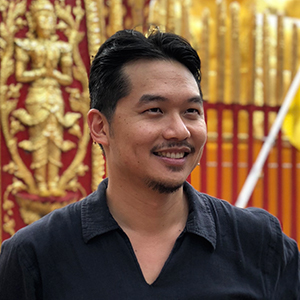
[00:00:10] Ray Latif: Hey folks, thanks for tuning in to Taste Radio, the number one podcast for the food and beverage industry. I'm editor and producer Ray Latif, and you're listening to episode 204, which features an interview with Vincent Kitirattragarn, the co-founder and CEO of Dang Foods. Just a reminder, if you like what you hear on Taste Radio, please share the podcast with friends and colleagues. And of course, we'd love it if you could review us on the Apple Podcasts app or your listening platform of choice. Best known for its sweet and savory coconut chips, Dang Foods was launched in 2012 by brothers Vincent and Andrew Kittaratragarn. Self-described as an Asian-American snack brand, Dang's portfolio also includes Thai rice chips and a fast-growing line of keto-certified snack bars that are made with Asian-inspired flavors. The brand is represented in over 13,000 retail locations nationwide, including at Kroger, Target and Whole Foods, where its bars are the top-selling brand in its category, according to Dang. In the following interview, I spoke with Vincent about the company's origins and how the brand positioning has evolved over the years. He also discussed how Dang communicates the brand story across its product lines, why he keeps a tight grip on its innovation strategy, and the company's relationship with investment partner Sonoma Brands. Hey folks, it's Ray with Taste Radio. I'm on a call with Vincent Kitirattragarn, the CEO and co-founder of Dang Foods. Vincent, thank you so much for being with me.
[00:01:34] Vincent Kitirattragarn: Thanks for having me and great pronunciation of my last name.
[00:01:36] Ray Latif: Thank you very much. I got it on the first try this time. In prior occasions, I've butchered it just terribly. So thank you for putting up with me.
[00:01:44] Vincent Kitirattragarn: Yeah, practice makes perfect.
[00:01:46] Ray Latif: Indeed it does. A very interesting week for the natural foods community. This was the week that Natural Products Expo West 2020 was to be held. The show was postponed. How are you kind of navigating your way through this week?
[00:02:00] Vincent Kitirattragarn: Yeah, it was a really interesting last few days. You know, you saw a lot of retailers drop out on Friday. Over the weekend, a lot of brands started dropping out. And then a ton of people started putting pressure on the organizers to cancel the show, which they did. I think that was the right move. I think if the show had gone on, it would have been kind of a sad shell of what it normally is. So we'll see when it gets rescheduled. You know, we were excited to launch new packaging. We had a new booth. We have four new products to show, but we will still move on as far as showing that to our customers.
[00:02:31] Ray Latif: Yeah, it seems like some of the younger brands, some of the early stage brands were most affected by the decision to postpone the event or the fact that they might not have been able to exhibit at the show even if it had gone on. But you guys have been around for about eight years now, right?
[00:02:45] Vincent Kitirattragarn: Yeah, we launched in 2012. It's been eight years.
[00:02:47] Ray Latif: Yeah. So talk a bit about the origins of the company. How did you guys get started and why is it called Dang?
[00:02:53] Vincent Kitirattragarn: Yeah. So, I mean, you understand now why we didn't call it Kittaratragarn. It's hard to say. So how we started was, I had this thesis that Thai food hadn't really been pushed forward in the U.S. And that came from going to visit Thailand and my family there every year as a kid. And so I'd go over there and see, oh my God, look at all this stuff besides Pad Thai and besides mango sticky rice and all the sweet stuff that people in the U.S. love. It's like Thai-American food. So it really came with this thesis that Thai food hadn't been moved forward in the US and tried a bunch of things, including working at a restaurant and food trucks. And I ended up doing a pop-up restaurant in San Francisco. It was at a nightclub. And at the time, I had seven roommates. And they allowed you to actually cook in your house. You didn't have to get a commercial kitchen space, which was really nice. So I started making Thai-American dishes. And my first one was chicken satay. It did really well. And the second one was called Mien Kum, which is a Thai lettuce wrap from Northern Thailand. My mom said that when she was in college, she used to run out of class and go to the Mien Kum stall and then go buy it every day. And so she gave me this recipe, wrote it up on an index card. It has lime, it has young ginger, it has toasted coconut. And she was like, you can't buy the toasted coconut in the store, so you have to go buy regular coconut and then toast it yourself. So I did that. And in my seven-bedroom, seven-roommate house, all my roommates started coming out when I started toasting the coconut and saying, oh my God, what is this? It smells really good. And they started eating it right out of the pan. That was when I was like, oh, this is interesting. You know, people like eating toasted coconuts straight up. And so I called some family in Thailand, they got some samples and we tasted them and talked to some manufacturers, had them send over samples. And we actually launched at Expo West back in 2012.
[00:04:34] Ray Latif: And you named it Dang after your mother?
[00:04:36] Vincent Kitirattragarn: Yes, so Dang is my mom's name. She's the one that gave us the recipe and we kind of, you know, did it as an homage to her. It also means red, the color red in Thai, which is a lucky color in a lot of Indian heritage. And then it's also here, it's a euphemism for damn, right? So everybody here, like our tagline is dang, that's good. And one thing that people say when they eat our products pretty often is, oh, dang, that's good. So it works really well.
[00:05:02] Ray Latif: Now, Dang has undergone a few iterations in terms of its positioning over the years. Its current one, which you recently unveiled, is that of an Asian-American inspired brand.
[00:05:13] Vincent Kitirattragarn: Sure. So current positioning is Asian-American snacks really. Nobody else has the positioning. I would say that as a brand what we do want to stand for is heritage. So we're taking flavors and ingredients from East and Southeast Asia since that's where our family is from and bringing them to the U.S. in healthy and familiar formats. And if you look at Asian food culture it tends to be three things plant based tends to be low sugar and tends to be Whole Foods based. Right. If you look at the American diet tends to be higher meat consumption, higher sugar content, and then very processed. So we're really trying to say, hey, Asian food culture, there's a lot going on there. It's been 5,000 years of culture that's in our food and ancient wisdom. And so we want to bring more of that to the U.S. in a familiar format. So when we launched, we want to communicate, hey, this is a natural, healthy, tasty snack, right? We also didn't want to get pigeonholed into the Asian area. of the store because it's less traffic. So we always said from the beginning, hey, this is going to be a brand that's very accessible, that any American can understand quickly what it is and how to eat it. And so, you know, we decided to make a little bit more, like, you know, healthy, natural type of packaging at the beginning. So, you know, it took a bunch of soul-searching, and I also think the timing is great, given the success of movies like Crazy Rich Asians and Parasite, and I think there's a lot of pride going on in the Asian-American community right now.
[00:06:38] Ray Latif: It's interesting, when you and I talked prior to this interview, you described the Asian American consumer as, quote, the perfect consumer when designing a brand. Why is that?
[00:06:48] Vincent Kitirattragarn: Yeah, so some statistics, Asian Americans, 20 million of us, that's 6% of the U.S. population, right? It's the highest income consumer. It's the highest education consumer, right? They have the highest levels of education, most likely to be organic eaters, most likely to be vegetarians. And nobody's speaking to that consumer. There's typically American brands and then there's typically Asian brands. But when you put the two together, you see a lot of success as far as restaurants go and speaking, using food as that language, that lingua franca. But almost no consumer brands are targeting this group. It's a very tech-savvy group. You get a lot of information online. You see social media use is extremely high in that group. So when you look at a consumer and when we looked at our consumer we were like oh we actually index the highest with Asian-Americans of all heritage groups so we were like hey nobody's really speaking to this consumer right now and this is this positioning is something that we can fully authentically own being you know Asian-Americans that were born here. So we were like hey you know there's an opportunity here to take a position and say hey you know first off one of the community we are Asian-American and then we can speak to you in a way that you know is very culturally specific in ways that other brands cannot.
[00:08:02] Ray Latif: Do you think your current positioning could have existed when you first launched?
[00:08:05] Vincent Kitirattragarn: I like to think that yes, it could have, but I don't know if we would have grown as quickly. So, you know, I think our intent was, you know, we launched with coconut chips and at the time coconut was doing great, right? So there was a huge growth of interest in coconut water and coconut oil. And that's how we spoke about our coconut chips. We were like, hey, you know, it's got all the health benefits of coconut oil, healthy, tasty snack. And, you know, the colors that we had in our original packaging are all very coconutty, right? So there's like light tans and browns and greens. And so, you know, I really liked our original packaging because it did kind of showcase that healthy, natural, tasty positioning. And it reached a lot of people. And, you know, it was not mistaken for an Asian or Asian-American snack. And it helped us grow pretty quickly. And I think now, you know, I would like to think that media and culture is like caught up. And so, you know, I'd say that there's a lot more of like wearing who you are on your sleeves now than there was back in 2012.
[00:09:00] Ray Latif: What's been the most effective way of communicating your ingredients and your products to a consumer who is not familiar with either?
[00:09:08] Vincent Kitirattragarn: Yeah that's a good question. So if you're not familiar with something like coconut or sticky rice we want to minimize the amount of work it takes to get there. So first off as being a snack company there's no preparation needed. You don't need to eat anything refrigerated anything. It's all shelf stable. You know it's very easy to open bag pop it in your So that's number one, right? Number two is we do have to do a lot of education as far as, you know, how you eat the product, when you eat it, like what's the eating occasion? That's always a big question that we ask ourself, you know, what do you substitute it for? So, you know, what are you not eating instead of eating coconut chips and rice chips? We are changing the name of our formerly sticky rice chip line to Thai rice chips because a lot of consumers are actually mistaken that sticky rice chips are going to be sticky, whereas sticky rice is something that's a staple in Northern Thailand, Laos, Cambodia. And it's not actually sticky, especially when we treat it. The way we treat it is we crisp it up and it's not sticky anymore. So we learn things like this. Americans don't know that sticky rice isn't sticky necessarily. And so that's why we have to change the name in order to make it a little bit more accessible.
[00:10:36] Dang Foods: Tune in at the end of this episode for an exclusive interview with Matt Lin of Belay Solutions. He sits down with Melissa Traverse to break down the biggest inventory and accounting mistakes CPG founders often make. You'll learn how to bring clarity to your numbers so you can scale with confidence.
[00:10:54] Ray Latif: Let's talk a little bit about the evolution of your portfolio because you started out with coconut chips, expanded into sticky rice chips, now Thai rice chips. You know, how do you think about introducing new products within the focus of being an Asian American brand or a maker of Asian American snacks?
[00:11:13] Vincent Kitirattragarn: Yeah it's a really good question. You know how we do innovation. It's good. It's a central question I guess for any company any brand. So you know we start with a couple of things. We start with you know what do we have license to go into as a brand or a snack company. We only do shelf stable stats. So you know we're likely to stay within that in that category. That being said, you know, we do a lot of data crunching and we want to understand where there's big opportunities. So, you know, after we did sticky rice chips and coconut chips, we looked at the bar category and we're like, oh man, there's a huge glaring hole right now for, you know, high-fat, low-carb snacks in the bar set. And the reason we knew this, because We had a coconut chip. We have a coconut chip with no added sugar. It's unsweetened and That was our loudest consumer champion right there. They were saying oh my god this, you know I can't find anything that's low sugar and has healthy fats and I want you guys to make more of this stuff So that's how we ended up looking at the bar set and after looking at it, analyzing and saying, hey, you know, we can go in there as long as we have, you know, our Asian American ingredients and flavors, then, you know, that's, that's why we ended up going to the bar set. But I would say first off is looking at the brand guidelines and like what you can go into. And then secondly, you know, looking at categories, category size, especially is really important of, uh, you know, how big is the category, how big is the pie that you want to, you want to take a piece of. I think all that's super important when you're looking at, okay, where do I innovate strategically? What direction do you take your company in?
[00:12:46] Ray Latif: When you say category size is really important, are you talking about category size as in it's only worth it if the category is big enough?
[00:12:54] Vincent Kitirattragarn: I would say that category size like there has to be a big enough pie for you to have to be a significant part of your business. But then also the competitive dynamics are really important as well. So is there a major player. Do they have a big weakness. Right. Now what are all the niches. What are people going for that set or so for nutrition bars just thousands of nutrition bars meeting all kinds of needs. Right. But is there something that's missing in that set right now. And that's why we launched our product. And it was actually our dang bar is the number one selling bar at Whole Foods last year in terms of unit velocity. So we launched in January 2019. We saw initial numbers were great. Right. We're selling like 30 40 units a store. And we were very surprised when it stayed that high even throughout the year. So We were like, Oh, we could get a piece of this. And we wanted to, uh, to extend out into different categories. And so that one was the one that stood out to us.
[00:13:49] Ray Latif: Now we live in an era where consumers are sugar averse or at least reducing their sugar consumption pretty significantly. Uh, how does that factor into your product development? How does that factor into your product strategy?
[00:14:06] Vincent Kitirattragarn: Yeah, good question. So, you know, one thing that we actually saw when we looked at the Asian American community in the U.S. was there's a really high level of diabetes. So Asian Americans are about twice as susceptible as the average American to develop diabetes and about half as likely to have it be diagnosed. So they often go undiagnosed. And so we said, hey, if we're really going to speak to this community, what can we do to actually improve the health over the long term? And part of that was creating sugar-free or low-sugar products. And so our Dane Bar, 2 to 3 grams of sugar, nothing added, no added sugar to it. That was one way we wanted to do it. We're also working on lowering sugar levels across the rest of our line. So some of our coconut chips at this point do have added sugar. They're either coconut or cane sugar. And we're setting the goal to lower it by 50% by 2021. That's kind of been in the hopper. And, you know, that's something that we can do and say, Hey, you know, this is a community that's being affected by diabetes. You know, we want to be a part of the solution.
[00:15:05] Ray Latif: One of the interesting things you mentioned when we were talking prior to this call is that you said too many steps forward and the customer gets lost. So how many steps was too far for you? I mean, I guess when you're mapping this thing out, were there any steps that you said, no, we can't go this far because the consumer won't understand it.
[00:15:25] Vincent Kitirattragarn: Yeah, for the bar line, it's kind of, I'd say for the bar line, it's flavors. Like you don't want to get way too esoteric with flavors. Most bar buyers want chocolate, want peanut butter, want birthday cake. They want like those indulgent things that they can't eat, right? Because they're on whatever keto, paleo diets, right? And so if you go way too esoteric, like if I launched a pandan flavor or a seaweed bar, that would just go over people's heads, right? They would just go back to what they're used to. So you can't go too wide I would say. But it definitely depends on the category. So you know if you look at something like coconut chips and rice chips it's already a leap in someone's mind to go and buy a coconut chip if they're not used to that. Then it would be two leaps if you went and said OK let's do a coconut chip with gochujang like a sweet Korean sauce on it. A lot of people don't know what that is and it's one of those more esoteric flavors that isn't mainstream yet. However if you do a rice chip and you're like hey this is sriracha it's not that far of a leap for someone to imagine what that tastes like right. I know what rice tastes like. I know what sriracha tastes like. So you know we call it living between Asian-American like we're right there in the middle. And if you go too far in one direction, then you get lost or you lose the consumer, right? But that's kind of like our competitive advantages. We live between these two worlds, Asian America, and we know how to balance and we kind of go between them. And we know like, hey, if you go too far in one direction, you're going to lose somebody.
[00:16:47] Ray Latif: You live on the hyphen between Asian and American.
[00:16:50] Vincent Kitirattragarn: Yeah. Yeah. We live right there.
[00:16:51] SPEAKER_??: Yeah.
[00:16:52] Ray Latif: When it comes to your innovation strategy, who are the key players in your company? Because I'm sure there's so many different voices that are out there and so many ways you can go. Ultimately, who determines the direction of your product strategy?
[00:17:08] Vincent Kitirattragarn: Yeah, so I spend a lot of my time on innovation, and I work with a number of consultants, food scientists, manufacturers, and I also work with people internally who help me with ingredient procurement. I still spend most of my time, I would say, on innovation. I do think that it's important to have an innovation lead and you can have a group of people that are helping vet the ideas, but I do think it's important for one person to have the vision of where the innovation pipeline for the next five or 10 years. Because if you do have a group that just says, okay, we're going to do this together, what you're going to end up with is a committee and you're going to end up with a you know, the average of everybody's input. And, you know, the average really doesn't ever delights people in the way that somebody with a strong vision can. So an example of this, you know, Mondelez launched a snack product called Via or Vaya. And they wanted to be, you know, a world inspired product. And then, you know, they were launching it in different markets around the world, from the US to China, India. I think it lasted less than two years and they just were trying to please way too many people, right? Big company like Mondelēz needs it to be a big success, but it ended up getting lost down there. So I would say that, you know, it's important to have really, really, really strong belief. And I think you should get excited by your own innovation. Like if you're not super excited about it, you got to ask yourself, does it still deserve to exist? Because you're going to be the one selling it in. And if you're not super excited about it, how are you going to sell it into people? I don't know. I try to look at innovation as a huge opportunity for most companies. It's always been one of our biggest growth drivers here at Tang, and it's something that I really enjoy doing.
[00:18:47] Ray Latif: How far in advance do you plan out your innovation pipeline? As in, are you thinking about launching new products at Expo West 2021, 2022?
[00:18:56] Vincent Kitirattragarn: Yes, we already have products that we're working on in the pipeline for the next couple of years. And then we've already mapped out which direction. Do we want to stay in the same category? Do we want to branch out into different categories? We've already mapped that out over the next, I'd say five years.
[00:19:10] Ray Latif: Do you feel like that's typical of the industry or is that something that's sort of unique to your situation, to your brand?
[00:19:16] Vincent Kitirattragarn: I don't know. You know, I think you can ask the other brands out, but I think it's important to have a vision and a product pipeline. You know, I think it's important to be able to show that to potential investors, potential acquirers and say, Hey, you know, this is what you can do. If you take this business on this brand, these are the different areas you can take it in and kind of have it all set up. And if you have that already prepared, like if you actually have prototypes, if you actually have manufacturers set up and figured out all the details, like the pricing and the food stability, it's like, Hey, you're folks down the road.
[00:19:49] Dang Foods: Do you want more repeat buyers on Amazon? Well this free resource in collaboration with Straight Up Growth will help your brand turn first-time buyers into long-term subscribers. Download Winning the Repeat Purchase Game on Amazon now at Taste Radio slash SUG. That's Taste Radio slash S-U-G to start building retention-driven growth for your brand on Amazon. Scaling a beverage brand into major retail comes down to operational readiness. From packaging lead times to co-manufacturing strategy, the details can make or break a launch. In a new e-book in collaboration with Octopi and Asahi Beer USA, industry leaders share what they've learned in helping brands scale. Download it now at Taste Radio slash octopi. Do you need to scale your team faster without compromising on talent? Join Oceans for a live webinar on April 20th and learn how leading companies are hiring top global professionals who are ready to grow with your business. Register for the webinar now at Taste Radio slash oceans. That's Taste Radio slash oceans.
[00:21:00] Ray Latif: It's helpful to have good advisors to map out that plan, that roadmap. And you guys have a pretty powerful partner in Sonoma Brands, which is led by Jon Sebastiani, the founder of Krave Jerky, of Smash Mallow, and other brands as well. When did that partnership come to being?
[00:21:20] Vincent Kitirattragarn: Yeah, so Sonoma Brands called us back in, I think we We probably started talking in late 2015, which was, I think, around the same time, like right after they sold CryptoJerky. And, you know, John called us and told us what he was doing with as far as trying to keep his team together, raising a fund. So we were part of the first Sonoma Brands fund. Yeah, we kind of hit it off right from the start. You know, we love how hungry he is. He's really, really strategic and is always aware of what's going on in the marketplace. And when I say marketplace, I mean M&A marketplace within the industry. So he is very aware of the appetite and what big brands are looking for in Sonoma Brands and what trends are people banking on now. So I would say he brought a lot of data and strategic value today as one of our board members.
[00:22:10] Ray Latif: Is it hard to stick to your guns when you're talking to someone like John? Cause he's been there, done that and continues to do it so well. Let's say you are steadfast in your belief about one particular part of your strategy. And he's like, look, this is not the way to go. I mean, how does that conversation play out?
[00:22:26] Vincent Kitirattragarn: Yeah, I think not him in particular, but I think, you know, when you have a board of directors, typically board members are older, experienced and bring a lot of, you know, knowledge to the game. But I do think that, you know, as a founder and entrepreneur, you have to really stick to what you believe in. Right. And so I'll be honest, there was some controversy over whether or not we should launch a bar. Right. And so they're like, hey, the bar is a new category. It's super competitive. You know, you have your coconut chips and your rice chips like that's already a lot to deal with. But I knew that there was a consumer need that I wasn't being met. I knew that we could fill this need. And, you know, luckily I knew that I stuck to my guns and I was like, hey, listen, we need to do this. And, you know, last year we grew 54 percent. A lot of it was from the bar, became the number one bar at Whole Foods last year. I'm very happy that I stuck to my guns and I'm very, it taught me a big lesson in really in leadership and standing up for what you believe in.
[00:23:17] Ray Latif: So sticking to your guns when it came to the snack bar, it seems taught you quite a bit about confidence and confidence in your leadership. How else has your leadership evolved over the past eight years?
[00:23:27] Vincent Kitirattragarn: Yeah, that's a good question. You know, when I, this is the first company I started, I would say bring my, my brother was the first employee and he brings a huge, a huge value to the table. Like, you know, we're very different. He's very, um, he, he's a CP as a CPA background. So, He's really good with running the day-to-day, really good with finances, runs our team really, we run a very tight ship. And we've always been very lean, I would say, probably more so than most companies. We've always really been focused on costs. And part of that's probably Asian upbringing and always being aware of like, hey, we don't want to waste money. So I would say leadership style, though, there's a few things that I've learned along the way that really help out. So one way that we guide the culture here at Dang is through core values. So we work with a coach to help us identify those is things that we do that are very different from other companies. And part of that was interviews with our employees. We asked them, hey, how is anything different than other places you've worked? And then part of that is just internal soul searching. I'm like, hey, us as a company and the founders, what are you doing that's different than other folks? And so we have five core values. First one is work smart, which is basically, hey, we want to work smart, not necessarily hard. We want to use data to make the right decisions so we're not scrambling around trying to push everything uphill. So that's one thing, you know, clarity is very important. Everyone should know their roles, what's expected of them, who to go to for information. It's nice to know what's expected of you when you come to work every day. We have safety, and that's specifically psychological safety. So we think that people can only, you know, fulfill their potential if they feel psychologically safe and feel like they're not going to be punished if they fail. We have play so we think that it's important to keep things light and we have like daily lunches here in the office with everybody gets together and we don't talk about work and you know that's generally a very light nice conversation that we have with the whole team and everyone from me to you know our interns all eat together. And the last one's modesty. We want to make sure we don't get too full of ourselves. And I like to use a term where we like to be cautiously optimistic. So we always plan for success and then prepare for the worst if that doesn't happen.
[00:25:38] Ray Latif: Now, Vincent, you and your brother are the co-founders of Dang Foods. And, you know, as this industry that we participate has evolved over the past decade, we've seen more minority leaders, minority entrepreneurs entering the business, more female entrepreneurs entering the business. There's still a question of whether or not the natural foods industry is as inclusive as it could be. Do you see it that way? And what are some of the ways that we can improve that perception?
[00:26:04] Vincent Kitirattragarn: Yeah it's really a great big issue and you know when I started there weren't a lot of people at Expo West that looked like me and I'm glad now that there are. I'm also glad like you know I think we are new positioning as Asian-American being an Asian-American snack brand. I think we'll hopefully inspire others to say oh you know there's a company doing this and I've never seen that before. It's only been restaurants that have really like make me feel seen. So I'm hoping it'll inspire another cohort of folks that can say hey we can leave with heritage and be proud of who we are and put it on package as well. So, you know, at Expo West, we were planning on launching the Jedi Collaborative, which is a group that I'm part of. It's an industry group focused on justice, equity, diversity, and inclusion. I'm on their working group. And really, there's a couple of big focuses that we have. First, we want to measure the amount of underrepresented minorities, measure the amount of LGBTQ women and disabled on leadership and board levels across the industry. So that's the first thing is like an industry survey, which we've already done. And then we want to get commitments from companies to up those numbers. And then we want to revisit that in five years 2025 and see how far we've come as an industry. So it's very simple. Measure what you're doing set a goal and then measure if you made progress. And so I'm proud to be part of that. I'm also part of Asian-American groups like Gold House which are supporting not just Asian-American films but you know across media, and that's been a really fun for me to be part of as well.
[00:27:34] Ray Latif: So was the JANA initiative formed mostly to focus on issues of representation and the lack of representation of certain groups, certain ethnic and minority groups in this country, or did it have something to do with potential and unfortunately prevalent biases regarding certain minority groups, potentially like Asian Americans?
[00:27:54] Vincent Kitirattragarn: For me, there's a couple of things. First, having an industry that represents the actual makeup of the US will actually help from a business perspective, too. So how can you meet the needs of all the different groups and cohorts? I mean, America is a super diverse place, right? And how can you meet the needs of all those folks if the industry doesn't look like that? So I think it's actually going to help grow the industry in the longer term by being inclusive and bringing in people of different backgrounds. So that's number one. Secondly, as far as your question, stereotypes. And I do think people have come a long way. But I do think there's still a lot of misperceptions of like particularly when it comes with power and who's running companies. So I'll sometimes be standing next to a booth and I'll be talking with some folks and some people will come up to my VP of sales. It's like tall six foot three you know kind of big white dude from Texas and start talking to him as if he's the founder. And he's he's great. He always you know kind of brings him over to me. But there's a I think a unconscious bias is a big thing that we have to grapple with, right? And it may take a huge, uh, as a huge impact on hiring. So, you know, one thing that the Jedi group is doing is doing unconscious bias trainings. And so anyone who's responsible for hiring or, you know, basically responsible for interacting with people can understand, okay, these are some biases that I have. And then at least, you know, being aware of it is the first step to actually balancing it out.
[00:29:16] Ray Latif: Vincent, this has been such a great conversation. Thank you so much for taking the time. Even though we didn't get to meet up in person at Expo West, I have a feeling we'll have that chance at a future trade show or conference. And I look forward to it because Dang is a pretty impressive brand and it's been fun to follow its evolution.
[00:29:33] Vincent Kitirattragarn: Thanks for having me.
[00:29:37] Ray Latif: That brings us to the end of episode 204. Thank you so much for listening, and thanks to our guest, Vincent Kitirattragarn. You can catch both Taste Radio and Taste Radio Insider on Taste Radio, the Apple Podcasts app, Stitcher, Google Podcasts, and Spotify. As always, for questions, comments, ideas for future podcasts, please send us an email to askatasteradio.com. On behalf of the entire Taste Radio team, thank you for listening, and we'll talk to you next time.
[00:30:16] Whole Foods: Hello, I am Melissa Traverse here for the Taste Radio podcast, talking about some of the biggest tension points that CPG brands and founders face when they're scaling a brand, and those are financial accounting and inventory management. I am joined by Matt Lynn, inventory accounting guru from Belay Solutions, and he is going to shed some light on all of this that is going to help everybody out quite a bit. Matt, thank you so much for joining us today.
[00:30:46] Sonoma Brands: Thank you for having us, Melissa. It's great to be out here at Expo West and it's great to sit down and be able to chat this because it's kind of a passion project of ours, working mainly with CPG brands and hoping to help them scale.
[00:30:58] Whole Foods: It's been such a pleasure chatting with you and the team and learning all about what you do over there at Belay Solutions. Can you tell us a little bit about yourself and what your role is and the kinds of solutions that Belay gives to CPG brands and founders?
[00:31:14] Sonoma Brands: Yeah, absolutely. My role with Belay, I'm actually our inventory accounting manager. I run our inventory department, so we work with CPG brands, taking them from spreadsheets, putting them on inventory management systems, and really helping connect their tech stack between their sales online marketplaces to that inventory management system, even down to their financial systems like QuickBooks. Belay overall is kind of an outsourced accounting firm. And with that, we're helping teams. We have different levels with bookkeeping, controller level work, even high level into CFO type items. So we really help those brands in any way that they need financially. And then I just have a subset of a department where we're really just laser focused on inventory.
[00:31:56] Whole Foods: It's certainly a complex topic and there are plenty of places to go wrong. Let's start by going right and start super simple. Can you tell us what some of the biggest red flags are that would help a founder understand or, you know, the person running a brand understand that it really is time to get some help with some of these areas?
[00:32:17] Sonoma Brands: Yeah, absolutely. I think some of the early red flags is just everything is chaos. So when they're looking in their financial software, maybe they don't really have an accounting background, and they're kind of just piecing it together and doing their best. And what they'll see is that reconciliations take forever, if they even happen. They have a lot of transactions that don't get coded, or they just put them into placeholders to just get rid of it so it's not an eyesore. they'll notice they have revenue but no cash or they notice that they have a good amount of cash but their blind spot is really seeing the vendor invoices that are sitting there just needing to be paid and so they just lack that clarity that's going to really be around the corner.
[00:32:54] Whole Foods: You know, you were talking about one of the red flags that comes up that I think makes so much sense. When somebody asks you what your numbers are and you can't come up with the right number, that's a big problem because that's something that you really should be able to share with decision makers who, you know, you're ideally looking to do business with. What should you be able to call up at a moment's notice?
[00:33:19] Sonoma Brands: really at any time you should be able to know an accurate margin. It's amazing how many founders we end up talking to that they can tell you their revenue numbers, they can tell you their selling price, and then the minute you start talking about cost or their cost of goods sold, they just get a deer in headlights look. So really it's very hard to tell, am I even making money? Or if you don't know your entire landed cost. Maybe you know what the freight cost is, the duties separately, but you're not really getting that as part of your unit cost. So it's really hard to tell. Am I even making money or am I losing money from the very beginning?
[00:33:51] Whole Foods: And do you recommend that founders are able to call up a margin by channel?
[00:33:56] Sonoma Brands: Absolutely. And depending on the number of products and channels, you kind of want to know what are your best sellers, which ones are making the most and which ones maybe you're not making as much. But especially if you're branching out and you're doing D to C with B to B, absolutely want to know that.
[00:34:13] Whole Foods: Gotcha. You mentioned that when things feel really chaotic, that's probably a red flag. I would say that it probably almost always feels chaotic if you're running a CVG brand. And I know this may be hard to quantify, but is there a revenue number? Is there a number of doors number that would help a brand understand whether or not it makes sense to bring on a partner like Belay? Understanding that so many brands are bootstrapped or they might be tight for cash. What is that friction point?
[00:34:43] Sonoma Brands: 3 3 3 3 But as you're growing, as you're getting to those six-figure revenue numbers, and especially as you're approaching seven, you want to make sure you've got good financials. Because as you scale to that point, most likely you're going to be looking to raise capital. And investors, the first thing they're going to look at is your books. And are they clean? And do they show a clear picture of your business?
[00:35:16] Whole Foods: You know, another area that folks might look to to organize some of the chaos are their systems. So many folks stick with Excel spreadsheets for a good amount of time. How do you know that you need to outsource some of your accounting to an organization like Belay Solutions versus maybe signing on to a Synth7 or NetSuite or something like that?
[00:35:39] Sonoma Brands: Well, that's actually something we really help with. You know, when it comes to that cost question, that's something that trips people up. And sometimes if you just have a turnkey business, you buy and sell a finished good, you can maintain with spreadsheets. And we've had clients with million dollar revenue that can do that. But we see so many brands nowadays are using contract manufacturers. and they're just sourcing certain parts of their product. So when you start talking costs, they have no idea exactly what their unit cost is. So that's where we come in and we kind of understand, we'll speak with the customers and the clients and get their needs. And then if we think they're ready for a system, then we'll help put them on that system so they can get some of that clarity. And it's not something we force on anybody. There are plenty of times where founders come to us and we'll tell them bluntly, you're not ready for it right now, but we'll let you know when we think you are.
[00:36:25] Whole Foods: That sounds like excellent advice. What should a founder or somebody running a brand look for in an outsourced accounting partner? Are there certain checklist items that they should make sure that their partner be able to execute or be able to help them understand?
[00:36:42] Sonoma Brands: Absolutely. I think one of the keys there's, there's a lot of outsourced accounting firms out there. Some focus on service-based SaaS companies, but if you're a CPG founder, you really want to make sure that your accounting firm has CPG experience. I would ask them, you know, what kind of brands have they worked with? And even beyond that industry specific, because there's so many subsets of CPG. And that's something that I think is great about what we do with Belay is that we kind of run the gamut. It's kind of like the insurance commercial. We know a thing or two because we've seen a thing or two across a broad spectrum.
[00:37:11] Whole Foods: Probably getting references is always helpful, right? Absolutely. All right. So this all sounds great. I think we have a really good understanding of would it make sense to hire an outsourced partner? You know, what some of the things you should be looking for are. What does offloading this kind of work mean for the brand? What can this do for lightening the load of a founder or lightening the load of a brand operator? Like, how does that help them in their everyday business?
[00:37:41] Sonoma Brands: It just tries to really help quiet the chaos. So what we're looking to do is just take some of the weight off that founder's shoulder, let them focus on building the brand, building the business, getting that exposure. If you don't have sales, you really don't have anything. So we want them to be able to focus on that while we take care of your back end office work. And we can just present that to you on a monthly basis, you can help make decisions, you can take that to investors. And really, you can just focus on growing your business.
[00:38:06] Whole Foods: I feel like I felt founders and the folks who are running brands collectively sigh. A breath of relief just hearing that. How can people learn more about Belay Solutions?
[00:38:17] Sonoma Brands: So people can text TASTE to 55123 for their free inventory guide to get started.
[00:38:23] Whole Foods: Matt Lynn, inventory accounting guru at Belay Solutions. Thank you so much for joining me here at Expo West. It's been such a pleasure to chat with you and learn about what you all do over there to help founders and brands with their financial accounting and inventory management. For everybody else out there, thank you for listening to the Taste Radio podcast. I am Melissa Traverse and we'll see you next time.