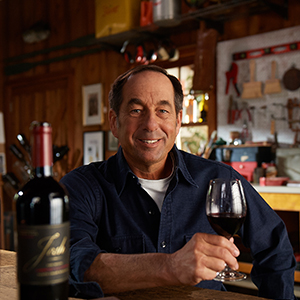
[00:00:10] Ray Latif: Hey, everyone, I'm Ray Latif, and you're listening to the Top Podcast for the food and beverage industry, Taste Radio. This is Episode 227, which features an interview with Joseph Carr, the founder of top-selling premium wine brand Josh Cellars and Joseph Carr Wines. Just a reminder to our listeners, if you like what you hear on Taste Radio, please share the podcast with friends and colleagues. And of course, we'd love it if you could review us on the Apple Podcasts app or your listening platform of choice. In a conversation prior to my interview with Joseph Carr, he described entrepreneurship as a fine line between courage and stupidity. Although he admits to being more on the latter side, given the massive success of his wine brand Josh Cellars, it's hard to argue that he hasn't been on the right side. He'll also admit, however, that he had to work harder than anyone to get his company to where it is today. Over the past decade, Josh Cellars, which Carr launched in 2009 and named as a tribute to his father, has grown to become the number one premium wine brand in the U.S. and is projected to sell 4 million cases by the end of 2020. While Deutsch Family Wine and Spirits acquired the brand in 2012, Carr has continued to represent Josh Cellars as its founder and steward, along with that of sister company Joseph Carr Wines, a producer of handcrafted, European-inspired wines. In an interview included in this episode, Carr spoke about how diligence and self-education were critical in turning his passion into a career, and why he left behind a lucrative and cushy job to launch his own company. He also explained why he defines hard work differently than most people, and how Josh Cellars has articulated positioning that is both premium and accessible. Hey folks, it's Ray with Taste Radio. I'm on a call right now with Joseph Carr, the founder of Josh Cellars and Joseph Carr Winery. Joe, how are you? I'm great.
[00:02:04] Joseph Carr: I'm doing really well, despite being locked in my house for the last four months.
[00:02:10] Ray Latif: Well, like they say, you're not alone. We're all in this together. But I have a feeling you have some pretty good wine to get you through the days.
[00:02:19] Joseph Carr: Yeah, I did an inventory, and I think I can probably make it two years if I have to. I might have to cut back a little bit, but yeah, I got a good two-year inventory.
[00:02:30] Ray Latif: Okay. I have to ask, because you brought it up, what does a two-year inventory look like? Oh, for me?
[00:02:37] Joseph Carr: About, well, it's two bottles a day. So multiply that times 365 times two. That's again, that's cutting it close. It's cutting it close.
[00:02:53] Ray Latif: Wow. Very cool. I wish I had a seller like that. You know, when we spoke the other day, I was surprised to learn that you live in Cape Cod. I would have thought you'd be calling from Napa Valley or the central coast of California. What brought you to Cape Cod?
[00:03:08] Joseph Carr: My wife and I, we were originally from, we lived in upstate New York, and my wife always wanted to live in Cape Cod. And the second our daughter went off to college, we sold our house and left a note for her saying we moved. to Cape Cod, which is where we started the company actually. The back office and everything was done in my garage. My wife and I shared a picnic table and a laptop computer, and I would go out to California and make wine.
[00:03:42] Ray Latif: Now you're talking about launching your company, but you had a pretty long career in the wine industry prior to doing so. Oh, yeah.
[00:03:49] Joseph Carr: I've, you know, I started working in French restaurants when I was 18 years old in upstate New York and then later in Florida and then back up to New York City and, you know, I started as a waiter and then became a wine steward and then eventually became a sommelier, which I was very young. I was 23. when I became a sommelier working for Hyatt Regency Hotels in Tampa. So I did that for 10 years and then I got my first job working for a winery and then I spent the next 10 years traveling all over the world working for wineries from Spain and Italy and France and eventually Australia. So yeah, I've had a very long, very long career and got to experience a lot of just wonderful things.
[00:04:39] Ray Latif: It's interesting because if one follows the footsteps of their parents or their father, in your case, you might be a lumberjack.
[00:04:49] Joseph Carr: Yes, I would. I would be driving a Peterbilt truck and carrying a steel or home light chainsaw and driving a bulldozer in a pickup truck. Because that's how I grew up. You know, I grew up in a lumber mill town in the Taconic Valley, which is just at the base of the Green Mountains of Vermont and the Adirondacks. And yeah, my dad, whose nickname was Josh, was a lumberjack.
[00:05:17] Ray Latif: Amazing. You named the Josh brand after your father, who, as I understand, was not the prototypical wine consumer. But talk to me a bit about how he influenced your perspective in your work career and later as an entrepreneur.
[00:05:32] Joseph Carr: Well, you know, my dad, I mean, everybody, I guess, you talk about this thing called the American dream, and I've seen it in a number of different places. I saw in Napa Valley when I went out there when I was 18. I hitchhiked to California when I was 18 and I wound up in Napa and I saw these people who came from places, I mean I think today one might dismiss them as immigrants, But they were families coming from places like Italy and France and Spain, following their own American dream, and brought their culture, their winemaking, their culinary skills, and some of them brought their own grape vines. So, you know, that was a big influence on me. And my father, you know, in his own right, you know, he came out of the Army, you know, post-Depression baby. He quit school when he was 17 because his dad had died, so he had to go work on the railroad. And he worked on the railroad, worked for lots of different people. And then, you know, when my sister and I were born, he just said, my dream is to work in the woods, you know, to be a lumberjack and work for myself. And that's how I knew him. But with that comes, you know, a great deal of commitment and working six days a week, you know, half a day on Sunday after church, you know, working in his garage on fixing his chainsaw and his equipment. You know, when you see that type of blue collar work ethic, or that work ethic for that matter, it influences you and you don't think of approaching a business in any other way. I mean, how could you?
[00:07:09] Ray Latif: I feel like your dad and my dad would definitely understand each other as people, because when we spoke earlier this week, one of the things that really struck me is you said, I grew up in a place where if you don't work, you don't eat. That really resonated with me.
[00:07:25] Joseph Carr: That's true. That's actually something my grandmother used to tell me. If I was lazy, she'd say, you know, if you don't work, you don't eat. There's another part of it, but I can't repeat it. But yeah, my grandmother worked in a tannery for 40 years.
[00:07:45] Ray Latif: Oh my goodness, that sounds like a pretty difficult job, I guess, for lack of a better word.
[00:07:51] Joseph Carr: Yeah, she was great. Her name was Goldie and, you know, she was kind of a flapper in the 20s. And then, you know, she married a man who worked in a lumber mill and she worked in a tannery.
[00:08:03] Ray Latif: Well, it sounds like your dad kind of enjoyed his life as a lumberjack, but most people I think have a passion in their lives and that passion almost has nothing to do with their livelihood. Your passion, however, became wine and it's been your career for most of your life. Hitchhiking to California at age 18, did you know that wine would be your passion? What were you looking for at the time?
[00:08:27] Joseph Carr: Well, you know, I took a bus and I hitchhiked and walked a lot of miles and I carried Kerouac's book on the road and Steinbeck's wonderful book, Travels with Charlie, and my own notebook to write my own journey down. And, you know, I just wanted to see America. I'd never really been out of my hometown. So I just wanted to see another place. And wine fell onto me. I mean, I was sitting on a porch. having a glass of wine with this Family Wine was a long-haired kid. They said, come on up here. You want a glass of wine? You hungry? I mean, think about that. That was remarkable. And it blew my mind. And I remember having a glass of Cabernet Sauvignon. I mean, I was a kid that grew up holding a can of Genesee Cream Ale or Budweiser. And there was no wine in my family. It was, you know, you drank water or milk, then eventually you're old enough, you'd have a beer. And if you ever went into a bar, you'd, you know, you'd have a shot of Jack Daniels and that was kind of a macho blue collar thing. So to think that at that time that one day I was going to sip cool rosé on the porch was inconceivable.
[00:09:44] Ray Latif: It is inconceivable, but it sounds amazing. And it sounds like that moment had so much to do with where you're sitting today.
[00:10:15] of handcrafted: Vibrant Ingredients is the natural ingredient partner powering food and beverage innovation, delivering flavor, function, and protection through a science-backed portfolio. Vibrant delivers purpose-driven solutions that help brands create extraordinary experiences. Discover what's possible with Vibrant today. Visit VibrantIngredients.com
[00:10:42] Ray Latif: How did you graduate from being a sommelier to getting into the wine business as a salesperson?
[00:10:48] Joseph Carr: I was working in upstate New York at the Sagamore Hotel, which is an absolutely stunning property on Lake George. It was the middle of the winter, and Lake George is very lonely in the middle of the winter. I was like, I can't stand around this restaurant with nobody coming in anymore. It's going to drive me nuts. They had a job. These two guys came in from Chicago, and they were advertising for a sales rep. I went down. and talk my way into the job. I didn't have any experience in wholesale or distributors or anything like that. The guys really liked me because we told stories and they wanted somebody that could tell a story. I was good at that. It was a natural evolution to me. From that point on, I wound up going to wineries all over the world. I mean, it was an amazing journey to go to Milan and the Piemonte region and the Barossa Valley of Australia. It was fascinating, especially from where I came from, because that was just unheard of.
[00:11:53] Ray Latif: I wonder, I really do wonder, I mean, was your dad around when you were learning about wine and growing in the wine business?
[00:12:00] Joseph Carr: Well, no, my dad, I came home from school one day and I said to my father, hey, dad, guess what? I'm a Somalier.
[00:12:10] Ray Latif: And his response?
[00:12:11] Joseph Carr: Don't talk like that in front of your mother. But your mom, I'm sure didn't want you to be a lumberjack, right? No, she wouldn't let me pick up a chainsaw. That was like the rule. I could pick up the wood. If he cut it, I had to go pick it up, but I couldn't use the saw. There were too many people in our family that didn't have all their toes and fingers. Oh, geez. So my twin sister and I were the first ones in our family to go to college. I mean, it was really quite remarkable. And my mom really wanted me to take that chance. But yeah, it was different. It was a different culture, but your values that come from it is what carried me through. That's why we named it Josh. And my dad passed away when he was 59. I had just gotten my first wine job working for a company. I was going over to Italy for a little bit, and he put me on the plane. And then I came back and he, unfortunately, he passed away. So we never got to see this part of the journey. But my mom, who's 87, you know, she can go in a wine shop and see her husband's picture on a box and, and see his, his name. And the label, the words, Josh, that's my mother's handwriting. She practiced calligraphy and she wrote that down. And, and I use that as the label.
[00:13:33] Ray Latif: That's amazing. I never knew that. That's such a beautiful part of the story. Let's fast forward to you were in your thirties when you started in a job that you eventually became the president of the company you were working for. It only took four years from what you told me. How does that happen going from a sales rep to the president of the company in four years?
[00:13:56] Joseph Carr: Well, I looked around and I thought I was just as smart as anybody else in the room. And I'm not saying that was much, but I'm just saying I looked around and I knew the president of the company was going to go back to Australia and he was going to either bring somebody in from outside or hire the best guy there was. And I wanted to be that best guy. I wanted that job. I just thought I could get it. You know, I was in sports in high school and college. I was a, I was a wrestler and wrestling is a great sport when you're a little guy. Cause I was like only 126 pounds, but you know, it's you against somebody else. There was no cheating. You either got to win or you got to lose. I liked that proposition. And that's how I applied. I had to run more than the other guy. I had to lift more weights. I had to be smarter. I had to go to camp. I had to figure out how I could be better than that guy across the mat from me. And that was the attitude that I took. And I worked hard.
[00:14:58] Ray Latif: What did that entail? Because I'm sure there are folks listening who are salespeople who say, you know, I would love to be the president of the company I'm working for. How do they do it? I mean, what exactly does working hard and the other guy really mean?
[00:15:12] Joseph Carr: Well, I mean, if you really want to go to the top, one, you have to make a very personal commitment. to do that and hopefully you have people around you that would support you. My wife, I told her what I wanted to do and she knew that I was going to have to travel and I was going to have to work. It was easy to be in sales because you could work five, six hours a day, make your number and go play golf. Or you could work another six, seven hours a day and blow your number away. And I always benchmarked people. I tried to find the best in class in the industry and say, okay, how can I be like that? How can I get to that place? You know, why knowledge? was a big part of it. Understanding financials, a financial background, which I had none. I mean, I ran to the library and I got a bookstore and I bought a Harvard Business School MBA and Harvard Guide to Finance because I never took those courses in college. I was in arts. I didn't know what EBITDA was. I didn't know what a balance sheet was. I had no idea. So I had to find out the things that I didn't know I had to become fluent in, in a regard. I mean, I couldn't become an accountant, but I had to be able to talk to an accountant. And I also, you know, I was a wrestling coach. So if you can motivate a kid who's 16 years old, not to eat, to make weight, and to not fool around with his girlfriend, you have accomplished something few ever will. You know, go do 100 push-ups. Tell a 16-year-old to go do 100 push-ups. And I was able to do that. So coaching and finding people that believed in you and would do what you needed to have done, and that they were part of it, they were committed to that, they made it their own. That, I think, was the path that I got to that point.
[00:17:12] Ray Latif: Most people might look at your job as president of this winery and say, wow, he's got it made and he's got all the things he could possibly want. He's reached the pinnacle of his career. But you chose to walk away from that job.
[00:17:28] Joseph Carr: Why? Yeah, I know. I mean, I was president of this company and then there were mergers and acquisitions going on. But, you know, I was sitting in the front of the plane. I had a nice expense account. I was hanging out with Greg Norman, the golfer, playing golf with him. I was doing a lot of things that you just never could imagine. But I was miserable. I did not see the one person in my life which was the most important, and that was my wife. And then I missed my daughter's cross-country runs and proms. I think I missed one anniversary. I'm really surprised that I was married after that. So I started thinking about the next step, next chapter in my life. And I had an idea. It was a crazy idea, but I lacked two things, which were courage and conviction. And I didn't have that. And then one Tuesday, I was sitting here in Cape Cod on my way to Boston. And my wife was in upstate New York, and my daughter was a freshman down in college. And my wife called me and said, you need to turn on the TV right now. And I did, and that's when I saw the impact of the first plane on the tower. And then I saw the second plane hit.
[00:18:43] Ray Latif: I remember that Tuesday morning like it was yesterday. It's something that you'll never, ever forget.
[00:18:48] Joseph Carr: Well, I was on my way to Boston to see a man named Blake Allison. And I couldn't get through to him to tell him I wasn't going to make it. And I couldn't get through to him because his wife was on the first plane. Oh my God. She worked for TJ Maxx. And then I had, uh, four friends in the tower, not close friends, but friends, people I'd worked with. So that was it. You know, that was the worst day of my life. Well, I thought at the time, I thought it was the worst day of my life. It is one of the worst days of my life, but I also, you know, Dee and I sat down and, you know, my boss in Australia had wanted me to fly to LA the next week. I said, I'm not going anywhere. Forget it. I'm not going anywhere. And I, uh, Dee and I sat down and talked about the next chapter. And that chapter had to involve us working together, being together. Dee is your wife. Yeah. Dee is my wife. Yeah. She is the co-founder of Josh Cellars. She passed away of geoclastoma two and a half years ago, but she was the one, she was the driving force behind me doing this. You know, I couldn't have done it without her because, I mean, she believed in me. We sat down, I penned my resignation to this great job and then a week later I'm sitting down with my wife at the supper table explaining to her that we're gonna have to refinance the house to start the company. Wow. He could have the paint almost peeled off the wall on that on that supper table. She said some words I had never heard her say before, but but she believed in me and said, go for it. And we literally started the company. We shared a laptop computer. And I remember saying, listen, can I take the laptop computer to California this week? She says, no, you'll lose it. We can't afford another one. So that was the beginning, you know, that was the beginning.
[00:20:48] Ray Latif: She sounds like she was an incredible person, pragmatic, but also willing to make the leap if it meant making you happy with your life. And it's hard to find people who are like that.
[00:21:03] Joseph Carr: I would go to New York City, you know, I would drive from Cape Cod to New York City to sell wine and I'd get halfway there and I'd stop to get gas and I'd reach in my wallet and D had taken all my credit cards. me a hundred bucks because she knew that I was used to being, you know, president sales guy going into New York city where, you know, I'm going to go and I'm going to try to get into Danielle or 11 Madison or some, some fancy place and eat and drink. And, and she, she stopped that bus. I said, honey, I got just enough gas to get home. She was good. I'll see you tonight.
[00:21:47] Ray Latif: Oh, man. It was good. Well, when you decided to start your company, it seems like you could have gone a number of different routes. I interviewed the founder of Justin Winery, and when he decided to make a career move, he bought a vineyard. That was not what you guys did, though.
[00:22:03] Joseph Carr: No, well, that wasn't an option. We didn't have enough money. I mean, we started our company with $150,000 line of credit against a bank account with $150,000 and then another refinance of our home. So I knew, I mean, I'm a student of wine, so I knew what the negotiant model was. And Joel Gott, I don't know if you're familiar with him. Joel Gott was kind of a negotiant, Mark O'Bear, was a negotiant.
[00:22:36] Ray Latif: For our audience at home who are not familiar with what a negotiant is, could you explain what the model is all about?
[00:22:43] Joseph Carr: When I say ancient, it goes back to the 1400s, 13-1400s, primarily in Burgundy, where you do not own the vineyard and many times you don't even own the winery. You negotiate, negotiate with the growers to buy their grapes each year. You generally contract them for a period of time. Then you bring in your own winemaker who then blends the different grape lots and then you use a co-op bottling facility. You know, I spoke at Harvard Business School and I started to talk about it and this kid stood up and goes, it's a virtual business. That's the most modern thing there is. I'm like, no, it's not. It's an ancient business. And it kind of evolved out of Burgundy just because in Burgundy, the vineyards were very small. It was very hard to create a commercial product. And many of the vineyards were divided up by very large Catholic families. And some of these families didn't get along. So Philippe and whoever, they wouldn't, you know, they might not talk to each other. So you'd have an outside person come in and negotiate. A very famous negotiator would be Joseph Duran. It was a negotiator. Louis Jadot. They now own vineyards, but when they started, they didn't. So I took this really ancient model and I applied it to California. There were only a few of them at the time, but they were smart guys. I mean, one guy might be just a winemaker who didn't have a lot of money. Marco Barrett's one of the greatest winemakers in Napa Valley and Sonoma. You know, he worked in other people's wineries and did whatever he could and eventually bought some land, but he didn't own an actual winery until just recently. And these guys were my heroes. I mean, Joel Gott was my hero. I mean, he was, you know, he was just the best and he was all over New York City with his wines. I was like, I want to be like that. I can do that. And that's what I did.
[00:24:40] Ray Latif: It costs a little bit more money than I think you expected, right? As does everything when you're an entrepreneur. One thing you mentioned last week was don't ever cash in your 401k.
[00:24:50] Joseph Carr: Oh, don't do that. Listen, I mean, I read books on finance. I must have missed that chapter. It was a very critical mistake. Well, it was and it wasn't. You know, we were making wine in Napa Valley. We were growing, growing, growing, putting everything back into it, everything back into it. I mean, we would trade wine for website development. You know, we had an outside broker, like we couldn't, we didn't have any salespeople. We had to, we had to use an outside broker who were really great people. I mean, I knew, I had a couple of them. One was a guy named Vic Zielinski in Massachusetts, and then Vintage Point, which was a wonderful company started up by a guy named David Bigger, who had worked at Behringer, and they had these really talented people, but I mean, I couldn't afford them. All I could do is pay a commission. We were really pretty lean. When the cost of grapes doubled, this is where the 401k comes in. I was out at a winery owned by Tom Larson, who became a friend of mine. He was a grower and owned a winery, had a big bottling, mobile bottling company, which is another kind of cool thing. he had a big truck that he would bring to your winery. And instead of you having to have to buy a big bottling run, he could come in and he would bottle it and then take his truck away. And he did really well there. But nonetheless, I was about to go bankrupt and Tom and I were sitting in his kitchen talking about our dads drinking a lot of wine. And he said, listen, you've got to make wine outside of Napa. And I know where you can do it. And this is how you can do it. But you got to go get some money. I was like, Oh, thanks. Thanks for the good idea. I went home and sat down with D and I went upstairs and got my 401k and had $70,425. And I said, this is, this is what I'm going to do. And she looked at me, cause it was, it was in the morning. She kind of got close to my face and said, have you been drinking already?
[00:26:53] Josh Cellars: I said, no, it's not. It's only 10 o'clock, 1030, maybe not 10 o'clock.
[00:27:00] Joseph Carr: And, uh, I use that money to create Josh Cellars. I made a thousand cases. That was all the money I had.
[00:27:08] Ray Latif: Did you ever think about going outside to find capital?
[00:27:12] Joseph Carr: Well, Yeah, sure. You go to a bank and you say, listen, I need a million dollars. I wrote up a nice little business plan. I need a million dollars. And I remember the vice president's bank, his name was Wes. And he looks at it and he goes, oh, this is very impressive. This is great. This is really good. He's like, hey guys, come here, check this out. What's your collateral? Oh, oh yeah, 3,000 cases of wine. Yeah, the bank could definitely use that. Yeah, yeah. So getting outside capital, I wasn't sophisticated enough to do that. I mean, as time went on, when I eventually partnered with While Deutsch family, that capital changed. Because once you reach where we reached, that was the only option. It was actually a great option. But at the beginning, no. The company was myself, my wife, my daughter, Kaylin, who's now an attorney, and our dog, Max. I mean, that was the board. And if we were going to make decisions, three of us had to be there. How did your dog approve? I'll tell you a quick story. So we, my wife, we were having our board meeting and Kaylin was not there, but Max was there. So technically we had a quorum so we could take a vote. And my wife said, when are you going to make Chardonnay? Because I like white Burgundy. I said, well, honey, I'm a red winemaker. And she looked at me and she said, honey, I'm president of the company. And Max moved right over by her because I think she had a treat. And I thought, well, I want to keep half my stuff, so I better make Chardonnay. And you know what's funny is I made this beautiful Chardonnay with Ted Edwards, he was a winemaker at Freemark Abbey, winds up getting a 92 rating and it was the highest rated wine that we had for the next five years. I could never get a 92 for my Cabernet, which is what I was known for. And she would remind me of that pretty much every day.
[00:29:23] Ray Latif: Well, I feel like that is definitely why you need a quorum, right? And it sounds like Max had a big hand in that or a big paw.
[00:29:31] Joseph Carr: Yep, big paw. True story. It's a funny story.
[00:29:35] Ray Latif: Well, with the money that you had going back to the 401k, how many cases of wine were you able to produce? Probably not a lot.
[00:29:42] Joseph Carr: I made a thousand cases. A thousand cases? I made a thousand cases and then I sold it out of the back of my truck. I sold about probably 200 of it out of the back of my truck. It might not have been a, let's say, legal transaction, but at the time it seemed to work out.
[00:30:00] Ray Latif: Yeah, I was just going to say, isn't there a three-tier system for selling alcohol?
[00:30:04] Joseph Carr: We were doing direct-to-consumer kind of a different way. But the statue of limitations has gone by, so I can freely talk about it without penalty. Well done. Well done. But you know, I will tell you this. You know, I had big jobs and worked with big corporate wineries and I worked with little wineries and I did all this stuff in my life. But you know, driving around New England and upstate New York and California and talking to people about my father. And these wines that I made that I was very proud of, Tom Larson and I, we were kind of funny. We were like, you know, we can make better wine than this. We would look at these other wines that were like 25, 30 bucks. I'm like, you know what? We can make something better than this at a third of the price. I know we can. And that's what we did. We were just, we were like rebels. We just want to stick it in some people's, you know what? and show them that we could do this. And I was so proud of the wines and the quality. And I was a Psalm, you know, I mean, I, my name was on it, you know, so it had to be good or I was gonna get laughed out of the room. But like I said, traveling around and talking about my dad, you know, my dad had died. And I didn't have a chance to tell the stories. anymore, you know. I mean, my wife had heard all the stories and she's like, enough, go tell somebody else about him driving a stock car or whatever he did, you know. I loved it. I mean, I just, it was great. It was one of the greatest times of my life.
[00:31:40] New Hampshire: Do you want more repeat buyers on Amazon? Well, this free resource in collaboration with Straight Up Growth will help your brand turn first-time buyers into long-term subscribers. Download Winning the Repeat Purchase Game on Amazon now at Taste Radio slash SUG. That's Taste Radio slash S-U-G to start building retention-driven growth for your brand on Amazon. Scaling a beverage brand into major retail comes down to operational readiness. From packaging lead times to co-manufacturing strategy, the details can make or break a launch. In a new e-book in collaboration with Octopi and Asahi Beer USA, industry leaders share what they've learned in helping brands scale. Download it now at Taste Radio slash octopi. Do you need to scale your team faster without compromising on talent? Join Oceans for a live webinar on April 20th and learn how leading companies are hiring top global professionals who are ready to grow with your business. Register for the webinar now at Taste Radio slash oceans. That's Taste Radio slash oceans.
[00:32:50] Ray Latif: It does sound amazing to be able to share the reason behind why you do what you do and selling that story sounds like it's not that difficult if you're authentic about it, if you have an authentic story. When did you realize that the brand really had the runway to be a big brand? Because right now it's a very, very big brand. Now that happened after, a lot of that happened after the acquisition, but when did you realize that you could not only sell a thousand cases, but you could potentially sell a hundred thousand cases?
[00:33:24] Joseph Carr: Well, I was, in a supermarket in New Hampshire, which is where I was almost every weekend. And the difference between my other jobs is my wife would come along with me and either sit out in the car or go shopping or go to the beach or something like that. She'd come out on the road with me when I had to do that stuff on the weekends. And I went to a state store and sold 10 cases of wine one day in a day. And then, um, the broker up there, a guy named Chris Conrad, who became a really good friend of mine, called me up. He goes, Hey, you know, we sold another 10 cases. I'm like, well, yeah, I know. I sold the other store. He goes, no, no, no. They bought another 10 and now they've just ordered another 10. He goes, you have a tiger by the tail. This has never happened. on a new brand with no national ad, with no price support, with no nothing, you know, he's like, wow. And I was like, oh boy, what am I going to do now? And then it just started. But I had so many people just close the door on me. I had people just, we don't have time for you. Forget it. And they knew me, you know, they knew me as a corporate person. They're like, nah, good luck. See you later. I love running into them now. It's one of my favorite things. Sometimes I'll send them a copy of Forbes magazine that I was covered in just to let them know.
[00:34:52] Ray Latif: I love it. I love it. You know, if your industry connections weren't helpful, what was helpful? What really resonated with consumers about Josh? You know, when I think about Josh Cellars, I think about a very premium brand, but also somehow very approachable. How do you communicate that to consumers?
[00:35:11] Joseph Carr: Well, there's probably three things, you know, I'm not too complicated person, so there's three things. The first thing is the wine has to be something that I'm proud of, that is balanced. I always talk about balance. You know, anyone can go out and make a super extracted high alcohol Napa Valley brand, as long as you got the money, you can do that. You can hire Milky or whoever these guys are and make this crazy, big, huge thing. And God bless you. That's actually a joy and something that really wealthy people like to do and you can do it. But are those brands, balanced, I would submit some are not. And I always wanted a wine that you could open and say, wow, this is pretty good. This has nuances, this has depth, and it's approachable. And approachability is very important, especially if you want to be in the Well, if you're going to be in restaurants, you want wines that are going to work good with food. And also, if you're going to be in retail, you want wines that people are going to pick up, drink, and then go buy another bottle, not put it in a cellar and wait five years. So the quality of wine was first and foremost. Authenticity, there's 2,000 new wines in the country every year. There's 2000 new wines in the country every single year, all trying to get attention. So your packaging has to be good. And for me, our packaging was genuine in so much that it was my mom's writing and the story on the back was about my father. There was no, um, There was no artistic license to talk about something weird. I've seen brands come out with names that I can't even pronounce. I'm like, how do you sell that? And this is English, it's the English language, it's not French. So the package was important, the authenticity was important, and the quality was important. And the rest is in the hands of the consumer. Now, of course, as you get more sophisticated, you're in social media, you're in product insertion. While Deutsch family are probably the most sophisticated sales and company in the country, without question. I mean, they have the right people. And, you know, we've had over a million views on YouTube alone in the last year and a half. They've done the largest online social media ad campaign I would submit in the history of California brands. I mean, it's, it's amazing.
[00:37:56] Ray Latif: I'm sure it's helped to get that case number up. How many cases of Josh are sold every year at this point?
[00:38:02] Joseph Carr: Well, last year we did 3 million cases and we're, we're on track to do over 4 million cases this coming year. I mean, these are crazy numbers, just crazy. I think there is a big brand loyalty in a world that we live in where brands are disposable. Josh seems to get past that because I think there is a genuine relationship with it. It's a person's name. I always get some social media comments from people like, Hey, I'm going out with Josh on Friday. I just wanted to let you know. Nice. I'm spending a lot of quality time with you. I'm like, okay. I like to hear that. Well, you know it's going to be a good time, so. It is going to be a good time. But I mean, four million cases over the tenure of the creation of this thing. I mean, if that's not, you know, to the people from Napa Valley that I met, to my father, that's the American dream.
[00:39:03] Ray Latif: Joe, I want to go back to one thing you mentioned earlier, which is that the people you knew in the industry We're turning their backs on you. We're closing doors in your face. But as I understand, the wine industry is pretty insular. You know, there are a handful of folks that are the industry gatekeepers and influencers that are really important to have on your side. How do you win them over? How did you win them over? Well, you have to understand the three-tier system. And to be clear, the three-tier system is the producer to distributor to the retailer to the consumer, essentially.
[00:39:40] Joseph Carr: Correct. So, I kind of did it a backward way. Like the wholesaler, you could get them to represent you in so much as, okay, we will put some wine in our warehouse, but we will not sell it. We're not going to sell it. We have too many other people that we have to answer to, whether it's Seagrams or Hubelin or Treasury or whoever. If you are not in the top 25 of brands, profitable brands, they don't have time. They simply don't have time. So I knew that. So I had to somehow claw my way up and the way to do that was I would go to restaurants and I would go to liquor stores. I would say, listen, you buy 10 cases of wine. I'll be there next Saturday and I will sell it for you. I will do it. I will stand there and I will talk about it and I will do it. And eventually It's like that guy in New Hampshire says, I can't believe it. We're going to have to buy more. We're going to have to buy more. And eventually they're like, well, we should probably go take this out because it's proven. So getting them, there's no easy answer. Even big companies, you know, they can walk into a distributor and say, listen, we want you to buy 20,000 cases of this new product. And they're like, well, There better be a pretty sophisticated buying program to get this to go through our system because we don't have time. And we've got, we might have 5,000 wines in our book. So it's tough. It's one of the most competitive industries there are. And I don't think if I were to start Josh Cellars tomorrow, I don't know if I would. I really don't, there's been so much consolidation of wholesalers and everything, it would be, I would almost say it's impossible to do what I did today. It's just, it's too big. It's too crazy.
[00:41:40] Ray Latif: Well, along with hard work, timing has a lot to do with success. And it sounds like the timing of launching Josh Cellars was just about right.
[00:41:53] Joseph Carr: It was in the mid to late, you know, 2009, 10, there was a glut of wine. Uh, there was a lot of, a lot of vineyards coming online that were, were really, really good. And a lot of guys jumped into it, but they didn't have their, either didn't have the capital or they didn't have the way to grow. And a lot of them died. There's a lot of brands that came out in 2007, eight, nine that don't exist anymore. Or if they do, they're so tiny and they're. They don't really exist. So it's interesting, but it can be a tough business, but boy, you want to travel around the world and meet a lot of crazy people and go to nice restaurants and do things you never thought you could do. Boy, go for it. Don't start a winery. I'm kidding. Follow your dream. That's what I did. I was lucky. I was lucky I got a chance to follow my dream.
[00:42:48] Ray Latif: Well, traveling around the world, meeting crazy people, eating really good food and drinking really good wine sounds like heaven to me. So perhaps I will look into this. Joe, it's been so amazing speaking with you. Thank you so much for taking the time to be with me. Congratulations on all your success. And I hope one day when this pandemic is behind us, we can meet up for a glass of wine because I feel like a follow-up would be really nice. I'd love that. That would be great. I look forward to seeing you. Thank you so much again. All right. Take care. That brings us to the end of episode 227. Thank you so much for listening, and thanks to our guest, Joseph Carr. As always, for questions, comments, ideas for future podcasts, please send us an email to askatasteradio.com. On behalf of the entire Taste Radio team, thank you for listening, and we'll talk to you next time.