[00:00:10] Ray Latif: Hello, and thanks for tuning into Taste Radio, the number one podcast for the food and beverage industry. I'm Ray Latif, the editor and producer of Taste Radio, and I'm with my co-host for this episode, Jacqui Brugliera and Melissa Traverse. Great to see you both. Welcome back from your respective journeys to the Pacific Northwest, albeit different countries. Jackie in Portland, Oregon, and Melissa in Vancouver, British Columbia. Is that the province?
[00:00:40] Jacqui Brugliera: British Columbia is exactly right.
[00:00:42] Ray Latif: How about that? Geography. It's my forte. Jackie, how was Portlandia?
[00:00:49] Melissa Traverse: It was great. I feel like, um, Melissa and I were doing very similar things just in two different cities, but I was eating a lot, a lot of amazing vegan food, local restaurants, really cool food scene. A lot of hiking too. The nature's unreal waterfalls around every corner, wildflowers, butterflies. wild blueberries and blackberries. So it was really, really cool. And it was my first time in Portland. I'd been to like Eugene and Bend, but Portland's just a very unique city. Definitely has its own weird vibe and like the best way, very community focused. And it was a really good time. So a couple of brands too, while I was walking around and driving through, I saw, um, drove by Bob's Red Mill and it was cool. They had their own restaurant. So you can go and grab a meal at Bob's Red Mill. If you're in the area.
[00:01:40] Ray Latif: I heard about that. I heard about their restaurants, and you're right about Portland being very specific. It has its own unique feel and experience. I don't think I've ever been to another city like Portland. Bend, for that matter, has another very specific vibe. As soon as you get off the plane and step out into the city of Bend, you're like, The air is different. I feel different. It feels like a dream. I don't know. That sounds kind of weird, doesn't it?
[00:02:07] Jacqui Brugliera: Yeah, no, it makes sense. I think that Bend is in more of a desert than, for example, Portland is. I think geographically it's a much different area. So I think the air could be totally different.
[00:02:19] Melissa Traverse: Yeah, I mean, anywhere you go in Portland, you see Mount Hood, which is where we were hiking around. It's only an hour away and it's actually a dormant volcano. So we were hiking around, got to go to Mirror Lake and see a beautiful sunset. Ray, I know you saw my picture and thought that it was erupting, but it was not erupting.
[00:02:38] Pacific Northwest: It definitely looked like lava.
[00:02:40] Melissa Traverse: It was just the perfect reflection of the sunset. So it was the perfect timing to make it look like that. But, uh, yeah, it was beautiful. It was gorgeous. Mountains, volcanoes. It was really cool.
[00:02:53] Ray Latif: Yeah, on Jackie's Instagram account, eatwithquee, I sent her a DM when I saw that picture of the mountain. It looked like lava. It was just, I guess, a reflection of the sunlight on the snow.
[00:03:05] Melissa Traverse: I was like, is that lava? I was like, get out of there, Jackie! Run! Run! I mean, the fact that I, like, would be just sitting there while it was erupting. I also wanted to see bears. I'm just asking for danger.
[00:03:19] Ray Latif: Very true, very true. Melissa says, so I've never been to Vancouver. I've been to Canada, I've been to Montreal, I've never been to Toronto, I haven't been to Vancouver. Heard Vancouver's beautiful, heard it's amazing. There is an actor strike going on right now, specific to the US, but I guess the Screen Actors Guild is international? Or is it specific to the US? I don't know.
[00:03:38] Jacqui Brugliera: I'm not sure.
[00:03:39] Ray Latif: But I bring this up because Vancouver is a big city for film and TV.
[00:03:43] Jacqui Brugliera: Big city for film and TV, I will say I didn't necessarily, I don't know if I noticed a difference. That being said, I've never been to Vancouver before, so I don't have a great point of reference, but I did notice some impact from the fires that they've been having in Canada. So, for example, we went to a town called Tofino on Vancouver Island, which had been suffering from wildfires in June, and they shut down an entire road, the only road that basically goes there for the entire month of June, and then opened it up when we were there, but certainly noticed some of the damage from the fires, and a lot of areas around there were really happy to have people back after that.
[00:04:27] Ray Latif: Well, I'm glad that you were able to get there and get there safely and enjoy your vacation. Did you see any, uh, marmots?
[00:04:36] Jacqui Brugliera: You know, it's funny. It's funny.
[00:04:38] Ray Latif: It's a weird question to ask, but we were chatting about this before we got into the mics and I've never seen a marmot in my life. And I assumed that it looked like a beaver and you guys are like, yeah, it's kind of like a land beaver, but aren't beavers...
[00:04:52] Jacqui Brugliera: It's like a No, I think beaver exact is exactly right. Maybe like a faster groundhog.
[00:04:58] Ray Latif: Okay.
[00:04:58] Jacqui Brugliera: Yeah No, I was excited to see a marmot and maybe this is sad because I'm from the East Coast But it made me have a point of reference for the the athletic gear line is like a marmot.
[00:05:08] Ray Latif: Yes. Yes the brand I did Google marmot before Before you answer that question it looks to me It has the teeth of a beaver or sort of beaver ish, but it looks like a squirrel So it looks like a squirrel with tons of hair Yeah
[00:05:21] Portlandia Prime: Yeah. Yeah, absolutely. But bigger. Yeah. But like a big squirrel. Yeah.
[00:05:25] Melissa Traverse: Yeah. And it kind of just pops up in certain areas. Like I've seen them in Colorado and then they have this like very distinct noise. It's hard to describe, but you'll hear them.
[00:05:35] Ray Latif: What would give us give us an example, can you?
[00:05:40] Jacqui Brugliera: Marmot I'll have to google that okay.
[00:05:43] Ray Latif: We could have used that for the reels for the real Jackie I saw a humongous raccoon outside my house yesterday actually when I was Doing some late-night recycling, and it stared right at me. I stared right at and I said raccoon I kind of freaked out. I'm sure he freaked out too or she but yeah That's that's my limit in terms of seeing wild animals around Maya, but that in the occasional rat Yeah, yeah, so before we go any further. Let's thank our presenting sponsor for this episode. That's Tetra Pak Tetra Pak is the pioneering packaging solutions company that provides safe, innovative, and environmentally sound products that each day meet the needs of hundreds of millions of people around the world. To learn more, head to tetrapak.com. You see any Tetra Pak cartons in Canada, Melissa?
[00:06:34] Jacqui Brugliera: I did see some Tetra Pak cartons in Canada. I saw a bunch of Canadian brands, of course.
[00:06:41] Ray Latif: This is the time we should have like a little bell or something. We should, we should ask Joe to create some sort of sound because this feels like our annual Canadian CPG roundup. Well, once a year, someone from the team goes to Canada and they come back with a whole bunch of information about what they saw in terms of innovative products. Trends and just general I guess information about the diet in Canada I assume lots of smoked meat and perhaps the occasional there is definitely smoked meat.
[00:07:09] Jacqui Brugliera: I did notice a dearth of vegetables You know, I don't know.
[00:07:15] Ray Latif: In the nicest possible way. There was a dearth of fiber.
[00:07:20] Jacqui Brugliera: Yeah. Most of the vegetables seem to be from California or elsewhere in the world. There were some great berries that were local to Canada, so we definitely loaded up on those, but vegetables were scarce.
[00:07:32] Ray Latif: Okay. You could get your nutrition from consumer brands, right? From, I mean, when I think about some of the great brands that we have here, the great Canadian brands that we have here distributed in the United States, I'm thinking Mid-Day Squares's, Smart Sweets is based in Canada, I believe, or they were, they launched in Canada. I think they're owned by the Hershey company now. So they're probably not necessarily a Canadian brand or I thought of that way. Guru, the energy drink brand, Buddha Brands, the maker of lots of coconut products. So I'm sure they were ubiquitous in Canada.
[00:08:00] Jacqui Brugliera: They were everywhere, tons of Made Good snacks.
[00:08:03] Ray Latif: Made Good, oh yeah, love that brand.
[00:08:05] Jacqui Brugliera: Yep, Love Good fats, of course.
[00:08:07] Ray Latif: Great, yeah.
[00:08:07] Jacqui Brugliera: Big Mountain foods, which I think I've seen a little bit of here. They do a fava tofu, and they also have a lion's mane mushroom crumble and burger. So I saw that in a bunch of sets. I also noticed that plant-based sets were a lot more robust, even in grocery stores that may not have a huge natural presence. Silver Silverhill Sprouted bread, which you can find here. I used to feed it to my kids all the time, and now they eat Doritos, so I just feed them whatever.
[00:08:36] Ray Latif: You went from Silver Silverhill Sprouted bread to Doritos?
[00:08:39] Jacqui Brugliera: Yeah. It took a rough turn when they started school.
[00:08:43] Ray Latif: Well, taste buds change every seven years, or at least that's what they say, right?
[00:08:47] Jacqui Brugliera: Yeah. Yeah. They definitely changed for sure. And I also saw a number of brands that weren't from Canada, but were still on the shelves from the U.S. So Red Boat had a really nice presence. I believe they're from California. So of course, you know, we saw, I saw their fish sauce, but I also saw their umami salt and a co-sauce, which was super interesting. And also saw secret aardvark sauces. They have hot sauces and I think they're based on the West coast as well. So.
[00:09:16] Ray Latif: Sounds amazing.
[00:09:17] Jacqui Brugliera: A nice variety. And you know what? So much kombucha and water kefir, I feel like, or kefir?
[00:09:24] Ray Latif: There's a big debate about that. You can say it any way you want. I say kefir.
[00:09:28] Jacqui Brugliera: Kefir.
[00:09:29] Ray Latif: Yes. But some people say kefir. Some people say.
[00:09:31] Jacqui Brugliera: Or kefir.
[00:09:32] Ray Latif: Kefir.
[00:09:33] Jacqui Brugliera: Kefir. I think I'm going to rule out kefir.
[00:09:37] Ray Latif: I like that we all have a way of pronouncing it. I say kefir. Jackie says kefir.
[00:09:42] Jacqui Brugliera: I'm going to say kefir. Kefir. Yeah.
[00:09:43] Ray Latif: Good.
[00:09:44] Jacqui Brugliera: Yeah. A lot of water kefir, which I feel like you really don't see around here. Right?
[00:09:48] Ray Latif: I think they are brand extensions of like kombucha companies or gut health beverage brands more than they are like on their own.
[00:09:57] Jacqui Brugliera: Totally. It's a totally different product though. Yes. Yeah.
[00:10:01] Melissa Traverse: I've been seeing a lot more of water kefir and San Diego. I also saw a lot of it in Portland too. I think it's just like. the next kind of gut health product that in my opinion is a lot tastier. You don't get that like vinegary taste. It's a little bit lighter and more like a tonic. So I've definitely been seeing that more prominent on the West coast.
[00:10:24] Jacqui Brugliera: Well, I'm excited for it to roll out to the new England area.
[00:10:28] Ray Latif: Yeah, I think there is still some debate about the efficacy of water kefir versus like kombucha and whether or not it is actually a true representation of kefir, given that kefir is traditionally made from a dairy base.
[00:10:44] Jacqui Brugliera: Have you ever seen the kefir cultures? They're kind of gnarly. They're like white knobby Masses. I just, they gotta be doing something good for you.
[00:10:56] Ray Latif: This is like bacon for me where I just don't really want to know. I just want to consume. So yeah, the gnarliness of the water kefir or whatever kefir base, this doesn't sound like, it just makes me think that I'll stay away from it.
[00:11:14] Melissa Traverse: Yeah. Anything with fermentation and probiotics, there's something funky that's going on in the process. It's gotta be good for you, right?
[00:11:21] Ray Latif: Oh, yeah. Have you ever seen a scoby?
[00:11:23] Jacqui Brugliera: I have, they're also gnarly.
[00:11:26] Ray Latif: Gnarly, yes.
[00:11:30] Melissa Traverse: It's cool to see that. A lot of brands you were able to see, you know, additional skews in Canada. Like I know Big Mountain foods is a big favorite of mine and they launched in sprouts with just one skew. They launched with the, the lion's mane mushroom crumble. And I know they have, I think like 10, 12 different products and they're starting to enter into the U S with more of those products. So it's cool that when you go to another country or you go closer to where the brand was founded, you're able to see, you know, more of their line.
[00:12:01] Jacqui Brugliera: Absolutely. I mean, on home territory.
[00:12:03] Ray Latif: I love this Red Boat brand that you brought up. I have not seen this before. Red Boat fish sauce. And you really piqued my interest with their umami salt. I went to their website. Now, I kind of screwed up when I did this. You ever do this where you look up a brand and then you click on the first Google link that you see? I always am careful or cautious about doing that because sometimes it's a sponsored link and so if you click on the sponsored link I assume that the brand or company always pays something to Google for doing that So I try to find the one that's not sponsored to save them a little bit of money Because I'm a nice guy I guess but I accidentally clicked on the sponsored one, and I just sent $15 I Wonder how much it actually I don't I doubt it's $15 but anyway I'll just buy some to make up for it. This is interesting. Melissa said that when she was in Vancouver, she also saw Prime Prime, the Logan Paul backed brand.
[00:13:01] Jacqui Brugliera: Yes. So we stopped into a grocery store, saw the Prime hydration, not the energy, figured it would be good hiking bait for my kids to get them up the mountain. Is there still an absence of prime hydration around or is that situation remedied?
[00:13:18] Ray Latif: I see it everywhere now.
[00:13:19] Jacqui Brugliera: Okay. So it wasn't as special as I thought it was, but it was not the Prime Energy, of course, because that is definitely not something that I would give a nine and 11 year old.
[00:13:31] Ray Latif: No. Okay. So you didn't see Prime Energy.
[00:13:34] Jacqui Brugliera: no Prime Energy and because Canada recalled Prime Energy along with five other energy brands, including 8-Hour Energy, 5-Hour Energy,
[00:13:51] Ray Latif: That is such Made Good point that I never thought of in my life And I don't know why because eight hours would be a lot better now When five hours you really started to catch steam Early on I think this is in the early 2000s late. I'm sorry the early 2010s you would see a whole bunch of other energy shots come to market. And I think some did market themselves as 8, 10, 12 hours. And they would just be based on how much caffeine they had in their shots. What am I going to do with five? I don't know. You'd be good from like nine to one, right? Is that right? Nine to two?
[00:14:30] Melissa Traverse: Has anyone tested this? Is it actually five hours? Is that when you start to crash? I'm very curious. We should ask truckers.
[00:14:38] Ray Latif: We've never done a test of that. We've done the test where we test out hangover remedy beverages or hangover recovery beverages. And I'm sad to say a few of them have actually worked.
[00:14:48] Portlandia Prime: Did any work?
[00:14:50] Ray Latif: A couple, but I can't recall. So maybe that's not Made Good sign either. Yeah.
[00:14:54] SPEAKER_??: Yeah.
[00:14:54] Ray Latif: This is the interesting point about Prime Energy is that supposedly Canada recalled Prime Energy and banned it from their shelves or banned it from shelves throughout the country. But then Logan Paul came out on Instagram and was like, hey, we were never distributed or we never distributed our energy drinks in Canada. So how could we be recalled? This is some sort of political stunt.
[00:15:15] Jacqui Brugliera: Which was the same case for two of the other beverages that were banned, Five Hour Energy and Celsius.
[00:15:22] Ray Latif: Okay. Interesting. Interesting. Well, I mean, Prime is also being targeted by members of the U.S. Congress who claim that the energy drinks are being marketed to kids. And because they have like 200 milligrams of caffeine per can, this is not Made Good thing for our youth, the youth of today, as it were. And I was thinking about it. I'm like, when is 200 milligrams of caffeine good for anyone, really?
[00:15:48] Jacqui Brugliera: Maybe at the beginning of the day, like I took, I looked up some stats, but a 12 ounce coffee has 145 milligrams of caffeine in it.
[00:15:58] Ray Latif: Really? Okay. So I think I knew that, but that still seems high.
[00:16:00] Jacqui Brugliera: So that's like reasonable. I feel like oftentimes you hear about the amount of caffeine in coffee and they're using like a six ounce cup. How many people drink a six ounce cup of coffee?
[00:16:09] Ray Latif: Not many.
[00:16:09] Jacqui Brugliera: No. And then there were about 40 in a 12 ounce Coke. So maybe at the beginning of the day, but I can't drink that at like 12 or one or any time after that.
[00:16:20] Ray Latif: No, no. Jackie was sipping on some cold brew, but it's like, what is it? 4am in San Diego.
[00:16:28] Melissa Traverse: I only drink a little bit of cold brew. Cause I just have a crazy sensitivity to caffeine now. Cause I've cut back a lot and Tuesday podcast day is the day when I drink cold brew and the rest of the time I'm drinking usually tea. Cause I don't want the crash, but yeah, it's kind of crazy. I mean, some people drink, you know, five espresso shots in their latte every morning. So for those people, you know, 200 milligrams is no big deal, but I think for like the mass majority. That is a lot of caffeine, especially for, you know, kids and that can lead to a lot of health problems like anxiety and heart issues. So yeah, it's interesting, especially with his audience that he's creating an energy drink. And I mean, maybe not necessarily targeting specifically kids, but his audience and how he's positioning is reaching that audience.
[00:17:20] Ray Latif: Well, Prime is a remarkable brand regardless, and it is the brand of this new generation. What is the generation, what is the generation called after Gen Z? Cause that's the one that has embraced Prime as its own. Like they don't drink Gatorade. They don't drink Powerade or Body Armor. Like they have embraced and adopted Prime as their beverage. I'm going to look this up.
[00:17:48] Jacqui Brugliera: I didn't know, I hadn't heard an official name yet, so I'm all ears.
[00:17:54] Ray Latif: Generation Alpha.
[00:17:56] Jacqui Brugliera: Alpha.
[00:17:57] Ray Latif: Generation Alpha, according to Wikipedia, which is always right, is the first to be born entirely in the 21st century and the third millennium. Okay, so Gen Alpha. Let's watch out for those folks.
[00:18:09] Melissa Traverse: How old is the oldest Gen Alpha right now?
[00:18:11] Ray Latif: I guess they would have to be born in 2000, so 23.
[00:18:14] Melissa Traverse: Wow, okay.
[00:18:16] Ray Latif: Yeah, so according to Wikipedia, which again is 100% right all the time. Generation Beta. is going to be the generation after alpha, and they will be born from 2025 to 2039. So I guess they do this every 24 years. So if you're born in 2000 or from 2000 to 2024, you're part of this new generation alpha. You're part of the generation prime. Oh, I'm sure Logan Paul would love that.
[00:18:44] Jacqui Brugliera: Generation prime. That would work out pretty well for him.
[00:18:47] Ray Latif: Yeah, I would say so. Yeah, I mean, caffeine's interesting for me. I love coffee in the morning, coffee in the afternoon. Yeah, sometimes, but it will keep me up. It'll keep me up for a while.
[00:18:59] Jacqui Brugliera: I hit the espresso machine here just because it's such a luxury, but it's always sort of an iffy scenario if it's after one. I will say I gave up coffee once for three months, a long, long time ago, and everything just looked gray. Like nothing, nothing looked right. And then one morning I decided to try it again and it just felt like sun was pouring directly into my head. And I swore I would never give up caffeine ever again.
[00:19:26] Ray Latif: You know what, whatever works for you. If it feels like sunshine on your shoulders, on your face, because of caffeine, keep doing what you're doing. The one thing I will say, I did give up caffeine. I gave up coffee for about a month and I was able to go to sleep so much earlier than I normally do. So like I was in bed by 1030. I'm normally in bed by midnight, but yeah, 1030, I was just out cold, could not stay up.
[00:19:52] Melissa Traverse: It definitely interrupts sleep. I mean, for me too, if I drink caffeine, even earlier in the day, if I drink cold brew, cause that tends to have higher caffeine, I could be up for a while. It lasts a long time.
[00:20:04] Ray Latif: Yeah. Now sugar, on the other hand, I have cut back on pretty dramatically over the years. And I am always turning over, turning around or turning upside down a package to see how much sugar is in a beverage or food. That's the first thing I look for. And so there was this bottle of, what was it? It was like a, it was a low-fat dairy-based smoothie that I bought from Trader Joe's. And it was just like little bottle. And it was, I don't know, probably six ounces. And I turned it around and like 24 grams of sugar in this thing. And I still really wanted to drink it because I wanted the lactobacillus who was in there. But I drank it literally in two ounce shots and I was getting eight ounces of sugar per shot.
[00:20:50] Melissa Traverse: Can you imagine that? Does it matter the source of sugar though for you? Like if it's just all from fruits, is that okay? Or is that not okay?
[00:20:59] Ray Latif: That's a very good question. And yes, it definitely matters. Added sugar versus naturally occurring sugar definitely makes a difference. So if I will eat like, I don't know, a whole pint of blueberries and feel fine. But if I had say a smoothie with blueberries and added sugar, that's what I'm like.
[00:21:17] Jacqui Brugliera: Same thing. For me, if it's from fruit, then it's attached to fiber and vitamins and minerals and whatever. But if a beverage has more than seven grams of sugar, I'll think about it. If it has more than 10, I think I'd rather just drink water or coffee or something else.
[00:21:34] Ray Latif: Now, this is the irony here. I'm holding in my hand a can of Mela, M-E-L-A, and Mela is a maker of watermelon water beverages. The ingredients are watermelon juice, pineapple juice, vitamin C, and natural flavors. This is a 16.9 ounce can, and this is their pineapple variety. And it has total sugars, 37.5 grams, zero grams of added sugar. Now I'm fine with this. I will not have the entire can for sure. I would probably feel more comfortable just eating more watermelon because you're getting the whole fruit in there. But I mean, I think this is, this is better than the alternative.
[00:22:14] Portlandia Prime: It is delicious.
[00:22:15] Ray Latif: The alternative being a refreshment beverage with added sugar.
[00:22:20] Jacqui Brugliera: Absolutely.
[00:22:21] Melissa Traverse: Yeah. I would say it's kind of a large can considering it's like you said, I probably wouldn't drink the full can either. Cause it's just a lot of, a lot of sugar.
[00:22:33] Jacqui Brugliera: My kids love that.
[00:22:35] Ray Latif: Well, it's a great kids beverage. I mean, I feel like watermelon juice is like a natural sports drink, natural refreshment drink. So yeah, it was a great to have Mela on stage in the New Beverage Showdown as part of our December 2022 event for Bed Night Live. Dominic Purpura is the founder and CEO of Mela. Yeah. Great brand, really great brand. Now, so I'm very specific when it comes to sugar, not too much sugar, will not buy a product, will not consume a product because there's too much sugar in there. There's a couple other ingredients where I'm like, I'm just not going to buy this. Although there are some exceptions. Artificial ingredients are typically a no-no. If I see yellow number five or blue number one, I'm just like, Wasn't there another way to color this beverage? You know, if I see an artificial sweetener, I won't name names, but wasn't there another way to sweeten this beverage or food? I don't know. Do you guys feel the same way? Are you very, do you have, do you have a no-no list?
[00:23:36] Jacqui Brugliera: My no-no list includes, for chocolate, I love to see chocolate without soy lecithin in it.
[00:23:43] Ray Latif: What is soy lecithin? Is it like a thickener?
[00:23:45] Jacqui Brugliera: Emulsifier.
[00:23:46] Ray Latif: Emulsifier. Okay.
[00:23:47] Jacqui Brugliera: Yep. And then for salad dressings, I love to avoid soybean oil, love to avoid canola oil if you can. And then the gums, not only does, you know, xanthan gum, guar gum, I don't know how good, bad or otherwise they are for you, but I feel like they give it this viscosity that feels a little weird.
[00:24:07] Melissa Traverse: Yeah, I would agree. I have the same kind of running lists of things that I'm kind of running through when I'm looking at an ingredient list. So I spent a lot of time in the grocery store looking at labels. But if I'm looking at a product and I see ingredients that just don't make sense, Like for example, oat milk, when you're seeing like oils and gums and things like that, like that just doesn't make sense to me because it should be a very simple product. That's usually what I won't. Won't buy. And yeah, no artificial ingredients, no colors. I just really like simple ingredient lists.
[00:24:40] Ray Latif: You are the consumer that is going to pay a premium to get a clean ingredient product check, and you are the example. You know, when we talk about these things and when brands talk about targeting consumers who are reading labels and who are avoiding certain ingredients and will pay a premium to get a cleaner product, here you go.
[00:25:02] Jacqui Brugliera: I do have a caveat.
[00:25:04] Ray Latif: No.
[00:25:05] Jacqui Brugliera: So when I saw the news about aspartame, I was sort of racking my brain for what I might consume that contains it. And, um, I did realize that my favorite gum, the, uh, ice cubes, ice breakers, ice cubes there. I mean, not only do they contain that, but they also contain the artificial yellow, blue, and a whole bunch of other stuff. But man, have you, have you guys tried ice cubes? Those Made Good. So good. The crunchies.
[00:25:39] Ray Latif: I really try to avoid that stuff. The only thing with an unnatural blue color or an artificial blue color that I use in my life is Listerine. Listerine, breast strips, and then just Listerine. And I never question. Just like, oh, here we go. You know?
[00:25:54] Jacqui Brugliera: I know.
[00:25:54] Ray Latif: Swish, swish. And it's all artificial everything. And it's just like, OK.
[00:26:00] Melissa Traverse: That's kind of like with gum for me. It's it can go either way. I'm not ingesting it, but I know that I'm chewing it and the things in the gum are still digesting. It's just kind of like my brain can't wrap around the fact that this is bad for me. So I still got to get there with gum.
[00:26:17] Jacqui Brugliera: I haven't found a natural gum yet that's truly kept my breath fresh and doesn't turn into a brick in my mouth after a minute of chewing.
[00:26:26] Ray Latif: All right, I'm going to ask an uncomfortable question here. How do you know when your breath is fresh, Melissa?
[00:26:30] Jacqui Brugliera: Oh, you can just tell. It comes through your nose. If your nose is, you know what I mean? Like when you're- Yeah.
[00:26:40] Melissa Traverse: Sorry. A quick breath check, ask for some feedback, you know?
[00:26:43] Jacqui Brugliera: I mean, if you're not sure if your breath is fresh or not, it probably isn't.
[00:26:49] Melissa Traverse: Okay. Maybe this should be our next reel. You know, Melissa Traverse a bunch of gums and then everyone smells her breath.
[00:26:55] Ray Latif: Love well yeah, I would feel bad for the smellers, but I don't know well I was well there was an episode of Always Sunny in Philadelphia Which is a tremendous show if you haven't already started watching it And there was a funny scene where one of the characters was sort of tasting their own mouth, and they were like my mouth tastes bad and I would assume if your mouth tastes bad, you probably have breath that is not pleasant. Uh, anyway, we should probably move on from all this. No, actually there's one other thing I wanted to mention because, you know, Aspartame has been in the news and I was on this website called the takeout and the takeout.com is follows all fast food trends, which is kind of an interesting thing for me to be following or reading, but they had an interesting article about, a new sweetener, a sweetener that is being tested for inclusion in food and beverage. The title of this article was, this new sweetener sounds too good to be true, which was a great headline. And apparently it is a sweetener derived from the honey truffle. The honey truffle is a rare variety, according to this article, a rare variety that grows in Hungary beneath black locust trees alongside the Danube River. Scalable, clearly a very scalable ingredient here. It apparently has a gentle, almost nutty flavor profile and boasts a deep honey-like finish. There's a company that is working on producing this honey truffle sweetener. It's called Myco Technology based in Colorado. And I'm excited to see where this goes or if this actually turns into something where it ends up in a food or beverage as a replacement for natural non-nutritive sweetener or an artificial one.
[00:28:44] Melissa Traverse: It sounds delicious, but I mean, the price point on that must be ridiculous if it's a rare species and already a lot of these alternative sweeteners have gotten pretty expensive just through formulation and trying to figure out the right, you know, sweetness level and not having any bad aftertaste. So, I mean, I'd be very curious to see if this is even something that a food brand could afford to put into their product.
[00:29:10] Jacqui Brugliera: Those scientists at a Mycotech have their work cut out for them.
[00:29:13] Ray Latif: They do. And I guess the other question about this is, okay, so you're not actually using the honey truffle in your kombucha. You know, you're going to be using a laboratory derived version of this sweetener in whatever beverage you're going to be consuming or food.
[00:29:33] Pacific Northwest: Yeah.
[00:29:33] Ray Latif: Yeah. So there's that element as well. Who knows maybe someone can just cut up some truffles stick them in your you know cupcake and packaged cupcake and be delicious ice breakers I hope you're listening ice breakers. Yeah ice breakers will be $24 for that yeah Little carton that you have there So new products that have come in the office that have caught my eye of late. I know that's not a great segue. Sorry, folks. I'm not always on top of things when it comes to segues. Gia, the brand of non-alcoholic aperitifs. I think people know if they follow me on Instagram, Bev Trade with a Y, they know I'm a big, big, big fan of this brand. Founded by Melanie Masterin, we did an interview with her on Taste Radio a couple of years back. Really love everything they do. And Ghia, spelled G-H-I-A, they have a mixer product where you can measure out as much of this aperitif as you want and mix it with sparkling water or other kinds of liquids, your liquids of choice, liquids of choice. We should rename the podcast, Liquids of Choice.
[00:30:39] Jacqui Brugliera: I like that.
[00:30:40] Ray Latif: They also have a spritz line, which are packaged in these eight ounce cans. Their newest one is a sumac and chili variety, which I got over the weekend and I tried and it is just phenomenal. This is to me, a true replacement for a cocktail beverage because that chili gives you the burn and the sumac gives you that spice that you want out of a complex, interesting, delicious cocktail. Just, I think this might be my new favorite one.
[00:31:11] Melissa Traverse: Their formulators are just on fire. You know, the products, all of them have been delicious. Anything that they've come out with.
[00:31:19] Jacqui Brugliera: I love the lime and salt, which I think was their last release.
[00:31:22] Ray Latif: So good. Yeah. So good. Also a new canned cocktail product. This one came into the office. This is of the alcoholic variety. This is called Betty Booze. And this is from the makers of Betty Buzz, which is backed by the actress Blake Lively. And so Blake Lively initially came out with this line of mixers called Betty Buzz, and they have introduced a canned cocktail line called Betty Booze. Now, This is kind of interesting because similar to JLo's Delola line of ready-to-drink cocktails, there's a bit of a disconnect between what they're selling and what the founders are actually doing and how they live their lives. Long story short, Blake Lively doesn't drink alcohol. And she's been very specific about why and the fact that she just doesn't. So how is she marketing a canned cocktail product and doing it authentically when she doesn't drink her own product?
[00:32:23] Melissa Traverse: That's Made Good question. That's tough. I mean, she's probably also seen her husband with his success with aviation. Ryan Reynolds. Ryan Reynolds, yes. And there's a lot of money in the space. She already was making a mixer brand. They probably have connections and spirits. So I don't know if she was really thinking about the implications or how her brand plays into this. I think it was logistics and money, but who knows?
[00:32:51] Jacqui Brugliera: She'll have to start drinking again.
[00:32:52] Ray Latif: I like how that went from Jackie's defending Blake Lively to she has no idea what she's doing. She's only after the money.
[00:33:00] Melissa Traverse: It was working through my brain.
[00:33:01] Ray Latif: I was like, actually. No, I mean, you know what, I have not tried this product yet. This variety is the sparkling bourbon. It's made with apple, ginger, and sour cherry, which actually sounds quite good. 4.5% alcohol per 12 ounce can.
[00:33:16] Jacqui Brugliera: How much sugar?
[00:33:18] Ray Latif: You know, you don't have to actually disclose the amount of sugar for alcoholic beverages. So it doesn't say, it does say no artificial flavors, colors, sweeteners. So there's that. But yeah, I'll try this soon. And I'm just a little curious about that disconnect.
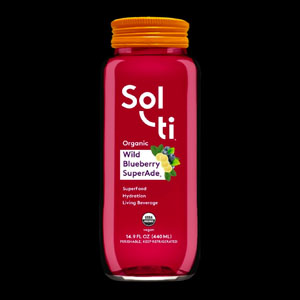
[00:33:34] Melissa Traverse: I have some new products from salty that came into the office. Nice. This is their wild blueberry super aid. So this is a new skew on their super aid line. I think it's interesting that, you know, for seafood, we have wild harvested and other categories. We have wild, but you haven't really seen that with produce yet. And the fact that they're calling out that it's wild blueberry and. I wonder if there is, you know, a more nutrient dense blueberry that's wild, but we will see, but it's cool. It's an interesting new product.
[00:34:09] Ray Latif: Salty is a maker of cold press juices that are packaged in glass bottles based in San Diego. Love what they do, but yeah, they're always coming out with some innovative new products and wild blueberry. Yeah. I wonder if they're actually using wild blueberry. That actually is an interesting question.
[00:34:25] Melissa Traverse: Yeah, I'm really curious. Are they actually wild or is it just like kind of an adjective descriptor? So that's a new product from their super eight line and they have a new product that's entering into food. They have a line of super mixes. Now this is a sprouted coconut cashew super mix. It's a super food protein trail mix for sustained energy. It's almost like a topper. So you could use it on a salad or on yogurt, or you could just snack on it, but it's interesting to see them get into the food and stacking space when they've been in, you know, juices and shots for so long. And I like that. It's kind of like a to-go pack. So it's. probably going to be, you know, buy checkout, grab and go similar to where like a lot of their shots are, but it is tasty, vegan, dairy-free, paleo, gluten-free.
[00:35:18] Ray Latif: See, you guys really benefit from being in San Diego because there are so many great producers of consumer food and beverage brands, and they all stop by your office. We don't get enough visitors to our office. We are getting a couple.
[00:35:32] Jacqui Brugliera: We have two today actually.
[00:35:33] Ray Latif: We have two today actually, but, um, Folks, if you're listening and you're visiting the Boston area, if you live in the Boston area, come and see us. We would love to host you on our deck, in our kitchen, in one of our studios, anywhere you like, because we want to know more about you. We want to know more about your brand. We want to munch on and drink your products. Please stop by. Let us know. Ask at Taste Radio.com is the best way to inform us. But if you happen to be around, just stop by, ring the doorbell. Someone will answer.
[00:36:07] Melissa Traverse: Yeah. And keep coming to San Diego. If you're in SoCal, keep stringing by. Also hit us up at ask at Taste Radio.com.
[00:36:14] Ray Latif: There you go. That brings us to the end of this episode of Taste Radio. Thank you so much for listening. Taste Radio is a production of BevNET.com, Incorporated. Our audio engineer for Taste Radio is Joe Cracci. Our technical director is Joshua Pratt, and our video editor is Ryan Galang. Our social marketing manager is Amanda Smerlinski, and our designer is Amanda Huang. Just a reminder, if you like what you hear on Taste Radio, please share the podcast with friends and colleagues. And of course, we would love it if you could review us on the Apple Podcasts app or your listening platform of choice. Check us out on Instagram. Our handle is bevnettasteradio. As always, for questions, comments, ideas for future podcasts, please send us an email to ask at Taste Radio.com. On behalf of the entire Taste Radio team, thank you for listening, and we'll talk to you next time.
[00:37:05] Pacific Northwest: you