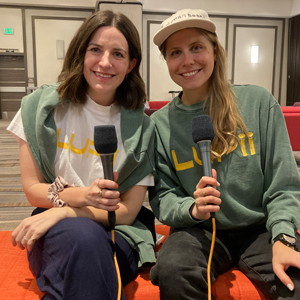
[00:00:10] Ray Latif: Hello, friends, and thanks for tuning in to Taste Radio, the number one podcast for the food and beverage industry. I'm Ray Latif, the editor and producer of Taste Radio, and I'm with my co-host for this episode, John Craven, Jacqui Brugliera, and Mike Schneider. This episode features an interview with Alexandra Dempster and Isabelle Steichen, the co-founders of Loopy, an upstart food platform centered around lupini beans. Get access to limited swag and exclusive content by becoming a Taste Radio VIP. It's easy for you to join that group of very important people. Just head to Taste Radio slash VIP and take one minute to sign up.
[00:00:53] John Craven: And just to be clear, you're already a VIP by listening. We're just making it official.
[00:00:57] Ray Latif: Yes, you'll just be a VIP and a CFD. And we need a new acronym, I feel like, for all these awesome people. DNS. You forgot that. Yes, you'll be a DNS. Yeah, yeah. So congratulations to the UConn Huskies and LSU Tigers, the winners of the NCAA basketball tournaments for men and women, respectively. Jackie, I know you were watching.
[00:01:19] Jacqui Brugliera: Oh yeah, I've been watching the entire tournament. Such a great game yesterday. I actually watched it from Padres Stadium because I wasn't planning in advance that SDSU would be in the national championship, but it was really fun. We were in the stadium. People were cheering watching the game on the big screen while we're watching the Padres.
[00:01:37] John Craven: Oh, that's so cool.
[00:01:38] Jacqui Brugliera: Yeah, it was really fun.
[00:01:39] John Craven: Wait.
[00:01:39] Jacqui Brugliera: It was in the middle of a potteries game actually put it on the screen during the game Yeah, so in between every inning they put it on as like a live look at the game because everyone was on their phones Anyways, who won the potteries game?
[00:01:53] John Craven: All right, so not suffer to two losses.
[00:01:57] Jacqui Brugliera: Oh Yeah. Yeah. But, um, that was a really great game. The woman's game on Sunday was the most viewed woman's basketball game of all time, which is great to see. It was really entertaining. I mean, two great players, Angel Ruth and Caitlin Clark. So fun to watch.
[00:02:13] John Craven: What about Jasmine Carson though? Off the bench. They did not plan for that. She was amazing.
[00:02:18] Jacqui Brugliera: 20 plus points and she was averaging three points per game, I think prior to that.
[00:02:22] John Craven: Yeah. 21 points off the bench in the first half. I mean, when Angel Reese got in trouble, they weren't expecting her to come in and take over.
[00:02:31] Jacqui Brugliera: It was a game of the bench and I know LSU had the stronger bench, but a lot of fun to watch. Love this time of year. Brings back memories.
[00:02:40] John Craven: Jackie, as an NCAA champion and MVP yourself, who was your MVP of the tournament?
[00:02:45] Jacqui Brugliera: Ooh, MVP of the women's tournament. I gotta say Caitlin Clark. She just killed it. Every game had, you know, a triple double with 40 points one game and just did it all. She's my she's my go to.
[00:03:03] John Craven: That's official right there. That's official.
[00:03:05] Ray Latif: Who's gonna be the MVP of our BevNET meetup on April 13th? I think it's gonna be the person who brings chicken wings. I mentioned this last week. If you are an early stage food or beverage entrepreneur, well, I guess in this case, a food entrepreneur, and you have some dynamite frozen wings, I'm asking for the animal based variety.
[00:03:27] John Craven: You will be my MVP. You're kind of asking for a bribe here. I just want to point out. Why? You're like, if someone could kindly show up with some chicken wings.
[00:03:36] Ray Latif: Your situation would be much improved well, there's no there's no dollar value attached to ten cents per wing I think there's a well-established also dollar value there also is no MVP award for the wedding What are they getting from me more than just the fact that I'm calling them Ray Latif and MVP I don't think that's that's worth that much That's zero dollar value. Anywho, once again, our BevNET meetup is being held at our Newton headquarters in Massachusetts, April 13th from 5 to 8 p.m., 65 Chapel Street in Newton. If you are in the Boston area and you're an entrepreneur in food and beverage and you're not here, we will take this as a personal insult and never talk to you again. Just kidding. I don't mean that whatsoever. But we would love to see you here in the office. We would love to see you. Please bring samples if you are thinking about coming. If you're an entrepreneur, that is. If you're an operator or executive in the food and beverage industry, you are obviously welcome to come. Investors, distributors, retailers, come on down. We want to see ya. All right, I want to thank our presenting sponsor for this episode. That's Applied Food Sciences, which is the leader in innovation for functional organic ingredients in the natural products industry. They believe that quality is based on transparency from seed to label through organic farming, ethical sourcing, and sustainability. AFS a FS long-time partner yes of Bev net. Thank you very much for doing this Jackson and Brian Zapp two of the best guys I know in the business. It's very chill dudes. Yes CFDs. We would call them sure yes, I Think we're gonna see them at Bev net live in New York as well, right? Hopefully. Hopefully. I believe we will. Yeah. Some really exciting stuff. Once again, BevNET Live is being held in New York city on June 14th and 15th at the Metropolitan Pavilion. Can't wait. Very exciting stuff. Speakers are being announced on, it seems like an almost weekly basis right now. I know we talked about this a couple of weeks ago. We have a couple of executives from Whole Foods that'll be showing up and speaking on stage. Jackie, we have a bit more information on who those folks are.
[00:05:40] Jacqui Brugliera: Yeah, so we do have two executives from Whole Foods that will be speaking at BevNET Live. We have Khadijah Wellens, which is the global category merchant for nutrition and supplements. And then Charlie New, which is the global category manager for refrigerated beverage. And it's really interesting. I think this talk is going to be great for functional beverages and trying to figure out where you should be placed in store, whether you categorize yourself as a supplement or you should be in the refrigerated beverage section. They're going to give you actionable tips about store placement and your strategy for retail, specifically within Whole Foods, but I think you can probably apply it to most retail. So I think it will be great to hear that and listen to them and they'll also be in the crowd. So if you have any more detailed questions and you want to talk to them, they'll be available after their talk as well.
[00:06:27] John Craven: Awesome. That's the best part, the mingling with the crowd after, right?
[00:06:31] Ray Latif: Yeah, the networking. The mingling with the crowd, the mingling with the speakers, the exchanging of business cards, of samples that you can hand out to people who are of influence in the industry, such as Whole Foods executives.
[00:06:43] John Craven: There are things that are keeping you up at night. Bring your three hardest questions. Ask everyone. You're going to find the answers. You're going to move your company forward.
[00:06:51] Ray Latif: You'll get at least one answer from Mike. One good answer, that is. I don't know about the other two. My answer will be talk to. I can introduce you to someone who actually has a good answer for that.
[00:07:01] John Craven: I might have a good answer for you, but if I don't, I will find the person who has a good answer. That's my promise.
[00:07:07] Ray Latif: Fair enough. I want to have an answer for why people create these amazing April Fool's products and don't actually commercialize them. Well, yeah, things like that. Occasionally we see these April Fool's jokes with these products that are never coming to market, but they're amazing and they should. And we've seen a couple this past week. April Fool's day was what, three days ago as of this recording. And John Craven, I know you saw some things that you want to spray on your body per se.
[00:07:40] John Craven: Yeah, I don't know I was the LeFroy cologne I saw that I was like wow this is smart And then I realized it was April Fool's cuz I don't know about you guys But I always missed myself with a little LeFroy 40 year old before I go out You know it's kind of the proper thing to do.
[00:07:58] Ray Latif: I'm sure cops love you for that.
[00:08:00] John Craven: Oh, yeah Yeah, I do it right before I go for a long drive You know spray a little my mouth body whatever you know the thing is if you open a bottle of LeFroy you're gonna smell like it so They already have a cologne
[00:08:10] Ray Latif: Yeah, they they have that peated moth. It's strong Aroma yeah, extremely flammable too. Is it probably?
[00:08:19] John Craven: Oh yeah, I guess that's true. So many uses.
[00:08:22] Ray Latif: Yeah, probably don't want to be smoking a cigarette when you have LaFroit cologne on.
[00:08:26] Jacqui Brugliera: Speaking of other sprays, did you all see Fly-by-Jing's pepper spray? I think that's genius. So it's a Sichuan pepper spray, and I love how they describe it. Electrified with 800 volts of pure Sichuan pepper tingle, guaranteed to keep away the bad stuff. I thought that was...
[00:08:45] John Craven: I was volunteering to be a tester.
[00:08:47] Ray Latif: Yeah, I was gonna say, I think people would buy that and just use it on themselves, but... That would definitely be some entertaining tik-tok content. Just let your pepper spray yourself.
[00:08:57] John Craven: I don't want it in my eyes. You don't think there's someone on tik-tok who's doing videos pepper spraying themselves? I'm sure that's been done.
[00:09:07] Ray Latif: I mean, there is probably while tasing themselves. There is kind of a parallel to this, right? I mean, Jackie did this for us with the poor Jackie. I mean, that essentially was pepper spraying yourself.
[00:09:19] Jacqui Brugliera: Yeah, it's just, you know, torture, self-torture. People love it.
[00:09:23] Ray Latif: Do people know exactly the outcome of that? I mean, we, we saw. Oh yeah. We shared that. I still feel bad about that.
[00:09:31] John Craven: We did say don't do it multiple times. I begged for the record.
[00:09:38] Jacqui Brugliera: It was the competitive nature in myself. I just had to keep going forward for better or for worse.
[00:09:44] Ray Latif: A champion through and through. The other one that I saw that was pretty interesting, and I think a lot of people were interested in this, was Sanzo. Sanzo said they came out with a limited edition lychee boba variety, which was awesome, and got a ton of check marks on LinkedIn from Sandro, who posted it, but he made it clear that it was just a joke. It's not going to happen.
[00:10:08] John Craven: I also got fooled by the Ithaca Hummus, like, giant pail. That was made for you, I thought. Well, I mean, that's like, you know, they should probably make that for food service at some point, but I would buy that now, like, if Costco had that. Really? Maybe, I don't know, why not? You would buy the Ithaca Hummus feed bag if you could. You'd just have it strapped right on.
[00:10:27] Ray Latif: Yeah, I mean, I think a commercial variety totally makes sense. But I mean, how much hummus could you eat in a week? Because I think after a week, I don't think it tastes as good. It probably would get a little weird.
[00:10:40] John Craven: No funky yeah But I you know I thought it was a real product Yeah, I mean like olive oathouse olive granola butter that you can put on your pizza granola butter man No, that kind of makes me want to throw up a little just thinking about that Don't go together
[00:10:58] Ray Latif: Well anyway, again, I think it's interesting. What was it last year? Hendricks Gin. Remember when Hendricks Gin came out with their pickles? And everyone was like, wait, is this actually real? It was real. No, they made it after. Didn't they make it after the April Fool's joke? Think the April Fool's joke came out, and then they saw that there was so much interest in demand for it That they actually commercialized the product those were not good by the way The point after all that John Kramer's like that was just not you know I thought it would be good, but at the end gin pickles not a good idea you're going to London soon, right I
[00:11:37] John Craven: Yes. Yeah. I think those moju wasabi shots were, I think they made a limited amount of those. You got to try that. Wasabi shot. I want to see you drink a moju wasabi shot. I'll try to find it. If it's real.
[00:11:50] Ray Latif: Okay.
[00:11:51] John Craven: I was like a Moju.
[00:11:53] Ray Latif: You know what was real, and I couldn't believe it was real when it came out, and this is several years ago, was a product that was launched by Neuro. Remember, Neuro Drinks N-E-U-R-O. It's a brand designed to enhance brain function, I believe. And they had all these different kinds of varieties. And one of them they launched many years ago is one I have in this bag right here. Oh, great sharing. Right cleaned out his basement this weekend. I'm sharing, but you can't drink this okay, and this product was called neurogasm And the tagline was passion in every bottle now and The description of the benefits that the consumer would have is it supports healthy circulation, helps support the pleasure response, provides playful energy, and promotes healthy aging. I wonder how many of these you have to drink to promote healthy aging.
[00:12:53] John Craven: I'm going to give some real beverage advice here to put a little spin on this. But if you're making a beverage, you know, you should kind of think about will people be willing to hold this when they're in public, when they're with their kids, etc. And if you're saying no many times, it's probably not a good idea. I'd like to offer another piece of advice, which is don't put your beverage in a shampoo bottle. Yeah, that's it wasn't that got kind of sucked in right.
[00:13:21] Ray Latif: I feel like that was a little more cylindrical originally yeah We'll probably release some video of this yeah, this this looks like it was on an airplane when it was landing you know how sometimes The pressure was pressurized exactly No, this was the bottle and I think they actually they had another variety or they just changed the name and it was a similar variety But it started out as neurogasm, and then what happens if you squeeze that in a year squeeze a little bit I'm not going to opens that it's like gonna explode. Oh Here's code blue here's another back in the day. It's blue though. I don't know did you this is this is not for you John Craven oh? Is it blue raspberry? I mean, well, no offense.
[00:14:06] John Craven: That was kind of not for many people.
[00:14:09] Ray Latif: No, so Code Blue was back in the day. It was a recovery beverage. You would drink this after exercising or having too much alcohol the night before. And it's blue colored.
[00:14:21] John Craven: It kind of tasted like a non-carbonated energy drink from what I recall.
[00:14:25] Ray Latif: Yeah, and it was full of functional ingredients that everyone knew from back in the day including ginkgo biloba. Remember that? No one uses ginkgo biloba anymore. Sure they do. In what? Beverages? I think it's ginkgo bilboa, isn't it? Ginkgo biloba?
[00:14:39] John Craven: Come on now yeah, I kind of confused with Bilbo Baggins. Yeah, it's not Bilbo Baggins.
[00:14:46] Ray Latif: Sorry that is not an ingredient It's a hobbit talk about another beverage where the the packaging is a little suspect. This is called amigo a HH mi go and It is a chia beverage In the cap I remember this exactly had a they used to call us cap activated or I guess they still have a Karma, you know karma water. Yeah, where the ingredients are in the cap and you press it down and the ingredients go into the water Like like the Brock shot.
[00:15:13] John Craven: I love that, you know for a second I thought that was gonna be one of those like I don't know if this was before your time at Bev net Ray, but there were these like Anti-smoking beverages like to help you quit smoking like that's before my time. I had like it was like Smoking Joe or Niko Joe or something like that?
[00:15:33] Ray Latif: I Remember hangover Joe's the hangry every shot. Why is Joe? I don't know just a fun name average Joe, you know Amigo, but this is Amigo. So yeah, there was there's chia in the cap and you would press it down Well, it says twist so you twist the cap a bop. I guess you bop it down. Oh and shake and And yeah, so you would have a chia beverage, I guess a fresher chia beverage as a result.
[00:15:57] Jacqui Brugliera: But how long does it take? Don't chia seeds need to absorb the water to become gooey?
[00:16:02] Ray Latif: Good question.
[00:16:02] John Craven: Yeah, they definitely do. And I think Ray should, after we're done... No. No, no, not drink it. Put the chia in there, leave the cap off, and let's see if a chia pet grows out of it. fiber, omega-3s, and protein in a clear liquid. This was someone's billion dollar dream, Ray, and we're making, oh, so sad.
[00:16:21] Ray Latif: Okay, now, see, these are pretty esoteric beverages and beverage concepts, but here's one that wasn't. SK Energy used to be called Street King Energy. Street Kings, yeah. This is Update Energy shot that was launched by 50 Cent in 2011, and everyone thought that this would be a real challenger brand to 5-Hour. And I think, you know, there was some real, there were some high expectations for this and I think deservedly so, but it never went anywhere.
[00:16:47] John Craven: Update Energy drink for VSCO girls. Did you get your picture taken with 50 Cent at NACS or was that just me?
[00:16:52] Ray Latif: That was just you. That's incredible. We gotta pull that one out of the archive. We were planning on doing an interview with 50 Cent and then it just, it fell apart at the very end.
[00:17:02] John Craven: And I just want to, if you're going to dig out the 50 cent picture, which I think I have in my favorites on my phone, because it's so bad. I just want to, as a disclaimer, say that I did not intend to get my picture taken with 50 cent. The situation was the super pushy PR person was like, you know, they had this big stage and whatever. And it was one of these, this is why I don't book like appointments at trade shows anymore. We had to book an appointment. We were going to talk to him. And then they're kind of like, you know, here, go up here to talk to him. And then all of a sudden they're like photographer guy. Who's down, you know, on the, whatever, in the crowd. Shows up, and you know I'm getting like right into a pose, and we're taking a picture.
[00:17:49] Jacqui Brugliera: It was weird So you weren't waiting in line.
[00:17:51] John Craven: I was not waiting alone You didn't get to talk to him though for like five seconds.
[00:17:56] Ray Latif: I don't know maybe but why didn't this work?
[00:17:58] John Craven: I think there was just like a there was a real problem with authenticity like there was no Craven Connection between We could do a whole podcast on Street King, and maybe we will work But I mean five-hour was selling it to a specific niche and this tried to sell to the same audience Audience with very different branding and a misunderstanding of like who was buying the product so if you recall it was streaking and then pivoted to SK and turned into this like going after like I Don't know women in their 40s and 50s. I don't know if you remember that yes 50 cents still I think he was involved, but he wasn't really like the poster child for it at that point.
[00:18:39] Ray Latif: I know the name Street King Yeah, I think exactly Street King was the original name and I think they realized they needed to back away from that type of positioning and SK energy and then it became like a fitness oriented brand and Marketing how many CMOs did they fire? Lots of pivots yeah Now, here's a product that I think has a lot of... Oh, you crushed this all weekend, Ray. Here we go. Has a ton of runway. It's totally on trend, obviously, with canned cocktails, and that's Jack Daniel's and Coca-Cola's Jack and Coke RTD.
[00:19:12] John Craven: Oh, yeah. Matt Hughes. I was talking to Matt Hughes from... Mentoring emerging beverages about that at Expo West.
[00:19:17] Ray Latif: Yeah, not excited this just launched it launched last week and It is I tried it this weekend. It's fantastic. It really is a good beverage it tastes like a Jack and Coke even though it's actually almost better because I'm sure they get the Measurements perfect. Yeah on this and I'm not as I mentioned on Instagram I'm not a Jack and Coke kind of person, but sure this is no this is a fantastic beverage.
[00:19:41] John Craven: I think it's awesome Sure, I've seen Ray knocking back jacking. Yeah, I have never you had industry never That and white Russians and rum and cokes some uh what are they called mind erasers?
[00:19:55] Jacqui Brugliera: Yeah, those are dangerous
[00:19:59] John Craven: Three Sisters men. I'll give credit where credit is due. I do think that they made the packaging of this look pretty darn good for two sort of big brands. You know, it's kind of minimalist looking. So I guess the Jack Daniel branding won out over the Coke branding.
[00:20:15] Ray Latif: But do you remember last year when Coca-Cola made it clear that they were going to introduce RTD cocktails into their portfolio using some of their big name brands, some of their billion dollar brands, including Fanta, a couple of other ones, Simply as well. And I think there was some skepticism of whether or not they would introduce Jack Daniel and Coke variety, but here they are. And I think this is going to be their best RTD to date. It is their best RTD to date. We'll have to give it a try.
[00:20:43] Jacqui Brugliera: I know we've mentioned Lentiful in the past, but these are actually their newest products straight off the production line, and they'll be launching, I believe, later this month. This one's Pineapple Chorizo, but it's plant-based chorizo is in quotes. And then there is also the home style chili. So two new flavors. I think it's cool to see a chili version. I know we we talked about how they're made in the past. But just for people that didn't hear, you pretty much just pop it open and put in some hot water and then it's ready to eat in a couple seconds, which is really cool. It's almost like making an instant oatmeal but with lentils, which has a lot of great fiber and nutrition and it's plant based. So it's really convenient little meal. I'm excited to try these two
[00:21:29] Ray Latif: Both varieties sound amazing. A chili lentil variety sounds really interesting, actually.
[00:21:35] Jacqui Brugliera: Yeah, it's just tomato, black beans, pinto beans, crushed red pepper, and scallions. So really simple, simple ingredients.
[00:21:40] John Craven: Jackie, try it for the gram. We gotta know.
[00:21:42] Jacqui Brugliera: I wish I could if I had some hot water. Just try it. Later, later.
[00:21:46] John Craven: Just put it in a reel.
[00:21:48] Jacqui Brugliera: Oh, it actually smells really, really good.
[00:21:50] John Craven: Nice. Well, speaking of high fiber and things that are chili flavored, I've got something that's totally neither of those, which is Funky Mello. So good. These are vegan vanilla marshmallow creams. Here, Mike, you got it. You should eat one for the gram. I will eat one for the gram. I brought you a spoon. I don't need a spoon. Oh, here you go. Do not need a spoon. I'm just going to go right in. Wait, how are you going to eat this without a spoon? I just get right in there, buddy.
[00:22:16] Ray Latif: Yeah, I just I don't know we're not gonna put that on real cuz that's that's we have to mark that as Offensive we're gonna have to put that like so good. I mean this is way less weird No, you know how they do that on Instagram were like If it's if some people might find it offensive like you do a check mark, and then they have to like click on it Do a sense of content I know look at this. No. Thank you. Does anyone have a towel towelette? I'm glad I'm over here.
[00:22:49] John Craven: I would love it quite sticky. I really don't know what you're supposed to do with that stuff aside from just eat it I put it on a Fluffernutter get get yourself some you know I don't know your favorite. What's your favorite peanut butter? Favorite almond butter skippy no like a fluff sandwich like I've been eating a lot of Justin's lately of course, but Skippy right nothing's wrong.
[00:23:13] Ray Latif: I bet you buy like the skippy natural variety and actually think it's really I
[00:23:18] John Craven: First of all, we don't consume peanut butter in my house. Okay, fair enough. I mean, mainly because my kids are not like at elementary school age anymore, but I don't know what brand we used to buy. Teddy or something like that? Oh, Teddy's good stuff. Oh yeah, Teddy's good. I really like the honey roasted fresh ground peanut butter they have in Whole Foods. Okay, which is just jacked up with sugar for the record. It's in no way like better, but hmm Don't know when I last had a skippy okay fair, and I was just giving you well I know I know you're not a skippy consumer, but that said that's what you should do with Funky Mello or just do what you're doing which is just It's pretty damn good mm-hmm well, I brought something to wash it down to Which is this new? tip-top Gin martini that was awesome. Yeah, I mean. I'm not gonna drink this right now and Kind of a mistake to drink these right from the can by the way Like they need ice they need to be diluted a little have you ever got one of those from the can oh yes, right? I would say there was a point in kovat where you know It was outdoor happy hours all the time, and it was just kind of convenient to just you know It was like you know Popeye has spinach like if you know you're old like This is kind of kind of like that for me, so this is becoming very Seinfeld ish I think you're you're kind of like developing this Seinfeld personality for the podcast and I love it I
[00:24:40] Ray Latif: I don't even know what that means. It means that like there's a there's a cynicism about some of the things that you're saying and I love it because I'm like no you don't actually drink those from the can. You're like oh yes I do right? If he was Seinfeld he'd be like what is with Funky Mello?
[00:24:56] John Craven: It'd be more like that. Fair enough. I've also had many of a Tegroni from the can too. Just you know give those guys a shout.
[00:25:02] Ray Latif: I hope they'll send some more cans. I'm hearing this.
[00:25:04] John Craven: Thank you. Tip Top proper cocktails. Those definitely challenge my sober curiosity. Those are really well made.
[00:25:09] Ray Latif: Well, the cool thing about Tip Top and this whole, I've seen more and more of these come out where it's a gin and tonic, a canned gin and tonic. And I think even though that's probably the easiest cocktail to make, I think you can kind of screw it up somehow. And the ones that I've tried, the premixed gin and tonics, the RTD gin and tonics. They've been all pretty fantastic. Craft Crafthouse Cocktails comes out with a really good.
[00:25:30] John Craven: I also have a theory on why that is too, that like people like these over when they make them at home, which is they have old ass vermouth sitting around in their house. And they haven't refrigerated it either. No, it's just like, you'd be like, if you took a bottle of red wine and threw it in a cabinet and then, you know, six months later, you're like, man, I could go for a glass of cab. Let me go get that out. Exactly. Refrigerate your vermouth, folks.
[00:25:52] Jacqui Brugliera: Yeah, I learned that the hard way.
[00:25:53] Ray Latif: That's my PA. That's my PSA and throw it away after like a month. I wasn't listening.
[00:25:58] John Craven: I was eating Funky Mello.
[00:25:59] Ray Latif: Yeah. Okay. I think we have to stop the podcast because his fingers are in the thing now. God, I'm just like, I'm getting out of this one. I don't know. The heebie jeebies over here. Anybody else have anything to say?
[00:26:12] John Craven: Mike, I know you have, you have some stuff on there. I want to know what that pile of meat is in your bag there.
[00:26:19] Jacqui Brugliera: pile of meat, is this from the basement?
[00:26:21] John Craven: No, this is a- Basement meat?
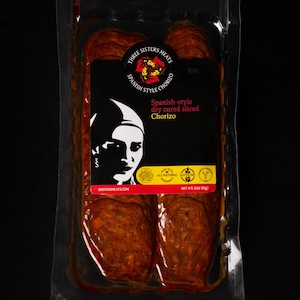
[00:26:23] Ray Latif: It's not basement meat. BYO charcuterie is raised meat. This is a small tray from Three Sisters Meats. This is their Spanish-style chorizo. According to the Three Sisters Meats website, they make Northern Spanish-style dried, cured chorizo using a traditional multi-generational family recipe from the region of León, Spain. They use only certified all-natural pork and nine ingredients. This is pre-sliced chorizo, it looks amazing. It actually looks like the real chorizo you would get from a tapas restaurant, as opposed to the chorizo that you'd buy in the supermarket. I don't know if that makes sense to anyone, but that's how I'm looking at this. As opposed to your lunchable that you eat every day? Correct. Speaking of which, I'm going to have some of this for lunch, and I'm not sharing with many people. Come on! Okay, fine, you can have some if you want. Mike will put Funky Mello on it.
[00:27:13] John Craven: I think I have some. It's all over me. So good. I guess I say I'm saving some for later. I brought you a spoon I know just I know but I just really like Funky Mello. It is good good people mm-hmm I know I've done a shout-out on the show before to Michelle too from homia, but I finally made the the laksa and For those who don't know laksa is a soup noodle. It's made with coconut milk and tamarind and usually put an egg and noodles and such in it and I I've never tried to make it on my own, and Homiya makes it really easy. You know, when I was talking to Michelle about it, she's like, oh, you can eat it for breakfast, lunch, and dinner, and I totally would. It was delicious. I can't wait to try more Homiya. We also met the founder of Paro, P-A-R-O, and she sent her Tarka our way, and I think I think I finally am allowed, I think it's finally out of the photo queue, so I can actually try it. It says it's a spicy toasty topping with ghee, and I feel kind of embarrassed because I haven't had a lot of food from Pakistan, but the more I try, the more I like. I can't wait to really dive into this. It's so good. Then we met the founder of Paro back at the Snack Shot event at Expo West, and she sent us some samples. And we also met the founder of Update, which is a better for you energy drink. Caffeine-free energy drink, in fact. Caffeine-free energy drink, exactly. Which is really interesting because you feel the boost without the caffeine, and I don't know, I like the way this made me feel when I tried it, and I've had a few since then, and I don't know, this feels like innovation to me.
[00:28:50] Ray Latif: Well, anything that's a caffeine-free energy drink is going to grab some attention, especially because people are very sensitive, or seemingly more sensitive to caffeine than they have in the past. Right. So, yeah, interesting to see how that plays out. At first, I thought that was a can of Focus. P-H-O-C-U-S.
[00:29:05] John Craven: It does look a little bit like Focus. It's a really well-done can, though. It's got, you know, a little bit of futuristic graphics and stuff like that, but I like the call-outs, zero sugar, zero caffeine, which, again, as you said, Ray, it says it's energy and then zero caffeine, so. Those are opposing, so you're looking at this going, what's in it? Well, good for them. Focus also just unveiled a rebrand. It looks pretty darn different than that can you're holding in your hand, Mike.
[00:29:32] Ray Latif: Yeah, Focus, a caffeinated sparkling water brand, just partnered with rapper Jack Harlow. They have a brand new look and obviously a pretty high profile partner. I feel like when we get that new can, we should talk about it on Taste Radio.
[00:29:48] John Craven: Maybe. Definitely. I'm also drinking the Passion Fruit Hibiscus Petal Ginger Ale, which is pretty tasty.
[00:29:54] Jacqui Brugliera: Nice. And I'm drinking Vassanova. So we just got a bunch of their products into the office. It's a line of functional sparkling waters with a little bit of fruit juice. This one is immunity. So it's orange, acerola, acerola cherry. And I also have here the recover, which is their limelight flavor. Each product features a functional ingredient and really taps into their benefits.
[00:30:21] John Craven: Industry legend, Neil Kimberley is there, right? He is. Talk to him at Expo West. That's pretty tasty stuff.
[00:30:27] Jacqui Brugliera: Yeah, this is really, really tasty. Really nice and light. I like the addition of the 5% fruit juice. I'm a fan of that. I'm a fan of Spindrift, those types of beverages. You don't get like, I don't know, weird aftertastes or anything like that. So this is really tasty.
[00:30:41] John Craven: Yeah, it's a pretty cool pivot for the brand that's been around for a pretty long time. Started out kind of as a acai juice brand. So cool to see the sparkling. And they just sent us a bunch of tries. So can't wait to get, can't wait to get the bottom of few cans of that.
[00:30:56] Jacqui Brugliera: And another beverage I have, which features a fruit is spicy lemonade. So this is called lemon back and spicy pineapple lemonade, and it's pretty much lemonade with a kick. This one features jalapeno in it. All right. Yeah. And I'm obviously a fan of spicy food. I'm going to give it a go.
[00:31:17] John Craven: Do they have one with a Fly By Jing?
[00:31:19] Jacqui Brugliera: That'd be an interesting collab.
[00:31:21] John Craven: I want that.
[00:31:23] Ray Latif: Ari Suswine, who's the founder of that company, reached out to us and talked about how he was a fan of the podcast. And I really appreciate when people do that, when new founders reach out, introduce themselves and their brands and their products to us. It's great. And here we are talking about it on the show. Let's get him on Elevator Talk.
[00:31:42] Jacqui Brugliera: Yeah, for sure.
[00:31:43] Ray Latif: He will one day be on Elevator Talk. Awesome. Bold prediction.
[00:31:46] Jacqui Brugliera: Already done.
[00:31:51] Ray Latif: Alright, it's time to get to our featured interview for this episode. As I mentioned at the top of the show, Alexandra Dempster and Isabelle Steichen are the co-founders of Loopy, an innovative brand of lupini bean-based foods. Launched in 2020, Loopy debuted with a line of plant-based protein bars, highlighted by its hero ingredient, which the brand promotes as a quote, a high-fiber legume that has two times more protein than chickpeas and three times more protein than eggs. In August of 2022, Loopy entered the pasta category with a three-skew line of high-protein and high-fiber varieties that contain significantly less carbs than traditional pasta. The brand is represented in hundreds of chain and independent retailers, primarily in the Northeast, Midwest and Pacific Northwest, including Whole Foods, Safeway and Jewel-Osco. I sat down with Alexandra and Isabelle at Expo West 2023 for a conversation about Loopy's origins and their alignment as co-founders, how they shifted from survival mode amid the early months of the pandemic to a focus on thoughtful growth at retail, how they were able to attract interest and funding from angel investors, and their vision and plan to develop a platform brand. Hey folks, it's Ray with Taste Radio. Right now I'm honored to be sitting in front of Isabelle Steichen and Allie Dempster, the co-founders of Loopy.
[00:33:18] Mike Schneider: Hi, Ray. Thanks for having us. Always love chatting.
[00:33:21] Ray Latif: Thank you so much for being with me. How's your Expo West going?
[00:33:23] Mike Schneider: It's been great. It's our first show. We've walked, both of us, before, and this is the first time we're exhibiting, and it's just been super exciting to be here.
[00:33:32] Ray Latif: And so for our audience, that was Isabel. Allie, how are you feeling? Hi.
[00:33:34] Taste Radio: It's been amazing. It's my first time with Loopy. Doing an exhibit, as Isabel said, and it's just been a great show. Great buyer meetings. Great seeing old friends.
[00:33:42] Ray Latif: Bustling.
[00:33:43] Taste Radio: Bustling. Yes. I mean, a tidal wave of people, I think we could say.
[00:33:46] Ray Latif: Yeah. I said hurricane. I said there's a hurricane of people because it just seemed like everyone was kind of like whipping in one direction or another. Exactly. Are people getting Loopy? Do you feel like the message is getting out there?
[00:33:59] Taste Radio: Yeah, absolutely. Absolutely. I mean, I know it's something we want to talk about, but we're really building this brand for Lupini Beans. And it feels like as people come by, way more people than other shows are familiar with Lupini Beans. And then definitely there's an excitement about it when people start to learn about it and taste the product. So yeah, fun time.
[00:34:15] Ray Latif: A platform brand centered around a hero ingredient. We've seen brands like this before, but Lupi is very different in that you are heroing The lupini bean. Talk a bit about the history of the company, why you started it and why you chose lupini beans as that ingredient.
[00:34:32] Mike Schneider: Totally, totally. So it starts with, well, about 10 years ago, I moved to the States and on a personal level transitioned from a vegetarian to a vegan diet. I spent my career in early stage startups, but in my free time spent a lot of time immersing myself in a plant-based food space. Believe it or not, I actually used to have a podcast with my husband called The Plantiful, where we were interviewing plant-based changemakers across different industries. And one thing that stood out to me, especially coming from Europe, was that functionality was top of mind for people. especially when transitioning or trying to eat more plant-based, there was a real concern around protein. My friends kept asking me, where are you getting enough protein from on a plant-based diet? So I was intrigued by that insight and started researching ingredients because what I identified was that there was a real focus on soy and pea in these countries kind of dominating the market and plant-based protein. So very little diversity and also knowing that a lot of consumers are actively moving away from soy and pea protein. So I thought, well, there must be another solution. So that brought me back to my roots. Growing up in Luxembourg, lots of my friends were Italian and Portuguese. So they have been eating lupini in those cultures for a long time.
[00:35:38] Ray Latif: Can we pause there? Did you say Italian and Portuguese growing up in Luxembourg?
[00:35:43] Mike Schneider: Yes, yes, yes, yes.
[00:35:44] Taste Radio: Totally. Unexpected.
[00:35:45] Mike Schneider: We're a super diverse place. You know, we have like 50% of people that live in Luxembourg, weren't born in Luxembourg. And through kind of European history, we had a lot of immigration in the forties and fifties from Portugal and Italy. So most of my friends growing up were not actually from Luxembourg. So back to lupini beans in Italy, in Portugal, in Greece, like the Mediterranean in general, lupini beans have been around for a very long time. They actually a really well-established ingredient going back to ancient Roman times even. And as I started researching the ingredient, I was blown away by the nutritional profile. It's the only bean that is so high in protein, higher than any other legume, even higher than soy. And the only bean that's also super low in carbs, which Americans love high protein, low carb foods. And so I was like, how is this ingredient not in the States, knowing that there's increasing demand among consumers to eat higher quality plant-based protein sources. So that was kind of like the origin story. I started thinking about the ingredient and I have not spent my career in food and beverage. I actually spent it in early stage tech startups. So loved the startup space, but knew nothing about food and beverage. So, you know, realized that I needed a co-founder and went on a quest to find my co-founder, which was quite a process. And I had gotten to the point where I thought, yeah, it's going to be really hard finding a person with a really solid food and beverage background who's willing to just jump into this crazy idea of bringing Lupini beans to the States. And then I was introduced to Ali. So.
[00:37:15] Ray Latif: That's amazing. I had no idea.
[00:37:17] Taste Radio: It was one of the most fortuitous meetings of a lifetime. I mean, so I've spent my career in food and beverage. I'll give you the short story, but the short story for me is, you know, I had been going down this path professionally, but then personally was suffering from a lot of chronic health issues. And on that journey, really started to take a little bit more ownership of my health and understanding food was playing a really big role in how I was feeling. And what I started to realize over time is if I could bring my different worlds together professionally, this personal passion I was developing for food and food systems understanding, that would be incredibly exciting to me. And a former coworker of mine, a shout out to Rachel, had met Isabel and passing through sort of the startup community in New York. and wrote me a one-line email. I met someone. You guys are all about the same thing. You should meet each other. I think a Sunday after a yoga class, grabbed coffee with Isabel at the Whole Foods on Bowery, where we sell loopy bars today. So full circle. And I mean, it was just a sort of love at first sight conversation. I had been doing a lot of work in past life looking at legumes and beans as a huge opportunity area and was focused a little bit more on salty snack space, but was so excited by what you can do with beans. And then when you think of lupini beans, which I was familiar with, you think about this incredible trifecta of functional benefits that it has. So as Isabel said, high protein, high fiber, low carbohydrate. It's just a really incredible composition from a functional perspective. And then it is also really incredible because it can be utilized as a Whole Foods. And as someone also who follows a plant-based diet, One of the things I always look for is really simple Whole Foods propositions, things that aren't super processed. And there's lots of amazing foods out there in sort of the plant-based space, but not all of them are something that you want to probably be eating every day. They are just really great, fun, delicious foods, but maybe not great from a health perspective. And using a Whole Foods, we can really create delicious food as well. So that is what we set on a quest to do and launched our bars, our first range of loopy bars, six simple ingredients, high protein, high fiber bars in January of 2020. And what a wild time we're still here.
[00:39:31] Ray Latif: January of 2020. What a time that was.
[00:39:33] Taste Radio: We thought we were off to the races. And, you know, we joke about it and we will be very candid and say this, you know, I met Isabel and coming from food, I said, oh, a bar, like scary, scariest eye on the grocery store to play. But let's do it because I really believe this is a white space. I mean, it's not that bars are easy, but if you're doing something different, we always say it's like a Laura bar meets a Quest bar. Simple food, but all of the function that someone's looking for. But then also a global pandemic hits and on the go eating just sort of came to a halt. So if only we had been, you know, a bread mix at the time when everyone was baking at home. But, you know, we survived and momentum picked up again and we grew the business online during that crazy period.
[00:40:11] Ray Latif: I do want to talk about creating a bar and surviving. I got to go back to this question or this topic of finding a co-founder. I mean, Isabelle, I mean, that's pretty self-aware to say, look, I can't do this by myself. And I think there's a lot of founders who probably wish they had gone back in time and said, I should have just done this. I should have found a co-founder that can help me. But it's one thing to meet someone and have the same kind of I guess, vibe as that person. It's a vibe as people. It's another thing to say, you're going to become my business partner. We're responsible for each other's money. It's so many things. Totally. And life, honestly. How To you create a foundation for doing that well?
[00:40:54] Mike Schneider: Yeah. Well, for one, just to go back to, you know, the self-awareness piece, I worked for early search startups my entire career. And I've seen the good, the bad and the ugly. And the most successful businesses I worked for were businesses that had complementary teams of co-founders and leadership. So what I had seen was you need to join forces with people. It takes a village. You know, I don't believe that a person can do something alone. I mean, it's impossible, right? You don't have all the answers. You don't have all the experience. I'm a deep believer in that. And then I think there's definitely like the personal connection that we had. There's a lot of kind of parallels in our life that we were able to bond over. We're also very different people, I think, but incredibly complimentary. And we're super communicative. You know, we both are big believers and just... being open with each other, talking about stuff. I don't know if this is more a female trait also maybe, just really kind of talking when things don't work and so creating trust in that way. And sometimes I reflect on a crazy time that we kind of jumped into, you know, when we launched the pandemic hit two months later. And I think there was like a level of trauma bonding maybe almost.
[00:42:02] Taste Radio: Sure, yeah.
[00:42:02] Mike Schneider: Like going through this together and just being like, okay, we can do this together.
[00:42:06] Alexandra Dempster: Yeah.
[00:42:07] Mike Schneider: And not backing out and like just this mutual trust because I feel like Ali at any point could have been like, you know, screw this, I'm going to go back to Pepsi, but she didn't. Yeah. And so we've just been kind of committed.
[00:42:18] Taste Radio: I mean, I think having a partner, I come from a background in my career with working on innovation and I think something I just like as a human is like asking why and questions and like having lots of different perspectives and opinions. And I think that always makes things stronger. And so having a partner where, you know, we have this really, as you say, there's the like intangible vibe there. There is a really shared vision for sort of the work we want to do in the world and the contribution we want to try to make. And then also, really seeing the asset of like coming with different mindsets and thinking and ways of operating is one of the greatest strengths we have as a business.
[00:42:57] Ray Latif: Did you have to do anything legal wise? I mean, was there a contract that you wanted to sign amongst each other or was it that you vibed so well that you were like, I feel like there's a level of trust that we can move forward together and make this work together.
[00:43:09] Mike Schneider: I mean, you know, we, we didn't sign a contract.
[00:43:13] Taste Radio: We talked about it, though, because we both come, I mean, not to get too We both come from families with divorced parents and we're like should we have like should we talk to a lawyer about a prenuptial agreement? Like this is not I'm not an anti-romantic but it's just like this is practical but we didn't end up doing that and what someone said to us we did talk to a lawyer and they said you know you are ahead of 99% of people that you're even talking to us about this and I think that developed trust because it's not scary to talk about and we're both yeah you know, we're people, we're works in progress, we're very human, but we, there's a real ability to talk about our feelings and ourselves. And we really work at that and try to stop and take meetings. It's like, how are you doing as a person, as a founder, as just someone like moving through the world every day, because it does take so much of your life over and in good and hard ways sometimes.
[00:44:02] Ray Latif: I mean, I think that's incredible because you don't hear that too, too often from founders. It's just like, I need to talk to someone and you know, who am I going to talk to about the problems that we're going through, especially the last three years. And so having each other, I think has been probably one of the huge reasons you've been able to get to where you are right now. I definitely think so. A million percent.
[00:44:22] Taste Radio: I think so. I remember walking through Madison Square Park and we were just like, early days and just saying to Isabel, you know, you just have this sense that loopy running any business will be sort of the greatest playing field for developing and learning about ourselves as people, no matter How To turns out. It's just going to bring up all of your strengths, all of your weaknesses. And if you're willing to look at them, harness your strengths, understand your weaknesses, you're going to end up being the best version of yourself on the other side of it, no matter where the business goes. And I think that to me is something I really hold on to every day.
[00:44:54] Ray Latif: I first met you guys Live Summer of 2020 when Loopy participated in Nosh's Pitch Slam virtually. And it was great because I had never seen a product like this before. And I think our judges felt the same way. I think there was some, like there is with a lot of our early stage brands, some skepticism as to whether or not you could make it past 2020.
[00:45:15] Taste Radio: Especially in the contest.
[00:45:18] Ray Latif: Clearly you have. And, you know, going from survival mode in 2020 to, okay, how can we build a brand at retail and build a brand beyond direct-to-consumer in 2021 and beyond? I mean, what was that process like?
[00:45:31] Mike Schneider: Yeah. I think one piece back to, we were forced to be a D2C, well, forced, we had a choice, either shut down the business or try to figure it out.
[00:45:39] Ray Latif: Yeah, I guess that's a choice.
[00:45:40] Mike Schneider: So we went to try to figure it out.
[00:45:43] Alexandra Dempster: We're going to make this business work.
[00:45:44] Mike Schneider: Exactly. And so I think one of the big benefits was direct consumer insights that we would never have gotten that quickly in retail. You know, I don't know if you remember, but our packaging used to be transparent, for example, which we thought was really cool. But the problem was with a single barrier protection, the product was drying out really quickly. So it was hard to really preserve this excellent, like moist flavor, texture of the product. So those were some insights that we got. People were just like, oh, it's too dry. So we're like, okay, great. Let's change that. Let's fix it. And then we started with these wrappers, the opaque ones. And that was a real benefit because then when we started pitching to retailers, we landed doors pretty quickly when reviews were happening again for our category. The insights that we got from being D2C were just incredibly beneficial and improving. And then also gave us access to a community of engaged, loopy consumers who love the brand, who purchased the bars that we could use as kind of an innovation group. when thinking about what is the next category that we're going into. And that was hugely beneficial to run some of that innovation process by this group of existing engaged consumers, which again, we wouldn't have been able to do in retail. So I think, you know, with all the struggles, there were also incredible benefits that we were able to benefit from having had to struggle, you know, in the pandemic, like a lot of other brands.
[00:47:05] Ray Latif: Throughout the struggles and sort of the growth that you were seeing in 2021, I'm sure you were still looking for capital and trying to raise capital. Always, right?
[00:47:13] Taste Radio: Yeah. Always.
[00:47:14] Ray Latif: Allie looked just very exhausted.
[00:47:16] SPEAKER_??: Oh God.
[00:47:17] Ray Latif: Yeah. Yeah, no, I can imagine how hard it is and trying to convince people to give you money for, especially back then, an unproven concept, regardless of how much D2C success you had, it wasn't enough for like most investors. Were you trying to raise money for the business at the time?
[00:47:35] Mike Schneider: I mean, we raised a lot of money through Zoom, like we actually, which I thought would never happen. We had gotten our first check in 2019 when Ali and I, decided to join forces. We received a larger check from a VC in New York, very early stage industry agnostic VC that is still a huge believer in the brand. And so we had some capital to start off. And then we realized during the pandemic that we needed to raise more funding and we weren't in a place where, you know, PO financing wasn't an option for us because we weren't in retail. So we started raising capital on Zoom and we raised our money through through that, mostly from angels, a lot of industry people that have invested in us, which is super exciting and also comes with a lot of great insights and support beyond the money.
[00:48:21] Taste Radio: But yeah, that's, I mean, you're out, we're out on the hall talking to peer brands, founder friends that are out there. And it's just one, I think, I think like 80% of brands out there right now in our hot product section are probably raising money right now. It's just not always a neat and tidy process either. Like it would be so nice if you raise once and this is How To goes. But, you know, that's in our experience and many, many people we talked to, it just doesn't seem that it's sort of almost like an always on strategy in a way for better or for worse.
[00:48:48] Ray Latif: When you were having those Zoom calls, what really resonated with the investors about your pitch?
[00:48:53] Mike Schneider: I mean, the team, you know, I think at that stage, especially 2020, we were just around for a few months. So the team, the commitment that we were proving to what we were trying to build, I think investors said invest in that stage, invest in the people more than the product. And they believe that you will figure it out and you'll find a way. to do that. So I think that was one piece. And then a lot of the food and beverage investors just really saw the vision for this ingredient, right? I think that is the risk is, oh, it's a novel ingredient that nobody knows in the States, but that is exactly the opportunity. And if you can see that the way we're seeing it, then you're just so excited because we're one of the first movers in the market here in the States, bringing this ingredient or establishing a brand around it. And we believe there's going to be many more that are going to come in. And we've already seen that over the last three years. So I think those were the two key pieces.
[00:49:41] Taste Radio: And that really makes us think about where are we going with this? Our idea is to build a Lupini Bean based brand. You know, it's a play on in our brand name with lupi, inspired by some of the brands like Oatly out there and those like that, where you're owning an ingredient, but you've got some playfulness, double entendre meaning in the brand name. And we've really thought about where are we going to go, you know, a strategy you could take with a bar is let's go really deep from an innovation perspective. That's always a question in innovation, broader or deeper, and both are valid strategies. And we, you know, have thought about it and been very intentional. So you could, you know, obviously, and we will have more flavors with our bars, but you could do more flavor, shapes, assortments, pack sizes, filled bars, you know, the list is endless if you go sort of down a bar brand only strategy. But because we have this hero ingredient, we were really intentional in thinking about As I sort of like to say, it's asserting ourselves and spreading our elbows a little bit wider and saying, how are we going to play the lupini bean across different day parts and occasions? And people really understand that this bean can fit into their life and deliver great taste through different products with all these wonderful functional benefits. Our core consumer, we think of them as the nutrition seeker. So in that, it's like, we are both those people. We know so many people like this. Lots of data to support it. Again, food is table stakes. There's so many amazing brands out there here at Expo West that we see, but How To we really bring something different with our functional benefits? And one thing that's a little bit different with our bars, but that we, you know, again, we iterate as we go. That's the beauty of startup life is one of the innovation guardrails that we now are going to define as we think about that pipeline is what are those trifecta benefits? Again, high protein, low carb, high fiber, and then thinking about what do consumers want? I think being consumer driven and consumer led is always so critical. What are categories where those trifecta of benefits can really come and disrupt? So that is one of the drivers for moving into Postinex. Thinking about categories, we might play across different aisles of the grocery store. You know, that's not always easy, but it can be a great benefit to where you're really building a brand that is bigger. I mean, look at Simple Mills. That's a really inspirational brand that's done it really well. And then thinking also about, you know, what are retailers looking for, too? That can be really practical in some ways, but retailers, they know their categories, they know their shoppers, and we heard from a lot of buyers that pasta is something that they're really looking at. What are new ingredients that can come in? Chickpea's done amazing things for building up an all-pasta category that's functionally driven, great taste, but what else is out there? And we think we're bringing something new and different to the set.
[00:52:11] Ray Latif: Yeah. You mentioned chickpeas, you mentioned oats with Oatly. And I've spoken with some investors who are wary of a single ingredient platform or a platform centered around a single ingredient. So that's the one thing. I guess that's one concern that some investors might have. What are some other things that were brought up that you've had to take into consideration that you didn't think was maybe an issue prior to speaking with a particular investor?
[00:52:38] Taste Radio: It's a great question. I think that is probably a big one. I think people kind of fall into camp around that. And people are pretty candid and transparent. So when we have investor conversations, you can sort of figure out quickly if it's something you can get behind. I really think also a lot of times, at the end of the day, it comes back to the product itself. So if you have a great product, whether it's sort of the brand, ethos and identity is built around the ingredient or it's sort of the brand is built around something else. If the product is great, I think that's something that we all hold on to at the end of the day. Other challenges from investors? I don't know if there's any singular sort of other thing.
[00:53:14] Ray Latif: I'm trying to go back three years ago to when the judges for the Pitch Slam were pelting you with questions and I think you answered them all quite well. And I think that's what really gave me a lot of belief in your brand and your company is that you were bringing sort of this professionalism and well thought plan to people. Whereas, you know, I think some people just don't have the answers and okay, they're still a year away from really being anything. And, you know, no knock on founders, but sometimes you got to come with it from the gate. From out of the gate, that is, you know, because if you don't... people forget about you really quickly. Totally. Yeah.
[00:53:52] Taste Radio: That can be sometimes the flip side of it is like, we do, I mean, listen, we have learned so much on this journey. It's a humbling, humbling experience. But we like to think we try to be very thoughtful, intentional, strategic. We adapt and are nimble all the time because things are thrown at you left and right. But yeah, it can be sometimes an uphill battle. And, you know, you see sometimes your peers or other things that are happening and the response, we get feedback sometimes, really thoughtful about that, but it doesn't always get someone fully over the edge. But, you know, we're doing what we can, showing up, building the Brad Avery day.
[00:54:22] Ray Latif: Well, it seems like you're quite thoughtful about your pastas. I'm holding in my hand the Mighty Lupini Bean Pasta. This is the penny variety, made plentiful, plastic-free, 100% plastic-free packaging. I love that. Yeah, no window. Yeah, 14 grams of plant-based protein per two-ounce serving, 17 grams net carbs, and 12 grams of prebiotic fiber. This is fantastic.
[00:54:41] Taste Radio: So about 40% of your daily fiber in a serving.
[00:54:44] Ray Latif: Only four ingredients. that I'm looking at right here, which is also really great. You know, I think the other really, it was pretty wise because, you know, going from a bar to a pasta is like really easy, right? I mean, like it's... That was my attempt at a joke, yes. Obviously, obviously.
[00:55:01] Mike Schneider: Same production line. Same packaging. What kind of podcast is this? Did you get it?
[00:55:08] Ray Latif: No, I mean, obviously, this was probably not the easiest thing to do. Why was pasta number one? Why was pasta the right next product for Loopy? Why was the brand extension?
[00:55:18] Mike Schneider: You touched on a lot of those things already. I mean, we looked at various different categories and for the reasons that Ali mentioned around seeing a lot of retail, inbound retail interests. We had conversations with buyers. What are kind of the categories you're looking at? What are the things that you're seeing? Some consumer conversations. And then really thinking about this bean is super high protein, low carb. No other bean is. Where can we go where people want more protein and less carbs? So there are a few products kind of in the mix and in the running, but pasta just stood out as the biggest opportunity. And there has been, you know, Bonsai has done an incredible job at building this alternative pasta category. It's incredible what they've built. But most other alternative pastas are just another chickpea pasta, right? So we're really seeing that we're bringing innovation to the category that nobody else was able to deliver on yet.
[00:56:07] Ray Latif: You're talking to a different buyer. You're in a completely different part of the story as well. So I think that's got to present some challenges. Allie, were you working in salty snacks prior to?
[00:56:18] Taste Radio: Yeah, I was working on the transformation innovation team at Pepsi on the global food side of the business.
[00:56:23] Ray Latif: So I have to think there were some thoughts about creating a salty snack made out of lupini beans.
[00:56:28] Taste Radio: There wasn't about Lupini being specifically at Pepsi 100% and still There's definitely thought about it, about where we go next. Again, we really like to think about this is foundational learning that I have learned through my larger CPG food days and agency days, but is being really consumer led, like what are consumers looking for, making sure, you know, we kind of can coalesce around different short list of ideas and categories, but then talking to who's gonna buy the product and what are they looking for from different categories. So yeah, salty snacks, there's frozen stuff that can be on the table. crackers are pretty interesting. And then you also look at size of opportunity, all of these things. So it's a really, it's a matrix of decisions and variables that we'll consider as we think about the pipeline. But as you say, you know, we've got two categories here that both of them independently could be very big. And so now we want to take those and grow them and be very thoughtful because it does. I mean, the challenge we also have, it's a huge opportunity, but also want to make sure we don't spread ourselves too thin, both people-wise, resource-wise, new buyers, different manufacturers, things like that. So we have to make sure we grow what we've got.
[00:57:46] Ray Latif: Do you have a sense that your existing bar consumers would also be consumers of the pasta?
[00:57:51] Mike Schneider: Yeah. I mean, you know, the pasta has been in markets since September, October, so just a few months. What we've been seeing is from the retail perspective, even if it's separate buyers, It looks like it's helped us. The fact that we had the bars in a retailer and they've been doing well to open up the pasta as well as an option. So I think a lot of retailers believe in cross category brand building, if you're able to do that. And then in terms of like the proposition, you know, it's a simple ingredient deck for both product ranges. It's a consumer that's looking for high quality plant-based protein, relatively low carb. So there's definitely a lot of crossover. We do think that the pasta has the opportunity to be a mass market play faster just because the set is starting to be just way more mainstream than maybe, you know, the protein bar set, which is very crowded. And also Lupini is still a novel kind of source of protein and that set versus alternative pasta. A lot of retailers are merging the alternative set with a regular set, which is really proving How To's becoming mainstream pretty rapidly. So we think that there is a real opportunity to tap into that pretty quickly.
[00:58:57] Ray Latif: I think the one difference between say plant-based pastas and traditional ones is that you can get a half jar of tomato sauce and pour it over like grain-based pasta and call it a day. Whereas I think plant-based pasta has a different texture and taste profile where the dishes you're going to make are going to be different. Have you been working with any chefs or folks that can help you make this taste great?
[00:59:24] Taste Radio: We're having a lot of conversations now. It's definitely work that we're actively doing right now. It's definitely ramping it up because that is something I think you talk about from just a content perspective, helping people understand and engage and really build around the community that we already have, help them think about how they can use this, put it into their diet. Also, again, taste is king. So making recipes and having that be a big part of our content strategy is really important and part of our plans for this year.
[00:59:53] Ray Latif: Well, among the plans for this year, and I've been talking to founders about this a lot, is demand forecasting.
[00:59:58] Taste Radio: Yeah.
[00:59:59] Ray Latif: Yeah. Yeah. Trying to figure out how much product you'll need, how much product you might sell if you open this door or that door. How's that going?
[01:00:08] Mike Schneider: Yeah. Better. I would say so, yeah. We've been landing a lot of accounts, quite frankly, with the pasta. So I feel like we're demand forecast updating all the time. We're launching in sprouts in a few weeks, which is pretty exciting and major for us. So that will be the first large retailer taking the pasta and then just closed a few other accounts. You know, we're at Expo now. So we've had some really exciting conversations. So it's just really important for us to stay on top of that and just also have great relationships with our co-packers to make sure they are informed, they know what's happening so that we can just, you know, push go when we need to.
[01:00:43] Taste Radio: Yeah, I think we're at that tricky stage that all companies will deal with, which is forecasting is so hard as you, you know, really ramp up distribution because you don't have historical data to rely on for your brand with what you're doing to support it. So, you know. It's expensive to make your products.
[01:00:58] Ray Latif: Yeah, yeah, yeah.
[01:00:58] Taste Radio: Exactly. Don't want to over-forecast. Don't want to under-forecast. It's, you know, it's an art and a science. So we revisit our planning all the time. What's the velocity? What's the build-up? What's the bottoms-up build that we think we'll need? and really thinking about, you know, lead times with co-packers and ingredients and all of the variables that you have to consider. But I think it also, you know, we get better and better at it. We have been in retailers with the bars now for over a year. So that helps also just inform us how this, our brand today is doing.
[01:01:26] Ray Latif: Yeah. In addition to Taste Radio functional ingredients and branding, I think price has become clearly a very important factor in how people are considering trial and investing their money into new products, investing their money. Well, I mean, in some cases you really are. I mean, that's what it is. So pricing strategy, I mean, how are you thinking about creating a product with a competitive price point, at least for the set and channel that you're in, without alienating some consumer who might be on a budget and a tighter budget than they had been the year prior.
[01:01:57] Taste Radio: Yeah, I mean, I think, again, pricing is such an art and a science, right? Of really making sure with your price, you're communicating the added new value that you're bringing to both of the categories that we're now playing in. But as you say, not overpricing yourself so much, pricing at a premium tier where you're cutting your volume below what it needs to be to be competitive with the other players that you're up against at shelf. So we think we've reached a nice sweet spot with the bars. We're at a $299 MSRP, and then pasta, we're going to put at a $599 MSRP. Like all things with this business, we are going to look at it, evaluate it, adjust it. I think one of the things we were just talking to an advisor last night and is, you know, there's some retailers where you'll go and they'll never let you take your price up again. So sometimes we think better to go in a little bit higher than maybe you will net out at because going down in price is a lot easier than trying to take your price up with both your retail partners and with your consumer.
[01:02:51] Ray Latif: Yeah, I mean, I think that's a good point. And, you know, even at a time when your ingredient costs are higher, your manufacturing costs are higher, you can't necessarily go from $4.99 to $5.99 without feeling it and the retailer probably getting angry at you. That's right. Just going back to growth strategy and trying to figure out the next stage of evolution for the brand. We briefly talked about this before we got on the mics. It seems like despite all the conversation around supporting women-led brands and the fact that there has been a lack of funding, a sustained lack of funding in women-led brands for over 25 years. We're going in the wrong direction. It went from venture capital has gone into women-led brands. Only 2% of venture capital has gone to women-led brands. That number has gone down to 1.9% or even lower than that. How are you guys navigating funding as female founders?
[01:03:42] Mike Schneider: Yeah, I mean, we talked about that before we jumped on also. It's hard to talk about the topic because obviously, for one, we have incredible investors, a lot of male investors that believe in us, a lot of male advisors that are incredibly supportive. So we feel that. But at the same time, you know, you look at the numbers like you just outlined and the moment the economy is struggling, We're going back to kind of where we were before 2020 when we started seeing some progress on that front. So that is a reality that we're navigating. You know, we do have investor conversations where it feels being a woman is not advantageous for sure. But we're just trying to stay focused on, you know, building the business and finding the investors that don't care about our gender and believe in the business and the opportunity.
[01:04:27] Taste Radio: Yeah, it's definitely that balance of like, you don't want to have a woe is me attitude that doesn't serve us at all, but also you have to keep your head up in the face of, you know, these real hard numbers that we're looking at, which are woefully far away from where they should be. So, God, it's a complex topic and one that I hope, you know, people literally put their money where their mouth is.
[01:04:47] Ray Latif: Yeah, I was speaking with an investor about this topic, and she's an investor in primarily female-led brands. And one of the things she'd mentioned that I thought was pretty interesting is that while private equity and venture capital firms may say they would love to invest in a women-led brand, they come across as being anything but that. Their websites, their sort of the way they present themselves feels very antithetical to a firm that would invest in female-led brands. You guys see that? I mean, is that?
[01:05:19] Mike Schneider: Yeah, sure. I mean, we talked about that yesterday. Yeah, yeah, absolutely.
[01:05:23] Taste Radio: Yeah, we definitely see that. You know, I remember reading, I think DocSend last year at some point had done a survey or had partnered with someone to do a survey and sent it around and said that one of the biases that seems to come out of investor conversations with men versus women is that women are asked to prove how they've gotten to where they are and men are asked to explain their vision. And I can't tell you if that's true, not because I'm a woman and I only get the questions that I get. And so who knows what the questions would be if I were a man sitting at the head of the table on behalf of Loopy. But it definitely does sometimes feel a bit that way, that felt like it resonated somewhat. But as Isabel said, there are many male champions in our lives. I've started my career in beer, which was a very male-dominated and incredible experience and training ground with incredible mentors who supported me personally and definitely women in general. So we look for the supporters and hope people really, whether it's VC firms, angels, are, again, putting their money where their mouth is, thinking about how they can counteract some of the biases that we just know exist out there today. Because they do, and that's showing up in the funding numbers that we're seeing.
[01:06:32] Ray Latif: And seeing great founders, great brands. I'm talking to two of them right now. So this has been fantastic. And we've been talking about doing this for a while. And I'm so glad that we had the opportunity to do this. I'm really excited for the future of Loopy and hopefully we can reconnect soon. So we can talk about the next stage of evolution and what you guys are doing. Until then, really appreciate the time and good luck with the rest of the show.
[01:06:54] Mike Schneider: Thanks for having us.
[01:06:58] Ray Latif: That brings us to the end of this episode of Taste Radio. Thank you so much for listening. Taste Radio is a production of BevNET.com, Incorporated. Our audio engineer for Taste Radio is Joe Cracci. Our technical director is Joshua Pratt, and our video editor is Ryan Galang. Our social marketing manager is Amanda Smerlinski, and our designer is Amanda Huang. Just a reminder, if you like what you hear on Taste Radio, please share the podcast with friends and colleagues. And of course, we would love it if you could review us on the Apple Podcasts app or your listening platform of choice. Check us out on Instagram. Our handle is bevnettasteradio. As always, for questions, comments, ideas for future podcasts, please send us an email to ask at Taste Radio. On behalf of the entire Taste Radio team, thank you for listening, and we'll talk to you next time.
[01:07:48] Alexandra Dempster: you