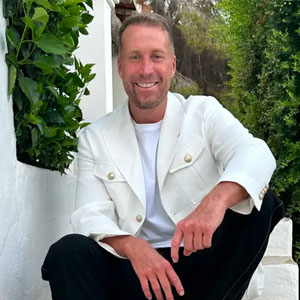
[00:00:10] Ray Latif: Hey, folks, I'm Ray Latif, and you're listening to the number one podcast for the food and beverage industry, Taste Radio. This episode features an interview with serial entrepreneur Richard Laver, the founder of Kate Farms and Lucky Beverage Company. Richard Laver's first beverage brand is named after his daughter, Kate. He named the second one, Lucky F-CK, after himself. A former professional tennis player, Richard became an entrepreneur out of necessity. Kate was born with cerebral palsy and couldn't eat solid foods nor was able to tolerate tube-feeding formulas. Frustrated with the lack of better-for-you options for his daughter, he created a protein shake made with plant-based ingredients and free from common allergens. The beverage helped Kate thrive, and Richard, sensing it could benefit others, commercialized the product, launching Kate Farms in 2012. The brand has since become the most recommended plant-based formula in U.S. hospitals. Having built a successful business that in September 2022 closed on a $75 million Series C funding round, Richard set his sights on another beverage category he viewed as ripe for disruption, energy drinks. The goal was to create what he describes as an anti-brand akin to Liquid Death. The result is Lucky F-CK, a name inspired by Richard's survival of a plane crash in 1985 and designed to appeal to Gen Z and Alpha consumers. Launched in August, the brand promotes five super ingredients, including maca and ginseng, five calories per 19.2 ounce can, and no aftertaste. In this interview, Richard chronicles his path from a 12-year-old child who made it out of a crash that killed 136 people, including his father, to being homeless at age 27, to the birth of his daughter, and eventual development of Kate Farms. He also discussed how a pivot in Kate Farms' positioning and sales strategy changed his trajectory and outlined the retail and communication strategies for lucky F-CK. Hey folks, it's Ray with Taste Radio. Right now I'm honored to be speaking with Richard Laver, who is the founder of Kate Farms and of Lucky, we'll just call it F at this point. Richard, great to see you.
[00:02:36] Richard Laver: It's great to be here, Ray. I've been a big listener of yours through the years and happy to be here.
[00:02:41] Ray Latif: Yeah, well, thank you so much for taking the time. You're currently in Spain, and I can't imagine what it's like to run an upstart beverage company, that of Lucky F, overseas. What's it been like?
[00:02:55] Richard Laver: Well, my wife came to me and said, when I was thinking of starting a new beverage company, she said, well, I'm not putting our plans on hold for the summer. Your daughter, you promised her that we were gonna swim in the beaches of the coast of Spain and France, and so we're doing it. And so I didn't have much of a choice, so I've had to work kind of late afternoons here.
[00:03:18] Ray Latif: Work late afternoons and record podcast interviews in late afternoons as well.
[00:03:24] Richard Laver: Yeah, it's made a little bit of noise, so it's been some interest out there what's going on. Do you at least have your own product with you? You know, I had to go back to Mexico City and production was done and things were being shipped around. Wasn't able to get it out here, but we're shooting some video content and stuff about our brand. So our videographer is bringing out and his crew is coming out tomorrow and that's going to be really special. He's bringing a lot of products. Nice.
[00:03:51] Ray Latif: So I'm guessing, and this is a guess here, but that you flew to Europe, is that right?
[00:03:58] Richard Laver: I took a little boat. No, I didn't get those massive exits where I'm taking out a huge yacht out to Europe. Yes, I flew out to Europe. It was a big ordeal, though. Katie, we have to feed her a certain way, so we've got a chef, we've got the nannies, and that's been one of the things we're grateful for in Katie's surviving is being able to do some of these things and have people help live her best life.
[00:04:25] Ray Latif: Absolutely. And I do want to talk about Katie and the reason you started Kate Farms and built this incredible brand. The reason I mentioned flying is because I have to assume your experience flying is a little different than most other people's experience with flying because of, we'll just call it what it is, a terrible incident when you were a child.
[00:04:49] Richard Laver: Yeah. It sort of correlates the getting over with the beverage industry. But yeah, when I was 12 years old, two days before one of the worst plane crashes in US history, I told my mother, I said, I didn't think we were going to make it on the flight. She said, Why would you say that we've been flying to Wimbledon and different tournaments for my family plays in tennis. And I just had this premonition that we weren't going to make it. And she said, It's a million to one, it's never going to happen. And then I boarded that flight and looked out to the right, saw the thunderstorm, and then it happened. And I'm one of the only people ever to be thrown out of a plane, commercial plane, and survive. So one other kid was four years old that happened to. So my mother told me in the hospital we would find out my life's purposes one day when I was older, and I never knew what that meant. So for years I kind of struggled after a horrific plane crash, but 137 people died on the plane.
[00:05:47] Ray Latif: Truly unbelievable. And, you know, people say things happen for a reason. And, uh, again, you know, having built Kate Farms, which has done so much for so many people in need, perhaps that was the reason. And, uh, I'm glad you're with me now. And I'm, I'm glad that, uh, you're able to enjoy some time in Europe with your family, because that is, it just goes to show, you know, life isn't guaranteed. And when you do have these opportunities to be with your family, you should cherish them.
[00:06:19] Richard Laver: Yeah. And it's also, it's so amazing, like listening to one of your podcasts with Dr. Abraham, similar thing is cancer and what he was able to go through. So sometimes your luckiest moments become your luckiest moments in life.
[00:06:32] Ray Latif: Yeah. You know, not everything was easier in your life, you know, between surviving a plane crash. And then, you know, as you entered adulthood, I'd read that you were homeless at age 27, which is another really challenging thing to get out of, I would think. How did you end up homeless?
[00:06:52] Richard Laver: You know, PTSD is very real thing. I was thrown out of a plane. My father was killed next to me. It was a horrific plane crash. It's in your DNA and your blood. Survivors talk about it all the time. So as a kid, I always felt like you guys are all missing and we could all be gone tomorrow. So my innocence was gone at 12 years old. So I struggled. Right. And When kids were planning for bar mitzvahs or they're planning to go to the beach and I saw the innocence of these children, mine was gone. So my teens were about why did this happen to me? I didn't understand and why I lived. So that culminated in just a little bit of depression, PTSD, failing in school. And as I went on with my tennis career, I couldn't get on planes, ended up sort of a washed up tennis pro, almost like a tin cup movie, guys would get off the tour and they'd come play tennis against me. I was very talented guy and a good tennis player, but I had a business venture that went wrong, lost my girlfriend and I left a bar in Delray Beach, Florida. I walked about a half a mile to the beach and I went and I had a razor and about $50. I put all my money in this venture and it was kind of taken from me and I was just done. So I would swim out in the ocean at night and hope sharks would, I just was very, very disillusioned and sad. I was 27 years old and I didn't really have much to live for. My career was non-existent. and didn't have a lot of hope. I had friends I could call, but I just wanted to stay there. And I had a sleeping bag, and I just spent the night on the beach for 30 days. I'd go into a happy hour bar across the street. He would act like he didn't know what I was doing, but he did. And he'd allow me to grab some appetizers. I'd get a drink here and there and go back to the beach. And then I wouldn't leave that beach until I made a decision that I was going to have an impactful life, that I was going to do something with my life. And by three weeks in, I didn't have that inspiration yet. So it took a full month before I could leave that beach. And I left fully bearded. It was like out of a movie, really.
[00:09:05] Ray Latif: One of the most rewarding things that you've ever done since is have a daughter, have a child. That's Katie, who you've mentioned, and she is the reason for launching Kate Farms. Talk about that story and talk about commercializing the concept of Kate Farms.
[00:09:22] Richard Laver: So I met my wife, Michelle, I was at a celebrity tennis and golf party, John Daly's party and Darius Rucker had a party. I was invited from one side and met Michelle and she started to sort of nurture all the stuff that I've been through in my life. And then she was pregnant. And seven months into the pregnancy, I was so excited that this was going to happen. And Michelle was at Starbucks, and she fainted, and get to the emergency room. And the doctors came in a couple days later and said that Katie had a dot on her brain, and she would never be OK. It was a blanket term, cerebral palsy, the blanket term for a diagnosis of basically that she wasn't going to be able to live a life like other children. And so by the time Katie was five years old, I didn't mind as long as God gave me this child. And when Katie was five, she was about 15 pounds and she was failing to thrive. And the doctors call failure to thrive when they can't really give you a diagnosis for what's wrong with your child. And basically, I read a book called The China Study. And in The China Study, when I put it down, I kind of knew what was wrong. I saw that the ingredients in Elmer's glue, the lead ingredient was in the formulas Katie was having, which is casein. And casein is a perfectly good ingredient for most people. But it binds and nutrients can't absorb. So we kept putting Katie on higher calories. She kept losing weight. And I said to the doctors, look, it's the nutrition. And they said, it's not the nutrition. And you're the least likely guy to do this. To be honest with you, you have no background, you have no nothing. And so I made this formula called Kate's cream. And within 30 days, she was off 90% of her medications. And Kate's cream was the idea was, let me get every antioxidant around the world. and put it into one drink that I could find and get all of the dairy and some of the chemicals and stuff out of her system. And then I sent her to school and the school board said that I wasn't capable of creating such a thing and they were going to turn me into CCS. And I said, I can't send my daughter with this formula to her school. If I put her back on the other formula, she's going to get sick again. And they said, sorry, you can't, it has to be in a CPG, packaged goods, FTC, at least FTC approved. And I decided to start a company that day. And luckily, I had someone that I knew that could give me a little insight how to get started a little bit.
[00:11:57] Ray Latif: Who was that person? And did they warn you of how challenging the beverage industry might be?
[00:12:03] Richard Laver: Yes. And this guy was a legend in the business. He passed years ago. And Justin from Justin's loved him. He was one of those beautiful artists and amazing people. His name is Art Eggertson. He was the founder of Provar. And he happened to be a friend. And Art created one of the first plant-based, really great, what I think great, protein bars. And so Art knew a guy that was a co-packer and knew someone that could help me with formulation. And that odyssey was two years. We didn't have a formula for two years. It was 86 batches. I mean, arguably, KFARMS is the most complex beverage. I mean, it's got over 60 ingredients, shelf-stable for over a year. It was Mission Impossible at the time. And then, of course, you needed to make it taste good. And at the time, the threshold of vegan products were beginning to... You needed to be good at that as well. For a long time, you kind of didn't have to have that. The consumer wasn't expecting that. The world was changing quick.
[00:13:06] Ray Latif: And I think at the time, the market for protein beverages was pretty limited and the stuff that was out there was pretty much positioned to attract and resonate with people who were bodybuilders or professional athletes or just athletes in general.
[00:13:26] Richard Laver: People were having allergens. Katie really was allergic to everything by the end. Now her body's healed and she can consume a lot of different foods. Even though Kate Farms is still 95% of her diet, she can have dairy, she can have some of these things. But it takes time to heal the body from a lot of, if you get over allergic to things. Sometimes it can actually, your body can heal and you can reintroduce lightly some of these things. Up until that point, if people were super sick and they couldn't shoot food, their options were a little bit limited. In other words, if you and I went off fruits and vegetables for two or three years or 10 years, we would have some type of an autoimmune disorder. But people were needing liquid nutrition and they weren't having a lot of these superfood ingredients in a ready-to-drink beverage. No one had really offered them. Dr. Abraham came out with the Orgain with a dairy base, which was fantastic. And then I needed to have a plant-based version and perhaps really introduce something with a little bit even more superfoods at the time. And so it was just one of those times that the market was looking for this. And a lot of patients and actually marathon runners, a lot of people that wanted to consume a higher calorie beverage. It wasn't made for the yoga mom that was looking for super low sugar, super low carbs, and super low protein. And as we saw the market fit in through web sales and stuff, I started to really see that the early days when I wrote that thesis called Tree of Life, it was a thesis that the medical world really needed a plant-based formula. It became clear that where I could really win was in that channel.
[00:15:09] Ray Latif: Yeah, and that's where it is thriving. Kate Farms is known as being a highly nutritious and highly efficacious beverage for patients that need it, medical patients that need it. Early on, though, you did find some traction at Brick and Mortar Retail. How did you go about bringing the product to market, bringing the brand to market, and what was resonating with retail buyers?
[00:15:38] Richard Laver: Great question. I mean, early on, I wanted to go medical, but I didn't have the chops. I didn't have the thing. I created the formula, but I wasn't going to win over the dieticians. That took time. That took proof of concept. It took a lot of things. It was always there that I wanted to take the brand or that we wanted to go to that story to really move that in that direction. You know, we went to, it's real simple. We went to Expo West, had a runner up for the next year award, the consumers. I had a big trade show booth. I designed the package that net rated the package. Now I've gotten around to some better designers, but I designed that first package and it was not exactly the best looking package, but you know, we were runner up, the consumer spoke on the first day, we had sprouts. And it was the story of a father trying to save his daughter's life. And that really resonated with Nexi. And at the time, again, my I understood that the future was going to be taste, that velocity is built on taste, like you really, you can do the best marketing in the world, you can tell the best stories in the world. But if you don't have a talent for understanding how to engineer a drink, and really how to understand where the landscape of the future of a beverage is going in your category, you're going to have trouble because you need someone to try your products. And then 80% of those customers come back to be repeat buyers without any marketing. If you can do that, you have such a chance of fundraising everything, right? And so I knew I created a chocolate shake that tasted like Haagen-Dazs ice cream at the time. And it was sort of, it was a little bit gritty because we didn't have proteins that were super smooth at the time. And the consumers were like, well, this tastes great. It's a little gritty, but it tastes great. And so I just had the elements of a great story. The consumers wanted it. The taste was great. And so that 80% idea that they were going to repurchase it. Then I saw Sprouts came on the first day. And then Vitamin Shoppe came certainly within another month. and really, really wanted to get into Whole Foods. But I had some production issues. And I had to really learn the business right from the start, I was running into trying to get a lot of stores, and had some production issues. And then of course, I lost some shelf space. And I had a little bit of issues for about six, nine months. So but really found our feet, you know, in the retail world, found a passionate base. was able to garner a lot of interest in the brand and then decide where we wanted to take it from there.
[00:18:16] Ray Latif: As that set became more competitive with brands like Organe and others, was that the time when you were really thinking, OK, now, you know, maybe we have this opportunity to pivot and really focus on the medical field or at least the medical community?
[00:18:38] Richard Laver: Yeah, I mean, by around this time, our current CEO came into the company, and he was really very thoughtful in sitting down and understanding the customer. And I was telling him about the medical and the Tree of Life paper I wrote and these different things. But we didn't understand the landscape. We didn't understand the architecture. But he made one comment that was really Amazing. I went to Texas to open up a medical in summer of 2017 with one of our associates. And so we ran across Texas and just opened up all the stuff. But he said, look at these halls in Expo West and look at these thousands of vendors, thousands, thousands of vendors, Richard. He said, now look over here at this market over here. You've got these DMEs, which are supply companies for medical. And there's no one there. There's two companies, there's Nestle and Abbott. And so imagine us walking into a room full of that kind of power in a market, and they own 98% of the market, we could really make an impact as the third, fourth player. And so that was all the decision. So we started to architect out what it would be like going into medical. And then the other thing was, The gross margins, we were a natural food company. We were really winning in natural food. we really needed to expand. So it's like, okay, we're gonna go into bars, we're gonna go into powders, or we can stay true to our heritage and go to the people that need us the most. So these conversations are really happening because to really drive plant-based margin, powder business is where it's at. The RTD is really a little bit of a low margin business. And so when you go into the medical world, we got these codes and the government agreed that our formulas were super special. We're able to really go in there and start to win.
[00:20:33] Ray Latif: Not too long after that, I think it was about a year, you were stepping away from day-to-day operations. You know, why did you feel comfortable at that time to step away from the ins and outs and nuts and bolts of running a company?
[00:20:48] Richard Laver: You know, we were co-CEOs, and it wasn't a year later, I really exited the formula team towards 2020. I led the formula. And so I felt that being on top of a team of innovation, allow Brett to sort of go into the management area, I felt like that I was a really great startup, innovator, product engineer, really understand sort of the vision of where the future is going. And I really felt that towards the end of a company is run or IPO or stuff like that. that are most helpful in those stages as well. And so it was really just a matter of didn't feel like two captains should be at the ship and Brett certainly didn't ask me to step down as co-CEO. And I also wanted to spend time with my daughter. I mean, really, I didn't create this company to get rich. I needed to be with my little girl who should have been gone, but for this beautiful company. And so Brett really understood that. He gave me the space to go be with Katie. And of course, I stayed on as a director and guided the company through some of these stages and thought processes, but allowed him to really build his team.
[00:22:03] Ray Latif: It happened and it worked. I mean, the company is quite successful. And I think we can point to last year's Series C round of funding that Kate Farms brought in. $75 million led by Novo Holdings, which is a pretty remarkable number. You know, Kate Farms is accessible or Kate Farms products are accessible in close to 100, 95% of hospitals around the country, which is just incredible. At the time, however, it seems like that was when you started thinking about a potentially new venture. And that new venture is right by my side here, the aforementioned Lucky F. And I keep calling it Lucky F, but it's actually Lucky F asterisk CK. And I'm sure people know what I'm talking about. When you decide to step away from the board of Kate Farms and think about a new opportunity, What was going through your mind? I'm asking it that way because people know how difficult CPG is. People know how difficult beverages. So why get back into the game?
[00:23:11] Richard Laver: Well, I really had a story to tell. People could look on the surface and say, look at Kate Farms, this beautiful story. And look at this name of this, look at the name. But they're very similar stories. One is about a father saving his daughter. Try to provide a solution to other families are in the same place the other company that I just created will get into the product in the category and why I saw it but I really wanted to inspire people have a brand instead of jumping out of airplanes or motocross. I just felt like. your unluckiest moments in your life could be your luckiest. And instead of getting on a TED talk or doing something like that, that I could tell a true life story through a CPG brand. And I felt that this is something I could really get behind. And really understand. And also, my son, you know, I had an idea to change the name to something else. And everyone was saying, you can't leave with that. And I thought about the early days at Kate Farms when they said, you shouldn't make the drink so expensive. You got to worry about gross margins. And I stuck to my guns. And so my son gave me a bracelet and said, lucky F on it for, he said, everyone thought you were so unlucky and you're the luckiest guy I know. And so I saw a few things going on. Number one, I felt like Liquid Death and the anti-brand was here. I was really sick of tick the box marketing that I was seeing. I felt like 15 years ago when Justin and these authentic people were jumping on the scene and guys were showing up in farmer stands and the organic, the suits really hadn't shown up, the valuations hadn't shot through the roof. There was just some of these authentic stories were going on. And I felt like things were getting really engineered and I don't know. I just saw that an opportunity to say, don't judge a book by its cover. You have no idea what's going to be happening under the cover of this brand. But also I wanted to have an entertainment idea to make people smile. When people look at this name, I thought it was going to be a little harsher reaction, but they laugh, right? It makes them smile. First they go, what is this? What kind of guy would, some people would say, why would he name it like that? But I had to stay true to myself. This was given to me as a bracelet for my son. I felt like I really respected the courage of the founder of Liquid Death. And I thought that in the C store and in some of these places, the pull on the product would be, and the interest and the intrigue would be there because I really made the can beautiful. I put Art Basel type art on the can. I told a compelling branding story and I wanted to make people smile and then give content to say, listen, don't give up on your life. Where you are right now has nothing to do with where you're going to go. You just need to keep going and then build a content machine around that with Ibiza. We're going to be shooting all this stuff that is spiritual and not just the nightclub and really show people that these moments exist. And from a product standpoint, I really took a lot from RxBar. First of all, the founder of RxBar was no BS guy. And he is actually that guy. And I felt that he took the five ingredients and he simplified, he went into a crowded category like protein bars. And he offered something very simple, straightforward with five ingredients on the front of the package. And I felt that there was this race on the product side to more B vitamins, more everything. And so from my influence from the natural food world, I could use a hero ingredient like maca that contains B vitamins, magnesium, that contains things for sexual health, that contains all these things for your nervous system. And instead of adding these things, we can combine them with the legacy ingredients that are already working, Red Bull and Monster, and it just does them down a little bit. Like we don't need to increase the doses. So the philosophy was radically different from where everyone's been going. So when people were like, energy drinks are still crowded. There's not room for another energy drink. That's when I love to jump into things because that means that people are following one person's idea and they're piling onto it. It felt very similar to when someone told me, you're not the guy who created Kate Farms or the products for Kate Farms because you don't come from that background. And so when I get that type of dogma that it's crowded and everyone's adding more caffeine and it's the same old thing, then I feel like I can revolutionize something and do something different.
[00:27:42] Ray Latif: Well, I asked you this last time we spoke and we both know, and I think everyone who looks at your can knows that, you know, there's, there's a, there's a word that might offend certain people and might offend a retail buyer, might offend an investor.
[00:27:59] Richard Laver: We're not going to be for everybody. And if you really want to fail hard and beverage, try to be to everyone. And I think there's just an authenticity to the fact that I'm saying it's truthfully a story. that is very similar to Kate Farms in a sense that, you know, right from day one in Austin, we're doing 50 random acts of kindness. We're picking 50 people off the street. We're stopping them and finding out about them and making their dreams come true. And these are not small gifts. These are from a thousand to $3,000. We're doing this in every market we're going into. So part of this is a little bit of my rebellious background in a sense of, I just felt like some of the kindest people in the world had a little bit of, maybe they had tattoos or maybe they had a certain thing, but it's really what you do that matters. And that's the story I'm trying to tell, is that if you're just trying to craft a brand these days to tick all the boxes, to not offend everyone, and it's all boardroom driven, you're lacking a little bit of authenticity. So what happens is if we move into pop culture like I think we're going to do as a beverage brand, then no one's really done. I mean, we want to make people laugh, cry, smile upon our brand, really build an entertainment culture machine for fashion, for sweat, for dance, for all these different things we want to do. But I think it's really, really important that the story is about that I felt like the tick the box branding went a little too far. I hearken back to the days of the early industry when things were really authentic. And I guess I didn't have to name a product to get that, but that's my story. And so if you're an entrepreneur that has a lot of grit, usually you stick by yourself and you trust your own gut and your heart. So when I sit down with an investor or I sit down with a store owner, I just haven't had, I'm sure there's people behind going, oh my God, I'm not taking that. But we haven't heard that yet. And I think that will make up for velocity in places that people that reject us. And you have to stand for something. And in a crowded field of this world where we all came from 15, 20 years ago, it was so easy to just show up at Expo West with a few thousand dollars and you could just do something special. Right. And today it's like to really stand out. I think this is a new era we're entering where you need to stand for something. Your actual deeds and what you do need to mean something. People need to feel something about you, because it's just too crowded out there to get something to point across. And I was willing to take that risk as really the second relevant anti-brand. And let me just say this. I mean, having death on a can is not exactly child's play. But the brand's beautiful, and they're entertaining people, making them laugh, and they're hilarious. But some of this stuff, this content is crazy. Some of it, right? It's out there, but it's because the companies come across in a way that's so good to people and service their customers so well, they built a brand, and they've entertained people. And so I think that that's similar with us. I think that in a year or two, people are going to look back and they're going to say, that's unfortunate. Maybe he had to do that, but look what the company is doing. And we love this company and what it stands for. I think the bigger question is with anti-brands, what do the strategics do with us? Right? I mean, if we start to build these culture companies that mean something, really are taking risks and going forward, What do the big ones do? And so I think the IPO road is probably where a lot of these CEOs are planning and you do it early because if you're going big and you have huge velocity, that's where you think you might need to go. However, I think there's a stance that's softening. There's going to be a collection of us probably in three to five years. You'll probably see five, six, very relevant, four to five, six, very relevant anti-brands. I mean, look at Arrogant Bastard Beer. I mean, they did that. There's another beer company that has the F word on it. So I just think that morality, we have bigger things to worry about. We need to worry about the deeds of the entrepreneur, not necessarily his chosen word on the can, really.
[00:32:23] Ray Latif: I'm not a betting person, but if I were betting, I wouldn't bet against you, Richard. I think, you know, having been so successful with one brand and having a very clear perspective on what you want to do with this one, it seems like you are on the right track. Thank you so much again for carving time out of your vacation to meet with me. I really, really appreciate it. And I look forward to meeting in the future. I know we've crossed paths at trade shows in the past, but it'd be good to get together again soon.
[00:32:55] Richard Laver: It's really great to spend some time with you, and of course, we plan on spending some time at some of the conferences. I know there's another one coming up. It's incredible, the company that you guys have built, the platform where they built the brand, and just giving entrepreneurs a chance to tell a passionate story and give consumers products that are worthy and to tell your honest truth about things. It's really, really a pleasure and congratulations on you guys creating such a compelling brand as well.
[00:33:31] Ray Latif: That brings us to the end of this episode of Taste Radio. Thank you so much for listening. Taste Radio is a production of BevNET.com, Incorporated. Our audio engineer for Taste Radio is Joe Cracci. Our technical director is Joshua Pratt, and our video editor is Ryan Galang. Our social marketing manager is Amanda Smerlinski, and our designer is Amanda Huang. Just a reminder, if you like what you hear on Taste Radio, please share the podcast with friends and colleagues. And, of course, we would love it if you could review us on the Apple Podcasts app or your listening platform of choice. Check us out on Instagram. Our handle is bevnettasteradio. As always, for questions, comments, ideas for future podcasts, please send us an email to ask at Taste Radio. On behalf of the entire Taste Radio team, thank you for listening, and we'll talk to you next time.
[00:34:21] Richard Laver: you