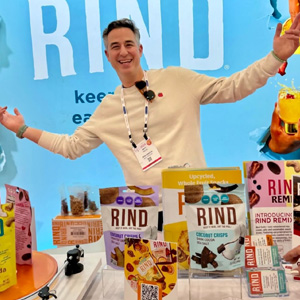
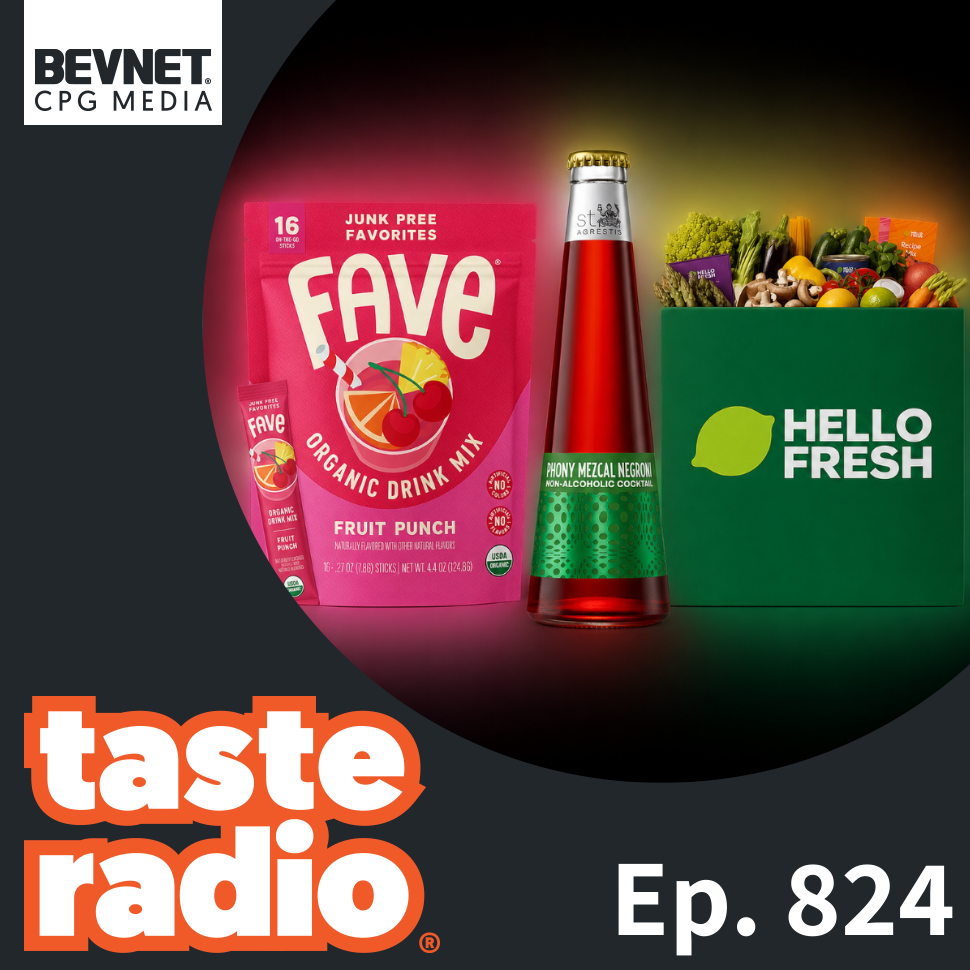
[00:00:10] Ray Latif: Hello friends, I'm Ray Latif, and you're listening to the number one podcast for anyone building a business in food or beverage, Taste Radio. This episode features an interview with Matt Weiss, the founder and CEO of Ryan Snacks, a brand of sustainable and better-for-you snacks, best known for its peel-on dried fruit products. When Matt Weiss launched RIND in 2018, he was praised for creating an innovative and eye-catching brand of upcycled fruit snacks. Six years later, New York-based entrepreneur is winning plaudits for his efforts to build a vertically integrated healthy snack platform. Industry acclaim is nice, but Matt will say that his primary focus is to create lasting value for his company, shareholders, and consumers. Last month, RIND, which markets dried fruit snacks and fruit and nut mixes that are sold in retailers across the U.S., announced the acquisition of Small Batch Organics, a Vermont-based manufacturer of granola products. According to a press release about the deal, the combined companies will have a retail footprint that will include 12,000 locations and generate over $25 million in sales by the end of 2024. Ryan's decision to acquire Small Batch Organics is rooted in Matt's stated mantra, do something to drive ever-forward progress. It's a statement of intent that comes up often in my interview with Matt, which we recorded at Natural Products Expo West 2024. As part of our conversation, Matt explains why he wanted to develop RIND as a platform snack brand from the outset, how he attempts to maximize the impact of outside capital, how the company used alt-retail channels, food service, and travel stores to drive cash flow, Why investing early in the Brandt Gehrs and a polished product has consistently paid dividends. Hey folks, it's Ray with Taste Radio. Right now, I'm honored to be sitting down with the one and only Matt Weiss, the founder and CEO of Ryan Snacks. Matt, how are you? I'm great. And the honor is mine, Ray. It's good to see you again. Again, indeed. Yes. We've met on many occasions. We first sat down for Taste Radio, when was that? 2017? Yeah, I feel like a lot's changed, obviously, for you. You know, some things have changed for me as well, but RIND has gone from a very early stage, innovative, small brand to something that is sold throughout the country, very well known, very well respected, and a snack company. You know, when RIND first started, it was very much about dried fruit, and it has evolved into something different and bigger and better. It's just amazing to see what you've accomplished, what you've built to this point. I can't not talk about your hoodie. We got, we got to talk about your hoodie for a second. The design is based on the Run DMC logo from the eighties and yours says... RIND MVP. RIND MVP. Everyone on my team has one.
[00:03:09] Matt Weiss: How does one acquire one if you're not working for RIND? There's this little cottage website called Etsy. Where they can, for a price, make just about anything. But let's not tell our friends Rev Run. This is an homage to the 80s, you know, classic. When we launched Remix, which is our fruit and nut snack mix, we paid a little tribute to 80s hip-hop. You're from New York. Always been from New York? Actually from South Florida, which in many people's view is New York of the South.
[00:03:34] Ray Latif: That's right. But you reside in New York now.
[00:03:36] Matt Weiss: I do, yes. Yeah.
[00:03:37] Ray Latif: And the company that Ryan just acquired, Small Batch Organics, where is that based?
[00:03:40] Matt Weiss: They're based in Southern Vermont in a town called Manchester, which is about an hour north of Albany. And Vermont is a spectacular state, Green Mountain State. And the business that we acquired is called Small Batch Organics, and they make some of the best granola and specialty chocolate products. not just in New England, but anywhere in the country. And they've been at it for about six or seven years, very like-minded culture to RIND, very innovative, but a great lineup and matchup of what they do great was something RIND lacked, which is manufacturing, and what RIND does great, which is brand building, sales, marketing, distribution, was something that was new to them. So it was one of those things where it really, the stars aligned.
[00:04:19] Ray Latif: You know, I talk to entrepreneurs often, as you know, and I think about the vision that they have for a brand. I think what a lot of folks may not think about or may not plan for is the evolution of their company, the evolution of their brand, the opportunity they have beyond that initial vision and idea. When you launched the company, did you see it as a snack brand? Did you see it as being more than just a dried fruit company and something that could be sold in different parts of the store?
[00:04:46] Matt Weiss: Always, actually. While it did start as a side hustle and we viewed dried fruit as our first proof of concept of the idea of the outside of the fruit containing the most nutrients, we always had a broader vision in mind. It was never rind fruit. It was rind. and the concept of nutrient density in a overlooked part of the fruit that could also solve two problems, maximize nutritional benefit and minimize food waste, is very analogous to lots of different categories of snacking, whether it's root vegetables, whether it's whole grains, whether it's nuts, seeds, legumes. There's a lot of folks who have overlooked what we'd believe to be the hero, which is the edge of the fruit that houses more of those vibrant properties that make the fruit or the other snack so delicious and tangy.
[00:05:34] Ray Latif: The thing that stands out most for me about Rhine is the versatility that you've shown with the brand, the places that you can go with the brand that you've created. And I talk about Rhine and I've talked about how brilliant a brand it is first and foremost. The name, the logo, just the brand aesthetic, the positioning, which really hasn't changed. Yes, you've added a lot to the brand in terms of line extensions. But you got it right from the get-go. You got the branding right from the get-go. How much of that allowed you? How much of that gave you permission to go other places?
[00:06:07] Matt Weiss: This is where the art of brand building takes place versus the science and research. There's magic in brands. When I was working for riffing with my wife on this idea of the power in the peel, and we came upon that name, it just took hold. There was power in that four-letter name, and there was power in, I think, the universal nature of fruit. a low education understanding of why the skin is so rich in nutrients and flavor. As you know, it was a lesson that I learned from my great-grandmother who had a health food store and just preached whole foods before it was, you know, kale was cool. And so it was, I think, a mix of a powerful universal concept in a category of snacking at the time that had no differentiation, no real innovation. And we were able to tap into a lot of different good cross currents, whether it was tangy, bittersweet flavor profiles, whether it was the rise of craft cocktails with a beautiful dried, you know, citrus chip on the end, it was the right time. And I'm really most pleased that while the business has evolved, the brand look, feel, identity has remained the same because it's really worked spectacularly.
[00:07:18] Ray Latif: Yeah, and it's something that's very expensive to try to change or fix if you feel like there's something wrong with it. I mean, a brand revamp, a package refresh, all these different things are challenging and expensive.
[00:07:30] Matt Weiss: We don't take for granted that, you know, out of the gates, we've spent a lot of time kind of architecting the simplicity, the elegance of the look and feel. And it's really powered us through where people sort of, we've built some awareness in the market nationally where people have seen our product at multiple different touch points and recognize it.
[00:07:47] Ray Latif: You talk to people who have been in this business for a long time. They're like, look, if you ask investors for money, make sure they know there's a real possibility they're going to lose that money. And this is where I think entrepreneurs, I don't want to give a blanket statement here, but you have to be really careful about costs. You have to be really careful about where you spend your money. And I think you've done a really good job of not spending your money in the wrong way, of investing in innovation and investing in manufacturing most recently, investing in team. Just, this is a broad and general question, but where do you see the best use of money? How do you identify those places where, yes, let's put our money here and where not to spend your money?
[00:08:25] Matt Weiss: We believe there's a lot of shiny objects out there that can be very tempting, that can be very distracting. But that may not have any return on value or investment. And I think you hit it with team. I believe when you get the right person in the right seat and everyone in the boat is rowing in the same direction, it is amplified, the power of that. And the focus on finding great talent, retaining that talent, and constantly looking to bring rising stars into the organization has been a great use of my time personally in my role, but also everybody on the team. And some of our most critical hires, particularly on operations, since going into vertical integration requires pretty much a Herculean understanding of a totally different business, came through relationship and a referral. And I realized the synthesis of having planted a thousand seeds as part of building RIND over the last six years has been just being in the orbit of great people and getting a call when someone thinks they have somebody in mind who's a great fit culturally for RIND. The focus really has been on team, certainly product and innovation and staying differentiated, not just with our focus on the skin, but with the types of fruits that we're using so that we have to be doing something different in a world of sameness. And I'd say those are the two twin areas has been up to now, innovation and team. More recently, it's on operational excellence in running an efficient manufacturing facility, which again, we're new to. but was a deep ingrained skill set of the company that we acquired and of the team that we're retaining.
[00:10:02] Ryan Snacks: Vibrant Ingredients is the natural ingredient partner powering food and beverage innovation, delivering flavor, function, and protection through a science-backed portfolio. Vibrant delivers purpose-driven solutions that help brands create extraordinary experiences. Discover what's possible with Vibrant today. Visit VibrantIngredients.com.
[00:10:30] Ray Latif: It's expensive to hire people. It's expensive to hire good people. Good people are not cheap. And for a reason. They know what they're doing, they're experienced, they're motivated, they're passionate, and they should be compensated. When you think about your hires and making that investment in a new hire, even if it is a little bit of a stretch for the company, have you kind of, you know, waffled on, you know, should we spend the extra few thousand, tens of thousands of dollars on this and has it paid off most in those cases?
[00:10:54] Matt Weiss: It has. And, you know, we try to be not pennywise pound foolish and to really think about the upside, the longer term upside that we see in someone's potential. And we understand that not everything has an immediate return and it shouldn't. There's time to gel, there's time to get, you know, acclimated and then hit the ground running. But if our judgment calls and our instincts are more often right, we're willing to sort of pay ahead for that potential that we see in somebody. A great example is, you know, what we love to look for is initiative. So we have an individual on our team who's a tremendous rising star. And proactively, this person reached out and said they wanted to take like a Wharton continuing education class in manufacturing and in food safety. And it was a costly separate bill, but it was something that we felt was a very worthwhile business expense and a worthwhile investment in this person. And I was just blown away by that initiative where the self-improvement, the notion of, I think by doing this, I can contribute to the company at an even higher level degree was, is something that we really look for. And we have been very fortunate to build an awesome lean team, about 10 people. And now we have about 15 additional in terms of manufacturing. When has a hire not worked out? Look, I think the hire has not worked out when on both sides, our expectation was a little off. Maybe it was too high. The other individual's expectation was maybe more rapid advancement where we weren't prepared to, we hadn't seen enough to sort of make that call. You mean rapid advancement as in they wanted a promotion? Exactly. Everything is alignment, and we have a very open, transparent style of leadership, myself and my business partner, Ben. We have weekly team meetings, and you kind of know within the first 90 days whether someone is tracking. I'd say toward really thriving within the type of organization we have, which is very transparent, very honest, merit, you know, and run with initiatives and a focus on what we call KWR, which is kill Em With rindness, which is an attitude of, you know, be, be an assassin, but in the kindest possible way and go about focusing on your area of expertise and owning it and building a great reputation for the business. And we really haven't had any that haven't worked out. You know, we've only been around six years. We have a 10 person team, but thankfully we've had a lot more successes.
[00:13:14] Ray Latif: I imagine this killing with Ryan is, is like, you know, putting someone in a headlock. I mean, I'm really, really sorry about this. I'll let go. When you let us on your shelves and you get us into your stores, I'll let go. That's how it goes. Well, earlier you said that Ryan as an, as a brand, as an organization has been great, consistently great at sales and marketing. And it's so important. It's so important how to be able to be really these days exceptional in your relationships with retail buyers. There's just so much out there and there's such a limited space on grocery store shelves. What do you think are the most important attributes of Rhein when it comes to sales and marketing? I mean, is it your personal relationships with retail buyers? Is it the product itself? Is it the brand? Is it your relationship with your consumers? What rises to the top?
[00:13:57] Matt Weiss: Like everything, I think it's a confluence of events and factors, but I do think what we have been doing in terms of raising awareness for cosmetically imperfect produce, giving a second life to fruit seconds has really been an incredible tailwind. You've seen the Upcycled Food Association and the growth there. Ryan was proud to be one of the first members of that group. And, you know, sometimes a rising tide really helps buyer awareness of a trend where we have seen some really forward thinking buyers build an entire sustainable snacking set focused on upcycled certified brands. That's been a powerful, you know, cross current in our favor that we believe we've helped sort of lead. The other is the brand and the concept of fruit is back to that universal notion. And the category in which we started dried fruit, but which we have expanded off of was a sleepy category. And when Ryan comes along with exciting, bold packaging, unique fruits, differentiation around functional benefits of the peel. That's newness that was missing, that a buyer gets really excited about because they can make space amongst all their raisins and prunes and say, wow, let's bring in, you know, orange chips, kiwi chips, dried watermelon, dried coconut, you know, things like that.
[00:15:20] Ray Latif: And the retailers that you've got into are pretty diverse. I'm really excited when I can go into a CVS and see Ryan. I mean, and they've made a real effort ever since they got rid of cigarettes in their stores. They've said, OK, we got to replace revenue that was generated from cigarettes, which just let's pause here for a second. Just like think about how ridiculous it is that a pharmacy, a place where you would go to get things to help your health or be beneficial to your health. And they also sell cigarettes. It's crazy. Anyway, they've made a real emphasis on having better-for-you snacks in their stores. But it's also kind of one of those things where, is this the best place to rind? I guess they're taking this initiative to offer better products, but would we be better off doubling down on Sprouts or Whole Foods or somewhere else? How do you think about a place like that, a non-traditional place for snacks?
[00:16:06] Matt Weiss: No business is linear. And I think what works for some, which has been an inch wide, mile deep in the natural channel, and then you broaden out. There have also been those cases where going with a universal concept, going wide and national early has worked. And because of that lack, the not one size fits all, what worked for us because we were punched in the face, right? The Mike Tyson quote in 2020 with a once in a century pandemic that all of us encountered. And that's pretty much when we launched from the side hustle days into the commercial days of the business. The alt channel was what built RIND in the first year when retail was locked down and anything that wasn't Purell or paper towels wasn't, you know, bolted down and not moving. The way you built your business was through online channels. whether it was Hungry Root, whether it was Thrive Market, Imperfect, a lot of the grocery subscription, which have become big platforms, and travel eventually. So it was a great time to sort of connect with all those food service channels that were really hurting and strike opportunities and deals where RIND couldn't afford it prior. But now when things were a bit more in balance, we were able to say the world will reopen one day. And when they do, We need to be at multiple touch points that project a national brand. Travel has been a huge calling card. Drug has been a huge calling card. The visibility that allows you to, you know, I think they say it takes seven impressions before somebody actually makes a purchasing decision. We know we needed to get big fast with a scrappy budget. We weren't beverage. We're getting big as fast as you can as the play. The way we did it was through unique, innovative real estate and channel selection. And we were forced to do it because conventional retail was not open to us at the time. So it forced us to be scrappy and versatile. And I think it's built a lot of resilience.
[00:17:55] Ray Latif: Were you more excited about the opportunity to grow big fast or were you more terrified about that idea?
[00:18:01] Matt Weiss: You know, it just always felt like one speed, which is forward and fast. It's never felt like, oh, we're hitting a slowdown or like when you're building something, you are charting something that had never existed before. So it requires less about like the throttle and the speed and more about just fight through whatever obstacles you're going to face because you're going to face them daily and try to walk away from each day creating a little bit of value. planting an additional seed that you have no idea when it's going to bear fruit. But that always felt like a successful day, whether it was slow, whether it was fast, it was just go forward.
[00:18:38] Ray Latif: Well, I know you said you have to be scrappy. And I hear that often from entrepreneurs is when you are limited, when you do have limited resources, you have to find ways to accomplish the goals that you set out. You have to find ways to meet your retailer needs. But it helps to have money. It helps when you have investment. It helps when you have great investors who are backing your vision and backing your strategy. It's hard though. It's hard to raise money. It has been for some time. You know, what's been your strategy to fundraising?
[00:19:02] Matt Weiss: So look, I think we've done a lot of things differently. Again, everyone's path is their own. I launched this company at a later stage in my life, in my career, where I had spent two decades prior in a different field in finance. And, you know, I believe that was actually a big advantage, both in terms of my better understanding of the mechanics of building a business and having seen and studied businesses that went public and those that were zeros. But I also think it helped in being able to take the seed capital that I had put aside to bet on myself. And when I self-financed and bootstrapped the business for the first two years, allowed us to reach some momentum in critical mass before we raised any first outside capital.
[00:19:43] Ray Latif: Can I ask you a question, Matt? And you don't have to answer this if you don't want to. How much seed capital, how much did you initially put into the business?
[00:19:49] Matt Weiss: I put in a couple hundred thousand dollars and, you know, you try to set a limit and not trip over that red line, but as it takes over your life, you know, it's hard not to continue to feed the beast. But I set aside a nice chunk and was able to, again, own the business outright while continuing to invest in growth.
[00:20:07] Ray Latif: Do you think you needed more at the time or do you think the business would be where it is today if you'd said, I'm putting a hundred thousand into this or was $200,000 the sweet spot?
[00:20:15] Matt Weiss: I don't know. It's a tough question. I don't know exactly what kind of the magic would have been. I think what felt right was getting the Brandt Gehrs that has served us really well from day one to now dialed in and project. And so that You know, for a lot of folks, they don't invest, I think, on the look and feel. It's more on the product or on the concept. Here, our product was simple. It was single ingredient. And there wasn't, you know, I knew what to do and how to tell that story. But what we invested in initially, again, when it was that side hustle day, was a polished, shelf-ready, project-a-million-dollar brand when you were just an idea still.
[00:20:54] Ray Latif: And I think the other part of that is it wasn't quirky. You know, I see a lot of package design these days. They're fun. They're beautiful. They're quirky, I think is the word I used. But they don't necessarily feel professional in a, this is going to be in Sam's Club kind of way.
[00:21:10] Matt Weiss: Yeah, you know, maybe that was by design, maybe it was by accident, but it felt like, you know, because the idea is a big idea and Fruit is, again, back to universal, not going anywhere, not trendy, not chasing anything, it felt like the look and feel also needed to be durable and kind of stand multiple cycles and not play into an overly Erewhon world, but it can work in Erewhon and it can work in Kroger and it can work at a Hudson News. And so we have hired and still work with an incredible design firm. I'll give them a shout out to Pulp and Wire out of Portland, Maine.
[00:21:43] Ray Latif: I interrupted you about five times as you were talking about your first outside investment, your first outside funding. When you decided to make that decision, how did that lay the foundation for future funding opportunities?
[00:21:55] Matt Weiss: Yeah, it was a really big decision. Again, prior to that, we didn't have a board. We didn't set aside an option pool. There was a lot to learn just from going through the motions of raising capital for the first time, not to mention selling a part of something that was, you know, you'd been integrally involved with exclusively up to that. But finding the right partner makes all the difference like it does in life. And we were fortunate to have had a great investor in a firm called Melitas, who had seen us and understood that we were side hustling, almost couldn't believe it, and sort of said, if this is how far you've been able to take something and then you're running back to your day job and you don't go all in, you're an idiot. And so that notion and what I had seen from spending a lot of time with this individual and their team, When you find the right partner, linking up with them, it doesn't feel transactional. It doesn't feel like selling a piece of your business. It feels like, what can we tap into here that you can really help amplify what we're doing? You believe in what we're doing? And we were fortunate in our first seed investor to get that. Again, it was helpful because it was right into launching into the pandemic. So that first year to be able to have so much back and forth pivot on an evolution of the business and a sort of thought leadership to bounce off against was really important. If we were doing that in an echo chamber, it would have been difficult, but they were giving us information about what their portcos were seeing in real time. That was really valuable. And then fast forward into 2021, As our business started to really grow significantly year to year, we linked up with Valor Siren Ventures, which is a joint venture between Valor Equity Partners and Starbucks. And they've been a tremendous Series A investor, our largest investor. And it's been incredible, again, tapping into networks and growing the overall business in a dynamic way has been a great recipe for us.
[00:23:43] Ray Latif: Those private equity firms and VC firms do their due diligence on the companies they invest in. They do a lot, typically. You have to do your due diligence as well. These days, and I guess historically, we've seen investors get frustrated with founders and remove them from leadership positions or ask them to step down and become a chief visionary officer or chief creative officer or something like that. I imagine that that would make your blood boil thinking about, yeah, I can just feel it, actually. Maybe the folks can feel it on the podcast as well. But it's the last thing a lot of founders want, to just be essentially kicked out of their company or reduced to a minor role. How do you trust them so that that never comes up, that they never are like, hey, Matt, we need to have a call. You know, we have to talk about your position.
[00:24:29] Matt Weiss: I think when those things happen, they don't happen, you know, in a vacuum. There's clearly something's not working. And, you know, I would hope that someone would have, I would have enough self-awareness to sort of say, huh, you know, something's amiss and this might be coming. But I think in many ways, it's not true of all brands, but this, because of the way it started and the way it morphed, in many ways, I've infused a lot of my own personality into this brand that I feel in an odd way, they're connected. Again, that's more industry talk. People picking up a bag at CVS don't know anything about Matt Weiss. But I hope that there's an authenticity that comes through that started with, you know, the personal story of a healthy family history with a great grandmother who was an OG foodie. And I would find that to be really hard to separate both in terms of the background and the passion that I bring to the brand and also you know, the financial capability and operational savvy to make important decisions, even when it's outside of my skill set, to see that potential in other hires, as we talked about my business partner, who, while also having a background in finance, complements, you know, my skill set in a great way. So, you know, I think we have a really good handle on the vision, the strategy, and we have a good, healthy board dynamic. But if and when there would be cracks, I hope we'd be as aware to see them and make sure we course correct.
[00:25:51] Ray Latif: Well, let's come full circle because you bought, Ryan bought, Small Batch Organics last month in February. Well, it was announced in February. Announced in February, closed in October. We're here at Expo West and I'm sure there's gonna be a lot of people who are like, congratulations, this is so amazing, you know, this is, a great combination of two brands and seems like a great opportunity for Ryan to really reach the stars. Say 10 years ago, I think investors might say, you own your own manufacturing? What's wrong with you? There's plenty of co-packers out there. I think during the pandemic, because of supply chain issues, if you did own your own manufacturing, it was a bonus. It was a good thing. I wonder where investors stand today. How did your investors evaluate this strategy, this plan of becoming a vertically integrated company?
[00:26:33] Matt Weiss: It definitely wasn't, you know, in the cards or in the board agenda when we first started. And I think there was a healthy amount of skepticism in those early meetings when we said, you know, we're going up to Vermont to visit this company that we're having advanced talks with. And it was like, OK, you guys go, you know, take this trip. But then, like, let's focus on selling more into Walmart. What became evident was Yes, there have been cycles where owning assets has been a competitive advantage. Asset light has then become a competitive advantage and speed to market was valued more dearly and high revenue growth. But what never goes out of style that I have learned is cash flow and the ability to survive and live to invest and innovate for another day. And we found the vast majority of businesses that have had that fighting chance have all had, not all, but to a large degree had owned manufacturing or some sort of owned element of their supply chain in common. where they could control their own destiny. When they were out of stocks, they were well positioned to over-deliver for their key partners and key accounts. They were able to become a low-cost, efficient producer. They were able to innovate. faster. They were able to create custom programs with key accounts like a Walmart or a Costco who want to do something unique and different to excite their customers and therefore make some tweaks and do it rapidly. And that idea of owning, manufacturing, and fulfillment. We also took in fulfillment. Why not do two really hard things? I really think that sets us up with a longer lens and a longer term vision, not to just build a brand to potentially sell one day, but to build a business to build a good business. That's really, really been important and instructive. as we have watched some amazing brands. Again, some pursue an incredible success with co-packing, but in this industry, for a lot of grocery-based snacks, there's so much margin that gets taken along the way in the value chain. And when you're dealing with a high-input raw material, like fruit to begin with, it's ever more imperative to control what you can control. And for us, just the way this opportunity aligned with getting to know Lindsay Martin and her team at Small Batch Organics and seeing the power and complementary nature of our two products, fruit, granola, seeds, nuts, it's sort of like, okay, these are all friendly and harmonized. And also, you guys are incredible manufacturers. Let's go.
[00:29:11] Ray Latif: How many phone calls did you have with Charles Korostein from Lesser Evil about all this?
[00:29:15] Matt Weiss: Uh, Charles is a phenomenal advisor to us and I spent... Is he part of the company? Does he have an official role? He's a small owner in the company. He's an advisor and he's just a big hearted, great guy, Charles from Lesser Evil. And, you know, we would spend a lot of time going up I-95 to visit him in Danbury, Connecticut. And their facility was such an eye-opening. I'm sure you've been there. I haven't. I'm dreaming about going there one day. It is popcorn paradise. It is like the Willy Wonka of popcorn. But that was what was so exciting to see. I know a lot of founders might go and see manufacturing and freak out and say, I'm going to outsource this till the end of time. I loved the roll-up-your-sleeves, messy middle, where you could just optimize, find a ton of efficiencies, do things differently and not be one of 20 other brands on some pecking order of priority list for somebody else's business. Charles and the mentorship that he's provided and the blueprint we've seen in Lesser Evil has been really helpful in this. And there's so many other brands like that where manufacturing has played such an important role in building the brand the right way. not without its challenges and failures and stumbles along the way. You know, when you own manufacturing, you own the problem, but you also have an opportunity to do things so much more efficiently and differently that can allow you to survive.
[00:30:37] Ray Latif: I also think about a brand like 88 Acres, which started out as a really tiny brand based in Massachusetts, I believe. And now, you know, they're everywhere. And I think they're still, well, I don't know if they're still on JetBlue, but I mean, you see their brand in a lot of different places. But I want to go back to this point that you made of building a company not to sell it, but building a long-term value or a company with long-term value. That's a decision between owners, investors, shareholders of the company. You might say, I don't necessarily, I'm not thinking about selling Rye, not now, not in 10 years from now. But your investors might have a different perspective. Your employees might have a different perspective. Other shareholders and stakeholders might have a different perspective. How do you get everyone to be thinking in the same way about the future of the company?
[00:31:21] Matt Weiss: Yeah, I think just how, you know, there's no linear path to building your business when we first started own manufacturing a granola company in Vermont that was not in the cards. You know, I think it's important to be really open-minded about the paths that a business and the success they may have that may be surprising in some areas or with some products can take. And I think what RIND has proven is that we've done, we've tried to do things differently, just about every way we have, from our founding story of finance guys getting into fruit, to the channel strategy of alt retail, to the diversification outside of dried fruit into more fruit, nut, and granola snack mixes. And I think it's a testament to our board having faith and trust in myself, and my partner to execute on a strategy, even if that strategy evolves, but to believe in the value creation that we can bring and that we see and to make really good judgment calls. At the end of the day, everything is a judgment call. And we want to create value every day. That's my sort of mantra is do something to drive that ever forward progress. And part of that is also creating optionality. And it's not to say if an opportunity to link up with a larger strategic or a private equity firm presented itself that we wouldn't evaluate that independently. But if you think of that as an outcome, I think it's flawed. And I think it will force you into making some short-term decisions at the expense of a long-term business. So keeping the focus on build a foundational business that can generate a lot of free cash flow to invest in your brand, to invest in team and innovation will create the opportunities it creates, whatever those are. And that's a sign of things working. And if you're having fun and you're building and creating, I would think most savvy, reputational investors would be able to see that and be willing to be a little more patient with the twists and turns of operating and building a business.
[00:33:28] Ray Latif: Matt, you know, you know why we have a ton of respect and love your brand. And, you know, Mike eats you guys out of house and home every time he comes to these shows, but it's so great speaking with you. And thank you so much for sharing so much insight and wisdom with our audience. I'm so excited for the brand. I'm so excited for you and your family. It's, it's just remarkable what you've created. And I've said this on the podcast. My favorite parts of doing this and being in this industry is meeting an entrepreneur when they're just getting started, when they're small and they just had this dream and like, I'm going to create something. I'm going to build a category. I'm going to do these different things. And they actually do it. That's the best part of my job, seeing that.
[00:34:03] Matt Weiss: as very, very kind words. The cool thing is I still feel like I'm just getting started. So, you know, what may look like success to some is still a scrappy, we're the new kid on the block attitude. And we have a lot to prove and a lot to do. So a lot more to come.
[00:34:19] Ray Latif: 25 million dollars in annual sales at the end of 2024 would be a, you know, I would call that a success. Just getting started, Ray. Fair enough. Matt, thanks so much again. Thank you. That brings us to the end of this episode of Taste Radio. Thank you so much for listening. Taste Radio is a production of BevNET.com, Incorporated. Our audio engineer for Taste Radio is Joe Cracci. Our technical director is Joshua Pratt, and our video editor is Ryan Galang. Our social marketing manager is Amanda Smerlinski, and our designer is Amanda Huang. Just a reminder, if you like what you hear on Taste Radio, please share the podcast with friends and colleagues. And of course, we would love it if you could review us on the Apple Podcasts app or your listening platform of choice. Check us out on Instagram. Our handle is bevnettasteradio. As always, for questions, comments, ideas for future podcasts, please send us an email to ask at Taste Radio. On behalf of the entire Taste Radio team, thank you for listening, and we'll talk to you next time. you