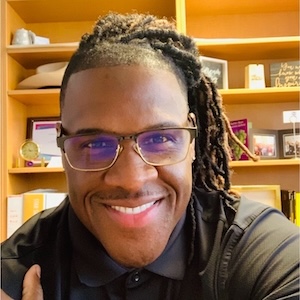
[00:00:10] Ray Latif: Hello, friends. I'm Ray Latif, and you're listening to the number one podcast for anyone building a business in food or beverage, Taste Radio. In this episode, we're joined by Todd Davis, a veteran retail buyer with Kroger-owned King Soopers and City Market. Todd Davis, a seasoned Kroger executive with over 30 years of experience, has a sharp instinct for what makes a brand not just survive, but soar. As the Category Manager for natural, local, and multicultural brands at Kroger's King Soopers and City Market banners, Todd has spent decades championing innovative products and the passionate founders behind them. But for him, it's not just about the numbers. It's about purpose, authenticity, and impact. In this episode, Todd shares his strategy for identifying standout brands and why he's especially driven to support women-owned and BIPOC-owned businesses. He also discusses his hands-on, relationship-first mindset and his belief in brands that are shaking up traditional retail by selling with heart, disrupting with intention, and truly connecting with today's consumer. Hey folks, it's Ray with Taste Radio. Right now, I am honored to be sitting down with Todd Davis of King Soopers and City Market. Todd, great to see you.
[00:01:32] Todd Davis: Hey, great to see you as well, Ray. Thanks for inviting me by. I really appreciate that.
[00:01:36] Ray Latif: Yeah, we're here At Expo West 2025. How many Expo West is this for you?
[00:01:39] Todd Davis: This is actually my second Expo West and I've been to one Expo East and a lot of Cahey shows as well. So it's been a lot of, you know, a lot of understanding the brands out there as I go to them and just kind of get some insight from them. So it's been a pleasure coming out here At Expo West. It's always fun and I enjoy it a lot.
[00:01:55] Ray Latif: Have you been able to walk the floor much?
[00:01:56] Todd Davis: I have, I have. I've already kind of came into some brands that I'm interested in, bring it in for 2025 and see how they're going to work out in our division. Yeah. How long have you worked for King Soopers? I worked for King Soopers for two years, but I've been with Kroger for 30 years.
[00:02:09] Ray Latif: 30 years?
[00:02:10] Todd Davis: Yes, sir. 30 years. That's impossible.
[00:02:12] Ray Latif: You look like you're 30 years old yourself right now.
[00:02:15] Todd Davis: I appreciate that, Ray, but no, I've been, I have a long journey. My journey has been all over the place, from a store leader, store director, to a division rollout manager, over process changes and solutions, and understanding 5S and best practices, and even starting off as a bagger. So I've been having a very fruitful career.
[00:02:33] Ray Latif: I love that. I love that you started out doing probably the most basic job you could do at the store and working way up to where you are right now. And your specific focus at King Soopers is?
[00:02:43] Todd Davis: Natural Foods, organics, local and multicultural.
[00:02:46] Ray Latif: Amazing. Amazing. I got to address this because you mentioned before, perhaps in the mics, you're also an avid collector of hip hop music.
[00:02:53] Todd Davis: Correct. Correct.
[00:02:54] Ray Latif: To the point where you have a title.
[00:02:56] Todd Davis: Yes, I do. I'm the largest hip hop collector in North America. It's one of those things that I started out when I was 11 years old. I just really got into it and over time just started getting artifacts, pieces, very rare items, very rare items. I have over 40,000 cassettes. 10,000 vinyl and about 40,000 CDs as well and a lot of merchandise and, you know, like little statues and all that kind of fun stuff out there. Amazing.
[00:03:25] Ray Latif: Who's your favorite artist?
[00:03:27] Todd Davis: If I had to go overall, my favorite artist is, it's going to be a cliche ask, but Eminem. I like it really, I like Eminem. I liked his journey from 1997 to now, still active, and he never just, he never changed who he was. Yeah. That's what I like about, he was very, his authentic self. I like that he was authentic self.
[00:03:42] Ray Latif: Have you ever had a chance to meet him?
[00:03:43] Todd Davis: No, actually, they reached out to me and wanted me to do like a documentary with Eminem as far as his biggest fans. But I haven't heard anything back yet, so we'll see how it goes. So I'm sure Eminem has a lot of fans out there.
[00:03:55] Ray Latif: Yeah. Clearly you're passionate about hip hop. Clearly you're passionate about grocery. I feel like that is the key component of having a successful career and doing whatever you're doing, is being really loving what you're doing. When it comes to the success that you've had over the years, and I'm looking at some of the things that you've accomplished with King Soopers over the past year in 2024, and it's just really impressive if you look at the sales for Natural, the sales for some of the local brands that you work with, it's really amazing. How do you think about getting up every day and doing what you do and going to work, being as passionate as you were from the first day you joined Kroger?
[00:04:37] Todd Davis: Yeah, I would tell you, Ray, that when you think about it, every day is a present. That's why it's called present. So it's a gift to you. So you got to go out there and get it. I mean, you got to really go out there and see how can you make a difference in your life. I was telling Jane Miller just the other day that when you think about the tombstone, one of the things on the tombstone is that the most important thing on there is not your name, It's not the day you was born, not the day you left us, not even your family. None of that is as important as the dash, the smallest thing on the tombstone is the dash. And we're currently, we're all in our dash right now. And so when you look at the day you was born, dash, the day you left us, that dash is the most important thing on there. And so every day I kind of take that concept and that practice and how can I make a difference? Because a lot of us are really living for our resume. Some of us are living for our obituary. So you just got to go out there and really get it every single day.
[00:05:30] Ray Latif: I love that. I've never heard that before. The dash is the most important thing on your, on your head.
[00:05:34] Todd Davis: Yeah. The most important thing. And again, I got some good news for you.
[00:05:37] Ray Latif: Yeah.
[00:05:37] Todd Davis: We're in our dash right now.
[00:05:38] Ray Latif: Yes, we are. Thank God for that. That's a good thing. Yeah. You reached out to us and I'm so happy that you did. I assume that you listen to Taste Radio and you consume BevNET and Nosh content on a pretty regular basis. How do you interpret, dissect, evaluate some of the industry news that you read and hear about?
[00:05:59] Todd Davis: I just think that you have to go out there and get that information. Some of it's not going to go to you. I just do a lot of things to go out there and just capture what's the newest thing. What's the gap opportunities with our division? Is there something out there that I need to bring in that we don't have in? Or is there something out there I need to expand the SKUs on? There's a lot of different things that I identify when I'm out there looking for what can be a market disruptor or what can be something in the market that I need. And I digest all that information. But the most important thing I do is I go out there and make our competition as well. Have a conversation with the people within the store and just, hey, what's working for you? How's this brand working for you? And if it's something that's working well in their retail, and I don't currently have it in our retail, let's have some conversation with their brand and see, can we bring it in? I think that's real important to not get stagnant and stale. Just continue to grow every single day. The 1% rule, you know, get 1% better every single day.
[00:06:52] Ray Latif: Yeah, I see a lot of brands here At Expo West and I love shopping at stores and finding something new. It's pretty rare when I go into a store and say, hey, I've never seen this brand before. And I'm interested and attracted to products for a variety of reasons, but I'm not a retail buyer. What motivates you to pick something off the shelf? learn more about it, taste it, and potentially put it on your store shelves?
[00:07:16] Todd Davis: Yeah, there's a couple of things. First of all, it's people. I think that the brand, once I meet that brand and get to know the people, I think that's really important. Another thing too is that let's try something new. I think every single day we just got to go out there and get something new. And so when I look at those brands and I identify those brands that I want to, what I want to bring in, I think what's really important is how can it make a difference? And here's the most important thing with the brands I bring in, because a lot of brands I bring in, they're not in line, they're not in the park, they're not down the aisles. I use a shipper program or NCAP or things like that. And so what that means is that a lot of those items are not on the shopping list. So how can I get this item that's not on the shopping list that's gonna be incremental impulse buy inside the shopping cart? And so what I do is that we have different ways and methods we do it. We do a lot of demos and sampling. We do any kind of thing that they can do from their side as far as email blast to their consumers, their DTC consumers. We just have a lot of things and avenues that we do to get their brand and some excitement about it. Some excitement more than anything is one of the key components of it.
[00:08:20] Ray Latif: I asked you this when we first chatted. Do you have more brands coming to you? Are the brands that are on your shelves, are they the result of more inbound interest in being at King Soopers and City Market? Or is it more you going out there in the market and saying, hey, we want you in our stores?
[00:08:37] Todd Davis: A little bit of both. There are some times where I go out there and treasure hunt, I call it treasure hunting. I go out there and try to find a brand that's gonna be a treasure for us. And there's sometimes, a lot of times, especially from a local perspective, a lot of local brands in Colorado reach out to me and say, hey Todd, what can I do to get on the King Soopers City Market shelf? And so we begin our discussion like that.
[00:08:58] Ray Latif: I'm sure there's a lot of times when you've said no. I'm sure there's a lot of times when you say this is not the right fit. How do you determine, even if you like a brand, that it is not the right fit? Or how do you determine if a brand doesn't necessarily fit into your personal life, but is a good fit for King Soopers? How do you differentiate? How do you make that decision?
[00:09:17] Todd Davis: So there's a few things. One of the things I do is that I take emotion out of promotion. There are some items that I just don't have a taste for. I don't like cold coffee. I can't drink cold coffee. It just upsets my stomach. But we've done some deals with some cold coffee brands, some super coffee, Rise Coffee, and those are successful brands that we partner with. But one of the things that I tell you that makes me go out there and select those brands, and sometimes you have to say no to them, is that A lot of things are data driven, you know, so we look at data. And then also just, I call it good analytics. Kind of like, is this brand really going to work in our store, in our region? And what I do is that go out there, talk to the brand, tell them what my expectations are. They tell me what they expect from us as the King Soopers City Market. And then what we do is have a conversation and let's give it a try. because I think you miss 100% of the shots you don't take. So I think it's really critically important to just give a brand a try. Now there are some times where it's not a no, but it's a not right now. There may be some things from a capacity standpoint you're not ready for. There could be a lot of different variables that make me say, not right now, not right now. Let's get some growth in you. Maybe you have to go to another retailer first. There are some other things that plays a part in that, but it's never really a no, it's more so like a not right now.
[00:10:36] Ray Latif: How long is the lead time to go from, I like your brand, to getting on shelf? Do you have a cycle at King Soopers, or is it very much, hey, we like this brand, you can be in our stores next month?
[00:10:47] Todd Davis: Yeah, it's from brand to brand. So like, say for instance, we just did something with Bonfire Burritos in Colorado, in Golden, Colorado, with Ray and the team out there. And one of the things about them, they're already a successful brand. They're successful. And so it was just turning that switch on and just, it's the right thing for business. And it has to bring a brand of, you love cookies. I know Debbie Tatarini is gonna get me about this, but you love cookies. She came in my office and she just heard about me looking for local retailers and she was doing some cookies. And we went from the infancy of packages and a Ziploc bag to being on our shelves today. So it's all about the brand expectations, what the brand know. And also not only that is that, How much passion? I know we talked about that earlier, but how much passion does this person have that want their brand on the shelf? Because the hard work is keeping it on the shelf. Absolutely. Not getting it on the shelf. So that's the key. That's the key.
[00:11:38] Ray Latif: You mentioned Super Coffee. I spoke with their founders. about three years ago and they said, getting on shelf is the easy part. That's the easy part. And people don't recognize that the hard work comes after. And the hard work comes after in maintaining and enhancing your relationship with your buyer, with that buyer relationship. And I'd love to just chat about a few things as it relates to best practices for maintaining and enhancing that relationship with your retail buyer. How do you say as a brand founder, how do you say no politely to a request that you may have of the brand and the founder?
[00:12:15] Todd Davis: Well, if they can't say yes, what's the timeline? If you can't, if I say, hey, I need 300 shippers and they say, well, Todd, we can't produce that many. And so I give them a timeline. Okay, I'll give you six months to produce that. And if they can't meet that timeline, then, you know, there's nothing I can do about that. But a lot of times I tell them why I'm saying no, because I think that's important element of it, because that could go and course correct if needed to bring that whatever that no was to life.
[00:12:41] Ray Latif: How about transparency? When there's something that they need to tell you and it may not be something you want to hear, is transparency always the best practice or is it, let me wait to give them the bad news?
[00:12:53] Todd Davis: No, I think transparency is always a good thing. I think it's a good thing, especially because the one thing you don't want to do as a brand is over-promise and under-deliver. I think that's the bad, bad way of thinking. And I know a lot of brands get excited, like, oh my God, I'm gonna be in King Soopers and City Market, but don't over-promise and under-deliver. Just tell me what you can do. Tell me if the things I'm asking for are attainable. And if they are attainable, let's work and let's do some business together. But the one thing I don't want you to do is say, yeah Todd, I can get those 300 shippers to you by next Monday. And then all of a sudden, me and my team is writing a sales plan together. And I reach out to them, I say, OK, they're going to be in the store. I need them in stores Wednesday. I need another month. That's not the right thing to do.
[00:13:35] Ray Latif: Yeah. And for you as the buyer, the last thing you want is empty shelves and you're going to have to fill those shelves with something else. And it may not be the brand that you were working with, but hey, it's, it's filling your shelves.
[00:13:49] Todd Davis: And it's true because, you know, I have leadership that I'm responsible for. I have rules and, and P&L that I'm responsible for. And so the things about it is that if leadership, I'm telling them leadership, I'm getting excited about a brand I'm posting on LinkedIn, I'm doing all these different things to get excited about the brand. and then they can't fulfill that first order and I'm having empty shelves, leadership's going to look at me about that because that's my responsibility. So I tell the brands, I'm transparent. I like to call it hot topics, honest, open, and transparency. So whenever I talk to a brand, we say, let's have a hot discussion. Then they tell them, I say, hot is an acronym, honest, open and transparent. And so we talk about all those things. And a lot of times I've had brands say, I can't do that right now, let's come back. Then we have came back and cycled some brands and brought them back in that when they were ready. So it has worked both ways.
[00:14:36] Ray Latif: How do you talk about success with brands? How do you explain what success at King Soopers represents?
[00:14:42] Todd Davis: So I think success in King Soopers represents is Whenever I bring in a brand, a new brand in, they're on shippers. Most brands, their goal is to be in line in a pod, down the aisles. And I tell them, I say, okay, so what can we do? And what can I do to help you reach that goal of success? And now, once you get down the aisles, to your point earlier, the work's still begun, but now you're in the aisles, now you're down the aisles, you're in a pod, you're in a planogram, they call it. And so now, a lot of brands, that's what their success is. Some brands move units very fast, because we look at units by store by day. Some brands do very well in there. Some brands not so much. A lot of brands, their only goal is to get down the aisles. And then once they get down aisles, I tell them, now the real works begin.
[00:15:24] Ray Latif: Yeah. When I talk to brands, a lot of times they have a pretty robust new product development strategy or at least a vision for what they want to create next, what their innovation strategy looks like. How much should they share that with retailers and buyers like yourself? They share it a lot. They share what our vision is.
[00:15:43] Todd Davis: Is it important to share it with you guys? It is, it is because I think some brands move a little too fast with innovation and then some brands don't do enough innovation. And I think it's something to share with us because just getting our opinion, you know, we see a lot of brands, I introduced last year, 48 brands, new brands to the shelf last year. So a lot of times they shared an innovation for me and I just give my opinion on what I feel about the innovation and is it a gap opportunity? When I look at gap opportunities, is this something that the consumer's gonna want that's new for that brand. So a lot of times it's just about gap opportunities, identifying things like that. But they do share it with me. They do. And I feel it's important too.
[00:16:23] Ray Latif: You've talked about some of the brands that you've worked with that are local to your stores and the importance of maintaining a good presence for local brands. What programs exist such that you're supporting the development of these brands such that they can expand, they can incubate almost in your stores and expand elsewhere? I mean, what programs exist at King Soopers?
[00:16:44] Todd Davis: Yeah, we do have like an incubation program. We call it the Colorado Proud section. And this Colorado Proud rack is in our approximately 70 stores, half of our stores. And there's some items that's just local. You can't find down the aisles. They're not in the POG. They're just in our local area. And what it is is that a lot of those items grow and move the units as far and fast enough that they'd be going to POG. So one of them was wild chips. They went to the POG. And so we're working with a couple of them now that's moving units so fast that our local rack that we have in our stores it's not having holding power for it. So we have to get it moved to the shelf.
[00:17:24] Ray Latif: I would call Wilds a pretty disruptive brand in that they do something that isn't common or had been seen before they did it. They make chicken chips made out of ground up chicken. And I don't even know how they specifically do it, but it's a pretty innovative concept. I would call that innovative. I would call it disruptive. How do you define innovation? How do you define disruption?
[00:17:45] Todd Davis: Well, to the brands, you know, every brand is very passionate about their product. So I get a lot of, it's the best thing ever. It's the best thing ever. Sometimes it do. It really does be the best thing ever sometimes. But what it is is that what I go out there and look for, and with a disruptive, when you look at a, like a quote unquote disruptive brand, is it really? Is it really? And what I mean by that is that, is it something in the market that's going to really gain the consumer's awareness and gain the consumer's interest on, you know what, I'm going to try this brand. We worked with Melting Forest, David and Sean. And what it was, is that it was a mushroom functional drink. Very colorful, very psychedelic looking. And I talked to my boss, Mr. Wadsworth, and I say, hey, I want to bring this mushroom drink within the stores. We had some discussion about it and it was like, Let's give it a try. Let's give it a try. This drink was only in our shippers for the last six months, did close to half a million dollars in our stores. They're successful. That was the disruptor. That was something that we really needed. Same thing with Saint James Tea. I work with the Saint James Tea team. brought them in, they're disrupted, they have partnerships with HBO White Lotus. So those are some things that, are you truly a disruptor? Because everybody's definition of disruptor is different, even mine. But what I look for is that something that's gonna really go out there and get the industry shaking, I like that.
[00:19:12] Ray Latif: Is it ingredient-driven? Is it formulation-driven? Is it packaging-driven when you're talking about innovation?
[00:19:17] Todd Davis: It's all, it's all. It can be something that's ingredient. It can be, actually sometimes it can be just brand-driven or just, what's the word I'm looking for, kind of cycle, like what is it, something that's going to break the wheel, break the cycle of the mundane, every kind of item that we get. That's a lot of things. So it can be ingredient-driven, it could be brand driven, it could be creativity driven. A lot of times it's creativity. There was a tea company that was very creative out there in Expo East I saw last year, no, in Utopia I saw last year, and I thought that was really creative, but I'm a creative thinker, and so I like a lot of creative thinking brands.
[00:19:56] Ray Latif: You brought up Saint James. I want to stay on that for a sec. Saint James was founded by someone who has a ton of experience in the beverage industry. They are well-financed, as far as I know. Support on shelf has to be key to potential success. Yes, you could get into 3,000 stores, but how well are you able to adequately support those products? I would assume that the Saint James team has done a good job in that respect.
[00:20:22] Todd Davis: Outstanding job.
[00:20:23] Ray Latif: Yeah. How much does that play into your decision making when you know that a brand will be able to adequately support its products on shelf?
[00:20:33] Todd Davis: It goes back to that early conversation I had about not over-promising on deliver. So Saint James, he was talking to me. They had some big dreams. They really had some big dreams, but they were delivering. That's the key. They were delivering on those ideas and those concepts and those, that creativity that they had. And then it's a great product as well. So the product, when the product's great, the people are great, everything's great about the product. That's what drives it in and bring it into the stores. And it really makes us, and when I say us, King's Soup is a City Market and Kroger, bring their product in and give the product a chance.
[00:21:06] Ray Latif: One of the amazing things At Expo West is that the evolution of this show has brought a pretty amazing evolution in what we see for package design, for label design. So much of what is on the show floor looks slick, looks like it's been produced by a pretty high-end design agency. It just, it looks really cool. Sometimes though, you see a package or you see a label that could use some work. How do you evaluate, assess when a brand doesn't necessarily have their packaging as buttoned up as they should? What are some mistakes that you see in packaging that you're like, this is not going to work for our stores. You got to go back to the drawing board.
[00:21:52] Todd Davis: Yeah. There are some mistakes that's made. You know, a lot of times you're local, you should have the Colorado Proud symbol on your product. That's how I feel. That's an easy win. If you're in a shipper, let the shipper tell the story about your product. A lot of times, don't give me a corrugated box with just brown boxes and think the chips is going to sell. Let it know that it's non-GMO or zero sugar or zero calories, whatever it is that you're proud of. Let the shipper tell the story. And that's probably one of the most things I deal with more than anything. The packaging, a lot of people are just really, really passionate about their packaging. So I don't give a lot of input in packaging design, but what I do give a lot of input with the shippers. When the shippers get to the store, I say, okay, the shipper is going to have to tell the story. And a lot of times, because I work with brands in their infancy, a lot of times we're able to have a discussion about the shipper. the dimensions, what we're looking for, is it going to be metal, is it going to be cardboard? My biggest thing is that I tell the brands, please make sure that your shipper tells the story. That's extremely important.
[00:22:52] Ray Latif: Interesting. I've never heard that before, but I think that's such a good point.
[00:22:54] Todd Davis: Yeah, you have to let it, because to go back to Melt and Forge real quick, yeah, zero sugars, non-GMO, sugar-free, so all these other things, but it tells the story on the shipper. So that way you don't have to pick up the can and Google it or look at the ingredient label. The shipper is already going to tell you all the benefits about this drink and about this brand or whatever the case may be.
[00:23:11] Ray Latif: We've talked a lot about what the relationship should look like or at least what the communication should sound like when you already have a relationship with someone like yourself. But getting that first meeting, planning for that first meeting, What's most important? When a founder walks into your office or when they have that first phone call, what are the things that they need to be prepared to answer? How should they set expectations for that meeting?
[00:23:41] Todd Davis: I think the expectation should be high because this meeting is not going to make or break you. I'm not going to say anything like that, but you always want to put your best foot forward. Sure. You want to come prepared. You want to have a capacity statement if you can.
[00:23:52] Ray Latif: What's the capacity statement?
[00:23:53] Todd Davis: capability statement, capacity statement, just showing you capabilities as far as like, this is what my brand is capable of. I'm capable of producing these many units per day. I'm capable of expanding or scaling if I need to. I'm capable of adjusting the price or, you know, a lot of different things. So that's one of the first things. Another thing too, is that if you have a PowerPoint presentation, give me everything about it. Let me know what the cost is, what your margin is you're looking for, who's your distributor, how many doors you're currently in, what retailers you're currently in. Give me all the information you can give me. Don't leave anything out on the table because I'm going to ask questions. I'm going to ask a lot of questions. That's one of the things I do and I'm very proud of is that I go in there and ask a lot of questions that they may not think of. But to my point is that you just have to put your best foot forward. Come in with some energy. Come in with some energy. I think that's really important. You got to have that energy. And then just tell me a little bit about yourself and your product, you know, because there's some things that some red flags that may pop up or some green flags may pop up. But I just think that it's really important to make sure that you're honest, open and transparent. Yeah. During this discussion.
[00:25:00] Ray Latif: And energized.
[00:25:01] Todd Davis: And energized. Yeah. Hotty.
[00:25:04] Ray Latif: I was talking to, just before we hopped on the mics, I was talking to the founder of a brand called Kevin's Natural Foods and the founder, Kevin McCray, he and I were chatting about taste. And he said that when he goes into a, or when they first went into Costco, the Costco buyers were pretty blown away by the taste of the product. You said earlier, you don't drink cold coffee. When you're evaluating taste, And it's something that you don't necessarily consume. How do you assess whether or not it's going to be a fit with your shoppers?
[00:25:38] Todd Davis: You know, you know, Ray, taste is very subjective. Sure. You know, I don't like spicy food. So, you know, I'm not going to try the spicy food, but I got an office full of people that's very honest with me and just want to let me know. And not only that, I have a neighbor that's going to let me know. I have a wife that's going to let me know. I have two sons that's going to let me know. I use everything I can to go out there and talk to people and say, OK, here's what we have. Here's the product. Hey, son, take a couple to school. Let me know how it goes. Mother, son, take a couple to work. Let me know how it tastes. My neighbor. And give me the feedback. And once I get that feedback from the group, my team out there, including the office, family, neighbors, and things like that, Then I kind of go back and just have a discussion. And if everybody says, oh my God, this is so amazing, that's a win. But if it's like, it's not for me, it's not for me, it's not for me, and I tasted it well, it's not for me either, we might have to have another discussion about it.
[00:26:33] Ray Latif: Yeah, we're going to have another discussion. Todd, you had talked very eloquently and beautifully about the mentors in your life and those folks that have helped you in your three decades of career, which still blows my mind because I'm looking at you right now. I'm like, you look like you're 30 years old.
[00:26:51] Todd Davis: Thank you. I appreciate that.
[00:26:53] Ray Latif: And some of these folks here, one of the folks here you already mentioned, Jane Miller, who is the CEO of Rudy's and has done an amazing job, has an incredible reputation in this industry. Talk about the importance of mentors and how they have helped guide you along your journey.
[00:27:06] Todd Davis: Yeah, I think mentors is extremely important. I have a lot of people that's in my corner. First and foremost, my wife, you know, she's incredible. a mentor for me and a friend for me. So that's, you know, I've been married for 22 years. So that's one of the things that's really important for me. And then I have people like Jane Miller, Holly Adrian, Chris Albee. I mean, I can go on and on. Becky Diaz, Angela Jensen. It's been so many people that's been instrumental in my career path. I will tell you that Jane has been very, very, not only, she's not only my mentor, she's my friend as well. Jane and I, she texted me this morning, you got to come to my booth today. before you leave. But you know, she just, I think it's important to have a mentor. And I think it's also important to mentor others because your journey is going to be not always the straight path. You know, my journey has been all over the place in the last 30 years for Kroger. But I think it's important to talk to somebody that had those experiences, to tell you that, no, you're doing it wrong. Or you may need to rethink that or great job. The reason why I got to King Soopers, because Joe Kelly was the, he's the current president of King Soopers and City Market, but he was the president of Houston. And I built a great, great relationship with him. And I told him, I was out here on vacation with my wife and I said, I would love to come to Colorado one day. And he said, are you serious? And this one, I was working in Houston as a store director. And I said, yes, sir, I am. And he said, well, let's get it started. And so it was just a perfect fit. I eat very clean and stuff like that. So it was just one of those things that when I got this role, I wanted to do something and really push it. It's a general push every single day to be great, great, great at this role. And also not great at this role, but it produced great results as well. I think that's extremely important. And then you talked about disruptors earlier. I'm a disruptor as well. Every Expo West I was going to or Expo East or Newtopia, whatever the case may be, a lot of brands tell me, hey, we're women-owned. We're women-owned. We're women-owned. I heard that over and over again. Women-owned. And that's proud. That's something to be proud of. And so what I did last year, I said, you know what? I talked to Jane Miller. I talked to Chris Albee. And I talked to Holly Adrian. Those are the three, my three core people. And I said, you know what? I want to do a women's own end cap in our stores. And they was like, really? And I was like, yeah, I really want to do women's own in-cap. And so it was just been so many people to help me with that. Stephanie from Kroger helped me. She said, let's get together and do it. And so she gave me all this list of women that was doing it. I created the in-cap in 30 of our stores. We did over $600,000 with those brands. Yeah, we did it from March to August. And it was a huge success for us. And just little things like that has me been a disruptor. I was even glad that Erin Watson from WeBank, she invited me over to meet some brands as well and implement those brands and brought them in. And that's disrupting, that's disrupting. Those are the type of things that you have to go out there and say, let's not look at the same mundane retail store. What can we do that's different on the cutting edge? And that's one of the things that we did was success.
[00:30:06] Ray Latif: Amazing. Amazing. I'm so glad that we had this opportunity to chat, Todd. This has been such a great conversation. Thank you so much for taking the time. I know there's going to be folks that are going to say, hey, I want to get in touch with Todd. I want to get into King Superstores. What's the best way to connect with you?
[00:30:20] Todd Davis: Connect with me on LinkedIn. I'm Todd Davis and you'll see me on LinkedIn. And I do a lot of just posting on LinkedIn because I think it's real, real important to share success with others. But the best way to get on me is LinkedIn. Just reach out to me and let's have a discussion about bringing your brand in.
[00:30:34] Ray Latif: Okay. If I think there's a cool brand that you guys should look at, is it okay if I email you about that? Of course. You know that, right?
[00:30:41] Todd Davis: Of course. Of course. I'm always chasing something new. It's the relentless pursuit of perfection. Trying to chase something new and trying to never get complacent with what I do.
[00:30:52] Ray Latif: Outstanding. Todd, once again, thank you so much for being with me today. Let's stay in touch and keep this conversation going.
[00:30:58] Todd Davis: Thank you, Ray. I appreciate it. Thank you for your time today as well. Thank you. Thank you.
[00:31:04] Ray Latif: That brings us to the end of this episode of Taste Radio. Thank you so much for listening. Taste Radio is a production of BevNET.com, Incorporated. Our audio engineer for Taste Radio is Joe Cracci. Our technical director is Joshua Pratt, and our video editor is Ryan Galang. Our social marketing manager is Amanda Smerlinski, and our designer is Amanda Huang. Just a reminder, if you like what you hear on Taste Radio, please share the podcast with friends and colleagues. And of course, we would love it if you could review us on the Apple Podcasts app or your listening platform of choice. Check us out on Instagram. Our handle is BevNetTasteRadio. As always, for questions, comments, ideas for future podcasts, please send us an email to ask at Taste Radio.com. On behalf of the entire Taste Radio team, thank you for listening, and we'll talk to you next time.
[00:31:54] Todd Davis: you