[00:00:00] Kathryn Bricken: More SKUs, more data, more complexity. The beverage industry is changing fast. VIP helps suppliers, distributors, and retailers stay ahead, turning purpose-built beverage data and technology into smarter decisions and better results. For more than 50 years, VIP has helped power the beverage industry. Now, they're building what's next. VIP, empowering smart decisions. Visit VIPinsights.com for more information.
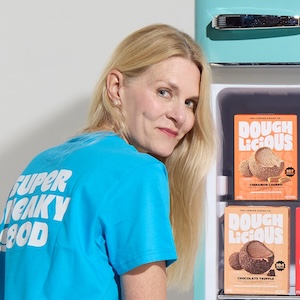
[00:00:37] Ray Latif: Hello friends, I'm Ray Latif and you're tuned in to Taste Radio, the leading podcast for entrepreneurs, makers, and innovators in the food and beverage industry. Dolicious is proof that product obsession and strategic growth can make a small brand big. In this episode, Kathryn Bricken, the founder and CEO of Dolicious, shares how she turned a London-based cookie dough startup into a global frozen dessert powerhouse now in 6,000 U.S. stores, including Whole Foods, Target, and Kroger. Kathryn talks about perfecting her signature gelato bites, scaling frozen logistics, securing $5 million in funding, and launching innovative treats like the brand's new banana oat cookie skillet with plant-based collagen, all while keeping quality and joy at the center of the brand. Hey, folks, it's Ray with Taste Radio. Right now, I am supremely honored to be sitting down with Kathryn Bricken, who is the founder and CEO of Doelicious. Catherine, it's so great to see you again.
[00:01:50] Speaker 1: Hey, Ray. It's great to be here.
[00:01:52] Ray Latif: I'm here at your office, your compound almost, in central London. And I just took a tour of many different buildings, many different offices. You have quite a bit going on. I saw how they make well you make the new cookie skillets and in particular a banana and oat variety that's made with collagen that's coming to the UK very soon and coming to the US next year. And my goodness, it smells good in there. And it took a lot for me not to just grab one of the uncooked skillets and just get into it with a spoon because it is, I've tried it and it's amazing cooked. I imagine it's just as amazing uncooked. Yeah.
[00:02:34] Speaker 1: Well, and we want to bake it so the customer has ease, like there's no fuss, no mess. So they can devour straight out, like thaw it out or put it in the air fryer, the oven, the microwave for minutes and have this warm, gooey snack any time of day.
[00:02:51] Ray Latif: Yeah, it's brand new.
[00:02:53] Speaker 1: So new. We just did the capability trials. And yeah, you saw first production today, which is always like, it was amazingly calm in there. Because usually first production is quite crazy. Yeah, nothing goes as planned. But hey, you brought us good luck. Everything went as planned.
[00:03:09] Ray Latif: I appreciate you saying that. I would have expected to see, no, I was going to say, I would have expected to see dough on the ceiling and dough on, you know, people's safety glasses. And there was none of that. It was very clean. It was very well organized. And your team seems like they've got everything under control. Seems. I mean, I don't know for sure. I was in there for, you know, 15, 20 minutes, but they seem very, very capable. And I want to talk about your team and how you've built out this incredible staff. But just backing up for a sec, you know, Delicious is known for its cookie dough and gelato bites. And they are, folks, if you haven't had an opportunity to try them, they are incredible. Go to your local Whole Foods. They're there.
[00:03:47] Speaker 1: Target, H-E-B, Wegmans. Fresh Direct, go puff. You need that midnight snack, go puff it.
[00:03:55] Ray Latif: There you go. 6,000 stores in the U.S.?
[00:03:57] Speaker 1: Yeah, we'll be in 6,000 doors at the end of this year, launching in Kroger this month and more Albertsons stores.
[00:04:04] Ray Latif: It's nuts, right? You just broke into the U.S. market in late- 2024. Okay. You started this company in 2017. Yeah. And what were you doing prior?
[00:04:15] Speaker 1: Well, I was in the food business in, I worked for Borden Foods in Canada. So I graduated from university, went into politics. met my husband, married. He said, we're moving to Toronto. He was taking a job with Bain & Company. So that was when I could relook like, what am I doing in life? What do I want to be doing? And when I got my visa, I applied for a job with Borden Foods and worked on, I was a brand manager for pasta. and then moved into product development. So we had a manufacturing factory. That's where I got my first like factory, you know, obsession in Montreal. And the offices were in Toronto and I helped create different pasta flavors from a lemon pepper linguine and chili pepper tomato, different flavors. Then moved back to the U.S. and worked with caterers, but went into pastry. I had always loved cookies and cakes and knew that I would do something. If I wasn't doing cookie dough, I'd probably be doing donuts or I'd be doing pastries. Just like this obsession with the malleability of the dough. When I see the dough rise or when I can poke it with my finger, I love it. Like I love how it transforms too. It can go big, it can go small, it can go crispy, it can go soft. There's just so many ways to change the dough for your liking.
[00:05:35] Ray Latif: And I don't think I don't recall if I had seen many brands doing a novelty frozen dough or a frozen novelty cookie dough. And when I first saw delicious, I'm like, this is kind of a no brainer. Why hasn't anyone been doing this? Was that the sort of light bulb moment for you is like, hey, there's actually white space in the first novelty category in that I have this idea that nobody else is doing.
[00:06:00] Speaker 1: So, as you know, we already made the dough, so we started as a ready-to-bake dough, and then I was obsessed with ice cream sandwiches. I'm like, I'm going to make an ice cream sandwich. I actually bought in machinery to try that would press down the dough, we would bake it, then we'd load it with ice cream, then we'd put another layer on top. It was messy. It was messy for us. It was messy for the customer. There was no way I could scale it up with the space I had. So I had a machine that made these beautiful pucks that were dinner party proof. And I was like, Hmm, I think I can tweak this machine and I can take the dough and wrap it around the ice cream. So I started in 2019 making that recipe. And in 2021, it was done. It was the hardest recipe for me to nail. I can't even tell you how many times I would get really excited, it would taste fantastic. And then I would put it through the machine and it would tear. put it through the machine and it would crack upon freezing. So I would go, I'd have to start the whole process from making the dough, wrapping it around the ball, and then wait to see what happens. And so many times it was an epic fail. So I remember the one weekend when I decided I was going to nail this and I made my husband and my son eat a lot of dough. And I would freeze it, take it out, melt it, freeze it, back and forth, and I nailed it. And came to the factory and I said, let's run a capability trial, let's scale it up. It scaled beautifully, and I looked at it, I cut it open, and it was gorgeous, but on the outside it looked so ugly. It was like, oh, it needs something. Nobody's going to want to buy it looking like this. So then we decided it had to roll into something. So what would it roll in? Cookie crumb. So now our cookie crumb can be everything from a freeze-dried powder to chunks of chocolate, sprinkles, cocoa powder with chocolate bits in it. So whatever will complement the dough and the gelato.
[00:07:55] Ray Latif: I'm just blown away by the fact that this was only four years ago.
[00:07:58] Speaker 1: Yeah. So this is like, look at it. It's like an ice cream sandwich.
[00:08:02] Ray Latif: For some reason, I felt like the brand or at least the brand of the products that I know from Delicious had been around longer, but you've grown so fast.
[00:08:11] Speaker 1: Yeah, but we were growing the dough across the pond. Okay. So while you were thinking about other ice cream sandwiches, we were growing the dough in Europe and abroad and showing the UK that this American girl could make this amazing cookie dough.
[00:08:28] Ray Latif: It is amazing. I just had your salted caramel mini. It's so good.
[00:08:33] Speaker 1: Yeah. And the outside is these crumbs that we make. So it's almost like the crumb topping and it's a caramel biscuit crumb.
[00:08:42] Ray Latif: It's so delicious. And it's easy to see why you've grown, or at least you've developed this following for delicious as quickly as you have. And why retail buyers are hungry for products like these. But again, going back to the fact that you've grown as quickly as you have, you know, in four years till now, four years from the inception of this product until now, There's been a lot that you've had to do. You've had to decide or determine that this is a product that you're going to make in-house, that you're going to have to bring in people that are going to help you scale the production and scale the business, scale the brand itself. What's been the most challenging part of building this Brad Avery the last four years?
[00:09:27] Speaker 1: I think frozen logistics, those two words are very, very difficult. You know, we pick the right partners to get the product from one place to another, and we trust that it's going to get there in perfect condition because we take such pride in everything we do here. But sometimes, you know, we get let down, like the temperature won't hold, which then the product ends up on shelf, and it's not the ultimate experience for the customer, which is very upsetting. Especially when so much care goes into every piece or every gelato bite, so it looks beautiful, which is why I'm really excited about the skillets, because they will not be as temperature sensitive. And when they go into Whole Foods this month, nationwide in the U.S., the customer's going to see it. They can thaw it and eat it. They can stick it in the microwave, like I said, the air fryer, and they can just enjoy it.
[00:10:20] Ray Latif: I thought you were going to say, when it came to the most challenging part of the business, that it was finding the right people internally to help you build the brand, because you were on your own for so long. I mean, how many, how many employees did you have in 2021?
[00:10:36] Speaker 1: Oh, 2021, probably 15. And now we have over 50.
[00:10:43] Ray Latif: And that's between production and?
[00:10:45] Speaker 1: Yes, production and sales and marketing.
[00:10:48] Ray Latif: I often talk to entrepreneurs who are successful or have built successful brands and they say it's really about the people.
[00:10:54] Speaker 1: Yeah, I think I've been really lucky though, super lucky. Like today you met people that have been with me for six years that run the lines. So they know the process in and out. They've seen how far we've come. They've helped me grow the dough. And then I've been really lucky like in the US too. We've had people come to us that see the brand and are passionate about the brand and want to work to grow this amazing business I've built. I also, I want them to share in the love so they get equity. Like they are partners in crime. Like we have to do this together.
[00:11:25] Kathryn Bricken: So I win, they win, we all win.
[00:11:45] Ray Latif: Artificial intelligence is reshaping every corner of the beverage industry. But where is it creating real value today? Stay tuned till the end of this episode for a bonus interview when I sit down with Andrew Krizis and Lucinda Awkwad of VIP to explore how AI is moving beyond analytics to automate decisions, improve efficiency, and transform the three-tier system. I've asked other founders this question, which is, do you hire for capabilities? Do you hire for passion? Do you hire for alignment with your own personality? You had a great story that you shared with me about one of the heads of your production, who is an incredible person from Romania, who you found at a hardware store.
[00:12:34] Speaker 1: Yeah, that was the Canadian in the hardware store. The Romanian was a temp.
[00:12:38] Ray Latif: Oh, okay. So I'm getting this confused, but I mean, however you found these folks, what did you identify in these people that made you think that they could be the right fit or a good fit for your company?
[00:12:48] Speaker 1: Yeah, probably smart, you know, could think out of the box. And I think that if you're smart, then you can, you have the ability to learn different trades and then also passion. truly believe in me. Like so they, they understand what I'm doing, why I'm doing it, and where my goals are. And I constantly every day talk to the team about, you know, we strive for greatness. If something's fine, it's not good enough. Like it has to be perfect, amazing. And that's how we're going to break through all the noise because there's a lot of products out there. Right. So for us to become known and grow the brand, we have to do something exceptional. So every day needs to be exceptional.
[00:13:28] Ray Latif: Do they know your vision? Does your vision evolve? I mean, do you have a definition for what delicious is in five years? Do you have an idea of what you expect it to be? And do you share that with your team?
[00:13:42] Speaker 1: Yes, and probably not enough. I mean, they know that my goal is to bring our products to the masses and make everybody happy. Like I started this just to make people happy. I'm not saying that, you know, you eat a gelato, but it's going to make you happy. We find joy in things, right? A lot of us find joy in food. And there's a lot of food out there. And a lot of people will eat a protein bar just to get the protein because it won't taste good. But I really truly believe that people that eat delicious, Find joy. And that's what we want to emote. We want to emote joy. And I think there's a lot of things out there in life that aren't very happy. So if I can bring that little piece of joy to somebody, then I've succeeded.
[00:14:23] Ray Latif: when you started working with Whole Foods in the United States, they came to you, right?
[00:14:28] Speaker 1: Yes. Yeah, we were so lucky. And I think it takes a lot of hard work and luck. And that's what most brands will say, you know, they've had that lucky moment, but it's also they had a stellar product, and they work really hard. So we were lucky that the incoming CEO of Whole Foods came to visit our factory. And we showed him our products and how great they were. And he said, we need to get this in the US. And within two weeks, I had phone calls from foragers in the US and working hard to get it into four regions. And then after those four regions, we went nationwide. So again, just like a wow moment that I look back at and I think it's just timing and luck and this epic product.
[00:15:13] Ray Latif: He didn't just happen upon your factory, though.
[00:15:16] Speaker 1: Yeah, he came over as one of his visiting tours, and I got a call from Whole Foods UK, which was one of my first retailers, so I've known the team, and they said, hey, we know you have a factory in London. Can we come visit your factory? So I had no idea what I was getting into, but I was like, sure, come to the factory. We'll show you a good time. So I had no idea what it would lead to. I guess sometimes you go into situations that are unexpected and they turn out to be the best. Maybe if I would have stressed and I would have overthought it, it wouldn't have happened.
[00:15:49] Ray Latif: But did you want to be in the US?
[00:15:51] Speaker 1: Absolutely. Like that was always, I mean, being an American living abroad, my goal was always to bring my product to the US.
[00:15:59] Ray Latif: And this just opportunity happened upon itself and you said, OK, this is the spark that we needed to make that leap. Yes. Again, it's that it was a lot faster than I think you may have realized or certainly that I would have expected going from, you know, a handful of Whole Foods stores into now being 6,000 doors in the U.S. Growth strategy is tough for folks in that sometimes you have to figure out, okay, especially if you're on your own manufacturing, what's the right lead time for certain things? How many stores can we commit to? Can we deal with exclusives? You know, how many new products should we add to the mix? Do we need to enhance or change the flavors for a different audience? Were you unnerved by the opportunity as much as you were excited by it?
[00:16:44] Speaker 1: Yeah, absolutely. And I think it's hard, like you talk about different flavors. So we did a blueberry frozen yogurt that was so good. And if anybody goes to Target and they are able to get, before it sells out, our Countdown to Christmas calendar, it's in there. It is so beautiful. It's fresh and yummy. And we put it in Whole Foods and it didn't do well. Like, who knows why? It does really, really well in Switzerland. It does fantastic in some other countries, but it just didn't take off in the US. So we switched it out and we launched the chocolate raspberry. And in our minds, we thought that it had to be indulgent lead. So we were thinking that the blueberry was just too fruit forward. So bringing in indulgence lead, so starting with the outside being a dark chocolate, So it's dark chocolate with raspberry gelato in the middle or a white chocolate or some more indulgent flavors was where we needed to be as a cookie dough brand. But it's just, yeah, a lot of it's learning and, you know, there's going to be some wins and some losses and you just have to try to figure out what works for what country.
[00:17:51] Ray Latif: How are you speaking to that consumer? I know you talked about indulgence as being really important, but you and I also talked earlier about needing to break through the noise and making sure that not only is your message clear, but that your message is actually getting to the consumer. What's been successful, what's been less successful in making sure that people know who you are and what you're about?
[00:18:16] Speaker 1: Yeah, I think like food porn, showing them how delicious it is, getting the right influencers to talk about our products, using it in different situations from snack hacks. So if they want to make a... One woman made a little protein bowl for breakfast and then put it on top and that was her gooeyness and her milk on top of the protein pot. which was fantastic. Like seeing how people take our gelato bites and use them in different applications. Some people slice them up and put them in with raspberries. There was a girl that on a podcast and talked about like how her body started to like convulse because the chocolate truffle was so good. And it's crazy, like, it's like, you know, this, this, I'll have to share that one with you. Yeah, it's really good. And then, I mean, people like to take the chocolate truffle and dip it in peanut butter because then, hey, like who doesn't love chocolate and peanut butter together? So I think that getting people to think out of the box and how they love our products, but then also having it as just this perfect snack anytime a day. And then on top of that, knowing that it's gluten-free, there's dairy-free options and better-for-you ingredients.
[00:19:26] Ray Latif: But it all starts with indulgence. It all starts with getting people excited about the flavor.
[00:19:30] Speaker 1: Yeah. I mean, we want to eat to feel good, right? Like, if I eat something that doesn't make me feel good, I want something else. Like, I'll keep on trying for that one moment. And it might be the smallest bite of something that tastes good, but I'm the type of person that I literally live to eat. Like, I think about food all the time, but it has to be satisfying. If not, I'm not gonna, you know, enjoy it and I'll keep on looking.
[00:19:55] Ray Latif: Yeah, I think you're very, you're not a typical person, but I think you're typical in that people want to eat good food and they're in most cases willing to pay a premium if it is really good. And sometimes all it takes is, at least for an introduction to a brand, great packaging. And you undertook a rebrand, I want to say it was two years ago?
[00:20:19] Speaker 1: Yeah, 2024, beginning of 2024.
[00:20:22] Ray Latif: Okay, so it was more recent even. And your packaging is just so stunning. You know, you look at a freezer aisle and I mentioned this before, everything starts to feel or kind of feels commodified right now. Everything is looking and blending together in a way that this doesn't really stand out. And then you see delicious. And it's bold, it's bright, it's mouthwatering. It's everything that you would want a package to be in that aisle for it to stand out. How did you think and how long was that process? How did you think about the rebrand and how did you make sure that your vision for the package was met by and created by your designers?
[00:21:08] Speaker 1: Yeah, well, if you saw my first packaging, you would have died because I was like, my favorite color is white. Like I love white houses, white countertops. Like I'm a very streamlined, one color, monochromatic person, because then I can always add color in when I want it. Right. So my first packaging was so natural and we were actually organic. Our first products were organic. And I remember sampling at Whole Foods and I would be standing there and somebody would be like, oh my God, I love it. Like, where do I get it? And I'd be like, oh, right there, right above the yogurt. And they'd walk down there and they're like, where, where? And they couldn't find it because it blended in with everything. And you know, think of all the dairy products, they're white. So when we did the rebrand, which as you've seen our old logo, which was barely visible, like you couldn't really even see delicious.
[00:22:00] Ray Latif: You have a package right behind you. It's kind of hard to read. I certainly can't read what's underneath the London Dough Company. Okay.
[00:22:08] Speaker 1: But at the time, I just never knew where I was going with this. Like I didn't know that the growth would happen so quickly. And for me, in the beginning, it was just a hobby until I really started to grow. It was fun. I mean, it still is fun, but it was just... Probably more fun then, because I didn't have so much stress. So then we had the opportunity to go into the US, which we knew would be our most important market. We didn't have the trademark. So we had to get the trademark. And it was not easy. I mean, we still don't have delicious.com. But we kind of like that we have .co.uk, because this is the mothership. I mean, eventually, I think the US will be our second mothership. But we decided that we needed to get the trademark in the US. So we looked and looked and we were actually barking up the wrong tree. And then finally, when we did get it, we were super lucky because we got it for a really low price, which was completely unexpected. And then once we got the trademark, we knew that we were off to the races and we could do a brand glam design, but it's never inexpensive. I mean, they do consumer research, they look at other products. It's, I mean, it took us about eight months to come up with the logo that we have today. And it's so beautiful because I was talking to you earlier about how it's malleable and it actually moves. So when they showed me that logo, which I had looked at probably like 10 before that, and I just didn't, I didn't feel anything. And when I saw that and I saw it moving with the dough going up and down, it was this moment like, okay, that's it. Like that is it. And then now we have our own font, which is bespoke to us. And yeah, I feel really good about it. Like I absolutely love it. And when I see it on shelf, I know that it was probably the best money spent. I think other brands say that too. People will tell you.
[00:23:59] Speaker 2: that it's the hardest check to write, but the best check you'll write after the process. Quick pause to let you know that the leading event for the beverage industry is headed back to Los Angeles this December 6th through 8th. BevNET Live brings founders, investors, retailers, suppliers, and operators together for product discovery, high-value conversations, and partnerships that can shape what comes next. Early registration pricing is available now. Head to bevnetlive.com to register. Mark your calendar. Nosh Live is back December 3rd and 4th in Los Angeles. Join packaged food founders, buyers, investors, and operators for two days of product discovery and conversations focused on what's next. Early registration pricing is available now. Head to noshlive.com to register.
[00:25:00] Ray Latif: One place where you're not necessarily behind a freezer door is Expo West.
[00:25:05] Speaker 1: Oh yeah.
[00:25:07] Ray Latif: People know my opinions on Expo West. I've definitely stood in a soapbox and said some things about that great show, but you love Expo West.
[00:25:15] Speaker 1: I look forward to it. We've already started planning, and it's March.
[00:25:19] Ray Latif: Yeah. Well, Expo was a big show for you because it helped you land some really important partners for the brand, financial partners, retail partners. What did you do there? I mean, how did you elicit excitement, exposure, awareness for the brand? Because there's just so many. Yeah. I mean, how many, how many different booths are there? Thousands.
[00:25:38] Speaker 1: Thousands. Yeah. It's all about the taste. You know, we just share the product. And sampling is so huge for us. Once people taste our product, they're hooked. Unless you just really don't like cookie dough and gelato. But hey, who doesn't like cookie dough and gelato, right? And we use gelato because it has less fat, by the way, than ice cream. So you'll never have that film in your mouth. I always want everybody to have that really clean bite, clean feeling, and just love it. But yeah, so Expo West, we give away a lot of product. We want everybody to taste it, try it. when you'll know you'll love it. And then we share coupons that people can go get it. We're not a big merch brand. I mean, we just, we have some merch, but we haven't taken the time to give away a lot. It's probably because we're still small and scrappy and, you know, watching costs.
[00:26:27] Ray Latif: Yeah. I think probably investors appreciate that. And you met an important investor at Expo West who led your most recent round. It was a $5 million round that you closed or announced in August. And again, I think that conversation started at Expo West, which is kind of surprising. I mean, if they were interested in the brand, I would have thought they would have reached out prior to that, but they got to meet you in person.
[00:26:51] Speaker 1: Yeah, I think Brian came by every day. Yeah, Brian from Rich's. Yeah, Rich's Product Ventures. And just a great guy, just hit it off, talked and saw the love of the product. And he loved the product and introduced us to his team and it moved quite quickly. And then he introduced us to the Angel Group, which again, is just an amazing team. They're smart, They're strategic, they're helpful. And I think that's what we want in investors. I mean, everybody does, right? You want those people that literally understand you, what you do every day and the product and see the growth potential. And it's hard, right? Because now like we were fantastic, we're indoors, but it's just growing that brand awareness. But they know that. And having somebody realize that your velocity is at a certain point right now, but seeing what it can be in a year with strategic health is massive.
[00:27:47] Ray Latif: Obviously they did their due diligence, but when they were evaluating the opportunity to invest in Delicious, what was most attractive to them? Was it you as a founder and your vision for the company? Was it the product itself? Was it the innovation pipeline? Was it the potential to really dramatically expand your presence in the U.S.?
[00:28:07] Speaker 1: I think it was all of those.
[00:28:09] Ray Latif: So it was me. I think it was me and my passion.
[00:28:15] Speaker 1: And my husband, Dan, that now, like this weekend, we've been married 30 years. He was an investment banker and he believed in me. And now he's our CFO. I mean, he still does some things on the side and a couple boards, but he, I couldn't do it without him. So I think they saw us as a team. So me with my passion and the product and development and innovation, because I don't think you want to invest in brand that has zero innovation, right? And my brain is like a dough fanatic brain. Like I see dough in everything. Like I see a piece and I'm like, Oh my God, it could be a cookie dough pizza. One time I took wontons and I put cookie dough in wontons and deep fried them and oh my God, like every Chinese restaurant should do that. So there's so much potential with the dough and I think they saw that. And then they also saw like, I don't know how many people know, but Rich's Product Ventures, a huge food service. We have not even tapped into that market yet. So the potential of us being in food service in the U.S. It's huge. And that's, you know, a huge growth potential for the brand. So they saw where we are now. They saw that we've continually grown every year, doubled revenues. So only with their help will we just continue to be on that path.
[00:29:30] Ray Latif: Did they advise or did they know about your desire to have a manufacturing facility in the U.S.? And I should make it clear that you are looking at opportunities to create a new facility in the U.S. because currently you're making everything here and then shipping it across the pond.
[00:29:49] Speaker 1: Yes. Yeah. Well, when everybody looks at the numbers, you see why. And you've got to see that our margins, where they are now with tariffs, to where they can be. And also holding inventory, shipping inventory, like it's just, it's not good for the P&L. So once we start manufacturing in the US, then everything changes. And they knew that that's what they were investing in. So, I mean, good news is that we have a lot of opportunities and we've found two different places that will be perfect for our production and that they believe in us too, Delicious as a brand. Because think about it, like even if it's a co-man or it's a hybrid co-man, they have space and they don't want to take on a brand that's going to be an in-and-outer. So a one-hit wonder. So they have to believe in you too and know that you're going to occupy the space, you're going to be able to pay the bills and you're going to grow and they're not going to have to do, you know, changes all the time for different brands because you won't succeed. So it's got to be a win-win for both. And it's hard to find that.
[00:30:52] Ray Latif: You talked about innovation and I've been here for a while and it is so exciting to see you just like it's so lit up when you talk about what's possible with the brand. And there are just so many different paths you can take. Where do you take your cues from? I mean, Whole Foods is a key partner, clearly. How much input does Whole Foods have? How much input are you taking from consumers and what you're seeing on things like, or platforms like TikTok? You know, how much is it just personal intuition about what's right for the brand?
[00:31:24] Speaker 1: Yeah, well, in the beginning, it was all personal intuition, just because I'm such a foodie. Originally, we just kind of went with what I loved and, you know, trends that I would see out there in the marketplace. And I've been fortunate to travel. So I've traveled around the world and have seen different cultures and different flavors. And if we were not a nut-free, peanut-free gluten-free factory, like I would be doing some really crazy things on the side. Like I love tahinis and I love different nuts, but I've had to quell all those desires and kind of stick to what we can do just from an allergen point of view, because it can get difficult if you have all these allergens on site. So I think usually it was me, but now we've gone towards more marketing led. So we're having the marketing team just because we want to grow sensibly and we don't want to waste time going down a path like the blueberry yogurt because that was what we thought would work. But maybe if we would have done more of our due diligence and looked at what the American consumer wanted. and what was doing well, what other products like the data. So now we have Nielsen data. We never had Nielsen data before. So knowing what works and what probably wouldn't work, we would have saved ourselves a lot of time.
[00:32:39] Ray Latif: What told you to get into functional ingredients? Because at the beginning of our conversation, I mentioned one of your cookie skillet varieties is a banana oat plus collagen.
[00:32:48] Speaker 1: Yes, plant-based collagen.
[00:32:50] Ray Latif: Plant-based collagen, which honestly I wouldn't have expected. What was behind that concept? What was behind the decision?
[00:32:55] Speaker 1: Yeah, well, from a long time I've always believed if I'm going to introduce something, I want it to be one thing. Like if I'm going to introduce an ingredient in, like a functional ingredient. And I've always loved functional ingredients, but I didn't want to do too many. Like I would never do something that is high protein, high fiber, collagen added, like it's too much. And the customer gets confused. So you always have to have that one thing. And we actually played around with a ambient cookie for the UK market that was a high protein. And you know what? It didn't taste great. Didn't love it. We used plant-based protein, pea protein. It just, without adding a lot of sugar or nuts, it didn't work. And because we're a nut and peanut free factory, it's hard to get that protein. I mean, think about it. All the protein bars, most of them have nuts in them. So you put the almond in there, it increases the protein or the peanut. And just wasn't my favorite. So I will never launch anything that I personally don't love. Or I give it to people to try. And they're like, wow, I mean, now you might not like banana. Banana can be polarizing. But most people, I would say the majority of the population will like banana flavor. That's why banana bread goes viral, right? And all these TikTok recipes. The other thing is, I want to always be a leader, not a follower. So protein is the obvious, and a lot of people are doing it. So not following, but creating the first one that has this plant-based collagen. So it's the amino acids that help your body's own collagen power up, you know, grow, produce more. And I think that it's important in this day and age when we're all paying attention to better for you, better, better for you, the protein, the fiber, which most of our products are already a source of fiber because of the oats. But I thought collagen would be something unique and different and something for delicious to own.
[00:34:54] Ray Latif: I think it also speaks to the why, right? There's a reason behind you doing this. It's because your customers are already looking for products. They're already looking for ingredients like a plant-based collagen. They're already looking for products that incorporate that ingredient. And so it's not a stretch, right? Right. It's not something that's like, oh, why are they doing this? I think it just, it makes sense. Whereas a high protein cookie, I feel like would be sort of incongruent with who you are as a brand.
[00:35:21] Speaker 1: Yes. Yeah. And the collagen doesn't change the taste.
[00:35:25] Ray Latif: No, it definitely doesn't. I had some earlier today and I was like, this tastes just as indulgent and just as delicious, probably even more so than a lot of the products I've had from Delicious.
[00:35:37] Speaker 1: It's all about the taste. The customer has to love it. We all love it. When we bake cookies and we have them out here in the office, they're gone. Everybody loves to snack.
[00:35:47] Ray Latif: You bake a lot of cookies. Every office that I walked into had fresh cookies everywhere.
[00:35:52] Speaker 1: Yeah, we're the cookie monsters. But I think it always comes down to taste. If it doesn't taste good, then people are not going to repeat purchase.
[00:36:03] Ray Latif: Catherine, if there's one piece of advice that you could share with entrepreneurs about scaling intelligently, about not biting off more than you can chew and being intentional about your decisions on how to grow and where to grow, what would it be?
[00:36:19] Speaker 1: I think you need to learn to say no. And I think it's the hardest thing because everybody wants to grow fast and you want to be in every retailer. But sometimes it's the timing's not right. And what I believe is waiting. So go slow to go fast. And everything will work out, hopefully, if you go slow to go fast. But I learned the hard way, we went into Australia, and we just weren't ready, like the country wasn't ready for us, we weren't ready for the country. And we've actually pulled ourselves out, because it was too much too far away. And something that we didn't understand the time commitment and not having people on the ground. I think that people need to learn more to say no in the beginning than failing. And I've learned the hard way.
[00:37:08] Ray Latif: I think that's great advice. And I think you shared a lot of great advice and insights throughout this conversation. Thank you so much for taking the time to be with me today. Thanks so much for having me here.
[00:37:18] Speaker 1: Thanks for coming to see the Doe in person.
[00:37:20] Ray Latif: Yes, it is. I was so excited for this part of my trip to London, and I'm so glad that we had this opportunity to sit down and talk.
[00:37:28] Speaker 1: Thank you, Ray.
[00:37:29] Ray Latif: Thank you. That brings us to the end of this episode of Taste Radio. Thank you so much for listening. Taste Radio is a production of BevNET.com Incorporated. Our audio engineer for Taste Radio is Joe Cracci. Our technical director is Joshua Pratt, and our video editor is Ryan Galang. Our social marketing manager is Amanda Smerlinski, and our designer is Amanda Huang. Just a reminder, if you like what you hear on Taste Radio, please share the podcast with friends and colleagues. And of course, we would love it if you could review us on the Apple Podcasts app or your listening platform of choice. Check us out on Instagram. Our handle is BevNetTasteRadio. As always, for questions, comments, ideas for future podcasts, please send us an email to ask at Taste Radio.com. On behalf of the entire Taste Radio team, thank you for listening. And we'll talk to you next time. you VIP has quietly powered the beverage industry for more than 50 years, trusted by more than 2,800 distributors and 1,400 suppliers. They have defined this industry time and again, and in this era of AI, they're leading the way. Today, we're joined by VIP CEO, Andrew Krizis, and Head of Sales, Lucinda Aquat, to discuss where the industry is headed and what customers can expect next. Andrew, it's great to see you. How are you? Good. Thanks for having me, Ray. Lucinda, how are you?
[00:39:05] Speaker 3: So great. Excited to be here.
[00:39:06] Ray Latif: Yes. And our audience is excited to hear about VIP's capabilities with AI because it is a topic that is top of mind for so many founders at this point. Andrew, as I mentioned, VIP has been around for over 50 years. Your background is pretty interesting because you bring so much to the table as CEO. How did you come to VIP?
[00:39:28] Speaker 4: Yeah, great question, Ray. And I think it does go back to the legacy of VIP. So I'm incredibly passionate about the beverage and alcohol industry, the broader CPG industry as a whole. So I spent the last 12 years plus working at Nielsen IQ, working with many of the suppliers that could be listening to this, distributors and retailers. And it was about five years ago that I first interacted with VIP and it's actually a partner to Nielsen IQ. And so complimentary partnership was created and I got to know the company a little bit. I got to see the value of what VIP creates in the industry and how it helps support the three tier system. And I was just blown away also by the people. by just the caliber of the talent, how respected they were in the industry, how much knowledge they had across the three-tier system. And so once I started to get to know the company a bit more, I saw just the opportunity for the technology to do so much more across the industry. And with AI, as we were talking about becoming really important and accelerating every day, every week, I started to realize it's a huge moment for AI and technology and more investment to come into VIP, really help our clients, help the suppliers, help the distributors and retailers, and transform how operations and the day-to-day work is getting done. So I just saw that as a great opportunity, both in the technology and AI side, leveraging all of my data background and knowledge in the industry, but then joining a group that has an amazing culture, an amazing team, and a ton of passion behind it.
[00:40:46] Ray Latif: Lucinda, when you came to VIP, you also came with a ton of experience. Just talk a bit about your background in this industry.
[00:40:54] Speaker 3: Yeah, thanks, Ray. So I like to say I was born and raised in the beer business, but I got here as soon as I could. Started when I was 21 with Boston Beer Company. I've worked in all three tiers of the three-tier supply chain over the last 20 years, and I showed up to the first day to the VIP office here in Burlington, and I felt like I should be asking for autographs because VIP is the only set of data and the only set of tools that I've ever used on any of the three tiers. So it was really remarkable to see the team of people that has built such an incredible organization and really built from the ground up over the past 50 plus years that VIPs existed. So I'm honored to be here, a part of the team now to help carry the sales team into the future with all this new, authentic work that we're going to talk about.
[00:41:40] Ray Latif: Andrew, let's just start off by talking about where the beverage industry is headed right now in broad terms and why AI is such a critical strategic investment for founders and businesses.
[00:41:50] Speaker 4: You know, I think about whether you're a small supplier or distributor or a large supplier, you know, the beverage alcohol space. You could be only have a few people at your company or hundreds. At the end of the day, everyone's looking for efficiency, whether you're three people within your company and you're stretching yourself to try to do five jobs. Or again, you're a larger company with maybe 10 people in the finance department. You're all trying to find better ways to do what you're doing so you can drive more product to consumers. So AI is just coming at this perfect moment over the last six to 12 months where everyone needs it. Everyone needs it for similar reasons, for inefficiencies, whether it's helping you run some reporting, it's helping you with pricing, it's helping you optimize something. At the end of the day, there's never enough hands and arms within a company when you're building a brand. And I've experienced that, you know, working with hundreds and hundreds of founders over the last 12 years in my past role with Nielsen IQ. And I see that with VIP. So I think all of the industry, both suppliers, distributors, retailers, are looking at AI to try to understand how can I drive more efficiency? How can I drive a better delivery of my service or product to the end customer? And how can I do it in a way that's going to set me up for success? But now many people are taking it in different ways. You know, AI isn't something that's just intuitive and you throw on a chat bot and all of a sudden you're up and running. So it's really interesting to see how suppliers are leveraging AI, how distributors are leveraging AI, retailers, et cetera. And there's some fun nuances between those three.
[00:43:12] Ray Latif: When it comes to spending money on AI or otherwise, founders want to see a return on investment. And I'm curious about how you measure return on investment when it comes to AI. And also, there's so much hype about AI at this point. Where does hype meet reality? Lucinda, can you tackle both questions for me?
[00:43:31] Speaker 3: Yeah, great questions. So I think I'll tackle the ROI question first, because I think it will address the buzzword as well. But I think when you think about AI, I was thinking back to all these different technological advances and how they've impacted the industry all the way back to when we used to have rolls of quarters to get on the payphone. And then all of a sudden, cell phones helped to make us more efficient. Same thing with printers and then the internet. I think of AI in the same way. It will give us the ability to enable all of our teams to be that much faster, that much smarter, smarter by way of better insights from the data. So if we're able to take a sales report, a sales ranker, and extract out the insights that much faster and distill down to the actual accounts we should be spending our time in, that to me is an instant ROI. There's also back of house applications. We think we talked with our distributors about some of the features that are most important to them as we're building out our new agentic platform. And it's things like avoiding the fat finger on the order. We don't want 10, we want one. We don't want 100, we want 10. And so giving the teams the ability to capture those things in advance, I think is where we see the ROI. It also empowers our retailers to make better orders. So think of predictive ordering in an e-commerce platform like Connect. There is so many great things that we can do to empower across all three of the tiers using all of our agentic features that we have in place now. So if I'm a retailer, if I'm a distributor, if I'm a supplier, that's how I think about the ROI. And it really enables the humans to be better at their jobs. So that in itself, I think is the buzz. I encourage people to think about AI as more of a tool and a way to do their business, a way to go about seeking the outcomes they're looking for versus this buzzword of a tool. And I think when we all begin to embrace it much more, we'll see that firsthand as well.
[00:45:25] Ray Latif: Obviously, technology is moving faster than it ever has before. And it's incumbent upon VIP to provide technology that is keeping up with the times or in this case, keeping up by the day.
[00:45:36] Speaker 4: Yeah, I think you're spot on with it's evolving every day, every week, new models come out, Babel 5 came out for the second time. So it's a constant. It's been great. I've had a few conversations just recently with some distributors and suppliers. And when we talk about the investments, one of the things that came out clearly from our clients was they are interested, they are getting pressure to use AI. And so initially, you know, whether you're a founder on this call, a supplier or distributor, the thought process was, let's just take Jett, GPT, let's take Claude, let's just turn it on for everyone. And like, let's go get some insights. And you can get some gains and insights there. But ultimately, those clients came to us and said, hey, for us really to take advantage of this new technology and capability, we need VIP. We need VIP to do this within all the business processes, because VIP is so foundational to the core operations, whether you're a distributor, whether you're on the supplier side, looking at your inventory and depletions. And so that's where we took it upon ourselves to say, let's look at the marketplace. Let's look at all the different providers out there and take a hard look at ourselves. And we made the decision to make a really sizable, significant investment into a new architecture with AI and an agentic first decision. And what that allows us to do is actually create not just agents and AI on top of legacy products, which again, that still adds some value, but it doesn't change the game. And so we said, let's go down the path of actually building for the next several years, not for the next two months or three months, because a new model is to proceed something, but we need to have a new foundation. So VIPs made the biggest investment or one of the biggest investments we've ever made as a company. And that's going to allow us to have magentic first platform, bring in many different types of data and create agents on top that, again, aren't just giving you some insights, but I like to say are doing work. They're doing work for you as a supplier. They're actually making decisions on your behalf within certain guardrails. And then they're able to communicate for you if you're a supplier. Actually having these agents do work for you, communicate to your distributors, to your trading partners under behalf. Again, I go back to my first point. Everyone needs more arms and hands, right? You never have enough people when you're a small player or a large player. And so actually being able to do some of that work, communicate digitally to distributors, whether it's pricing, whether it's something related to inventory, whether it's shipments. And likewise, distributors having agents that can interpret and engage and make decisions on their behalf and then communicate to their trading partners. That's where we're going as VIP with AI. We think we play a really central role into that core operational element of how the three tier system works. But we were also cognizant that that takes real investment. It's not just lipstick on an existing product and putting in a chat bot and saying, oh, everything's AI. It's really looking at the foundation of what's needed So much has changed just in the last six months, where whether you're a software or data company, what you had built maybe two years ago, even 12 months ago, almost becomes irrelevant from an architectural standpoint, just because the last six months. So that level of investment is something we're fully driving towards and working with a lot of clients on both the distributor and supplier side of how we bring this new platform to life. And at the same time, though, we're still investing in our existing products. That is not stopping. So I think of it from a VIP standpoint, as we're going down both paths, we're investing in existing products, putting AI on top, kind of what I was mentioning with many others in the industry. But we're also going after this whole new architecture and whole new platform. And that's what's really required long term of the three tier system.
[00:49:00] Ray Latif: Whenever I talk to founders, operators about how they choose their partners, it really comes down to trust. And I think when you're talking about AI and the evolution of this technology, it's really important to trust your partner. And it seems like the level of expertise that you guys can provide to companies is just unmatched at this point. So I highly encourage folks to get in touch with the team at VIP. Lucinda, what's the best way to do so?
[00:49:28] Speaker 3: Yeah, thanks, Ray. We are so excited to hear from all our customers. We're getting questions every day, and I do think the best way to reach out to us is vapinsights.com. And go and submit a form, request a demo, send in a question, and we will be able to get back to you. But our sales team is talking with all of our customers all day every day about this, and we're really excited to bring everyone more.
[00:49:49] Ray Latif: Outstanding. Well, Andrew, Lucinda, thank you so much for taking the time. I'm really excited for the future of AI and VIP's ability to help companies address this technology in a really effective way. So thanks again, and let's definitely stay in touch. Great. Thanks for having us, Ray.
[00:50:03] Speaker 3: Thank you, Ray.