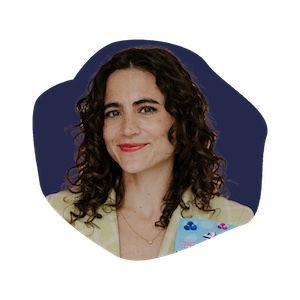
[00:00:10] Ray Latif: Hello, friends. I'm Ray Latif, and you're listening to the number one podcast for anyone building a business in food or beverage, Taste Radio. In this episode, we sit down with Emily Griffith, the founder and CEO of Lil Bucks, a fast-growing platform brand of buckwheat-based foods. It's the ultimate question that every CPG founder must tackle. How do I make consumers truly care about my brand? The challenge grows even more complex when your brand is built around an ingredient that is often misunderstood and overlooked. Emily Griffith, the founder and CEO of Lil Bucks, a modern snack brand that champions buckwheat as its hero ingredient, knows firsthand the trials and tribulations of creating products that not only require consumer education, but also demand a passionate, loyal following. In this episode, Emily shares her journey starting from selling Lil Bucks at farmers markets to becoming a sought-after brand in retail stores. She discusses the importance of clear messaging to connect with consumers and how simplicity, rather than over-innovation, led to success. Emily also talks about sourcing strategies, collaborating with farmers, and the journey to securing key partnerships in the industry, including getting into Whole Foods. With insights on building a strong brand, fundraising for Series A, and staying grounded as a founder, this episode is packed with valuable lessons for any entrepreneur. Hey folks, it's Ray with Taste Radio. Right now, I am honored to be sitting down once again with Emily Griffith, the founder and CEO of Lil Bucks. Emily, great to see you.
[00:01:57] Emily Griffith: Yeah, thank you so much for having me.
[00:01:59] Ray Latif: Yes, this is the second time we've been on the show. The first time we recorded, we sat on some concrete tables and benches outside of the Philadelphia Convention Center at Expo East. That was in September of 2021. Wow. Yeah. Yeah.
[00:02:17] Emily Griffith: Ancient times.
[00:02:18] Ray Latif: I wanted to sit outside because I was a little worried about that COVID thing, you know. Right.
[00:02:22] Emily Griffith: Yeah. That was a hot thing.
[00:02:25] Ray Latif: I wouldn't call it hot, but I would call it a thing that was... It penetrated the market. Yeah. Yeah. But thank you so much for being a trooper. You and Nikki. Yes. Nikki Grill, who's your PR... Longtime friend. Yes. Longtime friend as well.
[00:02:38] Emily Griffith: And PR homie.
[00:02:39] Ray Latif: PR homie. Yeah. Homie was the word I was looking for. Yeah.
[00:02:41] Emily Griffith: That's her title.
[00:02:42] Ray Latif: Yeah. Yeah. At the time, you were relatively new. This is in 2021. When did you launch the company again?
[00:02:48] Emily Griffith: So technically I launched the brand into farmers markets in 2018, but 2021 was really when I would say we launched into the industry and entered grocery with our Cluster Bucks product line, which is our hero retail product. So before then it was selling our Lil Bucks, sprouted buckwheat crunch as a topper on smoothies, oatmeal yogurt. I got the idea when I was living in Australia and yeah, in 2018, 2019 was really like learning how this works. I didn't come from CPG. So, yeah, like got involved with the hatchery in Chicago where I launched it, did the whole shared kitchen thing and just like building completely from the ground up, having no idea what I was doing at first.
[00:03:29] Ray Latif: Well, it seems like you kind of have an idea of what you're doing nowadays.
[00:03:32] Emily Griffith: I mean, one would think, yeah, definitely have learned a lot. But every day you're still like, wow, this industry throws something new at you, which is fun.
[00:03:39] Ray Latif: Well, I got to tell you, you know, three and a half years after we sat down, if you're still in business, that's a good thing, because this industry that we're in, food and beverage, as a founder, it's extremely difficult to get past year one. It's tougher to get past year two. If you get to year three, four, it feels like you're probably doing something right. You've surrounded yourself with the right people. Somehow you've connected with consumers. People want to buy your product. They're loyal to your product. But, you know, just going back and if you can sort of look back upon those three and a half years, what would you attribute to the traction you've had to this point?
[00:04:14] Emily Griffith: Gosh, I mean, there's so many things, but I would say a big unlock for us was, so we're really the first, one of the first brands in the U.S. focused on buckwheat. And that, especially when I started and even still now, is really misunderstood by the consumer.
[00:04:32] Ray Latif: And if we can pause there, I mean, give us the quick 10 second pitch on buckwheat and why people should eat it.
[00:04:38] Emily Griffith: Yeah, it's a nutrient dense fruit seed, not a grain, more closely related to strawberries than actual wheat. And it's a complete amino acid protein, gluten free, grain free, high fiber. all that good stuff. And we basically use the sprouted buckwheat seed, which is kind of this triangle shaped seed as the base for the Clusterbucks granola bites that we make. And it just has this really addictive crunch on top of all the wonderful health benefits. There's a lot of education there and words that I just said to fit on the front of packaging. So really dialing in the message on our Clusterbucks When we started using the tagline gut-friendly granola bites, that really resonated with people and resonated on shelf. And we started seeing better turns in stores. And then also because I think this is a big temptation for founders, especially creative founders, which I guess probably most of us are, is over-innovating. Like it wasn't just enough to do buckwheat at first. I was like, we're going to have these crazy flavors and we're also going to add adaptogen. So I had like matcha cookie and turmeric lemon as well, chocolate reishi. And those were just a little bit aggressive. Like buckwheat is already such a big differentiator that we don't We really found a lot more success with other than the buckwheat thing being so crazy and big. We're pretty basic, like the best selling flavors are Lil Bucks and Honey, Chocolate Sea Salt, Snickerdoodle, Blueberry Crisp, Birthday Cake, you know.
[00:06:06] Ray Latif: So it sounds like you found your sweet spot and you're leaning into that. And buckwheat on its own, as you mentioned, it's not necessarily something that's intuitive to everyday Americans, but I think people have heard the word. So at least that, I mean, that's a good thing. Now, I guess the second step is helping them to fully understand what it means, which is a little bit more complicated, I think. On the one hand, though, that could be a positive, right? If you can be synonymous with a particular ingredient or at least that ingredient is or your brand is quickly identified by that ingredient, that could develop a sense of loyalty, right? It could help with consumer loyalty, right?
[00:06:46] Emily Griffith: Yeah. And it's like, I mean, it's a great thing for selling in the stores. It's a great thing selling to consumers and keeping velocities up because for us, we're usually the only buckwheat product going into the sets that we're pitching to. So once we get people hooked, they try that buckwheat crunch. They know how amazing it makes them feel and super energized. Where else are you going to get this? Good luck. So you'll be buying it from us and we'll be seeing that in the turn. So that is definitely, I think the, challenge is really like the top of funnel marketing and making sure the word buckwheat has the connotation of delicious and nutritious and not gross wheat.
[00:07:24] Ray Latif: Why do you think there haven't been so many other entrants into the market that are using buckwheat and promoting it as a superfood as you are?
[00:07:34] Emily Griffith: I think one of the things is maybe American's attitude towards it. I mean, for me personally, the only time I'd ever had buckwheat growing up was maybe like a really dense, overly healthy pancake. And then, you know, that was it.
[00:07:50] Ray Latif: Made with buckwheat flour?
[00:07:51] Emily Griffith: Yeah, made with buckwheat flour, sorry. Buckwheat pancakes, which you can make delicious. We've come a long way in the health food industry in terms of tastiness. But what's really innovative about our products and the idea where I got this idea was in Australia, where instead of in the U.S., buckwheat flour is the most commonly used ingredient, like you can use it to make pancakes, breads. I mean, you can just buy the flour. You can get Bob's Red Mill buckwheat flour at the store. You make crackers. So that's just like I think what Americans are more used to. Buckwheat is also soba noodles. So that is like a whole nother thing in like Japanese food. But the Australians had a really interesting way of using it. They sprout because buckwheat has to be cooked or sprouted. or we can't digest it. So in the US, we're baking it, we're putting in pastas, all this stuff. Aussies are sprouting and dehydrating the crunchy heart-shaped seed. So that's giving it this crunch. So I had it for the first time as a topping on a smoothie bowl. And that was a big unlock where I'm like, oh my gosh, basically anything that uses oats, like those types of granola bites, granola snacks, even using it in replacement as like a quinoa chip crisp in a chocolate bar, like all of these uses for sprouted buckwheat that the U.S. just hadn't unlocked. But there is that like processing step in place that you have to get it sprouted and dehydrated. And because it wasn't very common in the U.S., I guess I kind of had to figure that out from the ground up.
[00:09:20] Ray Latif: And you figure it out, you have. Have you been able to lock down your supply chain? Are you not only knowledgeable about the ingredient, but about how to source it and how to find the right suppliers?
[00:09:31] Emily Griffith: I mean, the sourcing part has been really interesting because I certainly, you know, if anything, did not have experience in that. But as I got the idea for this brand and learned not only I was in love with the crunch and the taste, all the health benefits. And then as I was going to launch, I'm like, where do you get buckwheat? you just like call farmers. And I just started calling these organic farmers around the Midwest being like, can I just buy buckwheat from you? And learning from them, that's like not how it works. It's usually like a middleman or a broker. And like, you need to have certain volume for it to even be worth it for them to grow buckwheat. And they'd love to grow more buckwheat because it's so wonderful for the soil health and has all these wonderful benefits. Some farmers had even just grown it at a loss just because it's so good for their soil health. But really, there's just not a big market for buckwheat in the US. So that's too bad. And I was like, that's insane, like, so delicious and nutritious. And on top of that, American farmers want to grow more of it as an organic fertilizer for their soil. So holy crap, I need to make this happen. And it became my mission at that point to find a way to build a big enough market to be able to partner with American farmers, which ultimately led me to our first direct farm sourcing relationship with one of the first regenerative organic certified farms in the world in Minnesota. And we basically with him and his family built the first, it's quite a mouthful, but the first regenerative organic certified buckwheat supply chain, which is pretty cool because buckwheat is going to be everywhere.
[00:11:08] Ray Latif: So how much of what you do is spreading the word about Buckwheat, period, as much as you are talking about your brand?
[00:11:15] Emily Griffith: Great question. That is a balancing act because we do have to like kind of be the steward of buckwheat and promoting that in the U.S. And there's other buckwheat brands in the market now too, like Better With Buckwheat, Pacha, Buckwheat Bread based here in San Diego and a few others. Like we've all had meetings together of like how can we collaborate and like Rising Tide lifts all ships. Like we all can work together to really penetrate the consumer's mind with buckwheat as an understanding. But then of course we all have our like, unique brand attributes and spin that we want to put on it. And I think for me with the brand, I really wanted to create a sustainable, nutritious brand that resonates with millennial and Gen Z consumers that is a lot more, you know, we can be vibrant and fun and in the cool kids brand club while also still hitting on all these sustainability and nutritious attributes, whereas maybe me growing up in like the co-op world, most of these types of products would be in like a craft brown bag with like papyrus font and it's all green and that's cute and fine. But we just wanted to bring something new to it. So I think pairing the whole buckwheat messaging with the fun, vibrant Lil Bucks's Buckwild vibe has been important from day one. And that's the part that is fun to me. I came from marketing before. And then actually in the last year, almost a year ago, we We're able to bring in Kaylee Donwald from, she was formerly the founder and CEO of Sacred Serve, which was this plant-based. ice cream brand. She's now our chief operating officer, which has been really massive to bring in a partner like that, who can also be a visionary in her own right. Like she founded a brand that she scaled into Whole Foods National and it was profitable and all these things. But someone who could continue leading the charge and building out these amazing buckwheat supply chains around the country, while I can really double down on the messaging to the consumer and to the industry about buckwheat.
[00:13:17] Ray Latif: Yeah. Finding a great ops person.
[00:13:20] Emily Griffith: Oh my gosh.
[00:13:21] Ray Latif: So critical to the development of a brand. Emerging brands, you know, once again, they get past that first year, second year. You really got to know your operations and it's so critical to understanding potential earnings, demand planning, everything else. So I'm glad you found someone that could handle that for you.
[00:13:39] Emily Griffith: I know I'm sure there's many founders that will listen to this and be like, damn it, I want that because I get that.
[00:13:46] Ray Latif: And they're not easy to find qualified people. Before we hop to the mics, I mentioned I wasn't going to, you know, get crazy on my questions, but I do want to play devil's advocate for a second here. So a few years back, about 10 years ago, there was an ingredient that was one of the hotter ingredients, hotter superfoods on the market, chia. And everyone started to be like, chia, chia, chia in everything, chia in your beverages, chia in your ice cream, chia in your cereal or granola, and everybody was jumping on this gravy train, this gold rush of chia. And I feel like within a couple of years, interest started to wane. Do you ever look at buckwheat as being maybe, you know, this is maybe I shouldn't hang my hat on buckwheat as the key ingredient. Maybe, you know, there are other ingredients that I can incorporate into my future business plan and innovation strategy.
[00:14:39] Emily Griffith: Yeah, that is something I've thought about a lot and certainly in like the fundraising realm, probably get that question the most. I think with the chia example, it is interesting. I think if you just like took a tablespoon of chia seeds, first of all, the serving size is way smaller for that. That is a serving itself. And then, you know, put buckwheat next to it. Buckwheat just has a lot more. It feels like you're eating actual food versus I don't know, chia seeds are just so tiny, they get stuck in your teeth, they're kind of hard to do anything with. They need to be, they truly need to be an ingredient in something else where buckwheat can really shine as a true hero ingredient. I think it just makes a lot more sense in a lot of applications, like looking at any way oats are used, any way even quinoa is used, are applicable uses for buckwheat, buckwheat on its own, buckwheat as a seed, as flour, as an ingredient, in sweet, in savory. So there's just a lot more to unlock there. And then also, you know, for better or for worse, as an impatient founder who, you know, wants us everywhere immediately, I think like the industry mindset has changed quite a bit. Obviously, like, financing strategies have changed. Like I've actually even honestly, because quinoa is probably a more similar comparison in terms of use cases and the type of food that it is. And that big quinoa craze, like I don't know if that was like 10 or 15 years ago and what happened there. Like there was a lot of over investment maybe in all these new products and everyone like such a fad, so crazy. And I don't know, maybe it's just because of also how social media is evolved and people are a little more like, we're not going to fall for all these fads all at once. And just like investment has really slowed down and people are a lot more critical about like, we want to see this have turns and, you know, that slow burn, like we've doubled or tripled our revenue year over year for years. But there was never an overnight success, like kind of just slowly continuing to grow our business. And as awareness of Buckwheat has grown, so have we. So I don't know, maybe it's like a little bit safer in that there's just not all of a sudden like a hundred buckwheat companies coming at it at once.
[00:16:48] Ray Latif: Perhaps. And I think, you know, speaking to the versatility of the ingredient, I think that goes a long way to perhaps reassuring investors that this is something that can have the same impact as a quinoa, but at this point, to your point, is not as, I guess, It's not as trendy. It's not like a flash in the pan kind of trend. It feels like a more long term proposition. You did raise some money last year and it was your series A and raising your series A can make you want to tear your hair out. From what I understand, I'm not an entrepreneur, but I hear from entrepreneurs about this. Talk about the timing and your thought process of when should I do this? How much should I be asking for? Who should I be talking to? Because all those things are so important when you are taking that first step, that big step.
[00:17:34] Emily Griffith: Right. Yeah. It is really a process that grinds you to a pulp, but you'll know your business inside now and 10 times over again, times a million. And as any founder, you're always fundraising, but especially through that, I mean that 2021 to to date is a very, very challenging environment in the post-pandemic world and a lot of shifts.
[00:17:59] Ray Latif: It's my first time hearing this, actually. Oh, yeah. Nobody's ever complained about it.
[00:18:04] Emily Griffith: Nobody's ever posting about LinkedIn on it. But yeah, so always fundraising and mostly from angels because we would talk to all the big funds, but we're like, we see there is like the approach, like a Magic Spoon type of brand where you bring in big venture money early and you know, big spend from the beginning. This is how we're going to do it. And I knew that wasn't what was happening here because of, we really did have to prove like the consumers wanted Buckwheat and figure out fine tune our product offering and kind of the slow burn in that way. So we went the angel investor route for a while. And in 2023, we did in the middle of the year, we got confirmation that we were launching into Whole Foods. national, we are going from two SKUs in the Midwest to four to five SKUs nationally. And I was smart enough by that point to have learned that, you know, that doesn't mean it's just a big break or overnight success. Like the work has really just begun at that point. Like that, to me, it almost felt like last year was year one because we got to the point of achieving a baseline of distribution and awareness. Like now the fun begins. And so with that, it did. And, you know, we met Proterra Partners is the lead of the Series A. They're an agriculture focused PE firm based out of Minneapolis. And we met them at a sustainable food financing conference. And it's kind of weird, like, it's probably like dating, of course, too. It's like, when you know, you know, like, I wasn't specifically like, looking only at venture or for a Series A, but when we started talking and the types of investments they made, it was like, oh, actually this does seem like the right partner to do a Series A with. There was just a lot of alignment on the agriculture side and their expertise in sourcing and building supply chains too. And then their interest to get into emerging brands and a little bit of CPG. So yeah. And then, you know, there was like nine months of diligence between that.
[00:20:04] Ray Latif: How much do you feel like you were selling the brand, the business, the vision, as much as you were selling yourself as a founder?
[00:20:12] Emily Griffith: I mean, that's so funny you say that because I feel like I was always selling the brand, the business and the vision. But really, I was selling myself as a founder and probably realized that later, that later on in the process, that is really something I should have been flexing more. I think especially women are probably a little more like, oh, I don't want to brag about myself or this or that, but just like laying it on the table. Like I'm so good at this. So like you need to unlock this so I can go run around and do what I'm amazing at, which is being the like evangelist for Buckwheat and for this brand. We all have seen it. I'm really good at it. Let's go.
[00:20:49] Ray Latif: So now I know a lot of folks listening are going to ask Ray, please ask Emily how she got into Whole Foods nationally, because it is a dream to and yes, there's a lot of work that happens after you get on shelf. But how do you get into Whole Foods nationally? I would assume it's an iterative process that you get into a few, you prove yourself out, you get into more, you prove yourself out. But I mean, is it that simple?
[00:21:12] Emily Griffith: Oh my gosh, you wish. Nothing is. But that's so funny you say that because even when I was selling in the farmers markets with my brown craft bag, I had a coffee date with Ricky from Think Jerky and I sat down with my like brown craft bag and was like, so how do we get these in Whole Foods? And he was like, very alarmed. You have a lot to learn before then. Like my packaging, all of that, you know. This was even before Clusterbuck, so we did have a lot to learn. But even at that time in 2021, I feel like there was, well, maybe not so much anymore because of the pandemic. There was that playbook of getting in a region, demoing the crap out of it, really crushing that region, going to another region. And obviously there's been like a lot of region shifts with Whole Foods and like everything's constantly changing. And for me, like I think at the start of 2023, I was like, Whole Foods is the absolute launch partner for us. That is our target consumer. We're launching buckwheat, this unfamiliar ingredient, into the U.S. It's going to start in Whole Foods. I've decided they're supporting regenerative agriculture, which is big for us. So it wasn't just you know, submitting to the reviews and following up and obsessing over your buyer. But it was like our buyer's boss and his boss and the marketing team, like what we could do together in marketing, keeping them appraised on like anything happening with the brand, the sustainability team. What are we doing at the farm? You want to come out to the farm, even though we only have two SKUs in the Midwest? Why don't you come? And then like going to Expo East and having a booth like for me, that show isn't about like direct sales. You're not writing orders there, but it is showing certain people in the industry, like you're here to play and you're a serious brand and having that home base. And so Expo East every year would really be where like, I was trying to weave all of that together. Like, look how aligned we are in region and marketing and brand and ingredients and this product. You have to give this a chance. And yeah, 2023, the start of the year, we all want to be in Whole Foods. But it became more than just like the submissions and following up and being a rock star with the buyer. It was like a full court press on the entire company. So not easy, but doable.
[00:23:26] Ray Latif: Not easy, but you did it. And I think if you said Whole Foods or Busts, that was the path.
[00:23:32] Emily Griffith: It is kind of crazy because that was the plan. And I was like, otherwise, I don't know if I've got it in me. Like, we need a big partner like that to anchor our core product line. And it worked. So I'm glad.
[00:23:44] Ray Latif: You know, earlier you had talked about over-innovating and I just mentioned that. And, you know, I look at your Clusterbucks right now and this is a very different looking package. It speaks to that Gen Z, millennial consumer that I think you talked about earlier. But it also speaks to, I think, the convenience factor of eating healthy. When you're talking about the next evolution of Lil Bucks and we think about that innovation pipeline, how much does that convenience factor into those decisions?
[00:24:14] Emily Griffith: It factors in big time, I think, seeing the way consumers' trends are going and anything that's convenient, like even we sell Clusterbucks in airports and that was such a big unlock for us, both from a marketing and a sales perspective. But something that can be eaten, both something you buy at the grocery store for your pantry I love hearing that people accidentally finish the bag on the way home from the grocery store, but then something that could be in like yoga studios, coffee shops, airports. People are on the go and they want healthier options everywhere. So what's something that can fit in multi-channel because that seems to be a really safe way to kind of have an omni-channel business. And yeah, so we're going to unveil something at Expo East this year, which we're really excited about. More buckwheat. Innovation.
[00:25:00] Ray Latif: Is it more flavor focused or convenience focused or is it a little bit of both?
[00:25:04] Emily Griffith: A little bit of both, I would say.
[00:25:05] Ray Latif: Okay. I'm sensing something in bar form, perhaps? I don't know.
[00:25:09] Emily Griffith: You know, there's plenty of those.
[00:25:13] Ray Latif: No? Okay. We'll see. We'll see.
[00:25:14] Emily Griffith: Maybe bar adjacent. Who knows?
[00:25:16] Ray Latif: Bar adjacent. I like that term. Bar adjacent. Okay. Emily, I'm so glad that we had this chance to connect. You have really done something amazing with Lil Bucks and kudos to you and your team for continuing to be a brand that smaller brands can look up to and say, you know what, they did it. I think I can do it, too. It is so difficult to go from zero to one. And you've done that and then some. So well done.
[00:25:42] Emily Griffith: Thank you. You give me chills. You're going to make me cry. Don't do that. I'm so honored. This is so awesome to be talking to you again, though. We've obviously come a long way.
[00:25:50] Ray Latif: We have. You and I both in these three and a half years.
[00:25:52] Emily Griffith: We have this whole setup here.
[00:25:55] Ray Latif: from the early morning mist of Philadelphia on concrete benches to this beautiful studio in the middle of San Diego. I love it. I love it.
[00:26:02] Emily Griffith: We slayed.
[00:26:02] Ray Latif: Well, cheers to you and your team. Let's do this again soon because I want to, maybe every three and a half years we'll do this.
[00:26:07] Emily Griffith: Exactly. Yeah.
[00:26:08] Ray Latif: Yeah.
[00:26:09] Emily Griffith: It'll be an empire by then.
[00:26:10] Ray Latif: Perfect. Emily, thank you so much again.
[00:26:12] Emily Griffith: Cool. Thank you.
[00:26:17] Ray Latif: That brings us to the end of this episode of Taste Radio. Thank you so much for listening. Taste Radio is a production of BevNET.com, Incorporated. Our audio engineer for Taste Radio is Joe Cracci. Our technical director is Joshua Pratt, and our video editor is Ryan Galang. Our social marketing manager is Amanda Smerlinski, and our designer is Amanda Huang. Just a reminder, if you like what you hear on Taste Radio, please share the podcast with friends and colleagues. And of course, we would love it if you could review us on the Apple Podcasts app or your listening platform of choice. Check us out on Instagram. Our handle is bevnettasteradio. As always, for questions, comments, ideas for future podcasts, please send us an email to ask at Taste Radio.com. On behalf of the entire Taste Radio team, thank you for listening, and we'll talk to you next time. you