[00:00:10] Ray Latif: Hello, and thanks for tuning into Taste Radio, the number one podcast for anyone building a business in food or beverage. I'm Ray Latif, the editor and producer of Taste Radio, and with my co-host for this episode, John Craven, Jacqui Brugliera, and Mike Schneider. In this episode, we go behind the scenes of a high-profile brand refresh with veteran designer and Sweet 9C founder Paula Grant, along with Yanni Hufnagel, the founder of Lemon Perfect. Together, they share insights into the collaboration to elevate the label and packaging of the Enhanced Water brand. That was right after our Taste Radio NYC meetup. We are on the cusp of our Taste Radio Austin meetup. If you hear the echo, that's because we're recording in the kitchen at our Airbnb here. The cavernous place. Our bachelor pad. It is bachelor pad-ish. I'm not really too familiar with bachelor pads anymore. Right. Me neither. Yeah.
[00:01:09] John Craven: Anyway, for the record. Yeah. Yeah. Hey, did you guys get into any of the Dolly the Sheep cloning technology that Yanni's been using? You know, we met his clone, Seth Rosenberg, the founder of Lemonuca at the beverage forum. There's a guy who's making this new lemonade beverage. It's a lemonade and it's a tea. And he's a 15 year old kid. He's a good dude. OK. I have not heard anything about that, but thanks for sharing. They wear the same outfit and Yanni's like mentoring him. He's such a good dude. I can't wait to hear the conversation.
[00:01:40] Ray Latif: Yeah, I'm expecting we're going to be sitting down with Seth for a future episode of Elevator Talk, our bi-monthly series that highlights early days and disruptive brands from across the food and beverage industry. Going to see a bunch of new and interesting brands that are asked to meet up tonight. Thank you so much again to our partners for the event Torchy's Tacos, Matriarch Wealth Management, Sovereign Flavors, Better Sour SKU, Shauna Golden Key Ingredients. Now, the weather is supposed to be nice tonight. Well, hot and sticky, but you know, sunny. While we're in a tornado watch.
[00:02:13] Jacqui Brugliera: I know, during the event. Everyone buckle down.
[00:02:16] Ray Latif: We're on a patio too, so we'll see how that goes. Can we get blown away? Yeah, it's raining. It has been pouring since we got here. I was hoping, coming from our respective places of Boston and San Diego, that we would have mildly better weather here in Austin, but
[00:02:33] Jacqui Brugliera: No, no, not at all. Nope. It's coming down in sheets.
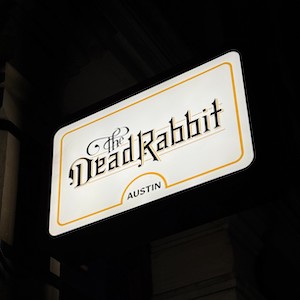
[00:02:37] Ray Latif: It really is. But at least the food is great. You know, the food here in Austin, well known as being delicious. We went to one of the best, in my opinion, restaurants in Austin, The Dead Rabbit Austin. This is their branch out here in Texas built out of their location in New York City, their iconic location in New York City. I should say the one in Wall Street or in the Wall Street neighborhood. I feel like it did the New York location justice, but it was a restaurant onto its own in Austin. So really great stuff from the food to the cocktails, the service, the ambiance, everything was fantastic. The fish and chips, shout out to that.
[00:03:17] Jacqui Brugliera: That was delicious. And the deviled eggs with lobster.
[00:03:20] Ray Latif: I mean, they do, they do a great job. And Jackie, the oysters.
[00:03:24] Jacqui Brugliera: Oh, the oysters were really good.
[00:03:25] Ray Latif: P.E.I. Oysters.
[00:03:26] Jacqui Brugliera: I know, people were a little skeptical of our choice, Ray, but I think we made the right decision.
[00:03:30] Ray Latif: I leaned in. They were good. Most definitely. And we got a little inside information that they get their oysters on Mondays and we were there on a Monday.
[00:03:41] John Craven: We knew.
[00:03:42] Ray Latif: I assume they get their oysters other days of the week as well, but it's not just Monday. Ray was worried and then she's like, nope, today's The Dead. They were delicious.
[00:03:50] Mike Schneider: Yeah.
[00:03:51] Ray Latif: Hopefully we'll get back there at some point because, you know, I got to get back to Austin out of this, you know, day and a half of gloomy weather. Hopefully we'll come back here and it won't be that way. But I'm very excited to head back to New York City for BevNET Live Summer 2025. Really, really thrilled at the announcement that Dan Lawrence, who is the co-founder and CEO of Ghost, the brand of energy drink, hydration beverages, recovery beverages, will take the stage at BevNET Live following the company's majority sale to Keurig Dr. Pepper. Do you all remember that? That was in October 2024. The company at the time of the majority acquisition was valued at 1.65 billion dollars. So not too shabby.
[00:04:38] John Craven: No. Yeah.
[00:04:39] Ray Latif: So Dan's going to talk about how to make your brand attractive to strategic.
[00:04:43] John Craven: So that now live June 11th and 12th, New York City, right around the corner, right?
[00:04:48] Jacqui Brugliera: Yeah. Right around the corner away. Is it? Yeah.
[00:04:51] John Craven: Oh man, we went five weeks?
[00:04:53] Ray Latif: Yeah, five weeks. Well, as of this recording, it's not far off. Yeah, there'll be 4.5 weeks. Yeah. I mean, when you publish this episode. Yeah, because May has 31 days, you know, it's an extra day.
[00:05:04] John Craven: Complicated math. Yeah, exactly.
[00:05:05] Ray Latif: Nice work, Ray. Exactly. Big news in the business of Yerba Madre. And you know who else is going to be taking the stage? Yerba Madre? Well, Ben Mand, who is the CEO of a company that we all used to know as Guayaquil. It's no longer known as that. It's known as, as Mike said Yerba Madre. That is pretty amazing. Now, the writing was on the wall because we started to see Guayaquil move away from their logo on their cans and more prominently feature the words Yerba Madre on their cans. And so last week they made the leap and announced that they're becoming Yerba Madre. Wise. I think this is wise.
[00:05:50] Jacqui Brugliera: I mean, a lot of people don't know how to say Guayaquil. You know, and they were just calling it Yerba because that's the main ingredient.
[00:05:57] John Craven: Yeah, I mean, I feel like this is something you really don't see though. Like, I mean, the company has been around for, geez, how long? 15 plus years at this point? It is unprecedented. So changing your name after that period of time, as well as I think we've, I feel like we've seen more companies that try to break away from having their brand literally tied to a specific ingredient and they're just doubling down. So yeah, not saying that's a bad thing. It's just, I think a really unique strategy and also, I mean, a pretty amazing kind of turnaround for that brand too. So. We always tell brands, it's not the best thing to name yourself after your ingredient or your product because you might want to extend yourself. But I think at this point they kind of know who they are. They're clearly not extending.
[00:06:45] Ray Latif: Clearly they know who they are.
[00:06:46] John Craven: Yeah. Yeah.
[00:06:47] Ray Latif: They're not going anywhere else. But the Urimate category. I read a great post penned by our friend Fred Hart, who will be joining us on stage at BevNET Live as a judge for the New Bear Verge Showdown. Thank you for that.
[00:07:00] Mike Schneider: Oh, nice.
[00:07:01] Ray Latif: Fred, as most folks know, is a brilliant designer. He's been working with beverage brands and food brands for quite some time. You might know him best for the creation of the Monster Energy logo. So he knows a thing or two. But yeah, in this post, he had mentioned, for years, Guayaquil fought two uphill battles, teaching consumers about Yerba Madre and familiarizing them with how to say and remember Guayaquil. So for him, He described this movie as a masterclass in brilliant brand strategy. I think it remains to be seen. We don't know for sure how this is going to pan out, but I do think it's bold. And I think Ben Mann should be congratulated on taking on such a challenging and probably needed endeavor, but one that is to say the least, bold and unprecedented. So yeah, good job. You're a madre. I was about to say go Ikea. Also in the news, GoXL, so GoPuff, has decided to create a new platform or extend their platform into supersized sales. So they're going to be selling, I guess, Costco-ish sizes of products that they typically sell. So instead of selling one Uncrustable for $1.99, they're going to be selling 10 Uncrustables for about $10. So, you know, multi-packs. Wait, 10 cases of Uncrustables?
[00:08:37] John Craven: No, just 10. Interesting. That's XL. Yeah. I love GoPuff. That's your contribution to this conversation? This is why I like GoPuff here. Let me show you this little screenshot here.
[00:08:52] Jacqui Brugliera: What is it?
[00:08:53] John Craven: Eggs? Yeah, everything's eggs. Yeah. Oh, look at the prices. Look at the price. Uh, they are affordable. Yes. $2. $2 eggs. They are on sale. I don't know if I want to put that on. No, they're, they've always been $2 in the past. Uh, well that's because they are lost leaders. That's what I'm saying. But it's a sneaky little, you know, thing that they've been doing that I think is pretty, pretty genius. Well, you know, it's a great hack for eggs. Go to Wegmans and uh,
[00:09:20] Ray Latif: All right, inside humor, long time listeners, loyal listeners of the show will know what I'm talking about. No, but anyway, I mean, so they're going to have multi-pack lines of bulk products, about 300 items available for home delivery, including Chobani yogurt, it's own, basically, they have a basically private label line, it's called basically, Nissan Cup Noodles, chicken flavors. I gotta wonder, is this a harbinger for things to come? Is value the name of the game for 2025?
[00:09:48] Jacqui Brugliera: I think so. I mean, have you ever been to Costco or BJ's? They're always swamped. Like it's never not busy. I think people are like maybe cooking at home more. They're buying in bulk. They're trying to maximize savings. Groceries are expensive.
[00:10:03] John Craven: Why would that be? Why would they want to maximize savings right now? I can't think of a reason.
[00:10:07] Jacqui Brugliera: I have no idea.
[00:10:09] John Craven: I mean, they are trying to outrun the tariffs right now too. Yeah, I think- So stock up on stuff.
[00:10:15] Ray Latif: Yeah, it's weird, though, because GoPuff has been known for convenience, for instant convenience. It never has really been known for a place where you would stock up on things. You know, even if those things are things you eat on a regular basis, I guess it's a good move. I don't know if there are customers who are asking for such things. As a GoPuff customer, John, I mean, is this something that attracts you?
[00:10:34] John Craven: Oh, I mean, I use GoPuff a lot, and it's not a place that I associate with, like, bulk buying. And, you know, if they can change that, I think that's pretty smart.
[00:10:44] Jacqui Brugliera: Yeah, it might be smart for them as a business model to make less trips to the consumer and save money on that front.
[00:10:50] John Craven: Well, if they have the inventory, it's certainly testable. They just have to, you know, do a little bit of tech. There's probably some, you know, AI stuff helping them figure out the extensions of their technology now. And I mean, it just seems like a really nice move for them.
[00:11:04] Ray Latif: Well, again, it remains to be seen if customers start thinking of GoPuff as a place not only to get instant convenience, but 12 packs of toilet paper.
[00:11:14] John Craven: I like that that's Excel. What else could they have called it? Well, I think for them, it's smart because of what you think of as GoPuff is like John said, you're getting like, oh, I need a Snickers right now, GoPuff. It's weird.
[00:11:28] Jacqui Brugliera: But you do need toilet paper in an instant. So you might need 12 rolls of toilet paper.
[00:11:34] Ray Latif: That was, uh, okay. If you, if you step back and after The Dead Rabbit. No, no, no, definitely not.
[00:11:43] John Craven: No, no.
[00:11:45] Ray Latif: Yeah. Anyway, I'll leave that. No, the oysters are very fresh. Yeah. We'll move on to something that's decidedly less controversial. Uh, Kimballa. John and Mike had the opportunity this morning to go meet with the founder of Kimballa, which is a maker of ready to drink chai products. Tell us all about it.
[00:12:05] John Craven: Yeah, we got to meet with Madhu this morning and had a great conversation with him about operations of his business. He's a great product guy who has a sense of the things that he wants to do and the things that are possible. And, you know, we kind of talked a little bit about what's next for his brand and where is it going to head? And it was a great conversation. He's always a good person to catch up with.
[00:12:26] Ray Latif: For sure. For sure. I'm really excited to meet a lot of other early stage Founder Yanni established ones or founders of established brands tonight at our meetup. This episode will be published after the event, and we'll talk about the event in next week's episode. But once again, thank you to everyone who's attending. Thank you to our amazing partners for the event. Once again, Torchy's Tacos, Matriarch Wealth Management, Sovereign Flavors, Better Sour, Skew, Shauna Golden Key Ingredients, the best in the business. All right, it's time to dive into our featured interview for this episode, a conversation with Paula Grant, the founder of creative studio Suite 9C, and Yanni Hufnagel, the founder of enhanced water brand Lemon Perfect. Together, they unpack the collaborative journey behind Lemon Perfect27;s recent refresh of its packaging and visual identity. With an eye toward positioning the brand as a billion-dollar contender that can, quote, go anywhere, Paula Grant Yanni explore the dynamics of their creative partnership, the power of visual storytelling, and the importance of designing not just for today, but for the brand's future. Hey folks, it's Ray with Taste Radio. Right now, I am honored to be sitting down with Paula Grant and Yanni Hufnagel of Sweet 9 C and Lemon Perfect, respectively. Paula Grant to see you.
[00:13:45] Mike Schneider: Hi, great to see you too.
[00:13:47] Ray Latif: Again, we've hung out at least 18 of the past 24 hours.
[00:13:51] Mike Schneider: Exactly. Thank you for your event last night. The Taste Radio event in New York City was off the hook. We got to mingle with a lot of entrepreneurs. And then luckily, some of the people came here for an afterparty. So thank you so much for hosting the event in New York City, and we were proud to sponsor it and coming to Suite 9C after.
[00:14:08] Ray Latif: Yeah, we are here in Suite 9C in SoHo, and we did have a little bit of a post-event gathering here, which you were so gracious to host, and it was outstanding. So thank you so much again. And you invited Yanni the following day to come out here, and here we are. It's so great to see you, Yanni.
[00:14:23] Yanni Hufnagel: How are you? It's awesome being here. I feel like I'm in the presence of genius with Paula Grant with you, with what Paula's done here at Suite 9C and throughout her career and what you've done to build not only Taste Radio and this podcast, but the entire BevNET organization. So impressive.
[00:14:39] Ray Latif: Thank you so much for saying that. I'm pretty sure at this point, everyone knows what Lemon Perfect is. And Yanni, you and I sat down about three years ago for Taste Radio, and I really loved our conversation. How's the brand doing? I mean, since over the past three years, I know it must feel like chaos all the time. But where are you at right now with Lemon Perfect?
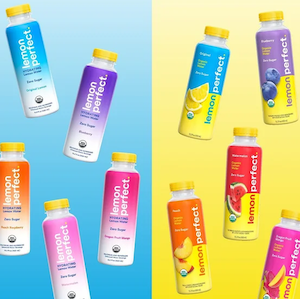
[00:14:56] Yanni Hufnagel: Well, I don't think I've ever been more excited for our future than I am sitting here today. And Paula Grant Sweet9C deserve so much credit for me feeling that way. Look, we're in year seven. We've sold 100 million bottles. We had a really challenging 2024 driven by some product quality issues that we had to go through. Look, we have made some incredible improvements to the product. And we felt like when we reintroduced the improved formula and the protected bottle now. We have oxygen scavengers, UV blockers, nitrogen dosing, all those things to ameliorate any of what we went through with the product issues last year. But we felt like we had to refresh the packaging to reannounce ourselves to the world. And that's where Paula Grant her team came in and the resulting artwork product is, the response has been unlike anything that I would have thought. I mean, outstanding.
[00:15:54] Ray Latif: Paula, before we hop to the mics, you were talking about... how that design process can feel so strict for founders sometimes in that they don't have a lot of options. Why do you feel like the design community sometimes can put clamps on a Founder Yanni terms of what they want out of their designs?
[00:16:11] Mike Schneider: Right. Well, this was a conversation that we were having about the amount of work, what's in the proposal, how we come to the table as designers. And I actually love what happened with Yanni and we try to do this with entrepreneurs. I do a lot of like sitting side by side, we talked about this, designing in hand with people. It should be collaborative, right? Like Yanni created this product. He's a creative person. Entrepreneurs, when they come to the table with something, it's like they have a lot of stuff in their head. and they're inherently very creative people. It's almost a disservice to hire an agency where it's like, oh, I'm going to come back at you with like five ideas, and this is what we think. Well, being an entrepreneur myself, I think that's what maybe makes it a little bit different. I was an entrepreneur myself. I know what it takes to build a brand. And sometimes you're even listening to a retailer. There's a lot of things in play. And designers and design agencies often come at it like, I'm a designer, and this is what I think, and this is what you should do. And you get like four options.
[00:17:12] Ray Latif: That may sound like a lot, but four or five is really not a lot.
[00:17:15] Mike Schneider: No, it's not. And it's not collaborative either. I want to put like 20 things out on the table and mood boards or whatever, exactly what we've done and say like, we've explored every single, I'm going to swear, fucking possibility that there is in the world. Lemon Perfect wanted to own lemons, right? That means owning yellow. They wanted to come at it with this tastes good. Okay, how do we make it taste good?
[00:17:41] Ray Latif: On the packaging.
[00:17:41] Mike Schneider: On the packaging, you have to look at it. You have two seconds to introduce yourself to somebody on the shelf, right? Like, do I taste good? Am I impactful? Is lemon my superpower, right? So we had to explore this in many, many, many different ways. And so Yanni had to sit through this process, which I think he liked, where it was like, you know, a gazillion things on the table and on the wall. What I really love is the co-creation of the whole thing. And I have to say, like, Yanni, as a founder, making a bold move, exactly what you said, where it's like recognizing that you need to make change, not only in product and formulation in order to evolve, but then in packaging. And he is a board. He has people think, why are you making such a big change? But he was very bold in that, and we worked together, and we were able to do that. I think collaboration is the way to go. So for all designers out there, collaborate with your founders. If you're lucky enough to work with founders, they're brilliant, collaborate.
[00:18:39] Ray Latif: It's a really good point you make. I think sometimes founders don't necessarily know what they want. It can be hard to figure out, especially if you don't have a lot of data, focus groups, survey information from folks who are telling you this needs to change. You have to have kind of a large sample size to figure out. Is everyone saying the same thing sometimes? But did you have a sense, Yanni, of what you wanted to see out of the new package? I'm reading from an article that my colleague Brad Avery posted in October when Jeff Hopkins came in as the CEO. And the headline says a lot. It says, new CEO, says scaling is the top priority as the brand looks to, quote, go anywhere. So how does that factor into what you wanted to see out of the new label design?
[00:19:23] Yanni Hufnagel: Ray, for me, it was, how do we come out of this with a package and a product that feels like a billion dollar brand, right? That feels like it could scale violently, that feels like what Lemon Perfect felt like in 2020, 2021, 2022, and then we lost our way a little bit transparently, right? When we raised our first dollar of capital and every dollar that we raised since, my promise to our investors was that we would do anything and everything to get this thing to a billion-dollar-plus finish, right? To make Lemon Perfect ubiquitous. And I think to do that, you have to start with a package. And when I say package, a bottle and a label, so artwork. that feels like it could go anywhere to Jeff's comment. And I think we've done this, and we could have only done it if from day one, it was very personal to Paula Grant to her team. And you don't get that from agency often, if ever. They had yellow in their blood. from minute one, and there was never a discussion as to when we decided to go and refresh the packaging, there was never a discussion about who we would go to. My dear friend, Jerry Rita, who's the president and chief operating officer at Big Geyser, iconic distributor here in the New York metropolitan area. years ago introduced me to Paula back at the Flood Creative Days. So there was always a seed in my mind that when we refreshed the packaging, if ever, that it would be Paula. I don't think any of us would have imagined that it would have been so transformational what we've done here, right? If you look at our new label versus the old one, the purchase intent is plus 20 points. The refreshment perception plus 25 points. I thought we had something that was iconic. And only when we saw this for the first time did I feel like, my goodness, we really have something here. And now this product's been on the shelf for the last three, four weeks. And Lemon Perfect has had the best now two weeks in company history. So it's working. And it's still very early.
[00:21:39] Mike Schneider: I always find that we do a lot with early entrepreneurs, right? And there's always like, my cousin helped me. I did whatever. So I think for young entrepreneurs, at the point when they're ready and really to focus on it, the design actually works.
[00:21:55] Yanni Hufnagel: Totally. And Ray, you know, I've said this often, taste will always find an audience. But if you don't have the right packaging, you're not going to drive the trial, right, in food and beverage. And so for me, it was how do we create the most commercial packaging that's going to drive the most trial?
[00:22:13] Mike Schneider: I often also say like, People don't like to read. We talk about this all the time. How much can you infer? You're on shelf. Can you infer that you're powerful? Can you infer that you're about lemons? Can you infer that you're delicious? Yeah. Well, there's a fruit on it now, so it looks delicious. You don't have to say the words. Nobody wants to read. Nobody's reading anything. So whatever you can infer through design, that's why design is so important and so impactful. And it's not only like the label, it's the form that you sit in. I'm talking a lot right now about protein and what that means. Protein waters, protein shakes, everybody wants protein. Like there are category cues and visual elements that if you have a good design firm will infer more than you say in words.
[00:22:56] Ray Latif: It's such a good point. And I think one that gets overlooked because nowadays everything has some sort of functional component to it. And we're being told left and right that consumers want functionality as much as they do want refreshment. But That education is expensive in so many different ways. It costs so much to put all that on a label. It costs so much to educate the consumer to actually say you should be reading this on the label. So simplicity is definitely important. But the elements of simplicity, when I'm looking at this new bottle, original is the name of the flavor. Organic lemon water, zero sugar, USDA organic, the seal, the picture of the lemons, again, this is the original, and the brand, the brand name. That's all you got. It's very simple. It's very easy. You don't have to think too, too much about what it is. But people overdo it so much. In my opinion, you get so much information on the front of a package, you just get lost in there. How do you do simplicity in a way that really attracts the consumer, gives them enough information, and makes them want to buy your product? Again, simplicity sounds great and all, but sometimes it can be really hard.
[00:24:00] Mike Schneider: Well, that's it. Pick three things to say and then infer other things, right? And don't discount structure. Whether something is in a bottle or a can, is it fizzy or it's not, like you can infer. a whole bunch of stuff just by the visuals of what you're looking at. Actually now it's a new day as well because now we have like brands coming online with influencers and everything. So that's a whole another conversation. But I think now is a very interesting time because you go to the shelf and it's getting more and more complex, right? Like I go to the Mulberry market right here in Soho and the shelf is intense. There's kombucha, there's non-alk, there's non-alk with THC, there's fizzy water, there's coconut water, there's just seltzer, there's cold brew, right? It's like, where do you All Rain this spectrum of things and how do you stand out? There's relaxation drinks like Recess. It's crazy. It's becoming increasingly hard to stand out. I do think right now, like, giving Lemon Perfect the brand color of yellow is really important because there's a whole bunch in the world of poppy. Poppy, like, nailed it. Different color, different skew. There's a bunch of rainbows out there in the world. So now we have to swing back a little bit. The fact that you're, like, Lemon Perfect is held by their, like, yellow and I own something, I stand for something is really important on shelf and you have your little brand block. We have to look at trends that are happening, and you have to look at the shelf space. When Yanni was looking at work, it was not just like work on a page. We're looking at it in shelf set, and how it stands out, and how you carve out that space. Because I do think that's how you should be making decisions for your brand. Where are you living? Where do you want to live? Where's the most important place you're living? And how do you stand out in that place? What are you communicating? So yeah, pick three things to say. Infer everything else visually. Pick your place. Pick where you want to stand out, and see if you can stand out visually in that space.
[00:25:54] Ray Latif: We've been talking a lot about the positives and how this all worked and why it all worked. I'm sure there was a time during this period of creation where you might have butted heads or said, hey, you know, we want to change this or here, or maybe your board said to you, Yanni, you know what? I think Paul needs to go in this direction. Paul and our team needs to go in this direction. Or you might've said the same thing. Were there times like that and how did you get through them?
[00:26:17] Yanni Hufnagel: I think Paula sent a couple of emails that didn't say it, but inferred that she was going to fire us. I am admittedly insane. Look, Paula's worked with the all-time Great Thing food and beverage, right? I mean, Ripolli, Lance Collins, and- Hard-driving visionaries. You know what? I like that. I'm going to start using that. And I would often ask Paula, and I did again this morning, you know, how bad was Ripolli? You know? But look, I think once the process started with sharing like 20 concepts, right? And that gets drilled down. And then once we landed on the framework of what you see in the marketplace today, I think that's probably where my insanity kicked into overdrive just because every millimeter has always been important to me, right? I think I'm a, there are no little things thinker, right? A bunch of little things become a big thing. And so I think there was a enough is enough. Yanni from Paula, probably a few times, but candidly, and Paula knows this, like I wasn't going to have it any other way than to try to get to at least what I thought was the perfect and finished
[00:27:30] Ray Latif: You talk about every millimeter being important, but looking at the new pack, what were some of the things that you said, we need to have this, this is non-negotiable, and then maybe you had your mind changed?
[00:27:39] Yanni Hufnagel: Structurally, at one point, zero sugar was below the fold, if you will. And what I would call the fold in beverage is what you see above the glides in convenience retail, right? So if you think about like a webpage, right? Above the fold, below the fold, most important information's above the fold. I think about beverage bottles and cans the same way. What do you see above the glides, right? What's not hidden? And I thought that the communication of zero sugar was worthy of putting above the fold. So we brought that up. That's one example, right? We made organic lemon water the largest element in the flavor What is the product? Organic lemon water, zero sugar, you know, construction. But Ray, it was little things like back panel things, things that no one besides me would ever actually look at or think.
[00:28:35] Mike Schneider: You know, what's interesting is like the little things are things that for us as a design firm, we fall on a sword. Sometimes it's like, can you put that in a square instead of a circle? And we're like, no. Oh, and we're all like dying. Or sometimes Yanni would ask for things. Whenever we're reviewing stuff, my whole team, I don't even know if you know this, Yanni, my whole team, it's like, oh, he asked for this and we all sit around the table and we're like looking at it. And I ask everybody's opinion. It's not just, so if I get a consensus of all the designers of like, That's going to look like shit. Well, now we have to tell Yanni, this is going to look like shit, but we can't just tell him it's going to look like shit. We have to show him, this is going to look like shit for these reasons. OK, we're showing you, but this is how it's going to be better. So that gets a little back and forth and a little crazy, but again, That's what your design firm should be doing, they should say, right? We talked about it. Just because I disagree with you, I can't just disagree with you and say, like, this is what you get. You have a comment and I have a comment. I have to show you why you're wrong.
[00:29:36] Yanni Hufnagel: No, no, no, no question.
[00:29:37] Mike Schneider: Like a color or whatever. This doesn't work. This doesn't pop off the background. We had a whole debate about Yanni wanted a dragon fruit where it was a pink dragon fruit and it's a pink inside and a dragon fruit is pink. And I'm like, it's on a pink dragonfruit with a pink inside on a pink background, right? And I'm like, nobody knows dragonfruits have white inside. Nobody's gonna even see that this is a dragonfruit and it's on a pink background, so we had to have a debate about it. And I had to show him, like, this is better, and you... Debate?
[00:30:08] Yanni Hufnagel: It was like we're putting boxing gloves on and we're gonna... Yeah, and put a pink dragonfruit on a pink... That's a great example, and I was like, but no, the Starbucks dragon fruit bits and their refresher, they're pink. I mean, it was like, honestly, for me, Ray, here's the coolest thing, right? I do think that some of the people around me on our team were like, after this project, Paula will never talk to you again. And- And here we are. And it's not only that, she really has become, through this months long process, six plus months, A dear friend, when we win, there will be a lot of people that deserve credit for getting there, getting to the finish line. Paula will be on my and our Mount Rushmore. I mean, there's no question about it. Well, because look what the front of your house looks like is so important. And our foundation and what's inside is as good as it's ever been. But you got to walk through that door. And Paula Grant her work will allow consumers everywhere to try Lemon Perfect and become fans of Lemon Perfect. And Lemon Perfect is going to become ubiquitous because of the work that Paula did.
[00:31:25] Mike Schneider: Now we were just brainstorming. It's going to be other things. We were talking about innovation and how you build the brand past one or two products. I mean, Yanni might have some things up his sleeve. I hope they get launched. We're not going to talk about that.
[00:31:35] Ray Latif: Well, I think this is a good way to wrap the conversation, which is when you're doing a label refresh or thinking about a package design, how much do you think about the future? How much do you think about brand extensions when you are making those decisions about what's on front of pack? Where should the logo be on cans or bottles? How do we own yellow in another category, et cetera? So how does that factor into the process?
[00:32:00] Mike Schneider: Well, again, from being an entrepreneur myself and having to do a lot of PPMs, we were talking about this earlier, I'm never just looking at a brand for the face value of what it is on one product. I think of like the world that Yanni is creating, right? And what else it could be. And certainly when you pitch, if you are looking to sell eventually or extend. It can't just be a one trick pony, right? It's like, what kind of brand are you creating and where else can it go? And you know, it's funny, it's like in our history in the beverage business, you find brands like Hint that went, what did they do? They did like a sunscreen and a lip gloss, right?
[00:32:36] Ray Latif: I think they're still out there, the sunscreen, yeah.
[00:32:38] Mike Schneider: Right, I know. And sometimes you do something that's crazy and it hits, right? For us, as we're designing, it's like, what else could it be? And I would push everybody to do that. And all the PPMs in my brands, we've extended to a bunch of products, not to do them, but just to show an investor, this is the world. This is what it could become. Like, think beyond, right?
[00:33:00] Yanni Hufnagel: We now, through the work that Paula Grant her team have done, we own the lemon. our trademark is awesome, the Lemon Perfect trademark. And so how do we parlay this new look with our trademark into other products where we can own the lemon? I think staying in liquid is, at least in my psychology, very important, right? A lot of the strategics, they'll measure you in liquid volume, right? And so is that a sparkling product? Is that a morning shot with immunity type of ingredients. Ray, you brought up this morning, I actually thought it was interesting, a Lemon Perfect gum, right? I mean, it's like, you know, can you imagine what that package would look like? I mean, my mind runs wild 24-7, 365. I will say this, we are very focused on winning with the product that we have on the table here today. Our business this year will be 150 to 160 million in retail sales, we have a lot of room to run. I mean, we have a lot of ACV to go get and we have to, in a lot of ways, reintroduce ourselves to the world. And that's where the investment of our time and energy will be. The nice thing is that I can look out into the future and think about how do we really go expand the trademark with other products. And that's wildly exciting and more so because I'll have Paula right by my side in doing it.
[00:34:24] Ray Latif: Paula, Yanni, I'm so happy that we had this opportunity to sit down and chat. It's so interesting to hear about the process and go behind the scenes, open up the kimono as it were, to try and figure out what kind of relationship you need to have with your designer. what are the questions you should be asking each other, why it's okay to sometimes butt heads and go to the mat with your designer. It's all part of the process. It's all part of the passion that goes into a label refresh or a package design. And thank you again. I really had a lot of fun listening to this and I know it's going to be really impactful for our audience. So thanks again. That brings us to The Dead of this episode of Taste Radio. Thank you so much for listening. Taste Radio is a production of BevNET.com, Incorporated. Our audio engineer for Taste Radio is Joe Cracci. Our technical director is Joshua Pratt, and our video editor is Ryan Galang. Our social marketing manager is Amanda Smerlinski, and our designer is Amanda Huang. Just a reminder, if you like what you hear on Taste Radio, please share the podcast with friends and colleagues. And of course, we would love it if you could review us on the Apple Podcasts app or your listening platform of choice. Check us out on Instagram. Our handle is BevNetTasteRadio. As always, for questions, comments, ideas for future podcasts, please send us an email to ask at Taste Radio. On behalf of the entire Taste Radio team, thank you for listening, and we'll talk to you next time.
[00:35:48] Paula Grant: you