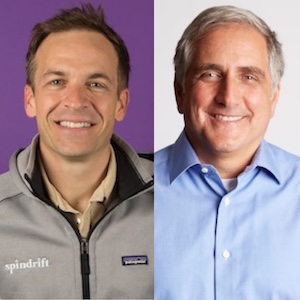
[00:00:10] Ray Latif: Hello, friends. I'm Ray Latif, and you're listening to the number one podcast for anyone building a business in food or beverage, Taste Radio. In this episode, we sit down with Bill Creelman and Dave Burwick, the founder and CEO, respectively, of real ingredient beverage platform, Spindrift. Even after 15 years and a majority sale of the company he founded, one reportedly valued at over $650 million, Bill Creelman remains convinced that Spindrift is just at the beginning of a real revolution. Since launching Spindrift in 2010, Bill has built the brand into a powerhouse, generating nearly $300 million in annual retail sales, according to Nielsen IQ. Spindrift is known for its sparkling water made with real fruit juice and purees, with no added sugar or added flavors. The brand has expanded that portfolio to include hard seltzers, and more recently, a mid-calorie soda line that harkens back to Spindrift's original mission of delivering authentic, high-quality beverages. Earlier this year, private equity firm Gryphon Investors acquired a majority stake in Spindrift. As part of this transition, veteran CPG executive Dave Burwick stepped in as CEO, while Bill now serves as the chairman of the board. Together, Bill and Dave are leading Spindrift into its next chapter, one focused on real ingredients and sustainable growth. For Bill, the future is full of endless possibilities. As he shared in our conversation, the most surprising part is realizing just how much further we can go. In this episode, Bill and Dave dive into the importance of staying true to a vision, executing it with patience, and creating a brand that resonates with today's conscious consumers. They explore how ambition, when guided by intentionality, leads to real, sustainable growth. Bill and Dave also discuss why Spindrift's innovation strategy is grounded in the belief that the world is ready for beverages that prioritize quality, transparency, and authenticity. Hey folks, it's Ray with Taste Radio. Right now, I am supremely honored to be sitting down with Bill Creelman and Dave Burwick, the founder and CEO respectively of Spindrift. Bill, how are you?
[00:02:29] Bill Creelman: I'm well, Ray. Thanks for having us again.
[00:02:31] Ray Latif: Yeah, absolutely. Dave, good to see you. How are things? Good to see you, Ray. Things are going great. Outstanding. Were you both at Expo West? We were. Yep, we were. I missed you both. I'm sorry. But I did see Spindrift everywhere, especially on Hall E. You guys had a huge display out there. How many cans of the Spindrift soda did you hand out?
[00:02:48] Dave Burwick: Have we done the math yet? I think it's over, I'm guessing over 7,000 or 8,000.
[00:02:52] Ray Latif: 7,000 or 8,000. Yeah. Yeah, the team did a great job. I would think most people were finishing the cans because what you are making is pretty darn fantastic.
[00:03:00] Bill Creelman: Yeah, it was fun. It was fun to see the product out in the world, especially having worked on it, you know, in secrecy for months and months and months. So yeah. And the reaction was really exciting too.
[00:03:14] Ray Latif: Innovation. I guess it's sort of a retro innovation in some ways where this idea came about and the desire and decision to get back into the soda category.
[00:03:26] Bill Creelman: Well, I mean, you would uniquely know, just cause we talked all, you know, during the growth of Spindrift, just, you know, what the journey is that we've been on, but maybe just to remind the audience, I mean, we started as Spindrift Soda in 2010 and we were a refrigerated $3 single serve soda. A long neck glass bottle. Long neck glass bottle sold through 75 produce distributors, mostly into restaurants. from 2010 to 2016. And then famously, we sat down with you in 2017 and declared that we were getting out of that business because we wanted to challenge ourselves to make a product that didn't have sugar, which is what the original soda had, didn't have synthetic natural flavors and natural colors. And that's exactly what we did. You know, we focused on building a sparkling water format using real ingredients. And so in the end of 2023, beginning of 2024, the team came up with this idea of like, what if we went back to that original, you know, kind of intensity of product and format? Knowing now everything we've learned over the last 14 years, what would it be like if we revisited that intensity level, kind of turned Spindrift up to 11? And that's what they did. These products are effectively are taking this incredible knowledge that we've developed, the supply chain that we didn't really have figured out. We've learned so much about sourcing and seasonality and fruit and temperature and time that we could apply all of that learning now to this product. And I would argue it's a better product than we made way back when. And it adheres to all the same principles of just sparkling water and real ingredients. So it's been incredibly exciting for us. And I think probably the most bold innovation we've ever done. just because it really pushes the limits of really what Spindrift uniquely is, you know, which is a very simple proposition, but this sort of incredible dimension of flavor without adding a ton of sweetness.
[00:05:58] Ray Latif: You do make great products. I just had a sip of your Shirley Temple and you had mentioned that this was a huge hit at Expo West. I imagine there were a lot of people drinking it as a refreshment beverage, but also as looking at it as a non-alcohol cocktail or an alcohol analog. And it is something where I feel like this does remind me. And I do have that kind of memory of when you launched in 2010 and the feeling I got when I was tasting these sodas and they weren't syrupy. You could taste the real fruit in there. The carbonation was spot on. I do feel like these are a great representation of what you originally intended. Dave, when you and I spoke last, you were the CEO of Boston Beer Company. And I remember at the time, hard seltzer was the craze, almost in the same way that Better For You Soda is a craze right now in non-alcohol. And I'd asked you if Truly could, that would be the Boston Beer Company hard seltzer, Truly, could be a brand that was potentially bigger than Sam Adams, Sam Adams being the flagship beer of Boston Beer Company. And when I think about the soda, I know it's still early, it's what, two, three weeks in at this point, not even? I wonder if the soda, you think, could be the new flagship line for Spindrift given what we're seeing in this space, in the soda space right now.
[00:07:18] Dave Burwick: I wish you hadn't brought up Truly. I'm sorry. No, I'm just kidding. By the way, Truly became a billion dollar business, so about three exercises of Samuel Adams. I mean, who knows? I think it's a great product. It's really early for us to say, but I think it hits a sweet spot right now, which is people, for the same reason that sparkling does, people are looking for healthy ingredients, better drinking. I think consumers always like flavor. I mean, flavor is really important and drinkability is really important. And I think what Bill and company have done to bring this to life is, is tremendous. I think it delivers on all that. And I think importantly, you know, it's a brand that really knows what it's, what it's about. It kind of sticks to sort of its authentic roots. And I think that helps with consumers because consumers can sense that when it's real and it hasn't been corrupted. And I say working at like a big company like Pepsi, which is a wonderful place, by the way, The risk always is that the purity of brands become corrupted by all the succession of people that come through and run the brands because their goals might be different than the long-term goals that the brand might have, if you will. This is one that's never been corrupted. There's a through line, as Bill said, from the beginning. in 2010 to where we are now with this product. So could it be bigger? Well, we hope so. That would be wonderful if it is, but I don't think we're not necessarily betting on that. We're just going to take it one step at a time.
[00:08:41] Ray Latif: You have three lines of products now. You have your hard seltzer, you have the soda line, you have your flagship sparkling water line. How do you know where to emphasize your time and resources at this point?
[00:08:53] Bill Creelman: Believe it or not, even though we've been doing this for 14 plus years, it's still early days for real ingredients in beverages. And what's so exciting to me is that it feels like real ingredients have never been more relevant than they are today. You know, you have to remember when we started in sparkling water, every other product was the same. It was clear. It didn't have, you know, fruit on the back of the label. It just was, you know, a relatively big category with very little differentiation. In almost everything we've done, is really against this idea of let's bring real ingredients to people and help them understand what it is. And so you mentioned the three product lines we're in today, I would argue, you know, the mocktails is another category that we've extended into, the teas is another area. It's really all with the same goal. It's bringing real ingredients to consumers, many of whom have never had them in beverages, at least, you know, sort of single strength, unprocessed, like what real fruit actually tastes like. And so when we sat down with you guys a couple of years ago, we kind of announced that this is the direction we were going to be going in. We thought there was an opportunity for Real Ingredients to be, to show up in places where Real Ingredients weren't or previously had not been. And that's really what you're seeing us do now as we launch into soda and continue to drive our business in these other areas. So I think when we think about resource allocation or where we're going to be spending our time, we really frame it more as how can we help bring more people into into real ingredients as a category almost, or as like a subset, and kind of direct our time and energy through that lens. And to me, what's interesting and exciting about soda, you know, we've historically had a very strong food service business. For instance, you know, we have a number of food service customers that previously worked with us on our soda line. They were very Excited, kind of big acquirers had it on the menu, etc. And this is a chance now to bring real ingredients to those customers again, and kind of help move them down the real ingredient pipeline.
[00:11:26] Ray Latif: Yeah, I would agree that real ingredients is a major through line for spendthrift. But as a consumer, I would say that the reason I love spendthrift is because it's a premium product. Everything that you make has a premium vibe to it. And, you know, even the prices are more premium and a higher priced item, you would expect to be a better product. I think the premium nature of what you do helps on a lot of fronts. And I think on the retail front as well, Dave, if you could talk about that, you know, at a time when better for you services are becoming so ubiquitous that you would think prices are going to come down. How do you maintain that positioning in a way that represents Spindrift and it's the way it's been portrayed historically?
[00:12:12] Dave Burwick: I think just in general, I mean, for years at Pepsi, we tried to come up with a premium brand or brand that could charge more money. And it just has not happened in soft drinks historically. It's because of the competitive nature, that's part of it. And pricing on a real basis has probably declined still over the years. I think what's really special about this new modern soda subsegment or whatever you want to call it, is that it's for the first time there are premium price points that are sticking in the category. And I think it's good for everybody. I think it's good for retailers for sure. And it's good for the manufacturers and the producers as well. And I think credit to, you know, Olipop, Poppy, Spindrift, and maybe, you know, Pellegrino, Perrier, some of these other brands, Topo Chico to a certain extent that can create a higher price ceiling. I think it's right now it's been, I think it's real and I think it's going to stick because consumers, as you said, are willing, they recognize premium when they see it and they're willing to pay more for it. And the people who are putting the products out there are very disciplined about, you know, what they want to get for the product and also the cost to produce it is higher as well. So that's certainly driving some of it. But I think it's great for the category actually to see that.
[00:13:26] Ray Latif: Yeah, and I think I've never really seen Spindrift discounted. I've never seen it in a place where it's like a dollar a can, or even a dollar fifty a can, and that's no knock on Spindrift. I'm actually, I think it's a brilliant strategy to maintain, again, that positioning such that people don't think of you as being a discounted brand. In fact, we see a lot of that right now in Sparkling Water where emerging brands have put themselves in a difficult spot by discounting to $1 or $1.50 when they were once say $3 or $3.50. It's hard though, I think, to expand and to get those velocities perhaps that people are expecting, investors might be expecting you to get when you do have that premium price. How do you balance the two? How do you consider the dual nature of price and velocity, Bill?
[00:14:17] Bill Creelman: Well, we've just had to focus on the part of the business that we, you know, the space we uniquely fill. And, you know, our product is expensive to make. You know, when you fresh squeeze ingredients and you use single strength ingredients, like, there's no getting around the fact that that's going to be a more expensive process. We were, our ingredients are cold chain. We move them cold to our production facilities. So, I guess, in many ways, like, discounting was never really going to be a strategy because of the inherent cost in the ingredients. I think, though, that more what's interesting to us is value. Like, is there value there when you take an unprocessed ingredient and give them the kind of taste profile and the rounded taste profile of What an orange that you just cut open and you're sort of having as a slicer, as fresh fruit. And I think what we have always understood is that word of mouth is going to be our most important and most effective strategy. People try Spindrift. It's different. They like it. They tell a friend. That's a very patient strategy. It is not, you know, kind of buying front of store and then crossing your fingers. But it was always the strategy that we felt was the most effective for our brand, just given how different it was relative to everything else in the set.
[00:15:46] Ray Latif: Switching gears for a sec. Sugar. Sugar has always been something that is top of mind for consumers, or maybe not always, but certainly in the last 10 years, where there's been this, hey, sugar is completely evil. And now it's moved to a place where a little bit of sugar is fine. Sugar has always been a question about Smirnoff, and I'm looking at that 2017 article and talking about your complete transition from soda to sparkling water, and you had said at the time, Bill, it's removed the last caveat. It's real fruit in water and bubbles. That's it. You've embraced the fact that sugar can be a fair thing for consumers. That's something that consumers want at this point. How much does that impact, I guess, the overall strategy? How do you think about sugar in the context of the evolution of Spendrift at this point?
[00:16:39] Bill Creelman: Well, we've stayed, you know, our soda even now doesn't have any added sugar.
[00:16:45] Ray Latif: And I'm going to have some of your strawberry shortcake, which you would think is a pretty sweet product, but let's try it here.
[00:16:51] Bill Creelman: So imagine when we entered the sparkling water category, it was a category filled with zeros. And when you have real fruit, it cannot have zeros. I mean, literally, you know, real fruit has some de minimis amount of calories. So we had to really embrace Embrace that and really explain why real fruit has calories and products without real fruit don't. And that is quite a challenge, especially as a single brand, you know, out there really advocating for that point of view. The new product is that exact same proposition, just two, three, four times the amount of real fruit. Our position on real ingredients and then the kind of resulting calories or sugar really hasn't changed, I would say. What we would always say about our product, and especially now, I think this is true in the soda category, is that we're not relying on sweetness. We're really relying on dimension of flavor. What single strength ingredients give you uniquely is a little sweet, a little tart, a little body, some sweetness. You know, that's traditional soda intensity, but a lot more dimension of flavor. And that's why you don't miss the sugar. So I actually think now more than ever, we now know sugar can accelerate things in your body that you don't necessarily want. We know a lot more about the effects of sugar. So I think we're more, as Dave said, like we know ourselves so well. now that it's much more about, you know, kind of continuing to defend our proposition than necessarily kind of reinventing or reimagining it now as we expand.
[00:18:40] Ray Latif: Another ingredient that seems to be top of mind for a lot of consumers well, it's an ingredient set, that of functional ingredients. And you, Spindrift, famously, or in some cases, infamously said, we are not all about the functional ingredients. So we're not a probiotic, prebiotic, we're not a gut health brand.
[00:19:04] Bill Creelman: We really embrace real ingredients. And in some cases, you know, there's this function, right? Our tea has a little bit of caffeine in it. We obviously have a spiked line that has a little bit of alcohol in it.
[00:19:16] Ray Latif: The original function, right?
[00:19:19] Bill Creelman: But it all, you know, it's all derived from the ingredients upstream that you could grow in your garden, you know, or you could make a meal with. And so, yeah, this is like very personal to us, this idea of using real ingredients, this idea of using, you know, less processed ingredients. I actually think, though, that, you know, and I don't know, I think we all would define function a little bit differently, but I would argue that when you make a meal from scratch at home versus buying a TV dinner, even though you're getting this exact same ingredients, The making it from scratch at home is a little bit better for you. The actual, you know, kind of bits in the food and the way it's less processed yields a better product. It tastes better, I would argue, but I think it also, you can digest it easier. And I think that's really what we're espousing here is this idea that we're, you know, when you start with a whole orange or a whole lemon and can kind of follow it all the way through to the beverage you drink, there's inherently, it's going to taste better and it's going to feel better. And that is something that we are unwavering.
[00:20:30] Ray Latif: I think one of the unspoken words in our industry, and I don't know why, because it is the biggest part of our industry, is refreshment, right? I mean, people drink beverages typically for refreshment. You have billions and billions of beverages sold every day because people are thirsty and they want something delicious to drink. And that part of Spindr's trajectory, I think, is an important one. But how do you talk to people about refreshment? How do you talk to people about the fact that this is going to be a delicious product and doesn't need to be anything more than that? Especially nowadays when everyone's like, oh, this has to have this or this or that in it.
[00:21:08] Bill Creelman: Again, I guess, you know, we believe that the real ingredient revolution in beverage is just starting. And so when we talk about innovation or where we want to extend into, we really think about what categories are most in need of a proposition like Spindrift. And then we think about that need state. So here with the soda, we really feel like pairing with food is what we can uniquely bring, certainly refreshing, but also fulfilling. If you look back at when, you know, we started, we were, you know, a favorite of many of, you know, flatbread pizza in Somerville or the flatbread peach stain or burrito, or, you know, we worked with Wahlburgers when they launched in the early days, way back when. And those are all occasions that I think are better suited to a fuller flavored product, albeit, you know, still something that is matching, it should match in flavor intensity, but also ingredients. And what always struck me is when you go into a great pizza blaze or a great burger joint, like you can watch them make the ingredients behind the counter. You can see them rolling the dough and putting the toppings on. We wanted to have a, a soda or a proposition that kind of match that. So we continue to be very intentional about where we take this kind of point of difference of ours that's taken us almost 10 years to figure out. And so I think we still believe the long runway here for Spindrift or other brands is going to be taking real ingredients and kind of matching up with the experience that it's best suited for.
[00:22:54] Ray Latif: Well, yeah, the occasion, however, could be a bit of a problem, I think, and this is just me talking, given that you have two really delicious product lines now, and you kind of have to weigh where one belongs, the other doesn't necessarily, or where one belongs, the other one, say, you know, fits better. I mean, I'm sipping on this orange cream flow, which is outstanding. Really, really good, and I'm thinking, okay, well, If I were working for Spindrift, how would I figure out where this belongs versus just your orange mango sparkling water? And is that a dilemma for you? I mean, is the question of cannibalization a concern for Spindrift at this point?
[00:23:36] Bill Creelman: Luckily, you know, we've been in both categories, right? So we were in soda for seven years, and now we've been in sparkling water for about seven years.
[00:23:44] Ray Latif: Albeit at a very different part of your journey.
[00:23:46] Bill Creelman: Very different part of our journey. But we learned a lot. You know, we were able to kind of see where those categories overlap, you know, so where the consumer overlaps or where the retailers overlap. and then where they're different. And I think it's fair to say there's gonna be occasions where they're similar, but we also know when we got out of the soda business that there were a whole bunch of customers that now could no longer find the brand. And I think the need hasn't changed. You know, there's still particularly that with food occasion, in our opinion is probably better suited for a more intense flavor. I think we have a pretty well-lit line for that. I mean, red wine is a great example. That tends to pair with a specific occasion that's different than rosé or white wine. And so we're very happy for the consumer to come in and meet us at whatever level of intensity they want. We don't want to be too prescriptive about that. But as Dave mentioned, we're being very targeted with where we go with this product because we really want to make sure, you know, for us, the ideal is obviously to bring consumers in, in that with food occasion that right now is not purchasing Spindrift because it doesn't deliver the flavor intensity yet that they were looking for.
[00:25:04] Ray Latif: Intentional is good. Ambition is really good. If you're an entrepreneur or someone who's running a beverage company that seems to be on fire, like SpendRift is right now. I think ambition can sometimes get away from people. I remember I once spoke with Ben Weiss, who's the founder of a brand called Bi. And Bi was famously sold to Dr. Pepper Snapple, or Kirk, Dr. Pepper, for a billion seven. I think this was in 2017. And Ben at the time had told me, he's like, we don't look at ourselves as the next vitamin water. We're the next Coke. We're the new Coke. And of course there was a chuckle and a wry smile there. On my half, Ben was deadly serious, actually. But, you know, Dave, how does ambition fit into your strategy? On the one hand, you've got these great product lines and you want to be intentional about and specific about how you position them and where they're sold. On the other hand, I mean, I can see these and say, hey, well, the sky's the limit for what you can do here. How do you think about and weigh ambition versus intentionality?
[00:26:08] Dave Burwick: Well, I think if intentionality is followed correctly, then ambition is sort of achieved, if you will. So I think continue to do what we're doing. I think there's more categories to go into with real ingredients and real fruit that we could redefine, if you will. And I think we need to do that at the right pace and the right way. And ultimately, the ambition will be achieved. Personally, I mean, I think this is a billion dollar business and beyond. It is, but like I don't wake up in the morning, this is, it's only like week three, but I don't wake up in the morning and say, hey, how quickly can we become a billion dollar business? I think, hey, how, how successful can we make soda? And to your point, where does soda, where's it going to fit out a consumer's choices? How are they going to consume it? What occasions? How do we do, how do we separate that from sparkling? How do we best reach that consumer? Should we be targeting modern soda drinkers or traditional soda drinkers or both? So I think, it's great to have the ambition, but I think you get there by doing all the right, with not focusing on that every day, just focusing on what's right in front of you. And I think, again, this is a brand that is like, you know, it's For Bill and Dave team. It's like, it's, it's never wavered from its, its intentionality, if you will. And I think that's really, I think today's world, people see that, they just understand it. And, um, I think that's a really powerful thing and I think we just got to keep following, you know, following that same path if we're going to get there. And actually I joined because I'm so excited about, there's so few brands in any category that have that kind of sanctity to it that it's really super exciting to be a part of this and help the team achieve their ambitions. And again, I think this thing is, it's got a lot of runway ahead of it.
[00:27:48] Ray Latif: You've mentioned a number of times that Real Ingredients is a platform with which you can innovate into multiple different beverage categories. I think when you're considering new product developments, you don't want to over-innovate. You want to be very focused on what you have in front of you, but be cognizant about the potential for the brand. I don't know. I mean, I sometimes wonder about innovation as being a big trap for a lot of brands. Bill, how have you considered innovation over the years and timing in particular as it relates to the soda line?
[00:28:24] Bill Creelman: Yeah, we spend a lot of time on that, you know, and in general, if you think about, let's say we're in four to five product lines over 15 years, you know, it's about every two or three years that we feel like we're kind of ready to come out with something different and unique. I think that the difference is really, as I mentioned already, like It's about showing the versatility of real ingredients and trying to present in a unique way for consumers that may not yet have moved into Spindrift. So, you know, we're about 5% household penetration today. We're, you know, 60 ACV, like we're, you know, we've been pretty consistently and intentionally growing the brand. And that's always been a foundation really of the business from the beginning. And so I think we would love to continue to expand into lots of different occasions as long as we can bring something unique. That's the thing that to me is really important. I think our drifter community has come to expect that from us. you don't see all of the innovations we haven't done because they don't meet that criteria. I think as long as we continue to stay true to that, I think we'll be okay.
[00:29:48] Ray Latif: Spend your milk, however, won't be coming out anytime soon.
[00:29:51] Bill Creelman: I would never say never, but I think people have done milk already. As many ways as probably can be done.
[00:29:58] Ray Latif: Sure, sure. Well, Bill, the question I was going to ask you after Dave talks about ambition is your personal journey in this beverage space, as we've talked about the founder of a brand called Stirrings, which you successfully exited. And now with Spindrift bringing the brand and getting the brand to this point, I think In our article about the investments from Griffin investors, Spindrift was doing $275 million according to Nielsen IQ data, which I imagine doesn't include a lot of other revenue that the brand is bringing in. So, I mean, what an accomplishment, what an incredible thing to be able to build a brand to this point. Are you satisfied? I mean, are you, are you happy with what you've done to this point? I mean, how, how do you think about your personal ambition and, and, and where you go from here as an entrepreneur?
[00:30:55] Bill Creelman: Yeah, we're really excited about partnering with Griffin and honestly, I've known Dave for 10 years and I couldn't be happier about having him as really the lead in this next stage of the journey. You know, the move to bring in Griffin as a partner was really because of how excited we are and because we feel like Real Ingredients are having a moment unlike anything that I felt or experienced, you know, in the previous 14 years. And so, you know, when we thought about our options as a business, you know, as a team, we all really decided that we wanted to really bring in partners that could help us with growth. And that's really no different than how we had thought about partners over the years. If you kind of go back and look, We didn't get to the size we're at alone. You know, I didn't do it by myself. It was bringing in a great team. It was bringing in amazing investors, all of whom have contributed at different times and in really important ways. And I think Griffin, with their experience in the category, with Dave, with his experience at Pete's or at Pepsi or Sam Adams, all of that experience we're going to need because beverage isn't getting any less competitive. And so, you know, I think we're, we really feel kind of armed and ready now for the next stage of growth in a way that's super exciting to me. Okay.
[00:32:28] Ray Latif: Super exciting.
[00:32:29] Bill Creelman: But are you happy? Oh my gosh, I mean, you know, I pinch myself every day. I mean, I think, you know, I wish I could tell you that I had imagined all those years ago, you know, in Charlestown with glass soda bottles, like, you know, that we thought that this category would break the way that it did and that our innovation would be recognized the way that it has. You know, but you have no way of betting. I mean, there's too many chances for these businesses to get off the rails. And so to be here today in the position we're in, I'm thrilled. And the most surprising thing for me is just feeling like there's just, you know, so far to go. And I think it just has to do with the fact that beverage has been so far behind all these big food categories, which have largely had real ingredients and kind of better for you already, you know, kind of come in and change. Think about Ben and Jerry's or Annie's or Stonyfield yogurt. I mean, these iconic brands that have been around now. I think that's the era we're in for beverage. And so with Dave and Griffin and our team, like I think we can, you know, become one of those iconic brands that really ushered in a new era, but that takes time. And that's really what, you know, the position we feel we're in now.
[00:33:56] Ray Latif: Dave, how do you see your role in the company now as CEO? I know you've talked about the potential for the brand and the excitement that you feel about its runway going from here. You've worked with a founder in the past and Jim Cook, but kind of a different situation in that Sam Adams, Boston Beer Company was a publicly traded company. Spindrift is still privately held. When you're thinking about working with Bill and leading the company, what are your priorities? What do you feel like is most important at this point, especially given your experience working with different companies across the industry and with iconic founders like a Jim Cook or a Bill Krillman?
[00:34:39] Dave Burwick: Yeah. First of all, I feel extremely privileged to have this opportunity to work with Bill and Dave team. I will say right away that I love working in a private company versus public. And the big thing really to me is that, and we use Griffin as an example, as our partners in this, I think you end up, you have a board and a sponsor, if you will, that actually is all in it with you and they provide a lot of value. They do. And if they didn't, they wouldn't be around. And I think that extra, you feel like you get the support, a broader network of support and a capability and expertise that you could actually put to use. So there's a bigger, I think a bigger, more supportive team in a private company or public company, you're kind of out there on your own, right? And I mean, you're not getting, you know, the guys at Fidelity would call me, they're great by the way, but they're not giving me advice on how to run the business necessarily, but I need that. I want that. And for me, I think, My number one priority is getting, there are 203 people who work at Spendreth who are thereabouts, it's like getting the most out of every one of them. For me, that's what I love to do, is how do you, I've talked about leadership is really, it's the ability to take the power within you or transfer that power within you that power meaning really your experience, your knowledge base to those around you to make them better. And I'm deeply passionate about that. And I really think that there's a great group of people here. And for me, the best thing I can do is help people really achieve their full potential as members of the Drifter community, if you will, and also as humans. And that's what I want to do. And that's job number one. Number two is like, there are many choices to make to grow the business. And I think having a little bit of dialogue and even conflict around how do we do it, like you referenced before, how much do you innovate versus not innovate? What's the pace of that innovation? How do you support the brands? How do you also attack some of the operational challenges we've had with the high cost of ingredients and freight and all the rest? I'm just another voice to help kind of make the right choices, help the team come together, make the right choices, because obviously that's so important to do that. And we're lucky to have many different pathways we can take, but that can also be challenging to make the right choice. I've often been a part of businesses, most businesses are like this, and maybe you were alluding to this before, too, where the growth has to come from innovation. There's so much pressure to innovate. Consumers want it, retailers want it, nobody cares about the long-term health of your business. They just want something now. Give me something now, whether it's the consumer, the retailer.
[00:37:09] Ray Latif: We're guilty of that, too, over here at Bed and At.
[00:37:11] Dave Burwick: Depending on your business, it could be the wholesaler, whoever it is, and I think We're at a place now where there's so much growth just on the base business. So part of what I want to do is help, like how do we maximize the base business, if you will, the core sparkling business and build reference like five or 6% household penetration, 60% ACV. There's a lot of upside there. If we just focus on that, we still get a lot of growth. And that's a great thing. And then there's the innovation is really complimentary. And you can, you, you're not forced to make decisions to innovate either too quickly or in the wrong way. Cause you have to, you have to have the volume. You have to have the business. And I've been in that situation too many times where you're just throwing a lot of innovation out there and yeah, it's fun. It's interesting, but you, but then you live and die by that. And basically, I don't know, 15 to 20% of innovation actually succeeds. So the balance is that we have a great balance. And part of what I want to do is help keep the balance, keep that balance. Don't forget about the core. At the same time, make sure that we are not too slow and not too fast. Also, in innovating and taking the real ingredient credentials of this brand and bringing it to other categories, because it's so tempting. There's like, I could list 10 different ideas of where we could go. Probably not milk. Maybe a fruit smoothie one day, you know, but it's high protein. And hold you to that tape. So you just said it. But I think there's so many, but then, and that's such a great place to be. So again, it's making the right choices around our opportunities to grow and growing it in a way that's sustainable and durable. But also to me, back to where I started, it all starts with the people, the team, and getting a team that can work together really well. That's really hard today in most companies for many reasons. I think we can, we have a great culture and we can do that. And I want to try to supercharge that as much as I can.
[00:38:56] Ray Latif: Yeah. And I think the opportunity also comes from having a solid foundation that's based in fundamentals and relationships. I don't know how many times you've talked about fundamentals on this podcast and the importance of a healthy gross margin and a strong supply chain, et cetera, et cetera. It's not necessarily easy. A lot of times it's easier said than done because of pricing pressures, because of just changing consumer wins and how people, in what people want and what ingredients they want. So how do you think about the long-term viability of a brand and how did you think about it say in 2013 versus 2025? Bill, I mean, is everything a little bit easier for you now that you've been in it for a while?
[00:39:44] Bill Creelman: Well, I don't know that it's ever easy. I mean, these categories move so quickly. I think, you know, just knowing who we are helps. And a lot of the work we've been doing is really, you know, doubling down on continuing to optimize. So we buy a lot of single strength ingredients around the U.S. primarily. You know, do we have the right partners? Can we continue to improve their not just quality, but you know, their entire kind of way of going to market? And then is there savings for them and for us that we can continue to help improve the product and improve our cost base? I don't think there's ever going to be a time in our business and probably even in the larger brands like Coke and Pepsi where you're not having those conversations. Beverages is about, it's about a lot of things, but you know, the only way to really build a successful business is to do one thing and do it over and over and over and over again. That is really, you know, the job. In many ways, Spendrift was an interesting idea in 2013, but it wasn't an efficient business. And I think because of our team, because of our focus on a relatively narrow range of products, you know, that's allowed us, I think, to get better and better. But we still have a long way to go. And so, as Dave mentioned, like, you know, we spend 80% of our time really about driving kind of the core business and making sure the product is amazing and getting everywhere it needs to be. And then the balance is really about kind of what's next and where do we, where can we go from here?
[00:41:27] Ray Latif: Hey, back in 2013, when you were not an efficient business, I imagine there were a lot of sleepless nights and wondering if this thing was actually going to work. What kept you going?
[00:41:36] Bill Creelman: I think just my belief. You know, I like to tell people that my Saturdays are really not much different than my Tuesdays because I, for better or worse, maybe think about, you know, kind of food and ingredients and what I'm having for dinner on Saturday night, you know, kind of tends to be how I start my day. And so I just assumed that if I was as interested as in ingredients as I am, there must be other people out there that have that same passion. And I just, I'd always felt like there just wasn't a product that really met that standard. Something you would, you know, kind of make in your kitchen if you were having friends over for dinner, like that level of product is something that we've always strived for. So even in our darkest hours, and we've had, you know, many, many, many challenges over the years, I think we always went back to just how proud we are of the product and the belief that if we could just get people to try it and understand a little bit about our starting point, that they would be excited about our proposition. Doesn't mean you necessarily are gonna be a spindrift drinker, but at least appreciate what we stand for in these, you know, big crowded categories that have a lot of different things they're trying to sell you.
[00:42:56] Ray Latif: I remember an entrepreneur once telling me that running a beverage brand is like being on the edge of a sword where on one side it could be epic failure, on the other side it could be remarkable success. And you're always teetering on that line. In those dark days and those dark challenges, where was the most difficult part? What was the most difficult experience of building this brand? And was it a specific moment or is it just something that's always been difficult for you?
[00:43:24] Bill Creelman: Well, I think it's not making compromises. And, you know, I think where these brands can, you know, or I shouldn't generalize, but just in our brand Spindrift and maybe Stirrings before, you know, you are constantly being asked to make decisions that could compromise, whether it's the brand integrity, the ingredient integrity.
[00:43:47] Ray Latif: Who's asking you these questions?
[00:43:49] Bill Creelman: Consumers or retailers or just, you know, investors, you know, this is an expensive category beverage. It's incredibly competitive. I think it moves other than maybe fashion. It moves faster than any other CPG category. And so, man, you're just always, every day, you're making 100 decisions that could sort of swing the momentum one way or the other. And very often, the short-term decision is in conflict with the long-term benefit. And, you know, for me, having done it now for a number of years, I was able to have that perspective. I think we generally have avoided that short-term price incentive you mentioned earlier in favor of like, no, let's maintain the integrity of the brand and make sure that we live to fight another day. And why I'm so excited 14 years later is because I think we're actually finally in many ways seeing like the real benefit of those hard short-term decisions compounded, many of them stacked up. The success we're seeing now in a lot of ways has been, were decisions that were made five, eight years ago that have just taken time to kind of surface. So I think this is gonna be just such a neat time For Bill of us, you know, to really experience like what this point of difference that we've developed can mean. You know, if you go around the world, real ingredients are just pretty, you know, they're much better understood than they are in the US. And so I feel like in a lot of ways, like we're just kind of leveling up with, you know, where real ingredients have kind of been. And so, you know, that's what gets me really excited.
[00:45:34] Ray Latif: I've kept you here a lot longer than I said I would, and I'm sure your team is going to be like, that POS Ray, he said this, and then he said this, and now we're doing this. And so I can't thank you guys enough for being here. Thank you so much. I know you're only what, a couple blocks away from us, and I would love to have you back anytime you're available, but this has been such a great conversation and one that I think our audience is going to get a lot out of. So I really appreciate it. Thank you.
[00:45:59] Bill Creelman: Well, thanks for documenting the journey. I think, as I mentioned, I went back and read our work together and starting all the way back in 2010 forward. So yeah, really grateful for your continued coverage and support.
[00:46:15] Ray Latif: Yeah, isn't it crazy? I've been here for 14 years. You've been at this for 15 years. And here we are still doing our thing. It's right. Maybe we're the crazy ones. I'm not sure. I would put myself in that category for sure. In any case, Bill, Dave, thank you once again. Really appreciate it.
[00:46:31] Dave Burwick: Thanks, Ray.
[00:46:32] Ray Latif: Thanks a lot. That brings us to the end of this episode of Taste Radio. Thank you so much for listening. Taste Radio is a production of BevNET.com, Incorporated. Our audio engineer for Taste Radio is Joe Cracci. Our technical director is Joshua Pratt, and our video editor is Ryan Galang. Our social marketing manager is Amanda Smerlinski, and our designer is Amanda Huang. Just a reminder, if you like what you hear on Taste Radio, please share the podcast with friends and colleagues. And of course, we would love it if you could review us on the Apple Podcasts app or your listening platform of choice. Check us out on Instagram. Our handle is BevNetTasteRadio. As always, for questions, comments, ideas for future podcasts, please send us an email to ask at Taste Radio.com. On behalf of the entire Taste Radio team, thank you for listening, and we'll talk to you next time. you