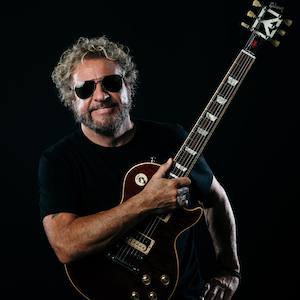
[00:00:10] Ray Latif: Hello, friends. I'm Ray Latif, and you're listening to the number one podcast for anyone building a business in food or beverage, Taste Radio. This episode features an exclusive interview with rock and roll icon and tequila innovator, Sammy Hagar. Sammy Hagar's passion Ocho Tequila runs deep, but his commitment to earning and preserving the trust of his fans runs even deeper. Santo Spirits is where those two worlds meet. The legendary rock star, best known for his time as the frontman of Van Halen, made his mark on stage. But it's in the world of consumer packaged goods where he truly built his fortune. Sammy is the mastermind behind Cabo Wabo Tequila, a trailblazer in the celebrity spirit revolution that's now a staple in the beverage alcohol industry. In 2008, Campari made a historic move, acquiring Cabo Wabo for a groundbreaking $100 million, an unprecedented deal at the time. Nine years later, Sammy made a triumphant return to the spirits world with Santo, a tequila-focused brand he co-founded alongside fellow musician Adam Levine. Building on the success of Santo, the brand grew even stronger in 2019 when celebrity chef, television personality and restaurateur Guy Fieri came on board as a co-founder, bringing his flair and influence to the brand. In this candid conversation, Sammy opens up about his vision for Santo, emphasizing the brand's dedication to purity and excellence. He shares his insights into the challenges of the celebrity tequila market, why, despite his success with Cabo Wabo, he remains cautious about creating a mass-market brand, and the importance of authentic relationships within the spirits industry. Sammy also discusses his approach to building teams and why for him, hiring the right people is about finding fresh perspectives, not yes men. Hey folks, it's Ray with Taste Radio. Right now, I am honored to be with the one and only Sammy Hagar, the founder of Santo Tequila. Sammy, great to see you.
[00:02:24] Adam Levine: Thank you. Happy to be here, Rick.
[00:02:25] Ray Latif: As I mentioned before we hopped on the mics, this is an interview that I've been wanting to do for some time. And I'm so glad that you're here with me on this Friday afternoon.
[00:02:35] Adam Levine: Where are you based? Are you in California? Yeah, I'm based in California. I always have been born and raised here. And as much as I don't agree with a lot of things in California, I stay here. I keep saying, well, I tried another state, I tried another state, and I live in Mexico part-time, and I lived in Hawaii for quite a while. So, yeah, I live in California. Reluctantly, like everyone else, I'm sitting here going, why do I live in California again? Well, I guess I love the coast, you know.
[00:03:04] Ray Latif: Me as well. I am a West Coast guy. Literally, the coast, I think, is more important than the West part of it. And anytime you're near water and look out at the ocean, it's one of the greatest experiences you'll ever have.
[00:03:16] Adam Levine: Absolutely, well worth the price. It's expensive out here.
[00:03:21] Ray Latif: Yeah. You know, I mentioned you were the founder of Santos Tequila, and I kind of skipped over everything else you've done in your life. You know, in your professional music career, I imagine there's a lot of ups and downs and kind of knocking your head against a wall. And, you know, with all the wins and fun, it can be difficult. But in the beverage alcohol space, I know for sure it can be a very difficult road. But what do you think is more difficult, professional music or beverage alcohol?
[00:03:46] Adam Levine: Well, you know, now they've both gotten more difficult. How about that? Because, you know, back in the old days, when I was first starting out as a musician before MTV, and it's all there was, was kind of like rock radio. And it was really fun and easy, quite honestly, you know, like in Montrose, I mean, it felt like it was a struggle maybe getting financially on your feet, but the actual business, was just record companies would sign you and they would sign you for a three record deal and they would pay for you to go out on the road and open for big bands. That was awesome. It's just not like that anymore. Now you have to have some kind of a gimmick or you have to go out and starve yourself to death and just play and play and play anywhere for free and for no money, sleeping in a car and stuff and going from club to club to club playing for 15 or 20 people. After years, maybe you get an audience. or you get some crazy whacked out thing on YouTube and have 500 million views. And all of a sudden you're a superstar, but not necessarily longevity. So it's a whole different world. And when I first started out with tequila, I built a club called Cabo Wabo in Mexico, 1986, 87, 85, somewhere around there. I started building that place and I wanted it to be a tequila bar and I wanted to have my Ocho Tequila. And it was real simple. I just built the cantina. Went down there and played all the time for free, which is what I was doing. Playing music is fun, it's easy. And I launched a tequila brand from that in 1988, I believe it was. I mean, I'm not good with years and stuff. I just know that it was fun and easy. I just went on tour. So we're like what I always do. I built my stage to look like the inside of the Cabo Wabo cantina. I had 50, 60 people sitting on stage partying with me and in bleachers. I had waitresses come out serving my tequila. I did that for about five years and I had the second to the largest premium tequila in the world. And it was like, that was easy. That was fun and easy. And then Kampari comes along and said, we want to buy it. I'm going, geez, it's not for sale. I'm having a ball here. What are you talking about? And then they showed me the figures and I went, damn, that's life changing. So I did it. Wanted to do it again because it was so much fun with tequila and it's all changed now It's it's really hard, you know to start Santo Spirits. You gotta be talking about 40 50 60 million dollars throwing out a brand To grow it and make it big in this day and age. So music Santo Spirits have both gotten really difficult I don't know which one I'd say would be easier. I'd say probably rock and roll. I Because, once again, you just go out and do your passion. You don't have to have any money. But if you're going to get in the spirits industry, you better have some cash and people backing you. You've got to build a team or you've got to find someone, like I said, to back you or use your own money like Guy and I do. We don't have backers. You know, our goal is to make the best tequila in the world, not to be the biggest tequila in the world. See, we're not trying to build to outdo Clooney, those guys who outdid me. You know, when I sold Cabo Wabo, I was like Mr. Feather in a cap. How did you do that? Well, I don't know how I did it, but I know how to do it. You know, I don't know what I did. You know, it's like, but I can do it. Those guys came along, kind of copied that model. And everybody's kind of building the cell, building the cell. Well, we're not necessarily doing that. We're building to have the best tequila in the world, and we're just trying to build a brand that's solid. And the celebrity thing, which I'm sure you'll bring up eventually, it hurts us, believe it or not. It's like in the old days, when I did it the first time, I was the first celebrity to do it. It was like, Wow, Sammy Hagar has got a tequila. Wow, that was news. So you got a lot of press about it and a lot of, wow, what does he know about tequila? Then I'd do an interview. I'd say, I know a lot about tequila. I make the best tequila in the world, you know? And it was fun to do it like that. But now it's like, shh. Don't use their name. People think we're a celebrity tequila. Celebrity tequilas, 90% of them are garbage. Anybody that doesn't know that, just go out and go ahead and buy them. So now the celebrity thing is kind of a black mark, but we're always fighting to say no. Blind tastings is what I'm all about.
[00:07:59] Ray Latif: As you mentioned, you've been in this business for a long time, Ocho Tequila business that is, and passion is important. And I think, you know, on the point of a celebrity spirit or a celebrity-backed brand, it's hard to verify authenticity. It's hard to verify that the person behind the brand is doing it for the right reasons, that they really love the product, they love the category, they love the business. And in your case, I think you loved all of them. You love tequila to start with. You love making people happy and sharing your passion with others. But, you know, just to back up for a second, I mean, how'd you get into tequila? What was your moment of discovery when it came to the spirit?
[00:08:39] Adam Levine: even before I was a musician entertainer, I kind of was, I guess, you know, when I look back on my high school years and stuff, you know, I was all about, you know, having a good time, party, being the life of the party if I could, you know, and having all the girls want to dance with me and all that, you know. So I liked tequila back then, even when I was younger, you know, but because of the ritual, you're like, wow, you do a salt, you do a shot and bite the lime and go whoop, You know, there was just something about that that was a really good bust, even though Ocho Tequila we were drinking back then, the next day it's gone, never again, never again. And so that's really what hooked me into tequila. And the first time I went to Cabo back in 1978, 79, there was nothing. There were three hotels. You're at the hotel. dirt roads, one flight in a week, one flight out a week. And when I checked into the hotel, this resort called Twin Dolphins, not there anymore, it's now a montage, the guys, you know, they brought you out a shot Ocho Tequila. And I'm going, oh, no, no, no, no, thank you, senor, you know. And finally, the guy says, no, you know, it's It's a ritual, you have to do it. So I said, yeah, you know, and I tasted it. And I don't know what it was, but it was pure 100% agave. It was real tequila. And I had never had it before. And it was just like a reposado and a tiny bit of salt on the rim, you know, a little bit of lime if you want it. And man, I just went, wow. But I've never Ocho Tequila like that. So I'm there for a week or so. I start talking to a guy that kind of runs the place a little bit, Jorge Villanueva, who's still my partner in Cabo Wabo, still runs the cantina today. And the first guy I met there, and I said, wow, I want to build a place here. You know, I fell in love with Cabo. So he took me down. We found the piece of property, and I bought it. Not the first time, but you know, after I'd go back a couple times a year. So, long story short, finally, when I bought my first condo, which was the first condos they had in Cabo at Terrasol, I said, I said, let's go get some furniture. And he took me to Jalisco and to Guadalajara. And then we said, he said, let's go Ocho Tequila, drink tequila and eat some of the food. And I went around with him to these little small distilleries, and the farmers had their own little special batch. And I just fell in love. I just said, this is unbelievable. I saw them cutting the agave. I saw them putting it in wood-burning ovens back then. Some of them were wood-burning, you know, to make the steam. And the smokiness and the food. And then you hear a mariachi band, and you just go, man, I'm in love. I mean, it's like, honestly, life-changing back then. I'd never seen anything like it. And the passion of them cooking the agaves and working so hard, I fell in love with it. I really did. I mean, it got me like, oh, I was in the boat, filleted up, man, I'm a sushi in five seconds.
[00:11:36] Ray Latif: For those of you who are not watching the video, Sammy just hooked himself. So that's what he's talking about.
[00:11:44] Adam Levine: So anyway, I just fell in love with it. And I said, man, I'm going to build a cantina in Cabo. You know, there's nothing there, all dirt roads. Back then, there wasn't even electricity. They didn't have telephones, no telephones. You had to go into town. They had a telephone company where you went and paid the lady operator and she dialed the number for you, 35 pesos to talk for three minutes, you know, and that's all there was. No newspapers, no one flight in, one flight out a week. And I'm dreaming, I want to have a bar down here and I want to have my Ocho Tequila. I want to have that tequila that I'm drinking in Jalisco. And that was the beginning of Cabo Wabo. I did it. I kept going back and I found people that would send me Ocho Tequila. They sent me tequila in the Cabo Wabo days in frigging gasoline cans. I mean, I'm talking about plastic ones, metal ones, you know, five gallons. And they'd send me the Blanco. And I would put it in these little barrels at the Cabo Wabo, and that's how Cabo Wabo started.
[00:12:40] Ray Latif: Such a simpler time back then. I mean, it feels like it didn't take a lot to be happy. You just kind of set up shop and served if you wanted and shared that passion, as I mentioned, with others. starting a second brand, as you alluded to, or as you noted, that it's a very different kind of industry that we're in right now. And to come to market, you've got to be very differentiated. You've got to have something because maybe the, you know, the second celebrity tequila brand, or at least the second tequila brand that was backed by or founded by a celebrity, that was kind of still interesting, differentiated. Now there's, I don't know, a few dozen of them out there. So when you started Zonto eight years ago, and launched a pretty innovative and first-of-a-kind product. It was that mezquila, which is a blend of mezcal and tequila. What was your mindset? What was your vision for the brand at the time? And what was the initial reception for it?
[00:13:35] Adam Levine: Well, yeah, it was, it was a trip. I just didn't want to compete with Cabo Wabo because Campari bought it for me. It's such a beautiful amount of money that it changed my life. And I thought, well, why would I step on them? You know, it's like, it was my first baby, but you know, then they changed it. They went and bought another distillery because I didn't own my distiller. I just was using, you know, this Miravaya at that time, because Juan Eduardo got in trouble. So I said, I don't want to make tequila again. but I want to get in the agave business because I love it. The passion, the smell, all I have to do is just go down. So I went down to Oaxaca and I spent time in Oaxaca. And I had a friend down there that took me around all, you know, the small productions of, of, of Mezcal and watch how that was made. And that was very romantic to me. I was going, wow, now this is really cool, you know, totally handmade. And the most expensive ones were this, the ones that, I couldn't even drink. I mean, you know, I take one drink and it was great with, you know, jalapenos on an open fire and, you know, grilled ribs and grilled rabbit and, you know, things that just burnt on a grill with tortillas, salsa, and drinking mezcal was cool. But by itself, it was a little too smoky for me. So I thought I wanted to make mezcal is what I'm saying. And then I found out how hard it is, small production. God, you can never make money with it. I don't see how anyone could ever make money with a mezcal, but people have done it. But I couldn't mass produce it enough for my fan base, even. I mean, I got a fan base. That's all I think about. When I make something, when I make music, when I make tequila, when I open a restaurant, all I think about is my fan base. I just say, I want to make sure that they're happy, and I got to cater to them. And that's where I start, by the way. On a business level, that's where I start. Anything that grows from there, I'm lucky to have that happen, and it's wonderful that it has happened. But anyway, so I want to make mezcal, and I don't like mezcal. So I thought, well, what if you water it down? And I found out that the mezcals that weren't so smoky and so almost like eating a cigar, eating an ashtray, they were the cheaper stuff, you know, like if it wasn't really so. I said, well, let's take the good stuff. And what if I take a good Blanco tequila from Juan Eduardo first guy I went to I said, can we blend this together? He goes, oh hell no, man. They all the Mexicans are freaking out now. They're like going man. No, no Yeah, man, you cannot put tequila in Oaxaca together They're both uppity when you're in Oaxaca, you have a hard time finding a damn bottle Ocho Tequila It's like, you go into a bar and say, I want a margarita with tequila, say, whoa, hey, you're in the wrong place, buddy. So it's really cool, but at the same time, it's trippy. So anyway, I couldn't get anybody to do it. I said, Juan, come on, help me out, man. So we went and found this gal that I liked. I said, this is really good, just too powerful. And of course, he made the best Blanco tequila in the world, to me still, you know, the way he made Ocho Tequila. And he did it off premise. Like on the side, it took about a year. He kept mixing it. So I wanted to make Mesquila. So I came up with a name. I said, Mesquila. We'll make Mesquila. He's going, there's no such thing. Mexican government. No, there's no such thing. No such thing. Can't trademark it. Nope. So I still can't trademark the name. Anyone can use it because there's no such thing. But there is because I made it. It's called Santo Mesquila. So long story short, we finally found the recipe. He found it. He finally came to me and he said, this is Ocho Tequila. This is not mezcal. This is mesquila. And it makes the best smoky margarita on the planet, brother. You don't have to mess around. Because when you try to blend the two, they don't taste good together. It tastes nasty. You put them in a shaker, you try it out, all this stuff. Nope. So he had to reiterate it. And he had to do something with the distillation that is, I guess, it's his secret. You know, I'm not trying to be funny here. I couldn't make it. And we tasted it and went, oh, wow, this is great. So Adam Levine was my partner then because Adam Levine came to me and said, I want to make tequila. Can you help me out? I said, yeah, I'm making, you know, Mosquila right now. You want to join in? So he kind of came on board. he wouldn't promote it, you know, I'm not dogging him, he's a dear friend, he's a wonderful musician, one of the great singers on the planet, and a superstar, but he didn't, he, oh no, I can't promote it, man, you know, my management gets upset, you know, because my fans are real young, and we can't promote, you know, and I'm going, well, dude, I need a partner that can promote, I don't need your money, man, I got plenty of that, you know, so we left on good terms, and Guy Fieri came and said, dude, come on, you know, we're gonna make tequila again, so Guy's the one that forced me out of just mesquila. I would still be promoting just mesquila, because I love it, and I think it's brand new, it's fresh, and any bartender would taste it and go, yeah, I can make something out of this. This is not as powerful as mescal for those guys that have a different kind of palate. So Guy comes on board. He tasted the Blanco first. How do you make this stuff? I said, here's the Blanco. And he's going, oh my god, this is the best tequila in the world. We're making this, and we're putting it in barrels. I'm going, whoa, whoa, hold on. He just ran over me. A guy, you know, anybody that knows Guy Fieri, he's a powerhouse. The guy works harder and longer than anyone. He's going to outwork you. If you're going to say, let's get in the same business. Well, he'll outwork you eventually. And you'll give, you'll say, okay, you win. You know, he's really, really a driven guy and he's smart. He's got a great palate. So now we got in the full blown tequila business and now we even have an extra añejo. Some people in this business, a lot of celebrity brands, they come out with their first, skew. They've got a Blanco and they've got a Reposado and they've got an Añejo. And I know one of them that even came out with an eight year extra Añejo all at once. And you go, wait a minute, how'd you do that? So it just makes me laugh because we make tequila. You start with a Blanco, and when that's perfected, then you put it in a barrel and you taste it as it goes. And if that barrel ain't giving it the right load because it's too old and been charred too many times or whatever, you try it again. And we dumped out our first Reposado. We gave it to somebody else and bought all new barrels. When I say new barrels, I want you to use whiskey barrels, you know. And we're all about that. We're all about the perfection. it's still a growing brand.
[00:19:35] Ray Latif: There's still a lot to do. There's still a lot more places where it can be sold. There's still a lot more awareness that needs to happen. And bringing on Guy Fieri, I think that's certainly one way to elevate its visibility among a lot of folks in the industry. But it's also, I think, potentially something that, and you briefly touched on this, could affect the way people perceive the brand. And they're like, oh, I have this sort of perception of Guy Fieri and what he represents. And, you know, I don't want to necessarily drink Ocho Tequila. So, you know, how did you consider that? How did you consider how the public views Guy Fieri and, you know, yourself into a certain extent when you are marketing the brand?
[00:20:20] Adam Levine: Yeah, it became difficult when this whole celebrity thing came in, you know, like it's a celebrity tequila. We kept getting thrown into that category. And I'm going, wait a minute, I invented 100% agave tequila. Cabo Wabo was the first with Patron. John Paul DeGioia, he's my dear friend. I just spent 10 days with him in Costa Rica and we just were laughing about it. Him and I getting on the phone back in those days, you know, like I was using his hair products. the John Paul Mitchell product. And I called him about a hair product because a guy, another friend, an artist of mine was buying his, John was buying his artwork and I own some of it too. And so we got on the phone and we, you know, we're talking about tequila and it was like, wow, we were just laughing about how we were really the first. And so how could you throw me into a celebrity brand? I was making the first really real tequila with Patron. I mean, they were better businessmen than me, obviously, you know, they did really well. So, Guy, the way we go about it is we just try to, you know, ignore the celebrity thing and try to say we really don't like being that and we're not trying to capitalize on it. The only reason I use it is for my fan base so that they know I have a tequila, you know, because my fan base will buy it. His fan base will buy it. But we just keep pushing the fact that we're additive free. We are not like 99 percent of the tequilas out there. We are additive free. And I mean, additive free, nothing. We care about every step. We made it from a Blanco to a Reposado to an Añejo, now to an Extra Añejo. And we did it right every step. We made sure that it was the best it could be. And that's different than somebody just signing up with some big spirits company and putting their name on something, because we go down there. I mean, I spend time down there. Just like I said, before I made Mosquila, I went to Oaxaca for 10 days. And I mean, I worked that area. So that's why we do interviews, not to make ourselves more famous. I do them because I want to enlighten people that this is the real deal. In my opinion, Santo is the best tequila. on the market. And I tell you, my next favorite is Ocho. I think Ocho does a freaking great job. And there's some other even smaller ones that I can't even remember the name that I've had. And I go, wow, this is real tequila too. This is great. You know, I'm for all these guys and I'll help them promote their tequila to get rid of this, some of the crap that's on the market. The problem with these additives and everything, you know, you've got somebody that doesn't like tequila or doesn't know tequila and they take a shot of one of these things and they go, oh, this is delicious. Well, tequila is not necessarily delicious. It's just, you know, if it doesn't give you the, you know, I only distilled twice, you know, these people that distill more and make the cristalano or cristalino, whatever it's called. To me, that's just crazy. I just don't, you're drinking something else, you know, go drink a soda pop or something, you know, or. So, you know, I'm about real tequila and I think, you know, we'll still be standing when things fall apart. I've seen this movie before back when I was making Cabo Wabo. There's a time when tequila prices went through the roof. It tripled and we were going, wow, we got to raise our prices or something. I said, no, no, no, no. And my partner at that time—not my partner, the guy who was running my company—said, we can make a mixto, man. Let's start looking at a mixto and keep the prices the same. I said, oh, no, no, no, no, no. I will never make a mixto. That's why I got in this business, was to make 100 percent. So I kept my prices the same. and lost my margin. I was making a few dollars a case. And it didn't matter to me. I'm the rock star. I've got plenty of money. So that's the way I've always done it. And Guy and I are doing the same thing now. And they're falling out. Everybody jumped on the wagon and used up all the good agave. You got to pay all this money to get a good six-year-old plus. It was almost impossible to get an eight-year-old agave. And we waited out. And sure enough, it's coming around again, as you well know.
[00:24:12] Ray Latif: So it sounds like the contracts that you have and the relationships that you have are just as important as the brand itself. Because as you noted, there are some folks trying to get into this business right now and they can't because they're priced out of it.
[00:24:24] Adam Levine: Yeah, relationships is the spirit industry. Let me tell you, I'll tell you that right down to the distribution, right down to the stores, the liquor stores, the bars. It's all about relationships. I get on the phone and guy gets on the phone and we call up our friends that have, you know, a guy like Michael Mina. bunch of restaurants. Michael, come on now. It's your buddy here. You know, you know how much money I've spent at your damn restaurants on fine wine and steaks. You know, you almost got to go about it that way. And the same thing with your distributors, you know, Southern Glacier Wine Santo Spirits, who we're with nationally. They're huge. I don't want to say this, you know, but they don't give a crap about us. You know, we're out there selling 35, 40,000 cases for them. They're looking at these guys are selling 2 million cases. You know what I mean? They're going to get the favor. But I call up Wayne, and Guy calls up Wayne, and we call up Marcus' son, and we say, hey, we're over here. We're out there promoting. We've got a few restaurants ourselves. Your brands are in there. Everybody did rely on friends. And same thing in Mexico. You know, Juan Eduardo, three generations. His dad made the first Cabo Wabo tequila, and he was working for his dad. I first met him as 17, 18 years old, maybe. Yeah, you just got relationships. He calls up his farmer friends and, hey, I need some Mugabe, you know? And without all that, you're in a whole different business. You know what I mean? Without relationships.
[00:25:55] Ray Latif: One thing you mentioned, Sammy, which was interesting to me is that you want to sell Santo to people who know tequila, who have a good palate. But what about those people who are new Ocho Tequila and want something good, but don't necessarily know much about the spirit? Again, you know, this industry, the spirits industry, is having a hard time reaching legal drinking-age consumers for a variety of reasons. Younger kids just don't drink as much as past generations. There's alternatives, cannabis and otherwise. So the future is just as important as the present, I think, when it comes to the spirits industry. And you've got to think about how are we going to attract that new generation? How are we going to get them interested? in our brand. Do you have a strategy? I mean, is that something you constantly talk about with your team?
[00:26:42] Adam Levine: Well, yeah, the marketing people constantly talk about and it bores me because honestly, I've always said about my music, you know, people say, hey, you're not that relevant with your music anymore. You know, you're a classic rock artist and you're still making the same music. You know, if I signed with a big record company, which doesn't interests me really, you know, if I make a record, I usually go independent and sign a run record deal. Here's my new record, you like it? I pay for it myself, because I like to do things my way. So when they say, you know, oh, maybe if you teamed up with some rapper, you know, or maybe you team up with some pop star, you know, and you can be relevant and have another hit, I go, fuck. Take that shit home, man. You know, my goal is to never lose one fan that I have because I'm successful. I can go and tour anywhere in the world and make as much money as I want to make if that's my goal. So I don't need to expand my fan base. I don't need to expand anything. And I'm happy to be sitting there with 30,000, 40,000 cases. of this tequila to people that appreciate it and love it, and we don't have to do anything stupid. If we were trying to sell a million cases, I'm not sure Juan Eduardo can make that Ocho Tequila. I gotta be honest, you know? I don't know if we could hit 500,000 and still have it be this good. My goal is to make as much as we can and still not cater to anyone or anything. Let people come to us. And that's not an arrogant thing, even though it sounds arrogant. Juan Eduardo's, when you're trying to tell him how can we make better tequila, he goes, you can't. I make the best tequila there is. He sounds arrogant, but you taste it and you go, well, you're right. I just want to make the best tequila in the world. I don't want to do anything to change all that. I let the marketing guys throw ideas at me every time we have a meeting, and I'm usually going, All I want them to say is real tequila. All I want them to say is no preservatives, no chemicals, no additives whatsoever. I want them to stick with that campaign. Free tequila. Art tequila is free. It's free to be the best tequila can be. It's just simple marketing stuff like that. I don't want to get all off into anything else. I'm a purist.
[00:28:51] Ray Latif: It's important for your team to see your vision and to execute upon that vision. You've been in business for a long time, music, spirits, what have you. And I'm sure you've hired a lot of people. I'm sure you fired a lot of people. How do you hire the right people? How do you trust the right people to do the things that are in line with your vision? And how do you, you know, admit when you made a mistake?
[00:29:18] Adam Levine: Well, when you make a mistake, you have to admit it and you have to move on quick. You know, that's one of the biggest problems with celebrities and all that is their ego. You know, a lot of them just won't let go, you know, of their, I know I'm, I'm, I'm right. You know, I'm right. They're getting smacked around. So hiring people is really important, right? I mean, you nailed it right there that how do you get the right guys and You know a lot of it's trial and error. I've made mistakes with people many times with hiring people. But you know you find either a person that gets your vision like that and they've got to convince me that they get my vision and then they have to bring something. I'm not like what I told you about A.I. I'm not about building a robot that does exactly what I say. If I'm going to deal with A.I. I want it to tell me something I don't know. You know, enlighten me, lift me up, you know, elevate my consciousness or my mentality, my knowledge. So that's the way I am about who I hire. I don't want you just to be a yes man, although some people have to be, get this job done. Yeah, boom, they gotta go get it done. I like people that are passionate. Man, I'm so about passion. You know, guys that look you in the eye and they're just saying, let's go, man. And like, I'm really ready. Those people get to me quick. But then I like interviewing people that don't even know who I am. and they just have their own opinion and vision. And if they tell me something that I go, you know what, that's a good idea. Well, you know, I wish I would have thought of that. Those are the kind of people I'm really looking for in my life now, because, you know, I've been there, done it. I'm I'm this guy. You know who I am. I'm this guy. Here I am. Just like what I told you. I'm not interested in getting new fans. I just want to keep all the ones I got.
[00:30:57] Ray Latif: Sammy, I'm telling you, this has been so great for me and so fun and so enlightening. And I think for our audience as well, I really, really appreciate the time. Thank you so much. Thank you, Rick. Thanks so much for making an amazing brand. Folks, if you haven't had a chance to try Santo, put it on your list the next time you're heading out to a restaurant.
[00:31:17] Adam Levine: Taste it with your favorite brand. And I'm going to tell him, Ray is under a lot of pressure now after me doing this interview and him knowing that I'm honest and true about this whole thing and how great this tequila really is. So now his responsibility is to make sure that the world knows it's the best tequila in the world. So you go get him now, Ray.
[00:31:34] Ray Latif: You got it, Sammy. I'm on the case.
[00:31:38] Adam Levine: Thank you, brother.
[00:31:39] Ray Latif: Thank you very much. That brings us to the end of this episode of Taste Radio. Thank you so much for listening. Taste Radio is a production of BevNET.com, Incorporated. Our audio engineer for Taste Radio is Joe Kratchy. Our technical director is Joshua Pratt, and our video editor is Ryan Galang. Our social marketing manager is Amanda Smerlinski, and our designer is Amanda Huang. Just a reminder, if you like what you hear on Taste Radio, please share the podcast with friends and colleagues. And of course, we would love it if you could review us on the Apple Podcasts app or your listening platform of choice. Check us out on Instagram. Our handle is bevnettasteradio. As always, for questions, comments, ideas for future podcasts, please send us an email to ask at Taste Radio.com. On behalf of the entire Taste Radio team, thank you for listening, and we'll talk to you next time. you