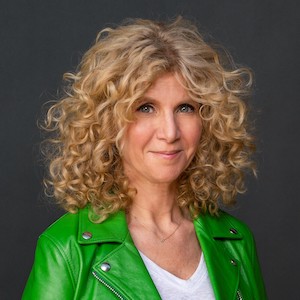
[00:00:10] Ray Latif: Hello, friends. I'm Ray Latif, and you're listening to the number one podcast for anyone building a business in food or beverage, Taste Radio. In this episode, we sit down with Gail Becker, the founder of trailblazing, cauliflower-centric frozen brand, Caulipower. Gail Becker has a bold message for CPG entrepreneurs. If your brand isn't built to truly improve the lives of your consumers, quote, you should stay the hell out. As the founder of groundbreaking frozen food brand Caulipower, Gail has changed the way that millions of Americans think about comfort food. Caulipower offers gluten-free, better-for-you versions of traditional favorites, including its flagship cauliflower-based pizza crust, as well as chicken tenders, frozen pizzas, and pizza bites. With $100 million in annual sales and a presence in tens of thousands of retailers nationwide, including Target, Walmart, Kroger, and Whole Foods, Caulipower has made an indelible mark in the freezer aisle. In this candid interview, Gail shares the most rewarding aspect of her entrepreneurial journey, the personal connection that she's built with consumers. For Gail, it's never been about the financial gain. It's about making a difference. She also opens up about the guiding principles behind Kali Power's product development and how staying true to those values has fueled innovation, allowing her to meet real consumer needs while daring to break industry norms. She also dives deep into how her leadership style has evolved as the company scales and why staying grounded in core values is crucial, no matter how big the business gets. Hey, folks, it's Ray with Taste Radio. Right now, I am supremely honored to be sitting down with the one and only Gail Becker, who is the founder of Caulipower. Gail, great to see you.
[00:02:00] Gail Becker: Great to see you, too. Thanks so much for having me.
[00:02:02] Ray Latif: Your booth is bustling. It's busy. It's crazy. It's lunchtime here at Expo West 2025. Everyone wants your pizza.
[00:02:09] Gail Becker: I could think of much worse places to be.
[00:02:11] Ray Latif: Absolutely. What is your pizza? What's everyone going crazy about?
[00:02:15] Gail Becker: Well, I think they're coming For Gail of our products, but definitely I've heard the best bite of the show is our new dill pickle pizza. It's the first frozen dill pickle pizza. We actually put the brine in the sauce so that you get that dill pickle taste in every bite. We put roasted garlic and dill on top. I wish your listeners could smell it because it smells amazing.
[00:02:38] Ray Latif: Well, dill is definitely on trend. Yes.
[00:02:41] Gail Becker: People seem to want that, what would you call it, vinegary, but just sort of... Kind of like a briny, salty, tangy, dilliciousness, if I could say.
[00:02:53] Ray Latif: Yeah. Did you ever think you'd have a dill pickle pizza when you started out?
[00:02:57] Gail Becker: I didn't even think I'd have pizza, to be honest with you. I mean, Kali Power's not that old. So yeah, it's all kind of crazy. This one was tough. I will tell you, this took about two years to bring to market.
[00:03:08] Ray Latif: Really?
[00:03:08] Gail Becker: Yeah.
[00:03:09] Ray Latif: I always wonder about the pipeline for new products and innovation and why it takes longer for some companies. Obviously, Caulipower has been around for a bit longer than an upstart. Upstarts can typically come out with a new product within a matter of months. Why two years?
[00:03:23] Gail Becker: This one took a long time because we couldn't figure out a good way to deliver on that dill pickle taste without putting frozen dill pickle slices on top that honestly don't hold up that well in the freezing and cooking process. So we tried all kinds of ways. And then finally we figured out, let's put the dill pickle brine in the sauce. And by the way, this is real dill pickle brine. It's not like dill flavoring. It is the real brine that is actually in the sauce. And it just took a long time to perfect, but we did it. And I'm so thrilled to bring it to market.
[00:04:02] Ray Latif: You know, plant-based foods have come a long way. I got to tell you. It wasn't that long ago, maybe 15 years ago, we were like, oh, yeah, it's not going to taste good, but it's better for you. And I think that was the origin. Those were the origins of the plant-based food industry where it was OK if taste wasn't necessarily there yet, but the ingredients were important. And I'd love to hear from you about, you know, the evolution of this plant-based food movement and how it has impacted the development of cauliflower.
[00:04:34] Gail Becker: Sure. Well, I wouldn't call ourselves a plant-based brand because obviously we do have meat, but we certainly have a lot of vegetarian dishes. And obviously we celebrate the vegetable, right? Boy, we celebrate it so much we even put it in our name. But, you know, when I started Caulipower, what I would say was so interesting to me is that the industry wasn't giving people what they wanted, so much so that they resorted to spending 90 minutes to making a cauliflower pizza crust just online. And I thought that was such an interesting insight. So since the very beginning, you know, I always thought Why can't you offer people better for you foods that taste great? And honestly, there wasn't a lot in market. I know because I struggled to find things for my two sons who had celiac disease. Gluten-free food just, you know, it only ticked the box of being gluten-free. Didn't have to taste good. Certainly didn't have to be good for you. It just needed to be gluten-free. And I noticed that the industry was putting more fat, sugar, salt, and calories in it. And so, You know, I waited for someone to do something and no one ever did. So I guess you could say that, you know, Kali Bauer was born out of a frustration for waiting. But also... so that everybody could eat the same thing, no matter how you eat. If you want something that is lighter in calories, if you want something that's gluten free, if you want something with less sugar, if you just want a great tasting pizza, you don't have to cook seven different things. We can all eat the same food. And in a world that is divided, that seems like a pretty, pretty great idea.
[00:06:19] Ray Latif: The world is divided, but I think great taste can get us beyond a lot. And food has always been that place where people can sit down, share a meal, and hopefully talk.
[00:06:34] Gail Becker: Yes.
[00:06:34] Ray Latif: Yes. Yes. But I think there is still some divisiveness when it comes to plant-based foods. And again, as you mentioned, Cauliflower, you wouldn't necessarily define it as a plant-based brand. Actually, how would you define Cauliflower?
[00:06:47] Gail Becker: We make great tasting food that's better for you and happens to be gluten-free.
[00:06:51] Ray Latif: Okay. So gluten-free is the key.
[00:06:54] Gail Becker: Gluten-free is not the key. It's the add-on. Okay. Great tasting is definitely the key. Better for you is definitely the key. It happens to be gluten-free because everybody should be able to share from the same plate. That is really the point of the brand. We are an all-inclusive brand. We don't shame anyone. We celebrate everyone. We have foods for everyone, no matter how you eat. You know, people really like to eat a flexitarian lifestyle. That is really at the core of our brand. You want to eat vegetarian? We have something for you. You want to eat gluten-free? We have something for you. You want to eat meat? We have something for you. And that is really the spirit and the ethos of the brand.
[00:07:37] Ray Latif: What aspect of Caulipower is bringing new consumers to the brand?
[00:07:41] Gail Becker: Hmm. I would say, look, we definitely attract a lot of consumers who are looking for something better, right? Either better ingredients, more quality ingredients, lower calories. That is definitely a big attraction to the brand. But I think people are also attracted to the fact that we're a very relatable brand. We, you know, we're a little self-deprecating. We bring people joy. You know, heck, we even put a meme on the front of our boxes. When I started Kali Bauer, I believed that when was the last time anyone smiled when they went through the freezer section of the grocery store? I think food should bring you joy. You started with something that absolutely warmed my heart. when you said, you know, so that people could be around the table together, so that we can be a brand that gives people more time to do what they love. And that is really the core and the essence of the brand.
[00:08:40] Ray Latif: The name Caulipower, people know what it's all about almost from the get-go. Caulipower, cauliflower. And the mainstreaming, I think, of cauliflower over the past few years has been really interesting. Your brand has had a lot to do with that. I think people are more inclined to and more willing to try products made with cauliflower. this is just me, I feel like it might be limiting for where you can go with the brand. Has it been? And what has been your strategy for getting people even more interested in this ingredient?
[00:09:12] Gail Becker: It's a great question. And if you listen to how I answered your question about to define cauliflower, we make great tasting food that's better for you and happens to be gluten-free. Using vegetables is a wonderful way to do that. Of course, you know, cauliflower is our heart and soul, but we use a lot of vegetables. And that's really what we're celebrating, right? So I think that is really what draws people to the brand because it's very relatable food, right? It's like, we're not offering people green pizza. We're not offering people orange pizza. Cauliflower is an amazing vegetable because it's malleable. It takes on a lot of different flavors. It's white and it's recognizable. But really, we celebrate all vegetables at Cauliflower, anything that allows us to make healthier versions of your favorite comfort foods.
[00:10:06] Ray Latif: Is that something that you thought would happen with the company in terms of its evolution, that cauliflower would be one component versus the center of everything that you do, which it is. But I mean, it sounds like vegetables is now, you're a vegetable centric brand as much as you are a cauliflower brand.
[00:10:22] Gail Becker: I honestly thought that from the beginning. And you know, more important than what I thought, more important than what, you know, investors thought or anyone else, that's what consumers thought. For consumers, when we have offered items that, you know, host a variety of vegetables, They get it. They're not expecting cauliflower. They're expecting better versions of their favorite comfort foods. And that's what we give them. Whatever vegetables we use and celebrate to help us get there is great. And that's a win. And I've had, I love when people, you know, come up to me and say, I feel so good about giving this pizza to my kid. And that's what it's about.
[00:11:04] Ray Latif: I think the point of reference is really important as well. And you've touched on this a number of times, which is you're not selling something that is really esoteric. You're not selling something that's difficult to understand or requires a high level of education. And I encounter entrepreneurs all the time who come out with really, really innovative products, but it's going to take them going over a mountain to get people to understand what you're doing. How do you advise and talk to early stage entrepreneurs about reducing the amount of education that it requires for someone to understand what they're selling?
[00:11:37] Gail Becker: Well, you know, look, we've all learned the hard way, right? And so a few things I like better than talking to entrepreneurs that are just starting out. I wish more had talked to me when I was just starting out. But money's tight when you're a small company. and you don't have the marketing budget that's necessary to educate consumers. What's interesting about Caulipower is the day I made my first and only cauliflower crust pizza from scratch, there were 569,000 recipes online. Right? 569,000 recipes. I picked one. I couldn't even tell you which one I picked. It was fine, by the way. It wasn't great. It wasn't horrible. It was fine. But that was 569,000 recipes hiding in plain sight for people who just wanted a better pizza crust. It's not rocket science and it shouldn't have to be. But that's not to say that we don't think the consumer is highly educated. We do. I think that there is a lot of like big food, I will say, who bets against the consumer, right? Who thinks the consumer isn't going to know any better. At Caulipower, we absolutely think the consumer knows better. In fact, we're betting on it.
[00:12:58] Ray Latif: At the end of the day, it really is a consumer-driven industry. Yes. If the consumer wants it, they'll typically buy it. I mean, I think this is something that I'm always referencing Olipop and Poppy these days, because I remember when I first encountered Olipop in particular, I saw it as a natural channel brand. You know, they were in Erewhon, looks good there. I just didn't see where it was going to be today. And I think I might have thought the same thing about Kali Power.
[00:13:23] Whole Foods: Sure.
[00:13:24] Ray Latif: Not that I wasn't giving it a chance. I just I just saw a ceiling.
[00:13:27] Whole Foods: Yeah.
[00:13:27] Ray Latif: And it seems like you grew so fast, so quickly that there is still much more runway to go. Yeah. But it's happening at a slightly slower pace than it did when you first started. How do you think about your growth and your growth rate, your growth trajectory now that you've you've had a number of years under your belt and the brand is where it is today?
[00:13:49] Gail Becker: Yeah. Kali Power certainly grew faster than I then.
[00:13:52] Ray Latif: And just for context, there was, I mean, you hit 100 million in sales.
[00:13:56] Gail Becker: In about a little, just under four years.
[00:13:59] Ray Latif: Incredible.
[00:14:00] Gail Becker: It is. That's why my hair looks as curly as it does. When I started, I had straight hair, right? But that's another, that's probably a different podcast.
[00:14:06] Ray Latif: It all fits into Taste Radio.
[00:14:09] Gail Becker: It all fits into Taste Radio. But, you know, when I started, I had a pretty good gig in corporate America, right? And I left it for a reason. And I left it because I really wanted to make a difference for people. I wanted to help people. I wanted to have some tiny impact on people's lives. I knew I couldn't do that if I were just going to build something for the natural channel. I wanted it bigger. I wanted it broader. I wanted to make better for you foods available in places where they probably weren't available. And so that was my entire mission. So to your question on founders, I would say, never forget the reason you started, because ultimately that is going to help you deliver the best strategy or at least be successful at it. I think in terms of growth, we're in a really good position right now because now we have the type of data and insights and team that can really drive us forward and really hit on the strategy that we have put forth. In the early days, we didn't have that. We didn't have those insights. We didn't have that data. We couldn't afford it. But now we do. And so that is what's going to help us create a company and continue to grow the company that continues on that growth trajectory.
[00:15:31] Ray Latif: What's the most important data that you can acquire?
[00:15:34] Gail Becker: Look, we're really lucky. You used a word at the beginning. You said privileged, which is such a nice word. I feel privileged all the time. One of the reasons I consider myself privileged is because our consumers are so generous. They tell us what they like, they tell us what they don't like, they tell us what's missing. So yes, we do pay a lot of money to have a lot of different data and insights on what consumers are looking for. And that's great. But we are a brand that was started on the notion of listening to people. And we actually listened to those 569,000 people who said, hey, I don't want to spend 90 minutes making a pizza crust. So that very same listening ability is now what's going to drive us forward and help us create products and disrupt categories that are ripe for innovation, just like The frozen pizza category was when we hit store shelves in 2017.
[00:16:34] Ray Latif: When you are developing new products and thinking about innovation for the future, how do you determine what is going to be right for the brand and your core consumers versus what may bring new consumers to the brand?
[00:16:51] Gail Becker: I'm going to answer the question by telling you and talking about innovations that we haven't brought to market. Because when you understand the innovation of a company, you have to understand what didn't make it, what was left on the cutting room floor. For us to bring products to market, they have to have three core tenants. They have to taste great, they have to be better for you, and they have to be convenient and affordable. We've developed a lot of products that hit one of those or two of those, but not all three. And we left all those on the cutting room floor because it just wasn't right for the brand. We have, like all young brands, we developed products that, you know, some people loved and still miss. But we got out of because it just, to your point, we just didn't have the money to market it the way that we, and educate people.
[00:17:57] Ray Latif: What's an example?
[00:17:58] Gail Becker: An example, I would say, was our pasta. People loved our pasta. It was frozen pasta. Buying frozen pasta is not an inherent consumer habit. It's not intuitive. It's not intuitive.
[00:18:12] Whole Foods: No.
[00:18:12] Gail Becker: No. Maybe one day it will be. And that's great. but there is so much other areas that are ripe for innovation that we want to focus our efforts on that.
[00:18:26] Ray Latif: I love that you brought up affordability and this is something that's near and dear to my heart because we're here at Expo West and a lot of the products that are going to be sold at retailers across the country are going to be sold at your Whole Foods and your Sprouts and just some retailers that aren't necessarily accessible to or available to mainstream consumers because of location or price. And it's important for people to eat better. As a country, we need to be eating better.
[00:18:54] Gail Becker: Yes.
[00:18:55] Ray Latif: But people need to access Whole Foods.
[00:18:56] Gail Becker: Yes. We've developed some great products that we never brought to market because honestly, it would be too expensive on shelf. And so everything we look at, you know, before we would introduce anything, we see how much the consumer would need to pay for it. And we know based on data and insights and things that our consumers tell us that that's not going to be feasible. So we innovate with that in mind. It's harder. It's harder to do that. By the way, that dill pickle pizza that everyone's coming to taste, that took two years to bring to market. Two years. Now we're fortunate that we are able to spend that long in getting something just right. It would have been easy to introduce it sooner. Would have been great. Might've been more expensive. Might not have tasted as great. Who knows? But we waited until we hit on all of those elements that are important to us. It's interesting because, you know, like I said, I left corporate America for a reason. Most people don't know this about Kali Power. We launched in 30 Whole Foods stores in the Sopac region, which was great and amazing. We were in Walmart by October of that same year. That was pretty different and unique and some would say inadvisable. And I was told all of those things. But that's kind of the great thing about being an entrepreneur and coming into this industry, which is so incredibly welcoming and disrupting a category. Because you get to decide which rules are you going to follow. Like some rules you just have to follow. But which rules are you going to break? what are you going to do differently? And to me, that was so core to my mission. It was something that I knew I just had to do. And so, you know, look, Walmart took a big bet on us and vice versa. And I think it worked out well for everyone. And Whole Foods is an incredibly important retailer for us as all the natural channel is. But it's pretty remarkable that Caulipower is a brand that can do well anywhere. That's one of my favorite things about the brand.
[00:21:14] Ray Latif: Oh, I think great taste and affordability are the two keys, right? I mean, people love good tasting food and they love when they can afford it. Yeah. Going back to breaking rules for a sec, I mentioned Olipop and they're in the same portfolio as an investor of yours, Boulder Food Group or excuse me, BFG Partners. Do investors like or respect when you break rules?
[00:21:36] Gail Becker: Some do.
[00:21:37] Ray Latif: Depends on the rules.
[00:21:39] Gail Becker: Some do. Some encourage it. Some dissuade it. Some don't understand it. I mean, look, let's just take Kali Bauer, for instance. It was hard to get initial investment. It was hard to find someone who would even make the pizza. because no one believed it. Even the, you're talking about a company and a brand that was built on rule-breaking, because I can't tell you how many times I heard, lady, you can't make a frozen pizza crust out of cauliflower.
[00:22:09] Ray Latif: Which made you more angry, the lady or the frozen pizza crust?
[00:22:13] Gail Becker: I got a long list, right? A long, long list.
[00:22:16] Ray Latif: Speak your mind, Gail.
[00:22:18] Gail Becker: So it was interesting to me. Here we're talking about the natural food industry, right? An industry that was built on innovation, that was built on pushing boundaries, that was built on improving people's lives. And yet there was a little bit more reticence toward rule-breaking than I thought there would be. Even our packaging, I mean, oh my goodness, I can't tell you how many times people said, you can't put big black letters on the front of your box. Well, clearly, you know what our box looks like. Yeah, it worked out. Worked out okay. In research, we found out that consumers actually love it.
[00:22:58] Ray Latif: So if I'm hearing you correctly, you've just got to find the right investors. You've got to find the investors that are going to believe in what you're doing and trust that you're going to break the right rules.
[00:23:10] Gail Becker: Yes, I would say that definitely. But I would also say it's really important for entrepreneurs and founders to hire people who have been around the business and can help guide you. That's why it's so important to have that list of rules and list of rule breaking. And you need both. And it's okay. I've been so surprised by how many founders like feel like they can't say, I don't know, or I need advice, or what should I do about this? I think there's a tendency with some to feel like because it's your vision, it's your company, it's your money, it's your heart and soul, that you should have all the answers. Well, guess what? You don't, and you shouldn't, and that's OK. And you should hire smarter people around you to help fill in the gaps. But some things you just have to hold true. And, you know, for me, that was it.
[00:24:14] Ray Latif: Can I say something or ask a question that's going to be maybe a little controversial? I'm OK.
[00:24:20] Gail Becker: He wouldn't be the first, Ray, so go for it. Is it about my hair?
[00:24:23] Ray Latif: No, definitely not. I asked this last year in an episode of our podcast, and I kind of stood in a soapbox and said, you know what? I'm kind of mad at big food. And, you know, everyone has their own beef to pick with, or what's the term? Anyway, they have their own bone to pick. Everyone has their own beef or bone to pick with big food.
[00:24:45] Gail Becker: You made a pun. There you go.
[00:24:47] Ray Latif: They're beef to pick, oh gosh. I'm never going to live that one down. But it was that Big Food didn't seem to be interested in acquiring or aligning with really amazing, innovative, better for you, entrepreneurial run brands. And I think at this point and at this stage of development, I may have thought that Kali Power would have been acquired by Big Food, a Big Food company and say, you know what? This is great for everyone because you're going to get Kali Power and more points of distribution. You'll have more of an opportunity to expand the team, perhaps more marketing dollars committed to the brand. But obviously, you know, you're still independently run. Was there an opportunity? I mean, do you think about that opportunity or is it very much, look, when it happens, it happens?
[00:25:37] Gail Becker: I'm very much a when it happens, it happens type of person. And I say that because I think if you do focus too much on that, you start to lose your way. You stumble. You know, look, where Kali Power is today, couldn't have been in my wildest dreams. Where Kali Power is tomorrow, I could only imagine. But what we can do for consumers and the industry, that's what gets me out of bed every day. Who knows what the future holds.
[00:26:08] Ray Latif: Okay, fair enough. It's not like Kali Power was an overnight success just by accident. You put in the work. Before we hopped in the mics, you had said that you used to work 18-hour days as the founder and CEO. You have a new CEO, Tyler Ripps, who's a very well-seasoned executive, someone who seems to vibe, you're smiling right now, you love Tyler, I can tell. I do love Tyler. There you go. But yeah, I mean, hard work is tough. And I mentioned Peter Rahal, who I had a conversation with. He's the founder of RX Bar and also of David, which is a new protein bar out there. And he's talked about the importance of hard work as an entrepreneur to the point where you don't necessarily love what you're doing, but you do it because that's what entrepreneurship requires. I don't know what your take is. And we sort of talked a little bit about this before we hopped on the mics, but when entrepreneurs hear this and they say, well, you know, Kali Power, they did everything right. They got lucky. I mean, but I think, I think they didn't see the hard work behind it. I mean, how do you think about, how do you advise people about hard work and entrepreneurship?
[00:27:08] Gail Becker: Yeah. You know, it's so funny because no one really warns you. And if they do warn you, you don't get it.
[00:27:17] Ray Latif: You're warning them right now though. Yes.
[00:27:19] Gail Becker: Believe me, I warn people all the time. But I cannot articulate, you can't really explain it unless you go through it. I think that's why the founder community is so close. Because you can see it in our eyes. You know, we're all, we all speak this unspoken language of, you know, oh, you've been through it too. It's like, you know, you're closest to the people that you're in the trenches with, right? But I like to think a slightly different way in the sense that I think the beauty of entrepreneurialism is that you do enter with wide eyes and super curious and boundless energy and a little ignorance. And I think it's all of that together, including the ignorance, that really can make you successful. I mean, think about it like this. You were talking about Big Food. These companies spend hundreds of millions of dollars on R&D every year. Why did I, this woman from California, come up with the cauliflower frozen pizza crust? That's crazy. And it's because they weren't consumers. They didn't have the frustration. And they thought, like all the people who told me, it couldn't be done. So that's the beginning of the journey. And in many ways, that is the sweetest, greatest thing I have ever done in my life, other than my kids. As the journey continues, the company gets bigger, the journey changes. And that's okay, that's all par for the course. That's when it gets hard. You have a lot more rules to follow. It's not usually the reason why you did it. Would I do it over again? Sure I would. Would I do it more with my eyes wide open? Sure they would be. But I wouldn't have changed the ride and I wouldn't have changed the people I've done it with. And I certainly wouldn't change Kali Power's ability to help people.
[00:29:35] Ray Latif: The hard work was worth it, is what you're saying.
[00:29:37] Gail Becker: The hard work was worth it, but not for the reasons that, you know, people who are in the industry might think. It's not the monetary bit, right? Not even close. Because who knows how that story ends, right? But when I see how we have changed people's lives and made dinner easier and bring people joy and get people to hold our box and smile and all of the notes and emails and texts and direct messages that we get about how we've helped people, That's what has to satiate you. If that's not why you did it, then stay the hell out. Because otherwise it will never be, it will never be satisfying enough. But if that is why you did it, then the rest sort of doesn't matter. And you can feel really good about working those 18 hours a day, which, by the way, is not fully sustainable, but that's a whole other podcast as well.
[00:30:44] Ray Latif: Well, your role has changed. Yes. Your time in the office, so to speak, has changed. Yes. Tyler is the new CEO. Yes. And I wonder how your role has changed. How has your influence in the company evolved?
[00:30:57] Gail Becker: You know, Tyler and I are great partners. And, you know, he has lots and lots and lots of years in the CPG, which I did not. I got the company to 100 million and I had nothing left to prove. Other than if I had continued, I probably would have ended up in an unhealthy position. So we're great partners. We talk about everything. We've talked many times a day. I'm very involved in the company. Instead of working 18 hours a day, I work eight hours a day. And that's great, but very involved in innovation, very involved in marketing, very involved in the big decisions. I'm obviously on the board and it's been great. And I can really now begin to enjoy the ride.
[00:31:47] Ray Latif: You personally have been the face of the brand in so many ways. I think Gail Becker and Caulipower are synonymous for some people. They just associate one with the other. It's the hair.
[00:31:57] Gail Becker: It's the hair. Let's face it. It's the hair. It looks like a cauliflower. I get it. I get it.
[00:32:02] Ray Latif: No, the reason I bring that up is because Sometimes founders aren't necessarily the best spokespeople for their brands, but they're the people that consumers want to see, that retailers want to see, that investors want to see. Was it difficult for you to have that persona, to have that association with your brand, to put yourself out there?
[00:32:22] Gail Becker: It's such a good question. You know, it wasn't difficult for me, but it probably should have been. If pre-Kali Power, if someone had asked that question to my pre-Kali Power self, I probably would have said, yeah, I don't know that I can do that. I'm actually a pretty private person, which would surprise most people, I think. But when you care about something as deeply as I do about Kali Power, of course, I'm going to be that face of the brand. You know, I always say like I have three kids, my two sons and Kali Par. Kali Par, by the way, is the most difficult of the three by a long shot.
[00:33:01] Ray Latif: He's the youngest.
[00:33:02] Gail Becker: Yeah, the youngest and the most gnarly. It's like holding a tiger by the tail. But think about talking about your kids. I am proud of this brand. I am thrilled with this brand. I am overjoyed with how this brand has infiltrated and made people's lives better.
[00:33:23] For Gail: Yeah.
[00:33:25] Gail Becker: I would use any opportunity in the world to talk about that. So, I mean, look, I came from the world of marketing and brands, so I do know a thing or two about this. They're sort of like when I came into the industry, I was really stunned by this sort of preciousness. about brands and about food and, you know, things were in tiny glass jars and, you know, everything looked perfect. And I mean, that's great, but that's not me personally. And that's not Cauliflower. Cauliflower is your Tuesday night pizza when you just get home and you can't put anything else on the table. I love that. I mean, I love that. That is me. And what I know is it's a lot of people. So we don't try to be perfect. And we certainly don't expect our consumers to be. We just want to help people live better and healthier lives.
[00:34:22] Ray Latif: your representatives of your brand in the same way that your consumers line with and look to your brand and say, this is me. You are that representation.
[00:34:33] Gail Becker: Yeah, exactly. And that's the biggest compliment of all. Honestly, if people see themselves in the brand, if the front of our boxes say things that they would actually say, if our social media feed is filled with pictures of kitchen tables that look just like theirs, that's great. It's nice for people to, in this world, it's nice for people to feel like they have a friend in there. They have a friend in that kitchen. They have a friend in that freezer. They have something that's going to just make life a little bit easier. My goodness, don't we all need that today?
[00:35:10] Ray Latif: Yeah, there's a lot to be stressed out about in this world. You know, people always ask, what was your biggest mistake? And I don't necessarily love that question because it ends up being a similar answer. We end up getting a similar answer a lot of times. But if I could ask in a different way, what's one thing during your journey that you wish you could take back?
[00:35:32] Gail Becker: I probably, like a lot of founders, I probably tried to do too much too soon. I think the power of no is a very healthy word. It's one that's hard for entrepreneurs. That's not how we're wired. I probably should have used it a bit more. I didn't. I do now. But I probably would have added that word to my vocabulary maybe more than I did. Okay.
[00:35:57] Ray Latif: Is that in terms of innovation, retail, investment?
[00:36:02] Gail Becker: Anything. It could be applied to any of those and probably a few more. I bit off a lot in the beginning, as most entrepreneurs do and would. I wouldn't have slowed it down, let's be clear. We went fast for a reason. And to your earlier question about big food, You know, a lot of big companies want to try it themselves. A lot of big companies say, oh, we're a big brand. We can do that. In 2020 and 2021, there were 52 new SKUs, cauliflower crust SKUs, that entered the freezer aisle from 17 different brands. Think about that. That was my competition during COVID. Wow.
[00:36:48] For Gail: Yeah.
[00:36:49] Gail Becker: It's not like that today. A lot of those brands came and a lot of them went. And that's because consumers do know better. But that's a wonderful example of people wanting to, thinking that they would all perform like Kali Bauer did. And they didn't.
[00:37:08] Ray Latif: Gail, thank you so much for being so honest and just sharing so much about your journey. I just have one more question, and this is something that I think people who are listening are going to feel as soon as I ask the question. You know, everyone stays up at night and gets worried about their Brandt Gehrs worried about their business for one reason or another. But how do you talk yourself off a ledge? How do you put things into perspective when things aren't necessarily going the way that you want them to go?
[00:37:40] Gail Becker: It's such a great question. I sleep with one eye open because I'm always afraid- Well, you have three kids. Well, yeah, exactly. I'm always afraid someone's going to take all this away from me. But what I really do is I, and this is quite genuine, I read our notes from our consumers. I remind myself the impact we've had and the change we've brought and what we've done to the category and the industry. And sometimes I have to actually open my computer and look at those. I have some taped up around my desk. I can look at those too. But you can never get too far away from your consumer. That is the biggest problem that I see. And it's really what grounds me when times are good and also when times are scary.
[00:38:38] Ray Latif: Such great advice. Even though I'm not an entrepreneur, I feel like I want to do the same thing with our comments on our Apple podcast page and people saying, hey, I really love Taste Radio and so on and so forth. Because, you know, I think with any business, with anything you do, sometimes you're like, oh, man, this isn't going right. This isn't going well. And I think having that reminder of how your business helps or has helped people is such good advice.
[00:39:01] Gail Becker: Exactly. Exactly. It's a gift. It is a gift wrapped up in a big red ribbon.
[00:39:05] Ray Latif: I was so excited when someone was like, hey, Ray, would you like to speak with Gail Becker? And I'm like, of course I want to speak with Gail. Of course I do. And I'm so happy that we had this time, that you're so generous with your time. I'm sure that I'm taking you away from a thousand people who want to say hello. So thank you so much once again, Gail. I know our audience is going to love this interview.
[00:39:24] Gail Becker: Thank you so much.
[00:39:26] Ray Latif: Good luck with everything going forward. Let's do this again soon.
[00:39:28] Gail Becker: OK, I'm in.
[00:39:29] Ray Latif: Thank you.
[00:39:29] Gail Becker: Thanks.
[00:39:34] Ray Latif: That brings us to the end of this episode of Taste Radio. Thank you so much for listening. Taste Radio is a production of BevNET.com, Incorporated. Our audio engineer for Taste Radio is Joe Cracci. Our technical director is Joshua Pratt, and our video editor is Ryan Galang. Our social marketing manager is Amanda Smerlinski, and our designer is Amanda Huang. Just a reminder, if you like what you hear on Taste Radio, please share the podcast with friends and colleagues. And of course, we would love it if you could review us on the Apple Podcasts app or your listening platform of choice. Check us out on Instagram. Our handle is BevNetTasteRadio. As always, for questions, comments, ideas for future podcasts, please send us an email to ask at Taste Radio.com. On behalf of the entire Taste Radio team, thank you for listening, and we'll talk to you next time.
[00:40:24] Whole Foods: you