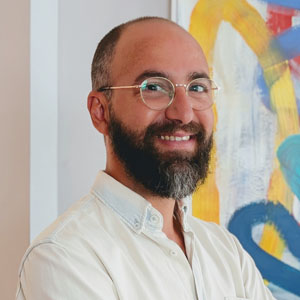
[00:00:10] Ray Latif: Hello, friends. I'm Ray Latif, and you're listening to the number one podcast for anyone building a business in food or beverage, Taste Radio. This episode features an interview with Ismail Salhi, the co-founder of Wild Grain, a fast-growing subscription-based brand that sells baked from frozen sourdough breads, fresh pastas, and artisanal pastries. It's something that you've probably never considered, but Most Americans eat cold bread. Ismail Ismail and Johanna Hartzheim, who came to the U.S. after living in Paris for years, wanted to give people access to the same warm loaves of artisanal sourdough, flaky croissants, and chewy dinner rolls they ate daily in France. Their idea was to have baked goods delivered directly to their customers' doors on a regular basis. Everything would arrive par-baked and frozen, but no thawing would be required. Just a few minutes in the oven and voila, fresh, warm bread. Ismail and Johanna launched Wild Grain in 2020 at the outset of the COVID-19 pandemic. Similar to popular meat delivery service ButcherBox, the company ships boxes of frozen bakery products along with hand-cut pasta to customers via a subscription-based model. Wild Grain partners with local bakers across the U.S. to produce its food, which is made with no preservatives, no artificial flavors, and no bleached flour. Since its debut, Wild Grain has become one of the most successful food delivery companies in America. Last year, it generated $30 million in revenue and became profitable. How did Wild Grain achieve its position? And why is the company's trajectory continuing to rise? The through line has always been an extremely high level of customer service, according to Ismail, who I spoke with for an interview featured in this episode of Taste Radio. Hey folks, it's Ray with Taste Radio right now. I'm honored to be sitting down with Ismail Salhi, who is one of the co-founders of Wild Grain. Ismail, great to see you. Thanks for having me. Yeah. Thanks so much for coming out here. Not too far of a drive considering that you're in Somerville, which is about three, four miles away from our office here in Newton, even though it would take you 25 minutes to half an hour to get over here. Yep. That's Boston. It is Boston for you. How long have you been in Somerville?
[00:02:45] Ismail Salhi: We moved in here from Paris in 2015.
[00:02:48] Ray Latif: That's not a typical move, I would think, for people who live in Paris. I personally would probably stay in Paris as long as I could. But what brought you here?
[00:02:59] Ismail Salhi: It was interesting. Yeah, Paris is a great city. I've been there for 10 years. And then we got funded here in Boston to start our previous business, my wife and I. And so they asked us to move to Boston and we said yes. And we came in during the biggest snowstorm. Oh, right. Yeah, in Boston in the last, I think, 10 years. And it was insane. And I thought it was always like this in Boston. I was like, I can't live in a city like this. Yeah.
[00:03:27] Ray Latif: The winter of 2015 was, people who are from this area know what I'm talking about. Anytime I say winter of 2015, they realize it snowed every single week for a month. And every week we got a foot to three feet of snow dumped on us. The snow banks were no joke, like eight to 10 feet high. We received more snow in a 30 day period than Buffalo ever has. That's crazy. Isn't it crazy? So yeah, I'm glad you didn't regret your decision and like get on a plane and move right back to France.
[00:04:02] Ismail Salhi: No, yeah, we couldn't anyway.
[00:04:07] Ray Latif: Well, Somerville is a great city. I love Somerville. I feel like in a lot of ways it has some European sensibilities to it. A lot of small businesses, a lot of focus on local and, you know, appropriately enough, a lot of great bakeries.
[00:04:19] Ismail Salhi: That's right. Yeah. A lot. There's Forge, a very good bakery. There's Vinyl. There is a bunch of very high quality sourdough, you know, bread and pasta and pastries places in Somerville.
[00:04:32] Ray Latif: And more seem to be popping up. It seems like there's been a renaissance for artisanal bakeries, at least in this area.
[00:04:39] Ismail Salhi: Yeah, I think it's across the country and in big cities, you'll see it more because people, you know, it's the trend across all food, I guess, which is just looking for healthier alternatives to what's in the grocery store. And when you go to the grocery store, bread is kind of like the first thing you notice when you look at the list of ingredients and the process and shelf life and what's in the product. And I think people aspire to having a more authentic healthy, simple. I joke that we sell the oldest product on earth, one of the oldest food products on earth. And people have a special relationship to bread. And so I think it makes sense that, you know, with the craft beer, craft ice cream, craft everything, there is a craft return to bread.
[00:05:24] Ray Latif: I always argue that bread was the first processed food. Right. Yeah. You don't grow bread on trees or in gardens or whatnot. Obviously you have to take a bunch of ingredients, mix it all together, bake it, et cetera, et cetera. But I don't think bread was ever intended to be an ultra processed food with like 85 ingredients. Yeah.
[00:05:43] Ismail Salhi: And with like, you know, the process of making slow fermented bread was usually Up until the 19 maybe 20s or 30s with the war actually when they started trying to make it faster was usually in 24 hours at least to make a loaf of bread. Now you can make wonder bread in 20 minutes from start to finish. Yeah. You had a few soldiers, right? Yeah. I mean, it was the right call to do during wartime. We're no longer in wartime. We can go back to a normal way of making bread. Yeah. Well, hopefully it stays that way.
[00:06:16] Ray Latif: You know, I was in London a couple of weeks ago with a few of my colleagues and we all said the same thing. And this is a common refrain from people who go to Europe or live in Europe and then come here. I feel really good having eaten all the food I ate overseas, whether it's bread, meat, fruit, what have you. You come back here and the same items, bread, meat, food, make you feel not well, or in some cases sick. Why is that?
[00:06:43] Ismail Salhi: I think the ingredients come to mind and the process. These are the two main differences between European, especially in, you know, cheese and bread. And there are significant differences in the industrialization of these food products. And the flour in Europe is notoriously different than the one you find in the US. Same with other ingredients. And I think that makes people feel the difference. There's also in bread, particularly a difference in just culture, I think. One of the reasons why we started Walgreens is even though there are amazing bakeries in the US, bread is cold when you buy it from the bakery. In Europe, or at least in Paris, when you buy bread or a croissant, it's warm. It's just got out of the oven. And I think just the demand and the availability of it is so huge. And the culture is so surrounded around, you know, waking up, grabbing a croissant and a coffee. that there's enough demand to make that infrastructure work and make fresh, warm carbs and breads and pastries out of these bakeries. And in the US, it's not the case. And so when you go to a bakery in Paris, the bread literally was sitting for 20 minutes and it's still warm and fresh versus here, the bakers are doing exactly the same job, the same product, but the bread has been sitting for two hours. So when you taste it, it's not the same. And I really was frustrated by that. I was like, Oh, there's a ton of good bakeries, but look, the croissant has been sitting there for like three hours. I don't want to eat that. I want to eat a fresh one. I never thought about that. I never thought about bread being cold when you buy it. We call it the delicious window. There is like a, 30 to 40 minute delicious window for every baked good. That's where the taste just dips quite significantly after that. And think about the smell, everything kind of dips after 30 to 40 minutes when the bread is fully cold or when the croissant is fully cold and the butter flavor is slightly deactivated. Everything, kind of the sugars, everything is dimmed down. And having it fresh off the oven is just a totally different experience.
[00:08:55] Ray Latif: So what do they do when they don't sell bread that's been sitting out for 30 minutes? Toss it?
[00:09:00] Ismail Salhi: They don't toss it. It's just people take it, like they go, they run out, like they manage their inventory. So, I mean, my bakery down my street, there's four of them and they all like, sometimes you go and you have to wait for the croissants to come out. That's how well they manage their inventory. And in the rare cases where they leave croissants, Cold they use them the day after and they do almond croissants with them So they cut them in half but it's a little bit of cream put a little bit of almonds Press them and put them in the oven again and in the morning you come in and you eat it and it's delicious Yeah, more indulgent is even more indulgent, but it's delicious.
[00:09:32] Ray Latif: You're making me very hungry on this Monday morning. I think you're right again I've never really thought about it as much as you have and we're frustrated by it But I think Americans just take for granted that our bread is cold however whenever you walk into a kitchen where fresh bread is being baked or any kind of baked good is being made, you're like, oh my gosh, it smells so good. And you get so enticed by it and you get so excited by it. And everyone's just like, when is it going to be done? And I've made your croissants in my kitchen and they're fabulous. And I made them in the morning and now everyone's just like, we couldn't, the only problem was, You got to let them sit for a few minutes. Otherwise you start tearing it apart. It's kind of still a little doughy. Yes.
[00:10:13] Ismail Salhi: Yeah. Yeah. We tell people to not to touch them, but they still want to eat them. And then they say, Oh, it's a little bit doughy. I was like, did you let them sit for 10 minutes? Just 10 minutes. But you have to do it. If you don't do it, they come out a little bit. It's just the, it's as important as baking is to let the bread and the pastry sit. Yeah. But yeah, we know we have kids too and they don't let them sit.
[00:10:36] Ray Latif: Well, the thing is you get rushed in the morning, so you're like, OK, well, I'm going to make some bread for myself, for my kids or whomever. And you got 30 minutes to do it. And it takes, what, 15 minutes to make the croissants? And then, you know, you need 10 minutes to cool down. By that point, your car keys are in hand. You're running out the door. And so, yeah.
[00:10:52] Ismail Salhi: I found the thing, which is I usually used to turn the coffee machine first and get the stuff ready. Now I go and turn the oven first and we have a small toaster oven that's pretty decent. And I turn it on, it preheats while I'm getting the kids dressed and stuff and then come back, put the croissants and then the timing kind of works better that way. Or you make them the day before and you reheat them, but it's not as good as fresh.
[00:11:18] Ray Latif: I imagine it's a dream to run a baking. Well, you don't, it's not a baking company. It's a baked goods company. And we'll talk a bit more about your business model, but getting here and talking to me right now in 2024, if you said I was going to be in this business 10 years ago, I think you'd think I was crazy. Right?
[00:11:37] Ismail Salhi: It's funny you say that because I used to have this crazy startup ideas. And one of the ideas I had that I never executed on was to open, back when I was in Paris, to open a bread store that does bread of the world. And so you would come in and eat different breads and there would be like workshops every week and you can try like, you know, Afghani bread or Indian bread or, cause it's, you know, the oldest product and every society has a huge, you know, attachment to whatever bread products that they're making. And that was an idea that I had. And then it completely, you know, went into the ether. I never executed on it. And then I totally forgot about it. And then I went to do a tech business. And then after that, my wife and I came back to this. And so, yeah, to answer your question, it's not it didn't come totally out of nowhere. My wife is a baker, not professionally, and I'm the cook in the household. And so we're very much into food and Our investor, one of the decisions that made them invest in the company is they saw that we had a food Instagram that nobody followed, but we were just posting in it consistently and taking good pictures of all the bakes and all the food we were doing. And we were doing it for ourselves, not for anybody. And they liked that about us as, you know, we're anything but food professionals. We were, I come from tech, she comes from product design, but they knew there was a connection. We had this special connection with food. And that kind of brought us to this. But when I had my PhD in computer science, I didn't think I would end up selling bread in the United States.
[00:13:09] Ray Latif: Well, I'm glad that you are, because again, you make some fantastic products. You know, going from concept to idea or concept to finish brand is not a straightforward process. And especially when you're already involved in one business and building one business and trying to get into another. Talk about the business that you were in and how you made that transition to the business that you're currently in.
[00:13:34] Ismail Salhi: It was actually very related in a way. I joke that this business came out of the trauma of the previous business. So my previous business was a hardware consumer tech music product that my wife, that's how I met my wife, by the way, she was the co-founder of that previous business. And we weren't really dating or anything. We were just co-founders. And we started working on this music project. And then we got money here in Boston. We moved in here, Bose Ventures invested in it. And so we were designing a hardware product as hard as that is with firmware and, you know, injection molding and trips to China and all sorts of things. And it's a different business to run because it's. Hardware requires a lot of capital it requires a lot of work and the go-to-market is very long you have to spend two or three years on R&D you have the idea and then you spend two and three years to build it and Then after two or three years you go to market and you're like, oh we made this mistake this mistake this mistake Let's raise more money and fix them and go you make it sound so easy. I Yeah. I mean, that's oversimplifying it by a lot, but the problem we had was when we did what we did, we raised the money, we went out, we launched our first 500 products, got feedback, great feedback, came back to the investors, then investors were like, okay, this is next phase one. We did it. Let's go to the next phase. And the VCs were like, no. We were kind of done with hardware, the hype cycle with hardware went off. We raised during the 3D printing era and all sorts of hype cycles that were happening around hardware then. And then it went away and they moved on to crypto and blockchain and things like that after that. And I was, oh, this is a problem. Like I put six years of my life in this thing and it's very hard to raise money for it and give it the juices it needed to keep going to market. And then long story short, that failed and we couldn't raise more or we couldn't raise enough and we couldn't sustain it. My wife and I were completely broke. We didn't take salaries. We were just working still on it as hard as we could and a lot of blood, sweat and tears. But nothing came out of it. And then when we started thinking about this new business, I was like, okay, the trauma of that. was, you know, long go to market. I don't want that anymore. I want something quick that I can test quickly. And if it doesn't work, spending a year on it is fine, but I can't spend five or four years on something anymore. I needed it to be bootstrapped, something that you can raise a little bit of money and then go out and fund and get to profitability real quickly. And I didn't want to rely on VCs for it to survive. And so those were the business kind of things that informed the creation of Wild Grain. And in retrospect, they were really instrumental in how we went to the business.
[00:16:27] Ray Latif: I'm curious about how you felt like you could bootstrap something when you were broke.
[00:16:32] Ismail Salhi: Well, we needed some infusion of cash and we wanted, first, we thought naively that we can bootstrap it with just, you know, friends and family, get 10 grand here, 10 grand here, and then go and do some Facebook ads. But then we, to their credit, the investors who invested in my previous business, Axel, their partner, called me and said, hey, in his office and said, what are you doing next? I know this is not going well. It's not for the lack of trying, but what are you doing next? We'd like to be involved if you do anything. And I told him about this bread business that I'm thinking of. And I thought he would laugh me off and say, oh, that's cute. Thank you. And he was like, no, pitch us when you're ready. And so when we were ready, we pitched them, we brought bread and pastries and to the pitch meeting and had a business plan and slides and stuff. And they loved the first meeting and we got into more meetings and then at the end they funded the business. And so we raised $750,000 from them in 2020.
[00:17:25] Ray Latif: And was this a firm that had ever invested in a food or beverage brand in the past or was it mostly tech?
[00:17:30] Ismail Salhi: They usually mostly tech.
[00:17:32] Ray Latif: Okay. Wow. Your presentation must've been pretty amazing.
[00:17:34] Ismail Salhi: The bread was really good. Well, that goes a long way, right?
[00:17:37] Ray Latif: I talked to other entrepreneurs who bring the food, bring the beverages into the office and they, they got the sale right then and there.
[00:17:43] Ismail Salhi: It was warm and we made sure there was, you know, French butter and great sourdough. And they, they went through a full loaf within the one meeting.
[00:17:51] Ray Latif: Was it right in the more early in the morning? Did you tell them not to have breakfast or something?
[00:17:54] Ismail Salhi: They came in at 11 and it was, yeah, it was perfect.
[00:17:57] Ray Latif: That's, that's outstanding. And it's $750,000. It's not a chump change. Yeah. At the time, were you focused on a subscription model or was this, okay. So, cause I, we had chatted before we hopped on the mics and you said originally this was a plan to be a vertically integrated bakery, but that's right. You can, you can only make so many croissants if you're having a national, for a national brand.
[00:18:16] Ismail Salhi: Yeah, it was always a subscription model. One of my mentors is Mike Salguero, who is the CEO of ButcherBox.
[00:18:24] Ray Latif: Also a Boston based company.
[00:18:26] Ismail Salhi: Yeah. And he bootstrapped ButcherBox from zero to I think 500 million at peak or 600 million at peak COVID without any external capital. And I was always in admiration of how he did it. And so part of, His key to success was the subscription model because it makes the unit economics of a food business radically different. You know, when you are selling one-offs every time to new customers, you don't really care about your previous customers. You only care about getting more new ones. When you're a subscription, you're obsessed with your existing customer base and what they want. And they're the best advocates to help you build a great product. And in retrospect, it was absolutely the best decision we've made in the business model is to make it a subscription first.
[00:19:12] Ray Latif: It's not easy to build a subscription business. Again, you have to have a loyal group of followers and get those people to advocate for you. I think even before you get to that point, the logistics and complexity of getting a product from point A to point B can be really challenging. You work with contract partners to help make your products. How do you find these folks and how do you build a network that is not only consistent in terms of the quality that you want, but consistent in terms of the demand that you have?
[00:19:46] Ismail Salhi: So two things. That's a great question. We're not a traditional food business in the sense where you will never have the same sourdough, whether you're from Walgreens, if you're even in Boston in two months, it's different. The weather changes, the, sourdough starter changes, the humidity in the bakery changes. So there are some differences between a loaf and the same loaf a month later or a week later. And we explain that to our customers and they understand it. We're an artisanal first product manufacturer. And so we get you products that are just like coffee, the bean from the same, you know, farmer, going to taste different depending on the season, just like wine, just like you can't have 100 percent consistency. So we focus on the quality, but not on consistency, which is an interesting play. And then in terms of the logistics of getting it, It was interesting because it happened by accident. And so at first we wanted to be fully vertically integrated to control quality, to control the product volume and output that we wanted and to have, you know, full control of our destiny and make the best products we can make. And so my wife and I spent literally a year and a half learning how to make really great sourdough. We had a mentor in Milton who helped us learn how to do it. And then we started making them and making the products. And then the pandemic happened and we had a baby in the same quarter, basically. We started the company, we had a baby and a global pandemic happened. And so when people started ordering more, we couldn't really deliver because she was nursing in the bakery. I was making pasta on like a small pasta machine, not even an industrial one and just in a commercial kitchen here in Woburn. And then One night I was like, I can't, I was just passing out. We were just exhausted. I was still handling e-commerce, the website. I was handling the deliveries. I was handling everything. And she was just exhausted from the baby and making, you know, 500 croissants and 300 loaves of bread. You had no 3PL. It was just both of you. It was just both of us. Wow. And then we hired a marketing person and she started bringing more customers and we were like, Oh my God, this is not good. And so one night I told Johanna, like, we can't stick to our model. We need to change it. And she got really, she pushed back a lot. And she's like, we're going to lose in quality. And I'm like, no, we'll make sure to have the right systems to vet the quality. And you'll have a say on who works with us and who doesn't. She's very product obsessed. And so I started calling people out and asking, like, hey, you lost some business due to COVID. You're not doing hotels. You're not doing schools. Do you have a room to make our parbaked bread? And to be honest, a lot of them said, no, we don't do frozen. Frozen sucks. It's not good. And it came from like this reputation, but none of them has ever tried it. So I would push back on the meetings and say, Hey, go try it. Don't take us, don't take our business, but go take a loaf. Cause we tried it at home and it works. We know. You bake a bread, you bake it 75% of the baking time, let it cool, put it in the freezer, get it out the day after, put it in your oven and finish the bake. And you, you won't notice the difference. And a lot of, you know, bakers are a particular breed of people. They're very passionate about their craft. And some of them said no, and some of them said yes. And the ones who said yes, we work with still to this day and we help them scale beyond Whole Foods, beyond Trader Joe's. We're now their biggest customer.
[00:23:15] Ray Latif: Yeah, I think that's an interesting aspect of your business in that when you think about fresh bread, you never think that it's frozen before you eat it or before you actually make it. That part of your business, though, is inherent to a subscription model. And a subscription model, I think, really relies on people who buy it once and then, as you mentioned, buy it again and again and again. I think the problem with that is when I was really interested in subscription grocery businesses and food businesses like a Butcher Box or Wild Grain, I loved it during the pandemic. It was like a godsend for me during the pandemic. And then I think in 2022, I kind of stopped all that. How'd you keep it going? How'd you keep people interested in the brand and the business?
[00:24:05] Ismail Salhi: Well, we were worried about that too. We were really worried about what happens post-COVID and if people are just going to stop using the subscription. We didn't see any of that. Luckily, I think part of it is it depends where you live. And so if you have access to everything we sell within a mile or two and you're happy to do and you're not too busy to go get it on a weekly basis, that's great. But most people don't. Most people either are too busy to go to the bakery twice a week and get fresh warm bread from there. And the other piece is some people don't have access. The closest bakery they have is a Walmart and it's not good, at least not as good as our bread. And so I think that that's part of what made people stick around. And if anything, our growth accelerated post COVID.
[00:24:55] Ray Latif: Yeah, I guess I live in a bit of a bubble where I can go to a bakery down the street and it's typically quality, but you know, some bakeries are better than others.
[00:25:03] Ismail Salhi: Yes.
[00:25:05] Ray Latif: I just want to go back for a sec to the outset of the business when everything was chaotic and hectic and you're wondering how you're going to fill orders. And apparently acquiring new customers wasn't too difficult, but That could have been a very dangerous time for you in that, let's say the quality suffers or you didn't get product to a customer in time or for some reason, you know, the freezer packets were missing or the product melted or, you know, was room temperature when it got to the customer. I mean, how did you manage that such that you didn't get off to the, on the wrong foot or into a bad start?
[00:25:45] Ismail Salhi: The true answer is we did. We did, all of the above happened. So we delayed orders because we couldn't fulfill them. You know, we were still like going through our first summer shipping frozen products and we didn't know what we were doing. The kind of thing that saved us is being fully transparent with our customers. And so we had a loyal customer base who understood that we are a small team. Even a few months in, you had a loyal customer. Yeah. A few months in, we had very good numbers in terms of retention and people loved the product. I mean, it was during the pandemic. So having fresh bread at home was really nice for people who already tried to do sourdough and realized that it's not as easy as it looked. Do you remember that? When everyone became a baker? That's right. Everybody was making sourdough and everybody had those flat loaves that didn't look like it. It looked a lot like the first loaves we were trying to make when we were learning sourdough. So we were fully transparent. We would email them and tell them, listen, this is what happened. We're sorry about that and we'll make it right. And so we would always try to make it right. And we noticed that the advantage of subscription is it creates this culture of the whole business. Every division of the business is focused on pleasing existing customers more than the new ones. Most businesses care about getting new people in the door. We care about keeping the ones that are with us because we're a long tail business. Because of the unit economics, we spend a lot of money up front on inventory, on advertising, and then we only make money if you stay with us box three, box four. So that makes us really upset when someone cancels at box three or box two or box one. And that's why we try to go above and beyond in customer support and service and speed of delivery and quality of products. And so it creates this incentive structure within every department of the business to just overperform and keep the existing customers happy. Anytime I talk to a food entrepreneur, I ask, can you make this a subscription first? Because it will change your mentality on how you're treating your customers. It's like Amazon. When you go to Amazon, you're never afraid of like buying something and not having Amazon not make it right to you, even if there was a hiccup. And that's kind of where our motto is. The customer is always right. But beyond that, just we have these recently implemented systems of special moments. If someone, I tell my team, imagine you're at the front desk of a bakery or at the front of a bakery counter. and someone is talking to you, you can't talk to them as a chatbot. They are in front of you. They brought you a loaf of bread and they said, this didn't bake well. What do you do? You pay it back. You say, I'm sorry. And this is what we do in our customer support. This is what we do when we, when we messed up in any way in delivery, product quality, product instructions, anything. My wife reads every reviews to this day, and we have more than 30,000 of them. Wow. We're obsessed with customers. And I think that comes from being a subscription.
[00:28:43] Ray Latif: I think it goes beyond subscription. I think it goes to any consumer brand or product. I was speaking with the founder of RxBar, one of the co-founders of RxBar. He has a new venture called David. His name is Peter Rahal. And he said, I'm quoting here, a satisfied customer is the best business strategy. Yeah. Yeah. And I think it's so true because that customer is going to want to tell other people about your brand, going to advocate on your behalf. And you don't have to spend a dime doing it.
[00:29:12] Ismail Salhi: That's exactly what we tell everyone at the team knows this. And I recently read Unreasonable Hospitality about even in hospitality, this is how you maintain customers, not by serving them the best food or just by making it a memorable night when they come to a restaurant. We think about that the same way for us. Whenever they open that box and they start eating, we want it to be as memorable for them and their family as possible. And even every interaction we have with them, whether it's a customer support ticket, whether it's a review follow up, whether it's a cancellation, like they cancelled because they have financial struggles or we have to go above and beyond during that specific moment to make the customer remember you as even if they're cancelling as like, oh, they were very nice to me when, you know, when people have financial problems or they get laid off, we send them a free box just to help them go through that bad time in their life if they had someone pass away. And we have a lot of people who over the years pass away or are in the hospital. And they say that we try to make it a memorable moment for them just to be empathetic. And make it, again, you're just like at the counter of your bakery and someone just came to you and said, Hey, I can't take your deliveries anymore because I'm sick or because I lost my job. You can be like, okay, thank you very much. Please fill out our survey. That's crazy. And so we try to go. to put that all the time in our head when we're talking to customers and interacting with them.
[00:30:42] Ray Latif: Is all of your customer service in-house or any of it outsourced?
[00:30:45] Ismail Salhi: It's outsourced actually. So the team that manages our customer support is at Walgreen, but we outsource it in the Philippines. Okay. Is your customer service part of your marketing department?
[00:30:58] Ray Latif: Okay.
[00:30:58] Ismail Salhi: So yeah, it's okay. That's exactly what I'm talking about. Like a lot of companies structure customer support as a cog in their P&L and they see it as a cost that needs to be minimized. We see it as a marketing spend and we want to over invest in it. The same way Amazon over invests in customer support. Their customer support, when you think about it, is insane. They return without any questions asked. It's not even, you press a button, they refund you. It's not reasonable. And one, one guy that I really like, Scott Galloway, who is a brand expert, was saying great brands succeed because they over-invest in one particular journey and their customer experience. Nike's great pre-purchase. They have these memorable ads, their athlete partnerships. Amazon is post-purchase. They over-invest. And if you have a problem, no, don't worry about it. And Patagonia is great, for example, for post-purchase. And so that's what we're trying to do is to find what is the core value of Walgreens and then over-invest in that particular thing that makes people, you know, talk about you. And I talk about this with our marketing team, too, which is, you know, we work with Meta to acquire customers. And I tell them that's paid acquisition and paid acquisition is fine. And it's great. It's us talking to the customer and convincing them that they should try us out. But the best strategy is brand building and brand building is the customer talking about you when you're not in the room, when you're not talking to them, when they're just telling someone who's like, Oh, check out this, when they bring in a loaf to a dinner party, that's what really drives what we're trying to do here.
[00:32:37] Ray Latif: Yeah. Another brand or company that fits into that box is Omaha Steaks. I talk about Omaha Steaks all the time. People, I mean, people, I think it's like it's old legacy brand and they're like, Oh, it's that catalog. But truth be told, they make really amazing products. They have phenomenal customer service. Anytime I have any kind of issue, it takes two minutes on the phone and it's done. They either send me a new product, they refund me or they do both. And I advocate for them all the time.
[00:33:06] Ismail Salhi: They pioneered the model. They're one of the pioneers of the subscription, not necessarily subscription, but this frozen delivery model. And that is very interesting. And I always am trying to see where are the gaps in that thing, whether it's in our production, whether it's in, you know, the delivery itself, whether it's in the speed of delivery or even on the baking instructions or any time we're trying to launch a new product, we obsess over these things. Yeah.
[00:33:32] Ray Latif: You overinvest in customer service. And I think about a word you used earlier, which is profitable. I think customer service sometimes gets cut because you're focused on saving money elsewhere. You're focused on saving money in that you don't really think you need to spend as much money in that particular part of your business. Or, you know, there might be another part of your business where you're like, oh, well, you know, we need to cut this to get to profitability. But, you know, being focused on profitability from the get go, I think probably helps you get to the point where you're at right now.
[00:34:01] Ismail Salhi: That's absolutely right. And I tie it up again to the subscription model, because when you are a subscription model, you're looking at some metrics that you don't look at when you're not. And so we look at churn rate, how many customers cancel every month, and you try to minimize that number. And then you see it mathematically like magic. You invest on customer support, you hire 10 more agents, and then that churn number drops because you reduce the time to respond to a ticket. hired maybe an expert to talk about nutrition and answer all sorts of questions that people have. And then you're like, oh, it's not like when you don't have a subscription model, you don't look at that number. The churn rate doesn't exist, or very few transactional businesses do that. And then when you have it, it kind of lights up and then you over invest in customer support or in member experience. And then you're like, Oh, it has a direct impact. And then you see that turn number go down, your revenues go up, the profitability improves. And it then becomes a rational decision. It's not like this crazy thing, like a crazy thing a founder did. It's just an objective lever you're pushing to make your business healthier. And it's common sense to make customers happy and satisfied. But when you see it really in a P&L, You kind of are more confident and you can present it to your board, to your team members, to everyone as, Hey, this has been successful. We tried this experiment. We over-invested in this part of the customer journey and it delivered. Look at the churn number going down, look at the reorder rate. And all of these are metrics that we look at because we're subscription and wouldn't have looked at if we weren't. Are you currently profitable now? Yes, we are. We've been since 2023.
[00:35:43] Ray Latif: I mean, that's amazing, right? Four years in to be a profitable company is fantastic, especially in the food and beverage business. And I think about the runway that you have. Everyone eats bread, right? And you have gluten-free bread too now. So everyone's going to eat your bread. How do you think about the future of Wild Grain as a subscription business and the ceiling that you have without affecting the things that have got you to where you are right now? That's what keeps me up at night.
[00:36:11] Ismail Salhi: It's basically we know these subscription businesses plateau at a certain level because not everybody is able to get a subscription. So the way we mitigate that. We're still early in our journey, so we're pretty excited with the growth we have so far. This year has been incredible, even compared to last year. And everybody is kind of struggling in the food space this year, but it looks fine for us. And we actually grew pretty significantly. But the interesting piece for me is we have these three levers that we use to mitigate this plateau situation that's going on. The first one is marketing innovation. So we got to be where our customers are. So we do a lot of analyses on who is our customer? Why are they buying our product? What is the core thing they're getting out of it? Where are they? How much does it cost to reach them where they are? So we started with Meta and influencers basically in 2020. And then we expanded to podcasts. We expanded to YouTube. We're expanding to other channels like TV and It's tricky because you can only reach podcasts, for example, or TV when you can spend a little bit more per customer to acquire them. And that means that you need to work on union economics before you get there. And so we wait until we were profitable that we could afford acquisition costs that are slightly a bit higher. And so as you keep improving your This is getting very nerdy, but no, no, this is fantastic.
[00:37:38] Ray Latif: I think our listeners are eating this up by the way.
[00:37:40] Ismail Salhi: Yeah. So as you improve your average order value, when we started, we were at 80 bucks per box. Now we're at a hundred dollars. So we added $20. And when you're improving your, your cost of goods sold, you're improving your margin. And that allows you to pay for more expensive marketing. And so as we're growing and as we're getting more profitable, we can afford podcasts. We can afford more. you know, less effective than meta channels, but effective nonetheless. And so that's the first lever we're doing, we're using. The second one is product innovation, which is for me the most important. And which is what you just said, gluten-free, vegan, we're launching keto in 2025. And My goal here is to become America's all-inclusive bakery and families in America are now are like this. You know, there's one person who is celiac, one person who is doing keto right now, one person who is eating everything. And so you want to be able to go to a one-stop shop and click, click, click and get everything you need for every member of the family. And so that's the next lever we're working on. And every time we launch a new product, surprisingly or not surprisingly, acquisition costs go down because there is new people discovering your service that didn't exist before. And so you're helping your marketing actually by launching new products. And the last lever is distribution, which is the place where we've done, didn't do much. We're still DTC. We ship units to our customers, but we are thinking about that as we grow the future of Wild Grain to get Wild Grain closer to our customers, not just on the website. You're talking about in retail stores. We're talking about different experiments, but yes, retail is not out of the question. I'd be worried about that. Yeah. That's why I'm, I'm, I'm not thinking about it for a year for 2025 or 2026, but as we reach and mature as a company, we have some thoughts about how to create a good experience. You know, bakeries are still one of the most fragmented, still thriving pieces of retail that exist. And I think we have an advantage compared to other food businesses that don't have that legitimacy in the city. You know, everybody loves a bakery.
[00:39:53] Ray Latif: Yeah. Minor tangent here, you're launching a keto line in 2025. From everything I've heard, keto is fading. Are you hearing something differently?
[00:40:04] Ismail Salhi: From our members, yes, we're hearing something differently. Our members are emphatically asking for some keto products. Let's not call them keto. Let's call them high fiber, low carbs, high protein products. It's a hype thing. So, you know, plant based was super hyped up for a while. Everybody thought it was going to be the next thing and replace everything. And then it just increased gradually and it's not changing the entire food business. And same thing, I think, with keto. But in our case, we really don't care. It's really to come back to that customer experience you want. If there's someone in your household, even though There were maybe two last year and this year there's only one who's doing keto. We'll have products for them. And we're doing the same for gluten-free. Gluten-free is not a huge business for us, but it's enough that our members are extremely happy to say, Hey, oh, great. Now I can buy the sourdough loaf or the cookies for my son or daughter who is celiac.
[00:41:05] Ray Latif: Well, a lot of times the gluten-free bread that you would be buying is already in the freezer case in retail stores. So it's not much of a leap.
[00:41:12] Ismail Salhi: The leap in gluten-free, which is a very cool for us is we're, Going after these new bakers that are working on gluten-free bread that is not batter based but dough based which is very nerdy again, but most gluten-free breads that were made in the last 20 years were batter made and They have this dodgy feel and cardboardy feel when you eat them We did blind tests with our sourdough loaf and our country loaf people didn't realize it was gluten-free Wow, and this was from a A lot of people who know bread, Europeans, and we serve them sourdough, warm, gluten-free bread. And they're like, Oh, this is great. And I'm like, yeah, that's gluten-free. And they were mind blown because it's, they're using these wet doughs that are different from the batter that used to be done in the past. So there's a new innovation happening in the gluten-free bread.
[00:42:00] Ray Latif: Yeah. I mean, that's true innovation, right? It's when you can actually make something taste better without doing or introducing an artificial ingredient or process that makes it even more, I guess, processed. Yeah. Ismail, when you started out, it was just a two person business. How many people work for the company now? 10. We're about 10 people. And are you all based in Boston?
[00:42:23] Ismail Salhi: We're mostly based in Boston, but we have some remote people all over the place.
[00:42:28] Ray Latif: I don't know what your revenue is, and I'm not asking what your revenue is, but I imagine that's a pretty lean team for where you're at right now.
[00:42:34] Ismail Salhi: Yeah. Yeah. When, when we tell people how much revenue, I mean, it's public information last year, we did $30 million in revenue. We had a lot of growth on that. So when we tell people we're that size and we're 10 people, their eyes can't believe it. It's part of the culture that we've built, which is profitability first. We don't celebrate anything except, and we should have celebrated more when we became profitable, but I was afraid it will flip back into non-profitability. I was obsessed with it because I guess we had kids and during my twenties and early thirties, I was just, you know, playing startup kind of. And I didn't know at the time, but I was kind of drinking the Kool-Aid and reading the blogs and, you know, VC is how it should be. And this is how you need to do it. And then when you have kids and you're like, Oh, I can't be broke again, this can't happen. And so I wanted a profitable company so we can have full control on the destiny of my family, but also the employees we have. I didn't want to have to tell them, Hey, we ran out of money. Goodbye. And so we were obsessed with it in our hiring, in our processes, in our conversations with suppliers. Everybody knew that. And we would just translate that in every decision we were making.
[00:43:55] Ray Latif: Well, I recently spoke with an entrepreneur. His name is Charles Korstein. He's the CEO of Lesser Evil, maker of popcorn. And he really advocated for not overhiring. He said, CBG companies overhire all the time. A hundred percent. Yeah. How did you mold your perspective on that?
[00:44:13] Ismail Salhi: Yeah, this is exactly how I, I got advice from Mike Salguero actually, who said, don't hire until it's painful. Yeah, exactly. And that's why I say what we did, it was really painful. And we have this rule of three now before hiring is can you automate it? I'm a tech guy, and so I automate a lot of processes by software. And so I joke that I work for everybody. I work for marketing. I work for customer support. I work for operations. They come to me and say, you know, we're spending six hours a week doing this task. Can you automate it? And I'm like, OK, I'll look at it. If I can, I will write code that will automate that task and help them get better at it if I can. If we can't automate it, we'll outsource it. And we'll build technology to monitor outsourcing partners. So we, because I'm a tech guy, I'm obsessed with that too. So we've built a lot of technology to make sure that our partners are delivering and there's no lag between the problem and us discovering that that problem happened, which is one of the reasons a lot of TTC and CPG companies fail is, or the outsourcing model can fail. We're outsourced by default. You know, we work with bakeries and pastry chefs and pasta makers across the country. And so It's not even something that they do on purpose. We just need to know when there is a problem. When a batch of bread is not baking the way we want it or is overbaked out of the bakery and we need to close that loop very quickly. When there are delays or things happening in the delivery network, we need to know it very quickly. And so we work a lot with outsourcing partners. And part of what I've done is built for every team a dashboard that they can use to monitor and see how their partners are working in almost real time. And that helps with hiring. So you don't need to throw people at the problem. You're just having tools that allow you to detect when problems are happening very quickly. And the last piece is, if you can automate it, if you can outsource it, then we should hire. And when we hire, we have this culture of, you know, it was very common in 2020 when And this was all the advice I was getting was, oh, yeah, you're doing well, just raise another round and hire these guys from, you know, the major DTC players who are out there and go spend $300,000 on a procurement person because they've worked at this fancy DTC company. And our strategy was, no, we can't do that because we can't afford it. And that's not the culture we want. We want to bring in people who are driven, who don't cost $300,000, but have aspirations to become and work hard to get to a better place in their career and will support them in learning. Because we learned on the job, you know, we're not food professionals. I come from Ismail and Johanna came from product design and we learned on the job by just working hard and being obsessed with it. And I think that prevented us from overhiring and going through the common pitfalls of, I think, most early small, because that's what I used to say. People call us a brand and I'm like, we're not a brand, we're a bakery. Like you don't call two bakeries that open in your neighborhood a brand. Right, right. When they have maybe 50 or they become a chain, then you start thinking about a brand. But I was always against, you know, people who come in and say, oh yeah, over hire, because you're a brand, you have to act like a brand. I've seen these examples of, you know, Coca-Cola and all these companies, when they started, they were actually very scrappy and very stingy until they became what they are. And then now they obviously hire these fancy agencies and their website looks sleek and they hire athletes for ads. And Athletic Greens is a great example of that. Like you look at AG1 when they started. It was very, very scrappy. And now you go to their website and it looks like a Nike.
[00:47:57] Ray Latif: Yeah. And they partner with Starbucks and they have these incredible revenue numbers. And yeah, it's a really remarkable brand, company, whatever you want to call it. Now they are a brand. Yeah. Going back to the question of, or what you mentioned, we didn't hire until it was really, really painful. What was that position for?
[00:48:18] Ismail Salhi: The first one was an ops person. So we were three, just me, Johanna and Allie, our VP of marketing, or she was just the marketing person. She didn't have no title then. And then I was packing boxes every day and I couldn't just do it all. So I was packing boxes, packaging bread with a friend of mine at that Woburn kitchen. And then I knew a guy that I saw work at a startup before, and he used to have two jobs and work very hard. His name is Brendan. He's now our VP of operations. And I went to him and I knew how hard he was working and how good of a work ethic he had. He had never worked in food. And I was like, can you come and help me fix all the problems we have? And he came in and that was us for three years, I think. Wow. Just the four of us.
[00:49:05] Ray Latif: You know, Ismael, I got to be honest, I didn't really know what we were going to get in this interview because it's a little bit of a different tack for us in that, as you mentioned, you're not a brand, you're a bakery. You have a subscription model, which is not common to a lot of the folks that we're talking to here on Taste Radio. But so many of the insights and so much of your story that you shared, I feel like is so applicable to how Founders can build successful businesses, how they can create thoughtful strategies, whether it's in customer service or hiring or tech. And I really, really appreciate you coming out here to share this with us. It's been fabulous. I really thank you so much.
[00:49:47] Ismail Salhi: Thank you for having me. I really appreciated the conversation.
[00:49:52] Ray Latif: That brings us to the end of this episode of Taste Radio. Thank you so much for listening. Taste Radio is a production of BevNET.com Incorporated. Our audio engineer for Taste Radio is Joe Cracci. Our technical director is Joshua Pratt, and our video editor is Ryan Galang. Our social marketing manager is Amanda Smerlinski, and our designer is Amanda Huang. Just a reminder, if you like what you hear on Taste Radio, please share the podcast with friends and colleagues. And, of course, we would love it if you could review us on the Apple Podcasts app or your listening platform of choice. Check us out on Instagram. Our handle is bevnettasteradio. As always, for questions, comments, ideas for future podcasts, please send us an email to ask at Taste Radio. On behalf of the entire Taste Radio team, thank you for listening, and we'll talk to you next time.
[00:50:43] Wild Grain: you