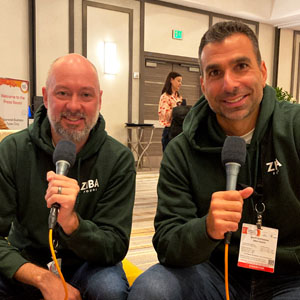
[00:00:10] Ray Latif: Hello, friends, and thanks for tuning in to Taste Radio, the number one podcast for the food New Beverage industry. I'm Ray Latif, the editor and producer of Taste Radio, and with my co-host for this episode, Jacqui Brugliera and Mike Schneider. This episode features an interview with Raffi Vartanian and Patrick Johnson, the co-founders of Ziba Foods, a brand of heirloom and wild-grown dried fruits and nuts sourced from the mineral-rich valleys of Afghanistan and processed by a workforce primarily of Afghan women. Get access to limited swag and exclusive content by becoming a Taste Radio VIP. It's easy for you to join that group of very important people. Just head to Taste Radio slash VIP and take one minute to sign up. As I like to say, you're already a VIP. We're just making it official. Gotta make it official. You know, I mean, if, uh, if we don't know exactly who's listening, we can't be the best of friends with you. We can be great friends, but not the best of friends. And that's really what Taste Radio VIP is all about. Just what you wanted.
[00:01:16] Jacqui Brugliera: It's our BFFs.
[00:01:17] Ray Latif: There you go. Taste Radio BFF. Taste Radio CFD, Taste Radio BFF, et cetera. It's all wrapped into the VIP program. Exactly. Jackie, your hair is still a bit purple.
[00:01:28] Jacqui Brugliera: Yeah, I know. It survived Coachella as well as myself.
[00:01:31] Mike Schneider: Yeah, Jackie, we got to hear all about Coachella.
[00:01:34] Jacqui Brugliera: It was amazing. I mean, overwhelming by how many artists and music there was, but also overwhelming by how many great vendors and food brands were there. I spent a lot of my time in the food market, which featured Sunny Blue. There was also Saina Vegan and other plant-based restaurants that are based in LA, including Monty's Burger, which is really delicious too. So I ate my way around the market. I also made my way to the new bar, which people might know as the non-alcoholic bottle shop in Venice. They had an activation there too. So they had non-alcoholic cocktails. You could also go into the VIP area and find Mila. They were slinging their soup dumplings and noodles. Yeah, they were there too.
[00:02:20] Ray Latif: Mila, formerly known as XCJ.
[00:02:23] Jacqui Brugliera: Yep. Chamberlain Coffee was there. Electrolyte. Hello Soju, which is also a new canned line of soju. They had a pop-up bar. There's so many brands to see. I was trying to sample everything while I was there, which I did a pretty good job of. And there was also Heineken was everywhere. They were, um, debuting their new line of Heineken Silver, which is kind of a new competitor for the low carb, low calorie beers.
[00:02:51] Raffi Vartanian: Like a Michelob Ultra situation.
[00:02:53] Jacqui Brugliera: Yeah, yeah, definitely. Like their version of the Michelob ultra. And they also had Heineken zero, which I had a few of those too, to keep hydrated. Yeah. Lots to see. It was good. It was good. Yeah.
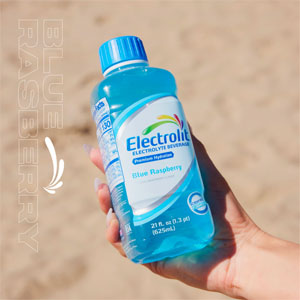
[00:03:04] Ray Latif: How many people had electrolyte or bottles of electrolyte in their hands? I would think that you would be bathing yourself in that at Coachella.
[00:03:11] Jacqui Brugliera: So electrolyte actually had a line out the door from there. Their activation always aligned people trying to stay hydrated. It was really hot, really dusty. So that was definitely a priority for most people there.
[00:03:23] Ray Latif: Did you wear a mask because of all the dust?
[00:03:25] Jacqui Brugliera: I did have like a bandana. A lot of people had bandanas and masks. The first couple of days were a Little Saints dustier than the other two, so it's definitely important.
[00:03:33] Ray Latif: When I went to Austin City Limits, which is a big musical festival in Austin that's held annually, the first time I went there, everyone was wearing a bandana. I'm like, Why are people wearing Venet? Is this just like a Texas thing? But then I realized all that dust. I was thinking it was for showdowns, but I guess not. No, not for showdowns. But we do have a showdown coming up, and that is the New Beverage Showdown.
[00:03:52] Mike Schneider: Speaking of showdowns. Exactly.
[00:03:55] Ray Latif: The New Beverage Showdown is part of BevNET Live Summer 2023 being held in New York City on June 14th and 15th. Now, as always, we highly recommend that early stage beverage companies apply to join us for the showdown. It is an amazing opportunity to feature your brand, to highlight what you're doing, to announce yourselves to New Beverage industry on a platform that is unlike any other. So apply at BevNET.com. Applications are due on May 12th. Now, because they're due on May 12th, you might be thinking, Oh, I have plenty of time to apply. I have plenty of time to get this done. You know, this is going to come up on you really fast, just like tax day does. And tax day just came upon us. And I know there are probably a few people listening who waited way too long. We're up until like 11 o'clock at night trying to find that last deduction. You don't want to do that. Hopefully you didn't just remind a few people. Yeah. Right. But, uh, you can always tell, and let's be, let's be honest here with ourselves. You can always tell the people who rush their applications, rush that video and didn't do the best job they could have. And that ends up being perhaps one of those brands that doesn't make it to that semifinal round. So work hard on it, on that application that is, send it in early. And, uh, we'll know that you're taking this really seriously. Don't sweat the video either. I mean, just go and make a good video. That's your elevator pitch because, you know, you want to be ready to pitch on stage. That's what we're looking for. Just a Little Saints of you, just an idea of how you talk about your brand. And, you know, we're just trying to get to know you a Little Saints.
[00:05:37] Jacqui Brugliera: Yeah. I mean, it's not going to take as long as your taxes. I'll say that.
[00:05:41] Ray Latif: Did you finish your taxes, Jackie? What was that? Did you finish your taxes?
[00:05:45] Jacqui Brugliera: I did finish my taxes. I did it as soon as I could because I knew I'd procrastinate if I didn't.
[00:05:50] Ray Latif: See, you'd be great at the showdown. No, in all seriousness. Yeah. We, we are really excited for this competition as we always are. And we just want to make sure you're as buttoned up as you can be because it's tough. You know, there's 12 brands on stage. There's probably 80, a hundred people applying. So the competition is kind of fierce and you just want to be as prepared as possible. And really, as Mike's mentioned, you don't want to be too, too stressed out about it, but you do want to put your best foot forward. I mean, the fact is you're probably already prepared because you're pitching all the time anyway, right now. This is another opportunity for you to pitch to another audience, us. So always be pitching. Always be pitching. Always be pitching. A-B-C. Pitch us. A-B-C, another one. No, wait, that's not A-B-C.
[00:06:34] Jacqui Brugliera: A-B-P.
[00:06:35] Ray Latif: A-B-P, excuse me. Pitching starts with the letter P. A-B-P. Well, let's talk about AFS because that's a really good acronym too. AFS stands for Applied Food Sciences. Applied Food Sciences. I thought it was always Friendly Situations. This whole time. It could mean that as well. Applied Food Sciences is the presenting sponsor for this episode of Taste Radio. They're also the leader in innovation for functional organic ingredients in the natural products industry. And they're built on the belief that quality is transparent from seed to label through organic farming, ethical sourcing, and sustainability. Learn more at AppliedFoods.com. We talked about the Zaps and how, you know, Brian and Jackson, who are two of the co-owners of Applied Food Sciences, and how approachable they are at all of our events, at all the trade shows that typically folks will attend. That's why I got confused, Ray. Always friendly situations. There you go. But I think about modern brands and how often they are promoting functional ingredients, organic ingredients, non-GMO ingredients. You want to be sure that you are actually delivering on those things. And I think that's where AFS has an edge because they do the due diligence. They do the audits of their farmers and their supplier partners to make sure that they are giving you what you bought and giving your customers what they want.
[00:08:03] Jacqui Brugliera: And it's a great benefit to have partners like AFS. You're busy as a brand, as New Beverage company, as a food company, and you don't have the time to do the due diligence of, you know, checking out all your suppliers, checking out where your ingredients are coming from, and they do the legwork for you.
[00:08:22] Ray Latif: Exactly. Once again, appliedfoods.com to learn more. Okay. I was hesitant to talk about this because I feel like it's just all over the news. I feel like it's a little media click baity and maybe that's kind of what we're doing. Let's do it anyway. Water talk. Hashtag water talk. Apparently this is a big trend that's happening on TikTok where People are trying to get as much water into their bodies as possible on a daily basis. And there's water fatigue, I guess. So they're adding, these people, they are adding all kinds of flavors and functional ingredients to their water to make it more palatable or more functional or both. And you Google Watertalk and you're going to come up with, I don't know how many stories ranging from, you know, the Daily Mail in the UK to the Forbes to, I don't know, PopSugar, all these different websites that are just reporting on Watertalk. What am I missing here? People have been adding flavor and functional ingredients to water forever, or it seems like anyway.
[00:09:24] Jacqui Brugliera: I'm just curious why it's so divisive and why it's such a hot topic. I think people are trying to make a story out of it. And like you're saying, people have been adding things to their water forever. I think it's interesting just that people are taking their own, you know, recipes and making TikToks out of it. And I think that's the viral component. It's just you have this kind of template and you're creating within it. So yeah, I, I like the fact that people are trying to drink more water. I like that. It's giving a moment for, you know, powders and syrups, which they might've not had a big moment like this in the past. I think there's nothing wrong with water talking. I think it's great that people are trying to drink more water.
[00:10:04] Ray Latif: I think it's slow news in the UK until someone overtakes Arsenal, which is looking more and more likely. They're just looking for some, but I mean, look, you're seeing some people taking three, four, five pumps of like almond syrup into their water. At some point when, you know, it's a 70, 80, 90 calorie glass of water, it's not water anymore. Now it's like- Soda talk. Yeah. Well, again, going back to this question of, you know, why are people doing this? Why are people adding so many things to their water? I get that people want to get, you know, their gallon or hundred ounces or whatever it is of water per day. But is just plain water really that bad? I mean. Is water fatigue really that serious an issue that we're even having this conversation? I don't know. I mean, I think it's a pretty first world problem when you think about when you think about people who have to go to wells to get their water and you have it in a tap and you're complaining about it. So I don't know.
[00:11:07] Jacqui Brugliera: And if you look at the cabinets of these people that are making these TikToks, they have 10 tumblers. They have 20 varieties of syrups, 20 varieties of powders. It's a little excessive.
[00:11:19] Ray Latif: They have like a syrup bar. Well, that's to answer your question from before, Jackie. That's why there is this divisiveness about it because quote unquote, health experts are saying, and I don't know why I just did the health of the quotes, the air quotes. But anyway, health experts are saying that adding too much syrup or adding functional ingredients that you don't that you haven't talked to your doctor about, that you haven't used before, could cause a problem for you health-wise? I don't know. It took a health expert to say you shouldn't do things that are bad for you. It took a health expert that said you shouldn't add 80 grams of sugar to your water, but I don't know. Well, let's hope that the news remains slow in the UK. Yeah, seriously. Anyway, but if you do have an interesting water talk story that you'd like to share with us so that we can continue this meaningless conversation, please send us an email. Please don't send us an email to askatasteradio.com.
[00:12:17] Jacqui Brugliera: So the people that actually brought water talk to my attention were our team members from brew bound who they were talking about. Tick tock trends on the brew bound podcast. Uh, they do a cool series where they ask each other, are you buying another round or are you tapping out? So they look at, you know, recent trends, whether it's tick tock within the beer industry, um, recent topics and go around and, and talk about it. And. It's another great podcast that I'd suggest anyone to listen to if you're interested in the beer business. They have beer executives that join weekly to talk about the latest headlines and some recent guests include Society Brewing, Lost Abbey, Russian River, and a variety of other breweries. So definitely check that out at brewbond.com slash podcast and take a listen to Justin, Jess, and Zoe.
[00:13:04] Ray Latif: Everybody's wondering what wins over investors. You think about that all the time. The Nosh podcast has an episode for you. What wins over investors, growth or CapEx? On this week's show, Nosh editor, Carol Ortenburg sits down with president and CEO of Lesser Evil, Charles Korestein, to talk about just that. I interviewed Charles for the podcast for Taste Radio that is a while back. He is a pretty brilliant guy, someone who came from the finance world and saw an opportunity to turn around a troubled business. and saw the value in that business and has made it into something that is pretty amazing. Lesser Evil is really one of my favorite brands, an extremely well-run company. They own their own manufacturing facility. They just seem to be doing a lot of things right. And you can listen to Charles talk all day. So definitely check it out on the Nosh podcast presented by BevNET. And of course, continue tuning in to Taste Radio. We've been publishing a ton of content over the last month. If you missed our episode with Padma Lakshmi of Top Chef, definitely want to tune into that one. Becca Milstein from Fishwife, the dynamic duo from The Coconut Cult. and leaders from the fastest of growing brands, including Owen and Chomps. Make sure to catch up on everything. You can download the latest episodes on the Apple Podcasts app, Spotify, Stitcher, what have you. Listen on your ride into work, on your morning run, and when you want to tune out your family and just wash the darn dishes. Okay. I got a little personal, but anyway, you know what I'm talking about. Can I talk about this new shot from Pressed? Pressed is a maker of cold press juices. They have a direct-to-consumer business, and they also have brick-and-mortar stores. This is their new collaboration with Berries, Berries Bootcamp. Well, I think it's just called Berries these days. They are a high-end gym that has locations around the United States. This is their recovery shot. It's made with tart cherry, turmeric, lemon, beet, and black pepper. It is pretty darn phenomenal. This is actually one of the best tart cherry forward juice shots that I've ever had. And I get that it's definitely something you want to have after a workout, but here it is at 1130 in the morning in Boston. I have not worked out yet today and I am waving it around and I am making me nervous because his, his, his pristine blue shirt is there. And I'm just afraid that you're going to spill it on yourself. I am not, I am totally in control of my actions this morning. You see I I see you waving it around again. You haven't he took half a shot come on. No shit Making me nervous. I don't want to get it on my pain. Oh, I qualified that by saying this morning Anywho, they also released, that is pressed, a recovery smoothie. Yummy. Also made in collaboration with berries. This one is made with pineapple, mango, strawberry, almond butter, pea protein, lemon, vanilla extract, beet and tart cherry, as well as allulose as the sweetener. I think we talked about this last time. Starting to see allulose infused into more beverages. Typically we'd only seen the sweetener in foods and this is just one more instance of it appearing New Beverage.
[00:16:21] Patrick Johnson: Vibrant Ingredients is the natural ingredient partner powering food New Beverage innovation, delivering flavor, function, and protection through a science-backed portfolio. Vibrant delivers purpose-driven solutions that help brands create extraordinary experiences. Discover what's possible with Vibrant today. Visit VibrantIngredients.com.
[00:16:48] Ray Latif: Jackie, I see something that has your favorite can tab on it. It looks childproof.
[00:16:52] Jacqui Brugliera: Just gave it away. Yeah. So I have Malanga, which is a line of energy brews. They use yerba mate as well as cannabis to create their beverages. This is a sparkling citrus basil. I'm a big fan of basil beverages. I haven't tried it yet, but I bet it's delicious. This one has 10 milligrams of THC. They also have a SKU that has 25 milligrams of THC. Um, for me, I won't be drinking the entire thing. I, I'm a, um, a newbie, but, uh, yeah, I think it's really interesting. The packaging really pops. You can see the yerba mate on the front. It's interesting also that they call it an energy brew because of the yerba mate. I'm curious how the caffeine and the THC, you know, co-mingle. I'll have to report back. But definitely an interesting product that came into the office.
[00:17:51] Ray Latif: I've got the new Unite bubble tea bar in front of me, and we've got the baklava over here as well. So there's two new SKUs from Unite. I'm going to try the bubble tea. Unite, a great tasting protein bar with global flavors. Yes. Baklava sounds incredible. Bubble tea. I mean, these are not typically flavors you see in protein Bars And that's what really differentiates Unite from a lot of other protein Bars And Clara Pei, who is the founder, was with us way back in the day on Elevator Talk in 2020. And I remember this was when the world was ending and, you know, there was no Expo West and there was only, you know, a handful of ways to really bring awareness to your early stage brand. And she joined us for Elevator Talk and it was amazing. Claire is one of my favorite founders. She's so kind, so generous, and like, she lives her brand and her brand is, it looks just like, it's like, what would you expect Claire to look like as a brand? There it is. Interesting way of putting it. Yeah, so a boba a bubble tea. This is tasty. I mean it looks amazing Sweet and milk tea like flavor with chewy bowl bits. Are you getting the bubble bits? I'm like in the bubble bits nice like we talked about bubble tea a lot And I just never would have expected we'd be talking about it in protein bar form. It's the new CBD. That's the new CBD And the baklava one. Oh my goodness. I'm going to try this later because if I try it now I'm going to spill it all over my pristine blue shirt. But this one has what you would expect. Milk, almonds, pistachios, walnuts. It is pretty darn amazing. I tried that one at Expo West. It is pretty darn amazing. Speaking of bars, Dave's Killer Bread, which is known for its organic breads and bagels, and I believe they also have English muffins, has recently introduced or entered the bar category, the snack bar category, with three varieties. They have a trail mix crumble, they have a cookie brownie batter, and they have an oat, can I read this, outrageous honey almond variety.
[00:19:47] Raffi Vartanian: Outrageous. It is outrageous.
[00:19:49] Ray Latif: Outrageous. Crumble looks pretty amazing to me. There are 19 grams of whole grains per bar, 210 calories, 4 grams of protein and 5 grams of fiber.
[00:20:00] Jacqui Brugliera: Today seems to be the day of bars because I have one here too that I'm also going to open up and eat. It's a line of protein bars called French. Oh, yeah. And they are, yeah, they're superfood protein bars. They feature my favorite ingredients, mushrooms. So all of these include different types of mushrooms, turkey tail, cordyceps, lion's mane, and it also has ashwagandha, which we know is a hot ingredient. And they have a variety of flavors. The Coconut, chocolate almond butter, and mango hemp. And the packaging's really fun. It's kind of like giving me some 70s vibe, which goes with the fringe name. And it says on the packaging, mind and body. So I'm going to open up one of these too.
[00:20:47] Raffi Vartanian: Do it. Do it. Let's do it.
[00:20:48] Jacqui Brugliera: Definitely recommend it. Which ones do you have there? The Coconut. I'm going to eat right now.
[00:20:53] Ray Latif: Good call.
[00:20:55] Jacqui Brugliera: Ooh.
[00:20:56] Ray Latif: What? Jackie took a good bite there. You need some of your hemp drink there.
[00:21:05] Jacqui Brugliera: That's not hemp.
[00:21:07] Ray Latif: Well, it's partially hemp.
[00:21:08] Jacqui Brugliera: Okay. Partially. Yeah. I don't know if I'd be able to finish the day if I drink that.
[00:21:13] Ray Latif: All of a sudden we'll see a Slack message from Jackie. I'm going to need to take a personal day, folks.
[00:21:19] Jacqui Brugliera: I'm back at Coachella.
[00:21:20] Ray Latif: Just blame Tay's radio. I'm going to take another Coachella day.
[00:21:25] Jacqui Brugliera: It's happened before almost with the one chip challenge.
[00:21:29] Ray Latif: Oh, that did almost happen, that's right. I would share these with you, Jackie, if I could throw it through the screen. But what I'm holding in my hand now is a can of Little Saints. Little Saints is a maker of non-alcoholic and sugar-free mocktails that are boosted with Reishi terpenes and hemp. They have four varieties that they sent me. They have a spicy margarita, a mimosa, a Negroni spritz, and a ginger mule. These are all plant-based. Each contain 10 milligrams of CBD and zero grams of sugar. I had the Negroni spritz last night and it was fantastic. I love the fact that these don't have any sugar because I feel like so many non-alcoholic cocktails end up tasting like soda because they do just have sugar. They have maybe a Little Saints too much carbonation in them. And it just feels like they're trying to replicate the burn and they're using sugar to do it. Well, sometimes they use cinnamon, sometimes they use, I don't know, nutmeg or whatnot. But, you know, I was enjoying this and I was starting to feel the CBD, but I was just most happy about finishing the can because I knew it didn't have any sugar in it. Now the sweetener in here is monk fruit, which might turn some people off. And monk fruit is just like any other natural sweetener, a little divisive. But, um... I thought it was great. And just as a tease, Little Saints is actually introducing a new product that they're going to announce next week. So we'll hopefully talk about that or maybe not next week, but the following. We'll talk about that on Taste Radio at that time, but it's exciting. You know, I think I first saw Little Saints actually at Erewhon a couple of years ago, and I was like really interested in this, but I almost felt like it was too, and I've been talking about this in a bunch of recent episodes of Taste Radio, I almost felt like it was too niche. It was too specific. It was a non-alcoholic cocktail that was infused with CBD. And I was just like, what's the potential of this audience? Who is going to drink this? Who is the target consumer? And this is their, you know, this is their third year, I believe. And it seems like they're getting a lot of traction with this brand, with their products. And I'm excited because it feels like. Maybe the audience is bigger than I thought, or maybe it's growing faster than I thought it would be possible. We don't know. But they're not the first to jump in and try that. I remember Prohibition in the old flask, Prohibition cocktails, and then also Crisp and Crude trying something similar to that, really leaning into the terpene. So maybe this is a signal that the market's heading in that direction. Yeah, and you know, it's also pretty clear that these are analogs to cocktails that we all know and love. Mimosa, Margarita, Ginger Mule, and Negroni. So, and the Negroni one, when I posted on Instagram, John Craven DM'd me and he was like, I need to try that. And I said, okay, well, when you come back from England, when you come back from the UK, I will give you a can. I knew there was a reason I wasn't trying it right now. What you want you saving it no? Okay, we're gonna do a live taste yeah, we're definitely gonna try this Little Saints Negroni spritz This is a non-alcoholic. He sprayed it all over the mic Once again 10 milligrams of CBD so Mike's gonna be nice and mellow through for the rest of the day It's definitely worth the $10,000 no no Zero grams of sugar can you taste the monk fruit? The bitterness is hiding the monk fruit, so that's good. That's good. Yeah, and this is not cold This is room temperature or at least I don't know room temperature for the studio Pretty tasty Negroni good. Yeah, nice far away It's a little more bitter But no, but this is really bitter oh, it's tasty I like it good all those terpenes that you always are raving about I'll say it tastes it definitely tastes like a cocktail and That's good.
[00:25:15] Jacqui Brugliera: I feel like that's the hardest part with non-alcohol.
[00:25:18] Ray Latif: They should have had these at Coachella. I feel like a lot of people would have been sipping on these at Coachella.
[00:25:21] Jacqui Brugliera: Yeah, that could have been at the New Bar. They probably have it at the New Bar in Venice.
[00:25:25] Ray Latif: What was the New Bar again?
[00:25:26] Jacqui Brugliera: It's the non-alcohol bar where they have a bottle shop in Venice.
[00:25:31] Ray Latif: Oh, okay. Were they actually pouring drinks there or did you have to like buy?
[00:25:34] Jacqui Brugliera: They were pouring drinks, yeah.
[00:25:36] Ray Latif: Gotcha. It's a nice clean label. Not many ingredients. One of Jackie's favorites in here, reishi.
[00:25:43] Jacqui Brugliera: Oh yeah. Okay, so functional as well.
[00:25:46] Ray Latif: Exactly. Fun and functional. Good job, Little Saints. We finally got our hands on some Peepal People. What are you talking about? Peepal People? It's a line of hot sauces. And it's not spelled Peepal People like the way... It's P-E-E-P-A-L-P-E-O-P-L-E.
[00:26:04] Raffi Vartanian: Wow, that was really good.
[00:26:08] Ray Latif: It's a heritage brand, a Pakistan heritage brand. So the names are all in Pakistani. So Bhut Bangla, but Bhut Bangla means haunted house. And it's, this is the red bell and ghost pepper and habanero version. It's like, it's red, it's hot. It's, it's called haunted house. There's Pila Pataka, which is, they translate on the side for you. So I know this is yellow firecracker, but this is where John Craven, if he were here, would make a joke about Mike. But anyway, continue. Why don't you just do it? I don't know. He's too clever for anyone I'm setting myself up Yellow firecracker This one's orange habanero and yellow bell pepper and this one is like is the one that would replace everything else You know any other hot sauce occasion that I have I would just put this It's like a Frank's hot sauce situation where I just put that on everything, you know, I And then there's the harabara, which is jalapeno and serrano. It means lush green in English.
[00:27:09] Raffi Vartanian: Do you want more repeat buyers on Amazon? Well, this free resource in collaboration with Straight Up Growth will help your brand turn first-time buyers into long-term subscribers. Download Winning the Repeat Purchase Game on Amazon now at Taste Radio slash SUG. That's Taste Radio slash S-U-G to start building retention-driven growth for your brand on Amazon. Scaling New Beverage brand into major retail comes down to operational readiness. From packaging lead times to co-manufacturing strategy, the details can make or break a launch. In a new e-book in collaboration with Octopi and Asahi Beer USA, industry leaders share what they've learned in helping brands scale. Download it now at Taste Radio slash octopi.
[00:27:59] Ray Latif: Alright, it's time to get to our featured interview for this episode. As I mentioned at the top of the show, Raffi Vartanian and Patrick Johnson are the co-founders of Ziba Foods, a premium brand of Afghani-grown heirloom nuts, seeds, and dried fruits. Founded in 2015, Ziba set out to create and maintain an ethical supply chain from farm to bag, including fair and direct trade with Afghan farmers, along with living wages for its women-centric workforce at the company's processing facility in the capital of Kabul. I spoke with Vartanian and Patrick at Expo West 2023 about their vision for Ziba and how they articulate the brand's compelling story and product value to consumers and retailers, how they navigated the complexities of the U.S. troop withdrawal from Afghanistan in 2021 and subsequent return of Taliban rule in the country, and how contingency planning factors into their long-term business strategy. Hey folks, it's Ray with Taste Radio right now in Anaheim, California for Expo West 2023. Sitting in front of me are Raffi Vartanian and Patrick Johnson, the co-founders of Ziba Foods. Gentlemen, how are you? Good morning. Good morning. Rafi, can you just give us a brief history into Ziba Foods, how it got founded and what you're doing today in terms of product selection and retail?
[00:29:23] Mike Schneider: Sure. Ziba Foods, Patrick and I founded in 2015 and with kind of a shared passion, not only for food, but also for I think approaching development in a different way, we come from varied backgrounds, mine in shipping and logistics, Patrick's in distribution, sort of always with a backdrop and history of skirting around development and working in developing countries, but didn't sort of marry those two things together. And I think when we were both in Afghanistan for different reasons, we're just absolutely enamored with the range and quality of dried fruits and nuts that were there. And sort of the light went on about, well, how can we bring this to market in a different way? And sort of an idea that spilled over into a business plan, spilled over into raising a bit of money and finding some partners, sort of landed us with maybe not the smartest business idea is to build a factory before having a customer. But that is what we wanted to do, which was to maintain and keep all of the value addition of products in country, as opposed to sort of the traditional path of exporting raw materials, even with their high quality and have them lost along the way and not be able to showcase what farmers and growers are actually able to do. Meanwhile, we can sort of build skill sets, hire and work with marginalized communities. And in our case, we decided to actually almost exclusively hire women. And that's sort of maintained throughout our journey, as it were, since 2015. Our packaging, case labeling, everything is done at our factory in Afghanistan. So everything that you see on the shelf is done by hand or as little by any sort of machinery as possible in Afghanistan. So it enables us to hire more people as well. We're not looking to expand into modern machinery only to the extent that it helps us with sealing packages, et cetera, for food safety reasons. But everything else is done in our factory and then sort of ends up in the shelf as it is. a long process between the factory floor and the shelf, but that's the fun logistics part that I think I got into this for.
[00:31:24] Ray Latif: I'm just enamored with your story and everything that you do. And I'm thinking about all the aspects of Ziba Foods that you put so much emphasis on and that you really spend a lot of time on. What do you lead with? How do you just talk about Ziba Foods to someone when you only have 10 or 15 seconds?
[00:31:43] Ziba Foods: Yeah, that's been a challenge really since the very beginning. Even talking, you know, between ourselves, it's like, what do we lead with? And it can differ. I mean, you've got to know your audience for sure. But generally speaking, we try to strike a balance between, okay, we do have a compelling social mission for the business, but the quality of these products is superior. And that's the message that we have to drive home to people is you have to try these. And the reason for that largely goes back to the fact that these are heirloom varieties, and they're wild-grown products. Our mulberries and pistachios, they grow wild, they're not farmed at all. These are just products that grow in the foothills of mountain ranges and are foraged by local communities. They're unadulterated, they're not genetically modified, so they're not grown in a way to maximize yield per hectare or anything like that. Usually and almost always at the expense of the quality of the products themselves. And also taste. Taste. Flavor. Incredible. From flavor to nutrition, they're standout products. And we try to send that message most clearly. And then we do also say, you know, by the way, the best way to do this, the best way to bring these products to market is to do it in a way that keeps the value closest to the communities that work so hard to grow them in the first place. And that is working with farmers and paying them fairly, and then having the processing done in the same place where they're grown. And that's our factory in Kabul, paying a living wage and hiring as many people as we can. And for us, that means basically not just a marginalized population, but Even within Afghanistan, probably the most marginalized population within that country, African women, and they're just incredible workers and they support huge communities. We estimate that one of our employees probably is providing a living livelihood for at least 10 people. Wow. That's on average? Yeah, that's on average. So the average household size is around nine, so nine or ten. So every job we create is paying, you know, the cost of living for a family for the year.
[00:33:54] Mike Schneider: And that was the easy part for us to sort of make the decision of how to to approach the development side. I think for us, we led with our stomachs for sure. And then, you know, realize that why would you not pay farmers? Well, how would you not? I mean, this is, I think, where our more professional backgrounds helped inform how we approached, you know, this business plan and the business in general, even though we have no background in CPG, we've gotten a massive learning curve since attending, whether it's Fancy Food or Expo in terms of how this side of the business works. And it's been worthwhile for seeing the team develop as well, right? People who also didn't have processing experience becoming our plant managers and doing the label work, whatever else it is, right? Because our team is not just, you know, on the factory floor. People have been promoted throughout. We've had our pretty much a near 100% retention rate since we built the factory in 2015. And we've had just team members been us for eight years. It's been incredible to see them grow.
[00:34:52] Ray Latif: Well, when I first encountered Ziba Foods, I was on Martha's Vineyard actually, and I was at a specialty grocery store and I'd seen your figs and I'm like, wow, these look amazing. And I bought them and I went, wow, they taste amazing. And it was interesting, though, because I never really knew too much about the story of why you started the company, why it's based in Afghanistan, the fact that you employ a predominantly female workforce, and all the other amazing things that you do in that country. That being said, I think I paid $8 for the pack. Is that within the range? Is this sort of like a $5 to $10 average price point for all your products?
[00:35:28] Mike Schneider: Yes, but it really did. You were at a specialty store in Martha's Vineyard, you can imagine. That was a very unique experience. And that's how we started. And we had to sort of start in that specialty because, you know, again, Patrick mentioned, you know, as we test the supply chain out, we didn't have the volumes and we had to air freight everything out of Afghanistan because we didn't have the volumes to justify a container. At one time, it was $10 a kilo to air freight, if not more, and plus all the clearing charges, et cetera, et cetera. So that, of course, went into the pricing. But now we've reached a stage where we're doing a full container load nearly every month, maybe a Little Saints more regular than that. it enables us to lower our price dramatically. Also volumes in general, so that's the simple economics do work in that way. So we've seen our 150 gram or five ounce bags as low as 6.99 or so, which is fantastic. I think it makes it a lot more accessible. I think to your point, your question earlier about how we can succinctly talk about Ziba, which we obviously cannot still in 15 seconds. I think a consumer instinctually understands story, origin and taste very quickly and increasingly hones in on that and buys according to that when they sort of see something. So they want to make sure that it tastes good. That's, you know, I think above all, but it somehow tastes better when you believe in its origin and its story. And I think we're we're able to communicate that in our packaging, which we're really, really happy about.
[00:36:52] Ray Latif: Absolutely. And when you turn around the package I'm holding in my hand, your trail pairing of mulberries and apricot kernels. It's a 1.76 ounce pouch. And on the back, right by the nutrition facts, you have Ziba means beautiful. And I think that encapsulates everything that you guys do with the brand. I have to go back to this concept of managing and running a business and a factory in Kabul under a Taliban-run government, which sounds like an extraordinarily difficult thing to do. Maybe it's not. And when I think about when the United States pulled its military out of Afghanistan and the chaos that ensued, it seems like your business was in jeopardy. That seems like the crisis of all crises. First of all, when you found out that the United States was going to be exiting Afghanistan, what was your initial reaction? And how did you make sure that your factory was going to remain under your control and that you were going to be able to continue to support the employees and partners that you had?
[00:38:02] Ziba Foods: Yeah, I think you can speak to that very well, but to set the stage for his response. Sure. This is also against the backdrop of the pandemic. is happening at the same time. How did I forget about COVID? Yeah, so we were dealing with COVID for a year and a half before the Taliban problem. And as well, it was also a global supply chain crisis going on at the very same time. So freight rates globally were super high, super slow. And so we were dealing with multiple crises at the same time, any of which might have been existential crises. But anyway, so that's sort of the backdrop of when the Taliban took over. It wasn't like everything was going really great. And you know, because we were dealing with and also in Afghanistan, there was a typhoid epidemic that no one heard about because everyone was talking about COVID. So there was also there was typhoid going on as well.
[00:38:52] Mike Schneider: Yeah. And I think at that time, as you said, it wasn't just those really chaotic and terrible few days in August, right after kind of the last troops left. This was a known fact that the US and coalition forces were going to pull out of Afghanistan months earlier, in fact, not maybe even a year earlier. But again, no one expected it to sort of unfold in the way that it did. So we were definitely concerned in advance about what we may or may not do, what may happen. But Patrick and I, we have a pretty high risk tolerance in general. And I think we feel that- Building a factory in Kabul. Risk seeking, risk seeking.
[00:39:28] Ziba Foods: Yeah, that's fair. Hopefully in the right ways.
[00:39:31] Mike Schneider: But also we've also looked at, there's always a delta between perceived risk and actual risk, right? And so I think we're decent at managing the actual risk and not really worry about the perceived risk so much. Having said that, we always felt just during that the course of that we're working in and we didn't bring something new to Afghanistan, right? All we're doing is providing marketing and logistics support to a community and country and a population that has been doing this far longer than we have heard about it, even Armenian. We have a history of producing amazing sour cherries and dried fruits and nuts, etc. from a Little Saints further north and west. But nothing like this. This is part and parcel of their culture. So, from that perspective, we had understood that even during the Taliban's first run, shall we say, after their civil war in the 90s, and even actually prior to that, during the civil war, during the Russian invasion, during the Russian occupation, dried fruits and nuts were produced, they were traded, they were exported. we felt that this industry would carry on no matter what. Now, how are we going to survive within that? Well, I think our initial business model was always going to allow for it, which is that we don't have any expats on payroll in Afghanistan. Our production facility is 100% Afghan. Our plant manager, our general manager, our accountant, our marketing team, all the factory workers, we don't have to worry about sort of a, you know, flight Yes, we're not supported by the U.S. government in any way. We didn't sort of have any ties in that way. We're a for-profit business that's running in the country. Our ability to go in and out, that was maybe put into question.
[00:41:04] Ziba Foods: And that had already been affected because of COVID. So we were already, we were running the business from afar for the first time, putting a lot of faith and trust in our general manager to run the show there, which he did just an unbelievable job throughout and continues to. So yeah, that was our ability to go back and forth was the biggest. Quick tangent. How does one get in and out of Afghanistan as an American? It used to be you could go to Dubai and get a visa from the Afghan consulate there. Same day process. And then you fly. There used to be an Emirates flight every day. I think there were about five or six flights a day.
[00:41:38] Mike Schneider: It's about two and a half hours from Dubai. Often, sometimes we would go in and out the same day, leave at four in the morning, come back at night if we needed to be there. But in the early days, building the factory, we spent a lot more time on the ground. And then as sort of things developed, our focus became on sales and managing our growth and raising money, whatever it may be, and just really enjoyed. We became a nuisance at the factory, if I'm going to be honest with you, because we wouldn't forget to wear our hairnet or shoes or whatever else. So maybe sometimes it was actually better that we just went to lunch. Your general manager was like, no, no, stay, stay. Pandemic is going to keep you guys. We're doing fine. It's nice to talk to you. But it is worth saying, speaking about the awful period right afterwards, we were definitely, everyone was in panic. We didn't know, could our, team go even go to work, I think it was up against a religious holiday at the end of that week as well. So we kind of made a collective decision to close the factory initially, you know, just while the chaos in Kabul sort of, or the airport, I should say, just sort of unfolded. And this was in August of 2021. Yeah, August of 2021. And two, three days afterwards, when I think the airport sort of cleared out and it was clear that, you know, this wasn't sort of devolving into a street fight or a civil war of any kind, our General Majawed, we keep calling him our General Majawed, dear friend and our General Manager, talked to some of the other business owners in our industrial area, which is sort of on the Jalalabad road near, just outside Kabul city, about possibly coming back to work. And they also employed, you know, some women or some of them, you know, more so. And they said, well, look, let's, there's no ban. You know, so let's... Streets are quiet, everything's quiet, let's give it a shot. And that's kind of been our path since, in that respect.
[00:43:27] Ziba Foods: They went back to work and yeah, it hasn't been a moment of downtime since.
[00:43:32] Mike Schneider: I mean, there's been, I think about three, four months later, there was the inevitable kind of visit, the knock of the door as these Taliban fighters transitioned to becoming bureaucrats. And not really like there's a story onto itself. I think that's also so unfolding and so on by these guys who have been literally fighting for 20 Bars And sort of now having to deal with paperwork and come around and see who's doing what and in what factory. And they came in and were very happy that we were working, very happy that we were processing, very happy that we have women working. I mean, not to say that I endorse at all sort of government in any way. I think it just shows that there's just this nuance. I mean, the Taliban themselves, they're not a monolithic, right? You have a spiritual arm, you have a military arm, you have a political arm that was... in Doha and Qatar for years.
[00:44:22] Ziba Foods: And they don't necessarily get along.
[00:44:24] Mike Schneider: And they don't know what they're doing either. And I think we just continue to survive in that realm of transitioning from insurgency to governing. It's very different. And it's also, we have no men inside the factory. Women are working not alongside men, which I think these were some of the issues that we were maybe worried about that would sort of raise flags in the current environment. and we don't really have it. So we're not ruffling feathers. And as a result, I think we just can continue to operate. And we do feel strongly that as even though rights are being cut and we hate it and we will do anything that we can, that's why we're paying so far outside the normal wage range and Peepal People sort of working because they support their families or it enables them to keep their internet connections and their data and be able to educate their children, through other means than just, of course that's works for our, let's call it more wealthy Kabul sort of population, At a certain stage, Patrick and I can only do our part, and that's with our team and with our farmers, and we're proud of that. But of course, on the whole, the country, it's really sad.
[00:45:29] Ziba Foods: Yeah, I think it's important to mention that the plight of Afghan women, if you want to talk about that, they're a strata in any society. And the inability right now for Afghan women to have a higher education, to go to university right now, it's a terrible thing. And we desperately hope that that changes. At the same time, that's not the staff at Ziba Foods. They're not from the part of society who would have ever had a chance to go to university themselves. They're just looking for a way to support their families. We're working with them. There are literally millions of them in that situation. We desperately hope that people who are from a different part of Afghan society, women, are able to become doctors and professionals and lawyers and everything along the rest of it. But it's not, like Rafi said, we can only do so much. We're working sort of a different population.
[00:46:22] Mike Schneider: And it's worth noting, sorry, Ray, it's also just on the premise of the process. I mean, talking about, you know, there's the social aspect. But in reality, also, when we sort of went back and things sort of, let's call it, calmed down, and our team went back to the export office and, you know, wanted to go through the process, we thought, are we closed off? How are we going to move our goods? Exact same people. And just a new, just like an administration change in the US government, there's a new boss who has no idea what they're doing. The last boss didn't know what he was doing. And all the people actually doing the work have remained in place. And so it became, It was a, at least one thing we didn't need to worry about was that our process. So we just kind of just kept our head down and kept moving.
[00:47:04] Ziba Foods: Yeah.
[00:47:05] Mike Schneider: I mean, that's great to hear.
[00:47:06] Ray Latif: Of course, it's not great to hear that, you know, the Taliban is running the show in Afghanistan, but it's good to hear that you were able to kind of keep things going without skipping too much of a beat. That being said, if I were an investor, and I was looking at Ziba Foods, and I said, okay, well, it seems like things are going well. And they even went well through this transition and through a chaotic time. I would still be thinking about contingency planning.
[00:47:31] Ziba Foods: Yeah.
[00:47:31] Ray Latif: And I know you guys are not necessarily risk averse and not necessarily risky entrepreneurs or, you know what I mean? Yeah. I would say, you know, have you thought about the potential of the Taliban taking over your factory or saying you can't operate this way anymore. What is the plan in that case?
[00:47:53] Ziba Foods: Yeah, our plan B is something we talk about a lot. I think that something I alluded to earlier, one of the things we're looking at is we consider ourselves to be passionate about frontier markets. Afghanistan is one of them. And Afghanistan is somewhere where we have, you know, we had the collective experience professionally and, you know, everything kind of coalesced around Afghanistan. And we love Afghanistan. And we will continue to operate there and grow there as much as we can. If that becomes no longer possible, we are going to be diversifying our supply base into other frontier markets. I mentioned Indonesia, possibly West Africa, East Africa. But we're also looking at the possibility of going, for example, into Central Asia to some place like Uzbekistan, which will have a sizable Afghan refugee population. we could look into building a factory there and employing Afghan refugees and continuing to supply these amazing products, also many of which are grown in Uzbekistan, but also from Afghanistan. We can bring in Afghan raw materials to continue to support Afghan farmers, even in the context of no longer being allowed to have a factory. employing Afghan women in Kabul. So we do think about Plan B a lot. It changes and we continually refresh those conversations and certainly from an investor's perspective. Our potential investor network, the Venn diagram of people who are passionate about developing emerging markets or frontier markets, retail, consumer packaged goods, and are risk-seeking enough or interested enough or socially motivated enough to consider an investment like this, it's a pretty small group to begin with. And so oftentimes what we find is if we can get to, we're going to have good conversations with potential investors, we'll find that they're already aligned with a lot of the things that we believe in. And I think that we can have a conversation to begin with.
[00:49:47] Mike Schneider: And believe that we can execute on the plan B. I think that's the more important thing. We don't, you know, we have to think about it. We have a plan for it, but also we can probably executed very quickly in a place like Uzbekistan, where we've maintained networks and ties. We used to actually do a lot of our, that post sort of new government era, did most of our shipping north, trucking it to Uzbekistan, et cetera. And so it was a transit point there. It's not SpaceX, you know, what we're doing, right? It's about process, you know, food safety is around process. And especially when it's sort of a combination of some basic equipment and manual labor, being able to recreate that with as much of our current staff if they wanted to come up if it got to that point or other refugees there would not take us very long.
[00:50:30] Ray Latif: Does plan B also include a certain amount of inventory that you always have to have on hand in case you are running out of supply for one reason or another. I mean, if I were a retailer, I would say, okay, how do you maintain consistent supply of this product? I mean, it seems like you're buttoned up. It seems like even through very challenging times, you've been able to maintain a consistent supply to your retail partners. Again, that is part of this all, this contingency planning, when thinking about where you Bars And where your factory is.
[00:50:59] Ziba Foods: Yeah, in terms of supply product and inventory, it happens that there's a single harvest season in Afghanistan that runs from about June, July, August, a Little Saints into September. So in order for us to, you know, we're a for-profit business, we're inching our way, you know, towards sort of cash flow break even. And in order for us to achieve adequate margins for these premium products, we need to buy right at the harvest point when quality is the best and the prices are the best. And also we have in our facility the way of post-harvest handling, which is critical for these products. We have a better way of handling these products and storing them than you'll find in the open market. So we basically buy a year's worth of products at the harvest point and we keep them in our factory. So it solves that problem. We need to do it for other reasons, but it does solve that problem of, you know, if we need to up and move, we have inventory to last us till the next harvest season.
[00:51:53] Ray Latif: Well, that's great to hear. You know, I feel like there's something about Ziba Foods that's so incredibly niche and beautiful in that regard. Sometimes the most unusual approaches to consumer brands are the most intriguing, the most interesting, the most fun, really, in so many ways. But again, you mentioned a number of times you're a for-profit business and for-profit businesses scale. What is the scaling strategy look like? How do you think about your product selection, whether or not there's one or two products that will be the scale drivers for your brand, will be the one or two products that end up potentially at a mass retailer like a Target or Walmart?
[00:52:32] Ziba Foods: Yeah. Yeah, I think this is where our trail mix and trail pairings and the sort of additional step of value creation comes in. Now that we have a relatively solid supply chain, we understand where the raw materials are coming from. Putting them together in interesting ways, and that can be in trail mixes, it can be in fruit and nut bars, it can be in nut butters and nut pastes. The nut butters that are made with these Afghan products are outstanding. And so we can incrementally add in those new products. You can scale that way. And then it's really, you know, focusing on just fighting the fight for the shelf space in the United States and growing through distribution sensibly and learning from those around us and taking as many tips as we can from seasoned experts in the field.
[00:53:17] Mike Schneider: As we walked over here, we walked by a huge queue of people waiting for their Kroger first pitch. where, you know, we had gotten up around six o'clock in the morning last year and waited in that same line or sort of early and it makes a difference. It worked. And so, you know, we've been given the opportunity for a couple of our products, our figs, which you mentioned earlier, and our mulberries at around 330 locations, you know, sort of within the Kroger family. And so we're getting to that stage of growth where we can scale. We feel confident in being able to accurately predict a measured growth trajectory year on year so that we can raise the working capital for each successive harvest. And I think, as Patrick said, you grow responsibly in that way. And I think we're starting to understand that just opening doors doesn't mean anything else. We also need to get this in front of people and have them taste it and sort of have it go off the shelf. So finding that balance is, I think, our kind of next mission is sort of whether you find a marrying sort of growth with velocity and still though getting in front of both retailers and consumers.
[00:54:20] Ray Latif: Well, I hope that today's conversation gets into the ears of enough people in the industry so that they do have a good understanding of what you guys are doing with Ziba Foods.
[00:54:29] Mike Schneider: Thank you. It means a lot. And as you rightly said, we've weathered a couple of storms in the last couple of years. So if we're on the other side of it, I think that's possibly a good sign. Absolutely.
[00:54:41] Ray Latif: Patrick, Rafi, thank you so much once again for joining me today. Good luck with the rest of the show.
[00:54:46] Mike Schneider: Thanks so much.
[00:54:47] Ray Latif: Thank you. That brings us to the end of this episode of Taste Radio. Thank you so much for listening. Taste Radio is a production of BevNET.com, Incorporated. Our audio engineer for Taste Radio is Joe Kratchy. Our technical director is Joshua Pratt, and our video editor is Ryan Galang. Our social marketing manager is Amanda Smerlinski, and our designer is Amanda Huang. Just a reminder, if you like what you hear on Taste Radio, please share the podcast with friends and colleagues. And of course, we would love it if you could review us on the Apple Podcasts app or your listening platform of choice. Check us out on Instagram. Our handle is bevnettasteradio. As always, for questions, comments, ideas for future podcasts, please send us an email to ask at Taste Radio. On behalf of the entire Taste Radio team, thank you for listening, and we'll talk to you next time. you