[00:00:10] Ray Latif: Hello friends, and thanks for tuning into Taste Radio, the number one podcast for anyone building a business in food or beverage. I'm Ray Latif, the editor and producer of Taste Radio, and I'm here with my co-hosts for this episode, John Craven and Mike Schneider. Here from the frozen tundra of Boston, where I believe it's nine degrees outside and it feels like it's negative one because of the windshield.
[00:00:34] John Craven: That's nine Fahrenheit. Yes, nine Fahrenheit. Exactly, yes.
[00:00:39] Ray Latif: For our UK listeners, that's wicked cold. I think they're pretty aware that we're talking about Fahrenheit here. But yeah, as we enter the end of the year, I can expect that we will have even colder weather. But hell, that's what we get when we live in Boston. Perhaps we'll consider half a year in West LA instead of just a week and a half. I think that's something that I would love to see in 2025. John Craven, what do you think?
[00:01:05] Mike Schneider: I would opt out for that one personally. Why is that? I don't know. It's a little, it's kind of like, you know, being in New York City for too long. It's just, it's just not for me. It's not chill. Boston's your home. I mean, you know, I live in the burbs, but I mean, I could be in San Diego for like, you know, half a year.
[00:01:25] John Craven: I love L.A., but once I have to drive around too much, I'm like, no, I don't live in L.A.
[00:01:30] Mike Schneider: Okay, okay. I can only eat at Giusta so many times. So 10 out of 10 days that you're there, you can eat at Giusta? Well, yeah, I mean, and some of those days I eat at Jelena and shop at Giusta goods or market or whatever. I'm totally kidding, but anyway.
[00:01:49] Ray Latif: Well, I mentioned Hope because a lot of folks are doing predictions at the end of the year about What's going to come in 2025? What's in my crystal ball? What am I thinking that we need to have happen to have a successful industry or brand? And I want to take a slightly different tack.
[00:02:08] John Craven: Is it because you have no hope for Manchester United even in 2025?
[00:02:13] Ray Latif: It's just, you know, the funny thing about, I'm just going to, quick tangent here. I just want to, it's, it's every Arsenal supporter can't just focus on their own team and say, Oh, I'm happy. We're doing somewhat well, but we'll never win a trophy. And instead, have to always go after the Manchester United fans.
[00:02:35] John Craven: You know that I have a lot of respect for Manchester United, and I like playing against a good Manchester United better than I like playing against a bad one, so I hope they do well in 2025.
[00:02:43] Ray Latif: And I hope that your charity shields are nice and polished so that everyone who goes to Emirates can see them in the glass cases that they have there. And our FA Cups and our gold trophy. All right. What I wanted to talk about today are five things that we hope to see in food and beverage into 2025. So not necessarily here's what's going to happen. Here's what we think is going to happen. Just a five for 25 about what we really would love to see food and beverage companies do, what we'd love to see perhaps regulators do, and what we'd perhaps love to see in terms of trends that would improve our industry that we love so much. I will start with something that's relatively benign. something that we need more of. And I would love to see more collaborations between upstart brands. Obviously, we've seen Fly-By-Jing lead the way with this. Fly-By-Jing has done collaborations with everyone from Fishwife, to Little Sesame, to Daily Crunch, to even bigger legacy brands like Lundberg Family Farms. I have my hand here. a chili crisp rice that was launched by Lundberg Family Farms earlier this year. It comes in a pouch, ready in 90 seconds. You put it in the microwave. You can also put it into a stove top pan. And instead of having Not calling Ludberg Family Farms rice bland, but you know, bland rice in general, you have this amazing, delicious meal in 90 seconds. I love this. You know, instead of adding your own sriracha to hummus, you have a great collaboration between Little Sesame and Fly By Jing, where it's an enhanced flavor. You see that there are two brands involved in this product, and you learn more about both. So, you know, we've also seen this with Graza. Graza did that olive oil martini with Ourobora. They collaborated with Rind on a granola. You know, certainly I'm leaving out a bunch of brands that have done some amazing collaborations. Maybe you guys can name a few, but I think the more we see smaller brands prop each other up and work together, the better off we're going to be.
[00:04:59] Mike Schneider: Fair.
[00:04:59] Ray Latif: Yeah, I mean, you know, we've seen this at high levels, like, I wouldn't necessarily call them collaborations, you're more licensed brands that we see in energy drinks, C4.
[00:05:11] Mike Schneider: Well, yeah, those are licensing deals, not really collaborations.
[00:05:13] Ray Latif: Right, those are not collaborations. Ghost as well. Ghost, for sure. But those are licensing deals. I would love to see more just brands work together.
[00:05:21] John Craven: I think one of the things that we've seen is brands helping brands. You saw when there was the great chili crunch debacle of 2024 that brands jumped in to help one another. And I think we're seeing that, particularly a lot of cultural brands, bonding together to help one another grow. And that's how categories are built. So collaboration is great, but also just being together, having, you know, common goals and understanding how to help one another has been just a phenomenal thing that we've seen a lot of in 2023 and 2024. And I'm hoping that brands will double down on that in 2025.
[00:06:02] Ray Latif: That's a good point, Mike. I like that. Brands helping brands, I think is the common theme here.
[00:06:07] John Craven: Brands helping brands, founders helping founders, people helping people in the industry is one of the reasons that I came into this industry in the first place. Didn't see as much of that in tech as I see in food and beverage. Not that tech doesn't have, you know, people who help each other, but it's a different kind of, it's just a different kind of feel for me. And that's one of the reasons I love food and beverage.
[00:06:29] Ray Latif: I want to help you right now, Mike. How? By noting that your second button down is unbuttoned.
[00:06:33] John Craven: Missing. It's missing.
[00:06:34] Ray Latif: Is it missing? It's missing. Oh, OK. That's exciting. I thought you were going to Superman out of your shirt there and rip it open.
[00:06:39] John Craven: Yeah, it's missing. Oh, the second one's unbuttoned and the third one's missing. OK. Having some wardrobe malfunction over here. Too much detail for a podcast.
[00:06:47] Ray Latif: Too much detail, but we'll keep going. All right, John Craven, I know you have some hopes and dreams for 2025. What's yours?
[00:06:53] Mike Schneider: Well, I didn't know it was supposed to be five things, but I came up with three things. The first thing I would really hope for or like is to see some sort of meaningful, more permanent direction for the cannabis regulation, since I think that That category as a whole has a lot of great products, a lot of great entrepreneurs in it who I feel like at this point just deserve some path forward that, you know, hopefully is reasonable, has, I don't know, age restrictions, some common sense guidelines and we can just move forward. I mean, I think it... represents a massive opportunity for the CBG industry for growth and one that, again, would be nice to just have that on a path that, you know, everyone feels good about. I think the second thing I'd like to see are some more deals. I mean, we had some pretty good ones. We haven't yet had those mega, mega deals that we've talked about on here, but I feel like they're going to be coming. There's going to be some more in 2025. And, you know, I think that will be, again, well-deserved for many of the brands and people behind them who've, you know, built some pretty impressive stuff these past couple of years. And it also will help out the next generation because it gives confidence for investors and the people who put the money behind these brands that there is a positive outcome. And I guess last but not least, I feel like we've been at a point on the beverage side of things where there's been a lot of blurring of lines. you know, categories converging and I think seeing a lot of new ideas get tried out that don't yet have sort of like maybe meaningful or, I don't know, consistent revenue, let's say. Some of the like NA cocktails, for example. And, you know, it'd just be nice to see some meaningful progress on that front too, where, you know, consumers sort of, let these brands know like really what they want and you know what they're going to get behind. I think you know that's something that we need to get to maybe it won't be in 2025 but you know in the next probably two three years. I think there's again a lot of opportunity in the NA and and you know whatnot so yeah just feel like would really love to see some progress on that.
[00:09:24] Ray Latif: Isn't that going to require buy-in from the big alcohol retailers though? So you go into a Total Wine, you go into a BevMo, and not only do you see alcoholic beverage options, but you see bigger, more vibrant and visible spaces for NA.
[00:09:42] Mike Schneider: I mean, I think it's a little bit of the old chicken and the egg sort of situation of like, you know, you can't get to what I'm talking about without buying from the retailers, but the retailers aren't going to buy in unless you have some sort of clarity from consumers of, again, what they're going to buy into, right? And I think there's also sort of the on-premise factor for these products too, which now that we're not in a COVID era where people are going out to restaurants and bars again, you know, maybe there's some opportunity for a brand to break out, you know, that way, much the same way that Spirits brands used to use that as a place to break out. So, uh, we'll see.
[00:10:17] Ray Latif: I also think that if there is a legacy established player that comes out with an NA option that is actually close to or very, very close to the quote unquote real thing, that would also help move the needle. We've seen this in beer for sure.
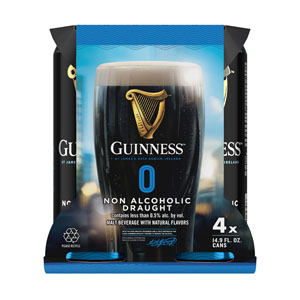
[00:10:35] Mike Schneider: Yeah, I mean, I think to some extent, yes, it is also something that would benefit from continued innovation or product development, be it from a startup or from one of the big, you know, liquor brands who, to your point, I mean, you look at something like a Guinness Zero, right? And I think if someone could truly do that on the spirits front, yeah, that would be a game changer. I'm not totally sure that we're going to get there, but, you know, I think there's, Again, I think there's a lot of stuff out there that's already in the market. It's just sort of a, you know, question of which ones are really going to go big. Yeah.
[00:11:11] Ray Latif: I mean, we have seen, I'm forgetting which gin brand it was, but there is a gin brand out there. Um, a well-known one. Again, I'm forgetting. I think it's Tangeray actually. I think it is Tangeray. Tangeray that has a zero proof product. And I think gin is probably the easiest place to start because again, most of the time juniper berry is that predominant flavor.
[00:11:31] Mike Schneider: easier flavor to replicate for sure.
[00:11:33] Ray Latif: For sure. For sure. All right, Mike, we've heard four hopes and dreams. Three for Mr. Craven, one for me. What do you got?
[00:11:41] John Craven: I only have one wish, Ray, and that's for material change in the way that institutional investment is delved out. We still are at one, 2% of money going to women-founded, black-founded, AAPI, mean-owned businesses. Anyone who's starting at a different starting line than the ones who are getting most of the institutional investment, I want that conversation to become a hell of a lot easier for them in 2025. That's my wish.
[00:12:11] Ray Latif: I mean, I think that's a wish that everyone has had for some time. I think the question is, why? Why is it happening at such a turtle-like pace? Why is it going backwards in some ways? What do we need to do to make it top of mind for the industry, to make it a priority for the industry? Who do we need to advocate for specifically to make it such that it's clear that we're doing a bad job in that regard?
[00:12:43] John Craven: It's not an easy question to answer, Ray. Part of it is that people give money to people like them and the people who have the money aren't necessarily like the founders that are asking for money. So we need more success in the industry for the kinds of businesses that I just talked about first. And then we need people to just be more open-minded about the conversations that they're having and probably to network a bit more. outside of their general friends and family networks that people tend to network in. So it's definitely a complicated issue that, you know, that's why I wished for a change because you need a genie to make the kind of change that I'd like to see happen overnight. But we'll have to keep just making people aware and and trying to do our best to help people get into more meetings. And we have to keep the problem top of mind for the people who are investing, because unfortunately I don't have my own fund.
[00:13:52] Ray Latif: You do have a podcast though.
[00:13:54] John Craven: I do. I have a platform to speak on, but we just have to continue to call people out or ask the question.
[00:14:03] Ray Latif: Why don't we lead every episode of Trace Rader in 2025 with 1.7% of venture capital funding goes to women-led brands, women-led CPG companies.
[00:14:14] John Craven: If you want to do that as part of your, uh, hello, thanks for joining us on Taste Radio. Remember we're at 1.7%. I mean, that will, that will at least get people to either turn off the podcast or keep, you know, or have that top of mind. I don't know what would happen there, Ray, but, but, and I don't think that's going to necessarily solve the problem. It will bring awareness to the problem. Awareness and action are two different things though.
[00:14:42] Ray Latif: For sure. I think awareness is important, though, because I don't know how many people know that that is the number. It used to be two percent. It actually went down to one point seven. And it's a real problem. Everyone talks about it. But you're right. The action is lacking, to say the least. So good, good hope, Mike. And I hope the same.
[00:15:02] John Craven: It's not like the businesses aren't out there. There are great businesses that when investors look at them, they'll say, well, this needs more help than other businesses or whatnot. I mean, that's what they're coming to you for. They come to you with a good idea and you're the kind of investor who can help a business. You can open doors. I think we have to be a little bit more patient and learn how to teach too. So, you know, when a business doesn't check all of your boxes, you maybe tend to move on, but maybe, maybe change your boxes.
[00:15:37] Ray Latif: Ooh, I like that. I like that. All right. I said we'd have five. I think I have a bonus one here. Okay. And, uh, I just, I, I want to be very, very clear about this. And so I wrote a bunch down. As I mentioned, this is something where clarity is quite important. This has nothing to do with the recent election or who's in charge of the federal government next year. We've talked about this in past episodes. My hope is that the FDA finally takes action on the use of artificial ingredients in food and beverage. We know there are alternatives. We know this because if you go to Europe, packaged foods do not contain these ingredients and yet, They look the same, they taste the same, the texture is the same. Upstart food brands have already led the way. Big food companies, however, continue to incorporate artificial ingredients into their food and drinks. Now, food scientists could come back and say, well, there's plenty of evidence that artificial ingredients pose no risk to consumers. Okay, fine. Does that mean we shouldn't look for natural options when formulating recipes? Now, conglomerates of the world, shouldn't you be focusing on natural formulations first and foremost? I mean, I think this is something that I have talked about over and over and over on this show. You know, we've heard some rumblings that the federal government next year will take action on this. Again, I am not advocating for one group of politicians or another. But I think when it comes to this issue, we should be united.
[00:17:17] Mike Schneider: Is there another group at this point?
[00:17:19] Ray Latif: Yeah, right. Just saying. I think we should be united in this regard in saying that natural should lead the way. And natural should be the standard, not the backup, especially when it comes to the most consumed food and beverage in this country, which happen to be soda and snacks made by the very largest of conglomerates.
[00:17:40] John Craven: Sydney Carms-Wayner, who's the founder of French Squirrel, did a piece this morning, a reel on Instagram talking about calories and how calories and health kind of go together. And then she talked about it as one of the biggest propaganda pieces for the U.S. food system because You talk about low calories, and then you plummet in all these cheap artificial ingredients. And so you're saying, hey, it's low-cal, so therefore it's healthy. Not true, not a whole food. To your point, right? And I think that's what makes me really love the Nosh community in particular, where they're trying to change the food system. And it's a really hard food system to change. But it is possible to have better food. Just look at America's Hat, Canada. They have a better food system.
[00:18:31] Ray Latif: Do you just call Canada America's Hat? Yeah, America's Hat.
[00:18:34] John Craven: Oh, jeez. I've never heard that before. You've never heard that? Or we just went to London. The food there, I ate a lot of the same kinds of foods. It's just better. You feel better when you eat there. you're not eating all those artificial ingredients. And I don't know, maybe it's also just we were there and it's great vibe and all that stuff, but just easier to put good stuff inside of you, which is what everybody wants to do on a daily basis. You have to eat.
[00:19:04] Ray Latif: Yeah, absolutely. And I think this goes back to your last point where awareness and advocacy go hand in hand and we do need to put pressure on the big food companies to do better. We do need to, I mean, I think people have been doing this and it hasn't been heard. We do need to put pressure on the federal government to take a closer look at why there is such a disparity in standards and regulations between Western countries like the United States, like Great Britain, like France, like Germany, why these countries seem to know more than we do when it comes to including artificial ingredients in our food.
[00:19:48] John Craven: And why does your lot in life determine how good your food is? That's crazy, man. Like, I mean, that's crazy that the quality of your food is determined by how much money you make.
[00:20:01] Ray Latif: I mean, if you look at this from a really global perspective, I mean, that is a problem that we look at as human beings.
[00:20:09] John Craven: But if you look at it from a global perspective, in other countries, some of the best food is just the pedestrian food, the peasant food, you could call it. You're getting great food.
[00:20:26] Ray Latif: But we don't have that in the US. Because Americans don't consider themselves peasants. We're more than that, sir.
[00:20:35] John Craven: You know what I mean. It's a category of food, but it's one of the best categories of food, too. The kind of food that everybody eats is often the best food. Ask Anthony Bourdain.
[00:20:49] Ray Latif: Well, we have a few products. I know we're close to the end of our show here, but I definitely want to highlight a few things that were sent to us over the past week here. John, you have, what is that? Is that a box of hosts? H-O-S-T-E? The brand that participated or one of the brands that participated in our cocktail showdown?
[00:21:10] John Craven: Yes, that's a beautiful box.
[00:21:12] Mike Schneider: Perfect Manhattan.
[00:21:13] Ray Latif: Have you had this yet?
[00:21:14] Mike Schneider: I have not. I have it all boxed up for a special occasion, which unfortunately is not hanging out with you guys recording a podcast. Damn! But yes, they sent a bottle of their perfect Manhattan as well as their Old-fashioned, I've tried the old-fashioned. They're gold-fashioned. Gold-fashioned. I have to say, before correcting me, it is very, very delicious.
[00:21:37] John Craven: That is a perfect-looking box for that product. It is. It looks really high-end. So we should be clear. You can tell what it is from here just by, just by, you know, just when you get, when you lay eyes on it, you know that has to be.
[00:21:51] Mike Schneider: Ray, do you know what a perfect Manhattan is?
[00:21:53] Ray Latif: Uh, let me give you a shot at explaining what a perfect manhattan is before you do that. I want to explain what host is host is a maker, uh, large format cocktails ready to serve is what they call them. They come in 750 milliliter bottles. They're made with very high quality liquor and ingredients, and they come in beautifully packaged, dare I say, giftable bottles and boxes.
[00:22:18] John Craven: It says high-end whiskey. Yes. High-end whiskey, look, in this box.
[00:22:22] Ray Latif: And when they sampled at the cocktail showdown, they sampled their gold fashion, which is an old-fashioned, but made with very high quality ingredients. and spirits, and they also sampled their mezcal Negroni, also equally impressive. So this Perfect Manhattan is what, John Craven?
[00:22:40] Mike Schneider: Well, a Perfect Manhattan, Ray. I thought you would know this. Well, it's made with rye, I assume, yes? That's not what makes it the perfect Manhattan. Okay, what makes it perfect? It is a split of sweet and dry vermouth is a perfect Manhattan. Oh, wow. I never knew that. That's perfect. Yeah, which if you have not tried that, listener, and you like a Manhattan ... Did you say listener? We have more than one listener. No, I've looked at our stats and there's only ...
[00:23:01] John Craven: He's talking to, it's only one hour.
[00:23:03] Mike Schneider: He's talking straight to the listeners. Apparently they're also a Tottenham supporter too, so anyway. He said dear listener, yes. Dear listener. But yes, if you are so inclined to have a Manhattan over the holiday or holidays, a perfect Manhattan is a good choice. After the last match, any Tottenham supporter should have a couple of those.
[00:23:23] Ray Latif: I would wholeheartedly agree because Host makes some great products and kudos to them for sending us their perfect Manhattan. Do they send us more than one?
[00:23:31] Mike Schneider: Uh, no, but I could, you know, maybe pour you a little off.
[00:23:34] Ray Latif: Darn. No, it's okay.
[00:23:36] John Craven: I want you to. 6-3 to Liverpool Tottenham.
[00:23:38] Ray Latif: I want you to hold. Are you still on that? I want you to hold on to that and just please give us the update on the next episode. I saw these upstairs. Is this a new brand? It's dandies. No, no, no, no. Not a new brand. No, we've had dandies. I've never heard of Dandy's. So Dandy's is apparently a maker of vegan marshmallows.
[00:23:56] Mike Schneider: I'm assuming you just don't buy marshmallows like ever, because if you did and you shop at Whole Foods, this is basically the brand. This is the brand? Okay, okay. And all of their marshmallows are vegan, which just means they're not made with gelatin. And how about this?
[00:24:11] Ray Latif: At the bottom of this package of mini vegan marshmallows that are vanilla flavored, It says, no artificial flavors or colors, no corn syrup and no gelatin, well done dandies. They do come in a variety of formats. There's a peppermint flavored vegan marshmallow, which comes in a smaller package than this vanilla one. They actually have fluff, which I guess you can't call fluff because it's probably trademarked, but they have a marshmallow cream that's also vegan. well done this looks really good and i love the fact that's the only ingredient on here that might give me pauses carrageenan but i'm not going to complain about that there's like seven ingredients in this uh in this bag of vegan vanilla flavored marshmallows All right, before we wrap up here, I want to give Mike a holiday gift, which is, he said long ago that he wanted to have a Twinkie fight, so I want to give him a Twinkie fight. There you go, Mike. There you go, Mike.
[00:25:09] Mike Schneider: Twinkie fight! You're bad at this. You haven't even hit me once yet. Ow! The irony of you having a box of Twinkies after your rant of five minutes ago is pretty good.
[00:25:23] Ray Latif: That's what they're best for, though. Hostess sent us these a while back, and I never ate them, obviously, and I figured this might be the best use for them.
[00:25:29] John Craven: Oh, it's the mystery flavor.
[00:25:29] Ray Latif: It's the mystery flavor that we talked about a while ago.
[00:25:31] John Craven: That is what they're best for. Not eating, that's good. Tossing Twinkies, all right. I was plinking myself this whole episode. I just wanna shout out to Max and Luke, two of the best people in the industry if you have a chance to meet those guys. Just really, really great people. Thanks for everything you do and thanks for the plink. Speaking of great people also, shout out to the founders of Happy Pop. Okay, good people.
[00:25:56] Ray Latif: That tangerine dream looks really good.
[00:25:58] John Craven: Dustin and Maya. Thanks for the tangerine dream.
[00:26:03] Ray Latif: Love it, love it. And thanks to our dear listeners. We love you guys so much. We really appreciate you tuning in every week. We're excited for 2025. We're excited to see you at all the upcoming trade shows as well as our events. Please definitely stay in touch. That's how we know what's going on with you and your brands. Send us a note, send our editorial team a note. I always say it's really difficult to follow the 500 active beverage brands in the United States that probably 2,000, 2,500 active food brands in the United States. It's really important for you to stay in touch with us and for us to stay in touch with you. And that happens if there's some back and forth constantly during the year. So please let us know how you're doing. Happy holidays to all. We'll see you next year. That brings us to the end of this episode of Taste Radio. Thank you so much for listening. Taste Radio is a production of BevNET.com, Incorporated. Our audio engineer for Taste Radio is Joe Kratchy. Our technical director is Joshua Pratt, and our video editor is Ryan Galang. Our social marketing manager is Amanda Smerlinski, and our designer is Amanda Huang. Just a reminder, if you like what you hear on Taste Radio, please share the podcast with friends and colleagues. And of course, we would love it if you could review us on the Apple Podcasts app or your listening platform of choice. Check us out on Instagram. Our handle is bevnettasteradio. As always, for questions, comments, ideas for future podcasts, please send us an email to ask at Taste Radio.com. On behalf of the entire Taste Radio team, thank you for listening, and we'll talk to you next time.
[00:27:40] Mike Schneider: you