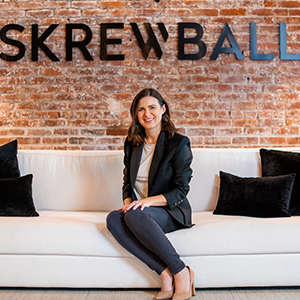
[00:00:10] Ray Latif: Hey, folks, I'm Ray Latif, and you're listening to the number one podcast for the food and beverage industry, Taste Radio. This episode features an interview with Brittany Yeng, the co-founder of one of the fastest growing spirit brands in the US, Skrewball Whiskey. Just a reminder to our listeners, if you like what you hear on Taste Radio, please share the podcast with friends and colleagues. And of course, we would love it if you could review us on the Apple Podcasts app or your listening platform of choice. On a BevNET Live stage several years ago, former Vitamin Water CMO, beverage investor, and current Shark Tank judge Rohan Oza remarked that everything is niche until it's not. It's an adage that one could certainly apply to Skrewball Whiskey, a peanut butter-flavored whiskey brand that has experienced one of the fastest market rollouts in the history of the spirits industry. Launched in 2018 by married couple Stephen and Brittany Yeng, Screwball was inspired by a peanut butter shot that was on the menu at Stephen's restaurant in San Diego and popular among its patrons. Yet while flavored offerings had become an established segment within the whiskey category, few believed that Screwball would be anything more than a novelty concept. It's safe to say that the naysayers were wrong. Screwball grew at an astonishing rate and sold over 1 million cases within three years of its debut. The brand is available in all 50 states, along with Canada and the Caribbean, and sold at major retailers, liquor stores, and restaurants. In the following interview, I spoke with Brittany, who earned her master's in chemistry before becoming an attorney and eventually the owner of a spirits brand, about the development of Screwball, why an against-the-grain approach worked for the company, what she learned about trust and aligning with people that would act in their best interests, and why a gut check is a key factor in every decision. She also explained why a poor review of the brand early on was a blessing in disguise, how she and Steven won over a key distribution partner, and her position that she's not selling peanut butter whiskey. Hey folks, it's Ray with Taste Radio. Right now, I'm very excited to be sitting down with Brittany Yeng, who is one of the co-founders of Skrewball Whiskey. Brittany, how are you? Great. You know, it's funny, Screwball originated in San Diego. San Diego no longer has a football team. They moved to LA. Now they're the LA Chargers. And Screwball is the official sponsor of my favorite NFL team, the Buffalo Bills. I hope that you would have considered the Chargers had they stayed in San Diego, but I'm glad that you're sponsoring the Bills. It seems like a good partnership. Curious as to how that partnership came to be.
[00:03:03] Brittany Yeng: Yeah, you know, and we're very sad. I know I grew up going to all those charger games, and so it's really sad to that. You know some of the kids in San Diego won't have that same experience. The Buffalo Bills, it was really just from a personality of the sports team. It really made sense with our brand. They've been doing amazing, amazing things with what they did. I mean, we just saw last season what happened. And so it, it really made sense, the Bills Mafia and, and all of that. And we got everybody behind it, especially with the new markets with Canada launching and they have a huge Canadian following as well. So it was a perfect fit.
[00:03:39] Ray Latif: And it's good they've outlawed the jumping from vans into those collapsible tables. I think more than a few people got hurt. Like it's surprising that more than a few people would have gotten hurt doing that, really. But that's not a good look if you're one of the sponsors and they're all banged up on screwball, jumping into tables and whatnot.
[00:03:59] Brittany Yeng: Responsible fun is what we sell.
[00:04:03] Ray Latif: Yes, indeed. Let's talk about your background and that of your husband, who is one of the other co-founders of Skrewball Whiskey. You have a background in chemistry, in law, your husband in hospitality. So I think between those three things, you guys are set up pretty well to start a brand like this. But talk a bit about your backgrounds and why you decided to enter the spirit space.
[00:04:25] Brittany Yeng: Yeah, no, and it's actually kind of funny that you say it suits us well, because it was, I think a lot of people didn't see the connection, right, between our backgrounds and where we ended up. So I started, I'll back up a little bit. My husband and I actually, we started dating in high school. We met in elementary school, so we've been together for a very long time. So his story and my story are kind of intertwined from that perspective. So I helped him when he was actually helping his family launch their first restaurant. And so I worked closely with him while I was pursuing my degree in chemistry and did a master's in chemistry. Then I went on to law school and started practicing pharmaceutical patent litigation, which seems like it could be farther from launching a whiskey brand. I always connected with my husband. He had a a restaurant that was really a beacon of the community. It was really, we had really focused on bringing the community together, being a place for people to kind of come and, you know, welcome everybody. And so we We had kind of gone on different paths. And I think that had really taken us apart from where we had started. He was getting home at 430 in the morning. I'm leaving. I worked with people on the East Coast. I'm going and starting at 430 in the morning for my job. And so we're ships passing in the night. And we were expecting our first daughter and we're looking at each other and saying, this is not going to work. I mean, we can make it work, but we had both kind of built these separate dreams and we really needed to bring those together. And we remembered our time working together and building the restaurants together was one of the best times that we had in our relationships and the success that we had had there. And so we really kind of had to look at ourselves and what we were doing and basically start from scratch, right? I threw out my career. He kind of had, he has, he ends up selling his restaurants and, uh, us going all in to this venture.
[00:06:28] Ray Latif: Well, I mean, it's a, it's a great story. And I think, you know, entrepreneurship is one of those things where you do have to go all in and you knew you wanted to start a business, but why of all things peanut butter flavored whiskey.
[00:06:43] Brittany Yeng: And that also kind of goes back to our stories together. So my husband, he, he, one of the first foods and he'll tell the story differently, but I'll give you the short version, which is he is a Kimbo. So he's Chinese by descent and he is, was living in Cambodia and he got polio. He came over as a refugee, similar to a lot of what we're seeing right now in the, in the media. When he did that, one of the first foods he had tried in America was peanut butter and he fell in love with it. And as we were starting the restaurants, one of the signature cocktails became a peanut butter and whiskey cocktail. And it was something that I really saw a lot of, he saw the value, right, as a cocktail in the restaurant, but I saw a greater value to that. Just with the people we were bringing in that didn't like whiskey. Whiskey wasn't their normal go-to drink. They were like, I don't drink brown spirits. And I'd be like, just try it. And they really enjoyed it, they would be asking for a second one. So it was one of those things that I saw this opportunity greater than just a cocktail. And I think my husband and I always kind of had hopes and desires. What we had built with supporting the community with the restaurants, we could only do so much. And this has allowed us to do that on a much greater scale.
[00:08:10] Ray Latif: Now, at the time that you launched, there were a number of flavored whiskeys coming to market. I have to think, though, that there were some pretty odd glances when people heard about a peanut butter flavored whiskey.
[00:08:22] Brittany Yeng: Yes, we use some cuss words when we describe what people's reactions were when they thought of peanut butter and whiskey. I don't think any, one of the things we always say is that people thought we were ruining their whiskey or they thought we were ruining their peanut butter. They did not think the two things made sense. And to us, it had actually been a part of our lives for many years at that point. And so it was not, Unusual and so it was always a wake up call every time we had to explain that to everybody. But there was a lot of things about the product that many. people advised us we were kind of dead on arrival and not in a negative way, right? They would say like, you're a really nice couple and you have this young family and we really just want the best for you. And this is like, we just don't want you guys to throw everything away. And they didn't see the value that it could ultimately become.
[00:09:22] Ray Latif: The business is self-funded. You both left your jobs. You talked about the motivation to get into your own business. Obviously, it's a very scary thing to start your own company. But, you know, there's a reason people call it a leap of faith. You had faith that this could work. Talk about your beliefs. Talk about the faith that you had that Screwball could be a success.
[00:09:43] Brittany Yeng: My parents, we always struggled for money. Both me and my husband, that's one of the things we have in common that I think binds us is we both came from absolutely nothing. And so for them, they struggled to just have a constant paycheck. And so when you reach that, that was the pinnacle for my parents that I had a great job that had not just a constant paycheck, but a good one. I was at one of the top law firms in the world, not in the country, but in the world. And, you know, they're kind of, I think my dad, you know, not, you know, vicariously living, right? Like just so excited about that I had accomplished this. And so you could imagine his face when I said that I was going to throw all that away and I was going to quit my job. And I'm sorry, I'm kind of getting teary-eyed just thinking about it, but he's not one. I don't think I've seen my dad, like, I don't really ever see my dad cry. And that was the one time you just saw tears coming to his eyes and he was just like, And just that you know when you can see somebody's gut just drop in their stomach and they're just like, what are you doing you have a child in my lap at the time and he was just like. At the same time, right, you have adult children and you're trying to be respectful of them and why, you know, like just trying to talk to me like, why, I just don't get it. I don't understand. And I walked him through my thought process. And I was so fortunate that at the end, he just said, he's like, I have one last question for you. And his last question was, why haven't you quit your job already? You need to do this. And I've told people that story before but the thing I don't usually don't tell them is like you said the thought process but I have walked him through and I think a lot of times we talk about risk and there's definitely a lot of risk in entrepreneurship, there's risk in everything you do, and there's risk in not taking That opportunity or or working towards something and I and I spoke to my dad and I said Look, I have worked so hard to have a master's in chemistry I have a law degree from one of the top universities I have worked my butt off to be where I am here today. And I can always get another job. Yes, I will have to sell back. We will be in debt. There will be things I can get another job. So there's going to be risk, right? But there's risk in staying with this job and thinking about the opportunities, what could have been and seeing all of those things. And so I think there's people forget there's risk in not pursuing an opportunity as well.
[00:12:12] Ray Latif: Well, thank you for sharing that story with us, Brittany. It's a beautiful one. And I think your parents do want the best for you. And at a certain point, they do have to let you go and they do have to let you, you know, follow your own dreams and they'll support you. And as you know, your parents supported you in this passion, in this endeavor, and it all turned out great. So that's, it's a, it's a great way to say to some parents, things will work out. You know, just trust us and let's see how it goes. But, you know, you talked about risk and there's a way to mitigate risk in this business in that if you've already been an entrepreneur, it helps you to understand what it takes to be successful, right? And so your husband owned restaurants. In essence, he was an entrepreneur. What impact did that have on you guys getting off the ground and ultimately the success of the brand?
[00:13:00] Brittany Yeng: I mean, I think it was great that he had connections. So he understood. the beverage industry as from a customer, right? So he was the one making the buying decisions at a restaurant, seeing all the new brands, seeing all of that. So he had really seen brands that had been successful and brands that had failed. And I think he was probably more timid to come into the industry having seen kind of all the dead bodies, so to speak, of brands that have had a lot of money, a lot of power behind them and they still didn't make it off the ground. It was very helpful for him to have that perspective. I think it was helpful for him to understand the distribution system and to know people, at least at some level, that can give us opinions and tell us what their industry experience was. I think what was funny was that I think When we went into this, my husband thought he had all of the more crucial experience, but my experience came into play a lot with understanding how corporate environments worked, how the legal process worked, how we could kind of. The hospitality industry is very different than the beverage industry. The hospitality is, how do I get something solved right now? And it's very reactive in the moment. And the beverage industry, something people don't realize, is how far we're planning out. you know, when you're planning something out a year, you're sometimes behind. And so it's taking those different mindsets. So I think it was really a perfect marriage of his background and my background that was able to get us through this.
[00:14:46] Ray Latif: Many nuances of the hospitality industry that I think people don't, aren't fully aware of, for sure. You've been open about the number of mistakes that you guys made in the first few months. Everyone makes mistakes when they launch a business, particularly in the beverage industry. But which ones were most challenging to recover from and why?
[00:15:08] Brittany Yeng: To be honest, I think just on a personal level, I think the hardest ones are when you misjudge people. I think when you trust people and they kind of betray that trust, I think it's hard because it's hard not to change you as a person when those kind of things happen. And so I think we learned a lot about really putting values ultimately right as a lawyer, they're always like they you know people want contracts and this and that and I've always really been of the mindset that it doesn't matter about the person on the other side of the contract and really. To some extent, it doesn't matter what the contract, it matters what the contract says, but you know, it's, it's really about making sure that you have people on the other side of that contract that you trust and that share your vision. And so for us, I think that was a gift that we learned to really, we will only work with people. And I think that's, what's been a huge part of our success is that we choose to work with people that really see the broader vision there. seeing the same vision for the company with us, and they want to work towards that with us.
[00:16:12] Ray Latif: Yeah. And, you know, often that first person that you do have to trust is your co-manufacturer, in your case, your co-distiller. How did you approach your first distiller? I mean, how did you share the story and vision with that person, with that company, especially when, as far as I know, there was never a product like this before?
[00:16:33] Brittany Yeng: Yeah, it was the first bottling manufacturer that we because we had hand bottled it ourselves for the first time. And then we were selling it to to scale up. And when we were selling that to them, again, it kind of goes back to what I said about really going to people that have similar visions that have similar values. And so The irony is we had pitched it to them and there's levels to how you interact with companies, right? And so you start with somebody that just kind of hears the stories and kind of vets them out. And he started hearing us talk and he brought his owner, the owner of the company in right away. Cause he's like, I love this. I love the story. Cause I think they hear really about, the people behind it, not just the peanut butter whiskey. And they start to believe in it more when they see our passion, they see all of that. I mean, I think everybody's seen Shark Tank and they see that they're not investing necessarily in the product, they're investing in the people. And so we were fortunate there. It kind of, it's one of those things they still, they believed in it, but at the same time, it's a lot of investment on their part to take on a new, it costs a lot for them to invest their time and energy into us. And so the price that they wanted was not something we could afford. And we had to walk away at the moment and we came back, you know, it's, It's the way life works right and we came back at another time and there was other situations that have changed and we talked to them and I think they, we were able to get them to fully buy in that like this is not just us going to make a small order from you we know that it's not worth it and so we had made. other arrangements to kind of share the risk. And it worked out from there. But I think it's really convincing them of your passion, of why this is so important to you. And I think they kind of can see the broader picture. I think a lot of times people are like, oh, it's just a flavored whiskey. And I think that the biggest thing that I had to tell people before was that this is more than a flavored whiskey.
[00:18:39] Ray Latif: that it's a brand, and we'll get into that in a sec. But they also have to convince you, right? I mean, you have a specific taste that you want to give to consumers. And you had told me before that there's a lot of flavored whiskeys that are easy to replicate, but yours is pretty difficult to do so, almost impossible. Tell me why it's so difficult to replicate the taste that Screwball has. And also, do you own your own recipe or does the distillery own it?
[00:19:05] Brittany Yeng: So we own the recipe. That is our proprietary recipe. We have the exclusivity over everything. So that's ours. So no, they would not have that.
[00:19:17] Ray Latif: That's the legal mind talking right there. You're not owning the recipe. That's ours.
[00:19:21] Brittany Yeng: our work product, right? There's a lot of people that you have to convince when you get into this industry. It's not like you said, you have to convince somebody to help you make it. There's a lot of convincing along the way. It's not just one piece or one hurdle and then you're there. And to be honest, still today, there's doubt every time we do something new and having to convince them. So that job is never done. But with a peanut butter flavor. That was one of the things when we set out to do this. It's the cocktail itself was made with real scoops of peanut butter and whiskey. And that's not something that made sense to just put in a in a bottle. There was a lot of separation issues and other things that we would have had to deal with.
[00:20:07] Ray Latif: Scaling a scoop of peanut butter in every bottle of whiskey.
[00:20:10] Brittany Yeng: Yes, that was one of the big, my husband's big deterrent because he had actually been to a place and they said, there's no way I'm ruining my lines with an allergen of all things, not just the consistency, but the allergen and all of this. So they were like, no way is anybody going to produce this for you. We had called so many different flavor houses and they would just laugh at us. But my favorite response was they were like, well, if people love peanut butter, if I could create something that tasted like peanut butter, I would be rich. I mean, just think of all the applications that you have. I mean, just like protein bars, for example. I don't know if you've ever tried to taste one that was peanut butter flavored that didn't actually have peanuts in it. It doesn't taste the same. And there's kind of different nuances, too. to peanuts and peanut butter, right? There's that different textures. It's the same thing, right? But it's kind of in a different composition and it has a different flavor profile. And so that's something that may not be so readily apparent because peanut butter is such a common flavor for everybody. But you don't see it. You don't see a lot of peanut butter flavored products. Most of the things are just scoops of peanut butter.
[00:21:20] Ray Latif: Yeah. Was that your pitch to your first retailer in that, you know, people love peanut butter, but there's no peanut butter flavored whiskey? Was that essentially your pitch or was it as much about the backstory that you talked about when you first met your distilling partner?
[00:21:35] Brittany Yeng: I think it's all of it, right? I think it's the product, it's the brand, it's everything. I don't think To me, I don't think that screwball would be where it is today if there was just the one singular aspect. And I think that's the beauty of the product that has bolstered its success is that it has all of these other facets to it. And so it's, to me, I hate to ever single out one aspect and say, this is like, this is our pitch, right? And especially, you know, and I'm involved in the marketing, right? And I'm very much of a you know, and a lot of my background was with teaching and things of that nature. And you have to kind of give one message, right? You can't give five different messages, but it is to some extent the holistic message. And it's narrowing in on that person's personal motivations. And to be honest, when we went to the first retailer, they didn't even believe in it. And it was a local retailer. So it was at least somebody that like, so the local aspect, I think definitely was a much more of a selling point for him.
[00:22:37] Ray Latif: You know, I think the pitch is so important and you learn how to refine your pitch over time. But it sounds like the way you've refined your pitch is specific to the person you're talking to. Is that right? Or, you know, is there a different way that your pitch has evolved?
[00:22:55] Brittany Yeng: I think that it has evolved definitely. And I think that what we've found is what in talking to a lot of people we've learned exactly what is most important to them. And I think that the story has become a bigger part of it. I am an introvert by nature. I would love for the brand to speak for itself and for it to have nothing to do with Steve and I and our personal story. And that's something I've come to realize is that it is such a big part of it. And it is something that we do lean into now. So it has evolved. You have to listen to the customer. And I think that's a big part of our success of our company is that we listen and we're continually listening and evolving. And if you're not, if you're just talking and not getting any feedback, that's not a good conversation. And so I don't think it would be a good sales pitch either.
[00:23:46] Ray Latif: Talking is important. Asking the right questions is really important as well. And going back to this issue of trust and knowing who to trust and why. The last time we spoke, you talked about trust equating to you asking the right questions, getting as much information as possible and comparing their advice with your gut feeling. But the question's part of it, right? How do you know what questions to ask? You just get better as a person who asks questions? Or, I guess, how do you get better at that process?
[00:24:20] Brittany Yeng: Well, I think you can, you can evolve at anything. I do not believe you are static in everything. And I am a constant learner. That's my thing. My husband and I have ADD in different ways and I just love learning new things. And so it is something you do get better at asking questions. I think that people ask a lot of direct questions and direct questions get a lot of times canned responses and so I think you have to think about. how you can get at those things without asking, like, do you value trust or honesty, right? Like, everybody's going to say yes, right?
[00:25:03] Ray Latif: Well, side note, I did talk to a real estate agent once, a real estate broker, he said, honesty is really not that important. I'm like, okay, wow, I guess there's one person in the business world who thinks this way.
[00:25:15] Brittany Yeng: Because they know what you want to see right like they're and they'll they'll say what you want to hear and they're they're listening like you said like we talked about they're listening and hearing what we want them to say. So I think sometimes not coming in with your heart on your sleeve and telling them exactly the answers you want to hear and letting them kind of. asking, you know, frank questions, but asking it as examples, right? As things in certain situations, asking about their partnerships, asking about, you know, you learn a lot from the relationships they have with other people. And so asking about the other partnerships they have, what's worked with those partnerships, what hasn't worked with those partnerships. And like I said, those are still kind of direct questions, but you really start to get that sense of, but we always ask like what, what they believe in the product or all sorts of things to kind of really see where their mind is at. And, and ultimately we want, we think that the best partnerships are us kind of both winning. And so we always, a lot of times we're kind of trying to figure out what is a situation that they view as a success. for themselves and for us. And so it is, it's not a science, it's not anything like that. I think it is something that you get better at, especially as you work with different people, because that's the biggest thing, right? I worked with a certain type of person in law, and then I worked with a certain type of person in chemistry. My husband worked with a certain type of person in the hospitality industry. As you enter a new industry, people have new ways of communicating and they have new social norms. And so learning all of those is definitely a whole new environment
[00:26:57] Ray Latif: Yeah. You know, one of the dirty, I think, I think you were alluding to this, but you know, one of the dirty secrets about the food and beverage industry is that there's a lot of really bad consultants out there. You know, I know a lot of good consultants. They're, they're good people, but there's, there's some not so great ones out there. How do you know when someone's taking advantage of you? How do you know when someone's trying to do something that will benefit themselves and ultimately hurt you?
[00:27:23] Brittany Yeng: I mean, to some extent, you never know, right? Because I do love, the best advice I got was when we entered into this industry and we had met with Vern Underwood, who owned Infinium, and then he owned Young's Market Distribution, and he had been in the industry for quite a long time, and we were like, you've been so successful, you made so many great decisions, and we were kind of asking him, and he was just like, I don't like to say that I've made great like he says, I don't know whether they were good decisions or bad decisions I've made decisions, and I think I'm on a whole I've made more good decisions and bad decisions in that I've been successful, but I can't pinpoint each one. And so I think it is definitely difficult because to be honest, somebody could have bad motivations and be giving you good advice and somebody else, like we talked about with our parents, they have good motivations and they're not necessarily giving us the best advice. And so I think that those are things we have to separate sometimes is their intentions and the advice. And so it's a very complex environment. And I think one simple way though, to know like where their motivations are aligned is to see, I mean, one of the first questions we always ask is how you get paid, right? Because if they get paid for certain things and it motivates certain behaviors, so that does change. And there are people that will try to do the right thing no matter what, but it's always a good thing to have in the back of your mind as you're evaluating their opinions.
[00:29:00] Ray Latif: It sounds like it's really easy to be an entrepreneur. You have bad people with good advice, good people with bad advice. Pretty simple industry that you're in right now. Another thing that was interesting, and I hear this often from entrepreneurs, is that part of your success was going against the grain, going against the advice that some people gave you, obviously going against the advice of your parents. Ultimately, you know, they saw your vision. But, you know, the price point of Screwball, the label itself, this is all about you really trusting your vision and trusting your gut. But going against the grain, you know, sometimes it doesn't work. Sometimes it ends up being, you know, people look back and say, wow, I should have taken that advice. I should have listened to, you know, the industry veteran. But why in your case do you think, you know, going against the grain did work for Screwball?
[00:29:48] Brittany Yeng: And that's the thing I think you like you kind of alluded to there's there's going against the grain but we still did it in the context of listening to all the advice right and so I think that that's the thing you have to make a decision that you're good with and that if it ends up being. really harmful to your business, you're fine because you tried it and you did it and you learn from it and you move on. We went against the grain on other things. I can't think of an example off the top of my head right now, but you know, there's things that we did and it didn't work. Right. And so that's fine. But for us, we believe we were giving people something they hadn't had before. And we felt that they would be willing to pay you know a lot of these are built by big companies and they can of course undercut and do things to get certain cost of goods down. But also when they're developing a product they're thinking about the price point. And so they're not thinking about developing the best product they could possibly think of. They're thinking how do I get this. to be something I can sell for 1999. We went a different way and we said, how do we create the best casing product we can possibly create? And then the price dictates itself. And so it was just a different mentality. And I think that that served us well. People today, I think there's also a lag between common industry advice and where the customer is going. And people today, we were ahead of it, but now we see there is a premiumization of liquor and beverage of people wanting to pay for quality drinks that they enjoy. And so we were fortunate. Our gut was telling us I would pay. I, as a customer, would pay to get something better tasting, and I would pay a little bit more for it. It's not good to put yourself in a box where you're not hearing it. It's putting yourself where you can justify that you can articulate why you are not following the customary advice.
[00:31:46] Ray Latif: It also helps when you have a great brand. You've mentioned the word brand a number of times. We haven't talked about where the name Screwball came from or what it represents. Let's talk about that and how it resonated with your customers, your consumers.
[00:32:00] Brittany Yeng: So when you're naming it, it is, I think that is one of the most difficult part of this whole process. And I'm very, you know, when we're naming our children, right, it takes year, you know, it's like all of us of us testing it out and doing all these things. And so you're with this white space, and that is actually the scariest part, because there's nothing really on there to tell you which direction to go and to build this brand. But I think one of the things that I, that probably my experience as a chemist and a lawyer one of the things is you really break it down to the elements and you really look at what are we looking at the core and what is this really about and so the cocktail itself was created in the restaurant and I really wanted to capture the restaurant personality that we had created and my husband having lived through polio and being a refugee and all of this stuff. He was somebody who really loved to create a celebratory environment for people and he loved to take chances on people. I know he had people you know there was one instance there was a guy who was homeless he was a young man who was homeless and he gave him a job like works you know like helped him get a place and do all these things and and and he's become a great employee for us we've had people that look all sorts of ways and they work for us and so I really wanted to capture that personality and that environment. And at the same time, we all come together because we're all different personalities and we all enjoy having fun. And so for me, the name really actually came, I think, in the most lawyerly way of I was looking at the Saris and I was like, OK, Misfit and Screwball came up. And as I was going through it, it just it really made sense. So the icon actually came first and the name came second. And so it was one of those things that I knew when we said the name and it was like, you know, then it wasn't the right name. It was as soon as you know it when you feel it. And there was definitely people that did not like the name they they told us as such. But I would always ask the same questions, which was I would come back and I would ask them, hey, do you remember that name I was talking about? So I wanted to make sure when they remembered it. And then two, I wanted to, I would tell some people in writing to make sure that they could pronounce it and that there wasn't any pronunciation errors, because I think those two are the hardest way to spread a brand. I mean, unless like, I mean, there's exceptions, right? Chipotle, I think has leveraged the fact that a lot of people can't pronounce it. And so that is part of their success, but not part of theirs, but you know what I'm saying? They've leaned into that. But for me personally, those were the two things that I looked at.
[00:34:45] Ray Latif: Yeah, and despite, you know, using a K to spell screwball, I think there's plenty of people who probably still do use a K and would have used a K before and after now, if they're trying to Google your whiskey name. If you Google Skrewball Whiskey, you might find some negative things said about the brand, including, I think there was an article from Esquire, an Esquire magazine that essentially read screwball is terrible. Now, people say there's no such thing as bad PR. And in your case, this was very true. Tell us about this story and how it actually ended up benefiting your brand.
[00:35:21] Brittany Yeng: Yeah, so this was one of the first article, this was probably the first major publication that had come out and talked about it. And I think it, and that's the thing, we know what we are and we know what we aren't. And so, you know, Screwball is a fun, it's a great shot for people. But if you are a true, whiskey purist this is probably not going to be your cup of tea. We've converted a few but you know there are some that and so I think the person who had wrote it was more of a whiskey connoisseur and so they did not like it and they said it's terrible but it's great on ice cream and they loved that application and so it was It's the way the world works, like you said. And the Today Show had actually picked it up and they were like, oh, it's great on ice cream. Let's try it out. And they wanted to do a segment. And so we had no idea. We're like, why is the Today Show? We were only available in San Diego. This wasn't worldwide. This wasn't like, they're in New York. How are they getting this? And they had found it through that. So definitely, it goes back to, I don't know if you've heard that, There's that, I forget what it's called but it's it's the man with the horse and there's a Chinese proverb about, it's called maybe, and they, they keep telling him oh you're lucky because you know you're, you've got this what this wild horse came to you and he goes maybe and then the wild horse breaks his son's arm and he's like. oh how unlucky and he's like maybe and then the they come to get people to come to war and because he has a broken arm he can't go to war and he's like oh you're so lucky and he's just kind of like maybe you never know where life is going to take you and it's hard to categorize things as as good and bad and so that's really the way we try to look at our life yeah well it seems like the today's show appearance had a lot more of an impact than the Esquire article what kind of an impact did you guys get what kind of response did you get from that appearance I think it's great in giving us that credibility, right? So when we're pitching these things and showing that there is interest outside. And I think that one of the best things for us is we were only available in San Diego, but there were companies that ship out of their stores and they ship to different places. And when they ship alcohol, there's like a $20 shipping fee. So it's like a roughly $30 bottle plus $20 shipping. And so for us, I think showing that that customer was doing really well. And so it was showing that people were willing to pay a lot of money more than we were selling it for to get the product. And so it really was helpful to show the demand at a little bit of a price elasticity.
[00:38:08] Ray Latif: Now, when you guys started to get some traction, we started to see a lot of other, surprisingly, peanut butter whiskeys come to market. I'm using surprisingly facetiously. I mean, obviously somebody sees something that's hot, somebody else is going to try to replicate it. One of the most poignant things you told me the last time we spoke was that you're not selling peanut butter whiskey. What are you selling, Brittany?
[00:38:31] Brittany Yeng: Well, and that's just it. We we sell screwball. We've developed that taste profile and so these other things they each one of them tastes different. They don't taste like what we have created. Like we said, we've built when we were with the restaurant, we would always make sure we were part of the community. You know, being involved in issues that matter to the community, being there to support financially and. with actual action behind it. And so for us, I think now people are looking for good products, and I think we have a good product. They're looking for people behind those inauthentic stories, and they're looking for companies that have those values that align with them. And so I think we're selling a whole package of our alignment with their lifestyle and how they live.
[00:39:26] Ray Latif: You know, on that note, authenticity is really difficult to discern when it comes to social media. I feel like social media and modern marketing, it becomes more and more challenging to really get the consumer to believe in your brand. But you do have a great following. You do have a great consumer base. And I think a lot of it has had to do with the fact that people really believe in this brand. They believe in the authenticity of what you're selling. how do you find the right people to be the messengers for screwball? How do you find the right people to spread the gospel, so to speak, of screwball?
[00:40:04] Brittany Yeng: Yeah, and kind of going back to what you were saying with it being hard to distinguish it is when people came on where they saw our success, you know, they pretended like they created the idea of peanut butter whiskey. They created stories that were very similar to our story. You know, they they would try to confuse in those ways. And I think that is the hardest part of being a customer today is that it is so hard to weed through that. Our greatest success has been In the storytelling not just on social media, but really in face to face interactions which is really hard today, but really going back to the basics of you trust your friends you trust your neighbors you trust your co workers to tell you something more than you do. some of these influencers more, you know, all of that. And so what we've been very fortunate in is that, that we have a story that people want to retell. And so the funny thing is when we ask people, how did you find out about screwball? It's not social media. It's not some commercial. It's not that it's, I found it from my neighbor, my coworker, my friend, you know, all of these people really interacting and they, may know about the story, they may not. And so it's funny, my husband and I, we look very nondescript, and so we'll sometimes just be like, oh, we'll just even stand in front of it at the store and be like, oh, this peanut butter whiskey, I don't know. And the greatest joy was actually recently, because for the most part, people don't know what it is. And those girls started telling us all about us and about our story. And it was so rewarding, that. And so that was where we were seeing it. It's finding messengers that they trust, right? And so it's not us telling it, you know, we do have to tell it on social media. That's like our website, right? Like that is a new extension of it. And so we have to tell it. But I think if you rely on that solely, I think that you're missing out on a greater opportunity.
[00:42:15] Ray Latif: Well, this has been such a great opportunity for me to sit down with you, Brittany. You know, frankly, I didn't know what to expect when I first encountered Screwball and the people behind it. I knew your story. There's all kinds of stories about the brand, you know, some good ones and some ones that are a little... less appealing, I guess I would say. But, you know, I think what is clear is that this is a great brand and it's a great company and you guys deserve a ton of credit for seeing it through. Congratulations on everything that you've accomplished to this point. I know there's still a long runway for the brand and I'm excited to see where you guys go from here.
[00:42:50] Brittany Yeng: Well, thank you. We appreciate it.
[00:42:51] Ray Latif: Thank you, Brittany. That brings us to the end of this episode of Taste Radio. Thank you so much for listening, and thanks to our guest, Brittany Yeng. As always, for questions, comments, ideas for future podcasts, please send us an email to ask at Taste Radio. On behalf of the entire Taste Radio team, thank you for listening, and we'll talk to you next time.