[00:00:10] Ray Latif: Hello, and thanks for tuning in to Taste Radio, the number one podcast for the food and beverage industry. I'm Ray Latif, the editor and producer of Taste Radio, and I'm with my BevNET and Nosh colleagues, John Craven, Jacqui Brugliera, and Mike Schneider. In this episode, we feature the fourth installment of The Maxi Minutes, our interview series featuring Maxine Kozler, the co-managing director of LA-based investment firm LDR Ventures. Just a reminder, if you like what you hear on Taste Radio, please share the podcast with friends and colleagues. And of course, we would love it if you could review us on the Apple Podcasts app or your listening platform of choice. Now would be an opportune time to remind folks that if you do review us in the Apple Podcasts app, please send us a screenshot of that review to askatasteradio.com, your mailing address, and your t-shirt size of choice, and we will send you a brand new Taste Radio t-shirt, which as everyone knows is the softest t-shirt you can own.
[00:01:15] Maxine Kozler: And if for some reason you don't feel like sending us a screenshot, the secret is we'll believe you. We'll still send you a t-shirt.
[00:01:22] Taste Radio: But still, please do it. Please review it.
[00:01:25] Ray Latif: Please review us indeed. So our last gathering for what we call these banter episodes was the day prior to Jack Owoc'Walk taking the stage at BevNET Live Summer 2022 in New York City. It was certainly one of the more memorable appearances in BevNET Live history. John Craven, unfortunately you weren't with us for that episode, but I'm wondering what your thoughts were while watching Jack's, we'll call it a discussion in quotes, that discussion at home.
[00:01:56] Maxine Kozler: Yeah, so jack I'll walk who is founder and CEO Bang Energy drink. Let's just say there was a lot of energy in that presentation or discussion from both jack as well as our colleague Jeff climate so could not could not step away from the live stream, even for a second during that one it was quite entertaining.
[00:02:17] Taste Radio: Yeah. And I mean, being in the room was a little wild too. You didn't know what was going to happen next. Um, we all started standing. Thankfully we were able to sit down in the crowd, but, um, on stage, they, they were standing the entire time.
[00:02:30] Maxine Kozler: Yeah, I was pretty surprised that we just, whenever he asked us to do stuff and we just started doing it, he has, he has a certain charisma.
[00:02:38] Taste Radio: He does command the room.
[00:02:39] Ray Latif: Yeah. What Jackie and Mike are referring to is the conversation between our editor in chief, Jeffrey Klineman and Jack Owoc'Walk in that when Jack took the stage, he asked everyone to stand up and take a shot of the Bang Energy shot. People weren't necessarily sure. when to sit down because Jack never sat down. He just kept strolling the stage back and forth while Jeff asked him in many different ways to please sit down. But in the end, it was very entertaining. There was a good amount of education in there if you read between the lines. But overall, I think people really enjoyed it. I enjoyed it, you know, for a variety of reasons.
[00:03:19] Maxine Kozler: The major takeaway for me was you should try to get sued. You want to be relevant, get sued.
[00:03:26] Taste Radio: There was a lot of conversation around that.
[00:03:28] Ray Latif: Yes, there was. One of the things that Jack hinted at during the conversation was a parting of the ways between Bang and PepsiCo, which had aligned on a distribution deal in April of 2020. About a week after BedNet Live, that divorce was made final. You can watch Jack's infamous talk. Now I just called it infamous. And read about the disillusion of the distribution deal on BevNET.com. Some outstanding reporting on that front.
[00:03:58] Taste Radio: And you can replay the full presentation for free. So check that out.
[00:04:03] Ray Latif: Yes, indeed. Meanwhile, a couple major acquisition deals in food and beer. First, Mondelēz International, the multinational snack conglomerate, announced earlier this week that it would buy Clif Bar for $2.9 billion, that's with a B, billion dollars. Pretty amazing deal. You know, I've been eating Clif Bar for a long time. I wasn't aware that that company was still independent. I thought they were already owned by a conglomerate at this point. But I guess it just speaks to their ability to build this incredible brand and brand recognition on their own. You know what? I think that would be actually a great Taste Radio episode. Let's interview the founders of Clif Bar. and figure out how they were able to stay independent for this long and why the deal was done at this time. You can also read about how the deal went down on Nosh.com.
[00:05:01] Maxine Kozler: You can also read about a fun surprise that they got right after the deal, which is they got settled to pay a $10.5 million settlement on healthy label claims.
[00:05:10] Ray Latif: Yes.
[00:05:10] Maxine Kozler: Surprise!
[00:05:12] Ray Latif: Both stories on Nosh.com. Highly encourage you to read them. I also highly encourage you to read about the story about Sapporo acquiring Stone Brewing in a deal valued at $165 million, according to our colleagues at Brewbound, who've done an immense job covering that news literally in the middle of the night, or rather the early morning. News of the deal broke at 2 a.m. clever, but our Brewbound team was there to cover the news. Nonetheless, our editor, Justin Kendall, and managing editor, Jessica Infante, did just an incredible job and were, again, dogged at making sure that that story was covered in the best way possible.
[00:05:59] Maxine Kozler: They still had a bunch of energy to hold the Twitter spaces after the story broke as well. They got on the Twitter spaces, had a great conversation with the industry to give a little more context to what they knew about the deal and how it all went down. It was some great coverage.
[00:06:15] Taste Radio: For sure. And it was great to hear from the community too and just their perspective on the deal and just what they've seen with other sales and what's gone down with larger breweries. But it was very interesting to hear what just the plan is for Sapporo and why they did acquire Stone and how they plan to strategically invest more in the US market and grow using Stone.
[00:06:37] Ray Latif: One side story from that deal, or perhaps even The Maxi story, was the notion that Greg Cook, the founder of Stone Brewing, was, in essence, selling his company, something he said he would never do, something he said that... other breweries would do was sort of a bastardizing in so many ways of craft beer. He wrote a missive, a 2,500-word missive about what's next for him, also covered by Brewbound. It's definitely something to read and definitely something to ruminate on. John Craven, you met Greg many years ago and subsequent times since. Were you surprised that Stone eventually did sell out, so to speak? No.
[00:07:24] Maxine Kozler: I remember seeing that tweet a long time ago that was referenced of him saying he was never selling. I think in the heat of the moment, especially when someone's at a point where they're still emotionally connected and passionate about their business and things are going well, He had a, I think, good run of sort of being a celebrity in the beer business. Like, yeah, you'd say, oh, I'm never going to sell this, you know, but I mean, nothing lasts for forever. And a lot has changed. And clearly, he's gotten older. The business is more mature. So I don't know. I'm not somebody who, you know, there are people on Twitter sort of, you know, hanging them out to dry over that tweet, but it seemed like kind of a weird thing to be beating someone up over. But, you know, again, look, Stone's in a very different place. It doesn't have that sort of cachet of being this sort of young mover and shaker in the craft beer business of a decade ago, which is totally different. So, you know, I guess, uh, said anytime someone like that moves on, but hopefully it's, uh, it's good for him and good for, you know, the people who work at stone and the brand there.
[00:08:39] Ray Latif: Now, cachet is an important thing, and there's a very famous restaurant in New York City that has a tremendous cachet, had been listed or had been ranked the number one restaurant in the world by the organization, the 50, the world's 50 best, that is. Jackie, you went there to said restaurant.
[00:09:01] Taste Radio: I know.
[00:09:01] Ray Latif: After BevNET Live. Tell us all about that restaurant and your experience there.
[00:09:07] Taste Radio: Yeah. So, um, I went to 11 Madison park. The big deal right now is during COVID or post COVID they transitioned from, you know, very heavy meat based menu to a full plant based menu. And they are still charging the same price. So I know they're getting a lot of flack for that, but I thought the experience was great. That's what you're paying for, right? You're paying for the experience, you're paying for the service and you're paying for the quality of food. And I'd say the quality of food was there. I think they're still trying to figure out this plant-based menu and it's going to evolve and they're changing it up with the seasons. But it was really cool to go to, you know, a Michelin star restaurant and have a plant-based menu, which we haven't seen. And they're taking that risk. They're putting a spotlight on plant-based diets. And it was great. I mean, I went with my friend and industry colleague, Jessica Infante, and she's vegan. So it was great to have an option for her to have that level of experience and be able to eat everything on the menu. So I commend them for, you know, taking the risk. I think it's definitely polarizing. I mean, I would say the restaurant was full, so I think business is still there, but worth a try for especially people that are interested in, you know, plant-based diets.
[00:10:24] Ray Latif: Yeah, I mean, I think that's the thing. I mean, you hit the nail on the head is that people are going there for the experience as much as they are for the food. The food's got to be amazing. Was the experience kind of like hottie-tottie or was it sort of approachable?
[00:10:37] Taste Radio: I would say it was approachable. I mean, when you come in, I think they present as, we don't know who you are and what level of service you expect. And I think me and Jess gave the vibe that we were there to enjoy the experience and to be conversational. And as soon as they figured that out, they were a little bit more conversational, but they're very professional. I don't think they stopped moving. The service was impeccable. So my water glass was never empty. They showed me to the bathroom. They folded my napkin, so it was definitely a nice experience.
[00:11:11] Ray Latif: They folded my napkin. It's the little things, you know? Yeah, well, for Three Stars Michelin rated restaurant, they better fold your napkin and walk you to the bathroom. Well, that's good to hear. I mean, I am one of those people who is skeptical about that transition, but I mean, I love good food. And so if the food tastes amazing, that for me is a good enough reason to go.
[00:11:35] Jack Owoc: Perhaps I will follow in your footsteps, Jackie. Yeah, go for it. Vibrant Ingredients is the natural ingredient partner powering food and beverage innovation, delivering flavor, function, and protection through a science-backed portfolio. Vibrant delivers purpose-driven solutions that help brands create extraordinary experiences. Discover what's possible with Vibrant today. Visit vibrantingredients.com.
[00:12:27] Ray Latif: Well, post-BevNetLive and post-NoshLive, I've been following up on conversations with folks, with attendees at both shows. It's been great. It really has been. One question that continues to come up, though, is how do I stay connected with your team? Well, you're already connected with one person on the team. To continue to do so, I mean, you can continue to email me. But there's other folks on the team that you should definitely meet as well. Those are on our editorial team, obviously. What we do really want to hear about is new products, new distribution, new hires, you know, we want to hear about all of that. It's not like you need to send us news every single week, but when things do come up, please do let us know. You can email us at news at BevNET.com for beverage-related news, or news at Nosh.com for food-related news, and if it's related to beer, news at Brewbound.com. If it's a spirits company that you're involved with or a spirits company that you own, you can also email us at news at BevNET.com as well. The other thing to do, and obviously we love to try new products, is send us samples. We've talked about this on the podcast before, but sending us samples does a lot of things. Number one, it introduces the product to our team. Number two, it allows us to offer feedback. And number three, we share photos of your brand and products on social media. To send us products, pretty simple. Here's the address, the mailing address that is, for BevNET Nosh in Newton, Massachusetts. It's BevNET slash Nosh, 65 Chapel Street, Newton, Mass, 02458. If you're sending product to the great city of San Diego, and our West Coast branch. Jackie, what's the address?
[00:14:10] Taste Radio: Yeah, we want samples too. The address is 2645 Financial Court, Suite D, San Diego, California, 92117.
[00:14:20] Maxine Kozler: So how do the samples all get to your house, Ray? I mean, do you just change the address and edit or what?
[00:14:30] Ray Latif: No, I'm a thief in the night. I go to the office when no one's there, and I just essentially rob the joint. That's how all the samples end up here in Brookline, Massachusetts.
[00:14:45] Maxine Kozler: Got it.
[00:14:45] Ray Latif: Got it. Got it. Makes sense. I've been chatting with an entrepreneur whose name is Matthew Hickman, who has a brand called Razor Wire. These are a brand of naturally flavored nootropic fuel energy drinks based out of the UK. I have not tried these yet. And I told Matt, and our conversations via LinkedIn to please send me some samples and I would love to try them. So this is going to be my first time. Razor Wire has two varieties. They have a sweet lemonade and they have a tropical energy. Now I'm a huge fan of anything tropical. So I'm going to start with this one. As I was saying on stage during the New Beverage Showdown, there's not enough punch. We need more punch flavors in the beverage industry, folks. So if you're thinking about a line extension or a brand extension, Create a punch flavor. All right, here we go with Razor Wires. Oh, that's really good. You know, it says it's naturally flavored with sweeteners. The sweeteners here are Sucralose and Ace K. I gotta say, Matt, I'm not a huge fan of artificial sweeteners, but that being said, this is a very tasty beverage. Let me try the sweet lemonade right here. Isn't this fun? Everyone gets to hear me drink beverages. This is why you tuned into the podcast, folks.
[00:16:03] Maxine Kozler: Oh, yeah. They just want to hear that crack. And the slurp.
[00:16:08] Ray Latif: Gross. You know, I gotta say, I think I might like the sweet lemonade a little bit better. The aromas are definitely, definitely reminiscent of a very fresh squeezed lemonade, which is great. I will be able to tell you about the functional benefits, folks, probably in an hour or so. The side of the can notes that you get increased focus and 150 milligrams of caffeine in the can, along with B vitamins. antioxidants, and of course the benefit of hydration. I really liked the packaging. You guys can see the packaging right here. It's a Tallboy. It's our tall can, 16 ounces, covered in swaths of yellow and orange. This is the sweet lemonade variety with the brand name and the flavor name front and center on the can.
[00:16:56] Taste Radio: I'm also drinking a beverage, just popped it open from Soultopia. So they, they have a line of, it looks like better for you sodas to me. They're calling out the fact they have hemp whole plant live resin in there. So all of the cannabinoids that you could think of. I don't know. I mean, for me, I'm still learning about all the cannabinoids. So for a consumer, it might be hard to know what CBDA and CBGA and CBCA is all used for. I know the more of the plant that you ingest, the better overall these work or they're supposed to work together, but I think there's going to be some consumer education with that. And also the sugars are a little high on this 30 grams of sugar. So some things to work on, but it does taste pretty good. And I like the functional element and I haven't seen something with a hemp whole plant live resin in it before. So.
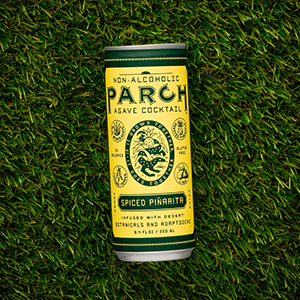
[00:17:47] Maxine Kozler: Well, if sugar bothers you, Jackie, or if you're worried about the sugar. Tionic has a new line of fresh pops that have no sugar, and this is probably the most tart so good quote soda that I've had, and it is really good, especially if you like things that are tart and sour. This one is ginger lemon. There's a couple other flavors as well, but this is a really, really quality new product. And over here I've got some parts, which is a non alcoholic agave cocktail. They've got a spiced Pina Rita and a prickly paloma. And basically. sort of designed to replicate tequila drinks and also have infused them with some botanicals and adaptogens just because I don't know why not, but really cool looking packaging and great taste. So definitely pretty solid non-alcoholic cocktail.
[00:18:49] Ray Latif: Nice. Going back to Sellotopia real quick. We sat down with the president of the company for an episode of our Elevator Talk series, which profiles early stage and disruptive brands across the food and beverage industry. It was a great discussion. I highly recommend folks who are interested in participating in a future episode to apply. You can do so going to BevNET.com or Nosh.com. There's a dropdown menu. on both sites, which will allow you to get to Elevator Talk, or you can just go to BevNET.com slash Elevator Talk. That's much easier than the whole dropdown menu. So forget about all that stuff.
[00:19:27] Maxine Kozler: Sometimes we even, you know, reach out to founders to say, Hey, you should maybe apply for Elevator Talk. We'd love to see you. And, uh, one of those founders that we reached out to is the founder of, uh, Homi, which, uh, is a nickname for grandma in Korean. And this is one of the most interesting beverages I've tasted since, uh, Berry Bissap, which has incredible flavor. Uh, one of the best tasting beverages, I think at the, uh, at the entire show that live that is. This one is cinnamon, ginger, jujube, and persimmon. Not Brad Avery cinnamony, very interesting flavor, but super tasty. Seven grams of sugar, not too sweet, but definitely sweet.
[00:20:10] Ray Latif: Really cool looking can there. That's the first thing I would notice. Segwaying to food for a second, the fine folks at Vermont Smoke & Cure recently launched a new line of bacon mini sticks. Okay, so...
[00:20:22] Maxine Kozler: Interesting.
[00:20:23] Ray Latif: Yes. Well, it's funny you say that, Jackie, for someone who doesn't eat meat. Maybe I just convinced you, or maybe Vermont Smoke & Cure just convinced Jackie to go back to the dark side, so to speak.
[00:20:33] Maxine Kozler: It's not that Jackie doesn't like bacon.
[00:20:34] Taste Radio: I know, bacon flavor is there for me.
[00:20:37] Maxine Kozler: I was going to say, Jackie doesn't not like bacon. She just doesn't eat bacon.
[00:20:41] Taste Radio: I can appreciate it.
[00:20:42] Ray Latif: Yes, you can just kind of like, hang out and look at the stick and be like, this is really cool to have. And I mean, they're intended to be pocket size. They're point five ounces per it's like a half a like a meat stick. You take them anywhere. And yeah, it's like having bacon in your pocket, which is pretty much like the greatest invention of all time. So really well done. Vermont Smoke cure. I should note that these aren't that bad for you either. People just think, oh, automatically bacon's bad for you. No, these have 110 calories per stick, six grams of protein. That's good for you. And only Three Stars as well. So good stuff.
[00:21:19] Maxine Kozler: How do we not know? How is the inventor of bacon not a household name? That's mind boggling. You'd think everyone would just be rushing to claim the invention of bacon. The inventor of bacon? Yeah. Is there a sole inventor? You said it was a great invention, and it made me think, was bacon invented? It had to be invented. Somebody had to take the perfect cut of meat and somehow figure out how to prepare it and make it into something that they called bacon. It had to happen. It happens with every product.
[00:21:52] Ray Latif: We'll look up the etymology of bacon. Maybe we'll get some, we'll have some clues.
[00:21:56] Taste Radio: Back to the Saxon era in the first millennium AD. Interesting. So it goes way back.
[00:22:04] Ray Latif: Amazing. The fact that we have these answers at our fingertips, literally.
[00:22:08] Maxine Kozler: I love vintage so much.
[00:22:11] Ray Latif: Well, the inventor of a brand called Ithaca Hummus, his name is Chris Kirby. We've featured him on the podcast in the past. We've also featured the founder of Grillo's Pickles.
[00:22:20] Live Summer: Oh, he's got the pickle hummus.
[00:22:22] Ray Latif: And I have in my hand Ithaca's Grillo's Pickles Hummus. Yes, this got sent directly to me. And yes, I asked for samples. And yes, the amazing people at Ithaca were very kind enough to send me some of these
[00:22:35] Taste Radio: Yeah, it was being passed at Nosh Live as a snack and I was like hunting them down. I wanted seconds, thirds, that's a really tasty hummus. As a huge dill fan, loved it.
[00:22:47] Ray Latif: I mean, they're really, really good. I mean, so the second ingredient in this product is pickles. The first is chickpeas. It's chickpeas, pickles, water, tahini, vinegar, sunflower, and or olive oil, salt, fresh garlic, dill, and grape leaves.
[00:23:02] Maxine Kozler: I like the change to Nosh Live that we, that we made where we had past hors d'oeuvres, like we had prepared foods as past hors d'oeuvres. It was so nice to have, you know, stuff like Ithaca just kind of show up while you were networking or Snow Days. Did you have the Snow Days pizza bites?
[00:23:16] Taste Radio: Oh, so good. I was eating a million of those. And also the Wholly Veggie plant-based.
[00:23:23] Maxine Kozler: The Wholly Veggie. So good.
[00:23:25] Taste Radio: So good. Yeah. You didn't even have to move. Everything just came to you.
[00:23:29] Maxine Kozler: Those tasted like cheese too. Speaking of things that taste like bacon, those were, I mean, you would have sworn those were cheese.
[00:23:36] Taste Radio: Yeah, just surrounded by comfort food. That was good for me.
[00:23:38] Ray Latif: It was great. Nice. Now all we need is Vermont Smoke and Cure to be passing around those mini bacon sticks and everyone will be elated. They can do that. All they have to do is come to Nosh Life. There you go. Also recently, actually today, I received a package that made me really happy. It's from a company called FOMO Baking Co. They make these bite-sized cookies that are allergen-free. They are gluten-free, egg-free, dairy-free, soy-free, nut-free. And there's actually another call-out. On a label that says flavor free, but the flavor free is actually crossed out because these are full of flavor. I have not tried these yet. I'm going to do so. I see a chocolate chip cookie. Oh man, they're really soft. They're fantastic.
[00:24:27] Taste Radio: Are they super chewy, squishy like?
[00:24:29] Ray Latif: Yeah, they're like. They feel like they were cooked or baked like 5 hours ago and are still fresh and. The chocolate chips are still gooey. It's really, I can't believe that this is dairy-free. That's really hard to believe. And gluten-free as well. We've talked about this in the podcast. If it says gluten-free, Better be one of the best tasting things you could eat because otherwise no one's going to want it. And this definitely fits the bill. FOMO Baking Co. Wow.
[00:25:01] Taste Radio: Reminds me of a Ruani, our Nosh Live Pitch Slam winner, a decadent brownie that had, you know, none of the allergens in it and was adaptogenic and people were tasting it and couldn't believe that it was, it was good for you and that it didn't have all the sugars and fillers that traditional sweets do. So shout out to Ruani.
[00:25:21] Ray Latif: Yeah, on my train back to Boston on Friday after the events, the dining car was a mess. It was like a line of people 20 deep. People were waiting literally an hour and a half to get a soda or a snack, a bag of chips. And so I was lucky because I had a Rwany brownie in my backpack. And that thing was the best possible thing I could have eaten on that trip. It was so darn good. So yeah, if you haven't had a chance to try Rewani, do so ASAP. Yeah. All right. One final note, as listeners and certainly Mike's Instagram followers know, we love our espresso lattes and cortados here at BevNET and Taste Radio. We're obviously blessed to have a La Marzocco machine at the Newton headquarters. I don't know why I said obviously, but anyway, the machine is a workhorse from 9 to 5. However, for folks like myself who are in the office less frequently than others, it's been challenging to produce a fine Italian coffee at home. But I think I've finally found a solution. Citus, which is a maker of premium consumer appliances, introduced a high-quality espresso maker that is designed to easily fit onto any countertop. While it's appropriately named the Citus Espresso Maker Space Saver, the machine is capable of making exceptional coffee beverages. It's made with a 15-bar pump for stable espresso extraction, a double-cup splitter, and, the key to any great espresso machine, a powerful steam wand. It's fair to say that I'm sold on it, And Vegan when I'm back in the office on a more regular basis, the Citus will come with me and fit perfectly on my desk.
[00:27:10] The Maxi: Do you want more repeat buyers on Amazon? Well, this free resource in collaboration with Straight Up Growth will help your brand turn first-time buyers into long-term subscribers. Download Winning the Repeat Purchase Game on Amazon now at Taste Radio slash SUG. That's Taste Radio slash S-U-G to start building retention-driven growth for your brand on Amazon. Scaling a beverage brand into major retail comes down to operational readiness. From packaging lead times to co-manufacturing strategy, the details can make or break a launch. In a new ebook in collaboration with Octopi and Asahi Beer USA, industry leaders share what they've learned in helping brands scale. Download it now at Taste Radio slash octopi.
[00:28:00] Ray Latif: Alright, it's time to get to our latest edition of The Maxi Minutes, our regular series featuring Maxine Kozler, the Co-Managing Director of L.A.-based investment firm LDR Ventures. In previous conversations, Maxi advised listeners on talking points that investors want to hear from entrepreneurs. In this discussion, she spoke about what not to say to an investor. Maxi also tackles the timely topic of supply chain challenges and how to address them with your funding partners. All right, we're back with Maxine Kozler for the fourth installment of The Maxi Minutes. Maxi, great to see you again.
[00:28:40] Live Summer: Always great to see you, Ray. So happy to be here.
[00:28:43] Ray Latif: Yeah, it is so great to be here. We're entering the wonderful summer months, and I couldn't be more excited. And I know you're quite busy and planning to make some trips during this season. So I just wanted to give us an update of what you've been up to.
[00:28:59] Live Summer: Absolutely. It's been an exciting spring for us. We've been looking at a lot of deals. We just helped host a huge event for female founders and female investors. And we made a lot of matchings and pairings there. We're seeing a lot of investment coming out of that. We ourselves have committed to two pretty large deals with brands that have really great potential and we're excited to launch them and see them actualize. So we'll be making some announcements over the summer around that. We definitely have our foot in the web three worlds, I will say that.
[00:29:34] Ray Latif: Oh, interesting. I know you can't share too many details right now, but that's a pretty big one as it is. So excited to hear those those announcements when they happen. For now, you know, I think one of the topics that often comes up is, you know, how do you pitch to an investor? And we've talked about that a number of times in our conversations. But another equally important topic is what not to say to an investor, what not to include in your pitch. And I'm sure you have some advice on that subject.
[00:30:02] Live Summer: Definitely, Ray. It's a really good topic. We've met with so many amazing founders since the beginning of the year, and so many are strong in so many ways. When push comes to shove, are we going to write the check? Do we want to go into a deal? It's really important that you ask the investors straight up, you know, what are they looking for? What kind of relationship do they want to have? I'm seeing a lot of this. The first one that's always funny is don't ever say to an investor, I can't wait to finish fundraising so I can go back to running my company. No investor ever wants to hear that because you're always going to be raising money, you're always going to have to be thinking strategically about your fundraising your financing, how you're going to work that out. We want to know that you know that's part a big part of the job as a founder, and whoever the senior team is. But a lot of it is the relationship, you know, asking angel investors, either they want to get really involved. That's why they're doing it. Or you might have a later stage fund where they're like, listen, we're going to fill out a scorecard once a quarter about you, and then we're going to have a partner's meeting. So I think it's really important for founders to get really clear what kind of investor it is and what kind of information they're going to want about the company, because what I'm hearing is, in some ways they're saying, hey write a check to us we won't don't worry we won't bother you. And then for other ones, they're like, not only do we want you to check, but we want you to make phone calls for us and we want you to be an advisor and this and that. So what the founder, I feel like, needs to assess first is what kind of investor it is and what kind of relationship are they looking for? Because I'm seeing some missteps there.
[00:31:49] Ray Latif: What are a couple just outrageous things that you've heard that have really, I guess, rubbed you the wrong way and would probably do the same to another investor?
[00:32:00] Live Summer: The number one thing that I say with a heavy sigh, because unfortunately we have been having this experience lately, not keeping your word. If you're going to get me the financials in three days, get them to me. If something came up that was urgent with your supply chain, let me know. Can I have two more extra days? People just not coming through, whether it's with data they promised you, following up. it's okay to like change a plan. And if I see like how well thought out it was and why, that's more impressive to me than the fact that you had to change something, but just literally not keeping your word about the relationship. If you need to give me something for me to do my due diligence or making promises, like, well, if you come into the deal, X, Y, and Z, and then you get towards the end and it's like, they change the deal on you. A big problem is just the founder burnout. They have to wear too many hats, they're doing too many things, which unfortunately it's a chicken and egg because they're so underfunded. They have to do too many things, but it's like, if you need to put stuff in that data room, put it in the data room. Don't start fundraising until it's there. They have all these conversations with investors all the time. They're just grinding out these conversations. And they might figure stuff out on the call, but they're not updating it in the data room. And then an analyst goes into the data room and then numbers don't reflect the conversation you just had with them.
[00:33:32] Ray Latif: It's funny you bring that up because I spoke with an investor earlier this year who had said during our conversation that when an entrepreneur says they're going to do something and they actually do that thing, then they're ready for investment. So it's very much about you know, walking the walk as much as you talk the talk.
[00:33:55] Live Summer: I completely agree. Whatever you're going to commit to doing, you've got to do it. And if it's too much, then you can't commit to it. Or if you're going to do a poor job of it, you know, you just can't do it.
[00:34:08] Ray Latif: Maxi, you mentioned supply chain, and it's something that's very top of mind for any entrepreneur, whether they're in the food or beverage industry or otherwise. And supply chain issues are real. And I think there's a lot of concern that some smaller brands, emerging brands are just not going to make it because of these pressures. That being said, they're still trying to raise money as they should. How do entrepreneurs or how should they communicate their supply chain issues, plans, planning contingencies to investors.
[00:34:43] Live Summer: This is an excellent question and so timely, and it's been timely for two years now. My great news is I've heard so many success stories, and I've heard so many great ways that founders have figured this out. Honestly, a lot of the ways the founders have been successful about this is they really rolled the dice. They took big bets. So one of the great things I've heard is people locked in contracts. very early on if they found a great person, whether it was the supply chain for the actual ingredient in your product. And we do a lot of functional food and beverage. So there's a lot of new and exciting products, but they're not standard. There's one or two people in the world who might even have it. But securing those relationships and making big commitments. So if anyone's going to get told at the end of the day, hey, we just ran out, we can't fulfill your order. It's not the person who 18 months ago cut a deal with you and locked it in. So it's kind of a domino effect. If you have the money, you properly fundraise and project your costs, and then you can make those bets and lock in. And that goes all the way up to your co-packer. Because the same thing is going to happen with your co-packer, people can't hire help. So if your co-packer can't fulfill for you because they can't get enough help in their warehouse, if they have an existing client with a long-term contract, you know, in a set relationship, you're not the one who's going to get bumped. if they can't fulfill orders. So it's the founders who've been willing to take the bets and make the big buys of inventory well in advance and lock in those deals. And I haven't heard of anyone who's gone wrong doing that. Nobody's got stuck with anything because even if for some reason like you have too much of it too fast before you can use it, someone's going to take it off your hands so quickly. And probably your co-pack or your supplier is going to say to you, by the way, if you don't need all of this, we've got other people to take it. So that's the number one thing that I've seen is people who just locked in deals and overbought for their supply chain are the ones who are really winning. And the same, we've talked about the wins are more expensive. than the losses even. That's come up recently, like one founder that I adore just got a huge contract. And I was like, okay, my question to you is, can you fulfill it? And they said, absolutely. We rolled the dice. We made this huge buy a year ago. And yeah, we could totally fulfill it.
[00:37:19] Ray Latif: Well, that's really good to hear. And not that you're specifically advising that people do this, but this is something that you would like to hear, that you are happy to hear as an investor, so that if someone came up to you today and said, hey, I just locked in a contract for my key ingredient into 2024, you'd be like, hey, good job.
[00:37:40] Live Summer: Yeah, so these light me up because I'm so excited that not only did they figure it out, they clearly thought ahead because they already were having problems a year ago, a year and a half ago, and that they made really smart decisions in strategic planning and forecasting. And they're envisioning a big company for many, many years. So they're playing the long game and they're making plans for the long game. And I love to hear that. I know we've talked about it before that I am definitely considered a patient investor. You don't have to show me quick wins to get me excited about your company. In fact, it's the opposite. I hear those and I'm like, well, that's nice for now, but I'm looking at the long term. So the founders I hear really planning strategically for the next 18 to three year, 18 months to Three Stars. So, like those who said I better plan for the next 18 months I better lock in my supply chain now that lights me up how smart it was to do that, you know, we've had situations where people are running out and they can't get it, they can't get there, like the root ingredient. And, you know, we've said to them. Are you thinking of changing your formulation? Are you thinking of changing your product line? It keeps happening and there's no end in sight and not asking to lessen a product at all. But this is a realistic issue that's not going to get resolved. You know, so as a founder, I want to see plan B, C and D.
[00:39:13] Ray Latif: Yeah, and at the end of the day, it's, you know, and we've talked about this before, the investor wants to see a return, not necessarily tomorrow, as you mentioned, but at some point. And if you can't make money, well, the investor is not going to get their return. It's pretty straightforward.
[00:39:27] Live Summer: If you've got nothing to sell, then nobody's going to do anything.
[00:39:31] Ray Latif: There you go. Maxie, as always, I'm ending our conversation with a big smile on my face because you're always offering such great advice and insights to our audience. Thank you so much once again. Let's go five for five next month. I'd really like that.
[00:39:46] Live Summer: I would love that, Ray. This is such an amazing experience and you provide such an incredible platform for founders and for investors. So it's just a joy to be part of it.
[00:39:56] Ray Latif: Thank you very much for saying that, and I'll see you soon.
[00:40:00] Live Summer: All right, see you soon.
[00:40:04] Ray Latif: That brings us to the end of this episode of Taste Radio. Thank you so much for listening. And thanks to our guest, Maxine Kozler. As always, for questions, comments, ideas for future podcasts, please send us an email to ask at Taste Radio. On behalf of the entire Taste Radio team, thank you for listening, and we'll talk to you next time.