[00:00:10] Ray Latif: Hello, friends. I'm Ray Latif, and you're listening to the number one podcast for anyone building a business in food or beverage, Taste Radio. This episode features an interview with non-alcoholic spirit trailblazer, innovator, and entrepreneur, Ben Branson. Ben Branson is not the kind of person you'd find at a cocktail party. In fact, he loathes socializing. And yet, he's deeply invested in its future. Ben is best known as the founder of Seedlip, the pioneering non-alcoholic spirit brand that was at the forefront of a now burgeoning category for zero-proof beverages. In 2019, Ben sold a majority stake of Seedlip to beverage alcohol conglomerate Diageo, which at the time described the brand as, quote, a global drinks giant of the future. While Ben is still a shareholder in Seedlip and continues to operate as part of its team, he's set his sights on the next stage of development for non-alcoholic beverages and cocktails via a new venture called Pollen Projects. The UK-based company introduced two brands this year—Season, which markets premium cocktail bitters designed to be, quote, the salt and pepper for drinks, and Silva, an innovative take on dark, non-alcoholic spirits. Both brands are at the heart of Ben's mission to shape, quote, the second wave of moderation, helping people to drink and, in turn, socialize better. In the following interview, I spoke with Ben about his perspective on an evolving market for non-alcoholic beverages and his roles as both godfather and innovator, why he's not trying to supplant legacy spirits, and why he's betting big on an unusual sourcing and production model. Hey folks, it's Ray with Taste Radio. Right now I'm honored to be sitting down with Ben Branson of Pollen Projects. Ben, great to see you. Great to see you too, Ray. And in person, IRL, as the kids say. The first time we had a conversation was, I want to say 2018. So this was, yeah, six years later. You were in the midst of building Seedlip back then.
[00:02:28] Ben Branson: I was in, I remember it clearly. I was in a hotel room. The walls were brown. And I had loads of mini bottles of Seedlip everywhere, bottles of tonic. All the kit was on some trip, probably. New York, LA, Toronto, tired. Yeah. Well, how are you feeling now? Do you know what? I've been in non-alc now since 2013. So I'm coming up on like 11 years. I'm so excited about this space. I feel like I'm just getting started. I feel like it's just getting started and
[00:03:13] Ray Latif: Yeah, it's all to play for. You're way ahead of your time. I'm sure there were some trying moments in the early days and now it's like everyone wants a piece of non-elk and people are so excited and interested in this space and in the innovations that you're bringing to this space. But, you know, I think when I talk to entrepreneurs who have a product brand concept that's ahead of its time, a lot of times it doesn't work out.
[00:03:40] Ben Branson: I mean, look, nine out of 10 fail, right? Food and drink wise. So you've got to be deluded to do this. And I hated the first six months of Seedlip. I absolutely hated it and I wanted to, and this was against like all the success and all the demand and coupled with the, you know, people that had told me it would never sell a bottle and that it was a ridiculous idea and what's the point and that I shouldn't do it. But I, you know, I was wanting to close Seedlip like every week in the first six months. I now, with Pollen Projects, I'm probably once a month, which is okay. I'm not closing the business. Obviously, we're just getting started. Yeah, this is hard. This is hard. Doing drinks, brands, and startups in a totally new space is really, can I swear? Of course. Is really fucking hard.
[00:04:41] Ray Latif: Yeah. Everyone always asks if they can swear in the podcast. I like swearing. There's one thing that we have to do when someone does curse, which is there's a check marks on the Apple Podcasts app, which just says, is there any profanity or vulgar content in this episode? And we'll just check that off. Fine. I don't think it's going to offend anyone. No, I think it's okay. No. It is a tough business, the beverage business in particular, but their rewards are great. And I assume, never been an entrepreneur, but I assume there's some happiness along the way. Caveat to that, I did an interview with a founder named Peter Rahal, quite successful entrepreneur, founder or co-founder of a brand called RX Bar, sold for $600 million to Kellogg. And I had asked him at one point, you know, happiness is part of the journey, right? You know, happiness or chasing happiness is part of the journey. That's why you become an entrepreneur is. to be your own boss, to enjoy the experience. He's like, no, it's irrelevant. It's something where if you're going to be serious about building a brand, you have to know that it's going to be a struggle. It's going to be really hard and there's going to be less happy moments than otherwise. You come across as quite a jolly person. I mean, are you happy? Are you enjoying this?
[00:05:55] Ben Branson: I am, today, this morning, coming in from London, I am really enjoying this. I am, my tail's up. You know, we've got some delicious products and liquids that I'm super proud of. And we're right at the beginning. And yeah, my tail's up, I guess. And so today, today I'm excited. Tuesday, I was having a dreadful day. And that is like it's literally a game of snakes and ladders. And I'm definitely not chasing happiness and chasing reward. I'm chasing progress and I'm chasing action and curiosity and drive to not let my ideas down. and try and do my best to like uphold the standards of this space and this movement, because I just want to make things better. So if I make, if I try and make great things to try and make things better, that's as simple as whether that was Seedlip, whether that's Season, Silver, any of the brands that we're creating. I'm just trying to do the right thing and make delicious, high quality things.
[00:07:17] Ray Latif: Do you feel pressure? Do you put pressure on yourself because of the faith and confidence that people have in you to lead this category, to lead the future of this space? People do look at you, and we talked about this before we hopped on the mics, as sort of being a godfather of this space, maybe the godfather of the non-alcoholic spirit space. And I imagine that comes with a bit of heavy shoulders sometimes.
[00:07:42] Ben Branson: Yeah. I don't feel any external pressure. So I don't, I don't, I'm not thinking, oh, everyone's looking to me or, oh, I'm not thinking like that at all. I put a lot of pressure on myself because I think that's helpful. And that's how I, I work well under pressure. I'm calm in a crisis. And so I take the responsibility of, you know, seedlet launched end of 2015. That's, You know, coming up on 10 years, this category has exploded. It's still very early days. We still need there to be high quality options. And we need to not fuck this up as a category and community. And we need to not let customers and consumers down with poor first experiences. But I am a calculated risk taker. And so I want to challenge myself and I want to challenge tradition and stereotype and cliche push the boundaries and literally there are 47,000 edible plants on this planet. There are 73,000 species of trees that I am proving are absolutely jam-packed full of the most extraordinary flavor that people have never tasted or extracted or used before in drinks. So I put that pressure on myself because that is a good pressure, I think, and a positive pressure. And look, I've got three kids. I've got three young girls and an amazing wife. And I just want them to be proud of what I'm doing.
[00:09:35] Ray Latif: Ben, I get the sense that you feel a bit more liberated than you did when you were building Seedlip and I think the pressures of having a strategic partner, even though you're still involved with Diageo. Does it allow you to be a bit more of a visionary?
[00:09:48] Ben Branson: I think that the biggest liberation comes from, I've proven I can do this. I've proven to myself that I can take an idea to a shelf build a business and exit that business. And that gives me a lot of confidence, I guess, in a hopefully like steely, galvanized, grounded, I can do this way when my head tells me otherwise. So that is very liberating because I truly 100% believe that I can make really extraordinary, delicious non-alcoholic liquids. And the best thing is I've got a team of, a small team of experts with, we have the most experienced team in the world in non-alc. And no one else can say that. And that's also very liberating, because I had no idea what I was doing with Seedlit, really. Like, no one did. It was really making it up. And, you know, best laid plans and absolute rigorous kind of strategic thought and care and attention to every single little detail to build it in the right way and now I know a little bit more and that means I'm not doing everything for the first time because when we do things for the first time it's scary, it's tiring, it's the unknowns, it's uncomfortable, And everyone knows when something becomes a habit or you learn something, guess what? You know, it's much easier. And I'm not saying that season and silver and Pollen Projects is easy at all. It's still really, really hard. But at least I know who to talk to. At least people respond to my emails, pick up the phone. Our access and network is is pretty extraordinary. And so We've launched Season in London from May this year. And it's in 150 of the best accounts straight in. And we've taken it to New York. And it's straight into 50 top accounts in New York with lots of great interest in Chicago and Austin and LA. And we launch in Hong Kong next week, and Singapore the month after. And this is because of relationships. This is because we want to capitalize on the first mover advantage. And we have the access, and we can set things up faster and more efficiently, definitely, than we did at Seedlib. So that's a really long answer.
[00:12:51] Ray Latif: It's a great answer. And your name, I'm sure, and the seedlip brand helps get you in the door. I think what keeps you there for sure is the quality of the product. I just want to back up for a second because you talked about upholding the standards of this category. The category has a great foundation. There's some really good products. Um, so I think some products that people could not have expected. They're like, wow, this is, I didn't, didn't know I could get this kind of flavor. I didn't know I could get this kind of experience with non elk, but you also mentioned that, or I guess intimated that there's some not so great products out there and I've definitely tasted my share of both. What makes for a great non-alcoholic spirit or cocktail component? What makes for a great non-alcoholic beverage, period? And what do folks in this space have to pay attention to as they are building their brands and innovating?
[00:13:44] Ben Branson: So I think first thing to say is there is a difference and a distinction and both are needed to build this category between trademarks. So that's an alcohol brand that has a non-alcoholic version. And that could be across beer, wine, spirits. They are important. They have and are legitimizing the category. They have incredible reach, big budgets, big teams. They're often from big corporates and they have a role. And they're a brilliant entry point, I think, for the consumer who's maybe not sure about the space or looking for, you know, maybe they want to start with a non-alcoholic beer and, you know, it's Heineken or Guinness or Stella or something that they kind of know and recognize. And then what we see is people have that great first experience and then they get curious. What else is there? What else can I try? Hmm, this is actually pretty good. Maybe I could try something else. The trademarks play an important role. Then you've got the majority of non-alcoholic brands that are new. They are new brands. There's over 1,000 of them. 85% of them have launched in the last three years. So they are very new. Most of them don't have significant funding. Most of them don't have significant expertise within those teams. a lot of them are born out of a real passion for this space and personal experience. And that's great. That's really, really strong. But I think that is that can play out in terms of not understanding what makes a great liquid, not having the capital or expertise to make a great liquid. And being a startup and small in a emerging space, and I know this from seedlip experience, You're not going to hit MOQs. You're not going to be able to get the supplies that you want. And you probably don't have the expertise to make it yourself. So there's a bit of a catch 22 there and a bit of a crunch. I think the best non-alcoholic brands do a few things that are actually, I think, increasingly basics within the non-alcoholic space really fucking brilliantly. And that's A, They have a distinct brand that has a, I want to just say like a good name and not a, not an infantilizing name, not a name that screams 0.0 or sober or T total or anything like that. So a kind of positive. name, they have a story, there is substance behind what they're doing, there are founders, there's a personal story there. I think they're really good kind of hallmarks rather than let's make a quick buck in terms of the opposite of that. Packaging, super important, whether that's glass, can, etc. But having a great brand with great design with a well thought through story and positioning, I think is important. Liquid wise, It's got to be grown up, it's got to be adult, it's got to be safe. And I say that, that might sound ridiculous for a non-alcoholic product, but technically stable and safe and have been tested and so properly done. I think it's got to have some familiarity to the consumer. There's got to be something that tells them what it is, what it might taste like, when they might drink it. And you can do that in lots of different ways without having to imitate directly alcohol. I think the brands that are going to suffer in this category are the brands that are trying to directly replicate alcohol. The trademarks can do that better than anybody can starting a new brand. And so I don't think the consumer is going to need that out-and-out replica going forwards. I think they can have the trademarks if they want something that's literally like a replica of, or they can get involved in this whole new territory of great new to world non-alcoholic brands. So liquid's got to be good. And most people, the studies will show, people are coming into non-alc. usually driven by health and wellness moderation, what keeps them and what attracts them then is taste. It's got to taste great. They're not drinking this because they need this. This is not water, it's not hydration, it's not a protein shake, they're drinking it because it's part of a social occasion and so it's got to taste great. Absolute fundamental and when we as a category are not 100% tasting great with every brand all of the time, and I know that's unrealistic in any category, right? that ultimately gives people, the risk is they have a poor first experience and then they reject the category. So yeah, liquid's got to be amazing. And now there is a supply chain, there are suppliers, there is a category, there are buyers, there is a whole ecosystem for this space. that means there are people to ask, there are people to, there are suppliers that can provide guidance, bottles, caps, extracts, liquids, production, etc. Like it is there now and it definitely wasn't 10 years ago and actually it wasn't 5 years ago. So yeah, and then the last one I would say, so we've got brand, liquid, like we really are talking about the basics, serve. So again, back to that familiarity piece, it's rinsing and repeating your serve. And Seedlip, we literally were only about a few things. We're there to answer the kind of what do you drink when you're not drinking alcohol dilemma and the service of Seedlip and Tonic. That's it. Everything we did always ended up in a Seedlip and Tonic. No matter how we dressed up activations and partnerships and all of our marketing, it was all coming back to And sticking to that kind of simplicity is something that we're trying to do with Season. Silver is even simpler because it's to be sipped neat and not getting carried away with lots of cocktails. So yeah, making sure that those basics are done exquisitely. I think is, yeah, is really important for this space.
[00:20:59] Ray Latif: You have in front of you a bottle of Silva that you were so kind to bring and I definitely want to get into it. And the point of reference for Silva is brown spirits in general. There's one other thing I think about having a great brand or at least a great non-alcoholic brand that has helped the category, I believe, which is the social part, the social occasion, giving people the ability to feel comfortable and not out of place when everyone else is drinking. We chatted about socialization and I think for you it's personally less important. I am really anti-social. Which is interesting, right? Because if you want to have a Seedlip and tonic or a Silva, I think it would be fine to have that at home as a sort of after-day cocktail. just to unwind and have the experience. They're probably selling more, Diageo's probably selling a lot more Seedlip in bars and restaurants. In the US. In the US. Yes. For that social experience. But how much does that play into what you're currently doing now and the future of this space?
[00:22:03] Ben Branson: Yeah, so I'm, I don't know, I've said this to you a few times, Ray, like, I'm really only trying to keep one thing in mind. And that's the future of socializing. Like we make drinks and they are props in social occasions. And that's it. They are props, right? They're not the occasion. And so as, you know, I was reading an article last week that chefs, and we're talking like the world over, chefs don't want to work in restaurants anymore. They don't want to run restaurants. They don't want to start restaurants. And why is that? It's partly stress. It's partly margins, it's partly workforce and lack of, it's partly saturation and competition. I was really sad to read that, but I get it. And we've got 80 pubs closing a month in the UK. Wow. Yeah. And the way that we socialize, we've got 40,000 coffee shops now in the UK. The way that we socialize, has changed. I mean, the way that we drink now has changed forever. But the way that we socialize is fast changing towards being so different to how it was 10, 15 years ago. And that is like a big wholesale difference in terms of Are we more at home? Are we going out for a treat? What are we doing? Who with? Are we, you know, younger generation socializing more online? You know, you've got gyms now that are not gyms, they're like health centers. You know, it's not just about getting on a treadmill and being strong. It's about, you know, biohacking and looking after your body. Like there are these... Loads of these undercurrents. And so this is what I try and think about in terms of channel strategy. Like, what kind of customers should we be selling Season and Silver to? Where are people going to drink this? Because they're not just going to a bar and a nightclub anymore. And they're in the UK. They're not just going down the pub. There's so many other things we can do with our time now. that I think that, yeah, that is the bit that I'm constantly trying to absorb and soak up and digest and process. Yeah, and I don't know the answers, but that's what I keep in mind, because how we socialize is therefore then how relevant that drink is for that occasion. We're not going out to drink a drink. We're going out to have a good time. So that's why we socialize to, you know, I mean, I say this, I really don't socialize Ray. So I was, I was asked yesterday, what are my hosting tips for Christmas? And I was like, I actually, I'm really not the best person to answer that because I don't want to host anyone. I'm not hosting a dinner party. I don't think I've ever had people over to and made, you know, sea lip cocktails. I've never done that. So I don't know what the answer to best hosting is.
[00:25:35] Ray Latif: I don't know you too well, Ben. talk to you a few times and I've done my research on you, I don't think I'd ever ask you that question. It just doesn't seem like a question that you have a good answer for.
[00:25:49] Ben Branson: No, but the irony is that I am, I'm really unsocial and I like being in the countryside and Yeah, I'm absolutely fascinated by human behavior, socializing, human psychology. Yeah. I mean, I'm probably saying the absolute worst thing right now that you could imagine someone who has non-out businesses saying. But I mean, I don't go out a lot, right? I don't go to lots of cocktail bars. I don't drink lots of non-alcoholic drinks at home. I don't really associate with socializing occasions, which is why I use more season in my food than in my drinks, because I do love cooking. And by season, you're talking about your bitters.
[00:26:43] Ray Latif: Yeah.
[00:26:47] Ben Branson: I use Season Dark in baking and Season Light has been amazing to use over the summer, fish marinades and all the rest of it. Silver is the one that has most recently piqued my interest in terms of occasion, because I've, you know, I don't drink alcohol. I've never had that, that sipping, slow down moment. I've never had, I have it, but I don't have a drink for it. And so I'm quite, I'm quite attracted to that idea. That's quite a solitary idea, by the way, but yeah, I'm quite attracted to that, that moment of like my, my life's obviously is, you know, as everyone's is, it's busy and it's fast. Those moments to slow down are, you really have to take them. And so, yeah, Silver's definitely intriguing me just personally from a, hmm, that could be a moment. That could be a moment at home to sit with my wife and the kids are in bed and to sip something and, yeah, and catch up rather than the kids being in bed and my wife and I catching up, but without a drink.
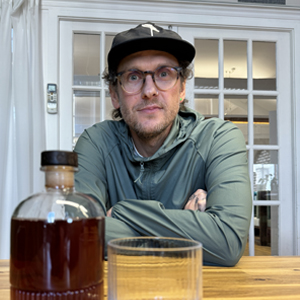
[00:28:03] Ray Latif: Well, it feels like an experience that people would have as they get a bit older. I mean, people aren't. in a leather chair in the English, I'm making, I'm creating a scene here, you know, in the English countryside. Hey, I'm not that old. In a warm home. No, no, no. But this is, maybe this is my dream. I'm just projecting, you know, in a warm home and a leather chair, maybe there's a fireplace and you're like, you have a nice glass of Silva and you're sipping it. And you're like, oh honey, you know, would you like some as well? And I mean, maybe she brings you a piece of cake or, you know, anyway, I really am projecting now, but I can see how, this is the kind of mature, thoughtful beverage that isn't necessarily for a social occasion, isn't necessarily something you're going to go to, you know, the pub and watch a football match. And, you know, it's a much more nuanced and elegant, sophisticated experience that I would expect you would have with this beverage. So that being said, let's get into it because my mouth has been watering the whole time. This is a beautiful, dark spirit. Well, I'll post an image of this in the show notes. And I'm going to, while I'm sipping on this, ask Ben to talk about the origins of Silva and how long he's been working on it. But before we do that, let's have a proper toast here. Cheers. Cheers. Thank you so much. See now that, oh, that is fantastic. This is something where- Do you get that warmth on your chest? But it's not cinnamon, it's not capsaicin. There's no chili. There's no chili. There's no vanilla. Which drives me crazy. I mean, no offense to certain entrepreneurs and I think everyone's doing their best, but, and this is not today, this is maybe four or five years ago. Someone gave me something like, oh yeah, it's non-alcohol whiskey. And I'm like, oh. I just drank a piece of candy, you know, it wasn't whiskey at all. This is an outstanding analogue, a point of reference to Brown Spirits for sure.
[00:30:09] Ben Branson: Thank you, thank you. Yeah, there's no chili, there's no caramel, there's no vanilla.
[00:30:14] Ray Latif: And you know the nose too, not to interrupt you, the nose takes me to a place where I think there's alcohol in here.
[00:30:21] Ben Branson: Yeah, I mean, you get all the like red berries and like chocolate cake and stone fruit. There's the cough. And yet you get this. Yeah, you get that kind of fume-y, ethanol-y.
[00:30:37] Ray Latif: It smells like booze. How'd you do that?
[00:30:42] Ben Branson: I mean, it's incredible. The amazing thing about this is, you know, this is non-alcoholic, right? But I don't know whether it's, you know, we've got nice glasses and it's small, like, dram in the bottle. It's also 10.15 in the morning. It's 10.15 in the morning. It's not necessarily part of the experience of drinking. But I, like, you look a bit happier. I'm moving around a bit more.
[00:31:05] Ray Latif: I don't know.
[00:31:07] Ben Branson: We didn't want to put chili in there. It's the warmth of alcohol. rather than the burn of alcohol is what we're after. And I like that distinction you made. Yeah, because I think the glow, as I kind of call it, and that that sort of that warmth on your chest and coming up behind your eyes, sort of back of your neck and down your arms, that that I think is the nice part of it rather than Capsicum stays in your mouth. It doesn't travel anywhere else. And what silver does is it builds, right? So the first sip should be great. You should relax, and then you can go back, and it keeps building. But this has been really hard. It's really hard for, which is why we're, we're doing it ourselves. It's why we've got a little distillery and a maturation lab, you know, at my house. And we've developed a process that doesn't use barrels. Well, actually it does use barrels, but we're not putting liquid in barrels. So we've literally kind of taken and broken down the world of brown spirits and what makes them so amazing. and those familiar codes, which are, well, they're dark liquids. That's really helpful for the consumer, right? To kind of go, oh, it looks like that. It might be that kind of liquid. Distillation. Yep, we got that. But we're doing vacuum distillation, not copper pot, traditional whiskey or kind of rum distillation. Grain. Yep, we've got grain. We use English rye for Silver's first release. Wood. Yep, but we don't have to use only one wood, which most dark alcoholic spirits have to use, which is oak, American oak, white oak. We can use any wood that's safe. And we use four woods, a blend of four woods in silver padauk. And that's padauk, the wood, which is this insane, amazing West African red, spicy, kind of paprika-y bark that smells so amazing. And then we use wood from our forests, so red oak, which is beautiful, grows two meters a year, very fast growing, smells like kind of butterscotch and popcorn when we roast it, it's amazing. And then ex-Buffalo Trace, Nook Neen, Organic Whiskey Distillery, Single Malt in Scotland, one of their casks that can't be used to age whiskey anymore. We break that cask down and we char the staves again chip it up and we use that, which brings loads of like toasted coconut and lots of esters, tannins. We can caramelize some of the sugars within the wood, really cool. And then olive wood. So from Italy, from olive trees, smells like kind of fresh laundry and cotton and silk and like olive oil, just beautiful. And that's what's bringing the color. That's what's bringing the character and the depth and the flavor. And who knew you could get these kind of chocolate red berry kind of stewed plum pudding-y notes from wood. But we've got, this is small batch. It's made to order. It's release, four to five releases a year. all of the conditions I believe in place to make the best possible dark non-alcoholic liquids. And so the way to scale is not build a bigger factory. We're going to open a lab in New York. We're going to open a lab in Kyoto in Japan and use local materials with a global brand. But being able to access American cereals and American tree species, I mean, what a yeah, what a joy and not having to ship stuff around. This brings you happiness. I can tell. Yeah. Yeah. Um, I feel like I'm like, I'm in my element with season going and talking to chefs, right. And I'm getting to work with, you know, heroes and amazing chefs. And I'm, I'm in my element with silver because I'm in the countryside. I'm working with Jack. Who's our kind of lead maker of silver. We are literally walking in the woods and spotting trees and smelling wood. And we're taking things to extremes. We're getting in planks and lumber of padauk, and we're splitting that down on an electric hydraulic splitter. And then we are taking that split padauk up to the woods. And we are barbecuing it on silver birch coals, literally with tongs, turning these pieces of padauk. And then we're taking it back from the woods and putting it into our little electric chipper. And we're chipping it. And then we're adding those padauk chips to our olive wood chips, to our whiskey cast chips, to our red oak chips. And then adding that to our rye distillate. So we're distilling our rye, adding that, putting it in a keg. filling it with oxygen, putting it under pressure, and then exposing it to a lot of ultrasound and sonic waves that extract all of the organic compounds, the tannins, the flavor, the color, the character from the wood. And then we are filtering it, and we're bottling it. Yeah, this ticks so many selfish, personal excitement boxes. And if I didn't have all these other projects on, I would be submitting a proposal to do a PhD in this, in wood, in the flavor of wood. If anybody wants to come and do a PhD on the flavor of wood, I will be A, incredibly grateful and B, incredibly jealous.
[00:37:54] Ray Latif: Two things. Folks who listen to this podcast know that I'm a fan of Noma and I'm a fan of Empirical Spirits. And there's a lot of similarities between what you're talking about in those two businesses, forging complex, sophisticated flavor creation, non-traditional ways of creating food and beverage. I think Both those have amazing followings. I think both of those businesses can sometimes be accused of not having the best business strategy or business fundamentals. And I'm not saying that, but I think these are things that have been out there. And an investor who might be listening to this podcast would say, well, you know what? Silver sounds amazing. I would love to have a bottle of that in my home. I just can't understand how they're going to scale this type of business. But as you and I have chatted, I think there is a brilliant business strategy here that's really based in two things, luxury and a subscription model. Talk about that strategy and where you drew inspiration from it, where you see it being successful in other industries and how you're trying to kind of replicate that model.
[00:39:14] Ben Branson: Yeah, so the business moral piece, and I'm talking about any of the projects, Seedlip, Season, Silver, anything else we do in the future, is something I take really seriously. Because it's, A, fascinating, B, I'm not interested in doing things that aren't commercially viable. Because then the project will stop, and so I won't get to keep doing it. And so that doesn't serve me. I'm all about kind of, slightly selfishly feeding and nourishing my own brain and curiosity and getting to see what 73,000 tree species taste like, but making it a win for customers and consumers because I've made a good product, it sells, and yeah, I am selling it for more than I'm making it. So it's viable. That is what a business is. That is what a business is. And so with Silver, having, I don't know, absorbed, and by the way, thank you for, you know, Noma and Empirical are two of my, you know, Lars and Rene are like two of my absolute heroes. And so, I very unashamedly am inspired to steal lots of things from them in terms of their outlook and just feeling like they're my kind of people and just absolutely loving what they're doing. Silva's model is born out of a couple of things. It's number one, born out of how do you make the best dark non-alcoholic liquids possible ever? And that means A few things, it means, well, they're probably going to be quite expensive liquids to make. It means that there aren't loads of suppliers to outsource it to, because no one's done it. It means the equipment may be quite small to begin with, and there's a lot of testing needed. if it needs to sell at a high price because it's made properly and it's expensive to make and it's small batch that takes you to that kind of luxury sort of direct fashion drops releases luxury dark spirits model of yeah of limited release and so that sort of informs the commercial strategy. In time, could we have a consistent skew in North America? Sure. Sure, sure. But in time, that's not the goal. That's not the how quick can we get to that. Because no one knows how to make these. These are difficult to make. And so we have to start small. So we're sort of forced to start that way, which I think is the right way. And I do believe that, as I just didn't want to make any sacrifice or compromises on the quality of the liquid. We can worry about that later. I wanted to make the best possible dark non-alcoholic liquid and sell it for less than I make it. Sorry, sell it for more than I make it. Oh my God, I've been drinking too much silver. Definitely sell it for more than I make it. And then the other piece is, Okay, so you've got this distillery maturation lab model. It's small footprint because we're not doing the bottling and we're making concentrates that we then dilute to bottling strength at the bottler. Okay, so you can have these kind of modular units and rather than making that all bigger in the UK, and importing American wood or importing American grain to make like, hey, here's a US version. Why wouldn't we go and do that in the market and have the proximity to the raw materials, the grain and the wood, have the expertise and local know-how of people who are from that market, be able to say to a US consumer, This is made using a heritage rye from Connecticut or whatever. And this is made using red cedar and American oak within America. Like it's this global local idea that we want to do. And so all the equipment exists. We've not built any of our own equipment. We've appropriated equipment from other industries. So that's there readily available. And so, yeah, we plan to have four or five labs over the next three years in different markets around the world. And therefore, you might have four releases coming from the UK market, four releases coming from the US, four releases coming out of Kyoto. So actually, from a product development perspective and a celebration of wood, extraordinary, but not all just in the same market. But then you can do lots of fun things with allocations from one lab to another. So we could take an American silver and sell it here in the UK. That style. Yeah, then that becomes a lot of fun, I think. And we ultimately get to explore more woods with more local relevance. I mean, the experts think there's 9000 tree species that haven't even been discovered yet. So yeah, that's the business model. It's horizontal scale, not vertical scale, and a global local brand, truly. Yeah, in that kind of direct allocation drop limited release model.
[00:45:10] Ray Latif: You know, I asked you about similar businesses or industries, and the one that immediately came to mind was wine. You know, there are limitations on certain wines because of vintages, you know, certain plots of land, microclimates can all affect how one bottle tastes versus another, and they're very distinct. And I think that is, I would say, a fair comparison to what you're doing right now. And there are quite, there are wine clubs and subscription models, and you know, some of them do quite well. I do think that there's a lot of opportunity. I think the question of why wouldn't we open a lab in one place or why wouldn't we open a lab here is really probably about money more than anything else. And that's, I think, the funding aspect of what you're doing is something I'm curious about is, you know, taking money can sometimes mean can influence how your business operates. How are you looking at taking funding at this point? How are you looking at perhaps strategic opportunities or opportunities to align with strategics like you did with Diageo in 2019?
[00:46:13] Ben Branson: Yeah, so first thing today, I'm still a shareholder with Seedlip. I'm still, as far as I know, the founder of that business.
[00:46:22] Ray Latif: Until the next press release comes out.
[00:46:25] Ben Branson: I am called a living founder within the ITO, which is funny. But when you think about Arthur Guinness and Charles Tancoury and, you know, they're not alive. So yeah, I'm still involved there, which is great. And I don't carry the weight of the whole C-Lit business on my shoulders, which is also great. Pollen Projects, we raised some money in January of this year. A very small cap table, a family office, a fund, a couple of angels, and an actor, Kit Harington. And we're just right in the middle on X-rays now, which is, yeah, it's kind of exciting because there's some really great interest. And I think what's most interesting is Seedlit was a big, you know, M&A story, 2019. And then there's been nothing. And there was nothing before it. And there was nothing until the last four weeks. And suddenly Mashcan got acquired. French Bloom took money from LVMH. Diageo bought Ritual and Pernod took a stake in Lewis Hamilton's Almarve.
[00:47:39] Ray Latif: Yeah, it has come fast and furious, hasn't it? That's interesting.
[00:47:42] Ben Branson: That against the headlines that have also come out that US spirits are in decline and the French government are paying wine growers hundreds of millions of euros because they've got to destroy their wine, their grapes from that harvest, because wine's in decline, and beer's in decline, and this contraction is happening, is now, I've never seen it be taken more seriously as a category. And so that, when you're starting to raise money, is some really good proof points of, no, no, this is getting serious. Yeah, this is getting really serious, which is, yeah, it's cool. So yeah, we're not taking money from big drinks companies. That's not the goal at the moment. We have a very, you know, we've got a portfolio of two brands. We have another one we're launching next year. and they're obviously all different and we're right at the beginning. So we want to just focus on proving those out and driving performance and yeah, rather than starting to launch and then immediately entertain potential M&A stuff.
[00:49:08] Ray Latif: Before he hopped on the mics, I told Ben, you know, I think we'll be talking for half an hour, maybe 35 minutes, not much more than that. I'm looking at my recorder. We've been chatting for 35, I'm sorry, 53 minutes. And I feel like it's flown by. I'm like, where has the time gone? I feel like we could talk for another hour, maybe two, and it would be wonderful While Ben're sipping on the Silva. And man, Ben, this has been such a great conversation. You know, I always say that at the end of all of my interviews, because I really do enjoy all of the interviews that I am a part of. The flow of this conversation has been wonderful, and I really appreciate you just being transparent and clear and passionate about what you're doing, because you do have an important role in this business, in this space, and I think it's in good hands, I would say. So thank you so much for what you're doing. Thank you, Ray. Appreciate it. That brings us to the end of this episode of Taste Radio. Thank you so much for listening. Taste Radio is a production of BevNET.com Incorporated. Our audio engineer for Taste Radio is Joe Cracci. Our technical director is Joshua Pratt, and our video editor is Ryan Galang. Our social marketing manager is Amanda Smerlinski, and our designer is Amanda Huang. Just a reminder, if you like what you hear on Taste Radio, please share the podcast with friends and colleagues. And of course, we would love it if you could review us on the Apple Podcasts app or your listening platform of choice. Check us out on Instagram. Our handle is bevnettasteradio. As always, for questions, comments, ideas for future podcasts, please send us an email to ask at Taste Radio. On behalf of the entire Taste Radio team, thank you for listening, and we'll talk to you next time.
[00:50:55] Ben Branson: you