[00:00:00] Hakki Akdeniz: BevNET Live, the premier event for beverage industry executives, is coming up fast on June 10th and 11th in New York City. Hundreds of beverage founders, investors, and retailers are already confirmed. Don't miss your chance to build momentum mid-year and set yourself up for a strong finish. Early registration pricing ends Friday, April 24th. Register now and save $100 at BevNetLive.com.
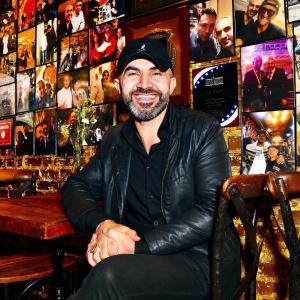
[00:00:39] Ray Latif: Hello, friends. I'm Ray Latif, and you're listening to the number one podcast for the food and beverage industry, Taste Radio. This episode features an interview with Hakki Akdeniz, the owner of fast-growing New York-based restaurant chain Champion Pizza, who explained how the company has incorporated advocacy and support for the city's homeless community into its business model. The story of how Hakki Akdeniz rose from a homeless immigrant to a struggling business owner regularly threatened with violence to a successful entrepreneur and lauded philanthropist is both heartbreaking and highly inspirational. The founder of Champion Pizza, a restaurant chain with 10 locations primarily in New York City, Haki arrived in the U.S. from Turkey over 20 years ago. His first few years in America were not pleasant. Hockey lived in shelters and restaurant basements, worked menial jobs, and was even robbed of his life savings. And yet, he persevered, opening his first restaurant in 2009, and gradually added nine more, each built with reinvested earnings. As someone who's experienced the homelessness epidemic firsthand, Hockey has prioritized giving back as a pillar of Champion Pizza's business model. Every week over the past eight years, Hockey and his team have set up on West 34th Street, where they give out free pizza and other food, along with clothing and medication to homeless people. In total, Champion Pizza has donated millions of dollars worth of pizza, but Hockey intends to give more. In the following interview, I spoke with Hockey about his remarkable journey, why he credits hard work and definitely not luck to his success, and why supporting a social mission starts with building a sustainable and profitable business. Hey, folks, it's Ray with Taste Radio. Right now, I'm honored to be sitting down with Hakki Akdeniz, who is the owner of Champion Pizza. Haki, great to see you. Thank you for having me. Yes, it really is an honor to be speaking with you. You have done so much for the homeless community in New York and beyond, and you are someone who has been a tireless advocate for a crisis that is overwhelming parts of the United States, and it really does take folks in the private sector to really step up. and create solutions for a problem that is just getting worse, it seems. And so once again, thank you so much for all of your tireless dedication to addressing the homelessness issue in America. You came to the United States from Turkey. There was a stop in between in Canada, but eventually you moved to New York City. Talk about the journey from Turkey to the United States and how challenging it was for you as an immigrant coming here in those first few years.
[00:03:43] Champion Pizza: When I went to Canada, the reason I went over there, I want to stay there and obviously study. but I was never good in school. I'm always good at working, just with a hand, you know, like a... And when I went to Canada, I worked with my brother at his pizza shop. That's how I become pizza man. But things didn't go right. I couldn't get on my green card. It take me so many years. And then they deport me. And I was gonna go either Turkey or any other country. They give you option. So I decide to come New York. And the reason I decided to come to New York, not my best friend, but one of my friends, he was living in New York. He always come to Canada. And I told him the story. I get the petition. If I come to New York, would you help me? He said, yes, Haki. When I come to New York, not a problem. I'll be there for you. I could help you with job. I could help you with a place to stay. So fast forward, after the petition, I get the ticket. January 8, 2001. And I call him, I said, I'm leaving. I'll be there tomorrow. When I get here, I call him. I go again, fast forward. It make me two and a half days at Port Authority Times Square. I wait over there with big hope. But then my friend, he never show up. But things happen for a reason. I always say, thank God that he didn't show up. I just get my luggage and walk around, look at hotel, at least the place just take a shower and stay. I find cheap motel on 42nd between 8 and 9. I stay there for a couple of days until my money, the last day that I'm going to pay, it was delayed to pay. I couldn't be able to pay the last day, so I moved. And I would just walk on anything, Times Square, all those high buildings, lighting. And I just feel, maybe I was like six, seven days, stay on the street until I find a train station. And I find a train station, and I stay with that a couple of weeks, and train station as well. Then one guy, I met him, he's named Ronnie, from Senegal. He took me to a Bawri Mission, it's homeless shelter. on Norita. So I stayed with it 96 days. And that 96 days, it teach me a lot. It teach me so much to be like, to be a good person, I will say just the best word, to just be a good human being. And because, you know, like when you don't have nothing, and anything is allowed to you. And there was a moment, you know, like I was leaving, you know, in the street, I get up on a shelter. It was, I understand that was just not me. There's a lot of people like me and are here today. And I don't know. It was, it was, it was a little bit too much for me that moment because I get it. I grew up like very poor, small village and Turkey, and I know how to share the plates. My neighbor, we have one lady, she was very poor. She don't have nothing. Every Thursday, my mom give me plates and give the food to them, like trays. But when I find about it mentioned that, you know, like it was, I understand there's a lot of people struggling. There's not an option. There's not choice to become homeless. You know, for me to be homeless, it was, I wish I was not, but thank God I was a homeless actually. And right now today, and I pray for God that give me not opportunity, but make me homeless that day. Because if I was not homeless, I don't know if I could be like Haki today. And when I see people on the street, I understand their feeling. I understand their pain. I understand the struggle they've been going through right now. And it's not easy. Every Wednesday when we go to street, it's been like nine years with PCNY, 34th Street, 8th Avenue, is about like 300, 400 homeless people stay in line. We give them food. We give them medicine. We give them clothes. We talk to them. We give them jobs. So a lot of my employees right now, they are homeless. They used to be homeless, and they work for me. So many of them, they say, please don't mention my name. But I will not. But as a life, for me to be happy, I think I should be going through those things. And for me, I'm just so grateful. that I have everything that I ask for God. Everything I ask, he give me triple, actually, not double, triple. And God say, you know, like, if you give one, I will give you two. If you give you two, I will give you four. If you give four, I give maybe 10, 20. So that's what exactly what I'm having right now. You know, I'm not so small guy and I'm not very educated person. You know, like I drop third years in elementary school. I didn't go, I didn't finish high school. I didn't go to college like you guys, but I don't know. It just, I worked so hard and I believe in kindness. If you be kind and God will give you like always extra and extra.
[00:09:01] Ray Latif: Kindness is certainly important and it's a key reason why I see a lot of entrepreneurs succeed is because they know how to treat people and they know how to treat people well. I think the other aspect that I've seen of entrepreneurs who are successful is typically they are hard workers. Typically they know the value of putting in effort and significant effort. You were willing to do whatever it took to get to the next step and do it, you know, with virtue and intention versus doing it by cutting corners.
[00:09:35] Champion Pizza: That's what they call entrepreneur, you know, entrepreneur to me, like you have to earn it. You have to work for it. No one give it to you. You have to get it. And that's what I exactly mean. I have, I have to work so hard to get it. It was not easy even to build a Champion Pizza brand. Sometime, you know, like even I cannot believe it. I really cannot believe it. You know, like, and about emission, we were outside, you know, I was, I used to, like, recycle those cans. You know, so there were Chinese couple, they come with a van and they buy for us the can. I think it was like four cent or five cent each can, we would give it to them. So I was making about like 10 bucks, 15, $20 a day, because I used to just go to garbage and collect all those cans. Today, you know, like, our name is those can, you know what I mean? I know it's not, it doesn't make sense, you know, like it's so many years, like 20 years as hard work behind that. But, uh, any entrepreneur, they have to work, work so hard to earn it. Me, I get it. I work so hard. I get everything. I get it. But if you know, what's purpose of life that you, you want a money for why you work so hard, what every morning you wake up, you know, the reason that you woke up that you got to go work for. And for me, like I always said, two things very important for me in life. My family, I love them so much. I have a wife, I have two beautiful kids. But the other side, people are less fortunate. And the second thing and most important thing in life for me, it's homeless people on the street. I mean, like homeless, there's a name, like nothing. They have just hope, nothing else.
[00:11:18] Hakki Akdeniz: Vibrant Ingredients is the natural ingredient partner powering food and beverage innovation, delivering flavor, function, and protection through a science-backed portfolio. Vibrant delivers purpose-driven solutions that help brands create extraordinary experiences. Discover what's possible with Vibrant today. Visit vibrantingredients.com.
[00:11:45] Ray Latif: To be in the position to help as many homeless people as you are helping, to be able to employ them, you had to build Champion Pizza to what it is today, a 10-store chain of restaurants. And I think one of the other things about entrepreneurs who are good at what they do is that they learn their craft. They learn the business they're in. In some cases, they're experts in the business that they're in. You weren't automatically someone who knew how to make pizza and run a pizza restaurant. You had to learn the craft. I know you used to make lahmacun in Turkey, which is sort of a flatbread with ground meat on it, but that's not necessarily the same thing as pizza. You know, talk about the process of learning how to, one, make pizza, which I know you're very good at, and two, actually build a pizzeria chain.
[00:12:38] Champion Pizza: Yes, I'm a pizza guy. I know like making the best pizza. But of course, there's a lot of people that make better than me. There's a lot of legend up there. But to run a business, it's totally different. Totally was different for me. First, when I opened my pizza shop, I buy the pizzeria from someone, old Albanian guy, but everybody know him as Italian, from local pizzeria. I bought a pizza shop from $85,000, and I have only $45,000. I just keep $5,000 because I want to get the sign, make a menu, open corporation. And I give him $40,000, so I only have $45,000. My payment, I have to give him $5,000, $5,000, $5,000. Locations are great. Locations are beautiful. I still have that place on the first pizza shop. I bought it, and the first month I was busy, so I'd be able to pay my rent, and I'd pay him. The second month, I was a little bit done. The third month, my business was going down. The fourth, I was losing money. I couldn't be able to pay rent and pay my payment.
[00:13:43] Ray Latif: Do you know why you were losing money? What was it about your business that wasn't working?
[00:13:47] Champion Pizza: The guy, he's old school, Italian guy and the Turkish guy take over. And then I don't know nothing about running a business. Like I told you, entrepreneur, you have to earn it. And I don't know nothing. No, like I don't know how to get a permit, but not to get it. Even when I open corporation, I make mistake corporation, I get big ticket. But the previous owner, he was going to kick me out. You know, like he was so mean to me beginning. Later, right now he become my best friend. I was about to close my store. I was about to close it. I gave up my apartment, and I just leave the store. I don't want to give up. But you got to work so hard, brother, to make it happen. That store, if I couldn't make it happen, because to give up, it was not an option. I couldn't give up. Then Allah take me to court to kick me out. But thank God, you know, like, I won the pizza championship. The PMQ magazine, they put me in cover magazine. And that magazine saved me, saved my store.
[00:14:44] Ray Latif: Yeah, let's talk about that for a second, because you were running the pizzeria, which at the time I think was called Hockey Pizza, wasn't it?
[00:14:52] Champion Pizza: Yeah.
[00:14:53] Ray Latif: But there is a famous pizza convention which is held annually at the Jacob Javits Center. Yes. Included within this convention is a pizza tossing competition. And you had a very amazing demonstration that helped you to win the competition and eventually helped you to build a stronger brand. Talk about exactly what you did to win the competition and how it landed you on the cover of that magazine.
[00:15:19] Champion Pizza: There's two reasons. One, I have to get on my green card to become citizen, you know, to represent overseas, the U.S. Second, they say if you win, you know, like the championship, obviously, if you win, you get the money. I didn't go over there to the championship to be like in a newspaper or to get like a cover magazine. I went over there, burned myself to get the money because I did the flaming. And that flaming, you know, I put the flame on the door spin there. I really get, but if you watch the video, all my left arm was burning. My eyebrow get burned. So to win the championship, you have to do a lot of different tricks. What I did, I did, like, over, like, 50 different tricks. Like, you know, like, I put, like, handcuffs on my hand. I did, like, blindfold. I did, like, with the flame, breakdancing. And I just did, like, over the shoulder, under my leg, all different tricks. So I won the fastest. I did, like, five pieces in 44 seconds. I did, like, freestyle. I did testing. And we did, like, the largest door stretch. So I won the world championship. When I won that one, and they put me in cover PMQ magazine. And that magazine, when they sent me like about, I think it was like 10, 15, I really don't remember how many. Right now, I still have a lot with me. So I put it on top of my table on Pizzeria. And the kids from school, they liked the magazine, and they took it. And I told my pizza guy, I said, what happened to my magazine? He said, oh, the kids, they take it. And I put it back again, the kids, they take it again. So it finished. So I called PMQ magazine, the founder, Steve Green. And I told him the story, I said, there's any way that you can send me like some boxes and I will pay for it, even I don't have money. I still own the money, by the way. But I saw him, I saw him in Las Vegas. I make the joke, he said, no, no, you deserve it. So they sent me like two cases, the box. And I get this magazine, I go from the school and I give the kids. And all the kids, they love it. And I'll never forget that. There was a little girl that came with a magazine. And she told me, would you give me an autograph? I don't know what to mean, autograph. And I cannot pay my rent. I'm sleeping in my store. I was still sleeping in my store, yeah. I used to go to the gym, take a shower with my employee card. I will tell you the story. So she told me, like, autograph. I said, OK. I write, thank you very much. I don't know what else to say. I write, thank you very much. I give the magazine to her. Next day, the kids, they came with magazine. That time, I don't know if 2010, selfie was very famous. So they take selfie with me. Afternoon, they take selfie. So the people, they start bringing the magazine to me and, you know, take a picture and autograph. And those kids, they bring their parents. And that's why that store, I become so busy. I become like the famous pizza shop on Lower East Side. Everybody was talking about me. So the previous owner, Pizzeria, that he wanted to put me in the oven. He was so angry because I couldn't be able to pay him. I mean, I didn't pay him for three months. He was so pissed. He said, if I don't pay this month, I'll put you in the oven.
[00:18:29] Ray Latif: Oh, jeez.
[00:18:30] Champion Pizza: Not really, really. Like, you got to see his face. He looked like Scarface. I love him. He's my best friend right now. I was naked drunk for a day. So he came there and he said, I have a big line. He said, what happened? Are you getting a free pizza? I said, no, I just, I've been so blessed. All the kids, they love, they come in. She said, wow, God bless you. You smart guy, huh? Two, three, four months, I was sleeping in my store. Today, for me, it's like hotel, five-star hotel, believe me. Because when you need to, you have to. You know, I don't do bad things. I just like, all I wanted to be success. All I wanted is like my dream, want to open my pizza shop. I tell you, me, my manager, my old manager, we worked together for four years. We saved money, four years. And my gold went up in my pizza shop. I told you, I don't know if you know the story. Four years we saved money. Me and my best friend, from 2002 to 2006, my best friend, he took all our savings and ran away.
[00:19:31] Ray Latif: Oh, no.
[00:19:32] Champion Pizza: Yeah. Yeah. So, you know, like, I mean, two days before we were going to sign a contract, we find a place and operate site, beautiful location. We were going to buy it. And I mean, best friend, I love him. And until today, I still love him so much. Two days before he take all our savings, he run away. You know what I mean? So like, I always want to work so hard to save money and to be able, you know, to open my business, live in American Dream, you know, that guy, I was the day he, he stole all money, he run away. I was praying God, I said, God, please punish him like what he did. But today I say, God, please forgive me what I say. You know, just save him. Make sure like I'm sure he take this money for, you know, like for a reason. You know, maybe maybe that money right now, he need more than I do.
[00:20:20] Ray Latif: I can tell it affects you and I'm sorry that that happened to you. And I, you know, I think you're right in so many ways in that maybe there was a reason that he needed that money and maybe he needed it more than, you know, you could realize at the time. But, you know, for all the hardships that you faced, I think there's another one. I mean, there's another challenge that you face and it's something that you can't do anything about. It's, I'll just call it what it is. It's racism. You came to the United States in 2001. I think it was eight months later was when 9-11 happened. And unfortunately, people of color, people of Middle Eastern descent were dramatically impacted because everyone was just associated with the people who planned these attacks. you know, how has it been managing being an immigrant and being someone of Turkish descent as you're building a business, as you are an entrepreneur?
[00:21:18] Champion Pizza: It was not easy, brother, 20, 21 years ago. And, and, and, you know, like all you come over here to just struggle, you know, to live a mega dream, to be able to just be safe, just to get a foot on your plate, you know, and we all immigrants come over here and work so hard. to become somebody, to do something, you know, to have family, to be able to live a better life. Because overseas, when we say like America as America is like huge, is a big dream, you know, it's huge. Believe me, if you go overseas and you ask every human being, they will say same thing. It's huge. But if you don't work so hard, you know, like American Dream is not dream. You know, I know it's like, no, like there's no such other country dream, like Germany dream or French dream, Turkish dream, you know, there's only one dream we call American Dream. But if you don't work so hard and you don't believe yourself, I don't think there's, you know, like we could be able, you know, to live that dream. You have to work so hard for to get it, you know? And for me, like I always say, you know, like for the young kids, you know, like for everyone, love it. Love whatever you want to do. Love it and believe it. Those things, if you love and you believe it, that is American Dream. But if you don't love what you do and you don't believe what you do, there's no such a dream, you know, like you're just going to go work and come home and that's it.
[00:22:46] Hakki Akdeniz: Do you want more repeat buyers on Amazon? Well, this free resource in collaboration with Straight Up Growth will help your brand turn first-time buyers into long-term subscribers. Download Winning the Repeat Purchase Game on Amazon now at Taste Radio slash SUG. That's Taste Radio slash S-U-G to start building retention-driven growth for your brand on Amazon. Scaling a beverage brand into major retail comes down to operational readiness. From packaging lead times to co-manufacturing strategy, the details can make or break a launch. In a new e-book in collaboration with Octopi and Asahi Beer USA, industry leaders share what they've learned in helping brands scale. Download it now at Taste Radio slash octopi.
[00:23:36] Ray Latif: Having a dream is important. Being a hard worker is important. Being a little bit lucky, particularly when it comes to building your own business, is also important. But also, no?
[00:23:46] Champion Pizza: I'm so sorry, but no, no, brother. You know, luck is, if you work so hard, there's a luck. If you don't work, there's no such luck. You got to work so hard to be lucky. I'm sorry, you know.
[00:23:58] Ray Latif: No. I'm glad you interrupted me because a lot, most, almost every entrepreneur that I've ever spoken with has said that luck has played a role in the success of their business or their own personal success. And if you're watching the video, You Sell Hockey, interrupt me, not interrupt me, like stop me in my tracks and say, no, it's not luck. So you don't believe in luck?
[00:24:19] Champion Pizza: We have to believe it, but the hardest work you work, you're lucky to become. If you don't work hard, there's no such luck. You know, like, I stay home all day. I don't do nothing. There's not such a lot. If I work so hard, like I say, if I believe what I do, the luckier I will become. Just work and work, work, work. And if you don't have any plan, if you don't have any dream, if you don't have any goal with that dream, there's not such a lot. You know, like, you make that luck for yourself. You got to be believing. You got to be like, you know, like, always be believe. And if you believe, the luck has come to you. You know what I mean? And I think, you know, like, if you're not a kind person, the luck you have will go away, too. You've got to be kind. You've got to be very kind. You have to have a pure heart, and the luck will come to you. But if you don't work for that luck, they don't come to you.
[00:25:13] Ray Latif: And again, I think this goes back to one of the first things I wanted to talk to you about, which is in order to help other people, to get them to a place where you can hire them so they can work hard and work in your stores and perhaps even build their own businesses. You have to build a strong, sustainable business to meet that vision. In order to help all those people that you help on 34th every week, your businesses have to produce money. They have to produce a profit. So after you built that first store on the Lower East Side, and after you built it into a sustainable restaurant and a business, How did you think about building Champion Pizza a chain? You know, what made you think that you could go from that one store to eventually where you are with 10? What did it take to get there?
[00:26:06] Champion Pizza: I just love it. I enjoy everything. When I woke up and when I go to store, when I see just, you know, like the pizza on the pizza shelf on the counter display, it make me more happy. And to open the first one, it was so hard for me. Like I mentioned earlier, it was not easy. I gave up so many times. I bought two. But I couldn't. It was not an option. I couldn't do that because I have only one chance in life to be able to be successful, to get my green card, to leave this country, and to be able to live a better life. And that was the only chance that I had. I have to make that Champion Pizza. I mean, Huggies pizza, first one be success. So be able to open second one to open Champion Pizza because I won the championship. That was the reason I changed the name. The first one, it was hard, but the second one, I think was a little harder because the second one, the neighbor, they don't know the neighbor, the people over there. They all boy, there was about to kill me. They put a gun on my hand.
[00:27:12] Hakki Akdeniz: Yeah.
[00:27:12] Champion Pizza: I was like, Yeah, the second one, when I opened my pizza shop, the neighbor on the same block, we have a pizza shop. I'm not going to say who, which pizza we use, but, you know, they broke the windows. Two times they broke all my windows. And one time the guy come put out, when I go home, open door to go home, and the guy, just when I opened the door, right from, he pushed me on the wall, two guys. He pointed gun on my hand and said, you know what? I'm telling you, do not open the pizza shop. And you open. You better not open close. And the second one, it gave me a hard time, brother. The second time, I was about to die, like, this close. But you know what? I don't want to close it. I said, no, you know what? You know, I'm going to leave open. You guys want to kill me, kill me. And then one time, I was like, I'll never forget Sunday. I want to clean the store. Two guys, they came over there. And they were like, no cover face again. And they came like, no, like compensate the content. And there was the cops, the cops, you know, they came, they was over there and they run away. They didn't do nothing. So I was like a daddy to a little bit, you know, so that's when luck was important when the cops, I think it was a lot, but I will say like, God bless me. It was not like it was a God. And I've told you, things happen for a reason, man. As long as it happens, I believe it is like karma. If you're a good person, you will always find good people. Always, always. Good things, good people, good business, everything will come to you. You know what I mean? Nobody believe me. But like I say, I always believe myself. And those are my friends. Some of them, they still owe me money. They don't believe me. Just you, man. Believe in yourself. Have a go hard and work so hard. Like I say, always when you have a goal, make sure you have a plan for that goal. You know, like not just dream, you know, like a goal. But with every dream, you have to have a goal. When you achieve that goal and that's it, you know, so you have to have like a reason for that goal too. And if you have those like one, two, three, four steps, I think like nothing can stop you. Anything that's possible. Anything. Always, always. I know like we may not like be able to help everyone in this country and anyone. But if we have like anyone, everyone can help anyone. Just a little bit. I say I was a little bit. It's a lot. You know what I mean? Believe it or not, I'm not here today to become so rich and to be like, you know, like people call me like rich man. I hate that name. I hate people when they call me a hack is an afflusive. And I hate that people when they call me hack is very famous. He's a famous guy. I hate that. I want just one thing. People call me good man. He was a good person. Not man. Good person. He was a very good person. Oh, he's a good person. That's the name I want. I want to leave legacy behind me, not money, not, you know, like when I'm done from here, I want to people talk. You know, that person, he was really good for everyone, not just for himself.
[00:30:22] Ray Latif: I heard once from someone who is a famous motivational speaker, not Tony Robbins, someone else. Someone asked him, what's the purpose of life? And he said he thought about that question a lot. And he came to the conclusion that you can't take anything with you when you're dead. everything in life is going to be someone else's when you're dead." So he said, the purpose of life is to give. And I think that's, you know, your purpose in so many ways is with Champion Pizza, it's not to enrich yourself. You already have everything you need. Now, what you want is to build this chain to build this business, to be able to deliver on the mission, to be able to achieve the social mission that you have set out for yourself and for the business in addressing the homelessness crisis. Do you have a certain percentage of sales or profits that you give back or that you give to address this social mission? Is it something that's concrete or is it just saying, you know, we'll just give as much as we can whenever we can?
[00:31:29] Champion Pizza: There's no such a like number exactly, but we can't like the slices. So my goal to hit 1 million slice. And I think it will finish like end of next year. It will be like 1 million slices. I'm not going to say exactly how many right now. We do like every week, every week is me like, no, like nine years. So we do like, no, like I have like a three program. One is a front of church on Balenci. We do this like weekly about like, I would say like between 25 to 45. I have another one, it collects to the leaf. We give it to them like, no, like sometime like weekly, like 40, 50, depends they want it. And the one at 34 shoot every single week. That one, every Wednesday, I do about like 30 to 60 pies. So like 40 pie, 45 pie, you know, 50 pies, sometimes 55, 60 pies, but no less than 30 pie. Cause it's like 3,400 people. Everybody needs to get like, at least like two slices. So you count it, you calculate. Like I said, it's not about like, no, like the number is about like, how much can we give? You know, like I was, I told one time, no, I think it was for CNN on your time. They said, how rich you are. I said, no, no, it's not about how much I have. It's about how much can I give. And that's what I exactly know. Like, I'm not a special guy, you know, like I'm not science, you know, like I told you, I'm not smart guy. It just, everybody can do like I do. You know, it's easy. It's so easy, man. You know, like, The population is like this country like I think three hundred forty million I believe. But we get like one million homeless people living on the street. And if we three hundred thirty nine million people unite to be together I think there will be no such one homeless person on the street.
[00:33:15] Ray Latif: Haki, I am so glad that we had this opportunity to speak. I feel like this is a different kind of interview than I've ever had. And we've done 500 episodes of the podcast and I've interviewed probably 750 people. But this is the first time I think where, you know, the emphasis on the conversation wasn't just about business or business fundamentals. It was so much of it was about. who you can be as a human being, how you can live a better life and help other people through your business and then through your personal will and desire. Thank you so much for taking the time to be with me today. I really appreciate it. Once again, thanks for everything that you're doing for the homeless community. And I hope we can meet in person someday. I'd love to stop by one of your stores.
[00:34:04] Champion Pizza: I would love to.
[00:34:08] Ray Latif: That brings us to the end of this episode of Taste Radio. Thank you so much for listening, and thanks to our guest, Haki Ekdenes. Taste Radio is a production of BevNET.com Incorporated. Our audio engineer for Taste Radio is Joe Cracci. Our technical director is Joshua Pratt, and our video editor is Ryan Galang. Our social marketing manager is Amanda Smerlinski, and our designer is Amanda Huang. Just a reminder, if you like what you hear on Taste Radio, please share the podcast with friends and colleagues. And of course, we would love it if you could review us on the Apple Podcasts app or your listening platform of choice. Check us out on Instagram, our handle is BevNetTasteRadio. As always, for questions, comments, ideas for future podcasts, please send us an email to askatasteradio.com. On behalf of the entire Taste Radio team, thank you for listening, and we'll talk to you next time.