[00:00:00] John Craven: BevNET Live, the premier event for beverage industry executives, is coming up fast on June 10th and 11th in New York City. Hundreds of beverage founders, investors, and retailers are already confirmed. Don't miss your chance to build momentum mid-year and set yourself up for a strong finish. Early registration pricing ends Friday, April 24th. Register now and save $100 at BevNetLive.com.
[00:00:39] Ray Latif: Hello, and thanks for tuning in to Taste Radio, the number one podcast for the food and beverage industry. I'm Ray Latif, the editor and producer of Taste Radio, and I'm with my co-host for this episode, John Craven, Jacqui Brugliera, and Mike Schneider. In this episode, we feature an interview with culinary expert and product developer Henry Hill, who is drawing on his experience as a Michelin-starred chef and beverage entrepreneur to help modern brands optimize flavor and texture. This is not the Henry Hill. We'll get into it during the interview. He talks about how this has followed him his entire life. He is not the Henry Hill from Goodfellas. Gotcha. No, not that guy. Gotcha. But John, do you remember a brand called Cafe Racer? It was a brand of bottled coffee sodas. It was renamed Rebel Racer. About a year after it launched. Can't say that I do. No. Okay. So Cafe Racer turned Rebel Racer was Henry's coffee company, coffee brand. It was a brand of carbonated coffee products. It'd be a lot harder to be followed around by the Goodfellas guy than the Tony Hawk of fingerboarding, who's also Mike Schneider. I didn't understand a single word you just said. We'll leave that in there for people who are into that. Okay, well, okay, no one. Do we do the sampling now, or should we? You just want to go right to drink? I don't want to go right into it, but you've been chomping at the bit, John Craven. And by the sampling, I mean the Empirical and Doritos collaboration. To follow up on last week's episode. I am speaking with Empirical co-founder Lars Williams tomorrow, actually, to break down exactly how this all came together. Well, I mean, if you want to start drinking, I guess we can. Okay. Let's do it. Let's do it. We have some Cortado glasses here. There we go. Cause Cortado glasses are the best way to drink Doritos spirit.
[00:02:31] Jacqui Brugliera: Did it come in a secret vial?
[00:02:33] Ray Latif: It did. So, uh, it's a flask. It came in this mini flask here. We didn't get a full bottle. Was this a hundred milliliters, a hundred milliliter bottle, but the branding is spot on.
[00:02:43] Jacqui Brugliera: Are they anticipating that you're not going to want to drink a lot of it or?
[00:02:47] Ray Latif: They're anticipating you're going to be sitting on a park bench. Just, you know. I think You know eating the squirrels I Think they with a paper bag just don't have a lot of bottle I think the demand for this product is probably through the roof, and it does not come in this Bottle Shops is a sample, but it comes in a 7-up to me later bottle. I mean, I think it's because rain comes in a 750 yeah, not a 375 I'm pretty sure it comes in at $7.50. That seems like a lot of this booze. All right, let's taste this here. I'm going to pour some for Mr. Craven, Dr. Craven, Mr. Latif. That's an amount. Tiny, tiny, tiny, tiny. This is an amount that will be hard to consume. I think I'm happy about setting out this sibling right now. As a spoiler, I've already tried this.
[00:03:30] SPEAKER_??: Oh, God.
[00:03:31] Jacqui Brugliera: What is the nose? What does it smell like?
[00:03:34] Ray Latif: It smells like Doritos and booze.
[00:03:35] Jacqui Brugliera: Okay.
[00:03:36] Ray Latif: It's a lot sweeter on the nose than I expected, and then on the palate as well. It smells like a little bit like mold. Oh, yeah, it's very moldy. It doesn't smell like mold to me. Maybe there's mold in your glass. That's rough. I don't know. I like it. You do. Yeah, I do. You do. You like it. I do like this. And for me, if you didn't tell me this was Doritos flavored, I probably wouldn't have guessed. All right. It has a weird cheese flavor to it. Like cheese with a Z, you know?
[00:04:05] Jacqui Brugliera: What spirit is it? Is it vodka? Is it... Well, that's...
[00:04:10] Ray Latif: That's a good question, Jackie.
[00:04:11] Jacqui Brugliera: Oh my god!
[00:04:12] Ray Latif: Alright, Mike. Mike is recovering over here. I'll explain to Jackie. Wow. Why would you drink cheese booze? That tastes like cheese booze! Let me get back to you in a second. So to answer your question, Jackie, this is I'm reading from the press release here. Empirical is an uncategorized spirits company, so it allows us the freedom to experiment with really interesting flavors and not have to be stuck in a gin box or tequila box or whiskey box. So I would say the flavor that is most similar to what we're trying here in terms of traditional spirit categories. It's kind of between a gin and a vodka. That's not what I would have said. Let's be realistic. If you're a consumer and you're even asking the question of what kind of booze is it? Yep. This product is probably not for you. Oh. This goes back to the point I made last week, which is that Empirical is a sophisticated brand of spirits. All right. All right. In which this is, it's not for the average consumer, in my opinion. You know, Empirical is not necessarily a brand for the average consumer, at least not yet. You kind of have to go into it knowing something about the company and what you're drinking and what you should be expecting from Liquid. So partnering with Doritos Nacho bit of a surprise, honestly. On the back of the bottle, it has experience notes and it has this three triangles. Is that a warning? It kind of does look like a caution symbol. You should hold that up. We'll put something in the notes. Equity is the new cow gun for me because it's taking me away. Cleansed. So on one side of the triangle, there's three triangles. I wouldn't call them, what do they call those circles when they're all Okay, Venn diagram. Thanks for saving the day Quinn. I don't know it's like a concentric triangle almost I don't know how else describe it it looks like the the little hazard Sign you put out on the side of the road when you're broken down or the hazard lights right in your car Yeah, the outside of one triangle is his evolved state and then tongue happiness, and then bodega.
[00:06:06] Mike Schneider: That's all that's all three happiness tongue happiness
[00:06:10] Ray Latif: It says Doritos dust free cheesy nacho tang and wish fulfillment even further into the triangle assist smile friendly acid tostada dough And then finally on the most in what is even going on right most injury right silent mommy and text man I do kind of want a sauce. I do kind of want to eat some Doritos right now I think somebody who wrote that copy did not taste the beverage. Okay, or maybe got high on their own supply first Mike doesn't like it clearly John, I think is, I don't know. This is like, you know, it's a gimmick. It's a gimmick. It is what it is.
[00:06:51] Jacqui Brugliera: I don't think I'd like it either.
[00:06:53] Ray Latif: It tastes like nacho cheese booze. I mean, if I'm being totally honest, my biggest beef with this product, which I only realized after I Instagrammed it or cared about after I Instagrammed it, when it looked like I was posting an empty bottle,
[00:07:08] Mike Schneider: is that the liquid's clear. It's gotta be, like, bright orange. I think, come on.
[00:07:13] Ray Latif: You should be careful saying that you have a beef with the product, because you'll have a beef and cheese empirical next. Ooh, a taquito? Sounds better. A taquito. A taquito flavor. Ooh, taquito booze.
[00:07:23] Jacqui Brugliera: In an outburger?
[00:07:25] Ray Latif: Can I just have a taquito?
[00:07:27] Jacqui Brugliera: All right, so.
[00:07:29] Ray Latif: In and out, brilliant Jackie. We're gonna save the rest of this bottle. As usual. Our dear friend and colleague Colin asked if he could get a swish of this. Yeah, there's a lot of people on this team who wanna. Sample Captain Colin. Well, I offered one to Colin and obviously Jackie's gotta get some. Sample Captain Colin. Sample Captain Colin. Let's get a video of that. No doubt, Jackie, you'll get some of this. I'll send this down to you.
[00:07:50] Jacqui Brugliera: It's OK, you can keep it for Colin.
[00:07:53] Ray Latif: We definitely need to video the tasting of sample Captain Colin and Doritos booze. OK, fair enough. He needs a Captain hat. We'll get him one. Yeah. All right, switching gears here, last week it was announced that Chobani, the large yogurt and dairy company, one might call them a conglomerate, announced that it would acquire La Colombe, the third wave coffee roaster and retailer, for $900 million. Within the move, Kirk Dr. Pepper, a minority investor in La Colombe, became an equity shareholder in Chobani. Very interesting stuff. Chobani was founded and is headed by Hamdi Ulukaya. who is also, well, I guess is now the full owner, but was a majority owner of La Colombe and has been, I believe, since 2018. This does seem like a deal that was in the making and probably on the roadmap at some point, but John Craven, are you still kind of surprised that Chobani made this move?
[00:08:54] Mike Schneider: No, I mean, I guess it just is one of those things that, you know, they already had a relationship. So like, I don't know, kind of not a thing that people really talked about. I mean, I think, Chobani, you know, at one point had been rumored to be talking about an IPO that they backed out of. And, you know, now I think picking up La Colombe fully certainly expands just sort of the, the kingdom of Chobani there, which is cool. I mean, that kind of makes them, you know, I suppose a, uh, not that they were. Not already a rising star of sorts, but you know, it kind of bumps their stock up a little more in terms of just, you know, being a little bit more of a independent food and Bev conglomerate.
[00:09:36] Ray Latif: So pretty cool. Yeah. I mean, I think that, you know, when it comes to Chobani, this is a company that knows how to do production well, they know how to do distribution well, and certainly La Colombe with their draft lattes will benefit from having a huge dairy producer as their primary owner. Definitely. And I mean, you know, Chobani reputation for top-notch products and certainly same goes for La Colombe. So, I mean, if they were going to pick up any beverage, seems like some synergies there. I always thought their brands had similar vibes anyway. It's a good match. Yeah. And just to correct myself, Hamdi Lakaya became a majority owner of La Colombe in 2015, not 2018. Time flies. Time really does fly. And just to note, you know, it was Hamdi Lakaya that Todd Carmichael, one of the co-founders of La Colombe, credits. for the development of their draft latte, well, their ready-to-drink draft latte. Todd had wanted to get La Colombe into more hands, make it more accessible for more people around the country. And Hamdi was like, well, you've got to create a beverage that everyone can access. Hence the draft latte in a can.
[00:10:47] Jacqui Brugliera: I believe they both spoke at BevNetLive or both of the companies spoke at BevNetLive and they were speaking on innovation. So I think like there are synergies, there's the same belief in like continuous innovation and improvement. And then I think also just coffee and creamers and dairy, you know, go together really well.
[00:11:09] Ray Latif: I mean, who doesn't want a La Colombe Draft Latte and a little bowl of Chobani yogurt for breakfast every morning? I do. I'll take that. You'll take that. I don't know. Jackie's cutting back on her coffee. We got a lot of comments on that reel about Jackie trying to reduce coffee consumption.
[00:11:27] Jacqui Brugliera: I think it was more so Mike's reaction.
[00:11:29] Ray Latif: I think it was. I was so sad for you, Jackie. Mike was just offensive to Mike. I love Jackie. I want her to be happy all the time. Yeah, Amanda Huang left a comment saying that Mike was caught clutching his pearls when he heard this. Yeah, I was. All right, from big news to great news for founders raising seed in Series A rounds, Springdale Ventures has closed a $40 million fund, too. Springdale Ventures is an Austin-based venture capital firm. It was founded in 2019. A consumer products-focused firm whose portfolio includes over 40 brands, including food and beverage companies such as Better Booch. KOS, Mr. Beats Feastables, Beatbox, and Better Few Snack brand Goodles. This is all content I'm reading from the Nosh article penned by our colleague Brad Avery. The second fund is nearly twice the size of Springdale's original fund one, and thus has been used It Makes 14 new investments, including whiskey distiller Big Nose Kate, Asian inspired hard seltzer brand Nectar, and Blocks Snacks. Blocks Snacks. This is the Gen Alpha brand. Have you guys heard about this one? Pretty interesting stuff. Yes. Yes. Anyway, this is great news, right? I mean, like coming off of our events when we saw a lot of folks who are raising seed in Series A rounds and now Springdale has kicked off, well, I guess not the new year, but announced just before the new year that this $40 million fund is accessible or available to these folks. Just going to be writing checks like crazy. No questions asked. Is it writing checks and cracking necks? What's the? Cashing checks, snapping necks? Cashing checks and snapping necks. Stepbrothers, I think? Yes, exactly. You want It Makes bank? Yeah, and drive a Range Rover. Life goals. Okay. Why Lambo? Anyway, to learn more about what Springdale is all about and the kinds of companies they're investing in, check out the story on Nosh.com.
[00:13:30] John Craven: Vibrant Ingredients is the natural ingredient partner powering food and beverage innovation, delivering flavor, function, and protection through a science-backed portfolio. Vibrant delivers purpose-driven solutions that help brands create extraordinary experiences. Discover what's possible with Vibrant today. Visit VibrantIngredients.com.
[00:13:57] Ray Latif: All right, a little unexpected news. I saw this on Slack and I believe this was, who posted this? Was it Lucas? Lucas posted this news about- Yeah, Lucas did. Yes. About seasonal snack favorites or seasonal candy favorites. And it turns out that KitKat Is Number one in the country. Apparently candy canes are number one. This is this is by the way gross Just to be clear this is a report that listed America's favorite Christmas candy by state KitKat Is Number one in 13 states. Did you bring us any KitKat? I didn't. Oh, sorry. It was in my bag with my laptop, which I forgot. Sorry everyone.
[00:14:53] SPEAKER_??: Oh
[00:14:54] Ray Latif: Candy canes were number one in Texas in the back of a car and Francisco in North Dakota and in Ohio and in West Virginia a smashing rap and in South Carolina Wow I know all the states without having oh and also in Florida strange God no wonder people are so angry there Just got to get some KitKat down there. Let's get him some KitKat or some Reese's cups. Just truckloads. Yeah. KitKat Is Number one. Was the number one in Massachusetts? It Is Number one in Massachusetts.
[00:15:29] Jacqui Brugliera: And California.
[00:15:30] Ray Latif: And California and New York and Pennsylvania. There you go. Also in New Hampshire. It's not that big of a shock, is it? KitKat is pretty awesome. KitKat is pretty awesome, but I love kinder snacks. The kinder snacks, the kinder holiday snacks, the kinder holiday chocolate is second to none. It's so darn good. Did you bring us any? What's in the bag? Sorry. Hooray. I know. I'll bring it next week. None for John Craven, unfortunately. So sad. He'll be out of the office. Womp. Womp. Womp. Womp. Okay, so we don't have any chocolate on hand. Well, these Kinder chocolates, that is. But the good news is upstairs in our cooler right now. Don't say Dorito booze. We don't have Dorito booze. But we have lots of new and interesting beverages that are packaged in cartons.
[00:16:13] Mike Schneider: More specifically, Tetra Pak cartons.
[00:16:16] Ray Latif: And I want to thank our presenting sponsor for this episode. Guess what? It's Tetra Pak. Tetra Pak is the pioneering packaging solutions company that provides safe, innovative, and environmentally sound products that each day meet the needs of hundreds of millions of people around the world. Learn more at tetrapak.com. You know, you could have gone with the holiday theme there. What, like, uh, multiples? Like, you know, you're all going to be cooking your holiday meals. Maybe use some, I don't know. Eggnog in a Tetra Pak? Veggie broth or beef stock. And, you know, it probably comes in a guess what? Tetra Pak. Well, you just said what I did. Tetra Pak, Tetra Pak, Tetra all the way. I like Jackie's color of eggnog. My holiday meals are like a hell of Tetra Paks though. Hella Tetra Pak? No, a hell of Tetra Paks. I feel like they're just spilling all over the place. Hell of a lot of Tetra Paks. Hell of a lot of Tetra Paks. Not a hellish fire of Tetra Paks. I try to not set things on fire when I'm cooking holiday meals, but you know, it happens. I did almost burn down my kitchen. What was that? Three or four months ago. I remember that. That was wild. I had 9-1. on the phone dialed. I didn't dial. I didn't press the other one. You learn the hard way that you can't deep fry those hot pockets. But I also learned that I can squeal a lot louder than I thought I could. Anywho. Oh, we should have recorded that. Yes. We should be recording everything in life. Geez. Anyway, I want to get a relative squeal. Can I introduce a new segment for Taste Radio? Yes, please. This new segment is called Buy Yourself. Now, I'm sure this has been done on other podcasts. I think it's done on other TV shows. Oh, excuse me. It's not done on Boo Bound. That's a different. OK, all right. All right, Guy. Buy or sell. It is a great podcast though, the Rebound Podcast. It is a fantastic podcast. If anybody's looking for another fantastic podcast to listen to. As you might expect, I'm going to name a few things, I'm going to say a few things, and I'm going to ask you guys whether or not you actually believe that this thing will happen, or you believe that this thing actually has legs, or you don't. So confused, but let's go for it. All right. Buyers sell dry Bottle Shops. Those that sell only non-alcoholic beverages will thrive in 2024. John Craven. Can I put that like on layaway, like a half buy?
[00:18:38] Henry Hill: I'd buy that for a dollar.
[00:18:40] Ray Latif: No, because I mean, I think, serious answer.
[00:18:42] Mike Schneider: I think there is definitely a market opportunity out there for those. I'm not sure that they will thrive or excel because I think we're talking about a trend and a movement that will Probably take many more years to fully reach its potential but I also at the same time would caution because if you look at you know, there's a point in time there were craft beer only stores popping up all over and you know, it's shutting down right now or craft beer only stores, you know, so sometimes
[00:19:14] Ray Latif: Not diversifying is not a good thing, but with the non-ALK shops, I think, you know, there's definitely some runway to those before they would face the need to diversify, pivot, whatever. I buy them as pop-ups, and I buy them if there aren't that many of them. If they just all start popping up, then... Two more opened up in Boston. Goodness, that's too many. Well, they just need to sell other stuff. Like, I don't mean they need to sell booze, But I think there's people like who go into those shops, I've witnessed it, who are just kind of looking around and you don't know any of the brands yet or what the products are. So you don't kind of buy a lot of stuff. I don't know. Sell me some cheeses or some other, I don't know, whatever retailer. It feels like a corner of Erewhon or Cambridge Naturals or something like that.
[00:20:03] Jacqui Brugliera: Yeah, I'm selling, I could go to my local bottle craft, which is, you know, you go there, you're looking for new things, you're looking for fancy wine, fancy beer, and then you're going to go there looking for your non Alc spirits. I don't know. That's just what I'm doing in San Diego.
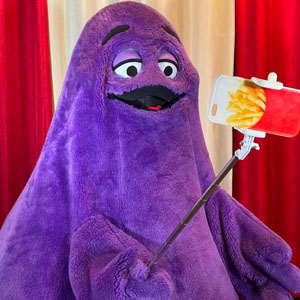
[00:20:20] Ray Latif: I want to hear you say fancy wine, fancy beer all day long. That was awesome. One thing I'll final final thought on this is that I do think that the Delta 9 cannabis that's being sold outside of dispensaries is kind of like a weird headwind for the Non-alcohol movement with some consumers. Yeah, and what about kava? We got to let Ray finish his segment here, okay? Thank you. If you said kava though. I'd 100% sell wasn't there wasn't the point of this to generate discussion No, no, we just say buy or sell okay buy sell that's it. We'll do kava in another segment. Okay. I'm with Jackie. I'm selling Alright, Grimace is more of a chill effing dude than Ronald McDonald. Buy or sell Jackie?
[00:21:05] Jacqui Brugliera: I'm selling. First of all, the name is terrible, Grimace. It means you're making a face because you think something's disgusting. It looks like a purple blob that looks like a knockoff of Barney.
[00:21:18] Ray Latif: I'm selling. I think Grimace predates Barney. He does, he does. He was probably the inspiration. Barney is a cheap knockoff. Grimace is a cheap knockoff. Minus all the hamburgers and french fries. All right, Mike? I'm with Jackie. What?
[00:21:32] Henry Hill: Grimace is not chill. He's got those googly eyes. He's always like he's like a gelatinous blob.
[00:21:38] Ray Latif: That's always like What he is so you'd prefer a creepy clown over over grimace well Ronald McDonald. He's friendly. He's a chill dude. You know Clowns are polarizing We're not talking about it Jackie it's Ronald McDonald I'm going to sell them both and go wait in a four-hour line at the new Cosmix that McDonald's just opened up. The new coffee shop. Four hours? I don't know. That's what the internet said, but it's the internet. I heard people also waited in line for a new In-N-Out in Idaho for eight hours. That also seems incredibly stupid. You could drive to another state that has an In-N-Out with no line or something.
[00:22:19] Jacqui Brugliera: There's always a line at In-N-Out.
[00:22:20] Ray Latif: That's true. Are you buying or selling? I already said, I'm buying. Grimace is definitely a chiller effing dude. He's chiller, okay. Because you think Ronald McDonald is Pennywise, basically. Yes. And did you know... He's Insane Clown Posse.
[00:22:34] Jacqui Brugliera: I want to see Ronald McDonald in Insane Clown Posse.
[00:22:36] Ray Latif: You can go ask, go ask ChatGPT when we're done. We'll do it. One last thing on this, The Takeout, which is a website that covers fast food and junk food. An interesting website, by the way, thetakeout.com. reported that Grimace was a top trending Google search in 2023. So interesting stuff. That's really odd. All right. Mike, last buyer sell. You'll eat cultured meat at some point next year. Buyer sell. Sell. Sell. You're not going to eat that stuff. I'm not eating that. No. Okay. Give me some. I want meat. I like meat. It is meat. You think? It's lab grown meat. Not yet. Not yet. Not yet. Okay. Jackie, I have a feeling you're going to sell on this because you don't eat meat.
[00:23:14] Jacqui Brugliera: Yeah, I'm selling. I mean, I don't eat meat and I don't really miss meat. So, you know, I'm just not gonna eat it. And it's just feels too manufactured for me.
[00:23:25] Ray Latif: Do you feel that it's better though, because it's not meat from a slaughterhouse or from, you know, animals grown to be killed?
[00:23:33] Jacqui Brugliera: Yeah, I know like some vegans are open to eating it because it is no slaughter meat. So I think it is a better for you option for the environment and for animals. But I think it's going to be polarizing and some people are just not going to try Kit Kat all.
[00:23:49] Ray Latif: Okay, John Craven. Well, I think the next year is a little too soon, but my guess is that the first time many people will end up eating cultivated meat is what I'll call unintentional cultivated meat, meaning it's like in some processed product.
[00:24:11] Jacqui Brugliera: Yeah. Well, I'm going to guess that we're all going to be sampling cultured meat on this podcast.
[00:24:16] Ray Latif: It's cultured or cultivated. It's cultured or cultivated. Okay. Same thing. You say cultured, I say cultivated. Fine. Yes. Sorry, Jack. Every aisle of Expo West. God, that's a horrible. Now that's more, I think it'll be more of a Knacks thing. Yeah. Yeah. Perhaps. It'll be like, Hey, we have 15 cent hamburgers because they come from cultivated cow meat. Yeah. I, I'm selling this. I mean, I just think that. We just consume too much meat as a population, as human beings, and cultured meat seems to be addressing the issue of lack of availability or maybe potential lack of availability of animal-based proteins. I don't really think it addresses the environmental issue associated with raising meat or raising animals to be consumed as meat. And I'm selling this. That's all I can say at this point. All right, in the limited time we have left, it looks like we have a bunch of new samples here. But staying on this trend of meat real quick, Jackie, you've got some dehydrated plant-based meat by your side there.
[00:25:19] Jacqui Brugliera: So I feel like this could also be polarizing. Some people wouldn't try this because it is shelf-stable plant-based meat. Rollin Greens. So Rollin Greens, I believe they launched with like millet tater tots. And then they went all in on plant based meat. This is their spicy chorizo. And then they also have plant based chicken. And when you like If you can hear it, it's like kind of crunchy. So it's dehydrated. I'm open to it. I'll try it. I mean, I hike a lot and I camp a lot. So I think it's something that would be useful for that. Dehydrated plant-based meat. It even says pack ready on the back. Are those apostrophe files on the, uh, on the packaging there? Yeah. Chick Ken and me eat.
[00:26:06] Ray Latif: Chick Ken and me eat.
[00:26:08] Jacqui Brugliera: Yes.
[00:26:10] Ray Latif: Yeah. We have some of this in the office and I grabbed a package and it really threw me off, honestly, because it says plant-based meat, M-E apostrophe, E-A-T. And this is their classic salt and pepper variety. It's a little strange for me, to be honest. I just don't know what I would use this for when I turn this around. And it's kind of weird. It's just it gives some instructions on how to prepare it on the back, but I feel the package and I see it on shelf and I realized that this is a shelf-stable dry pouch of something inside. And I'm like, how is this your replacement for meat? I don't know.
[00:26:46] Jacqui Brugliera: Yeah. I think also people that eat plant-based are open to it because they're making their own mixes at home sometimes, like with nuts and pea protein and things like that. So I think people would be open to it if they usually eat plant-based anyways.
[00:27:01] Ray Latif: This is super weird it the front of this says plant-based me eat and then classic salt and pepper But if you feel the packaging it feels like it's full of just salt and pepper.
[00:27:11] Mike Schneider: Yeah.
[00:27:12] Ray Latif: Yeah, that was a little confusing for me, too Honestly, that's very strange. Yeah, we should rip that open have a few a little Wash it down with some cuvee Blanc. That's 0% What is that? Yeah
[00:27:25] Jacqui Brugliera: It's a big bottle.
[00:27:27] Ray Latif: It's it is. It is a full-on Magnum here.
[00:27:30] Mike Schneider: I'm going to open it in a second, but this is a German cuvee blank number one. Imported by the, uh, God, how do you say the name of that New York retailer?
[00:27:42] Ray Latif: The one that's better.
[00:27:43] Mike Schneider: Yes. Thank you.
[00:27:44] Ray Latif: AKA beverage in French. They're going to be mad at me for selling for selling. Buy and sell I sold this idea of you know this I feel like is a little Directly at all the gear and take out the camera Okay, that was here you go since uneventful Ray is a master sommelier you can they used to call me Chardon ray, that's right oh He liked it. You know what I have not give Mike one too cuz it's no booze here. I am usually Weary of non-alcoholic. Yeah. No, that's what I was curious. I mean and a whole magnum to boot here You know, this is pretty damn good. I gotta tell you that's that's quite good. Yeah, this is um My my Germans worse than my French cologne Slash null could be a oh and an e slash null and the null We're called numpty row. Yeah. Yeah, I know I That's not a zero. Yeah, there's some, there's definitely some sour notes on this. It definitely drinks like a wine, a sparkling wine that is. Almost like a, kind of like an orange-ish type of wine, perhaps. There's no funk. But you know what? There is a little funk on the, in the aftertaste, which I like. Just a skosh. Enough It Makes you think it might be elk. Yeah, I know this definitely could be a good replacement for your sparkling wine. I really like this. I really like that a lot. Yeah, tasty. Thank you. That's very good. For sending. That is the exact opposite of the Doritos. So I'll tell ya. You know, that is something that surprised me in a very good way. That is something where, you know what? I would make a trip to a non-alcoholic Bottle Shops for something like that. I think I would too. Well, there you go. Eating those words from before. I just, I just ate a letter, I would say. Not a whole word or two. I wouldn'It Makes a trip to 10 non-alcoholic Bottle Shops for it though. Have you guys seen the new Wise Wize Tea Rebrand? W-I-Z-E, I have not. W-I-Z-E. It's got a cool character on it, and a nice flavor call out. There's the raspberry, apple, and what are you holding, Ray? I'm holding the mango variety. Really tasty stuff. This brand comes from Canada. It's Vancouver-based. We've known founders of this brand for a while now, and this is their latest iteration. It's really good stuff. It looks like they've leaned fully into sparkling now. Yeah, I love that they're using just sugar to sweeten this. It's only four grams per can. These are 12 ounce cans. carbonated water, real brewed Arabica coffee leaves, cane sugar, natural mango flavor, and lemon juice. Interestingly, they call it a sparkling iced tea, but it's made with brewed Arabica coffee leaves. Yeah, we used to talk, we talked about that a while back, whether they should be talking about cascara or whether they should just be talking about it as an iced tea. It tastes like an iced tea. It performs like an iced tea. They decided to lean into iced tea and it really worked for them. Yum. Yeah, it's really tasty. And I like also how it's a pretty uniform, like you said, Ray, four grams of sugar, 20 calories, like caffeine. They're all, you pick up one and you like it. The chances of you picking up another one, also liking it are good too, if you like the flavors. Cause the, everything else is, maintains that consistency that we like in beverage. I also happen to have some Shonen. Shonen? Elderberry Cream Soda. How is that spelled? S-H-O-N-E-N. There's also Banana Cream Soda that, I think that one didn't last. And they've got some other flavors. As in you drank it?
[00:31:27] Henry Hill: As in someone drank it. I brought my son in the other day, and he's like hey, what's this and he drinks it before?
[00:31:38] Ray Latif: Before thinking I was like you shouldn't probably have had that yet, but anyway, so it's good because ray 39 grams sugar It's a full sugar soda I Think there's a place in time for products like 100% yeah time and a place for it 39 grams of sugar just got to be ready to consume some or a Half that. Now, I do have a bone to pick with Shonin, because in the upper left-hand corner of the can, it says no artificial colors. And this is a 12 ounce slim can. It says no artificial colors. And then I go to the ingredients and it includes natural and artificial flavors within the ingredient list, which... That's not a color. It's not a color, for sure.
[00:32:20] Mike Schneider: That flavor is not a color.
[00:32:21] Ray Latif: But I would advise them to clean that up if they can and go with no artificial flavors if possible. And for those who were curious before, when I was drinking the aqua tea, which saved me from the Doritos booze, I'm having the lavender green tea flavor and it is excellent. Nice.
[00:32:39] Henry Hill: Do you want more repeat buyers on Amazon? Well, this free resource in collaboration with Straight Up Growth will help your brand turn first-time buyers into long-term subscribers. Download Winning the Repeat Purchase Game on Amazon now at Taste Radio.com slash SUG. That's Taste Radio.com slash S-U-G to start building retention-driven growth for your brand on Amazon. Scaling a beverage brand into major retail comes down to operational readiness. From packaging lead times to co-manufacturing strategy, the details can make or break a launch. In a new e-book in collaboration with Octopi and Asahi Beer USA, industry leaders share what they've learned in helping brands scale. Download it now at Taste Radio.com slash octopi.
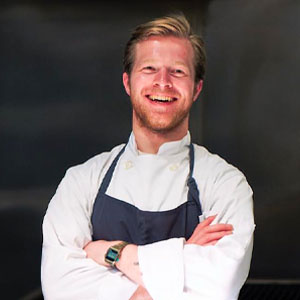
[00:33:29] Ray Latif: Alright, it's time to get to our featured interview for this episode. As I mentioned at the top of the show, Henry Hill is a chef and former beverage entrepreneur turned product developer for the food and beverage industry. The founder of Hill's Research Kitchen, Henry is tapping his experience from working at world-renowned restaurants and that of commercializing a coffee soda to help both emerging and established companies develop new products that can resonate with modern consumers. Our conversation, recorded at Nosh Live Winter 2023, takes a deep dive into his journey and how he is applying insights gained from years in the kitchen, along with those on a bottling line, to create unique sensorial experiences in new food and beverage products. Hey folks, it's Ray with Taste Radio. Right now I'm honored to be sitting down with Henry Hill, who's working with the Almond Board of California. Henry, great to see you. It's good to be here. Everyone in the audience is like, Henry Hill, I've heard that name before, and I don't want to go too far into this, but it's a very famous name, and I'm sure you've been associated with that name, well, since birth.
[00:34:36] Doritos Divide: Since birth, I, potentially even since conception.
[00:34:42] Ray Latif: Well, it's great to have this Henry Hill here with us. My colleagues have been singing your praises and talking about your work with food brands and what you bring to the table in terms of food science. Talk a bit about your background and again, some of your work with the CPG industry.
[00:34:58] Doritos Divide: Well, I started in the restaurant business when I was about 14 years old, washing dishes. My grandpa took me to a restaurant trying to grill me about what I should be doing for my career because I had completely lost any direction in life at the age of 14. At the age of 14, oh boy. And he told me that he'd help me get through college if I told him what I wanted to do right there. And I told him I had no idea. So I was looking around for an idea to tell him so I could get out of this dinner. And I saw some chef hats bobbing around in the kitchen, and I told him I wanted to be a chef. So he went up to the owner of the restaurant at the end of our dinner, and he said, my grandson wants to be a chef. And he said, well, we've got a job for a dishwasher. So I started washing dishes. And the restaurant next door was a famous French restaurant in the Chicago area called Carlos Restaurant. So I got friendly with the guys next door. They offered me a job and the sous chef took me under his wing and I started my apprenticeship. So my first position was the amuse-bouche station. At what age was this? This was, I was 15 at the time. What? Wow. So I was working the amuse-bouche station and Adam Grant, he took his old culinary school textbook out. And the cool thing about the amuse station is you can kind of do whatever you want.
[00:36:25] Ray Latif: Now, just for listeners who aren't familiar with an amuse-bouche, what is it?
[00:36:29] Doritos Divide: So when you have a tasting menu, before you get the first course, you get a little sample of what's happening in the kitchen just to kind of like excite things. And they call that the amuse-bouche.
[00:36:43] Ray Latif: A lot of times you'll see it in a little spoon with a little bit of food in it that you can just quickly take down.
[00:36:47] Doritos Divide: Exactly, exactly. So that was my station, and we would go through each chapter of his culinary school textbook and apply it to the amuse-bouche. And by the end of my apprenticeship, we'd made it through the entire book, and I was ready to move on to my first station, which was garmangerie.
[00:37:07] Ray Latif: Amazing. And since then, you've gone on to do some pretty amazing things. You have a Michelin star, which is remarkable. Congratulations on that. Thank you. Was that something that you were striving toward? I mean, do people, do chefs, and if we could answer very honestly, are you chasing that kind of accolade?
[00:37:26] Doritos Divide: I was for a long time. The Michelin Guide was always very elusive to me. Being in Chicago and coming up during a time where there was no Michelin Guide, I always wanted to work at a Michelin star restaurant. So the way that I got my first job at a Michelin star restaurant was by writing letters to all of them. And the first one to get back to me was a restaurant called Alize in Las Vegas. So when I was 18, I moved out to Vegas and started at Alize.
[00:37:57] Ray Latif: That was when Michelin was in Las Vegas. I don't think they're there now, are there? I know. It's just kind of ironic, right? It is kind of ironic. But, uh, the restaurant where you achieved that was in Chicago. And I imagine that it took a lot of work and hard work to get there and a lot of creativity in so many ways. I guess what, what really impressed the, uh, what do they call them? What are the Michelin folks called? The inspectors. The inspectors. What really impressed them?
[00:38:24] Doritos Divide: It's hard to say. I've only met a handful of them. I think that... The Michelin Guide rates based on, well, they're not really supposed to share exactly how they rate, but they rate based on, for the most part, creativity, consistency. And I think a lot of what plays into it as well is the uniqueness overall of the concept. It's impossible for an inspector to just be focused on the food because the whole experience really does influence kind of the way things taste, right? So, what was unique about the restaurant is that it's a concert venue. It's a historical landmark property in Pilsen, Chicago, with Thalia Hall, which is a 1,200-person concert venue, Deus Ex, which is the main restaurant dining room, and then Punch House and Tac Room, which are two ancillary bars on the property.
[00:39:17] Ray Latif: You know, what's really cool about the Michelin Guide and why I got interested in it is I wanted to learn more about the future of food. And, you know, they're at the forefront of gastronomy and the restaurants that are at the top of those lists are changing the way that people think about food. I'm going to flex here. I've been to Noma three times and it is just every time I go there, I am just blown away by what food can be. And yes, it's presentation, it's ambiance, but the flavor, the texture, the taste, I mean, everything is just, it's mind blowing in so many ways that you can actually do this with food. And I bring this up because that's what you're doing for brands. That's what you're doing for food brands is helping them to get to a level of flavor and texture that consumers aren't necessarily familiar with, but will love. And we have some of these samples right here that are infused with and incorporate almonds. And I'd love to sample through some of them and get through the process and talk to you about your process of how It Makes things taste better. Absolutely. That's a big topic. I don't know where you want to start with that. Let's start with, I mean, like, you know, you're, you're considered a food scientist at this point in so many ways, right?
[00:40:31] Doritos Divide: Other people have called me that. I don't call myself that, but other people have called me that. When did you get into this, this kind of gig? into commercializing food products. So it started when I was running the restaurant, I had an idea for a mocktail to put on the brunch menu.
[00:40:49] Ray Latif: You're way ahead of your time, I'm assuming, yeah, because mocktails are all hot now.
[00:40:52] Doritos Divide: Yeah, and this was like, I don't know, probably eight years ago or so. So I made a carbonated coffee. And we used to do a carbonated gin and tonic and we would carbonate it right there in front of you at the bar. And I'm a huge, like, I've always been a coffee addict. So I wanted to do something fun with coffee. And we did this carbonated coffee and people loved it. And it's really difficult to get carbonation to work with coffee. So I found a unique sweetener that paired well, and it kind of gave you that little slap in the back of your throat, that tanginess that you get from a traditional cola and kind of tied it in with the coffee. And so what I ended up using was a Granny Smith apple juice. And so it's this unique kind of like sweet, sour, tart, tangy flavor that pairs the coffee in with the carbonation. And people gave me great feedback. I thought it was such a great idea. Came up with like a really cool brand with like motorcycles on it and everything called Cafe Racer. And that was the beginning of learning what not to do when launching a brand.
[00:42:02] Ray Latif: Okay, so you had a brand. I had a brand. And you had a beverage brand, which is somehow even more difficult than I think than starting a food brand, just because of the, it's a volume game. And if you don't have the right volume and you can't meet your margins, you're in big, big trouble. And everyone who's listening who's a beverage entrepreneur knows this. But anyway, tangent, you know, learning how to work with the industry, learning how to work within the system and yet be innovative and creative sounds doubly difficult. you know, how did you find your way through this process? And, you know, how did you identify partners that could help you and help the brands that you work with achieve their goals? When I was starting or where I am now. After you, you know, after you launched your coffee company, because I assume that was the, that was the foundation for you realizing that you could help other brands.
[00:42:50] Doritos Divide: No. No. It wasn't. Okay. It wasn't. So it was the foundation for what I needed to learn to get to the next step. I jumped a step.
[00:43:00] Ray Latif: We jumped.
[00:43:00] Doritos Divide: Yeah, we jumped a little bit. So I made a ton of mistakes. I was able to commercialize the product, which was incredibly difficult with the amount of cash that I had. I was bootstrapped everything. So I found a manufacturer that would do a one pallet run for me and a flavor company that would cut me a small, like small samples. And the way that I got there.
[00:43:21] Ray Latif: One pallet run where they charge you like $18 a can? No, no.
[00:43:25] Doritos Divide: The way that I got there is I said I was going to do one thing every single day to get me closer to my goal. It didn't matter what happened. If I picked up a call, it didn't matter. And eventually figured it out. Going to market then once you have a commercialized product was a completely different ballgame that I really wasn't prepared for from learning that I needed to trademark my name. And I was in a 12 ounce bottle that a buyer eventually showed me literally does not fit on the shelf because all coffee drinks come in these small stubby Bottle Shops I learned a ton of what not to do. And I don't really think there's any other way to do it. You know, you really, you have to test a product to get it to market. And there's always going to be roadblocks and you're never really going to know what they are. So when I work with brands now, I always recommend Don't do a massive run because you feel confident about what you're doing. Always find a way to do a smaller pilot. Test the entire channel all the way through and find out where you can optimize. Because I've got those stories about my brand, but I've got a dozen more about other brands that I've worked with that have made small mistakes that have held them back from being successful.
[00:44:43] Ray Latif: When did you start working with brands to help them commercialize their products?
[00:44:47] Doritos Divide: after I worked in a lab. So after I launched the coffee brand, I partnered up with a distributor and a consultant from McKinsey. And we went out and did Expo West where I met the CFO of Kashi Foods, who was interested in doing something together. And I can't go into detail about the collaboration entirely, but I needed to reformulate my product to be cleaner label to meet their brand's identity so that we could do this collaboration. And after hiring another lab to help with the reformulation, we went back to manufacturing to scale up and the formula didn't work. So I was out all the money that we had and didn't know what to do. And I called my contact back at Kashi and he said, why don't you let me introduce you to a lab that we work with? And the lab was in Boston. So I flew out to Boston. I met with the owner of the lab. I pitched him my idea and he said, why don't you go in the lab right now and make me the drink that you make at the restaurant?
[00:46:01] Ray Latif: I think I know the lab you're talking about, but we'll save that for later.
[00:46:05] Doritos Divide: Well, you probably know the lab tech that he had me work with as well. So he gave me a lab tech and I went in the lab and I made him the coffee drink and he tried it and he said, this is great. I can tell you're a really talented chef. You've got a great background. I just can't dedicate a team and lose money on this, you know? So I don't know what to tell you. And then before the meeting ended, he came up to me and he said, why don't you come work here? Why don't you come work as a chef in the lab and you can help our scientists create better tasting products. And you'll learn about how to commercialize stuff and you won't need me anymore. And that's exactly what happened.
[00:46:52] Ray Latif: That sounds like a pretty good deal.
[00:46:53] Doritos Divide: It worked out. Yeah. Yeah. So how many brands have you worked with since? I don't know.
[00:46:59] Ray Latif: So it's been a lot. Yeah.
[00:47:02] Doritos Divide: I've been independent now for. Like five or six years.
[00:47:07] Ray Latif: Okay. I mean, you can work here for yourself. And I think that's the dream of any entrepreneur is to be able to like call your own shots. That's a great thing. And it sounds like you're doing some amazing things with brands. And I keep looking at the products that we have here and I just want to rip right into them. Now, are these products that we have on the table here, are they being commercialized for brands or are these just like a sampling of what's possible using California almonds?
[00:47:31] Doritos Divide: But these samples are the brainchild of an ideation sponsored by California Almonds and a collaboration with TasteWise, which is an artificial intelligence platform.
[00:47:45] Ray Latif: What? TasteWise, an artificial intelligence platform that helps commercialize products?
[00:47:52] Doritos Divide: No, but helps with the ideas of products that could be commercialized.
[00:47:58] Ray Latif: OK, so the first one I'm looking at, this is an almond butter and miso chili crisp. There are algins in here, there are nuts, sesame and soy. Nuts? Anyway. No, I've been excited to try this since you brought it out. I'm going to put this microphone down and bite into it. Hold on. Got some nice audio there, I hope. All right, I'm going to stir this together. While I'm eating this, can you talk about the ingredients that you use and why they should work together?
[00:48:28] Doritos Divide: I can.
[00:48:31] Ray Latif: How deep do you want to go? Probably 60 seconds worth because that's how long it's going to take me to eat this.
[00:48:36] Doritos Divide: So the idea behind the ingredients and how they come together is actually a huge part of how I think about food in general. And in short, I've put together basically a flavor theory. which is based off of music theory. And I had a jazz guitar lesson and the instructor said to me, I was trying to figure out how to play jazz guitar and improvise on jazz guitar. And it's really hard and it's hard to wrap your head around. And I told him how I was struggling. And he said, you know, Henry, music at its most basic definition is the organization of sound. And that's something that like blew me away and I brought it with me into the food world and the product development world. So when I think about flavors and flavor pairings, it's really not this out there idea. You know, there's a way that you can organize it and distill these ideas into a product. And so organizing flavors into flavor theory is how we got to these results.
[00:49:46] Ray Latif: I'm still chewing, so hold on. You know, I said I was gonna give you 60 seconds to talk about this. I was only expecting to have like one or two bites. Did you see me? I looked like a fiend eating this thing. It's so freaking good. I can see why they call it Nosh, yeah. The flavors all really work so beautifully together. This actually feels like something I would eat in a Michelin-starred restaurant. And I'm not trying to like butter your bread, to use a restaurant term there. It's so good. And you know what's really amazing? How did you prepare the almonds? Because they're perfectly aligned with what I'm eating in here.
[00:50:25] Doritos Divide: So this is a combination of both toasted slivered almonds or sliced almonds and almond butter. And so those are two products that are ready. They're industrialized, they're commercialized, and those are commodities. You didn't do anything to the almonds or the almond butter on their own? No. Wow. This is a product that's meant to be scalable, commercialized, and can go in a product and sit on the shelf for a year. Wow. It's not so artisan, you know? Okay. And that's the whole idea of what we do in product development and CPG. So what I try to do is take product development and combine it with some of the more qualitative aspects, right? So what's happening? What are some unique platforms? What are some interesting flavors and how can you layer them in a way that hits every different part of the palette? And how does that resonate with the customer? And I think that's kind of how you create a great product.
[00:51:23] Ray Latif: Well, you know, what's awesome about this, like you could actually just serve this or sell this on its own as like a chili crisp or salsa matcha type product. But I also imagine this as a marinade for something, whether it's like a beef jerky or a chip or something like that, where it just like enhances the flavor so much. It could even be a salad topper. Sure. Yeah, absolutely. So, so good. Well done, Henry Hill right. So now we have an almond milk and orange blossom energy gummy. Oh boy. Okay. Can you please explain this product? I'll give you, I'll give you a 65 seconds for this one because I'm going to have to chew through this one. So.
[00:51:59] Doritos Divide: The idea here was that we were talking about ways that you can test a product to market with a low barrier of entry. What I learned commercializing a beverage is It Makes a lot of money and it's Very difficult to do. So there's a lot more manufacturing available for gummies. You can take the same functional ideas that you want to use to start your beverage and very similar flavor profiles and use a format that's easier to get to market with. It's cheaper. Test your brand, test the idea, test the message. And then when you want to expand, you can add another SKU and expand into beverage once you've validated the idea.
[00:52:41] Ray Latif: So if I'm hearing this correctly, if someone starts out with a beverage brand, you can test out another product line or am I misunderstanding what you're talking about?
[00:52:50] Doritos Divide: The other way. Okay. So for a lot of entrepreneurs, if you want to start your first ever brand with a beverage, it's incredibly difficult. It's capital intensive. You're probably going to need like $5 million to do it right. He's not speaking not the truth. It's true. You need $5 million and the chances are that you're not going to end with the product that you started with. grand on R&D, you're probably going to need to do it five more times because you're going It Makes it to a buyer who's going to tell you you have to change a packaging or a label or the flavor, the nutritionals, and it gets very expensive. So the idea behind the gummy was if you want to create an energy drink line and you don't have $5 million, you could start with less capital, test the brand, validate the product, and then expand once you have kind of validated the idea.
[00:53:43] Ray Latif: That is amazing. I've never heard of that. And I've been following the beverage industry and covering it for, geez, 12 years now. And I've never heard of someone saying, start with a food product to validate the flavor and concept, essentially, of your potential beverage brand. It's build, test, learn for poor people.
[00:54:00] Doritos Divide: And that's me, I started broke.
[00:54:02] Ray Latif: Don't worry, there's a lot of poor people listening to this one. I'm going to include myself in that one, but anyway, tangent. But that's the thing, I think you're 100% right, Henry, in that it's so difficult for a beverage entrepreneur to achieve their vision without a lot of money, frankly, but also with the minimal amount of validation that It Makes to go to market. Because if you go to market with a concept or a flavor that is less than optimal, you're going to have a really, really hard time making that next step.
[00:54:36] Doritos Divide: The brands that I work with now, they don't commercialize a product and then show it to a buyer. They get the sale before they ever make the product.
[00:54:44] Ray Latif: I heard that today, actually. That kind of blew my mind. Someone, someone else I was talking to said that. I was like, really?
[00:54:49] Doritos Divide: Okay. And that's the power of a brand. And that's the power of relationships. And that's the power of having your foot in the door already. And so that's what I'm saying with the gummy. I'm saying get your foot in the door. And then once you're there, then you can start showing R&D samples to the buyer or get an intro to the beverage buyer and start to test those ideas with the buyer first. And maybe you can even get an order that finances your first run.
[00:55:12] Ray Latif: get your foot in the door, but you can't fool folks like once you do get your foot in the door, the product's still going to taste great. And I think that is something that is consistent, has been consistent forever, even through this whole like last 15 years of functionality and whatnot, probably less time than that. But, you know, one of the cool things about trying all these products is Aside from the energy in this gummy, the thing that really stands out to me first and foremost is taste and the use of the ingredients and formulating them harmoniously to taste amazing. We have one more here that I'm going to try to sample. This is an almond butter chamoy filled biscuit stick. Did I pronounce chamoy correctly? Yeah, I did. What's chamoy?
[00:55:51] Doritos Divide: C-H-M-O-Y. Chamoy is a combination of hibiscus and tamarind, and it's used in mango natas, which have been very popular now. So a mango nata is this mango smoothie that gets a drizzle of chamoy. And a lot of times there's a little stick that's shoved in the side as well. And so I, Being a Pilsen guy, which if you know Chicago and you know Pilsen, it's a very Hispanic neighborhood. And I've got a La Michoacana right across the street from my apartment. So I have been drinking a lot of mangonadas lately. And I can't say it didn't influence the ideation a little bit. So I decided to distill that idea into a snack and see what that would look like. The idea is very scalable. The stick part of the wafer tube is actually can be commercialized using, have you seen those big tube in the international aisle? that are filled with the cream, you get a tin, and I try not to get them because I always just crush the whole thing. Imagine that, but a savory version. So you can have a wafer tube, fill it with Chamoy spiced almond butter, and then part of it was enrobed and dusted with chopped almonds and dried mango.
[00:57:16] Ray Latif: You're killing me, Henry. This is so delicious. I think the question I have about a product like this is how do you do Kit Kat a reasonable cost? Because that's another huge part of commercializing a product is getting to a place where your margins actually make sense. Your price It Makes sense. Not just for, you know, the natural channel, but hopefully conventional and beyond.
[00:57:36] Doritos Divide: Something like the Chili Crisp and the Gummy. It's already there. We know what the margins are going to be like. Other products exist on the market in a very similar format. There is another product on the market that exists in a very similar format to what you just tried, but it's hard to say exactly what that cost would be right now because that is more of a blue sky kind of ideation concept. That equipment exists right now. I could make you one of those tubes filled with the almond butter. And I could probably get Kit Kat a price point that wouldn't completely gouge the consumer. The enrobing and the nuts on the outside would take probably CapEx to do. So it's hard to say exactly what the margins would be on that, but I can get back to you.
[00:58:29] Ray Latif: I mean, it also helps if you have good relationships with your suppliers. And I think this is where the Almond Board of California comes into play, which is I'm sure they are looking for ways to incorporate almond ingredients as much as possible into as many brands as possible. I would think anyway. Do you know, I mean, are there ways that you work with suppliers to help brands, you know, get to that cost structure that makes sense?
[00:58:57] Doritos Divide: Yes, but it isn't always the way that the entrepreneurs want it to be. A lot of times you start with a really great idea and in order to get it It Makes sense, on the shelf, you need to pull certain levers. Some things are too expensive. Sometimes it's a matter of knowing the right supplier to go to and getting better cost. Sometimes it's a matter of you're going to just have to invest in the volumes of buying a lot of ingredients to hit your cost. So cost is a big factor and it's something that I work around a lot. It's possible to do all these things in a cost effective way, but volumes are always, always, always the challenge.
[00:59:41] Ray Latif: Do you know if an organization like the Almond Board works with early stage entrepreneurs to help them, you know, commercialize these products, essentially incubate, given that, again, they are advocating for suppliers, for almond farmers?
[01:00:00] Doritos Divide: The function of the Almond Board is to service farmers and to build awareness around almonds. So the Almond Board of California does a lot of Research Kitchen nutrition, does a lot of Research Kitchen sustainability, does creative concepts like these to provide inspiration for budding entrepreneurs, but is brand agnostic. because all the growers are a part of the almond board. So all of the growers are suppliers and we can't point to one over the other for that reason.
[01:00:36] Ray Latif: Gotcha. Henry, well, I got to tell you, my colleague, John Craven up to me maybe an hour or so ago and said, hey Ray, you got to talk to this guy. His name is Henry. He's pretty awesome. I think he used the term food scientist. So I apologize if, you know, he was misnaming your profession. But anyway, I would say chef. Chef is probably the most appropriate profession for what you do, right?
[01:00:58] Doritos Divide: Yeah.
[01:00:59] Ray Latif: I've got the tattoos to back it up. You've got the tattoos to back it up. But I am so glad that we had this opportunity to sit down. I'm so glad that you were willing to come and sit down with me to chat about all this, because I wasn't expecting, honestly, the discussion that we just had. And I know it's going to be so helpful to our audience. So thank you so, so much. Oh, thank you. I appreciate it. Thanks so much for making this amazing food. I didn't have lunch, so it's just doubly delicious to have this as being my lunch for today.
[01:01:27] Doritos Divide: All right. Well, next time you're in Chicago, We'll do lunch.
[01:01:30] Ray Latif: Okay. I love this idea. I'm going to hold you to that. All right. Sounds good. Thanks so much, Henry, for being on Taste Radio. Thank you. I appreciate it. Good to be here. That brings us to the end of this episode of Taste Radio. Thank you so much for listening. Taste Radio is a production of BevNET.com, Incorporated. Our audio engineer for Taste Radio is Joe Cracci. Our technical director is Joshua Pratt, and our video editor is Ryan Galang. Our social marketing manager is Amanda Smerlinski, and our designer is Amanda Huang. Just a reminder, if you like what you hear on Taste Radio, please share the podcast with friends and colleagues. And of course, we would love it if you could review us on the Apple Podcasts app or your listening platform of choice. Check us out on Instagram. Our handle is bevnettasteradio. As always, for questions, comments, ideas for future podcasts, please send us an email to ask at Taste Radio.com. On behalf of the entire Taste Radio team, thank you for listening, and we'll talk to you next time.
[01:02:30] Mike Schneider: you