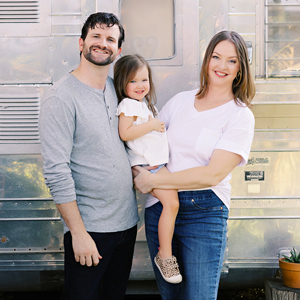
[00:00:10] Ray Latif: Hello, friends. I'm Ray Latif, and you're listening to the number one podcast for the food and beverage industry, Taste Radio. This episode features an interview with Serenity and Joe Carr, the co-founders of fast-growing premium baby food brand, Serenity Kids. Just a reminder to our listeners, if you like what you hear on Taste Radio, please share the podcast with friends and colleagues. And of course, we would love it if you could review us on the Apple Podcasts app or your listening platform of choice. Their flagship products have a suggested retail price that is nearly double those of legacy and competing brands. And yet, Serenity Kids is thriving. Launched in 2018, Serenity Kids markets shelf-stable, low-sugar baby and toddler food made from organic and ethically sourced ingredients, such as regenerative farmed meats. The brand's pouches and grain-free puffs are sold in almost 8,000 stores across the U.S., a footprint that includes Walmart, Whole Foods, Target, Kroger, Wegmans and Sprouts. According to the company, Serenity Kids' revenue has increased by 150 times year-over-year since its debut and has raised $11.5 million in funding to date. Founders Serenity and Joe Carr note that sales growth and investor confidence are indicative of a shift in buying patterns whereby parents are seeking out and paying a premium for high-quality and nutritious products for their children. In the following interview, I spoke with Serenity and Joe about their path to entrepreneurship, how a non-traditional focus group and decades of declining quality in the baby food aisle gave them confidence that Serenity Kids would fill a real need, and why maintaining a premium price point is key to the brand's value proposition. They also discussed their thoughtful sourcing and operation strategies, how they developed a sophisticated understanding of the packaged food industry, and their rigorous hiring process. Hey folks, it's Ray with Taste Radio. Right now, I'm honored to be sitting down with Serenity and Joe Carr, the co-founders of Serenity Kids. Serenity Joe, great to see you.
[00:02:34] Joe Carr: Thanks.
[00:02:34] Ray Latif: Great to be here.
[00:02:35] Joe Carr: So good to be here, yeah.
[00:02:36] Ray Latif: Yeah. Is this your first time to Boston? I should have mentioned that we're here at our offices in Newton, Mass, which is not too far from downtown Boston. And we're in our luxurious studio here. This is the luxurious studio at DevNet HQ. It's beautiful. Beautiful. Looks like a cocktail lounge.
[00:02:51] Serenity Kids: It does. A speakeasy.
[00:02:53] Ray Latif: Yeah, it really does, but yeah, is this your first time to the city my first time it is Joe's I actually stopped in Boston on a cruise with my grandma once Wow, I didn't even know we had Stop by here.
[00:03:06] Serenity Kids: We took a duck boat tour and went to a bar made of ice.
[00:03:09] Ray Latif: Oh, yes. I heard about that That was when was that like?
[00:03:14] Serenity Kids: Maybe eight.
[00:03:15] Ray Latif: Yeah, maybe time interesting. What was that experience like?
[00:03:19] Serenity Kids: The ice bar. Yeah Well, it was kind of about what I expected.
[00:03:24] Whole Foods: It was super cool.
[00:03:24] Serenity Kids: It was cold. It was darker in there than I thought. I guess it would look super dorky if they didn't have all the colorful lights lighting up the ice sculptures and couches and, you know, shot glasses and things. But it was kind of cool. I showed pictures to my four-year-old today. She's like, whoa, did Elsa make that?
[00:03:41] Ray Latif: Oh, that would be a good guess.
[00:03:42] Serenity Kids: So that was, you know, fun to share that experience with her.
[00:03:45] Ray Latif: Yeah, no ice bar here. It's a beautiful day in Boston today.
[00:03:48] Serenity Kids: It's so pretty. We had such a good time walking around downtown.
[00:03:50] Ray Latif: Yeah, yeah. So, Joe, what are you most excited about when you're visiting Z, other than coming here to BevNET HQ? Seafood. Seeing food. Eating the seafood.
[00:03:58] Joe Carr: Oh, seafood. Yes.
[00:04:00] Ray Latif: Yes. Lobster, shellfish. Chowder. Gotta get the chowder. Chowder. Yeah. You guys told me before we hopped in the mics that you're heading to a restaurant called Salty Girl, which was interestingly already brought up on this podcast once this year. So someone who came in to record an interview with us, he told me he was also going to Salty Girl, which is a fantastic seafood restaurant on Newbury street in Boston, or just off of Newbury street in Boston. And we've highly recommended it once. I feel like you guys are going to have a fantastic experience there as well. I can't wait. Now the tradition after recording Taste Radio, go to Salty Girl. Yes, that's a good idea. We should start that tradition of once you're done, and once Ray, you know, beats the hell out of you here on Taste Radio, please go get yourself some lobster rolls and chowder and make yourself feel really happy about what you did. Just kidding. I don't beat the hell out of anyone. I'm interested to hear the stories. I'm interested to hear about amazing stories, really, as is our audience. And Serenity Kids has a pretty amazing story. You guys have grown incredibly, amazingly, rocket shippily. That's a new word. Yeah. Over the past five years. 2017 is when the brand launched, yes?
[00:05:11] Serenity Kids: We first started selling product in 2018. Okay.
[00:05:14] Joe Carr: Yes, we had the idea in late 2016. So it depends on what you count as launch. We kind of announced it and made a big deal out of it in 2017. And we were a couple months from launch for about two years. Two months from launch, two months from launch, and then it just kept messing up. But then finally products came out in late 2018. Actually, the same day our daughter was born. August. August 5th, 2018, our daughter was born, our products launched. Was never meant to be, or never planned to be, but obviously meant to be.
[00:05:43] Ray Latif: And, you know, again, here you are. It must be a trip. Earlier this year, Serenity Kids got into Walmart nationwide. That was in May. Again, from launching your brand in 2018 to being national at Walmart four years later is not common. It's pretty crazy. And it's something that you guys should be proud of. How is it going in Walmart right now?
[00:06:04] Joe Carr: It's so good. We launched in about, they originally told us 800 stores and then they ended up giving us 1,200 because we had product when no one else did. So they flooded us into a bunch of other stores to fill out of stocks. And now they're expanding us to 2,800 stores early next year. So we're about to double the Walmart store count. So we're one of their, must be doing well.
[00:06:25] Ray Latif: When you guys launched, I think there would be a lot of people who if you told them you were in Walmart with regeneratively farmed baby, bison baby food, they'd be like, uh, yeah, that's just not gonna happen. Maybe it'll be like an Erewhon or some like organic food store, like in, you know, Oregon or something like that, but there's no way you can be national in Walmart. You had a vision and this vision is really coming into reality. becoming reality.
[00:06:54] Serenity Kids: Yeah, it was actually for me, I have a supply chain background, and we had read case studies about how Walmart had put companies out of business. And I was terrified to go into a big chain like that because I knew they could squeeze us on price and they were a little hard to work with, with order fulfillment and things like that. And I wasn't sure if we were ready to handle that, to grow up that much, that quickly. But my head of sales is amazing. And she said, Serenity, you can reach more babies if you launch at a big chain like this. They're not shopping at Air One, right? And I'm like, man, she knows the way to my heart. It's the babies. That's why we started this company. And I'm really, really proud that we have so much access available now.
[00:07:37] Ray Latif: And it's funny because the consumer has grown with you, right? The consumer in 2018 has an evolved sense of baby food more so than they did even a short time ago. When you had this idea to start the company, you mentioned it was right around the time when you had your first child. And, you know, I'd love to hear about how those two sort of correspond if they do at all.
[00:08:04] Serenity Kids: They completely do. Joe and I, back in 2016, we were at a paleo conference in Austin, and we started talking about starting a family someday. And I started feeling all fuzzy and maternal, and I'm like, Joe, let's go find the baby stuff here. And we looked and looked and didn't find anything. And I went up to the head of the conference and I'm like, hey, where's the baby stuff? And she said, you know, I ask that same question every single year. In fact, I was thinking about launching a paleo baby food company. And I was like, huh, what a bummer. I guess we'll have to make our own baby food company.
[00:08:35] Joe Carr: She had bought CaveBaby.com. We were like, I don't think we're gonna call it CaveBaby.com just to be clear. Cave was a big buzzword in the paleo community back in the day. It already sort of died by that time, but Serena and I had both healed ourselves through paleo, so paleo was a big part of both of our personal health journeys. And so that conference and that community was really important for us. And I was just at a time when I was looking for a new business to start, and I had read Tim Ferriss's 4-Hour Workweek. And he said, find a community, a niche community you're a part of that has a gap, fill the gap, And, you know, that's your sort of secret to an easily successful product. And so, Paleo was one of those communities that I was like, what could we maybe fulfill here? What kind of gap could we find? And so, when we discovered the lack of Paleo baby food, the gears started turning for me around, oh, maybe we could make like a little, you know, four-hour workweek style Paleo baby food. We actually bought and still own paleobaby.com. We didn't do Cave Baby without Paleo Baby, maybe. But then Serenity Kids the research on baby food in general and it got real big real fast.
[00:09:49] Serenity Kids: Yeah, 2016 was probably my summer of nerddom. I read and researched and listened to podcasts and did all this infant nutrition research. I mean, I had done it for myself for grownups, you know, 10 years prior to that. But I didn't know what babies needed. Most people who aren't parents don't know what babies needed. And looking at the baby food aisle, it's pretty much, I would say 99% carbs, at least before we launched. And it's all fruit. And when you look at breast milk, the composition from a macronutrient profile, there's a lot of fat, there's a lot of protein, there's a lot of carbs, right? You kind of need something more balanced. And so after we did that research, I got mad, really, really mad, because babies don't get to choose what they eat. They eat what their parents give them. And that's their, you know, I mean, they cannot eat it, right? But I mean, everyone who's tried to feed a kid knows they cannot eat some things, right? I was just thinking if I hadn't gone down this really, really difficult health journey for myself, and if I hadn't taken the time and hadn't had the privilege to be educated in the way that I had, I wouldn't know what babies needed, which is, you know, the proteins and the fats and the vegetables. I would go to the grocery store and think, oh, those big food companies, they care all about my baby and they just want to give Whole Foods that are healthiest for my baby. When we first started the company, you know, meat in a pouch might not seem like the most appetizing thing. And so we knew that we needed to share the stories about kids who already did like it with moms that were like, hmm, you know, I don't know about this. Maybe that's kind of weird. I haven't seen this before. It's a new thing. And I thought that it was going to require more education than I think it actually did. So, for example, I have a cousin who lives in Murray, Kentucky, with three kids. And she said, oh, there's no meat in the baby food aisle. Why not? That's what I eat. That's what our family eats. That's what we eat to be healthy people. Now, they're not necessarily an organic household. They don't know what regenerative farming is. But to them, it was kind of a no-brainer. So we have really had a harder time educating the more natural consumer. Because in some of those stores, at least when we started launching, meat was just coming out of the vilified era, and regenerative farming was being talked about. And you could talk about grass-fed, grass-finished. And you could talk about replenishing the soil and drawing down carbon using cattle. But before that, but that's been a real educational piece too that we've really had to do with. a lot of our Whole Foods customers and natural consumers.
[00:12:27] Joe Carr: A lot of the other baby foods had tried to make meat products. Almost every other brand had a couple of SKUs that had meat in them. And still do, some of them. And they still have those. But they were gross. They tasted really bad. To try to keep the cost down, they would mix them with grain and legumes. They'd boost protein with legumes. They'd do this legume, beans and meat-grain combo, which if you don't add any salt in there, which you can't for baby food, It tastes awful. And so they would try to sell these products and then the babies wouldn't like them because they're gross and then the companies would just think, oh, we can't sell meat. So they just stuck with the sugary fruits because it was easy to get the kids to eat. So we were a little concerned initially also, like, will babies eat this? Is there only fruit on the aisle because babies really won't eat any meat? So our first thing was to make these in the kitchen. So when we first had this idea, we went and made a bunch of baby foods. We were living in a housing co-op with 12 other people. and we had to reserve the kitchen to make baby food, which was pretty weird for our roommates because we didn't have any baby, we weren't pregnant, we barely had any friends with kids. So we tried these different recipes of just meat-veggie combos that we knew tasted good and were the right balance of protein, fat and carbs based off of the breast milk composition. So Serenity Kids enough science to know we wanted to know what the nutritional ratio should be and just started mixing meat and veggies and pureeing and tasting ourselves and found stuff that we liked and then passed it around to babies
[00:13:53] Serenity Kids: I'll never forget my friend Camille had a baby and she was part of the paleo community, which is where we went first, right? Like, let's talk to our own people. And we dropped off the pouches, and the next day she texted me a picture of her, a nine-month-old son, holding one of our pouches and drinking it. And she said he ate the whole thing, he sucked it dry, and he wouldn't let it go for the rest of the day. And I remember I started crying. Like, I was like, oh, these babies, they know what's up, right? It's not that it tastes bad or that babies won't get it or babies don't like it. It's just that for whatever reason, and now we understand the reasons, no companies are making it. It's hard to make, and it's hard to make well, and... And certainly cannot be made cheap.
[00:14:38] Joe Carr: That's right. So, you know, our willingness to charge what the cost of food should be, which turned out to be double the other baby foods on the aisle, a very important part of our journey to prove that Parents were willing to pay more for better food, for better ingredients. We really raised the ceiling, doubled the ceiling on the aisle from $199 to $399 and now there's lots of baby foods in between that $199 to $399, so we really opened up a new level of premium ingredient. But the taste has been essential, and when we ask consumers, they tell us they buy it originally for the nutrition, they read the ingredients and the nutrition, they like it, but they buy it again because the kids like it so much. And not just babies, but older toddlers, our daughter's four, and we'll tell you her favorite food is pouches, like she will eat as many of those pouches a day. And she was raised on them, so like you said, it helps if they're introduced early. and they can adapt to the savory flavors. But my seven-year-old nephew, he wasn't raised on any of that. He's fed a diverse diet but he certainly had fruit pouches and he'll eat them now.
[00:15:43] Ray Latif: Does regeneratively farmed food taste better? I mean, is that a big part of why you use those types of ingredients?
[00:15:50] Serenity Kids: It wasn't originally part of why we used it at all. I mean, at least for me, it was the nutrition part. But luckily, magically, awesomely, it tastes way better. So we're getting the perfect mix of nutrition, taste, and convenience.
[00:16:08] Ray Latif: Is that how you explain that sort of to consumers who are like, okay, why am I paying $4 for this pouch? Is it it's because we're using really high quality ingredients that also taste better? I mean, is that a big part of that communication?
[00:16:20] Joe Carr: Not really. The meat is one of the key factors that justifies the price. A consumer knows that meat costs more than fruit, and grass-fed meat costs more than regular meat. So there is an upcharge to the meat that we're able to get away with. We have vegetable products as well that are in between price. They're at about $2.49. And they don't sell as well in conventional. They sell great in natural. Conventional consumer has a harder time seeing the value of our vegetable products and why the price is higher than they could get another veggie product that also has fruit and has some sugar, which ours don't, and also have fat. So that's kind of a slower education thing for conventional consumer on the fat piece. But the meat, they know. And at some level, like Srini said, I think conventional consumer wants meat more than the natural consumer out the gate, which is, I think, why our meat SKUs have done the best, where we're the top selling, we're the fastest velocity brand in Kroger, we're the fastest velocity brand in Target, you know, and those, if you would, like you said, regeneratively farmed bison in Target would be a top seller is hard to predict, but on some level, even easier than natural.
[00:17:32] Ray Latif: I mean, it's not too much of a surprise to me that velocities are great, because I have a daughter and I'm trying to remember when she was like two. I'm just trying to think about making some sort of lunch or dinner for her. And like the convenience factor for working parents is.
[00:17:48] Joe Carr: You can't put a price on it, really. And it's one of the reasons COVID was such a boost for our business, because they had their kids at home, and the last thing you want when your kid's at home is to give them a bunch of sugar, because they're going to bounce off the walls. And the fruit pouches don't actually serve as a meal replacement. They're just a snack, and they're all carbs, so they're not really going to work as food. whereas our pouches, because they're meat-veggie-fat blends, they're a complete meal for a six-month-old or a part of a meal for an older kid. And so when they had their kids at home, they started using our products more and other products less, and so all baby foods went down during COVID. Our buyers' theory was that they're mostly used for travel and you're not going around town a lot during COVID. They weren't buying the fruit pouches as much, but because they had the kids at home and ours worked as meal replacements or really hearty snacks, they bought them more. So we continued to grow through COVID.
[00:18:41] Serenity Kids: I also have a theory. When we were doing the research for the company and the products that first summer, one of the people who lived at our house worked at a daycare. And she said, oh, you guys are going to make baby foods. We hate those pouches. In fact, every Monday morning, each parent brings in this big bag of fruit pouches, but we don't give them to the kids until exactly 30 minutes before pickup. Because we know that after that point, meltdown city, and we're not gonna deal with that. We're gonna let the parents deal with that. If they choose to send that food to school, we're gonna let them deal with the consequences. Which I thought, whoa, daycare personnel know what's up, right? And they, you know, she had ten two-year-olds to deal with. Can you imagine?
[00:19:26] Joe Carr: That's that intangible benefit that even now with our four-year-old, if she is reaching that hangry stage, you can sort of tell when they're getting fussy because they're hungry and we're not in a place where we can stop and have a meal. One of our meat and veggie pouches, it's like the perfect blood sugar stabilizer. It's that right balance of protein, fat and carbs that tides her over and stops that meltdown. And like you said, you just can't put a price on that.
[00:19:50] Ray Latif: No. Proof of concept, when it comes to taste is something you had. Yes, Renata, you talked about, I mean, I guess this is sort of a focus group of one, but it's a bit, it was a big one.
[00:20:00] Serenity Kids: It was a big one.
[00:20:01] Ray Latif: Yeah. I mean, it told you that there was a market for this, at least for, you know, for, for some parents and some kids, you know, having a kid just hold on to a pouch and not let it go all day. You know, you have something, maybe it's not for everyone, but you know, you have something. Convincing retailers that you have that something, too. What was that process like when you were approaching your first retailers and talking to them about the potential for a premium baby food, for premium baby food in pouches?
[00:20:26] Joe Carr: We really relied on the performance of products like ours in the rest of the store. So we had data, you know, public data on grass-fed beef sales, on low sugar, healthy fats. It was fairly well known at the time that Ethically sourced meat and healthy fats and low sugar products were all on the rise. You know, keto was kind of coming out and Paleo had been a huge movement, so we really looked at the Paleo movement and this ethical meat, fat, low sugar story. And because we had sort of multiple trends all at once that we were hitting on the baby food aisle, they were a little bit more willing to take a risk. But ultimately, Whole Foods was the leader for us. We had been pitching Whole Foods all throughout, they'd been doing all kinds of structural changes, including the Amazon acquisition, all that was happening when we were developing our products. By the time we actually launched in August of 2018, they'd finally got a baby buyer, they'd finally got stabilized, and just a couple months after launch, the Whole Foods buyer, who we'd never actually met with or presented to, called my cell phone, and I just answered, assuming it was a spam caller, trying to get taken off the list. And he's like, this is Caleb at Whole Foods, the Whole Foods baby buyer. I was like, really? Is somebody pranking me? Whole Foods buyer calling my cell phone? He's like, yeah, I've got your products on my desk. I have five products we can't launch that were supposed to launch in February that aren't going to launch, and I need five spots nationally by February. And this is November, which is like lightning speed for Whole Foods. And I was like, I don't have any idea how we're going to do that, but let's do it. So he said, all right. So we committed to that. We'd had the beef and the chicken products launched already.
[00:22:11] Ray Latif: And is this for a specific region or national? This is national. Wow.
[00:22:14] Joe Carr: Every store, five spots, three to five spots, he said. So some stores only did, you know, a couple of the meats and then some did. We'd started developing the salmon and the veggie products actually from having met with Target. Target had told us six minimum. to actually get any kind of notice being noticed on the aisle. Our three wasn't enough. So after that had begun developing and had our salmon product and our four veggie products under development, so we just fast-tracked those, got them out as soon as we could to hit that February Whole Foods launch. And so we went from one little baby store in Austin to 450 Whole Foods stores nationwide with three to five products. And then that gave us unified distribution, it gave us a really great... And since Whole Foods is so generous with data, we were able to get free data, so we had a really strong selling story. And we were just top sellers out the gate. I mean, we really very, very early dominated the aisle. The double the price helps with the velocity story, because we're looking at dollars rather than units. But there's nothing like it, our packaging was so unique, people were looking for meat, they were looking for low sugar, we were the only thing remotely low sugar on the aisle. So even if they weren't looking for meat, just looking at sugar content, they might have taken a little bit of a risk on meat or edged into there just looking for low sugar. healthy fat and the meat combined to make this really great selling story. And then we took that to retailers across the country. We had an outsourced sales team that pounded the pavement to expand that unified distribution into more doors. And by the end of that first year, we were in 2000 doors. Wow.
[00:23:51] Ray Latif: See, I think that's also a misconception, and maybe I'm wrong here, maybe you guys can elaborate. But I think there are some people who think that part of the store, the baby aisle or baby section, is not heavily trafficked. But I think it probably is more so than people realize because people are always shopping for baby food. And when they do see a new product like yours and they may pick it up and say, okay, I'll buy one and see how this plays, you know, and then if it plays well, you continue to buy more. But was that the way it worked? I mean, how did you get more people to realize, to become aware of your products? Because again, I mean, having, you know, four or five SKUs on shelf, yeah, you can see it and maybe there's some, you know, built-in awareness that way, but, you know, getting people to believe in your brand and, and at least give it a chance for trial, that's always the hard thing in CPG.
[00:24:39] Joe Carr: It's always hard to know what worked in marketing. It's very hard to attribute a lot of the kind of word of mouth influencer marketing that we did, but we invested a lot in that. So we did a lot of affiliate and influencer campaigns. The Paleo community was a great jumping point for us. all the paleo influencers and bloggers, and then there's a real movement of health bloggers that came out of that that don't call themselves paleo but are highly influenced by that style of diet. And so we were able to get a lot of attention from them because we're the only one doing it. So it was like, oh, they're the first paleo baby food, we're going to promote you. And then moms... tell other moms, like the word of mouth, the power of, I call them evangelical moms, like moms who just tell the world about something they found that they love. We really harnessed that. We started a Mombassador program, we sent free product. We can't do sampling, there's no sampling on the aisle for baby. So instead we sampled in home, we would mail It was sort of like the Amway model, but like informal Amway model, like just send a bunch of products to these moms who signed up for a free product.
[00:25:44] Ray Latif: And this is just finding folks through Facebook and Instagram.
[00:25:47] Joe Carr: Exactly. And through influencers affiliates, just we had an ongoing marketing campaign, like become a mom ambassador, get free product for your kids, share the product with others. And so they were having like parties, you know, like a baby food party and have kids people over and share the products or we'd sponsor their playdates or, you know, we just, a lot of this really small touch marketing that experts looked at and we're like, how has that any ROI on that? Like you're getting, you're reaching 20 moms at a time, you know, seems crazy, but, but that was, it was all we did and we grew like crazy. So it either, it played some role, I think just being discovered on the shelf. It has been powerful, choosing a really unique package design really caused us to stand out. And I think in conventional, a lot of those consumers are new. As we've expanded distribution, our velocities have continued to grow, which is also rare. Usually the more doors you have, the more you spread out your sales. But because there's so many new customers to get, and so few people shop at both Walmart and Whole Foods, that it's like we're just able to get more and more customers. At some point, there's probably a ceiling for that on how many people have babies, but we seem to be far away from that.
[00:27:16] Founders Serenity: Vibrant Ingredients is the natural ingredient partner powering food and beverage innovation, delivering flavor, function, and protection through a science-backed portfolio. Vibrant delivers purpose-driven solutions that help brands create extraordinary experiences. Discover what's possible with Vibrant today. Visit vibrantingredients.com.
[00:27:43] Ray Latif: The price point at $3.99 per pouch, I think that's something that the Whole Foods buyer might accept and say, okay, this is, you know, a premium brand with high quality ingredients. I'm willing to pay that cost. Joe, you mentioned Target earlier and having discussions with them even prior to Whole Foods. Is that right? We did.
[00:28:04] Joe Carr: That took us a long time to launch, but they didn't actually put us in for two or three more years, but we started talking to them.
[00:28:09] Ray Latif: I would assume the target consumer, the average target consumer is looking for deals, is looking for something that is sort of an everyday price that is significantly less than $4 a pouch. When you started to make those inroads into Target, what was that conversation like specifically as it relates to price point?
[00:28:25] Joe Carr: You know, that's a really good question, because we assumed conventional would require a lower price. And we were prepared to do some EDLPs and do some things to lower the price in conventional. Fortunately for us, by the time conventional was actually ready for us, the target, Walmart, Kroger, because we'd been trying to pitch to them, but they just were slow to adopt it. we had enough data to show that the price point, we had enough conventional data specifically. We were in a handful of commercial stores, Hy-Vee, Stop and Shop.
[00:28:57] Whole Foods: Harris Teeter.
[00:28:58] Joe Carr: Harris Teeter. We had some Wegmans. We had some early conventional adopters that gave us some good data on price point to show that it really actually, the everyday price didn't matter. The frequency of promotion mattered. The more frequent we were on promotion was very important, but it was a shallow frequent model rather than a deep model and certainly not an everyday price point model. which the only thing we can think of why that is is because it's so different and so good, that they buy it on promo, the kid really likes it, they're asking for it, and they're like, my kid's asking for grass-fed beef, I'm going to buy as many of these as I can get, you know, and they don't care what price it's at because the benefit is so great, and we have no competitor, I mean Gerber's mystery meat. is like the only competitor for us, which is not even a competitor for most of our consumers, because it is just meat. It's not blended with veggies, and you have to feed it with a spoon. So it's really inconvenient and kind of gross. So by the time we got there, we were like, nope, no EDLPs, no lower price point. Look, it's selling everywhere. Here's all the data that shows how well it sells at $3.99. And at the time we went into Target and Kroger, Target and Kroger launched around the same time, Whole Foods was, our Whole Foods buyer had loved us so much, he had lowered the price. He was taking a lower margin on us than everywhere else, and they were at $349 in Whole Foods. And both Target and Kroger launched them at $399. They were higher than Whole Foods, which is... It's so strange that we had higher price point at Target and Groger than at Whole Foods. Now Whole Foods has changed buyers and now they're jacking that margin back up. Now they're back to being the most expensive. They're over $4 in a lot of stores. And so the same thing with Walmart was I told our salesperson, I'm like, The only fear I have of Walmart is race to the bottom. They lower the price so much, everyone else wants a lower price, and we end up race to the bottom. So if you can get them at a price point that's tolerable to our other buyers, there's no reason to wait. And then they came out at $369, $379 in Walmart, so they're a little cheaper, just like Walmart likes to be a little bit. But it's tolerable for them, like Target and Whole Foods. And we're, of course, we're their top-selling brand. So you always have a little more leverage when we're making them a bunch of money and we're fastest velocity. We launch at Walmart for a little less and their velocity keeps growing. They don't really complain.
[00:31:14] Serenity Kids: I mean, our penny profit is so much higher. Yeah, they have more money on us. Right. So not all stores recognize that early on. It was a story we had to repeat to some stores, but it didn't take them that long to figure it out.
[00:31:26] Ray Latif: I'm curious if Walmart were to say, we're going to bring the price point down to say everyday price point to like $329, $299. It feels like that would might devalue the products, devalue the brand. Would you consider pulling out of Walmart at that point?
[00:31:40] Joe Carr: It would be some very hard conversations knowing what we charge them and what the margin they need. I don't think that they would do that. You know, like they're already like the lowest mark, you know, Walmart brags about having lower margins. So, you know, so I would be tough conversations if they wanted to like really lower it that much. And that's been kind of the agreement with them is that because they pursued us really actively, like they really wanted to bring us in. And so we were able to. get a little more friendly terms, both in terms of price point and agreements and so forth, because they'd wanted us so bad. So that was a position that not every Brandt Gehrs to be in, and we were very privileged to be in. But yeah, I mean, ultimately, if it came down to that, I, you know, probably we would consider
[00:32:22] Serenity Kids: We have to do what's right for our business. And pricing strategy and retail is so complicated.
[00:32:27] Joe Carr: And Amazon, a huge percentage of our business is on Amazon. And since Walmart sells online as well, Walmart.com is like second largest to Amazon as far as retailers go. So we're always very concerned about our Amazon buy box and the competition, the price points on Amazon. So that's something we've been tracking really thoroughly. So we have a little more leverage over there, what they sell online and not, they sell units instead of the six count. You know, we sell the six count on Amazon, they sell units. So that helps with the Amazon. But they are always trying to get us to sell more six counts. So that's where we really, we have a strong map policy, the minimum advertised price policy for the online business. We've enforced that really heavily. We will pull distribution to someone who's messing up our Amazon business because it's
[00:33:10] Serenity Kids: We have one of the things that surprised us when we first had the idea of like a paleo niche baby food, we were planning to just be an online business. And then we met with Taylor and Katie Collins from Epic Bar, and they said, no, Serenity and Joe, the world needs this. More babies than just our niche paleo community need this product. And after we did that, really, we did launch online, right? The same morning our daughter was born. And we keep expecting our online sales to go down as a percentage of sales, but they're just not. They're not. We have a thriving online business. We have decided to make some serious investments in that. And the kind of, I don't know if there's still a paleo community online, but kind of the ancestral health and wellness community, it's largely an online-based community. So it's pretty easy to reach those people who are our core market. And then we get a lot of our secondary markets through Amazon, Walmart, you know, and the more conventional channels. But our online business is very critical. So we have lots of conversations around how do we make this retail and online model work. It's tricky sometimes.
[00:34:30] Ray Latif: But investors love to hear it. Investors love to hear when you do have a thriving online business and you're really strong in retail as well. They love to hear that velocity story. They love to hear that you're getting interest from conventional stores as much as you are natural ones. They also really love the gross margin story. And I think that you guys being, you know, firm on price, speaks to that, right? Serenity, you know, when you guys were initially thinking about gross margin and maintaining that gross margin, even getting it to a better place than when you had launched, what was that process like?
[00:35:04] Serenity Kids: Well, we had an interesting timing because COVID happened at the year and a half mark. So right at the time when we should have been seeing huge volume decreases or huge, you know, tolling decreases and supply chain decreases, the world was a disaster. Everything was falling apart. People could barely ship us things sometimes. We couldn't get line time on our lines. So it was a really unusual and kind of a shaky place of, okay, here's the plan for the business, and yet we still need to stay in business. So it has been a decision that we go through. And we really just, it comes on an ad hoc basis, right? We have our strategy, but things will happen. We will, there'll be an excess of salmon from this season. We buy wild caught salmon from Alaska. And at the end of the season, they might have a little bit extra. We buy trim. It's an easy cut for us to use. You know, we're just going to puree it. So we're not going to buy the fancy fillets or anything like that. And so sometimes we can get deals at the end of the season and get us through till the next fishing season. When we first launched our pouches, I don't know, we sort of didn't do it right. We kind of, what we did was we decided to make the best thing we could and not care at all about price, right? We didn't look at, I mean, we knew what the price was on the shelf, but we couldn't get anywhere close. So I'm like, well, what do we do? Do we dumb down our product and get to a 299 price point, which is still a lot more than 199? Or do we go for it and really take the risk and not know if any retailers are going to take it with us and really maintain the nutritional and ethical standards that we have? And I was really nervous about supply chain when we first started, right, especially with the proteins because they're one of our, they're our core products is the meats line. And getting those high quality, ethically sourced, environmentally sustainable meats, I wasn't sure if we would have enough to keep making our products. But that is also one of the investments we decided to make in the business and in the industry was, you know what, let's build out this B2B ethically sourced meat supply chain. Because we were buying from literal farmers. Farmers didn't, they didn't pack it right. It wasn't cooked and cut in the way that the factory needed to see it. They were used to these 10-pound chub, big sausage-looking things from, you know, Tyson or whatever. And we had, like, chickens. We had to figure out how to get them to do that.
[00:37:50] Ray Latif: How do we get this wild chicken into a pouch?
[00:37:52] Serenity Kids: Exactly, right? It's tricky. So we used to have a primary meat processor that would handle things before it got to our factory, but now our factory has grown with us and installed some equipment that allows them now to take meat in a raw form and an unground form.
[00:38:08] Ray Latif: And just to clarify, when you say your factory, you mean your co-packer? Our co-packer.
[00:38:12] Serenity Kids: Yeah. We do not own any capital assets like that. So it has been a journey and that has helped with our margins, right? Getting rid of the primary co-packer, meat handler, meat packer, I guess it was. So just all along, we've tried to be smart about how we grow and, you know, roll with the punches and the crises as they happen.
[00:38:36] Ray Latif: Yeah. A lot of crises have happened on your watch. Some opportunistic in some, not so much, but the B2B supply chain that you mentioned, Serenity and Joe elaborate on what that entails? Because it seems like it's a critical part of your business now.
[00:38:52] Serenity Kids: Yeah, so when you think about buying these kind of meats from sort of boutique farms, in order for something to get processed at our co-packer, it has to be a certain quality certification. It needs to be packed in this exact kind of box with the specific kind of plastic wrap, and it needs to be able to be, you know, slacked out, which is sort of thawed, in a certain amount of time so it can't be this big. And they have OSHA rules, so it can't, it has to be a certain dimension and a certain weight. to be standardized for their workers, for processing. So teaching our farmers, where can I buy this plastic? How do I get this packed? Can I get an organic processing facility? Not always easy to find. So helping to educate them on what the standards are and how B2B business is done, right? It's not farmer's market stuff. It's giant orders, payment terms, different packaging, different expectations. Our business goes down if you don't deliver, right? So it's a different kind of revenue stream for them. I mean, not everyone has decided to stick with it. We had a supplier recently who's like, you know what, I'm doing really well on the consumer side. I'm going to stick with that. and, you know, more power to them, right? If they're doing really well there, that's what we want. We want there to be more farms that have regeneratively farmed and ranched meats so that we can all help achieve this mission that we're on.
[00:40:22] Ray Latif: Joe, given this unique sourcing strategy that you have, does it make it easier to speak with your suppliers about, you know, costs?
[00:40:31] Joe Carr: I mean, we've really benefited from the growth of ethical meats in general, grass-fed beef, wild-caught salmon, pasture-raised turkeys and chickens. I mean, in this last several years, those supply chains and producers have grown enormously. which has added supply chain stability for us, but also kept our prices lower or fairly stable because there's just more of it. And since we buy the trim, the trim prices have either stayed stable or gone up slower or even gone down for us as we've bought more. So that's really helped us keep our prices stable. But everything went up this year. I mean, supply chain crisis this year was really rough for the whole industry. A lot of people raised prices. We did a lot of look at, can we raise prices over $4? Like what would happen? and did the best we could to run analysis on that, and it was very risky for us to go over for. That $4 cliff, at least according to consumers and other data, was a key cliff. So we've found ways to not do that, to keep our meats from going over $4. We did raise prices on our veggies, which are largely a natural product and the natural Food chains tolerate higher prices a little better. We did some price increases on our online-only products. We've messed with trade spend to avoid raising prices on the core lines. But ultimately, the premium meat argument is a key thing for justifying our price point to consumers. And at this point, people don't even ask about it anymore. We thought it'd be a much bigger deal than it was for consumers. Yeah, that's right for the buyers. It was a big deal. They were scared our retailers were the retailers were very concerned and still are I mean We're still on Publix. We're still not Albert and Safeway like there's some very traditional retailers It's still feel like they're afraid of it despite all the data But consumers like it's very rare like they they seem to really get the value prop.
[00:42:21] Ray Latif: Do you think that's gonna remain consistent? God forbid if there is a significant recession in this country I
[00:42:28] Joe Carr: We hope so. I mean, you know, I'm the optimist. So foods recession proof in general and baby food, you only need it for about a year, six months to 18 months or so that you really, really need purees. And, you know, we, we, we do have a higher end income consumer by and large, it's changing somewhat with the launch and conventional, but overall, even in those stores, it's the, you know, a little bit higher, higher income consumer. So we feel like, you know, if they're going to prioritize spending, if money's tight, You know, we hope they buy one less latte and keep the baby food.
[00:43:02] Ray Latif: You know what? That's a good argument. Your baby deserves better food more than you need that latte, for sure. Right? Yeah.
[00:43:09] Serenity Kids: We've learned parents, right, out of doing this, and gosh, parents care so much about their kids. Every single one of them. Every single one. It makes my mama heart so happy. And also benefits our business. Yeah.
[00:43:23] Ray Latif: I mentioned investors earlier and Serenity Kids has brought in quite a bit of capital over the past four years. How much has it been in total? 14 million total. 14 million total. That's an impressive number. How do you know how much money you need from year to year?
[00:43:38] Serenity Kids: Oh my God. The eternal question.
[00:43:41] Joe Carr: The last two years we've gotten really dialed in on it. And now we're approaching, we were planned to be EBITDA positive this year and the supply chain crisis messed that up, but we have a solid plan for EBITDA positive, sustained EBITDA positive next year. But before that, it was like really just spent until we ran out and then raised again. I mean, it was a constant fund for that first three years.
[00:44:04] Ray Latif: Was that a bad idea looking back in hindsight?
[00:44:07] Joe Carr: But to do it again, yeah, I'd have better planning, right? Because we probably raised more than we had to. We had some probably spend choices we wouldn't have made if we knew how quickly we'd run out of money. But it all turned out great, so it's hard to regret anything. I don't know what I didn't know. But yes, whenever I'm advising new entrepreneurs, I told them to be very, very careful with that. Careful how much money you ask for or you raise. Yeah, only raise exactly how much you need. You know, we always went for much higher valuations than most people expected, and that worked in our favor. Like we had this sort of tradition of, I wouldn't call it inflated, but generous valuations. And we're able to get them just by insisting that that's what we were worth. And the bigger we get, the more people want, and the more people see what's the potential with us, the more we've been able to do that.
[00:44:58] Serenity Kids: We raised money before we had a product for sale, which is not very common.
[00:45:02] Ray Latif: Yeah. Yeah. I think the last time we spoke, did you say you raised half a million dollars? Is that right?
[00:45:06] Joe Carr: We raised something like that. We raised $350,000, which was supposed to get us to launch. And then our factories just kept having trouble making it. Putting a high-fat meat puree through machinery designed for fruit purees was just a lot harder than they thought it was going to be so we kept having these failed production runs and So we ended up raising a little more so it's probably closer to a half a million I think it was another 200 by the time we launched.
[00:45:29] Ray Latif: Was this mostly friends and family at this point? Yeah, literally friends and family.
[00:45:34] Joe Carr: Like best friends, cousins. And then, you know, a couple months after launch, we had that Whole Foods call. So we used that Whole Foods opportunity to raise again. So we had to raise money again. To pay for the inventory. Just to pay to launch it. And then we had the selling story and so forth.
[00:45:51] Ray Latif: Your most recent raise was your most significant raise to date. And before we hopped in the mics, I think you had talked about how you're hoping that this will be your last one, which is awesome. Yes. How much was that raise for and how did you forecast the capital needs that you would need for going forward for good?
[00:46:12] Joe Carr: Yeah, we had brought on a VP of finance prior to that. Always helpful. Very, very helpful. We've always overhired, like we actually, one of our... Not always.
[00:46:23] Serenity Kids: We got burned in the butt. Yeah, we... A few times.
[00:46:25] Joe Carr: Once we learned the lesson... I have not heard that phrase before. We started hiring ahead, but it was an intentional strategy to try to hire people who'd already been there so we could grow fast. And so we brought in VP of Finance a little earlier than probably most companies would have, but he helped really figure out what we needed. We had raised a bunch at this point, and we'd raised $7 million at that point already. And so a lot of dilution, and we really didn't want to keep going. We really wanted this Series A to be the last one. That was the intention from the beginning. And so he just did a lot of model building and number crunching on what it would take. And so we did that round in May of 2021, led by Circle Up, which was about four or five months earlier than we planned to do it. We were going to do it in the fall, and Circle Up was very active. We'd been talking to them for about a year and a half already, and they were just very hungry. They really wanted us. They were like, well, what terms are you going to try to get in the fall? Why don't we just give you those terms now? And we're like, well, that sounds cool. So we ended up, you know, getting, having a very founder friendly, company friendly deal with Circle Up that has been a great partnership. And that was, they led that 7 million round, which was them and some previous investors and ProRata and so forth. And then that same VP of finances. spent that money very judiciously and we've been able to make it last all the way through now and hopefully cross that EBITDA line and not need it anymore.
[00:47:53] Serenity Joe: Do you want more repeat buyers on Amazon? Well, this free resource in collaboration with Straight Up Growth will help your brand turn first-time buyers into long-term subscribers. Download Winning the Repeat Purchase Game on Amazon now at Taste Radio slash SUG. That's Taste Radio slash S-U-G to start building retention-driven growth for your brand on Amazon. Scaling a beverage brand into major retail comes down to operational readiness. From packaging lead times to co-manufacturing strategy, the details can make or break a launch. In a new ebook in collaboration with Octopi and Asahi Beer USA, industry leaders share what they've learned in helping brands scale. Download it now at Taste Radio slash octopi.
[00:48:43] Ray Latif: It feels like you guys have a really sophisticated understanding of CPG, of business in general. Is that from your prior careers or is this something you all learned along the way? No, we had no CPG background.
[00:48:55] Serenity Kids: Speak for yourself. I have a business degree and 12 years in corporate America.
[00:48:59] Ray Latif: There you go.
[00:49:00] Serenity Kids: So I learned a lot about businesses that way, but never in a million years dreamed of having my own because I was too risk averse. But over here, this guy, not risk averse at all.
[00:49:10] Joe Carr: I had entrepreneurial experience. I'd started stuff, everything from community activist organizations that, you know, I'd started my own nonprofit after school and summer program. I'd worked for nonprofits or small startups. So I had an entrepreneurial mindset. My dad is a business owner. He inherited a company from his dad, a small contracting construction company. And so I kind of grew up around that, that hustle there. I did. I worked for him a little bit doing some construction.
[00:49:38] Ray Latif: Well, it sounds like it's the best of both worlds. I mean, you know, Joe, you have experience in entrepreneurship, Serenity Kids a corporate executive, and, you know, bringing those two skill sets together seems like it's really benefited the company.
[00:49:52] Joe Carr: It's, I'd say the mindsets were important. My entrepreneurial mindset and her structure, supply chain mindset. Skill set wise, I feel like it's all been built on the ground, like really learning the industry, learning, really the two years it took us to launch was actually a critical time of learning for us. We'd really learned a lot about the industry. I'd learned, built, learned about, you know, fundraising and investor relations.
[00:50:16] Serenity Kids: A lot of Taste Radio podcasts. Of course.
[00:50:18] Ray Latif: I mean, how else did you learn about this industry?
[00:50:19] Serenity Kids: Yeah, we learned it all from you.
[00:50:21] Ray Latif: I appreciate you saying that. I'm not going to get into a tangent just yet, but it is humbling to hear how many people have talked about the podcast as being really influential and helpful as they have built their businesses. And it makes my job both really rewarding and kind of tough because we've got to tell the right stories. We've got to give the right platform to people who know what they're talking about. One thing that people always want to hear about is how do I hire the right people? Building the right team is like answer number one or two when I talk to successful entrepreneurs. Serenity, you said you got burned in the butt a couple times, which I still don't know exactly what you mean by that.
[00:50:59] Serenity Joe: I don't either.
[00:51:01] Ray Latif: But when you are trying to find the right people, like your VP of finance, what are those questions like? Is it about an entrepreneurial mindset or is it about experience or culture? I mean, how do you find these people that need to be on your team?
[00:51:16] Serenity Kids: It wasn't easy. I think a different kind of mindset of person is needed for pre-launch, getting a product ready. We need people that are much more entrepreneurial and risk-taking and who can wear a lot of different hats. Now that we're a much bigger company, we need someone who doesn't get bored so easily doing kind of the same thing, or wearing a smaller hat, or they're more specialized in their niche field, right? And can do better analysis because they have a broader understanding of the supply chain, or of social media marketing, or whatever the thing is. So we've gone through some growing pains. We have tried a few people from large CPG. And I don't know if any of those have worked out. Actually, I don't think any of them have.
[00:52:06] Joe Carr: A mixture of large and small company experience is a key hire thing for us hiring now. Like they need to understand the culture of a startup, but we want them to be able to grow into where we're going. So it's this like dual approach that we need now. Early, we needed a little more scrappy, more startup. At that point, people with only big company experience did not do well. And I think in general, people only that have trouble with us. But it's the most stressful thing. I mean, that's where most of all the risks of all the fires and Things that happen in the world, at the end of the day, what keeps us up at night is our staff and their feelings and their egos and their needs and their performance issues. All that stuff has been the biggest learning. We have 30 employees now, including five vice presidents. And so, you know, very high level executives, us with no CPG experience, trying to lead and manage. And they're the reason we've succeeded, no question. We could never have done this on our own. I mean, the people we've hired have been amazing. And it's been 100% the products are made, you know, it's the people, not the product that make you successful. And so we've always had a big emphasis on culture, and learned, like she said, that the hard way hiring some bad cultural fits that either were expecting a big CPG job or thought it was going to be easy or just wanted to be told what to do. Or, you know, there's a variety of, you know, just wanted to like put their head down, do their job and not have relationships with people like it just doesn't work for us. Like we're very relational, we're very fun oriented, we're very social and want to create that family community culture in our company that that has that vibe. But it's not for everyone. Not everybody wants to share their feelings at the beginning of every meeting, and so forth, like we like to do. So now, with the Great Resignation culture, it was important to us before, but we've gotten a lot more scientific about it. Before it was like, oh, we're married, and we create this vibe, and we have parties, and we have the best snacks. You know, like that's culture for us. And it worked for a while. We were like 10, 12 people, but like at 30 people with the great resignation, people getting offers constantly, we've had to really look and learn. I've gotten to be an expert on the science of culture.
[00:54:25] Ray Latif: Yeah. You know, when we spoke for our pre-interview call, I had this in my notes, in capital letters, I think Serenity Kids this, Joe is a crazy reference guy. And you do your research, you do your background checks on these folks, not these folks, on people. Yep. What questions are you asking? What are you looking for in their backgrounds?
[00:54:44] Joe Carr: I love to hear how they grew, like what they, you know, I'm always looking for people who are able to get better and better all the time. It's part of our culture is that personal growth. And so always looking for people who want to be better. So asking how they took feedback, really drilling down for a mistake they made and how they took, how they responded to it. I like to talk to, if they're going to have direct reports, I like to talk to at least one direct report so that I see what kind of manager they were. I like to talk to one peer that worked next to them, and I like to talk to a supervisor. So those are kind of the three minimum. If one or a fourth one could be a back-channel reference, they don't give me, that's even better. Someone who knew them in some capacity, it doesn't really matter which of those they are. It could be a board member or whatever, but just somebody who's giving me a purely objective So we've had situations where all three of those references were great. And then the back channel was like, no, they had a terrible reputation. They just found three people who liked them to tell us about. So, you know, we really, I feel like it's the most valuable part of a hiring process that for some reason, recruiters really de-emphasize. I mean, recruiters would tell us constantly, no, you don't do references until you've extended an offer. I'm like, what? Why would I give an offer to somebody that I've never talked to a reference about?
[00:55:53] Serenity Kids: This is crazy.
[00:55:55] Joe Carr: For me, if it was up to me, I'd start with the references. Let me talk to references before I even interview the person. But I definitely like to check them before the last interview, because sometimes things come up that I want to ask about. It helps to talk to them too, because then there's some stories that I can fact check or some successes that they talk about that I can make sure were a similar story. But ultimately, if somebody doesn't have a handful of people that are ready to rave about them, they shouldn't work for us. We want superstars only. We deserve, we need them and we can get them. you know, hot shit. So people want to work for us. And that was a big hiring mind shift when I was like, Oh, I don't have to convince them to want to work for me. Like I'm a great place to work. You know, even before we were super successful, we were a great place to work. We had a great culture. We had this opportunity. We had, you know, a really good vibe. And so, you know, really like, And same thing with fundraising. It was a similar mindset. I don't have to convince them to give me money. People should want to give me money. They should want to get in. And retailers should be dying to have us, right? And having that attitude, even before it was true, really, really helped get us there. And now it's unequivocally true. And so accepting that and remembering that and being really, really picky, really long hiring process. I mean, it's like seven interviews plus a day. It's a whole day at the office, regardless of whether they're local or remote, they need to come in. And, you know, a lot of interviews, a lot of different touch points, a non-traditional interview, you know, Serenity took someone to the park. Yep.
[00:57:28] Serenity Kids: Playground with my three-year-old.
[00:57:30] Joe Carr: Right. You know, so we just find ways to get them outside of their comfort zone. One of our VPs brought his wife to dinner with us. That was really good. His wife got him the job more than he did. Nice, you know like things like that.
[00:57:42] Ray Latif: Does he know that or is he gonna find out on this podcast? Okay.
[00:57:45] Joe Carr: No Of course, you know, he's white broader. You're probably right.
[00:57:48] Serenity Kids: You're probably right. He's a smart guy.
[00:57:50] Joe Carr: Yeah
[00:57:52] Ray Latif: You know, I think some folks in our audience might hear what you just said, Joe, and think, oh, they're cocky over there, but I think you guys have earned it. There's a difference between being like, okay, people should want to come to us because we've built a great brand versus, oh, we just, you know, we're going to put you through the ringer before we hire you, you know, or that you shouldn't work for us unless you're going to give it, you know, a hundred percent, a thousand percent every single second. You've earned the right to say that because you've built a great brand.
[00:58:19] Joe Carr: I think it's about knowing when to be humble and knowing when to be cocky. Our humility is a key part of our success, that we understood that we didn't know what we were doing and needed help and asked experts again and again. Everything we do, we get advice. Constantly, we take the advice. We go back, ask for more advice, ask them who else we should get advice from, get advice from them. Hours and hours of free advice we got from CPG experts just because we asked them and we were willing to take the advice.
[00:58:46] Serenity Kids: And it wasn't just because. I mean, one of the things that I think is a thread that runs through our whole company and every staff member on our staff is the mission. Our mission is to make babies healthier, right? It's a hard mission to argue with, and it is one that some of our longest time employees, I was like, why did you leave your like good paying stable job to come to this weird startup that didn't even have a product to sell? And it was the mission that spoke to this person, you know, and I think that having that in common, and we all we talk about it a lot. We all know it. We all think about it. We make decisions around it. It's very clear. And I think that clear leadership is something that everyone wants.
[00:59:38] Joe Carr: Sure. The mission gets some people to the table, but a lot of companies have great missions that don't go anywhere, right? So just the mission alone was not enough. Our commitment and determination was, I think, a really important thing for investors, for buyers, for employees, to see that we're doing this with or without you. This is a moving train. This is coming. We've got this great mission that is awesome, and we're really, really going to do it. there's nothing that is going to stop us from doing it. So there's a confidence that comes with that sureness that we're going to do it, we're going to win, we're going to find a way to win, that is even less cocky and more just clear and determined. Like you said, now that we have a lot of success, we can talk about that. So I'd rather think of it as confidence more than cockiness. But there are times with investors, with buyers, that they want to feel that from And I think my ability to turn on that confidence leading into cockiness, it can help them feel like, oh, this is – if I don't give them this money, the guy down the street is going to, so I better do it. Or if I don't take them in now, this other retailer is going to get them first. And so knowing how to be humble in that, I can take feedback and I can grow and I'm going to find a way through any obstacle. by getting help, but also confident that we have this vision and it's meant to be, it already exists in our mind. We're just taking the next steps and there's nothing that's going to stop us.
[01:01:08] Ray Latif: Great advice is an asset that I think, you know, not to use this term again, but to use it again, you know, something you can't put a price on because great advice will get you to where you want to go in a way that's not going to cost you anything. But you've got to find those people. Finding advisors and getting free advice, you know, trade shows, LinkedIn. How do you identify people that are going to actually be great advisors for your company?
[01:01:36] Serenity Kids: For us, we started with the paleo community itself. So when we were at that conference back in 2016, and I wanted to find someone to advise us, my friend Morgan had worked for Epic Bar for two weeks doing demos at Whole Foods. I'm like, hey, Morgan, can you introduce me to anyone there? She's like, oh, I know the founder. I'll send you his email. I'll copy you. And so we sort of started close in with the community that would understand our mission and our vision, even though we had no brand, no logo, no name for our company, no products. We didn't have anything at first. Right. So that's kind of how we got going. And then. those people introduce us to other people. They're like, oh, wait a second, you don't have a brand and a logo and you really need a great one, call this person. So we did. And that's how we found our designer. They would introduce us to a different board member or advisor because, you know, they didn't really think maybe that our current one was serving us as well as they could have. So I think That was really helpful, kind of how we started.
[01:02:41] Joe Carr: We walked to Expo West before we had the product. We walked to Expo West and we met people there and set up calls. We did. And we would just take people's advice. We'd come back to them letting them know we'd done what they said and we were ready for the next level. And they were very surprised by that. People were like, you actually took the advice? Yeah. You know, now I give a lot of advice out and I see why it's so rare. I have a lot of one-time advice calls where I'm like, here's what I think you should do. Let me know if you need anything else. And they never come back. You know, so taking advice is really big, and then asking who else to talk to. And then them introing us gives us this sort of validation of like, oh, they were worth that person's time, they must be worth my time. It's almost like they owe it now to that person to talk to us. And then we ask that person for the same thing. And eventually we find people who when we talk to them, the click is so strong, or they even say like this, I really want to be involved in this, I really want to help. And those are sort of the people that became officially advisory board members or eventually investors or, you know, put their, put their name on something. But there's a lot of people out there wanting to give advice and you just have to be willing to ask for it and take it.
[01:03:50] Ray Latif: I didn't know too much about Serenity Kids before I met you guys. And I'm so glad that I've had this experience to sit down with you. Thank you so much.
[01:03:57] Serenity Kids: Yeah, thanks for being here.
[01:03:58] Ray Latif: For coming out to Boston, coming out to our lovely speakeasy here.
[01:04:02] Serenity Kids: Are you kidding me? This is so exciting. I know I finally made it when I'm on Taste Radio. That's right.
[01:04:07] Ray Latif: Well, thank you for saying that. Good luck with everything in the future. Let's do this again, maybe in a year or two, because I feel like it's going to be even a bigger story to tell about Serenity Kids.
[01:04:18] Serenity Kids: Thank you.
[01:04:22] Ray Latif: That brings us to the end of this episode of Taste Radio. Thank you so much for listening. And thanks to our guests, Serenity and Joe Carr. Our audio engineer for Taste Radio is Joe Cratchy. Our technical director is Joshua Pratt, and our video editor is Ryan Galang. As always, for questions, comments, ideas for future podcasts, please send us an email to askatasteradio.com. On behalf of the entire Taste Radio team, thank you for listening, and we'll talk to you next time.