[00:00:10] Ray Latif: Hello friends, and thanks for tuning into Taste Radio, the number one podcast for anyone building a business Big Food or beverage. I'm Ray Latif, the editor and producer of Taste Radio, and I'm with my co-host for this episode, John Craven and Mike Schneider. In this episode, we sit down with Maura Duggan, the founder and CEO of Fancy Fancypants Baking Company, a brand known for its all natural cookies that blend indulgence with sustainability. We also meet up with Alison Elliott, the founder and Elliott of Farmer Foodie, which markets a plant-based parmesan designed to deliver both purpose and flavor.
[00:00:47] John Craven: I was so sad that you didn't say Jackie's name, but then you said Fancy Pants and Farmer Foodie and that just changed my whole outlook.
[00:00:54] Ray Latif: Well, Jackie's taking some much deserved time off after an epic BevNET Live in New York City, where we met up with about 800 other amazing people, professionals, operators, founders, investors, retailers, distributors in the beverage industry.
[00:01:10] John Craven: Speaking of professionals, Ray, thanks for everything you did there. Just, I mean, you're once again, we're amazing at BevNET Live.
[00:01:17] Ray Latif: I appreciate that. Thank you. Yeah. It's really fun to be at these events and incorporate the energy you feel into the performance, I'll call it, on stage, because it's not easy to prepare for these things. It's, you know, it's a lot of time. It's a lot of effort. It's a lot of focus, trying to make sure that we're delivering The Biggest content, The Biggest product that we possibly can. And so I think our team really feeds off that energy, feeds off that excitement, and it gives us an opportunity to really put our best foot forward.
[00:01:49] John Craven: I mean, between you and Jeff and Farron and Marty and Brat, I mean, it was just a really, really well-hosted show, so thanks so much for doing that.
[00:01:59] Ray Latif: Yeah, and I know our entire BevNET team listens to Taste Radio religiously, so I'll just shout out to our amazing events team, our AV team, operations, editorial, marketing, sales, everyone just deserves a Top Of applause and credit for what they brought to the table.
[00:02:16] John Craven: The energy in the room was palpable. Once you walked in, that's the right word, you could touch it, right? You walked in, you could feel the energy. As soon as you walked in the room, there were companies of all shapes and sizes there. We had, you know, small brands who hadn't launched yet. We had Polypop. We had Liquid Death. We had, Refresco was there. I mean, one of the largest co-packers in the world. It was just, the conversation started on stage. They were, they were nonstop. In fact, some of them continued while the content was happening. People just were getting business done.
[00:02:45] Ray Latif: It's a long, long way away from my first BevNET Live in New York City in June of 2011 at the Sheraton Hotel in Midtown. And John, I'm sure you're proud of the work that the team has done. And I mean, just as someone who works for the company, but also an observer of what we've seen in the beverage industry and how it's evolved, it's pretty amazing just to see where BevNET Live was and where it is today.
[00:03:09] Mike Schneider: Yeah. I mean, it's come a long way, which obviously, you know, I don't, I wouldn't say that just to like pat ourselves on the back, but I think, you know, the strength of this community and the strength of this industry is like stronger than ever, which is always awesome to see when we, we get together twice a year for BevNET lives.
[00:03:26] Ray Latif: And I got to shout out also the ability for founders to identify these places where they can excel, where consumers are looking for new and innovative concepts, new ways to improve on existing categories, because we saw a lot of that in the coolers. We saw a lot of that in terms of introductions. To us from founders at the event on stage during the new beverage showdown. It just seems like Founders are really doing their best to deliver on what consumer demand is at this moment and The room block for winters now open ray kiss you in case you want to get your ticket Yeah, BevNET Live, Winter 2025. You know, for us, it's right around the corner. Even though it's a few months away, we start planning for these things. And where is it, Ray? It's in Marina Del Rey at The Mornin Del Rey Marriott, which we'll just call Los Angeles. It's all LA.
[00:04:22] Mike Schneider: It's nice and close to LAX.
[00:04:23] Ray Latif: Yes, that's true.
[00:04:24] Mike Schneider: But also far enough away that you're kind of away from the riffraff.
[00:04:28] John Craven: If you want a little beach life, you can get some.
[00:04:30] Mike Schneider: It's a stone's throw away. Marina life, come on.
[00:04:32] John Craven: Yeah, marina life.
[00:04:32] Ray Latif: The Stones are away from Santa Monica, Manhattan Beach. Venice. Venice, exactly. So... Giusta. Giusta, Shea Jay.
[00:04:41] John Craven: But don't forget Giusta.
[00:04:43] Ray Latif: I'm telling you right now.
[00:04:45] John Craven: I won't.
[00:04:46] Ray Latif: Here's a standing invitation to anyone who's planning to be at BevNET Live in Marina Del Rey to have a drink with the team. And perhaps I'll put it on my credit card because I know John's looking at... John's got... He's burning a hole into my head with his eyes right now. My credit card, it's on my dime.
[00:05:04] Mike Schneider: I'm like, when and where, Ray? I'm in. Okay. Let's get that top shelf liquor.
[00:05:07] Ray Latif: Yeah. It's Shea Jay in Santa Monica.
[00:05:10] Mike Schneider: They have a mean Allagash White there.
[00:05:13] Ray Latif: It's a different kind of Allagash White than anywhere else? It's a mean one. It's fresh. It's fresher. Okay. I was going to say they make a mean Manhattan. The grizzled old veteran who's been behind the bar for years. My goodness, that guy could make a Manhattan in his sleep and it would still be The Biggest one in California. Alright, so I have this in my notes. I probably shouldn't say this. Do people still use Pinterest? I don't know. I've in my whole life never used Pinterest.
[00:05:35] John Craven: Pinterest is not for you, Ray. Who's it for? It's for somebody who's expressing something that they want to be, or they use it for project mood boards, so you'll grab a bunch of photos, put them together, and say, this is the vibe that I'm going for.
[00:05:50] Mike Schneider: Interior design sort of stuff.
[00:05:51] John Craven: Interior design, but we also see beverage founders using it to try to figure out, and food founders to figure out what their brand's going to be like. I think it's one of those things that it expresses your intent to do something.
[00:06:03] Ray Latif: Okay. Demographically, who uses it? Well, Gen X millennials. Gen X millennials. I asked this question before we hopped on the mics and our Minister of Photographic Arts, Nate Brescia, said that millennials typically use Pinterest, but I thought- That's because nothing can survive on just Gen X.
[00:06:17] John Craven: It's too small.
[00:06:18] Ray Latif: Okay. I thought this was for an older demographic. I thought Pinterest was a little bit more of the- I mean, older than Snapchat, sure. Okay, yes, older than the old Snapchat. Anyway, I bring this up because Pinterest announced that it has debuted its first ever co-branded product with Chamberlain Coffee. Chamberlain Coffee, as most people know, is a coffee company that was founded by social media star, YouTube star, Emma Chamberlain Coffee their sea salt toffee flavored blend is now available in ground or whole bean for about 24 bucks on Pinterest and direct Emma Chamberlain Coffee, assuming that Chamberlain Coffee.com. 24 bucks? Yes, it's a ground or whole bean coffee.
[00:07:04] Mike Schneider: Is it a 12 ounce pack? 16 ounce pack? It seems a little pricey.
[00:07:09] Maura Duggan: For flavored coffee?
[00:07:09] John Craven: For flavored coffee maybe, but if it's premium. But direct it with flavor?
[00:07:15] Mike Schneider: No offense. Yeah, right.
[00:07:17] Ray Latif: I don't know. Well, according to the press release, this collaboration underscores how the social media platform is purposefully building ties to the industry through influential personalities like Emma Chamberlain. And actually, let me clarify, that line was written by our very own Martín Caballero, as I'm reading from his story, which was published on June 17th. I mean, I gotta say, I guess, you know, Emma Chamberlain, you know, not a bad person to align with, but I am curious as to whether this is actually going to move the needle or this is sort of just testing the waters for Pinterest.
[00:07:50] Mike Schneider: Sounds like testing the waters, maybe getting a little jealous of TikTok shop or something.
[00:07:54] John Craven: She's not the first one to have a flavored, you know, to go out there with flavored coffee either. I mean, Top Of The Mornin, well, I'm just saying that the only influencer who's selling flavored coffee, Top Of The Mornin's like all in on flavored coffee right now too.
[00:08:08] Ray Latif: I don't know. I'm starting off from someone who is completely disconnected, really has no connection at all to Pinterest. So for me to even, I guess... You still call it the Facebook.
[00:08:18] Mike Schneider: He likes a nice laser disc.
[00:08:19] Ray Latif: For me to even scrutinize this is probably the wrong thing to do. But I don't know. Sometimes I get a little annoyed by some of the marketing that I see.
[00:08:28] John Craven: Some brand should send you a mood board or two so you can see how this stuff works because it's really cool what they do on Pinterest.
[00:08:33] Ray Latif: Well, clearly Pinterest is trying to get people to buy products directly from the site in this press release or in the announcements. Their VP of product management said, this partnership transforms discovery into purchase in just a few clicks. Why Now one click like Amazon? But anyway, but it bridges the gap between inspiration and action for millions of Pinterest users. So yeah, I hope this goes well. I mean, it should be interesting to see if this actually works out. Maybe Pinterest will become a destination for purchasing as much as it is for mood board activities.
[00:09:04] John Craven: Maybe a kind brand or two will send you their mood board at askatasteradio.com.
[00:09:08] Ray Latif: Okay, I'd happily accept that. Me too. All right, how many years have I been standing in my soapbox about artificial flavors, colors, all that nonsense? How long have you been alive? Probably six weeks. I've been alive. It's definitely not been six weeks. I can go back. It's been a while. I can search on Taste Radio.com all the times Ray's gone on a rant. I mean, as long as I've known you, you've been on that soapbox. Okay. Well, so anyway, I mentioned this because it was announced today. according to the New York Times, that Kraft Heinz is planning to eliminate all chemical dyes over the next two years. Now, this comes after the Secretary of the Department of Health and Human Services, you might know him better as RFK.
[00:09:50] Mike Schneider: That's his dad.
[00:09:51] Ray Latif: That is his dad. You're right. RFK Jr. Excuse me, I should say. Yes. Geez, you're right on Top Of that, John. Thank you.
[00:09:58] Mike Schneider: I mean, I'm just going to call you out when I can, Ray.
[00:10:01] Ray Latif: I think people call him RFK these days anyways. In April, RFK Jr. said he had reached an understanding with food manufacturers to remove commonly used artificial food dyes from their products by 2026. Yeah, I mean, I think this is a good thing. I don't know necessarily, you know, I'm not going to comment on all of Maha and all this other stuff. I just wish it didn't take someone standing on his platform, you know, I wish it didn't take the government to take action for food companies to do this. I would have hoped that food companies had, on their own, considered these options and done these things.
[00:10:39] Mike Schneider: I mean, didn't they say they're getting rid of the artificial coloring in Kool-Aid?
[00:10:42] Ray Latif: Yes.
[00:10:43] Mike Schneider: That's like, what's even the point of Kool-Aid anymore?
[00:10:46] Ray Latif: Well, a spokeswoman from Kraft Heinz confirmed it would affect brands like Kool-Aid, Jell-O, Crystal Light, and other beverages and desserts that contain dyes like Red No. 40 and Blue No. 1. Anyway, the point I'm trying to make here is that... How are you going to find the flavor you want?
[00:10:59] John Craven: No blue Jell-O anymore? What are you going to do? When you go to your picnic and wherever it is, and they put the Jell-O out, they're going to have to label it now. It's going to be all clear Jell-O.
[00:11:08] Ray Latif: I just think that if you're eating anything that looks neon yellow, orange, green, purple, whatever it is, it's probably not a good thing for you. And I'm going to stand on my ground here and just say, I think this is something that consumers have wanted for some time. I think there has been consumer demand for clean ingredient products, whether they be from legacy brands or otherwise for a long time. And I'm taking issue with the fact that Kraft Heinz, had waited until the government stepped in to say something. I just feel like it was incumbent upon them to do something better for consumers and just for Americans in general. I agree with you.
[00:11:45] John Craven: I think the place where you're in, everything you're saying is true. I think you might be overestimating the number of consumers. That's all.
[00:11:54] Mike Schneider: Yeah. I think some faction of consumers care about this and some faction of the products they consume.
[00:11:59] Ray Latif: Yeah, well, okay, and this is also from the New York Times article. Look at that, I'm behind the times. Okay, to Kraft's credit, they already did do something better for consumers via its mac and cheese. I think with Jell-O and other stuff, yes, maybe it's a little bit more difficult, but if you knew that you wanted to do it for Kraft macaroni and cheese, and you knew that it was probably better for consumers to do it, why didn't you do it for your other products?
[00:12:35] John Craven: Because now Kraft macaroni and cheese is more of a loss leader for them. It's less margin. Because it's more expensive to put turmeric Pin It than dye.
[00:12:44] Mike Schneider: A loss there implies they're losing money on it, which I'm sure they're not. But either way, I think it's like, you know, some of the products you're talking about, which are like just by virtue, indulgence, almost like candy dessert products, I think there's probably been less of a priority there. No one's looking at Jell-O going, wow, I want it to be more healthy. Like, more healthy is just like, don't freaking eat that, you know?
[00:13:06] Ray Latif: No, Jon's right. Or don't drink Kool-Aid, I don't know. They nuke their margins, is what I was trying to say. Not unhealthy, but okay, if they already examined the opportunity to remove artificial colors from Kraft Mac and Chews. Yes. Okay, so why aren't you examining the opportunity?
[00:13:19] Mike Schneider: I'm sure they did, and it probably just doesn't apply to every category is really the point I'm trying to make.
[00:13:23] John Craven: Also, that's pretty iconic. You dial down the marketing a little bit, and there you go. I'm just being a rabble rouser.
[00:13:29] Ray Latif: I know, you're just rabbling. I'm just rabbling.
[00:13:32] John Craven: They have a few dollars for marketing.
[00:13:35] Ray Latif: I hear you.
[00:13:35] John Craven: I hear you. John's right. I mean, that's a flagship product. It's what they're known for.
[00:13:39] Ray Latif: Let's be honest. Look. I'd be surprised, and no stain on Jell-O, but I'd be surprised if kids 20 years from now are like, ooh, Jell-O, I need that in my life, or like, that is the dessert that I wanna be eating. It's like old people food at this Pin It is a bit of an old person brand. I don't really wanna eat horse hooves or whatever. Is there a better for you Jell-O out there? Like a brand out there that's doing better for you? Probably. Biffy Jell-O? I think it's just like this private label, like if you go to Whole Foods, you can probably find gelatin desserts and stuff.
[00:14:04] John Craven: But it's still gelatin, though. What's wrong with gelatin? It's got collagen, it's good for you. Analyze it later.
[00:14:09] Ray Latif: Okay, it's got collagen. I didn't know that jello was a good source of protein.
[00:14:13] Mike Schneider: Ray's more of a panna cotta guy, also a jello dessert, but anyway.
[00:14:17] John Craven: Ambrosia.
[00:14:18] Ray Latif: I like how you just snuck in your knowledge of food there, knowledge of food desserts. No problem. Panna cotta, yeah. So for folks out there who want to know more about Italian desserts or otherwise, contact John Craven, jcraven.com.
[00:14:29] John Craven: That's a quality jello dessert that I'll never eat again.
[00:14:32] Ray Latif: All right, let's move on to new products. Okay, so I got one that just launched.
[00:14:38] John Craven: Okay, well, who wants to go first? I've got one right here. Okay, while you're pulling that one up, John. Remember our great meetup in Austin?
[00:14:44] Ray Latif: Yes, at Torchy's Tacos.
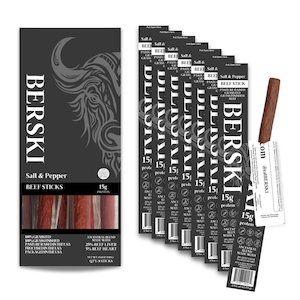
[00:14:45] John Craven: Yeah, yeah. Well, the founders of Berski showed up. Berski. How do you spell Berski? B-E-R-S-K-I. Okay. Which are a new brand of beef sticks that are made with beef liver and beef heart. 25% beef liver, 25% beef heart, clean ingredients.
[00:15:00] Ray Latif: And there are two varieties, salt and pepper. Salted and salt and pepper. Okay. You going in? I don't know. What are we having for lunch today? Have you tasted this yet?
[00:15:07] Mike Schneider: What are we having for lunch? I have no idea. I'm not instructed.
[00:15:10] Ray Latif: If we're having like steak, and I know we're not having steak.
[00:15:13] John Craven: That's surf and turf, right? I think you should just taste it.
[00:15:16] Ray Latif: We're all going to Outback after this. Yum. This looks really nice. The label for their salt and pepper is this grayish black with burski written in large font vertically on the front of the pack. It says eight grams of protein, and it very clearly outlines, as Mike mentioned, it's an ancestral blend made with 25% beef liver and 5% beef heart.
[00:15:37] John Craven: When I was a kid, my mom used to gag me with beef liver. I could not eat liver, and so I was pretty scared to try this, but it's really tasty.
[00:15:45] Ray Latif: Were you supposed to say such things on the podcast in public? I don't like liver, Mom.
[00:15:51] John Craven: No, I don't want to eat that liver.
[00:15:52] Ray Latif: I'm going to go in here on this salt and pepper variety. Okay.
[00:15:55] Mike Schneider: What? No, I was just going to say, I'm not indulging.
[00:15:58] Ray Latif: You're not a John's never a meat stick guy, so I'd never try to push him on you So, you know how I love when you actually see the ingredients in processed food I feel like I can actually see part of a beef heart in this thing What do you think great texture super easy to eat super m-word you see a cow smiling at you. Oh Jesus Now I can't finish this No, but it's a man It's really What's the, not barnyardy, but like, what's the, what's the term I'm looking for?
[00:16:28] John Craven: Earthy? Gamey? I think it's earthy. It's a little gamey. I mean, you can definitely taste the liver and the heart, but it tastes good.
[00:16:35] Mike Schneider: Notes of fresh cut grass, fresh can of tennis balls. I don't know. Are we in like wine notes now?
[00:16:42] Ray Latif: No, I will say that this is... It would taste good with a nice glass cab though. This is not for everyone, but it is for someone who really loves the ancestral style of beef sticks. Like when Country Archer came out with theirs, or now it's called Archer, it was less earthy than this. This is for a serious ancestral beef stick consumer. Like for the liver king?
[00:17:04] John Craven: It's for the liver king, yeah. Again, I think if you know the health benefits of liver and heart, and you don't like the taste of liver, then you're really gonna like this. It's good.
[00:17:14] Ray Latif: No, it's good. But yes, I think some people might be surprised by the texture and the fact that it is.
[00:17:20] John Craven: It's still a meat stick. And as we've just seen where John was like, you know, the Heisman, no meat sticks aren't for everyone. The Heisman, I love it. So they're not for everyone. And these are just really tasty, I think.
[00:17:33] Ray Latif: Well done, Berski. Great to see you at the Austin events. And anytime you're in the Boston area, and this invitation goes out to anyone who's listening, happen to be in the Boston area, please let us know. We love to have visitors. Shout out to Christian Karim Khalil, who came and visited us. He's the founder and CEO of a brand called Yaza, which is a maker of Lebanese style Lebneh. And he came and visited us about three weeks ago. And it was amazing. Everyone got to see him and we got to talk and he got to have conversations with a whole bunch of different people on the team. We love that. So if you're in the Boston area, I can't say this any more times than I've already said it, please let us know. Please come to our office.
[00:18:11] Mike Schneider: We want to see you. We're only like 20 minutes from the airport too. It's close.
[00:18:14] Ray Latif: Barely. It's close. Barely. Yeah.
[00:18:16] John Craven: Thanks for visiting.
[00:18:18] Ray Latif: And we'll give you good recommendations for restaurants and places to visit. Pizza, latte. Yeah. Some of the places you should avoid as in tourist traps, things like that.
[00:18:25] John Craven: You can come in and sample. I mean, we've got so many samples here. People are always, oh, am I allowed to take the samples?
[00:18:31] Ray Latif: You can be a one person trade show, a one brand trade show here at BevNET headquarters. Come in and try everything. Exactly. All right. John, as often on the podcast, he's chomping at the bit to talk about some products that he is happy about.
[00:18:46] Mike Schneider: happy about? Well, I mean, they're new. They're kind of cool.
[00:18:49] Ray Latif: Okay, so you haven't tried these yet. No. You might be disappointed.
[00:18:52] Mike Schneider: Well, I'm not going to be disappointed. Geez, come on now.
[00:18:55] John Craven: John's excited about these products and disappointed.
[00:18:57] Mike Schneider: Well, first of all, if you're listening to this, they're new olive oils from Brightland, who has been known for making kind of premium, high-end, almost like gifting quality Olive oils vinegars. I think they make honey as well and they're now launching like an everyday line, which has a cooking oil and a salad oil in a Custom plastic bottle. I mean, I don't know if it'll dust up some Drama like last time Brightland launched plastic bottle olive oil, but this is like a design to be more like, you know, lower price. I think these are a 750 mil bottles launching direct to consumer. I think today, June 17th, when we're recording and going into retail in August. So pretty exciting stuff. Big fan of this brand. Use occasions right on the front of pack there, cooking and salad oil. Yeah, you know, it's, it's, it's funny. I think the, the salad oil thing, it might sound dumb, but it's like, you know, for a lot of the olive oils that we get that are kind of like cooking drizzle or some, you know, blend, it's like, I don't know what to do with them anymore. It's like, just tell me what to do with it outside of obviously drizzle, but I don't know. I'm not drizzling olive oil that much in my day to day life, unlike Ray, but.
[00:20:09] Ray Latif: I just drizzled some olive oil just right now, all over my laptop.
[00:20:14] Mike Schneider: So, I don't know, pretty cool launch for them. Nice looking bottle, like the white. They got cooking, salad, they just need snacking oil.
[00:20:20] Ray Latif: No, but The Biggest part about that is it's extremely clear what the use case is.
[00:20:24] Mike Schneider: Yeah, I mean look, Graza has like a pretty iconic like, you know, aesthetic that they own, and they've got some like copycats that are kind of doing that too, but this is very much like almost, I mean it's a very visually, you know, contrasting look to Graza, but Yeah, I mean, I think compared to the rest of the olive oil set where you're still like, I don't know, maybe it's Greek, Italian, they're trying to sell you on like origin and this stuff is, it's from California. Maybe a smart, timely way to get around certain tariffs and stuff too, if that's still a thing.
[00:20:57] John Craven: And the innovation is that they're telling you the use case, like front of pack. Now, why did you get these?
[00:21:04] Mike Schneider: Well, I was outside of your house The Mornin intercepting your packages.
[00:21:08] Ray Latif: You see that? You just admitted that you're a mail thief and I think the post office...
[00:21:15] Mike Schneider: Proper term is a porch pirate.
[00:21:16] Ray Latif: What are they called? Post office cops? I don't know what the term is, but anyway, they're going to come for you.
[00:21:21] John Craven: Yeah, the post office cops are coming for you.
[00:21:23] Mike Schneider: I think they do have police, postal inspectors? Yeah, they do. Do they carry guns if you use the wrong stamp? I don't know. Since I'm on a roll here, one more. This is a product called Mariona. These folks were at our New York City meetup. When was that? Was that April? Or was that May? I don't remember.
[00:21:38] Ray Latif: It was April.
[00:21:39] Mike Schneider: April. And this product, it looks like a bottle of wine. There's three varieties, but it's actually a Delta 9 THC beverage that sort of is designed to mimic the, like, experience of wine all the way down to the bottle. These are really nice products. I think it's cool just to see this, you know, rapidly evolving category kind of expanding into a new package format that feels certainly like it's, again, going for a different use occasion than all of the products that are in, you know, most of them feel like they're in the 12-ounce, like, sleek can right now, so.
[00:22:17] Ray Latif: I mean, I like the fact that this product very much looks like a wine, but never calls itself a wine. I think the potential for some confusion, however, might be there, even though they don't call themselves a wine. It's very much in a wine bottle. It looks like a modern, the label definitely looks sleek and trendy. And certainly, you know, the big question with any THC beverage these days is, What does the future hold for regulatory? Just in the past few days, I read the news that California is potentially going to ban any consumables that contain THC. Certainly, there's some questions about the Texas market too. Right there, you have Top Of the The Biggest states in the country that may limit or completely prohibit THC products or the sale of them. So many good products, reasonably safe.
[00:23:12] John Craven: I mean, that's such a shame.
[00:23:14] Ray Latif: All consumables? I mean, it sounds like it, yeah, so.
[00:23:17] John Craven: What a nasty setback for the industry.
[00:23:20] Ray Latif: Yeah, well, I mean, it seems like there was a lot of momentum, and now that momentum has hit the wall.
[00:23:26] Mike Schneider: The momentum's still there, it's just elsewhere, you know? I think if you talk to the brands that are out there, they're just focusing in different places. And I think that part of it's pretty interesting too, in that there's, you know, momentum in parts of the country that, you know, certainly we're not talking about Minnesota a lot. Minnesota, right. The cannabis kings. or certain other regions that also have developed pretty good markets for these things. And I think otherwise, they're just kind of untapped for emerging CPG. They're kind of generally places that brands go to play when they're much bigger. much more mainstream.
[00:24:01] Ray Latif: Part of the reason I brought this up is because our colleague Lukas Southard wrote a story about a week ago about Breeze, B-R-E-E-Z, which is one of the fastest growing THC brands out there. And they have introduced or they're introducing a new non-infused variety of their product And the founder of Breeze noted that, quote, it's hard to build with THC. So, and we did see this with Cannes as well. I remember when Cannes was only focused on their cannabis products and then they introduced a line of non-alcoholic cocktails. Yeah, so it definitely seems like there are a lot of questions among THC brand founders about the road ahead. And I think they're just trying to cover all their bases.
[00:24:46] John Craven: Yeah, it's interesting. Little Saints went down that path too, but theirs wasn't THC, but they had CBD and they backed up CBG and went into mushrooms.
[00:24:53] Ray Latif: Well, if you want to read that article that our dear colleague Lucas wrote, head to BevNET.com. But of course, you got to be an insider. So easy way to do that, BevNET.com slash insider, Nosh.com slash insider, or of course, Taste Radio.com slash insider. Mike, you got one more product.
[00:25:09] John Craven: Last word here. Well, I've got Moshi sparkling water in front of me here, Ray, which is a line of Asian sparkling water with juice. You've got Asian pear and ginger, white peach yuzu, honeydew melon and cream. And this one is their new Lychee vanilla.
[00:25:24] Ray Latif: Very cool. Everyone loves lychee. It's lychee, right? Lychee or lychee, you can say it either way. I don't say lychee.
[00:25:29] John Craven: I say lychee usually, but I'll say it either way. Just like I say, sometimes I say data and then on Thursdays I say data.
[00:25:35] Ray Latif: We're going to end the banter at least with one brand name that I'm going to take issue with the way you pronounce. It's Olipop.
[00:25:44] John Craven: What about, why aren't you taking issue with the way that I say kiff?
[00:25:47] Ray Latif: That's, yeah, yeah. Rewatch the New Beverage Showdown, folks, and you'll know exactly what he's talking about. It's not oly pop. You always say oly pop.
[00:25:55] Mike Schneider: I like oly pop.
[00:25:57] Ray Latif: It's oly pop. Right, John?
[00:25:59] Mike Schneider: Sure, bro.
[00:26:00] John Craven: It's teva teva, just wear the damn sandals.
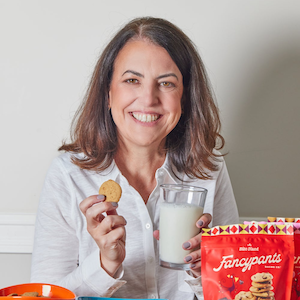
[00:26:07] Ray Latif: Alright, it's time to dive into our featured interviews for this episode. We're speaking with Maura Duggan of Fancypants Fancypants Baking Company and Alison Elliott of Farmer Foodie, two entrepreneurs who've built standout, trend-forward brands from humble beginnings. Mara transformed her small apartment cookie operation into a nationally distributed snack company known for its nut-free, ultra-crunchy cookies. Meanwhile, Allison evolved her food blog into a shelf-stable, dairy-free Parmesan brand made from cashews, earning plaudits for its clean ingredients and crave-worthy flavor. In the following conversations, Mara and Allison open up about their early hurdles, the power of branding, and how innovation helped them carve out a niche and scale with purpose. Hey folks, it's Ray with Taste Radio. Right now I'm honored to be sitting down with Maura Duggan, who is the founder and CEO of Fancy Fancypants Baking Company. Maura, it's a pleasure.
[00:27:07] Alison Elliott: Thank you so much for having me.
[00:27:08] Ray Latif: Yeah, we were a bit of fans, I would say. Fiends is more like it. At the BevNET office for Fancy Fancypants Baking Company, we love your products.
[00:27:18] Alison Elliott: Oh, thank you so much. They're my favorite kind of people.
[00:27:20] Ray Latif: Yeah, well, all I can tell you is that every time the bags come into the office, they are gone in 60 seconds, either because someone's grabbing them and hoarding them or someone just ate an entire bag on their own, so.
[00:27:33] Alison Elliott: That's great.
[00:27:34] Ray Latif: Yeah, yeah. We're here in Providence for the Naturally New England Naturally Rising Fitch competition. And we were just chatting before we hopped in the mics about how professional and polished these presentations are. And you know, how far founders have come in being able to not only amplify what they're doing, but do it in a really concise and professional way.
[00:27:58] Alison Elliott: Yes, absolutely. I was really impressed. It was a great crew and just the amount of time and effort. You could tell that everybody put into what they were saying, but they really know their background and their facts and their audience and they're able to explain it to people in an easily and approachable way. It was really fun.
[00:28:18] Ray Latif: Do you think you could have been up on stage in 2004 when you started the company?
[00:28:21] Alison Elliott: Oh, I don't know. I think it's probably not my strength. So I'm happy to be in the audience and to cheer people on. Yeah.
[00:28:29] Ray Latif: Well, I mean, nevertheless, you have a great brand.
[00:28:32] Alison Elliott: You have a great company.
[00:28:33] Ray Latif: As I mentioned, you started out in 2004. Yes. The brand, the CPG brand, the consumer brand launched in 2024. Yes. So what were you doing for the first 20 years?
[00:28:45] Alison Elliott: Still baking cookies, so many cookies, but it's been a huge transformation. It's really, I started in 2004 in my apartment making decorative cookies and first walked into fresh bakery departments of grocery stores in the greater Boston area because I was a home baker, my career was going to be in something else and so I thought, well I bake cookies, you walk into a bakery. So I was lucky, I had great reception early on to the decorative product and I grew and scaled that over the last 20 years. But as you said, now I'm full on two feet in CPG. So there's some similarities but lots of differences.
[00:29:28] Ray Latif: Do you still have the other part of your business as well?
[00:29:31] Alison Elliott: Not really. It's really winding down over the past 18 months. We've been sort of scaling that down as we scale up the CPG.
[00:29:38] Ray Latif: So the idea of creating a cookie brand is not necessarily a New York crazy thing. I mean, there's a lot of people want to start cooking brands, but your cookies are different. They're not like the typical cookies you would find, I guess, that most people would think of when they're looking for a store brand cookies or branded cookies in a grocery store. What makes yours different?
[00:29:58] Alison Elliott: It's really all about the ingredients. When we were developing the recipes, I kept thinking about what do you want when you have a cookie, and you want it to be delicious, and it has to be, and to do that, you have to have The Biggest ingredients, and so we experimented with probably 10 different butters, which one tastes the richest and is The Biggest, and we did that for every single ingredient, for every single flavor, And you can really tell, I think, when you mix them all together. We use like a premium flour, the King Arthur flour, and it's every one of those things when you, you know, mix them all together in a bowl, you wind up with a delicious, indulgent cookie.
[00:30:38] Ray Latif: And these are small, crunchy cookies that come in a, I don't know what the pouch size is.
[00:30:44] Alison Elliott: Yeah, it's five ounces, so about 22, 23 cookies per bag.
[00:30:49] Ray Latif: Why small cookies? Why do you go in that direction?
[00:30:51] Alison Elliott: Just, you know, they're snackable, and I think people snack a lot, and they're convenient. So you can have, you know, one serving is four cookies. You can, you know, have two, three, four cookies, resale the bag, put them away, or pass them around to family in the office. You know, they're convenient and I think that people like that.
[00:31:12] Ray Latif: Now, having been in business for 20 years before you launched this consumer brand, I'm sure you have a lot of experience that you could bring to the table. But what surprised you about CPG when you came into it? And what did you feel like you really needed to catch up and get up to speed to quickly before you launched the brand?
[00:31:30] Alison Elliott: I mean, I think a lot, the review schedules, I'd say, the lead times, we're not used to that in the fresh bakery. It's more kind of present as you go a little bit. So that's really different. You can't scale maybe as quickly as you think because you might have to wait for seven months for your preferred retailer to be looking at your product. So that's been something that we've adjusted and we've been learning about. A lot of the different means of having to promote your product, it's getting on the shelf, which is difficult, but it's also reaching the customers. Again, we were a very niche product in the Fresh Bakery. We had decorative products that were bright. They kind of marketed themselves because we were merchandised amongst bagels and muffins, and then we had bright cookies. So we didn't need to put the same attention. They kind of grabbed people's attention on their own. So I think it's been a lot about learning what works in different retailers to grab the consumer's attention.
[00:32:31] Ray Latif: Yeah, the review cycle is different for different retailers and you have to think about what happens if they say yes and what kind of production capacity are we going to need and so on and so forth. But the one thing I think that's universal across all retailers is your package, right? So when you think about or when you were thinking about what the package should look like, what the name should be, how the name should pop, how the cookie should pop on the front of pack, what went into those decisions?
[00:32:56] Alison Elliott: Yeah, we really needed, we really knew that you have those few, few seconds to grab people's attention. So we knew we wanted bright, and we realized that no other brand really owns red in the cookie category. So that seemed, and it's kind of like a rich color, kind of like an indulgence, so it felt like it sort of went along with the indulgence that we're creating in the cookies. And then I really wanted something, you know, cookies are meant to be, they're sort of celebratory, they're kind of fun, they make you feel good, that type of thing. So it was really important to me that we captured that sort of lightheartedness, and that's where we came up with the idea of a peacock. and that it's just sort of like a cool-looking, fun little creature that can do lots of cute things with the chocolate chips or holding oats, whatever it is. And so it was really about trying to just maximize those first few seconds with some bright colors, but also something that might make you smile, enough to maybe grab the bag and then flip it over and take a look at the ingredients, which we then hope convinces you to buy them.
[00:34:07] Ray Latif: Yeah. Is the word fancy pants, I feel like it's always associated with peacocks, is it?
[00:34:13] Alison Elliott: Or is it just you guys? Yeah, that was a name, you know, back in 2004, when I started the business, it was meant to just be like, I was going to do it for maybe six months or a year. And I just wanted like a fun, memorable name. Yeah. And so fancy pants, you know, came to me and I just thought that'd be fun. But now here you are, you know, 21 years later. Well, it is memorable.
[00:34:35] Ray Latif: Yeah, it definitely is. Well, I mean, a Massachusetts native like myself, I think when I was growing up, I look at this fancy pants over here, you know, it was a lot of that.
[00:34:43] Alison Elliott: A lot of people have have like a personal connection to it, which is really great. You know, when you're doing demos or at trade shows, a lot of people have a positive association with the name. So it's been that's really fun.
[00:34:54] Ray Latif: Yeah, I think a lot of people have a positive association with fancy pants because of the ingredients that you mentioned, but also because it's not free. How much of a conscious decision was that, especially given that nut allergies seem to be going through the roof?
[00:35:09] Alison Elliott: Right. That was a decision that I made very early on. I actually had a great friend who both of her children had severe allergies. And again, that was, you know, 20 years ago and there really were not a lot of options back then. And I just decided we're going to stay nut free. We're nut free now and we're going to stay that way. And it can be a real challenge, but it's also a great advantage as long as we're ultra careful about who we source from and have all sorts of documentation. And sometimes it can be limiting because there aren't a lot of people who want to say that they're not free or provide the documentation, but it's worth it. It's something that people, once they know that we're not free, they're repeat customers. And strangely, I now have a nut allergy, which developed. That was weird.
[00:36:05] Ray Latif: Sorry to hear that. Well, that just makes it even more important for you to get fancy pants cookies on JetBlue flights and Delta flights and so on and so forth, because I think they're pretty cautious about allergies on flights like that. And I got to tell you, the options that I've seen on certain flights lately have not been so great. So.
[00:36:26] Alison Elliott: Yes, that's definitely something that we would love to do. We received a grant recently, just about a month ago, from a Massachusetts MassTech collaborative that we're going to use to buy some new packaging equipment that's going to allow us to make mini-packs. Stay tuned. Stay tuned. Okay, cool.
[00:36:47] Ray Latif: Well, you brought up your factory. When I talk to entrepreneurs, and they have a manufacturing facility in addition to their consumer brand, they always refer to the businesses as two distinct businesses. So you have on the one hand, you're making the product. On the other hand, you have sales and marketing. How are you balancing both?
[00:37:06] Alison Elliott: Well, I mean, we've, that's the way it's always been. So, I mean, we have different people who have, you know, serve different purposes. So we have a VP of sales and his, you know, job all day, every day is to be, you know, talking with stores and making presentations, things like that. And then we also, you know, we are running our manufacturing. We also do a lot of co-packing and private label for other companies. So we're kind of used to, we've kind of grown, you know, from very small and we're still very nimble and we're still small. But it's everybody that works for us does like 10 different things.
[00:37:41] Ray Latif: I mean, it certainly seems like it's an advantage to have a manufacturing facility. But for folks who are listening right now, what advice would you have for them if they're starting out?
[00:37:49] Alison Elliott: I'm sure there are pros and cons to both. This is what I've always known. I'm a bit of a control freak and so I've always had control over everything that we do. We can scale up and down. We can do a lot of different things very quickly. We can innovate quickly. So if you kind of like that, if you, you know, it's like famous last words, I said 20 years ago, I never wanted to be bored. And I'm certainly never bored. So you have to like doing a lot of different things, I think, if you're going to do your own manufacturing. But, you know, I think it's been a great route for us.
[00:38:29] Ray Latif: Well, I think one advantage that's very Clear Use your ability to create limited edition flavors, which you do in spades. And it's great because it seems like every three or four months you have a couple new limited edition flavors and they're all amazing. Your strawberry shortcake? Yes. Oh, my goodness. Knocked it out of the park. It's so darn good. What does it do for the brand, having all these limited edition flavors?
[00:38:56] Alison Elliott: You know, it's a way, it gives us something to talk about. We get new customers, maybe you wouldn't have tried a chocolate chip cookie, but you love strawberry shortcake, and you're like, well, I'll pick that up and try. So I think it brings different people in for different reasons. It's kind of fun for our team to, we're used to, a lot goes back to what we used to do. We used to do decorative cookies that, You know, we had 8 or 12 different designs every month. We're used to, you know, always changing and something fresh. And so I think it's kind of, as the group that we are, we're used to like, what about this? What about that? We sort of love to experiment. We all have sweet tooth, so it's always fun to come up with a new recipe. And I think consumers today, they want that. You see huge CPG companies and they're coming out with limited editions all the time. So it's also partly, I think it's something that you need to do to stay relevant.
[00:39:51] Ray Latif: And just keep the customer interested.
[00:39:55] Alison Elliott: Yes, right, because people are becoming accustomed to be introduced to new things constantly.
[00:40:01] Ray Latif: Yeah, and again, it definitely is, I think it makes your social media content a lot easier to strategize around because you always have something new, you always have something to talk about.
[00:40:13] Alison Elliott: Right, right. Yes, and people engage different things and come up with great ideas. I love people send us ideas sometimes too, you know, I mean, it's it's in, you know, food is very, you know, social. And so it's, it's something I look forward to. It's one of my favorite parts of the business is thinking about kind of what's next.
[00:40:35] Ray Latif: Absolutely. Where can you find Fancy Fancypants Baking Company at retail?
[00:40:39] Alison Elliott: Sure, we are gaining retail every day, which is really exciting. So you can find us sort of in the New England markets all the way to California, so Gelson's in Bristol Farms. We just launched at Harris Teeter on the East Coast in the Fresh Market. We launched this week in 40 Whole Foods Market in the Mid-Atlantic region. Central Market, Woodman's Market. So we're in a couple thousand doors right now. And, you know, hopefully more and more as the year continues.
[00:41:12] Ray Latif: Well, if it hasn't been clear listeners, you've got to get your hands on some Fancy Fancypants Baking Company cookies. And if you're a retailer listening, I would highly consider you look at the brand because what Maura and her team make are, it's just a fantastic brand with fantastic products. So I can't thank you enough for taking the time to sit down with me today, really appreciate it. Gotta come visit the factory, yes?
[00:41:34] Alison Elliott: Yes, I would love to have you, absolutely.
[00:41:36] Ray Latif: Okay, well that'll be part Top Of our discussion with Maura about Fancy Pants. Oh, that would be great. But in the meantime, thank you so much again.
[00:41:41] Alison Elliott: Thank you for having me.
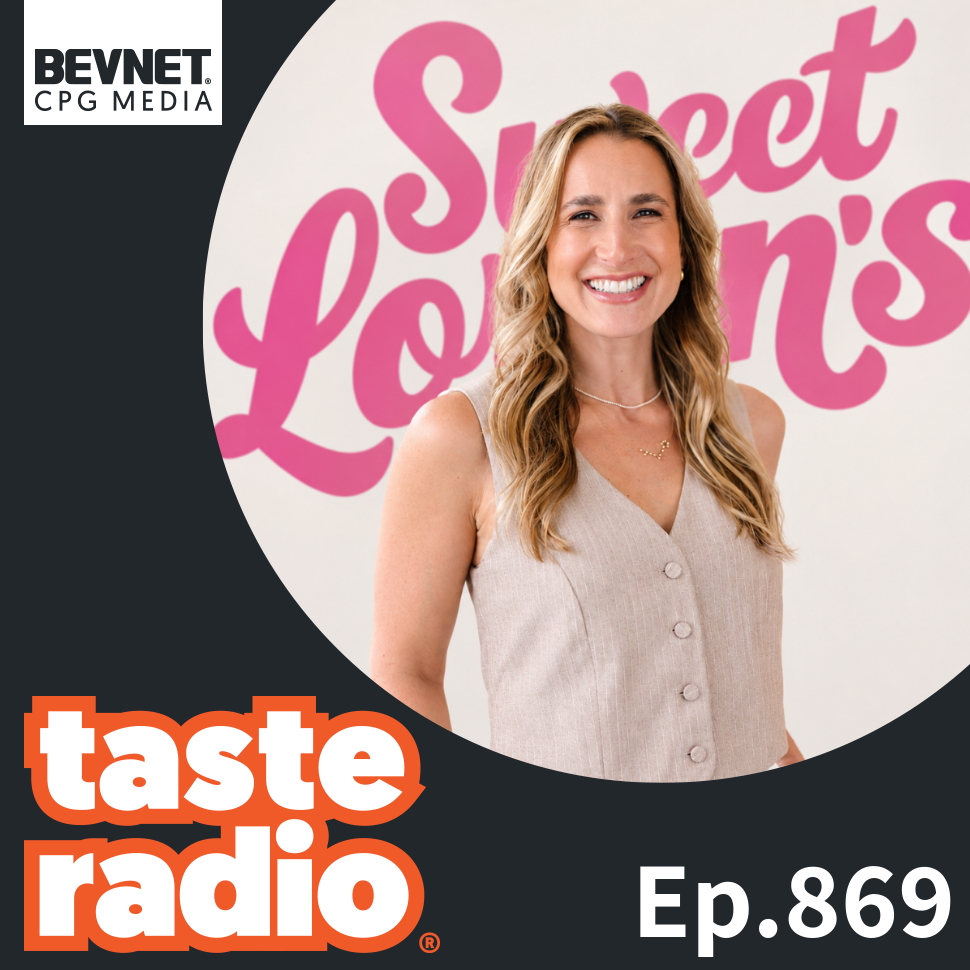
[00:41:42] Ray Latif: Appreciate it. Hey, folks, it's Ray with Taste Radio. Right now, I'm honored to be sitting down with Alison Elliott, who is the founder and Elliott of Farmer Foodie. Alison, great to see you.
[00:41:54] Kraft Heinz: It's wonderful to be here, Ray. Thank you for having me.
[00:41:56] Ray Latif: And we're here in Providence, Rhode Island, at Naturally New England's Naturally Rising Pitch Slam, of which you're about to take the stage in about 45 minutes or about an hour or so. So I really appreciate you taking the time out of your busy schedule. Are you nervous? Are you excited? Are you all of the above?
[00:42:14] Kraft Heinz: All of the above. I'm very excited. I feel like I have a great community here that I've built up over the years. So I'm grateful that I'm going to be pitching to people that I know and that know my products.
[00:42:26] Ray Latif: OK, that always helps when people know your products and you're telling them, just sort of reiterating what you're doing. And what is it that you do at Farmer Foodie?
[00:42:33] Kraft Heinz: Yeah, so Farmer Foodie, we make deliciously memorable Cashew Parm products that are shelf stable, sustainable and free from dairy and gluten. And we have two different flavors, golden cheddar, which emulates a cheddar like flavor with an umami peppery punch and Italian herb, which consumers actually report tastes like pizza in a jar.
[00:42:54] Ray Latif: Cashew Parm. Is it as intuitive as I would think? Do people get it?
[00:42:58] Kraft Heinz: People do get it. Although some consumers do call it Cashew Parm, which I understand the mix up between Farmer Foodie and Cashew Parm when you're reading it quickly at a whole foods demo, for example. But yes, it is intuitive. The reason why I named it Cashew Parm is because, you know, growing up I would order eggplant parm or something like that at a restaurant, chicken parm before I became a vegetarian. So I feel like people understand parm means Parmesan and obviously being a dairy free product, legally it can't be called Parmesan.
[00:43:28] Ray Latif: Hence the cheddar as well.
[00:43:30] Kraft Heinz: Exactly.
[00:43:31] Ray Latif: Yeah.
[00:43:31] Kraft Heinz: Which a lot of people think is a Boston accent at markets and demos. And I'm originally from New York, although I have been in Boston for five years. So it's quite funny, especially when you are speaking to a true Bostonian that mix up.
[00:43:45] Ray Latif: I never would have guessed you're from New York. I've known you for what, four or five years at this point. What part of New York are you from?
[00:43:51] Kraft Heinz: I'm from Westchester, New York. It actually says Scarsdale, New York on our packaging because my LLC is filed at my parents' home.
[00:43:59] Ray Latif: I'm sure they're very happy and proud of what you're doing. How do you get into entrepreneurship? Was this something that you always dreamed of doing or is this something that just came out of a need in your own personal life?
[00:44:07] Kraft Heinz: I have always dreamt of entrepreneurship. I do think I'm really creative. And my background is in farming, hence the name Farmer Foodie. So I was the education director on an organic farm for four years. That's when I created Farmer Foodie as my plant forward food blog. And really, I did that because I was already making all of these new delicious recipes with all of the fresh produce that I had grown from seed to table. And family and friends just encouraged me to start my own food blog. I did and then decided to actually get my MBA in social impact from Brandeis University. While I was there, I used all of the class projects as opportunities to explore various business opportunities and eventually settled on Cashew Parm. My initial idea was box mac and cheese because, you know, I was in grad school during COVID, so every Thursday I would make my vegan mac and cheese recipe, which is actually now in powder form, our golden cheddar flavor. You can simply add water, mix it into a mac and cheese sauce in two minutes.
[00:45:08] Ray Latif: Who are the people that are consuming your product? Who are the people that are buying your product? I would assume it's mostly people who live a dairy-free vegan lifestyle. Is that the majority of your consumers at this point?
[00:45:19] Kraft Heinz: Not necessarily. We do definitely cater to vegan consumers, vegetarian consumers, people who are lactose intolerant. Actually, a third of the U.S. population are lactose intolerant, so there is a big market for that. And, you know, people who legitimately have dairy allergies. But a lot of non-vegan consumers love our products and actually consistently report baking it on Top Of chicken and fish.
[00:45:43] Ray Latif: Oh, wow. OK. Now when it comes to retail, retail buyers are always looking for brands and products that are going to drive incremental foot traffic and revenue to their stores. How do you talk to those retail buyers about the fact that Farmer Foodie will open up a new lane for their customers, open up a new lane for those retail locations where customers are going to be looking for your product and saying, hey, I'm coming to your store to buy this product and then, you know, fill my basket with other products as well.
[00:46:18] Kraft Heinz: That's a great question. So currently our industry, you know, plant based alternatives to Parmesan, we have minimal competition. So in retail, in the natural channel, we have a few competitors on Amazon. We have a few competitors, but this is definitely sort of an untapped market. So we're, excelling when it comes to flavor and footprint, which is really great. I think our packaging really stands out. It actually has botanical elements of cashew apples and cashews coming out of them. Consumers consistently report generally with the plant-based cheese industry being dissatisfied with taste, texture, and meltability. And with Cashew Parm, we've solved those issues. So you can simply, like I said, add water to the products and mix them into a sauce, or you can sprinkle it onto something like frozen pizza, put it in the oven. It will absorb, it will disintegrate, it will sort of melt and add flavor into whatever you're baking. And it can withstand high temperatures for long periods of time. So part of the value proposition to a retailer is really the fact that it's something innovative that people love the flavor of, and it can be stored on your, you know, in your pantry. It doesn't have to be in the refrigerator. So it's inherently sustainable. It's something different from what you typically see in the plant-based cheese set or even the plant-based set in general. So it is sort of like a new opportunity, a new market. In fact, when I initially started applying to Whole Foods, their category review schedule, I didn't know what our category was. So I was applying to plant-based cheese, and then I was applying to seasonings, and then I was fortunate to learn that We're actually the pasta sauce category, which is wonderful because we're positioned next to dairy-based Parmesan. And actually, that's a $4 billion industry in the United States. 68% of that are shelf-stable Parmesan sales.
[00:48:12] Ray Latif: Okay. If I'm a retail buyer, you just convinced me. I want to know more. I want to test the products in my stores. I want to see how my customers use your product, or at least think about using your product.
[00:48:23] Kraft Heinz: Well, whenever I'm at Whole Foods, I'm sampling on Top Of popcorn, which I actually am here today. Consumers love popcorn. I think that's just kind of known. People want to try it. And then they ask, oh, what else can I use it on? So they think initially, oh, a popcorn seasoning. This is innovative. There's nothing like this really in the retail set. I mean, maybe you can order it online, but like there's no Cheddar powder in retail that you can purchase unless you buy a box of mac and cheese, right? So although our product line is called Cashew Parm The flavor profiles are very innovative and I think that's what really draws the consumer in Because our competition although minimal they typically have just a standard parmesan like flavor so, you know, you can use that in various ways, but it doesn't always add a all of the flavor that you want to what you're making. People love popcorn. But traditionally, what I've said and what I do continue to say is this goes great on pizza, pasta, popcorn. You can mix it into super risotto, bread, chicken, fish, veggies. You can put it on smashed Parmesan potatoes, for example. And that's actually in the Sam Adams Brewing the American Dream Cookbook, our smashed Parmesan potato recipe. So we're getting the word out via social media. I have a wonderful team of consultants who help us day to day. And also, you know, through opportunities like this podcast, pitch competitions, the whole nine yards.
[00:49:50] Ray Latif: Outstanding. This is a difficult business that you're in, CPG, and the learning curve just keeps going on and on and on. What's been the most challenging part of this industry for you? What's been the most rewarding?
[00:50:05] Kraft Heinz: The most challenging part is really getting into retail. So obviously retailers have category review schedules. So it's not like you can just get into a retailer, launch your products a few weeks after your initial conversation. Of course, we all know buyers are very, very overwhelmed. Everybody wants to talk to them, pitch them their products. There's new products coming out left and right all the time. So just getting into those new retail accounts has been, Not necessarily a struggle, but it's just difficult in the sense that it takes a very long time. We found out we were going to launch in Whole Foods last July, and then we launched this January. So that's a multi-month timeline where we were gearing up production. Fortunately, we have a great co-manufacturer. but it's a long time to wait. Similarly, we found out in July that Thrive Market was interested. We just launched in March. That's a very long timeline. So it's kind of, you know, for a pitch competition like this, you need to think about your financial projections and where you're growing. And sometimes you don't know what new accounts you're going to launch into just simply because an opportunity hasn't arisen yet.
[00:51:15] Ray Latif: Yeah. And it's funny because I'm on LinkedIn right now and it was big. You know, you launched Farmer Foodie in 2022. And, you know, everyone wants to get into Whole Foods or at least people that operate businesses like yours want to get into Whole Foods. And you're like, oh, yeah. You know, I saw this brand there. I saw this brand in there. And it might take you three years to get into one region. And you're in the North Atlantic region here in the New England area. When it comes to the changes that you've seen in grocery over the past three years, how have you been able to keep up? I know you talked about the consultants that you work with, but how have you been able to maintain the focus and vision that you've had? you know, despite all the changes that we're seeing in this industry.
[00:52:03] Kraft Heinz: So it's interesting that you bring this up, because when we first met, Golden Cheddar was being advertised as everything cheese with a Z in a Kraft brown standup bag. So the first thing that I did just to even get onto the retail shelves was rebrand and expand the product line. Right. So naming the product line Cashew Parm, as mentioned, so that consumers immediately knew what the product was and strategically innovating a Italian herb flavor that tastes like pizza. So you know, okay, this is something that you put on Italian dishes, you put on pizza, pasta, that kind of stuff. And so early on, getting that feedback was fantastic. I think, you know, the retail industry, there's constantly new products coming out, and obviously new competitors arising. And just thinking about the future of Farmer Foodie, I'm strategically thinking about sachet applications. So using this maybe in a box of mac and cheese. I've discussed a few co-branded opportunities with various brands that are also in Whole Foods. And, you know, it's something that can be It's something that can be put on popcorn as well. So, you know, there's opportunities when it comes to private label. And I think as this category grows, we're going to see more opportunities with the Trader Joe's of the world, for example, or Whole Foods private label that want to use our products on snacks in that category.
[00:53:28] Ray Latif: Very interesting stuff. I'm curious as to what those private label opportunities will look like, but I think we'll save that for another conversation. Allison, I'm so excited for you because Farmer Foodie has come a long way and just getting to this point of three years in, we're in Whole Foods, three years in, you know, we've understood what the customer wants, what kind of packaging needs to be out there in retail for them to appreciate what you're selling. It's really remarkable. So congratulations on everything that you've accomplished to this point. Good luck with the Pitch Slam. I know it's going to go well. And let's do this again soon.
[00:54:01] Kraft Heinz: Thank you so much. I appreciate it.
[00:54:03] Ray Latif: Thank you. That brings us to the end of this episode of Taste Radio. Thank you so much for listening. Taste Radio is a production of BevNET.com, Incorporated. Our audio engineer for Taste Radio is Joe Cracci. Our technical director is Joshua Pratt, and our video editor is Ryan Galang. Our social marketing manager is Amanda Smerlinski, and our designer is Amanda Huang. Just a reminder, if you like what you hear on Taste Radio, please share the podcast with friends and colleagues. And of course, we would love it if you could review us on the Apple Podcasts app or your listening platform of choice. Check us out on Instagram. Our handle is bevnettasteradio. As always, for questions, comments, ideas for future podcasts, please send us an email to ask at Taste Radio.com. On behalf of the entire Taste Radio team, thank you for listening, and we'll talk to you next time.
[00:54:56] Maura Duggan: you