[00:00:10] Ray Latif: Hello and thanks for tuning in to Taste Radio, the number one podcast for the food and beverage industry. I'm Ray Latif, the editor and producer of Taste Radio, and I'm with my co-hosts for this episode, Jacqui Brugliera, Mike Schneider, and Melissa Traverse. In this episode, we feature an interview with Jorge Antonio Saez, a third-generation Master Distiller for premium tequila brand El Tequileño. People are going to find out what that means in the interview.
[00:00:39] Jacqui Brugliera: There's a little tickle in there.
[00:00:40] Ray Latif: Yeah. It's actually quite an interesting story. All right. I'll, I'll, I'll give a little information. Did you know this is actually a town of tequila in Mexico?
[00:00:49] Mike Schneider: No.
[00:00:50] Ray Latif: Yeah. I didn't know this either.
[00:00:51] Mike Schneider: Just all tequila or like it's named tequila.
[00:00:53] Ray Latif: It's named tequila.
[00:00:54] Mike Schneider: I was thinking like the water from the faucet.
[00:00:58] Ray Latif: Oh Tequila, they shower in tequila, baby. Didn't we talk about that? We're not crazy Scotland's like you just open up the faucets and outcome Scott Well, why wouldn't it happen in Mexico if it can happen in Scotland full of tequila? It would be an interesting I would live in mezcal if that's the case be an interesting way to brush your teeth like burns Yeah, anyway, it's a really good interview stay tuned folks tune in whatever you want to call it Okay, so I'm gonna start out with a PSA here. Entrepreneurs, founders, brand operators, I think we can ease up on the swag bags. I think we get a lot of them. And by a lot of them, I mean a lot of them. And I appreciate them, especially the cooler bags. But I have, I went into my closet earlier this week and I pulled out just dozens, dozens upon dozens of swag bags. And again, I appreciate all of them, but I think you guys are spending a little bit too much money on all these. Here's one from Pitaya Foods. Does anyone want this one? Pitaya Foods, great brand. Love that brand. Oh, that one. Yes. There's another one. This one's a canvas bag from Sailor Jerry.
[00:02:06] Melissa Traverse: Sailor Jerry. Yes.
[00:02:09] Ray Latif: Here's one from Madre Madre is a brand of mezcal. Yeah speaking of mezcal get that one over here get that one over here Okay, here's one from our dear friends at gigantic foods awesome. There you go Don't you want to know Mike Is especially wound up today, folks. I think you should sing the opening, by the way.
[00:02:31] Jacqui Brugliera: I think you should be- Oh yeah, there should be more singing.
[00:02:34] John Craven: You should croon in the beginning, a little Wayne Newton style.
[00:02:37] Mike Schneider: This table's just covered right now. Yeah.
[00:02:39] Ray Latif: Yeah, if you watch the video, it's just completely covered.
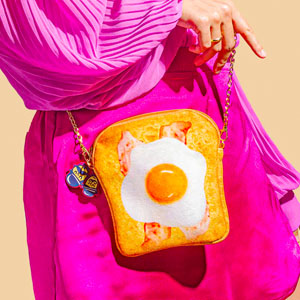
[00:02:42] Mike Schneider: Now that there's a table, I'm taking full advantage. I feel like this brings us back to, I think, your first community call, Melissa, with Belgian Boys, where she was calling out people that were giving out bags at Expo West. But she was like, get a little bit more creative, you know, she has her French toast purse, other options.
[00:03:03] Jacqui Brugliera: Yeah. If you want to take notes on really creative swag, certainly Belgian Boys is a great place to look.
[00:03:09] Ray Latif: And I think that's the thing. I mean, I appreciate all these bags. I've said that like three times now, but it's just, I, I mean, I don't need all of them and I'm not going to use all of them. And I, even if I give them out to everyone in the office, there still will be something left over.
[00:03:22] John Craven: But you realize this is mission accomplished because Hello, we're just holding up the bag. Well. Here's one for Taramon and Tequila. On a podcast that's going to probably have a video component. You're just gonna get more bags. This giant G. I'm just gonna keep it in front of my face for the rest of the show. Like a feedback.
[00:03:38] Ray Latif: Let's fill this thing up. I don't know what this one is. It says keep y'all weird. Y-A in capital letters. I've got my feedback on now. My gigantic feedback. Maybe young adults. Here's one from Atelier Wines. Actually, that's kind of a nice one.
[00:03:50] Jacqui Brugliera: This is a nice one, a produce bag. I'll take this one. Yeah, what makes them nice versus not nice?
[00:03:55] Ray Latif: Oh, that's a good question, actually. This one, this one is that produce bag where, like, if you're going to your farmer's market or your Whole Foods, everyone can see what's in here. And if you, like, put stuff in there while you're shopping, they know you're not stealing. Is that the reason for it?
[00:04:08] Jacqui Brugliera: And also maybe so the produce doesn't wilter. I thought, I thought it was like a protective issue for the produce.
[00:04:16] Ray Latif: I picked the best produce. Here's a nice one from Courvoisier. This is one of those ones where you can like, it has a little button here where you can fold it up into something smaller. I spilled some Courvoisier on this though. So I don't know if anyone actually wants that. Oh God. I almost pulled the microphone out. Last we have a couple more from last but not least you got like 60 more. Here's one from Wild Planet Yes, the maker of sustainable seafood and tins great brand also the canvas bag But don't need a canvas or burlap ish whatever this material is pretty popular No, it was filled with CBD supplements, I'll get to that later In the wild Here's one from Fresh Fizz sodas. This is a cooler bag. It's lined with um breakfast soda. No, it's like what do they call this? It's not aluminum. It's some sort of foil to keep everything Thermal silver. Yes.
[00:05:15] Mike Schneider: Those are really handy for the beach. I must say
[00:05:17] Ray Latif: They are oh, I can't get rid of this one actually this one is actually from a restaurant that I went to in Copenhagen called geranium Which Walk The number one restaurant rated restaurant in the world in 2023 actually no until yeah until it was most recently taken over Once your name the number one restaurant in the world apparently you were taken off the list You're like grandfathered as like one of the best ever so you can't actually do it more than once nowadays I'm giving this one completely downhill and your food was terrible and
[00:05:46] Mike Schneider: You're still going to be one of the best restaurants in the world.
[00:05:50] Ray Latif: We should test that. Yes, I guess so. That's a good point there, Jackie. Here's another cooler bag. This one's another good one for the beach. You can put all kinds of things in here. This one's from Revol Greens, which is a maker of greenhouse grown greens, lettuces and such. Melissa, you're looking at that.
[00:06:06] Jacqui Brugliera: Does that also function as a fanny pack?
[00:06:08] Ray Latif: I don't think so.
[00:06:09] Jacqui Brugliera: A cooler fanny pack for our UK listeners.
[00:06:12] John Craven: Yes, that's the same as a bum bag. It's not what you think.
[00:06:15] Ray Latif: A couple more here. We have one from Velvet Llama. This is also a Velvet Llama's maker of canned cocktails. Love this brand. They did win our cocktail showdown competition last year. Luca Fourgeois, a great founder. This is nice. It's even has like a little place to put your llama pens, and you're it doesn't have a place for your llama I assume for your bar tools a little velcro As you're pulling out all these bags.
[00:06:39] John Craven: I feel like you're reconsidering getting it like I feel like you're falling in love Ray you got for Ray to bring these in is huge because Ray is a little If you see the table right now He's going to do a little hoarding and he even he has too many so all these on our on our table right now Imagine what's still back at the ranch good point that mean that is a very good point I mean see like I just shove as much as I can at the closet these just wouldn't fit in the closet anymore So these had to go
[00:07:13] Ray Latif: And last but not least, a dear shout out to our friends at Riff Cold Brew. I believe, unfortunately, Riff is no longer on the market, but they do have these great little lunch bags. Now, these are high quality. See, they do have... Those are cute. Yeah. These are ones like they have a little handle here. I don't know. I mean, if we do show this on the video, it's made by a brand called Milk Dot. And they're like, they're a cross between like kids lunch pails. Yeah. But also ones that certainly adults can use.
[00:07:42] Mike Schneider: That might be a cute piece of swag for like a kid's brand or someone like a juice box. Yeah, or you could use it as a purse, right?
[00:07:49] John Craven: Gotta say I always thought that if rift didn't make it as a beverage that they could definitely make it in the fashion industry Because they've got a good eyes for color. They're always like top quality stuff They great hats they had those Cotopaxi jackets. I mean Indeed are you wearing speaking of fashion? Are you wearing that? I keep hoping that I'm gonna open it up and magically it's like you're full of gigantic That is your bag imagine if that were full Oh God
[00:08:16] Ray Latif: You guys will lose me. You need to cut that. Jeez, man. Okay. Anyway, I'm saying this like half joking, half serious, but I mean, if you look at our table here, it is just covered. And this is just a tiny number of the bags that we get sent on a regular basis. I think that you could probably save some money by not sending these bags out anymore. Probably. We're going to be fine without our canvas and burlap bags. Appreciate them. We really do, but save your money.
[00:08:47] Mike Schneider: Or just send them all to Mike.
[00:08:48] Ray Latif: Yeah, send samples.
[00:08:49] Mike Schneider: Send them all to Mike because they wear them as hats.
[00:08:52] Ray Latif: Oh, geez.
[00:08:53] Mike Schneider: I mean, obviously.
[00:08:54] Ray Latif: How did I not see that? I turned to my left and all of a sudden Mike Is... You're trying not to look. He looks like Chef Boyardee or something over here.
[00:09:02] SPEAKER_??: Okay.
[00:09:04] Ray Latif: He's wearing the bag on his head. That's that's why I called him that Okay, we're going to have to remove the bags from the table here because we do have actually some product samples that we do want to talk about. We already talked quite a bit about bags. Someone was listening in their cars like, can they stop talking about bags for five minutes?
[00:09:22] John Craven: I think I've reinvented this. They're going to send us more now. Melissa, go for the Madre Mezcal, see if it, but you just got that great new haircut.
[00:09:30] Jacqui Brugliera: I know, I don't want to mess up my hair. Here's how it would look.
[00:09:35] Ray Latif: Okay, anyway Jackie Jackie's like yeah, we don't get sent bags. We get sent samples in our San Diego Which is why the WCB is as awesome as it is WCB exceeded us in samples.
[00:09:49] John Craven: I don't know it's by a margin I think
[00:09:52] Jacqui Brugliera: I think it's a California issue. I think they're close.
[00:09:55] John Craven: They're huge winners out there. Big winners. Also, I think it has something to do with the fact that the direct communication between our accounts is in San Diego. So instead of like, hey, send to our headquarters, send to our West Coast headquarters and then
[00:10:13] Melissa Traverse: Should I have a word with Amanda? Fair enough.
[00:10:19] Ray Latif: Anyway, I'm proud of them.
[00:10:22] John Craven: They are rocking the samples over there.
[00:10:23] Ray Latif: What if we opened a branch in Canada? What if our first overseas branch were in Montreal?
[00:10:29] Jacqui Brugliera: I'll go start it up.
[00:10:30] Ray Latif: I think Melissa could open it up. Because wait, now Canada is overseas? No, we talked about this in a past episode. Yes. And it is overseas. Okay, technically, okay anything over the border is over. It's not overseas But that is a colloquial term that we use to describe any place that is not the United States, okay? Doesn't sound the same I want to get to and we talked about this last time how many awesome brands Snack food and beverage brands there are coming out of Canada and into the United States And I do want to talk about some of this is my homage to Canada because I'm trying to do You're making it so hard telling you this is America's hat Geez, before we get to Montreal, I want to thank our presenting sponsor for this episode. That's Tetra Pak, the pioneering packaging solutions company that provides safe, innovative, and environmentally sound products that each day meet the needs of hundreds of millions of people around the world. Learn more at tetrapak.com.
[00:11:27] Jacqui Brugliera: In the hotel I stayed in, in Montreal, there was Flow Water, which is Tetra Pak.
[00:11:35] Ray Latif: It's pretty popular up in Canada. Yeah. Gotta love the Flow. I love the name of that brand, by the way, Flow Water. It just flew so nicely. That's what water does. It really does. Yeah. Gotta love Tetra Pak too. I mean, you know. If it were in a can, if it were in a bottle, it just doesn't feel like it flows in that kind of way. At the Tetra Pak, it just feels like a natural vessel for it.
[00:11:55] Jacqui Brugliera: It's like a waterfall right out of the Tetra Pak container.
[00:11:58] Ray Latif: Exactly. Okay. Melissa has a whole bunch of samples on her side of the table here. I have no idea what half of them are.
[00:12:07] Jacqui Brugliera: You and me both, right?
[00:12:09] Ray Latif: Okay. I know what they are. Now, why do you have these samples with you?
[00:12:14] Jacqui Brugliera: So I visited a Japanese shop called Miyamoto. It's a grocery store.
[00:12:19] Ray Latif: In Montreal.
[00:12:19] Jacqui Brugliera: In Montreal. Yep. It was next to the sushi restaurant called Park Sushi, which was fantastic. And then afterwards we went next door to this Japanese grocery store and I found all of these delicious treats. The first one that I feel like we should all try are these brown sugar Corinto. Mike, maybe you can do a little Google translating on that. They are these, here, why don't you?
[00:12:43] Ray Latif: Do you want to try one? I don't have any hand sanitizer. Here's the package. I'm a germaphobe.
[00:12:48] Jacqui Brugliera: What if I sprinkle one on the table?
[00:12:49] Ray Latif: I'll hold off for now until I can find some hand sanitizer.
[00:12:52] John Craven: So the one, Melissa and I were talking about this before the show, and they have some of the most amazing call-outs. So this one is, please enjoy a fragrant taste, powdery, moderate sweetness of sugar, And in parentheses, using alkaline food, brown sugar. So you're doing the translation of the word.
[00:13:12] Ray Latif: We're going for it. Oh wow, look at that.
[00:13:14] John Craven: I'm going for it.
[00:13:15] Jacqui Brugliera: Amazing, right?
[00:13:15] John Craven: That's actually pretty cool. Please enjoy a fragrant taste of wheat flour. The fragrant taste of wheat flour. Okay, that's important in Japan. We've just learned that. So they're wheat flour pretzels?
[00:13:24] Jacqui Brugliera: They're actually these little brown sugar nuggets.
[00:13:27] John Craven: That's not what Melissa said they were before the show.
[00:13:30] Jacqui Brugliera: So they are about an inch and a half long, coated in brown sugar, and I will just leave it there, perhaps. Mike, do you want to try one?
[00:13:39] John Craven: Yes, I do. All right. Okay. I think they look like little pretzels, but now up close, I don't think they look so much like this.
[00:13:46] Mike Schneider: Rice flour, brown sugar. They're like Cheetos, like Cheeto consistency. They're like puffs.
[00:13:54] John Craven: No, they're good. They're like a hollow pretzel.
[00:13:57] Jacqui Brugliera: It's like a puffed snack, but it's coated in this sort of like crunchy brown sugar.
[00:14:03] John Craven: Oh, I guess I would call it a fragrant flavor of full spread wheat and brown sugar.
[00:14:10] Ray Latif: Now, has anyone seen, I have a different translation coming up. These types of products. in sort of Americanized form.
[00:14:22] Jacqui Brugliera: You know, I have never seen the, um, Corinto here and I, you know, ask every CPG brand out there, if you have it in you, I would buy the heck out of these. They're so delicious. So sweet and crunchy.
[00:14:34] Ray Latif: Just sort of re-imagined as like a mainstream American snack.
[00:14:39] Jacqui Brugliera: Yeah, absolutely. And I think the thing that makes these so delicious is that the amount of brown sugar on the outside is significant enough to give it some real crunch.
[00:14:49] John Craven: So I would say that because those are two things that are valued, like the over-the-topness of, when you have sushi, for instance, you'll get like snap and pop. And those are important things to happen. Yeah. Oh, hello. So in this, I'd say they're optimizing for like big crunch and big sweetness. And that's that's what this snack's all about.
[00:15:10] Jacqui Brugliera: All right, let's open these Shuga Senbei. This is a sweet ginger sort of rice cracker as well.
[00:15:19] John Craven: Those look interesting. Oh, this one has this one has some fun call outs, too.
[00:15:23] Melissa Traverse: Hmm. Smells really good. Just go for it. It makes you stronger.
[00:15:26] John Craven: All right.
[00:15:27] Ray Latif: If Nate's in the other room and can hear me and can get some hand sanitizer, I will be forever indebted.
[00:15:31] John Craven: Namazon rice crackers. Fragrance of raw ginger, mouthful spread.
[00:15:37] Mike Schneider: Interesting. So fragrance is important.
[00:15:40] John Craven: Fragrance is important and apparently in this case, so is a mouthful spread.
[00:15:44] Jacqui Brugliera: It's half of tasting, isn't it? Yeah.
[00:15:48] John Craven: This is great. The ginger is amazing. The crispiness is awesome. Mouthful spread is a very interesting phrase. You know what this reminds me of? It reminds me of like sugar frosted flakes.
[00:15:59] Jacqui Brugliera: Yes.
[00:16:00] John Craven: But like on steroids and with ginger.
[00:16:02] Jacqui Brugliera: Totally, totally. Frosted flakes is exactly what I thought.
[00:16:06] Ray Latif: Sounds too crunchy for me. I have sensitive teeth.
[00:16:08] Jacqui Brugliera: You don't like crunch?
[00:16:10] Ray Latif: I do like crunch, but I feel like I'm in my youthful age. I am unfortunately, you know, faced with some dental issues, which make my teeth sensitive. So too much information. That's a TMI kind of moment here on Taste Radio.
[00:16:22] Jacqui Brugliera: I like talking about people's teeth.
[00:16:23] Ray Latif: Or breath, like we talked about last time you were on the show, Melissa. Stay tuned for that real folks. That's a good.
[00:16:29] Jacqui Brugliera: It's a good one There's a funk to these two mm-hmm a little funk You won't like the funk if you like crystallized ginger you would love these they're not quite as pungent
[00:16:40] John Craven: It's almost it's almost fishy though at the end.
[00:16:43] Ray Latif: It's good. Yeah, they could make that they could Who's the who's the artist whose song is we want the funk gotta have the funk people George Clinton's George Clinton Jackie's like nodding her head like maybe but no, no Don't know the artist, okay
[00:16:59] Jacqui Brugliera: I also got this ume plum vinegar, which is just one of my favorite things in the entire world.
[00:17:05] John Craven: Really? Love it so much. The original gut health beverage.
[00:17:08] Jacqui Brugliera: It's great. Isn't it?
[00:17:10] Ray Latif: Yeah, it's got this, it's in a 475 milliliter bottle. I can't do the math to get that into ounces, fluid ounces, but it's got this beautiful pink sort of purplish label with a Was like an evergreen tree logo, and it just looks like a premium and Better for you type of product that you'd want to have in your kitchen great for balancing your body's alkalinity according to the macrobiotic folks There you go Now is this looks like corned beef hash in a can but it's not as candy This is Demon Slayer candy, which I got for my kids, which I think they'll be very excited about well Demon Slayer
[00:17:52] Jacqui Brugliera: It's an anime series. I don't know if you're familiar with manga at all, but Walk The kids are into it.
[00:18:00] Ray Latif: I am familiar with manga. I'm not into it. You know, I'm a kid at heart, but I still, I don't know. I'm also, now this is something that actually concerns me a little bit because, you know, candy in this country and in Asia, is generally loaded with artificial ingredients, colors, sweeteners, things like that, where, you know, you're allowed to, as a manufacturer, add those types of ingredients to food. In Europe, you're not allowed to. And the amount of blue number five or yellow number five, red number this, that's not that you see in things like gum. And we talked about this last time, too. Gum. Oh, Nate's here with a hand sanitizer. God bless you. Thank you.
[00:18:37] Jacqui Brugliera: Party time.
[00:18:38] Ray Latif: I was reading about that and the effect it has on kids. Just very basic things like Congestion, you know runny nose and just over time. I read this and that does Not Exactly HD hyperactivity, correct, correct. And so I just wonder you know when some of the FDA or other governing bodies will write down on the use of artificial colors sweeteners and other ingredients in essentially kids food.
[00:19:12] John Craven: Jackie, did you notice that Ray was bathing in the hand sanitizer like it was tequila or something?
[00:19:17] Jacqui Brugliera: Brushing his teeth with it.
[00:19:18] Ray Latif: Brushing his teeth.
[00:19:19] Jacqui Brugliera: Dousing.
[00:19:21] Ray Latif: Melissa, you were about to say something related to the conversation at hand.
[00:19:24] Jacqui Brugliera: Oh, I think I was going to say something about how other countries seem to be a lot stricter about that than we do.
[00:19:30] Mike Schneider: Yeah, I feel like there's probably also a lot of things at play as far as like big agriculture and companies that have these products in their products, you know? Yeah. So I think like a lot of companies, it's part of their system and they're just cranking it out and they wouldn't want to have to reformulate.
[00:19:50] John Craven: That's why it's so hard for these, for these companies that we work with on a daily basis, just to win because better for you ingredients. It's maybe they're not all that much better, but they're better for you. So that's good. We're consistently trying to move in a direction that's better.
[00:20:07] Jacqui Brugliera: We're putting this food in our bodies. So, I mean, it's a, I know that's such an obvious thing to say, but when you look at the ingredients in the back of, you know, a panel that does have yellow number five and artificial colors and flavors, it does.
[00:20:21] John Craven: Mambo number nine.
[00:20:22] Jacqui Brugliera: Mambo number nine. Yeah. It's worrisome.
[00:20:25] Mike Schneider: I feel like people do forget that Walk The time, though, because food is so convenient now. You just go to a store, pick something off of the shelf. We're so disconnected from where it comes from and what's in it. I know people are starting to be more educated about that, but I think it's still an important note that this is going into our bodies. It's fuel.
[00:20:45] Ray Latif: Yeah, I remember when I was a kid, and I talk about Snickers Walk The time in the podcast, but I remember when I was a kid, I was always enamored by this phrase that used to be on the label. And it used to say, Snickers bars are made from the finest food ingredients. And if you have any problem with your Snickers bar, you can call us and get a refund or, you know, get a replacement.
[00:21:02] John Craven: You should have called every single time.
[00:21:06] Ray Latif: Anyhoo, did you do it? No, I never did because I always enjoyed Snickers bars, and I haven't seen that sentence on Snickers wrappers in a long time because they are using artificial ingredients to make the bars and An artificial ingredient is not a food So how could it be even if I think what part of the finest food as it were?
[00:21:26] John Craven: So you found the loophole and you didn't take advantage. Are you sad about that?
[00:21:32] SPEAKER_??: I
[00:21:32] Ray Latif: Yes, I am sad about that. You could have had piles of Snickers. No, we've talked about this. I go to the Turkish stores around here, the Armenian stores around here, to buy the ones that are made overseas in Europe because they don't contain any of that stuff.
[00:21:44] Jacqui Brugliera: I think it's amazing that you notice such a small detail over and over and over again, so much so that you noticed when it was missing. Every time you eat a Snickers, do you look at the label to make sure, would you look at that label to make sure that phrase was there?
[00:21:58] Ray Latif: Actually, when I was a kid, maybe I'm gonna sound like a nerd here, but as a kid, it actually made me feel better about eating the Snickers bar. I was like, I'm actually eating good food.
[00:22:05] John Craven: I mean, the other thing is that in Europe, the chocolate without Walk The preservatives and bullshit It tastes so much better. You're also finding the better Snickers bar. If you get like Nutella from Italy, it's so good.
[00:22:21] Ray Latif: And I think this leads to a question of whether or not there is a real shift happening in America. Like we talk about saying we want better ingredients, better for you food, but do we actually go and buy that food? Are we actually voting with our dollars to use a commonly spoken phrase?
[00:22:39] Jacqui Brugliera: And the ingredients and production methods aren't widely available enough so that all of those products can be mass market. So until it's something that everybody has access to, then convenience wins.
[00:22:54] Ray Latif: Now I bring this up because Ketchum, a longtime public relations firm, recently did a research paper on Gen Z's relationship with food. And it's interesting how certain things like climate change and animal welfare are part of the concerns that Gen Z have for the future of this world, but they're Not Exactly applying those concerns when they are at the grocery store and paying and buying for these foods. As an example, In this study, Ketchum found out that 76% of Gen Z consumers say that sustainability is an important factor when making a food purchase, but when they actually go and buy it, only 16% say they look for sustainably sourced ingredients on labels of a food they're considering purchasing. When it comes to animal welfare, 72% say that animal welfare is a value they look for when making a food purchase. But only 5% have said that animal welfare has impacted their eating pattern. I assume this to mean that you say you don't want to support the meat industry because of the slaughterhouses and Walk The other kinds of terrible things that happen to animals. And yet you're still going to Wendy's and eating hamburgers and all kinds of things. No stain on Wendy's. I love Wendy's, but still. They're Gen Z, I'm not.
[00:24:07] Jacqui Brugliera: I have something that sort of relates to that. When I worked for Whole Foods Market, we did a study on whole trade, which is Whole Foods Market's answer to fair trade, trying to figure out how much customers cared about the fact that our bananas were whole trade. And as it turns out, customers appreciated the fact that they were, but it didn't influence their buying habits, as Walk The case for coffee and chocolate. In order to really change the way people buy products, it has to be more than them just agreeing that it's something that's important.
[00:24:40] John Craven: Was this a survey of, is this a skewed survey or is this a survey of Gen Z who you know, are employed and do their own shopping, basically, because a lot of Gen Z still has Gen X shopping for them.
[00:24:53] Ray Latif: I think this is specifically Gen Z consumers who are shopping for themselves, but they did have their parents shop for them at one point. And here's an interesting point. from the research study, it said 61% of Gen Z consumers have felt pressure on them since childhood to eat in a certain way to communicate their identity and beliefs, which I assume are partly molded by their parents. Or their disdain for their parents. Or their disdain. But that pressure has created negativity and anxiety among this, what they describe as a food-obsessed generation.
[00:25:27] Mike Schneider: Yeah, I feel like even as a millennial, I feel like I've seen this transition and I felt it in myself. Like I have that anxiety and that overwhelm now of feeling like I need to, you know, solve Walk The world's problems and I need to vote with my dollar, but there's so many things and information out there and documentaries. It's like, where do I focus? And because you can't focus on one thing, there's a million things that need to be fixed. I think the consumer is just overwhelmed. And unless they really resonate with one specific, you know, cause, it's hard to then spend a bunch of money and invest in all of those different problems.
[00:26:15] John Craven: I think it's also difficult when you're trying your best to focus on the one or two things that you can change, and then you see, well, global boiling's happening anyway. It's the hottest summer ever, and it's gonna be the coldest of the hot summers going forward. That can be difficult and cause a lot of anxiety as well. And I think the answer is you just have to change what you can change and keep going because that's how change happens. The world will heal if we've proven it during the pandemic, when nobody was out there, we saw the world start to heal. And it can again, if we focus on it, but it's difficult when everyone's not focused on it.
[00:26:55] Ray Latif: And just to follow up on that, in this study, Ketchum notes that 63% of respondents feel too much pressure to change the world through their behaviors. They feel scrutinized to eat a certain way to show that they are healthy. 60% of the respondents said that. 51%, they feel scrutinized to eat a certain way that shows they care about the environment. 48% said that they eat a certain way to support a political cause or issue. So, I mean, it's interesting how much pressure Gen Z feels to do things to, as you pointed out, Jackie and Mike, save the world. But all this pressure, I think, is going to backfire if you're not staying healthy.
[00:27:33] John Craven: Well, your mental health is just as important as your physical health is what you're saying. Right.
[00:27:37] Mike Schneider: Yeah. And social media plays a huge part in all of this. You know, everything is under a microscope as far as what you're posting and what brands you're engaging with. And that adds to the pressure. And I think a lot of people, younger people are just eating simpler and trying to eat quick, convenient meals because. It's too much effort to think beyond that. Like I know the whole like girl dinner trend, which is hilarious. And I, I feel like I originated girl dinner. I've been doing girl dinner.
[00:28:13] John Craven: You are a trendsetter, Jackie.
[00:28:14] Mike Schneider: They're literally just putting snacks on a plate, like anything they have in their cupboard. They're just making like a little charcuterie board and it's something simple and funny and engaging, but it's not like anything too serious.
[00:28:26] John Craven: Wait, that's branded now? I thought that was just get what's in the fridge.
[00:28:30] Ray Latif: Jackie, did you have the results of this study like well before it came out? Because you're so on point. Like everything I'm reading here is exactly what you just pointed out. From social media being inspiring, yet also anxiety inducing, to the rise of Girl Dinner. It's all here. Check the author. Maybe I am a Gen Z-er. I don't know. Maybe you're a Gen Z-er. Author Jacqui Brugliera. Yeah. All right. We're going to put a link or I'm going to include a link in the show notes to this really interesting research post. Wait, it turns out Jackie's the world's oldest Gen Z-er.
[00:28:57] John Craven: There you go.
[00:28:58] Ray Latif: One more note on this I mentioned that I think this study included people or was about Gen Z consumers who buy their own food But just to give you a quick update on the methodology Ketchum did a 15-minute survey among 2,000 nationally representative U.S. children and adults ages 13 plus. So it was folks who are 13 years and older. Now, two things that I assume everyone loves and doesn't cause any kind of anxiety, but people do want to post on social media, chocolate-covered bananas. Oh, yeah.
[00:29:41] Melissa Traverse: Yes.
[00:29:43] Ray Latif: How about that transition? Oh, yeah. I just received from the wonderful folks behind Diana's a bunch of their banana bites and banana halves. So Diana's is a maker of frozen banana treats. I have their dark chocolate banana bites and I have their milk chocolate banana halves here on the table. Diana's Bananas is located in Chicago, Illinois. This branding is just stunning, stunning. I love this. Very simple. We'll include this in the show notes and probably in the video as well. Just a simple green color for the banana bites, dark chocolate and a simple blue color. For the milk, chocolate, banana halves, just easy on the eyes, not too much information on the front.
[00:30:29] John Craven: No, it's always been a brand that's been able to generate excitement.
[00:30:32] Ray Latif: You just don't need that much information because you know what chocolate is, you know what bananas are, so don't overcomplicate it.
[00:30:36] Jacqui Brugliera: And they just rebranded right around Expo West, I believe.
[00:30:39] Ray Latif: Is that what they did? Okay. Yes, they did. I was not familiar with this and then I saw the branding, I was like, I got to get some.
[00:30:44] John Craven: You can't go wrong with a chocolate covered banana. I don't mind if I do.
[00:30:49] Mike Schneider: It reminds me of childhood. We had like chocolate bananas as our healthy treat. So instead of, you know, ice cream or sugary popsicles, that would be our option.
[00:30:59] Ray Latif: It reminds me of Arrested Development, you know, the TV show when the Bluths had a frozen banana stand?
[00:31:05] John Craven: Yes, frozen banana stand. Yeah.
[00:31:08] Ray Latif: Anywho, I love this stuff and well done, Dianas. I also got shipped some new avocado oil sweet potato chips or sweet potato chips fried in avocado oil from the fine folks at Jackson's. Now, Jackson's has a couple new flavors. They have a habanero nacho variety and they have a farmhouse ranch variety. Farmhouse ranch, that is. And I feel like if you combine the two, you are getting the cool, hot kind of aspect that people love when it comes to chips. Like think about cool ranch Doritos, right? A little spicy, a little cool.
[00:31:44] Jacqui Brugliera: Mix them up.
[00:31:44] Ray Latif: You're going to mix these together and you get that effect. I'm not going to do it right now because I don't have enough hand sanitizer in my hands. I need at least another two, three gallons to dip them in before I'm going to touch anything on this table. So just to let you know. Also want to note a new brand extension from the folks at Luna Bay. Luna Bay is a maker of kombucha based in Chicago. They just introduced these new sparkling hard teas. There are three varieties, at least three here on the table. There's a transfusion, one described as transfusion, which is made with yerba mate tea, grape and ginger and lime. There are cranberries, yerba mate tea, cranberry and lime. And there's sunrise smash, also yerba mate, orange and pomegranate. So Luna Bay is evolving into more of a platform beverage alcohol brand. I should have noted that they make hard kombucha and the branding is a little different from what you see on their hard kombucha cans, but I think they're going to introduce this branding across the board. Love what they're doing. We spoke with Bridget Connolly, the co-founder and CEO of the company, a few episodes, well, I want to say maybe a year or so ago. A really interesting story of how she and her co-founders built this amazing company in what has become a crowded and somewhat chaotic category of hard kibbutzher.
[00:33:05] Jacqui Brugliera: Very attractive packaging.
[00:33:07] Ray Latif: Absolutely. Now the table is absolutely covered here. Jackie, is your small table in front of you covered with anything?
[00:33:14] Mike Schneider: Since I am always the one to talk about THC, why stop now? I have a THC infused product. It is called TBD. And this one is a green tea lemonade with the strength of mellow. And what I really appreciate for this brand is I know for a lot of newbies to THC, there is a lot of, you know, I guess it's a common theme anxiety around it. Um, not knowing what your high is going to be like, how long it's going to last with edibles. And this has, I know talking to Mike right now. Um, but on the back of this can, they have a nice little graph and it shows you the timeline. So at 10 minutes is when there's the onset of the high at 50 minutes is when you hit your like mellow high. And then it lasts for about 120 minutes. So two hours. They also have another SKU that has, um, so this one has five milligrams of THC. The other one has 10 milligrams. So that one gets you to like a higher high, but it's really nice to know what you're getting into. And you can see that on the packaging just to give the consumer a little bit more confidence when they're trying something new. And it also includes the calories, the ingredients and very simple, easy to read. So I appreciate all of that about this brand.
[00:34:29] Ray Latif: I'm so scared. No, I mean, I think that transparency is so important when it comes to THC beverages because of the fact that it is still kind of the Wild West as it relates to THC and food and beverage. And the more information you can give the consumer, the better. And it doesn't look like it's a busy package. I mean, it looks like the copy is pretty clean and easily understood.
[00:34:54] Mike Schneider: And I guess the other piece of this is, especially as a new brand, even though they're putting all of this on the package, Mike Is the consumer going to trust you that you know what you're doing? Because like you said, it is the wild, wild West. So there's nothing that's verifying this information. So I guess that's the second kind of challenge is getting that trust from the consumer.
[00:35:15] John Craven: It does sound like a challenge because I'm sitting over here going, I don't believe them, but I kind of want to try it. Yeah, how do we get my hands?
[00:35:23] Ray Latif: You can get your name we have one in the corner I'm gonna have to go for it this weekend. Let's see what happens all right We're gonna our next real Mike on TBH or was it what's the name of the Brent TBD? TBD from the makers of tbh did not have from the makers of tbh.
[00:35:37] John Craven: That's the Nutella Nutella Nutella product hazelnut spread so yummy right how was Mike feeling after drinking some THC beverage tbd And I need tbh and then it's probably more like TNT.
[00:35:52] SPEAKER_??: Oh
[00:35:55] John Craven: We also got another fine offering from our friends at Olira who make indulgent breakfast foods, would you say? Better for you, indulgent breakfast foods. This one is strawberry filled breakfast biscuits.
[00:36:10] Jacqui Brugliera: I tried those. I have to say, I wasn't a huge fan of the original biscuits, but these, I thought really, I think they were crunchy. I think, um, I don't, to me, they didn't have enough flavor for what I was looking for, I think.
[00:36:25] John Craven: I think it's because they don't pollute them with a lot of sugar.
[00:36:28] Jacqui Brugliera: Exactly, exactly. But these, I think they really hit the nail on the head.
[00:36:32] John Craven: Yeah, I'm with you. The optimization is great on these. And it's, you know, it's mostly pretty clean ingredient panel here. And, uh, yeah, these are tasty, nice little breakfast treat and they're not that big. So the serving size two for 140 calories. So, you know, have one, have one later.
[00:36:51] Jacqui Brugliera: Just in time for back to school.
[00:36:53] Ray Latif: These are breakfast bites, but Melissa Traverse you still doing your intermittent fasting?
[00:36:57] Jacqui Brugliera: Yes, I would never eat those for breakfast.
[00:37:02] John Craven: Wait, you're doing intermittent fasting during the day?
[00:37:04] Jacqui Brugliera: Yeah, so usually I eat around 1.
[00:37:05] John Craven: Ah, gotcha. So I'm doing it from 8pm on until 8am.
[00:37:11] Jacqui Brugliera: Uh-huh, so I usually start eating around 1, and then finish around 8.
[00:37:15] Ray Latif: Okay, gotcha. What you do, Mike Is called sleeping. Yeah, I know. Not really intermittent fasting. That's what they say.
[00:37:22] John Craven: I'm like, all right, you want to do intermittent fasting, you can do it from 8 p.m. to 8 a.m., and I'm like, okay, that sounds like just sleeping.
[00:37:29] Melissa Traverse: When I'Only Sleeping, I'm not eating.
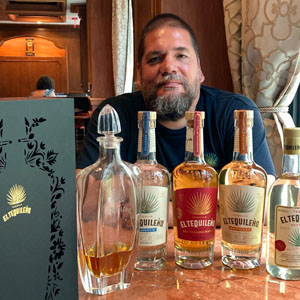
[00:37:36] Ray Latif: Alright, it's time to get to our featured interview for this episode. As I mentioned at the top of the show, Tony Salles is the Master Distiller for iconic tequila brand El Ticoleno. Described as Mexico'Best Kept secret, El Ticoleno distills 10 expressions of tequila, along with a soon-to-be-released Extra Añejo variety. In the following interview, I spoke with Tony about how the company incorporates its heritage and emphasis on quality and craft into its communication strategy, how modern consumers fit into its innovation strategy, and the impact of a limited-edition product on brand awareness. Hey folks, it's Ray with Taste Radio. Right now I'm honored to be sitting down with Tony Salles, who is the third generation Master Distiller for El Tequileño. Tony, how are you?
[00:38:25] Tony Salles: Pretty good. Thank you very much for inviting me. It's an honor to be here with you.
[00:38:28] Ray Latif: It is an honor, and it feels like we're doing this for the second time for some reason. Full disclosure, I accidentally forgot to hit record. in the first try, but we were only recording for six minutes, but I thought it was a great six minutes to start.
[00:38:39] Tony Salles: It was great. It was great. And I enjoyed talking about Master Distiller, our company and our product.
[00:38:45] Ray Latif: Yeah. Well, let's just do it again. Perfect. Perfect. El Tikaleno, the name is beautiful. It means something. What does it mean?
[00:38:51] Tony Salles: It means that you're from the town of Tequila. Tequila is actually a town in Mexico and where everything began. And when this magical elixir, we call it magic water, was first born. And we're honored to keep on the legacy of doing great product and great tequila.
[00:39:06] Ray Latif: See, I had no idea that it was a town of tequila. I always thought it was a region. And you said that it's one of the most visited towns in all of Mexico, though.
[00:39:13] Tony Salles: Yes, it's one of the most visited towns. People go every weekend. It's full. It goes probably like there's a population of 50,000 people. And on weekends, it could go up to a million. So there's lots of visitors that start coming on Thursday Walk The way to Sunday.
[00:39:27] Ray Latif: I guess it kind of makes sense, though, if you're looking to drink tequila and you're like, where's tequila? Oh, it's right there.
[00:39:32] Tony Salles: Exactly. It's become a place for lots of visitors, lots of weddings take place over there. And it's becoming the nicest and newest place in Mexico to come and visit.
[00:39:42] Ray Latif: That was your great-grandfather that launched the company?
[00:39:45] Tony Salles: My grandfather was Jorge Salles Cuervo. As I told you, I think we got more Cuervo blood in our family than the actual Cuervo owners. So yeah, we're a legacy in the tequila making, and he Walk The one that taught us how to make tequila. He began making tequila back in 1941, and it was in 1959 that he decided to launch his own brand, El Tequileño.
[00:40:08] Ray Latif: Today the brand has 10 expressions, including an Extra Añejo that I'm excited to sample while we're recording here.
[00:40:17] Tony Salles: So yeah, we have, for example, we got two basic blancos, and then we got about six or seven reposados. and we got an Añejo and an Extra Añejo. And that's why, because we like to play around with making reposados, and it's something that we enjoy giving new expressions and surprises to our customers. So far, we got like five or six core products that we keep on doing daily. Those ones will never run out of stock, but every now and then we do a special edition, like the Extra Añejo or our Reposado Rare. that we do just to, well first we like doing it and we think it's a quality product and it's different to most tequilas so that's the main reason why we do so many different expressions but they're only special editions. We do them, we finish them and they don't come back and we look for another new thing we could do for surprising our customers.
[00:41:12] Ray Latif: Is your primary customer one that shops across your portfolio? For example, is someone who is a consumer and a buyer of your core reposado, is he the same or is she the same person who's buying your Añejo?
[00:41:27] Tony Salles: No, I think no, because we go from one of our biggest sales in Mexico is our Blanco Mixto, and it's more of an older type of people. because they're used to that product. That product has been in the market since day one. And now as we've been evolving, we got 100% agaves. And there's younger people that were introduced to the brand by most of them probably by their grandfather. because the original customers that we have were consumers, were these kids' grandparents, that the parents of those, the next generation that came after those guys, weren't convinced of what they wanted to do. They wanted to do something different than their parents. And now in the third generation, it comes that the grandkids say, well, the old guy knew how to drink, he knew good stuff, so maybe I try something that he liked, and that's when they come back El Tequileño. And he said, well, I think my grandfather liked it. And once they tried, they keep on going and being one of our top consumers.
[00:42:25] Ray Latif: Well, nostalgia is definitely in. And I think a lot of the younger generation is hearkening back to days of old and appreciating the history and the artisanal quality.
[00:42:37] Tony Salles: We've been blessed. And first of all, when we came back in the United States, We reach into the Latino market, and obviously they say, oh, this is the tequila I used to get drunk when I lived in Mexico. This is what my father or grandfather used to drink it. And when they taste it, they say, oh, it tastes the same as it did last time. And it's been several years since they did that. And we've also been very fortunate that we've been into the American market. and they enjoy our product, they've been open enough to try something new, and they like what they try. So we got, for most Latinos, they like blanco spirits, white spirits, and American market tends to go more for darker spirits, so that's why we have more reposados, and now añejo and extrañejo.
[00:43:20] Ray Latif: Your Extra and Yeho Notwithstanding, your bottle and your label doesn't seem too flashy. And what I've noticed as the tequila category has evolved, you're starting to see a lot of really off-the-wall bottle shapes, some labels that are just very, very flashy. And El Tequileño feels like it, the label that is, harkens back to something of old, like we talked a little bit about. Let's talk about what went into the label, because you underwent a rebrand not too long ago.
[00:43:48] Tony Salles: No, yeah. First of all, we know that we could do a very flashy, nice bottle, but if you want quality inside your product, they'll buy it once. And if they don't like it, they won't buy it again. That's number one. Number two, we recently did a new bottle presentation. It's called our 1959 line. And it was funny because when we were changing the old bottles into the new ones, we just poured out the content of the old bottles into the new ones. And people really thought it was a major change. Even though there Walk The same liquid, exactly the same liquid, people were calling us and sending us mails saying that the improvement that we did to the product was even better and we didn't actually do anything.
[00:44:27] Ray Latif: When you're talking about El Tecolino, I feel like there's a lot of authenticity in what you're saying because of the history, because you are the Master Distiller, because there's so much passion and effort that goes into every bottle. Explaining that to a consumer, trying to sell that on shelf, sell that story is challenging.
[00:44:46] Tony Salles: What is the best way to attract a consumer, a new consumer to the brand? Well, we got to do some tasting, showing them that you can see the face, how the face changes when they try the product. They got to see that the star of El Tequileño, it's inside the bottle, not outside. That's one. And two, we try to invite as many people into our distillery so they can see what we do, learn the whole experience, see that there's nothing we hide and everything's open for them to see. And we do that, first of all, with our tours that we got in town. And we just recently, two or three years ago, we opened a hotel that we take people, trade people, into our premises to stay there and live the whole experience all at once. If we convince them that we are, and they like the experience of being in Tecleño, they become our biggest salesperson. So that's very important.
[00:45:37] Ray Latif: Well, you know what, if I Walk The bartender or bar manager and I probably visited your hotel, I might be pretty happy with the brand as well, I would say.
[00:45:48] Tony Salles: Believe me, we've experienced that and I can tell you it works because people leave the place happy and convinced that they're tasting a great product with great quality and they become our number Tony Salles rep.
[00:46:01] Ray Latif: Now, I feel like I'm going a little backwards when we do this tasting because I haven't tasted the Blanco yet. And so I'm going to be starting from essentially the quote unquote best expression, which actually might sour me. So I might be addicted to your Extrañejo and not want to drink any other expression, but I don't get paid enough to. for multiple bottles of this. Talk about what went into the Extrañejo, because it is a beautiful, this is a beautiful decanter that I'm looking at right now. The liquid just looks, it has this beautiful golden hue to it. The box that it comes in looks like it was hand designed in so many ways. But yeah, talk about the development of this product.
[00:46:40] Tony Salles: Well, we started, as I told you before, Tequileño was known for doing Reposado and Blanco products. So we began to experiment with new types of barrels. We used to use only experiment barrels. Now we have French and American oak barrels that were ex-chardonnay and getting new flavors from those types of different casks that we were using. And we started first with our añejo. We made a stock that probably lasted us for two years. And when we launched it into market, it only lasted like eight or nine months. So that Walk The first note that we were on the right track. So we had to do a lot of tasting, which is the fun part, because you got to drink a lot of tequila, searching for the right type of barrel, the right type of flavor you're looking for. And we narrowed it down to three barrels. Two that were four-year-olds and one was three-year-old. Why do we chose not to use older barrels? Because we know that it was maybe five you could go, but three and four is the perfect age where the wood is not going to be overwhelming to your product. When you can taste the product and you still know it's tequila, because we already did some testings and some tryouts with leaving the tequila for a longer period of time. And it comes to a point that you don't know if it's tequila, if it's brandy, or it smells delicious, it smells great, but it's mainly a wooden flavor that it's impossible for you to recognize what type of spirit you're drinking. So we went and had the decision that those three barrels we're looking for, two ex-Bourbon and American oak and one ex-Chardonnay French oak. were the right expression. Believe me, getting those barrels and forbid people to take any more samples, because everybody went to, they had a long lineup for people that wanted to buy that single barrel of one of our French oak. It was, we call it the Mythical 400, because it was a great flavor and people were Walk The way after that barrel. But we decided to keep it to ourselves and make Extrañejo with that.
[00:48:44] Ray Latif: What does a product like this, what does an expression like this do for the brand? What is its primary purpose?
[00:48:49] Tony Salles: Well, we were entering a new category because we don't have a Exoñejo. So that's very important. Two is going to put us in a new level, a new ultra premium level that we've been going because we got products that go from the well product over to premium. And now this is going to be like ultra premium product, getting us into another world that we're going to more expensive tequilas but way more quality all over tequilas quality because everything starts from our Blanco and it's the process that we give it to wood but we're entering now the ultra premium market and this is a great way to enter that spot.
[00:49:27] Ray Latif: Yeah. And price point is? It's about $600 to $700. $600 to $700. OK. So the sip I'm going to have is probably like $40. Well, actually, that might be kind of a heavy pour. Shall we? Sure. OK, fantastic. We're opening up the decanter here and getting some help from Val, who has just been tremendous throughout this Tails conference.
[00:49:51] Tony Salles: Thank you so much. And if you see, like you said, this nice golden hue, amber color. If you swirl it a bit, even though we're doing this in plastic glasses, but you can see the body that it has, it has lots of body. And then if you go to the aromas. You can see I was doing tasting yesterday. I like to do interactive tastings, asking people what they thought. And if you start like closing your eyes and smelling it and think about words, like I said, what do you think about cherry? And people say, oh yeah, there it is. What do you think about banana? And people were finding, because we know all those aromas are in our head, but somebody had to tell us what to look for in order to connect the aromas with the word. Lots of vanilla, caramel. Where were the barrels again used for this? Two were bourbon, American oak, ex-bourbon, and one was French oak, ex-Chardonnay. So you can get a little bit of whiskies and a little bit of wine aromas there.
[00:50:47] Ray Latif: Yeah, that is beautiful. It's a very, very smooth tequila to drink. And like you said, I think any more would influence and you would lose the tequila flavor. This is very much a tequila with that barrel influence. It's significant, but it's not overwhelming.
[00:51:06] SPEAKER_??: Exactly.
[00:51:07] Ray Latif: Yeah, that's outstanding. And how many years was this in the making?
[00:51:12] Tony Salles: There were two four-year-old barrels and one three-year-old.
[00:51:15] Ray Latif: Wow. How many do you produce? We're going to be 500 bottles. 500 bottles? Yeah.
[00:51:22] Tony Salles: And distributed across the United States and Mexico? Basically, I think 450 are going to come from the United States, or 400, and probably 20 to Mexico, a few from Canada and the rest of the world, but the majority will be distributed here in the United States.
[00:51:36] Ray Latif: Do you spend much time here in the States doing tastings and education events?
[00:51:40] Tony Salles: Well, sometimes, like right now, for the last four months, I've been one week of a month in several places, kind of like Texas, California, Florida. And now I'm here in Louisiana. And next month, I'm going to be in Illinois. So I try to take away three or four days a month to come and visit and open new markets or do some tastings, because I also have to run Master Distiller. So somebody got to work. But it's a nice experience.
[00:52:08] Ray Latif: Well, I ask because you're a great representation of the brand. You are, in so many ways, its steward and its best ambassador, probably. But I'm sure you would want to be in your distillery more often, or maybe I'm wrong.
[00:52:20] Tony Salles: I mean... No, no. I enjoy both things. You learn from both places every day, even though we don't have a very, very big distillery. We're medium or small size. But every day you find something new, you learn something new, and coming out and telling people what you've learned, what you've got, it's very, very nice and rewarding. But also, every time you go out, you learn something new that you can apply to my day-to-day work.
[00:52:46] Ray Latif: Yeah, you called yourself or you called El Ticolino a small distillery. Do you want it to remain small or do you want it to have the feeling that it is a small distillery as you grow? Because there is, there tends to be something lost when small brands get to significant scale. So in so many ways, I'm asking how cautious do you have to be about the brand and how its position and how it's perceived by consumers as you continue to scale?
[00:53:16] Tony Salles: Well, number one, quality cannot be dealt with. We cannot change quality. So that means the process cannot be changed. And since the beginning, when we start growing, we decided to do small batches. So Master Distiller can only grow so much. We got, I think we started with 200,000 liters a year. I think we could go Walk The way to 2 million.
[00:53:38] Ray Latif: And that'll be- Just with one distillery? Yeah.
[00:53:39] Tony Salles: Oh, wow. Okay. Because we started, we had a project that we knew if someday we wanted to grow, we could reach. So I think what we got now, we could probably reach 2 million liters, no problem. but I don't think we'll be able to grow any more without changing several ways of doing tequila. And that's not even thought about because we cannot tamper with our quality. So there's so much we could do. Yes, there's still a little bit of room for improvement. But that's it, like in 2017, we did 200 million liters. This year, we'll probably reach 1.2 million liters. And there's a little bit more space, Walk The way to 2 million liters a year. And that's it. It might be a lot, because you're thinking, how could I drink by myself 2 million liters? But if you compare us to the big ones, they produce 60 million liters a year. So that's quite a difference, yeah.
[00:54:31] Ray Latif: Well, once you get to two million, I think then you'll have to answer some of those questions. But for now, what you're making is phenomenal. And I'm so glad that I had this opportunity to sit down with you, Tony. Congratulations on everything you're doing with the brand. Thank you so much for sharing your Extra Añejo with me. And for folks listening, you should definitely look into El Tequileño. It is a tremendous brand with a tremendous history.
[00:54:53] Tony Salles: Thank you very much. And hope to have you and your listeners come visit us in the town of Tequila. you can stay at a hotel and live the whole tech learning experience, which I think it's very rewarding and very exciting.
[00:55:05] Ray Latif: I'm literally going to book my flight as soon as this interview is done.
[00:55:08] Tony Salles: That's great. It'll be an honor to host you over there. Thank you so much. Thank you.
[00:55:14] Ray Latif: That brings us to the end of this episode of Taste Radio. Thank you so much for listening. Taste Radio is a production of BevNET.com, Incorporated. Our audio engineer for Taste Radio is Joe Cracci. Our technical director is Joshua Pratt, and our video editor is Ryan Galang. Our social marketing manager is Amanda Smerlinski, and our designer is Amanda Huang. Just a reminder, if you like what you hear on Taste Radio, please share the podcast with friends and colleagues. And of course, we would love it if you could review us on the Apple Podcasts app or your listening platform of choice. Check us out on Instagram. Our handle is bevnettasteradio. As always, for questions, comments, ideas for future podcasts, please send us an email to ask at Taste Radio.com. On behalf of the entire Taste Radio team, thank you for listening, and we'll talk to you next time.
[00:56:04] Melissa Traverse: you