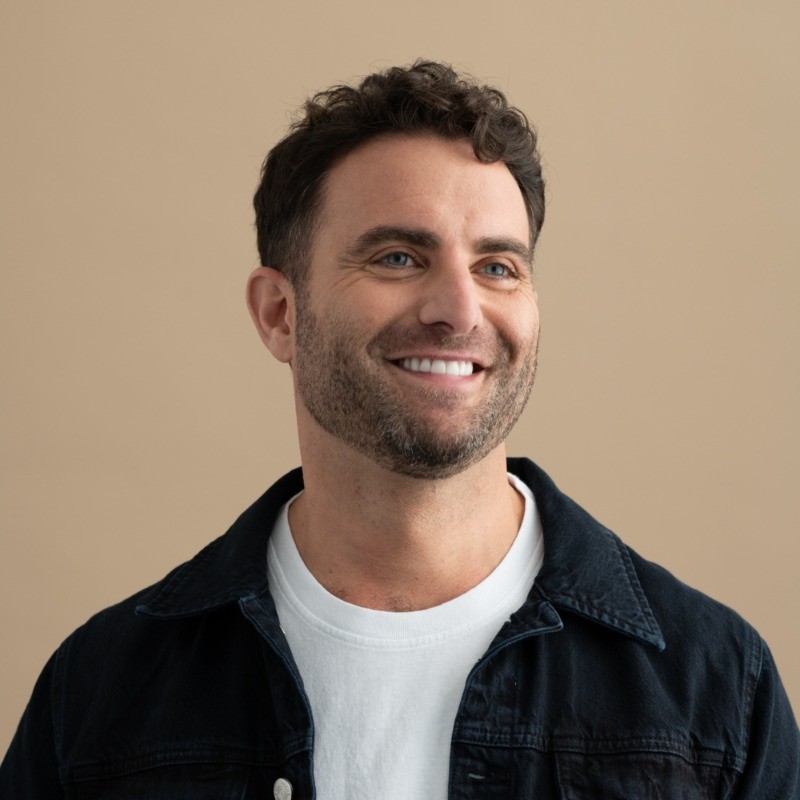
[00:00:10] Ray Latif: Hello, friends. I'm Ray Latif, and you're listening to the number one podcast for anyone building a business in food or beverage, Taste Radio. This episode features an interview with Peter Rahal, the co-founder of Protein Bar Platforms, RX Bar, and David. How do you top a $600 million exit? If you're Peter Rahal, you aim for one that's four times bigger. Anything less, he says, would be a failure. Peter is one of the co-founders of RxBar, the platform brand of clean-ingredient protein snacks that just four years after its debut was acquired by Kellogg for the aforementioned nine-figure sum. Earlier this year, Peter launched David, which is positioned as quote, a rigorously perfected protein bar. Each bar contains 28 grams of protein, 150 calories, and 0 grams of sugar, and is described as containing the most protein per calorie of any brand in the bar category. The products are sold direct to consumer for $15 for a 4-pack of each flavor, which include Blueberry Pie, Chocolate Chip Cookie Dough, Double Fudge brownie, and Cake Batter. In August, the company announced a $10 million seed funding round led by Peter and also included Valor Siren Ventures along with longevity expert and best-selling author Peter Attia and Stanford neuroscientist and podcast host Andrew Huberman. In the following interview, which is framed as a series of true or false questions, Peter reflects on the business strategy and decisions that helped RxBar scale rapidly, including the impact of investing in high-quality package design and customer service. He also explains why entrepreneurs need to be obsessed and create accessible and affordable products and what he means when he says that happiness is irrelevant. Hey folks, it's Ray with Taste Radio. Right now, I'm supremely honored to be sitting down with Peter Rahal. Peter, great to see you. Great to see you, Ray. Thanks for having me. Yeah, thanks for joining me. Living in the great city of Chicago still? No, I'm actually living in the great city of New York. New York City. Okay. So why'd you make the move? I thought Chicago was where you were born and bred.
[00:02:30] Peter Rahal: Yeah, I moved to, once I was done with Rx, I moved to Miami to sort of reset. And then the location of where I was going to live next was based on where was the best place to build my next business. And I landed on New York.
[00:02:47] Ray Latif: You know, Peter, the first time, and I think the last time I saw you, the first time I met you and the last time I saw you was at Nosh Live in New York City in 2018. And we were a few months removed from the sale of RxBar to Kellogg. I found you to be, and I hope this doesn't come across the wrong way. I found you to be a bit more introverted than I expected. Maybe I was misreading it. I know you were just coming off stage at Nosh Live.
[00:03:11] Peter Rahal: I'm definitely very introverted. I don't really want to be famous or anything. So I never wanted the limelight. I was, you know, wanted to build a great business, great brand, focus on the fundamentals and sort of like success as an outcome of that. So probably when you met me, like, like our number was public. So I probably was a little shocked with the amount of attention I was getting. I'd never started entrepreneurship for it. I, you know, wanted to be successful. But yeah, it was sort of like part of the territory I didn't really expect. And yeah, it just doesn't sound that motivated by it. But it's like part of the territory. And I actually don't think I'm good at being sort of the face or charismatic. So I don't really spend my time doing that, to be honest. People want to hear from the CEO. So it's part of the territory. But yeah, it's not part of my motivation, I guess, was the gist.
[00:04:02] Ray Latif: Do you feel like you're kind of being forced into it now, given that there's so much hype and interest around David?
[00:04:10] Peter Rahal: Um, a little bit. Yeah. Yeah. I kind of have to, but yeah, it's just part of the territory.
[00:04:17] Ray Latif: Before we hopped in the mics, I, uh, I've done this once in the past and it worked pretty well, framing a conversation using a series of true or false questions. And as I mentioned, you know, all the success that you've had since 2013. So I think we kind of talked about this already, but I'll ask it anyway. True or false, you've become comfortable with success.
[00:04:42] Peter Rahal: True. I think I'm blessed that I don't care what people think. but then I deeply do at the same time. So like, I really want people to respect me, but like, in general, I don't care what people think, which it's a bit of a paradox, but as an entrepreneur, it's really important because if you really are preoccupied with being viewed as successful or being viewed a certain way, I think it influences your decisions and influences how you think and operate in a very unhealthy way.
[00:05:14] Ray Latif: And is it something learned or is it something experienced versus something that you were expecting or versus not expecting?
[00:05:22] Peter Rahal: I think I was born this way, to be honest. And then as you go through the journey, you get more conditioned to it because, you know, you're just going to get criticisms. You're going to get, everyone's going to have an opinion. So you just can't have those bother you and you can't please everybody. So. I was born this way, and then certainly going through the journey as an entrepreneur, you get, you have no choice, I think.
[00:05:46] Ray Latif: Fair enough. RxBar, quite a successful brand. I think a lot of folks might say, well, RxBar was the right brand at the right place at the right time. That's why it worked. True or false? Is that the reason it worked?
[00:06:00] Peter Rahal: Partially. I would say false. because in 2013, 14 and 15, there actually was a ton of competitors that were the same sort of product type, like an egg white based protein bar that was, you know, dates and egg whites, like same sort of concept. And none of them passed a million in sales. None of them really got beyond their little city. And I remember, you know, Jared and I, we would always see these people, like these copycats emerge. So it was really a combination of right timing, but also a ton of good decisions, a ton of will. It wasn't an accident. And actually, RxBark should have been a smaller business. It wasn't for the team we had and the decisions we made. We were one of the few brands to crossfit into mainstream. We're one of the few brands that really transcended paleo into just the clean label movement. So I'd say a partial true and false.
[00:06:58] Ray Latif: Took a lot of hard work. You've talked about the value of hard work quite a bit. True or false? Hard work means working all the time.
[00:07:07] Peter Rahal: Yeah, I think, I think so. Yeah, true. Yeah. It has to consume you, right? So it's maybe not necessarily like execution, like always on email, but you have to be obsessed and work like intellectually and emotionally thinking about it all the time. Like David, for example, it's like all, it's the only thing on my plan, really. So yes, true.
[00:07:29] Ray Latif: Only thing on your plate except your impending nuptials. We'll leave it at that. Related to working all the time. If you're working all the time, you can't really take a vacation. I had come across an article in which you had said you still don't need a fucking vacation. True or false? Vacations are not part of your purview.
[00:07:52] Peter Rahal: Yeah, they're not like, the weekend is a vacation, really, when you think about it. So sure. Like, I don't have any motivation to go anywhere right now. And the thing is, like a vacation, at least at this stage of where I'm at, like, it actually causes more stress. Why is that? Well, because I got to be present, like, I'm going to be checking my email, I'm going to be stressed that I'm not in the office or not present. So it defeats the purpose. Like I think there's a right time for vacation or, you know, really just making, making the weekends. Those are important. I mean, all of this depends on where you're at or like your business life cycle or your personal life cycle. So like our X bar was very intense. And I was a very committed leader, so it never made sense. And even after RX4, I tried to vacation, but it just doesn't do it for me. I don't know. It's about motivation, really. I'm just not motivated by chilling by the pool or, I don't know, I just like output. I think it's about family, too. I don't have a family. So I think now that I have a son, I think it's maybe a better time, but I don't know. Basically, vacation is overrated. Fair enough.
[00:09:03] Ray Latif: I mean, I think at a certain point you've had enough vacation. I've been on vacation for, well, the last few years I really haven't been on like a vacation where I'm just completely not working. But I guess like after four or five days, the question is like, why do you need more? Maybe that's just a thing that you and I feel and other people are listening to this and being like, those guys are just absolutely out of their minds.
[00:09:28] Peter Rahal: And honestly, it's like, it's just each individual's their own. I think there's a good rationale for time away and a sabbatical of some sort to each their own. I just know like, I'm not like trying to escape.
[00:09:44] Ray Latif: There's a great social media series that follows small businesses, specifically small restaurants. And the interviewer is always talking to the owners about the history of the business and what makes them special or unique or differentiated. And I was really amazed by this, this one owner of a sandwich shop. I forget, I think it's in, I want to say it's in Cincinnati. And he had taken a vacation for the first time in nine years. So they did a virtual interview. Typically he does the interviews on site at the restaurant, but he did a virtual interview. And he was even thinking about leaving his vacation and coming back just for this interview. And the guy was like, no, no, no, just please enjoy yourself. But one of the things he had said in the conversation that really struck me is, that he had been taught, and he lives this, that a leader always eats last. Would you agree with that, true or false? A leader always eats last.
[00:10:41] Peter Rahal: Yeah, I would agree with the idea. And it's basically like a servant leadership. I think it's the most effective leadership style.
[00:10:49] Ray Latif: Did you say servant leadership?
[00:10:51] Peter Rahal: Yeah.
[00:10:51] Ray Latif: I've never heard that term before. What does it mean?
[00:10:54] Peter Rahal: It's basically you eat last. Like your job is to serve the people and protect them Like good leaders serve each other, they're protective, they break down barriers, it's really like bottoms up, not top down. They micromanage, meaning they get in the weeds, they help solve problems, they make it out of the way, and they're very present, right? So they're here to help. So that's always been like my natural sort of leadership style. And yeah, so that philosophy is just leaders eat last, like good leaders eat last. Yeah, so I would agree.
[00:11:30] Ray Latif: Just to follow up on that, you said you micromanage or you had when you were with RXBAR. Is that still something you do and will do with David?
[00:11:38] Peter Rahal: Yeah, I think it's like, like micromanagement has a sort of negative sort of association, but too much micromanagement is a problem. Like it is important for any leader to get into the details if it's called for. So if there's a problem, you need to like go in, dive in and actually understand the details. What's important is getting out like once it's done is not just staying there. So it's like, a good leader's got to flex between micromanagement and macromanagement, right? You can't stay too much at the macro, and you can't stay too much at the micro. You got to really understand when to go back and forth between those two things.
[00:12:14] Ray Latif: When is the problem too small, though? I mean, how do you know?
[00:12:19] Peter Rahal: you know, based on how impactful it is. I think in general, there's like 100 ways to do something. So you have to have a good sense of how important it actually is. So anything with product, with people, with brand, service, customers, like if there's a serious problem, that's worthy of micromanagement. But yeah, I think as leaders, you gotta use good judgment. And that doesn't mean you're like a bully coming in and sort of pushing, but it's just making sure that the right things get the appropriate attention.
[00:12:54] Ray Latif: One of the most right things you ever did was to rebrand and repackage RX Bar. I recall in, it was the Winter Fancy Food Show in San Francisco, I think it was 2014, January of 2014. And I'd seen the old packaging for our expert and I saw the new one and I was just like, this is incredible. This is the best packaging I've ever seen in my life. It's just, it just stands out. It's very clear. It communicates so many things with a limited amount of information. So true or false, great packaging is the best form of marketing.
[00:13:33] Peter Rahal: True. Cause in our business, the packaging is like, it's the presentation and the communication of your offering. And you always want your packaging to do all the work for you. So, yeah, it's the pinnacle in good marketing, I would say.
[00:13:50] Ray Latif: RxBar and David, however, have very, very different packaging. One is very clear about the ingredients. The other is very clear about the most important ingredients, or at least the most important attributes of the bar. David calls out 28 grams of protein, 150 calories and zero grams of sugar.
[00:14:10] Peter Rahal: Yeah, so nutrition is generally pretty complicated, I think. We're all individual humans, we all have different needs, we all have different stomachs, different goals, different beliefs. And so what happens in the sort of abstract definition, like what is healthy, what is good for me, you get these sort of hacks that people will develop or that will get popular. And like one hack, it's like paleo, for example. So the hack is basically, if my ancestors didn't eat it, it's not good for me. And that's just a shortcut to really define what is good. And then I think there's certainly some truth to it. Obviously, it's more complicated than that. And so, you know, you see this with like seed oils too, like seed oils are bad. And it's just this binary thing and it's like, it's probably a good hack because consuming too much oil in general, like the energy density, it causes for overconsumption of calories, which is a problem, right? You get these hacks that help you, like paleo helps you eat whole real foods, that is generally good, eat a balanced diet, and then C-dose helps you not over-consume calories, it's generally good. They're good hacks, but I think my point is to just blanket ingredients or blanket certain things, it's good or bad based on those hacks, is it not a sophisticated approach, really? You know, I think with building David, we don't want to be, we don't want to succumb to those sort of hacks that ultimately move with their become like, basically, they're trendy, right? Like they come and go. And that's a very vulnerable position for a brand to be around. And I saw that in our X bar was like, our early adopters are moving to Quito. and they had totally abandoned us. And it's like, I, we just spent all this time building this position and now the world's changed and we can't change. So with that lesson, I was like, all right, well, we have to base things that have real durability that are based on evidence that we know are true. And that's why it's like the macronutrients, right? Like those are really, really important. Like we know calories matter. We know protein matters. We know sugar needs to be under control or spiking your blood sugar is not a positive thing generally. So, because you know, as I call myself an early adopter of nutrition, I was always very confused as I was following my journey. I was like, all right, you know, like two years ago, it was like eat fish. Now fish causes mercury, like don't eat fish. And it's like, Eat six small meals a day, now starve yourself. Dairy good, dairy bad. And it's like, there's no source of truth. And so I just found it so difficult as a consumer to understand. And you think about all the brands in our space, there's these windows of opportunity, of real demand. and they build brands around those things, and they get great growth, then those things move. And it's just, from a business perspective, it's just not a prudent thing to do.
[00:17:21] Ray Latif: What you're saying makes a ton of sense, you know, that trying to build a brand around a trend, a fad, or diet typically never works, and may work for a limited amount of time, and then you gotta figure something else out. But one of the most genius aspects of RxPAR to me was that you were able to acquire someone's trust relatively easily because you were very clear about the ingredients on the front of pack. Again, it's a little different with David in that, I mean, if someone wants to know the ingredients, they got to turn the package around, lift up the flap and, you know, find out what's one thing, what's the other thing. Maybe you'll have to Google a couple of things just to, just to know what you're eating. And it makes me wonder, how are you going to acquire a consumer's trust when they don't necessarily know some of the ingredients, especially because people are looking at that nutrition facts label a lot more closely than they had in the past. So, true or false, to acquire a consumer, you must first acquire their trust.
[00:18:23] Peter Rahal: True. Yeah, for sure. So it's like in the protein and bar space, or like I just say, what is healthy, there's sort of like, a continuum, there's the left and there's the right. The left basically says your ingredients matter more than anything, and then the right's basically like, no, nutritional facts are more important than your ingredients. So those are like the two philosophies. When you think about a processed food, like a highly processed food, like any snack bar, a better position is one where your nutritional facts are everything. Because it's sort of an oxymoron to have a processed food with clean, like the paleo position, right? It's like paleo people are eating boiled eggs and nuts, right? Like that's what they should be eating. But to answer your question, yeah, trust is everything. That's, I think, for not just consumers, but for every stakeholder in the business.
[00:19:18] Ray Latif: Yeah, and I think how you treat consumers tells a lot about how they're able to trust you. So that communication is a really important aspect of building that trust. And customer service, however, is and can be quite expensive. It can be quite time consuming. But true or false, the investment in customer service will always pay off.
[00:19:45] Peter Rahal: True. Unequivocally. I like business fundamentals. And I think one of our strategies and my personal strategy is like a satisfied customer is the best business strategy.
[00:19:56] Ray Latif: I'm going to write that down.
[00:20:00] Peter Rahal: It's so good because it's true. It's like if you just turns out, if you just make customers happy, even ones that are upset with you. It all works out. And a lot of entrepreneurs make a huge mistake of just looking at customer service and call it consumer service as like an expensive burden or line item that's inefficient. I think they're making a grave mistake and it might seem daunting, but you want to scale the unscalable, as some say. And you can tell a lot of consumer brands have shitty customer service because when we respond, they're sort of shocked. It's actually an uncompetitive market when you think about like, in America, people's customer service experience with other brands. I don't think it's that good. It's offshore or no management, bad bots trained on bad SOPs. So back to the fundamental thing, it's like you want to set as my customers the best business strategy. And then we are in the consumer goods business. So like, two things you better do right is like, serve the consumer and make great goods for them.
[00:21:01] Ray Latif: Yeah, and make them accessible. I think there's something to be said about David as a great product for people who may not have access to nutrition or better nutrition, inconvenient nutrition. It's hard though. It's hard to make good food accessible and affordable, unfortunately, for a lot of different reasons. But true or false, your goal should always be to make accessible, affordable food.
[00:21:35] Peter Rahal: True. I think the market's too competitive anyway. You have to.
[00:21:38] Ray Latif: How do you mean?
[00:21:40] Peter Rahal: There's just too many options for people. So if you don't make it accessible, you're going to lose. And if you don't make it affordable, someone else is going to take your place. So I think the inherent nature of the market will actually force you to do that. So true.
[00:21:54] Ray Latif: But what happens when your ingredients are expensive? I would think that, you know, what I'm seeing in David is not inexpensive.
[00:22:01] Peter Rahal: It's very expensive, but we still, we're going to try to get it everywhere and have as competitive pricing as we can afford. And it's like actually the way consumers look at price and the protein bar category and protein in general, even with meals, is really calculated on how much protein I'm getting. So like protein by dollar is a sort of subconscious, like that communicates value. So from that perspective, we're probably the most competitive option, most affordable option, actually.
[00:22:32] Ray Latif: Based on this price per gram of protein? Yeah, for sure. You know, I think about your journey, Peter, and, you know, as I'm doing my research and doing some background work, I keep thinking of a name and that name is Mike Rapoli. I'm pretty sure you're familiar with Mike. Mike Rapoli is the co-founder of Vitamin Water, the co-founder of Body Armor. He's a pretty well-known figure in the beverage industry, one of the most successful beverage entrepreneurs of all time. And I sat down with him a while back and I think I asked him when he was getting into body armor, you know, why are you doing this again? Because you had already made quite a bit of money with vitamin water. You're quite successful. You're bought and sold pirate's booty. You got horses. You know, you're set. Don't worry about this. Like, why are you getting back to this crazy business? And I think what he tried to articulate and what he did articulate is that the excitement, the goal of being the best at something was driving him. And he was obsessed with this idea of knocking Gatorade off its perch with body armor, creating a sports drink brand that wouldn't settle for bronze, as he said, that was going for gold, nothing less. And I see a lot of the same Rapoleon kind of attributes of David in that you have said, you know, our goal is to become the number one protein bar in America. That's a very lofty and ambitious goal. and one that might make you pull every strand of hair out of your head. But true or false? I mean, you've got to have number one as your target if you want to be successful.
[00:24:12] Peter Rahal: True. Yeah, for sure. It's competitive. You got to want to win. So yeah, true.
[00:24:19] Ray Latif: Of late, I've heard a lot of investors talk about the idea of building a 20, 30, $50 million brand and it being something that is achievable and something that should be targeted versus trying to be the category leader or be distributed in every 50, all 50 states. I mean, you know, why is it so important to be the best?
[00:24:42] Peter Rahal: If David isn't four times the size of our export, it's a failure. My view. It's about winning. It's about moving things forward, making customers happy, bringing innovation to the market. Winning is fun. Why else would you do it? Do things for second place. Winning is fun.
[00:25:01] Ray Latif: And I love winning. I love the competition. And a lot of people might say, well, entrepreneurship isn't about the end result. It's about the journey, but you know, the end result is what you're chasing, right? But does it make you happy?
[00:25:12] Peter Rahal: Winning? Yeah.
[00:25:12] Ray Latif: Winning makes me happy, for sure. Okay. I'll ask this question again. I think I might know the answer, but true or false, entrepreneurship is about finding happiness.
[00:25:25] Peter Rahal: No.
[00:25:26] Ray Latif: Just false, okay.
[00:25:27] Peter Rahal: False, yeah. I think this is irrelevant.
[00:25:30] Ray Latif: Happiness is irrelevant. Okay. You're the second person I've spoken with this year who has said something similar to that, or at least has the same kind of mindset when it comes to happiness. It was Jay Shetty, who is the well-known self-help expert and the co-founder of a sparkling tea brand called Juni, J-U-N-I. And he said, happiness is overrated. Now you can listen to the interview to hear him expound on that, but it sounds like you're of a similar mindset.
[00:26:00] Peter Rahal: I, yeah, it's irrelevant for entrepreneurship. I don't really care about it.
[00:26:05] Ray Latif: But don't you want to be happy when you're doing what you're doing?
[00:26:09] Peter Rahal: I would, I would say it should be fun. I think you should have a sense of humor at work. Like it should be fun, but the, through the journey, I think happiness is relevant, like serving and winning and achieving goals. I guess, yeah, that outcome could make you happy, but it could also make you, I don't know. I just don't think of it as an emotion that I apply to entrepreneurship. It's actually quite the opposite. Your expectation should be it's misery. Well, it's like a better expectation because it's hard. There's failure. There's stress. There's rejection. There's tough conversations. It's emotional. There's trade-offs, like intellectually stressful or demanding. If you want to be happy, like there's other things you can do to make you happy.
[00:26:57] Ray Latif: Yeah. Okay. That's fair. That's fair. Four times, you want David to be four times the size of RxBar, otherwise it's going to be a failure. There is a business strategy. There is a plan, I'm sure. But how far out, you know, do you have to think about getting to that end goal?
[00:27:13] Peter Rahal: Like the market's pretty defined, right? So I think some of the work we're doing at David is that I'm excited to, and we're looking to do is to expand the actual addressable market. So, but I mean, I look out six years, seven years at a time and. I think we're really focused on growing the market too, not just sort of taking share. And so we're trying to bring, because you know, you'll talk to customers and they'll be like, Oh, I'm not a protein bar person. Or you'll hear that quite a bit. And we heard this part too, but we're hearing that a lot. And they're like, we're not a protein bar consumer, but I love this product. I love David. And that's, that's to me is the ultimate sign of that you're, you're creating value and doing something right. So we're really focused on like super surplus and expanding the market, like growing the category.
[00:28:00] Ray Latif: It certainly seems like you are when you are comparing on your website, David, to other protein bars. You're also comparing David to boiled cod, which is kind of eye-opening to see. I assume that means you're trying to convert folks who would look at boiled cod as a good source of protein and saying, Hey, you know, instead of eating this bland fish, you can have a tasty Blueberry Pie protein bar.
[00:28:26] Peter Rahal: If you look at the competition just as the category, or your peers in the category, I think it's a bit too narrow sometimes, because you have to look at how are consumers shopping? How are they thinking? What are they eating? There's a world where we're actually competing with a banana. We're competing with RTD shakes, protein shakes. We look at it pretty broadly. So Americans in the future are gonna be demanding and getting more protein than they are today. And so I just have a good position to help people achieve that.
[00:29:01] Ray Latif: Peter, I am so happy that we've had this opportunity. Thank you so much for taking time. I just have one more true or false question. Again, RxBar, just a remarkable success, four years, $600 million exit, but there's more to be done clearly with David. A term or a sentence I've seen associated with the brand is finish your masterpiece. True or false, David is your masterpiece and You'll be done with CPG after it all is said and done. False. False.
[00:29:33] Peter Rahal: Okay. I'm an addict. False. No. I mean, I always need a job. I like to work. So yeah, hopefully I can build David for as long as I'm capable of it. But the Idle Mind is the devil's workshop. I always need a job, so I won't ever stop.
[00:29:54] Ray Latif: You have a very specific way of knowing who you are and accepting it and incorporating it into your businesses. And I think it's fabulous. This'll be a bonus true or false question. I think investors, and as I mentioned, you're an investor in Latani Ventures, investors sometimes I think look at founders and look for similar qualities in them. Do you do the same, true or false? You have to find a founder who at least has a similar approach to business to invest in their company.
[00:30:24] Peter Rahal: Yeah. Cause if you don't, there's like a cultural thing that's off, like an expectation. So I always looked for like really competitive, humble and confident, stubborn, flexible, kind of willing to die before the company fails. Sort of that grit that's really important. And someone who's like burn the ships, it's like, really important. And the investor side, it's actually hard to be able to get to know someone and evaluate them. You don't really have enough time. But yeah, when I when I was investing, that's absolutely I wanted to find the warrior type entrepreneurs that were just super committed, coachable, wanted to learn grow. Those are the traits I kind of see myself. So and I'm obviously biased for those.
[00:31:09] Ray Latif: Yeah, well, looking at the list of invested brands, the brands that you invested in, I know many of these founders, if not all of them, and I would say that they are the kind of people that would do whatever they could to help their businesses scale.
[00:31:25] Peter Rahal: Yeah, for sure.
[00:31:26] Ray Latif: Yeah. As I mentioned, Peter, I mean, it's, uh, it's an honor to be speaking with you or to have this opportunity. And I'm so excited for you and for the future of David. Um, this is a remarkable brand and bold in its approach to ingredients, package design and ambition. I'm really excited to see where it all goes from here. Hopefully you'll achieve the success that you're looking for, but we're going to be following all along the way and definitely want to stay in touch.
[00:31:54] Peter Rahal: Appreciate your time.
[00:31:56] Ray Latif: Thank you, Peter. That brings us to the end of this episode of Taste Radio. Thank you so much for listening. Taste Radio is a production of BevNET.com, Incorporated. Our audio engineer for Taste Radio is Joe Cracci. Our technical director is Joshua Pratt, and our video editor is Ryan Galang. Our social marketing manager is Amanda Smerlinski, and our designer is Amanda Huang. Just a reminder, if you like what you hear on Taste Radio, please share the podcast with friends and colleagues. And of course, we would love it if you could review us on the Apple Podcasts app or your listening platform of choice. Check us out on Instagram. Our handle is BevNetTasteRadio. As always, for questions, comments, ideas for future podcasts, please send us an email to ask at Taste Radio.com. On behalf of the entire Taste Radio team, thank you for listening, and we'll talk to you next time.
[00:32:50] Peter Rahal: you