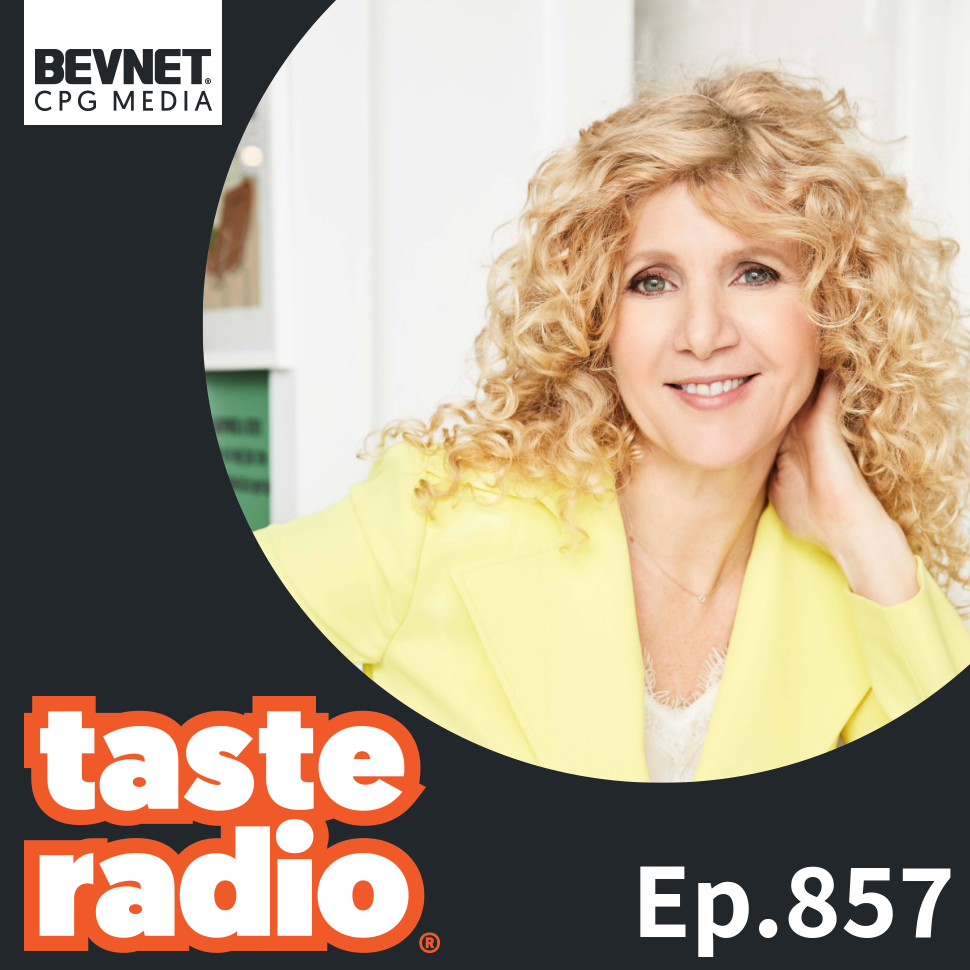
[00:00:10] Ray Latif: Hey folks, I'm Ray Latif and you're listening to the number one podcast for the food and beverage industry, Taste Radio. This episode features an interview with Natalie Shmulik, the Chief Strategy and Incubation Officer of Chicago-centric food and beverage incubator, The Hatchery. Just a reminder to our listeners, if you like what you hear on Taste Radio, please share the podcast with friends and colleagues. And of course, we would love it if you could review us on the Apple Podcasts app or your listening platform of choice. As highlighted in recent episodes of Taste Radio, entrepreneurs in the midst of fundraising have encountered an investment community that is increasingly looking for profitable businesses or those that have a realistic path to profitability. And investors will point to a common thread among such companies, a foundation rooted in business fundamentals. Supplying early-stage food and beverage entrepreneurs with the resources to learn the ropes and develop a sustainable, scalable business is a primary goal of The Hatchery Chicago, a non-profit food and beverage business incubator focused on the Chicagoland region. Since its launch in 2016, The Hatchery has focused on supporting women, BIPOC, and local founders with affordable commercial kitchen space, fundraising workshops, and business coaching. It operates a 67,000-square-foot facility in the West Side of Chicago and is financially backed by organizations including the MacArthur Foundation and Walton Family Foundation, as well as major food companies Kellogg's and Griffith Foods. In the following interview, I spoke with Natalie Shmulik, the Chief Strategy and Incubation Officer for The Hatchery Chicago, about the incubator's origins and work with early-stage entrepreneurs, the most pressing needs and challenges facing small businesses, and how she and her team are advising brands on scaling and investment. She also discussed the typical attributes of a company that has successfully scaled beyond The Hatchery, and how high-profile strategic partners, including Pepsico and MondelezēMondelez International, are involved in its development. Hey folks, it's Ray with Taste Radio. I'm here in Las Vegas for the 2023 Winter Fancy Food Show. And sitting with me right now is Natalie Shmulik, who is the Chief Strategy and Incubation Officer for The Hatchery. Natalie, great to see you.
[00:02:39] Natalie Shmulik: Good to see you. Thanks for having me.
[00:02:41] Ray Latif: It's so exciting to be back. This is my first Fancy Food or Winter Fancy Food since 2000.
[00:02:46] Natalie Shmulik: Oh, wow.
[00:02:46] Ray Latif: Yeah. And they've moved. This was previously in San Francisco, and now we're here in Las Vegas, as I mentioned. What do you think of this new venue for this show?
[00:02:53] Natalie Shmulik: I've always loved fancy. I've been coming for years. I think a change in venue is always great. I do miss San Francisco, but I love getting to see anyone and any excuse to travel and reconnect with all the food folks. I'm all for it.
[00:03:05] Ray Latif: Totally. Totally. I feel like we need a fancy Food Show in Chicago. We do. Yes. Where The Hatchery is based.
[00:03:12] Natalie Shmulik: 100%.
[00:03:12] Ray Latif: Yeah, how can we make that happen? We're actually I think we're sitting not too far from some of the leadership team here.
[00:03:17] Natalie Shmulik: We should speak very loudly.
[00:03:19] Ray Latif: Yes, I'm with you.
[00:03:20] Natalie Shmulik: Yeah, we need to get that going. They've hosted some info sessions in Chicago, which I've been a part of. Those are always a huge hit. They get a great turnout. We've got amazing shows there. We've got McCormick Center. I say let's bring fancy to Chicago. I mean, it is the hub of food innovation. Let's do it.
[00:03:35] Ray Latif: Yeah, I think the timing is a question because they always do the winter ones out here where it's supposed to be warmer. It's like 50 degrees in Las Vegas, shockingly. But the summer one is in New York. Maybe we can move the summer one to Chicago at some point.
[00:03:47] Natalie Shmulik: Maybe, yeah. Or, you know, people are spending a lot of money on cryotherapy. So that could be a nice combo. Get your cryo on and then just go get some delicious snacks.
[00:03:56] Ray Latif: Totally, totally. I learned something that was awesome about you, and that's that you lived in Boston for a time where I live and reside and went to school. And you also went to my alma mater, Boston University. Although I think that my undergraduate business degree is lesser than, if I can use that term, than your master's in gastronomy from BU. I say that because it feels like there's so much learning and knowledge that you gained from that program. that you've been able to use in your career and throughout your career at The Hatchery.
[00:04:29] Natalie Shmulik: I definitely wouldn't say lesser than, but I'd say at the time when I went into gastronomy, it was so unusual. I think my dad to this day still thinks I was training to be a chef in outer space, has no idea what gastronomy means. And my poor immigrant parents were like, what is she getting herself into? But I just knew there was something going on in the food and beverage industry. At the time I was operating my own restaurant. I was a consultant for a supermarket chain in Toronto. So I had so much experience, but I knew there was something just below the surface going on in food and beverage. And I had a professor actually from my undergrad mentioned this program. And I'm so happy I did it because it gave me a really unique perspective. It covered all aspects, anthropology, food history, food in the senses, food marketing. And I think I really needed that full 360 perspective to be able to fully commit to what I do now and to be able to advise startup entrepreneurs.
[00:05:26] Ray Latif: And you told me something earlier that's really interesting. You're becoming or you are now an adjunct professor in that program, which is really cool. And what you'll be teaching is about essentially how to start a business and be effective at scaling that.
[00:05:37] Natalie Shmulik: Exactly. Yeah, it all comes together. So this last fall, was my first time being an adjunct professor and teaching planning a food business for the gastronomy program at Boston University. And I'm so happy because as we were speaking earlier, I think entrepreneurship and understanding the nitty gritty of starting a business is so important. And there's not a lot of programs out there that teach you these essentials. So I'm just so excited. The students were great and I'm excited to keep doing it.
[00:06:04] Ray Latif: Well, you've been doing it for a long time, just not with the title of an adjunct professor. Yeah. The Hatchery is such a remarkable organization, and I feel like it's an incubator that sort of leads the way for incubation centers across the United States, you know, food and beverage, that is. There was a starting point, obviously. Can you talk a bit about the origins and the development of The Hatchery?
[00:06:25] Natalie Shmulik: You got it. So The Hatchery really started out of a need that we saw within the food and beverage community. It's a joint venture that was started by the executive director of ICNC, which stands for Industrial Council of Near West Chicago. Not the sexiest name. But a very important ode to manufacturing, which is ultimately the industry that we're in. And ICNC is actually one of the oldest and largest business incubators in the country. They're in the Fulton Market area in Chicago. They have a 416,000 square foot facility that houses 110 manufacturers, not just in food and beverage, but across all industries. But over the last 10 years or so, there was this increase in food and beverage entrepreneurs wanting and needing access to commercial-grade production space. So they would come to this facility, which was an old plumbing foundry, which any food and beverage entrepreneur would know that sounds like a nightmare of a place to start your food and beverage business. But they would go ahead, they would build out the space, they would set up shop. One of the graduates that have come out of there is Farmer's Fridge, which I'm sure a lot of folks know about, Reinhold Distillery, Metric Coffee, amazing brands were coming out of there. But what would happen is the entrepreneurs would need to seek capital to build out that food grade space. And at the time, they would go to Accion, which is now Allies for Community Business, which is a nonprofit micro lender and the other joint venture partner of The Hatchery. So the two organizations came together, both very mission focused on supporting diversity, equity, and inclusion within all industries, but realizing that the barriers of entry into food and beverage were much lower than other industries. And because there was this increase in desire for food and beverage production space, we saw this as an immense opportunity to launch a new incubator that strictly is focused on food and beverage. So I came on board in the early stages and we launched as a virtual incubator, ultimately to test and learn and develop a concept based on the feedback we got directly from entrepreneurs. So we started running a starting a food business class. We still run that class to this day. We're the only ones in the Chicagoland area that run this monthly workshop, which is two hours. It gives you a very quick, and intense look at what's happening in the industry, all the certification and licensing you need to get started, how to really navigate the space to make sure that you're able to launch successfully. After we operated as a virtual incubator, we created the nonprofit entity, and we built a 67,000 square foot facility on the West Side of Chicago. And this was very intentional. We had immense support from the city, from various CPG partners, banking partners like Fifth Third, And we decided we wanted to be in and of a community that could best benefit from those resources. A lot of times we find that shared kitchen spaces are located in high foot traffic areas, rightfully so, they're expensive businesses to operate. But what that means is, other neighborhoods wouldn't have as much access to those facilities, or you're looking at maybe a two-hour commute, which is just not sustainable, especially for a low-margin business. So we found that on the West Side, particularly at East Garfield Park, it was a traditionally under-invested neighborhood, some of the highest unemployment rates, but so many incredible entrepreneurs were cooking out of their basements, out of their home kitchens, and we wanted to give them an opportunity to really build generational wealth and create a viable business. And about three years ago, we opened The Hatchery, which has a large shared kitchen where entrepreneurs can test and learn and get their start. We also have a community benefits agreement. We offer 34 free hours of shared use kitchen time West Side residents. That has often been a barrier of entry, that initial capital you need just to get started. And we want Westside entrepreneurs to get into the kitchen to try these concepts to see if they can grow these businesses. And then when they hit about 30 or 40 hours a week in the shared kitchen, they're able to then graduate into one of our 54 private kitchens. We have three sizes for the private kitchens. They're designed to be very efficient. We also have storage on site. We have event space, ideation space. Our joint venture partner, Allies for Community Business, their loan office is right on site. So if you need access to capital, they are right there supporting you. And then we have programming, technical support, everything you need right in the facility to support these entrepreneurs. But the best part is what the entrepreneurs bring for one another. It's such a supportive community. As we discussed too, being an entrepreneur can be so isolating and knowing that there are other people in the trenches with you trying to figure this out and asking the same questions, getting the same answers, sharing their experience. It's so valuable and that's something we're incredibly proud of.
[00:11:11] Ray Latif: Just amazing again, you know, what you bring to that community. And I didn't even know about the free hours that you give. You said 34?
[00:11:18] Natalie Shmulik: 34 free a week. In addition to that, we do 34 at 50% and free membership to all Westside residents.
[00:11:26] Ray Latif: That's remarkable. And then they can graduate, as you mentioned, to those 54 private kitchens.
[00:11:30] Natalie Shmulik: Exactly.
[00:11:31] Ray Latif: Are the private kitchens, are they all full now? And I guess what's the sort of rate of turnover or what's the rate of usage for those kitchens?
[00:11:37] Natalie Shmulik: Yeah, that's a great question. Currently, we are at about just under 80% occupancy. And our goal is we want to work with entrepreneurs anywhere from one to four years. That's kind of the sweet spot. The four-year mark is when we start seeing entrepreneurs graduate out of the facility, moving into co-manufacturing their own brick and mortar spaces, their own restaurants. And we've actually already seen quite a few. This is the year in kind of our third year mark, we're seeing quite a few businesses graduate out, move into their own spaces. We've got Maya Camille from Justice of the Pies, who is a James Beard award winner. She's moving into her own bakery space on the South Side of Chicago. We've got Taylor's Tacos, who are West Side residents, incredible taco business. They launched into retail with their taco kits. They've since opened a catering space and they are moving into their own restaurant space. Chai Fresh Kitchen, which is an incredible organization that supports previously incarcerated women, providing them with opportunities to create personal wealth, to support the business. They've moved into their own space. So this year, we've seen a lot of those graduates. We've seen a lot of companies moving in their own space. But it really is around that four-year mark where we're anticipating a lot of companies growing out. And then we want to see new companies coming in. So we do have a pipeline. We have a wait list right now for our shared kitchen. 5% of our facility is also dedicated to corporate partners. So we do have corporate partners that are doing ideation onsite at The Hatchery. And the great thing is that they share their expertise with the startup. So it's this incredible ecosystem of you got the big guys doing R&D, Ingredion, and Griffith Foods, Cresco, Kellogg's Ideation Center, Synergy Flavors, and they're all sharing their food science knowledge, ingredient knowledge, flavor knowledge with these startup entrepreneurs at no cost.
[00:13:21] Ray Latif: You talked a bit about the entrepreneurs that work with The Hatchery, you know, in terms of who they are demographics wise, you know, what industries are they previously coming from? What walks of life, you know, are you seeing that are most common among the partners that you have?
[00:13:38] Natalie Shmulik: It's so interesting. I think it changes every year, but we see entrepreneurs come from all walks of life. We see career changers coming from finance, former attorneys, incredible backgrounds. Certainly it lends itself so well to understanding how to grow a food and beverage business overall. We have MBA students coming straight out of school, some of them launching while they're still in school, and then we help them grow their business. We see individuals who were looking to launch catering businesses, and we cover the gamut. Most of our entrepreneurs are in the consumer packaged goods space. We have a good portion in catering, certainly during the pandemic, a lot pivoted to meal delivery, which was really interesting for us to learn as well. That's a whole new space that we're diving into and providing resources around. Now we've got R&D. In terms of the types of entrepreneurs we're supporting, again, our focus is very much on diversity, equity, and inclusion. We try to give as much support West Side residents as we can. currently enrolled in our Sprout program. We have 78% women-owned businesses, 62% BIPOC-owned businesses, and 53% from the West Side of Chicago, which we're really excited about because that's where we think innovation thrives is the more individuals, diverse individuals, diverse ways of thinking, diverse concepts, the more innovative ideas we see coming out of our space.
[00:14:57] The Hatchery: Guessing your margins? That's risky. Belay Financial gives CPG brands the clarity to scale smarter, faster, stronger. Get your free inventory ebook by texting TASTE to 55123 and start making data work for you. Vibrant Ingredients is the natural ingredient partner powering food and beverage innovation, delivering flavor, function, and protection through a science-backed portfolio. Vibrant delivers purpose-driven solutions that help brands create extraordinary experiences. Discover what's possible with Vibrant today. Visit VibrantIngredients.com.
[00:15:43] Ray Latif: I think there's some challenges and concerns and worries that always exist among early-stage founders. In early 2023, there are some more specific concerns and challenges that we're hearing. But what are you guys hearing, you know, on the ground and sort of in the trenches with your entrepreneurs about the biggest hurdles and pitfalls that they may encounter this year?
[00:16:07] Natalie Shmulik: Yeah, absolutely. It's been a whirlwind. I think the last couple years have provided a lot of insights and it also shows us there's so much we still don't know. Number one is always financing. Hands down, I've yet to see that not be an issue with a startup company and through growth, growing pains, everything all the way through an exit strategy. Financing is always, always challenging. Part of it is just understanding how to create an effective P&L, how to be a profitable business. Some of it is how to access the capital and make sure you're actually accessing capital from the right source. Labor challenges, that's something we've heard from our startups and also a lot of big CPG brands as well have come to us saying, we have such labor shortages. We've had a lot of entrepreneurs who've seen a great deal of success and now the founders are back in the kitchens making the food because they just can't find those labor sources. And that's something that we see as a continual challenge. And then I'd say consistently as just The information around changing regulations. We know regulations change frequently. Regulations are the biggest disruptor in the industry. And finding out the information, the correct information, and knowing how to navigate that, ensure that you're in good standing as a business, also something that we always see quite challenging for startups.
[00:17:22] Ray Latif: Let's go back to fundraising first. That is always top of the list for entrepreneurs. And, you know, with the recession that's been talked about quite a bit and seems to be looming, even though, you know, there are signs that it may not happen, it seems like investors are being a little bit more they're being tighter with what they're giving out and particularly when it comes to angel and seed stage investors. So how are you advising some of these founders to look for that early stage money and the kind of details that they need to be able to share with these investors to get them to believe that they can create a viable, sustainable business?
[00:18:00] Natalie Shmulik: Yeah, it is difficult out there and the first thing we always talk to entrepreneurs about is how to be able to sustain your own business first and foremost before seeking funding because we've had entrepreneurs come to us and they're two months in the business and they're already seeking funding and that to me is something that is important to pay attention to because first and foremost, you have to find ways to be a profitable business. You have to understand your cash flow and how to stretch out your cash flow. The great thing is our joint venture partner, Allies for Community Business, they are there to provide some of that essential capital up front. They are often providing funding to businesses that aren't yet bankable or have been rejected due to credit scores. And they want to make sure that that is not an inhibitor for a lot of entrepreneurs who need capital to buy specific equipment, who need to hire a new team member. So they'll provide loans up to $100,000. There's also programs that we offer with grants, so they're able to receive through the Neighborhood Program at Allies. They can receive a $20,000 grant for some of these startup entrepreneurs. We also spend a lot of time checking out what grants are available, government grants. There's so many great programs right now too. A lot of the CPG brands are also launching accelerators and incubator programs. Retailers are doing diversity programs. There's a lot of grant funding associated with it. I always recommend entrepreneurs do their due diligence and read the fine print because the last thing you want to do is find out you've given away some proprietary information or they own part of your business. Equity is so important to understand. So we try to up front as a team at The Hatchery, research what the grants entail, because sometimes those applications are more trouble than they're worth. If you're getting $2,000, you really need to step back and go, is this worth it? How badly do I need this? How much reporting do I have to do? Is it a loan? Is it a grant? It's so essential to understand all those details. That's where the big challenges lie. We're also creating more programs around understanding financing. We're doing that with our partners at Fifth Third Bank, and we are about to launch a program with Seed to Growth. They have offices in Chicago as well. We've worked very closely with them, and they're going to be helping entrepreneurs understand what it means to pitch, how to establish a strong pitch deck. how to understand different types of financing that are available, just so that the entrepreneurs can be best prepared. And then again, we will always continue to share information. We are trying to find ways to reduce costs, coming to shows like these, where we can exhibit at Fancy Food Show in Incubator Village and save thousands and thousands of dollars for these entrepreneurs. There's a power in numbers. That's really our job as The Hatchery, is we are speaking on behalf of hundreds of entrepreneurs, and that holds a lot of weight. So we work with Distributors, we work with sourcing partners to try to reduce those costs and do everything we can to get those margins right, so that when these entrepreneurs are going out and seeking funding, they're able to do it in a very effective way.
[00:20:58] Ray Latif: Getting your margins right is really important to becoming a profitable company and profitability has been a really buzzy word. I don't know why it's been buzzy nowadays. All of a sudden, yeah. It's like, oh, now I want to be, you know, the interest in profitability is so important. It's so strange. However, again, you know, I feel like it's one of those things where Because there hadn't been so much of an emphasis among investors to be a profitable company, that people were overlooking it and saying that I'll get there at some point via economies of scale or otherwise. But how are you talking to your partners about profitability and sort of the timeline to becoming a profitable business?
[00:21:35] Natalie Shmulik: It's a very important conversation to have and we talk about it with a lot of our partners who are looking to invest so that they understand more about what this industry entails and what it will take, what the timeline does look like to be able to get to a profitable business. I think it still starts with the entrepreneurs because we have still seen that way of thinking of I just need money fast and then the more money I get, the more quickly I can grow and the more funding I can get. being profitable is important. And we look to brands that we've worked with who are profitable, and we try to understand their business model more so that we can apply those same skills to some of these startup businesses. Because it is what we're seeing. We're seeing a lot of investors focusing in on that. And we've seen a lot of brands go under because they weren't even close to profitable. But man, were they able to raise millions and millions of dollars. And I think that created a false sense of reality around what investors were looking for and then what entrepreneurs should do with their business. And I think now it is a little bit more conservative, which I think is okay. They're still moving at a fast pace. There's still so much innovation in the industry, but focusing on being profitable and sustainable, that's just essential right now.
[00:22:42] Ray Latif: The Hatchery does so much to prepare a brand to scale. Yes. When they do think or when the entrepreneur does believe that they're ready to sort of leave the nest, so to speak, are there common threads among those companies that make it clear to you or at least make you feel a bit more comfortable that they're going out on their own? Like, how do you know when they're ready to sort of graduate?
[00:23:03] Natalie Shmulik: Yeah, that's the key question. We're still learning a lot. And as I mentioned, we're in this year where we're seeing a lot of that graduation. And for us, the most important thing is to track data points. We track data from the second an entrepreneur steps foot into our facility, takes a class, and try to get a sense of, all right, what were those key factors that made this entrepreneur and this business a success? I think the key thing is we do look at the financials, we go over their P&Ls, we try to see where are you in the business? Do you have enough cash flow to go into co-manufacturing to build your own brick and mortar? We had a lot of entrepreneurs get incredible grants for development in Chicago, and they understand where every dollar is going to build out their space, which is really essential. I think where the entrepreneur stands, we never want somebody to completely disconnect from us. We try to re-engage the entrepreneurs even when they do graduate and we bring them in as mentors. We keep them connected because it's always good to get insights on what is happening on the ground floor and hearing what new startups are going through so you're constantly tapped in and plugged into what's happening in the space. But I think the team is really essential. That's what we've seen the entrepreneurs who are able to build a strong team, even if it's a two person team. If you are building a strong company culture, and you have people who are dedicated to the brand, and believe in the brand, and are able to go out there and sell and continue to promote, that is really key. The entrepreneurs we've seen who've been able to build that team continue to be dedicated to their brand, Those are the ones we've seen a lot of success with being able to move out. But again, they still come to us. We still have those who graduated out who will come to us with a question every now and then, and we want to stay connected. But for us, the biggest thing right now is tracking that data, making sure that we can see is there that specific formula where we know someone is really destined for success after they leave the nest, as you said.
[00:24:56] Ray Latif: Yeah. Building out your team, and we've talked about this in the podcast a million times, you know, your team is everything. Yeah. Culture is everything. The first few hires, I think, is that there's a question of who should I be hiring? Right. How much experience and what's the right kind of experience for the person that I'm trying to hire? So when you're talking to entrepreneurs, where do they need most help? Is it in operations? Is it in finance? I mean, what should their first hire? How are you advising about that first hire and subsequent ones as well?
[00:25:23] Natalie Shmulik: Yeah, it's really an important aspect of the business and we have a workforce development team that's really essential to our business. Part of our goal in addition to supporting entrepreneurs and seeing their success is creating jobs and jobs on the West Side. And we made a commitment where our goal is 900 jobs within the first five years of opening and we are on track to do so. So first and foremost, we provide a lot of coaching and support around how to create an inclusive environment within your business, how to understand navigating through labor regulations as well, not so easy. And then our team will also help with the interview process, where to find talent, how to retain talent. But it really depends on the entrepreneur and them being introspective and understanding Where do their skills naturally lend themselves? And where do they need help? We can't be perfect at everything. And when we're starting out, and you're oftentimes a one or two person show, and you're wearing every single hat in the business, sometimes you feel it's hard to let go of any aspect, you want full control. But you have to recognize where your weak spots and who to bring in. And so if you have a finance background, great, that might be where you want to be that might not be right. There's some people who want to stay connected and be hands on and stay in the kitchens. There's some folks that want to get to co-manufacturing simply focus on marketing or focus on sales. So it starts with the entrepreneur first and we have conversations around where are your skill sets and where do you really truly need help because you shouldn't be doing everything long term. And based on where there are those gaps, that's when we will provide that support with using resources that we have. We also really try to get the entrepreneurs to hire from the community and we'll cover their serve safe training. We'll do job readiness training so that the job seekers are also prepared and they understand what pathways there are in the food and beverage industry. We have a culinary training program at The Hatchery that we run with Chef Rick Bayless. It's called the Impact Culinary Training Program, and it's completely subsidized. It's free for youth on the south and West Side of Chicago who maybe haven't had the best luck in traditional education systems, but we have an opportunity to show them a career in food and beverage. They get, in three months, all the basic culinary skill sets they need, and then they go off on to paid internships. And then many of them end up working with a lot of our entrepreneurs or different retailers. And we want to do more of that. We want to work on both sides, both supporting and training the job seekers, but then also training the entrepreneurs so that they can build these sustainable roles and that they're able to showcase the growth opportunities within their business as well so they can retain that talent.
[00:28:04] Ray Latif: There's so many incredible things that you do at The Hatchery in terms of supporting the Chicagoland community in particular, and it's not surprising that you have strategic partners like Pepsico and MondelezēMondelez International. Their interest in aligning The Hatchery seems like a no-brainer, but more specifically, what do they get out of it?
[00:28:24] Natalie Shmulik: Yeah, that's a great question. And we love working with the big brands. We spend a lot of time vetting those brands as well to make sure we're aligned on our mission. So nobody gets equity in the brands. Nobody gets to kind of take anything away from the brands. It's all about dual learning and sharing information and it being mutually beneficial. So we have great partners, Griffith Foods, and Kellogg's, and Ingredion, and as you said, PepsiCo, Mondelez, Barilla. Each of them come to us with different interests. For some, it's a lot to do with access to emerging brands. And we also do our own trend forecasting internally. It's really exciting because we have access to our partners at IRI and Data Central and Mintel. So we see all the well-immersed trends and consumer insights, but we pair that with what we're seeing just below the surface or at the ground floor. what some of these startups are bringing to the table, what these trends are, and then we create our own trend forecast internally and we share that with a lot of our partners. We do immersion sessions at The Hatchery and sometimes we'll do safaris where we'll go through the Chicagoland area, showcase all the trends happening. And so for them, there's a lot of opportunity. Sometimes it's the philanthropic component. They want to give back. They want to see diversity as well. So they want to support these entrepreneurs and see them rise up. For some, it could be potential acquisition opportunities in the future. And building that relationship early on is so essential because you build a good rapport with these startups. You understand what they're going through, access to the trends. For some, it's job creation and job retention, being associated with an incubator. A lot of the teams at these big companies, to be able to get off site and to feel that you're part of the entrepreneurial community, they get so excited. Teaching a class and giving back, hearing the questions from the entrepreneurs is so helpful for them and their way of thinking. So there's so many opportunities that they seek out and we love working with them. We learn so much from them as well.
[00:30:19] Taste Radio: Do you want more repeat buyers on Amazon? Well, this free resource in collaboration with Straight Up Growth will help your brand turn first-time buyers into long-term subscribers. Download Winning the Repeat Purchase Game on Amazon now at Taste Radio slash SUG. That's Taste Radio slash S-U-G to start building retention-driven growth for your brand on Amazon. Scaling a beverage brand into major retail comes down to operational readiness. From packaging lead times to co-manufacturing strategy, the details can make or break a launch. In a new ebook in collaboration with Octopi and Asahi Beer USA, industry leaders share what they've learned in helping brands scale. Download it now at Taste Radio slash octopi.
[00:31:09] Ray Latif: A lot of times you hear from big companies that they're not good at innovation. They're not good at product development and doing things internally. I feel like they're getting better and better at it. But a lot of times, you know, historically it would seem like they would buy companies that were innovative and disruptive because they couldn't do it on their own. Is that something you're sensing as well? I mean, are you still sensing that big companies like a Kellogg's or Mondelez or PepsiCo are interested in buying smaller companies? Or is it something where, you know, they're just learning from what everyone else is doing on the ground and sort of incorporating it into their own business strategies?
[00:31:42] Natalie Shmulik: I think it's a combination. I think there's still a lot of interest in acquisition. Barilla made some great acquisitions this last year. So there is still a lot of that interest. I think they're becoming more strategic where it's not just about buying everybody up, but it's about buying who can effectively integrate within the core of the business as well. But I do see a lot more innovation happening internally. There's a lot more focus there and it changes. It ebbs and flows. It depends on the budget. And a lot of times we hear with these big companies where that's kind of the first thing to be put on pause. But then suddenly there's this big realization that we know this industry changes daily, hourly. And if you're not staying on top of it, you're really going to struggle long term. So we are seeing more of that. And I think the key is really collaboration too, even understanding kind of opening the books a little bit. with other companies. We never thought ConAgra and Kellogg would sit on the same board table and they do for us. And the learnings they have with each other just through that sharing is so effective because they're all going through the same challenges, sourcing challenges and inflation. And I think the more we can find ways to safely collaborate, because absolutely you want to be very careful with competitors, but in ways to safely collaborate both entrepreneurs with big businesses, entrepreneurs with one another, big businesses with one another, I think that's where there's so much more opportunity for innovation and that's what we're trying to propel. That's what we're trying to do, bring more of those voices to the table. And whether it's internal or external or collaborative, that's where we're seeing opportunity for more innovation.
[00:33:13] Ray Latif: I want to focus on that word for a second, innovation, because I feel like it's a word that has a lot of different definitions and meanings to a lot of different people. But from your perspective, what does innovation mean, particularly when it comes to early stage brands? Because I hear from so many founders that they say, you know, what we're doing is so different. And then maybe you should take a step back. Maybe it's not that different. So how do you really stand out from the competition via ingredients, formulation, packaging in some ways?
[00:33:38] Natalie Shmulik: Yeah, yeah, I think you really hit the nail on the head there with packaging. There's so much opportunity for packaging innovation. I get very excited about that. I think the key is you don't necessarily have to reinvent the wheel. There are some, especially in the alternate space right now, there is a lot of innovation. There's a lot of scientific formulas right now that are going on and it's fascinating to see. But I think the innovation from entrepreneurs really has to stem from why they're in this industry in the first place, why they're doing what they're doing and staying close to the problem they're trying to solve. Because we always tell our entrepreneurs, you are in the most unique space of all because you are balancing the line between being a consumer yourself, having seen a gap in the market, and now being the entrepreneur trying to solve that problem. And so staying close to what that means is where the disruption comes from. That's where the innovation comes from. Innovation today can even come from the founder story. You might have a product that it's similar ingredients to other things out there, but you may have such a compelling story as a founder that people can relate to. And if you market it effectively, that's fantastic. So innovation, yes, it's thrown around. It's definitely overused, but it's still exciting. And I think that it can mean so many different things to your point. But I think it's important, again, understanding why you are doing this and how to effectively communicate that and what your angle is. Right now, we hear a lot of brands that are trying to cover every single aspect. You know, it's kind of the classified ad syndrome of I'm gluten-free and I'm high fiber and I am eco-friendly and all these things. That's great, but you really just need to hone into that one specific thing that really is your why and how to best communicate what sets you apart from everyone else.
[00:35:24] Ray Latif: And your products have to taste amazing.
[00:35:26] Natalie Shmulik: They have to taste. Oh my gosh. Yeah, they have to taste good.
[00:35:29] Ray Latif: And I want to make this clear to our listeners, like, Be honest with yourself and be honest with your community about taste because if you get a sense that it tastes good enough, it's not good enough. You know, it's got to taste so amazing that people, I mean, we have these crackers on our table right here that the folks from Nuff's dropped off. And I was so happy that they did because, I mean, they taste amazing regardless of what they are. I even forget now, are they gluten-free? Gluten-free, yeah. But I would eat them regardless of whatever the functional benefit or health benefit of these products is because they just taste amazing.
[00:36:08] Natalie Shmulik: I agree. I'm so happy you said that because that's overlooked a lot of times. And it was really fun last year. I was talking to the team at Mintel and they were sharing that in their consumer research. It seems as though everything is plant-based these days. And they were saying from the last few surveys, Over the last several years, I think when they first started interviewing customers, it was 2% of the population identified Las Vegas. And we would always survey in starting a food business and different events what you think that percentage is today. And people go 30%, 50%, and it's still 2%. Right. And the biggest thing is that should tell you as an entrepreneur that people are willing to try, but it has to taste as good if not better as the real thing. And taste is always going to win. So I completely agree. And I love that. Be honest with your customers. We were talking earlier about some of the emails that entrepreneurs are sending right now about having to increase prices. The more transparent you are with your customers, the more they feel like they're part of the conversation, the better. You can't hide things. It'll come to the surface one way or another.
[00:37:09] Ray Latif: Totally. 2023 is one of these years where I think there's a lot of anxiety. As I mentioned, there's a lot of uncertainty about what the next 12 months holds, but everyone has to have a plan. And I wonder what's top of mind for you and for The Hatchery for the rest of the year. Well, when I say the rest of the year, we're recording this on January 16th, so I guess all of the year.
[00:37:31] Natalie Shmulik: It'll fly by.
[00:37:32] Ray Latif: Yeah.
[00:37:33] SPEAKER_??: Yeah.
[00:37:33] Natalie Shmulik: So there's a few things we're focusing on. We always want to focus on our core services and making sure that what we're providing is still in fact a need. So we survey our members all the time to better understand what are the needs today because the industry changes. We want to make sure that what we're offering makes sense. So we last year adjusted our Sprout program, which is our six month program for anyone looking to launch a product to market. The intention is you go through the six months and you launch to market at the end of those six months in order to graduate because we found acceleration is great for growth. But those early stages need acceleration because we saw entrepreneurs wait two, three years to launch to market. They were waiting for everything to be perfect. And we say done is better than perfect. Because if you don't test the market, you're flying without wings. I mean, you really don't know what demand there is for your concept. So last year we did the first cohort model so that we had more entrepreneurs be able to connect with each other and track the journey together. And we found that to be very effective. So we're going to be enhancing our Sprout program further. We do have plans in future for expansion where we are. So there's some land across the street from where we are and we've been serving our members, hearing, you know, storage is a need. Some people are asking for pilot plants. So we're exploring that. That is something we're going to look out into the future. But we also just want to focus on what the needs are today, how we can best inform and support our members.
[00:39:01] Ray Latif: You're looking at space across the street. I hope you're also looking at space across the country because, you know, I would think that The Hatchery would do well to have satellites all over the country. Now there are incubators.
[00:39:11] West Side: Yes, yes.
[00:39:12] Ray Latif: You know, throughout the United States, there's, you know, Boston, Los Angeles, Las Vegas. I mean, there's incubators all over the place. However, being a leader within that space, within this space, I would think that there is some interest and there probably have been conversations about creating sort of a national network for incubators. Is that in the cards? Is that something you're thinking about?
[00:39:32] Natalie Shmulik: We do get asked that a lot. We are so grounded in Chicago. And if there's one thing we did learn is that every market is so different. And we are just barely experts of the Chicagoland area. There are so many experts out there who understand New York, who understand San Francisco. You've got La Cucina, you've got Hot Bread Kitchen, you've got Commonwealth in Boston. There are so many experts. And we've seen that from other incubators who've expanded too quickly and ended up shutting down was they just didn't understand the local markets and every neighborhood is nuanced as well. So we don't have plans to expand. That being said, during the pandemic, we did launch the Kitchen Incubator Collective, where we now partner with other kitchen incubators, commercial kitchens throughout the country. We've got about 22 members currently. We meet monthly and it is one of the best things because we share best practices, we share challenges and struggles, the same thing as entrepreneurs need fellow entrepreneurs to vent to. We've got each other and it's growing and we're really looking at ways to also expand our reach around How do we approach the government around specific regulations? How do we advocate further for these entrepreneurs and pooling our resources together? So that's something we're really excited about and it will continue. And if there's other shared kitchens or kitchen incubators that are operational that are out there interested in joining, they can always email me and I'd be happy to have them join the group.
[00:41:01] Ray Latif: That's really exciting. For folks who are listening and not in the Chicagoland area, is it something where they could reach out to you guys for any advice or information about sort of the state of the industry or the state of the industry for like early stage founders, at least?
[00:41:15] Natalie Shmulik: Yeah, absolutely. We are always happy to help entrepreneurs. We get entrepreneurs from all across the country and even around the world reaching out to us asking for help. And if we have a resource out there, of course, we're happy to connect them. Other incubators looking to launch similar models, we also consult with incubators, not just around the country, but also around the world. We've had folks from the UK reach out to us, from Asia, from Canada, and we're happy to kind of share our learnings and how we built this model. And we also do a lot of, as I mentioned, immersions. We travel and do immersions and trends insights, or we have people fly out to us and visit our space and tour the facility and get to hear from the entrepreneurs. We love doing it. We love sharing our learnings and learning from so many others.
[00:41:57] Ray Latif: That's awesome. Natalie, this has been fantastic. Thank you so, so much for taking the time to sit down with me. I've always had a lot of respect for The Hatchery and now I know why it's run so well and is so well respected and recognized across the food and beverage industries because they have great leadership at the top.
[00:42:15] West Side: Thank you so much, Ray.
[00:42:16] Ray Latif: Now, I have to ask one quick question. Is it okay if I come to one of your classes at BU and just kind of sit in the back as a non-enrolled student?
[00:42:22] West Side: Yeah, exactly.
[00:42:23] Ray Latif: Just a non-enrolled student. Maybe just a couple classes, you know. Do they frown upon that? But probably, probably do.
[00:42:28] West Side: I might actually have you speak, so be careful. I don't know if you want that.
[00:42:31] Ray Latif: I might get you to do a guest lecture. Well, we'll see. In the meantime, thank you so much again and enjoy the rest of the show.
[00:42:37] West Side: Thank you so much, Ray.
[00:42:41] Ray Latif: That brings us to the end of this episode of Taste Radio. Thank you so much for listening. And thanks to our guest, Natalie Shmulik. Our audio engineer for Taste Radio is Joe Cracci. Our technical director is Joshua Pratt, and our video editor is Ryan Galang. As always, for questions, comments, ideas for future podcasts, please send us an email to ask at Taste Radio. On behalf of the entire Taste Radio team, thank you for listening, and we'll talk to you next time.