[00:00:00] Austin Cocktails: BevNET Live, the premier event for beverage industry executives, is coming up fast on June 10th and 11th in New York City. Hundreds of beverage founders, investors, and retailers are already confirmed. Don't miss your chance to build momentum mid-year and set yourself up for a strong finish. Early registration pricing ends Friday, April 24th. Register now and save $100 at BevNetLive.com.
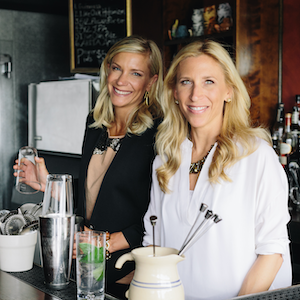
[00:00:39] Ray Latif: Hey folks, I'm Ray Latif and you're listening to the number one podcast for the food and beverage industry, Taste Radio. This episode features an interview with Kelly Gasink and Jill Burns, the co-founders of Austin Cocktails, a pioneering brand of ready-to-drink cocktails that was acquired by Spirits conglomerate Constellation Brands last year. The adage, luck is what happens when preparation meets opportunity, is often quoted by successful entrepreneurs. And it would stand to reason that the more opportunities you have, the luckier you'll be. But how do you best position yourself to create more moments, chances, and meetings that might change the trajectory of your business? Austin Cocktails co-founders Kelly Gasink and Jill Burns, who founded the brand in 2012 and helped usher in a new era for premium RTD cocktails, say that the answer is twofold. Be okay with being uncomfortable and strive to quote expand your luck surface area. Doing so helped them land deals with Madison Square Garden and Virgin America Airlines. It also led to an unexpected and pivotal meeting with the CEO of Constellation Brands. Austin Cocktails made its debut in 2016 and markets full-strength canned cocktails made with premium spirits and natural ingredients. The products are distributed across the United States at a variety of retailers, including Whole Foods, BevMo, Target and Total Wine. In this episode, Kelly and Jill explained how they identified the opportunity for a premium tier of RTD cocktails, why they didn't emphasize a specific target demographic at the outset, how an unorthodox but highly effective sampling strategy unlocked new retail and distribution opportunities, and how they assessed the timing for a sale of Austin Cocktails to Constellation Brands. Hey folks, it's Ray with Taste Radio. Right now, I'm honored to be sitting down with the founders of Austin Cocktails, Kelly Gasink and Jill Burns. Kelly, Jill, great to see you.
[00:02:56] Kelly Gasink: Good to see you. Great to see you too. Thanks for having us.
[00:02:59] Ray Latif: Yes. All right. So Jill has a fireplace behind her and she's based in Texas. Actually, you're both based in Texas, but I'm a little curious as to why a fireplace is going on when it seems like the weather should be still a bit warmer out there. No?
[00:03:15] Jill Burns: Anytime it dips below 60 in Texas, people get out their coats, turn on the fireplaces, like we're just so ready for summer to be over. So yeah, the fireplace is on. We're in the 50s today.
[00:03:28] Ray Latif: Wasn't it like 100 degrees in Texas like a couple weeks ago?
[00:03:31] Jill Burns: It was. It was so brutal. I mean, that's why people are like, yes, turn on the fireplaces, throw out the summer clothes. It's good to have a fireplace on.
[00:03:39] Ray Latif: Okay, well, these swings are concerning me, going from 100 to 50 degrees in two weeks, especially when that's happening in Texas. In New England, that just happens all the time, but.
[00:03:48] Jill Burns: I know, believe me, it's on everybody's mind here too. For the first time, it's been, I think we had like over 70 days consecutive of 100 degrees, which hasn't happened in like over 20 years. So it's on everybody's mind.
[00:04:03] Ray Latif: Cocktail weather, I guess. Good cocktail weather. Yes, good cocktail weather.
[00:04:06] Jill Burns: Really good cocktail weather.
[00:04:07] Ray Latif: Yeah. Kelly, you are not with your sister, but where are you based?
[00:04:12] Kelly Gasink: I'm in Austin.
[00:04:13] Ray Latif: Austin. Okay. And Austin is a hub for entrepreneurship. It seems like all great ideas come from Austin these days. You know, what's it like out there? I mean, is it, is it still thriving in terms of, you know, entrepreneurship as it relates to the beverage industry?
[00:04:29] Kelly Gasink: I think it's incredible. And I think there's some story to be written one day about sort of how being in the backyard of Whole Foods founding city, I think spawned this incredible CPG community that built on itself. So I think ideas were born and then infrastructure was born around that. And I think it just really sort of built on itself. So I feel like it is an incredibly vibrant CPG community in particular. It has an incredible tech services arm too, but I feel like they're some of the most interesting products coming out of here. I think there's such an incredible focus on how to surprise and delight consumers across tons of different industries within consumer packaged goods. And I love being here. It's a really fantastic ecosystem.
[00:05:11] Ray Latif: For sure. Now, in 2012, when Austin Cocktails launched, I don't think Whole Foods was in the market for a bottled, ready-to-drink cocktail. That being said, you can go to a Whole Foods these days and find plenty. However, it feels like the dominant brand at the time Skinny Skinnygirl Cocktails was something that people bought, but didn't really love. Am I making this up? I mean, I think when I first saw that brand out in the market and no stain on, you know, the success that they've had, but it just feels like the premium option wasn't there. Is that where you saw the opportunity for Austin Cocktails in creating a better version of that type of brand or that product?
[00:05:59] Kelly Gasink: I wouldn't say that was sort of our origin. I would say nobody in 2012 was really looking for a premium prepared cocktail at all. And we sort of, we incorporated in 2012 and probably hit our trial markets in 2015. To your point, I think Skinny Girl was one of the first brands to do something a little different for the category. before it was really this sort of neon high fructose corn syrup sugar bomb shelf that hadn't seen any kind of cleanliness, much less low calorie attributes. And so I think it was sort of the first iteration of what would become an evolving category. And so there were a bunch of sort of improbable stars that aligned for us to start Austin Cocktails. I wouldn't say Skinny Girl was One of them, but I do credit that brand for doing something different in the space that had not been done. And, you know, one of the great mysteries, I think of all entrepreneurship is. Big companies are often so best resourced to have a perch on what trends are gonna be and how to get in front of a need before it's even discovered. And that brand didn't have any sort of resources to identify. It just went to market with something that they thought was very commercially viable. And as it turned out, that thesis was correct. But I think that it probably was a watershed product introduction for the category in a lot of different ways.
[00:07:16] Ray Latif: Jill, how much of the development, the early development of Austin Cocktails was convincing retailers and convincing consumers as to the need for a product, a brand like yours?
[00:07:30] Jill Burns: Just like you said at that time, the prepared cocktail space was really small. It was in a dimly lit corner of the liquor store where you would probably find it on your way to the bathroom in the back of the store. I mean, no one really was looking for anything premium in that area. And I think premiumizing the category is a big company's nightmare, but you know, an entrepreneur's dream. I mean, in us being industry outsiders, it was really a big idea for us to jump into this. And there's a variety of reasons that we did it. But the one great thing about launching early and being one of the original ready-to-drinks and premium ready-to-drinks was that we had time on our side. So We had time to vet ingredients. And a lot of big companies or companies that are coming on the market now will say, I need a lime, I need a mint. Let's throw something together with a spirit and a seltzer. And in contrast, Kelly and I worked with numerous flavor suppliers. And when we were looking for flavors like mint, we tried 20 different mints. So, you can have a mint that tastes like toothpaste, or you can have a mint that tastes like a leafy green herb. And you have to find the right mint for your cocktail. So I think having time on our side to vet ingredients was crucial to our success. And I think there are a couple other things too. I mean, we got to learn in our backyard, we launched in Austin, we felt like we could hear from retailers, consumers, distributors, you know, what worked, what didn't and tweak accordingly. And then we also had the luxury of testing our products. So I had been on the ground floor of another beverage company and the founder made a huge error. And it cost the company so much. And I had never forgotten that, like what a hassle in time and money. And so testing the drinks was a huge expense for us. I mean, it wasn't... Obviously, we'd had our neighbors try them and our friends, but We had our target market come into a facility. We did all kinds of testing on our liquid, on our packaging. We got scores to really make sure that they were commercially viable. And at the time, Kelly and I were funding it personally. So it made us feel better about going in and spending the money to produce the drink on a larger scale. We could also take that information to our retailers and say, hey, people do want this. I mean, it might seem like they don't, but people want a product like this. And that was more powerful than we had initially thought. So having the extra time, I think, was super helpful. And we were also in the market with distributors and retailers. And they saw us iterating our product, they saw us at the tastings, we were at every event that we could possibly go to from car dealerships and apartment openings to really fancy fundraising galas. So we were all over the place. They respected us. We got to be friends with a lot of these people and develop relationships. And I think as a small brand, that was also really crucial, the relationships, the taste, and having the data behind our product when we launched.
[00:10:41] Ray Latif: I want to go back to something you said earlier, Jill, about being outsiders to the beverage alcohol industry. It feels like that itself is a big hurdle. How did you go about thinking about formulation and talking to the right people to actually get the liquid into the bottle?
[00:11:01] Jill Burns: was the big hurdle. One important thing was I actually had been on the ground floor of another beverage brand. I was in the marketing side, but the company was so small that I actually got to see how the liquid was made and the whole commercialization process. So that was incredibly valuable. I mean, we worked with a food scientist, which was very helpful. But I think a lot of what distinguished our brand was Kelly and I have completely different backgrounds. We came to the table with different palettes going into the whole innovation process. But we really worked hard with various flavor suppliers to get ingredients that would really bring body and structure to our cocktails. And then procuring the bottles, figuring out what CAPS work with different production equipment. I mean, that was a big learning process. We ended up, you know, working with a co-packer in the beginning, same thing, learning how to deal with them, what was meaningful to them, you know, the outlay of money. It was processing everything with the TTP, complying with all those laws. I mean, it was, there were a ton of hurdles that, you know, we really didn't know until we were deep into the process.
[00:12:13] Ray Latif: Jill, I want to go back to something you talked about with the sampling process or getting people to try the product for the first time. You said car dealerships. I think you said apartment openings. Is that right? We were all over. I mean, how do you figure out the best sampling strategy or is it just throw everything at a wall and see which one sticks?
[00:12:32] Jill Burns: Well, I think, you know, people say, hey, we're having this event, can you come?
[00:12:36] Ray Latif: And bring free product? Yeah, and bring free product.
[00:12:40] Jill Burns: And, you know, it's the easiest marketing strategy. And I think it's a really good feedback loop for founders early. I mean, obviously, you don't listen to everything everybody says, but it's really helpful to be in the marketplace and get feedback from different types of consumers and see what matters to them, see what they're looking at, because I just, I feel like I learned so much even now, you know, when I'm going into the marketplace, looking at who's buying the product and where they're taking the product and what they think it's for. I just, it was, it was hugely helpful. But yeah, I mean, people would ask us all the time to donate, which you don't realize that we still had to pay for that product. you know, get it there, schlep it back and forth, which is, was totally worth it. But that was a big part of the beginning stages of this business. And we were gone a lot. And we would, we would really say yes to everything. And I think Kelly and I would both agree that You know, it's super easy to get stuck behind your computer and do a bunch of stuff and communicate that way. But everything good happened at these events, meeting people, running into people who would introduce you to somebody else. We built a ton of relationships and really being out, you know, even somewhere as crazy as the car dealership or whatever. That's kind of where the magic happens.
[00:13:58] Kelly Gasink: Yeah. And I would just add, it's helpful for listening on the product side, for sure. And it all rolls up and informs your thinking and development in important ways. And you have to learn to filter out what's what. But it also taught us a lot about how to market and talk to a consumer because the ready to drink category was really, you know, just very neon, sugary, and we learned how to position it. and tell the story one person by one person. And Jill actually came up with the idea of sort of calling, would you like a bottled craft cocktail instead of like a ready to drink or a prepared cocktail? You know, just throwing off baggage at little small nuanced details like that, that add up over time, which are things that I think you can't get without being in the marketplace. And I have sort of arrived at a very visceral conviction that the minute you get removed or too far removed from your consumer is sort of the beginning of the end. I mean, care about splitting hairs, about font sizes and ingredient ratios and every little detail and care about it at a visceral, deep level. And I think when you remove yourself from your consumers or get too far away from them, that's really hard to do. And so I think being out and doing all those tastings and being on sales splits is the highest and best use of our time still.
[00:15:13] Ray Latif: But how do you know which feedback to incorporate into your innovation, business strategies, and which ones to say, look, this is just a crazy idea. We can't do that. Is it just a matter of aggregating the feedback and figuring out if people are all saying the same thing?
[00:15:31] Jill Burns: Well, we got a lot of unsolicited advice along the way. Yeah. And I would say like the biggest, the one that we had to think about a lot was when in 2019, when there was this whole craft cocktail boom and There were competitors were coming out with drinks that were lower cost and our retailers were like, I think Austin Cocktails cost too much. And we really considered lowering our ABV or trying to bring down the price. But in the end, we had a lot of research saying that this category is trending toward premiumization. People want a full-bodied craft cocktail, basically our target audience. And, you know, at the time, you know, Constellation, we had self-funded by the way, which is also why we were running around all over. But by 2019, Constellation Brands made a small investment in our company and they gave us guidance too. So, you know, when we hit that crossroads of do we lower our ABV or do we lower our price, We had that discussion, but we maintained focus on our core tenets of our brand, which is higher ABV, a really nice full-body craft cocktail. I think another time that we had to pivot was... We were in bottles and cans were exploding. And we had to look around and make a decision. And it was a huge problem. But we were like, we've got to get in cans. And at the time, there was a huge can shortage. So it wasn't like, oh, we'll just put the formula in cans. We had to reformulate, we had to test the liquid to make sure it would work in cans, which is the six month process, and then shelf test them, all kinds of things. But we ended up making that happen. So you pivot, you have to have good judgment. Of course, you're not gonna make the correct decisions all the time, but you make the best decisions that you can. And you do have to kind of just put the unsolicited advice to the side and, you know, stay true to yourself.
[00:17:27] Kelly Gasink: Well, and I'd add, you know, I don't think there's a formula for which advice is cogent and helpful versus not. I think it's just being out there in the marketplace and listening. And again, you know, if there were, if the answers about what's a commercially winning product were so self-evident, everybody would make them. And so you have to learn to trust your instinct about what the marketplace is, particularly in any sort of category where you're reinvigorating it or disrupting it. you know, there's a lot of people who are attached to the status quo and don't want to see change and, you know, you're bringing change into it. And so you have to listen to all the different voices and gut check all the time. I think it's important to listen. I don't think you should be bullheaded about saying, like, I've got all the answers and I know everything. You know, you need to be internalizing external opinions because you're interacting with a lot of external who know what they're doing. Distributors and retailers know a lot about consumers. They know a lot about alcohol, but they didn't know a ton about premium craft cocktails. That was our job. We knew a lot about a little. And so you just have to get good at listening and gut checking and triaging priorities and hoping that you're doing as good of a job filtering as you can. But I think a lot of times where we get told sort of conventional wisdoms, we did have the wisdom at some point to say, well, that's, you know, that's through the lens of this old category, you know, and we have a totally different vision for the category. And so is our premise that they're sort of testing, is that still sound? And we would have to be thoughtful about it. It's, you know, I wish it were easy to be able to recognize which council is terrific in which counsel is not but you know you just think you have to be out there in the marketplace feeling confident about your consumer and your product and you just get better and better at filtering out what's helpful and what's not.
[00:19:16] Austin Cocktails: Vibrant Ingredients is the natural ingredient partner powering food and beverage innovation, delivering flavor, function, and protection through a science-backed portfolio. Vibrant delivers purpose-driven solutions that help brands create extraordinary experiences. Discover what's possible with Vibrant today. Visit VibrantIngredients.com.
[00:19:43] Ray Latif: You know, sometimes the best advice and feedback comes from the retailer. They're the ones on the front lines talking about your product, selling it, offering, you know, feedback on how consumers perceive your brand. When that retail relationship starts, at the outset of your retail relationship, you know, early into development of the brand, how are you talking to buyers about the value you are bringing to the store? Because again, this is something that comes up all the time. People ask, well, how do I get on shelf? Well, typically it means that someone else has to come off shelf. Retailers aren't just getting bigger. They're just replacing one brand or item or category at a time. And it's pretty challenging to figure out where everything can and should fit.
[00:20:31] Kelly Gasink: Well, we, in the beginning, you know, there were only a handful of retailers who were willing to take a chance on our vision and believe that the category was kind of ripe for premiumization. So we developed pretty good relationships with that small group of retailers. And they, I mean, they would eventually just sort of take off the lowest performing ready to drink and slot us in and say, okay, you've got, you know, X amount of time to do X amount of sales. And, you know, hopefully by showing up with supporting it in marketing and showing up live in lots of events to say, we're behind this blood, sweat and tears behind this concept. And this is a marathon, not a sprint. I think that eventually added up, but I mean, people are knocking on retailers doors all day, every day, and retailers have every right to monetize every single centimeter of their shelf space. So you've got to deliver for them. And they do know what the consumer wants and they might decide, hey, I totally agree with your vision, but the marketplace isn't there yet, and you can build the marketplace on somebody else's dime. And those conversations were had, and they were had respectfully and nicely. It wasn't because we were, you know, we always did what we said we were gonna do, but it's a long bill to disrupt a category, because you've got to talk to distributors and sell them, and retailers and sell them, and then consumers and sell them. And that's a lot of time and money. So that's why we're kind of, we are like mafia, ride or die loyal to our retailers who took a chance on us early, because, It was a slog and you're really nothing without those retailers and distributors who believe in you.
[00:22:02] Ray Latif: Yeah. And Jill, Kelly had talked about how you knew a lot about a little. You knew your brand intimately. You knew the potential for the category. How do you tell that story? How do you tell that lot, so to speak, in a way that is actually going to get them excited?
[00:22:21] Jill Burns: That's a really good question. And, you know, in the beginning, we were really focused on talking about the qualities of our cocktail, which we still do. And there's still a place for that. But I think what has been really powerful is, you know, the inspiration for our brand, which is this origin story of a tradition that we call cocktail time. And growing up, we would help our grandparents on their farms. So every summer there was harvest and everybody played a role. So, you know, people would cook and bring meals, cookies. There were people that were jumping on equipment. Everybody was kind of running around. But at the end of the day, my grandfather had this tradition called cocktail time at 5 p.m. where everyone gathered around. So it was like the temporary farm workers family, you know, little six year old kids with Shirley temples, you know, not really sophisticated cocktails, but it was really this time for joy and connection. And he made a point of that. And I think, you know, it's human nature to want to belong and to feel like you're part of something. And that was really the inspiration for Austin Cocktails. And we continued cocktail time during our summers, but we didn't tell that story in the beginning. And then we started talking with more people and they're like, No, that is it. That's the connection to your brand. And we are really surprised at how many people know about the story or know about us as founders and sisters that were, you know, family owned or were family under family inspired. And that connection has been really surprising. And we, we use that like at our events, you know, we highlight the story and people like that and they want to get behind a brand that they believe in and people they believe in and stories that they love and want to feel a part of. So it's been really interesting how big of a role that has played.
[00:24:19] Kelly Gasink: Retailers know the consumer to your point, sort of they know that that is going to resonate. And we really didn't bring it forward in any of our marketing until we started talking to retailers and listening to consumers on the feedback of, you know, brand soul. There are so many commercially viable products, but brand soul is really sort of one of the biggest, most important parts of a company in terms of being able to stand the test of time and mattering to a consumer.
[00:24:44] Ray Latif: Well, the consumer that you're selling to can change over time. I imagine you had one idea of who your consumer would be at the outset and who it is now. When you're telling that story, is it one that you tell specifically to your target consumer or is it one that you can tell to a broad range of folks and then you might be surprised by who it connects with?
[00:25:06] Kelly Gasink: I mean, we tell it to everybody. It's part, it's on our cans, it's on our website. So it is a core part of our brand. When we started, we really believed, we sort of thought there's this blue ocean of new consumers that we're trying to capture. We're not trying to capture the classic ready to drink consumer. We'd certainly would take anybody who wants to upgrade from there. But in our minds, it was sort of anyone who would buy a $20 bottle of wine. And I think that that has changed. The category is so dynamic and so broad-reaching. It used to be pretty female-leaning. Now it's actually more engaged in by men. And I think that's sort of been consistent with our vision of this is a gender-neutral premium product for a wide range of ages, to be appealing to a wide range of ages, an affordable luxury premium product. So it's not available to everybody, but it's a very, very broad demo in our minds. And that is really kind of stood the test of time since we launched.
[00:25:59] Ray Latif: How did you know that cocktails, canned cocktails would start to resonate with different demographics and more specifically with male consumers? Was that just data that you would use? Was that just general market research that was out there or did you start to see that in sales?
[00:26:18] Kelly Gasink: So we really started Austin Cocktails on this visceral belief that the time had come for just a nice craft cocktail to be as easy as nice beer or craft wine. And beer and wine are so good, Austin Cocktails do not have kind of that open implore simplicity. And so one of the statistics before we quit our full-time paying jobs and went in Austin Cocktails unpaid and bootstrapping everything, we did obviously look into the marketplace. And I will never forget sort of one of the statistics was spirits were ascendant relative to beer and wine in a way that had never happened Virgin America history. And in fact, last year was the first time spirits had more market share than beer, which is a really a tectonic shift. It gained as much market share in the last 20 years as the entire size of wine. You know, we did believe that there was some premise involved about the ascendance of the cocktail culture and that being important. But as we were both seasoned entrepreneurs before starting Austin Cocktails, I had co-founded three companies and two were sold to publicly traded companies. Jill had her own marketing PR firm and had drink development. And we knew that the best products are products that solve problems. And we really felt like this was a problem solver, you know, and then we sort of looked into the more macro environment and felt like, There's a play for this. This is just small enough of a category where big companies aren't going to invest their innovation capital. It's going to go towards the bread and butter, high volume, high margin whiskeys and vodkas at the time. This is where small companies can really come in and disrupt and get a little bit of a strategic advantage timing wise. And we felt like those, those attributes were really, really in play for us and ultimately went at it.
[00:27:54] Jill Burns: And there was one other key thing that happened, I think, like early in our company is, and this kind of covers two topics, but we were looking at the viability of having this as an on-premise play, you know, cause it was really kind of open and poor at home, but people were serving at like large parties and, you know, galas, cause it was so much easier. There was, to have an event and you don't have to her like a really mixologist bartender and still offer this craft cocktail. So our neighbor, you know, I asked my neighbor, she's from New York. And we were talking, she's like, you know, my sister's husband's best friend works at Madison Square Garden. And we're like, Hmm, you know, and she's like, you know, maybe you should talk to somebody there. And literally, it was like five times removed, we got a meeting with the F&B Person at Madison Square Garden, which is a huge, you know, and I know he did is in favor to this person who worked there, but I mean, it's literally like my neighbors. I mean, 1 of those like, crazy stories, but we went in and he tasted the drinks and he said, you know, I've tasted. so many of these things. And I want them to work because he goes, I see these long lines for cocktails and all I see is just money on the floor. I can't get to these people fast enough. I have 2,500 people coming to work at Madison Square Garden. None of them know how to really mix a drink. We have a problem and we've got to be able to service these people. So anyway, he liked the drink so much, he's like, I'm gonna give it a try. And we said, thank you. So we started in one kiosk. And it was like we shared it with the beer kiosk, then we went to two, then we went to like six. And then we were in the in-seat menu. We were doing so well. And this was like not a paid sponsorship or anything. This was just based on the quality of the liquid. And then eventually he called other properties like Radio City Music Hall and Beacon Theater because he worked with beverages there. And he said, you know, I have something for you guys, you need to bring this in. So that was a huge moment for us. I think, you know, we obviously saw what hustle would do. We saw that our drinks were viable in venues. And we saw to your point that men and women were both gravitating toward the drinks. And we had eyes on that a lot. We were there seeing who was buying, and it was fascinating. But to Kelly's point, cocktails were ascendant and people were looking for a little bit more. And not having to wait in line was a huge deal.
[00:30:26] Kelly Gasink: And I think by the time things show up in data, you're almost too late. With the benefit of hindsight, I mean, Jill and I lived and breathed all the stress you do as an entrepreneur, it comes with the territory, you've interviewed all the people that have talked about this and know this inside and out. Certainly it was uncertain and vague and ambiguous, but you just had to go back to consulting your gut instinct. And I think, you know, by the time it's self-evident or showing up in the data, people like us, small companies like us can't compete because it's already on the, you know, it's already on the radars of big companies that are really well positioned to bring products to market pretty quickly.
[00:31:02] Madison Square: Do you want more repeat buyers on Amazon? Well, this free resource in collaboration with Straight Up Growth will help your brand turn first-time buyers into long-term subscribers. Download Winning the Repeat Purchase Game on Amazon now at Taste Radio.com slash SUG. That's Taste Radio.com slash S-U-G to start building retention-driven growth for your brand on Amazon. Scaling a beverage brand into major retail comes down to operational readiness. From packaging lead times to co-manufacturing strategy, the details can make or break a launch. In a new e-book in collaboration with Octopi and Asahi Beer USA, industry leaders share what they've learned in helping brands scale. Download it now at Taste Radio.com slash octopi.
[00:31:51] Ray Latif: The deal with Madison Square Garden is one that I feel like a lot of people would be interested in hearing more about and how you got that meeting. But it just sounds like it was almost a sort of a lucky opportunity that you took full advantage of.
[00:32:10] Jill Burns: So the food and beverage directors, I mean, they have goals like on per cap, like how much money are they making per guest at these arenas? So that's what's on their mind. So whatever the product is to help them get to that place is what they're interested in. And he had been there 30 years, so he didn't care. He just wants beverages that work for him. And he was great. I mean, it was great to have that experience. And we were able to take that to, you know, other arenas. And by the way, it doesn't work everywhere, you know, but it happens to work. We didn't believe that we competed with like a fresh bar, but we worked in like a beer kiosk. We worked on the court side menu. So, you know, you have to find your believers. But I think, you know, to your point is about how did this happen? This is really lucky. I mean, every big thing that happened to us was something like that. You know, we were outsiders in the industry. And another example of something like that is, I mean, I was in Chicago for something and I called this high school friend who I hadn't talked to in like 20 years, but she ran this event thing. And I was like, Hey, I'd love to sample my cocktails in case they're work at any of your events. So I came, there was this one woman there. She was taking like a class at Northwestern. She's like, you really should meet my professor. Like he's an entrepreneur. So I call him, and he becomes a great friend of the brand. But he also happened to know a lot of people in the industry, a lot of beverage investors. And so he kind of took us under his wing and made incredible introductions for us. So those are the things that happen when you put yourself out there. And it's not like lucky. I mean, obviously, it's who you know, if you're in the industry, obviously, that makes a huge difference. But it's also just being okay with being uncomfortable. And there were a lot of times where we would, you know, walk into a room and not know anyone or put ourselves out there just because, you know, it was, it was our money and our product online. But, you know, we, we definitely had a lot of those things that were completely unexpected.
[00:34:16] Kelly Gasink: But we believe, I mean, viscerally in the idea of like expanding your luck surface area. You know, you're not gonna get lucky sitting in your office or on your couch. You've got to put yourself out there. And at one point we kind of had the realization, there's a lot of people who will work really hard and really long hours. Not everybody, but a lot of people. But there's a smaller subset of people who will do uncomfortable things. And we always sort of realized, like, if we're so nervous, we're shaking, or, you know, nobody wants to do this. then that's exactly... On the other side of all that is where the good stuff happens. And so we would really sort of push ourselves outside of our comfort zones and make sure... We were emotionally intelligent about it. We didn't try to go places where we didn't belong at all. But we wouldn't have approached Madison Square Garden if we didn't think we had a really good value proposition for them. And they took us in and kept us in and expanded us because we delivered them great profit margins. People were interested in a cocktail with more than two ingredients that was premium. And We became the second best-selling spirit behind only Grey Goose on our floors. So you have to show up with a good product. Maybe they was a favor taking our call, but you've got to earn your keep in these places. And they have very serious revenue targets to hit and you've got to deliver for them. So it's really for us, it became a matter of knocking on doors that, you know, we felt comfortable and emotionally intelligent about knocking on and creating as much of sort of a luck surface area as you can for things to happen.
[00:35:42] Ray Latif: Did you knock on the doors of Constellation Brands or did they come and see you?
[00:35:47] Kelly Gasink: We did. And we did not think that our, the conversation we thought we were having was just sort of a strategy discussion because we were able, we got connected with Bill Newlands, who's the CEO.
[00:35:58] Ray Latif: And we thought... By the way, I got to stop there for a second. It's got to be pretty amazing to get connected to the CEO of a multinational multi-billion dollar company, because that just doesn't happen for early stage entrepreneurs.
[00:36:12] Jill Burns: This is an even better story than the Madison Square Garden story, so I'll tell you how that happened. So my husband was like, Jill, you have to talk to this guy, George, you know? And I mean, I know George was like kind of a goofy guy that my husband plays golf with. He lives in Philadelphia. I'm like, I have no idea what we're gonna talk about. So I just kind of put it off and put it off. And Rod was like, George is telling me you haven't called him. And I'm like, oh my God. So I called George and I have no idea what to expect. Like, he's just a fun guy. So we had this long conversation. He's like, you know, Jill, I really think that you should meet this friend of mine. I work with her. She's in New York. Her name is Mindy. And so I'm like, okay, you know, and Mindy's in HR and like in a leadership role in a consulting company. But I'm like, I'll call her. You know, I mean, this is like one of those things you just call everybody. So I called Mindy and we ended up connecting over so many things. She was such an interesting woman. We talked for like an hour and a half and she was working on this book and this other project. And we just, we totally hit it off. And then at the end of that call, she said, Jill, you know, I really think that you should meet my neighbor. His name is Bill Newens, and he's CEO of Constellation. What are the chances of that? It was so random. So like Kelly said, when we went there, I mean, we just thought it was an informational call or an informational, you know, like favor. But we had a really good meeting with him. And he was like, you know, if you don't hear from somebody in 24 hours, let me know. And that was the beginning.
[00:37:44] Kelly Gasink: We really didn't know about their ventures group. They'd kind of invested in one of our competitors at the time. So we really felt like this was kind of a strategy discussion. He had obviously this long storied expertise and we felt like we were trying to do something really different and how great to get to talk to this man. And he was incredible. We ended up talking, I think we met for like almost two hours. And by the end of the meeting, he was sort of like, if you don't hear from the head of our ventures group in 48 hours, call me.
[00:38:11] Ray Latif: That is just unbelievable. And I'm sure that most folks are listening to this and saying, OK, well, that was luck. But you were spreading your service area, as you mentioned, spreading the service area of luck. And I love that phrase.
[00:38:24] Kelly Gasink: We had had 2000 doors slammed in our face. I mean, we're talking about the one wonderful thing that happened. We have had so many verbal pats on the head, so many snide reactions. We had been raising money for a long time talking to hundreds of people. I mean, it just, that was not our first knock on a door by any stretch at all. And you don't even, you can't even possibly have the confidence to show up to that meeting without having been through the woodchipper of, you know, getting told no, getting better and better at your job and feeling like you, you know, deserve to even be in the building with Bill Newlands.
[00:39:03] Ray Latif: Well, I hope that Constellation Brands work a deal with another airline because I remember when Austin Cocktails was on Virgin America Airlines. Virgin America has since been acquired by Alaska Airlines. Are there any plans to get back into the sky, so to speak?
[00:39:18] Jill Burns: We have submitted our cocktails actually just recently to a couple different airlines. So fingers crossed that would happen. I think we had so many people discover our brand on Virgin. It was a great partner. We didn't pay for the purchase, but it was great to be partnered with them. And we also learned a lot about what matters to airlines, how they keep their drinks. I mean, there's a lot of intricacies, but all in all, it was a great way for our brand to be discovered. And we love the Virgin brand and there's a lot of other airline brands who are looking for something like this. So I hope that we're, fingers crossed, we've submitted to a few of the airlines.
[00:39:58] Ray Latif: I'm just recalling now how awesome Virgin America was, like with the mood lighting and the snacks and it just everything felt like everything was like tech driven. It was such a great. Yeah, it was fun. Totally. How'd you meet the folks at Virgin?
[00:40:13] Kelly Gasink: Oh my gosh, a family friend knew somebody. We just kept banging on that poor F&B guy's door, like every three and a half weeks, and finally he took a meeting with us. And to his credit, he was way ahead of his time. He's like, cocktails on board suck. And in keeping with the Virgin brand, they were ahead of the time.
[00:40:34] Jill Burns: And they wanted to do something cool and different than other airlines. So, you know, we felt great about being their choice for that. And it was, I do feel like there has to be another like iteration of this. So I don't know. It'll come. It'll come.
[00:40:52] Ray Latif: Yeah, for sure. Okay. So you banged on this guy's door for three and a half weeks. How do you be persistent without being annoying?
[00:40:58] Kelly Gasink: Oh, the proverbial emotionally intelligent squeaky wheel. We talk about it all the time. I think it goes to, you know, just being able to read a room, which I think a lot of entrepreneurs are really good at. We, I think had going for us, we understood how many enormous companies were knocking on their doors and that they kept the lights on, but that there was some set of bandwidth that had to be allocated towards innovation because that's, you know, if that keeps the lights on, this pays for brunch or, you know, like we knew that there was a need for innovation and you just have to find those people who are charged with it and be respectful of their time and energy and, you know, not expect the red carpet and show up knowing you've got to earn your keep and, you know, deserve to be there and do what you say you're gonna do and be their partner and put their interests as sort of your guiding North Star of whether it's profit or revenue or, you know, in Virgin's case, surprising and delighting their consumers and sort of keeping that as your orienting philosophy in the way you interact with them and show up. And I think that you just gotta get your cadence right on how often you bug people and make sure that you're being emotionally intelligent about their needs and interests.
[00:42:07] Jill Burns: One other thing about that, I don't know if you remember this Kelly, but so we landed virgin. We're so excited. Our warehouse is like. Less than a mile from where the airport was, and we were self distributing at the time, which you can do in California. So. We're doing that. And they said, Oh, we, you can't do that anymore. Like, we need a distributor. So we're like, Oh, boy, like, now we need distributors. So randomly, I was going to this fundraiser in San Francisco at, you know, the AT&T Park giant stadium where the baseball, they play baseball, there are 1000s of people. And I meet this woman whose dad works at Southern glaziers. And she's like a friend of a friend. And she's like, well, I'll introduce you to my dad. And so we got into Southern, which would be really kind of difficult to get into. But we were lucky we got into some top tier distributors. But she made the intro and he was able to just be like, hey, these women have Virgin like all teed up. Can we get them on? And so he made it happen. But that's another thing, you know, another random, random occurrence, you know, in building our business.
[00:43:19] Kelly Gasink: And you were serving drinks at the fundraiser. You were serving Austin Cocktails. And that young woman who she met has been came on to work for us and has been one of the longest serving employees of our company. And she's been incredible.
[00:43:32] Ray Latif: Amazing. I love how all these random occurrences have actually become a theme in the development of Austin Cocktails, which is talk to everyone, look at every opportunity as a potential huge win for the brand, and just see where it goes. Outstanding stuff. Kelly, Jill, I'm really, really happy we had the opportunity to speak. Thank you so much for taking the time. Congratulations again on everything you've built with Austin Cocktails. It is a remarkable brand and a really delicious brand. I guess that, well, you have delicious products is what it is. So for folks listening who haven't tried them, please go out and do so. You'll be happy you did.
[00:44:09] Kelly Gasink: Thank you. Thanks so much for having us.
[00:44:15] Ray Latif: That brings us to the end of this episode of Taste Radio. Thank you so much for listening. Taste Radio is a production of BevNET.com, Incorporated. Our audio engineer for Taste Radio is Joe Cracci. Our technical director is Joshua Pratt, and our video editor is Ryan Galang. Our social marketing manager is Amanda Smerlinski, and our designer is Amanda Huang. Just a reminder, if you like what you hear on Taste Radio, please share the podcast with friends and colleagues. And of course, we would love it if you could review us on the Apple Podcasts app or your listening platform of choice. Check us out on Instagram. Our handle is BevNetTasteRadio. As always, for questions, comments, ideas for future podcasts, please send us an email to ask at Taste Radio.com. On behalf of the entire Taste Radio team, thank you for listening, and we'll talk to you next time.
[00:45:05] Kelly Gasink: you