[00:00:00] Brooks Addington: BevNET Live, the premier event for beverage industry executives, is coming up fast on June 10th and 11th in New York City. Hundreds of beverage founders, investors, and retailers are already confirmed. Don't miss your chance to build momentum mid-year and set yourself up for a strong finish. Early registration pricing ends Friday, April 24th. Register now and save $100 at BevNetLive.com.
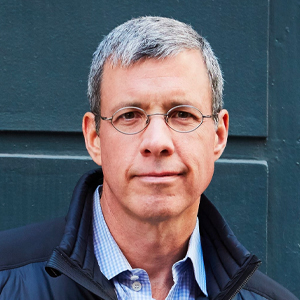
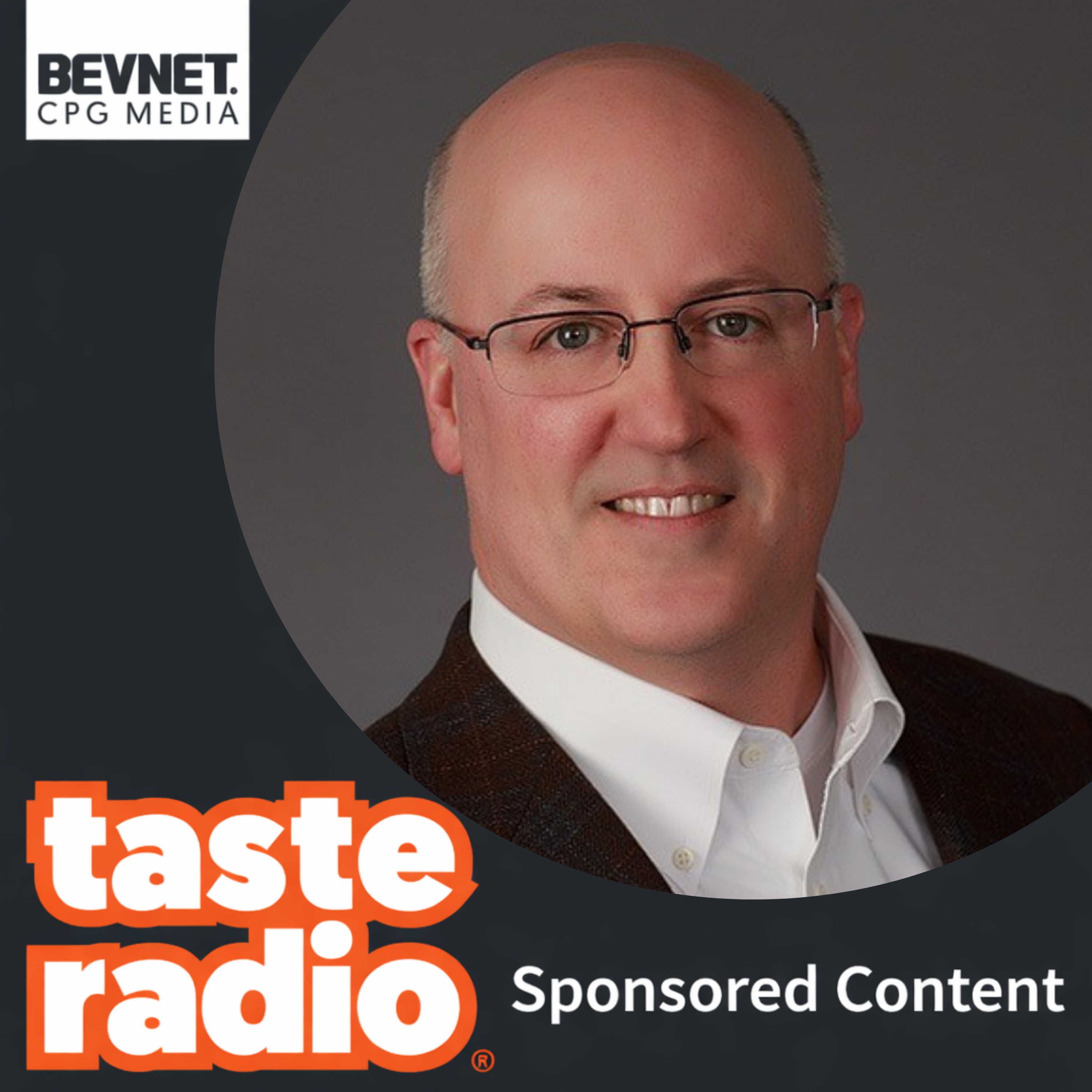
[00:00:39] Ray Latif: Hey folks, I'm Ray Latif and you're listening to the number one podcast for the food and beverage industry, Taste Radio. This episode features an interview with Brooks Addington, the CEO of Toast, a fast-growing brand of sparkling, alcohol-free beverages. By any measure, consumers are drinking less alcohol. While their reasons for abstaining vary, the occasions for which they had been consuming beer, wine, and spirits have remained consistent. The circumstances have created an ideal opportunity for alcohol alternative brands to innovate and find relevance among mainstream consumers. Enter Toast. Launched in 2018, Toast markets sparkling, non-alcoholic beverages made with white tea, white cranberry concentrate, ginger extract, and other natural flavors. The products, which are available in two varieties, Original and Rosé, come in 750ml bottles and 250ml single-serve varieties that are sold in four-packs. Distinguished by its sleek and minimalist label, the brand has won over consumers seeking a sophisticated alternative for occasions when they might typically drink alcohol. Distributed in 40 states, Toast is carried by major retailers in a variety of channels, including Whole Foods, BevMo, and CVS. Earlier this year, the venture capital arm of beverage alcohol conglomerate Constellation Brands acquired a minority stake in Toast, praising, quote, its delicious liquid that feels celebratory and also versatile and approachable for everyday enjoyment. In the following interview, I spoke with Toast CEO Brooks Addington about how the brand has carved out a positioning that has resonated with consumers of all types, and how its thoughtful communication strategy has given it a leg up over competing products. Hey folks, it's Ray with Taste Radio. Right now I'm honored to be sitting down with Brooks Addington, who is the CEO of Toast Beverages. Hey Ray, thanks for having me. Thanks so much for being with me here in Philadelphia for the final edition of Expo East. Literally. Right. There's not gonna be any more after this one. Really? I wasn't aware of that. Oh yeah, it came out this morning that New Hope is not going to do Expo East anymore. Instead, they're going to replace it with individual events that happen throughout the year. I guess the next one is going to be in 2024 in Savannah, Georgia.
[00:02:55] Toast Beverages: Savannah's a phenomenal city. Oh yeah? Yeah. I'd like to hit that one. I've never been. People always say amazing things. I've never been. Great food and the waterfront's just architecturally amazing with a huge amount of history. So it's worth going. We traveled down during COVID down to Florida. We were road tripping everywhere with the family and stopped in Savannah for a couple of nights and just had an absolute blast.
[00:03:16] Ray Latif: Great art scene from what I understand.
[00:03:18] Toast Beverages: Great art scene, great food scene, architecturally really interesting, beautiful parks. It's a neat place. Are you an architect geek? I'm a bit of an architect geek.
[00:03:27] Ray Latif: I could sense it.
[00:03:28] Toast Beverages: I'm sorry to call you that. I'm from Chicago and I grew up in a very modern house. I'm a big Ando Tadao fan, the Japanese architect who has built many buildings around the world. So I could spend a whole podcast just talking about that. I can sense that.
[00:03:43] Ray Latif: You live in Vermont now though.
[00:03:45] Toast Beverages: I do, yeah. I spent some formative years, about 17 years in three different countries, Thailand, Canada, and Japan. I think in the 17-year period, I spent about a year and a half in the US, primarily in Japan, primarily in financial services. just always was sitting around, you know, investing and trying to get my hands dirty on helping out, advising on different projects in various industries and always had a knack for consumer products. You know, love food like a lot of people, was blown away by the beverage scene in Japan. And so, you know, we ended up moving back to the States in 2011. I was working on some projects, a couple of consumer products that were not food and beverage related. And then Toast came along and here we are.
[00:04:28] Ray Latif: This is an amazing story. I feel like we could do an entire podcast just on your 17 years in financial services. Do you speak Japanese?
[00:04:35] Toast Beverages: My children would say, uh, not really, but, uh, I'd like to think I can, I can handle myself. So yeah, I'm not bad. Day to day is great. Uh, no issues, but I wouldn't want to pitch toast in Japanese quite yet. I'd be a little, a little nervous about that. I'd like to think I'm proficient, but as I said, my children would, would laugh and say, you know, he doesn't know what he's talking about.
[00:04:53] Ray Latif: Well, I've never been to Japan, but I feel like the drinking culture and the celebratory culture there lends itself well to a toast.
[00:05:02] Toast Beverages: You know, it does actually. I'll tell you a crazy stat. So we all know that people are drinking less around the world and the rest of that. About a year ago, there was a poll in Japan and they asked 20-somethings, how many of you consider yourself regular drinkers? Now in 2000, the number was like 28%. It was 9% last year. 9%? 9%. But people still like to celebrate. They like to go out. You know, people have smaller apartments, smaller houses. There's a lot of going out, entertaining, going to parks, getting together with people there. So, yeah, there's a big opportunity. We're not in Japan yet, but we are in Korea in size in a lot of locations there. And Japan's very much on our list. Well, hopefully Toast will one day be big in Japan.
[00:05:44] Ray Latif: Yes, I hope so. A lot of people are drinking less. Younger consumers are drinking less. It feels like the timing for Toast is perfect. But Toast as a brand, as a company, has a longer history than just the last few years. Talk about the origins of Toast and where the idea came from.
[00:06:02] Toast Beverages: Sure. Yeah. So, you know, really, it goes back about almost 10 years. And it was a brainchild of a guy who had had some exposure Toast Beverages before had been involved in Toast Beverages called 12 many years ago. And he had the idea of creating something that could stand, you know, on par with an alcoholic beverage. And so the concept was born really from that, where if you went to a party, there weren't a lot of options. Now, again, you have to think back. to 2012, 13, 2014, where there really weren't that many options for non-alc. It was a ginger ale or a soda water and a lime. So, you know, people, when they go out for dinner or they go to a party, shouldn't they have the same elevated experience as anyone who's drinking an alcoholic beverage? So the idea came from that. Let's create something of that magnitude. We use the word elevated a lot, or meaningful, sophisticated. So when the beverage went to be created, he brought in a team of individuals, beverage professionals and what have you. One of them was Alfred Portale of the Gotham Bar and Grill, who became sort of the taste conductor, we like to say. So the idea was, let's create Toast Beverages that has the attributes of an alcoholic beverage, but doesn't have any alcohol in it. So it wasn't so much that we wanted to be tea-based or we wanted to have white cranberry, but those flavors added experience. We wanted a nose, a mouthfeel, a finish, that level of sophistication that you would get in an alcoholic beverage, that experience. So if you went to a party or you went to a restaurant, you would feel like you were being treated with the same level of respect and focus than anybody else. So there was a lot of back and forth on that. Products soft launched unbeknownst to a lot of people back in very early 2016. And then I got involved. It was a soft launch and then off the shelves trying to figure out, you know, what's the plan to move forward with this? Who are the right people to help move it forward? I got involved in 2016 and we relaunched the product formally in April of 2017. So, you know, I'm not the original idea founder, but I did launch the product and have been CEO, you know, throughout that period of time. So it's been a journey.
[00:08:01] Ray Latif: I think one of the most brilliant aspects of toast is that it doesn't call itself an analog of something. It doesn't describe itself as a non-alcoholic sparkling wine or something along those lines. It is very much a non-alcoholic sparkling beverage and it feels so intuitive as to what it is. Why is that?
[00:08:24] Toast Beverages: That's a great question, and I think you really nailed it in terms of what we tried to achieve was we believe that people want to have an experience when they're drinking Toast Beverages like toast. They're not necessarily looking for the product to taste just like something else. Now, I think there are some categories that doesn't necessarily apply, beer being one of them. If you walk off the golf course or on the beach or whatever it is, or you're having some beers with friends and you want to peel back and go have a beer, fantastic. I understand that one. But in our case, with our product, we believe there's a big market for people that just want the elevated experience. So again, when we created the product, it was about having those attributes. What are the attributes of an alcoholic beverage that people would think of? Again, nose, mouthfeel, finish, a level of sophistication, a sense of mystery as to what the flavor is at some point. So all of that was what we thought about in the very beginning in terms of creating a line Toast Beverages. And we believe moving forward in the future, that consumers will be looking for those that not necessarily have to have the beverage taste like something. And there's obviously room for that. And there are many, many great products out there that are doing that. But I think we're going to see more growth in that space of it just happens to be elevated. It doesn't necessarily happen to be, you know, a, as you said, you know, analog, an analog. Yeah.
[00:09:40] Ray Latif: I have to do a mea culpa at this point in the episode because in 2018, when I first encountered Toast, I and some of my colleagues saw it as a really niche opportunity, didn't see a lot of runway for it. You clearly did. You saw the breadcrumbs, the trail was there, the path, the vision, knowing that there was going to be an opportunity, knowing that there was going to be a significantly sized market, maybe not a billion dollar market, but a significantly sized market for these types Toast Beverages. How did you forecast? How did you evaluate the trends? How did you evaluate the opportunity for a brand like this?
[00:10:16] Toast Beverages: Yeah. I mean, I, you know, honestly, I tried the product, you know, in beta effectively in December of 2015, November, December, 2015. And I had one sip and looked at the branding and was blown away. I was really excited about what was happening because I'd never really tasted anything like that. And to me, the concept made total sense. What do you drink when you're not drinking? We all have friends that don't drink and sometimes you don't want to drink. What are you drinking in those moments? You know, uniquely for Toast in this space, we obviously play into that celebratory space. We don't view ourselves as a celebratory only beverage. We're an everyday beverage. But there was a natural play for us to move into those traditional sparkling juices of which, you know, it was a hundred million plus segment in itself. So we knew just from that space that there was space for us to play in. Secondly, you know, we had done this soft launch, we had seen success with that. We were talking to those retailers and those restauranteurs who were excited about what we were offering. They were looking for things like this. And then when we launched in 2017 at just the old school, you know, going from store to store and sampling the product out, And there was this, you know, people would walk by and say, well, you know, why would I waste my time? I drink scotch. If I'm not drinking scotch, I drink water, you know, kind of that madman period. But there were also people, once you got them to try it, they'd say, you know, this is actually pretty good. And they would go and buy it. And we would sell cases at a time at demos. We were really fortunate for that. So I had a lot of experience. seeing firsthand that the consumer was excited about the product. And as we grew and we continued to move on, we weren't being thrown out of stores. The product was moving. And it doesn't mean that, you know, the mom and pop in Bangor, Maine was crushing it with hundreds of cases a month because they obviously weren't, but they were always coming back for more. And so we really grew on that. And then on the non-ALC side, the press sort of started coming out of Europe, 2017, 2018, Seedlip showed up. 2019 for me was, I think, a big year for the US, where there was a WAPO article, Washington Post article, I think in July, off the back of the Fancy Food Show in New York, where they had top 10 trends to follow. And we happened to be in that article, and that wasn't really the point, but more so that non-ALC was on that list. And from that point on, 2019, we really saw a change in the excitement and the interest in the space. I saw a graph the other day of the growth of the non-ALC space, and it spikes in January, and then it doesn't drop back down to last year's level. This goes on for five years. It just, there's trial, and then it keeps raising, then trial, and it keeps raising, and it's just going up and up and up. Last year, 31% growth, you know.
[00:12:58] Ray Latif: For the category or for two?
[00:12:59] Toast Beverages: For the category. Yep. And, you know, we're seeing across all generations, you know, people in their fifties and boomers are drinking less for their reasons. You know, the, the Gen Z's are sort of becoming grabbing that space in terms of being the generation that's drinking that much less. I think I saw something the other day that said that 60% don't drink. I don't know if that number is entirely accurate. There's a lot of data out there that's hard to follow sometimes, but there's no doubt they're drinking less. 25% of them are saying we're looking to drink less. Whereas, you know, you look at the Gen Z and the, and the boomers, it's like six and 1%, right? in terms of purely drinking non-alcoholic beverages that are designed for that occasion.
[00:13:38] Brooks Addington: Vibrant Ingredients is the natural ingredient partner powering food and beverage innovation, delivering flavor, function, and protection through a science-backed portfolio. Vibrant delivers purpose-driven solutions that help brands create extraordinary experiences. Discover what's possible with Vibrant today. Visit VibrantIngredients.com.
[00:14:06] Ray Latif: You had mentioned the Taste Radio how many people love the taste of the product. That's one aspect of Toast's success. The occasion, you talked about the celebratory occasion as being really important. I want to get to that in a sec, but the branding. There's no question that you have stunning branding, that the bottle looks amazing. And I think that was when I first saw the brand in 2018. I said, this is beautiful. How many people are going to buy it? Right. Again, being wrong about that. How did you go about creating that label design and creating it for the consumer that you're going after?
[00:14:37] Toast Beverages: Yeah, well, I mean, the name is unique, Toast, and it's a play on toast, which is an international sign of hospitality, raising a glass and having a toast. We wanted to keep the bottle clean. We wanted to keep it simple. We wanted to keep it elegant. We didn't want to splash it with, you know, real organic agave or, you know, it's lower calorie or all these sort of sales points. We didn't want to pander to the consumer. And, you know, being in a clear glass bottle has its challenges, but we wanted to stand behind that, believe in that. And just having an elegant bottle with a very elegant name and a very simple messaging, we believed was going to be attractive to the consumer. And it's proving to be that way. We have received a lot of great accolades from people that have really enjoyed seeing that. It speaks out across the retail floor. When it's on display, it's really nice looking. And it's an easy message for the consumer. It's not a complicated message. They see toast, they see it at certain times a year, it's on display, that makes sense to me. And then importantly, the price point is approachable, which is critical.
[00:15:43] Ray Latif: price point. That was the thing that was also really stunning to me. So when I first saw toast in my local Whole Foods in the New England region, I was like, whoa, you know, it was with the, I think it was with the cheeses and just adjacent to the other alcoholic beverages or the alcoholic beverage category. It was like around $7.99 or $9.99, something like that. But I was like, wow, this is a great price point. And looking back, It's even better than I realized because a lot of the other non-alcoholic or alcohol alternative brands out there are selling for $30, $40 a bottle. And I know, you know, these are complicated recipes and there's a lot that goes into these products, but not many people, I just don't see a huge market for people buying a $40 bottle of non-alcoholic spirits. I'm going to get in a lot of trouble for saying that, but I think it's true. How did you go about pricing this product?
[00:16:32] Toast Beverages: So it was really important for us to be approachable. One of our brand pillars is inclusiveness, which plays into not only the fact that it's inclusive in terms of some people aren't drinking, but also that we wanted it to be accessible and that people could enjoy the product every day if they wanted to. Some do and some don't, and that's okay. The data is now showing in hindsight that people don't want to spend the same amount of money for their non-ALC as they do their ALC. We know that now from studies and polls and the rest of it. And there's retailers that can talk to that very messaging. How many people buy a $19 bottle of wine? You'd be surprised at how few people do. And so if you're talking about now a non-ALC bottle, when is the occasion where you're going to pull out that kind of money and spend that? So there is a market for that. And understanding that that's your market is great. Our view is we want to be available to everybody and we want to be something that's enjoyed again and again and again. We want people to be able to buy three or four bottles and pop one open on a Tuesday night and not be concerned about it. But we also want to be premium and delicious enough that they feel good about bringing it as a gift to a party or serving it at their wedding. All these things happen every day. Having the right price point allows for that. We want to be this, and I don't want to use the word workhorse in the marketplace, but we want to be a product that people can really recognize and know as a go-to, that they like it, it's delicious, they don't have to overthink it. They walk into a party, you know what, I'm not going to drink quite yet. because we all know it's a moderation play. Do you have any toast? And fantastic, perfect, that's what I'm looking for. To be able to achieve all that and really to scale your business and have people have those repeat purchases, you need to be priced right. I've been in businesses, involved in businesses in the past that just priced themselves out of the game. They were just in the wrong place outside of food and beverage. And so I had learned from that and knew coming in what attracted me was, well, we can make this and make a nice margin on this business and grow something here and not charge too much to the consumer and get people to buy it again and again and again. I don't want to be the one-time purchase. I want to be the multi-purchase. And in order to be that, you have to be priced right.
[00:18:38] Ray Latif: Again, going back to the occasion, that also plays into the scalability of your brand. How many people are going to buy it and how regularly are they going to buy it? What is the biggest occasion? What is the most compelling occasion for people to buy and drink toast?
[00:18:54] Toast Beverages: You know, that's a question that's very hard to answer. We obviously do very well at what we call sort of, you know, holidays around the year. I mean, obviously dry January, there's Valentine's, there's Easter, there's Mother's Day, there's barbecue season. There's obviously Q4 and the holidays where everyone makes, you know, makes money hopefully. And that's a huge beverage time for everyone. That for us is trial. Now it's the day to day. It's the every week. It's I'm not drinking this month or I have a meeting tomorrow or I don't drink during the week anymore. All these different reasons. So what we like about our product and we think we have an advantage is you do have the celebration piece to it, but you also have this approachable aspect because of the price and because of the quality, you can drink it every day if you would like. So we have a lot of customers that drink it during the week. I get texts from people all the time. Oh yeah, I just cracked open a bottle of toast. And then we'll get an email from someone saying, we just served this at our wedding in Greece. So it's really all these different occasions where, you know, it's really up to the consumer. They determine what the occasion is. We just want to be a part of that moment. We talk about elevating the moment. It's our consumer's moment. It's not our moment. We're just there to be along for the ride and hopefully help out in the celebration, big or small.
[00:20:08] Ray Latif: Where do you meet that consumer at retail?
[00:20:12] Toast Beverages: In terms of in the store?
[00:20:13] Ray Latif: In terms of channel, in terms of where they're expecting to find this type of product.
[00:20:19] Toast Beverages: Yeah, I mean, I think the NA space is pretty scattered right now. So what we like to say is premium sparkling, which is really where we were born out of in those early days before there were non-alk sections. Mixer has become a hybrid non-alk test trial for a lot of retailers, major retailers, where they'll throw some products in the mixer category because they know they want to get their feet wet. and then actually having a dedicated non-ALC set. We're going into Walmart, for example, in a couple of weeks, and they have a dedicated non-ALC set. We're in CVS's non-ALC set. So, you know, major retailers, dedicating space. I believe everyone's going to catch up to that, and then we'll want to move over to that direction. Where we do not want to be is next to the sparkling juice, you know, bottom shelf, aisle 87, collecting dust, you know, for... for 48 weeks a year, right? So premium sparkling is where you're going to see us in a bunch of places, if not in this sort of hybrid mixer, if not in a dedicated non-alk. You know, beer is really simple and I am jealous of beer because everyone knows what the beer is. The beer goes, it's like the plant-based meats go in the protein. Plant-based dairy goes in the dairy section. Should non-ALC drinks go in the ALC section? Well, it works for beer. Does it work for everything else? Not really figured out yet. So I think what we're going to see is dedicated non-ALC sets, and that's probably where we'll land. But today we're in a lot of premium sparkling around the country.
[00:21:46] Ray Latif: I'm sort of surprised, but not really surprised that Walmart is building out an ALC alternative set. And I've asked other operators and entrepreneurs in this space how they stay differentiated, but also competitive and welcoming to other brands that are coming into the space. you know, the competition doesn't necessarily seem as obvious as it is, say, for beer or spirits. So rising tide lifts all boats. But again, when you don't see too many products like this out there, is that a good thing for you guys? Or does that make it more difficult for the consumer?
[00:22:26] Toast Beverages: That's a great question. You know, all these things are double-edged swords. From one perspective, to your point, beer's beer. People get it. Messaging's very clear. We like the fact that people can intuitively look at our bottle and they get it. That's a huge advantage for us. It's not a complicated concept to understand. There are a lot of brands entering the quagmire. I saw something the other day. There were 200 UPC codes for non-ALC beverages, dedicated non-ALC beverages in 2018. There's 600 now, right? So it's getting very busy very quickly. Beer took off. Now it's a big wine movement. Everyone's coming out with a wine. Who's going to survive? To your point, yes, I believe that we have a unique story where no one's really coming at us directly in what we're doing. There are obviously things around us. We have customers that drink all sorts of things. You could say that people drink toast in place of sparkling water or in place of a wine or in place of other things. It's a double-edged sword because what are you? Exactly. Do I understand? You're not a beer. You're not a wine. What exactly are you? How do we explain that to the, not only the consumer, I think understands it better than sometimes the retailer, because they want to fit into this nice, nice section. Where do you belong? Or the data agencies, you know, where we were all sort of scattered around different places right now. But the upside is that to your point, okay, I'm building a non-ALC set. I have a beer. I have multiple beers, I have multiple spirits, I've got a few wines, I've got a few mocktails, you know, I've got some aptogens. What am I doing in this sort of sparkling space? What's available? And where do I want to go with that and hit that right price point? The advantage is we are unique. The disadvantage is what exactly are you? And we've been able to skirt that so far. Not entirely easy, but we've been able to skirt it.
[00:24:15] Ray Latif: How do you read a data report about the category? I mean, you've given us a few stats, but how do you read it so that you can understand where the consumer is going and meeting them with the innovation that they want?
[00:24:27] Toast Beverages: Yeah, there's a lot of data coming out. And I was looking at some stuff today on the ride down. You have a Tesla, you just did your hands free kind of thing? Thankfully I had a co-pilot. We took some turns on our drive down. I wish I had a Tesla. We're working towards that, right? Baby steps. So, you know, it's clear that Gen Z is drinking less than millennials. Sort of the intuitive things like, you know, the boomer generation, mad men, you know, the old days where it was like, hey, you want to go out for dinner, right? I can't, I'm not drinking this week. What do you mean? I mean, today that's not an issue. People show up all the time. They don't drink. But back in the day it was sort of, well, if I'm not going to go out and have a drink, then why would I go out at all? That's not happening to this next generation. So, We can see the broader trends. If it's 31 percent or 25 percent, it doesn't really matter so much as they're drinking less. But we're also seeing over 50 percent of people over 55 aren't drinking as much. There's a whole market right there. So there's a lot of data points. We've always marketed to everyone. We sort of have this general marketing focus on that and not being just for Yoga moms in urban cities between the ages of 40 and 42. That's not our our stick We really want to be a product that that works for everyone is approachable for everyone. So we do look at the data We market to a broader group and in terms of following the trends I mean, they're there every day. I don't know. A lot of it's intuitive, and then it's supported by data with things like, OK, we know things are growing. We can see that happening. We do see younger people drinking less. That's happening. How do we lean into that without isolating the rest of the market and the rest of the demographics? I mean, there's some of that that happens.
[00:26:05] Whole Foods: Do you want more repeat buyers on Amazon? Well, this free resource in collaboration with Straight Up Growth will help your brand turn first-time buyers into long-term subscribers. Download Winning the Repeat Purchase Game on Amazon now at Taste Radio slash SUG. That's Taste Radio slash S-U-G to start building retention-driven growth for your brand on Amazon. Scaling Toast Beverages brand into major retail comes down to operational readiness. From packaging lead times to co-manufacturing strategy, the details can make or break a launch. In a new ebook in collaboration with Octopi and Asahi Beer USA, industry leaders share what they've learned in helping brands scale. Download it now at Taste Radio slash octopi.
[00:26:54] Ray Latif: Entrepreneurs are great at what they do because they don't necessarily follow trends. A lot of times the best products are ones that no one saw coming. On the other hand, corporations love to talk about trends and they love data reports and they use them all the time when they're making decisions, particularly when it comes to investing in entrepreneurial brands. You see where I'm going with this. Constellation Brands an investment in Toast earlier this year. Pretty remarkable stuff, I think. It just validates what you guys are doing in so many ways and validates the growth of the category. When did that conversation with them start and how are you evaluating and utilizing that relationship to its fullest potential.
[00:27:37] Toast Beverages: It's a great question. You know, I'll just make a comment on the broader statement of, you know, and I think you know this in the position you're in, that the larger beverage companies, they're looking to acquire beverages as they grow. Your listeners all know this. You know, they're not great at innovation. they're probably looking too much at the data. This week it's Yuzu, next week it's, you know, it's Tart Cherry. How do you keep up with that and how do you adjust so quickly? So that they've sort of given up on that and they have these venture groups. I will tell you a quick funny story if I may. I attended my first BevNET in 2018 and the Pepsi venture group was there and I came in to the meeting, it was the middle of a presentation, maybe you were on stage, And they were talking about investing. You know, we invest really early, Pepsi Venture Group. We're investing really early, we invest really early. And you could see everyone in the audience getting excited and they're getting their shirts tucked in and they're getting their business cards ready. And you said, if anyone has a question, just send me a text. And so I texted you, and I felt a little badly about this. I said, define early, because I knew what the answer was. And then he said, yeah, oh, early, oh, very early, you know, 15 to 20. I don't know if those numbers still exist or not. Yeah, usually 15 to $20 million. And you could just see the whole, the energy in the room just dropped, right? It just absolutely dropped. So, you know, it's challenging on that front. I always think of that when I think about BevNET. Perspective is everything, right? Perspective is everything, yeah. So with Constellation, we started talking I think in the spring of 2022, and we closed on their investment in May of this year. So it's relatively new. They've been great partners. They obviously have a lot of data and a lot of areas they can help us in. They're not going to bring their sales force out and sell for us, obviously. We're in their venture group. They have a lot of great brands that they've invested in over the years. You know, I think it's just, it's a smart play by them and other companies like them that are looking to get their hands on, learn from what their investments are, and hopefully pick some winners and have one or two or three or four or five of them, like any venture group in any industry, hopefully get a few winners in there to pay off the losers. We hope to be a winner.
[00:29:46] Ray Latif: You know, I'm sure there are people who talk to you all the time, Brooks, and say, oh, Toe should be here and Toe should be there. And I feel like there's an opportunity, you know, to meet the consumer where they are on, say, cruise ships or airplanes. And we talked a little bit about this before we got on the mics. How do you pick your spots? How do you figure out when to take the advice that someone's giving you? You know, out of the million pieces of advice that people give you every day, how do you pick and choose what makes most sense for the brand?
[00:30:12] Toast Beverages: Well, you know, I've, I'm a pretty old guy, Ray. Folks listening, Brooks is not an old guy. I have a little bit of experience in industry in general. And I've been fortunate over those years to have a lot of great mentors and people and friends who've been successful in different fields. And there's some general basic guidelines, I think, for good business practices. And one of them is don't get over your skis. Be smart about your money. Make sure you maintain control of your business. And so we've sort of applied that in the very beginning. We've grown very organically. We never really raised a lot of money. You know, we've tried to stay profitable or as close to profitable as possible, in some occasions profitable in some years, to really, again, not get into a position where we're not in control of the story anymore. So with that, then you start picking your spots. You know, let's not try to win San Francisco from Vermont when we're, you know, a tiny company of two people. We have no marketing spend for San Francisco. How are we going to do that? Now, if we find a partner, that is interested in helping us, and they're not going to ask us to do that kind of heavy lifting, then fantastic. And we do a ton of business in Iceland. We have a phenomenal partner over there, but we haven't spent any marketing dollars over there. They buy the product from us. We support digitally. There's a lot you can do. But we haven't gone out and put feet on the ground or advertisements or any of that. We've allowed that to happen. So you find the right partners in certain cases. Otherwise, it's the classic local, regional, national, global. So that's the path we took. The other thing I would say is that we started moving into on-prem in 2019, late 2019. I had a couple of really nice wins in early 2020 with some chains and then boom, COVID hit. And obviously no one, you know, I didn't want to call up a restaurant and say, I know you just had to let half your staff go. What do you think about a sparkly non-alcoholic beverage for your menu? I know we all have family and friends in the industry and it was brutal. So we completely shut that off. for two years and just didn't spend any time on it and really focused on retail. We pivoted a bit online because that was obviously hot for a period. That's an obvious one of saying, don't bother the restaurants right now. That's a huge uphill climb. Hey, everyone's buying online. Why don't we make it a little bit easier for people to find us online and play that game? But always believing that the core is we need to be selling product again and again and again in stores. That's why people are going to invest in you. That's why people are going to, you know, you have to stay on the shelves. So we just try to do that on a small scale, you know, really regionally and then allowed for people that were interested in supporting us without tons of support from us in marketing dollars and feet on the ground, the rest of it, to partner with them. So we picked up some great partners around the country that were interested in having products like this. And that falls very well into that specialty food space. Now we're bigger, now we're being a little more aggressive around the country, obviously. I saw a great stat the other day, California's, I think they're I want to say they're 19% of all non-ALC sales. Wow. Yeah. So, you know, it's a must-win state. And so we're obviously making investments there, whereas before we had just kind of let it happen naturally. Now we're in a different place. We've got a nice backer. We can make some of those bets.
[00:33:23] Ray Latif: It's as much about the size of the sale opportunity as it is anything. Again, California being a good example, 19% of all sales are going to that state, non-alcoholic sales, that is. So maybe you're taking your eye off the ball if you are looking at, say, cruise ships. I mean, how big is that sales? Maybe it is a big opportunity, but is it bigger at this point? And is it a more urgent opportunity than, say, focusing on California?
[00:33:47] Toast Beverages: Yeah, well, I've never worked personally with cruise ships. I know there's a lot of heavy lifting with cruise ships and airplanes and the rest to make it work and make it work right. You have to be in the right product. We're looking at cans. I know I keep saying that to you all every time I talk to you every couple of years. It's coming. It's coming. We're hoping, in all honesty, we just did a bunch of testing. And I think early Q1 we'll have something. But to focus on those types of opportunities, not necessarily for retail. We like to look at everything. I mean, we want to kind of be everywhere, but don't extend yourself too much. It comes down to, yes, the regional plays, and then, you know, the cruise lines, if we can get in, we can approach appropriately, that wouldn't be a terrible add-on, really, in terms of once you're in there, in terms of supporting that. So we have a very good team, Ray, of people, really proud of that. A lot of doers and a lot of people that sort of we believe outperform. We've been very fortunate for having that. Do more with less has been a bit of our motto. And so we recruit that way. We look for people that way. And we believe that they can do more with less and we can grow more and go out to more places than typically maybe some other brands wouldn't be able to.
[00:35:01] Ray Latif: And these are people on your team. Correct. They're not outsourced or fractional folks.
[00:35:05] Toast Beverages: No.
[00:35:05] Ray Latif: How big is your team?
[00:35:06] Toast Beverages: We're now 12. 12. 12 or 13. 12.
[00:35:12] Ray Latif: It's happening quick. That's how you know you're growing fast when you don't know exactly how many people. It's going to be 12, maybe actually no, it's 15 now.
[00:35:19] Toast Beverages: It's small. We'll continue to add in those areas, you know, where we want to add in the coasts, obviously, and sort of the obvious places. And so we'll continue to hire people, but we're not the blanket hiring company that just says, let's go hire 30 people. Let's be smart about it. Let's add as we need. Let's push the envelope a little bit. We get stressed. Okay, we need support. Let's bring somebody in. Again, with that mantra of we want to maintain control. We don't want to get over our skis and find ourselves 18 months down the road, you know, begging for money and not having control over what that valuation is because We're desperate. And then we have to fire a bunch of people and all of that. That's not cool for anybody.
[00:35:58] Ray Latif: That's not good business. No, it's not good business. For someone who's been in business as long as you have, because you're an old man. You know, it seems like an obvious point, but it gets lost so many times in our industry. I'm not sure why. I think the allure of raising money and, you know, the potential to sell sometimes clouds judgment. and allows bad behavior, at least when it comes to building a business to seep in.
[00:36:24] Toast Beverages: It's a balance between trying to grow quickly and win that market share and not put yourself in a position where you've given away so much to get that market share. Hey, we're always on discount. You know, the retailer always knows we're going to be, you know, 25% off. And then when you turn around and say, actually, I can't do that anymore. And they go, well, I can't sell a product if it's not this price. And you've put yourself in real trouble. And that goes with hiring people. You hire too many people, and they're not properly trained, and they're not in the company, and they're spinning their wheels. And now you've got another problem. So I think there's a balance between growing and being aggressive while at the same time being smart about it and thoughtful and ensuring that you can absorb that growth in a meaningful way. We're going to grow a lot this year. We think we're going to grow a lot next year. We believe we have the right team and the right capacity and all these pieces put together. But we're thinking about all of this all the time. These aren't afterthoughts. These are forward-thinking thoughts. Do we have the capital? Do we have the team? Do we have the production? Can we support this retailer? Can we support that retailer? Those are really important things to have. And we have two flavors. and four SKUs. It's simple. We're not out there trying to recreate, you know, we need to create our way out of this problem. It's not selling, where's the cucumber, vanilla, mint flavor that we need to come up with because we need to show that we've got something new. We're not there yet. We are working on some other flavors. We're excited about what we're working on. They'll roll out when the timing's right and when they're good enough to stand next to what we have today.
[00:37:58] Ray Latif: The only thing I forgot is a bottle of toast to celebrate this great interview. This has been fantastic. I forgot it, I apologize. Well, you know, I won't blame anyone, but perhaps we can do it tomorrow on the show floor. I'd love to. This has been fantastic. I've loved every minute of this conversation with you, Brooks. Thank you so much for taking the time.
[00:38:17] Toast Beverages: Ray, my pleasure. It's always great to see you.
[00:38:18] Ray Latif: Yeah, you as well. Good luck with everything going forward and let's get that glass. Thanks. Appreciate it. That brings us to the end of this episode of Taste Radio. Thank you so much for listening. Taste Radio is a production of BevNET.com Incorporated. Our audio engineer for Taste Radio is Joe Cracci. Our technical director is Joshua Pratt, and our video editor is Ryan Galang. Our social marketing manager is Amanda Smerlinski, and our designer is Amanda Huang. Just a reminder, if you like what you hear on Taste Radio, please share the podcast with friends and colleagues. And of course, we would love it if you could review us on the Apple Podcasts app or your listening platform of choice. Check us out on Instagram. Our handle is BevNetTasteRadio. As always, for questions, comments, ideas for future podcasts, please send us an email to ask at Taste Radio. On behalf of the entire Taste Radio team, thank you for listening, and we'll talk to you next time.
[00:39:16] Constellation Brands: you