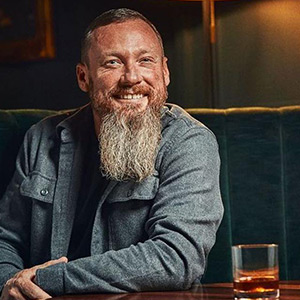
[00:00:10] Ray Latif: Hello friends, I'm Ray Latif, and you're listening to the number one podcast for anyone building a business in food or beverage, Taste Radio. In this episode, we sit down with Dr. Pat Heist, the co-founder of groundbreaking whiskey brand, Wilderness Trail. Dr. Pat Heist may not be the first rock musician to successfully launch and sell a spirit brand, shout out to Sammy Hagar, but he could very well be the first to do so with a PhD in plant pathology. Known as Dr. Pat to many, he's the co-founder of Wilderness Trail, a craft whiskey distillery based in Danville, Kentucky, renowned for blending modern scientific innovation with traditional distilling techniques. In 2012, alongside his longtime business partner Shane Baker, Dr. Pat launched Wilderness Trail, combining their extensive expertise in advising other spirit companies on production and fermentation. Their first product debuted in 2018, and since then the brand has built a reputation for its exceptional bourbon and rye whiskey. In a major milestone for the distillery, Italian spirits giant Campari acquired a 70% stake in Wilderness Trail in October 2022, valuing the deal at $420 million, with an option to purchase the remaining 30% in 2031. At that time, the full ownership of the brand was estimated at an impressive $600 million. In this engaging interview, Dr. Pat offers a deep reflection on his entrepreneurial journey and shares invaluable advice for any aspiring founder, including the pitfall of prioritizing branding over developing a high-quality product and how to strategically enhance a brand's image among gatekeepers and influencers. Additionally, he discusses the partnership with Campari, offering a behind-the-scenes look at how the collaboration began and his assessment of the timing and the opportunity that led to the investment and eventual acquisition. Hey folks, it's Ray with Taste Radio. Right now, I am honored to be sitting down with Dr. Pat Heist, who is one of the co-founders of Wilderness Trail. Dr. Pat, how are you? Good. Well, I got to thank you, because before we hopped in the mics, you told me that you drove all the way to Washington, D.C. for this. Why is that?
[00:02:39] Shane Baker: Because I couldn't get my Internet hooked up at my other place in time for the So right in the nick of time, I jumped in the car and drove to my home in DC where I have great internet service. Okay. Well, how long of a drive is that? Oh, that's exactly one hour. So I took off right at 1030 and got here at 1120. So I had 10 minutes to jump inside the house and get my computer set up.
[00:03:07] Ray Latif: Okay. Well, that's usually me here at the studio. Usually before an interview, I'm here like five or 10 minutes before the interview. I'm prepared, but I'm usually cutting it pretty close. Our studio director could verify this. I'm not necessarily the most timely guy, but I did read the other day that very intelligent people, almost genius level people are always late. So how about that?
[00:03:30] Shane Baker: Yep. I would agree with that.
[00:03:34] Ray Latif: You're quite the intelligent person yourself. I mentioned Dr. Pat. Do you go by Dr. Pat or just Pat?
[00:03:39] Shane Baker: Well, it depends on who's talking to me. My mother usually calls me Patrick if I'm in trouble. My wife as well. But Pat, Patrick, Dr. Pat, that's usually what people call me. What is your doctorate in? I have a PhD in plant pathology, so agriculture. I used to work with farmers in Kentucky and surrounding states on microbial diseases of field crops. So that's my specialty.
[00:04:06] Ray Latif: That is a specialty. It's also a specialty when you are a rock star. Not many people can do that. Prior to getting your doctorate, I believe that was your intended career, no?
[00:04:17] Shane Baker: Well, I've been in rock band for many years then, as well as now, still playing rock band. So I've been keeping the dream alive. Now, that's probably why we're having a discussion about me being in the distilled spirits industry, because the plant pathology and the rock and roll, just, you know, so much room in the world for that. And distilled spirits seem like a more lucrative career.
[00:04:44] Ray Latif: Well, I think there's some intersection between rock and roll and plant pathology and distilled spirits, clearly, because that's where you are. You're at the intersection of all three. And I want to go back to rock and roll for a second. What kind of rock do you perform? Is it Southern rock? Is it speed rock? What kind of rock do you do?
[00:05:03] Shane Baker: Well, despite my southern appearance, we normally play heavy metal, you know, 90s rock. If you want to get specific things like Stone Temple Pilots, Alice in Chains, that's the type of cover tunes that we play. And then we also have a handful of originals that anyone can find on Spotify. Band's name is Zella Mae. LMA. All right. Look at that, folks. Zella May. It's actually a female name. Zella May.
[00:05:31] Ray Latif: Oh, Zella May.
[00:05:32] Shane Baker: Okay. Zella May. And if you put a little exclamation point after the May, you'll have a lot better luck of finding our music. At some point, I think our drummer put an exclamation point after our name, and it's just become kind of stable if you want to find it.
[00:05:45] Ray Latif: Nice. I will look for it after this interview is over. Side note, last Friday, I interviewed a legend of the rock industry, Mr. Sammy Hagar. Oh, wow. Yeah. One of the co-founders of Santo Spirits. He's probably best known for Cabo Wabo, but he's got this new venture and yeah, they make some pretty darn great tequila.
[00:06:07] Shane Baker: Yeah, I'm a huge Sammy Hagar fan. And even as recently as just the other day I was watching, I really enjoy his interviews that he does with different people. He was interviewing Joe Walsh and it was extremely interesting. But I'm a huge Van Hagar fan going back. So if he ever wants to meet someone else in the distilled spirits industry, you're more than welcome to hook me up.
[00:06:33] Ray Latif: I will definitely make that introduction or at least make the introduction from his people to you and you know, guys Pat Heist level, it's difficult to get ahold of him sometimes, but I'm sure he'd be very interested in meeting someone who has the same shared passions as he does. Oh yeah. So I always say that we here at BevNET have a lot of knowledge about beverages and the beverage industry, but we've never actually started a beverage company. You, on the other hand, you have a ton of knowledge about distilled spirits and you had before you started a brand, but then you actually did create a brand. What motivated you to do so?
[00:07:12] Shane Baker: Well, I can't really say anything without mentioning my business partner, Shane Baker. You know, we've been, we started off in a rock and roll band, you know, as you mentioned before, and shared the passion of, you know, just entrepreneurialism. You know, we've always talked business. He used to be in several different businesses. As I was finishing up my PhD, you know, we were good friends and, you know, we had the rock and roll connection. But we also shared business ideas. And in about 2006, we came together. And using his background in engineering, and again, he's a really good business guy as well. He's an excellent operations guy. He spent some time in venture capital. Couple that knowledge set with my background in microbiology and biochemistry And we are also two of the biggest bourbon fans on the planet. And so we started off with a company called Ferm Solutions, firm as in fermentation, and we market yeast and enzymes, various fermentation products to not only distilled spirits producers, like a lot of the very famous bourbon producers here in the state of Kentucky, but also around the world, you know, Scotch and Irish whiskey producers, Canadian whiskey producers, And then getting in the other distilled spirits and even beer and hard seltzer and then moving into fermented foods, you know, like soy sauce and kimchi and those types of things. Most of our bread and butter has always been in alcohol production. So one thing about being a yeast provider that we learned very early on in our careers is the yeast gets the blame for every problem that a distillery or a brewery has. And we're often the ones to get that first phone call, hey, something's not right here. And if you want to keep the business, you've got to be ready to help with the problem. And 99.9% of the problem, it's not necessarily the yeast. But the fermenter is not doing what it should be doing. And so in their minds, it's, hey, this is a yeast problem. And maybe it is a yeast problem, but secondary to something like high temperatures, for example, or bacterial contamination. And when we talk about fermenting grains, you've got to consider that we're talking about a complex polysaccharide that first has to be enzymatically converted into sugar before it can be utilized by the yeast to make alcohol. I'm talking about the starch in the grains. As opposed to when you make rum from sugar or molasses, that's readily fermentable material. So, there's a lot of biochemistry and enzymatic considerations when you look at the mashing process and all that. We spent a decade helping other distilleries and breweries that were our customers with various problems. And then over that course of time, we learned a lot about, you know, hey, man, if I was going to ever build a distillery, I might not include this particular methodology because it leads to a lot of problems. And hey, what are the best practices that we saw? So across the knowledge that we gained in, I've personally been in over a thousand distilleries and until about a month ago, I've never been invited over to one when everything's going good. You know, it's always some problem. which gets us a lot of knowledge of how to fix problems and what causes problems. And then we use that knowledge as the foundation, not only the knowledge, but also the capital that we were able to, you know, Ferm Solutions is a vibrant company. We had our best year ever last year. So that's a business that we continue to run. I've been on the call today with four different distilleries with different issues. So never a dull day at Ferm Solutions, and we use that knowledge to start Wilderness Trail Distillery. The knowledge that we gained as well as the capital that we're able to gain, which is also very important for starting a distillery.
[00:11:22] Ray Latif: There are, I don't know, thousands, dare I say, of whiskey brands out there, and that's just the ones in the United States. How did you feel like you could differentiate and make a whiskey that could stand out among this sea of other products out there and talk about, you know, things like the actual taste of the beverage itself and ingredients, the aging process, and then of course, the branding and the packaging.
[00:11:54] Shane Baker: You know, a lot of it starts back with an extreme level of confidence that we had and arguably more knowledge than mankind has seen in the history of whiskey production. I mean, I don't know too many other people that are allowed to go in hundreds of other distilleries and see exactly what's going on there. And, you know, I mean, normally you're getting the bourbons made with 51% corn, too, or if you're lucky. And we're down underneath the fermenters trying to figure out if the agitation system is working properly or not. So to start off with the amount of knowledge that we had, it gave us an extreme amount of confidence. It doesn't also hurt to have hundreds of friends that run other famous distilleries. So, you know, when we started making our whiskeys, there were a lot of unknowns. No one really had made whiskey in our area into any significant quantities. Our county has. And in fact, it was dry county. You couldn't even legally sell alcohol up until just a couple of years before we started our distillery. So we had a lot of know how. We also had the benefit of knowing a lot of other people in the industry. I mean, when our whiskey was one-year-old, two-year-old, we're tasting it like, man, is this coming along OK? And then we go call up our friend over at whatever distillery an hour away from us and, can we come over and try your one-year stuff? And then we try theirs and, oh, man, they're just as bad as ours. So we must be on the right track here. So, you know, just being able to do that and also having other distilleries that were using our products. So we kind of had a measuring stick of what does this product taste like when it's mature? So, you know, we were selling yeast to distilleries even before we had started our own distillery. So we had the benefit of really learning a lot about, you know, the dynamics of aging and what type of barrel to use. We've had long standing relationships with some of the other big companies in the industry like Vendome, for example, that makes all the stills for the Kentucky bourbon producers. Independent Stave, one of the primary manufacturers of barrels, for the entire industry. There are others but you know that's one of the big ones and so we also had the benefit of being able to collaborate on a PhD level with their scientists and often we're doing you know events together and speaking engagements and things like that so we're At that level, we're friends with the other companies that do ancillary things to what Ferm Solutions does or what Wilderness Trail does. So we also had the advantage of those relationships. Now, starting off with the capital, you know, we were doing really well with Ferm Solutions. I mean, we're at the point in time to where, you know, Shane and I are looking at each other like, I think it's time to get Lamborghinis here. And instead of doing that, we got Wilderness Trail Distillery going. And something else that really set us apart is we made the decision to do a sweet mash process. And that leads to a softer distal. It just gives it a different mouthfeel. I mean, anyone who understands cocktails, and mixed drinks, things like that, understands how acidity plays into, how does acidity work with sweetness? How does acidity work with these other flavor components and the mouthfeel? And this is hugely important. And again, we're the only distillery on the Kentucky Bourbon Trail doing that. So that's one way or a couple of ways, our high level of confidence from our previous experience coupled with the ability to make a really great spirit and having all these other little bits of knowledge as well.
[00:15:46] Ray Latif: I spoke with the owner or the founder of a brand called Rabbit Hole, Rabbit Hole Distillery. And one of the things that we talked about was his need to raise money. And he talked about how he went and visited with a thousand investors before he actually achieved the necessary capital. necessary capital he would need to build his distillery. Again, it definitely helps to have that before you can launch anything. But would you have started, I mean, I'm sure there's a lot of people that will come up to you and say, hey, Dr. Pat, I'm thinking about starting a bourbon company. I'm thinking about starting a whiskey brand. What's your advice to those folks who don't have necessarily that kind of level of experience that you had, who don't have that kind of capital? Is it something where you were in such a unique position that this made it kind of a no-brainer for you? But what advice would you give to someone who's just starting out?
[00:16:45] Shane Baker: Well, you know, as a 10-year faculty member at Moonshine University and also an adjunct professor at the James Beam Institute at the University of Kentucky, I have students almost on a monthly basis that take classes from myself and others like me. And, you know, you really do have to be cautious. I mean, this is one of those businesses kind of like the restaurant and the bar business. It's like, you know, people who retire. Hey, man, I retired from, you know, computer technology, but I've always loved to go to bars. And I think I want to take my retirement and start a bar. And it's like, well, if all you've ever done is go to bars, you probably don't have the experience to run one and manage one. And, you know, it's like a nightmare come true for a lot of people. And I think distilling and breweries, it's just kind of a there's a romanticism to it that people get caught up in. And you really do have to weigh out, you know, is this just like any business you've got to look at? Is this the right decision? Do I have the capital to properly support it? Do I have the expertise? You know, I mean, anybody starting a business, you know, look at Warren Buffett, you know, some of the most famous entrepreneurs of our time. And they will tell you, don't get into a business that you don't really understand. And so I think that's really the advice that we would give. Now, even though the market, there's chatter about the market getting crowded and this and that, and that's true. But on the other hand, I believe there's always room to make a better mousetrap. In a market that's so huge, You've got the potential. You've got the market share out there to get. It's just a matter of being able to differentiate yourself. And I think these days, a lot of people, you know, the model has been, hey, I'm going to find a great story and then I'm going to anchor a brand to it. And the whole expertise and how to make a great whiskey sort of gets lost in the brand story and this and that. So I think that's another thing I would caution people about. Brand story is certainly important and it's definitely been very important for us. But our story is like a real story. We didn't set out to mimic a story. You know, we lived the story and it became a story only after our distillery became successful. So it's difficult, but my advice would be, you know, be very cautious, but also know that if you do a great job of something and there's a huge market for it, there's always a way to get in. So I try to encourage people as well to, you know, don't give up on your dreams if that's really truly your dreams, but you need to be able to differentiate yourself from others. back to how you build a business, Shane and I, being the sole decision makers, it was easy for us to make decisions. So, hey, take a drive down to Dairy Queen and get a blizzard. And on the way back, we made three board decisions and we said, hey, let's go ahead with this next expansion. And I'll give Shane a heck of a lot of the credit because he is a business mastermind. And, you know, when I talk about numbers and math and different things, I'm 100 percent like that dude is the guy. And we've really had a great partnership. I don't know of too many other yin and yang situations, but Pat Heist and Shane Baker is definitely one of them.
[00:20:13] Ray Latif: When it came down to making those decisions, having the ability to do it without anybody else, no other board members, or at least no other decision-makers was critical. And this is something I hear a lot about when you take money, you have other decision-makers in some cases, you have other people who can say yes or no. When you're talking to prospective founders, how much do you talk to them about raising money and raising money from the right, quote unquote, right people?
[00:20:45] Shane Baker: All the time, for sure. You know, that is definitely something that as we've learned about other businesses, even just watching Shark Tank and these types of things, you kind of get a little bit of perspective. What does it mean when I bring on, you know, another someone, especially another someone at the board level or whatever? you know, you want it to be something to where it's a one plus one equals five type of situation. And I can say, you know, with the transition that we're making with Campari Group, you know, we've had a really nice situation of that synergy, you know, and that's exactly what you want. When you grow your business, you want to add expertise. You want to have other people that you're looking around the table at it. You know, if we have an operations problem, that's my guy. If I have a microbiology problem, this is my guy, you know, marketing, et cetera, et cetera. But you definitely had to consider that those are more people that have a play in the decision-making process. And Shane and I being able to make decisions with surgical precision and timing, it just allowed us to transcend what happens in the big corporate world that just operates slower because the decisions that are being, I mean, the decisions we were making also were probably smaller level decisions than what the future decisions are being made for Wilderness Trail are because it's such a huge operation now. So you also got to kind of look at it in that perspective. But that definitely was a huge thing for us to be able to be nimble and move on ideas. as we saw fit and very quickly.
[00:22:32] Ray Latif: One of the biggest decisions you guys made that I think has paid off quite a bit is your bottle shape and your label. This is a custom mold, if I'm not mistaken, yes? Yes, sir. It's beautiful. It fits in your hand really well. It stands out on a bar back, even though there is A good amount of copy on the front of the label, but feels like it's something that you could see at a bar back and say, hey, that's different. That's interesting. In fact, I think the largest font on the front is the word bourbon. It might be the same size of the font as Wilderness Trail, but. How much did you guys think about how the brand could stand out on shelf or on a bar back? What kind of feedback did you get? What kind of insights, advice did you take? And how did you actually come to this final package and label?
[00:23:21] Shane Baker: You know, we had a team. We had brand ambassadors. We had, I mean, and we, we've always been a company that pulls in, you know, the secretary sitting there, Hey, what's your thoughts on this? You know, we're going to include as many brains as we can on decision making. And that bottle that we're looking at here is really, I mean, I remember, you know, Shane coming up with the logo when we decided on that font and how we, I mean, that is a nightmare of a bottle for a bottling line, you know? And that also goes back to when we were slapping all those labels on by hand, we weren't really necessarily thinking of how does this bottle going to behave on a bottling line? And with that Wilderness Trail pad printed on the front there, all the bottles got to go in a certain way now. You start realizing how come every other major brand is in a circular bottle so they can push them dang bottles on the line and wherever that label goes on, it's fine. It doesn't have to match up with something that's already pad printed on there. The other thing is you've got three separate labels on that thing. The one on the neck and then the two that's wrapped around one up and down there and one around. And that's a tapered bottle, which again, back to Shane's ingenuity of setting up our bottling line. I mean, I'll, you know, we get a box of parts that show up and this is supposed to be our future bottling line. That's like a nightmare to me, but Shane, that's his world, you know, and he can figure that stuff out. We were able to do it, and we have a great bottling line and all that kind of stuff. But whenever you go back in history, that's kind of one of those things that's a testament to two dudes that don't know a lot about bottling that came up with, and again, two dudes plus our team. I'll definitely give a lot of credit for, you know, logos and all that kind of stuff. I really like how the bottle turned out. It's very unique. And again, it's not one of these bottles that you give your ideas to a marketing company and then have them create the bottle label. You get the same font. I mean, there's thousands of bottles that look identical and it is confusing in the market. And I think that's one of the cool things about our product is it's really kind of homemade, you know.
[00:25:33] Ray Latif: I can definitely see myself making a cocktail with this bourbon and perhaps even a Boulevardier. And as you know, a Boulevardier you make with Campari. Oh, yeah.
[00:25:44] Shane Baker: Yeah. That's actually what I drank the night that we formed our partnership is I got a nice Boulevardier in downtown Louisville.
[00:25:52] Ray Latif: There you go. Makes a lot of sense. And nine years after you launched Wilderness Trail, you did partner with Campari and eventually they acquired the brand. When did they come knocking on your door? Did you reach out to them or did they reach out to you? And talk about the timing of the partnership and eventual acquisition of Wilderness Trail.
[00:26:14] Shane Baker: Yeah, I mean, you know, there's a lot of complexities to it that, you know, I won't bore the listeners with. But in essence, you know, Shane and I were at the point with our distillery, you know, we had already gotten into 40 something states here in the United States. You know, we were juggling multiple distributors, starting to get into some territory that for as good as we did early on, especially when you look at global distribution, which we're after now. And we just really needed a partner that could supplement some of those areas of deficiency that we had. And so Campari was just, you know, that's, I mean, this was the arduous process that we went to. And we came together with those guys and just checked all the boxes. What were we looking for in a partnership? You know, those guys are capable of capitalizing the business properly. And again, I'm talking about on a global scale here. They already have a global footprint of distribution. And so, you know, checked off a lot of the boxes of things that we were looking for. And, you know, do we go to the bank to get that? Do we go, you know, form a joint venture with someone or enter into some more of a formal partnership like we did with Campari? And again, you know, we we got, you know, exactly what we're looking for.
[00:27:41] Ray Latif: When you say you got exactly what you were looking for, I'm hearing from you that it was more than just the financial benefit of partnering with them.
[00:27:48] Shane Baker: Absolutely. Absolutely.
[00:27:50] Ray Latif: When you think about your legacy and protecting your legacy of Wilderness Trail, I imagine that was kind of a hard decision because you're handing your brand, you're handing your baby over to someone else. And sometimes, and I've seen this a thousand times, maybe not a thousand, but enough times where I know When you sell your company, you really don't have much decision in its direction going forward. So how do you think about, how did you talk to, how were you convinced that your brand was in good hands?
[00:28:21] Shane Baker: You really have to, in the business world, a lot of times, you know, you've got your personal feelings and you've got those kinds of concepts, but then you've also got the business. What is best for this business? And sometimes that, that can hurt your feelings, you know, what's best for the business. And so you just have to balance it out. And in this case, it definitely was not simply financing. You know, we were, we were doing okay on our own. But knowing what needed to be done to launch this brand properly, we needed more expertise than what we had. So yeah, we divested ownership. We're in less of a decision-making position now due to that. But we made that decision wholeheartedly. And again, these things aren't just, hey, man, you want to do a deal? There's massive amounts of due diligence, background information. Is this really the right partner for us? And they did their diligence. Are we the right partner for them? And a long time of decision making and going back and forth. And we came together and we struck up a great partnership. I mean, quite simply, you know, it was definitely just as much about shared expertise as it was about capital.
[00:29:44] Ray Latif: Well, it sounds like it's worked out for everyone. And most importantly, the consumer, because more people will have access to Wilderness Trail here in this country and abroad, which is a great thing because you make an outstanding product. And I've only tried this one. I'm pretty sure I've tried different expressions of Wilderness Trail at different points, but this product in particular that I have by my side is fantastic. Dr. Pat, thank you so much for taking the time to sit down with me today. Congratulations on everything you've done. I feel like your story is very inspiring to folks who are listening and trying to figure out how to take their first, or perhaps even their next step, building their own brands.
[00:30:23] Shane Baker: Yep. Well, I'm happy to be here to talk to you about today.
[00:30:29] Ray Latif: That brings us to the end of this episode of Taste Radio. Thank you so much for listening. Taste Radio is a production of BevNET.com, Incorporated. Our audio engineer for Taste Radio is Joe Cracci. Our technical director is Joshua Pratt, and our video editor is Ryan Galang. Our social marketing manager is Amanda Smerlinski, and our designer is Amanda Huang. Just a reminder, if you like what you hear on Taste Radio, please share the podcast with friends and colleagues. And of course, we would love it if you could review us on the Apple Podcasts app or your listening platform of choice. Check us out on Instagram. Our handle is bevnettasteradio. As always, for questions, comments, ideas for future podcasts, please send us an email to ask at Taste Radio.com. On behalf of the entire Taste Radio team, thank you for listening, and we'll talk to you next time.
[00:31:19] Shane Baker: you