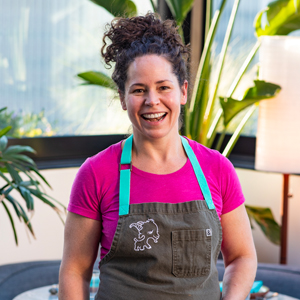
[00:00:10] Ray Latif: Hey folks, I'm Ray Latif and you're listening to the number one podcast for the food and beverage industry, Taste Radio. This episode features an interview with James Beard award-winning chef, Stephanie Izard, who is the founder of globally inspired food brand, This Little Goat. Just a reminder to our listeners, if you like what you hear on Taste Radio, please share the podcast with friends and colleagues. And of course, we would love it if you could review us on the Apple Podcasts app or your listening platform of choice. Ask Stephanie Izard about food trends and she'll admit that it's not her favorite topic of discussion. Instead, the influential chef would rather have a conversation about how to make great tasting and shareable meals, a subject that has guided her career as a restaurateur and CPG entrepreneur. A former winner of cooking competition TV series Top Chef and the founder of acclaimed restaurant The Girl and The Goat, Stephanie launched This Little Goat, a consumer brand of globally influenced sauces, spices and crunches, in 2016. Developed based on recipes that Stephanie created in her restaurants, the products are designed to quote, make it easy for home chefs to create complex, interesting meals. This Little Goat is distributed at hundreds of independent and chain grocery stores nationwide, including The Fresh Market, Raley's, and Price Chopper. According to the company, the brand saw sales growth across all channels in 2022 and nearly doubled its revenue in natural retailers. In the following interview, I spoke with Stephanie about the origins of This Little Goat, how Taste Radio accessibility guide the brand's thoughtful product and marketing strategy, why the company turned to self-manufacturing for its Chili Crunches, and how she became more comfortable as the primary spokesperson for her restaurants and brand. Hey folks, it's Ray with Taste Radio. I'm here in Las Vegas for the 2023 Winter Fancy Food Show, and I'm honored to be sitting down with Stephanie Izard, who is the chef and founder of This Little Goat. Stephanie, how are you?
[00:02:15] Stephanie Izard: I'm good. How are you?
[00:02:16] Ray Latif: I'm doing fantastic. I'm doing even better now that I'm sitting with you. So thanks so much for taking the time. I know you're very busy. When I came upon your booth, you were cooking up a storm.
[00:02:25] Stephanie Izard: Yeah, it's been fun. I've been sauteing Brussels sprouts all morning, giving people sustenance. We've got chicken, we've got dip. We love to bring all different flavors and draw them in with the smell of Brussels sprouts and fish sauce vinaigrette.
[00:02:34] Ray Latif: That's what drew me to your booth. You know, it wasn't so much that I knew that we had an interview and we're scheduled recording time. It was like, where is that? Who's cooking those Brussels sprouts?
[00:02:42] Stephanie Izard: Yeah, the Southeast Asia, that's actually the sauce that launched our whole line. When you get that fish sauce in there with a little bit of mustard and a little bit of citrus, draws you right in.
[00:02:49] Ray Latif: You're making my mouth water and we might have to stop so I can go get something to eat and then we'll come back and finish this. Now, This Little Goat, which spun off from your restaurants, your very famous and highly awarded restaurants, including The Girl and The Goat, the original, the OG. We've seen chefs launch consumer brands in the past to varying degrees of success. And what was your interest in getting into this space?
[00:03:16] Stephanie Izard: Sure, so it started with, as I mentioned, the Southeast Asia is the sauce that started it all. The Girl and The Goat, which is going to have its 13th birthday this summer, we launched with green beans on the menu, which are still on the menu. They've been our highest selling dish ever since we opened. And they have that fish sauce vinaigrette on them. And so many people would come in and say, can I get the recipe? Can I get the recipe? Which I'm still happy to share. But we thought, we should just put that in a bottle. We had seen some other chefs doing that. So we started with that. We started with what's now our Hong Kong sauce and with our Korea sauce. With those three, they're in a different package that really matched the interior of Girl and The Goat. And it was just a small project to sell at the restaurant. And then we started looking around and sort of seeing the possibilities. We decided to redo the packaging and make it colorful that would pop on shelves. We redid the branding to This Little Goat to be a little bit playful. This Little Goat goes to Tokyo. This Little Goat went to Korea. Playing up the sort of playful side of my cooking and celebrating flavors from all over the world and making it colors that pop so we could go into grocery stores and people could really catch it on the shelves. And then I've been spending the past 12 years really building a team, trying to understand CPG myself. It's a very different world than the restaurant industry. I think you can't just go in as a chef and think, Oh, I just take my sauces and throw it on a shelf. It's diving into another industry. I think when people wake up one morning and they say, I think I'll just open a restaurant because that sounds fun. And we kind of laugh at that and say, you don't know what you're getting into. It's the same thing with CPG. You can't just say, I think it'd be fun to go on shelf. You have to dive in and talk to people that have successful businesses, try to understand it and see how you can grow your brand and know what your sort of future goals are. It's been in the past few years that we decided to take it to a whole nother level. We started with the sauces. We added on the spices. We just recently built our own manufacturing facility to be able to do our everything crunches and our Chili Crunches because we couldn't find anybody that would hit the right temperatures on some of The Girl and kind of just do the exact process that we're looking for. So we were like, you know, we'll just build our own facility and it's been going great. We actually had to move into a bigger facility since launching. So it's fun. I'm just on This Little roller coaster ride of diving into CPG and we want to see how far we can take it.
[00:05:12] Ray Latif: You do realize that now you're in three different businesses. You're in the restaurant business, the CPG business and the manufacturing business, all of which are very challenging and have a very different set of skills and requirements to be successful. So congratulations on that.
[00:05:27] SPEAKER_??: Yeah.
[00:05:27] Stephanie Izard: I like to have as many jobs as possible, also doing as much TV as I can now these days. So I like to keep myself busy and kind of keep my mind challenged. But it's also about surrounding yourself with people that are smart and understand different parts of the business so they can help me run it successfully.
[00:05:41] Ray Latif: I want to come back to the manufacturing in a second, but you have and we have on the table right now a wide variety of products. You have spices, you have sauces and marinades, you have crunches. How did you decide what categories to get into and when to introduce new products within those categories?
[00:05:58] Stephanie Izard: We started with the sauces. Those were sort of the entry point for us. So looking at my menus and thinking, which of the sauces that we make, one could make it into bottle and still have the integrity that they do when we make them in the restaurants? Is this something that I would actually use in my restaurant still? Which a lot of these, we just use it straight from the bottle in the restaurants. Then it's also thinking, Is this versatile enough to use it on a lot of things in the home kitchen? So say the Hong Kong sauce, which we actually created this sauce. I created this sauce, I think the first year we were opening Girl and The Goat, so 13 years ago, but it was called the quail marinade because we made it for a quail dish. I made it because it tastes great on quail. It tastes great on just everything. But if you come into our restaurants, if you're in the kitchen and you look at the prep list, it says quail marinade. That's still what we call it, even though it hasn't been on quail in 12 years. But then we realized how versatile it was. We use it at DuckDuckGoat on our grilled beef and broccoli. I just used it at home last night. I made a beef noodle dish where I braised some beef and made a broth with this and it was really delicious. I put some Chili Crunches on top too. If you open my fridge, it's like all of our sauces and Chili Crunches all over the top. My cabinet's filled with the crunches and spices. We started with the sauces, then we looked into the spices we were making in the restaurant and it's sort of creating new spices for, again, for a menu item and then realizing this would be so good on anything. Let's put it into a jar. Then came the crunches. These didn't come until we built the facility because it's all based on a puffed rice that needs to hit a particular temperature. So once we did that, we decided we could work on those. And then lastly, last summer, we introduced the Chili Crunches, something we've been using in the restaurants for probably about eight years. And I talked to Greg, who's now our CEO, and I said, we need to figure out how to manufacture this because it's just good on anything.
[00:07:31] Ray Latif: Yeah. I don't think I've seen too many products like the crunches that you have. Marinades obviously are pretty ubiquitous as are spices. Chili Crunches is getting to the place where I think it is becoming a more ubiquitous type of seasoning or ingredient that people use in their kitchens. And the result is that you're seeing a lot of people and a lot of brands get into that space. I wonder, you know, when you're thinking about this sort of competitive landscape of a particular category, does that factor into your decision-making?
[00:07:58] Stephanie Izard: Yeah, it's funny when we launched the Chili Crunches last summer, it was kind of the timing worked out just right that we had a facility where we could do it. We figured out how we could possibly do it. And then we started looking around. We're like, this is becoming a popular category. I hadn't really, you know, Momofuku was doing it as another chef driven. Yep, I know her as well. And we saw that they were doing well, but I honestly hadn't paid enough attention to the space until we started getting into it. And then we looked around and we've been doing great. You know, a lot of roundups have put us next to some great competitors, just in really good company. Ours is unique in that we take masa chips that we make out of masa flour and water. We fry them and crunch them up. And basically one big masa chip is in each jar. But when you take a bite of it on anything, there's this crunch that just kind of It's not just the layers of flavor, which are also really awesome, but you get this crunch that just surprises you. So hence Chili Crunches instead of Chili Crisp. We've been calling it in our restaurant since we've been making it. And we're working on more flavors. It's just such a fun category. There's so many possibilities. And once you put it on something, you're just going to put it on everything. I know Darcy, who's on our team, she puts it on everything every day. She's like, give me another jar.
[00:09:02] Ray Latif: Well, it's nice when you work for the company that you can get those jars anytime you want. Maybe Darcy, do you get a 15 percent discount at least or is it? OK.
[00:09:10] This Little: Darcy's here with us too, she's not just on the team, she's here, which is why I asked that question. Vibrant Ingredients is the natural ingredient partner powering food and beverage innovation, delivering flavor, function, and protection through a science-backed portfolio. Vibrant delivers purpose-driven solutions that help brands create extraordinary experiences. Discover what's possible with Vibrant today. Visit vibrantingredients.com.
[00:10:02] Ray Latif: It's clear that the products that you make for This Little Goat are very tied to what you make in the restaurant, the dishes you prepare in your restaurants. But I think in our business, trends always influence innovation. How do trends influence your decision to launch a product or introduce a product to the market?
[00:10:22] Stephanie Izard: I would guess Darcy's going to be laughing right about now that whenever we have interviews and they're like, what's the new trends? I'm like, I don't know. I just cook food at my restaurants that I feel like cooking, but it's interesting that we've had over the years. I remember Philadelphia cream cheese spent a day with me because they wanted to see what was trending. And I think they came out with like bacon cream cheese, you know, like two years later or something, not because of me, but it's like, you can see that they paid you a lot for that, you know, cause it's like.
[00:10:45] Ray Latif: Baking cream cheese is pretty awesome.
[00:10:46] Stephanie Izard: It is. What's interesting with bigger brands, though, is something that's like on trend in restaurants, which they're paying attention to, because I think chefs start the trends. It takes so many years for bigger brands to get it to market that it seems like, yeah, that was a trend a while ago. Now we're on to something else. But by having this brand, a chef driven brand where we can control it a little bit faster, anything that we're making in our restaurants that we're excited about, we can just do it. which is really fun. So I never look at what's happening in the world of trends. I guess I just kind of make what I want in my restaurants and what feels trending in goat land finds its way into package.
[00:11:19] Ray Latif: In the package though, now you can't escape what's trending when it comes to packaging and label design, because that really does speak to the consumer. It's the first thing the consumer interacts with in most cases when it comes to your brand. You talked about how you've done some tweaks and had some different iterations. When I'm looking or when a consumer is looking at your brand, what is the thing that you really want to express the most? What should be the first thing they think about or talk about when they are exposed to your packaging?
[00:11:46] Stephanie Izard: I think that the bright colors really speak to the fact that the point of This Little is to brighten everything. I always picture someone, we actually made these funny little commercials years ago, commercials I'll say in quotes. It was all in black and white, someone's just sauteing Brussels sprouts and then they hit it with the Southeast Asia and suddenly the whole thing comes into color. And that's just how I see our sauces and our crunches and Chili Crunches working is you put it on something and it just brings it to life and your face just lights up because you have all this flavor coming at you. So I think the bold flavors and the playfulness of the packaging really speaks to my style of cooking and how I like to have fun in the kitchen, and that you're going to get something that's going to make you happy like colorful things do. Well, colorful things make me happy. Look what I'm wearing.
[00:12:25] Ray Latif: It's a pink hoodie with, is that a unicorn on the?
[00:12:29] Stephanie Izard: Yes.
[00:12:29] Ray Latif: Oh, no, I'm sorry. That's The Goat. It was it was folded inward. So I'm sorry. Yes, you're very on brand, Stephanie Izard I'm just blind, apparently. So were you involved? Were you deeply involved in the in the label design, the package design for these products?
[00:12:42] Stephanie Izard: Yep, every step of the way, The Goat itself comes from so my last name, we say Izard in my family, but it's Izard. It's a type of mountain goat that lives in the Pyrenees Mountains. So Girl and The Goat, a restaurant, 13 years old, Little Goat, 10 years old, duck duck goat, six years old, cabra, which is goat in Spanish, is four years old. Everything we do, sugar goat or bakery, everything has goat in it, just became our sort of little icon. And then we were doing the packaging for this, This Little Goat went to, meant to be playful. If you come to my house, even before I had my six-year-old, there's like stuffed animals everywhere and games and toys. I've always been very, I guess, sort of youthful in things that are around my house. So bringing that personality into the packaging, we actually, the designers we work with came over for a meeting and we were standing in my kitchen and they kind of looked around and they were like, this is what they ended up kind of bringing us to is bringing the playfulness in. But I remember sitting in a room and seeing all of these different directions that we could go and just being really drawn to the color palette of the brand, bringing The Goat into it, putting my name on there as well, both different recognizable things, but making it something that if you don't know what The Goat is, you don't know my name as a chef, you still are drawn in for the colors and you're wondering what it's all about.
[00:13:46] Ray Latif: They're beautiful. And what's inside every package is, I'm sure, delicious. And I'm going to go taste some of your food momentarily. But PricePoint is an important component for a CPG brand as well. Clearly, these are premium items and they're for a particular type of home chef or individual. How do you think about PricePoint when you are introducing these products and trying to bring them to shelf in a mainstream retailer?
[00:14:10] Stephanie Izard: Yeah, it's so interesting because I think you have a price. You obviously would need to be able to make a profit, would be The Goat eventually. But also just thinking about who is your target market, I think that we wouldn't be able to hit the price point of some bigger brands. We can't sell our sauce for $1.99. It's just not going to happen because we use really high-end ingredients. But we can get it to a price point that we feel happy about, where we feel like people can get good value because they're getting amazing things inside of the bottle, but not try to be too premium. So we're definitely in the premium space, but we're trying to keep it also accessible. You know, it's an up and down thing. I think with our Chili Crunches, we had launched them and they felt a little bit too expensive to really hit the profitability that we wanted. So we went back and figured, how can we lower the cost of each of the items that's going into the jar without changing the quality of what's in there. So we just need to get The Girl in larger vats. We need to order things in more bulk. And it's just going backwards like we do in our restaurants and figuring out how can we get our costs lower without the quality going down so that we can make it more affordable for our guests.
[00:15:12] Ray Latif: it could be a little risky because when you are forecasting demand and you're buying large vats of Girl and The maybe you're not selling the volume that you anticipated, you're stuck with these huge vats of oil. I don't know how much they cost, but it could be pricey in the end. I guess what I'm asking is, and what I'm trying to get to is, when you're forecasting demand, you're thinking about, okay, How are we going to assess where we are in 12 months and in what retail stores we want to be in and how many we want to be in? How does that factor into your decision-making for the business?
[00:15:46] Stephanie Izard: It's been a bit of a learning curve. Forecasting is always difficult, whether in the restaurant industry or at the CPG world. We've definitely over the past few years, there's been moments where one of the sauces is just not available because we did not produce enough, which is a good problem to have. So we've been fortunate enough with our sauces to be able to just keep upping our production runs, which get our costs down, which is awesome. But we try to do it a little bit slow and steady. So wait and see. how it's going, which ones are selling well, so we can really get a feel. And we knew that in the first year that we'd probably have some missteps, that we would have one or two SKUs that would be out for about a month while we waited for more to get produced. But now I think we've got a good rhythm and we're working with a sales team that's able to forecast how many stores we might get into, how much we should raise our production. So yeah, it just takes time to really understand. And I think my new CEO, Greg, this is what he sits there and gets really excited about studying. While I'm off doing the fun cooking, he's studying all these numbers and working with our sales team and working with The Fresh of our team to make sure that we're making smart decisions. And then he's like, Stephanie, so do you think that we should get the 200,000 new caps or do you think, you know, it gives me a reason so I can make a decision based on facts.
[00:16:57] Ray Latif: you've handed over the sort of day-to-day responsibilities of the brand, but you're still deeply involved in innovation, promotion, marketing, and what have you. And it's clear, you know, you are the best representative of your own brand. That being said, when you are trying to get into a new retail store, retail chain, are you going on those visits? Are you going with your sales team, with your CEO to kind of sort of close the deal? And if so, what are they expecting from you? I mean, what do they want to hear from you as the founder?
[00:17:23] Stephanie Izard: Sure. It depends on what retailer, you know, not to say that any retailer is less important than another, but definitely for some of the bigger retails, I'm on a lot of sales calls are via zoom these days, which makes it a little more convenient or go on the road. And that way I can be there to tell the founder story, to talk about where all the inspiration behind the sauces came from and they can hear it directly from me. We are working on always improving our sales deck to be able to tell the story. If I'm not sitting there being able to tell it myself. And we work with an amazing Martha, who's the head of our sales, And Michael, who runs a company we just joined with, 5G, that has helped us increase our sales team around the country. We make sure that they've heard from me everything about the brand. But I definitely, I want to be there for those important meetings, or as many meetings as I can be. It's important to me what happens with the brand. And though I have a new CEO, Greg, we still, we talk every day probably more than anybody wants to talk to each other early morning, late night. filling each other in on what's going on in the marketing world and all of the business world and just making decisions together. It's just nice to have someone to work alongside rather than trying to make the decisions all myself.
[00:18:24] Ray Latif: When talking about the story, what is resonating about the story? What is connecting with retail buyers and then with end consumers?
[00:18:32] Stephanie Izard: I think just when I talk about, I said goat land a little bit ago when I was talking about our restaurant. So Girl and The Goat started it all, but we've been in the West Loop in Chicago for almost 13 years now. Now it's just expanded to Los Angeles. I've done that, a bunch of cooking shows, cookbooks, all these things. It's sort of building this whole brand of The Goat by just being out there, for me, doing fun things to brand expand and also just connect with people in different ways. So I think being able to tell the story of everything that we've done with The Goat or everything that I've done along the way, and this is part of that story. This is a way to take what we make in the restaurants, take what I've created for the restaurants, and put it in the home kitchen and use it for just anything. I mean, I cook with this more at home than with anything else. I'm like the best spokesperson for my own brand. When friends are coming over, I'm like, I'll just grab the Hong Kong, sauté some onions with it, and put some sour cream. It's the best onion dip ever. I love dips. So I know personally just how easy it is to make things tasty really fast with it at home. So just being able to talk about food and we try to, if it's in person and sometimes via Zoom, we send tastes so that they can be tasting and eating samples like we have at the booth today while we're talking about the brand. Because although it's a sauce and you can definitely eat it straight out of there, you know, their marinades are intense. It's so great to taste it on something, to smell something, to be able to just, you got to taste food to get excited about it.
[00:19:49] Ray Latif: And it's got to taste great, for sure. And I think that's something I actually was just speaking with someone about this, and it's remarkable to use that word, how many new brands come out and the products don't taste good. It's weird. It's a strange thing. It's almost like, you know, I'm going to start a business, but profitability doesn't matter. Well, no, that's what a business is. You know, you have to get to a point where you make money in this business. But, you know, taste is one of those things that I don't think there's any more subjectivity about it. It's like food that tastes good is easy to recognize. But, you know, not every kind of food is for every person. So when you're thinking about the broad audience, the broad opportunity for your brand, you know, are you making products that are, first and foremost, taste great? Or do you take that broad opportunity into consideration?
[00:20:36] Stephanie Izard: I think a Little Goat. It's funny. We were working on a new line of mayonnaises for a minute. And I went out and bought a bunch of different sort of flavored mayonnaises from the store. And there was a couple where I thought to myself, how did this get onto a shelf? I don't understand. But maybe some brands are focusing on profitability and not focusing on flavor. I'm not sure. Or they forgot to taste it that day, which is the first rule of any chef is always taste everything. But I think with the brand and with all of the stuff that I make in the restaurants, too, it's giving people sort of, I say, in-your-face flavor, and maybe challenging your taste buds with new flavors that you haven't had before, or something that's familiar in some way, but you're not really sure why, but always making it accessible. So even when you come The Girl and The Goat, which would be our higher end of our restaurant, still not super high end, fancy schmancy, it's just not me, but there's things on the menu that might seem a little bit like, oh, that's an interesting combination, I wouldn't have thought of that. And you take a bite, and it might seem a little scary on paper, and then it just opens your eyes to something. When we're working on flavors, it's about introducing people to maybe flavors they haven't had before or just ways to use them in a new way. So yeah, I guess a little bit thinking of the broad audience, but I think that my style of cooking has always appealed that way just naturally by just making things that just straight up taste good.
[00:21:46] Little Goat: Do you want more repeat buyers on Amazon? Well, this free resource in collaboration with Straight Up Growth will help your brand turn first-time buyers into long-term subscribers. Download Winning the Repeat Purchase Game on Amazon now at Taste Radio slash SUG. That's Taste Radio slash S-U-G to start building retention-driven growth for your brand on Amazon. Scaling a beverage brand into major retail comes down to operational readiness. From packaging lead times to co-manufacturing strategy, the details can make or break a launch. In a new ebook in collaboration with Octopi and Asahi Beer USA, industry leaders share what they've learned in helping brands scale. Download it now at Taste Radio slash octopi.
[00:22:36] Ray Latif: Stephanie Izard have to say, you know, the way you communicate, the way you speak, it feels so approachable and makes the person you're speaking to feel comfortable. And that's something that founders need to get good at most of the time. When they're pitching, when they're selling, when they're explaining their brand to people, it's not an inherent quality for a lot of founders. Is it something that just came naturally to you or is that something you have to work on?
[00:22:57] Stephanie Izard: It's been interesting over the years. I think a lot of times chefs or people in the kitchen are not very comfortable with people. And so they just hang out in the kitchens. I was definitely a lot shyer before going on Top Chef. And I think after that, then going and doing cooking demos and being exposed to so many different people all the time at different food festivals or just talking to guests in the restaurant, I started to come more and more out of my shell and just realize people want to just get to know me and I should just be myself. So when I'm talking about my brand or talking about my restaurants, I'm very passionate about everything I do and my hands are in everything I do. I can't be at every restaurant every day, but I'm there as much as possible. I'm as involved with this as possible. So I think you get that sense of my excitement about it and my, I guess, pride in it, but I just think it's fun. I just think everything is fun. So I think I've just learned to just be myself and just talk like I'm talking to a friend. Whoever I'm speaking with, they're my new friends. Let's just talk about food and let's just talk about fun things and flavor and just be yourself.
[00:23:52] Ray Latif: Yeah. I mean, I think that's such great advice is like, it doesn't need to be complicated. Just talk to the person like... You've been talking to me, that's one. So folks who are listening right now, just be like Stephanie Izard what I'm trying to say here. Don't overthink it. And practice. Do it a lot. You know, put yourself out there and you'll get better at it. I did say I wanted to come back to manufacturing and I do because this is a question that a lot of founders have is, you know, like, I can't find someone to make my product. I need to make it myself. You know, how did you determine that that was the right course of action?
[00:24:24] Stephanie Izard: Well, so the sauces are done at another manufacturing facility, to be clear, and same with the spices. But when we wanted to do the everything crunches, something I've been using in my restaurants for a while, we just could not find anyone to puff the rice. It became this huge challenge. And I thought, OK, we're never going to be able to do this. Then actually during COVID, there was So we went to a restaurant that went out of business that was right underneath our offices, and it had a kitchen in the back. And my assistant texted me, she said, that vegan restaurant went out of business, we should go take a look at it. So we went and took a look and thought, I think this is enough space that we could bring the Everything Crunches to life. So I brought Greg on, who's now our CEO, I think it is important to have a strong understanding of food safety and what goes into it and being able to really have those regulations in place but also make sure that you are making safe food for people is of huge importance and that people might kind of skip that step. following every regulation that we need to and going above and beyond that and being proud of our space. I think both of us being chefs, he is a longtime chef friend of mine. We come from the restaurant industry where we know the importance of that. And so it kind of leads over to the CPG. The nice thing about being able to do our everything crunches and Chili Crunches in our own facility also is that we can do limited time offer flavors. So right now we're working on a Chili Crunches with my chef friend, Brooke Williamson. from LA, we're going to do a special Chili Crunches for women's month in March. So because we have our own facility, we can test this product, work on it with her, work on the flavor profile, and then we can just make as much as we want, which is awesome. We don't have to have a certain size run. So when you're launching a new product, it's kind of nice. I don't know. I've always been a risk taker. I just kind of do things what I feel like. So I know there's a lot of risk in building your own facility. And we actually just, as I'd mentioned, we just moved into a bigger facility. It's now a two-story offices and bigger manufacturing facility, knowing that we are going to grow into it, but taking the risk, knowing that it's a little bigger than we need right now. But if you don't give it a try, then you're never going to know.
[00:26:30] Ray Latif: But you mentioned something there about, you know, being able to produce limited time offerings and testing things with consumers or testing new products with consumers. Are you doing that via direct-to-consumer, your direct-to-consumer business, or is that something that you're integrating with your retail partners?
[00:26:44] Stephanie Izard: We're going to do it as direct-to-consumer. So building our website, we're actually launching a new website this week and really focusing on direct-to-consumer and our Amazon and all of that as well. It's two separate lanes. Worrying about marketing and retail and selling to retail and worrying about direct-to-consumer is almost like two separate businesses, honestly. But being able to have something fun to talk about in the press. So I'm very fortunate to be surrounded by all these amazing chefs that I'm friends with that have their own followings. So collaborating with chef friends on new flavors is a great way to have something more to talk about. have another name to bring into our world. And Brooke's just a huge fan of the Chili Crunches, so it seemed like a natural fit. But limited time offers are fun, especially for DTC. You want these fans that go to your site and they keep reordering the same Chili Crunches. You're like, hey, what about this new flavor? And they'll be like, yes. It builds a more loyal following and gives them something to look forward to.
[00:27:32] Ray Latif: Is your direct-to-consumer business something that you see scaling in the same way that your retail business does? I mean, do you want them to be sort of equal in terms of sales performance?
[00:27:40] Stephanie Izard: I don't think there's any way to have our DTC business ever match our retail. You know, I definitely know our huge sales are going to be more in retail. So as far as our sales team and the growth of the company, I know that that is going to be the bread and butter of it. But we love our direct to consumer business and. It's just a fun way to connect in different ways. We can do cooking classes and sell kits for that. There's just a lot of fun things you can do with it. And I see it as more of a brand building exercise and giving people the chance if they just want to get it to their house. Maybe they don't feel like going to the grocery store today. We're in about 2,000 grocery stores at the moment, but that's not as far as, you know, there's 40,000 grocery stores or something. So we have a ways to go to be everywhere. So if you're not in one of those cities where we are yet, you can still get it to your house. So focusing on DTC as a separate way to connect with everyone and then knowing that we just want to see more and more growth in grocery.
[00:28:30] Ray Latif: Thank you so much, Stephanie, for taking all this time. I know I mentioned you're very busy and there's a lot of people that want to talk to you. I do, I'd be remiss if I didn't ask you about, you know, a topic that's been top of mind for a lot of folks. And that's, okay, when I say a lot of folks, I mean, a lot of food industry folks. And that's this idea that fine dining is coming to a crossroads. You know, with the announcement that NOMA is closing, there's this conversation about what is there really, you know, can you have a sustainable business model when it comes to fine dining restaurants? And, you know, what's your take on the, on the subject?
[00:29:00] Stephanie Izard: You know, I've always lived in a space. Our restaurants are offering the level of service and I think the level of food of more fine dining restaurants, but having a little more fun with it. So it's interesting to ask me that question because I'm just more of a fan of going out to eat and having a little bit more just fun. You know, I keep talking about fun, but let's go to a dance party or something. and being accessible and not really cutting anyone out with your price point. So I love going to a fine dining restaurant and the experience of a four hour tasting and getting to know the chef through their food and having this amazing mind blowing experience. I love it. Can I do that every month? Probably not. I don't you know, it's something that I save for a couple times a year, just a new place that I want to try. I didn't get to go to Noma. So I definitely am sad about that.
[00:29:42] Ray Latif: You still have time.
[00:29:43] Stephanie Izard: Yeah, I know. I was like, should I try to go? I should try to go. You see those experiences sort of once in a lifetime experiences. And that's the tricky bit is that maybe you go once and then people don't want to spend the money again or they just see it as an only once in a lifetime. And I think for me, I want people to come The Girl and The Goat or any of my restaurants all the time just because they're hungry and they want to come to a great restaurant and we give them great experiences. So hopefully, people can figure out how to keep the more high-end restaurants around because that's going to theater. To me, eating out is my form of entertainment. I'd rather do that than anything else. I even get excited just getting food on the airplane, just the whole thing of getting brought a meal. Okay, it's not the same. We're going off course here. Yeah, I don't know. I guess we'll see what happens. I think that people will figure out how to keep higher end restaurants going. It's just guests need to understand that the cost for restaurants now is so much higher. So it's educating the world through conversations like this that you're going to just have to pay a little bit more to go out to dinner. But as long as places are giving amazing service and amazing experience, then hopefully you see the value in that and realize we're not trying to rip you off. It's just the pork just costs more now.
[00:30:49] Ray Latif: That's a really good way of putting it. The pork just costs more now. And people should just be aware of that the next time they order that pork chop or sausage. Stephanie, this has been such a fantastic and fun conversation. Thank you so much for taking the time. Sure. So I've been to Noma, but I haven't been to The Girl and The Goat. So I need to make my own journey out to Chicago.
[00:31:12] Stephanie Izard: Yeah, Chicago or LA.
[00:31:13] Ray Latif: Or LA, actually. Yes. Well, I'll be in LA in early March. So there we go. Yeah.
[00:31:16] Stephanie Izard: So now that we're friends, just let me know. We'll hook it up.
[00:31:19] Ray Latif: I'm glad we're friends. This is so fun. This is fantastic. I'm so glad we did this. All right, Stephanie, once again, thanks so much.
[00:31:25] Stephanie Izard: Thank you.
[00:31:29] Ray Latif: That brings us to the end of this episode of Taste Radio. Thank you so much for listening. And thanks to our guest, Stephanie Izard. Our audio engineer for Taste Radio is Joe Cracci. Our technical director is Joshua Pratt, and our video editor is Ryan Galang. As always, for questions, comments, ideas for future podcasts, please send us an email to askatasteradio.com. On behalf of the entire Taste Radio team, thank you for listening, and we'll talk to you next time.