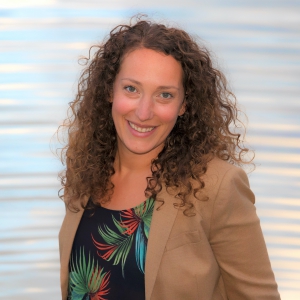
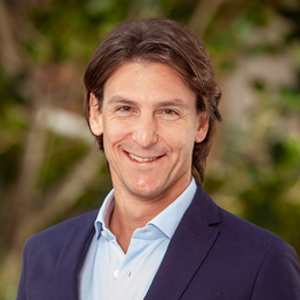
[00:00:10] Kim Allardyce: Hey folks, I'm Ray Latif and you're listening to the number one podcast for the food and beverage industry, Taste Radio. This episode features an interview with Kim Allardyce, the CEO of Shire City Herbals, who reset and revitalized the now fast-growing brand of organic wellness tonics. This podcast also includes a conversation about the remarkable history of Santa Margherita Pinot Grigio with Vittorio Marzotto, the Director of Business Development for Santa Margherita USA and a fourth-generation steward of the popular wine brand. Just a reminder to our listeners, if you like what you hear on Taste Radio, please share the podcast with friends and colleagues. And of course, we would love it if you could review us on the Apple Podcasts app or your listing platform of choice. We begin our episode with Kim Allardyce, the CEO of Shire City Herbals. A maker of wellness tonics best known for its flagship Fire Cider, the company had built a loyal customer base and broad retail footprint since its inception in 2011. Yet, Shire City seemed to be going in reverse and in need of a reset. Between a costly and headline-grabbing lawsuit and a disorganized retail strategy, Shire City was mired in missteps and missing opportunities to grow. Kim Allardyce, who had joined the company in 2017, was well aware of the problems, but also the potential of Shire City. The solution, she believed, was an emphasis on professionalization. Shire City had been in perpetual startup mode and needed to establish new guidelines and guardrails for the business, particularly amid changes in the retail landscape for food and beverage. In the following interview, I spoke with Kim, who took the reins as CEO in January of 2021, about how she assessed Shire City's biggest issues, the importance of and challenges in winning over the company's founders and stakeholders when advocating for change, and how a refocused retail strategy meant millions in new online sales. Hey folks, it's Ray with Taste Radio. Right now I'm honored to be sitting down with Kim Allardyce, who is the co-owner and CEO of Shire City Herbals. Kim, how are you? Doing well, thanks. How are you? I'm doing pretty fantastic. Thanks so much for joining me once again today. Last I saw you at BevNET Live Winter 2021, and here we are about 3,000 miles away in Newton, Massachusetts for a podcast interview. So I'm really excited for this. You live in Massachusetts, just not in this part of the state. Where do you live?
[00:02:50] Shire City: live out in the Berkshires. We're in Western Massachusetts, so headquarters are in Pittsfield, and I personally live in Washington, which is a tiny little town of 500 people.
[00:02:58] Kim Allardyce: How long have you lived in Western Mass?
[00:02:59] Shire City: I was born and raised in Western Massachusetts. I have been back most recently for six years, but I have lived in Hawaii, LA, New York City, short stint in Florida.
[00:03:09] Kim Allardyce: Okay, so I do remember this conversation from when we first met, well, formally met, July 2021, was that right? Yeah. Yeah, it was at a Red Sox game. Yeah, it's coming up on a year. Yeah, it feels like it's, I mean, time's already flying by. Gosh. Yeah, it was at a Red Sox game. Yep. It was hosted by the one and only Ken Sadowski, aka The Beverage Whisperer, who our audience is familiar with. If you've ever heard one of our podcasts, we've probably mentioned him about, I don't know, a thousand times. How did you get to meet Kenny?
[00:03:37] Shire City: He's the BevNET VIP. He is, he is. I met Kenny through the BevNET speed dating, investor speed dating program that you guys rolled out. I think it was on the heels of the worst phase of the pandemic when everything had to be digital. I think that was when that was launched, right? The membership program, we signed up for that. And once I saw the invite for the speed dating thing, I was like, I'm going to sign up for this. That's how I met Kenny. And thankfully enough, I mean, you have seven minutes on those things, which is great. It's a blessing and a curse. But thankfully, Kenny's local coffee shop that he frequents was one of our earliest wholesale accounts. So he was like, oh, I know your product. So it was just a very casual conversation. I'm terrible at pitching. I'm just not good at it. So it was good to just be able to have like a human conversation.
[00:04:19] Kim Allardyce: Okay, so Lala Java, which is his spot, carried your product. Okay, so that makes a lot of sense. I didn't know that part of the story, but now it makes a lot of sense. And so he was like, okay, if they're willing to bet on Shire City, I'm willing to bet, so to speak, on Shire City. He's become an advisor to your company.
[00:04:33] Shire City: Yeah, he's part of our advisory board.
[00:04:34] Kim Allardyce: Yeah, very cool. Very cool. Let's talk about how you got into the company. I believe it was September 2017 when you joined Shire City, VP of Business Development. Can you talk briefly about where the company was at that point? Because Shire City launched in 2011, but even in 2017, it was still very much in startup mode. So talk about where the company was in terms of retail distribution, revenue, even if you can, and what you were brought in to accomplish.
[00:05:02] Shire City: Yeah, I joined the company with the core focus on helping to build out direct-to-consumer channels. And, you know, at that time, direct-to-consumer was still, I don't want to say new, because I'm sure there's a lot of innovative brands out there that started direct-to-consumer, but it was newer for that team, for sure, for our team. So building out the direct consumer channel is just what is our strategy for Amazon? What is our strategy for our website? What is the strategy for retail going forward? Opening up distribution for national distribution, things of that sort. Starting to really just professionalize more or less the sales and marketing. side of the business and removing unprofitable revenue streams. It was a major recalibration. It was implementing all the technology necessary for tracking, you know, who are our customers? Where are our customers? They were operating off of spreadsheets. So it wasn't very trackable in terms of like how everything sat and what the strategy was. So, you know, the first couple of months was just assessing like what's actually happening here, all while framing out the strategy for what needs to happen. Because I mean, even on Amazon, we were just like an example of the year that I started, we did $9,000 on the platform, but we had a lot of wholesale revenue associated with Amazon because we were selling to resellers. without knowing it. We didn't really, it wasn't part of our strategy. So our presence on Amazon was very diluted. It was, there were listings created by third-party resellers that weren't really speaking about the brand adequately or who we were or what the product was. They were violating all kinds of FDA claims. There was just like a whole overhaul that had to happen there. And that meant taking revenue out of the wholesale channel to start to build on the Amazon side of things and It was a lot of that type of recalibration of just really looking at each element. How are we looking at it? How does the whole picture weave together? Because they don't happen in isolation. What's happening on Amazon very directly impacts what's happening in retail, as does what's happening on your website. So they were things that were very important to look at that weren't prior, weren't really dug into in depth prior to my arrival.
[00:07:12] Kim Allardyce: Yeah, I want to unpack how you set about professionalizing, if you use your word, the company. but there was a dark cloud hanging over Shire City when you joined the company and that was related to a lawsuit regarding the name of your flagship product, Firesider. Yes. I don't want to get into this, like this could be a half hour conversation for sure, but just briefly talk about what the lawsuit was all about and how you eventually addressed it and got out of the mess that it created.
[00:07:42] Shire City: I mean, I think it was the best worst mistake that prior leadership ever made because there were some really good outcomes on the other side. Although, you know, I think many founders have a lot of opportunity for there to be a lot of snake traps to get caught up in or potholes, speed bumps, whatever you want to call them. When you're operating, I think with limited leadership experience, limited business experience even, because you've created something that's great and innovative and you have a passion for it and you love it. mistakes can be made along the way on the logistic side of things of how you operate and maneuver. You also rely a lot on advisors and outside counsel. And in terms of following traditional business wisdom, that was essentially what was advised at the time when the product was trademarked. It was a trademark attorney who said, oh, you should trademark your product name. And Dana at the time was like, oh, okay, and filed for the trademark. The trademark of Firesider. Of Firesider, yeah, yeah. went through the full trademark process, was legally awarded to them. And it wasn't until a few years later that they started to realize that there was a problem. It was other Firesider products were popping up and attorneys were like, well, you either need to defend your trademark or lose it. And the recommendation at the time was to defend the trademark, basically asking other listings that were named Firesider to be removed.
[00:08:58] Kim Allardyce: And if you can briefly explain why were other companies naming their products Firesider?
[00:09:04] Shire City: So there are a lot of herbalists that do craft handcrafted fire cider themselves. There are recipes out there that have definitely predated Shire City Herbals. We do have our own recipe. Definitely our concoction, if you will, was passed down through family tradition to Dana. One of the co-founders. Yeah, Dana and Amy are the two co-founders, husband and wife team. And so there are individual crafters that make it. Some people sell it at local farmers markets. And then there are other businesses who are also founded by herbalists who were also building this product line for themselves as well. And that was actually who the legal dispute was with was other small business owners that were founded by herbalists. And the media, you know, coverage around it really was like big corporate conglomerate against, you know, tiny little herbalists. We were actually the same size business as these other folks at that time.
[00:09:54] Kim Allardyce: Now, the media you're referring to was not BevNET. We covered this.
[00:09:57] Shire City: You did cover it and you covered it very fairly, I believe. I think, you know, but there's a lot of drama cells and trademark law is actually quite boring. So the Boston Globe may have- The Boston Globe definitely made that a big thing. But in fairness, we did make an error. We made a mistake. It just wasn't quite as exciting as it was portrayed. And when I say that it was the best worst mistake that prior leadership made is that the outcomes were good. I mean, there is now precedent law that does protect these traditional remedies from being trademarked by companies. That's a win. The intention always was to get Firesider to the people. And, you know, the saying of when the tide rises, all ships rise, it's true. Like more people know about Firesider, more people are aware of it, what it is, how to use it, why to use it. And that is in part because of the entire debacle that unfolded around it. And good for the three folks who did stand up for defending the use of the trademark. When I joined the company, I asked Dana, I said, well, what just happens if we let it go? This seems like kind of a silly fight. It's not like we've built some $50 million company on the heels of this trademark. It's a baby brand. We don't have a lot here that we need to be spending this amount of resource, time, energy, and attention on. And quite frankly, the other bad part about the trademark for us was that it kind of shoehorned us into having our branding attached to one single product. And so on the, having the vision of where we're going longer term is not just one product. There's, you know, we wanted to craft and create additional wellness products. So the blessing and a curse, I think it was a very valuable learning experience for all of the people involved. I think it achieved what needed to happen for society, really. And, you know, there was some hem and haw around, like, do we see it through to completion to allow the judge to decide or not? Or do we just figure out a way to amicably settle and whatnot? And I think it was good that they let the judge decide because again, the precedent law is set. There's some protections now for some of these traditional remedies. I think that's a really good outcome. The sad side of it was just the level of like, there was a lot of anger towards our customer service people. poor things. Like, they'd get calls saying, you're a terrible person for working for this company. I mean, just like some of our reviews that we get on Google are just like, you guys shouldn't be allowed to walk the earth. You know, like that kind of... We're human, and I think that, you know, mistakes get made.
[00:12:35] Kim Allardyce: You talked about how it held the company back. How much of it I guess held the company back versus the company just not being on the right track to begin with. I mean, you mentioned direct-to-consumer was a really big opportunity for Shire City, but was it the fact that the lawsuit was dragging you guys down that prevented you from attacking that channel or was it just the general business strategy was
[00:13:02] Shire City: Yeah.
[00:13:02] Kim Allardyce: Not right.
[00:13:03] Shire City: I think it was a combination of the both. I mean, when you allocate, when you're a small company with minimal resources and you're allocating a sizable amount of attention, time, and money to kind of a sinkhole, if you will, like it's inevitably going to steal away from things that are really more important. And developing really, you know, a healthy, viable, strategically sound business is critical if you're going to actually sustain the employees that you have on board.
[00:13:31] Kim Allardyce: When you were assessing the business strategy and you were assessing the brand Shire City and the products that the company sells, how did you evaluate potential? What did you look at as the biggest opportunities for Shire City and its products?
[00:13:45] Shire City: Yeah, so I mean, first how I assessed it, A, the quality of the product speaks for itself. Like they don't compromise on how they craft the product. It takes weeks to steep and it's all, we receive all of the produce, chop up all of the produce. It's inspected from receipt of the raw materials to bottling and labeling and out the door. And you self-manufacture? We self-manufacture in our own facility, yeah. And then it's also, you know, who are the humans running it? That matters. I think who you work for absolutely matters. And there was synergy between Dana and Amy and I in terms of our initial meetings. We were introduced by a mutual friend who knew that they were looking for help and had knew some of my professional background and what I had done for other larger companies. I was recently resettling back in the Berkshires after having lost my dad, just helping my mom kind of reorient and get ready to move out of our family home. And one of my personal missions at that time was to allocate some of the skills that I had built and developed in major metropolitan areas back into my hometown, which has had its economic hardships over the years with the pullout of GE, we lost a lot of manufacturing jobs in our community. And we have had, you know, the town of Pittsfield as a whole has been really on a mission for the last decade to rebuild its workforce, to rebuild the job pool, to rebuild, to help support businesses. And that was one of the things that Shires at Earables was doing was they were participating in that movement. And my personal goal in coming home and kind of settling down there for a moment, I wanted to be able to help local businesses that weren't, you know, I mean, certainly we have General Dynamics and large, the large conglomerates there. but I wanted to help a startup. And so assessing the opportunity was really about who are the humans involved here? What is the product? And I had been introduced to Firesider, specifically their Firesider, by my mom who had brought it home when I was fighting a cold. I was visiting and she was like, oh, I found this thing at Dottie's, which is like literally our first retail account. It's a great little coffee shop on North Street in Pittsfield. And so I started taking it and I brought it back home with me and, you know, reliable user of the product well before a mutual friend said, hey, Dana and Amy are in need of help figuring out how to get the business to the next level. What is the next thing? What do we need to do to get this out of startup mode? So that was the assessment of like, you know, why would I want to be involved? Because it definitely is. I think anytime you're interviewing anybody or they're interviewing you, there's a reciprocity there, like especially now more than ever. It's not just what are my skills and what do I bring to the table? It's how are those going to be met by the organization that I'm joining? And so then how do I assess potential and what could happen with this product? There are definitely blind spots in that, because unless I had access to all of their spins data or any of the aggregated data points, which I did not, there's a little bit of unknown of what will I actually be able to do for this company. And certainly, In one of my prior professional ventures, I was approached by the CEO who was like, I have this department that I don't know what to do with it. And I was just like, well, I don't know if I'm gonna know what to do with it either, but I'm willing to give it a try. And it just takes digging in to really assess what's happening and where are the opportunities. I had to change a lot of things. It didn't make me the most popular person always.
[00:17:07] Kim Allardyce: Well, I mean, that's what I wanted to get to is, You were making some big changes or advocating for some big changes. And even though it's a small company, it's very important that the leadership is aligned with your vision for change. Yes. How did you get a receptive audience? How did you get them to buy into what you were selling?
[00:17:27] Shire City: Well, first it starts with the lead. So my boss at the time was Dana, the CEO, my now business partner. I constantly would sit down with him and tell him what I was assessing, what my projected plan of action would be, gain alignment and then approval to move forward so that there was, nobody should ever be in the dark about what's happening or why, right? So I think a lot of times communication gaps happen when it's like, well, I have this great idea and I'm just over here doing it and nobody else knows what's going on. You can see that I think a lot of times in the larger companies. But my personal approach is to really map out, here are my objectives, here's what I'm working on, here's how I think we need to proceed forward. What is your feedback on that? Are there any red flags? Is there anything that I'm missing that has been tried before that I'm mentioning here that failed miserably? Having the really in-depth conversations, gaining alignment, and then once the strategy at the top level is kind of identified, then it's figuring out how to break it down into actionable steps in terms of deployment on the ground level. And that involves, at least from my perspective, being knee-deep in it with them, because not everybody loves change. And so when you're asking somebody to move from spreadsheets to a CRM, you have to be in there doing it with them. There's a lot of questions that come up. There's a lot of unknown. People are often afraid to try the things that they don't know how to do. So there's a lot of muddling through those details to really guide the team through the process, whatever it is. I mean, they didn't touch Amazon because they didn't know how. Nobody was like, I don't want to do that. You know, it was just like, nobody knew how. Truth be told, like, I didn't fully know how to either when I joined. I was just like, we have to figure this out. So let's do this together. And Amazon's tools and resources change every two months. So it's like, you could know it and then not know it two months later, you know? So you have to be in it, dealing with it and managing it in order to really effectively know how to strategize for it.
[00:19:19] Kim Allardyce: Everything that you've talked about seems like you've set a great foundation for the company to move forward, to grow. One of the next steps was for you to formally take on a leadership position, the biggest of leadership positions, that being the CEO role. The CEO role you took on in January of 2021.
[00:19:37] Shire City: I did, yes.
[00:19:38] Kim Allardyce: Can you talk about the circumstances of that promotion and how you determined or how you and Dana and Amy determined that that was the right path? And especially because Dana would be the one stepping down as you talked about.
[00:19:52] Shire City: Yeah. Dana and I have a long history of having very transparent, real, open, honest conversations. Not all of them have been comfortable. But, you know, he, I think it was maybe a few weeks leading up to the transition, had, you know, reached out and just said that he was hitting, he was kind of hitting a wall. He was, I think a lot of people in the pandemic, their home life was a bit more stressed, you know, all of the compounding factors of managing a business through a pandemic. all the ups and downs of leading a business anyway, you know, not even through a pandemic, can be a lot to keep up with as a founder who, again, had a great idea and an innovative concept, but didn't have a lot of business experience and or leadership experience. And again, I have a very high level of respect for him, so I don't mean any of those things in a negative way. He was just like, Kim, I'm hitting, he's like, I'm burnt out. He's like, I'm hitting a wall. I'm not performing my best. He's like, I'm not really sure what to do next. And I was just like, do you want me to step in and see if I can help? Would it be helpful if I stepped in and kind of took on some of your workload? And then in a meeting a week or two later with Amy, just about the year forward strategy, we revisited it again. And she was just like, yes, she was like, please take it over. And I was a little trepidatious just because it was, it's a massive undertaking, you know, taking on the finance, basically all his World War the finance side and operations, you know, and I managed a $10 million division of a $50 million company, but I, you know, certainly didn't manage the books for it. We had a CFO. But I had a high enough level of confidence that I could figure out what needed to be done there. And so it was, again, sifting through what's currently happening, what needs to happen differently, what are the problems, where are the pain points? And on the operation side, it meant getting in there, you know, like packing boxes alongside of the folks who are doing fulfillment. What are the pain points? What's not working? Where are the inefficiencies? And just better supporting the team by A, being present, And the professionalization on the finance side of it really came with bringing in outside support. Kenny actually gave us an introduction to Propeller Industries. They've been phenomenal to work with. So, you know, I knew how to kind of divide and conquer like what needed to be addressed on the finance side of things. But the actual execution of accounting and whatnot needs to still be done by people. So we deployed the right really lineup of support to get all of that professionalized and in a place where we could then set out on fundraising because we do have healthy margins that allow us to have kind of just operated on cash. It's just not the most. It's just, it's not ideal, especially as you're trying to grow. Like we can sustain and we can keep cadence, but when we're trying to innovate and grow to the next level and add additional jobs to the company, which the town really wants us to be able to do, we have to have additional funding to be able to get to that next level. So everybody's sitting in the right seat on the bus. Dana very gracefully, you know, handed over the reins. There were definitely a few moments where it was like, you have to let go of this. You know, where he was like, but, but this is the way I do it. And I was like, I know, and we're going to change it, and I'm sorry. And again, those were just us having the relationship to be able to navigate some of those more difficult conversations. He really loves making the products. That's what he does. That's his area of brilliance, really. And so after the transition was unfolding, he was like, oh my God. actually really happy to not be knee-deep in spreadsheets every day and trying to, you know, wade my way through this thing that isn't my, like, core strength, you know? And so he's our product officer, chief product officer. He's making our new innovations. He was the recipe developer for our elderberry tonic and our two day cleanse, both launched with great success and have been really well received by our community. He's been able to find a lot of success and reinforcement of the decision being right, you know, for him personally, for his family and for the business.
[00:23:57] Kim Allardyce: Was there any talk of selling the company when or before you took on the role of CEO?
[00:24:03] Shire City: Yeah, casually, there had been some talk about it, but there was really There was not an alignment on actually doing that because, you know, to Dana and Amy, I think that would have been selling too soon. It would have been like, not a cop out, but just like a failure to the community, I think. Forgive me for trying to find the words for that, but it was just like selling the business basically means that, you know, the jobs don't necessarily stay there. People who are currently part of the team don't necessarily stay there. And that to them didn't feel like something that they were comfortable doing. You know, but short of closing, absolutely, that would have been, you know, I think when faced with choice A or choice B, I think that could have been there. But we weren't in a position of really ever having to close. It was just like, how do we get to the next level? How do we invest in the next set of resources that we need to grow? Because again, we have the right foundation, we have clean financials, we have healthy product margins, we have good distribution, we have a strategy for direct consumer, we have a strategy for Amazon. But sprinkling, as Kenny calls it, the pixie dust of money onto it, means that when our digital ad agency says we need to double our ad budget, we can actually do that without compromising, paying for raw materials to make our product. Because it is like I'm constantly juggling the cash that's going out the door. Like what bill gets priority? Because we're you know, we're not sitting on millions of dollars in the bank to just, you know, do it all at once.
[00:25:33] Kim Allardyce: Do you think the company would have been better off if you had become the CEO earlier on?
[00:25:38] SPEAKER_??: Gosh.
[00:25:38] Shire City: Um, I don't know. I mean, I think that there's a natural trajectory to most things. And I do think that some of the challenges that you wade through as an owner and founder certainly prep you up for understanding what's important for the next phase. I say this often to other people that I, you know, I don't do any consulting right now, but I've interfaced with enough other businesses that it's very easy to lead a team with not a well-rounded skillset through a natural phase of growth. you can kind of wing it, right? If you have a product that's innovative, it's being picked up, it's organically being appreciated. I see this a lot in the cannabis industry. It's new and a lot of the companies were big and booming and they kind of got to rise a natural uplift, ride a natural uplift. And so your stress test is always when you're going through the really crappy moments of business. where you have to pull out an unprofitable line of revenue, or you have to recalibrate how you're doing something, or you have to lay somebody off, or you have to fire somebody because they're underperforming. And even worse, you have to fire them and they were your friend, because a lot of founders bring in their people, they're like people who they love. Maybe they weren't super qualified for the job, but they're like a great person. Those are the stress test challenges of like when you're going through the really wonky parts of business, your team is critical. You're either going to sink or swim based on the quality of your team and how quick you are to act. And so I just, I think that going through those moments of realizing like you can't do it all yourself always, and you do need to be able to realize like where your weaknesses are, that's what I think propels people to be able to like hit the eject button of like, okay, I'm ready to have somebody else run this. And I know it's not as graceful for every company that has to kind of move the founder owner into a different seat or, you know, I've even seen it where they've had to entirely let them go. Like this is, you know, it's not ideal, but there's definitely an energy of like, that's required, that's almost fearless and, you know, like, putting in 24 hours of work to get something off the ground. And it's like, it's just a very different pivot to actually sustain a company and strategize and reconfigure and figure out how to get to the next level. Because your team's relying on you after you have 10, 15 employees, like you have to behave differently.
[00:27:59] Kim Allardyce: And it's at the end of the day, what benefits the company, right? I mean, this question comes up a lot is, okay, is the founder the best CEO? Is the founder the right CEO for the company? You know, I think it's really a question that a lot of people wrestle with.
[00:28:16] Shire City: Definitely.
[00:28:17] Kim Allardyce: But if the CEO can achieve the goals or help achieve the vision that you've already set out, then it makes a lot of sense. Absolutely. The goals that Dana and Amy had set out for the company, I think are starting to come to fruition. But from a financial sense, I think you probably have a goal in mind. I think you talked about this when we spoke last about getting the company to a certain point in revenue. Where do you see this company going in terms of revenue and what happens from that point?
[00:28:47] Shire City: Yeah, I mean, when you talk about the CEO kind of being the right fit, like there's moments where I don't even know that I'm the right fit for the CEO seat long term. I have a skill set and I don't mean that as like any way to diminish my contribution or minimize my role. I'm the right person for the job right now. And I was there and capable. Where I see the company going is we are very likely going to need to recruit and see a different CEO within the next three to five years, maybe sooner. I have zero attachment to sitting in the role any longer than I'm needed. And I think that, you know, in terms of growing it to the next level, I would love to see somebody who has a lot of tenure within the industry, who's grown a CPG brand beyond $10 million. Like, that's where we would like to get to. We own our own manufacturing facility. We have to, I think, at least double our revenue within the next year or two to be in a place where we're, you know, it's not as much of a shuffle to get new things off the ground and to fund the digital marketing. But to get beyond 10 million, I think is or I can probably get us to 10 million. I think beyond that, it's going to probably require somebody else's skill set. I mean, unless I'm told I need to stay in the seat, which that's fine, but I can certainly pull in the scaffolding to support that if needed, but I'd rather see the right person sitting in the seat, then hold on to it personally.
[00:30:09] Kim Allardyce: Well, Kim, I can't imagine a better leader for your organization at this point. So, I mean, it's really remarkable because again, when I first encountered the company, it did feel very much in startup mode. And I think that was like 2016 or something like that. And to see where you've taken the brand and the company and got it past all the problems that it was facing is really remarkable. So congratulations to you and the team at Shire City. I'm excited to see how the Brandt Gehrs from here and excited to see you again really soon.
[00:30:37] Shire City: Thank you for having me.
[00:30:38] Kim Allardyce: All right. We continue this episode with Vittorio Marzotto, the Director of Business Development for Santa Margherita USA. Representing the fourth generation of Santa Margherita, the leading Pinot Grigio brand in the U.S., Vittorio chronicled the brand's history and impact of his great-grandfather's efforts to build a sustainable agribusiness in World War II Italy. He also discussed how Santa Margherita, which recently celebrated the 60th anniversary of its Pinot Grigio, has modernized its messaging to reach new consumers and how the company plans to continue upon its legacy via innovation and acquisition. Hey, folks, it's Ray with Taste Radio. Right now, I'm very excited to be sitting down with Vittorio Marzotto of Santa Margherita USA. Vittorio, how are you? Hi, Ray. Very good. Thank you. Thanks so much for joining me today. You know, folks who are just listening to the audio can't see the backdrop. You said you're in your office. Your office looks like it's in a beautiful part of Italy, but you're based in the United States, so that's not the case. Where are you based out of?
[00:31:47] Ray Latif: That's true, Ray. I'm based in Miami, actually, so I'm on this side of the continent now. But as you can hear from my accent, I'm truly Italian, 100%.
[00:31:59] Kim Allardyce: Yeah, your family has a long lineage in the wine industry, and we'll talk a lot about that. But right now, I just want to talk about something that a lot of people don't want to talk about. I hope I'm not offending you by asking you this question, but correct me if I'm wrong. Last year, you turned 40. And at the same time, Santa Margherita celebrated its 60th anniversary. So if I'm correct in that you recently turned 40, and I know that I'm correct in that Santa Margherita turned 60 last year, how did you celebrate both milestones?
[00:32:26] Ray Latif: Well, you're right. We had a great year of celebration in terms of anniversary. As you know, the situation out there was still like during COVID. So my personal celebration was basically an intimate party with my friends and my family for such a good achievement that I was very proud and I'm very proud and excited about. But definitely for the 60th anniversary of our Pinot Grigio, so our flagship iconic wine, that was definitely a much bigger celebration in the US and worldwide. And just to give you some example, what we did, we created a special edition menu of Pinot Grigio with a special a special mark on it to highlight the 60th anniversary. And also, we committed to a design college in Italy to produce six iconic bottles celebrating the six different decades of the Pinot Grigio, so the 60 years that we went through so far with this fabulous wine.
[00:33:38] Kim Allardyce: That's amazing. And it's so interesting that the two coincided in the same year. And then this year is another big celebration happening as well. Tell us about that. More to come.
[00:33:49] Ray Latif: Exactly. So 2022 we're not shy. We're going to celebrate the 17th. anniversary of our Prosecco Superiore from Valdobbiadene, which is, you know, even older if you look at the, you know, the age, the period of when we started the Pinot Bridge of winemaking, that was the 1961 versus the 1952, which was exactly the first year when my great-grandfather had this intuition and vision of a wine, of a product that, as we know now today, has been very successful in the past decades. But back then, definitely, it was one of the pioneers to baton this new wine category with fizzy bubbles and with a different method than the traditional champagne method.
[00:34:44] Kim Allardyce: So what are the celebrations going to look like for the 70th anniversary of Prosecco Superior?
[00:34:50] Ray Latif: Well, we have a lot in the works, but we're going to surprise you. I cannot tell you today, but there is a lot of things going on, boiling right now. So bear with us. Boiling or bubbling, Vittorio?
[00:35:08] SPEAKER_??: Both.
[00:35:09] Kim Allardyce: You mentioned your family's history, your great-grandfather's history and importance and influence on Italian wine. Can you talk a bit about that lineage, that family history, and how you guys got into this business?
[00:35:24] Ray Latif: Yeah, absolutely. History is very important. I call it the love story of my family, because my great-grandfather, Gaetano Marzotto, he was a visionary. Back in 1935, He had a dream, a dream of combining people, nature, and technology working together. And this was in a period of time that was very different from today. So for instance, the agriculture was not yet advanced in terms of technique and technology, mechanization. And he was one of the pioneers to put in place these new practices in the land, in the field. And basically, his dream came to life when he began revitalizing this parcel of land in the Northeast of the Venetian countryside. which was at that time very laid back, if you want. So it was a swampy area with a lot of water. So he wanted to bring it back to his glorious time. Because if you look at the history, this was a very productive area for agriculture during the Roman times and then the Venetians afterwards. But then, you know, with the global warming probably also was affecting at the time and the water raised up. And so we had a lot of water that, you know, of course, makes the work in the field uncomfortable. And so he reclaimed this land and he made it very, very fertile and productive for his operations. So what he did, it was not at the time just, you know, the grapes for the winemaking, but he truly had this vision about the agribusiness center for this area, where he would produce different products from the land, so vegetables, grains, derivates from milk, because he also had a sort of a cattle with cows and animals production. And then grapes. Grapes are, of course, part of the fruit production at the time. And so from the grapes, Santa Margherita came to life. And back to the love story, I like to say, because it's not his dream came to life, as said, and was basically thanks to a special person that has always been in his heart. And this person was his wife, Santa Margherita. Hence the name of the company, Santa Margherita.
[00:38:19] Kim Allardyce: In addition to all the contributions that he made in creating an agribusiness that would help to grow Italy post-war, he was also known for his contribution in putting Pinot Grigio on the map, on the global map that is. His approach to vinifying Pinot Grigio was really groundbreaking. Can you talk about that?
[00:38:39] Ray Latif: Yeah, absolutely. So as you said, yeah, definitely we're known for our Pinot Grigio that made the category, if you want, across the world. And the reason is, you know, Again, in 1961, we were among the first producers to embrace this new technique of vinifying the Pinot Grigio grapes, which is currently, believe it or not, it's not a white grape, as most of us probably think. It's a copper-colored grape. So it's Pinot Gris. It comes from the Pinot Gris name. put it in French, so pinot gris is grigio, grigio in Italian is grape, you know, so it's not really white. The big intuition was to really take off the skin of the grape, right, you know, before pressing in the tank because otherwise you extract that gray color which, you know, translates in an orangey copper color. which is not what we are looking for. We were looking for at the time and also, you know, we stick on our style today after, you know, 60 years because the consumer really appreciated that style. And it's something that really comes down also to the local environment where this grape is grown, which is in the northern, the alpine environment of the Adige River Valley. So it's not like the traditional flat land. like you would imagine, because we come originally from the Northeast, as I said, and these regions, it's mostly in the Northeast, but it's in the Alpine. So you gain all these Alpine benefits for the white grapes, for the Pinot Grigio, which tends to be more definitely bright, crisper, like zesty, maintaining the pedigree of the Pinot Grigio. the terroir influence is very important to define also the style that we were doing, we were about to make. And it's been successful and we're very proud of that because we can continue our story and be consistent and quality driven. And so far, we had a very good response from our consumers. So I think it's the right path to continue.
[00:41:10] Kim Allardyce: Absolutely. And, you know, Pinot Grigio in so many ways has become synonymous with Santa Margherita or vice versa. And I think that there's a quality aspect, there's a premium aspect to Santa Margherita that sometimes might need to be explained to consumers given the price point. How do you talk to consumers about the quality of what you're doing, the quality of the fruit, the quality of the production, the sustainability efforts that you make? to produce a wine like you do?
[00:41:42] Ray Latif: Well, I mean, I can speak about, of course, our Pinot Grigio. Pinot Grigio, as you said, is a worldwide recognized grape in the US. It's very, very popular, but not only. And the reason, I think, in our Our mindset, the philosophy, it's always been to create and maintain quality standards. So how we do that? We have this very unique model in the valley, in the Adige River Valley, where since my great-grandfather started back in those years, in the 60s, he created this very important relationship with families, growers. Like we work with 30, 35 families, They are the same families for more than 60 years. The Beverage of property in Alto Ande is about 1.5 hectares, so it's about 3.2 acres. That's an average size of the land from a grower.
[00:42:46] Kim Allardyce: So much of what we hear about these days is that modern consumers are looking for those stories that tie back to sustainability, that tie back to mission, that tie back to purpose. In some ways, it's like you already have a great foundation. How do you enhance it by adding those stories into your communication? Is that something that is on the horizon? Is that something that, you know, little by little you're trying to introduce into your messaging?
[00:43:13] Ray Latif: Yes, absolutely. I learned when I first came here. Americans really like to know, to learn, to be educated. And what such an amazing asset that we have as Italians, or Europeans not only, and also, you know, over the world, you know, to communicate and share these facts because, you know, I said that, you know, authenticity is key today and I learned that, you know, going around and, you know, being in all across the country and in the past 10 years of my life here in the US, to really have that interaction with the consumer to try to bring up to life our stories, our values, our traditions, et cetera. And yes, and this is part of our DNA. So of course, with our campaign today, with our social media, we try to always to hit that path and try to be relevant for our consumers that also keeps evolving and getting more educated. But again, we have such a big asset and it's just a matter of translating it in the proper way with the right tools, with the right communication. But I think we're on the right path.
[00:44:45] Kim Allardyce: Vittorio, you talked about how you've been in the United States for 10 years, interacting with American consumers, learning about how they think about and buy and consume wine. You know, in this day and age, we're hearing so much about how consumers are trying to drink less alcoholic beverages, are changing their drinking habits. How has that affected, in a general sense, how you think about and sell Santa Margherita products?
[00:45:13] Ray Latif: Today, we're living in a world that is changing very fast. And definitely the pandemic has shown to us how the acceleration of this process that was already started before. What I'm talking and referring to is the pre-immunization of the wine in terms of consumption. Before, if you will, the majority of people were drinking more. but with less quality, more not just wine, but in general, like spirits, beer, high alcohol beverages. Today, we're drinking maybe less, but more premium. And this really helps our cause, if you want, because as we said before, we've always been in that category, in that bracket. And the world, especially with the new generation, if you want the millennials, they're on top of every conversation today when it comes to marketing strategies and how to get behind this new generation that is very diverse from the previous one. And we need to adapt. We need to adjust and adapt and try to tell the stories. And again, for us, it's a really good opportunity now because we are here and we have a solid organization to count on and to work together to accomplish our goals. And I'm very proud to be part of this mission here in the States today.
[00:46:58] Kim Allardyce: Yeah, and you know, I think there's something to be said about consistency, right? I mean, people talk about how much they want change, but at the end of the day, I think a lot of people just want consistency, want things to be the same from one day to the next. And I mean, consistency is a core pillar of what you guys do.
[00:47:17] Ray Latif: Consistency is a key attribute, as well as quality today. Quality for what is the product? What is the grape that you are producing? There is quality that can be associated with a Chardonnay or a Pinot Noir. And there is quality that can be associated with a Pinot Grigio. and consistency is key and I think consistency people don't sometimes they don't know how hard is to make a product consistent over the time and and you know to have the capacity that we have today to supply a good quality, consistent product all over the world. We are in more than 95 countries today, just to give you an idea. Of course, the US market is one of the most important, but yeah, consistency is very important. And I think the COVID time also gave us a very good result where the consistency paid off, you know, for those products and brands. They have this sort of consistency and they became a comfort brand for the consumers. They really showed their trust. And this is, you know, amazing to see and to analyze from this side of the business.
[00:48:45] Kim Allardyce: You know, we've been talking about the last 60 years. Let's talk about the next 60 years. In the United States, you have established a great presence and you're continuing to evolve and grow as it relates to products that consumers are looking for here in the United States. You introduced a rosé last year. In January this year, Santa Margherita USA announced the acquisition of Roco Winery in Oregon. You know, are these things indications of how you plan to grow in the United States in the years to come?
[00:49:16] Ray Latif: Well, definitely. I mean, we're looking at the past as we did so far, but it's very important the future. And definitely the Rose was, you know, it's an initiative, a project, very important project for us that we think is going to be well received from the consumer. And we definitely want to establish ourselves as, you know, the best Italian Rose for the American market. And on the Rocco side, of course, we also had a lot of expectations. We truly believe in, personally, I think it's a very great opportunity, the Villa Amet Valley as a terroir. We have a lot of similarities, if you will, with our latitude, our terroir in the north of Italy, where we grew up. But when I went there, I really felt the sense of community, the sense of respect of the sustainability and beautiful wines, beautiful grapes. Of course, Chardonnay and Pinot Noir, they're noble grapes that they're always going to have an important role in the future of the premium wines in US and worldwide, I would say. more to come and we're very, very happy about what just happened.
[00:50:46] Kim Allardyce: Yeah, it sounds like it's very exciting times. Just quickly, you mentioned the latitude of the Willamette Valley is similar to the, is it at the same latitude as your growing region for Santa Margherita?
[00:50:56] Ray Latif: It's actually, yeah, pretty much the same because it's the same latitude of the Lake Garda, which is on the same side of the Venetian region and the Alto Adige river valley. So pretty much the same, yeah. Of course, we don't have the influence from the ocean. We have the influence from the Mediterranean. But there are a lot of similarities, especially in the attention to the winemaking and the details. It's very exciting to be able also to learn and teach and exchange this expertise, if you want, of different winemaking in different regions.
[00:51:37] Kim Allardyce: Like I said, it sounds very exciting. And I've been excited to speak with you, Vittorio. This has been such a great conversation. I've really enjoyed learning more about Santa Margherita. And I really appreciate you taking the time. I know you're quite busy. So thanks so much. And thanks so much for sharing the story of your brand, your family, and Santa Margherita with our audience.
[00:51:56] Ray Latif: Thank you, Ray. Thank you so much for having me with you today. And I hope to see you soon.
[00:52:05] Kim Allardyce: That brings us to the end of this episode of Taste Radio. Thank you so much for listening, and thanks to our guests, Kim Allardyce and Vittorio Marzotto. As always, for questions, comments, ideas for future podcasts, please send us an email to askatasteradio.com. On behalf of the entire Taste Radio team, thank you for listening, and we'll talk to you next time.