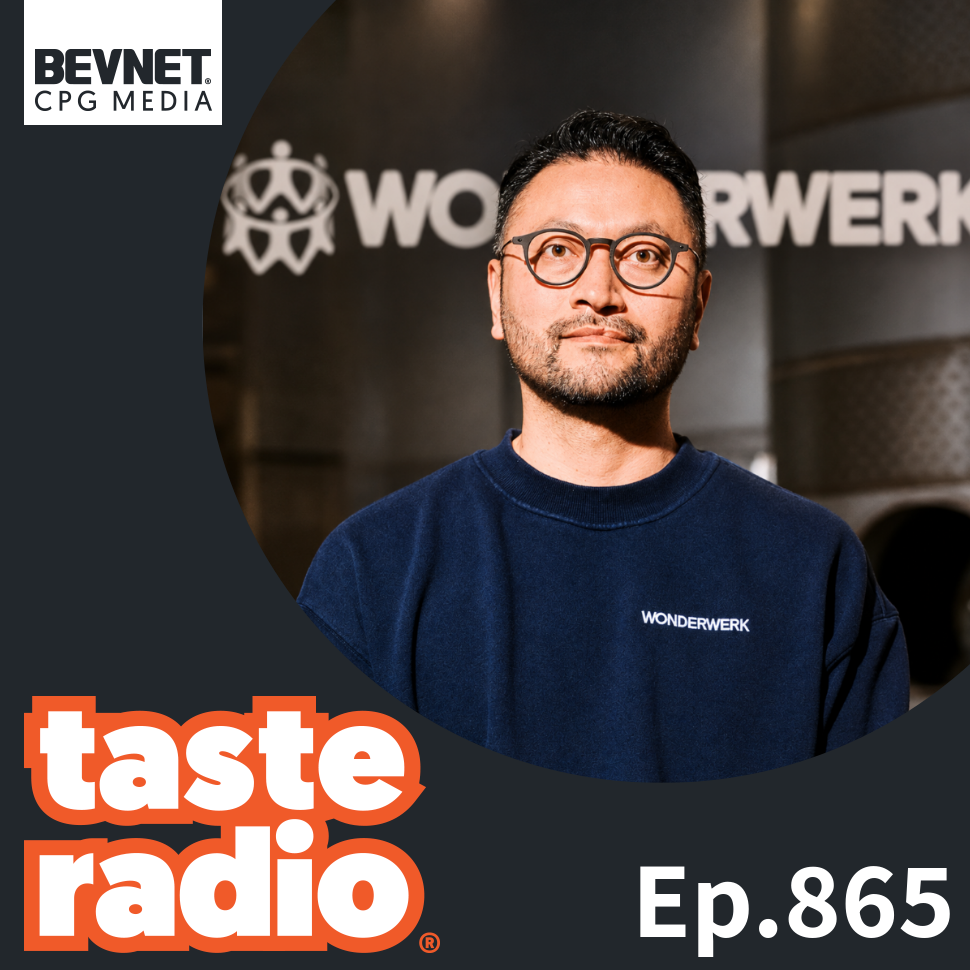
[00:00:10] Ray Latif: Hello friends and thanks for tuning into Taste Radio, the number one podcast for anyone building a business in food or beverage. I'm Ray Latif, the editor and producer of Taste Radio, and with my co-host for this episode, John Craven, Melissa Traverse, and Mike Schneider. This episode features a conversation with Milan Martin, the founder and CEO of non-alcoholic spirit brand, the aptly named The Free Spirits Co. Melissa, welcome back. How are you?
[00:00:41] John Craven: Thank you so much. I'm great. And I'm very happy to be here with all of you.
[00:00:45] Ray Latif: Yeah, I'm happy to see you. Even though you're in the office in the next room over, you're not with The Free of us here. That is Mike, John, and I. I'm surprised I didn't get kicked out. Yeah. We just, we don't have enough space in the studio, I guess at this point, but we will the next time. I promise.
[00:01:00] John Craven: I sort of look at it like my ego's gotten too big to fit in the same room, but there's like my name's on the front of the door with a star on it. Like now I need my own room.
[00:01:11] Ray Latif: I like it.
[00:01:12] Melissa Traverse: Uh-oh. Fighting words with Ray. We do have your, I mean, you do have a very special setup over there. It looks great.
[00:01:18] John Craven: Yeah, I love it. It's a, it's a nice, and it's kind of warm in here too, which I really appreciate.
[00:01:23] Ray Latif: Yeah, well, these offices, you know how they get whenever the summertime or close to the summertime hits, it becomes an iceberg in offices here in the Boston area. It never ends, does it? It's too hot in the winter when you're inside, it's too cold in the summer. It never does make any sense. Oy vey! And we got all this gear just nuking us in here. I hope it's not nuking us. Well, I have really- You sound like old man yells at Cloud. I have really enjoyed the BevNET and Nosh Slack channel. It really keeps me up to date on everything that's going on with BevNET and Nosh. And it sounds strange to say that, but we produce so much content and we are doing so many things all at once that the Slack channel, it feels like it keeps me organized and I guess in tune with what we're doing on a regular basis.
[00:02:11] Melissa Traverse: Have you, have you been enjoying the new feature where the editors go in and give you like a sneak preview of what they're working on? No, I haven't. Is that new?
[00:02:20] Ray Latif: Yeah, that's new. Okay.
[00:02:21] Melissa Traverse: It's brand new. It's in the channel. You've got Martín Caballero and Monica Watrous in there every day. And sometimes Adrian's in there as well, just talking about what they're going to cover this week.
[00:02:30] Ray Latif: There you go. I like that a lot.
[00:02:32] John Craven: You can go in there, comment. They're looking for tips from all of you. So it's a great way to interact with our entire team. And Ray, you're in there as well. So it's just so nice to have the whole team in one place, even if it's virtual.
[00:02:49] Melissa Traverse: It would have been weird if I asked Ray, Hey, Ray, are you enjoying your new segment? Are you enjoying yourself in your new segment?
[00:02:56] Ray Latif: I guess I did notice it, but I haven't looked as deeply into it. And Marty actually just posted something this morning about some of the things that they're working on this week and some of the content that they'll be posting on BevNET.com, which is really cool. And yes, if, uh, you have a tip to share or you have any news of your own, it's a great place to share that news.
[00:03:13] Melissa Traverse: Did you know you can do this for free?
[00:03:15] Ray Latif: I did not know that either.
[00:03:16] Melissa Traverse: Slack.BevNET.com. Just go in there. You can get all this for free.
[00:03:20] Ray Latif: Slack.BevNET.com. Love it. Love it.
[00:03:23] John Craven: slack.BevNET.com and we just finished a RangeMe giveaway. The RangeMe team were generous enough to donate a premium subscription and we'll be doing more of those for sure. So plenty of fun stuff going on, slack.BevNET.com.
[00:03:39] Melissa Traverse: Great resources. You get a sneak peek of what's being covered. You have a chance to participate, interact with the team. And if you have questions about building your business, ask them there. We'll find the answers for you. There you go.
[00:03:53] John Craven: I have to say, we've gotten a number of Community Call from the questions that folks post in that Slack community. So don't be shy.
[00:04:01] Melissa Traverse: That's how we did the angel investing.
[00:04:04] John Craven: That's right.
[00:04:05] Melissa Traverse: Community Call. That's right. Ruth from Arete had a question about angel investors and next thing you know, we had a Community Call.
[00:04:12] Ray Latif: There you go. That was a great episode of Community Call. You always produce great episodes, Melissa. So, but what's on the docket? What are you guys working on now and for the next couple of weeks?
[00:04:23] John Craven: We just wrapped up some great shows. So Scott Romano and Elliott Began came on to talk about what Sprouts is looking for. Kathy Yu from VMG talked about what they're looking for and what they're taking into consideration. And then coming up, we're going to talk to the fine folks over at Mabel to figure out how to use that platform successfully, the ins and outs, tips and tricks, that kind of thing. And then we're also going to be talking to Cedars on how to use DSDs for your food business. So I feel like, you know, so many of us think of DSDs for beverage, but you can effectively use them for food. So we're going to be digging into that. And I also want to remind everybody that they can listen to Community Call as a podcast. So on Spotify, Apple, your listening platform of choice, BevNET and Nosh's Community Call.
[00:05:16] Melissa Traverse: Yeah, if you can't get enough of Melissa and Jackie's and my banter, along with some actual helpful things.
[00:05:24] Ray Latif: There you go. There you go. Indeed. Yeah. Melissa, you mentioned Sprouts and I got to mention our most recent episode of Taste Radio that was published on Tuesday. It's titled Talking Shop with Insiders from Walmart, Sprouts and Gelson's. If I don't mind saying it is an excellent episode. If you've ever wanted to get inside the mind of a retail buyer or a merchandiser. This episode is required listening. Will McDonald from Walmart, Kristen Alice from Gelson's and Brian Albert from Sprouts all give a behind the scenes insider look as to what it takes to be successful in their respective retail chains. Take a listen.
[00:06:04] John Craven: Who wouldn't want to get inside the minds of those folks, huh?
[00:06:07] Ray Latif: Seriously, seriously. And who wouldn't want to get inside the minds of more angel investors? Everyone's looking for investment. At the very early stage, you're looking for folks who are willing to give you smaller checks. Smaller checks are like still kind of big checks, like 50 grand, at least to people like me, you know, that 50 grand is still a lot of money. John Craven's like, eh, you know.
[00:06:27] John Craven: That's not true.
[00:06:31] Ray Latif: Yeah, just blow my nose with $50,000, but I mean Like you should see like the back of your car It's so low to the ground because it's just loaded with Kruger ants. I don't even know what that is. Do you know where you can interact?
[00:06:44] Melissa Traverse: Do you know where you can interact with angel investors?
[00:06:47] Ray Latif: Where can you interact with angel investors? At BevNET Live. At BevNET Live, which is being held on June 12th and 13th in New York City. Kicking off the event on Wednesday, June 12th, is our Beverage School session, which does feature a conversation with three angel investors, Dace Graham from 1731 MGMT, Rachel Mansfield of Great Shit Ventures. That's what it's called. It's G-R-T-S-H-T, right? Great Shit. I see what you did there. And Greer Tesler of Simple Food Ventures. This is the place to meet those folks, to hear from them, what it takes to raise money from angel investors, what they're looking for in brands, from founders, from disruptive, quote unquote, disruptive concepts, how they evaluate innovation, all important information for early stage founders and brands. This is definitely, I mean, for a lot of people, Beverage School is like a huge part of coming to BevNET Live. I mean, if you're someone who's new to the beverage industry, it might be the most important session you're attending.
[00:07:50] Melissa Traverse: It's a great drink from the industry firehose. Like, the reason that we started to do beverage school in the first place was that we realized, you know, a lot of people were new to the industry and that some of the stuff on stage wasn't going to feel super relevant to them because they didn't have the background. So we just give you this amazing crash course on the industry, the things you need to know, get you up to speed. So if you're new, come to beverage school. If you're not new, still come to beverage school. There's a lot you can learn. And some of the stuff, it just helps to review as well. You know, it just helps to have this be reinforced or You also get a chance to interact with the experts, too, who may have given you this advice at a previous beverage school, you know? And you get a chance to say, okay, well, maybe I didn't understand that the first time. Now I get it. Now I have questions. It's an ongoing journey as an entrepreneur. You're always learning something, and we've realized that, and we've got this course for you before BevNET Live. Absolutely.
[00:08:53] John Craven: I've heard so many folks say that it gave them an opportunity not to make expensive mistakes right out of the gate. So that's hugely valuable. You can just make all new ones.
[00:09:02] Ray Latif: Yeah, in addition to a conversation with the angel investors I mentioned, there'll be crash courses or at least lessons on finding and managing suppliers and service providers, navigating regulatory pathways and marketing strategies and protecting your brand's intellectual property, all extremely valuable information that you will be getting if you register or are planning to attend BevNET Live. We're running out of time. As of the publication date, as of today's publication date, there are 13 days left. Is that right? Is my math right? 12 days? Sure. We'll call it 12 days. Yeah, whatever. You don't have less than two weeks. The point is get on it. Get on it. Do it. Put it on your to-do list. Check it off. Right. All the cool people are going to be there. That's what the kids say today. All the cool kids are doing it.
[00:09:50] Mike Schneider: Definitely.
[00:09:51] Ray Latif: Yes. Yeah. I'm hip. I'm modern. Totally. Everyone knows this. Oh yeah. We know it. Yeah. I brought some cookies. I already shared one with Melissa.
[00:10:00] John Craven: Yeah, it smells amazing.
[00:10:01] Milan Martin: Yeah, these are cookies Cookie, I mean the irony of what is going on right now Yeah, I know right are serving us from a Tupperware.
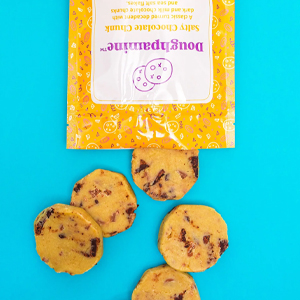
[00:10:09] Ray Latif: Yeah, I didn't touch these what what exactly is it? These are cookies for a brand called dopamine and it's spelled ou gh P-A-M-I-N-E. And Dopamine is a brand that was created by a pastry chef who worked in Michelin-starred restaurants. They sell, I believe, four varieties. The one I'm holding in my hand is their blueberry corn variety. The one you're eating right now is a chocolate chunk and sea salt cookie. which is quite delicious. They're sold in these 15 ounce pouches. I believe there's six cookies per bag. Well, this one says 12 servings. So eat a half a cookie, by the way, a half a cookie is one serving. I ate about a third. I mean, these are dope. Really? They are. They're dopamine. So yeah, I mean, these are dope. Yeah. OK, so John wants to look at the bag. Oh, shoot. I'm so sorry, Melissa. Oh, are you chewing on yours?
[00:11:06] John Craven: I am. I'm eating it. Were we not supposed to eat it yet?
[00:11:08] Ray Latif: No, no. I thought you do intermittent fasting and I totally forgot about that.
[00:11:12] John Craven: No, you know, I just broke my fast with this cookie, which is, you know, how people with the glucose monitors, they like show. I'm sure it'll go off the charts, but it was worth it. It's so good.
[00:11:21] Ray Latif: Oh my goodness. Okay. Again, I'm glad. I hope you're enjoying it.
[00:11:26] John Craven: Twist my arm. No, it's, it's, um, did you sprinkle the salt on top or did it come like that?
[00:11:30] Ray Latif: There's a bag of sea salt inside the bag and you have to sprinkle it. I did use gloves, so I did.
[00:11:36] Melissa Traverse: I'm going to give this my highest rating.
[00:11:38] Ray Latif: Did you have a beard mask on or beard net? No, I'm sure some of my beard. That's why it tastes so good. I'm sure some of my beard actually got in there. I'm still going to give this my highest rating of does not suck. Yeah, it does not suck. It is a very high rating. So yeah, you can get these by mail. They're in some local grocery stores right now. And I misspoke. The founder is not a Michelin, or worked at a Michelin star chef. She was a former Michelin star inspector. So she would go to all these restaurants. That's even better. Taste their products, taste their food, and then decide whether or not they deserve the stars. So she could blackmail some people is what you're saying. Yes. So there's a... She knows where the bodies are hidden? Yeah. As I mentioned, there's four varieties. There's a miso peanut butter. What? Blueberry corn, a salty chocolate chunk. Wait. And a Rhapsody Road. Did you just say miso peanut butter? Miso peanut butter.
[00:12:29] Milan Martin: I think that's what he said.
[00:12:30] Ray Latif: Yeah.
[00:12:31] John Craven: Miso is like a big cookie ingredient these days. We had some folks over for dinner and they brought over miso chocolate chip cookies. Everyone wants to put miso in cookies and I'm here for it.
[00:12:40] Ray Latif: Put in everything. There you go. Yeah. Now, Jessica Infante, who is the founder of Dopamine, was on a recent episode of Elevator Talk. And one of the first questions that we asked, my co-host and I, was about the name. Dopamine sounds like it has a functional tilt to it. It sounds like it's a functionally, that's a functional cookie. Is that it? Can I say that? Sure. But clearly it's not. She just loved the name and she just thinks that a great tasting cookie is going to elevate your dopamine levels. And I would agree in this case. Although if she were to add a functional ingredient to her cookies. Oh, I've got a good one. I think that an immune-boosting ingredient would be a good idea, and I have an idea for exactly what kind of immune-boosting ingredient. It's called Amuse. Amuse. Amuse. I-M-M-U-S-E. Now more than ever, consumers are looking for ways to boost your immune systems, and Amuse gives them that edge. Just to let you know, Amuse is the presenting sponsor of this episode of Taste Radio. It's also a dietary and food ingredient clinically shown to stimulate immune function, at the cellular level. Incorporate Amuse into your innovation strategy and help your consumers optimize their health throughout the year. Learn more at amusehealth.com. That's I-M-M-U-S-E health dot com.
[00:13:57] Melissa Traverse: Thank you to the good folks who make Amuse for partnering with Taste Radio and consider making them your next partner.
[00:14:02] Milan Martin: That segue was like straight out of the Truman Show. I like that. Kiwahako. Thank you, I appreciate that we got more cookies Melissa like two cookies in our little room Like the tastiest episode in a long time so these are fancy pants which come in a variety of Different flavors bite-sized cookies in a pouch looks like there's a whole pile here Good ones here. I got the I don't know my personal favorite. They have s'mores personal favorites chocolate chip in the mint chocolate But they're very you know nice crispy. There's a certain Brand they remind me of that's now owned by Mondelez and the product is kind of not the same But anyway fancy pants these are I don't know some of the best packaged cookies I've ever had okay. I'll go that far agreed
[00:14:57] John Craven: I think they're so delicious. I have the mint chocolate here. They're made locally here in New England in Walpole. And Maura Duggan, one of the founders, is such a lovely woman. She was actually at the Pitch Slam that we hosted here last week. And when I worked over at Whole Foods Market, she was always such a great partner and would always come to new store openings and do giveaways. and participate in everything that we had going on there. And I just couldn't love their cookies or that team over there more than I do.
[00:15:28] Melissa Traverse: Was that the Naturally New England pitch slip?
[00:15:31] John Craven: That was the Naturally New England Pitch Slam, and she was there with cookies.
[00:15:36] Melissa Traverse: These are super tasty, and as John said, crispy could be bigger on this package, because they are extremely crispy. The salted caramel might be my favorite, and I guess I'm intrigued by the birthday cake, because technically I hate birthday cake everything, but I bet Fancy Pants makes good birthday cake cookies, damn it.
[00:15:57] John Craven: Is it the fake vanilla that you hate?
[00:15:59] Melissa Traverse: I mean, if I want something that tastes like birthday cake, I just want to eat birthday cake.
[00:16:04] John Craven: Fair enough.
[00:16:04] Ray Latif: That's kind of how I feel about it. I don't know why. Birthday cake. Whenever I think about birthday cake flavored products, I think of Bang.
[00:16:11] Melissa Traverse: Yeah, that was it. Bang did a bad one, and so did, I don't like birthday cake Oreos. Those are terrible. But I've had good birthday cake stuff too, like birthday cake Oat House and, oh my God, of course, birthday cake Honey Mama is an insanely good.
[00:16:25] John Craven: Oh yes, so good.
[00:16:27] Ray Latif: It's been a while since we had a Honey Mama bench in reference somehow.
[00:16:29] Melissa Traverse: I know, I try to control myself.
[00:16:35] Ray Latif: I recently received a nice sampling of products from a brand called Cloudwater. Cloud Water want to say they were in their sixth year? When were they on the New Beverage Showdown? Been around a while. Yeah. That might be accurate. That might be accurate. Yeah, well, I want to say it was 2018, but it could have been 2019. And I was so happy when Mark Seiden, who's the founder and CEO Cloud Water Brands, reached out. So the varieties that are here on the table include four of their CBD varieties. These are ones that include 25 milligrams of CBD. And then two of their energy drinks. These are called Peace, Love and Energy, or at least, or more specifically, Cloudwater Plus Peace, Love and Energy. These were revamped, I want to say recently, within the last few months to include this whole, not just of energy, but Peace, Love and Energy. They're made with organic coconut water and caffeine. These are delicious products. In particular, the pineapple and passion fruit variety or passion fruit and pineapple variety are really delicious. No CBD? These do not contain any CBD and they're sweetened with wildflower honey. Huh?
[00:17:50] John Craven: Wildflower honey. Good stuff. Carbonated.
[00:17:52] Ray Latif: They are carbonated. These are made with sparkling water as a base. Yeah, I noticed instantly that the can is different.
[00:17:59] Melissa Traverse: It's a silver can and the Cloud Water cans are typically white. So I was just wondering, I mean, I think that's a really good way to call out that this is different than our CBD SKU.
[00:18:07] Ray Latif: Yeah, you don't see too many silver cans on the market.
[00:18:11] Melissa Traverse: There's another energy drink, I think it's called Joie, or joy, that's silver energy. There's that Vroon product too. Oh yeah, Vroon also. Maybe that's a new trend.
[00:18:23] John Craven: There's also the silver bullet, which won't slow you down Of course that's an energy drink, duh.
[00:18:30] Melissa Traverse: The silver bullet. Wow, Melissa knows a lot about that apparently. Silver bullet. Is that a banquet beer? No.
[00:18:39] Ray Latif: Silver bullet's the light variety. Just kidding. Yeah, so 80 milligrams of organic caffeine. Again, these are just great tasting products. You don't taste the caffeine in them. And I'm just really happy for Mark because, you know, it's a grind. It's a grind to build a business, especially a beverage business. And he continued to do it for a number of years and he's making waves. He's making headway and I'm really happy for him and happy Cloud Water.
[00:19:04] Melissa Traverse: These cans look to be refreshed. He's actually got CBD on the label. I thought there was hemp on the label before, but I could be mistaken. But these are nice and clean and great flavors. I'm holding the CBD cans right now. Grapefruit, mint, and basil, half tea and half lemonade, which obviously can't call an Arnold Palmer, and then blood, orange, and coconut.
[00:19:28] Ray Latif: Yeah. So I, yeah, the call-out of CBD is much more prominent than it had been in the past, which is great. And I did talk to him about, you know, this sort of, uh, I don't know, it's not hating, but the, I guess, poo-pooing of CBD as an ingredient. And there was that New York Times article that came out a few weeks back and, There's a lot of brands that are pulling back on the callouts for CBD, but he's like, no, people want these products. People, we have an established community of people. It's not a niche market. It's a growing market. And there are people who are demanding bioavailable CBD and the kind of information you'll have about where it's sourced and how it's produced. So.
[00:20:10] Melissa Traverse: I mean, CBD was one of those gold rush ingredients. And there were, there were brands that wanted to build a CBD brand. There were brands that wanted to get rich on CBD.
[00:20:19] SPEAKER_??: So.
[00:20:19] Milan Martin: Yeah. I mean, I think it's the classic, like, you know, only as good as the weakest link. And I think there were a lot of, I don't know, maybe I'll just nicely call them weird things that were done in that category with that ingredient. So obviously that New York times article that came out a little while ago, you know, it sort of showed that there are brands that are still doing well that are just staying the course. And, you know, I think it's maybe a little bit of a setback, but good to see brands moving forward too. So for sure, for sure.
[00:20:48] Melissa Traverse: I like this one. You can have it.
[00:20:51] John Craven: Thanks.
[00:20:53] Melissa Traverse: I was hoping you'd say that.
[00:20:55] John Craven: Well, since I'm in my own room over here, I can't sample Cloud Water, so I brought my own. I have the new Cirilla SKU, which is a hoppy hibiscus with citra hops, and it is so tasty and refreshing. Sarah Stender Delaney is one of our favorites, of course, you know, a strong member of our community. She was on a Community Call actually about how to call out regenerative ingredients on your packaging. And I just love this new SKU so much. I think it's perfect for summer. It's refreshing and it gives you The Free of drinking something special. You know, if you want to trade out alcohol for something else, it's absolutely delicious. Well done, Sarah and Cirilla.
[00:21:41] Melissa Traverse: Fantastic brand. Well done Cloud Water the blood orange and coconut.
[00:21:44] John Craven: So good.
[00:21:46] Ray Latif: They make really good products. Both brands. Ray Sherrod, finally. Thank you, Ray. There are six cans here. You're welcome to all six. I appreciate that. I know.
[00:21:54] Melissa Traverse: And he's going to send Marcus Rashford to Arsenal.
[00:21:58] Milan Martin: I don't know about that. Ray's much more chill when the Premier League season's over. Actually, there could be something to that. I think so.
[00:22:06] Melissa Traverse: Congrats on the FA Cup, Ray.
[00:22:07] Ray Latif: You know, it was a good game for us. It's a good trophy. It's two more trophies than Arsenal has had in the last two years.
[00:22:14] Melissa Traverse: Hopefully your team is headed in the right direction. It'll be fun to beat you guys down again when it matters.
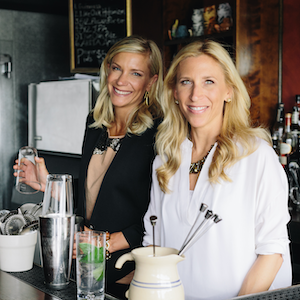
[00:22:21] Ray Latif: All right, let's get to our featured interview for this episode. Milan Martin is the founder and CEO of The Free Spirits Co, which markets handcrafted, non-alcoholic spirits and ready-to-drink cocktails. Founded in 2020, the brand sells zero-proof bourbon, gin, tequila, amaro, and vermouth that are produced using a process it describes as distillate reconstruction. Free Spirits sources natural ingredients including American white oak, European juniper, and Mexican blue agave and distills their essences while reconstructing the nose, flavor notes, and mouthfeel of traditional spirits. The company also adds vitamins B3 and B6 to the products. The goal is to provide consumers with optionality and the ability to create no- or low-proof cocktails depending on their mood and setting. In our interview, Milan talks about the aha moment that led him to create The Free Spirits Co, his belief that quote, there's no such thing as a non-alcohol cocktail menu anymore, why flavor improvement is a process, how to convince someone who didn't like a product the first time to give it a second try, and why he's bullish on the brand's ready-to-drink cocktails. Hey folks, it's Ray with Taste Radio. Right now, I'm honored to be sitting down with Milan Martin, who is the founder and CEO of The Free Spirits Co. Mylon, great to see you.
[00:23:50] The Free: Great to see you, Ray. Thanks for having me, man. This is exciting. Isn't it exciting? It really is, man. Like, the energy in the room. I mean, everybody here is just excited to be here, which just kind of bubbles up to something rad. Totally, totally.
[00:24:02] Ray Latif: We're here in L.A. You told me before we hopped on the mics you're from the Bay Area. Well, you live in the Bay Area now.
[00:24:08] The Free: from the, well, living in the Bay Area, up Milan Martin County, where I founded the company. Originally from Philadelphia, spent my formative years in New York, and moved out here about a decade ago. Nice. Yeah. Did you drive down from? No, I flew down. You flew down? Flew down via Philadelphia, again, of all places. My daughter had a volleyball tournament in Philadelphia over the weekend, so I took her there for that. And then dropped her off back in San Francisco, heading down here for this. You get to, you know, visit some of the old shopping grounds?
[00:24:36] Ray Latif: I did.
[00:24:36] The Free: I had a cheese steak or two from some of my favorite places. What's the favorite place? I'm a Gino's guy.
[00:24:40] Ray Latif: Okay.
[00:24:41] The Free: I'm a Gino's guy. There's a big debate between Gino's and Pat's and all of that. I've always been a Gino's guy. I had a beef from Denix in the Reading Market. and had some Mr. Softee, believe it or not. For those who know, the ice cream truck that causes panic and desire amongst children of all ages, chasing you down the street. Yeah, it was good. Good blast from the past. Get to visit any accounts that, you know, selling some Free Spirits.
[00:25:06] Ray Latif: Yeah.
[00:25:07] The Free: Yeah. You know, we've got one of our bigger accounts is located in Bethesda. Total Wine & More took a trip down there and visited those folks. And yeah, it's terrific. It was really nice to be back.
[00:25:16] Ray Latif: You know, it blew my mind. So one of my favorite restaurants in the Boston area, shout out Estragon. It's the toughest restaurant in the South End. I was there a few weeks ago and one of the bartenders, a buddy of mine, he was talking about their cocktail menu and how it has evolved. And I started to see non-alcoholic versions of their cocktails, the ones that have been on their menu for years. And they had, you know, versions without the booze for each one of them. And I had said, you know, how are they doing? He's like, they're outselling them. Non-alcoholic versions are outselling the quote unquote full strength ones. And I couldn't believe it because believe me, I love the idea of non-alcoholic Spirits Co just didn't think would be at this point.
[00:26:02] The Free: Yeah, it's happening fast, man. And it warms my heart to hear stories like that because, you know, I founded the thing in 2019. And, you know, you got a lot of people looking at you like you had three heads. You know, what is the point of non-alcoholic bourbon? I don't get it. Because the paradigm was anything non-alcoholic was for people that were in recovery or sober people or people that just chose not to drink. And you kind of realize pretty quickly the aha moment in this category is, no, no, no. Actually, this is for people who do drink. And you know, and obviously people who choose not to drink can participate and do participate. And we love that segment of customers. But, you know, by and large, this is for people like me who I love the ceremony of a cocktail. And every time I've been, you know, to put it politely, over served in my life, it was a result of that phenomenon of like, you know, you're somewhere great with somebody really interesting and you're having a great conversation and it's, you know, wonderful energy. And you keep drinking cocktails, not because you're sitting there craving more alcohol, but because the experience is awesome. And I think more and more people are just waking up to that. And the on-premise loves it because people are drinking more. Check sizes are bigger. And there's the corporate responsibility thing. And the off-premise loves it because most of the drinkers who buy non-alc still drink alcs. So they're going and buying a bottle of Gordon's gin and Free Spirits's Spirits Co gin. And so the cart size is double. And it's just kind of a win-win for everybody in the ecosystem, you know?
[00:27:32] Ray Latif: When you started The Free Spirits Co in 2019, how much research did you do about the trends in beverage alcohol and where this category could be going?
[00:27:47] The Free: I have an exact number for you. The number is zero. And really, the thing for me, I think... What does zero represent? Zero represents the amount of research I did. OK.
[00:27:57] Ray Latif: I thought you were going to be like, there was zero reason why I shouldn't get into this space right now. Nope.
[00:28:04] The Free: Nope. It was just one of those things where I think, you know, it was a personal experience of mine. I spent 25 years in the advertising business. It's a business that trains you to look at trends and look at, kind of irrational behavior and patterns, right? Because there's plenty of irrational behavior that happens in the advertising industry. Yeah, well that, I could go on for hours about that. But even like, you know, we as human beings make these weird, irrational decisions. Like, you and I will go out for a couple cocktails. Cocktails are what, 18 bucks a piece at a really nice place? Nowadays, yeah. And you're like, yeah, sounds good. for three ounces of liquid, right? Why is that okay? And we love it. We're happy to do, you know, you'll just spend hundreds of dollars on a bar tab, but you know, $5 for a gallon of gas, well, that's a step too far. And it's that kind of irrational behavior that you're trained to look for in the advertising business. You're like, well, why is that? Well, it's because having a great cocktail is exciting. It's the story of all those ingredients. Where's the bourbon from? Oh, it's from that new place in Kentucky. Oh, I heard there's a horse on that distillery called Lucky, and there's a story behind that. Or where did the bitters come from? And the guy that mixed it up is, you know, one of the most renowned bartenders. And all of that that goes into that little glass, you're like, yeah, 17 bucks, 18 bucks, sounds good, right? And so I think, you know, I founded it just based on the notion of like, well, gosh, I've always, every time I've overdrank, it's been because I just want more of that goodness. And the research point to your question is like, I didn't really research it. It was just a feeling. I thought I was pretty clever. when I came up with the idea. And then you scratch the surface. You're like, oh, okay, well, there's some brand out there called Seedlip. And I was like, oh, that's interesting what they're doing. And in all candor, I looked at what they're doing as a way of how we do ours differently. Like for us, I just, maybe we're just too lazy. I don't want to retrain the world how to drink a cocktail. Seedlip kind of does their own thing, right? They do a wonderful job at that. I wanted to make things that were analogs to tequila and bourbon and Free Spirits people know, because hey, if you're a margarita fan, Just swap it out in whole or in part, right? And, you know, at the end of the day, it might sound really tactical, but the vision for this thing is like, there's no such thing as a non-out cocktail menu anymore. Every cocktail menu down at the bottom simply says, hey, anything you see here, we can make full strength, half strength, or zero strength. And it just kind of puts the control into the consumer's hands to say, no, I'm going to go out tonight. I'm going to crush the night. I'm going to drink a ton of cocktails, be high energy. But you know what? I'm also not going to put my health at risk. I'm not going to put my Community Call risk by driving. I'm not going to, you know, I want to wake up tomorrow and run or whatever those things are. And it's kind of like that. You know, I want to have it all.
[00:30:47] Ray Latif: There's a lot of reasons why you might not want to drink too much in one particular night. I think just in general, you don't want to drink too much. But there might be a lot of reasons why you say, OK, tonight in particular, I can't do that. Yeah. But what is the biggest reason that you have found people consuming your product, looking for your products on shelves, buying it on premise?
[00:31:05] The Free: I think people have woken up to what we have been told as a society for now hundreds of years. And I'm the biggest offender here because I come from the marketing world and the advertising world. And for a century or more, we've been told that to have a good time, alcohol needs to be at the party or needs to be at the center of the party. And, you know, we believe that. And at the end of the day, I think we've just started to kind of crack the nut a little bit on the notion that maybe that's not the case. And for us, it's not, you know, about teetotaling. It's not about abstinence. It's just about, you know, saying, yeah, you know, it's like that old notion of, hey, this party's really boring. Who's at the door? Oh, it's Captain Jack. You're like, great. Now it's a party, you know. That notion that we've had banged into our head for centuries now, and we're like, no, actually, maybe that's not the case. And ultimately, it leads people to a self-discovery of, no, you know what? I don't want to be hungover tomorrow. I mean, I personally spent my 20s in one of two states. I was either drunk or hungover. And you look back and you're like, gosh, that's just not a great way to be from a health and wellness perspective. And health and wellness is ultimately the trend that's driving the category.
[00:32:27] Ray Latif: Yeah. I think there's another key part to this. And I've spoken with other founders of non-alcoholic spirit brands about taste. And yes, maybe you want to swap out your Manhattan with a non-alcoholic Manhattan or your gin and tonic with a non-alcoholic gin and tonic, but not at the expense of great taste. You have an expectation. of what this cocktail should taste like. You're paying a premium, even if it is a non-alcoholic cocktail in most cases. And if it's not what you expect, you are going to be pretty upset. So how do you get the taste right, especially when it comes to the aged spirits like a bourbon? which feels really, really hard to replicate in terms of flavor.
[00:33:11] The Free: Yeah, for sure. So one of my favorite quotes of all time is a Reid Hoffman quote, the founder of LinkedIn. He said, if you're not embarrassed by your first product, you released it too late. And I look back at our first release of our gin, our bourbon, and they were fine. But we've run this thing like a software company with the humility to know that at the early days, like, we're making it up, man. We, you know, the category didn't exist. And there was just a lot of liquid innovation that goes into exactly as you were describing. How do we replicate the richness of a bourbon that has sat in a barrel for at least three years, that comes from a corn mash, all of those things that has ethanol in it? What's that impact on your palate? And so ultimately, we look at our liquid in five dimensions. There's obviously, there's the flavor, the taste, there's the nose, there's the mouthfeel, but we also look at the bite and the burn, and we look at the functional piece of it as well. We don't really tell the story a lot, but the functional piece of it's important. We put B vitamins in ours to make sure there's a real functional piece of it there. But to your question about taste, if you were to have tasted our tequila a year ago, you would have gone, all right, that's pretty good. If you taste the new tequila we launched about three months ago, it's game changing. And, you know, I don't want to pat ourselves in the back too hard, but it's just, it's taken us four years to figure out how to crack that authentic aged reposado style tequila that, you know, has those notes of obviously agave and vanilla and oak, but also that core, you know, just punch you in the face, like, oh my God, this is tequila. kind of a thing. And I think we finally got there. And then we're doing the same thing. Now that we've kind of cracked some of those innovations, we're applying those same learnings to our bourbon and to our gin. And so, you know, we've got kind of what I call our first generation products and our second generation products. And it's exciting as a founder, because I think early days, you're always kind of apologizing a little bit.
[00:35:21] Ray Latif: It's not as good as it's gonna be. Well, I mean, it's tough to introduce a product, have someone try it and then say, OK, well, I'll give them a second chance, even if I didn't like it the first time. So what's the famous line? You were in advertising.
[00:35:36] The Free: You never get a chance to make the second impression.
[00:35:38] Ray Latif: You only get one chance to make a... People don't know exactly what we're talking about. But anyway. That's right. Does it matter that maybe a customer didn't like the first taste of your product? I mean, it's probably very expensive to get them to come back. How do you get them? How do you convince them to come back a second time?
[00:35:54] The Free: You know what's been the key to that is it's a little bit of the traditional adoption curve, right? The early days of, you know, the passionate people who adopted our brand and the category in general. are just much more forgiving, right? You know, they're excited. There's a product out there that really scratches an itch for them. And, you know, you get a lot of leeway with those folks. You don't get that leeway when you go mass. And I think we're at that inflection point where we're going from niche to mass. And just in time, we've got the products at a place where I personally, early days, if you wanted to try the tequila, I would say, okay, well, it's fine on its own, but it's really meant for a cocktail. And now I'm at a place where I will proudly put the tequila or the new bourbon we're about to release or any of our products in front of somebody, I'll go, dude, try this. Really excited about it. And so I think, you know, then the second piece of it is, you know, we've just made the leap into the ready to drink space, you know, and that is really, you know, I never really intended to kind of, I never really thought about being in the RTD space. It wasn't an intention as much as just based on that, you know, real basic insight that some people, you know, a lot of people like cocktails. but not everybody's great at making them. And you're reliant on that. And so why don't we just make a great non-alcoholic cocktail? And so, you know, as we go to mass, you know, the world's first experience The Free Spirits Co as perfect as it can be.
[00:37:30] Ray Latif: Well, I've got to tell you, I have tried to make non-alcoholic cocktails at home. And it's been harder than I thought it might be. I mean, I can make a Manhattan at home. No problem. Pretty easy. But trying to make a Manhattan with a non-alcoholic spirit has been a bit more challenging. To the point where I appreciate the RTDs more because you already went through all the iterations. You went through all the development process that I didn't have to go through at home. Do you think there's bigger opportunity in RTD than there is, particularly for the off-premise consumer?
[00:38:04] The Free: Yeah, I 100% do. It's funny, I think about our company as a Spirits Co, a non-alcoholic Spirits Co, but a Spirits Co. But when you look at the size of Free Spirits category in general, the non-ALK spirits category and the size of the non-ALK RTD category and the RTD category in general, you know, I think within the next three or four years, the majority of our revenue will come from RTDs.
[00:38:31] Ray Latif: Again, I'm not a professional mixologist. I can make a cocktail, but when I want a really, really good cocktail, I'll go to my local bar or restaurant. And I think they have the experience. They have the trial and error to go through the process and say, OK, this is great. This is something we're going to be proud to sell to our patrons. That makes me think that you've got to have a great relationship with the trade, with the industry. And, you know, the restaurant I was talking about at the beginning of our conversation, had a very specific brand out there that has a very big strategic partner aligned with them. And you know what I'm talking about. How do you get your brand on shelf? How do you get your products in those bar backs when you are competing with brands that already seem to have a head start, have those big distribution and money partners?
[00:39:20] The Free: That's where we are right now. Right now, it's starting to become a foot race. There's a lot of great brands in this category. We've been fortunate enough to kind of continue to punch above our weight. And we now compete really in a foot race in terms of leading the category with the brand that you're referencing. I'll just say it, Ritual. And they make a good product, and they've got the backing of one of the world's largest strategics behind them. and respect the heck out of what they're doing. I think for us, we've just had to be scrappier. Our sales teams, and even me, and even if you're not on the sales team, we run an organization that kind of goes, hey, we're lighting up Massachusetts, let's all get on planes, let's go to, you take Boston, we'll put three or four people in Boston, we'll put a couple of people in other smaller cities, and we just canvas. And because 100%, you're absolutely right, which is, The growth of this category depends on the trade, specifically bartenders, to embrace it and to make great cocktails. There's a bunch of accounts that we have that kind of do the obligatory, yeah, yeah, we got a non-alcoholic margarita, and it's less than stellar. And we've got those accounts that put their backs into it. And they're like, hey, we've actually, you know, we've infused the non-alch margarita with jalapenos and these other things. There's one up, one of my favorite restaurants up Milan Martin by us called Farm Shop. They do a terrific job of actually aging the cocktail that they make. And they charge parity pricing. They charge the same price for non-ALK as they do for ALK. And I just think that's such a beautiful thing because that ultimately says the right thing to the world, which is alcohol is not a precious commodity. Everybody, you know, when we started the company, everybody would go, wow, there's no alcohol in it. Why is it the same price? Because people ascribe value to alcohol, where at the end of the day, what you're paying for is the craft and the innovation and the process and all of that.
[00:41:21] Ray Latif: I would think, you know, if I were you, I would have a hard time keeping my products in that bar or restaurant that makes a crappy cocktail. For me, it's like akin to being in a retailer that's going to put you on the bottom shelf behind another brand. It's like, well, why do I want to be in that retailer? I'm just, you take my product and nothing's going on. It's not going anywhere.
[00:41:40] The Free: So in those instances, what do you do? I wish I could say we, you know, went and pulled our product out and took it home with us. You know, smash the bottles.
[00:41:49] Ray Latif: Exactly. Save their precious baby. I'd rather throw it away than serve it here. Totally.
[00:41:52] The Free: But, you know, you got to kind of stay in the game knowing that certain venues are going to take a little bit of time to click in, to click to grid. And it's on us to go to them and say, hey, man, here's the opportunity you're missing. Right. You know, you're kind of halfway there. But if you really put your backs into making these cocktails great, and by the way, don't charge mocktail pricing. This is not a Shirley Temple, right? Like this is a category wherein everybody wins. The consumer wins, you know, the entree wins, you know, everybody wins if you do it right.
[00:42:26] Ray Latif: I feel like I'm going to win soon because, you know, it's almost cocktail hour here. Yes. But I definitely cannot have a boozy cocktail right now. So I'm excited to try some Free Spirits.
[00:42:37] The Free: It's a good place to start. I'm looking over at the desk and they said that they were going to deliver some of our RTDs, but they have yet to do so.
[00:42:46] Ray Latif: I'm just going to go up to the bar and be like, I'm in good with Mylon. He said, you know, he was going to cop me a cocktail or two. So if you have an extra charge on your hotel room. I'll know why. You're going to know why. You're going to be like, that bastard Ray.
[00:43:00] The Free: Hey, man, I'm all about sampling. It's all about liquid to lip sweaty.
[00:43:03] Ray Latif: It really is. I mean, you know, for people to want to try your product, they have to be enticed by it. I think you would entice our audience to try Free Spirits. Yeah. I mean, especially the tequila. The way you described the tequila. Come on.
[00:43:14] The Free: You will not be disappointed. OK, great. Right on.
[00:43:16] Ray Latif: Mylon, we've got to keep this conversation going. Are you guys in Massachusetts or no? We are.
[00:43:21] The Free: We've got a great distribution partner there called Ruby Wines.
[00:43:23] Ray Latif: Oh yeah, Ruby. Ruby's great. Yeah. Okay, cool. Well, I will start looking for your product in restaurants in the Boston area. Admittedly, I don't drink as many non-alcoholic cocktails, but I'm going to start looking for yours.
[00:43:35] Mike Schneider: Change that.
[00:43:35] Ray Latif: Yeah, we're going to start. Well, you know, for my own health and benefits, we should change that for sure. All right. Really great speaking with you. Thanks so much for the conversation and good luck with everything going forward. Thanks for having me, man. It's been a pleasure. Really has. That brings us to the end of this episode of Taste Radio. Thank you so much for listening. Taste Radio is a production of BevNET.com, Incorporated. Our audio engineer for Taste Radio is Joe Cracci. Our technical director is Joshua Pratt, and our video editor is Ryan Galang. Our social marketing manager is Amanda Smerlinski, and our designer is Amanda Huang. Just a reminder, if you like what you hear on Taste Radio, please share the podcast with friends and colleagues. And of course, we would love it if you could review us on the Apple Podcasts app or your listening platform of choice. Check us out on Instagram. Our handle is bevnettasteradio. As always, for questions, comments, ideas for future podcasts, please send us an email to ask at Taste Radio. On behalf of the entire Taste Radio team, thank you for listening, and we'll talk to you next time.
[00:44:41] Mike Schneider: you