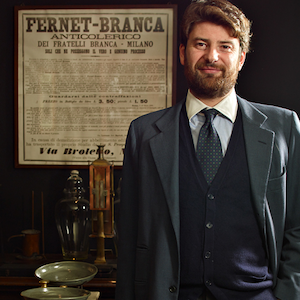
[00:00:10] Ray Latif: Hello friends, I'm Ray Latif and you're tuned in to Taste Radio, the leading podcast for entrepreneurs and innovators in the food and beverage industry. In this episode, we're joined by Edoardo Branca, the Managing Director of Branca USA and a sixth generation member of the legendary family behind the iconic Fernet Branca brand. How did a 180-year-old Italian digestif become one of America's most beloved bar staples? Though Fernet-Branca enjoyed a storied legacy in Europe since its creation in 1845, it remained a niche curiosity in the U.S. for much of its life. The intensely bitter herbal liqueur was appreciated only by the most adventurous palates. Today, however, it's a fixture behind the bar, from upscale cocktail lounges to neighborhood dive bars, most often knocked back in shot form and celebrated for its distinct flavor profile. Who better to trace Fernet Branca's unlikely rise than Edoardo Branca? We caught up with Edoardo at Spirits Industry trade show Bar Convent Brooklyn to talk about how Fernet Branca earned its cult status in the U.S. He shared insights on the brand's roots, its journey from obscure digestive to bartender favorite, and how the company is carefully evolving to stay relevant in a fast-changing drinks culture. From navigating pricing pressures to expanding the Branca USA portfolio with modern, consumer-focused offerings, Edoardo offers a glimpse into what it takes to steward a legacy while embracing innovation. Hey, folks, it's Ray with Taste Radio. Right now, I am honored to be sitting down with Edoardo Branca of Fernet Branca. Eduardo, great to see you.
[00:02:01] Edoardo Branca: Good to see you. Hi, Ray. Thank you for having me here.
[00:02:04] Ray Latif: Yeah. Yeah. We're here at Bar Convent Brooklyn. Yeah. I was going to say in Brooklyn, but that seems like it's a little redundant, you know, to say Bar Convent that's named after the city that's in. Anyway, I didn't realize that you were based here in New York.
[00:02:19] Edoardo Branca: Yeah, I moved here in 2019. February 1st, 2019 is when I moved here with the whole family, actually.
[00:02:25] Ray Latif: Yeah, where were you living beforehand?
[00:02:27] Edoardo Branca: Before there, I used to live in southern part of California for three years. And before that, I was in Milan, actually.
[00:02:34] Ray Latif: Milan.
[00:02:35] Edoardo Branca: Milan, yeah.
[00:02:35] Ray Latif: Milan, I love Milan.
[00:02:37] Edoardo Branca: A lot of people, they say I have a kind of a New York accent, you know. OK.
[00:02:45] Ray Latif: I was going to ask if you were an Inter or a Milan guy.
[00:02:49] Edoardo Branca: Don't go there. I'm an Inter Milan fan.
[00:02:52] Ray Latif: You're an Inter guy. OK. Yeah.
[00:02:53] Edoardo Branca: Unfortunately, yes.
[00:02:54] Ray Latif: Yeah. Well, not unfortunately. You still had a good season. I mean, it wasn't, you know, I mean, it ended with some disappointment.
[00:03:00] Edoardo Branca: Yeah, but it was a good season. Very happy.
[00:03:03] Ray Latif: Well, it's funny we're talking about soccer because I tried to find you, Edoardo Branca, on Instagram and the only account with the name Edoardo Branca, with your spelling, because you spell it with two O's, belongs to a scout for an Italian football club called Atalanta. And you're not that guy.
[00:03:21] Edoardo Branca: I'm not that guy. I'm really not that guy. Actually, you know, Ray, I was really, really surprised because I looked it up because I could not believe it. And yep, it's not me. And I can be a talent coach, maybe in a second life, but not at the moment. No, that's not me, actually. It really blew me away. I have a picture of Corto Maltese on my Instagram. a profile picture actually.
[00:03:45] Ray Latif: What's the Corto Maltese?
[00:03:46] Edoardo Branca: Corto Maltese is, I would call it in Italian is a fumetto, it's like drawings and it is this artist nowadays, it's called Ugo Bratt and he's kind of a sailor that travels all around the world and it kind of has a little bit of a romantic history and a lot of history and it's kind of nice.
[00:04:03] Ray Latif: Okay. Did you play soccer? Did you play football?
[00:04:06] Edoardo Branca: I play football, yes. I play once a week here in New York with a lot of Italians, every Wednesday. Now that I'm getting older, maybe from November to February, I don't play that much because it's freezing cold here in New York, but the rest of the year, yeah.
[00:04:23] Ray Latif: This is actually common for the podcast because we talk about soccer a lot.
[00:04:26] Edoardo Branca: Okay.
[00:04:27] Ray Latif: And I'm a Man U fan. Obviously, you can see my hat. Okay. Let's talk about bad seasons, right?
[00:04:31] Edoardo Branca: Yeah. I would not go there.
[00:04:32] Ray Latif: No. Yeah. But what position do you typically play?
[00:04:36] Edoardo Branca: Left forward.
[00:04:37] Ray Latif: Left forward. Okay. I'm a left forward guy. Are you left footed? Yep. Okay. Well done. Well done. We're here to talk about more than soccer. We're here to talk about Though Fernet-Branca empire. That's your, you're the fifth generation. Sixth. Sixth. I'm sorry. Sixth Generation Family'm going to blame, I'm going to fire my, my stat checker here.
[00:04:56] Edoardo Branca: No, because my father is fifth. That is Niccolo.
[00:04:59] Ray Latif: Obviously, if you're the sixth, your father has got to be the fifth. But no, it's amazing what Frenette has come to represent in this world, what Fernet Branca has come to represent in the spirits industry. And you are the managing director of Branca USA. What does that entail?
[00:05:17] Edoardo Branca: Well, it's a lot of work. There is two parts of my job. One is, you know, looking at number, speaking with the distributors, traveling the country, speaking with the distributor. That is, I think, you know, a very important part, but is really, really boring between me and you. The second part is the one that, you know, I love the most, and is the one where you speak with bartenders, you travel the country, you speak with bar managers, with bar owners, you know? That's the most beautiful part, because it's where you can relate a lot more, because with a lot of these bar owners, bar managers, we can see there is a pattern where we have a lot of the same problems, you know, and it's beautiful. And then you can see the love that they have, you know, for Fernet Branca that really gives me motivation to go forward and move forward, actually.
[00:06:08] Ray Latif: Yeah, I imagine it's very invigorating to talk to bar managers and bartenders. about Furnette because it is an industry legend in some ways. The liquid, the Brad Avery the past 15 years has become ubiquitous at bars and it's very much a bartender favorite spirit. That's a little strange, right? Because Furnette for so long had been a spirit that was an Italian tradition, a European tradition, and then it blew up on the US market. So I'm sure there's a lot of pressure on you and the company to maintain that excitement, that demand for Frenet and go beyond that. So how do you think about Frenet from the standpoint of this is an Italian tradition to the demands of the US market, which is consume, consume, consume, spend, spend, spend. You know, you have this beautiful liquid and then you have this crazy capitalistic market, you know.
[00:07:14] Edoardo Branca: So it's a very big question and to answer you, you know, for us it's very important to go around and sell and to consume more and more Fernet. But you know what we love about our product that is complicated, There is no sugar inside. It's not for everybody. So we really cater to our consumer. And we really love our consumers that are bartenders, that are people that have a little bit more of a knowledge on spirits, you know. And what I like about Fernet Branca is that it doesn't lie. You get what you have, you know. Same recipe, pretty much zero sugar inside. And it's something of really, really, really unique. I've spent so much time with a lot of bartenders, consumers, all around the country. And you know, one of the biggest chats that we have, and we always start a conversation is, do you remember your first shot of Fernet? And every bloody person remembers where he had his first shot of Fernet. And he will tell me, oh, it was in this bar at this time. I was with these friends. It was unbelievable. And it's something I really like. And that's why for me as well, that I've been pretty much breastfeed for Fernet Branca. I, you know, I remember where I had my first shot of Fernet Branca.
[00:08:35] Ray Latif: From the breast, apparently. Yes.
[00:08:39] Edoardo Branca: But yeah, no, it's crazy. And I love, you know, what I love the most is about this community and how people tend to help each other. You know, I know it's not a bad time to remember, but during the COVID, you know, how this industry came together to help each other. And it's one of the things that I really, really enjoy about it and to give to other people, to help people. I think we have, you know, one of the most beautiful industries in the world, actually, here in the United States.
[00:09:10] Ray Latif: As I mentioned, Eduardo, Fernet is everywhere. It's a bartender favorite. It's an industry favorite. How did it come to that? How did people who worked behind the bar come to love Fernet as much as they do today?
[00:09:23] Edoardo Branca: So there is a little bit of a double answer here. First of all, we have a motto in the family and in the company that has been brought down in generation that is in Latin, Novare Servando. So to innovate, but keeping your roots. So we try to cater to every market, trying to understand the consumer. So if you come in Europe, Italy, Spain, Germany and France, you know, Fernet Branca, you will speak with a consumer and that for them is a digestive.
[00:09:58] Ray Latif: And let's be very, very clear. There is Fernet Branca there's Fernet Branca.
[00:10:01] Edoardo Branca: Yeah.
[00:10:01] Ray Latif: Fernet Branca is your brand.
[00:10:03] Edoardo Branca: Yeah. And it's the original one. And it's the original. And so Fernet Branca and pretty much Fernet. I call it Fernet because in Europe there is only Fernet.
[00:10:11] Ray Latif: Right. Fernet Branca. Right.
[00:10:13] Edoardo Branca: And it's just here in the United States where you have a couple of other Fernets. But yeah, so there you will be drinking it as a digestive. In the 1970s, 80s and early 90s, it was drunk as well as an aperitivo because of the properties. If you drink a little bit, it will open the upper part of your stomach and you will be more hungry. If you drink half a bottle, it will be wasted before dinner. I never knew that.
[00:10:38] Ray Latif: I never knew that people were drinking it before. Yeah, before.
[00:10:40] Edoardo Branca: A little bit. And I don't know if you ever saw, there are small glasses, you know, really tiny like this that are in glass. And they used to drink a little bit of that before dinner. And literally, if you try at home and you do it, you will get hungrier, actually. And it's really, really unique.
[00:10:58] Ray Latif: Well, I'm going to do that tonight.
[00:10:59] Edoardo Branca: Yeah. And then if you go in England, Denmark and the United States, it's more of a shot brand. It started mostly here in the United States because we had a sales rep, an amazing woman that in the early 1990s in San Francisco, she used to sell Fernet Branca, and she was going around saying Though Fernet Branca like a bong in a bottle.
[00:11:27] Ray Latif: A bong in a bottle. I'd never heard that before.
[00:11:30] Edoardo Branca: And that's kind of unique because, you know, when you have Fernet Branca, you know, you have the punchiness of the herbs, the alcohol that we're coming, it's like, you know, and with all the herbs and, you know, San Francisco always has been a little bit more liberal as a thing. So as well, there was a lot of smoking involved. So to have to convince people to drink it, you know, and that was how how we started. And she had a lot of good friends that were bartenders. And so it's how we started in San Francisco to sell a little bit more, but was in a completely different way. If you come to Italy, they will never tell you, like, let's have a shot of a night Branca. For them, it's like after dinner. If you go in the Nordics, Norway and Sweden, they will tell you, no, no, no, Fernet Branca is drunk in the morning as a morning drink. So you have your breakfast and then you have a shot of Fernet Branca. Don't get me wrong, I did some masterclasses in Norway and Sweden. And to have a 7am shot of Fernet, I love Fernet. But it's a very, very strong way of starting your day.
[00:12:31] Ray Latif: Yeah. Well, for folks who are listening who have never had Frenet before. For me, it's bitter but delicious. For me, it's viscous but easily drinkable. How would you describe it?
[00:12:42] Edoardo Branca: For me, I've been drinking it for such a long time.
[00:12:46] Ray Latif: Since the breast, yeah?
[00:12:47] Edoardo Branca: Yeah, since the breast, pretty much. And so for me, you know, a lot of the bitterness, I don't feel it anymore. And that can be good and bad. Interesting. is bad because I cannot drink a lot of other liquors, because, you know, I like so much that pungent taste that is kind of really, really, really unique. And for me, it's gone. For me, I have the chamomile that comes out, the rhubarb. I have the saffron. So it's more on the herbal-ish side. And, you know, I drink it neat. I don't put any ice. My bottle is room temperature, where for my wife, she drinks it with ice, and she keep it in the freezer. Yeah.
[00:13:29] Ray Latif: I thought that was sacrilegious to have Fernet with ice. No?
[00:13:32] Edoardo Branca: Yeah. My wife likes it. You know, I'm a purist. So it's really, really, really different. But, you know, at the end of the day, you can drink it however you want.
[00:13:42] Ray Latif: It's important, though. It's important to help people know how to drink it or perhaps best practices for drinking Fernet. Do you drink it in a cocktail? Do you drink it neat? Do you drink it with ice? It's a really important way to build awareness and education for the brand. So if you have an approach that says, well, drink it any way you want. And it's a very versatile spirit. OK, that might work. But I think in some ways the Frenet as a shot helped it put it on the map. Yeah. And so when you're trying to introduce new consumers to Frenet, what is the best education strategy?
[00:14:17] Edoardo Branca: It really depends on what we do is normally it's a beer and a shot during when you have... Still, that's the best approach? Yeah, it's a beer and a shot. We do it all around the United States. Normally we try to do specials in the bars where all the bartenders, they go at night. You know, we try to introduce it to as many people as we can. Normally how it's done is because of the bartenders, they give us a hand because when you have your bar back, you know it's like when you finish your shift and you have your first time doing the bareback job it's a tough job and you know at the end of the night you're tired you know you've been cleaning your plates the whole night you haven't done any cocktails and anything they introduce you to having a fernet because it's like you had a bad day so you should have a Fernet Branca that's going to really give you a pick me up and you will get back on track and so this is like the strategy that we try to adopt, and then mostly working, you know, with local bars and bartenders. And this is the way that we try to give back to the community, you know. And a lot of people, you know, they come to me, it's like, Eduardo, this is not a good strategy, and things like this. But for me, I know that I will never be Jägermeister, like Jameson, but I don't care that, you know. I prefer to have a community that is dedicated, where I can have a relationship I know half of the bartenders that are here.
[00:15:43] Ray Latif: At BCB?
[00:15:44] Edoardo Branca: Yeah, BCB, because I've been in pretty much all the bars here. And because I love it, but because our good bartenders are people that love the industry. I think nowadays what we're missing in our industry is to have that human contact. That is something that is missing and that I love, that I've grown up with that. And is, you know, I think that's not a part of it, where you go there, you do your master class, you spend time with them, you spend time, spend money as well with them, you buy a round of shots, and you hear, you know, what they have to say and things, and some of them, you know, they became friends, long-lasting friends, that I know, I've been knowing for the past 10 years, and I love that. I think that's a big part of it.
[00:16:26] Ray Latif: I love bar culture. I mean, I love Sitting at a bar, talking to people who are sitting next to you, talking to the bartender, sharing a drink with someone. It's becoming less common among younger consumers, though. It's becoming a little bit watered down in some ways, at least from what I'm hearing, in that people are looking for lower ABV cocktails, non-alcoholic cocktails. People are just in general more health conscious about alcohol consumption in general. How does that affect what you're doing? How does it affect the long-term strategy for Frenet in the United States?
[00:16:58] Edoardo Branca: So, on that, it's true. There is less alcohol consumption nowadays. And there is, you know, a lot of problems that come around the alcohol and drinking. But, you know, what I'm convinced is people have been drinking for the past 2,500 years. I think now there is, you know, people that are doing a little bit more of edibles, you know, there is a little bit more of Mariana going around, but I don't think it's going to be a problem in the long time. It's a moment, you know, I have cousins that they live here, we have Thanksgiving together, you know, outside of New York in the countryside, and like, you know, we have Thanksgiving dinner, and we start at 3pm and we go until 8pm, 9, They drink a couple of glasses of red wine. Then, of course, they're obliged of drinking some Fernet afterwards. And then, you know, they eat a couple of edibles and they relax and they stop drinking. I think when they're going to get older, they're going to come back to drinking. So I'm concerned, of course, but I'm a true believer that when you have a family and you have kids, you want to drink. And so I think that the younger crowd is going to come back to drinking in a later stage of their life.
[00:18:15] Ray Latif: I think I would tend to agree with you, although I think younger consumers don't appreciate bar culture as much as our Generation Family have. I think the idea of going to a bar to be social, to have fun, to try things that you may not have tried before. It's exciting. To me, it's exciting.
[00:18:33] Edoardo Branca: I think for... I've been going out in bars since a long time.
[00:18:38] Ray Latif: Yeah.
[00:18:38] Edoardo Branca: And still nowadays, you know, when I have a couple of mates that they tell me like, Eduardo, let's go and have a couple of beers. I'm excited. I'm like, wow. You know, the whole day I'm like thinking about like, oh, I'm going to have a couple of beers with my friends at the bar. I'm going to have a good time. You know, I'm not going to get smashed because I need to go back home. And I have a wife and two daughters, so I'm going to kind of behave, but I'm going to have two free pints, maybe one shot, but then I go home and I'm...
[00:19:09] Ray Latif: But I think the, so you and I play soccer. I play soccer as well. And one of the best parts about, you know, an evening game is after you're done, you're going to go and have a pint. And I just worry sometimes that younger consumers aren't going to be able to appreciate that because they just don't know or just they're priced out of it in some ways. And I think for NET on its own, from a price point, it's a relatively affordable spirit, but sometimes the shots can get a little outrageous. I remember when a shot of Frenette might used to be four or five dollars. Now you go some places and it's ten, eleven dollars. What the heck is going on here? Is there a way for you to moderate, to affect? the pricing that goes on, the gouging, I think, that goes on.
[00:19:55] Edoardo Branca: That's not in my hand, it's in the hands of Board President, unfortunately.
[00:19:59] Ray Latif: Oh, well, yeah, I mean, I think, yeah, for sure there's some of that that's going on. But I think this also goes back to capitalism, too, which is I think bars are looking at Frenet and saying, OK, well, you know, I could charge five bucks for it, but I could also charge nine dollars for it.
[00:20:12] Edoardo Branca: So what we do and thank you for bringing us that up, you know, what we do and when we have a bartender night, what we do, we have shots that are a discount that we do for that night because we want to have it at a cheaper price and it's something that we try to do, but it's very difficult because, you know, At the end of the day, they need to make money, and we try and things, but you know, the product, we have 27 herbs that come from four different continents around the world. They need to age between 12 to 16 months. that needs to be produced. Then when it's aged, it needs to come here in the United States. Then from us, we buy it as an importing company. Then from our importing company, you have the free tier system. So it goes to the distributor, where they take a margin. And then from the distributor, it goes to the bars, or it goes to the Tesco, Costco, and things like this. So unfortunately, the problem as well that I think you have here in the United States is that there is a lot of And we try to do our part and to try to put it down, but it's a difficult kind of... Now I know why you don't like talking to distributors.
[00:21:29] Ray Latif: I'm kidding. I'm kidding. Eduardo didn't say that. I said that. I don't want to get him in trouble. No, no. Fernet Branca is the primary brand. It's a flagship brand, but there's also other brands in your portfolio as well. And you've incorporated other brands into the company.
[00:21:49] Edoardo Branca: And this goes back to the question you were making before that I lost. It's the lobby theme. We have alcohol. We are playing, you know, Fernet Branca, next year is going to be 180 years old. Actually, sorry, this year is going to be 180 years old. Next year, our Vermouth portfolio is going to be 200 years old. So we have brands like Antica Formula, the first Vermouth ever invented, Punta Mes, the Carpano range, and the Vermouths are lower in IBV because they start from 14.6% and they go up to 18%. And with those, you know, is what we make a lot of lower IBV cocktails. Then they're very ductile because you can make a Manhattan or a Negroni, but you can have a very low IBV with the Antica Formula and some soda water is amazing. Or if not, you can have the Carpano dry. with grapefruit soda that is really amazing as well, that one. So they are both low ABV and they can be drunk and it's easier and kind of more refreshing. So as well, we have that part that is very, very important for us. And weirdly enough, you know, they're doing fairly well.
[00:23:02] Ray Latif: Well, I don't think it's weird. I think, you know, it's on trend. I mean, again, the trend is to consume a little bit less alcohol. Maybe you still consume alcohol, but moderate your consumption. But is that the trend for your M&A strategy when you're attempting to incorporate new brands into the portfolio? How do you evaluate those brands? Are they based here in the US?
[00:23:25] Edoardo Branca: Yes. So that's a very complicated question. and I don't want to overcomplicate the answer. But for me, there are three pillars that are very important. We would like to have something, when we speak about M&A, that is maybe oriented on family owned. with the same value, with a good background, because we are, you know, the company is run by my father, I give him a hand, you know, there is a little bit of my sister as well that is giving me a hand. And what we do is like, it's not that we come in and the previous owner, you know, is like, okay, thank you very much, get the hell out. We're going to change completely the company. No, we want to continue the relationship with them. because I know that it's your baby. I know how it feels and things like this. So we would like to have something that is U.S. based because I know a lot of people make fun, but there is a lot of heritage as well here in the United States. I think there are a lot of small to medium business owner in the distilling world. that are doing an amazing job. I know here now there are tough times and it's a tough period, but we're not the type of people and brand that comes in and we're not a big corporation that say, OK, now it's us. Please go away. You know, we want to continue to work. We need to listen because you build the business. And so this is something that we are going to be more, more, more oriented to do something.
[00:24:53] Ray Latif: I'm really happy you said that, Eduardo, because The stigma that acquirers often face is that they're going to come in and change the culture. They're going to change the product. They're going to change the values. And it's the culture, it's the liquid, it's the values that made the brand what it is today. That is the reason that people love a particular product or brand. So for an acquirer, a potential acquirer to say, We're going to keep everything the way it was. You have to find a special brand for sure. I mean, it's on you to find that special brand, but you're not going to mess with it. It says a lot. And I think that's been true about Frenet. When you have something that's great, Don't mess around with it too much.
[00:25:41] Edoardo Branca: And then on top of it, you know, I think I want to put the face and I'm all around where some other people, they prefer to hide behind an office, behind a number and things like this. But I like, I want, I believe in an ethic company. I believe that everybody has to be treated in the same way. Everybody needs to have everything. And I want to continue this. You know, one day I want to have this done in the proper way. You know, and this is what I believe. I'm right, I'm wrong, you know. Ray, I think we're going to meet next year, but in 10 years time, maybe we're going to sit down another time. And he's like, Eduardo, you are completely right. Eduardo, what a bullshit you said that day during my podcast. And I will tell you, yes, Ray, I was completely wrong. But who knows? Time will tell.
[00:26:27] Ray Latif: Well, the one thing that I didn't get to do today that I'm a little disappointed is that I didn't get to have a Fernet Branca with Edoardo Branca. But I'm glad that we're here at BCB. And the reason we didn't is because the place that we're at right now, Standard Wyrmwood Distillery, which has been so gracious in having us here, makes their own Frenette. But I'm going to hold you to that. Next year, When we're at this show, or even before that, I would love to sit down with you and say, Eduardo, I'm enjoying this Fernet Branca with you. And what a genius you are for getting all this right. I would love that too. Eduardo, thank you so much for taking this time. This has been such a fantastic conversation. Every second of it. I really appreciate it and look forward to catching up again soon.
[00:27:13] Edoardo Branca: Thank you. I really appreciate to be here. I'll see you next year and in a couple of hours to have a double tasting of Fernet Branca.
[00:27:19] Ray Latif: Less than that, my friend.
[00:27:21] Edoardo Branca: Thank you. Bye.
[00:27:26] Ray Latif: That brings us to the end of this episode of Taste Radio. Thank you so much for listening. Taste Radio is a production of BevNET.com Incorporated. Our audio engineer for Taste Radio is Joe Cracci. Our technical director is Joshua Pratt, and our video editor is Ryan Galang. Our social marketing manager is Amanda Smerlinski, and our designer is Amanda Huang. Just a reminder, if you like what you hear on Taste Radio, please share the podcast with friends and colleagues. And of course, we would love it if you could review us on the Apple Podcasts app or your listening platform of choice. Check us out on Instagram. Our handle is bevnettasteradio. As always, for questions, comments, ideas for future podcasts, please send us an email to ask at Taste Radio.com. On behalf of the entire Taste Radio team, thank you for listening, and we'll talk to you next time.
[00:28:17] Edoardo Branca: you