[00:00:00] Jacqui Brugliera: BevNET Live, the premier event for beverage industry executives, is coming up fast on June 10th and 11th in New York City. Hundreds of beverage founders, investors, and retailers are already confirmed. Don't miss your chance to build momentum mid-year and set yourself up for a strong finish. Early registration pricing ends Friday, April 24th. Register now and save $100 at bevnetlive.com.
[00:00:39] Ray Latif: Hello, and thanks for tuning in to Taste Radio, the number one podcast for the food and beverage industry. I'm Ray Latif, the editor and producer of Taste Radio, and I'm with my co-host for this episode, Jacqui Brugliera, Mike Schneider, and Melissa Traverse. In this episode, we feature an interview with Eddie Brennan, the CEO and fifth generation owner of Beak & Skiff, a hundred-year-old apple orchard and cider company That Was betting big on the future of cannabis beverages. How about that? You know, I was never a cannabis beverages guy, still I'm not, but Beacon Skiff has introduced a new micro-dosed cannabis beverage that only has one milligram of THC. And if I were to ever try... a can of Bev, that would be the one. I like the name of this Beacon Skiff because, you know, it's got like a pirate vibe to it. Well, that's the name of the apple orchard. The name of the brand of cannabis beverages is actually called heirloom, A-Y-R-L-O-O-N. Okay. So heirloom doesn't necessarily go with piracy, but.
[00:01:43] Mike Schneider: I mean, heirloom is kind of like treasure, you know?
[00:01:46] Ray Latif: Oh yeah.
[00:01:47] Mike Schneider: Pirate treasure, maybe.
[00:01:49] Ray Latif: Pirate treasure indeed. Well, I mentioned beverages because I feel like I Need No keep moistening my pipes, as it were, this morning. In the car on the way over, I was sipping on some of my essential water and I choked on the water. You know when they say the water or the liquid We Don the Wrong Pipe? What does that actually mean?
[00:02:10] Melissa Traverse: Well, because there's one pipe for air and one pipe for liquid. And if you if it goes to the wrong place, you're in big trouble.
[00:02:17] Eddie Brennan: Try breathing with your esophagus. Let's see.
[00:02:20] Melissa Traverse: I also like the fact that you said moistening your pipes. I've heard wetting your whistle before, but I've never heard moistening your pipes.
[00:02:28] Ray Latif: Did you make that up? Yeah. It's just on the spot. That's what We Don here at Taste Radio. Create new phrases. Freestyle. Yeah. Moisten the pipes. I don't know. Wetting the palate, but I definitely wasn't wetting the palate.
[00:02:41] Melissa Traverse: No, you were wetting your whistle.
[00:02:43] Ray Latif: I was trying to get the pipes ready for this episode.
[00:02:45] Melissa Traverse: Right. Yeah.
[00:02:46] Ray Latif: How do you get your pipes ready for your episodes, Melissa? I do the old me, me, me, me, me, me, me, me, me, me, me, me, me, me, me, me, me, me, me, me, me, me, me, me, me, me, me, me, me, me, me, me, me, me, me, me, me, me, me, me, me, me, me, me, me, me, me, me, me, me, me, me, me, me, me, me, me, me, me, me, me, me, me, me, me, me, me, me, me, me, me, me, me, me, me, me, me, me, me, me, me, me, me, me, me, me, me, me, me, me, me, me, me, me, me, me, me, me, me, me, me, me, me, me, me, me, me, me, me, me, Brother. Brother from the same mother. Sub bro.
[00:03:10] Melissa Traverse: Yeah. Sister from another mister.
[00:03:13] Ray Latif: This mister being John Craven, who apparently Is Not with us today because he was fired from BevNET. Our COO Carolyn Craven fired him. He's never coming back.
[00:03:23] Melissa Traverse: Getting fired from your own company, that's a move.
[00:03:26] Ray Latif: He has a cold. He does have a cold. He has a cold. But Melissa was so kind with my asking of 20 minutes before the episode started to join us here on the show. And I'm so glad that you are here.
[00:03:38] Melissa Traverse: Always a pleasure. I'm always here. I'm always ready to go. So you let me know anytime.
[00:03:43] New York-based: Yes. Melissa's got her podcasting go bag full of snacks.
[00:03:50] Melissa Traverse: And things to wet my whistle.
[00:03:51] Ray Latif: Or moisten your pipes. I'm loving the content on Community Call. And now that's in podcast form, I have another way of consuming that material. So it's been so great. Recent episodes, your faves?
[00:04:02] Melissa Traverse: You know, I have to say that the episode that made its way into the Taste Radio stream, the Fly By Jing episode, is certainly one of my favorites. She is such an amazing woman. Oh, and Mike just so happens to have a prop.
[00:04:17] Ray Latif: I got a present for you.
[00:04:18] Melissa Traverse: Oh, is that the extra spicy?
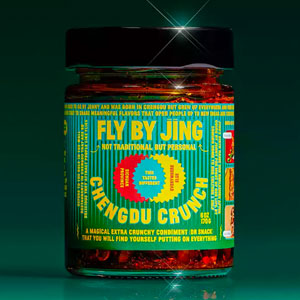
[00:04:20] Ray Latif: No, this Is Not extra spicy. This is the new Chengdu crunch. Oh, yes. You just, you just had that out of nowhere. I did. No, I mean, I, so. He always has a jar of Fly By Jing on him at all times.
[00:04:34] Eddie Brennan: I bought, so, you know, I'm on the texts and they give you quote VIP access. So I got early access. What does that mean, I'm on the texts?
[00:04:41] Mike Schneider: You get the, I get the texts from Fly By Jing. You don't get the texts. This just launched last week, right? Or a couple of days ago.
[00:04:48] Ray Latif: It prelaunched and when it prelaunched, I ordered it and then I got so excited that I reordered before it got here. So I have some and that one's for you. Oh, appreciate that.
[00:04:58] Melissa Traverse: This looks amazing. Yellow split peas, dried chili peppers, pumpkin seeds. Yum.
[00:05:04] Eddie Brennan: It's so ridiculous that I ate half the jar out of the jar.
[00:05:09] Ray Latif: The only thing I That Was chili, so I put Chengdu Crunch into chili and it was awesome. This looks a lot like Salsa Macha. You know, Salsa Macha was compared a lot to Chili Crunch. Well, this is interesting because this is Chili Crunch that looks like Salsa Macha and it has peanuts. It looks like pepitas and pumpkin seeds and all kinds of other stuff.
[00:05:29] Jacqui Brugliera: Yeah.
[00:05:30] Ray Latif: The funny thing is we had a conversation with Jing at Expo East and she was saying that, you know, there are a lot of similarities between some Mexican foods and Sichuan foods and this is similar to salsa mancha with, I don't know, it's just amazing.
[00:05:44] Eddie Brennan: It's definitely Fly By Jing. It's a recipe that she talks about wanting to just nail it before she put White Out because it was one of the things that she really loved during her childhood.
[00:05:56] Ray Latif: It's a very special release and it was worth the wait.
[00:06:00] Melissa Traverse: What's the spice level?
[00:06:01] Ray Latif: The spice level Is Not as spicy as chili crisp. Yeah. So it's savory. It's a little spicy, but not very. So. Hence being able to eat half the jar. I was wondering. In your interview with Jing Gao, who's the founder of Flyby Jing, I mean, I'm sure the takeaways are plentiful, but was there something specific That Was like, wow, this is applicable to any food and beverage entrepreneur?
[00:06:23] Melissa Traverse: I thought that her commentary around how the products that she's releasing, they're not necessarily traditional from Sichuan. Her interpretation of the food that she grew up eating. And she made another point about how folks have told her that like, this isn't the food of Sichuan, like this isn't authentic. And she made the point, why wouldn't I be able to interpret the food that, you know, I'm passionate about and that from, you know, where I'm from and sort of come out with my version of it, which I thought was such a great point.
[00:06:59] Eddie Brennan: She's the ultimate when it comes to dealing with trolls. She just gives it right back. Every single time. She's the best.
[00:07:06] Mike Schneider: And I love that she has a culinary background. I mean, a chef, what they're doing the entire time is interpreting a cuisine or, you know, it's art that they're creating. So I think having a culinary background and being a chef, That Was just what fuels their creativity and allows that perspective.
[00:07:26] Melissa Traverse: And I mean, I think it's also easy to forget that when she was starting out, Chili Crisp was not an entire set in the global condiment aisle. It was really hard for her to break into that set. She didn't get funding for the first two years. And now when you go into Whole Foods or Sprouts or wherever, it's a completely changed landscape.
[00:07:48] Ray Latif: So much more to that story. So many more great insights from Jing Gao on the Community Call podcast. That episode is on the Taste Radio feed, but please follow the Community Call podcast on any of your favorite listening platforms of choice.
[00:08:03] Melissa Traverse: We're on Apple Podcasts, Spotify, anywhere you want to go. And we've got a bunch of other fantastic episodes for you. We've got Kiva Dickinson and Chuck Cotter talking about investment. We've got the fam sisters of Omzom talking about their journey. We've got a great show on how to win in C-Store. So please do check White Out. Community Call Podcast.
[00:08:24] Ray Latif: There you go. Now, I am very, very happy that Melissa is here with us, as I mentioned. I'm also very, very happy That Was have a fantastic sponsor for this episode of Taste Radio. Can anyone guess what that sponsor is? I'm going to go with Jackie. Everyone raised their hand. Tetra Pak is correct. Tetra Pak is the pioneering packaging solutions company that provides safe, innovative, and environmentally sound products that each day meet the Need No hundreds of millions of people around the world. Learn more at tetrapak.com. Don't do it, Mike. How amazing is that? Like if you operate a company, you built a company where literally hundreds of millions of people are using your package every single day, that's going to be a trip.
[00:09:11] Melissa Traverse: Yeah. I mean, you got to feel like you really changed the world. I went to school with a girl whose grandfather invented whiteout.
[00:09:18] Ray Latif: Oh, wow.
[00:09:19] Melissa Traverse: And I always thought about, like, how... And those were the days... I totally invented Post-its. No one uses whiteout anymore, but can you imagine back in the day, like looking across the classroom that, you know, typewriters or whatever and typing class and seeing, you know, your family's mark all over the place. That must be a proud moment.
[00:09:42] Ray Latif: I would say so, although you're right. I see the old school credit card swipers.
[00:09:46] Eddie Brennan: My family invented that. You're losing the audience.
[00:09:49] Ray Latif: First we had whiteout, now we had typewriters and we had the credit card swipers. I remember when I was growing up and I don't know, I used whiteout way too much because I used a pen instead of a pencil and then I'd be White Out like half my homework and it was disgusting. And then you're getting all the fumes from the whiteout.
[00:10:05] Melissa Traverse: And it doesn't dry fast enough and you try to write on it.
[00:10:08] Ray Latif: Yes.
[00:10:08] Mike Schneider: Or I like the whiteout where it's, I wonder who invented this one where it's like the tape, the tape, you know? Oh yeah. Yeah. Yeah. That Was way better.
[00:10:16] Ray Latif: You couldn't use it as Nail Polish though. Oh, for crying out loud.
[00:10:19] Melissa Traverse: Did you use it as Nail Polish?
[00:10:20] Ray Latif: No, Ray did. I never snorted it. I was never drinking it.
[00:10:24] Eddie Brennan: Not me.
[00:10:26] Ray Latif: Ray thought it was a shot. He totally invented shots. I have a ton of respect for people who wear Nail Polish because that stuff seems like it's really hard to come off. Isn't it?
[00:10:38] Melissa Traverse: So you put the Nail Polish on, which is toxic and has fumes. And then you use the Nail Polish remover, which is probably even more toxic.
[00:10:47] Mike Schneider: And you're getting it on your fingers. It's just absorbing into your skin. Just not great.
[00:10:52] Ray Latif: Yeah.
[00:10:53] Mike Schneider: No.
[00:10:54] Ray Latif: Yeah. I mean, I prefer non-artificial Nail Polish. I was going to say non-artificial chemicals, but I guess artificial is inherent in the word chemical. Am I wrong?
[00:11:05] Melissa Traverse: you're usually thinking they're not found in nature on a farm kind of thing.
[00:11:09] Ray Latif: Rain just rubs beets right onto his fingernails. No, I mentioned this because Ocean Spray, which is a company of collaborative farmers that produce cranberry based products among others, recently introduced a new zero sugar line of products. And this was recently reported on BevNET And the article notes that for the first time in Ocean Spray's 93 years of existence, the company has launched a zero sugar line of juice drinks as it seeks to modernize the brand's identity and entice millennial consumers. Now, very interesting thing about this product. I feel a rant coming on. No, no, no, no, no. It sounds like that, but no. I feel it. There's a lot of zero sugar beverages out there. Everyone's trying to be zero sugar this or zero sugar that. And people seem to be, you know, buying these products and just think about what Coke and Pepsi are doing with that type of formulation. However, how Ocean Spray is removing the sugar or desugaring the products is apparently a trade secret. They didn't reveal that in the article. They didn't reveal that to the author, Shauna Golden, but they are sweetening it with some stevia. The interesting thing about The use of Stevia is that in the headline for the press release, there was an asterisk. So it said, introducing Ocean Spray Zero Sugar, a new bold flavor juice option with no artificial sweeteners. Asterix. And at the bottom of the press release, it says the asterix refers to contains stevia leaf extract, which has been further processed. So I'm confused. And if I were a consumer that didn't know much about stevia, I would be confused. Okay. So do you have artificial sweeteners or do you not? And why are you using stevia?
[00:12:49] Mike Schneider: Yeah.
[00:12:50] Ray Latif: I mean, isn't it Better Than just use naturally occurring sugar from juice? I told you there was a rant.
[00:12:55] Mike Schneider: It's interesting how they are saying that they want to modernize and they're trying to target millennials, but I feel like people are trying to figure out what's inside their food and go towards more natural options. So they're going along the trend of zero sugar, but everyone knows juice shouldn't have zero sugar, or I feel most people know. I feel like it works for a soda, but maybe not a juice.
[00:13:22] Ray Latif: I think it's a very good point. And you're a millennial. So Jackie.
[00:13:26] Mike Schneider: I wouldn't drink it, but I also don't drink Ocean Spray in general. So might not be for me.
[00:13:33] Ray Latif: No, but I think that's a fair point. Look, I mean, people expect to have naturally occurring sugar in their juices. And so when you take that out, it seems to be manipulating the juice in an artificial kind of way.
[00:13:46] Melissa Traverse: Well, stevia seems to be in a class separate from the more chemically sweeteners like aspartame, erythritol, those sorts of sweeteners. Like they're not on the banned lists of retailers who don't allow, they don't allow certain artificial sweeteners, but they will allow stevia. But I guess the question is how far can you process stevia until it becomes in a class closer to the artificial sweeteners?
[00:14:13] Ray Latif: I think that's why they use the asterisk.
[00:14:15] Melissa Traverse: Uh-huh.
[00:14:16] Ray Latif: I mean, that's, that's a very good point, Melissa. And I'm curious just to see how this line does, because I think there are plenty of people who love cranberry juice, but will they love cranberry juice with stevia? Will they love cranberry juice now that's been manipulated to have no sugar?
[00:14:32] Melissa Traverse: Cranberry juice itself doesn't have sugar in it. There are a number of cranberry juices you can get that don't have any sweetener added, but it is pretty hard to get that stuff down straight.
[00:14:44] Ray Latif: Yeah. And they have two varieties. They have a cranberry and they have a mixed berry. The mixed berry has, it looks like pomegranate, raspberry, blueberry. I think that's a blackberry as well. And so. Stop mentioning all my favorite berries. All those berries obviously have naturally occurring sugar. So they removed all that sugar. How they did it again, trade secret. This is what people want, right?
[00:15:04] Melissa Traverse: I do think that folks have gotten out of the habit of drinking, like for example, juice in the morning. Do you know anyone who starts their morning with a big glass of orange juice still? Let me tell you something. I was watching the Golden Girls the other day, and in the intro, they show all the Golden Girls sitting around the table in their bathrobes, and there's a big pitcher of orange juice in the center of the table, and it made me think, huh, you don't see that anymore.
[00:15:29] Ray Latif: No, you certainly don't. I mean, I know people that have like a small amount of orange juice in the morning. I know someone. I have a big glass of green juice every morning, but green juice has... Different story. Doesn't have a lot of sugar in it at all. At least ones that aren't made with apple juice. But yeah, orange juice, cranberry juice, like the usual juices that you would expect to see at, say, a buffet or, you know, in the 1950s. Doesn't seem like a lot of people are drinking those these days. Then again, we live on the coast. Right. You know, we're not speaking for the entire country here, so. You know what's good with a big glass of cranberry juice? Brisket burnt ends with mac and cheese and apparently a sausage and meatball marinara with peppers and onions. Of course, I'm making this up. I don't know if that's a good pairing. I would never advocate for that pairing. But those products are part of a new line of refrigerated entrees that bear the name of a beloved NFL player. You know who that player is? Travis Kelce. Travis Kelce's been in the news a lot lately. We talked about him on the podcast a couple of weeks back. He's in the food industry now? He is a foodie. That Was swift. Yeah. Oh my god. Okay, let's just stop the show. Been waiting for that. You've been blocking my dad jokes all show, so I had to get one. So Travis Kelce's Kitchen is a new line of refrigerated entrees. They aim to share Travis's passion for great food, especially the hearty barbecue that Kansas City is famous for. I mean, these are hearty meals. And he is a spokesperson for Campbell's Chunky Soup, which is a hearty meal in itself. But this is this is serious stuff here. And barbecue baked beans with sausage, brisket burnt ends and barbecue sauce. Good Lord. Bacon, mac and cheese. I mean, I like this stuff, but that's pretty good. Yeah. Yeah. But this is they must have been working on this for a long time. So this is way before the Taylor Swift stuff came out.
[00:17:20] Mike Schneider: Yeah, I think it makes sense for his brand and everyone loves him in Kansas city. And now the whole U S knows about him and who he is. But if you look at like, say Tom Brady, he launched like TB 12, which is all plant-based nutrition. And that made sense for him. Cause everyone knows that he's just like a health junkie, but with like Travis Kelce, he's more of like, I don't know, just your average dude that likes to eat barbecue. So I think he will speak to all the average dudes. Come on.
[00:17:50] Ray Latif: Tom Brady was involved in Unreal, which is basically sugar-free candy. So, you know, he's, he's a real, oh, wait.
[00:17:56] SPEAKER_??: Was it sugar-free?
[00:17:58] Eddie Brennan: No, but it was pretty low sugar. It's healthy. Better for you.
[00:18:02] Ray Latif: Better for you. Let's try to get Taylor, I mean, Travis on the show. Let's, let's work on it. You didn't have to say that because I'm already in the midst of doing so. I figured. I figured. There's a whole bunch of other celebrities That Was could talk to as well, including three that just got into Hey, about this, the spirits business. No way. Oh no. It's, uh, it's, it'Is Not a surprise. Who is it today, Elmo? No, the biggest name, I think, well, arguably the biggest name. is Matthew McConaughey. He and his wife just launched a new tequila called Pantolones. And the press release leads off by saying, the world doesn't need another celebrity tequila, but tequila sure could use a kick in the pants. Pantolones organic tequila is the best thing we've made with our pants on. I don't understand That Was all.
[00:18:54] Mike Schneider: I appreciate that they're trying to make fun of themselves, though, in the press release, saying that no one needs this. Maybe it's delicious organic tequila. Who knows?
[00:19:01] Ray Latif: I think maybe it's it's one of those things where the opportunity to do it was too good to pass up. Yeah.
[00:19:09] Jacqui Brugliera: You know. Vibrant Ingredients is the natural ingredient partner powering food and beverage innovation, delivering flavor, function, and protection through a science-backed portfolio. Vibrant delivers purpose-driven solutions that help brands create extraordinary experiences. Discover what's possible with Vibrant today. Visit VibrantIngredients.com.
[00:19:38] Ray Latif: Michael Bublé is also in the spirits business now. He has partnered with Heaven Hill Distillery, or at least he's partnered with a company called West Brands, which develops markets and sells brands in the beverage alcohol space. His new whiskey called Fraser and Thompson is made by Heaven Hill in Bardstown, Kentucky. So Bublé- There's a lot to unpack there. Yeah, Bublé, it is a lot to unpack. Bublé is a very well-known person, Grammy winning, multi-platinum musician. Why whiskey? Why getting the spirits mist at this point? I'm not sure. But the package looks beautiful. And it seems to align with his suave style.
[00:20:17] Mike Schneider: Yeah. I think you turn on some Buble and sip on a whiskey. I think his music goes well with that spirit.
[00:20:24] Melissa Traverse: During the holidays, maybe. Yeah. Michael Bublé makes me think of the holidays because that's really all I know him from or his music from.
[00:20:31] Ray Latif: Yeah. But this is, I mean, this is, I'm showing Melissa the picture here. I mean, it's pretty classy.
[00:20:36] Melissa Traverse: Refined, sure.
[00:20:37] Ray Latif: I mean, it looks like him.
[00:20:38] Melissa Traverse: Classy.
[00:20:38] Ray Latif: Yeah, like if you look at the photo of him and his, well this is kind of a funny photo. He's sitting in a beach chair wearing a tuxedo with the tie untied and in his hand he has a glass of Fraser and Thompson whiskey and then the bottle is on the floor there.
[00:20:53] Melissa Traverse: It's like a come hither look.
[00:20:55] Ray Latif: Yeah, it looks like you can be classy and chill at the same time or drink your whiskey when you want. You don't necessarily Need No be listening to my music when you're doing so, but it would be cool if you did. That's kind of what it looks like. Now they're like, hey, you nailed it, right? We'll give you an interview with Michael Bublé anytime you want. I want to see that happen. Last but not least, Kate Upton, the well-known supermodel, apparently also an actress, don't know anything she's been in, an entrepreneur, has joined a company called Vosa Spirits as a co-owner. I'm hoping I'm pronouncing that correctly. It's spelled V-O-S-A. Vosa markets two product lines, a vodka water and a highline. I guess the water is still and the highline is sparkling.
[00:21:35] Mike Schneider: Yeah. And I mean, it's very clean ingredients. It's interesting that they're trying to differentiate their two lines based on carbonation. Like we haven't seen a lot of non-carbonated RTD cocktails. So that's something a little bit different. And I think the fact that it's just water, like that's the name, like just vodka water. could be something interesting, but yeah, I think people that follow her in like the health and wellness space, they're looking at fashion, they're trying to eat healthy, be skinny. So trying to be like her, I guess, and they'll probably drink what she's drinking.
[00:22:12] Ray Latif: I mean, that seems to be the, uh, the standard play for a lot of these products is, you know, drink this and you'll look like this.
[00:22:20] Melissa Traverse: How many vodka waters do you have to drink until you look like Kate Upton? That's my question.
[00:22:24] Ray Latif: I'm not sure. I'm not sure, but how many vodka waters- There'Is Not enough for me. How many vodka waters do you have to drink to look like this fine gentleman right here?
[00:22:32] Melissa Traverse: Oh no.
[00:22:34] Ray Latif: Who's that? Can we not talk about that guy? I got to tease this. Okay. So we had for the New Beverage Showdown, which is coming up as part of BevNET Live Winter 2023, we asked potential participants to please send us a video talking about their brands and their backstories and so on and so forth. So in one of these videos, I'm not going to reveal the person or the brand name, the person sent us a video of themselves, apparently nude, and talking about their brand and products. It is something that you don't see every day.
[00:23:11] Melissa Traverse: Something you don't want to see almost any day.
[00:23:12] Ray Latif: And there's someone in the background who I thought sounded a lot like Jon Landis going, it's the new beverage showdown, not the nude beverage showdown. But I got to tell you. And then the guy goes and puts a rub on it.
[00:23:26] Melissa Traverse: Is there like a tie in? Is there a reason why he's nude?
[00:23:30] Ray Latif: I'm not sure. Because he thought it was the nude beverage showdown.
[00:23:33] Melissa Traverse: So it's a joke. Okay.
[00:23:35] Ray Latif: But it definitely captured our attention. To say the least. I don't know if this person who participates in New Bird Showdown, I don't know if they will try to appear on stage in a robe or... Well, they will, if they do, they will be asked not to. Okay. Certainly not to open said robe. We would prefer they wear their... t-shirt of their company or something.
[00:23:56] Melissa Traverse: Some pure decency laws in California, aren't there?
[00:23:58] Ray Latif: Or a banana suit, right? I don't know if you want to say that, Mike.
[00:24:03] Eddie Brennan: Someone on stage who appeared in a banana suit.
[00:24:09] Ray Latif: That Was true. Yes, we did.
[00:24:11] Eddie Brennan: I understand the tie-in now.
[00:24:12] Ray Latif: Okay.
[00:24:15] Jacqui Brugliera: We should move on from that. Let's talk about products.
[00:24:18] Ray Latif: Yeah. Talk about products. Mike, you're sipping on a new ginger ale? Yeah. This beverage is pointless. The name of the brand is actually called pointless.
[00:24:27] Jacqui Brugliera: Oh, yeah, right.
[00:24:27] Ray Latif: It's pointless. No, it's a it's a ginger ale That Was. It's close to a Taste Radio-level ginger-approved product that I've tasted in a while. There's definitely a lot of ginger in this ginger ale. You're supposed to store it upside down. Why? So that when you flip it over, the ginger can mix.
[00:24:48] Melissa Traverse: Oh, I like that. Like natural peanut butter.
[00:24:50] Ray Latif: Yeah.
[00:24:51] Melissa Traverse: Oh, yeah.
[00:24:51] Ray Latif: That's a good analogy. This one's lime, and there's a couple of different SKUs. There's original and there's lime, and I forget what the other ones are off the top of my head right now. I don't have them with me, but this is tasty. It looks tasty. I love ginger ales, but what keeps me from drinking them is the sugar. The sugar. And the sugar in this is, this is, you could drink this one. It's only seven grams of sugar. What's the sweetener in there? The sweetener is cane sugar. Okay. That's one I know. Ray, this is sweetened with cane sugar. Okay. Good Lord, Jackie, you have like a neon lime bottle. Oh my. I have a big boy right here.
[00:25:32] Mike Schneider: So we had a lot of cannabis come to the office this week. Perfect timing for event season. Pretty busy over here, but this is a product called lifted and it is a non-alcoholic spirit, but it has THC in it. So it's legal full spectrum THC. It has 2.5 milligrams of THC per serving. So you use it just like Vosa Spirits where you pour out one shot and that equals 2.5 milligrams of THC.
[00:26:09] Ray Latif: But Jack Jackie, I got to know how much THC is in that bottle, because That Was a large bottle. Like, what's the bottle size that you have there and how many servings are in the bottle?
[00:26:19] Mike Schneider: So this is a 750 milliliter bottle and there's 17 servings in here. So if I do quick math, that's something probably around 40, 45 milligrams THC. So I'm definitely not going to drink this just normally, but I think it's a great opportunity for people to mix their own cocktails at home. Up until now, there's really only been, you know, can cocktails and options as far as like THC goes, but with this, you can do the same ratio.
[00:26:48] Ray Latif: Is it mocking Vosa Spirits? It looks like chartreuse. It does look like chartreuse, which reminds me, Jackie, I'm going to send you the chartreuse. I have like the green and the yellow ready to send you. That looks like yellow chartreuse. Yeah.
[00:27:02] Mike Schneider: It doesn't say like, you know, what spirit it would taste like, which is, you know, maybe a little bit confusing. You don't know what the, like the profile, the taste profile will be like. It just says non-alcoholic spirit and it's just really showcasing that it's tea.
[00:27:16] Ray Latif: I gotta know what it tastes like. Do you?
[00:27:18] Melissa Traverse: I want to know what it tastes like.
[00:27:19] Ray Latif: Well, if it were here, I'm sure Mike would rip the bottle open with his teeth and start chugging it down. But actually, Jackie kind of looks like she's going for it.
[00:27:27] Mike Schneider: I knew she was.
[00:27:28] Ray Latif: Oh, geez. OK, well, while Jackie's opening up that bottle, I got to talk about... Those are good. These new products from Bobo's. Bobo's, the maker of oat-based snacks. These are their new peanut butter and jelly and peanut butter and grape products. Soft-baked peanut butter oat crust with strawberry filling. And you guessed it, the other one has grape filling. I feel like we're seeing a ton more PB&J products come to market where snack brands are introducing these types of PB&J analogs or whatever you want to call them, analogs to sandwiches. And then even companies... Some of them are just sandwiches.
[00:28:04] Eddie Brennan: Yeah.
[00:28:05] Ray Latif: And then some companies are launching PB&J sandwiches a la Uncrustables. Yes, like Rudy's my favorite so chubby chubbies. Yeah, I'm sure Good. Yeah, there's a bunch of them out there, but I don't know if it's a nostalgia thing or it's just you know There's better for you ingredients that you can surround the PB&J. Those are see it. Have you tried these yet? I have not they are like PB&J cookie and you know you get the you know Bobo's feels like a soup because it is it feels super indulgent as a bar Just add jelly to that add jam. I mean, it's so good.
[00:28:45] Melissa Traverse: They're really tasty.
[00:28:46] Ray Latif: Yeah, it's a perfect like midday snack There she goes there. She goes We missed the chug the bottle
[00:28:57] Mike Schneider: Yeah, I drink out of the bottle. Wouldn't recommend. Amazing. What does it taste like? Like weed. Tastes like weed and a little bit of like rubbing alcohol.
[00:29:13] Ray Latif: Oh, geez.
[00:29:14] Melissa Traverse: The green color is from weed, apparently.
[00:29:17] Mike Schneider: Well, actually, it has yellow number five and blue number one.
[00:29:20] Ray Latif: Oh, boy. Blue number one. I might give you some congestion later on. It does whenever I consume blue number one, which Is Not very often. Well, thanks for doing that, Jackie. Yeah, no problem. As we're talking about how delicious these Bobo's PP&J bars are. Jackie's going to Need No of those if she drinks enough of that Lifted.
[00:29:39] Mike Schneider: Yeah, I Need No drink something else.
[00:29:43] Ray Latif: Is that another cannabis-based product that you have that you just cracked open?
[00:29:45] Mike Schneider: Yeah, I do have another cannabis-based product.
[00:29:47] Ray Latif: Oh, okay. Look how excited she is.
[00:29:50] Mike Schneider: So this one is called Better Than Booze, and it's a line of mocktails and also cannabis-based I guess, mocktails? Would you call a cocktail with THC that doesn't have alcohol a mocktail or a cocktail?
[00:30:04] Melissa Traverse: I don't think I would. Yeah, no, I think it's a tail. It's a different kind of tail.
[00:30:08] Ray Latif: I think it's a different kind of cocktail.
[00:30:10] Mike Schneider: Yeah. Okay. So like a can-a-tail or something like that. Yeah.
[00:30:14] Ray Latif: Can-a-tail.
[00:30:15] Mike Schneider: Can-a-tail. TM Jackie.
[00:30:18] Ray Latif: TM Taste Radio.
[00:30:20] Mike Schneider: And this one is their mint mojito with lime. And this one has again, two milligrams of THC. So I think that's like the sweet spot as far as people are, you know, dosing for like one-to-one as far as alcohol. So yeah, this is a two milligram one.
[00:30:36] Ray Latif: I think you could still work if you drank that one. She's worried now. That Was a very careful, cautious sip. It wasn't a chug straight out of a bottle. I just had a lifted sip.
[00:30:47] Mike Schneider: Yeah. This is, this is, this is good. This is like a minty. It definitely delivers on the mint. Yes. It's Better Than, um, I also have one of their mocktails too. So this is their Rosemary Grapefruit Paloma, and this has no adult effect properties. It's just a mocktail.
[00:31:06] Eddie Brennan: Do you want more repeat buyers on Amazon? Well, this free resource in collaboration with Straight Up Growth will help your brand turn first-time buyers into long-term subscribers. Download Winning the Repeat Purchase Game on Amazon now at Taste Radio.com slash SUG. That's Taste Radio.com slash S-U-G to start building retention-driven growth for your brand on Amazon. Scaling a beverage brand into major retail comes down to operational readiness. From packaging lead times to co-manufacturing strategy, the details can make or break a launch. In a new e-book in collaboration with Octopi and Asahi Beer USA, industry leaders share what they've learned in helping brands scale. Download it now at Taste Radio.com slash octopi.
[00:31:57] Ray Latif: Alright, it's time, and timely, to get to our featured interview for this episode. As I mentioned at the top of the show, Eddie Brennan is the CEO and fifth-generation owner of Beacon Skiff, an apple orchard and cider producer That Was made a significant investment in the cultivation of cannabis and the development of cannabis beverages. Beacons Gift operates a 20,000-square-foot manufacturing facility which produces bottles of its Heirloom brand, one that the company describes as the first THC-infused drink brand in New York. Heirloom is sold at adult-use cannabis dispensaries throughout the state. In this interview, Eddie spoke about taking the reins of his family's business, diversifying into cannabis, how Beacons Gift's customers reacted to the move, and what he views as the trajectory for cannabis beverages. He also discussed the company's education strategy, inducing trial via a new 1mg THC variety, and the challenges of marketing cannabis on social media. Hey folks, it's Ray with Taste Radio. Right now, I'm honored to be sitting down with Eddie Brennan, who is the president of Beacon Skiff. Eddie, great to see you.
[00:33:09] New York-based: Yeah, thanks for having me. Awesome to join you today.
[00:33:11] Ray Latif: Absolutely. We had a great phone call a couple of weeks back and really excited to share this conversation with our audience. I mentioned you're the president of BeaconSkiff. So I was looking through your LinkedIn profile and before you joined the company, it looks like you spent some time in the retail sector. Was there something That Was holding you back from joining the company or was it just you wanted to get a little bit more worldly experience?
[00:33:35] New York-based: Yeah, well, I come from a family with deep roots in the retail industry. So, you know, my grandfather ran Sears department stores back in the 90s when Sears was in its heyday. And my dad worked for Macy's department stores. And so, yeah, a lot of deep retail roots. Actually, my grandfather, Marshall Skiff, had five daughters. and my dad married into the Skiff family. He was one of the only son-in-laws that didn't actually go into the business. So it's interesting. We pursued our retail roots and tried to bring some of that back to the family business eventually.
[00:34:10] Ray Latif: The family business is pretty remarkable. A hundred years old, still family run. You have a remarkable number of apple trees on the property. How many do you have?
[00:34:20] New York-based: So that's our DNA. So over 400,000 apple trees spans across 1,000 acres. So really first and foremost, we are an apple orchard. We're a fully functioning orchard here in Lafayette, New York. That's how the company was started was an apple farm. So we have about 25 different commercial varieties we grow here and just wrapping up the growing season as I sit here today at Beacon Skiff. So right at the tail end of the season.
[00:34:44] Ray Latif: I'm curious as to the harvest of 400,000 apple trees. First of all, how do you do it? And how long does it take?
[00:34:53] New York-based: So unlike the beverage industry, where we have all this automated equipment, you know, that the Apple and Apple businesses, everything's handpicked. So we hand trim, we hand harvest. So literally, everything has to be picked by hand. So we have we bring in about 50 guys join us from Jamaica, they actually live here on the property. And they've come up for many years, and they help us bring in the harvest. We just had a harvest party actually last week. So we celebrate the end of the season. And yeah, it's definitely a labor of love and a very challenging business, which is why we've really evolved to be a beverage company over the last 10-15 years.
[00:35:27] Ray Latif: The best known beverage that you sell is your hard cider. Tell us, when did the company get into that business? And why cider? I mean, obviously, it makes sense to get into cider because you're an Apple company. But why did you feel like hard cider was the right category to get into?
[00:35:43] New York-based: Yeah, well, so 10 years ago, we started to delve into the cider industry. And New York actually came out with the farm brewery farm cidery farm distillery licenses about 10 years ago. And it was just at the right time. You know, our family business was really struggling. We had relied on being really a one-dimensional business, an apple orchard with A retail pick-your-own campus and 90% of our revenue occurred in two months. We found ourselves falling on hard times. Early 2000s, we lost about 90% of our apple crop. And we realized That Was really needed to either do something different or the family business wouldn't survive. You know, that these licenses coincided with the gluten-free movement really taking off in the United States. And we felt like we really had that authentic story to tell the customers, you know, that family owned business, harvesting all of our, all our own fruit, you know, fresh pressed cider, and then creating, creating, uh, innovative flavors, but made a lot of mistakes along the way, but really, yeah, that authenticity, uh, kind of believing in our products and having a story to really tell, tell, tell our customers.
[00:36:49] Ray Latif: And it's a great brand. The brand is called 1911 established. You have a lot of really interesting flavors, including a cider donut hard cider variety, which seems like it's pretty popular.
[00:37:00] New York-based: Yeah, well, we we like to pride ourselves. We were the the actual inventor of the cider donut hard cider. Now if you go to grocery stores, there's lots of different brands out there doing different cider donut ciders. You know, if you come to our main campus here in Lafayette, we see over half a million people visit us throughout the course of the year, obviously the fall season being the busiest. And we're most known for our cider donuts, so people travel from all over upstate New York to visit us. And so we actually found a way to make the liquid version of cider, of cider donuts. And really it caught on as a trend in, in the hard cider industry. You know, this year we actually came out with a candy corn hard cider. So like the perf, you know, we're, you know, as we filmed this today, almost Halloween. So that's a, that's a fun one. And we get emailed a lot. Like, do you actually put candy corns in this, in this cider, which We Don't, but always finding ways to, you know, similar to the craft beer industry, create fun. unique flavors to get our customers interested.
[00:37:56] Ray Latif: Yeah, 1911 established also markets, spirits, and wine. But the beverage category that you're getting into That Was most interesting to me, and I think to a large part of our audience, is cannabis. Cannabis beverages. And I was Pretty surprised because I didn't know too, too much about the size and scale of what you were building. Talk about what you've put together as it relates to the cannabis category.
[00:38:31] New York-based: If we step back, you know, three or four years in New York state launched the cannabis, you know, really the hemp pilot program in New York state. And that allowed farmers to go out and grow hemp, you know, not marijuana, but actually hemp for CBD. And that's really what we got into with the goal to build a vertically integrated CBD beverage company. So we actually launched the first organic CBD beverage in the United States under our Beacons Gift Research brand. And That Was really following the model That Was had had for BeaconSkiff in 1911, planting our own plants in the ground, taking it all the way from the growing season to harvest and controlling processing of the plant, just ensuring That Was had consistency across the board. And That Was a great training ground to get into cannabis. And two years ago, New York State came out and said, if you had participated in this program, successfully for three out of the four growing seasons, you could qualify for a recreational license. And for us, we had already had invested in the infrastructure and it was a matter of going from CBD to THC. So starting this January, we switched up and started to make THC products. Specifically, we're focused on THC beverages. So really see That Was a category that's gonna continue to grow over the next several years as people look for that Cali sober lifestyle or trying to, you know, slow down on the alcohol intake and maybe, maybe drink something that'Is Not going to produce, you know, that killer hangover the next day. Uh, so we, we created the brand heirloom and heirloom makes all kinds of, of THC products, vapes gummies, but really focused on the low dose THC beverages.
[00:40:16] Ray Latif: And heirloom is spelled a Y R L O O M. Uh, why is it spelled That Was?
[00:40:22] New York-based: We wanted to harken back to our roots. So heirloom apple trees are traditionally the hardest apple trees to grow. They're passed down from generation to generation. We grow lots of them here at Beacon Skiff. But they're the hardest apple trees. really, really, really tough. Um, you know, one season you'll have a bumper crop the next year, no apples, but they always make the best hard cider. Um, you know, they're not great, uh, for grocery stores, but make a delicious hard cider. And we really just wanted to correct, create that connection to Beacon Skiff. You know, one of the challenges with Beacon Skiff is, uh, cannabis is federally illegal. So had to create a separate entity. And while it was tempting to call the brand Beacon Skiff, we really wanted to create something different, similar to what we did with 1911 in the hard cider space. So heirloom was born and we've taken a lot of the innovation, a lot of the flavor development we've worked with over the years in hard cider and brought that into beverages. One of the key selling features of the heirloom product is that it is fast acting. So a lot of people in high school or college had that bad experience where you ate a brownie and didn't know That Was in it and 30, 45 minutes later it hits you and you realize you've taken too much. You're in over your head, you know, the beauty of our beverages are they're safe, they're tested. So, you know, you're going to get five or 10 milligrams and you're going to know exactly how much you're drinking. And it also mimics the effects of alcohol. So a quick onset.
[00:41:47] Ray Latif: So I wonder, you know, what were the optics like? That Was it like? That Was the reaction like when people heard? that the company was going to get into cannabis because there still is, you know, no matter who you talk to, a little bit of hesitancy among, I would think, the older generation who are probably bringing their kids and grandkids to your orchard.
[00:42:11] New York-based: Yeah, well, Ray, you bring up a great a great point, and it's one That Was deal with every day here. So whether it's emails from our older customers accusing me of becoming a drug dealer or, you know, just parents not understanding, you know, why why we would we would make this pivot. And what's always interesting is I've never received one email in the last 10 years about the alcohol we produce, the bourbon we make. of the vodka That Was produce. But, you know, weekly we get emails about cannabis. So it was definitely a decision we had to make going in eyes wide open. We had to have real conviction, believing in what we were doing. And know that that stigma, while it exists today, hopefully over time will break down. And one of the beauties of the beverage format is it can travel to way more occasions. So, you know, if you're at a family gathering, you know, take yourself to Thanksgiving dinner, you're not gonna, light up a joint at the family table, but a cannabis beverage might be a more acceptable vehicle to consume cannabis. So That Was our hope and what we're working towards. The challenge is the dispensary format Is Not the best format to sell beverage, as we all know, and it's still a small part of the category. 1 to 2% in most markets, although in New York State, in the 23 dispensaries we have today, it's more in the 5% range, which is some data we just got, which is exciting.
[00:43:37] Ray Latif: That Was impressive. You know, it's interesting. I was reading an article in which you had noted that the THC beverage market currently represents around 1% of the dispensary business. You feel like it could easily hit about 5% in the next three to five years. It's already hit that New York.
[00:43:54] New York-based: Right.
[00:43:54] Ray Latif: But going from New York to other states requires a pretty big investment. And probably a bit of risk in a lot of different ways. How do you think about that next stage of development in terms of new distribution for the brand?
[00:44:08] New York-based: Yeah. So another product we have is We Don hemp derived THC, which many brands are doing, which is a little bit easier to cross state lines. So we are available in a few different states. And That Was, I like to equate it to the difference between like you know, a canned cocktail you buy in a liquor store versus, you know, a seltzer you'd buy in a grocery store. It's that nuanced difference. So, yeah, we like to, it's encouraging to start to see the category pop up. You know, if you go to Minnesota, you find the product in liquor stores, you find it in some grocery stores. And ultimately, with federal legalization, that will happen more and more. You know, this next generation coming up, the numbers are there. They're drinking less alcohol. They're looking for healthier alternatives. Cannabis beverages, We Don't give you the same buzz that you might find with alcohol, you're going to get the energy. You're going to get those feel-good effects without, like I said before, that real tough hangover, which catches up with people.
[00:45:10] Ray Latif: I understand what you're talking about. I've talked to a lot of people about cannabis. I'm not a cannabis user myself, but if I were having that conversation with someone at the Thanksgiving dinner table, I'd probably be saying a lot of the same things that you would. But as you're educating people about cannabis, say versus alcohol, or versus prescription drugs. Is that something, I mean, what is resonating most with people? I mean, I was looking at an Instagram post that you had put out there about a year ago, and you'd said, imagine a day when doctors are comfortable prescribing edibles over Oxycontin. And I love that. And I think that's already happening. You're already starting to see cannabis as an alternative medicine to prescription drugs in other states where cannabis and psychedelics in some cases are illegal. But is that part of the thing that's moving the needle for you and for the brand?
[00:45:57] New York-based: Yeah, absolutely. I mean, it's the emails we get from the retired veteran who's found relief through cannabis, who was addicted to painkillers in the past. I think everybody in the U.S. has been touched by the opioid epidemic in some way. And what's frustrating is cannabis just doesn't find its way into doctors' offices with any real frequency. It's definitely a driving force for us to do good, and we feel like it's a healthy alternative for people. It's a fun product as well, and we're trying to create a brand that people know and trust. The Beaconskiff family in our community here in Syracuse, New York, is a well-known name, and I think it's one that people have come to know and trust. And I think we've seen a lot of people jump in and try the product just because of the name that's attached to it. And that's really exciting. And I'm encouraged by what I'm seeing.
[00:46:54] Ray Latif: I may be interested in trying this. And again, I'm not a cannabis user, but I got an email from your PR team about a month and a half ago, and you were hosting a dinner, Beacon Skip That Was, it's your annual Honeycrisp dinner. And as part of the dinner, a new beverage will be available from your heirloom line, and That Was called Honeycrisp. And That Was most interesting to me about it, the beverage is that it has only one milligram of THC. I haven't seen any cannabis beverages or THC-based beverages that only have one milligram. And it feels like a great trial point, a great entry-level kind of beverage for people who are interested in these types of products. And I almost feel like That Was another way to get all the older consumers, the skeptical consumers, maybe to, you know, just try a half a can and see how you feel. Was that the reason why you launched a product like this?
[00:47:53] New York-based: Yeah, I mean, the last thing we want is for somebody to jump in and try 20 milligrams or 30 milligrams. That's the quickest way to lose a customer for life. And they never come back because they have a horrible experience, whether it's anxiety inducing or they just feel like they lose control. So being able to layer something on and have one milligram, see how you feel with our fast acting formula and then go to two and work your way up from there. That's everything. You know, just that trial and error. I think a lot of people at that one to two milligram, you're just going to feel energized. You're going to feel a little different. And yeah, Ray, That Was the thought behind it. Also, it was a dinner for older customers who come and they're there to pick apples. So what a great opportunity to give someone a product for the first time as a supplement for alcohol. And we always joke here, anything we put the word Honeycrisp on, whether it's hard cider, wine, vodka, everyone always goes for it. So we love Honeycrisp apples here and anything we can put Honeycrisp into works well.
[00:48:52] Ray Latif: It also feels like a product that you could lead with as you are advocating for greater access to cannabis-based beverages.
[00:48:59] New York-based: Yeah, and the name of that particular beverage is called Heirloom Micro. So the word micro and micro dose is something people are familiar with. And the micro dosing of lots of different compounds is starting to catch out there. The integration of one milligram into your life is something you could use in the morning, you could have with your coffee, you could have it throughout the day. We see cannabis and THC and other cannabinoids as fitting into a healthy lifestyle. on a daily basis. It can be used recreationally, but it can also be used whether you're going to the gym. We have many employees here who use cannabis before they work out. We have someone here who runs ultra marathons, consumes our heirloom micro product. During races, it just helps give them energy. You would never, never see that with alcohol. It'Is Not going to be performance enhancing in any way. But with that one milligram to two milligrams of THC, we see cognitive function improve, getting into that flow state. And our fast acting formula helps with that. And we look forward to a day where more and more people consume cannabis beverages. A lot of the dispensary openings I've been to here in New York State, it's interesting to look at the line and who's there. It's probably 50 to 60% of people that are over 50 plus. It's a lot of people who are apprehensive to go out and buy it on the street, but if it's safe and tested, all our cans have QR codes on them. They see that and they're willing to go into the store and purchase. So that's very encouraging.
[00:50:34] Ray Latif: The safety of these products has got to be part of the lobbying effort as well. And you've got to make sure that you're really buttoned up in that regard. How much are you investing in the research and testing of these products?
[00:50:45] New York-based: Multiple compliance people on staff, you know, in New York state, actually, all of our products have to be tested. by a third-party laboratory. So there's approved labs in New York State where we have to actually send the physical product and the sample to, and they have to verify That Was we say is in the product is actually in the product. So when a customer buys that product, they can scan the QR code. It's going to tell them exactly what's in there. There's literally no safer product than purchasing cannabis legally in New York State.
[00:51:13] Ray Latif: What do you see as the runway for these types of products? I mean, I mentioned that 5% of all cannabis products is something that you're expecting, but, you know, I've talked to founders from other cannabis beverage companies, you know, most notably Cann, C-A-N-N. Right. And they're pretty ambitious and they have a lot of funding behind them as well. And it just seems like, There's a lot of interest and a lot of belief that this can go pretty far. And, you know, when I think about Beacon Skiff as being sort of a regional brand in 1911, it's being, you know, somewhat of a regional brand, right? It feels like heirloom has this opportunity to be a national or perhaps even international brand. I mean, do you see it That Was?
[00:51:53] New York-based: Yeah, I mean, if you think about people consuming cannabis, and what they're what they're looking for, it has a much broader use case than alcohol, you know, alcohol, you're looking to relax after a day, you're looking to have fun with friends. But you know, cannabis, while it can provide those those recreational enjoyment moments can also be performance enhancing, it can fit into your sleep routine, your wake up, your morning routine. It just has a lot more use cases. So we're really bullish on the category. We think it has a lot of runway. It Need No be able to break out of these dispensary formats ultimately to succeed. And we're starting to see that in pockets in the US where certain states are able to adopt that. The other big challenge we have right now for cannabis beverages is distribution. So distribution has always been a challenge with cannabis beverages. As a lot of the beer distributors out there being federally licensed, they've always been a little apprehensive to get into the category. And we've started to see that change in the last two years with a lot of the beer distributors who have fallen on harder times or seen market share loss in the beer business starting to adopt some of these cannabis beverages. So that's really really exciting and they control the shelves of a lot of these stores across the US. So that's a big unlock and one That Was're excited to see. And as we piece together those building blocks, cannabis beverages will start to be on lots of shelves. And this stigma That Was had talked about before, we've got to work on that. But I think people have seen the challenges with painkillers and they're looking for alternatives.
[00:53:35] Ray Latif: Amid those lobbying efforts, are you talking specifically right now to your state elected leaders, or are you also talking to leaders in other states where you see a bigger opportunity or perhaps a simpler path to legalization and availability of cannabis beverages?
[00:53:53] New York-based: Yeah, absolutely. And it's you know, the challenge is it is state by state, you know, with this federal illegality. It really is a state by state operation. You know, New York State came out earlier this year and said the most THC you can have in a in a cannabis beverage outside of a dispensary is about one milligram. So that's as high as you can go. Where if you go to Minnesota, it's five milligrams, you know, some of these other States it's even higher, uh, in a dispensary, the highest you can go with THC right now is 10 milligrams per 12 ounce serving. You know, if you go to California, the dosage can be much, much higher, 50 to a hundred milligrams. So you really got to go state to state. So it's that, that makes it challenging, but this has caught. caught steam. You mentioned Cannes before. That's a great company with great founders and marketing, and they've been able to really convert a lot of people and get the word out there. I hearken it back to what Angry Orchard did for the hard cider category five, six years ago. They got people thinking about what they were drinking. proclaimed it was a healthier alternative to beer, and they got the word out there. So we're very excited about a brand like Cannes and everything they've done for the category.
[00:55:06] Ray Latif: Rising tide lifts all boats is the phrase That Was lot of folks like to use. But at the end of the day, you've got to let people know who you are and what you're about. And that's pretty hard when it comes to cannabis. You can't market or you can market to a certain extent on social media. It's hard to advertise in general as it relates to cannabis beverages and cannabis products. How are you doing that? What is your marketing strategy like?
[00:55:33] New York-based: Yeah, that's a that's a great point, Ray. I mean, marketing has been such a such a challenge with cannabis. You know, in New York state, we can't we can't do billboards. You know, radio advertising is hard. You know, you fight that stigma. Social media. We've had our Instagram account pulled down multiple times. So we're always battling. I mean, it's really guerrilla marketing and doing sampling from store to store or working with influencers, using nontraditional methods to try to get the name out there. That Was the real challenge as these traditional ways of getting the name out there are not there. So, you know, places like, hey, we sample at our apple orchard, come here, you know, try the beverage. We get it in front of, front of lots of people, but That Was a major, major disadvantage. And one, you know, as I look at it, you know, it makes no sense. You know, you can advertise bourbon on TV, you know, in magazines and, and cannabis, which arguably is much more healthy for people Is Not out there. You can, you can really see the damage That Was done by the, you know, in the, in the eighties, the demonization of the plant. and just talking to people who have really suffered a lot of harm from the prohibition around marijuana.
[00:56:44] Ray Latif: When I'm looking at your labels, they feel pretty approachable. They feel like they're in line with what people expect out of a cannabis brand. They have almost like a groovy kind of vibe, like sort of late 60s, early 70s. It just feels like there's a lot of nostalgia associated with it. Label design, package design, also a big part of marketing. People see something on shelf, they want to be enticed to pick it up, or at least they should be enticed to pick it up. But how do you weigh the typical attributes and the expectations of what people have for a cannabis brand with what you see as its potential future? I mean, what you see is, who are our customers and what are they looking for in this type of product?
[00:57:31] New York-based: know, at the end of the day, we're looking for fun, you know, fun labels. I think if you look back at 1911 hard cider, and if you look at a lot of the labels we've created originally, you know, 10 years ago, we were all about the old barn and the apples. And we realized we needed to take a much more modern, friendly approach to people, you know, bold, bold labels jumping off the shelves. You know, with with our cannabis beverage, we didn't want to be that stoner brand, you know, kind of played all the stereotypes of people for what they thought cannabis was 30, 40 years ago. We wanted to be that modern brand that people felt comfortable with. When they were at that Thanksgiving dinner or Christmas or at an occasion with family, somebody would look at that can and say, what is that? What are you drinking as that conversation starter? And That Was our hope for it to be, like I said, at more occasions, and for it to be very, very approachable. And while it is a conversation starter, and there's lots of questions today, hopefully in the future there won't be. We have a big concert venue here at Beaconskiff, and in the summer We Don 15 national shows. And this summer, it was really interesting. We served our cannabis beverages at the show, And, you know, it was probably about 30% of people as I looked around the venue. I think Noah Khan was playing 4,000 people there. You know, 30% of people were probably having a cannabis beverage. And That Was a really cool moment to think about how many of those people were maybe trying a cannabis beverage for the first time. They were learning about the product and what we were doing to try to break that stigma and push the category forward, because That Was Not a place that cannabis beverages traditionally would be acceptable. So that's our hope, to be a small part of the change, to make cannabis beverages the future and an alternative to alcohol that's really acceptable.
[00:59:21] Ray Latif: Well, I love the tagline, adjust your altitude, which is a little bit of a play on, I guess, getting high. Is that fair to say?
[00:59:29] New York-based: Yeah, absolutely.
[00:59:31] Ray Latif: But at the same time, I think tying it back to the family history or the bit, the company's family history and the fact that you are using ingredients that many people are familiar with in apples also gives it some validity in that it'Is Not made in a chemical plant. It'Is Not made by a co-manufacturer that's just making beverages with ingredients that you're not, that you don't know or you can't pronounce. This is a, apple and cannabis-based beverage. Does that make it easier for customers to understand as well?
[01:00:02] New York-based: Yeah, absolutely. And we control our entire supply chain. Like you said, literally, we grow all the cannabis here at Beacon Skiff outdoors in the summer. A lot of the guys we use that grow our apples here are also growing cannabis, which is really fun. But we actually built one of the largest cannabis beverages facilities in the country is here at Beacon Skiff. And while it'Is Not a huge facility of the scale of maybe some of the larger breweries in the country, it does have scale and we've built it to grow as New York grows. You know, over time we hope to be a state with a thousand dispensaries and we think beverage will play a big part in all of those dispensaries. And similar to our hard cider facility where We Don do some co-manufacturing, we also co-manufacture beverage, cannabis beverages for a lot of the larger players as well.
[01:00:51] Ray Latif: Interesting. What percentage of your business is your own versus co-packing?
[01:00:55] New York-based: It's probably 70% our own, 30% other brands. So we provide an access point to other companies to enter the New York market because cannabis has to be all contained, self-contained within the state. So it has to be grown, processed, and manufactured within the state that it's sold.
[01:01:11] Ray Latif: Amazing stuff, Eddie. I think the stigma is slowly fading. It's still going to take some time. But again, going back to the fact that you are a trusted name in the Apple business and the Cider business gives you credibility. And I also think that, you know, the opportunity for a low dose micro dose product that you have with one milligram of THC gives you an opportunity that I don't think a lot of other brands have at this point. So congratulations on everything you've built up until now and excited to see where the Brandt Gehrs from here.
[01:01:48] New York-based: Yeah. Thank you so much for the opportunity to come and tell our story and yeah, just such an honor.
[01:01:53] Ray Latif: Thank you again. That brings us to the end of this episode of Taste Radio. Thank you so much for listening. Taste Radio is a production of BevNET.com, Incorporated. Our audio engineer for Taste Radio is Joe Kratchy. Our technical director is Joshua Pratt, and our video editor is Ryan Galang. Our social marketing manager is Amanda Smerlinski, and our designer is Amanda Huang. Just a reminder, if you like what you hear on Taste Radio, please share the podcast with friends and colleagues. And of course, we would love it if you could review us on the Apple Podcasts app or your listening platform of choice. Check us out on Instagram. Our handle is bevnettasteradio. As always, for questions, comments, ideas for future podcasts, please send us an email to ask at Taste Radio.com. On behalf of the entire Taste Radio team, thank you for listening, and we'll talk to you next time.
[01:02:47] Melissa Traverse: you