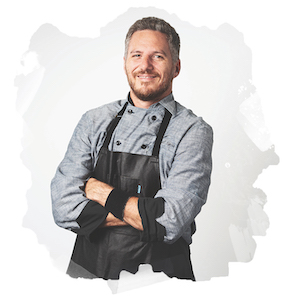
[00:00:10] Ray Latif: Hey folks, I'm Ray Latif and you're listening to the number one podcast for the food and beverage industry, Taste Radio. This episode features an interview with Spike Mendelsohn, the acclaimed chef and founder of better for you fast food chain Plant Burger and sustainable snack brand Eat The Change, and is also the creator of Chefty Pizzas, a web3 community that connects chefs with foodies and fans. Just a reminder to our listeners, if you like what you hear on Taste Radio, please share the podcast with friends and colleagues. And of course, we would love it if you could review us on the Apple Podcasts app or your listening platform of choice. All right, with me now is BevNET founder and CEO John Craven, who sat down with Spike for this interview. John, how are you? I am great, Ray. How are you? Doing fantastic. Thanks so much for asking. And thanks so much for sitting down with Spike. A fantastic conversation. Obviously, he's someone that we'd love to have on the podcast anytime. A very well-respected chef and restaurateur, you know, getting into the consumer brands business as the co-founder of Eat The Change, as I mentioned, with Seth Goldman. Seth Goldman is also co-founder of Plant Burger. And Spike's work has become quite culturally relevant as he's immersed in Web3 and NFTs as the co-creator of a project called Chefty Pizzas.
[00:01:36] John Craven: Yeah, this is a really cool Web3 NFT project that started up and is all about food. And he's got really a fabulous group of celebrity chefs involved in it. And they recently did their first NFT drop, the Chefty Pizzas, as you mentioned, which are all pizza-themed NFTs. So I think he's rolled up his sleeves and become a builder in the space. You know, it's a space that I'm personally very vested and interested in, but I think is something that we're seeing more and more food and beverage brands getting involved in. And, you know, I think it's important that entrepreneurs at all stages really pay attention to this space because it's something that is probably going to sneak up on them if they don't. But now's a good time to get in. Everyone's still brand new at this game. There's lots of acronyms you're going to hear in this interview. We did our best to try to explain some of them. But honestly, it's one of those things. There's no book for this, no playbook. You just have to hop in and start learning. And that's exactly what Spike has done in the past year or so.
[00:02:43] Ray Latif: So really great to talk to him about it. And for folks listening, you know, it's not just all about Web3 and NFTs. You guys covered quite a bit about, you know, Spike's origins as a chef, as a restaurateur, some of the tips and lessons that he's learned over the years that he shares with our audience in this conversation.
[00:03:03] John Craven: Yeah, I mean, it's great to talk to someone who's basically a lifelong foodie and for sure has excellent culinary chops that have gone into the products that he's created and the brands that he's created as a restaurateur. So really amazing journey and it was great to sit down with him and it's been great to get to know him a little bit.
[00:03:25] Ray Latif: Absolutely. Getting back to NFTs just for a moment, you mentioned that there's a lot of terminology in this interview that might go over some people's heads. That being said, I thought you guys did a good job in breaking it down for folks, but for folks who may want to know a little bit more, want to go a little bit deeper into that language, should they just reach out to you, John?
[00:03:47] John Craven: Sure, I mean, I'm maybe not a comprehensive encyclopedia of Web3, but talking to a lot of food and beverage entrepreneurs who are getting into the space. And, you know, I guess we'll put it out there that, you know, happy to have more of those. I'm personally in constant learning mode with it. So, yeah, for sure, reach out to me. I think my email address jcraven at BevNET.com, pretty easy to get a hold of. There you go.
[00:04:11] Ray Latif: All right, without further ado, let's get to Spike Mendelsohn.
[00:04:18] John Craven: All right, so Spike, thank you for joining me here for Taste Radio. Absolutely, thanks for having me. So you are a guy who has done many things in the culinary world, been a professional chef for a long time, you've been in CPG, you're now in Web3. I want to just, you know, start at sort of the beginning here and maybe you can kind of, you know, talk a little bit about what got you into food just in general.
[00:04:43] Spike Mendelsohn: Well, I was very lucky. I grew up in a restaurant culture. My parents and my extended family were in the restaurant business and I was from Montreal. So I grew up as that restaurant kid. I grew up washing dishes and busing tables and scrubbing hoods and working the fry station and just a typical restaurant kid. And I was also very lucky. My mother always cooked home-cooked meals. Every day we had a hot meal on the table. From a young age, I just truly understood the respect for food, as well as being in the restaurant industry. My family always kept very current and charitable contributions, like giving back through the restaurant. So that's early stage. I just was very exposed. The funny part is I fought so hard to get out of the restaurant industry. I did not want a career. in the business because as a kid, you grew up doing what your parents do and you're working on weekends, you're working on holidays, and you have very limited vacations. And while everyone's having fun on weekends, you're stuck Eat The restaurant. That's the life I grew up in. So it wasn't really glorified when I was a teen. But shortly after I started getting a little older and I finally dragged myself to culinary school against all odds, I found a passion for it.
[00:06:08] John Craven: And I guess, you know, I think the first time many of us saw you was probably in the Top Chef days, which feels like, geez, an eternity ago now. Was that, you know, a turning point for you as a professional chef? How would you describe that experience? Yes, absolutely.
[00:06:25] Spike Mendelsohn: So, you know, all my experience up until Top Chef had been chasing the best chefs in the world to work for. So I got inspired very young. I did very well in culinary school because I had all this background from the restaurant industry beforehand. Most cooks in culinary school are the first time they pick up a knife, for instance. So I was far beyond. And that's what got me all geared up and jazzed. I was like, I have this natural talent, but let me explore this a little bit more. From then on, I went on to work for big chefs, not only in France, but in New York City. I was trying to be a three Michelin star chef. That's who I was a fan of. I was a fan of Alain Ducasse. All the classics, yeah. You know, I worked for Sirio Maschione in New York. I opened up Le Cirque there, you know, the third iteration. I worked for Thomas Keller in Napa, both in Bouchon and the French Laundry. I'd worked for Gérard Bourget, a famous chef in France, out of 3 Michelin. So I was very hoity-toity in my mindset. But I also became very jaded pretty quickly because I had been in the business since I was very young. So when Top Chef came along, my sister actually was a fan of the first season of the show. I had never watched it. I think she was a fan of Project Runway and Top Chef came on right afterwards. But she started texting me. She's like, hey, we have to get you on the show. You'd be perfect for it. And at that time, I thought it was a joke. I was like, Mish, I'm in New York working for the best chefs. I'm not going to go on a reality show. But soon enough, she convinced me. I saw one of my buddies, Marcel, on one of the seasons. And I was like, if Marcel does it, maybe I should do too, right? And I didn't really understand Eat The show was, the opportunities that were going to come after the show. I didn't understand about being on a competition show on TV as a chef was going to really unlock the rest of my career. I did not have any of those intentions. I was literally just hitting a plateau of being in the business too long. And I was looking for a little fun. So I was like, oh, I looked at it as like a vacation. I was like, oh, let me go cook for two months on a show. And boy, did I have a reality check upon the first week. definitely did not look like a relaxing experience. No, it wasn't by any means. It was the first time having to cook with questions, you know, having questions coming from all over, cameras everywhere, doing interviews. It was a very grueling experience, but I took so much away from it about brand building and, you know, how to be a Top Chef, really. But then after Top Chef, it really, I was on season four, so I was very lucky because that season had some of the best chefs in it. And really, Top Chef 1, 2, and 3 were good, but Top Chef 4 really got nationally recognized. And I was really able to step back into... After the show, I was able to step back into my restaurant business mode with my family at that point and try to figure out how we take advantage of all this amazing marketing and publicity that was yet to come.
[00:09:39] John Craven: Yeah, well, it seemed like, I mean, you have roots, or now I guess your restaurant roots are in the DC area. And I know you've cooked for President Obama and plenty of other famous people, I think, too. So certainly seems like you ended up in a great spot afterwards.
[00:09:57] Spike Mendelsohn: Yeah, absolutely. So shortly after Top Chef, I went back to work in New York for a little bit. But then 2008, the recession hit, and my family was in DC, and I decided to go to DC on a whim and leave New York and go open up a burger shack. We were just talking about a little burger place where we'll have a little fun as a family together and founder a location on Capitol Hill. My sister, which had a marketing background, was able to really work to figure out how to leverage Top Chef for our first restaurant. And from that day on, we never looked back. We got so much press on opening up a burger place on Capitol Hill. We had lines around the corner for our burger shack for at least a year. And it's still, you know, it's open, it's still open 14 years later. So, you know, it was an amazing experience. And that restaurant really like super launched me into the limelight shortly after a couple of years later, opened up a pizzeria and, opened up a bistro and, you know, we really defined fast casual in form of celebrity known chef, really. There wasn't really too many brands doing a fast casual concept with a chef of no variety. I mean, you had Wolfgang Puck maybe in the airports with like his pizza things. Maybe you had a couple things that Emeril was doing, but really you didn't have anybody that really went after the fast casual craze. And in 2008, due to the recession, many chefs transferred into leaving some of their fine dining restaurants and really opening up food trucks or fast casual restaurants. That was that craze because of the recession. And we were one of the first to do it, at least definitely in the DC area, but I think the first to do it for a Top Chef ever. And it was interesting to see roll out.
[00:11:46] John Craven: I guess somewhere in here, it seems like you also discovered the plant-based movement too, right? And that seems to have, you know, helped your entry into the CPG space. Like, how did that whole thing come about?
[00:11:59] Spike Mendelsohn: Well, let's just say after eight years of all sorts of awesome opportunities in the DC area and then some, after opening the Fast Casual restaurants, I took on a position of doing food policy in DC. Again, this stems from my family always doing givebacks when I was growing up throughout the restaurant industry. I felt so amazing to have this opportunity I had in DC and everyone that I was meeting in my restaurants were young people lobbying for this right or doing all such a great stuff. So I wanted to give back. So I started looking on what I could do in the city and food policy was one of them. And as I started digging and learning more about food policy over the years, I realized our farming industry is at risk of being completely non-existing. Our average farmer is about 60 years old now. So I started looking into all sorts of different things that you can do in this industry. And the plant-based movement, although I'm not a vegan or vegetarian, it presented itself an opportunity for me to really take a lot of my food policy advocacy for farming and really punch home on how we need to diversify Whole Foods that we eat. So I preach much more about a balance in what you consume. I'm not, you should be vegan or vegetarian or just meat eater or what have you. I think you can really have this great balance of diversified foods in your diet. And I believe that is what is best for you. because I think too much indulgence on any one thing can't be great for you. I took the approach to look at plants in a different way. My wife was vegan and she was always elbowing me in the ribs. She's like, what am I going to get a vegan burger on your menu? I didn't want to cook on the same grills and do a vegan thing. Luck had it, I met Seth Goldman, the king of CPG from Honesty and Beyond Meat. I met him on a panel for food policy, and he had snuck these burgers underneath my chair, Beyond Meat burgers. I took him home. He did not know my wife was vegan at all, and I cooked Cody the burgers on the grill. She had the biggest smile that I've seen in the longest time in the burger category. We finally got to eat a burger together. What I always joke about is a happy wife, a happy life. I was like, all right, let's open up a plant-based burger shop. I proposed this idea on Seth. At first, he was still in the midst of juggling the CEO of Honest Tea, and he was the chairman of the board for Beyond Meat still. But he Eat The honesty position. They took Beyond Public and he went to the fair as the board. He wanted to get back in startup mode. We had built a really great relationship. He said, hey, that fast food burger idea that you had, that's all plant-based. Why don't we test this out? I have a good connection in Whole Foods. It'd be a great way to pilot a store and see what happens. We had this great opportunity with Whole Foods, and we were able to open up kind of a kiosk style of a brand. And this time, the idea was, let's go back to fast food, not fast casual, but reinvent the fast food that America's used to in a plant-based way, but still keeping it very indulgent, very tasty, but only better for you and better for the planet. And that was my proposition to Seth. So, in a way, I kind of pulled Seth into the restaurant business, which he had never been in, and he was a little skeptical. And that's why he was really comfortable with the Whole Foods partnership, because it was in his world. This launched inside of Whole Foods, right? Yeah, exactly. This launched inside of Whole Foods, around all his CPG brands, and he felt comfortable with that relationship. But as soon as Whole Foods and Seth saw that out of 115 square feet, we were generating about $7,000 a square foot, which is unreal and Whole Foods measures everything by square foot. So when they were seeing those numbers, a lot of curiosity started happening. And the beauty of our brand is that specifically in Whole Foods is one, they were our crowd, right, for our first restaurant. But second, a lot of the ingredients that we use, a lot of the CPG brands that we use in our menu, live on the shelves at Whole Foods. So like the Beyond Eat The Follow Your Eat The buns, So it became a very interesting proposition for Whole Foods to have us kind of like, hey, these are the things you sell on the aisles, but here's a restaurant that takes all these things and show you how delicious it can be, right? And they were all plant-based ingredients and they were trying to grow their plant-based skews, right? So right place, right time, great opportunity. This was pre-pandemic, two months before we had opened. And yeah, that was a little bit of luck.
[00:16:56] John Craven: I guess we didn't mention the name of it, which is Plant Burger, right? Oh, yeah. Sorry. Plant Burger. Yeah. The important part.
[00:17:02] Spike Mendelsohn: Yeah. PL&T Burger, no ballot in the plant. What I was saying is the interesting thing is we had opened up the first location two months before the pandemic. But then after the pandemic, we were faced with, are we going to grow this company that we just did a raise for, or are we going to stop? But Whole Foods was deemed essential. And their Whole Foods, that's the area we were in, completely went out of business overnight. So all of a sudden, we had Whole Foods reaching out to us about opening up. another store and another store. So before you know, during the pandemic, we had nine stores open, which is no easy feat, all compliant. We did all the right things. Interesting thing is we were one of kind of the original ghost brands, just within a Whole Foods. We had all shared services. And as soon as the pandemic really started to take place, Whereas 80% of our sales were in-store and 20% were out-of-store, it completely flipped the model for us. 80% of our sales became out-of-store and 20% came in-store, but we were able to survive still and show a case that this can exist. So yeah, so that was Plant Burger, and then CPG came very organically. We have a saying that our head of marketing, Jonah Goldman, which is Seth's son, which heads up our marketing department, he had a saying that really resonated for Plant Burger, but even so much so for Seth for CPG, which is, Eat The Change you wish to see in the world, right? It's off of a Gandhi quote. But Eat The Change is something very powerful, right? Eat The Change. And the reason we believe it to be powerful is because in this day and age, there's a lot of eco-anxiety happening in the world. Plant-based foods on the rise. Snackification is on the rise. And if you look at it, we developed a CPG company called Eat The Change that intersects all those three things, right? Eco-anxiety, plant-based foods, and snackification. And then once you look at that, you see that there's an actual demand for it because most people maybe can't wrap their head around climate change because it becomes very nerdy and very scientific. But once you introduce a way to make it tangible for them, then they can take to it, right? So what we offer is, listen, you can vote every two, four years on elective officials, cross your fingers, hope they do what they say they will do, which mostly doesn't happen, or you could take matters into your own hands, right? One of the largest effects of climate change is our food system. and how we grow food, how we transport food, Whole Foods that we eat. So take your matters into your own hands, put the money towards foods that are better for the planet and better for you. And that's kind of like our notion to success. So Seth pulled me into the CPG company. We joke, I pulled him into the restaurant business and he pulled me into the CPG company. Seems only fair. Yeah. Fair swap. And so now we have two sister companies that live under... We work out of the Honest Tea office, which used to also be the Beyond office. So we're in a great place. And yeah, we're having a lot of fun. We're looking at plant-based foods and not only a fast food view, but also CPGs.
[00:20:15] John Craven: Nice, lots going on there. I guess I'm curious, you know, just last question I'll ask you about the CPG end of it before we get on to your most recent projects here. You know, I know you're also an investor in a plant-based seafood company called Mindblown, if I'm correct. You know, I'm curious, just as someone with a chef background, you know, if there are any surprises or things that, I don't know, maybe kind of blew your mind in the CPG world, just based on your experience as a chef.
[00:20:44] Spike Mendelsohn: Yeah, absolutely. I mean, one, growing a CPG startup in a pandemic time was nuts. I bought a Sprinter van shortly after the pandemic happened, and I was really able to travel to lift up the CPG brand. And so some of the surprises were you know, the multitude of co-packers and the dealings and the deal structures and how to work with them and the R&D process of CPG, right? Sometimes your product hits the market and you're not quite happy with what it is, but you need to hit the market in that timeline, right? And then you need to kind of like work on things afterwards, right? In the chef world, a dish doesn't make it on the menu unless you've cooked it like 10 times and it's like perfect.
[00:21:30] John Craven: And you might get to taste everyone going out for a little while, right?
[00:21:32] Spike Mendelsohn: Yeah, exactly. And that completely scares a chef, right? You know, when we were dealing with our first co-packer for our mushroom jerky, although they were great and they lifted us up, long-term they were really poised to be our permanent co-packer because they didn't have our best interests. as far as the product, they were more worried about their own profits, right? And just kind of adjusting to that and realizing that certain people will restrict you from developing your product a certain way because it'll be less profitable for that co-packer to produce in that fashion. And that to me was mind-blowing, right? Like we went from paying a co-packer $100,000 a month for our product and a certain amount to paying a co-packer $10,000 a month, making the product I exactly want it to taste like, look like, and the same amount of it. So when you look Eat The metrics, those are scary as like a first timer to CPG to have such a crazy shift like that, it was really scary. But the part that I felt was natural was the building of brands and community. We do that with restaurants, right? So that stuff, I felt very comfortable. But the R&D and production side was nuts. And the amount of food, unfortunately, that you waste on some of these trials, which ultimately goes to feed, so I feel a little bit better about it, was also quite a surprise for me. Well, I guess... Last thing, I don't know how epic Expo West was. Wow, like what a great conference. I mean, I went to restaurant shows in Chicago, but Expo West was another level of a show.
[00:23:15] John Craven: That's a reaction I think every first-timer has. You know, as someone who's been going for a long time, you tell family and friends and you just keep saying Expo West and they're like, Eat The hell is this? And if they ever have a chance to go, they're like, oh, OK, now I get it. So, yeah, you've got all the all the battle scars of a CPG founder. So congrats on that. So let's shift to your most recent project, which is in the Web3 space and kind of where I've gotten to know you a little bit, which is your project with Tom Colicchio, Shefty Pizzas, which also has no vowels, kind of like your plant burger. And I'll start off right off the bat, same sort of question of what you learned on CPG. I'm curious what your expectations were going into the Web3 space and what sort of battle scars you might have there.
[00:24:11] Spike Mendelsohn: Yeah, absolutely. So I first became crypto curious about four years ago. I'd missed the Bitcoin thing, but I didn't miss the Ethereum stuff. I put like a nice little small investment in it about five years ago and was like, I don't know, 350 or something like that. And I just held, because I read somewhere, I just did my research. I read like, don't invest unless you're leaving it in there for the long term. Don't be a flipper. And I didn't have time to dedicate on trying to flip ETH into something else. So I just left it in there. And sure enough, it impressed me over time. Then I was trying to figure out Eat The utility behind Ethereum was. I had read how different it was from Bitcoin, and all these different opportunities that it presents to use. I'd say the pandemic is really what got me going, because because as a restaurateur and chef, we fight for bottom line all the time. And let me just bring it back a little bit. I'm a chef that was literally born on a prep table, and I've been in the industry my entire life from fast casual to fine dining to this. I mean, everything. So it's great because I love the career I've had, but I've also been the one in the industry shouting about how chefs deserve more right and how we Often get abused for our ip and and you know, we we often make a lot of other people rich You know being a chef and and so forth and there, you know, there's been a major evolution of a chef We weren't allowed to come outside of kitchens, you know at certain times and we'd work all these events for free And then like one of my mentors chef gordon, uh, which he has a documentary that mike myers produced called super mensch He was Alice Cooper's manager for, well, still is, 46 years, but at that time was just beginning. He also invented the celebrity chef. He's coined with inventing the celebrity chef, where he saw all these chefs going to all these different events and they wouldn't get hotel rooms or nothing, they get treated like shit. He said, there's something wrong with the system, we need to bring him up front a little bit more. Just so you know, that's where That's where my inspiration comes to enter Web3 and NFTs and why I'm doing what I do. So that Eat The base of it tagged with during the pandemic, I was fighting to keep my restaurants open. And I was forced to use technology and third-party delivery systems to find my consumers at home because they weren't coming into my restaurant anymore. They weren't allowed to come into my restaurants, right? And restaurateurs, food delivery is always on the back burner up until now, right? It was never something we super leaned into because we were taking care of the customer in the restaurant. But now with the pandemic, it left us feverishly trying to figure out how to reach the consumer. And yes, I'm glad that these third-party delivery systems were there, but I felt very dumb and very left behind in Web2, right? How can a technology that has nothing to do with food and didn't pay the dues that I paid in the business come up and take 30% of our margin? Right, hefty cuts, yeah. Wow, right? At 30% of our margin in the most tumultuous time in our lives, we're losing employees, restaurants are closing, landlords aren't playing ball, all this kind of stuff. So very, very frustrated. So I started Googling all sorts of weird stuff, like what's next in Web3, right? Or what's next in crypto world? Or, you know, I started doing all these dumb little Google things, just things like where I can read and learn and maybe try to improve my situation in the future. And I came across, it was silly enough, I came across Decentraland. And I read an article about Atari and opening up the first ever arcade in Decentraland. And that got me very curious. I was like, hell, I was like, oh, that's weird. I was like, Atari, like a very dated brand, reinventing themselves in Web3. to some degree, right? And I was an Atari fan. So I was like, OK, let me check out Decentraland. I started reading about mana and the currency. I bought a ton of mana at like $0.23, right? I didn't know what I was doing. I literally did not know what I was doing. I just had a hunch. And I started reaching out to some of my other friends and hyping up Mana. I was like, guys, next big thing, you gotta invest in Mana. So I took a handful of people that owe me many dinners about Mana. And I started looking, going into the metaverse with my avatar. And I saw that you can go to a conference and see a Zoom about NFTs. And then I started saying, oh my God, this is decentralized and marketized gaming. with cryptocurrency meets virtual reality, I was like, cool. And then I'm always a forward thinker in my industry. So I was like, all right, well, does this mean if I'm in Decentraland, and I'm running around and playing games and visiting this place and that place, when I get hungry, or if there's a restaurant in the metaverse that catches my attention, like I just used McDonald's as a dumb example back then, I was like, so if there's a McDonald's, I can walk in with my avatar into that McDonald's, order my Big Mac, and somehow that'll show up on my doorsteps, and I haven't Eat The gaming console. I haven't Eat The metaverse, right? So that to me was like a light bulb moment. I was like, oh wow, like this is definitely gonna be happening, right? Fast forward two years later, McDonald's is buying at trademarks and metaverses and all that kind of stuff, right? So that is where I started looking to get NFT curious. It went from crypto curious to this thing. And then I started looking at NFTs. and reading all the headlines like a news junkie, like, oh, Beeple sells $65 million this, right? And I was like, how is this possible? And I always saw parallels between me and artists, because I'm a chef and I consider myself a culinary artist, right? My art and my stuff is just ingredients of the planet, right? And they have colors and textures and smells. And in fact, like it's almost the ultimate art, right? It exposes all the human senses. So I was like, oh, that's an interesting thing. If these artists are doing it and driving IP and secondary sales to them, well, our industry gets killed on IP, you know, all the time. Chefs get invited to festivals, we give recipes, we do all this utility and we just give it away, you know, for a fraction of the return. You know, those two things got me interested. And in short, I said, hey, you know what, my first thing is like, I want to develop You know, my first deck is silly because I look at it nowadays and it's actually more on course with what I want to do than all the other things I did. It was like, hey, I want to develop a food and beverage marketplace where all this kind of lips, right? And that was like the sentence, like, this is what I want to do. And then as I was trying to shop around my big NFT marketplace idea, I came across some developers, which I'll no name because I'm going to talk some shit on them in a little bit, but they definitely did some good. They made me look at this a different way. They said, hey, this marketplace you're trying to grow, this is a $200,000, $300,000 thing. They said they had this PFP project that they were going to launch with another company or something like that. And that they, you know, that they were, it failed and that they had this artwork that they don't know what to do with it. I'm a chef. Maybe we want to do this together. Right. So I said, I'll take a look at it. And I saw the pizzas and. I was very naive. I wasn't asking things like, who's the artist? Or all these important questions that you need to know, because this NFT world is so transparent. It all lives on a ledger, and everyone's out in the open. So I said, all right, let me do this. Let's start a conversation about pizza and NFTs, and everyone could talk about pizza. And I got Tom Colicchio. I reached out to Tom, because he's a good friend. We've always done policy together. I also knew that he was really popular on Reddit because of Top Chef. So most people are like, why are you going after Tom? He may be aged out of this. I'm like, no, he is super popular on Reddit, guys. People follow Tom and Top Chef and all that kind of stuff. And he's into crypto and he's willing. So we partnered up. I promised him nothing. I said, Tom, I don't know what I'm doing. This is just a brainy idea. This may go absolutely nowhere. I may have just wasted a bunch of your time. Sorry in advance. But still with that proposition, he says, listen, you know what? I'd rather be ahead than behind on this one. It was his exact words. I said, I feel the same way. And he said, why don't we go for it? So we did. I reached out to a couple of these younger guys that I had impressed upon on MANA. And before you know, we put a little team together and we announced the project. and we opened up our Discord. So I had to learn about what a PFP project was, right? Because we were being told like, low-hanging fruit, do this first, if you really want to get into it. And that was some of the best advice they gave me. but that's kind of where it ended. But, uh, so I started learning about trades and obviously I, I invested, I wanted to start legitimizing myself in the NFT world. So I had to get a MetaMask wallet. I had to learn how to like go through open sea. I started investing in some projects, some that completely failed.
[00:33:48] John Craven: I was going to say what, what were your early projects? Everyone's got their, their hall of shame too, right?
[00:33:53] Spike Mendelsohn: Yeah, I got a hall of shame. So here's some of my hall of shame. So I'll give you, well, let me, so my, my first, first project was a dino chef. I mean, not even a project. My first NFT was like a dino chef, like a pig. with a chef hat. I was like, oh, let's just like, you know, so I bought that. Then I got turned on to gangland skull because I actually really liked the art. He's like, comes from a graffiti background. And I was listening to Twitter spaces. I was on clubhouse, you know, lurking and, and all that kind of stuff. you know, I had heard like buy art because you like the artwork, right? And you know, not only that, like look into the, you know, what, what goes beyond just the artwork, like who's the person behind what they're doing with it. But those ones I bought solely because I love the artwork and he's doing really good right now. I don't know if you know Gangnam, he's, he does great and he's, you know, building his thing. So, you know, so I started doing some purchases, you know, on stuff and I came across bored yacht ape, and I was like, I didn't buy. I came across CryptoPunks, and I didn't buy. They were still really affordable. After I missed out on that, I was like, oh, man, that sucked. I had a friend give me a tip. They're like, Bohemian Bulldogs, I think it's going to be the next thing. I bought 10 of them. And that project like just text like there's like, you know, it's just, I don't know, somewhere in Spain, the devs a bunch of arguments and, you know, another project I bought that was dumb. And I was trying to learn like I was buying to not only try to legitimize myself like that I am actually like into this. But I was also buying to be part of discords and to learn. I wanted to see Eat The utility they were driving behind was. So I bought, I love fighting, I'm a huge MMA fan and I'm not a Jake Paul fan per se, but I love what he's doing for boxing. So I saw this project called Stick Dicks and I was stupid. I was like, all right, let me buy Stick Dicks. Let me see what he's doing with this. So I bought three of those and those are like, they were super dumb. But then I started getting in on more Twitter spaces and clubhouses and then really started to invest in projects I could really get behind and doing my research properly before purchasing, right? So Woman and Weapons was a project I bought into. I also had Woman of Weapons. But the transaction wouldn't go through, and I just decided to go to bed. And I woke up in the morning and forgot that I had tried to buy women a weapons. And that's the story. So there's been a lot of that happening in the space. I bought a couple of music NFTs. I really love that musicians are, instead of looking at Spotify, they're going to start releasing some singles in NFT form. And I bought Sammy's Metagirl NFT. And then one of the other ones I had a lot of fun with, although I don't know if it's been successful or not, I bought Apocalyptic Apes because it was a derivative project off of a BoredoutApe owner. This guy named Fiddy that was very aggressive and doing a lot of Twitter spaces. But those Twitter spaces really helped me because I saw that consistent building of community and doing the spaces was important. I did love the artwork. I thought the artwork was fantastic that was done on Apocalyptic Apes. So I started investing a lot of that. And I started, I kind of used that to learn more about how I wanted to build our project, our Shefty project, really.
[00:37:29] John Craven: Well, and I think that's, you know, what you're talking about is part of why I asked it, aside from, you know, some of our listeners who will have no clue what any of this stuff is and just be scratching their heads of, you know, Eat The heck. You know, it is a hard place to learn right now, and how you learn is by doing, clearly. So I think it's important to hear that backstory as you're now launching your own project. I mean, that wouldn't have been possible if you didn't do all that stuff, right? Absolutely.
[00:37:58] Spike Mendelsohn: I mean, listen, this is no different to me than being in the kitchen. at a young age, and my best advice is keep your eyes wide open and ask as many questions as you can. And that's how you learn, right? Just watch what people are doing, soak it in, ask a ton of questions when you need to, and then just go through the motions. It just doesn't happen automatic. And I think one of the things I heard the most on any Twitter space is, this new vertical is so transparent. Everyone knows what's happening here. You have to do right by yourself and really enter it properly. We were hearing a lot of the stories about celebrities getting offered a Borg.ape or a CryptoPunk to promote it. Those are just very empty That's very empty to enter the space like that, right? I didn't want to do that. I was really in it to reinvent our food and beverage business and have this different vertical, this blockchain vertical, and use it to our advantage. And that was really the passion, the driving fire of why I did this. So yeah, so Shefty Pizzas, you know, and so once we opened the Discord up, a rude awakening happened there, right? Where we had a supply of Shefty Pizzas of 8,888. That was the supply that was recommended by our first developers, right? And our dev team was saying, We need to admit, we need to admit, right? And we have 200 followers in the discord, right? Tom had a million followers on Twitter. I had 50,000 followers on Filler. As soon as we announced, we got a lot of haters, Ponzi scheme, Ponzu scheme, whatever it is. Far for the course nowadays. Far for the course. And we lost a lot of followers, but then we gained two to three X of what we lost in NFT supporters, tech supporters, and people that understand the business. that resonated so much with me where I was like, well, listen, everyone's starting from ground zero here. It doesn't matter if you're Tom Colicchio or you're Spike Mendelsohn, or you're this person, like you're starting with zero people interested in your project, you know, a decentralized platform, you know, discord, right? But we're starting with zero. So we're really have to do the ground game here. And, and, and then I started researching a little bit more about how Before you admit a project, your supply numbers should really match up with your Discord and your Twitter follower numbers, right? I guess that holds true to what I believe in. Maybe that's not the case for others. There's also other projects that buy a ton of followers and they have like zero interaction in Discord, right? So look out for those, the ones that have like 10, 20,000, 30,000 followers on Twitter. And then in their Discord, it's like, you know, one message every hour or once a day or something like that. So I started, like with the projects I failed, like the Bohemian Bulldogs, I started looking at how much communication was happening in Discord, right? So that was interesting to me. And that's where I knew we had to depart from our dev team. you know, our original dev team. They were in it for money grabs, and they have some good projects under their belt as well. But really, we were new to this. I had Tom Colicchio on the hook. I was onboarding a ton of other celebrity chefs into our Discord. We needed to really do right by our community and the network of people I was introducing to the blockchain and MTs, and that scared the shit out of me.
[00:41:25] John Craven: You guys have real reputations at stake here too, which is maybe different than some people who are just native to this. Exactly.
[00:41:33] Spike Mendelsohn: That was exactly it. I'm a risk taker, so I was even less worried about my reputation because I've always been the gritty chef to do this or do that. I was really worried about getting Tom Colicchio into something that was going to be like a Ponzi scheme or something people were going to really shit on. we had a good conversation, what I thought was a good conversation, and we separated ways with our dev team, right? So that allowed us to put the minting of our project on hold, really start to do these weekly Twitter spaces, right? Where we bring in the chefs and we chat and we hear from the community. And it really allowed us to grow our Discord slowly to get to the point where we felt comfortable with that. We had enough people in Discord, enough people on Twitter, and we can match up the supply. We ended up on 2,777 was the supply of our PFP Shifty Pizza Project. At that time, we had about 3,500 in Discord and about almost 4,000 on Twitter. We had done a ton of collaborations. We did a collaboration with CPG. As you know, we did one with Jamie Knitt with BFF. you know, we started learning that like these collabs can build your community. We started doing these pizza competitions with inside our discord where we did these virtual pizza competitions and people really, you know, went to store, they bought brands, they bought ingredients, they brought it back into their homes, they'd have to take a picture of their ingredients. with a cue card and then post the finished pizza afterwards with the same cue card, right, for verification purposes. And Tom and I would judge these pizza competitions, right, in our Discord. And it really kind of opened my eye to what was possible, just those small little pizza collaborations. If you think about it, we just harnessed a community of foodies. We sent them out to buy their own ingredients, buy brands, invest in brands to bring back to their home, cook with their cooking utensils in their home and present a finished product. To me, that was mind boggling. And maybe it doesn't sound crazy cool if you're not a chef, but to me that was like, oh wow, like there's something here, right? Like brands need to be into what we're doing right now. Like this is too exciting. So yeah, so we launched the Discord and the conversation very quickly went far beyond just pizza. And that's when we started really doubling down on, again, trying to figure out how to develop a larger-than-life food and beverage NFT marketplace, right? I went back to the first idea. And the reason I was doing that was because all these channels were opening up in our Discord, right? One was Show Your Food. The general chat's the general chat. A lot of conversation happens there. But then there's Show Your Food, right? Where people are posting their recipes, what they had for dinner. People are asking about the recipe or giving it out. Then people are requesting different cities where they can have micro communities, a micro community chat, right? Where we can meet up in real life to go to a restaurant together or have restaurant recommendations. There's a culinary classified channel, right? Where you can post jobs or hire people for an event, or you need a sous chef or whatever. There's a pineapple debate, right? Well, that's interesting. There's a, you know, everyone's into the pineapple if it belongs on pizza or not. I'm sure Dole should sponsor this debate, right? So there's like, all of a sudden I started looking how you could peel away on what's happening. And these were all happening like organically, or were you guys curating it? All organically, all organically. And yeah, so we just all of a sudden started this awesome foodie conversation. But the cachet to the conversation was while we were launching our Discord, I was very bullish on introducing chefs into what we were doing. And although they weren't going to be able to be part of our smart contract for Chef D pizzas, because that deal had already been kind of done. I figured we can do a Genesis project right after Shefty Pizzas, a Shefty Pass, kind of like radio or whatever it is. It's not revolved around trades or a PFP or anything like that. But that Shefty Pass can be the larger marketplace, the larger brand where I could introduce chefs and have a council of chefs. Like Macy's has a culinary council, Williams-Sonoma has a culinary council made up of chefs. Well, ChefD, the brand, can have a culinary council made up of a variety of different chefs and backgrounds that are all in the smart contracts and driving utility behind it, right? And that all of a sudden became really fascinating. So I started onboarding chefs, Andrew Zimmern. People were saying, get Jen Carroll in there. We went and got Jen Carroll. People said, oh, we want Cat Cora. We need an Iron Chef. We got Cat Cora in there, right? We got Rocco Dispirito in there. And before you know it, the first time ever, people that are fans of these chefs are able to have somewhat of a conversation with them on Discord, right? So at any point, Andrew Zimmern is texting, what's your best airport food? And then Chef Spike is throwing pizza pictures on a different channel. And then Rocco talking about plant-based foods on another channel. Wow, that's cool. When have our fans really been able to have this type of interaction? But not only have interaction, invest in us, right? In a certain way, by buying into this, you're taking a part of our brand, you're part of our brand, right? So that just got my mind going even more.
[00:47:09] John Craven: Yeah, no, I mean, it seems like if, you know, Food Network and Top Chef maybe brought celebrity chefs to your living room on TV, then there's clearly an opportunity, you know, just hearing what you're describing Top Chef D to bring those chefs onto Web 3 and the direct access. I mean, I think that's, to me, the most, you know, unique part of what you have, you know, having been in your Discord and such, is the direct access there. You know, these are people that, like, you could stare Eat The on TV, maybe you'll get a tweet from them, but that sort of access and their engagement with the community seems like, you know, there's a whole new opportunity there. I mean, is that kind of the vision for this thing? Yes, a hundred percent.
[00:47:52] Spike Mendelsohn: That is exactly the opportunity. Interaction with some of the best chefs, but not only chefs, like we don't want to limit it, like winemakers, like people that are into brewing beer or, you know, what I love a lot about what we're doing is, and especially with the Shefty Pass, we'll be able to double down on this idea. is on Instagram, I have so many followers, but it's such a diluted base of followers, right? Any one person may be following who I am because they're either a family member or a friend, or I Eat The over here or this or that. They may not all be interested in food or whatever. What Discord and Rep3 offers up is these really awesome condensed communities that are all like really love about what that community is about, right? And ours is food and beverage, talking about recipes, talking about restaurant, food festivals, cooking classes, education, regenerative farming. gardens, whatever it is, like in that scope. So really, in essence, we're developing the super fans of our brands, right? And the more chefs I can onboard into ChefD and they can bring the best of the best of their foodies into the brand, then there's a big, huge win there and a massive opportunity for us to have this completely different vertical that we've never seen before, right? So with Shafty Pizzas, our utility for that project, the first roadmap is in real life events. We already just had our first one at Food Fight, right? It was a huge after party. We had Seafood Towers Pizza, Tom was there, Monique was there, Kristen Kish was there, you know, a ton of other chefs that have been in the Discord were there. Andrew Zimmerman was there, Rocco came up from New York, and people were able to meet and talk and listen about what we're doing with the project. And that's just the beginning, right? We're going to have more pop-up pizza parties. we're also going to be able to double down on existing food festivals that are already part of our networks, right? Like the Hawaii Food and Wine Festival, the New York Food and Wine Festival, right? You know, when it gets really interesting, especially when we start to work with the traits of the pizzas for our masterclasses. So if you have a pineapple, for instance, you may be eligible for two tickets to the Hawaii Food and Wine Festival, plus a masterclass that revolves around the ingredient pineapple. If you have mushrooms on your pizza, well, you could sign up for the mushroom masterclass, for instance. And then we'll do just general masterclasses for the entire community as well. So we get to unlock these fun little things with traits. But then on top of it, we can put brands, tag brands and traits to drive utility. So for instance, we got a 20% discount for Buona Fortuna product from a brand that came on our Twitter space. They love what we're doing in the NFT space. They want to do something with us. But just for introducing them to NFTs, everyone in our Discord is eligible for a 20% discount on their products. So yeah, that becomes really interesting.
[00:50:56] John Craven: You know, as far as the utility goes, it sounds like a lot of it is really about access to this community of chefs as opposed to, you know, some NFT projects. And I think people's perception of a PFP project, at least, is increasing the value of like the actual token, right? Is that something that you're trying to steer away from? Or, you know, I guess I'm kind of curious Is the owner of the token someone who's kind of treated as an owner in this community? And again, just if you could kind of give a little insight into that.
[00:51:34] Spike Mendelsohn: Yeah, so I'm still learning a lot as far as PFPs are considered. So I got a lot of homework to do and I want to drive the value of the asset, the floor price up, right? And I want that to be a thing for our shifty pizzas, right? Surprisingly to us, maybe not to others, but Out of the 2,777, there's only up about 200 to 300 that are up on the secondary market. From what I've heard, that's pretty low for a PFP project that there's only 200 to 300 that are up for sale. We have a lot of holders. We have a lot of people that are really interested in the masterclasses, the in real life opportunities, the opportunities to bring brands to integrate into our community, whether it's giveaways of uni pizza ovens or special discounted on certain ingredients, right? You know, we're only scratching the surface on how we can work in that degree. I don't know if all those things I just mentioned raise the floor price or make the demand to own one of these NFTs of a thing of value, I'd like to believe that if you want to be the ultimate foodie and be recognized in the NFT world as a foodie, like when people go to your MetaMask wallet to see what you're into, this NFT will represent I'm a foodie, I'm in this world. The blue check mark on your Twitter, the same reason celebrities are maybe, they all want this ape because it represents something. I would like to develop a culinary passport, if you will, for the NFT world. I plan to do that not only by driving utility and raising the asset value of Shefty Pizzas, because that's the PFP project. And you're right, that goes along with what people will ask, how do I make money off of this if I bought six? So we want to make that project drive the value. And I have big picture ideas on Shefty Pizzas. The utility, the low-hanging fruit is these masterclasses, going to festivals, all these different things. The big picture with Shefty Pizzas, to be honest with you, is a couple of things. They're a little dreamy. A decentralized delivery system for pizzas, something similar to like a slice, right? But just in Web3 form. The other idea was a, you know, we've already been reached out from a couple of people to turn our Shefty Pizzas into an animated series. a television series or a YouTube series that's like all about food, right? So think about like, what's that Bob's Burgers or something like that, or something similar.
[00:54:23] John Craven: With you and Tom doing voiceovers, I hope.
[00:54:25] Spike Mendelsohn: Yeah, maybe me and Tom doing voiceovers. I mean, my wife is the best voiceover. So we'll do the merch stuff and all that kind of stuff, obviously, but that's like very low hanging fruit. Some of these other ideas is a CPG pizza. You know, like, how can we represent, you know, in the CPG world with our frozen pizza? Frozen pizza business is huge. Like, if we can create this thing. So another big picture idea for the Chef de Pizzas is releasing the IP in form of a franchise IP utility for like the way people are doing it with the apes, right, where they can open like they can open a restaurant or whatever. Well, pizza shops, right, like these really awesome sliced pizzerias, shifty pizza. So like, if, you know, we've noticed that a lot of our holders are people that own pizza shops. So is there a way to work with them there? Like, is it and maybe is that a melding of decentralized delivery or a ghost brand within a pizza shop that's shifty. I don't know what it is, but there's something interesting there. Those are the high-level ideas for that. Everybody that holds a pizza will automatically be eligible for the shifty pass. That's another form of good access because that shifty pass will be what I believe will unlock the opportunity to have first look at all the other NFT projects that are going to be interpreted by chefs that we're bringing into our community. So again, I reference, we'll have like a certain council of chefs for the Shefty Pass, But that Council of Chefs, they will do NFT projects because they'll have to, because they want to, because they're part of this project. And those projects will be released under the Chefty brand. So if you want first access to Rocco's, Jenin, because you want to build these culinary chops, this culinary passport, if you will, because you're a foodie and you're also into NFTs and technology, that's what we want to offer up with the Chefty Pass, the opportunity to get in on all these different projects. And all those different projects, That can be a PAP project, that can be one of ones. It's really whatever the chef really wants to do, but we're there to consult them, introduce them to our community and our Discord, and launch and do the artwork for their project, write the smart contracts for their project, and do everything from A to Z. And the reason that's important is because A lot of chefs are getting, you know, presented with money grabs, which I think really can hurt their brands. And again, like what I found building this community, everyone starts from zero. It doesn't matter what chef you are.
[00:57:02] John Craven: Right. You'll save them a lot of time with that for sure.
[00:57:04] Spike Mendelsohn: A lot of time, you know, a lot of time. And for chefs, time is everything. You know, we sold this project out in under 24 hours by two minutes, but we spent nine months to a year building on it and talking about it. And like, you know, it was a lot of work. So that's the proposition Top Chef. And we don't, we don't say you have to do it with us, but we're like, maybe you should, right? Like, so it's, that's kind of like the great proposition for ChefDPass and where I could kind of see this going. And then once we get critical mass with chefs and community, then I think it's game changer. I think, I think I haven't even thought of the ideas that could come next.
[00:57:42] John Craven: Well, certainly if you can build that community, I mean, and, you know, thinking thinking about this from a consumer perspective, like I would much rather be in one discord and community than have to, you know, follow each and every chef that I like and, you know, get into their own community at whatever stage it's in. So, yeah, it seems like tons of Tons of potential and, you know, I really, you know, I just want to say, you know, really appreciate you spending the time to walk, you know, us through your story as well as, you know, Shefti. I mean, I think it's super exciting and obviously there's a lot going on in Web3 and the CPG space. So, you know, I hope it's, I hope these lessons that you've, you know, had to learn firsthand help others that are thinking about diving in. So really appreciate you joining me here today.
[00:58:34] Spike Mendelsohn: We got, of course, I'm like, listen, we've been wanting to do this for a while. So thank you for giving me the time and the platform to talk it out. It's nice just getting these questions and kind of reliving a little bit of what we went through in the last nine months. It's even refreshing. I made a couple of notes already. I'm like, oh, don't forget about this. Gary V said something that was really interesting to me, like not to me personally, to everybody in the world on the internet. And it was something about like your MetaMask wallet, people are going to reference your MetaMask wallet to learn about you and who you are and see what you follow and the things that you're into, right? And that's kind of what I love. So, you know, in our business, foodies, they collect the menus, they collect the books, they collect all these different things, these collectibles, to be verified that, A, they were there or they have this cookbook or, you know, it's kind of a verification. So I really look Eat The MetaMask Wallet for the food and beverage world as, like I said before, like a culinary passport, if you will. Like, I went to dinner to 11 Madison Park for the special dinner that was only offered to NFT. I went to this Hawaii Food and Wine Festival and was there. They're kind of like pull-ups, right? Like, it's a verification. I was, I was there.
[00:59:42] John Craven: A lot of opportunity with that stuff, for sure.
[00:59:45] Spike Mendelsohn: Yeah. So again, like, thank you so much for having me. This has been awesome. And I can't wait to see you in IRL again.
[00:59:51] John Craven: Yeah, pretty, pretty funny that, you know, I don't know if all the time in the CPG space, some people I, you know, you don't get to know until Web3 here.
[01:00:02] Spike Mendelsohn: You know, that's the interesting part. I have felt like I've been introduced to hundreds of people that I would never have met in my life if I hadn't taken on this different vertical in my life and introduced myself to it and met people like yourself and Chris Cantino and Jamie Smith. These are all people that wouldn't be part of my life if I hadn't dove in. Listen, you can tell I'm bullish. I'm so excited on all this. Again, thank you guys for all the support that you've shown us, even on Telegram and everything else. Really appreciate it.
[01:00:33] John Craven: All right. Well, thanks again, Spike. Hopefully, we'll get to check in with you again in the future. Of course. Of course.
[01:00:43] Ray Latif: All right, that brings us to the end of this episode of Taste Radio. Thank you so much for listening and thanks to our guest, Spike Mendelsohn. As always, for questions, comments, ideas for future podcasts, please send us an email to ask at Taste Radio.com. On behalf of the entire Taste Radio team, thank you for listening and we'll talk to you next time.