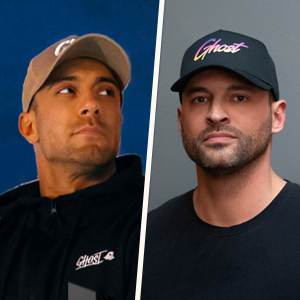
[00:00:10] Ray Latif: Hey folks, I'm Ray Latif and you're listening to the number one podcast for the food and beverage industry, Taste Radio. This episode features an interview with Dan Lourenco and Ryan Hughes, the co-founders Ghost Lifestyle, sports, nutrition, and energy brand, Ghost. Just a reminder to our listeners, if you like what you hear on Taste Radio, please share the podcast with friends and colleagues. And of course, we would love it if you could review us on the Apple Podcasts app or your listening platform of choice. Dan Lourenco and Ryan Hughes always knew they'd be playing the long game. The co-founders of Ghost, which markets popular sports nutrition powders and energy drinks known for their indulgent candy and snack-based flavors, launched the brand in 2016. At the time, they say there was no singular vision or plan. Rather, they started the company with a question, How far can we take this brand? Six years in, Dan and Ryan realized that the answer has less to do with them and everything to do with the community they built around Ghost. Created as a lifestyle brand centered around fun and inclusivity, Ghost attracts a broad demographic of consumers, from gamers and fitness enthusiasts to shift workers and students. Listening to, learning from, and constantly interacting with their customers has helped Ghost build a thriving direct-to-consumer business, along with a retail network that includes over 60,000 stores. That footprint has grown dramatically since 2020, when the brand introduced its Energy Drink line. Developed in partnership with beer giant Anheuser-Busch InBev, the products are expected to generate over $100 million in sales this year. In the following interview, I spoke with Dan and Ryan about the origins of Ghost and how they identified an opportunity to attract new consumers to the sports nutrition category via licensed flavors, including Oreo, Sour Patch Kids and Warheads, along with engaging internally developed media. They also explain why learning about how consumers shop is key to their sales and marketing strategy, why their emphasis on transparency extends beyond product labels, how they were stunned and yet prepared for a transformative cold email, and how they're gradually becoming more comfortable with success.
[00:02:48] Dan Lourenco: Hey, folks, it's Ray with Taste Radio. Right now, I'm honored to be sitting down with Dan Lourenco and Ryan Hughes, the co-founders of Ghost. Gentlemen, how are you?
[00:02:57] Ryan Hughes: What's going on? Thanks for having us.
[00:02:59] Dan Lourenco: What's up, man? Now, Ryan, you're based in Chicago. Dan, you are in Las Vegas, where the National Association of Convenience Store Show was just held. We originally planned to meet out there. Unfortunately, I couldn't get to the event. But and how was built?
[00:03:16] Ryan Hughes: It was really good to see Knacks back in full swing. You know, I mean, last year, you know, in Chicago, there's still a little bit of kind of hangover, I think from, from 2020, but this year it was, you know, energized, it was packed and Ghost had a great show. I mean, for us, we're very grateful and humbled. Things are on fire. So always an easy, always an easy show. And that's, that's kind of the trends going into it. People are really excited for some new flavors and innovation. And it's been an amazing, amazing year. We just started laying some groundwork for, for 2023.
[00:03:41] Dan Lourenco: Ryan, you didn't attend NACS, as I mentioned, you're based in Chicago. But before we got on the mics, you told me that Ghost was launched in Las Vegas. And I'm curious about sort of the food and beverage community out there. What's it like?
[00:03:54] Ryan Hughes: I mean, look, Vegas was home for the two of us when we launched the brand. And quickly became an awesome platform. I think for ghost as a brand, it kind of hits on a lot of the things that a lot of the ideas that we had going into, you know, launching the brand, you know, obviously nightlife music, the sports and kind of fitness arena in Las Vegas is actively growing year over year too. So it just, it was kind of like the perfect fit for us and the perfect springboard or launch pad to really put ghost out there and And obviously we have a lot of connections there and it's definitely done well for us. We moved from Vegas to Chicago shortly thereafter, kind of set up roots here in the Midwest. It's a great city for us, kind of being central to everything, manufacturing and stuff was out here. But once we hit kind of scale and the beverage business started really churning, Dan jumped back to Vegas and kind of helped build the team there and start really kind of growing our beverage entity out there. It's been cool to have kind of two home bases.
[00:04:53] Dan Lourenco: You know, I don't know too, too many entrepreneurs that are based in Vegas, but from everything I hear, it seems like it's a good place to incubate a brand, which is a little surprising because it does feel very specific in terms of tourism and well, frankly, gambling. But, you know, is there, you know, is there something about the city that makes it good for a company like yours to operate? Are there benefits to being in the city?
[00:05:17] Ryan Hughes: Yeah, I definitely think so. I mean, obviously, besides costs and taxes and the kind of boring bits there, you know, Vegas to me is really the epicenter of a lot. Everybody comes to Vegas, where they come here to burn it down and party, where they come here for a spa weekend, whether it's a bachelorette, a wedding, a conference, a business meeting, a golf trip. everybody comes to Vegas. And really that kind of leads to this feeling of you're like one person removed from almost anybody in the world here. So you kind of want to make connections and look at where you want to take a brand as an entrepreneur, regardless of category or vertical or whatever. I think it is a great place. The other thing about Vegas is like, look, everything's here. You have all the comforts of being in a major city, whether it's now major sports, entertainment, nightlife, there's great nature and hiking and outdoors. Any of these cities, I think in the US that there's a lot of that outdoors, there's a lot of attention to fitness and health and wellness as well. Again, to have all of those things all at once in Vegas is a very Vegas statement, I think a very Vegas mindset. That's really something we are going to capture in a body with ghost too.
[00:06:17] Dan Lourenco: Yeah. And you got the Raiders now too, which is kind of nice.
[00:06:20] Ryan Hughes: Yeah. I'm a nice guy, but it's been cool. Like look, the impact of sports cannot be understated in any city. And I mean, Vegas has changed a ton over the past five, six years for a lot of reasons, but really, you know, sports, I think it played a big role in that too.
[00:06:35] Dan Lourenco: Interesting. Well, maybe we'll have to go out there to plan a live Taste Radio event, which is something we did earlier this year in Austin, which was amazing. If and when Vegas gets to that level of Austin in terms of hotbed for innovation and entrepreneurship, but perhaps sooner than later.
[00:06:49] Ryan Hughes: We're passionate about getting in the community and we're doing what we can to kind of change that and add to that too, which is something that's really humbling and important to us.
[00:06:56] Dan Lourenco: Awesome, awesome. Well, over the past few days, I've been binge watching a very cool show. I don't know how many people know about it. My listeners, loyal listeners of the show might be a little surprised, but I was watching a show called Building the Brand. It's a YouTube show that was developed and hosted by the folks from Ghost. It's a fantastic show. You can't help but to binge watch it. There's so much good content in there. Why did you guys... Well, first of all, tell our listeners a bit about the series and why you guys launched it.
[00:07:30] Ryan Hughes: I think it was about... I mean, you referred to it as a show. I think the way that we looked at it out of the gates was simply capturing, sharing, and documenting A to Z Ghost, right? It was, you know, all of the fun moments in launching a brand. And we were a team of four, I think, when we started that YouTube series. And we've kind of kept it going. all the way to today, which has definitely been challenging at times, especially with the two of us kind of on different sides of the country. But it was purely about just sharing the ins and outs and day to day of, you know, starting a brand from scratch, which, you know, the two of us were super passionate about, you know, sharing the trials and tribulations that come along with that, which is, you know, there's a lot of good moments as you've watched in those series, a lot of jokes, there's a lot of fun, there's a lot of organic, just building together with the small group that we had. There's also a lot of challenges. And for us, we, we kind of didn't hold back, especially early on in sharing all of those challenges with the GOES community. And it's been, it's been really cool to see, like, not only the series grow, but it's, it's been really cool to watch us grow, watch the team grow around us, watch the people grow that, you know, were alongside us when we launched this thing. So now it's, you know, it started as documentation and how it's kind of become a passion project for the two of us to keep going. But it's definitely unique. It's been, it's been a lot of fun.
[00:08:46] Dan Lourenco: Dan, I believe you guys are on your ninth season at this point, which is pretty remarkable. As I mentioned, it's a really well-produced show. You can tell there's a lot of time and resources invested in the series. Can you measure a return on investment for a program like that for building the brand?
[00:09:05] Ryan Hughes: Look, something like that's never really been about ROI, I think when we started it was really important to me to kind of build a brand we wish existed to something we say a lot and it has to do with transparency has to do with accessibility has to do with inclusion. I think the way we look at like a return on a series like that is really the time. spent with our customers, potential customers, fans. I mean, that's invaluable. In today's world, especially attention spans and just the amount of content bombardment that happens, right? To be able to say, hey, we're spending 15 to 20 minutes a week with customers, future customers, fans, whatever, building this community, that's invaluable. And whether someone buys from us today, tomorrow, next week, next month, next year, that has to have an impact long-term. So that's kind of, I think, really been the goal and why we keep going.
[00:09:46] Dan Lourenco: It seems like fans really love the show. I've seen tens of thousands of views, you know, per episode in some cases. And you don't get that unless people really love the content and really love your brand. For me, I particularly love the parts where you do new product intros. You're slamming together two canisters of products are always see that. That's really fun. And then just for gags, when people take spoonfuls of powder.
[00:10:10] Ryan Hughes: Oh, the domes. Yeah.
[00:10:11] Dan Lourenco: What is that?
[00:10:12] Ryan Hughes: Oh, we call, we call them domes, but yeah, yeah. It's, it's become a tradition, you know, I look at the most simplest form, right. Ghosts and a sports nutrition in general, this energy drinks in general, right. These categories are fun, social, shareable things. And I think when we launched a brand, all, all the products are we're touching now, we're largely trying to commoditize themselves, but they're not commodities. They're not a carton of eggs or roll of toilet paper. These are again, products are people are passionate about. It's a category that Ryan and I fell in love with, frankly, by doing exactly what you see on the YouTube for years and years before there's ever a camera following us around. So our goal really with Ghost has been to just share that and create that at scale. And yeah, all the silly things you see, look from the domes, taking a scoop straight to the face to knocking the cans together, your mom jokes or whatever it is. I mean, we have a lot of fun. And I think that that's really important in these categories that frankly, I don't know, for a while, like took themselves so seriously. Right. And hopefully, you know, like, look, I'll say this, if you watch our series and at the end of the day, you don't want to at least like crack a ghost energy with Ryan and I, you know, we've, we've failed as business leaders. And I think we've maybe failed as people.
[00:11:21] Dan Lourenco: It definitely comes across as fun business to be around, a fun brand. You guys feel really approachable in the series. It seems like if someone, you know, came up to you at a trade show, they'd be like, oh man, I know these guys. I feel like I have some connection with them. They live the brand in so many ways. And, you know, I have to think that you guys were Sports Nutrition Powder consumers prior to launching Ghost, but talk about, you know, how you guys met and what you guys were doing before you started Ghost.
[00:11:50] Ryan Hughes: So I was a top guy at another sports nutrition company, you know, in the space, mostly a powder brand in the space, although they've now gone into beverage. And, you know, look, the name Ghost came from exactly that experience. I mean, and also Ryan, who was behind the scenes of another big brand in the space on the athlete kind of creator side, like we were ghosts behind the scenes because it wasn't our company. It wasn't always our vision, our way of doing things that kind of made it to shelf. And ultimately you want to take the leap to kind of, you know, celebrate it and do it the way that we thought was best. And again, create that brand that we felt was missing. But Ryan and I met through a mutual friend who was actually one of my athletes or ambassadors at a prior brand. They were workout partners. The three of us, you know, kind of started to work out together in New York City. And, you know, I think like, like all, like all buddies, we started to kick around, you know, various business ideas. We want to do something together. Like what's more fun or better kind of ideas to say, Hey, like I want to one day maybe create a business with, with good friends of mine. And, you know, we, we toss around a lot of ideas, nothing really stuck because we didn't go all in for any of them. Uh, and we started to kind of have this idea about a sports nutrition brand and if we did it, how we do it and what the elements would be. And when Ryan tells a story, especially because of the job that I had and even his, his role at his previous company, I don't know if we ever really thought it would happen, but you know, the stars aligned and, you know, we, we made that jump and you fast forward six, seven years, boom, here, here we are. It's been the most, uh, exciting, fun and humbling chapter of my life so far. I think what's also cool is like, and even listening to how we talk about it, and maybe look, maybe we're much closer now to entrepreneurship and founder culture than obviously we were back in 2012 when we started kicking around ideas. But I think the cool part for us is when we tossed around ideas about starting businesses together, which we started many and failed along the way. When we tossed around ideas, it was never about, multiples or exiting. It was about having fun and building an idea or business together and just kind of enjoying the ride. Because I think so much of what we did in our day-to-day previously, while we enjoyed it because we loved the space that we were in, we didn't necessarily love the brands we were doing it for. And we didn't necessarily feel like we were an integral part of building those things. And I think for us being able to, you know, obviously do that together to start and then building the team around us, that has been a massive part in helping build Ghost to what it is today, as you'll hear us mention it, numerous times throughout numerous interviews, it's, it's all been about fun. And the cool part today is like now with a team of, you know, 80 plus, we're, we're still speaking the same language that we were back in 2012, which is something that I think, you know, you talk about what are we most proud of in terms of the business that we've built and the success that we've had. That's probably one of the things that I'm most proud of, is that our language is still the same and we're still enjoying the ride. We prioritize people, we prioritize products are prioritize brand, all with the goal of making an impact, not making a buck. I think it's amazing. We're smart enough, guys, if you do those things and you execute well, the dollars are going to be there, the sales are going to be there, but yeah, it's been an amazing ride so far.
[00:14:59] markets sports: Guessing your margins? That's risky. Belay Financial gives CPG brands the clarity to scale smarter, faster, stronger. Get your free inventory ebook by texting TASTE to 55123 and start making data work for you. Vibrant Ingredients is the natural ingredient partner powering food and beverage innovation, delivering flavor, function, and protection through a science-backed portfolio. Vibrant delivers purpose-driven solutions that help brands create extraordinary experiences. Discover what's possible with Vibrant today. Visit vibrantingredients.com.
[00:15:46] Dan Lourenco: Dan, you said something interesting that I just want to touch on. You said that you'd started other businesses and Ryan mentioned this as well, but they didn't work because you guys weren't all in. What does that mean to go all in on something?
[00:15:59] Ryan Hughes: I think there's only really one way to go all in. And I think it's fully to invest 100% of your time, your attention, your dollars to an idea. It could be a service, could be a brand, could be a product, could be anything, right? An entrepreneur goes in headfirst and doesn't lift their head for air until, you know, there's an opportunity to, whether it's through the business being successful or, you know, a monumental moment to step back and appreciate what you've done. But I think the two of us, and obviously having full-time gigs prior. You know, we were, we were really starting side hustles, right? It was something that we committed some attention to. And I think a lot of people do this. They say, Hey, I'm going to start this business. And they give it 50% of their time. Uh, and they say, if that business is successful, I'll leave my gig. Right. It's not surprising that a lot of those people never build a successful business, right? Because you're never giving it the, the attention that it deserves. And, you know, for us, it's been a 24, seven projects since the moment we, we came up with the idea long before we even launched. Right. So that comes with a lot of stress, a lot of challenges and, you know, a lot of moments where you feel like you've lost or going to lose everything. And I think those moments are ultimately what would give you, you know, the feeling today where you're like so proud and excited about what you've built. I think it's illogical, if not a little cocky, to think that your 50% can beat somebody else's 100%. So I think that that was the moment for us. We have to go 100% in, as Ryan said, in every which way. Again, here we are.
[00:17:39] Dan Lourenco: Ryan, in addition to the word fun, the word that I often hear associated with Ghost Ghost Lifestyle. You guys set out to create a lifestyle sports nutrition brand. However, the last time we chatted, you made it clear that you can't create a lifestyle brand, it has to be one from day one. So what does that entail? Because I know a lot of listeners think, oh, yeah, I want to start something that's novel, unique, that's associated with a lifestyle, not necessarily associated with a products are commodity. So what does that entail?
[00:18:10] Ryan Hughes: I mean, I think from for day one from us, like it entailed everything that we loved and we were passionate about the kit, you know, from obviously the gym and working out to sneakers and you know, travel and music and a lot of these things. And for us, we, we did, you know, kind of inject pieces of all of those things into everything that you see today from ghost, whether it's in the products themselves or the creative or the content, Ghost Lifestyle brand for us was a collection of everything that we were super passionate about. And it was authentic, right? I think the authenticity piece to that is why I said, you can't necessarily create a lifestyle brand and you have to bleed it. And for us from day one, I think Ghost was a collection of everything that I think at first it was what we were passionate about, but what we quickly realized is that a lot of people are passionate about the same things.
[00:19:01] Dan Lourenco: You realize that through sharing these values, this authentic approach to a category, to a business via social. And I see you guys are so interconnected with partners, your customers. Your customers are very, very tied to social in a way that some of the other legacy brands never could be. Is that really where you saw the opening to connect with folks? I mean, is that the path? Is that the medium that you found was most impactful when you launched the brand and as it developed?
[00:19:34] Ryan Hughes: I mean, something that I think is really important to us, we've never really used social media as a marketing tool. We've used it as a communication and connecting tool. And that's a really important kind of like nuanced way of way of thinking we're really again like these are social shareable products are we wanted to build a brand and build a community around that brand that that kind of spoke to that. So, so I think that's just it's just a different way of maybe maybe thinking. And look, social media has enabled ghosts and all entrepreneurs today to be able to connect with audiences and find like audiences in a way that years ago didn't really exist. And with that comes kind of this mindset of like, we own the company, but we don't own our brand. The ownership of the brand exists in the hearts and minds of everybody involved, fans, customers, partners included. And I think rather than running from that, like some people do, we celebrate it. You used a word earlier when we were kind of talking on a similar subject, and we've said it numerous times since, but I think especially now more than ever, people crave connection, and they crave connection in relationships, they crave connection in the products are they buy, the things they consume. And I think social media obviously gives us a medium and a platform to connect with our audience. But the way that we've attacked it has actually created that genuine or authentic connection with that community that makes them feel like you mentioned earlier that they're a part of this. And, you know, while Dan and I might have started it, as he just mentioned, Ghost is far bigger than the two of us now. It's a collection of everybody, both internally and externally, that's connected in this passion about the same things that we are. And that's what makes Ghost special.
[00:21:15] Dan Lourenco: Social media is a really great tool to connect with, to communicate with your consumers, with your fans. In many ways, consistency is the key because one post or another is pretty fleeting. Someone will look at an Instagram post or a Reel, 10 seconds later, they'll forget about it. That being said, when you're talking about playing the long game, which I know is something that's really important to you guys, thinking about that from the outset, knowing that this is gonna be a grind, knowing that you're gonna have to put the work in for a number of years, is something that I think a lot of entrepreneurs, it's hard for them to understand, it's hard for them to appreciate. How did you guys, and how did you guys think about playing this long game and preparing for it?
[00:22:00] Ryan Hughes: It's a great question. I think part of the way we attacked it is there's never really been, I think, a specific goal or a master plan. The hypothesis that we wanted to test with Ghost from day one is always, how big can we take this? How big can we build this brand and our products? How far can we go? How far can we reach without ever sacrificing for even a second on any of that initial vision and the ideals that we started this, the commitment to authenticity, the commitment to transparency, community, connecting people. How far can we go? You asked a question earlier about ROI. How far can we go before there's inherent pressure to focus on ROI instead of brand building or community building? And look, I think for us, that's still a journey that we're on, and I don't really know how high it's high. And I think that that's one way we kind of focused on it. If you start a business with a specific, I want to exit at this time, I want to exit at this dollar, it's just a much different experience and one that I don't know that Ryan and I can relate to. In the easiest way possible, like we're super passionate about what we're doing. So for us, the long game was the only option. Like we're in no rush to not be doing exactly what we're doing right now. And I think in today's entrepreneurial climate, I would challenge a lot of entrepreneurs on whether or not they are that passionate about what it is they're building, regardless of what it is. It's a products are brand, service, whatever. If you're truly passionate about it, the thought of exiting it is the scariest thing you've ever talked about.
[00:23:33] Dan Lourenco: Yeah, I mean, it is a scary proposition. I've talked to investors and entrepreneurs who, for some folks, it's way in the future. For some things, it's top of mind all the time. When you are a really differentiated brand, the chances of you actually exiting and having a positive outcome are a lot higher. Now, what does differentiated mean? What does innovative mean? It's a hard question because you don't really know until you see it. In the case of Ghost, however, I think the flavors are something that really stood out for a lot of folks. They've never seen some of the flavors like yours in the sports nutrition category. How did flavors fit into this idea for a differentiated brand and how has it impacted the company since?
[00:24:18] Ryan Hughes: When we started this thing, something I said a lot was to innovate innovation, right? Because again, what does innovation even mean? And I think prior to Ghost and especially in the sports nutrition category and a little bit in the beverage category as well, innovation was generally defined as like a formula, right? It's generally defined from an ingredient perspective or like a cause and effect, you know, a chemistry, scientific led kind of word. But again, if you step back and something that is a really core belief of GOES, we say we formulate for the 1% that understand that, you know, the science, and it's really, look, we feel so much pressure. We put a lot of pressure on ourselves to deliver on the formula, full efficacy, full transparency, you know, because of, you know, the next part of the statement, but, you know, formulate for the 1%, build the brand, the marketing, the message, and then, you know, bring in those flavors to the 99%. And I think when we looked at kind of the sports nutrition industry in 2016, when we launched, Even the state of the beverage industry, when we launched our Ghost Energy in 2020, you saw a lot of fun flavors starting to make their way into the market, but none of it was authentic. It was Sour Patch Bros, it was Sour Heads This, it was a lot of lookalike, wannabe, evoking these mainstream candy, confectionery flavors that many of us know and love. Why Ghost and how Ghost became the first to just pick up the phone, oversimplification, but really pick up the phone and kind of contact, you know, reach out to Mondely, say, hey, look, instead of a Sour Patch Bros, let's do Sour Patch Kids officially. Let's, let's work with you on delivering an official brand experience, official, you know, an authentic flavor that evokes the experience of eating Sour Patch Kids, but in a functional and new format. And look, it's been a huge driver of, I think, trial. It's been a huge driver of brand awareness for us over the years. And look, it's been, again, one of the most humbling and awesome parts of my career so far to be able to work with brands that we look up to and have been fans of and eaten our entire lives.
[00:26:13] Dan Lourenco: Dan, what was the first licensing deal? What was the first brand you guys partnered with? And in the years since, what have been some of the other brands that you've worked with? And to continue upon that question, which ones were the most impactful, which ones were the most successful, that is, and which ones kind of fell flat?
[00:26:31] Ryan Hughes: So the very first one was, was Warheads. We did Sour Watermelon in collaboration with our pre-workout Ghost Legend that launched in December of 2016. And look, that was, that was a, I don't use the word game changer lightly, but it truly was. Cause it really, it caused an absolute frenzy in the category. And I think it really opened the doors to everything that followed. As far as some other partnerships beyond that, you know, Sour Patch Kids has been a huge win for us. You know, one of the best known, I think, sour candy brands, you know, really in the U.S. Swedish Fish, personal favorite of mine, has been a great winner for us. Chips Ahoy was the first ever license in the protein category for Ghost, which has since been a top-selling protein in the category since it launched. Oreo, of course, world's biggest cookie brand has been phenomenal for us. Nutter Butter, we work with Welch's on grapes, Sonic Drive-In for flavors like Cherry Limeade or Ocean Water. Look, it's all been a lot of fun to work with. They've all been very successful in their own rights. As far as if any of them have fallen flat, look, so far, the answer is no. I think that that comes from Ghost being very picky. about who we work with and also the why of who we work with. I think as licensing and collaboration has become, frankly, a major trend in both sports nutrition and in beverage, you're starting to see a lot of licensing deals and brand collaborations that they don't maybe have the strong, compelling reason of why. Maybe they're brands that, frankly, we didn't even really love in their first life, nevermind giving them a second life in a new category. So I think that we've avoided that. We've only want to stick to the best of the best. And I think because of that, they've all been really successful for us so far.
[00:28:10] Dan Lourenco: That's really great to hear. Although I would hesitate on Warheads. I think that's the one. I love Sour Patch Kids. I love all the other brands that you mentioned. Whenever I think of Warheads, I think about something that's so sour that it makes my tongue bleed. And so I've sworn off Warheads for a while, but Sour Patch Kids, day and night, all day.
[00:28:28] Ryan Hughes: You got to try the new Warheads Sour Green Apple. It's quickly become one of my favorites and I'm probably aligned with you on the sour side. So this one's really, really good.
[00:28:38] Dan Lourenco: Yeah. For listeners who are not watching the video, Ryan just held up a can of Ghost Energy with the Sour Patch. You said Sour Patch Kids, right?
[00:28:48] Ryan Hughes: That's Warhead Sour Green Apple.
[00:28:49] Dan Lourenco: I'm sorry, Warhead Sour, yes, Green Apple.
[00:28:51] Ryan Hughes: Yeah, just hitting the market now. It'll be, I think, a big story for Ghost going in next year. It's a brand new flavor.
[00:28:56] Dan Lourenco: Nice, nice. We'll talk a lot about the energy drink line. I do want to go back to this notion of giving customers what they want and understanding what they want. And some of the brands you mentioned, Dan, are produced by and owned by massive multinational conglomerates. They have a ton of resources to do a lot of research. They have people in the stores. They talk to customers all the time. Ryan, you told me prior to us getting on the mics that, you know, talking to customers and getting in the stores is really, really important to the overall strategy for Ghost. But research doesn't always yield what you need. How do you research well? How do you go into those stores and get what you need and do it well?
[00:29:40] Ryan Hughes: I mean, I think, you know, obviously, we have the benefit of our massive community that frankly will tell us what they want. And a lot of some of our best performing SKUs have been created in the comments of our YouTube videos. So I think if anything, I would reverse the way that I would answer this, but I would just simply say we listen better than anybody else. And working with a lot of these large organizations, you see a lot of paralysis by analysis a lot, right? And I think there's a certain amount of listening, as Ryan said, a certain amount of gut feel, a certain amount of just, again, commitment to why we even started the brand, Ghost Lifestyle, and that's our own, that's the people we surround ourselves with, our internal team, the external community. The sum of all that, to me, is better than any type of data that you're able to get from consumer surveys in the stores everything else that a lot of our big partners ask us to produce all the time.
[00:30:37] Dan Lourenco: Customers seem to be asking for transparency more and more often. They're looking at the back of packages. They're looking at the labels. They're looking at the nutrition facts, the ingredients. It seems like they're doing that more so in the natural channel than they are in other retail channels. Specific categories are more scrutinized than others. In sports nutrition, I would think that transparency is really important, but I don't know. And as you guys mentioned, you spend a lot of time and you make it very, very clear what is inside every canister of ghost, what's inside every can of ghost energy. Is that something that your consumers have been demanding or is that just something where you felt it was another point of differentiation from the competition?
[00:31:21] Ryan Hughes: Well, first and foremost, you forgot one thing from that list of what customers want from a transparency perspective. And that's, they also want to know nowadays who's behind the brand. And, you know, we've seen recently who's behind the brand can cause a lot of detriment sometimes to the audience and to the brand. So I think that that's, that's again, something that Ryan and I were very passionate about. We talk about YouTube, we talk about the community, you know, people want to know where their products are coming from. They want to know that they want to know the why I would have loved nothing more. you know, to, to have some of the access and transparency and the ability to see things come to life as some of my favorite brands, right. That'd be so much fun, you know, as a consumer. So why not deliver that, you know, kind of flip that and deliver that with, with our own, our own branding company here, as far as transparency in the sports nutrition category, I mean, full, uh, fully disclosed labels, uh, you know, nutrition supplement facts panels, that's the norm. Now proprietary blends in my pain are far and away a thing of the past. You still see some of them here and there, under the guise of protecting IP. But a lot of times from a sports nutrition perspective, these ingredients and their doses, the clinical studies that accompany them, they're all in the public domain. So why not just use great quality ingredients in the correct doses, display that information to the consumers? So the 1% of consumers that understand that and are looking for that are happy and thrilled. And the other 99% that maybe aren't so concerned with the dose of every ingredient, are just simply happy with the brand, the product, the flavor, the label, you know, the community, et cetera. And the other reason that they may be purchasing. It's also a perfect example, right? Like we just mentioned the community kind of driving some of this. When we launched the brand, we launched with four SKUs, quite frankly, because we couldn't afford to launch with more. And the product labels were about 80% transparent at that point. And that was significantly better than our competitors in 2016. So we were really confident about what we were bringing to the table. We launched it and we got lit up in the comments that the products are't fully transparent, fully disclosed. So the next production run of products are went completely fully transparent on every SKU and we haven't wavered from that in every SKU we've produced since. But it's a perfect example of how we took a transparent approach from day one, the community wanted more and we gave it to them. And to be honest, you look at the trends now too, the market has gone that way too. I love that story because it is a clear example of us listening and putting that feedback into action immediately. I don't know that there's many brands in any CPG category that can say that. And it's also a good example of how sometimes being transparent and accessible means that you are going to be held to a different standard than a lot of the market. But we welcome that. If anything, that's where we have the most fun is meeting those expectations and often exceeding them.
[00:34:05] Dan Lourenco: Where do artificial ingredients fit into what you guys do on a formulation level? You know, in addition to transparency, it seems like consumers are shying away from artificial ingredients more and more often. Again, you know, I'm not an expert on the sports nutrition category and probably not on the energy drink category as well, but it seems like artificial flavors are kind of here to stay in both. But, you know, what are you seeing in the market?
[00:34:26] Ryan Hughes: In a very subtle way, we try to offer choice to our consumers where, you know, for example, when we're doing a candy collab with Swedish fish, yeah, we're going to use natural and artificial flavors. We're going to likely use artificial colors because again, we're trying to evoke an experience as close to the candy as possible and the candy is not natural. So why would we really kind of put that pressure on ourselves to deliver something different? There are other examples within the line where we are prioritizing natural flavors or prioritizing natural sweeteners. Again, when we're trying to maybe do like a peach flavor or true to fruit flavor, where, hey, we want to follow a little more of a natural path. I think, look, consumers have a wide array of preferences on these things. I think that the research on things like artificial flavors or artificial sweeteners is not conclusive. I personally don't think that there's anything wrong with artificial sweeteners. And so we kind of just do what's going to deliver the best experience for the biggest amount of our community. And as always, we're listening to see if the market and our community and customers want us to kind of deliver more in another area.
[00:35:28] introduced its: Do you want more repeat buyers on Amazon? Well, this free resource in collaboration with Straight Up Growth will help your brand turn first-time buyers into long-term subscribers. Download Winning the Repeat Purchase Game on Amazon now at Taste Radio slash SUG. That's Taste Radio slash S-U-G to start building retention-driven growth for your brand on Amazon. Scaling a beverage brand into major retail comes down to operational readiness. From packaging lead times to co-manufacturing strategy, the details can make or break a launch. In a new e-book in collaboration with Octopi and Asahi Beer USA, industry leaders share what they've learned in helping brands scale. Download it now at Taste Radio slash octopi.
[00:36:19] Dan Lourenco: I mentioned the energy drink business and definitely a lot of those ingredients in the biggest brands that you'll see in the space. You guys are quickly becoming one of the bigger brands in the space. In terms of competition for a long time, it was two brands. Now we're seeing a lot more interest for variety. And the story about how you guys launched the energy drink line is incredible. you're aligned with one of the biggest beverage companies in the world on the line, and that's Anheuser-Busch InBev. Ryan, can you talk about the origins of that relationship and the origins of the line itself?
[00:36:56] Ryan Hughes: Yeah, we planned it all just like this from day one.
[00:37:00] Dan Lourenco: Brilliant. That's the key to success, planning, right?
[00:37:05] Ryan Hughes: Master plan, yeah. To be honest, from day one, I don't even know that a ready-to-drink products are really in the cards for us. I mean, we didn't even launch a protein day one. So like, you know, we were, we've taken this thing very much brick by brick from, from the early stages. But when we did get to a place where, you know, we were internally discussing a ready to drink products are an energy drink, you know, we, we obviously were pretty passionate about it and excited about a lot of the things that you just mentioned and the opportunity that we saw in the beverage space, as you mentioned. So we went to work on our own, just kind of developing our energy drink, uh, really for the better part of a year. And we got pretty close to a product that we were excited about and happy with. And we were starting to and how we could potentially launch this. Obviously, our retail strategy at that point was purely specialty. We were exclusive to GNC still. So there wasn't this robust rollout strategy that we had discussed. We were just building it like any other product that we've launched. And then I received a cold email from a guy named Brendan Whitworth, who at the time was the CSO of Anheuser-Busch. And he guessed our emails apparently, but I showed it to Dan and Dan was like, I didn't get that. So he missed on Dan's. I think he said Daniel for Dan's email.
[00:38:19] Dan Lourenco: That's kind of surprising to hear because Brendan was in the CIA, wasn't he?
[00:38:23] Ryan Hughes: Yeah. I've never used that against him, but I might actually use that one. That's a good call. So I showed down the email and he's like, well, let's, let's respond to it. The next thing you know, we were on a zoom call. We very much like the movie, the intern, this was pre COVID, right? So we didn't really use zoom much. The two of us were in one, one screen, one camera, basically talking to the entire executive team. And then a couple of days later, we, we took, we had a trip to New York, uh, where we got to go to their headquarters in New York, meet the team, sit down and talk brand, talk products are actually ended up having a having a beer with them on their, you know, kind of, I guess communal floor. And it was a pretty surreal experience, the whole thing happened in the course of a week. Dan and I walked back to our hotels and didn't speak for four blocks just to soak it all in. You fast forward about 12, 14 months from there, the energy drink was born. It was obviously in partnership with Anheuser-Busch in some test markets from year one. It's been really a rocket ship ever since and one that Dan and I could have never anticipated. We obviously believe very much in the brand that we've built and the products are we've built. If we do make a move into a new product category, we're doing that because we think we can knock it out of the park. But when you talk about a partnership with Anheuser-Busch and you talk about the growth that we've had and the rate of sale that we've had in the store, frankly, categories or channels that we've never really played in. It's hard to say that we anticipated that, but it's been an awesome ride so far and one that we're super excited to keep the pedal down and see what we can do.
[00:40:06] Dan Lourenco: The line was launched in 2020. For context, Dan, can you talk about where you guys are in terms of revenue and what you're expecting for 2023?
[00:40:16] Ryan Hughes: as Ryan said, it's been really a rocket ship since, you know, 2021 was really our first kind of year at all in any kind of C store or grocery store shelves. Uh, we were in about five or six markets and we just really wanted to see how we do when in the same, you know, same store as, you know, again, some of these big brands that we've looked up to our entire lives, uh, it was a success. And then, you know, in 2022, there's really our first kind of national, you know, national year with, with amazing partners like Circle K, 7-Eleven, QT, Kroger, Publix, HCB, Hy-Vee, and so many more. Look, this year, rapidly accelerating north of 100 million cans for the first time, north of $100 million in the beverage business. Again, it's a mind-blowing thing. A year ago, we were around 3% ACV nationwide. This year, we're approaching 60. Look, we still only have three. In a first national year, there's a few really important things to remember. you know, first year, you're not, you know, handle, you know, eye level, you're in placement, you're in the gutter, you're on the top shelf, you're, you're on the hinge and grocery stores were not cold anywhere. So to see the performance, you know, and with less, less, you know, only four items on shelf compared to brands with more than double, you know, skews on shelf and more than triple years of years in market. So like the performance has been amazing. It's been exciting. And look, there's a, there's definitely an element of, we just never thought we'd be here to echo Ryan's earlier comments, you know, energy drinks, We're not part of the initial scope of Ghost at all. This was something that our customers were drinking and demanding us do something special in the category. I truly believe that success in life, success in business is a team sport. I only say, hey, we're going to pair this community and the momentum the brand had with our commitment to transparency and efficacy on the formula. finding out that our licensed partners will be in and supportive of this product launch. And then having the, of course, the support of Anheuser-Busch, it's an amazing dream team, kind of a think approach to everything that we've done so far in the market.
[00:42:17] Dan Lourenco: 60% ACV in a little over a year is just insane. It's a remarkable feat. And certainly having a great distribution partner is important. But if people didn't buy the product, you wouldn't be at 60% ACV. You wouldn't be having that kind of distribution in the first place. When people saw this product on shelf, there was something that really connected with them. And I feel like that's always been a key theme for Ghost is you guys connect with people. Having said that, Did you feel like you guys had some leverage in knowing that your brand would do well with consumers when you met with ABI, when you were having those discussions about the partnership, Ryan?
[00:42:52] Ryan Hughes: Yeah, of course. I mean, the cool part is when we went into that meeting, we weren't a startup, right? We had built a sports nutrition brand that frankly at that point had become one of the top brands in the space. I think the brand had the benefit of you know, years of marketing and connection. And, you know, we had that connection with our consumer, we had a massive audience on social media. So like we had the benefit of knowing, hey, ghost works, right? We're simply trying to take that, build a products are deploy that brand in a new space. So, you know, we were, I'm not going to say that we could have predicted this, but we were very confident that, you know, our team and the way that we execute could put a very competitive product in the beverage category. And we knew the brand would resonate with people because it already resonates with people on shelf. I mean, that story that I just told you, the reason why Brendan sent us an email was because he picked our product off the shelf, thought it looked cool, spun the bottle around, guess the emails. So I think. that's a perfect example of just like, you know, the brand resonates, people gravitate towards it, whether it's on specialty shelves or in the grocery store, whether it's cold, whether it's warm. So it's been cool to see, obviously that, you know, proving that concept this year, uh, as we rolled out nationally has been a really cool experience for us. Cause I think it definitely solidifies everything that we've believed in from day one. and how we're excited to see just how big we can take that. We've always been focused on the end consumer demand versus having to generate demand top down. I say sell through, not sell in. Because let's face it, if your brand sells through and if you're focused on that, the sell in conversations are a piece of cake. The retailers are going to want it, the buyers are going to want it, the distributors are all going to be excited by it because it's selling so well. So I think that, you know, as a, as an organization, that's always been a focused on community and the end customer, as Ryan said, we had a lot of confidence kind of going into those meetings. And there's always an interesting duality to an entrepreneur, right. Where you're like super confident and excited by your brand, but you're also, there's also a little bit of nerves. Anytime you're going to like kind of send your kids off for the first day of school. Sometimes it feels like we're launching something new and going into those meetings with Anheuser-Busch. So there was always a little bit of duality there, a little yin and yang. Obviously we were very confident and happy to see it actually perform in the market.
[00:45:16] Dan Lourenco: It's interesting you say that, Dan, because I love that analogy. When you do send your kids off to school, you hope that your teachers or their teachers will instill and embrace the same values that you do at home. That's not always the case. How do you do that with an energy drink when you're essentially handing off this product Anheuser-Busch and you know that there are stories out there about strategics sort of changing the way and changing the perception of a brand one way or another. I guess what I'm asking in a nutshell is how do you make sure you maintained control of what Ghost was and how it was represented in the eyes of your consumers?
[00:45:55] Ryan Hughes: The only non-negotiable for us in any of the meetings with Anheuser-Busch is that Ghost and Ryan and I have total control over the brand direction, over the product direction. What was really exciting, again, I said it's a team sport, to have Anheuser-Busch come in and lend obviously some beverage category experience, their commitment to analysis and data and that in spades, and just the strength of their distributor network, number one. Right. To be able to like kind of pair those things with our commitment to brand and product, I think is why it's been successful so far. But that was really kind of how we did it. We just said, look, the one non-negotiable is we need to control these things.
[00:46:30] Dan Lourenco: Ryan, it took about a year and a half, I think is what you guys told me, to get the deal done. In a category as competitive as energy drinks and as quickly evolving as the category is, was there any concern that this process was taking too long? Did you feel like you might have missed out or did you feel like you could miss out on some of the momentum for independent and new brands coming to the space?
[00:46:53] Ryan Hughes: Do you want to know what's funny? We talk about this across the board with everything that we do. We really aren't watching at a high level of course, right? But in the micro level, we really aren't watching what every other brand is doing, where the category is going. I think we're super passionate about what we're doing. And we're very confident if we are doing it the way that we want to do it and executing at the level that we know how to, it will be successful regardless of how long it takes. And I think early on, when we were, when we were talking about this, we were very much like Dan mentioned before with building the dream team. In our heads, we were like, how can we ensure the absolute best launch of the energy product? And when the stars started aligning, right, where you have your licensed partners that are in there, they're on board to drop a product with you in that space. When you've got, you know, the labels and the creative and the product that you're super excited about that gets the stamp of approval. And then you potentially have the opportunity to do it with somebody like Anheuser-Busch. In our heads, we were like, this is the only way we can launch a product in this category because this feels very ghost. This is how we want to enter this. We want to enter it with a bang, right? No pun intended. And I think, you know, that is kind of the only way we do things, whether it's a new powder products are it's a new category launch for ghost. We want to do it in a way that we can ensure we're going to knock it out of the park. And for us, taking that year, year and a half ensured us that we were able to do that. Well, I said earlier, innovate innovation. And again, there's a lot of ways to be innovative. Well, even the way that this deal came together is innovative. It hadn't really been done before. There have obviously been some other great energy drink brands that were built by the Anheuser-Busch system. They left the system because there wasn't like a true partnership, a true joint venture kind of mentality or structure to it. So we, in some cases, innovated, right? And we put together a different type of partnership with different people involved, different stakeholders, the licenses and the community and all that. And look, you can't do the same thing over and over and expect a different result. Ghost came in and did things kind of our own way in a completely different way. And the proof's in the pudding.
[00:49:09] Dan Lourenco: When it comes to marketing, are you guys doing anything different for the energy drink line than you had been for the powders? Because the category is a different kind of beast. It's a different animal. It seems like it would require a different kind of marketing strategy.
[00:49:28] Ryan Hughes: It's opened a lot of doors. The energy drink has opened a lot of doors and enabled us to get Ghost into millions of more hands in front of a lot more people than maybe we ever thought we would. I think that's the most exciting thing as a brand owner and somebody who, in some cases, I'm agnostic as to the product. I care about all of them equally, regardless of size or scale or market opportunity. It's just driving Ghost is what really excites me the most. So as far as what we're doing different with with the energy drinks, I mean, we've been partnering with some amazing festivals, you know, this year that I don't know that those partners aren't really appropriate as a powder focus or only brand. So, you know, a proud partner of life is beautiful here in Las Vegas. When we're Young Fest, you know, emo chela, I've dubbed it in a few weeks here also in Las Vegas and several more to come next year. Uh, we've just signed our very first ever sports team again, authenticity, you know, a hometown team, you know, proud, uh, official energy drink partner of the Vegas gold Knights. You know, that, that actually hasn't been, been announced as a, this, this, uh, shooting, but it's going to be a close, close follow. Those are opportunities that I don't think as a powder only brand we would have ever attacked. So it's just really been exciting and humbling and makes us so proud to be able to see where the brand is going and the doors that are opening because of the proliferation of our product categories.
[00:50:40] Dan Lourenco: Ryan, you mentioned that you evaluate partnerships by asking the question, is it ghost? Does this feel ghost? And, you know, when I think about the partnership with say FaZe Clan, that feels very ghost for sure. But are there partnerships that have not worked out for one reason or another? And what have you learned from those if there are any?
[00:51:01] Ryan Hughes: Of course. I mean, I think any, any brand has not just in partnerships, but, you know, products are maybe didn't hit the marker, uh, marketing initiatives that maybe fell short. So we're, we're no different, right. We obviously believed in, in whatever it was that we did prior to it, not necessarily meeting the mark, but we've got L's too. Right. And I think those L's are. Only L's if you don't learn from them. And I think what, you know, Dan and I and the whole team here has been very good at is, you know, if we are in a situation where something doesn't go quite as planned, we want to obviously instill or retract as much value from that as possible to ensure that the next partnership marketing initiative products are drop is Absolutely going to be a home run. Some of the partnerships you've just mentioned are examples of that. They feel very ghost. They've been absolutely awesome since inception. Uh, and our goal is to continue to, to level those up and stack the deck. It's funny. Cause like you mentioned the partnership feeling ghost speaking transparently, one of the biggest challenges that I've had in the partnership with Anheuser-Busch is trying to communicate what that is to an organization that's. massive right like how do you codify what that is obviously for Dan and I it's a gut it's a gut feeling we can we could probably you could probably show 100 partnerships on a screen and we could say yes or no right away. But how do you put that on paper, and I think that's something that we're still working towards and trying to learn every day and. Obviously the success of the brand and how quickly it's happened has caused those conversations to come to a head very quickly, but it's all fun. I mean, obviously we want to be able to communicate those things and work as a team with not just our team here internally, but obviously organizationally with Anheuser-Busch. So those have been fun questions to try to wrap our heads around as we grow.
[00:52:53] Dan Lourenco: You know, decision-making is so important as an entrepreneur. And I know some folks that are very decisive. They'll make a decision very quickly based on their experience, their know-how of the and how intimately they're involved with and how their own brands. And then some folks who are like, look, I need... days, weeks to make decisions. When it comes to making a decision about anything in your business, whether it's marketing, finance, you know, innovation related, Dan, you know, what's your process? Cause I imagine that you and Ryan are pretty aligned on, on everything. And it's really important to be aligned on everything, but what is that process like?
[00:53:31] Ryan Hughes: It really, I think, depends on the nature of the decision. My background prior to sports nutrition, this is kind of a hobby, a passion of mine that kind of spun out of control. I was actually a pilot instructor for a lot of years. I, you know, flew through private aircraft with turboprops, et cetera, for a number of years. And the one lesson I extracted from that is that, you know, once the wheels leave the ground, once you take off, we have to land this plane. Decisions have to be made no matter what, all hell could break loose, we're landing the plane today, or else we're in trouble, or else it doesn't matter what happens next. I think taking some of that mentality into everything we do, decisions big and small, look, we have to find a solution. Whether it's a hard decision or an easy decision, we need to get there, we need to get there quickly. You can pull all the stakeholders in a room, get everybody on the phone, whatever it is, and let's make a decision quickly. I think as far as what Ryan was hitting on before, as far as deciding if something is ghost or not ghost, it's actually amazing how aligned he and I have been over the years. I think that we've done a phenomenal job at even growing that decision making ability and internal process or gut feel beyond us to our core team. Expanding that to a larger organization like Anheuser-Busch, still a work in progress, check back soon on that one. As far as some of the tougher decisions, if we're talking like financial, legal, organizational, We have always been passionate about surrounding ourselves with people that are better than us in those areas. We have a phenomenal CFO who has an amazing pedigree from also large CPG. We have a phenomenal board now comprised of people who have been there and done that in many different ways or facets of horse nutrition or functional CPG beverage, et cetera. So I think that Ryan and I are fully comfortable admitting, hey, first time CEO, first time CMO. First-time founders, frankly, we're new here, but we're fast learners and we're going to surround ourselves with the best of the best to make the best decision and ultimately drive the company to the best place that it can possibly be.
[00:55:23] Dan Lourenco: Well, it seems like that approach has worked. It worked really well. Ghost is an incredibly successful brand. You've done quite a bit just with that one energy drink line over the past year and a half or so. Success has come so fast that I imagine that it's scary. Maybe not scary, maybe scary is the wrong word, but it's unsettling in some ways. You know, getting comfortable with success en route to being a billion dollar brand is something that I can't really imagine. Ryan, what's it like? How are you dealing with it?
[00:55:54] Ryan Hughes: Uncomfortable is probably the best way to describe it. I don't think it's something that you ever really get comfortable with. And you actually alluded to this earlier when you mentioned kind of an interesting paradox where, you know, if you put all of these things together, whether it's innovation, whether it's community, whether it's building a great brand, you will inherently have a lot of success and then ultimately be afforded more opportunities to move on from your business. Which if you have all those things, you probably don't want to do that, which is the reason why you have them. And I think the challenge, at least for me, but I know I speak for Dan as well on this is like, you know, we, we didn't start this with the goal of being successful. Obviously it's a business and to keep the lights on, it has to be somewhat successful, but you start this at a pure passion for what you're doing, whether it's a brand or a products are a service, whatever it might be. And you dive head first in and then fast forward five years, you lift your head up for air and you've got a partnership with Anheuser-Busch and you know, the brand is going crazy. And then every conversation you have is surrounded by, how did this happen? How are you successful? What's it like being this successful? And it's funny because a lot of, whether it's the conversations or the day-to-day activities that you do as founders at scale, It takes you away from everything that you originally started doing and were super passionate about day one. So it's like, obviously our goals as founders and as CEO and CMO is to drive this thing and how it as big as possible, but also in the back of our heads, knowing that if we continue to do that, some of the things that we love so much about Ghost and what ultimately made us start the brand will become more challenging for us to do and stay a part of. So it's. I don't know if I really have an answer for it. It's uncomfortable for that reason. Obviously, every day that we get to work on this is an exciting one and a fun one for us. Frankly, I don't want to ever lose the opportunity to work on Ghost, but I'm also a realist. I understand that as the business continues to scale, it'll inherently change and things will happen. You know, I think the best advice that I ever got was to remain present in those moments and to enjoy all of them, good, bad, or otherwise, because one day you'll blink of an eye and you'll be all of a sudden looking back at all those moments and realize that while it might be day-to-day stress or whatever, you took your eye off what really mattered, which is the reason why we started this, to have fun and enjoy it with the people that we started with. So I can thankfully can say that the two of us remain very present and we enjoy every day at Ghost and we have through good days and bad days, success and not so much success. But it's definitely an interesting question and one that we're still trying to rack our brains around every day. I think for me, one of the keys to kind of achieving anything, um, has been to feel like we've achieved nothing and there's still bigger goals and more places that we want to take the brand places. We want to grow ghost places. We want to grow personally. And I think continuing to focus on what's next, although I could probably do better at appreciating and kind of like stepping back and. maybe being proud. For me, it's always been eyes down the road. And that's been one way to kind of, I think, you know, stay on the path and not kind of let some of the discomfort of scale or the discomfort of public scale, frankly, kind of get to us.
[00:59:32] Dan Lourenco: That was a beautiful way of putting that, Dan, where you said, you know, for all the things we've accomplished, I feel like we can think about it as we've accomplished nothing. And, you know, it all could, I mean, it's unlikely, but it all could go away at some point. And, you know, when you started out and you told me this, Dan, you know, the focus was just on surviving. And I think, you know, if survival continues to be an important part of what you do, just thinking about, look, we have to keep this going. Otherwise it's not going to keep going. It seems to be part of a successful ethos as well. It can be scary though. I mean, it's a scary proposition.
[01:00:05] Ryan Hughes: Don't take anything for granted. Tomorrow's not promised to anybody, personally, professionally, anything. Tomorrow's a fact. You can't take anything for granted. You have to enjoy the moment, and you have to keep building. At the same time, I think that it's, at least for me, the idea of resting on your laurels, it breeds complacency. And so for me, it's always been about building, continuing the story, as I said earlier, build this thing as big as possible and take it as far as we can without ever sacrificing any of the reasons that we got here. So it's worked so far.
[01:00:41] Dan Lourenco: Guys, I got to thank you so much for an outstanding conversation. I feel like we could just keep chatting for like another hour or so, but I know you guys are extremely busy and I hope we can continue our conversation in December when you guys are at BevNET Live. And for folks listening, if you want to meet Dan and Ryan out there, I highly suggest you come out to the event. And that's not a pitch to come out to BevNET Live. I'm just saying clearly these are gentlemen who are Very successful, very in tune with your own business, and frankly, know what it takes to succeed in an extraordinarily difficult business, an extraordinarily difficult industry.
[01:01:12] Ryan Hughes: Well, thank you and no hard sell people coming out to see us at that. Let's go come, come, come, come, come, come, come Amanda Huang. That's what it's all about. Um, but no, look, thank you so much for the opportunity today. It was fun conversation. Can't wait to do this again. Hopefully live on behalf of all of those. Thank you. And I know all of that effort for the sport. Appreciate it. It's been a great combo.
[01:01:33] Dan Lourenco: Absolutely. Talk to you guys soon. Thank you.
[01:01:37] Ray Latif: That brings us to the end of this episode of Taste Radio. Thank you so much for listening, and thanks to our guests, Dan Lourenco, Sue, and Ryan Hughes. As always, for questions, comments, ideas for future podcasts, please send us an email to askatasteradio.com. On behalf of the entire Taste Radio team, thank you for listening, and we'll talk to you next time.