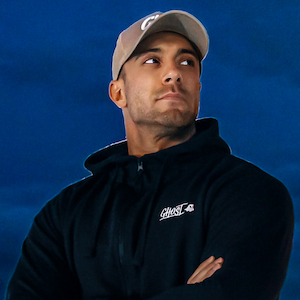
[00:00:09] Ray Latif: Hello, friends, I'm Ray Latif, and you're tuned in to Taste Radio, the leading podcast for entrepreneurs and innovators in the food and beverage industry. In this episode, we're joined by Dan Lourenco, the co-founder and CEO of Ghost, who has led the fast-growing brand from niche sports nutrition startup to a leader in the beverage and active lifestyle space. When Ghost co-founders Dan Lourenco and Ryan Hughes launched their fitness and lifestyle brand in 2016, they weren't chasing headlines or quick exits. They were trying to build a company that felt like a movement. From the outset, Ghost resonated with a younger, influencer-savvy audience. Drawn to its bold candy-and-snack-inspired fitness supplements, flavors like Warhead and Sour Patch Kids brought a nostalgic twist to recovery powders and wellness products. Building on this momentum, the brand expanded into energy and hydration beverages, achieving broad distribution across major U.S. and international retailers while cultivating a strong direct-to-consumer presence. In a significant endorsement of its growth and potential, Keurig Dr. Pepper acquired a 60% stake in the company for $990 million in October, with plans to purchase the remaining 40% by 2028. So how did a company that deliberately avoided a traditional marketing playbook become a household name in sports nutrition and energy? In a candid conversation, Dan pulls back the curtain on Ghost's rise, from behind-the-scenes YouTube videos to blockbuster licensing deals and national shelf space. He explains why authenticity remains the brand's North Star, and why for Ghost, that goes beyond simply being founder-led. Dan also reflects on the personal journey behind the business, how stepping away from social media helped him regain focus, What scaling a brand taught him about leadership, growth, and staying grounded. Hey folks, it's Ray with Taste Radio. Right now, I am supremely honored to be sitting down with Dan Lourenco, who is one of the co-founders and the CEO of Ghost. Dan, it's great to see you. Yeah, good to see you again, man. Thanks for having me. Yeah, again, I think the first time we sat down was virtual though. Yes. And this is face-to-face. Finally, live from NYC. Exactly. Live from New York City. We just wrapped up DevNet Live Summer 2025, an event that you spoke at. And it was so great to see you up on stage talking about how Ghost has sort of navigated the post-sale, as it were, to KDP. You're still very much an equity owner in the company, though, right?
[00:02:59] Dan Lourenco: Oh yeah, me and my entire leadership team locked in, still running the company. We've got really big incentives in front of us. And even beyond that, right? Our goal, I don't think has changed. We want to build Ghost into a hundred year brand. We got 91 to go. There's three years left in our current deal transaction with KDP, but regardless, we've got much bigger goals and far reaching there.
[00:03:17] Ray Latif: I think I've heard maybe from one other founder, this vision of building a hundred year brand. What do you mean by that?
[00:03:24] Dan Lourenco: Well, your why changes, right? As the days go by and things evolve, as any founder would tell you day one, your goal is to survive. You have a unique idea, a unique value prop. Hopefully you're passionate about what you do, we hope, but really you need to survive. And once you get past the survival stage, You find yourself a cruising altitude where you're not really kind of at your goal yet of maybe really being disruptive or bringing a new category, a new product set or just new way of doing things to life, but you're kind of safe and secure, but you're still cruising. Once you get past the stage we're at now where, okay, we have sold a majority stake to big strategic and Keurig Dr. Pepper, big monetization event, huge success by anybody you ask. Sure. You have to redefine your why. And for me, it becomes about long-term impact. It becomes about legacy. It becomes about building something that hopefully outlasts my time on the planet. So when we say 100-year brand, we just want to build something that is enduring and here for the long haul.
[00:04:17] Ray Latif: One of the great things about Ghosts, and you and your co-founder Ryan, is that every time I've heard you speak and every time we've spoken, I feel like you're not trying to BS me. And in this industry, it's not widespread that people are trying to get one over on me or anyone at BevNET, but you know, sometimes it's not necessarily the real deal, right? I don't want to use this word lightly, but you guys are authentic. It's really represented in your brand.
[00:04:41] Dan Lourenco: Well, that means a lot. That's probably the biggest compliment we can receive. And a personal mantra that the company's stolen now, and I talk about this a lot, authenticity is undefeated. And that didn't start out as a marketing strategy. It didn't start out as a bumper sticker or tagline. It started out as a way that we did things because we frankly didn't know any better. We just did things the best that we could, the only way we knew how. And we went at this industry and category that we love in a way that was truly authentic to who we were. We wanted to build a brand that we wish existed. And I tell people now all the time, if there's any reason that we got to this place and found ourselves at this level of generally accepted success, it's because we didn't try to. We just built this thing brick by brick the best way that we knew how.
[00:05:17] Ray Latif: And a lot of it, the building that is, came from innovation. You guys were doing things that other people were not doing. Differentiation is the key to any CPG company. Seems simple, right? It does seem simple. But I think the focus, and when we talked about this, you said from the inception, we haven't changed the way we innovate. But how do you innovate in a way that is very different? In the categories that you're in, you got to be really different. Right.
[00:05:38] Dan Lourenco: When we were first starting, Ryan and I wanted to test this hypothesis of how big and how far could we take Ghost without ever really sacrificing on kind of these ideals and our view on the category. And that was transparency, telling people what's in every single one of our products and every can and every scoop. It was efficacy, not diluting what we're doing for the sake of a dollar, right? We say details over dollars a lot too, and that was really important. We wanted to be collaborative and kind of disruptive in that way. We pioneered licensing first in powders and then again in beverage. We wanted to make sure that we were having fun and kind of making sure that goes continue to be the social shareable thing. Like we're in an industry, we're in a category where that is critical. We're not out here, you know, in medicine saving lives. We're not first responders. So if we're not having fun and just trying to bring people together, sometimes there's a break from the realities of their long days or what have you, then what are we doing? And we just use that to drive the entire brand really from day one. And when you talk about, hey, you need to be really disruptive and stand out, it's really unique. We've just been big believers that you can't be me too people in these industries. Like we wouldn't have built Ghost if something like Ghost existed. We'd have figured out something else to do. I don't know what it would have been, but we wouldn't have built Ghost, right? We built Ghost because it was the brand, again, that we wish existed.
[00:06:47] Ray Latif: I love that. We wouldn't have built Ghost if it already existed.
[00:06:50] Dan Lourenco: It sounds so simple, right? If you're listening this out of context, you may be like, well, no kidding. But honestly, look around, right? There's quite a bit of that. And that's also why a lot of times I think people come up a little short when they look at a brand that's doing really well and say, oh, I'm just going to emulate that. But they don't really understand what the secret sauce is or why it's working. I'm very proud, I guess, and humbled that we were the first to introduce these authentic flavor licenses. You've seen a lot of other folks across all categories start licensing. Some have been successful. Most of them have not. And it's because licensing itself and these collaborations were not the secret sauce. It's the It's the sum of the brand and the brand that you're licensing, and most importantly, how you execute it and the why of how you tell that story. It's the sum of all those parts. So when you try to just create a me too, or you try to say, oh, I'm gonna copy this or be inspired very closely by that thing, I think your odds of success go down because you're not just trying to be authentically and uniquely yourself.
[00:07:44] Ray Latif: Yeah. And I love that fun is a big component of what you do. John Craven, our CEO, talks about this all the time. He's like, look, beverages should be fun. And he would know because he's tried everything. Right. And I think when you see a brand that's just there and the why isn't there, you got to have something. And I think in general, you want to just be able to enjoy a can of whatever it is that you're drinking. And part of that comes from the fun factor.
[00:08:06] Dan Lourenco: That's why we started taking these products. And I've always kind of believed like we're not really that unique or that special. I guess it's kind of like a personal belief. And it's like, Hey, like we started taking these products, whether it was pre-workout protein or energy drinks, whatever. We started taking these types of products or drinking them for these reasons. Other people are going to drink them for those reasons too. We weren't super serious about it. We had fun with it. Right. And all we did, like our marketing strategy from the get-go was no marketing strategies. Let's just share how we used to interact and consume with these brands and products through the lens of our own.
[00:08:35] Ray Latif: Can you still do that with KDP? I mean, I'm sure you have more resources now, but are you a bit more tempered in your approach? Yeah. A hundred percent. We can still do it with KDP.
[00:08:43] Dan Lourenco: I don't think we would have been excited to do a deal with KDP or any large strategic. We didn't really believe them that they would give us room to run and room to continue being ghost. A phrase I've used, like plug When Ghost guitar into the KDP amp, right? Where it's still our instrument and still our song, and they're just going to help us amplify and bring it to more and more people out there specifically through the distribution machine. They can help us get maybe more efficient, a little smarter, wiser on a lot of the backend stuff, operations side of things, hopefully production, and really kind of start to sharpen our pencil there. But as far as what makes Ghost, Ghost and the consumer-facing brand and product innovation, like they've let us run, they need us to, frankly. Part of the session that we talked about today here at BevNET was really about the role of a smaller org within the org being able to bring innovation and ideas to market and to life that some of the big strategics just simply cannot do. And I think that we're there to play that role.
[00:09:31] Ray Latif: Well, when you were starting out and you've talked about this, you had this sort of nothing to lose mentality and a scrappiness that entrepreneurs absolutely need to be able to succeed. And I think as you get bigger, the risk of making big mistakes and the risk of saying, well, we're just going to do it because we have nothing to lose that changes, it changes, the risk increases. So how do you walk the line between we're going to do this the same way we've done it since day one, and we're now part of a big corporate entity?
[00:09:58] Dan Lourenco: Well, I think part of it is just having pretty broad shoulders and being able to say no. No is a powerful word. And sometimes we'll, and not just with our current partner, but even in years past, have an idea that they're really excited about. Oh, we want to put this in all grocery and all convenience from day one. Like, no, no guys, guys, this is a little bit funky. This is kind of new or disruptive idea. We want to test it. And like big companies don't do that because they're so focused on the dollar today versus the longterm vision. I think that's what kind of comes with the territory. A lot of times the large coast, especially publicly traded, maybe more important than scales is publicly traded or private. They kind of are incentivized to live a quarter of time versus building for the longterm. So being able to push back and say, no, we want to innovate in a controlled environment. We want to test, we want to keep elements of the brand that were small and maybe not direct contributors to the bottom line. It's not all about ROI. being able to kind of keep those things while then kind of also finding the moments to go big with your new partner's resources is the balancing act.
[00:10:52] Ray Latif: Let me use the metaphor here because I know you're a pilot, feeling comfortable in a smaller jet engine with some of the smaller planes out there.
[00:10:59] Dan Lourenco: Yeah, look, I mean, as a founder, I've had to learn to get passionate about flying the jumbo jet. Yeah, I'll always be like a little flying acrobats, little pits, little Cessna, some of those guys. I'll always be a lot more passion. That's what lights me up. But look, part of the big co, the mission for me and what I've really found is helpful, if not, is really, really exciting is finding the moments or the areas of the business that still feel like that little fighter jet. Right? Some of the stuff we're doing globally now as we launch new markets, what we're doing in on-premise, right? These are nascent business extensions where, yeah, sure, in the grand scheme of things, we're flying the jumbo jet, but you still find these little moments of early stage growth that really, as a founder, kind of scratched the dish for me.
[00:11:39] Ray Latif: I imagine some of the comfort that you're feeling with KDP came from some of the lessons that you had with a prior strategic that Ghost was involved with. And there are so many early stage brands or emerging brands, they would just love to align with a strategic, but there are some risks involved. And what may look like a partnership that's aligned at the outset isn't necessarily that later on. And I'm not speaking about the experience that you had When Ghost, I think just in general terms. Sure. That's life. Yeah, but how did the experience with ABI help you to feel comfortable, help you to better know how to navigate and work with KDP?
[00:12:10] Dan Lourenco: Well, first and foremost, Anheuser did a phenomenal job helping us get the brand out in the early stages. Even zooming out from Anheuser, the beer networks have done such a tremendous job over the last decade or more at helping non-alcoholic brands get out of the blocks. I think the question remains, and the challenge remains for those guys, can they be a partner forever in perpetuity for any non-ALC brand? I wholeheartedly believe the beer networks have the ability to be best in class with any product that they want to distribute on those trucks. They just have to have the desire to do it if it's not beer, right? I think as far as my experience goes with Anheuser-Erders in general, You have to learn from every chapter and every stage. I think it's the only real constant is that change is coming. Each chapter is going to kind of close, going all the way back to the glass box at WeWork days to then the first office days and having 10 people is different than managing 100 people versus managing 200 people. I think one of the biggest lessons I learned from the Anheuser days is at each level of growth, it's really important to stick to your guns and your way of doing things. As you continue to grow and people get more excited, the dollars get more real. Teams want to get more involved, more integrated, and they're doing that always coming from a good place. You just can't expect the big strategics to understand your brand. like you do, right? So it's really important that you kind of just stay, I think, true to your way of doing things while being open-minded as far as places that they can add real value. That was true with Anheuser, it's true today with KDP, and I think it'd be true for any brand out there considering or currently working with a big strategic.
[00:13:35] Ray Latif: You and Ryan started this company when you were relatively young, and you're still pretty young as well, and I wonder...
[00:13:40] Dan Lourenco: I just had a birthday, so thank you.
[00:13:41] Ray Latif: Congratulations, happy birthday. I wonder how much of your youth impacted how people treated you, how strategics looked at you as founders and as founders that could take the company to the next level.
[00:13:51] Dan Lourenco: It's funny, a couple of things come to mind there. I mean, so I was a charter captain flying planes at 21 years old, so I'd ask the same question for my passengers back then, right? I can't imagine 21 year old kid flying a Piper Cheyenne around the Northeast, how that would go. But I think as far as our age and just like the youth, it was helpful in one respect because we're so different than a lot of people that surrounded us. And we had our rooms of bankers and what have you. And, you know, we don't look, we don't talk, we don't act like them. And that was kind of an asset. In fact, The night before Ryan and I's first ever meeting with Anheuser-Busch here in New York City, we met in our hotel room and we laid out potential outfits for the meeting. Like, hey, should we go blazer? Should we go button down? Like, what do we want to do here? And we actually made a really important pact that I think has advice and legs far beyond an outfit choice. But we decided to always be ourselves. And we rocked t-shirts, ghost hats, and Jordans. And the very first thing that was said to us at the meeting the next day was, we like your shoes, right? Because they were sneaker guys. And we never deviated from that or even questioned it again. I'm just being yourself. But like, look, I think from just leading the Brandt Gehrs when little known fact, I guess maybe about goes to launch the brand on my 30th birthday. So my birthday is the same as coast. It just happened that way. It wasn't really the plan. And because the whole message has always been this authentic. authentic, transparent story. As I said before, the marketing strategy is no marketing. The brand has kind of grown up maybe with us. And it's been kind of our goal to continue to add great people to When Ghost team and Ghost family around us. So we can kind of speak authentically to younger fans and customers. But also we've seen our customer demographic get a little bit older with us too. So being able to toe that line and speak to everybody while always being yourself has been a huge asset.
[00:15:23] Ray Latif: Yeah, as the company has grown, you've had to evolve. You've had to adapt. And one of the things that we chatted about before we hopped on the mics that I thought was really interesting was that you're hoping and you're working on a strategy in which the kid who's going to college is potentially drinking the same thing as their dad. Very few brands can do that. It's a huge honor.
[00:15:42] Dan Lourenco: You think about the Nikes of the world, the apples of the world, that maybe parents and their children are consuming the same thing. That's cool. Again, we talked about already today, fun, social, connecting people through beverages and just through these products is really our whole why and why we started this thing. So if you've got a kid going to college, him and his dad are stopping over to grab a ghost on the way, like that's a really special moment. And that's really kind of what it's all about. And from a business perspective, that's obviously amazing too, because we're broadening who our potential audience is.
[00:16:09] Ray Latif: Yeah, well, the positioning is such that you have a foundation to do so, because when you started out, you were very much fitness focused, pre-workout community, launched the beverages in 2020, and you kind of had to market or expand your audience or think about who your audience could be. How did you do that? And what lessons can you share with our audience about some of the things that you expected to work and then some of the things that didn't work as well as thought they might?
[00:16:34] Dan Lourenco: Well, the first thing is we never really expected to be in the beverage industry. We were big sports nutrition guys. And when we launched Ghost on day one, June 1st, 2016, we had two powder products, a pre-workout powder and a hydration powder. We didn't have protein because we couldn't afford it. Beverage entered the conversation around 2018, 2019, when we just started looking at what are people buying When Ghost that's not Ghost. And over and over and over was a resounding sugar-free energy drinks, functional energy drinks. But we looked at what was out there and said, hey, we kind of questioned, are they actually functional? Are they delivering on that promise? It seemed like there was an opportunity to do things When Ghost way and bring our transparency, efficacy, flavor collaborations to the category. And it worked, obviously. And I think that the lesson there was just, again, really taking time to listen to your customers, see what their behaviors are, see how you can be additive to their life. We don't want to just be a scoop in somebody's shaker as they go to the gym in the morning. We want to play a much bigger role throughout their day, like a Nike, like an Apple. where you're just, you mean a lot more and can participate a lot more in somebody's day and routine. That's going to be better from a company perspective, more fun from a brand perspective. It's essential to building a community. The business case obviously works too. So that was kind of the takeaway was just listening, creating products for your community and really thinking about how to authentically expand what you're doing versus We're going to go chase this category because the category trends tell us to. That's just not us. It's never been us.
[00:17:52] Ray Latif: I mentioned it. I think you had permission to do so because you had the foundation to do so. It feels like you started a lifestyle brand first and then, you know, a result of that lifestyle brand was that you were able to go into a whole bunch of different categories.
[00:18:03] Dan Lourenco: And that was a little bit the plan, but not really. There wasn't really a master plan. It was really been inspired, admired kind of the Nikes of the world who have this brand platform that can extend to all these different communities vis-a-vis different sports. Well, why don't we try to build that in the functional kind of nutrition, functional beverage kind of world? And I think humbly we're a little bit on our way to doing so by connecting all these different people through just different product categories, different usage occasions and different walks of life.
[00:18:28] Ray Latif: You've said a number of times that your marketing strategy is no marketing, but if you think about and you've talked about Nike a number of times, their marketing is so dialed in. They're so good at what they do. I mean, every time I see a Nike advertisement, I'm like, oh my gosh, who's doing this kind of stuff? Even though you're not necessarily thinking about marketing, how have you best connected with your consumer? And I know the easy answer is authenticity, but yeah.
[00:18:49] Dan Lourenco: Well, no, sure. When I say there's no marketing strategy, I mean, we didn't sit in a room and kind of figure out what the campaign slogan is going to be. Our strategy is really just to tell it like it is. So share with the world how we are talking about how we are sharing these products. Kind of starts at home, right? On YouTube, really almost since inception, it was like year one or year two that we started it. You can tune in weekly and get a behind the scenes glimpse at product development, the office culture, the vibe, see products coming to life on a whiteboard month or a year before they hit shelves. I think that was important, especially in those early days where people just really get a sense and feel of like what we're doing. And we wanted people to feel like they belong. We wanted people to have a sense of ownership. So by the time it hit shelf, they weren't buying it because they were excited for it. They're buying it and sharing with their friends because they feel like they were there when it was created. So that's what I mean about flipping the strategy. What we've done, I think since then, we've layered a lot on with live events because of so much of our early days being online. The second, we had the ability to go offline and bring people together in real life, not just kind of on Instagram or on YouTube. That was really important to us. Got an amazing partnership with Live Nation, specifically the Insomniac portfolio, working with them on bringing back Warped Tour. The first one is this weekend, 30 year anniversary for them, which is huge. It's an honor to be a part of that. When we're young, so many festivals and big gatherings When Ghost can hopefully play a small role and a great memory and bring people together. That's been huge for us. We've partnered with some modern sport teams, but also teams that have real intrinsic meaning to Ghost. The Vegas Gold Knights were started in Vegas, they're Vegas born, we're Vegas born. Chicago Cubs, that's our headquarters and second home. Philadelphia Phillies, my co-founder Ryan's from Philly. That also helped us unlock some retail in the area and was really helpful. So again, we're expanding what we're doing. I think the things that inspired us, we're now humbled we get to work with, but it's very authentic. I think no one's looked at it, some of these partnerships, like, oh, why are they doing that? Oh, that makes sense.
[00:20:31] Ray Latif: Yeah. When you realized your content strategy needed to evolve, particularly from online to offline, how do you maintain the excitement, the fun? Because your YouTube stuff is tremendous. I mean, you were doing that kind of stuff way before every founder was talking about their company, which happens now. A lot of the content is just founder led, but how do you maintain the connection with consumers who love to see you on YouTube? Right. We're figuring that one out.
[00:20:55] Dan Lourenco: I actually don't have a perfect answer for that. It's harder, obviously, as businesses scaled and the meetings have scaled and who's in the meetings has changed a little bit. It's harder to kind of always be present with a YouTube camera, but it's something that we're actively talking about to figure out what pathways, what opportunities do we have to continue to share the story with our fans out there and people watching. So when we get that right, I'll definitely circle back and can let you know, but it's critical to us. We want to be the most accessible brand out there. And we want to continue to embrace the fact that even if someone's not actively buying Ghost at that moment or whatever, we may be playing a different role in their lives with like this entertainment and this community value. So we're actively finding ways to kind of do that just in a new way, whether it's on or offline.
[00:21:37] Ray Latif: I think you personally have taken a step back from social or at least it was something where you felt like you needed to unplug a bit. Yeah.
[00:21:45] Dan Lourenco: Just on Instagram. I deleted my personal Instagram a few years ago. It was only meant to be a couple of weeks break. And then I realized, holy smokes, my thumb is like just subconsciously going to the spot on my phone where the icon used to be. And that's not healthy. So I gave it a couple more weeks and I realized just how much I loved not being on Instagram personally. We put so much time and energy into When Ghost accounts, and there's several of them now, an energy account, a lifestyle account, and so on, gaming. We put so much time and energy into that, and so much time and energy into the YouTube. Being personally accessible just anywhere and everywhere was something that I felt like maybe wasn't good. And I don't know, I don't really believe in coincidences. Getting myself a little bit more focused, that kind of coincided with some pretty big growth. for the business of just heads down, blinders on, go, go, go. So I'has retained my Twitter and I use that sometimes to maybe share a personal perspective on kind of what's going on. But we're still figuring out, I think, largely the balance, but it wasn't strategic. It was kind of just a small thing that turned into, hey, I actually really enjoy this and I'm proud that the company can now speak for itself versus me having to be on Instagram all the time.
[00:22:46] Ray Latif: Yeah, well, moderating your social media use and how often you're online, I think is important for everyone. I don't know how indicative it is as to whether we're going to start to see a decline in social media use. The algorithms have gotten so good right now where it's the content that you want to see, you're seeing all the time. You know, that said, are you working with the big platforms? Are you working directly with a TikTok or a Facebook or an Instagram?
[00:23:10] Dan Lourenco: Our team is starting to. We were a little bit late on TikTok, honestly. We take our marketing guardrails really seriously as far as like wanting to market to adults like 18 and up. And TikTok, of course, when it launched was very young. And that changed very quickly to, oh my gosh, it's the trendiest or hottest platform that everybody's on, like all ages. So we were a little bit late to that one, and I think we're still kind of finding our footing there, but it's all a balance, right? I'd rather just be a great brand, an accessible brand that makes good content and brings people together across all channels versus, as you well know, oh, this brand is big on TikTok. Oh, this brand is big on Instagram. Like we kind of want to do it all and be where we need to be without kind of being so focused or thinking that any one of those things is going to be an absolute game changer. I think it's important that we're just everywhere, on and offline.
[00:23:55] Ray Latif: So one way I've seen companies build a presence on TikTok and with younger consumers is with aligning with the brands that they're familiar with, that they love. And you guys were the forerunners of doing some of that stuff. I mean, the collaborations you did with candy brands was, I mean, made you younger, at least made you more relevant to a lot of people. How do you think about collaborations or licensing deals now? Because I imagine that's evolved a bit as well.
[00:24:17] Dan Lourenco: Oh my gosh, yeah. It's interesting. When we launched our first ever licensed flavors, it was Warhead Sour Watermelon pre-workout that we launched December of 2016. And it was the first time that that had ever been done kind of in the powder space. Previous to that, though, you had this weird era of fake flavor. I mean, it really is IP infringement, but people having Skittles with Ds instead of Ts and Sour Patch Bros and things of that nature. I always just wondered, hey, why does no one pick up the phone? Like why no one get in front of these companies to try to do it the right way? Again, I think part of the secret to our success is we just asked all the questions because we didn't know any better. Right. And we launched that first license having no idea that it would start really this trend, an unstoppable trend and so many different categories of flavor licensing. And absolutely in the early days, it was hugely disruptive. It really helped us stand out. It drove a ton of trial. We were able to bring those licenses over to the beverage category. I want to believe that helped us out a lot in the exact same way of driving trial. You're not familiar When Ghost, but you see this kind of brand like Warheads. executed in a sugar-free functional energy drink. Heck yeah, I'm going to try that. So that was really helpful. The thing is, nowadays, there's just so many licenses out there. It's really important who you license with, how you execute it, what's the alchemy between your brand and the brand that you're licensing. I think that really requires a lot of thought. So like, look, from this point forward, we think about licensing a little bit differently. We're doing a lot of celebratory special edition sleeves for events. So this year we did something really cool with one of my favorite bands, The Used, to celebrate their 25th year tour. We're talking about extremely limited number of these special edition cans, but that's kind of fun to, again, decommoditize this market and do something premium and searchable. And so we're thinking about collaborations a little bit differently in that way. We did something else in powder with Cinnabon, where the reason that we chose to go with Cinnabon is it's a global license. Previously, we hadn't had any global licenses. We were able to execute it in a vegan friendly format, which was the first time we've been able to do a vegan license. And we're still using their official Macara cinnamon, so it's still authentic. So that kind of checked all the boxes for us as far as what that license was unlocking. We're just a lot more choosy now because the days of us being the only people with a licensed flavor in store are long gone. If anything now, I think you go into especially specialty stores, I think you can make a fair argument that it might be over licensed. So we're trying to look around the corner to figure out like kind of what else can we bring? What's going to be the next quote unquote licensing for these categories that can really, I think, help continue to evolve and grow.
[00:26:35] Ray Latif: Does your licensing strategy help you reach new potential customers for Ghost?
[00:26:39] Dan Lourenco: Yeah, on one end of the spectrum, yes, absolutely. Maybe people will try us that weren't previously thinking about trying us because they see a flavor profile or a brand or a movie, an event or something that looks really cool. And I'm a fan of that. So I want to try this. I think on the other side of it, though, you're just also continuing to excite your core fans and customers of, oh my gosh, like, it's cool that my favorite energy drink is now partnering with my favorite sports team. And there's a Cubs can. It's a flavor that we already had out in Cherry Limeade, but now you have a Cubs themed can. People are interacting with brands they love in more unique ways. And we're doing that together.
[00:27:11] Ray Latif: I wonder if your fans ever thought they'd see a ghost cereal.
[00:27:15] Dan Lourenco: Yeah, look, I don't know if I ever thought there would be a ghost cereal, but if you look at our very first teaser reel in 2016, we're pouring ghost protein beta samples on top of cereal. We would call them legend bowls. That's the kind of fun where I say there's no markings, right? That's the kind of stuff that we would just do because that's just what we did, right? So cereal has always been a big part of our DNA. All of our even owned protein flavors are like cereal inspired flavors. So to have the opportunity to work with General Mills, you know, one of the kings of cereal on an actual ghost cereal, it's been really, really special, really rewarding.
[00:27:44] Ray Latif: How do you do something like that without it being a distraction?
[00:27:46] Dan Lourenco: Totally fair question. In that case, we're actually licensing Ghost to them. They're manufacturing it. We get to kind of go through the flavor approval process with them, development process, and we're designing the boxes. But ultimately, like they're handling the distribution and things of that nature. So again, even just like from the business perspective, Ghost is in a place that we're licensing our brand to one of the kings of cereal and general mills. That's a pretty special feather in our cap.
[00:28:07] Ray Latif: Dan, we chatted about this just before this interview and the risk of founders losing control of their company because an active investor might think, you know what, this company could be doing something different. Somebody else should be running the ship. And you've maintained control of the company through its majority sale to KDP. And I'd love to hear from you about how you navigate the challenge of being a founder who someone might say you're great at the vision part of what you're doing. You're great at rallying the troops and being innovative. But when it comes to building a multi-million dollar or billion dollar brand, there are other people who might be more experienced, who know the infrastructure of beverages and how to scale a brand globally better than you. And I can't imagine anyone else doing that but you. It's certainly not up to me and it's not up to your customers. So, yeah.
[00:28:55] Dan Lourenco: Right. Yeah. I mean, there's a number of ways to approach that. So number one, for any of the founders out there, you're always going to be a founder no matter what. No one can take that title away from you. As far as the specific role that you play within the company, that is a little bit subject to change. I mean, I've been CEO from day one, but I joke and say it's chief everything officer because I've had to wear a lot of hats and I've kind of always put my time, energy and focus where it was needed. And sometimes that's changed based on how we're growing the needs of the company and also who I was able to hire and bring into the fold. If I have someone really great covering product development, right, I can give them the football there and focus in other areas. I think that when you partner with a big strategic, some of that rings a little bit true as far as where are they going to really lean in? What are the elements of the business that they should be actively controlling or really kind of managing because they're just simply better at it? That's why you're there in the first place. And then as a founder, as a CEO, probably turn your attention to other areas of the business. And I think that's always going to be an evolving, changing conversation. You just have to be open-minded to it. I think that it's important for a founder contemplating any big transaction, especially if it's a majority stake, to really make sure that they're well-protected, that the things that are most important to them are well-protected. You're going to have to give up that control of some areas, but make sure that you protect the things that are most critical to you and most critical to what you believe is going to be the growth of the brand and fight for those things. Die on your sword. That's the hill to die on.
[00:30:11] Ray Latif: and hopefully be happy with the outcome. It's a tough business.
[00:30:15] Dan Lourenco: You have to remind yourself that you're there because the big companies in many ways need you. You're doing things that they can't do. And if you just should do it their way 100% of the time, then they wouldn't be interested in you in the first place. So even though sometimes there can be a little bit of friction and bumping heads over those things, that's almost to be expected, but you're there for a reason. So you should continue to, I think, double down on that.
[00:30:35] Ray Latif: So much of your recent life, the last 10 years, have been consumed by your business, by ghosts, day and night. I'm sure it's a 24-7 thing even now. How do you stay personally happy aside from the business? I don't know if you can separate the two, but how have you been able to maintain a personal life where you've been content, comfortable, happy? And maybe you're none of those things. I don't know.
[00:30:56] Dan Lourenco: Well, no, look, first and foremost, I'm very blessed because the line between work and fun is so thin for us. And I've surrounded myself with great people, inclusive of, you know, my best buddy, Ryan, on this journey. I don't know where I would be if I didn't have him and kind of a lot of our other team members have been great members of the team and the family on the ride. I'll be honest with you, I did an interview a few years ago where I got asked a similar question. It was maybe the first time I actually thought about like, happiness or mental health or balance or any of those things and it caught me a little off guard and it really made me think since that point it's really important as a founder to try to take some time for yourself for your own head and find find the things that do make you happier give you a little bit of maybe a mental break and keep your kind of mental health and just excitement and passion intact your business needs you to do that And I don't think I've done a good job at that always over the years, but it's critical to stay again, motivated, inspired that you really do that. So I've found some things, especially more recent years that are good outlets and that helped me keep those things in check. So I play a little guitar, picked up skiing again after something like 20 years, not on skis, always wanted to do it. It's not a cheap thing to do. I really couldn't do it, you know, in my starving entrepreneur decades there. We have an amazing partnership with these guys called Emo Night. I'm a big pop punk emo fan. They actually let me get up there and DJ a couple of times, which has been a lot of fun to sing and dance and share that with everyone. And I'm happy to say I'm recently a dog dad, got a little puppy named Bond. And again, like these are the things that in a weird way have some connectivity to the brand, but that's because the brand is such a personal statement. But you also have like kind of that private off switch piece of it too, where, you know, you really just need to as a founder who is just go, go, go fully invested day and night, can't turn it off. You do need to do your best to take time to keep your happiness and mental health in check. And that was maybe a lesson I wish I learned a little earlier, but questions like this made me think about it. So I appreciate it.
[00:32:39] Ray Latif: I mean, you've been smiling the last two minutes talking about all the things that really do make you happy, and it's great to see.
[00:32:44] Dan Lourenco: I mean, puppies and emo, let's go.
[00:32:46] Ray Latif: I would say so. Dan, you've been so great about wanting to pay it forward, sharing the advice, the wisdom, the experience that you've had as a founder. I wonder if at this point, given your situation, if you're actively investing or considering investing in emerging concepts.
[00:32:59] Dan Lourenco: Short answer is yes. There's some limitations, like any kind of founder, on what you can do while you're kind of heads down, still running the company. But it's really humbling that I'm in a position kind of be able to give back or have kind of lived it, done it, come out the other side somehow. And if I can share that to help others not have to go through the same thing or make the same mistakes, or at least make this mistakes cheaper. And then maybe, you know, I did over the years, I really feel compelled, if not a responsibility to do so. So whether it's just being accessible for questions on platforms like a Twitter, whether it's having the opportunity to meet so many great founders with some awesome questions at awesome events like BevNET, or whether it is having the opportunity to look at some personal investments for the first time, the answer is kind of yes to all of it. And I'm excited to start thinking about that more. Again, just like the personal happiness piece or the balance piece of it was not something I even spent one second thinking about for most of the last nine years. But now's the time that it's really exciting to think about having the opportunity to do so.
[00:33:54] Ray Latif: This conversation has flown by and I know that whenever I am doing an interview like this and I look up and I'm like, whoa, we're 45 minutes in. It's been a great conversation. So Dan, I can't thank you enough for taking this time. I know how busy you are and I know someone's waiting to take you out for lunch. So I'll wrap up here and just say it's truly amazing to see entrepreneurs start out with an idea, kind of fly by the seat of their pants and build their way to a billion dollar plus brand. It doesn't happen very often and you have to be doing something really special. You also have to really believe in it, work your butt off.
[00:34:27] Dan Lourenco: Look, never in a million years, and again, any entrepreneurs really listening to this, I think it's critical that people really believe me when I say I believe the reason that we got here is because we didn't try to. Keep your head down, focus on your people, your products, your partners, really try to hone your craft. You'll hopefully have an experience like Ryan and I did where you one day pick your head up, look in the rear view and say, holy, we sold what? And then once you get to that point, opportunities for the big exits and interviews at Taste Radio and all that, they kind of veil themselves. But if you start down this path or you start a business with just that singular goal in mind, I think your odds of success go down. So you have to enjoy the ride. You have to just really focus, like I said, on your people, product, and partners. The three P's talk about it a ton internally.
[00:35:11] Ray Latif: And let the chips fall where they may. Chips fell really well for you. And once again, Dan, such an honor to speak with you. Thank you. Perhaps we'll do this again soon when it's all said and done with the deal with KDP. I would love to make that happen. Absolutely. Thanks so much again. That brings us to the end of this episode of Taste Radio. Thank you so much for listening. Taste Radio is a production of BevNET.com, Incorporated. Our audio engineer for Taste Radio is Joe Cracci. Our technical director is Joshua Pratt, and our video editor is Ryan Galang. Our social marketing manager is Amanda Smerlinski, and our designer is Amanda Huang. Just a reminder, if you like what you hear on Taste Radio, please share the podcast with friends and colleagues. And of course, we would love it if you could review us on the Apple Podcasts app or your listening platform of choice. Check us out on Instagram. Our handle is bevnettasteradio. As always, for questions, comments, ideas for future podcasts, please send us an email to ask at Taste Radio.com. On behalf of the entire Taste Radio team, thank you for listening, and we'll talk to you next time.
[00:36:17] resonated with: you