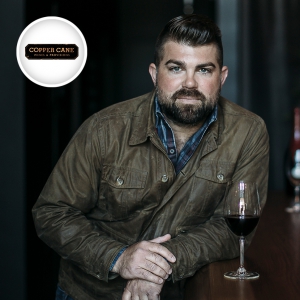
[00:00:10] Ray Latif: Hello, I'm Ray Latif and you're listening to the number one podcast for the food and beverage industry, Taste Radio. This episode features an interview with Joe Wagner, the founder of Copper Cane Wines & Provisions and a pioneering winemaker who was best known for creating Naomi, an industry-shifting brand acquired by Constellation Brands in 2015 for $315 million. Just a reminder to our listeners, if you like what you hear on Taste Radio, please share the podcast with friends and colleagues. And of course, we would love it if you could review us on the Apple Podcasts app or your listening platform of choice. Give your customer what they want is a simple yet often overlooked business maxim. For Joe Wagner, it's the cornerstone of a business philosophy that has made him one of the most successful winemakers in history. A fifth-generation winemaker with a passion for Pinot Noir, Joe launched his first wine brand, Belle Glace, over two decades ago. Eschewing traditional growing methods in winemaking for the varietal, Joe introduced his second brand, Maomi, in 2006. Differentiated by its bold and robust flavors, Mayomi encouraged consumers to, quote, go with your palate. Credo intended to empower people to drink what they enjoy, not be swayed by the sommeliers and critics of the world. The strategy delivered, and Mayomi rode a wave of demand that culminated in a $315 million non-asset sale to beverage alcohol conglomerate Constellation Brands. Joe utilized the proceeds to build out Copper Cane Wines & Provisions, a portfolio company launched in 2014 that features several Pinot Noir-centric brands, including Belle Glos, along with fast-growing labels Elouan Wines, Napa Valley Quilt and Böen. In the following interview, I spoke with Joe about the origins of his approach to winemaking and how he thoughtfully aligned his style with growing consumer demand for bold red wines. He also explained why he's not affected by criticism from some within the wine industry, how reducing the price of Naomi was key to mainstream adoption of the brand, and how the sale of Naomi was guided by Joe's desire to pave the way for his family's next generation of winemakers. Hey, folks, it's Ray with Taste Radio. Right now, I'm honored to be sitting down with Joe Wagner, the founder of Copper Cane Wines & Provisions. Joe, how are you? I'm doing great. How are you today? I'm doing fantastic. It's a beautiful, sunny day here in Boston, so I can complain about nothing.
[00:02:58] Joe Wagner: Well, good. Well, thanks for having me on the show. And likewise, here in California, we seem to have an early spring, which brings beauty and warmth and everything else. Just hoping that we get a little more time for these vines to sleep. Yeah. Have you lived in California your whole life? Pretty much my whole life with the exception of a short period in Colorado and a short period down in Mexico.
[00:03:17] Ray Latif: Oh, interesting. Why Mexico?
[00:03:20] Joe Wagner: That's actually where I started my farming career, was down in Mexico farming table grapes. It was my first career, I guess, so to speak, before I came back up to California and started farming wine grapes as a career. But I had quite a bit of experience prior to that, and just growing up in the industry, working for my dad in the vineyards early on, and then eventually in the winery. Then jumped down to Mexico for a while, managed table grapes, which are a completely different animal than wine grapes. But man, I'll tell you what, you learn a hell of a lot when you're farming table grapes.
[00:03:50] Ray Latif: Now, you didn't have kids when you were down in Mexico. You were still a teenager from what I recall, right?
[00:03:55] Joe Wagner: Well, when I moved to Mexico, I was about 19 years old, but started in the vineyards at about 12. You know, felt like it was punishment, but every spring and summer, any breaks we had, we'd be put out in the vineyards, whether it was leafing or crop thinning. Those were typically the things in those seasons that we'd be doing. And oftentimes, the beginning of harvest as well. Planted my first vineyard at about 15 years old out on the Sonoma Coast. That vineyard is a vineyard I still have to this day. I actually ended up purchasing it probably somewhere around the mid-2000s. At first, it was a lease and it's still part of our Belle Glos portfolio. Fast forward a few years and had this opportunity to go down to Hermosillo, Mexico, which is in the middle of the Sonoran Desert, which is absolutely gorgeous. It's an overlooked place in Mexico, but it's the desert like you may expect out of Tucson, Arizona. There were some table grapes down there, about 400 acres that I was managing. With table grapes, it's a fresh fruit product. Aesthetics are key rather than really maturity parameters, which is really interesting to learn about. Then getting back into the wine grape business, upon my return to California, I was able to apply a lot of the learnings and call it manicuring of a vineyard to just make it perfect in wine grapes. I think that there was a benefit in that, absolutely.
[00:05:12] Ray Latif: You said Belle Glos, which was your first wine label and one of several that you've created. And I mentioned you didn't have kids, obviously, when you were 19. Well, maybe not obviously, but you didn't have kids when you were 19 in Mexico. You've got six kids now. I'm pretty sure you're the first entrepreneur that I've interviewed that has six kids. If you add into that the number of labels that you created, one might say that you have over a dozen children. So the question begs, How do you manage it all? Are professional and personal completely intertwined in your life at this point?
[00:05:49] Joe Wagner: They're pretty well intertwined. I'm fortunate to have kids that are getting involved. Like myself, I have them work on their breaks and they actually enjoy it. My eldest are 15 years old and they've established a good work ethic. That was something I wanted to start off with all my kids from the beginning. Starting with chores and then growing into doing stuff around the winery and in the vineyards. and to this day, they're able to do more and more every year. Hoping to not just instill good work ethic because I think that is the foundation of being a successful entrepreneur, but also staying busy is just a good thing in life. I think the biggest stress that I have in the work-life balance is when you're building a brand or building a business, it requires travel at times. Traveling for us, we have 50 states here and we are also in international markets. And every state, unlike most other products, every state in the alcohol business is its own sort of country. We have to manage each one of those individually. And fortunately, I've got a great team now. We've been building it over the years, not just on the sales side, being able to manage much more of that travel schedule, but also on the winemaking side, as well as the vineyard side, admin, HR, marketing, everything. To find good work-life balance, of course, there's going to be a few years or quite a few years of struggle, hardship, and just be driven to finish what you started. But over time, as you're able to hire people on, and I think a very important learning lesson is being able to delegate. That is an art in itself. Being able to delegate things to people that you can trust and oftentimes do much better than you in those realms of business, that's something that I've had the luxury of being able to do. I got to thank my team every day for allowing me to have a good work-life balance, especially through the formative years of my kids upbringing.
[00:07:39] Ray Latif: Your kids are the next generation or potentially the next generation Joe Wagner in this lineage of winemakers. Your family has a long history in this business. Can you briefly talk about how they got in or how your family got into the wine industry?
[00:07:54] Joe Wagner: Absolutely, uh, so i'll i'll try to make it brief, but uh, my family immigrated here Uh, or part of my family immigrated here in the 1850s They made their way over to california fairly quickly. They planted grapes, uh started making wine And it was mostly jug wine. They were selling over to san francisco across the bay As as that was a growing city, they were shut down by prohibition, uh, unfortunately And they resorted to prunes walnuts and they kept some grapes And they continued to produce some wine just For Joe consumption, which was legal during prohibition Well, they continued to be farmers at heart all the way through the next number of decades, but in the 60s, they weren't making ends meet. My grandparents, Charlie and Lorna, asked my dad, Chuck, if he would join them in a commercial wine business. Otherwise, they were going to sell the farm and move to Australia, and Australia was giving away water rights and land to get American farmers down there and really bolster that part of their economy. And, uh, my dad at, uh, also young age, uh, 19 years old, he just said, yeah, sure. Let's give it a shot. And, you know, I mean, he was probably thinking, uh, I'm going to make alcohol and it's going to be free. And I'm 19 years old. This sounds great. And so they started with their first vintage in 1972 launching Caymus Vineyards. Interesting point about that is that my grandfather thought that Riesling and Pinot Noir were going to be his two key varieties grown right here in the Napa Valley. We now know that it's much too warm for those two varieties. And so over the next five years or so, those varieties kind of went by the wayside and they focused on Cabernet Sauvignon, which was king. To this day, we know Caymus as being a cab producer. Fast forward a few more decades, and I get into the fold in the late 90s and eventually start looking at growing other varietals, starting with Pinot Noir. I don't know if this was by design from my dad, but he sent me out to the Sonoma Coast to plant that Taylor Lane Vineyard. It was my family's first planting of Pinot Noir in decades. When I got into the wine side of things, it became the natural choice to start playing with Pinot Noir just because that's what I had experience with and growing. It started with that first vintage of Belle Glace in 2001 with Santa Napa Valley, which was a new vineyard for us. That was the Clark and Telephone Vineyard. Then 2002, we launched our first Taylor Lane Vineyard. While my family first started off with Alsatian varietals and eventually Cabernet, it was a new breath of life for us to get into something new and unique like Pinot Noir. But in 2001, Pinot Noir was not a popular variety. It was like if you were a wine buyer or a sommelier out there and you had a buyer that was looking for a Pinot Noir, it was most likely going to be burgundy and it was most likely going to be expensive and they knew exactly what they wanted. So it was an uphill battle from the beginning, but I felt like there was an opportunity there I loved Pinot Noir as a food wine. It's got great balance Beautiful acidity and enlivens the palate and really it accommodates a broad array of foods a broad array of flavor profiles Because of its kind of light tannin and higher acid and so I immediately thought well, how do we? Go to market in a different way. How do we bring pina noir into the mainstream? And we created what was at the time the beginnings of the concept of miami And we decided to go with a by the glass focus on that. So going only to restaurants Developing it by the glass so people could experiment with this variety that they may have heard of somewhere along the way And just expose california coastal pina noir to a broad audience throughout the nation We did that for a few years and then of course sideways hit and the rest was rest was kind of history. There's a lot beyond that, but that's that was that was the beginnings of our success.
[00:11:33] Ray Latif: For sure, and for folks who are not familiar with the word sideways and the context that Joe used it, well, think about the movie, the movie with Paul Giamatti that became a huge hit and, well, changed the way people thought about Pinot Noir for sure. It's almost like you can't separate The Prisoner of Pinot with sideways and when it came out and what it did for the varietal. Did you ever think about how you could use the excitement or the interest in that varietal in Pinot to your advantage, or was it just more organic in that more people drinking Pinot allowed you to address that demand?
[00:12:15] Joe Wagner: Yeah, I would say that it was just the exposure in general to Pinot Noir, the curiosity that it drove to the viewers of Sideways. It was a really interesting movie because they kind of they pitched it and they executed it as more of like one character emulated Merlot and the other character emulated the more complicated Pinot Noir. And they had this crazy storyline with it that, you know, I think most young folk, you know, in their teens and 20s probably didn't really think it was that exciting. But the press that ensued after Sideways, the amount of PR that it got, the headlines about Pinot Noir, I think that that even more so than the movie is what drove people to have a curiosity about Pinot Noir. Now, the issue was that there was not a lot of Pinot Noir planted. Nor was there not a lot of Pinot Noir being sold in the US in general. There were two to three years there where I swear there was no Pinot Noir available on the market. You released your yearly amount of Pinot Noir that you had and it was gone in days. It was a wild time. I think the most difficult part of that was staying relevant during that influx because we went from a small group of, God, we'd have these Pinot events and it might be like 15, 20 producers from throughout the state. and we might have 50 to 100 consumers, and we were very appreciative for those consumers to come by, a really tight-knit group of producers. Then all of a sudden, we were having five P&O events a year, there were 400 to 500 producers, thousands of people, and you're like, how do we differentiate ourselves in this pool? It was a massive pool of producers now. You know, I think that one thing, honestly, and this was just dumb luck, the Belle Glos wax, that deep red wax dip, the visual of that, I think helps keep us. That's it. There it is for folks watching the video. There it is. I think that that helped keep us relevant from a visual standpoint, because Belle Glos is not an easy name to say or remember. And so I think that if somebody liked the wine, and they tasted it somewhere, and they said, I don't know the name, but it had this beautiful deep red wax dip, and they go, oh, that's Belle Glos. So I do think that that really helped us out during those few years of just inundation of new producers. And while we did do a couple of things with Sideways, I had some interviews with the guy that wrote the book and the screenplay. It was way early on, but we were a very small producer back then. I was just really appreciative to have the attention put on Pinot Noir. I do believe that at some point in my lifetime, hopefully, I believe it, though, that Pinot Noir will be a more consumed red wine than Cabernet Sauvignon. I talk to my dad about this every once in a while and give him health works. It's like, oh, Cabernet, that's like the, you know, that's what the older people drink. And Pinot Noir is, it's so much more expressive and has so much more of a story, so much more of a soul. And he's like, no, no, no, you're never going to be Cabernet with Pinot Noir.
[00:15:10] Ray Latif: I think you have a point, actually. When I when I think of Cabernet, I think of an older consumer and Pinot definitely seems younger and a little bit more in line with a younger lifestyle. Absolutely. That being said, this does look like a very sophisticated package and something that you would definitely bring to a dinner party or whatnot. Yeah. I mean, packaging, packaging is everything for sure.
[00:15:33] Joe Wagner: Packaging definitely helps. If you can convey the story from the exterior of the dedication and care of what you put in the inside, that is what we were trying to do with that package when we came out with it in 2002. And I'm really happy we do it. It's not the easiest thing to do in the world, but it's well worth it. It definitely has become part of the brand.
[00:15:53] Copper Cane: Guessing your margins? That's risky. Belay Financial gives CPG brands the clarity to scale smarter, faster, stronger. Get your free inventory ebook by texting TASTE to 55123 and start making data work for you. Vibrant Ingredients is the natural ingredient partner powering food and beverage innovation, delivering flavor, function, and protection through a science-backed portfolio. Vibrant delivers purpose-driven solutions that help brands create extraordinary experiences. Discover what's possible with Vibrant today. Visit VibrantIngredients.com.
[00:16:40] Ray Latif: You know, I read an article, it was a profile about you in the San Francisco Chronicle, and the headline read, Wine Industry is Changing, Joe Wagner is the Face of Transformation. Now, number one, did you agree with that sentiment? And, well, I probably should wait to ask number two, but number one, did you agree with that headline? Well, I didn't have a say in the headline, so. People who are being profiled rarely do, so.
[00:17:13] Joe Wagner: Do I agree with this sentiment? To a degree. I mean, you know, we were able to bring a certain style of Pinot Noir to the mainstream, and I think fundamentally changed the way that producers throughout California looked at Pinot Noir. So what I'll say about that point is, prior to Del Gloss or Mayomi, there were only a handful of Pinot Noir producers that were really pushing the limits, allowing it to get riper, and allowing it to express itself in what I think is its best form in California, to a more opulent style of Pinot Noir over the traditional Saber-Gundian style. where the majority of producers, and especially the larger producers at the time, they were all trying to emulate Burgundy. And that's very normal for the new world wine industry to do. As they're developing, no different with Napa Valley Cabernet, they were trying to emulate Bordeaux for decades, and then realized, oh my God, Napa Valley has its own unique terroir and character, and in comes the birth of the Napa Valley Colt Cabernet in the 90s. And that becomes kind of the go-to style. So, as Belle Glos and Naomi continued to develop, we started seeing other producers realize, oh wait, we don't need to chase what sommeliers and critics are telling us. We can make a wine that we think best reflects the land, and it did fundamentally change the landscape of the wine options out there for the customers, where you now have more of a California definitive style Pinot Noir, and then you have more of the traditional style of Pinot Noir. So, do I agree with the sentiment to a degree? I like to change what we're doing i like to experiment every year i do like to push the envelope i'm never worried about offending somebody although it's not something i go out of my way for. So if you truly believe in something, give it all you've got, put all your heart into it, and hopefully other people are going to be seeing the same thing that you're producing as something that is industry changing and exciting to them personally. And at that point, as more of a grassroots effort, it will spread like wildfire. And eventually, you'll be able to create a brand. That's kind of the route that I went about it.
[00:19:16] Ray Latif: Sometimes things that are industry changing are controversial. And, you know, folks might call what you have created and your philosophy as it relates to wine as somewhat controversial, given that the wine industry had been such a sort of closed community in terms of presenting itself to the American population. Now, your approach, and I think it's been written about a few times, is go with your own palate, or go with your palate, in that people should drink what they want to drink. How do you feel about, on the one hand, opening up this varietal to so many more consumers, and on the other hand, let's just call it what it is, being vilified by somebody within your community?
[00:20:05] Joe Wagner: You get over it really quickly, and you always just stay positive about it. I think that that was, The thing that I learned is probably no different than social media now. If you post something, you're going to have to disregard any of the negative comments, uh, because everybody's got an opinion and you don't need to agree with everyone. And, uh, just, you know, growing a bit of a thicker skin and, uh, again, following your passion, I think is, is really what it comes down to. And yeah, in the early days of Belle Glos, we were, I would say misinterpreted in a big way. Uh, the critics themselves, they gave our first couple of wines that we released sub 80 scores. Uh, you know, and this is, these are a major publications like the wine spectator, And I think when I say misinterpreted, I mean that they were just such abnormal Pinot Noirs that were being rated in a lineup of other Pinot Noirs that were more traditional in style. But the fortunate part of it was that the consumer, and they're the ones that vote, they're the ones that matter, they vote with their pocketbooks. And once they tasted it, they preferred it over other Pinot Noirs. And that gave me reason to continue on the path that I was on. And that really gave birth to the philosophy of go with your palate It doesn't matter what you know, what a sommelier is recommending at a restaurant So if you have your own personal opinion on what wine would pair better with what food or you just have a personal preference in general Don't worry about what one critic says or one sommelier go with your palate There's uh, there's nothing wrong with enjoying white zinfandel with a little bit of sweetness There's nothing wrong with enjoying a two thousand dollar bottle of burgundy um, it really is about personal preference and what I love about wine is that Here in the US alone, you have somewhere around 14,000 different options in any given year. You pick up a bottle of Rioja and maybe you love it. That just sparks an interest and you start going down the vein of Rioja and you try all these different wines and find some you love and some that you don't. It may even spark you to travel there and enjoy it. Let's be honest, just about everywhere that grows grapes and makes wine is a great place to travel to. It's just great weather almost all the time. So I think it really does spark a lot of positive stuff. But I think going with your palette is something that is about empowering people rather than putting all the power into the hands of few. And yeah, we got some flack for that philosophy. It goes against the ratings publications. It goes against the sommeliers out there. But at the end of the day, it really is about your own personal preference and how you perceive quality and what something means to you. There's not a lot of people in the wine industry that are willing to kind of take their traditional Mask off and just let it all hang out And so I think that we have a bit of an advantage in that and part of that I would say is because I I am an owner operator A lot of these companies are owned by somebody else and then they hire a team to manage it and make the wine and everything um, and so there may not be the leeway or the freedom to do that within other organizations, but For us being family owned, family operated, very small organization and just very agile. We're able to do things very quickly and also just have confidence in the long term of what we're doing and that's been very beneficial for us. beginning in the pandemic, especially because we were focused in the restaurant world primarily, but then evolving, uh, much more into, you know, driving direct to consumer sales, uh, just getting knowledge out there to people and, you know, in a way kind of becoming a personality in the wine industry, which I'm, I'm very happy that, uh, people are, are, you know, open to, uh, my opinions and want to hear the stories, uh, which, you know, is, is always kind of a surprise to me, but But yeah, it's been eye-opening to see how we can reach more of the customers out there and give them not just great wines, but great knowledge and hopefully great entertainment.
[00:23:49] Ray Latif: I know you said you don't talk about it very often, Joe, but you are known for Mayomi. You are known for an incredible exit, an unheard of exit. I wonder if you can take us through that process because you told me the last time we spoke that this is something that your dad advised against in terms of the sale of Mayomi to Constellation Brands. What factors did you take into consideration when you were going through the process or when you were presented with the opportunity?
[00:24:17] Joe Wagner: There are a few things, but going back to the beginnings of Mayomi, when it was part of the Belle Glos portfolio, I saw that it had a big opportunity to grow sometime around 2010, 2011. And in a family business, you're always thinking down the line, you know, what happens when I die? And it's an unfortunate thing to have to think about but it is something that's important to prepare for Because there is a big tax burden and that's one of the biggest issues facing family businesses in the wine industry Is that it's generally a land-rich business. And so if you die and you have a lot of land your next of kin are going to be required to sell it to pay off the estate tax and then they're out of the industry in general, so I looked at it from the perspective of how do I utilize this brand as a vehicle to be able to create something for the next generation. So I used what's called my lifetime gift exemption to gift 60% of Mayomi after creating it as its own LLC to my six children. and in doing so prior to its valuation climbing substantially in the next five years, I was able to take a lot of my value or future value off of my death tax in general. It was a great move. It's just an odd time to think about it when you're in your 20s and having to think about what happens when I die. but it was the right thing to do looking forward at the future of this being maintained as a family business. Fast forward a few more years, Naomi was growing like crazy. You had mentioned the supply-demand thing a little bit earlier in our conversation. It was the first time that we had taken that, let's try to match the demand with supply. I can go through that a little bit, but it really comes down to the window of release for Pinot Noir is a pretty broad window. It could be anywhere from say July, August, of the year following harvest. As an example, 2021 vintage Pinot Noir could be released as early as July of 2022, or it could be 18 months out. You have the ability to shrink and swell depending on what your growth is. When you have a brand that's growing so rapidly, it's very hard to assess, are we going to be at 20%? Are we going to be at 50% or 80% this year? Being able to manage our supply in that way was very helpful to be able to grow Naomi as it was. But what I realized was, as we were growing, it was starting to pull me out of the fine wine industry, at least the core values of what I got into this business for. And when I say that, I mean, we were producing five, 600,000 cases of one product. And it was getting more and more difficult to be able to make that one single blend and to bottle that one single blend in a short period of time. So I started asking people that I knew in the industry, you know, what is what do you do when you get up to this size? And they all looked at me like I was crazy, like you're trying to make one blend. No, you're going to bottle it in probably five different blends, and it's going to have the same label on it, ship it to different markets, etc. I said, well, that's not the fine wine industry. I want to stay in the fine wine world, so I'm going to figure out a way to do this. We were able to take over a large winery in the middle of St. Helena and utilize that for all of our purposes all the way through to blending. We were able to maintain the philosophy that we had for fine winemaking. So got to a point where we were looking at doing a blend that was nearly 2 million gallons, somewhere in there. And it was just a massive feat. We were able to get it done, but we had Constellation knocking on our door for a couple of years. And they kept saying, just show us what your EBITDA is and let us just make an offer. And I kept saying, no, that's not what I'm in this for. No, that's not what I'm in this for. And finally, I talked to a friend of mine, Dave Finney, who had sold The Prisoner. He was friends with another guy who was a broker of deals like this and M&A. I sat down and talked to him and talked to Dave as well together and said, all right, fine, we'll go ahead and give you some basic financials. They looked at it, got back to us in about a week and said, all right, well, here's the multiple we're looking at, did the quick multiplication and I was like, you guys are insane. Why would you pay, why would you pay this much money for this brand? And you know, they explained it to me and they're a publicly traded company, et cetera. And um, so I said, all right, let's, let's go a step deeper. And we went through the process and I started looking at it and saying like, you know, what is this going to bring me if we sell this and uh, how will it affect my longterm plan, my estate plan and the next generation? And then if we don't sell, what are the challenges we have in the future? The challenges that we had in the future were everything from fruit supply to space, logistics, Wine Company growing. I just thought this is an opportunity for us to invest back into the business, the business that I got into at Fine Wine. buy more of our own land, farm more of our own grapes, invest in our facilities so we can make better wines, and build a better team so we can continue to distribute and sell out to a broader array of markets. We went ahead and went through with that offer. I think it turned out to be a great offer. It brought balance not just into the portfolio as far as all of the brands that we were already developing, but also balance into the whole team. And from a personal standpoint, it brought balance into my personal life. And that was pretty heavy travel back then during points of the year. My kids were young. And so it really balanced out everything and gave us so much opportunity to maintain more of a focus in fine wine. We had started Copper Cane in 2014, and there were two things that I have as kind of our North Star. And those are, I want to be a part of every single product that we produce, and we're going to make it in a fine wine fashion. Number two, I want to know everybody personally that's on the team. If we lost that, then we've lost really the core of being a family business and the culture of a family business. And so those are going to be the elements that regulate our growth and our size.
[00:30:12] Ray Latif: Do you want more repeat buyers on Amazon? Well, this free resource in collaboration with Straight Up Growth will help your brand turn first-time buyers into long-term subscribers. Download Winning the Repeat Purchase Game on Amazon now at Taste Radio slash SUG. That's Taste Radio slash S-U-G to start building retention-driven growth for your brand on Amazon. Scaling a beverage brand into major retail comes down to operational readiness. From packaging lead times to co-manufacturing strategy, the details can make or break a launch. In a new e-book in collaboration with Octopi and Asahi Beer USA, industry leaders share what they've learned in helping brands scale. Download it now at Taste Radio slash octopi. Did you ever think, well, maybe we don't have to grow Naomi any more than it already is? Yes, the demand is out there, but could we just pull back on the reins and say cap it or cap production at a certain level so that we could control the factors that we could control and not have to worry about, you know, reaching a certain target that addresses all the demand that's out there?
[00:31:25] Joe Wagner: You know, I think there's different levels of maturity to each brand and finding a balance to ride kind of the midsection of maturity of a brand is is an art in itself, I think, as well. So where we ended up with Naomi was beyond that level point. We had gone into retail. And once you're pretty heavy into retail, you can't really pull back from that. And your pricing and all of those elements, adjustments to those become very big impacts in the market. It was at a point in the brand's life where I thought, we're either going to go all in in this style of the wine industry and start moving out of the fine wine world, or we risk damaging the brand by bringing the price up and refocusing into the restaurant world, or we sell the brand and go back to what we know and really try to elongate for all these brands or just maintain this balance of restaurant and retail presence that we were able to get. and keeping the brand integrity alive. And that's an important part of it. Brand integrity, it can be easily eroded. And a lot of that has to do with pricing, messaging, of course. But if you are not able to control some elements in pricing, you can quickly erode the integrity of the brand. And we see it all the time. And a lot of it is just about chasing quarterly results for publicly traded companies that make bad decisions, not looking at the long-term, just looking at that three-month period, what do we have to do to make sure we hit our numbers? It drives bad decisions, it drives degradation of brands, but it does give opportunity for smaller producers to come up and become the next players in those realms.
[00:33:00] Ray Latif: Well, yeah, let's stay on that for a second because the original price point for you, Naomi, I believe was in the high 20s. Is that right?
[00:33:07] Joe Wagner: That's correct. Yep.
[00:33:08] Ray Latif: Yeah. One of the things that really was a game changer for the brand was you bring the price point down to about $20. Yeah. Was that a really tough decision for you? I mean, given what you just talked about in, you know, affecting the brand based on reducing price or based on how you price the products. I mean, what went into that line of thinking? What went into that strategy of reducing the price to 20?
[00:33:30] Joe Wagner: Well, you know part of it was timing and when I say that it was it was partly a sort of a necessity at the time this is right during the recession right around 2009 and Everything was just spiraling down fine wine was was I mean we we maybe shipped only a handful of cases for a few months and as distributors were depleting floor stocks, and it was no longer cool to have luxury products. I don't know if you recall that period of time, but you wouldn't be caught dead driving an Escalade or wearing a nice watch or something like that. It was like an embarrassment. You saw this pullback from luxury. During that time, that's where I got my fake masters in finance, I guess. I learned a lot during about a two-month period. I dug deep into all the numbers in the industry, in our business in particular, and there were a lot of little things. In a family business, you don't allocate costs correctly all the time. These barrels, they actually went into Belle Glos or whatever, but they were built to Mayomi, etc. Went through everything with a fine-tooth comb, realized where we can bring our FOB down to and still be profitable. and went ahead and made t able to make that cut un which is a major threshol really accelerated the b out of necessity because any wine at that time, b the trade down. So all of enjoyed Belle Glos, immedi I'm not showboating, and this isn't really a true luxury wine, but I'm still getting 75% of that quality for less than half the cost. That became a go-to, and then it just blew up from that point. We rode the wave and rode it hard. It was a very, very interesting time. I learned a ton, enjoyed every minute of it. It was like hair on fire every day, but man, it's exciting.
[00:35:29] Ray Latif: Yeah, I mean, it sounds like it was exciting all the way through the exit. Actually, I gotta ask you about the exit for a second, because I think it was the same year Naomi was acquired by Constellation, that Constellation Brands acquired Ballast Point, the brewery. Imagine you looking at the sale of Ballast Point, which was at $1 billion, with a B, and wondering, maybe I didn't ask for enough. Because that actually turned out to be a really bad deal for Constellation Brands Naomi is still going strong for Wine Company.
[00:36:05] Joe Wagner: I mean, I can't speak for their decision on Ballast Point, but it sounded like that was a little more of a headline-driven decision than it was really about the future success of that brand. With Mayomi, I knew they were going to have success with it and they were going to bring it places that I would never even think of going. Three months in, it's at 7-Eleven at CVS and Walgreens. Not that there's anything wrong with those places, but there is a level of luxury where you don't want to be the highest price point wine in that location. You want to have some stuff that's above you and make sure that you're somewhere in the middle ground. That's where I felt we brought this almost as far as it can go. We might be able to squeeze another couple of 100,000 cases out of it, but it's so against my philosophy and my ideology in this industry to go that route. I know they've done well with Mayomi and I'm happy that they were able to do well with it.
[00:37:01] Ray Latif: Let's go to Copper Cane because, you know, one could assume that you have completed a sale and could just, you know, go live on a deserted island for the rest of your life. Instead, Copper Cane became your focus. And it's not just one brand, it's several brands that Wine Company represents or Wine Company markets. what's your goal here? What is the reason that, number one, you started this company, and number two, what are you trying to achieve as a winemaker, as a business person, and is it really going back to this notion of I want to leave something for my family? Is it as much about family as it is anything else?
[00:37:42] Joe Wagner: Yeah, it was, it was about family as much as anything else. But, you know, if you look at the wine industry and the family business side of it and where they didn't succeed through generations, a lot of it came down to the third generation. So the first generation having, you know, full control of everything. Second generation, they all have their pieces of business that they focus on. The third generation is where the wedges are driven. That's what I saw in a few just outside analysis. If you think about a niece or a nephew trying to work with an aunt or an uncle, and then that aunt or uncle's children as well trying to do the same thing and carving out their own little niche and trying to bring some new thought into a family business. Then there's the catering of the parent to the children and the blocking of the parent to the niece or nephew. then that's where the wedges are drawn between both those generations. I figured that I have siblings that are in the industry as well, they're both doing very well, but I felt that if I wanted to create something for my kids to have as a legacy to carry on, that I would have to step out and be able to do something on my own. That's when I started Copper Cane. It was also a good time because that was when Naomi was really on a tear. It was going away that we had never really operated as a family business. So it was like, okay, we're going to take this philosophy, bring it over to this other portfolio, develop a few other brands in that portfolio, which were based upon experiments that I'd been running for a few years and couldn't bring those experiments into individual brands under Wagner Family of Wine. So I looked at that as, okay, here's our new side business. I'm going to start as Copper Cane. And jumped in in 2014, nearly immediately launched our newest brand, which was Ella One, focusing on Oregon Pinot Noir. Shortly after that, Stiorra being a sparkling brand, Barron focusing on Zinfandel. There's Quilt, which is Napa Valley focused, doing a Chardonnay, Cabernet, and a red blend. And then most recently, Bowen, which is really our recreation of Naomi and the philosophy there as our non-compete came up. In 2019, we took that opportunity to bring something out that brought back that price point, that style of wine, and we've been very happy with its success so far. Copper Cane not the biggest portfolio, but I think your original question was, what is it that we want to do? What do we want to achieve here? I know it sounds like an audacious, aspirational goal, but we want to be the largest family-owned luxury wine supplier in the United States. We've been working our way towards that. We're fortunate to have some great winners in the portfolio that continue to grow. I'll go back to Pinot. Back in 2005, 2006, I was like, why not? Why couldn't I be the largest producer of Pinot Noir in the world? I wrote it down and just said, that's what I'm going to be. Then five years later, we were the largest producer of Pinot Noir in the world. And so everybody laughed at me. Honestly, it was, you know, not everybody, but a lot of people laughed at me and just thought like, there's no way that that'll happen, you know, with this brand or that brand. And we were able to do it. So I think that having perseverance and most importantly, having a goal is a huge asset to your own success. And I'll go back to my teenage years. I still do this to this day. just every once in a while, write down your goals, short-term, long-term, and I put them on a timeline and just reference it every once in a while. You just go, okay, I'm going there. And the path may go back and forth, left to right, whatever else, but if you keep that main goal in line and in your sites, it'll eventually become reality.
[00:41:21] Ray Latif: Joe, it's been so fascinating speaking with you. I don't typically speak with a lot of winemakers and folks in the wine industry, but when I do, it's always an interesting conversation. I think your story, the history of your brands and how you've developed them, and I guess just your life perspective now or your perspective on the wine industry is so eye-opening to me. Who loves wine, who is passionate about wine, who knows some things about the industry, but Speaking to someone like you, we talked about past, present, and future, and it's just all been fantastic. I know it's going to be a great lesson for our audience as well. Thanks so much for taking the time to speak with me today, and hope to meet you in person someday.
[00:41:58] Joe Wagner: Absolutely. Well, as things open back up, I'm looking forward to it. Very much appreciate you having me on the show. I'm always happy to tell my story and throw some honesty out there so people can see that not everything just comes easily, and it's worth the hardship.
[00:42:12] Ray Latif: Absolutely. Once again, thanks so much, Joe. Thank you. Take care. You too. That brings us to the end of this episode of Taste Radio. Thank you so much for listening. And thanks to our guest, Joe Wagner. As always, for questions, comments, ideas for future podcasts, please send us an email to ask at Taste Radio. On behalf of the entire Taste Radio team, thank you for listening. And we'll talk to you next time.