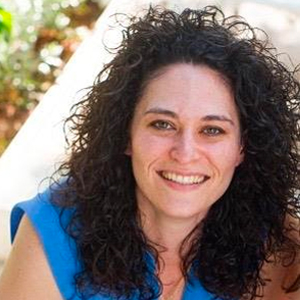
[00:00:10] Ray Latif: Hello friends, I'm Ray Latif and you're listening to the number one podcast for the food and beverage industry, Taste Radio. This episode features an interview with Melissa Facchina, the Co-Founder Managing partner of Citi Capital, an operationally focused growth equity firm that invests in better for you food and beverage brands and adjacent businesses. Just a reminder to our listeners, if you like what you hear on Taste Radio, please share the podcast with friends and colleagues. And of course, we would love it if you could review us on the Apple Podcasts app or your listening platform of choice. Straightforward advice can be hard to come by unless you're asking Melissa Facchina. An operations expert with over 25 years of experience in food and beverage manufacturing and services, Melissa co-founded Citi Capital in 2020. Initially focused on seed and venture capital funding for early-stage brands, Citi has turned its attention to investments in high-growth companies including Mid-Day Squares, Ourobora, Magic Spoon, and Immi. As Citi pursues its mission of, quote, changing the landscape of food and beverage for the better, Melissa has emerged as a trusted and reliable voice within the industry, advising founders on how to build sustainable and successful businesses. She'll do the same on Taste Radio, with Melissa joining the podcast for a regular series called The Citi Sage, where we'll discuss current topics and common questions related to investment in packaged food and beverage. This episode is the first and extended edition of the City Sage, in which Melissa spoke about her background, career, and the focus of city capital, the pervasiveness of what she describes as bad information circulating on platforms like LinkedIn, why she believes that the flood of capital in food and beverage over the past decade has been to the detriment of the industry. She also discussed how entrepreneurs are faced with a shift in how investors perceive profitability and top-line revenue, her recommendations on how founders can navigate a potential recession. Hey, folks, it's Ray with Taste Radio. Right now, I'm honored to be sitting down with Melissa Facchina, who is the co-founder and general partner of Citi Capital. Melissa, so great to see you.
[00:02:39] Melissa Facchina: What's up, Ray? So stoked about this.
[00:02:42] Ray Latif: I am absolutely thrilled to be sharing with our audience this first edition of The City Sage and getting your perspective on everything that's going on in this rapidly evolving, crazy industry of ours known as food and beverage, and just humbled that you accepted my offer to join us on a regular basis.
[00:03:04] Melissa Facchina: Yeah, well, first, let me say that I think to set the record straight, I may have been gnawing at your feet, actually, and begging to help me get a platform to have honest and active conversation. I am, frankly, honored that, you know, BevNET and Nosh want to participate in, I think, the realities of the industry and wanting to continue to be the great partners to the founders and management teams that y'all have proven to be for many years. And so, you know, thanks for letting me do this alongside of you, really.
[00:03:34] Ray Latif: Well, the honor really is truly ours. Thanks again, Melissa. And I'm glad you used the word realities, because when you and I chatted about the vision for this new series, it was very much about talking in a direct, transparent, and real way. And I look forward to that kind of conversation, that kind of way of speaking, because we haven't had a lot of it in our industry, and we need a lot more, frankly. But let's back up for a second. You've been involved in food and beverage for a long time in various roles and capacities. Talk a bit about your history and career in food and beverage.
[00:04:14] Melissa Facchina: Yeah, it depends on how far back we want to go, man. I mean, it's absolutely crazy to think about the fact that I've been involved in food and beverage for more than 25 years. And no, I'm not that old. I guess I am old comparatively, but not that old. I'll be 40 this year. You know, how's that possible? I was either fortunate or unfortunate, depending upon how you look at it. to have a factory worker father who seemed to be an operational genius and ultimately worked his way up the ladder in a fluid milk business, ended up acquiring a handful of those businesses as they went belly up in the 90s, turned them into what is now the country's largest privately held juice manufacturing companies, Also, what frankly forced me to get a job on a factory floor at 11 years old, whether I wanted it or not, definitely did not want it. But as the years went on, you know, ended up really being grateful for the exposures in I guess I can't say that I was as connected, you know, on the on the farm level. Obviously, we were procuring past the farm, but absolutely connected in what it meant to make everyday products for the everyday American, like orange juice or apple juice or yogurt, and do it in a way that became, you know, labeled kind of state of the art in the industry. And so I think with my love of food and feeding the country came my love of efficient operating and shiny steel and exciting new innovations and appliances on the floor of a factory that, you know, most people just don't get early exposures to. Had you asked me in my teens and early 20s, I would have told you no way in hell I would have been involved in anything in the food business. And really, frankly, I was not all that great of a student. I was always bored in class, always looking for something to get my hands on and to think through. And frankly, I ended up going to college, taking a break from working at our family facility. studying neurobiology, which by the way, I don't use it all now, except the psychology of negotiation, which if you know me, you know, I lean into hard, but ended up coming back to food after college because I graduated in the midst of a recession. I realized that, you know, a year, and this is just honest talk, a year and a half into applying for jobs, there weren't any. And so I had to go and ask my dad to put me back to work. And that landed me in a research and development position, ultimately a supervisor floor job. And I think the older I got and more mature I got, the more connected to the fact that the food supply system in the United States was broken. We were feeding people foods that I wasn't proud of, not us as a family, but the country in general. We were moving farther and farther away from wholesome, nutrient-dense product profiles, and farther and farther away from things that were cost-effective. And so what I had learned pretty quickly was that to be cost-effective, you had to be operationally efficient. And to be operationally efficient, you had to be operationally sound to be able to understand the things that you needed to change in a business to be able to direct costs in the right direction. And so I ultimately left our family business literally on my 30th birthday. Had, again, still no idea what I was actually going to do. landed in Sedona, Arizona, walked around, you know, this little kind of Buddhist-driven town, fell in love with Sanskrit and kind of the salt-of-the-earth nature there, went into a bookstore, opened up a dictionary between Sanskrit and English, found words that resonated with me, those were success and superpower, and they were the same word, which was city. And so literally in that moment, for whatever reason, I have no idea how, the concept of being an operationally efficient motivator in emerging food and beverage came about. So soon after that, I launched the firm that became known as City Ops, which very quickly grew into a premier outsourced operating partner of emerging CPG.
[00:08:45] Ray Latif: And City Ops was the forerunner and foundation for what is now City Capital. And when I look at your portfolio, I think about what you just talked about in wanting to introduce and bring better for you food options to the grocery store aisle for Americans. And it very much is, that common thread throughout your portfolio very much is doing just that. They represent a leap in terms of healthier, better for you options that hadn't previously been available.
[00:09:17] Melissa Facchina: That's 100% right. So just to take it forward and part of it, I didn't want to keep giving you this whole diatribe and boring everyone who's listening.
[00:09:25] Ray Latif: No, I'm enthralled.
[00:09:28] Melissa Facchina: Obviously, city ops ultimately turned into city capital. The question I get, by the way, a lot is how the heck did that happen? You're not an investor, you know, or weren't an investor. How did you all of a sudden create one of the most well-known food and beverage investing platforms out there? And the answer really truly is a whole lot of heart, a whole lot of passion, a fake it till you make it attitude a little bit, and realizing what the investment landscape was missing. And so there are some really great VCs out there in our space. They just tend to be front-end focused for the most part, right? They can be branding focused, sales focused, you know, kind of understand how the consumer might relate to a product that's coming to market. But at the end of the day, none of that matters. You can come up with phenomenal branding, fantastic product, great sales opportunities. You can get $100 million of sales POs. But if you can't make them and make them safely, cost-efficiently and effectively 100% of the time or nearly 100% of the time, the front end doesn't matter. And so what I think I ended up realizing as an operating business was we built 400 companies. We helped 100 of them successfully exit. We had a team of 15 operators who were literally building and scaling from conception to 100 or $150 million in revenue on a consistent basis. That ended up getting us a lot of notoriety around diligence. Believe it or not, by 2019 or so, our firm was doing diligence for 44 different firms, funds, high net worth individuals, sovereign wealth funds, VCs, PEs, you name it. 44 deploying capital from $250,000 checks to $125 million checks. They were coming to us to validate those businesses. And that was the light bulb for me, quite frankly, was, wow, if we can build scale de-risk and now diligence for some of the best high growth investors in the world. We're not talking about small funds in our space. We are talking about very large multi-billion dollar funds. We're probably on the wrong side of the table. And I think the other part of that for me is aside from skill and talent, and I can't take credit for that, by the way, that's the team at Citi who deserves all that credit. What I do best in my superpower and where I lean in is truly in relationships. It's in building trust. It's in making sure that our founders, either on the client side or the portfolio company side, know that without question, we're there and showing up. We will be honest and direct and transparent and supportive, and we will go to battle with them every day. Not with them, against them, but with them, for them, in support of them. And I think what I discovered was too many VCs or PEs at the table were giving advice to these companies who didn't really understand the business. Then the businesses would move in the direction that these investors told them to. Why? Because they carried the checks, so they're gonna move in that direction. When things didn't turn out as they desired to, they then turned around and blamed the business. That was an unfair setup, in my opinion. And we had the ability to change that dynamic. And so one of the 44 diligence folks that were using us was a family office of the former CEO of Credit Suisse USA and his son. And frankly, just through working together and falling in what I like to call deal love together very quickly, Thank God I had somebody who understood the mechanics of very large scale M&A and of building, you know, a platform for investment. And he seemed to identify that the operating infrastructure of Citi was extraordinarily unique. And if we could pair that with interested capital, then we might have something. You know, what most people don't know is Citi Capital Fund One launched one week after COVID shut the world down. We launched via Zoom and we basically raised a $70 million fund one in that one hour phone call. And that is a pretty incredible circumstance that again, I can't take credit for it was the successes of the operating team and the access to the industry that got very sophisticated investors interested in participating. Over the last three years, I've doubled down on that. I combined the firms. Everyone now lives inside City Capital. City Ops does not exist anymore. We absolutely do still support outside clients, but we are very focused on our internal portfolio. And frankly, we're just trying to do things differently. And so yes, when you look at our portfolio and you look at the businesses that are a step ahead, they're both a step ahead in products that they're offering, But they're also a step ahead in how they want to do business, the types of people they want to do business with, the honest, direct, and transparent nature of what they're trying to sell. And those are the types of founders that we want to partner with. Those are the ones that are attracted to our personalities of firm. And frankly, those are who we're attracted to back.
[00:15:09] Ray Latif: Raising a $70 million fund in an hour-long Zoom call, that's got to be some kind of record. We need to contact Guinness and get that into the next edition of the Guinness Book of World Records.
[00:15:21] Melissa Facchina: I mean, obviously, just to be fair, and my head of compliance will certainly have my head, since that is a closed fund now, I can say that. To be fair, the actual closing of the fund happened over many weeks and months after that. You have to send paperwork out, people have to review it, but commitments came in literally from that one-hour phone call. Frankly, that has stuck with me significantly about what we have to offer. Obviously, we're subsequently investing out of a different fund now, our platform has grown considerably. But point is, in three years time, three years ago, that was my first introduction to what it meant to raise a fund. And I was blown away and humbled by the support.
[00:16:05] Ray Latif: Thanks so much for that clarification, Melissa. Although I will say, it is still pretty remarkable that you were able to secure $70 million in commitments in an hour-long Zoom call. That being said, there has been a lot of money flowing into food and beverage over the past decade. It's become one of the most attractive industries for general investors. However, when you and I talked about this subject last, You had mentioned that you think it's not such a good thing that there's a lot of money coming into food and beverage, that it has been to the detriment of the industry. Why is that?
[00:16:39] Melissa Facchina: Well, so let's break down a minute why I think so much money has come into space. There's a variety of reasons. The first is very obvious. Food is relatable to everyone. When you talk about technology, I, for example, am technologically inept. I'm sure that there are just a handful of people around the world who still think that category with me. But the point is, is most people can't understand the depths of technology to the degree that some of these high tech businesses are solving for. Crypto is another scenario, recent one, but people really have to understand the mechanics of it to not completely be taken advantage of. Real estate, you have to understand where you're investing, what the geography looks like. You have to understand things to put money behind them. Food is understandable. It's relatable. It's easy to talk about. Everybody goes grocery shopping. Everybody shows up on a website or gets an ad or something like that where it's in their face. They're consuming it all the time. They also have positive feelings for it, right? Food releases, truly releases, you know, neurochemicals like dopamine and serotonin that make you interested and engaged with it and want it again. And so it's an easy product profile to fall in love with. Then you have circumstances like the kind of cravesale to Hershey's that all of a sudden people start paying loads of attention to. And how many multiples of revenue these conglomerates are buying these businesses for. Take a few years from that, you now have Beyond Meat that entered the IPO market. And look what happened to Beyond Meat in the first year of its exposure in IPO land. People were making money hand over fist. The net result of that is the more that that information gets talked about in a category that you are emotionally connected to, you start to think that you understand the space and want to drive dollars in that direction. You know, the next thing is it's very easy for angel investors to make investments in early stage food because there are so many early stage food brands out there. So if you can't get into deal A, well, you know, you can get into deal B and that's totally fine. And so, so yes, I do think that the industry has been flushed with cash. I think ultimately the valuations compared to other industries out there have been low, right? If you go to participate in a tech play that has proven IP, you're paying, you know, 100, 200, 500 times revenue if there is even revenue at all. In food and beverage, if you can manage to get IP, and there are some companies that truly do have processing IP, they're still trading at three, four, five times revenue. And so it's substantially cheaper. So that's why I think money has come into this space. Why I think it's not great is also a few reasons. One is, it's not really allowed attrition to happen in this industry the way attrition, I think, really needs to happen in a healthy manner. Am I ever rooting for people's businesses to fail? Never. Not as an entrepreneur. but I am rooting for a healthy landscape for good, solid companies to thrive in. You can tell, any of us who've been in this space for longer than a year or two, know what expos or fancy foods looked like 10 years ago. Now you talk about walking the floor of them now and they're two, three times as big. I mean, for crying out loud, some of these shows have to move exhibition centers because they can't fit the number of booths and people inside. And so that shows you, you know, how many more companies have been added to the mix and how few companies have actually left the mix. That means that all of these businesses are competing for the same shelf space, the same retailers, the same consumers, and ultimately the same capital. And a fifth one, very important one, the same service partners, right? Third party manufacturers, warehouses, logistics providers, suppliers, Forget the actual service partners, like legal or accounting, they're all flooded also. So, you know, I think one, it's been just too much aggressive move into the space for money, which like I said, doesn't allow for attrition, but two, ultimately there's expectations of people who don't understand that food is a long game. You're not coming in and making an investment in an early stage business and in two years getting that business to sell and ultimately profit from that. It's a 7, 10, 14, 18 year game. in order to get these businesses to a place of real stability for acquisition, that that's meaningful to an investor. Obviously, there are plenty of businesses that sell before that, but not in those huge multiples or numbers that you're talking about. And so the expectations, I think, are just not met with reality. And then that allows, you know, these investors to put a pressure on these businesses to perform at a level that is impractical and unreasonable. So I'm sure that there are other reasons, but I think those are probably my top two.
[00:22:04] Ray Latif: Indeed. There are a lot of unrealistic expectations about these mega exits among food and beverage founders. And I think there's just not enough understanding that these are very unique situations and unique companies, and they just don't happen very often. That being said, there's also this pervasiveness of bad information circulating on platforms like LinkedIn and Twitter about what constitutes a path to success. And it kind of irks me when I see hustle culture talked about in a way that ends up being bad advice, frankly. Do you agree? And if so, how do you talk to potential brand partners and entrepreneurs that are looking for your advice about how to block out so to speak, a lot of the information that ends up being the wrong information that's out there.
[00:22:56] Melissa Facchina: Yeah, it's very hard. It is getting worse. And by the way, you noticed before I will call myself out for it. The only social platform I have is LinkedIn. I do not have Twitter or Instagram. I have been known as the uncool mom who often refers to Instagram as Instacart accidentally. I guess that probably shows you where my mind's at. I don't have any of that stuff because I just think it is a suck of time and it displays, you know, kind of inaccurate realities. I actually, unfortunately, used to think LinkedIn was a great platform. I think it's moving in that direction. But the truth is, you know, I've asked myself a lot, why are all these wins out there like that? And for starters, one is there are companies winning and they should be freaking happy about it. And it's totally fine for them to post that they're winning. and they just scored this awesome retail partner or close their last significant equity series capital raise, et cetera. But then there are companies that are literally dying, dying, defunct companies who you would never know that they are dying as a business because of the positive messages that they're consistently putting out there about wins for their company. I think the reason is they are desperately trying to look like they're winning at the game. They are trying to attract the right investor landscape or who they perceive to be the right investor landscape. And sadly, who do most companies perceive to be the right investor landscape? Any fricking investor that'll write them a check. And that's the wrong strategy. Two, they need to show retail partner A that retail partner B just thought they were good enough to give an end cap to. And so maybe retail partner A will now consider them when they turn them away in the last reset. And so I think it's just become highly competitive. And if I lean into what I just shared a few minutes ago, not enough attrition, you have to compete on whatever level you can possibly compete on. And that has moved to the social channels. In addition to competing for consumers, by the way, and deciding not to necessarily put ad dollars out there, but winning your consumer by crafting a very significant relationship with the brand founders and or the brand or product profile itself. So first of all, I would much prefer having a balance. And I have been wanting to talk about this a lot, which is, CEOs, it's the loneliest job in the game. It's really a terrible freaking job. If you're doing your job right as a leader, you're working for everyone else. You literally are showing up every single day to work for the people who work for you. It's a very ironic scenario. It is lonely and we don't have enough conversations with each other about the things that we're struggling with because we think that it looks weak. I'm trying to change that conversation, not as an investor, but as a multi-time founder and understanding what it means to be a founder and the amount of support I get when I'm willing to be vulnerable and when I'm willing to have honest conversation about the struggles. And so basically I gave you this whole huge long response and didn't even answer the question yet, but I had to lay the land that the answer to the question is I call everyone on their shit. immediately. The moment I see projections that are up and to the right, I don't want to look at them. And I have that conversation. This is garbage. This is not not even real or accurate, can't even be that way. Let's have a real conversation about the ups and downs of your business. Let me understand your real cash flow cycle. Please stop telling me that you can 3 or 4x your business year over year. What happens to your bottom line and your burn? Like, let's really have conversations about the business that you're running. And by the way, please tell me about all the wins you've got. But I'm also going to educate you that some of the things that you think are wins are actually losses, because you just onboarded a retail partner that erodes your bottom line. Or you literally just signed up for something that you don't have the capacity or the scale to fulfill. And so those are the kinds of conversations that an operationally focused firm can really have with you. And we tell everyone also, by the way, we're going to get inside your business. We're going to diligence your company like you've never experienced before. We're going to give you a 50 or an 80 page diligence report that tells you the good, the bad and the ugly of your business. We will literally turn your company inside out and around. Please don't try and hide from us because guess what? I'm not looking for a perfect company. I don't think they exist. I'm looking for a company that has potential. I'm looking for a company that has proven that it has consumer interest. I'm looking for a company that has promise of scale. And I'm looking for a company that has great leadership and one that we can supplement and support on a skills basis when we need to clear out, you know, the next hurdle of growth in a company. And so there's no reason to hide the information for me. One, because we're going to find it anyway. But more importantly, I actually want to know about those things, because those are the things that we can determine if we can help you fix or not. That's not the conversation that these brands are having with other investors. The conversations that they're having with other investors are, we have to show you the most buttoned up plan possible, defend that plan, tell you that our business is going to double and triple year over year, that we're gonna continue to reduce our burn on basically just a declining basis month over month, which is impractical and not even a reality. But let me paint the picture of why we are the perfect company and then you can evaluate us. And for me, we just don't believe in that.
[00:29:05] Ray Latif: In terms of the potential for a business to be successful, it feels like profitability has risen to the top of the list for a lot of investors. And I am curious as to where that fits into your purview when it comes to investing in growth stage brands. And it's interesting because profitability is a word that I've used more in the past few weeks than I have since we've started doing the podcast, since we started Taste Radio. And it's strange because it is important, but it seems to be a lot more important these days to investors, that is.
[00:29:48] Melissa Facchina: Yeah, I think, look, at the end of the day, what are we all investing in? We're investing in what should be an actual business. A business is not a business if it constantly needs to keep getting an influx of cash from an outside source. And so at some point in time, a business needs to be self-sufficient. It needs to buy inputs and sell outputs for more than it's buying its inputs for, and ultimately become a truly stable, self-sufficient company. I believe for the vast majority of food and beverage products, obviously there's a unicorn in there every now and then, that is not achievable in the early years. There's just too high of a barrier of entry for everything basically for, you know, the cost of talent, for manufacturing space, for minimum run quantities, for what suppliers are willing to sell you product for. I'm not even talking about inflationary times. I'm just talking about standard regular time. So at Citi, when people ask us what the ultimate exit strategy is, it's really not to sell to conglomerates. That's a strategy. We would like to have every strategy available for good solid businesses. That means, could there be a public market exit? Sure. Could there be a business that could be a foundation or an anchor of a roll-up? Could it sell to private equity because it's now throwing off cash in its maturity? Yep, you better believe it. And conglomerates can be an option for sure, but they've reduced their buying in the last years and certainly reduced the dollars they're willing to pay for them. In order to be able to have every avenue available, we have to encourage our companies to ultimately build a business that is stable and self-sufficient. I think the difference for us is we know that margin enhancement and improvement and flow through to the P&L can't happen overnight. We can tell our companies we would love them to gain 5, 10, 15, 20 points of margin. And honestly, we actually deliver that for the vast majority of portfolio companies that are with us. But it doesn't happen overnight. It happens over a year or two years or more. And it takes a significant amount of time for that to flow through truly for the business to be able to leverage that. You know, then you've got to talk about how much you invest in growth and in sales opportunity. We all know today buying customers on the direct to consumer side of things has gotten egregious. You can't really do it well anymore. Even the best, you know, direct-to-consumer businesses out there, and we have many in our portfolio, have very different economics than they did 18 to 24 months ago. And so profitability becomes important. We care about companies getting there. We care about helping them get there. We understand you have to crawl before you walk and walk before you run. And so, you know, I think that's the path that we encourage and constantly making iterative changes. to the operational infrastructure of a business, because you can't just change it once, right? It's a domino. You change one thing, moves into the next thing, all of a sudden you've changed 15 things and you're back to the beginning. And what you changed 15 times ago no longer makes sense. You now have to change that again and you're back in a cyclical format. So it's about constant iteration to get there.
[00:33:31] Ray Latif: Now, there is and there has been concern about a recession. Investors are being a little bit more conservative about what they're investing capital in and the kinds of businesses that they feel like can scale with the capital they're providing. All that being said, are you holding back or are you pulling back the reins a bit because of what you see as a looming economic crisis or one that will continue to get worse than it currently is?
[00:34:12] Melissa Facchina: Us and everyone else. And I wish that more investors would have honest conversation about that. I don't know exactly the pedigree of the audience here. And so for those who are listening, forgive me if I'm taking you too far back on an educational kind of discovery, but most people misunderstand the economics of a fund. They think that they hear someone close to $100 million, just as an example, that means they have $100 million available today in the bank account. and that they can do anything they want with that $100 million, including paying their team three times as much as the team should be paid because they have $100 million in the bank account. All of that is inaccurate. Funds take management fees, and that's what they have to build their infrastructure with. You don't collect all the dollars that are committed in a fund at the same time. You do something called capital calls on whatever cadence that your fund happens to need or is preset. Depending upon the type of investors you have, whether they're high net worth investors, angel investors, which would be a small fund, or institutional investors, all of those investors, when they decided to invest in your fund, had a rough estimate of the cash needs that that fund would require. So as an example, you could say, A hundred million dollar fund, you made a million dollar commitment. We plan to call that commitment over four years time in quarter chunks every time. So that means you're paying $250,000 a year into the fund and you're doing it on a quarterly basis, right? Which is, you know, just a little over $70,000 a quarter. That's what they're counting on to make a million dollar commitment. Now, all of a sudden you say, holy cow, there's way too many excellent opportunities out here. Or, oh my gosh, everything's blowing up in the world and I need to save my portfolio. I'm now not calling capital over four years time every quarter, I'm calling capital at a much faster pace than that. And the investors may not have counted on that cashflow. or they may not have the liquidity because in this particular economic time, right, the public market got hammered from where it was, you know, many, many months ago. Real estate and real estate valuations got hammered from where it was many months ago. Crypto blew up. Tech fell off the fricking sky. Like, you know, like literally there's not a lot of liquidity. And so the investment managers, unless we're talking about very large funds like Blackstone, KKR, et cetera, the small investment managers can only call capital at a certain cadence and have it fulfilled, which means that they're capped on what they can actually bring to market and invest. So that's the first thing I just wanted to educate on. The second is, Unless you're a brand new fund, you have a portfolio. And that portfolio might still have room in it to add new names. But in challenging economic times where you're, you know, what was best performers, can't get cash from anywhere else. Because again, back to the liquidity issue, they're coming back and knocking on your door and saying, oh my gosh, We blew through our cash faster than we thought because there's, you know, higher costs with inflation. Or buying consumers the direct-to-consumer route was more expensive than we anticipated last year. Or we weren't able to fully close our fundraise that we had counted on because the fundraising market fell apart. Either way, it doesn't matter what the reason is. I need more freaking money if I'm going to keep going. So then you have to decide as an investor, is that business worth putting additional dollars in? And is it worth putting additional dollars in over other companies in your portfolio? And again, is it worth putting additional dollars in over a new company seeking your investment? And so these are the things that investment managers are weighing now. And they should be having that active and honest conversation with the companies that are looking for funding from them. We have that active conversation. We let everyone know the stance that we're currently taking. And just to be totally frank, it's protect our portfolio first, fund the companies that are in the diligence pipeline second, And if there's an unbelievable, amazing rockstar of a business that we desperately want to be part of, we will consider that. But aside from that, right now, we have to stabilize the portfolio and make sure that, you know, we're doing the things that we said we were going to do as investing partners in some of these companies that really got stuck in the crosshairs of a market that fell apart very quickly.
[00:39:34] Ray Latif: Well, I got to ask, since a lot of people are going to be listening to this after coming back from Expo West, what defines a rock star, unbelievable company for you?
[00:39:44] Melissa Facchina: You could take a look at my portfolio, I think. But really. Again, the times have changed, to be honest with you, what defined a rockstar company for us two years ago was massive direct-to-consumer performance. Today, I think it's continued growth in the face of headwinds. Again, I don't care if that growth is 30% growth, 50%, 200%. It's not about the percentage of growth, it's that there are new and active partners interested in expanding the brand. There are new consumers who continue to come to the brand. There are current consumers who continue to be repeat purchasers of the brand. There is innovation that, you know, doesn't have to be today, but kind of is in the crosshairs of the company over time. For us, we care a lot about providing food that's just a little bit better than the crap that's out there. We're not looking for a $15 green juice that sells like hotcakes between New York and LA, but can't sell anything in the middle of the country. We're looking for products that people are consistently buying, you know, on a day-to-day basis and that they can't live without. For us in a recessionary time, I know you asked about that, that's really staples. Obviously, Magic Spoon is a very large portfolio company of ours. They sell cereal. Their cereal's the most expensive cereal on the shelf. And guess what? They're the number one selling cereal in a variety of outlets that they're in. But they sell a staple. And so, you know, that's the type of thing that we are looking for. And then I would say a second layer of the rockstar status would be, are you engaging in something that's completely unique? completely independent of what everyone else is doing and is getting you a lot of attention and attraction. Mid-Day Squares be an example in that bucket where the amount that they invest in allowing the consumer to see the realities of their world has gotten them traction and consumer support that honestly, not even sure you could pay for and if you could, it would be in the tens of millions of dollars.
[00:42:00] Ray Latif: Well, I think you nailed it when you said, look at my portfolio and I kind of come in full circle in this conversation. You saw that there was a problem with better for you options in the grocery store and you are literally putting your money where your mouth is and doing something about it. And I thank you for that, Melissa, because we need more investors to be thinking about not just was right in front of them, but the future of the grocery store in a sort of holistic way and the, I guess, I don't want to call them bets, but the investments that you're making across different aisles is pretty remarkable. And of course, you know, I can't thank you enough for taking the time to speak with me. It's just so refreshing to hear your voice and to hear someone And this is no stain on anyone, but being as direct as you are is exactly what everyone really wants to hear, regardless of what they say or feel. And I know our audience appreciates it just as much as I do.
[00:43:06] Melissa Facchina: Yeah, man, thank you so much. I appreciate that. And actually, to the last note on directness, let me just make another adding comment there really quickly, if I have a second. Sure. Which is, you corrected yourself when you said, making bets. And the truth is, Venture capital and private equity is all about bets. They are calculated bets. And hopefully you are investing in the research of a business to feel confident in making that bet. But the name of the game is not that, at least in early stage. And even though we consider ourselves growth equity and we write, you know, fairly midsize or larger texts for the space, we're not investing or doing buyouts, you know, or writing a hundred million dollar check in a $300 million business. And, you know, that's not the stage we're at. So we're still quote unquote early, although not early in our space. But it's all about making a bet. You're not supposed to have an entire portfolio of winners. I guess, what's the word supposed to? I guess traditionally it will not work out that way. Would I love if I had a whole portfolio of winners? Hell yeah, so would everybody. But like that's not the expectation. Businesses will fail. People will move on to a different company, a different product, a different brand. There will be bad operators and bad impersonators and folks who are mission aligned and care about their product but have no business being a CEO. All of those things really do happen and so it's okay. It is a bet. But you have to make a calculated and an educated bet. And you have to know exactly when to put your foot on the gas and continue supporting that bet. But also you have to know when to pull back from that bet and say, you know what, this is no longer something that I feel should have the support.
[00:45:05] Ray Latif: Totally. Well, once again, really, really appreciate this first edition of The City Stage and extremely excited for ones to come.
[00:45:15] Melissa Facchina: Awesome. And me too. Thanks so much.
[00:45:17] Ray Latif: Thank you. That brings us to the end of this episode of Taste Radio. Thank you so much for listening. And thanks to our guest, Melissa Facchina. Our audio engineer for Taste Radio is Joe Cracci. Our technical director is Joshua Pratt. And our video editor is Ryan Goulet. As always, for questions, comments, ideas for future podcasts, please send us an email to ask at Taste Radio. On behalf of the entire Taste Radio team, thank you for listening, and we'll talk to you next time.