[00:00:00] Gotham Greens: BevNET Live, the premier event for beverage industry executives, is coming up fast on June 10th and 11th in New York City. Hundreds of beverage founders, investors, and retailers are already confirmed. Don't miss your chance to build momentum mid-year and set yourself up for a strong finish. Early registration pricing ends Friday, April 24th. Register now and save $100 at BevNetLive.com.
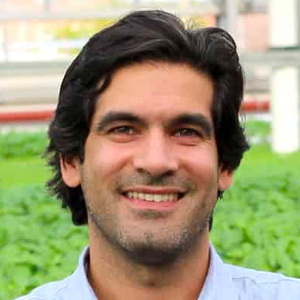
[00:00:39] Ray Latif: Hey folks, I'm Ray Latif and you're listening to Taste Radio, the number one podcast for anyone building a business in food and beverage. This episode features an interview with Viraj Puri, the co-founder and CEO of indoor farming pioneer, Gotham Greens. The more things change, the more they stay the same, could be a slogan for Gotham Greens. Launched in 2011, New York-based company operates a nationwide network of 13 high-tech hydroponic greenhouses and markets premium, hyper-local leafy greens, herbs, salad dressings, dips, and cooking sauces. The products are sold at over 3,000 retail stores, including those of Whole Foods, Kroger, Albertsons, Sprouts and The Fresh Market. According to the company, Gotham Greens's farms use up to 95% less water and 97% less land as compared to conventional farming and touts its ability to provide quote, sustainable supply chain solutions to its diverse retail and food service customers. Investors have bet big on Gotham Greens's business strategy and vision. Since 2009, the company has raised $440 million, including a $330 million Series E round that was announced in September of 2022. The funding has helped Gotham Greens grow from a single urban rooftop greenhouse in Brooklyn to one of the largest hydroponic leafy green producers in North America. Yet while its operations evolve and footprint expands, Gotham Greens's co-founder and CEO, Viraj Puri, says that the company remains rooted in its core principles and that his passion and conviction for the brand are as intense as ever. In this interview, recorded during a leadership event in Vail, hosted by Gotham Greens's investor Manna Tree, Viraj spoke about how he maintains focus amid the company's evolution, how he manages new and complex responsibilities as CEO, assessing when to step on the gas and when to release the pedal, and what he considers his biggest mistake and best decision. Hey folks, it's Ray with Taste Radio. Right now I'm on the mics with Viraj Puri, who is the co-founder and CEO of Gotham Greens. Viraj, great to see you. You too, Ray. Thanks for having me. I feel like we just keep running into each other, whether it be in New York or Vail or it's somehow I always ends up being in a conference room. I feel like we just need to get out like and find a different kind of venue for these conversations.
[00:03:15] Viraj Puri: We should do an outdoor one next time.
[00:03:17] Ray Latif: Yes. Or perhaps in one of our greenhouses. Can we just like set up a table and two seats across from each other, like right in the middle of the greenhouse? Can we do that?
[00:03:23] Viraj Puri: Yes, we can. Okay. As long as we wear our food safety gear, hair net, beard net, wash our hands, we're good to go.
[00:03:30] Ray Latif: Beard net might be a problem because then I wouldn't be able to speak to my mic as well as I'd like to. We'll figure it out. Okay. I haven't shaved, I haven't gone skin shaved since 2011. Okay. Yeah. Did you ever have a beard?
[00:03:44] Viraj Puri: Sometimes like a long weekend, long week, week type of.
[00:03:48] Ray Latif: You're not a beard guy is what you're saying.
[00:03:50] Viraj Puri: Yeah. From time to time.
[00:03:51] Ray Latif: Okay. Fair enough. You're a greens kind of guy and. That I am. Yeah. Yeah. What, so just out of curiosity, this isn't one of those high on your own supply kind of things, but like how much do you, how much Gotham Greens do you eat in a week?
[00:04:05] Viraj Puri: almost every day. I try to eat a salad every day and sometimes it's just right out of the container. Or if I'm walking the floor of one of our greenhouses, I'll definitely sample some of the products as I go along. And my kids love our pesto. So pesto pasta is probably one of their favorite meals that they eat a couple of times a week. So I'm sometimes eating some of their leftovers. So I would say at least six out of seven days a week.
[00:04:33] Ray Latif: It must be fun, though. I mean, when you think about what you're eating and the fact that it's actually healthy, a salad, you know, pesto. If you were, say, the founder of an ice cream company, no stain on an ice cream founder, but it's not something you could eat six or seven times a week, I don't think. Right.
[00:04:49] Viraj Puri: Probably not that healthy for you.
[00:04:50] Ray Latif: Yes. Does it blow your mind kind of where the brand is at this point?
[00:04:55] Viraj Puri: Well, look, sometimes it is really nice to just take a pause and reflect on how much we've scaled and the impact that we've had, not just on our stakeholders and employees and investors, but really on the broader industry. So yeah, that certainly is rewarding. I'm so caught up in the day to day of running a business and scaling a business that It's not very often that one takes a pause and reflects on that, but now that you mention it, it has been really fun to see how much we've grown this idea.
[00:05:24] Ray Latif: Well, when you started in 2011, I think you did have a pretty ambitious plan and vision for the brand. But I wonder how much of the potential for scale now and the reality that maybe this can impact the food system in a really transformational way. has changed the way you think about the brand and just your business strategies as a whole.
[00:05:48] Viraj Puri: Yeah, I think you're right. I think every startup founder and certainly me and my partners were very wide-eyed, visionary, would not take no for an answer. You know, that sort of grit and determination, I think is a quality or qualities that are common to many startup entrepreneurs, us included. And you're right, those early business plans and pitches, we, you know, espoused the huge global impact we could make, but Look, there's always a little bit of a tinge of trepidation, whether you're really going to follow through and execute on that plan. And it has been really rewarding and fun to see us continue to be in business and scale our business. But I think it play a role in inspiring others as well and helping to grow the entire category and the sector, not just in the United States, but globally. But now it's a different kind of responsibility. It's a responsibility to all of our stakeholders. We have a lot of investors that are in this business and have invested a lot of capital into the company. So being good stewards of their investment is something we're very focused on. We have over 700 team members and I'm so invested in their future and so, you know, working for them every day. And we have thousands of customers too. So I think the stakes have increased, right? And we've proven the idea. So now it's about scaling this to a large company is a new set of challenges, which is really fun.
[00:07:17] Gotham Greens: Vibrant Ingredients is the natural ingredient partner powering food and beverage innovation, delivering flavor, function, and protection through a science-backed portfolio. Vibrant delivers purpose-driven solutions that help brands create extraordinary experiences. Discover what's possible with Vibrant today. Visit VibrantIngredients.com.
[00:07:44] Ray Latif: You have a very complex business. You have a lot of stakeholders in the brand and the company. You're still the CEO. I imagine that your job has changed quite a bit in the years since you launched Gotham Greens. How has it changed? How have you learned how to become a different kind of CEO for the brand that is now Gotham Greens?
[00:08:04] Viraj Puri: Yeah, trusting more people. We've had the good fortune of bringing in some great experience and brilliant minds and passionate people into the organization. As any startup founder, one has to wear multiple hats. I was very fortunate that I had two partners in the business and we were able to sort of divide and conquer responsibilities from the real estate development and the fundraising to the sales and marketing and of course everything growing related as my partner Jen. So, It's lonely sometimes at the top, so to have three of us, I think, really helped out. And as the company has grown, we've been able to bring in subject matter experts with a lot more experience in different departments and facets of the company. So I think having more investors has obviously changed some of the dynamics. I spend certainly more of my time building the organization, whether it's the board, whether it's the senior leadership team, working on communications, both internally, externally. You know, in some ways, a lot of it's the same. We still have to oversee the product, how the product has grown, how it's delivered, how it looks and feels and tastes to the consumer. So that will never change. But I find myself working on a lot of different things that I didn't before. I think the legal complexities, the real estate complexities, financing complexities, it's been many educations rolled into one over the past decade.
[00:09:20] Ray Latif: Well, I bring this up because, you know, I think about other CEOs who have run their business for an extended period of time. And, you know, sometimes for one reason or another, they are asked to leave as CEO or they, by their own hands, say, you know, I feel like, you know, the brand would be in better hands with somebody else, somebody, quote unquote, more experienced than me. How have you been able to communicate what you see for and the potential you see for the brand such that there is a belief, not only that you're the right person to run the company, but there's a belief by investors to invest more, by retailers to bring the brand into more shelves, into more stores, and do it all within the context of what you believe is right for the brand? I know that's a really big question, but
[00:10:09] Viraj Puri: Yeah, I think it starts with just, I haven't lost any of the passion for the business and I haven't lost any of the conviction in the overall thesis for the business. So from day one, once the sort of light bulb moment happened, the proverbial light bulb moment, and we knew this was going to be a good idea, between then and now, nothing has wavered. In fact, my conviction has grown even stronger. in the face of all the macro headwinds that the conventional farming industry is facing, and all the continued tailwinds that are propelling our business. Climate-related issues, growing consumer interest in better quality products with a better environmental profile. supply chain innovation is driving the retailers to source more reliably and locally. So again, like I said, my conviction in the business has only grown, and I think that's continued to fuel me and allowed us to continue to scale the business. Now, certainly at some point in time, it's entirely possible that I'm not the right person for the job anymore, and we'll see when and if that time comes. But for the time being, I'm really excited to continue to lead Gotham Greens and have the privilege of doing so, frankly, as we go through this next phase of growth.
[00:11:23] Ray Latif: Well, I would advocate against you being replaced as CEO to anyone who suggested it, because I feel that conviction. You know, I feel the fact that you have the confidence to be able to handle the complexity of the business, but also to speak in a way that convinces other people as to your vision, going back to what I mentioned earlier. When you're speaking to investors and maybe investors have a different perspective as to where the brand should go, how it should grow. How do you bring them back to what you believe, what your team believes should be the business strategy? Could be something as simple as, hey, we should be in this market or we should open a facility here. How do you talk to them about that?
[00:12:09] Viraj Puri: Well, don't tell anyone this, this is just between me and you, but most investors, fortunately, don't know anything about hydroponic farming, so they have to believe us. No, look, it's a very specialized industry, jokes aside, and I think we have a good track record of executing well, picking the right sites, picking the right geographies, partners. Surely we've made our share of mistakes and will continue to. But this is a really hard business to scale. And I think investors have some confidence that we know what we're doing. But of course, they're going to guide us and put some guardrails in place as they should and as their prerogative. And we welcome that. Look, I haven't been a CEO before. I didn't go to CEO school. I didn't climb the ranks in another organization. So I'm learning on the job. And I look to our investors and our board for guidance all the time. But it helps that everyone's running in the same direction.
[00:12:59] Ray Latif: Yeah, but again, you're the cockswain for this. You're helping people to row in that right direction and you're shouting instructions from the edge of the boat. What are some of the instructions that you want to shout that you feel like would benefit the brand in the long term when there are short term opportunities right in front of you?
[00:13:16] Viraj Puri: Yeah, one has to be patient, I think. It's a combination. Look, I think we were very, very fortunate that we raised a significant amount of capital and embarked on a large nationwide expansion some years ago. Capital costs were a little bit lower and we were able to expand our network of greenhouses to nine states. And I think having this national footprint will continue to differentiate us and add a lot of value to our retail partners. And I think that would have been something that would have been quite difficult to do in today's economic environment. So I think it's a little bit of good fortune, but I also think we wanted to put our foot on the accelerator at the right time. Conversely, I think there have been other times in our history where we've taken our foot off the accelerator because we wanted to focus on the unit economics and focus on our operations and really just not run too fast or get over our skis is probably a better metaphor given that we're sitting in Vail on the base of the mountains right now. So I think it's been a good balance. And right now we're in that sort of phase, which is we're keeping our eye on future expansion and growth, but really the larger focus is on growing into this enormous amount of greenhouse production capacity that we've built over the last 12 months.
[00:14:31] Ray Latif: Let's talk about retailers for a sec, because I imagine there are a lot of retailers who would love to have your products on shelf, but you can't service every retailer North America at this point. How do you pick and choose the right spots for Gotham Greens?
[00:14:44] Viraj Puri: Combination of factors, as most things are, I would say geography is a big one. We've built out our business to serve retailers within a certain geographic radius from a greenhouse. And that's in an effort to keep the products fresh, provide a much longer lasting, fresher, better shelf life product to our retail partners and to the end consumer. And that's lost if the products have to travel very far distances. So most of our customers are geographically located in pretty close proximity to our greenhouses. So that's one factor. I would say another is just alignment. There are certain retailers that have seen the vision for indoor farming, they've supported us, they've put us on the shelf, and really acted like partners. And I think, you know, those are the ones that we'll continue to work with. And you have to just pick and choose your partners, right? Your products are not necessarily going to be well suited for every single retailer in every geography. You know, there's also been a lot of consolidation in the grocery industry. there continues to be and many, many chains are grocers are now have national footprints or at least footprints across multiple states. And again, our network of 13 greenhouses across nine states have enabled us to be a one-stop shop for many of those retailers. But yeah, you are right. Generally speaking, the demand for our products does, you know, outstrip the supply, which is a tough place to be, but it's a better place to be than the other way around.
[00:16:15] New York-based: Do you want more repeat buyers on Amazon? Well, this free resource in collaboration with Straight Up Growth will help your brand turn first-time buyers into long-term subscribers. Download Winning the Repeat Purchase Game on Amazon now at Taste Radio.com slash SUG. That's Taste Radio.com slash S-U-G to start building retention-driven growth for your brand on Amazon. Scaling a beverage brand into major retail comes down to operational readiness. From packaging lead times to co-manufacturing strategy, the details can make or break a launch. In a new ebook in collaboration with Octopi and Asahi Beer USA, industry leaders share what they've learned in helping brands scale. Download it now at Taste Radio.com slash octopi.
[00:17:05] Ray Latif: I'm gonna make a dumb comment here. I mean, I gotta think that Gotham Greens has a ton of potential in food service, too. I mean, can't you be a partner, say, with like a Sweetgreen or a Starbucks and, you know, sell a salad like at a Starbucks in their coolers or just be the preferred leafy green partner to Sweetgreen? I assume that's...
[00:17:23] Viraj Puri: a pretty complex partnership in either case. Yes, you're right. And we do work with Sweetgreen in several markets. So if you walk into a Sweetgreen in Chicago or Austin, Texas, you will find some Gotham Greens products on their menu. So that's a really cool partnership. You're right. You're right. We barely have scratched the surface in terms of the food service market. It's a very large one. It's a growing one. Look, I think it's just about marrying up demand and supply. Food service operations often have different specifications, different needs, delivery cadences, volumes, a number of different factors. So we've certainly built our business more to serve the retail market, but as we're starting to expand a little bit more, we're doing more food service business. It's a huge channel of distribution for growth. It comes down to volume, comes down to making the right business sense. You know, we can grow an amazing type of leafy green, but say it doesn't have the best yield or the shelf life, right? So, and that might be something that a restaurant may want. And it may not be very profitable for us to say, grow that product. So we have to make the tough choice to say, you know what, we're going to focus on items that make a little bit more sense for us in terms of scale.
[00:18:27] Ray Latif: I imagine it doesn't fit in with your environmental focus either, because a lot of that would go to waste.
[00:18:32] Viraj Puri: It can, it can. The restaurants have definitely gotten much more precise with their spoilage and their demand forecasting. So it's less than you think, but you are right. A big part of our business model is eliminating food waste and spoilage. It's estimated that some 40% of fresh fruits and vegetables in the United States are thrown away. which is just totally criminal and sad waste of resources, especially when so many people go hungry. So a big part of our model is ensuring that we can pass on the maximum shelf life to our customers and ensuring that all the product gets consumed and doesn't end up in the landfill.
[00:19:04] Ray Latif: Did you lead that conversation with Sweetgreen to get your product, your brand in those stores?
[00:19:08] Viraj Puri: We've known the Sweetgreen guys for a long time, and I think they have a really, really good purchasing team. And I've had the good fortune of meeting the founders on a few occasions. So there's a bunch of brand alignment there. And we work with other quick service restaurants as well, Just Salad. We've done some stuff with Shake Shack, among others.
[00:19:26] Ray Latif: Varasha, again, going back to this question of ambition versus what's possible, what's realistic for the brand, is one that I think a lot of founders struggle with. Saying no when it's appropriate to say no, saying yes when you realize that the competition is right on your back. But I wonder, you know, for you as a leader, how you get everyone in line when you talk to your team about this is the strategy that we're going to go after. This is the opportunity that we think gives us the best chance to be successful in 2024 in a particular year. How do you get your troops in line, so to speak?
[00:20:07] Viraj Puri: Well, look, I really solicit a lot of feedback and input from others as well. So I may have a strong feeling on something, but I encourage the leadership team of the company to bring their own ideas forth and maybe something's not a good idea. And as a founder, sometimes I do have, I err on the side of wanting to satisfy certain customers or do something because it would be a fun sort of brand building exercise, or it would give me a lot of personal satisfaction. Sometimes it's my team that's talking me out of it to say, look, that might not be the most profitable thing to do. And so, you know, it certainly is not my way or the highway. And so it's, it's definitely a group decision, many, many things. I do have the benefit of having done this for 12 years. So I know where some of the pitfalls. might lie in new opportunities, but it's been just great to bring in smart, capable, experienced leaders across food and produce specifically into the organization and to have spirited conversations that ultimately lead to decision-making. So that's been a really fun, fun part of the last couple of years. We couldn't afford those people when we started, right? So being able to have them now has been great.
[00:21:18] Ray Latif: You know, you've mentioned a couple of times you've made mistakes in the 12 years that you've been running this company. What's the biggest mistake you've made and how'd you find your way out of it?
[00:21:28] Viraj Puri: Wow. One biggest mistake. You know, it's really hard to pinpoint one. I think in some cases, maybe we've, uh, You know, we've underbuilt a greenhouse. I wish we would have maybe made it a little bit bigger to start with. In some cases, we probably made a greenhouse too big. It should have been a little bit smaller. So we haven't sort of gotten that perfect, that aspect. I probably would have liked to have gone into a few geographies a little bit sooner than we did. You know, frankly speaking, we've made some mistakes in terms of our vendor selection, some of the automation. some of the equipment that we've bought in our greenhouses. But look, this is a nascent industry and it is going to take some trial and error. And I'm just happy that we haven't made any, any mistakes that have been catastrophic, right? They've all been, you know, learning lessons without sort of taking down the entire business.
[00:22:17] Ray Latif: Aside from being an anchor for this, again, I'll use the word transformational category industry, whatever you want to call it. What are you most proud of? What can you look back over the last dozen years and say, this was the most rewarding part of my journey?
[00:22:31] Viraj Puri: I think just helping to inspire and spur a global industry, candidly speaking. Look, Gotham Greens didn't invent indoor farming. We weren't the first people to do hydroponics. These are technologies and growing methodologies that have been practiced for many decades before Gotham Greens existed. But there was something about how Gotham Greens launched, when it launched, where it launched, you know, in New York City, in Brooklyn, very high profile greenhouses, wanting to bring this farming system to a broader global audience and the sort of the financial and media cultural capital of the United States. And I think that really started a movement and fueled a movement. You know, I remember distinctly 2008, 9, 10, 11, 12, even after we started the business, just talking to people, whether it's a business pitch to an investor or some sort of a service provider, or even at a social gathering, right? Telling people what I did for a living, right? Small chitchat. What do you do? Well, I'm working on a hydroponic farming startup. And there's just like blank stares, right? No one knows what you are talking about. And now fast forward 11 years, everyone knows what you're talking about. People know what hydroponics are. People, like I've literally been in dozens of conversations where people have asked, what do you do for a living? And I say, well, I work at a hydroponic farming company. And they're like, oh, like Gotham Greens. And I'm like, yep, like Gotham Greens, right? So I think that in a nutshell sums up what's been the most rewarding.
[00:24:00] Ray Latif: You don't tell them you're the co-founder and CEO?
[00:24:03] Viraj Puri: I ask them the questions. Do you like the product? Why do you buy the product? Because I want these unvarnished answers, right? And then maybe I'll reveal that I had something to do with it.
[00:24:11] Ray Latif: Any feedback that you've been able to incorporate into the brand?
[00:24:15] Viraj Puri: grow more of it? Why is it out of stock? And why aren't the retailers carrying more of it? Those are the best ones. That's good feedback.
[00:24:22] Ray Latif: Yes. That's not like, hey, it's wilted lettuce. Exactly. The pesto tasted strange the other day. You know, you don't want to hear that.
[00:24:29] Viraj Puri: Exactly. Exactly. I would just exit stage right.
[00:24:32] Ray Latif: Raj, I always have a good time speaking with you. I really appreciate your candidness and your willingness to talk about Gotham Greens and everything that you're doing with the brand. Thanks so much.
[00:24:43] Viraj Puri: I really appreciate it. Thank you.
[00:24:44] Ray Latif: Always a pleasure. That brings us to the end of this episode of Taste Radio. Thank you so much for listening. Taste Radio is a production of BevNET.com, Incorporated. Our Audio Engineer for Taste Radio is Joe Cracci, our Technical Director is Joshua Pratt, and our Video Editor is Ryan Galang. Our Social Marketing Manager is Amanda Smerlinski, and our Designer is Amanda Huang. Just a reminder, if you like what you hear on Taste Radio, please share the podcast with friends and colleagues. And, of course, we would love it if you could review us on the Apple Podcasts app or your listening platform of choice. Check us out on Instagram. Our handle is BevNetTasteRadio. As always, for questions, comments, ideas for future podcasts, please send us an email to ask at Taste Radio.com. On behalf of the entire Taste Radio team, thank you for listening. And we'll talk to you next time.